Blog

  • Real Leaders Have Real Lives

    For years I’ve been working on helping companies to see how work, home, community, and self (mind, body, and spirit) can be mutually reinforcing; this is the “four-way wins” approach I describe in Total Leadership. I often encounter skepticism, but some companies get it. My experience with Target should bolster anyone’s case that you can be a committed A-player executive, a good parent, an attentive spouse, a healthy person with time for hobbies — yes, hobbies! — and a community life.

    In this post I describe a couple of case studies from Target executives who have been experimenting with creative ways to integrate the different parts of their lives — and how they’re teaching others to do the same.

    David is a VP who is accountable for a multi-billion dollar P & L business. (All names have been changed and specific titles disguised.) He has structured several experiments to simultaneously improve his performance at work and his life at home. Now that he’s done a number of them, he says he’s learned that by framing these changes as experiments he can overcome what at first seems daunting. The first, he told me, “had a huge impact for me and probably an even more significant impact for my wife and family.”

    “My initial challenge was this: I spend most of my waking hours at work and I’ve always shut down from work at home. But this was hurting my relationship with my wife because we didn’t talk about what was happening with me at work. We talked about the kids and that was what we had in common. The work problem was that I never had enough time to prepare for all my meetings. So the experiment was to look at tomorrow’s calendar and pick the biggest meeting for which I needed to prep. On the drive home I’d think about what I should do at that meeting and when I got home I’d talk to my wife about it.”

    “This gave us something new to talk about, it gave her a much better understanding of what I do, it engaged her, and it enhanced our relationship because we were having richer conversations. Simultaneously, I was able to prepare and do a dry-run for my meeting. What was cool about it was getting an outside person’s perspective. My wife made some good suggestions! And I’ve had better meetings as a result. But the big takeaway was to question the way I was doing things.”

    David said that the results of his experiments “have been astounding. I’m more productive and my wife is thrilled. Our company is also benefiting because of the effects on my team. I told my team that I was trying a change in my schedule and have been transparent about when they could expect to find me in the office. I was showing my team that there was a way that you could prioritize well-being holistically. This is leading them to think about some of the same things for themselves. I’m helping my team to be more engaged and to think more about their well-being, too. I’m developing better team leaders around me.”

    “For example, because of the change I made, I found out that one of my direct reports was having a medical problem that was worsened by his work schedule, and we have now changed his schedule. One of my other team members told me that he feels more empowered to make choices to spend time with his family during the day. He feels more empowered — that it’s OK — and he doesn’t feel guilty about it. The example I was setting before was work first, work first, work first.”

    “I might be here for slightly fewer hours now, but I’m making faster and better decisions. And, at home, my wife is now more understanding of those choices I sometimes have to make when work does have to come first. In the long-term, for Target this means that I’m a more engaged leader without an unmanageable tension between my wife and my work.”

    Alan is a VP located on the West coast. He’s been in that region for 15 years and has three children, ages three, five, and seven. His wife is a finance director at another company.

    “The first thing about Total Leadership that really had an impact for me was the stakeholder mapping,” he told me. In this exercise, you identify the people who are most important to you in your work, home, self, and community spheres. This is part of seeing your life not as just a random unfolding of events, but as a system you can change. “This was something that I had done intuitively on my own but I wasn’t maximizing it…. It was important to… connect with those people, find common ground, and learn what their expectations are.”

    “With work I’m very intentional and so things happen, because it’s work. But if I’m truly accountable I would be taking the same approach in the other domains of life that I am taking at work to accomplish the things that matter. That was an ‘Aha!’ moment.”

    “That’s why my experiment centered on time with my family; with my sister and her kids and arranging time together for all of us. I used some of the things that I do at work and applied them in this other realm. My sister owns a business and my brother-in-law has a property development job, so they have demanding schedules. Our kids are on different Spring breaks. We have a vision now (we didn’t until my experiment) of two week-long vacations per year together with the kids doing something — skiing or going to the beach — and then a couple of long weekends. Coordinating all that is difficult and so it just really wasn’t happening.”

    “I was lamenting this, wondering how I might effect a change. It dawned on me that if this was work I would have all kinds of tactics. So I drafted an email to the key players (my brother-in-law, sister, wife, mom, and a couple of others) and I laid out a plan for a dinner, just the adults, to talk about what we wanted to achieve each year. We were able to come up with two week-long vacations, but planned well in advance, and then two long weekends. We set up some checkpoints and conference calls — the last thing you’d think of with family. We went away together the last two weeks of the year, and we bought those tickets in June. This was a success and an example that I’ve learned I could use in general: If a process works in one part of my life, then maybe I can apply it in other parts of my life.”

    “If we’ve got leaders in the company who are able to apply skills from work to other parts of their lives and share these stories with their teams, then this can help us make our people happier and strengthen our retention of talent. We invest time and money every year training people. So when you strengthen retention and reduce that expense, then you have savings but you also have more experienced people who are more productive.

    “I’ve come to realize that one of my challenges is taking time off, and ensuring that I am effective enough to do that and not miss a beat. This year I’m looking at six weeks of vacation. When I think back a few years I just wouldn’t have even considered that; this year I intend to take it all. If I only took three weeks, I would have people on my team see that as a signal. So I’m teaching others by example. Again, the stakeholder mapping and integrating the four domains in a way that works for me is important, and I also teach my team how to do that for themselves, in part so they can be effective when I’m not here. My goal is for them to be effective all the time. The more that I can lead that way, the more it means that if I’m gone for a week or two then the impact is minimal.”

    Target is working on “starting a movement — not just a program” says one of the members of the organizational effectiveness team. But changing those norms isn’t easy. Max, the VP who now runs the largest P & L business at Target, admitted that he “saw a couple of eyebrows raised” when he told his team, on his first day in his new position, that he comes in late two mornings a week so that he can “go to the gym and have breakfast with my kids.”

    But when senior executives are modeling healthier behavior, it lets a grassroots movement take hold. For instance, David’s boss checks in on his experiments regularly. “She’s given me tips and shared her experience on what she’s learned,” he says. “I talk to her about it to hold myself accountable. She’s reminded me that each new job is bigger and more demanding so it will be critical to continue to get better and better about managing my time and calendar as I develop throughout my career.”

    When steps like these are taken to improve performance and reduce stress, and employees see that this is a legitimate and fully authorized activity, then an increasing number of them are going to generate experiments of their own. Slowly, the culture changes as new models for what’s expected emerge, and as people at all levels demonstrate that it makes good business sense to take care of all the things that matter in your life.

  • Doo launches fully-fledged OS X version for smarter cloud document management

    Back in the middle of last year, a clever little service called doo went into beta on OS X and Windows 8, which was itself only a consumer preview at that point. The service allowed users to import all the documents they had in various cloud storage pockets ––DropBox, Google Drive and email accounts — and bring them together in one place, where they could be automatically scanned, tagged and categorized.

    Doo OCRNow doo is coming out of beta on OS X today and, over the next few weeks, on Android, then iPhone, then iPad (a refreshed Windows 8 app will follow in the next couple of months). And, while the end result is similar to that in the beta, it’s quite a different beast under the hood.

    Why? As CEO Frank Thelen told me, the future may be all about semantic tagging, but for now people still love their folders:

    “The beta period was a very tough time for us. We learned that people are not willing to put their documents into a library like iTunes. We had to change the product in a way that people can keep their existing folder structures, and we’re just a smart overlay. Basically we had to change the whole architecture.”

    So, while the beta version involved wholesale importation of documents, the new overlay approach involves just pointing doo to existing folders and letting it do its semantic thing, namely optical character recognition, smart auto-tagging of people, sources and places, and categorization — doo can recognize and classify 70 different types of document, from contracts to tickets. In the beta, if you opened a document it would open in doo; now it will open in the service it’s stored in, such as DropBox.

    Essentially, doo has morphed from a well-organized document repository into a cross-service search engine for consumer and small-business cloud storage. That in no way diminishes what it does — it’s super-valuable to have a tool that can return useful data when asked to, for example, find all invoices stored in the last 30 days. Additionally, Thelen said, improvements to doo’s syncing capabilities mean it can always detect when a file is stored multiple times across different services, and always serve up the most recent iteration.

    You can also scan documents straight into doo, or even photograph them in via smartphone. But, for now at least, the main value for most people will be in its management of existing documents across DropBox and so on. It’s like a smarter alternative to Found (which was in any case acquired by YouSendIt last month).

    By the way, for those of you who want to run doo on a Windows 7 PC, you may have a wait in store for you. While it will come at some point, Thelen said, the doo team hasn’t even started working on it yet.

    Related research and analysis from GigaOM Pro:
    Subscriber content. Sign up for a free trial.

  • Lou Myers Dies: “A Different World” Actor Was 77

    Lou Myers, who played gruff but lovable Mr. Gaines on “A Different World”, has died. He was 77 years old.

    Myers also appeared on “The Cosby Show”–from which “A Different World” was spun off–and often credited Bill Cosby with helping him get a foot in the door in the acting world. He later appeared on Broadway in productions of The First Breeze of Summer, The Piano Lesson, Oprah Winfrey’s Color Purple and Cat on a Hot Tin Roof.

    The West Virginia native also took on several film roles, appearing in flicks like “Tin Cup” and “The Wedding Planner”, and he also sang jazz and blues with a touring company called “Negro Music In Vogue”. His achievements on screen and stage earned him a place in the Appalachian Education Initiative’s list of 50 “Outstanding Creative Artists” from the state of West Virginia.

    Myers reportedly had been ill for several weeks and was in and out of the hospital with pneumonia complications earlier this month. After his heart stopped on Tuesday, doctors were able to revive him, but he went into a coma and passed away a short time later.

  • UCLA study finds endocrine disorder is most common cause of elevated calcium levels

    Unusually high calcium levels in the blood can almost always be traced to primary  hyperparathyroidism, an undertreated, underreported condition that affects mainly women and the elderly, according to a new study by UCLA researchers.
     
    The condition, which results from overactive parathyroid glands and includes symptoms of bone loss, depression and fatigue that may go undetected for years, is most often seen in African American women over the age of 50, the researchers discovered.
     
    The study, currently online in the Journal of Clinical Endocrinology and Metabolism, is one of the first to examine a large, racially and ethnically diverse population — in this case, one that was 65 percent non-white. Previous studies had focused on smaller, primarily Caucasian populations.
     
    The four parathyroid glands, which are located in the neck, next to the thyroid, regulate the body’s calcium levels. When one is dysfunctional, it can cause major imbalances — for example, by releasing calcium from the bones and into the bloodstream. Over time, calcium loss from bones often leads to osteoporosis and fractures, and excessive calcium levels in the blood can cause kidney stones and worsening kidney function.
     
    The UCLA researchers determined that hyperparathyroidism is the leading cause of high blood-calcium levels and is responsible for nearly 90 percent of all cases. 
     
    “The findings suggest that hyperparathyroidism is the predominant cause of high calcium levels, so if patients find they have high calcium, they should also have their parathyroid hormone level checked,” said the study’s lead author, Dr. Michael W. Yeh, an associate professor of surgery and endocrinology at the David Geffen School of Medicine at UCLA. 
     
    Hyperparathyroidism, which affects approximately 1 percent of the population, can be detected by measuring parathyroid hormone levels to determine if they are elevated or abnormal.
     
    For the study, researchers utilized a patient database from Kaiser Permanente Southern California that included information on 3.5 million individuals, a population roughly the size of Ohio. Using data from lab results, the research team identified 15,234 cases of chronic high-calcium levels. Of those cases, 13,327 patients (87 percent) were found to have hyperparathyroidism.
     
    The incidence of hyperparathyroidism — reported as the number of cases per 100,000 people per year — was found to be highest among African Americans (92 women and 46 men), followed by Caucasians (81 women and 29 men), Asians (52 women, 28 men) and Hispanics (49 women and 17 men). 
     
    The research team also found that with advancing age, the incidence of hyperparathyroidism (per 100,000 people per year) increased and that more women were affected: 
    • Under age 50: 12 to 24 cases for both genders
    • Ages 50–59: 80 women and 36 men
    • Ages 70–79: 196 women and 95 men 
    “It was surprising to find the highest incidence in black women over age 50,” Yeh said. “We had traditionally thought of the disorder as affecting mostly Caucasian women.”
     
    However, since black women tend to have stronger bones and fewer fractures, more study is needed to see how the disorder is manifested in this patient group. African American women’s physiology may be different and more protective of calcium and bone, Yeh said.
     
    Yeh also noted that further study of the disorder may result in new, more targeted treatment guidelines based on racial differences. African American women, for instance, may require less vitamin D than is commonly prescribed to protect bone health, he said.
     
    In the study, the researchers also found that the prevalence of hyperparathyroidism has tripled in the last 10 years, increasing from 76 women to 233 (out of 100,000) and from 30 men to 85.
     
    The researchers noted that the growing prevalence is likely due to increased calcium testing, annual lab tests to monitor patients with symptoms and the low rate of surgery to treat the disorder. Previous research has shown that only 28 percent of patients with hyperparathyroidism undergo surgery to remove the overactive parathyroid gland — the most reliable way to correct the disorder.
     
    “Women can suffer for years with hyperparathyroidism and not know they have it, which is especially critical in midlife, when bone health is so important,” Yeh said. “Appropriate management of the disorder is essential. Surgery should be considered in the majority of people with primary hyperparathyroidism.”
     
    The next step, Yeh said, is further study of this patient population to examine the long-term impact of the condition on bone health and the effectiveness of different management strategies on outcomes.
     
    “We are aiming to better understand how hyperparathyroidism affects people of different racial backgrounds,” he said. 
     
    The study was funded with support from the Earl Gales Family Foundation, the National Institute on Aging and the American Geriatrics Society.
     
    Additional authors include Philip H.G. Ituarte, Ph.D., Stacie Nishimoto and Dr. Avital Harari of the section of endocrine surgery at the David Geffen School of Medicine at UCLA; Hui Cynthia Zhou, In-Lu Amy Liu and Annette L. Adams, Ph.D., of the department of research and evaluation at Kaiser Permanente Southern California; and Dr. Philip I. Haigh of the department of surgery at Kaiser Permanente Los Angeles Medical Center.
     
    For more news, visit the UCLA Newsroom and follow us on Twitter.

  • Want a sheet of fresh E.coli? There’s a printer for that

    We know that 3-D printers can spit out products from jewelry to digital devices. Then we started hearing about technology that could print out human organs. The concept is proven but the technology remains too expensive for most mortals. Now, a group of hackers at Biocurious  has built a device that can print out cells. Its cost? About $150, according to this MIT Review report.

    That means you too, if you so desire, can churn out a sheet of E.coli bacteria using a machine built of some custom-built parts and recycled  inkjet cartridges and CD-drive components. And, before you panic, remember only a few strains of E.coli are harmful.

    The initial model works just in two dimensions, printing out sheets of fluorescent E. coli cells that read “I  heart BioCurious.” But, according to the story, project organizer Patrik D’haeseleer’s longer-term plan is:

    “… to print plant cells and build photosynthetic structures, although this is a long-term project that will be much harder than squirting E. Coli on a sheet. He imagines applications could include creating energy-producing surfaces on everyday objects. But really, D’haeseleer, mostly wants to print a leaf to see if he can do it.”

    It’s projects like this that could bring the cost of big-time bio-printing down and perhaps give birth to a vibrant industry.  Fostering a sustainable food supply is one huge problem that bio-printing could help address, as GigaOM’s Katie Fehrenbacher reported Thursday. For example, startup Modern Meadow  hopes to use similar technology to print out “synthetic lab-grown meats.”   And there’s still more about the possibility of printing food in space.

    Of course, any time you put make technology widely and cheaply available, the opportunity for abuse rises. One thing to think about: How many people really should be able to mass produce harmful strains of E.Coli (or other potential pathogens?)

    Related research and analysis from GigaOM Pro:
    Subscriber content. Sign up for a free trial.

  • Google Shopping Rolls Out In More Countries

    Google announced in November that it was rolling out the new Google Shopping experience to the United Kingdom, Germany, France, Japan, Italy, Spain, Netherlands, Brazil, Australia and Switzerland. Today, the company says the transition in these countries just began on February 13.

    “If you’re a merchant in one of these countries and you’re currently promoting your products on Google Shopping for free, you’ll need to create a Product Listing Ad campaign to maintain your traffic and presence,” Google notes. “To ensure that your products remain eligible for promotion on Google Shopping, we’ve built an easy way for you to create Product Listing Ads.”

    This consists of setting up a basica PLA campaign, customizing it, and providing your billing information. A more detailed guide is available here.

    “With the recent launch of AdWords enhanced campaigns, it’s now easier than ever to promote your products across devices,” says Google Shopping VP of Product Management, Sameer Samat. “This is crucial in a world where people are constantly connected and moving from one device to another. We encourage you to upgrade existing product listing ad campaigns to an enhanced campaign with appropriate bid adjustments.”

    More on Enhanced Campaigns here.

    Google’s PLA-based Google Shopping initiative has been working pretty well, based on a handful of recent reports. In fact, Bing is even going to be launching PLAs of its own this year.

  • MLB pitches its updated iOS, Android apps for Opening Day

    Opening Day for Major League Baseball season is still over a month away, but the team behind the league’s mobile apps have come to Spring Training ready to go: later on Thursday the latest version of At Bat will be available for download from the iOS App Store and Android Google Play store. This season, pro baseball’s app is now offering a cross-platform subscription and a better deal for those who like listening to baseball games online.

    To get the 2013 version of the app, iOS users simply have to download the update in the App Store — no need to download a whole new app. Returning Android users will have a choice depending on the app they have installed. If you had the app called At Bat, you just need to look for the update; if you had the At Bat ’12 app, you’ll have to look for a new app to download. (I’ll update this story with the direct link as soon as the app goes live.)

    MLB At Bat 13The app is free, but to unlock access to live games for the 2013 season and World Series, it requires a one-time in-app purchase $19.99 subscription fee — or iOS users can pay in month installments of $2.99. However, as with last year’s version, subscribers to the league’s MLB.TV subscription plan for watching games online can get At Bat 13 for free.

    Last year’s online and mobile video bundling deal resulted in downloads of the 2012 season app hitting 7 million, which surpassed the downloads during the 2010 and 2011 seasons combined.

    This year, At Bat is again offering some cost-saving deals for subscribers that should juice downloads. Previously, fans had to pay separately for access to the mobile app as well as live game audio through the MLB.TV desktop website, but At Bat 13 subscribers will now get GameDay Audio (MLB.TV’s most popular feature) for free. And for subscribers who may own both iOS and Android devices: one subscription works on any platform now; you no longer have to pay for access on each.

    Major League Baseball’s Advanced Media — whose CEO, Bob Bowman, will be speaking at our paidContent Live event in April – runs all of the league’s digital properties. And MLBAM made big strides this year in incorporating more news video and its historical video content into its mobile apps. Game highlight video will now be embedded in news stories in the app. More than 70 classic archived games dating back to the 1952 World Series will also be accessible, and the whole of MLB’s video highlights are finally searchable — it previously went back to just 2008. Stats are also playing a bigger part of the user experience: tablet users will now have access to sortable batting, pitching and fielding statistics.

    Though it’s not yet ready, a version of At Bat for Blackberry 10 will arrive by Opening Day, I’m told.

    This story was updated at 9:04 a.m. PT with a link to the iOS app.

    Related research and analysis from GigaOM Pro:
    Subscriber content. Sign up for a free trial.

  • CGTrader, An Online Marketplace For 3D Models, Raises 185K Euro From Practica

    LOGO_160x160_2

    As 3D printing and modeling moves into the mainstream, it’s interesting to see the rise of small players in the market and the capital raised. Take, for example, CGTrader. Originally designed as a marketplace for 3D designers and artists, it’s just raised nearly 200,000 euro from Practica Capital, a fund in Lithuania. Founded by Marius Kalytis, the company is based in Vilnius.

    Most of the models are highly detailed objects aimed at video game creators and other 3D wonks. However, because a 3D model is a 3D model is a 3D model, CGTrader is able to sell almost any virtual object.

    A major problem in the 3D model industry is notoriously low royalty rates for designers and artists – the creator of the model frequently receives only 40-60% of sale proceeds, or, in order to earn more, is often bound by exclusivity requirements. This makes selling 3D models online not a very attractive activity for designers, and therefore limits the potential of industry growth,” said Kalytis. He said the CGTrader is “a fair, author-friendly marketplace”

    The company takes 6% of any sale and they can use the platform to support their customers when they have issues or queries.

    “The funding will be used for developing the marketplace from the technical perspective, building the community further, and, most importantly, expanding distribution channels for our designers – including 3D printing,” said Kalytis. It’s one small step for 3D models of horses, one giant leap for the monetization of the 3D-printing as a holistic market.

  • 4 surprising lessons about education learned from data collected around the world

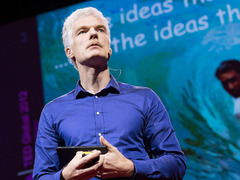
    AndreasSchleicherEducation is generally thought of as a domestic policy issue. But what can we learn by looking at education on the global scale?

    Andreas Schleicher: Use data to build better schoolsAndreas Schleicher: Use data to build better schools

    In today’s talk, given at TEDGlobal 2012, Andreas Schleicher introduces us to a test that measures school systems and student achievement in countries across the globe—PISA (the Programme for International Student Assessment), an initiative of the OECD (Organisation for Economic Co-operation and Development). PISA not only tests students on their mathematical understanding, reading level and ability to apply learning to new problems, but also looks at what teachers get paid, how long the school day is, what the average class size is and whether quality of education is uniform across schools and social stratifications. It even measures cultural attitudes, like whether people in the country expect all students to achieve or only a small segment of them to. It’s this broad approach to data collection that makes PISA so powerful, says Schleicher.

    “The test of life is not whether we can remember what we learn in school, but whether we are prepared for change,” says Schleicher. “Whether we are prepared for jobs that haven’t been created and to use technology that haven’t been invented to solve problems we just can’t anticipate today.”

    Education-level-by-countryIn the 1960s, the United States led the world in the number of students graduating high school. But by the 1990s, it had become 13th—not because their standards dropped, as Schleicher points out, but because so many other countries raised the level of education they were providing. In the same time period, Korea went from number 27 on this measure to number 1. Similarly, in 2000, Germany ranked low on PISA, their scores revealing wide disparity between schools. The ranking kicked off a national debate that forced policymakers to react and, nine years later, their system showed great improvement. The point: that countries are able to make drastic improvements in education in relatively short periods of time. And now, school systems can learn from each other.

    “Of course you can’t copy and paste education systems wholesale,” says Schleicher. “But these comparisons have identified a range of factors that high-performing systems share.”

    To hear what these factors are, watch this talk. And here, some surprising initial findings that PISA has uncovered.

    1.    Extracurriculars may not be just extras.

    For educators and politicians looking to trim education costs, extracurriculars seem like an obvious place to start. But PISA data suggests that extracurriculars may have direct links to performance. In a PISA survey from 2006, principals were asked about the kinds of science extracurricular activities they provided — like field trips, science fairs and science clubs. And students in schools where these things were commonly offered performed better in science — and this held true even after accounting for socio-economic background. Students in these schools also reported having a greater belief in their ability to tackle science-related problems and simply reported enjoying science more. Read more on the OECD Education Today blog.

    2.    Big spending does not necessarily make for a better school system.

    Education-spending-per-student-by-country

    On this graph, which shows PISA’s latest data from 2009, the size of the dot represents how much a country spends per student on education. This is mapped onto a graph that shows reading performance of students and socio-economic disparity seen across student performance. Interestingly, the biggest dots do not rise to the top here. Many of the school systems charting the best on both performance and equity actually spend moderately per student.

    In his talk, Schleicher shows how two countries can make very different decisions on how they spend their education dollars. He takes a look at Korea and Luxembourg, which spend comparably. While Korea spends heavily on teacher compensation and development, as well as on having a longer school day, Luxembourg focuses on keeping small class sizes. The point: it’s not what you spend, but how you spend it.

    3.    Performance-based pay may not make for better teachers.

    In a recent study, PISA looked at whether basing teachers’ pay on their effectiveness has results when it comes to student performance. They surveyed school systems where performance determines base salary, annual supplemental payments, and incidental supplemental payments. Overall, there appeared to be no relationship between student performance and whether teachers receiving one of these kinds of performance-based pay. However, when the countries were divided into nations where teachers are low paid (recieving less than 15% of the GDP per capita) versus ones where teachers are well paid (getting more than 15% of the GDP per capita), a pattern emerged. In countries where teachers are low-paid but have a performance-based pay system in place, students performed better on PISA measures. However, in countries where teachers are well paid and performance-based pay system was used, students actually performed worse. Read more on the OECD Education Today blog. 

    4. Private schools are not across the board better than public schools.

    It’s a question many parents want answered: will my child get a better education at a public or private school? The answer is that it depends. Analysis of PISA data shows that students in private schools do tend to perform better than students who attend public schools. However, there are several important caveats. When they controlled for socio-economic context — i.e. looking at public and private school in the same social strata — students performed equally well on PISA measures. And interestingly, in countries with a higher percentage of private schools, students do not perform better overall than those with lower percentages. Read more in PISA On Focus.

  • Lights, Camera, Apps!

    Digital Trends has asked a great question: “Why aren’t there more movies based on apps?” I say that if it’s popular and mainstream, people will love it! Making likeable characters relatable is a recipe for success. And with little place else to look for fresh movie ideas, it’s only a matter of time before apps go Hollywood.

    Around the office, we’ve all been using our new BlackBerry Z10 smartphones and gaming like crazy in our spare time. This got me thinking about some of the amazing new apps and what they would be like as a feature film. So I decided to ask a few of my colleagues at BlackBerry which BlackBerry smartphone app they’d like to see on the big screen.

    video-apps-1

    Alex K. chose DynaStunts for BlackBerry 10. He’s addicted to the action and said all the customizable characters and vehicles would transition nicely to the silver screen.

    video-apps-2

    For Melanie M. it would be Riptide GP. Bouncing around on waves and racing Jet Skis? Sign me up for that action-packed thrill ride.

    For me, it would definitely be World of Goo — and Kerri B. agrees! It has drama, character development, suspense and some good ol’ fashioned humor – just my kind of flick.

    video-apps-3

    Now I’m curious to know which of your favorite apps you think would make great feature-length films. Let me know in the comments below!

    *All images via BlackBerry World storefront

  • Poll shows America’s youth think Microsoft is becoming ‘cool’ again

    Microsoft Brand Perception Poll
    Although Microsoft (MSFT) hasn’t been considered “cool” since the heyday of Pogs and “The Macarena,” a new Reuters/Ipsos poll shows that things may be changing.  As Reuters reports, the poll shows that roughly 50% of Americans between the ages of 18 and 29 think Microsoft is cooler than it was a year ago, a positive result for the company that mirrors a recent survey of American teenagers showing strong interest in the Surface tablet. Microsoft still has a ways to go before it’s the “coolest” tech company around, however, as the poll also found that 70% of young Americans said that Google’s (GOOG) Android operating system has gotten cooler over the last year, while 60% said that Apple (AAPL) had gotten cooler over the past year.

    Continue reading…

  • KFC Employee Fired After Mashed Potato-Licking Photos Hit Facebook

    A KFC employee has been canned after Facebook photos showed her licking a large heap of the fast food restaurant’s mashed potatoes.

    The photos in question were brought to the attention of WJHL in Johnson City, Tennessee. They posted the photos to their own Facebook page and received thousands of shares and hundreds of comments. Eventually, the photos were linked to a particular KFC restaurant.

    Shortly after, the tater-licker has been fired. So was the person who took the photos.

    KFC Spokesman Rick Maynard said that there photos were taken after-hours and that the licked potatoes weren’t actually served to any customers.

    “Nothing is more important to KFC than food safety. As soon as our franchisee became aware of the issue, immediate action was taken. The franchisee’s investigation confirmed the photos were taken after the restaurant was closed and none of the food was served. The employee involved was immediately terminated. Today, KFC Corporation is sending representatives from our Operations and QA teams to the restaurant to reinforce and retrain on KFC’s high operating standards,” said Maynard.

    Reminder: No picture you ever take has even an iota of a chance of staying private anymore. Don’t be an idiot.

  • Vegas Strip Shooting Ends In Fiery Crash; 3 Dead

    A shootout on the Vegas Strip turned deadly for a driver and two innocent people who were in the wrong place at the wrong time early Thursday morning.

    Vegas police say a suspect in a black Range Rover began shooting at the driver of a Maserati in front of Bally’s Hotel and Casino; the driver was killed, and the Maserati crashed into a taxi, causing an explosion and the death of the taxi driver and a passenger.

    “There was a loud bang and I hear two other booms. I looked out my window at Caesars Palace … and could see a fireball,” said witness John Lamb.

    One report says that there were five cars involved in the shootout/crash, and that several people were injured. Investigators are still at the scene of the crash and say they are looking for a black Range Rover with dark tinted windows and distinctive black rims. They don’t believe anyone else was shooting.

  • PlayStation 4 Announcement: Relive the Opening Moments

    Sony’s PlayStation 4 unveiling was over two hours long, and if you stayed up for the entire thing you might have forgotten how it began.

    The meeting began right on time and opened with a video montage featuring fast-cuts Sony consoles and the games that defined them. It also has short clips from memorable PlayStation ads, including one of those old Crash Bandicoot mascot ads.

    The video sure to induce a strong case of nostalgia in anyone who grew up playing a PlayStation or PlayStation 2. It’s also a good reminder to gamers of why they took up the hobby in the first place – games.

    The music, in case you’re interested, is a heavily re-mixed version of the song “Monster Hospital” by the band Metric.

  • BioShock Infinite Gets Three DLC Packs, Available Via Season Pass

    BioShock Infinite seems like it will be a complete experience when it launches. It’s hard to see what DLC can do to expand the world created by Irrational Games, but the ever alluring temptation of making money off DLC ensures more content will be created.

    Irrational Games announced this morning that BioShock Infinite will be getting three DLC packs in the future. All three packs will provide “hours of additional gameplay and continue the player’s journey in the sky-city of Columbia with new stories, characters, abilities and weapons.” Each pack will cost $10 upon release.

    If you want to save a bit of money, all three packs will be bundled into a season pass that will go on sale on March 26. The season pass will cost $20, and be available across all three platforms. Those who buy the season pass will also receive “Early Bird Special Pack” for free. Here’s what you’ll get:

    This bonus pack contains four pieces of exclusive gear, a Machine Gun Damage Upgrade, a Pistol Damage Upgrade, a gold skin for both weapons and five Infusion bottles that allow players to increase their health, their shield durability or their ability to use Vigors by increasing the quantity of Salts they can carry.

    While you wait for BioShock Infinite and its DLC, check out the wonderful mockumentary series from Irrational that explores the origins of Columbia and the Songbird.

    BioShock Infinite launches on March 26 for the Xbox 360, PS3 and PC.

  • Google Penguin Update Hasn’t Been Refreshed Since October [Report]

    Search Engine Roundtable reports that it has confirmed with Google that it has not launched a data refresh for the Penguin update since the last reported refresh in October.

    Barry Schwartz writes, “Google has told us that Penguin is rarely refreshed, unlike Panda and we didn’t miss any Penguin refreshes since.”

    Apparently some people thought there may have been unreported refreshes, and misconstrued something Google’s John Mueller said in this Hangout:

    The Panda is updated regularly, and much more frequently. The last one of those came last month, as Google announced on Twitter.

    We’re still waiting for Google to release its (what used to be) monthly lists of algorithm changes (or “Search Quality Highlights”) for the past several months. They haven’t done that since October either.

    So far, Google hasn’t really pushed out any earth shattering updates in 2013.

  • Petition to Make Unlocking Phones Legal Again Crosses Signature Threshold

    A petition to make unlocking cellphones legal again has crossed the signature threshold on the White House’s We The People petition site, meaning that it will receive an official response.

    Back in January, unlocking new cellphones became illegal via decision from the Library of Congress. It’s still legal to unlock phones purchased before January 26th, but doing so on any device purchased after that cutoff mean you could run afoul of the Digital Millennium Copyright Act. The basis for the reversal of U.S. federal policy was that only software owners (mostly Apple, Google, Microsoft, etc.) shoudl have the rights to unlock handsets.

    Of course, many consumers strongly disagree and feel as though it’s their right to do whatever they want with a device once they’ve made the purchase. And that’s the feeling behind the petition.

    Here’s the full petition, simply titled “Make Unlocking Cell Phones Legal”:

    The Librarian of Congress decided in October 2012 that unlocking of cell phones would be removed from the exceptions to the DMCA.

    As of January 26, consumers will no longer be able unlock their phones for use on a different network without carrier permission, even after their contract has expired.

    Consumers will be forced to pay exorbitant roaming fees to make calls while traveling abroad. It reduces consumer choice, and decreases the resale value of devices that consumers have paid for in full.

    The Librarian noted that carriers are offering more unlocked phones at present, but the great majority of phones sold are still locked.

    We ask that the White House ask the Librarian of Congress to rescind this decision, and failing that, champion a bill that makes unlocking permanently legal.

    The petition currently has 101,000+ signatures, which means that the White House is required to respond. In mid-January, the White House upped the signature threshold to 100,000 from the previous 25,000, in the hopes of weeding out “joke” petitions and make the process a little more credible.

    Before this move, there were dozens upon dozens of petitions that hit their goal but were sitting in limbo, waiting for responses.

  • VMware and Citrix Launch Workforce Mobility Solutions

    The mobile device management market continues to heat up, as VMware and Citrix expand product offerings to help manage personal laptops used in the workplace and Bring Your Own Device (BYOD) initiatives.

    VMware Horizon Suite

    VMware (VMW) unveiled the VMware Horizon Suite, a comprehensive platform for workforce mobility that will connect end users to their data, applications and desktops on any device without sacrificing IT security and control. In addition to updates to Horizon View and Horizon Mirage products, VMware introduced VMware Horizon Suite, which will enable IT organizations to empower users with a secure, easy-to-manage virtual workspace that delivers a consistent, compelling experience across devices.

    “Our customers are looking for a comprehensive, enterprise-class solution to empower workers in a world where the proliferation of devices and consumer cloud services have changed user expectations, while putting IT security and governance at risk,” said Boaz Chalamish, senior vice president and general manager, End-User Computing, VMware. “VMware virtualization has helped hundreds of thousands of customers change what is possible in the datacenter, and we believe it can have the same transformative impact in end-user computing. The VMware Horizon™ Suite will help our customers accelerate their journeys from the PC Era to the Multi-Device Era.”

    As a unified solution the Horizon suite will combine a desktop virtualization solution with technologies that VMware has built from the ground up to support a mobile, collaborative workforce. Horizon Workspace was also introduced, as a new product that will combine data, applications and desktops into a single aggregated workspace, that can be securely delivered on any device.

    Citrix launches XenMobile MDM

    Citrix (CTXS) announced XenMobile MDM, an enterprise mobile device management solution that gives users device choice while also enabling IT to meet its management and compliance requirements. XenMobile MDM provides the foundation to address these needs through role-based management, configuration and security of corporate and employee-owned devices. The product is directly integrated with Microsoft Active Directory and public key infrastructure systems, as well as security information and event management tool.

    “In today’s complex enterprise mobility environment that includes a mix of corporate and employee-liable devices, companies need solutions that allow them to manage devices, data and apps,” said Stephen Drake, Program VP, Mobile Enterprise at IDC.  ”The addition of an MDM solution to the Citrix MAM and data management capabilities create a complete solution. By offering a platform for mobile enterprise management that gives options, Citrix can help give customers the peace of mind that, if their needs change, the platform can adjust.”

    In addition to XenMobile MDM, Citrix now also offers a Mobile Solutions Bundle for Enterprise Mobility Management (EMM). The Mobile Solutions Bundle is comprised of XenMobile MDM and CloudGateway and eliminates the need for multiple point solutions from other vendors.

  • The Witcher 3 Announced as a PlayStation 4 Title

    Now that Sony has finally unveiled its PlayStation 4 console, developers can finally reveal their next-generation projects. Many new games, including some new IPs, were revealed at the conference and some impressive claims were made.

    However, one developer that wasn’t at the conference last night didn’t wait for Sony or Microsoft to unveil its next-generation game. Earlier this month, CD Projekt RED (CDPR) announced that The Witcher 3: Wild Hunt will be released for all “top-of-the-line consoles,” a thinly veiled reference to next-generation consoles. Now that the PlayStation 4 is public, the developer has followed up by making it official that Wild Hunt will be coming to Sony’s new console.

    “We were thrilled when asked, several months ago, to be one of the developers who were granted early access to the PlayStation 4,” said Adam Badowski, managing director of CDPR. “It was an exciting moment to be invited to be in the company of other legendary developers like Bethesda, EA, LucasArts, Ubisoft or Activision as one of the teams working on titles shipping early in the PlayStation 4′s lifecycle. Of course, we couldn’t reveal any specifics about this to our fans, even though many journalists and forum members asked about when and how The Witcher might show up on Sony’s console. After yesterday’s PlayStation Meeting we can finally promise: The Witcher 3 is coming to the PlayStation 4. The new hardware gives us the opportunity to create something great. We are able to work with the new console from its birth and this allows our in-house REDengine 3 to push the graphical limits of what the PlayStation hardware can display. The console is fresh and has some innovative solutions that we’re looking forward to using in our game”

    The Witcher 3 has been announced as a “fully open-world game with an intense story.” Gamers will be placed in a world larger than Skyrim and let loose to slay monsters, play politics, and craft gear.

  • Knife Fight Director Bill Guttentag Talks At Google

    Bill Guttentag, director of the political comedy/drama “Knife Fight” recently participated in an “@Google Talk,” which the company has now uploaded for viewing.

    In addition to directing the Rob Lowe film, he has helmed a number of documentaries, including: Soundtrack for a Revolution, Nanking, and Hate.com: Extremists on the Internet.

    More recent @Google Talks here.