Blog

  • Google Ups Its Cloud Platform Support Game

    Google announced the launch of a new set of support packages for services on the Google Cloud Platform today. These cover App Engine, Compute Engine, Cloud Storage, Cloud SQL, BigQuery, etc.

    “While you can go to Stack Overflow or Google Groups, we realize some of you may need 24×7 coverage, phone support or direct access to a Technical Account Manager team,” says Brett McCully from Google’s Cloud Platform team.

    There are four tiers:

    • Bronze: All customers get access to online documentation, community forums, and billing support. (Free)
    • Silver: In addition to Bronze, you can email our support team for questions related to product functionality, best practices, and service errors. ($150/month)
    • Gold: In addition to Silver, you’ll receive 24×7 phone support and consultation on application development, best practices or architecture for your specific use case. (Starts at $400/month)
    • Platinum: The most comprehensive and personalized support. In addition to Gold, you’ll get direct access to a Technical Account Manager team. (Contact Sales for more information)

    Here’s another way to look at it:

    Cloud Platform

    More info here.

  • Has Yahoo Improved Its Homepage? Many Think Not.

    Yahoo has been testing various redesigns of its homepage for months, but now it has announced the “new Yahoo experience”.

    Note: We’ve updated this article from its original form, and since it was first posted, the negative comments have flooded in. While you will typically see this with any redesign of a major property, we’re not seeing a whole lot of positive ones to balance them out.

    Anything you do like about it? What do you or don’t you like about the revamp? Let us know in the comments.

    “Over the years, Yahoo! has evolved from a directory of links to a place that helps millions of people go about their daily habits,” a spokesperson for the company told WebProNews on Wednesday. “Beginning today, you will start to see a new Yahoo! that’s designed to be more modern, intuitive, and personal, and I wanted to make sure you got the news from the company.”

    Here’s what the homepage looks like now:

    New Yahoo homepage

    New features include:

    • A newsfeed with infinite scroll
    • Newly designed apps for stock quotes, sports scores, weather, Flickr photos, friends’ birthdays and horoscope
    • Yahoo and Facebook login, which let you see personalized articles based on what your friends have shared
    • A more consistent experience across the web, smartphones and tablets
    • Under-the-hood improvements to speed things up

    CEO Marissa Mayer wrote a blog post about the new experience.

    “Designed to be more intuitive and personal, the new Yahoo! experience is all about your interests and preferences,” she says. “Since streams of information have become the paradigm of choice on the web, we’re introducing a newsfeed with infinite scroll, letting you experience a virtually endless feed of news articles. Whether you are a sports fanatic or entertainment buff, you can easily customize your newsfeed to your interests. And, to make Yahoo! even more social, you can log in with your Yahoo! or Facebook ID to get articles from thousands of news sources as well as those shared by your friends.”

    “Because you come to Yahoo! everyday for must-know information, we’ve also introduced newly designed applications,” she adds. “From your local weather forecast to Facebook friends’ birthdays, you’ll always have the information you need. We’ve also refreshed some of what you love most — including our Yahoo! editorial features, and the daily snapshot into popular trending web searches.”

    Mike Kerns, VP, Product, discussed the new Yahoo experience in more detail in a post on Yahoo’s blog.

    “To view more personally relevant content in the newsfeed, just sign in with your Yahoo! or Facebook ID in the upper right corner of your screen,” he explains. “The newsfeed defaults to a ‘blend’ of story types, but also allows you to filter your view through a handful of popular categories, such as news, local, entertainment and sports. For additional choices in the newsfeed filter, just click the ‘More’ button to choose from other categories that interest you like business, technology, politics or science. If you want to see fewer stories about a particular topic in the future, hover your cursor to the right of the story and click on the ‘X’ button. And remember, the more feedback you provide, the more personalized and relevant your experience will be.”

    New Yahoo

    new Yahoo

    “In addition to seeing news stories that your friends have read and shared, you can easily share with them,” he says. “When you come across a news item that you’d like to share, hover over it to view a button that allows you to share the story via email, Facebook, or Twitter.”

    New Yahoo

    There are a total of seven new applications on the right side of the screen for: weather, stocks, sports, friends’ birthdays, horoscopes, Flickr photos, and popular videos from Yahoo. These can be personalized by hovering over the upper right side to clic the gears icon.

    “For example, getting ready for March Madness? Add your favorite teams to the Sports application to catch up on the latest scores,” says Kerns. “Keeping an eye on your investments? To view stock quotes, click on the gears icon in the Quotes application to integrate your portfolio, look up quotes, or add new stocks. Travel often? Add as many cities as you’d like to the Weather application.”

    Customize new Yahoo

    You can also click the “x” button in the upper right corner of the application box to remove the application, should you see fit. There’s a “restore all” button a the bottom if you want to bring it back later.

    As mentioned, the new design is consistent with the mobile experience, which lets you swipe through the “Today” stories. You can scroll down the newsfeed, and swipe left to take action on the content (like share it). You can also swipe left to access the applications.

    Yahoo Mobile

    The new design is in the process of rolling out in the U.S. Mayer says they’ll be making additional (but unspecified) changes in the coming months. We’re already seeing a lot of feedback (sadly, most of it is negative). It will be interesting to see how Yahoo responds.

    Yahoo has indicated that it is focused on search, as it released its Q4 and full year 2012 earnings helped significantly by it. Whether or not Yahoo’s future search plans include Microsoft remains to be seen. Even if Yahoo wants to abandon the companies’ “Search Alliance,” Microsoft will do its best not to make it easy.

    Right now, Yahoo needs to be concerned about keeping users on its still massively popular homepage. Yahoo has a realtime counter that shows how many people have visited the homepage up to the current time on any given day. At the time of this writing, tt’s just 8:40 Eastern, and it’s already received nearly 40 million views today so far.

    What do you think of the new homepage? Let us know in the comments.

  • Mozilla releases Firefox Beta 20.0b1 — get it NOW!

    Mozilla has released Firefox Beta 20.0b1, the first public beta of a landmark release. Like its predecessor, Firefox 19 FINAL, which debuted the new inline PDF viewer, version 20 looks set to unveil another major new feature to the Firefox armoury: a redesigned, panel-based download manager.

    Version 20 also includes a major refresh of the Developer toolbar, providing tweaked and redesigned access to all of the major components, plus an option to view the tools in a separate window. A new Javascript benchmarking tool has also been added.

    The headline new feature in Firefox 20 — the panel-based downloads manager — has been in existence for a quite some time. After an extended period in Firefox Aurora, the feature is now considered stable enough to move towards a final release.

    The downloads manager automatically appears when a download has been initiated – it can also be brought up by clicking the new Downloads button that appears immediately to the right of the Search bar. This changes from an arrow icon to a progress bar with estimated download time when downloads are in progress.

    When clicked, all present downloads — including completed ones — are shown in a list. Unfinished downloads are shown with a green bar charting their progress, while right-clicking the download reveals a number of additional options, including Pause and Resume, Cancel, Go To Download Page and Remove From History.

    Clicking Show All Downloads opens the new Downloads Manager, which is integrated in the Library window alongside History, Tags and Bookmarks. The display is basically an exact replica of the panel-based manager, and works in the same way, providing users with a consistent experience.

    Developer Updates

    Of interest to developers will be the radically revamped Developers toolbar. As the number of developer tools has mushroomed – Firefox 20 adds another to the mix – so the Firefox UI team have worked to provide a more user-friendly layout.

    The redesigned toolbar sees tools more logically arranged to make it easier to switch between them. The Web Developer menu has been split to organize the tools more logically, while a Toggle Tools option provides quick access to the full gamut of tools, where users can now quickly switch between Web Console, Debugger, Inspector, Style Editor and the new Profiler tool with a single click.

    Convenient shortcuts to the Scratchpad and Responsive Design Mode are also provided, along with a new button for splitting off the developer tools into their own window, allowing them to be arranged on a second monitor if desired.

    The new Profiler tool allows developers to track the responsiveness of Javascript code. In this initial release, it offers a simple “start/stop” control that subsequently provides a graph charting the code’s performance and highlighting potential performance bottlenecks.

    Firefox Beta 20.0b1 is available now as a free, open-source download for Windows, Mac and Linux. Also available are Firefox 19.0 FINAL and Firefox 19.0 for Android.

  • The massive advertising shift that Twitter is trying to capitalize on with its API

    Much has been written about the disruption taking place in the media industry as a result of the web and the atomization of content, but less has been said about how the advertising business — on which most of the media industry continues to rely — has been going through its own disruption. One of the seismic shifts that has been upending business models is the one that Twitter is trying to capitalize on with its API: namely, the increasing move towards “programmatic” or automated ad buying, as opposed to the traditional human-driven ad game.

    This is about more than just some tinkering with the machinery that underlies the content we consume. As Felix Salmon notes in a post at Reuters, virtually every media entity — from behemoths like the New York Times to the smallest independent online player — is being forced to reinvent how they generate revenue because digital advertising is not paying the bills (Note: We will be discussing alternative monetization methods on a number of panels at our paidContent Live media conference on April 17 in New York).

    Another battle between algorithms and humans

    Google

    Like most of the other changes in the media industry, this shift didn’t just just happen overnight. Instead, it’s a wave or a series of waves that have been building steadily over the past several years. As with so many other elements of the disruption in digital content, Google arguably triggered this particular tsunami with the introduction of its search-keyword based auction process — an idea it borrowed from Bill Gross and Overture — but the ripple effects of that decision have continued to grow and expand in force.

    In a nutshell, advertising has become yet another battleground for the fight between humans and algorithms: the human beings at ad-buying firms and ad networks who used to buy and sell banners and other traditional forms of advertising, and the algorithms that drive “programmatic” buying based on keywords, topics that are trending in social media and other factors.

    As we described earlier, this is something the New York Times has been experimenting with via an in-house tool that tracks which stories are seeing the most activity on Twitter, and then offers advertisers the ability to insert their ads into those stories. It’s no longer about where that content appears in a physical product like a newspaper, or even what the story is actually about. Instead, it’s more about who is engaging with it, and where, and how.

    Part of this shift is the transition from what some marketers call “outbound” marketing — which includes direct mail, banner ads and other methods that try to reach out and grab the attention of potential customers — to “inbound” marketing, which relies on search-engine optimization and other content-based strategies that make it easier for users to find a brand or advertiser without being bombarded by ads (Demand Media and other “content farms” have tried to apply this approach to content, with mixed results).

    Hubspot, which specializes in inbound marketing, says it is more or less taking over the online world, and the consequences for traditional media companies are dire:

    borrell_2013_v_2013

    Automated buying vs. human-created content

    So what does all this have to do with the Twitter advertising API? In a nutshell, the API is a way for companies to automate more of their ad spending. At the moment, the list of official partners isn’t that long, but it will presumably grow — and the API combined with Twitter’s self-serve ad platform will theoretically allow advertisers to promote tweets based on what is trending and where the activity is. Twitter is also likely providing a host of information around users and their interests.

    This is essentially the same game Facebook is playing, and while Google doesn’t have an open API for Google+ yet, it is likely thinking along the same lines. For social networks, in which the content generated by users is almost indistinguishable from the advertising — and in the case of Facebook, actually becomes part of that advertising, through features like sponsored stories — offering tools that let advertisers automate their spending based on hard data is potentially far more lucrative than another generic banner ad.

    The problem for many media companies is that this is a game they are ill-equipped to play: for the most part, they have little or no data about their users that can compete with the granularity that Facebook or Twitter can offer, and they have no APIs or other automated, self-serve features to offer even if they did have that kind of data. On top of that, brands are setting up newsrooms and becoming content publishers in their own right, and further disintermediating the media.

    This is part of the reason why so many players like The Atlantic and even Gawker Media have been focusing on alternative methods such as sponsored content or “native” advertising or affiliate links. But as Salmon notes in his post, these kinds of approaches are often labor-intensive (if you want them to be effective), and therefore high cost. In some ways, the market seems to be bifurcating: on one side is a growing business driven by algorithms, and on the other is a human-driven business based on customized content. Is there room for both?

    Post and thumbnail images courtesy of Shutterstock / Everett Collection and Borrell Associates

    Related research and analysis from GigaOM Pro:
    Subscriber content. Sign up for a free trial.

  • Twitter Goes DMARC To Fight Phishing

    Over a year ago, fifteen major companies joined forces to create DMARC, a “technical working group” to develop antiphishing standards. The companies were: Google, Facebook, LinkedIn AOL, Microsoft, Yahoo, PayPal (eBay), Bank of America, Fidelity Investments, American Greetings, Agari, Cloudmark, eCert, Return Path and Trusted Domain Project.

    Today, Twitter announced that it is using the DMARC technology with its emails, making it less likely that users will see any email pretneding to be from a Twitter.com address.

    “We send out lots of emails every day to our users letting them know what’s happening on Twitter. But there’s no shortage of bad actors sending emails that appear to come from a Twitter.com address in order to trick you into giving away key details about your Twitter account, or other personal information, commonly called ‘phishing’,” said Twitter Postmaster Josh Aberant.

    “Without getting too technical, DMARC solves a couple of long-standing operational, deployment, and reporting issues related to email authentication protocols,” he said. “It builds on established authentication protocols (DKIM and SPF) to give email providers a way to block email from forged domains popping up in inboxes. And that in turn lessens the risk users face of mistakenly giving away personal information.”

    Twitter began using DMARC earlier this month. AOL, Gmail, Hotmail/Outlook and Yahoo Mail all take advantage of the technology.

  • Google Makes Chromebook Pixel Official, Costs $1,299

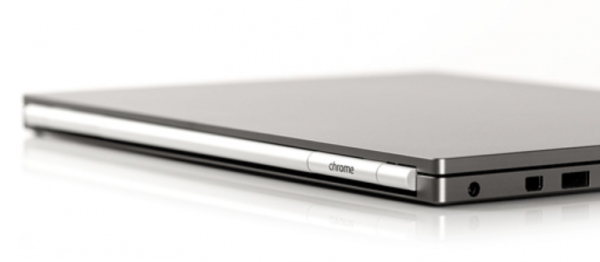
    Last month, a leaked video teased that Google was working on something called Chromebook Pixel. It was reportedly a high-powered Chromebook with a 2560×1700 display that would rival Apple’s own retina display MacBooks. Now Google has made it officially known that the Chromebook Pixel is a reality.

    The Chromebook Pixel is similar to what we saw last month in the leaked video. The screen is a 12.85-inch touch display with a resolution of 2560×1700. That’s a whopping 239 ppi, or 4.3 million pixels. Other hardware specs include an Intel Core i5 processor clocked at 1.8GHz, integrated Intel HD Graphics, 4GB of RAM and a 32GB SSD.

    Another rumor regarding the Pixel that’s been confirmed by Google is that the laptop will come in two flavors. The basic Pixel will feature Wi-Fi connectivity only, while the other features LTE connectivity. The LTE connection allows for 100MB/month through Verizon.

    Of course, some may be concerned about the paltry 32GB SSD storage on the Pixel, but Google has your back with its usual offer of extra storage via Google Drive. Those who purchase the Chromebook Pixel will get a terabyte of storage in the cloud for everything from videos and music to pictures and documents.

    The Wi-Fi Chromebook Pixel is available starting today in the Google Play store, and will be on Best Buy’s Web site soon. It will retail for $1,299. Preorders will start shipping out next week. The LTE Chromebook Pixel will retail for $1,449 and ship out in April.

  • Three Sisters Killed: Children Raped In India, Bodies Dumped

    Three sisters were raped, killed, and dumped in a well in India on Valentine’s Day; their bodies were found two days after their grandfather reported that they hadn’t returned home from school.

    The girls, aged between five and eleven years old, are the latest victims in a wave of sexual violence to sweep India. After the brutal rape and murder of a young woman on a bus in New Delhi, more and more citizens are speaking out against the violence aimed at women and girls there. After the sisters were found, thousands of people from Murmadi, Lakhani reportedly blocked the highway in a protest, demanding justice be done.

    The family of the girls say that the Police Inspector, Prakash Munde, was partially to blame for a delay in a search for the girls; he has since been suspended. The government has awarded the children’s mother a financial compensation, but she refused, saying instead she wanted them to use it to find the murderers.

    “When my granddaughters did not return home on February 14, we searched around and at 9 p.m., we went to the Lakhani police station to lodge a complaint. But our complaint was registered only at 1.30 am next day,” the girls’ grandfather–who helped raise them–said.

    Police have organized several investigation teams for the case and, as of this week, had three suspects in custody for interrogation. But, they say, that doesn’t mean the men are the suspects. They are also looking at people who knew the family, saying they suspect the girls knew their killers.

  • Meet Eddie, the Slam-Dunking Sea Otter

    Eddie the geriatric sea otter, other than being really cute, also likes to play a bit of basketball. The Oregon Zoo had to find some way to get Eddie to work those arthritic elbows, and they thought what better way than with a little bit of b-ball.

    You won’t see Eddie hooping during exhibits. This is just for medical purposes. But thanks to the power of the internet, you can watch this little guy do something that I’ve wished I could do since I was six years old: Slam dunk a basketball.

    [Oregon Zoo]

  • Dell leads $51.6M investment in flash storage startup Skyera

    Skyera, the startup that is bringing the cost of Flash-based storage down by using consumer-grade chips, said it has closed $51.6 million in Series B financing led by Dell Ventures. The deal, announced on Thursday, included participation from other strategic investors and is Skyera’s second round.

    It’s also a huge amount of money, but Skyera is riding a wave of interest in solid state storage, which is both faster and consumes less power than traditional hard drives. But Flash-based SSDs are also more expensive than hard drives on a per gigabyte basis — which has limited their use to places where companies can’t afford not to pay for faster performance.

    As my colleague Barb Darrow noted in a profile on Skyera last year, the company brags that it can achieve a $3 per GB cost which is still pricier than a hard drive but less than what Fusion-io recently announced with its latest NAND flash card product. Fusion said it could achieve per GB prices of around $3.89. From Barb’s profile:

    To get to cheap flash enterprise storage, Skyera uses inexpensive Multi-Level Cell (MLC) NAND flash, but found a way to do it to prolong the lifespan of the media. It is able to use high-density sub-20-nm MLC flash because its controller dynamically adjusts as the medium ages to reduce damage over time.

    The funding will be used to integrate next-generation flash memory chips produced at 20 nanometers into Skyera’s product as well as boost sales.

    As for Dell, which is setting itself up to be the provider of hardware for webscale and cloud vendors with its DCS division, investing in SSDs makes absolute sense, especially if there are ways it can integrate Skyera’s technology more deeply in its gear. For Skyera, having Dell as an investor might help it build out a lucrative sales channel.

    Related research and analysis from GigaOM Pro:
    Subscriber content. Sign up for a free trial.

  • Chromebook Pixel is Microsoft’s worst nightmare come true — and Apple’s, too

    The rumors were true! Google developed a touchscreen Chromebook for release this year. Like today! No one should misunderstand what the computer means competitively. Already, four Microsoft Windows partners produce Chromebooks — Acer, HP, Lenovo and Samsung. Chromebook Pixel promises to do for the Chrome OS platform what Nexus devices did for Android smartphones and tablets: Establish a reference design for hardware partners and provide developers base system to develop apps for the platform. But it’s also a competitive move against PCs running OS X or Windows and Google pushing Chrome OS into the premium notebook market.

    Today Google unveiled Chromebook Pixel, following weeks of rumors. The company also extended a vision for Chrome OS. Bottom line: Commitment to the operating system is strong. The search and information giant briefed journalists in different cities. I had to turn down an invite to the San Francisco briefing because of family matters. Do I feel left out! But, hey.

    The computer is available now for order from Google Play — and you’ll pay, too. This isn’t the value-system touted in “For Everyone” marketing. Chromebook Pixel is for anyone willing to spend $1,299 or $1,449. Orders made right now ship in three to five days for the lower-cost model, 6 to 7 weeks for the other.

    Specs: 12.85-inch touchscreen, 2560 x 1700 resolution, 239 pixels per inch, 3:2 aspect ratio; 400-nit brightness; 1.8GHz Core i5 processor; Intel HD graphics 4000; 4GB DDR3 RAM; 32GB or 64GB of storage; HD WebCam; backlit keyboard; dual-band WiFi 802.11 a/b/g/n 2×2; 4G LTE (on one model); Bluetooth 3.0; mini-display port; two USB ports; Chrome OS Measures: 297.7 x 224.6 x 16.2 mm. Weighs: 1.52 kg (3.35 pounds. Cost: $1,299 (32GB WiFi); $1,449 (64GB WiFi/4G LTE). 1TB Google Drive storage is included free, for three years.

    Crazy Concept

    Let’s step back and look at the larger context. The concept is crazy. Who launches a new PC operating system and succeeds (look for the answer in the next subhead)? Suddenly Chrome OS poses a credible threat to Windows and OS X. The four OEM partners is a sign, as is the success of Google’s “For Everyone” holiday campaign for Chromebooks.

    There’s a concept called “six degrees of separation”, which Hungarian writer Frigyes Karinthy proposed in the 1929 short story “Chains”. No two people are separated by more than five intermediaries, which works out to six degrees of separation. If I ask any four people in my social circles if they have Chromebook, at least one answers yes.

    Google is on the fast-track. In less time than Microsoft developed and released Windows 8, Google released the first Chromebook prototypes (December 2010), the first commercial models went on sale (June 2011), second-generation Chromebooks launched (May 2012), new-gen ARM model debuted (October 2012) and two of the three largest PC OEMs started selling Chromebooks (January-February 2013). Meanwhile, since October, two major Chrome OS updates released — yeah, months, not the years from Apple or Microsoft.

    Google’s big play is value. OEMs pay nothing to license Chrome OS and consumers pay much less for the computers. I could buy four Samsung Series 3 ARM-based Chromebooks for the price of one MacBook Air and get system of similar size, weight and ergonomics. See yesterday’s post “Why I love Chromebook“, as reference.

    Browser OS

    Chrome OS success so far is a water-shed development that Microsoft feared long ago. In May 2011 post “Chrome OS: The ghost of Netscape rises go haunt Microsoft“, I explained how Google’s operating system fulfills ambitions of the original, commercial developer. During the late 199os, Microsoft integrated Internet Explorer into Windows partly to prevent Netscape from creating, in the browser, a rival platform for applications development. Google has created the rival platform Netscape product managers envisioned 17 years ago. The browser is the operating system — or the front end running on top of Linux.

    In June 2007, I wrote “Why Google Succeeds” — in parts one and two — for Microsoft Watch; the content remains hugely relevant six years later. “Unchecked, Google is on course to be the next hugely successful computing platform”, I wrote.

    Netscape wasn’t really Microsoft’s competitive problem in the late 1990s but the web itself. Already, by the mid Noughties many developers had made the web priority over Windows. Where do you think cloud computing comes from? “Developer interest in the Web platform — and the promise of information access anytime, anywhere and on anything — shifts standards away from Microsoft’s dominant platforms”, I explained six years ago. Google rode the web platform’s coattails, pushing adopted or open standards along the way.

    Smartphone and tablet platforms shift applications development, but ultimately the web remains, if for nothing else than the browser engine being used in many applications.

    Chrome OS success to date is contrary-thinking. The old axiom is this: no one launches a new PC operating system and succeeds, because:

    • There aren’t enough applications
    • Switching costs are too high, particularly for businesses
    • The new thing doesn’t fit in with what people already have

    The first of these is typically the most difficult. Operating systems like BeOS failed if for no other reason than apps and the typical chicken-egg scenario. Which comes first? Platforms need applications to succeed, but developers have little incentive to create them if there is little adoption. If there are no apps, people don’t adopt the platform.

    Google has apps. Lots of them, because of the browser. Chrome OS benefits from more than two decades of browser development. Additionally, Google had the foresight to launch the Chrome Web Store nearly three years ago. In May 2010, I gave five reasons for the move. The first: “Google is launching a new operating system”.

    Chrome web apps run in the browser or Google OS. So anyone using Chrome can carry them to Chrome OS. Google also provides a tightly-integrated suite of cloud services, such as Apps and Gmail, that cover categories businesses already use. Switching is as easy as logging into a Google account on a new PC. Chrome OS fits because the browser is the most familiar motif people use every day.

    Contextual Computing

    Some people may wonder why Google invests so much in a laptop, when smartphones and tablets are the future of computing. There is no post-PC era. That’s marketing propaganda from the mouth of Apple cofounder Steve Jobs. The PC’s role changes, but not disappear. The personal computer goes from being the device hub to one of many connected to the cloud. What matters more is context, how your digital lifestyle moves from device to device adapting differently to your needs in various situations.

    The cloud is all about context. Content follows users everywhere, independent of device. Your music is available anytime, anywhere, on anything. On the airplane, there is no HDTV, but you want to watch a movie. So you start on a tablet and finish on the big screen at home. The content remains the same, but devices and locations change, as does the context.

    Google product and services are highly contextual. Context is in the corporate DNA. Overture, which Yahoo acquired in 2003, invented the business model Google perfected, selling keywords and ads around search. Hell, it’s called contextual advertising — for a reason.

    The search and information giant started making key contextual cloud investments in the late Noughties, with 2008 releases Android (September/October) and Chrome (December) being among the most important platforms. Then there is Chrome OS.

    In 2011 and 2012, Google starred to bring together a larger package of contextually-oriented offerings alongside Google+ and Search, plus your World. These services are all about context, providing what you want where you need it. Google offers many services, but search, alongside these nine — Apps; Drive, Gmail; Google Now; Google+; Maps; Search, plus your World; Talk; YouTube — forms the current contextual platform that culminates in one service.

    Three platforms (Android, Chrome and Chrome OS) are the contextual gateways to Google products and services and those from its development and advertising partners. Chrome on OS X and Windows is where Google citizens live because they have to. Chrome OS is their country, where they have full and easy access to all contextual services.

    Touch Me

    As part of its contextual push, Google advances concepts around natural user interfaces — that make you more part of the UI. Touch is among the most important, and there are good reasons why Apple and Microsoft support touch in their operating systems.

    Bill Buxton, Microsoft’s principal researcher, is an expert in user experiences. He says that a good natural user interface must address four human skill sets:

    • Motor sensory skills
    • Cognitive skills
    • Social skill
    • Emotional skills

    Stated differently, good natural user interfaces answer the question: “How do people function?”

    Human beings are tool users who experience and manipulate the world through five senses. While the eyes are the gateway, they are passive instruments. Hands and fingers are more important because they are active — they’re how people tactilely manipulate the world around them. People examine objects they desire as much with their hands as their eyes. Watch how people interact with items for sale — first people look, and then they touch.

    The keyboard is a particularly unnatural construct, in which organization is based on the number of times letters are likely to be used. The mouse is more natural than the keyboard, because of the hand and finger-clicking movement. But the mouse is still a makeshift extension of the human being.

    The finger and touch are more natural, because they extend you. Same goes for voice, when used to command, which many NUIs allow. Good user interfaces build on the familiar — and there is nothing more familiar than me, myself and I. See, say, hear and touch.

    The point: Computing devices that capture the senses are seemingly living things with some human-like qualities. Chromebook is dead without touch.

  • Google cloud grows up with more support options

    If you use Google Compute Engine or Google App Engine, Google Cloud Storage, Cloud SQL, or BigQuery —  there are new support options at your disposal.

    Google is offering a new tiered structure that includes a basic free level offering online documentation, forums and billing support; a Silver tier that adds best practices, email access to the support team for $150 per month; and a Gold level which layers 24X7 phone support and app development or architecture consultation atop all the rest starting at $400 per month. And then there’s the super-duper Platinum support that Google won’t even tell you about on its blog — you have to call in for details.

    Before now, “premier” users of the Google App Engine platform as a service had access to advanced support, but users of the other products had to tap Google Groups and Stack Overflow for support. That sort of informal structure is not copacetic with most IT buyers.

    The new options, announced on the Google Enterprise Blog Thursday, show that Amazon isn’t the only big cloud provider that’s trying to lure business customers into the fold. While Amazon Web Services (AWS)  is by far the leader in public cloud services, Google is one of a handful of vendors that even skeptics think can provide comparable compute and storage scale. The fact that third-party cloud providers like Cloudscaling — are adding support for Google Compute Engine APIs in addition to Amazon’s also shows that folks are looking for an alternative — or at least a backup — to AWS.

    googlecloudsupport

    Related research and analysis from GigaOM Pro:
    Subscriber content. Sign up for a free trial.

  • Seafood Mislabeled 33% of the Time in the U.S., Shows Study

    A new study by ocean conservation group Oceana has shown that one-third of the seafood sold in the U.S. could be mislabeled. Many of the mislabeled sea food products were a different type of fish than what was put on the label.

    “The kind of mislabeling we’re talking about in this study is substituting one species of fish for the type that you ordered.” said Kimberly Warner, author of the report and a senior scientist at Oceana. “Say you ordered red snapper but you got a different type of snapper, or even another completely different species such as tilapia or rockfish.”

    The study looked at 1,215 seafood samples from 674 different retail locations in 21 different states during the years 2010 to 2012. Of those samples, around 33% would be considered mislabeled by us. Food and Drug Administration (FDA) guidelines. Over 50% of the seafood tested from Southern California was found to be mislabeled.

    Seafood samples labeled as snapper and tuna were the most likely types to be mislabeled. Of the 120 samples of snapper tested, 113 of them (87%) were found to be another type of fish.

    In light of their findings, Oceana has called for a transparent national tracking system for seafood that tracks fish from boats all the way to consumers. It has also called on federal and state governments to ramp up inspections and enforcement of labeling violations.

  • Google unveils $1,300 touch-enabled Chromebook Pixel [video]

    Google Chromebook Pixel Release Date
    Like Microsoft (MSFT), Google (GOOG) is in a period of transition. Both companies cut their teeth in software and grew to lead their respective industries, but then they came to a realization: unless a company controls all aspects of the user experience — software and hardware — a product will never take shape in the manner they intended. On Microsoft’s end, the company is changing that with its Surface lineup. Google, on the other hand, bought Motorola for $12.5 billion.

    Continue reading…

  • Qualcomm’s new radio chip gets us one step closer to a global 4G phone

    As you might guess the week before Mobile World Congress, there’s a lot of mobile chip news coming out, but on Thursday Qualcomm released a doozey. It unveiled a new radio chip that the silicon vendor claims can support all of the world’s LTE bands in a single device, helping to overcome the fragmentation problems that plague 4G device makers.

    Qualcomm’s baseband chips and integrated applications processors have long supported all cellular technologies and bands, but they’ve never been able to produce a truely global phone. That’s because the other hardware components of the phone have never supported the same breadth of frequencies. Consequently, LTE devices have always been region-specific. Even Apple had to can its usual of strategy of producing a single global device and design three different variants of the iPhone 5.

    Wireless Intelligence projects 38 distinct LTE bands in 2015

    Wireless Intelligence projects 38 distinct LTE bands in 2015

    But Qualcomm’s new front-end chip, called the RF360, can supposedly support up to 40 LTE bands, both the time division and frequency division variants of LTE and all legacy 3G and 2G technologies to boot. Qualcomm created a 3D chip that utilizes a separate sophisticated antenna tuner that can latch onto any of 40 LTE frequencies between 600 MHz and 2.7 GHz – pretty much the entire range of current 4G spectrum.

    This technology will be a key element in creating the future universal LTE phone, but — before you get too excited — it’s not the only necessary element. Other components in the RF chain such as the antenna will need to catch up before a device could feasible work on every LTE network in the world. Smart antenna makers like SkyCross and Ethertronics have designed antennas that can support a dozen bands or so, but they’re not quite ready for 40.

    But Qualcomm EVP and co-president of mobile and computing technologies Murthy Renduchintala said that the RF360 would allow device makers to make far fewer variants of their phones. In order to cover all of the world’s LTE networks, a vendor is faced with the prospect of designing as many as 10 different devices. The capabilities of RF360 could cut that number down to as few as three, he said.

    “There will always be more problems to solve,” Renduchintala said an interview with GigaOM. “What we’ve done here is remove one of the most enormous obstacles.”

    Qualcomm RF360 specs

    One of the problems this technology could overcome is the 4G fragmentation problem that’s already emerging in the U.S. All four of major operators are deploying LTE on different frequencies, while the rural and many regional operators are off on their lonesome in a neglected portion of the 700 MHz band. Clearwire isn’t just launching LTE on it’s own 2.5 GHz band, it’s the only U.S. carrier using TD-LTE. Maybe the RF360 can’t yet produce a global 4G phone, but it could produce a universal phone for the U.S. — and maybe ensure that smaller operators aren’t left out of the 4G revolution.

    Also, Apple could conceivably use the technology to combine all of its iPhone 5 variants into a single device, but it still wouldn’t have a universal iPhone. Apple’s three iPhone models still leave out a good deal of the world’s current LTE frequencies, and with current technology it couldn’t cram 30 or 40 bands into a single device.

    But wait, there’s more! Qualcomm has also introduced its own envelope tracking technology into the module, which will help sate LTE device’s notorious hunger for power. Envelope tracking helps control the enormous energy spikes inherent in LTE, reducing device power consumption by as much as 30 percent. Other silicon vendors like Broadcom and Altair Semiconductor have announced support for envelope tracking in their new super-chips, but support doesn’t necessarily equate inclusion. Qualcomm developed its technology in-house and is embedding envelope trackers directly into its future RF products.

    Renduchintala said the module has already begun sampling and is in the hands of phone manufacturers. The first commercial devices with the new capabilities should start appearing in the latter half of the year.

    This post was updated at 12:05 PM, Thursday, with new information on the implications of the technology for the iPhone.

    Related research and analysis from GigaOM Pro:
    Subscriber content. Sign up for a free trial.

  • OTI Greentech Raises About $4.4M From Green Gateway Fund

    OTI Greentech Group AG said it raised about $4.4 million in a deal led by Wermuth Asset Management’s Green Gateway Fund, also known as the Europe Tatarstan Cleantech Fund. The funding is the first tranche in a commitment that will grow to about $7.7 million. The second tranche is expected later in 2013.

    PRES RELEASE

    OTI Greentech successfully completes expansion funding with Green Gateway Fund as lead investor

    §  OTI Greentech raises c. CHF 4 million (EUR 3.4 million) for long-term expansion
    §  Green Gateway Fund has committed total funding of CHF 7.2 million (EUR 6 million), second tranche planned to invest later this year
    §  Funds will be used to expand business mainly in North America, the Middle East and Russia
    §  Green Gateway to appoint a Non-Executive Director to the OTI Greentech Board of Directors

    Zug, Frankfurt am Main, 21 February 2013. OTI Greentech Group AG, a leading provider of sustainable cleantech solutions successfully closed a round of expansion financing, raising a total of CHF 4 million (EUR 3.3 million). The funding was led by Wermuth Asset Management’s Green Gateway Fund, which invests in best-in-class energy and resource efficiency growth companies throughout Europe. The funding marks a solid base for the long-term expansion plans of the company. In total, the financial commitment of Green Gateway Fund is CHF 7.2 million. The second tranche is expected in 2013

    With the cleaning of tanks and ships, the remediation of oil-contaminated land or the separation and recycling of oil from waste streams, OTI Greentech covers a broad range of next generation applications for oil-related contamination and waste. OTI Greentech’s awarded and patented EcoSOLUT™ products have been used by various international shipping, oil service and waste management companies. EcoSOLUT™ products are high-performance “green” chemicals, which reduce cleaning cycles and meet more advanced health, safety and environmental standards than traditional chemicals used in the industry. Demand for the products has increased significantly, requiring the company to expand its international distribution network as a matter of priority. The funds will be used to expand the business mainly in North America, the Middle East and Russia and to strengthen the company’s intellectual property portfolio.

    “We have seen strong interest from international investors in general. Completing the expansion funding was an important milestone for OTI Greentech. We are redefining standards in the industry in regards to efficiency, safety and sustainability. In the Oil and Energy sector our products show unique characteristics in treating waste streams from oil production, particularly with unconventional oil reservoirs such as oil sands and heavy oil”, stated Stephan Rind, President of OTI Greentech AG. “We are also pleased by our new Lead Investor, the Green Gateway Fund. The fund’s principals have vast experience in the energy and resource efficiency sector and a powerful network to support our business growth.” The Green Gateway Fund will appoint one non-executive member to the Board of Directors of OTI Greentech Group.

    Green Gateway Fund Partner Casper Heijsteeg said: “We are delighted to have completed our investment in OTI Greentech. We see substantial potential for the company’s continued growth, and we believe we can support its expansion by investing new capital into the business, as well as by leveraging our own expertise and networks in this field and helping the company to access new growth markets, including Russia.”

    Mountain Partners AG advised OTI Greentech in respect of this funding round.

    About OTI Greentech AG

    OTI Greentech is an internationally leading cleantech engineering group based in Switzerland. The company provides environmentally friendly solutions and a patented technology for cleaning, recovery and disposal of oil in a wide variety of applications. This includes the cleaning of tanks, ships and industrial machinery, oil recovery from sludge, soil remediation and the processing and extraction of oil from conventional and unconventional deposits.

    About the Green Gateway Fund

    The Green Gateway Fund was launched in the presence of Germany’s Chancellor Angela Merkel and Russia’s then President Dmitry Medvedev as the Europe Tatarstan Cleantech Fund (“ETCF LP”). The aim of the Green Gateway Fund is to invest in international best-in-class energy and resource efficiency growth companies, with an additional unique selling point of actively helping portfolio companies to access the fast-growing Russian and CIS markets through the gateway of Tatarstan, where fund adviser Wermuth Asset Management has more than a decade of successful experience investing and doing business. The fund is operational, has hard commitments of €110m and is targeting a final closing size of €250m.

    About Wermuth Asset Management

    Wermuth Asset Management GmbH, founded in the late 1990’s, is a German family investment firm that acts as an adviser on alternative and sustainable investments in Europe. WAM headquarters are located in Mainz, Germany with additional offices in Amsterdam, Moscow and Wiesbaden. WAM is the exclusive investment adviser to several funds and SPVs whose investors include high net worth individuals, family offices, funds of funds, banks, pension funds, endowments and sovereign wealth funds. WAM has attracted over $1bn into the Russian economy since it began operating in the region.

    The post OTI Greentech Raises About $4.4M From Green Gateway Fund appeared first on peHUB.

  • When Your Incentive System Backfires

    How many times have you seen an incentive system produce the exact opposite of the desired behavior? Why is that? And why can’t organizations see, let alone fix, the problem?

    For example, I (Srikanth) went to visit a client in an Asian city. I stayed in a hotel in the middle of the city, and had to meet the client at his factory location that was quite far away. The client suggested that I catch the bus and gave me instructions. I went to the bus stop and waited. Several buses came close to the stop, but they all whizzed by without stopping. It wasn’t that the buses were full. In fact there were plenty of empty seats. After half a dozen buses came tantalizingly close but without stopping to pick up passengers, I finally caught a cab. Upon my later than planned arrival at the factory, I apologized to the client and told him the cause for my delay. The client laughed and said, “The driver’s bonus depends on whether or not he reaches his destination on time. So during peak traffic when they find they are running behind, they don’t bother picking up passengers!”

    Here was the height of insanity — an incentive system that succeeded only in defeating its original purpose. At peak time, exactly when more passengers need to be picked up, it was better for the driver to go empty. Frustrated citizens, lost revenue and increased costs all thanks to the incentive system and the driver’s desire to maximize his individual gain. Further, every “man on the street” seemed to know the problem, but not the organization that ran the buses. Or, equally baffling, they knew it and chose to ignore it.

    Ever since this incident, we have become more attuned to seeing the misalignment between what people do (reach destination on time) and their underlying purpose (carry passengers to their destination). It turns out this misalignment is far more wide spread than we realized:

    • Bankers maximize their bonuses and forget about the health and integrity of the financial system;
    • Call center employees hurry you up or transfer you so they can meet their quota of number of calls per hour;
    • Sales people maximize their commissions and forget about what best meets client needs (they “upsell,” “supersize,” or promote what has the best commission potential), or what is best aligned with firm capabilities (they sell what doesn’t quite yet exist, as has been the case with many software firms). And when it is the “C” level executive incentivized to maximize their bonus and options, the result is “channel stuffing” — overloading retailers with goods just prior to the end of reporting periods, as was the case with Sara Lee;
    • Wherever production is incentivized on units produced or unit costs, organizations produce in bigger batches. As a result, there is more inventory, more cash tied up in inventory and, at the same time, there is less flexibility to cope with changing demand.

    If you look around, you will realize that what we have listed here is but a tip of the iceberg; we are sure you will start noticing misalignments all around, and at every level. Steve Kerr, in one of the most popular academic articles ever published, mentions several such instances of improper incentives .

    Why are organizations oblivious to these frustrating, and costly, mismatches?

    Awareness of the problem can help organizations take the next step — effective measures to correct it. Once management teams understand the behaviors that are driven by their measurement and reward systems, they should calibrate to make sure they are incentivizing exactly the behaviors they want from their people. They should remind managers and employees alike of what should be measured and rewarded. They should also be on alert and watch for undesirable behaviors and trace back its connection with reward systems.

    But even the best designed incentive systems can only go so far. In the final analysis, it is essential that leaders have a strong inner compass to do the right thing in spite of measurement and incentive systems. Purpose has to shine through loud and clear. Narayana Hrudayalaya (NH) is one such organization where purpose shines through in everything they do: “affordable, quality cardiac care for the masses.” In spite of the fact that only 40% of the patients pay the full fee and they are cheaper than comparable Indian hospitals by at least 50% (and much cheaper by international standards), they are a profitable organization. How did they do it? Because they started with the question, “How can we provide quality, affordable care to the masses?“; not with, “How do we maximize stockholder returns by designing the right incentives?“. That led them to a strategy that involved attracting paying patients with its reputation for high quality and, at the same time, having a relentless focus on lowering costs; and to use the surplus gained from the paying patients to subsidize the rest. With the large volume of surgeries performed and with specialization of surgeons, their productivity was high and the quality outcomes were world class, but at a fraction of the cost. There are no incentives based on volume or revenue for the surgeons or for the employees. Purpose was the driver. Profits were the enabler of their dreams.

    Clearly, there are no easy answers. On the one hand, good measurement systems are needed to track progress, and incentive systems are needed to motivate and align people. On the other hand, it is far more important to stay true to the purpose. We believe the pendulum has swung too far one way, and that balance needs to be restored.

  • Global News: Level 3, Alcatel-Lucent, Juniper

    Here’s a roundup of recent headlines from the data center industry around the world:

    Level 3 selected to expand Rocket Internet to Brazil.  Level 3 Communications (LVLT) announced Rocket Internet, a global e-commerce website developer headquartered in Germany, is expanding its reach in Brazil by using Level 3′s hosting and network services for its servers. “We chose Level 3 because of its recognized position in the e-commerce market and the amount of value-added services it provides,” said Fabricio Pettena, CIO at Rocket Brazil. “Our relationship with Level 3 already exists in Europe and now expands to one of the most promising e-commerce markets in South America.” Level 3 will provide hosting services for Rocket’s websites at its data center located in Cotia, Sao Paulo. Operating in Brazil since 2011, Rocket Internet develops retail websites with a focus on sportswear, children’s products, handicrafts and home goods.

    Alcatel-Lucent to boost network in Belgium.  Alcatel-Lucent (ALU) and Belgium service provider Belgacom announced plans to expand its network infrastructure as it continues to address the exponential growth in bandwidth demand driven by demand from customers, businesses, data centers and content platforms. To meet current and future bandwidth needs Belgacom will deploy Alcatel-Lucent’s Extensible Routing System (XRS). The 7950 XRS allows Belgacom to support the rapid adoption of ‘cloud’ applications, the explosion in video traffic and the widespread use of smartphones and tablets and prepares the core of their network for the next decade of growth. “The XRS is a truly groundbreaking innovation, capable of reinventing the very heart of the Internet,” said Luis Martinez Amago, President of Alcatel-Lucent’s EMEA region. “It will benefit Belgacom significantly in both meeting the needs of home and institutional customers, and in lowering the operational cost of running an IP network, while at the same time reinforcing our long-term relationship and cooperation in bringing innovations to market that improve the experience of consumers.”

    Juniper selected by Finland mobile services provider. Juniper Networks (JNPR) announced Elisa, a leading mobile services provider in Finland, has deployed Juniper Networks MobileNext mobile packet core solution to support the future data growth in its network. Elisa is expecting a significant growth in data traffic primarily driven by the increased use of LTE-enabled mobile devices. “Juniper’s MobileNext solution has enabled Elisa to not only meet the demands of today’s highly mobile world but also prepares us for the next generation of “anytime, anywhere” services,” said Timo Katajisto, executive vice president, Production, Elisa. ”We methodically selected Juniper for our LTE expansion because they clearly understand mobile network innovation, and will deliver strategic value as our business partner rather than just a supplier.” Built on a foundation of MX Series Universal Edge Routers Elisa’s deployment uses the Juniper MobileNext solution to focus on service-specific performance and scalability with resilient security capabilities.

  • Google announces new Chromebook Pixel, a top-of-the-line, touch-enabled cloud machine: My impressions

    IMG_5446 Google today announced Chromebook Pixel, its next-generation cloud computer that is powered by an Intel Core i5 processor and comes ready to connect to Verizon’s LTE network is based on its Chrome OS. It will ship in about three months. The device is going to cost $1,499 with LTE and $1,299 with just Wi-Fi and it is available to order on Google Play today and from Best Buy tomorrow morning. The Wi-Fi version will be available in the U.K. as well.

    The Mountain View, Calif-based company has designed and built this new machine to carefully integrate the software, its web services and the hardware in a seamless manner. “About two years ago, we decided to rethink the laptop,” said Sundar Pichai, senior vice president of Google Chrome. The big idea: re-imagine the laptop for cloud services.

    IMG_5444For instance, since the web-oriented machine’s primary task is to use the web, the size of the screen has been modified from 16:9 size to 3:2, a development that is going to delight the fans of classic IBM ThinkPad. The device’s screen is reminiscent of Apple’s Retina display and is powered by the Intel Core i5 processor and uses SSD flash. It delivers about five hours of battery time. The Wi-Fi version has 32 GB of flash, and the LTE version has 64 GB of flash as storage. ”We think our ecosystem will respond with new devices that use touch and Chrome OS,” said Pichai.

    IMG_5443“It brings best of Google together — everything is built right in,” said Pichai. Gmail, the Chrome browser and other Google apps are integrated into this device.The device also has built-in QuickOffice, a mobile productivity suite Google acquired in 2012. And the big news: Google Drive will come with 1 TB of storage space. Why? Photos, of course.

    If you have photos on an SD card, then the device will automatically find and upload them to Google Plus Photos, a somewhat creepy and evil tactic by Google to goose its Google Plus un-social network. Of course you can share those photos via Google Plus and other Google services — nevermind the fact that we like to use Twitter and Facebook and Instagram to share. Pichai said that services such as Twitter and Facebook can write to their hardware APIs to do seamless uploads.

    “Web hasn’t had touch and high-resolution screens before,” said Pichai. He argued that opens up whole different opportunities for developers. It goes without saying that the emergence of the iPad has changed our expectations of how we interact and consume information. The new Chromebook Pixel is a tip of the hat to that new reality of today’s computing environment. “In the future all laptops will have touch built into them,” Pichai said.

    In a quick hands-on, the device met the claims made by Pichai and his team. The build quality is top notch, reminiscent of Macbook Pros. The 3.3-pound device has a great keyboard and the screen is indeed a good rival to the Retina display. The device is really speedy, but it is the network speeds that will define how one experiences the Chromebook Pixel.

    I surfed through a few websites — and clicked on a lot of ads, unintentionally. I used Google Maps and Google Photos and used touch to experience them. I am guessing that there is a growing number of people who want touch on their laptops — I simply use the iPad for all things cloud.

    That said, I have some reservations about the device and its positioning. It is hard to pay $1,299 for a device when I can get a better-equipped MacBook Air, which despite its age is a lot more flexible and expandable. Pichai said that he wanted to focus on the high end of the market because they want power users, early adopters and developers to embrace this platform.

    A good idea in theory — except that for developers to develop on this platform, Google needs scale for Chromebook Pixel and that means it needs a whole lot of machines in the hands of people. A Wall Street Journal report from Wednesday indicated that Google sold a mere 100,000 of these devices in the fourth quarter of 2012.

    Pichai and I argued a bit about the pricing strategy: my belief is that they need to sell a lot more devices so the price has to be much much lower. Pichai argues that one needs to be able to open our mind to the possibilities of a cloud-based machine. He said that one shouldn’t look at the 32 GB of storage, but instead focus on the terabyte of storage space that comes as part of Google Drive.

    “The device is for a segment committed to living to the cloud, and who really want a good, high-end laptop, and we believe we have built the best laptop for that experience,” he added.


    IMG_5442

    Related research and analysis from GigaOM Pro:
    Subscriber content. Sign up for a free trial.

  • Analysts slap sky-high $1,000 price target on Google

    Google $1000 Price Target
    Remember the heady days of 2012, when analysts would issue price targets in above $1,111 on Apple (AAPL) shares and everybody took them seriously? Well those days may be gone for Apple, but Business Insider notes that Street analysts have picked a new golden goose to bless (or curse) with sky-high price targets: Google (GOOG). CLSA was the first to get in on the action by raising its target to $1,000 based on Google’s “ability to charge more for clicks on its ads,” Business Insider writes. And per ForbesBernstein Research analyst Carlos Kirjner has also raised his price target to $1,000 because he thinks that “mass adoption of smart phones, tablets and the mobile Web is a large value creation opportunity for Google.”

    Continue reading…

  • Why IPS Devices and Firewalls Fail to Stop DDoS Threats

    Cloud computing and the growing usage of the Internet has placed even greater demands on a corporate data center. Now, organizations are relying more and more on their IT infrastructure to be the mechanism to drive growth and enable agility. Because of this focus on the data center, concerns around security have continued to grow as well. As a result, the growing scale and frequency of distributed denial of service (DDoS) attacks are taking a toll on these businesses.

    The creativity in attacks has evolved with the growth in data center utilization. Where “volumetric” attacks were common, now organizations have to deal with advanced application-layer attacks. Furthermore, they are seeing greater amounts of attack-based data being thrown at an organization. The challenge now becomes understanding how modern security system interact with DDoS attacks.

    IPS devices, firewalls and other security products are essential elements of a layered-defense strategy, but they are designed to solve security problems that are fundamentally different from dedicated DDoS detection and mitigation products. When analyzing the structure and impact of a DDoS attack, administrators must understand that their current security infrastructure may not necessarily protect them against a denial of service attack. This is where working with Intelligent DDoS Mitigation Systems is a must. IDMS solutions are placed within a data center to help prevent both volumetric and application-layer attacks. Arbor Networks outlines the key features of IDMS and how they can benefit an organization. These features include:

    • Stateless
    • Inline and Out-of-Band Deployment Options
    • Scalable DDoS Mitigation
    • Ability to Stop “Distributed” DoS Attacks
    • Multiple Attack Countermeasures
    • Comprehensive Reporting
    • Industry Track Record and Enterprise

    Download this white paper to see where current security devices fall short and how a DDoS attack can actually maneuver around modern firewalls and IPS solutions. By securing both internal and external data center components, security administrators create a logical layered defense strategy. By doing so, managers are able to be proactive against attacks and help prevent data loss, unwanted intrusions, and increase uptime.