Blog

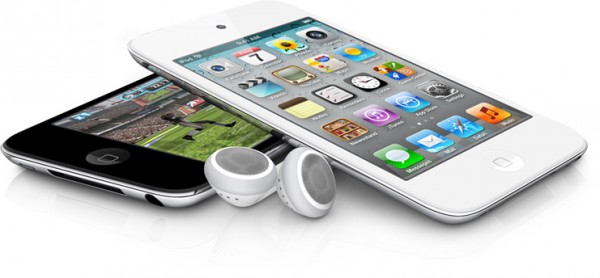
  • iPod’s end draws near

    Debate is fierce about whether smartphones and tablets cannibalize PC sales. Surely, we can all agree that these device subsume dedicated MP3 players. Top-selling iPod is product in declining demand, while today NPD puts hard numbers behind changing music-listening habits. Which reminds me, I promised to set up my wife’s Rdio account over the weekend. We got a family plan a few days back. She’ll stream on Google Nexus 4 or 10 and download some tracks for offline ear-banging.

    She’s not alone. Fifty-six of U.S. smartphone users listen to music on the device — 40 percent for tablets, according to NPD. I’m in the latter category on Nexus 7. Consumption is up, with 54 percent of smartphone music listeners doing more than a year ago and 39 percent tuning in at least once a day.

    Again, on smartphones, Internet Radio is most popular among music listeners (65 percent) — about the same as tablets. Sixty-percent of smartphone listeners, and 49 percent of tablets owners, use their own music (presumably ripped from CDs rather than ripped off from file-sharing sites). Subscription services like Spotify: 30 percent on smartphones.

    “With both local music storage and the ability to connect to any number of online music services, tablets and smartphones are actually contributing to a net increase in their owner’s use of internet radio and personal music collections”, Ben Arnold, NPD’s director of industry analysis, says.

    When Apple cofounder Steve Jobs introduced iPhone in January 2007, he pitched a combo device, with music playback being one benefit. As iPhone, and now iPad, sales rise, iPod falls. During fiscal first quarter 2007, iPod accounted for 48 percent of Apple revenue. Six years later: 5 percent compared to 71 percent for iPhone and iPad combined. That said, sequential sales grew in the triple digits in fiscal Q1 2013. iPod is by no means dead, but NPD’s data shows just how dramatically music habits are changing.

    Change doesn’t stop there. “We are seeing sales growth in products that compliment playback on mobile devices, particularly those that feature wireless local streaming”, Arnold says. It’s the big trend. Wireless headphone sales grew 34 percent year over year in 2012, while wireless speaker sales tripled. Bluetooth models accounted for 28 percent of soundbar sales — jump from 6 percent a year earlier.

    “Products that enhance listening like streaming speakers and soundbars with Bluetooth and even premium headphones have experienced tremendous growth over the past year is evidence that consumers aren’t only satisfied with music on-the-go, they increasingly want to use these devices for a better in-home music experience”, Arnold says.

    I don’t use a soundbar, but likely will buy wireless speakers this year to put in different rooms in our apartment. And you?

  • On musical creativity: A talk to watch as you discuss the Grammy winners

    Mumford-&-SonsThe 2013 Grammy Awards, which aired last night, offered up many a surprise with indie-tinged acts grabbing major awards over more established contenders.  British folk-rockers Mumford & Sons (above) won the award for Album of the Year for Babel while electronic master Charles Limb: Your brain on improvCharles Limb: Your brain on improvGotye took home Record of the Year for his infectious song “Somebody That I Used To Know.” Meanwhile, the Black Keys will have the most trophies to add to their award shelf after winning four awards.

    With such creativity represented on the stage, it made us think: “What goes on in the mind of a musician?” Here, a talk from music lover and surgeon Charles Limb, where he reveals what he found from putting jazz musicians and rappers in an fMRI as they improvised »

  • Don’t Expect Google To Fund Publishers All Over The World

    Earlier this month, Google announced an agreement with publishers in France, which involves Google creating a €60 million fund called the DIgital Publishing Innovation Fund to “help support transformative digital publishing initiatives for French readers.” The agreement came after a lengthy battle with publishers who wish to be paid for the privilege of search engines to link (with snippets) to their content. It’s a similar mindset to that of publishers all over the world.

    Reuters called the agreement “a deal on payment of media links”. That’s certainly what it feels like. Google Executive Chairman Eric Schmidt explained the deal:

    First, Google has agreed to create a €60 million Digital Publishing Innovation Fund to help support transformative digital publishing initiatives for French readers. Second, Google will deepen our partnership with French publishers to help increase their online revenues using our advertising technology.

    This exciting announcement builds on the commitments we made in 2011 to increase our investment in France—including our Cultural Institute in Paris to help preserve amazing cultural treasures such as the Dead Sea Scrolls. These agreements show that through business and technology partnerships we can help stimulate digital innovation for the benefit of consumers, our partners and the wider web.

    From the sound of it, however, we shouldn’t expect this to set a precedent for how we’re going to see Google operate around the globe. For one, in Germany (where Google has been facing a simliar battle), publishers aren’t all that interested in a deal like the one in France, as it would be a Google-specific “solution” to their problem, and wouldn’t apply to other search engines.

    For that matter, Google is not looking to enter similar agreements with publishers in other countries. TechCrunch reports that Google has no plans to create “digital innovation” funds for publishers outside of France. The publication shares this statement from a Google spokesperson:

    “While we are always happy to talk to publishers about additional ideas for driving traffic, engagement, and monetization, we are not currently looking to create a fund outside France.”

    Google did reach an agreement with publishers in Belgium in December, following six years of litigation, but it did not involve one of these funds. Rather, as part of that agreement, Google said it would advertise its services on publishers’ media, and publishers would optimize their use of AdWords. Google would also work with Belgian French-language publishers to “help increase publishers’ revenue,” collaborating on ways to make money with Paywalls and subscriptions, and with AdSense and the Ad Exchange. Google would also work with Belgian publishers to implement Google+ social tools and launch YouTube channels.

    When Google announced that deal, it said it would like to come to similar terms with publishers around the world, so we may be seeing more of this type of “solution,” rather than Google just funding publishers. As we’re seeing, each country’s publishers has a unique view of the situation, and it doesn’t look like we’re going to see a worldwide standard.

    In Brazil, publishers have gone so far as to simply pull out of Google News.

  • Minecraft Pi Edition Is Ready To Teach You Coding

    One of Mojang’s more interesting projects of the last few months has been Minecraft Pi Edition. It’s a free version of Notch’s smash indie hit developed specifically for the Raspberry Pi. It’s been a few months in the making, and now it’s ready to start teaching kids (and adults) how to program.

    Mojang announced today that Minecraft Pi Edition is now available for download. It’s pretty basic at this point, but the team at Mojang says they will be adding new content in the future. Here’s how to get started:

  • Minecraft – Pi Edition runs on Raspbian “wheezy” with XWindows. If you need to set that up, visit http://www.raspberrypi.org/downloads and follow the detailed instructions within.
  • Boot up your Raspberry Pi with Raspbian. If you haven’t set XWindows to start automatically upon boot, type in “startx”.
  • Next click the icon for LXTerminal to open a new terminal window. Use the following commands to download and launch:
  • To download it: click here or visit https://s3.amazonaws.com/assets.minecraft.net/pi/minecraft-pi-0.1.1.tar.gz
  • To decompress it: tar -zxvf minecraft-pi-0.1..1.tar.gz
  • To run it: cd mcpi
  • Followed by minecraft-pi
  • If you’re able to follow all of that, you’re well on your way to learning the basics of programming. Once in game, you can fully hack away at the title to learn more about how code comes together to make games work.

  • Amazon Grabs Exclusive Streaming Rights to CBS’ ‘Under the Dome’

    Amazon has just landed another exclusive content deal for its Prime Instant Video service. This time it’s the upcoming CBS drama Under the Dome.

    Here are the specifics of the deal: Just four days after each episode airs on CBS, they will pop up on Amazon Prime Instant Video. The episodes will be available to stream on CBS.com, but only for the first three days after airing.

    Under the Dome is based on a 2009 Stephen Kings novel of the same name that’s about a small New England town that is suddenly cut off from the rest of the world by an giant, transparent dome. It’s being produced by Steve Spielberg’s Amblin Television and will premiere on CBS on June 24th.

    “With creative forces of Stephen King and Steven Spielberg’s Amblin Television behind Under the Dome, we think our customers will love this new show and we’re excited to be able to offer this highly-anticipated series at no additional cost to Prime members,” said Brad Beale, Director of Digital Video Content Acquisition for Amazon. “Adding a current season major network TV series like Under the Dome to the Prime Instant Video library so shortly after its live airing enables us to increase our exclusive selection of great TV shows and give customers access how, when and where they want to watch it.”

    Last week, Amazon made another big play when they stole Downton Abbey away from Netflix and Hulu. Per that deal, Prime Instant Video will be the only subscription-based streaming service where viewers can watch episodes of Downton Abbey – past, present, and future (starting some time this year).

  • Tony Romo Plays Golf, Twitter Makes Fun Of His Football Skills

    Dallas Cowboys quarterback Tony Romo has been golfing over the weekend at Pebble Beach, and reportedly (along with his partner) lost a lead during the final day of the Pro-Am.

    Some NFL fans see a familiar pattern.

    “So apparently, Thursday, Friday and Saturday are golf’s regular season, and Sunday is its playoffs,” writes Darin Gantt at NBC’s ProFootballTalk.

    Romo’s taking a lot more abuse than that on Twitter.

    That’s a small sampling. Unfortunately for poor Tony, we’re not seeing many stick up for his football abilities in the current Twitter conversation. Twitter can be so cruel.

  • Antarctic Ozone Could be Returning, Shows New Images

    New satellite imagery has shown that the hole in the ozone layer over Antarctica is shrinking. In 2012, the hole was the smallest it has been in the past ten years.

    The images were taken by the European Space Agency’s (ESA) MetOp satellite, which has a ozone sensor. The satellite monitors atmospheric ozone over the Antarctic.

    Since the 1980s, the ozone layer over the Antarctic developed a hole – a decrease in ozone concentration of up to 70% – that stays from September to November. The depletion is noticeable in Antarctica because of high winds that cause a vortex of cold air, causing low temperatures. These conditions make it easier for chlorofluorocarbons (CFCs) to deplete the ozone. The arctic does not see this effect because the northern hemisphere’s landmasses prevent circumpolar winds.

    Since the mid-1990s CFC concentrations have been falling as a result of international agreements. The ESA states, however, that it could take until the mid-21st century for the ozone to recover to 1960s levels.

    “Unusual” weather and atmospheric conditions can also greatly affect the behavior of the ozone. ESA scientists are using data from satellites and other sensors, along with atmospheric models to predict the future of the ozone. The ESA Climate Change Initiative is generating ozone climate data records that have predicted the ozone layer hole could close “in the next decades.”

    Loading…


  • Where the Green Jobs Really Are

    There’s much brouhaha about “green jobs” those that arise from new clean-tech companies, created to help solve the climate crisis. I’m all for this — we need this kind of innovation — but green jobs are hardly the economic cure-all they are often made out to be. In fact, they only account for a small fraction of the U.S. workforce.

    It’s time to take a different approach to green jobs. We can transform the way people work to achieve change on a mass level, and every manager can encourage sustainability by making one modification that would benefit the environment. Additionally, this change can positively affect employee morale and productivity, as well as company efficiency and profitability. So here’s what you need to do:

    Stop working in the office. Offices and office hours once made good sense. Before the advent of the Internet and personal computers, you had to go to work to gain access to information. If you weren’t at work you couldn’t do work.

    Today, of course, that’s unbelievably outdated. We’ve seen the advances technology brings to our everyday lives: we can pay bills online and shop 24/7; we don’t need to wait for the morning newspaper to be delivered to the driveway; and we can check in for a flight online instead of waiting in line. More than 2 billion people use broadband Internet, up from perhaps 50 million a decade ago. Now, it’s estimated that approximately 40% of jobs could be performed remotely, at least part of the time.

    In addition to not needing the office to communicate, we are doing a poor job of utilizing the office space we do have. Studies by the U.S. General Services Administration show that at any given time, over half the workspace in the United States and Europe is not being used.

    So what does this have to do with the environment? Offices account for about 38% of all greenhouse gas emissions. And according to the U.S. Green Building Council, over approximately the next 20 years, greenhouse gas emissions from offices are expected to grow faster than those in any other sector.

    Getting to the office also generates problems; American workers spend on average 40 minutes a day commuting — this amounts to eight weeks a year spent in the car. In total, this can waste more than 3.7 billion hours in lost productivity and 2.3 billion gallons of gas annually. What a price for something most of us don’t like doing: sitting in traffic.

    What about my bottom line? Let’s say you are like me: a business executive, not a Greenpeace ambassador. You want to know how this affects your company.

    For most, real estate is the second-largest expense. Sun Microsystems, now part of Oracle, embraced a telework initiative in 2000 that ultimately resulted in more than half of the company’s employees working remotely and a net savings of $80 million a year in facility costs. Sun was so pleased with the results it achieved that, in 2008, it spun the initiative into a separate company, now called Better Workplace, to bring these benefits to other companies throughout the world.

    Defense contractor Northrop Grumman worked with Better Workplace to develop a mobile work strategy, devising a plan to achieve annual savings of $110 million based on 20% employee participation. In 2008 TIAA-CREF, a Fortune 100 financial services organization, started using Better Workplace’s software tools to manage and scale a flexible work initiative that resulted in the reduction of 75 thousand square feet of office space in midtown Manhattan and cost savings of $15 million a year.

    But how does working outside the office affect employees? At TIAA-CREF, managers were initially concerned about performance issues with employees working remotely. But after the program’s implementation, nearly every manager who participated in a survey responded that employees performed as well — or better — when working from home. More than anything else, employees want flexibility: almost 80% of employees say they would like to work from home part of the time, and more than a third say they’d choose the option to work from home over a pay raise.

    Happy employees yield healthier companies. Home-based workers are sick or absent less often than people who work in an office. That’s not because of contagious germs circulating office buildings, but because there is a whole population of people who fake an illness to shirk work. Some two-thirds of employees who call in sick aren’t really sick. That’s costly: these unscheduled absences cost employers $1,800 per employee per year — totaling $300 billion per year to U.S. companies. On the flip side, allowing people to work from wherever they want enhances attraction and retention.

    Successful companies of tomorrow will evolve their office plan into a no-office plan. I understand that change is hard. People resist disrupting the status quo. But I’m asking you to think differently about how we work so that we all can enjoy a much smoother ride into the future. The long-term environmental cost is too great not to try. The journey alone — which will reduce costs and enable happier and more productive employees — is well worth it.

  • Tomb Raider Developers Walk Us Through Combat, Exploration

    Crystal Dynamic’s Tomb Raider reboot will be out in less than a month, and the hype machine has been going steady for a few months now. The developers now have a bit of extra time to show players more of the game, and what they can expect when the game launches on March 5.

    In a developer walkthrough released today, the game’s creative director walks players through a short section of the game that has Lara Croft making her way to a monastery on the island where the game’s plot unfolds. Most of the playthrough is focused on what players can expect from the game’s combat and exploration.

    Through most of the gameplay demo, the creative director focuses predominantly on tactics and the decisions players can make when approaching enemies. It’s a little disappointing then that most of the gameplay looks like a run and gun kind of experience. Here’s hoping the title will encourage more variety when it launches next month.

    Tomb Raider hits the Xbox 360, PS3 and PC on March 5.

  • Carly Rae Jepsen’s YouTube Smash Fails To Win Her A Grammy

    It’s official. Massive Internet popularity does not win you a Grammy. That’s what Carly Rae Jepsen learned on Sunday night, as her viral hit song Call Me Maybe failed to win her an award.

    She’ll probably be able to continue to sleep at night, as the song earned her two nominations: Song of the Year and Best Pop Solo Performance.

    As of the time of this writing, Call Me Maybe has over 402 million YouTube views. It has about a million and a half likes. And that doesn’t even begin to count all of the parodies and covers that have saturated the the biggest video site on the Internet.

    Song of the Year winner “We Are Young” only has over 167 million YouTube views (about 800,000 likes).

    View all nominees and winners here.

  • Twitter’s Promoted Trends Now Cost $200,000 a Pop

    If you’re looking to promote your brand with one of Twitter’s most visible ad products, the Promoted Trend, you’re going to have to shell out a little bit more money than you did last year.

    Peter Kafka at All Things D reports that the asking price for a Promoted Trend has been raised, and now sits at $200,000 per trend. The previous price for an all-day Promoted Trend was $150,000, and the change occurred back in January.

    When Twitter first launched Promoted Trends back in 2010, they were only $80,000.

    Promoted Trends are one of Twitter’s major ad offerings, working alongside Promoted Tweets and Promoted Accounts. Promoted Trends always take the top spot on the trends list and are seen on the web, mobile, and all Twitter apps. Clicking on a Promoted Trend prompts a search (it’s usually a hashtag), in which tweets about the trend are surfaced organically.

    Of course, Promoted Trends can generate tons of publicity for your business, site, or brand. But since the trends generate content organically, without any tweaking for the trend-buyer, things don’t always go as planned.

    Still, Twitter has been able to generate plenty of revenue through the Promoted Trends product, and this significant increase in the asking price suggests that Twitter is confident that brands will continue to pay a premium to direct the conversation on the site.

    There is usually only one Promoted Trend per day, and it runs all day. Twitter doesn’t always run a Promoted Trend, but they do on a large majority of days. If they were to run a promoted trend at this price point every day for the next year, it would generate $73 millon in revenues.

  • 3 Killed In Reality Show Crash In California

    Three people lost their lives in a helicopter crash on Sunday morning during the filming of a Discovery Channel show, authorities said.

    “A production company was shooting a show for Discovery Channel when this tragic accident occurred,” a rep for Discovery said in a statement. “We are all cooperating fully with authorities. Our thoughts and prayers go out to the families.”

    The tragic accident occurred at Polsa Rosa Ranch, a popular filming spot in a rural area of Los Angeles. Authorities are still investigating the cause of the crash and have not released the names of the victims. The show’s production company, Eyeworks USA, had a permit to fly in the area but did not have a monitor on set at the time.

    The L.A. Times has reported that reality shows are getting more dangerous due to a combination of tight budgets, lack of trained safety personnel, and a desire to capture the most dramatic and candid footage.

    Image: ABC7.com

  • First Surface Pro commercial is uninspiring

    Weather may have ruined the Surface Pro launch event, but the “laptop in tablet form” started selling on February 9, in Canada and United States, nonetheless. And just like with its Windows RT-powered sibling, Microsoft aired a video ad that is meant to increase awareness and promote Surface Pro as a business-oriented device. But does it?

    Interestingly titled “The Vibe”, the Surface Pro video commercial bears a strong resemblance to the Surface RT one that debuted in mid-October. It’s a very dynamic advert with business people dancing, smiling, signing, throwing things around, acting cool and generally doing things that business people don’t normally ever do while at the office. It even starts with the same guy that opened up the Surface RT ad. The Vibe is a nice concept, but a poor choice for Surface Pro.

    The first issue with The Vibe: Microsoft pointlessly tries to pit the Surface Pro target audience as a cool crowd, capable of breaking away from the corporate norm, stripped of any preconceptions and let loose. That has absolutely nothing in common with the day-to-day life of business users, nor does it help promote the tablet among the intended audience.

    The Vibe does not highlight any of the Surface Pro strong-suits and only shows that the device features a detachable stylus and USB port that can be used to tick something and plug in a microphone, respectively. It’s a missed opportunity for Microsoft, considering that Surface Pro can do plenty more.

    The Redmond, Wash.-based corporation could have emphasized the benefits of having a stylus by drawing a small sketch, plugging an external hard drive into the USB port, connecting a mini DisplayPort-compatible external display, running some resource-intensive software on Surface Pro and many more, but instead did none of that.

    The Surface brand does not need to break ground anymore through an impressively-hip ad or make tablet buyers look cool because it did that before with the Surface RT. With the Surface Pro commercial I expected Microsoft to rest on its laurels and tell viewers what makes it a good choice for them by connecting with them at a more mature level. After watching The Vibe I wonder: How can anyone know that Surface Pro is not just another tablet?

  • Bug Hunt Is The First Planned DLC For Aliens: Colonial Marines, Will Be Out In March

    Aliens: Colonials Marines comes out tomorrow, and that means Gearbox and Sega will now be directing its attention towards DLC for the title. Sega outlined its plans over the weekend on how it intends to support the title throughout 2013.

    Sega says that Aliens: Colonial Marines will receive four DLC add-ons throughout 2013 that add more campaign and multiplayer content. The first of which is called Bug Hunt, and it features a cooperative multiplayer mode that has players taking down hordes of Xenomorphs across three new maps based on the Aliens film. The DLC is scheduled to arrive at the end of March.

    As for the other DLC add-ons, Sega says that everything will be out by the end of August of this year. You can preorder all of the DLC now as part of the season pass that gives players all four add-ons for $29.99. The content will be available separately as well, but it will apparently cost 40 percent more that way.

    The Season Pass is already available for preorder on Steam for 10 percent off. It will be available on Xbox Live and the PSN soon.

    There’s still no word on when the Wii U version of Colonial Marines will be made available, or if it will get the same offer of a season pass. The delayed release of the Wii U version may also mean that Gearbox will include the first DLC add-on for free with the Wii U version, or at least we can hope.

  • Wasteland 2 Development Video Update Released

    In general, the gaming industry is fairly secretive. Developers rarely reveal much about their games until a few months before the launch day, other than the requisite teaser trailer.

    With the rise of Kickstarter-funded game projects, however, that sort of black-box development could (and should) change. Developers who take money from fans upfront owe it to their investors to keep them informed of how the project is coming along, and to seek out input from them.

    InXile Entertainment appears to be doing just that with its Kickstarted Wasteland 2 RPG. The developer this weekend released an early developer preview video for the title.

    Wasteland 2 was kickstarted almost one year ago. InExile was asking for only $900,000 for the project, but received nearly $3 million.

    The developer video includes a look at the customizable UI, combat, skills, and the dialogue system. There is also a blog post that provides an overall update on the game’s progress. As of right now, the developers are “just past the halfway mark.”

  • The Walking Dead: AMC Posts Behind-The-Scenes Videos Of Last Night’s Episode

    The Walking Dead is finally back. The show returned to AMC after taking a couple months off, and now the network has uploaded a couple of new videos, giving fans an inside look at the mid-season premiere.

    Don’t watch them if you haven’t watched the episode yet, as the do contain spoilers.

    More The Walking Dead fun here.

  • Edith Houghton Dies: Baseball Legend Was 100

    Edith Houghton was making a name for herself in baseball long before the ladies who inspired “A League Of Their Own” were doing their thing in skirts, and as awesome as every woman in the game was, Houghton stood out for her drive and early ambition.

    In 1922, at age ten, she was the starting shortstop for the Philadelphia Bobbies, an all-girl professional team. As the youngest player on the team, she earned the nickname “The Kid” and wowed audiences and fellow players alike with her skills. She would go on to play against men’s teams as the Bobbies traveled extensively, even going overseas to Japan. When WWII began, she made the move to the Navy and played for their team, as well.

    By the time she was 35, Houghton decided she’d done all she could for her teams on the field and wanted to make her mark elsewhere in the game. When she got home from the war, she landed herself a job as a scout for the Phillies and was the first woman hired to do so in the major leagues.

    In 2006, Houghton was honored to be featured in the National Baseball Hall of Fame in Cooperstown, where one of her uniforms is on display. The legendary player passed away on February 2 at the age of 100.

    edith houghton dies

    edith houghton

    Image: MLB.com

    edith houghton dies

    Image: Philly.com

  • Before You Innovate, Ask the Right Questions

    Albert Einstein is often quoted (perhaps apocryphally) as saying, “If I had 20 days to solve a problem, I would spend 19 days to define it.” Innovation is a particularly sticky problem because it so often remains undefined. We treat it as a monolith, as if every innovation is the same, which is why so many expensive programs end up going nowhere.

    So how should we go about it? Should we hand it over to the guys with white lab coats, an external partner, a specialist in the field, crowdsource it, or what? Before handing them off, you need a clear framework for defining innovation problems and approaches that are most likely to resolve them.

    Defining a managerial approach to innovation starts with developing a better understanding of the problem we need to solve. I’ve found asking two basic questions can be enormously helpful.

    How well is the problem defined? When Steve Jobs, who was a master at defining a clear product vision, set out to build the iPod, he framed the problem as “1,000 songs in my pocket.” That simple phrase defined not only the technical specifications, but the overall approach. Unfortunately, some problems, like how to create a viable alternative to fossil fuels, aren’t so easy to delineate. So your innovation strategy will have to adapt significantly depending on how well the problem can be framed.

    Who is best-placed to solve it? Once Jobs defined the iPod problem, it was clear that he needed to find a disk drive manufacturer who could meet his specifications. But, sometimes the proper domain isn’t so cut and dried. Once you start asking these questions, you’ll find that they clarify the issues quite quickly. Either there is a simple answer, or there isn’t.

    Once we’ve asked the framing questions, we can determine which approach to innovation makes the most sense:

    innovationmatrix.gif

    Basic Research: When your aim is to discover something truly new, neither the problem nor the domain is well defined. While some organizations are willing to invest in large-scale research divisions, others try to keep on top of cutting edge discoveries through research grants and academic affiliations. Often, the three approaches are combined into a comprehensive program.

    While most basic research happens in academic institutions, some businesses can excel in it as well. In 1993, IBM research accomplished the first quantum teleportation, a technology isn’t likely to result in a product until after 2020. They continue to lead in patents. Basic research requires a long time horizon in order to pay off and therefore must be combined with other methods, either internally or through partnerships.

    Breakthrough Innovation: Sometimes, although the problem is well-defined, organizations (or even entire fields) can get stuck. For instance, the need to find the structure of DNA was a very well defined problem, but the answer eluded even the most talented chemists. Usually, these types of problems are solved through synthesizing across domains. Watson and Crick solved the DNA problem by combining insights from chemistry, biology, and X-ray crystallography.

    Many firms are turning to open innovation platforms such as Innocentive, which allow outsiders to solve problems that organizations are stuck on. Proctor and Gamble has built its own Connect + Develop platform which allows them to benefit from expertise in a variety of domains across the world.

    Sustaining Innovation: Every technology needs to get better. Every year, our cameras get more pixels, computers get more powerful and household products become “new and improved.” Large organizations tend to be very good at this type of innovation, because conventional R&D labs and outsourcing are well suited for it.

    Apple, for example, is a superior sustaining innovator. They didn’t invent the digital music player, the smartphone, or even the tablet computer. However, they improved on earlier designs to such an extent that they seemed like they’re something completely new. In a similar vein, Toyota makes cars just like any others, except better.

    What both companies have in common is that they are masters at adapting breakthrough innovations for existing markets. In essence, great sustaining innovators are great marketers. They see a need where no one else does.

    Disruptive Innovation: The most troublesome area is disruptive innovation, which target light or non-consumers of a category and require a new business model, because the value they create isn’t immediately clear. While every new Apple product turns heads, when Google comes out with something most people won’t even understand what it is, much less how they’ll make money on it. From Google Maps to autonomous cars, they manage to fill needs we didn’t even know we had. 3M, the company that pioneered scotch tape and post-it notes, derives up to 30% of its revenue from products launched in the past 5 years.

    Both companies use a version of the 15% / 20% rule, where employees are required to devote a fixed portion of their time to projects unrelated to their jobs. Other firms have dedicated innovation labs where they can “test and learn” without excessive risk. A VC approach, in which small investments are made in emerging firms, can also be successful.

    While focus is important, no company should limit itself to just one quadrant. Apple, for instance, is mainly a sustaining innovator, but iTunes was certainly an important disruptive innovation. While Google might be the greatest disruptive innovator on the planet, they spend considerable resources to improve existing products.

    So it’s important to develop an effective innovation portfolio that has one primary area of focus, but also pursues other quadrants of the matrix and builds synergies between varied approaches. Innovation is, above all, about combination.

  • Netflix Loses Out as Sony Pictures Stays with Starz

    It looks like Netflix’s interest in Sony films wasn’t strong enough to shake things up.

    Starz and Sony Pictures Entertainment have just announced an expansion of their previous deal that will see Starz remain the exclusive home for Sony Pictures theatrical releases through 2021. The old deal saw the same agreement through 2016.

    Starz has been the exclusive pay-TV home for Sony Pictures’ films since 2005.

    “Starz has been a terrific partner and we are excited to be extending our relationship with them through the 2021 slate,” said John Weiser, President, U.S. distribution for Sony Pictures Television.

    Recent reports suggested that Netflix was interested in grabbing Sony films for its streaming service. When asked about it during January’s earnings call, Netflix CEO Reed Hastings said that his interest in Sony content was “just like it was for Disney. It’s strong.”

    “We’re interested. We’ll see how it works out,” Hastings said.

    In December, Netflix inked a huge deal with Disney to become the exclusive source for Disney, Walt Disney Animation Studios, Pixar, and Marvel theatrical releases, inside the pay-TV window, starting in 2016.

    Back in September of 2011, Netflix and Starz were unable to come to an agreement to keep Starz Play content (which included many Sony films) on the service.

  • BlackBerry Z10 Available in the U.S. – For $999

    Mobile service provider Solavei this weekend announced it is the first U.S. provider to offer BlackBerry’s new BlackBerry Z10 smartphone.

    Unfortunately, BlackBerry fans in the U.S. will have to pay-up significantly if they want to be early adopters. Solavei is offering the Z10 through its retail partner gsmnation for $999.

    Solavei is a contract-free mobile virtual network operator on T-Mobile’s network. The service offers a $49 unlimited everything plan, but does not sell or subsidize mobile devices. The company is attempting to grow itself through word-of-mouth viral marketing, rather than traditional advertising.

    “We believe in giving our members access to the latest phones and wireless capabilities,” said Ryan Wuerch, founder and CEO of Solavei. “Solavei not only gives its members the opportunity to pay less for unlimited mobile service, but even the opportunity to earn income by sharing Solavei with others.”

    It sounds sketchy when put that way, but it’s basically a referral discount. And BlackBerry Z10 users are going to need plenty of those to offset the huge upfront cost of their smartphone.

    Those who can’t afford, or don’t want to pay, the early adopter mark-up will have to wait around one month to grab the smartphone via a subsidized subscription plan. All major U.S. carriers have announced they will carry the BlackBerry Z10 or BlackBerry Q10 starting in March.

    (Via BGR)