Blog

  • Eric Schmidt In 2010: I’m Not Sure You Want To Walk Around With These ‘Odd Glasses’ On

    Since Google first unveiled Google Glass, many have wondered if people will buy into the device, simply from the fashion perspective. In other words, will people be worried about looking ridiculous in order to use these hi-tech smart devices that could potentially enrich the physical world around them?

    Well, that’s probably why Google Glass has already been featured in a fashion show. Good thinking, Google.

    Google Glass Fashion

    I was watching this Eric Schmidt interview from 2010 (to find out how out of context Schimdt’s comments were with regard to their use in a new Microsoft commercial). Schmidt also happened to touch on what would eventually become Google Glass (you can start about 16 minutes in). Remember, this video is from nearly two years before Google unveiled the project.

    It seems as though the fashion obstacle has been one Google has been considering for quite some time.

    “I’m not sure you really want to walk through town with these odd glasses on, you know, looking like an airforce jetfighter or something,” Schmidt says, adding, “But I’m sure people will. I mean, as I was driving by here, I saw people riding their Segways, you know, looking like normal pedestrians.”

    This guy doesn’t seem to mind the look:

    Sergey Brin With Google Glass

    Granted, I wouldn’t say he quite looks like a jetfighter.

    It’s funny, because now that Google Glass is being spotted out in the wild, this is becoming an actual conversation, and an important issue that Google is going to have to deal with if it’s really serious about Project Glass leading to something meaningful for the company.

    Last week, The Atlantic ran an article about a bar owner, who said this on Facebook:

    Last night around 9:45 two people walked into the bar. Looked me square in the eye, and acting as if everything was normal they ordered beers.. Oh did I mention they were wearing Google Glasses! In public! In A BAR!

    The point of Google Glass is that it’s supposed to enhance your world by bringing the digital to the physical. That means wearing the device pretty much everywhere you would carry your smartphone. That means bars. That means restaurants (I wonder what the anti-Instagram restaurants will think of that). That means subways.

    Of course, it’s very possible (and perhaps likely) that this whole endeavor will lead to a contact lens version. When that happens (and if people are willing to physically attach these devices to their eyeballs), Google may just have that problem solved.

    If it doesn’t happen, there’s always the smart watch (or maybe the brain implant discussed earlier in the Schmidt video).

    [Sergey Brin image: Noah Zerkin]

  • It’s a Mistake to Make Succession a Horse Race

    Who’s next?

    That is the question that those involved in succession planning focus upon when considering candidates for senior positions. And while the answer produces a candidate, such a question is too narrow.

    A better question would be: who’s best?

    While succession planning needs focus on identifying candidates for senior positions, too often the focus is on the horse race — who’s ahead — rather than the organization — who’s best prepared to lead. In a horse race, the focus is on metrics: what an executive has accomplished. In the organizational perspective, the focus is more broad-based — how the executive has achieved what he or she has accomplished.

    As much as organizations devote to success planning issues, there are shortcomings. According to a 2012 study by the Institute for Executive Development (IED) survey participants noted three major problems:

    • Lack of a coherent strategy for executive development
    • Lack of a formal process for developing successor candidates; and
    • Lack of candidates ready to take the CEO job.

    IED’s suggestions for improvement include clarifying roles and objectives for those involved in succession planning and developing relevant analytics to determine a candidate’s true effectiveness. These two focus on what a candidate has accomplished; a third recommendation — improve the development process — gets to the how the candidate works.

    “It is essential,” they argue, “that potential candidates have exposure to issues and challenge of [senior] roles.” Toward that end, candidates should have real and ongoing contact with senior leaders as well as board members. Furthermore, it suggests that candidates participate as instructors in internal executive development programs.

    From my work with those being considered for promotion, the operative principle in this process is interaction, seeing how the candidate interacts with senior leaders as well as others at all levels. In this way those involved in candidate selection can observe how the candidate contributes suggestions, makes decisions, cooperates with others, and facilitates collaboration.

    Such a process is designed to identify the strengths and weaknesses of high potential prospects. Likely most candidates will likely rate highly when it comes to “making the numbers,” e.g. fulfilling their objectives, but not all will be equally adept when it comes to “playing well with others.”

    A candidate who favors “command and control” over participative decision-making may be tough to get along with. Also, a manager who cultivates his boss’s favor and treats his direct reports with disrespect is not someone worthy of a more senior position. Last year both Apple and Microsoft divested themselves of senior executives who did not get along with others. Apple CEO Tim Cook terminated Scott Forstall, a brilliant software designer. Microsoft CEO Steve Ballmer fired Steven Sinofsky, who led the development of Windows 8. Both executives were accomplished but each wore out their welcome with their hard-headed management styles.

    Identifying such shortcomings through a process of continual interaction gives those on the selection committee to recommend development opportunities. Some candidates will be encouraged to work outside their function, or take on an overseas assignment. Others will be advised to work with a mentor or an executive coach.

    In this way the selection process becomes what Marshall Goldsmith, an executive coach who has worked with over 300 CEOs and is the author of Succession: Are You Ready? calls “succession development.” Rather than identifying the next CEO or next person for a senior slot, you look at, what Marshall says, “the next two or three generations who could be CEO.”

    Such development not only prepares the next cadre of senior leaders, it enables the organization to focus on its business rather than who’s next in line. Choosing the next leader is not an easy process. It requires a commitment to a process of development that prepares leaders for greater levels of responsibility and in the process ensures the long-term viability of the enterprise.

  • Believe it, smartphones and tablets make people use PCs less

    What a difference three years make. In April 2010 I asked “Will iPad cannibalize Mac sales?” and a month later PC sales. Fast-forward 12 months, NPD answered a definitive “No“. I disagreed: “Call me cynical and skeptical, but I’m convinced that changing behavior will cause many smartphone buyers, and many more tablet adopters, to delay PC upgrades”.

    Today, NPD sees things a little differently, based on fresh survey data that puts context behind two years of declining PC sales — that despite Windows 8’s release little more than three months ago. The firm finds that 37 percent of US consumers now access content on smartphones or tablets they used to on PCs. Changing behavior like this affects computer sales, as consumers shift behavior and delay PC upgrades or don’t buy ever.

    NPD finds general Internet access and Facebook to be the primary activities replaced by cloud-connected devices. Twenty-seven percent of tablet owners use their PCs less for the Web, and 20 percent for Facebook. The number is 27 percent for both activities among smartphone users.

    Not surprisingly, Internet and Facebook usage are higher on PCs (75 percent and 63 percent, respectively) than smartphones (61 percent and 55 percent, respectively) and tablets (53 percent and 39 percent, respectively).

    Yesterday, IDC forecast dramatic increases in US consumers printing — or at least wanting to — from smartphones and tablets, which says much about changing computing habits, and how connected devices displace or replace traditional PC behavior.

    “Total U.S. mobile pages are expected to grow at a compound annual rate of 12 percent during the 2012-16 forecast period”, and “non-mobile pages will decline 5 percent”, Angèle Boyd, IDC Group vice president, says. Looked at differently, the number of smartphone and tablet users who don’t or don’t want to print will decline from 50 percent to 25 percent from last year to 2015. Mmmm, that reads to me like 50 percent do print, or at least want to, from these devices.

    Not Content, But Context

    However, NPD’s pro-PC stance is strong as ever. “Despite these shifts in behavior, computers will remain the fundamental content creation device in consumer’s tool box for many years to come”, John Buffone, NPD’s director of devices research, says. He draws a line many other analysts do between consumption (smartphones and tablets) and creation (PCs). I disagree.

    These devices aren’t about creation or consumption but context. NPD’s metrics, like most analyst firms, are wrong. There is no post-PC era, but one of contextual cloud computing. Context defines content or creation, which will change as smartphone and tablet capabilities expand.

    The cloud is all about context. Content follows users everywhere, independent of device. Your music is available anytime, anywhere, on anything. You watch a movie in one context, sitting in a man chair at the mall on a smartphone and resume on the big-screen TV at home. You shoot a photo on the phone, edit and post or Instagram. That is content creation, by the way, as is posting anything to Facebook.

    Regarding content creation, often the definitions are all wrong. People create content every day on smartphones and tablets, just the context is different. For that matter, so is the content, with Facebook being easiest example. Profile posts, photos and pretty much anything else is content.

    During Comic-Con last year, I replaced digital camera and camcorder with Galaxy Nexus smartphone. I shot and edited photos and videos on the phone and then posted them to Google+ and YouTube. How is that not content creation? I produce content on mobile devices every day. Don’t you? At least weekly?

    Does the smartphone or tablet replace PC for content creation, or even consumption? Not today for most people, but the devices displace PC activities and do things personal computers don’t. So where five years ago most people primarily used PCs for content creation and consumption, now they do so with something else. How often must I state the obvious?

    Photo Credit: Poprotskiy Alexey/Shutterstock

  • Marco Rubio Tweets That He Is Not the Savior You’re Looking for

    Is Florida Senator Marco Rubio the savior of the Republican party? That’s debatable. But according to Rubio, he is not the savior of anything.

    That title belongs to Jesus – at least that’s what a recent tweet suggests.

    “There is only one savior, and it is not me. #Jesus,” tweeted Rubio early Thursday morning.

    Rubio is undoubtedly responding to a new TIME magazine cover story that labels the junior Senator “The Republican Savior.”

    The tweet is a bit vague, however. Either Rubio is simply speaking out against the use of the word “savior” in a non-biblical fashion, or he’s implying that Jesus is the savior of the Republican party.

    Damn those hashtags. They can be a bit opaque in their meaning.

    TIME has responded to Rubio:

  • Evernote Business Is Rapidly Expanding Throughout The Globe

    Back in August, Evernote announced Evernote Business, then launched it in December. Here’s an introductory look at the offering:

    “We’re really excited to bring this solution to small and medium businesses around the world. It’s the same Evernote that’s used by nearly 40 million people around the world, but with additional features that make it great for companies like yours and ours,” said Evernote’s Andrew Sinkov at the time.

    The service launched in seven countries, including the U.S., Canada, France, Germany, Switzerland, Japan, and the U.K. Today, the company announced that Evernote Business is now available in 33 countries with the addition of 26 new European countries. They will also launch it in New Zealand and Australia next week, and in 50 additional countries, including Latin America and Asia Pacific by mid-year.

    “In just over two months, Evernote Business has gone from a small closed beta to helping thousands of individuals get more done at work,” says Evernote’s Ken Gullicksen in a blog post. “We’ve received great feedback from our user community, which has inspired many new features and refinements, including easier user account management and improved knowledge discovery. In addition, we have been growing the size of our Global Customer Success teams to ensure that we are delivering the highest, most responsive level of customer support possible.”

    More than 40% of the initial sign-ups for Evernote Business came from outside the United States.

  • Capcom Arcade Cabinet Brings Classics to Consoles

    Today Capcom announced all of the details on its upcoming Capcom Arcade Cabinet for PlayStation Network and Xbox LIVE. Starting on February 19, the publisher will release one of five “Game Packs” every two weeks. Each pack will include three classic Capcom arcade titles in full HD.

    The first pack will cost $5 or 400 Microsoft Points and includes Black Tiger, 1943: Battle of Midway, and Avenger. Black Tiger will be given away for free, presumably to show off the features of Arcade Cabinet. Subsequent packs will each cost $10/800 Microsoft Points, but patient gamers can wait until May 21 to buy all of the titles in a $30/2000 MIcrosoft Points bundle. The games in each pack will be made individually available for $4/320 Microsoft Points two weeks after they are released in a pack.

    Pack 2 (March 5) will include Ghosts ‘n Goblins, Gun.Smoke, and Section Z. Pack 3 (March 19) includes Side Arms, The Speed Rumbler, and Exed Exes (Savage Bees). Pack 4 (April 2) includes Commando, Legendary Wings, and Trojan. Pack 5 (April 16) includes 1942, SonSon, and Pirate Ship Higemaru. Gamers who buy all of the titles – even in bundle form – will receive two mystery games (Street Fighter, perhaps?).

    In addition to the HD optimization, the Arcade Cabinet features a “virtual dip switch” to customize game settings, online multiplayer for games with two-player modes, and leaderboards. Also, since Capcom knows many modern gamers won’t enjoy the difficulty level of classic games, all of the games will have a “Casual Mode” that will “allow less experienced players to wade into the more difficult challenges with fun and sometimes unexpected tweaks.”

  • Rayman Legends No Longer A Wii U Exclusive, Delayed To September

    The Wii U’s impressive launch window has slowly become a barren wasteland. The one shining light of hope was February 26 – the launch of Rayman Legends. Now that title has even been pushed back further into the year, but hey, at least more people get to enjoy it now.

    Ubisoft announced today that Rayman Legends has been delayed to early September. The reason being that the game is now being retooled and developed for the PS3 and Xbox 360. It seems that Rayman fans didn’t particularly like the idea of having to buy a new console to enjoy the latest game in the franchise.

    “We heard from many Xbox & Playstation owners and Rayman fans who told us they really wanted to play Rayman Legends on their current system”, says Geoffroy Sardin, EMEA Chief Marketing & Sales Officer. “We decided to give the fans what they wanted while at the same time broadening the audience exposed to this innovative and memorable game.”

    The delay is most assuredly due to the game having to be completely retooled for the other platforms. The Wii U version of Rayman Legends makes extensive use of the Gamepad for puzzles and other gameplay elements. The game will likely face some significant changes on other platforms.

    It’s unfortunate that the Wii U version was delayed again, but this hopefully means the game will perform far better at retail. Being a Wii U exclusive means that you’ll get maybe a million units sold tops as Nintendo’s newest console hasn’t exactly been selling out. A delay and porting the game to other consoles will hopefully help the game reach its highest sales potential.

  • Sad News, Internet: Stewie, the World’s Longest Cat, Has Died

    The internet mourns the passing of Mymains Stewart Gilligan (Stewie) the cat, longcat of all longcats. The Guinness World Record holder for longest cat alive has just died at the age of 8.

    The cat, who was a staggering 48.5 inches when fully stretched, passed on Tuesday after a battle with cancer.

    “Stewie was always very social and loved meeting new people. He has touched many lives, and for that I am grateful,” said Stewie’s human, Robin Hendrickson.

    RIP Stewie.

    [Guinness World Records via The Daily What]

  • Manson Stage Collapse: Rocker Passes Out While Singing

    Marilyn Manson is, obviously, no stranger to theatrics and weirdness. If you’re familiar with his music or his shows, you know he’s not afraid to get a little weird with it. That’s what his fans love about him.

    But some fans in Saskatoon, Canada were left very confused last night when the musician warbled and swayed his way through part of “The Beautiful People” before collapsing just an hour into the show. He fell over onstage as his bandmates kept playing and was eventually dragged away by roadies. One fan captured video of the whole thing:

    Apparently, no explanation was given to the audience as the house lights went up. Twitter is buzzing today with news of the story, and rumor has it that the flu played a part:

  • 7 talks on the wonder of 3D printing

    Lee-Cronin-imageFrom ordering movie tickets to booking a dentist appointment, mobile and web apps have made the tasks of daily life easier. But there are some things that an app can’t do. Standing in line at the pharmacy is one of them.

    Lee Cronin: Print your own medicineLee Cronin: Print your own medicineIn today’s talk, Lee Cronin asks: “Could we make a really cool universal chemistry set? In essence, could we app chemistry?”

    With his team of researchers at the University of Glasgow, Cronin has created a 3D printing application that allows scientists to print out laboratory equipment specific to the experiment they wish to run — something they’ve called “reactionware.” Someday, Cronin says, the same software that runs reactionware could open up the doors of possibility. In this talk, Cronin shares one application — the idea that, in the future, people could print their medicine. With a custom-built 3D printer and chemical inks, users would download the appropriate molecules to perform “on-the-fly molecular assembly.” Meaning that they could print out whatever medications were needed that day — even if they were for a new superbug.

    At TED, we love sharing stories of 3D printing and its rapidly developing power to make new things possible. TED Fellow Bre Pettis’s Makerbot; the Thingiverse  database allow makers worldwide to share designs for printers; designers printing artificial limbs; artists re-inventing their process — we can’t wait to see what’s next. In honor of 3D printers here are some TED and TEDx talks on understanding this technology.

    Lisa Harouni: A primer on 3D printing
    So what exactly is 3D printing? Lisa Harouni breaks it down — from machine to design to product. Learn how it all works in this talk from TEDSalon London Spring 2011.

    Klaus Stadlmann: The world’s smallest 3D printer
    Klaus Stadlmann built the microprinter, the smallest 3D printer in the world. In this talk from TEDxVienna, he demos this tiny machine that could someday make customized hearing aids — or sculptures smaller than a human hair.

    Scott Summit: Beautiful artificial limbs
    In his work, prosthetics designer Scott Summit noticed that a lot of people had to hack their own artificial limbs — with socks, bubble wrap, even duct tape — to feel comfortable. In this talk from TEDxCambridge, he describes how he turned to 3D printing to create limbs that not only match a person’s body, but their personality as well.

    Anthony Atala: Printing a human kidney
    The shortage of organ donations is a crisis in healthcare. A possible solution? Printable organs. In this stirring talk from TED2011, Anthony Atala describes his research into the development of an organ-printing 3D printer, and introduces a recipient of the product of a similar technology — a bladder grown by borrowed cells.

    Marc Goodman: A vision of crimes in the future
    Sometimes, despite the very best intentions, the things we create aren’t used in the ways we thought they would be. In this talk from TEDGlobal 2012, Marc Goodman draws from his experience in law enforcement to show the dark side of technology — what happens when great tools get into the wrong hands. In his talk, he shows a way 3D printing could be used for harm and cautions us to guard against these potentials.

    David F. Flanders: Why I have a 3D printer
    David F. Flanders is a 3D printing guru and the host of PIF3D, a collective dedicated to hosting “build parties,” during which 3D printing experts help curious outsiders build personal 3D printers. In this talk from TEDxHamburg, he discusses the development of the technology and the implications of its mass use, including 3D printers’ role in recovery relief, architecture, and the office supply closet.

  • Don’t Live Your Life, Lead It

    Think for a moment about the first words you say when you talk about your life. Are you more apt to say “I live my life…” or “I lead my life…”?

    It’s far more likely that you and the people who influence you use the former. There are 90 times more Google hits today for “I live my life” than “I lead my life.” Moreover, “live life” has been inexorably increasing in popularity over the last century, as my Ngram comparison of usage in English-language books shows.

    I would suggest today’s reflective practitioners buck the rhetorical trend. Try using the phrase “lead life” as a way of talking about who you are and want to be. Below I list three reasons why “lead life” signifies a more advanced, even noble, way of being in the world of business and beyond.

    Those who lead life become exemplars to others. In 1926, author Sherwood Anderson wrote a note to his 17 year-old son John, who was thinking about where he might focus his education and career.

    If I had my life to lead over I presume I would still be a writer but I am sure I would give my first attention to learning how to do things directly with my hands. Nothing quite brings the satisfaction that doing things brings.

    Anderson’s reflection suggests the important function that decision-making and intentional learning play in leading a life. Yes, he acknowledges, the choice to write for a living was a good one and he would make it again. Yet, there were oversights and eventually insights that followed from that choice. He wishes he had first learned to experience things directly, as a craftsman using his hands, before moving on to the more abstract world of crafting stories. Most importantly, though, in writing about how he led his life and what he might do differently, Anderson intentionally models how others might lead theirs.

    Leading life is a prerequisite of personal and professional growth. When we lead our lives, we set a vision and intentionally resolve to advance from a lower state to a higher state. We are not resigning to live life as it is.

    We see this idea at play in Henry David Thoreau’s 1854 essay “Economy”: “The mass of men lead lives of quiet desperation. What is called resignation is confirmed desperation.”

    At first glance it’s a pessimistic statement. But Thoreau uses the description to exhort readers to a renewed self-awareness, a starting point for forging life deliberately rather than accepting life passively.

    Leading your life implies cultivating self-awareness, and thus prepares you to discern where your strengths and passions lie, and which sorts of work to avoid if you want to end your quiet desperation. More than a century after Thoreau, a prominent leadership researcher echoed this insight with empirical evidence, noting that “…an employee who combines self-awareness with internal motivation will recognize her limits–but won’t settle for objectives that seem too easy to fulfill.”

    Those that lead lives use technology as a new lens for self-examination. You can live life using technology to shop, to entertain, to become a virtual friend or follower. You’ll create a lot of personal data along the way. Paradoxically, these traces of you living life — on the web, at cash registers, using your smartphone — are of more interest to others than to you. Marketers segment you, target you, and analyze you.

    But what about also using technology to examine yourself, as a way to intentionally generate personal data for private reflection? This is a fundamentally new question that those leading a life are beginning to ask.

    In my most recent HBR article for instance, I describe how a number of professionals use auto-analytics technologies to examine some quantifiable aspects of their lives as they lead them. They turn the tables on the anonymous others tracking them, and instead use new tools to generate personal data for their eyes only. One interviewee used smartphone technology to track her moods in a variety of contexts to help her analyze which career would make her happy. Another interviewee, a software engineer, used technology to track his everyday work habits as a way of boosting job productivity and satisfaction. In both cases, they used technology to help paint a picture of who they were, and whether they were truly leading their lives in the direction they intended. Of course, technology isn’t the only route to self-awareness, though it can give a boost to introspection.

    Words matter. They frame how we think. Saying “I live my life…” begins a different sequence of thought and action than “I lead my life…” To my ear, anyway, “live life” is a redundant construct. The verb clings to its noun like the ouroboros, the mythic serpent that circles around to eat its own tail. It also connotes basic biological functioning as an end in itself. A snail or a cow can live life, but shouldn’t a human do something more?

  • Cruise Ship Singer Mystery: How Did She Die?

    The death of a 24-year old cruise ship singer has baffled investigators and has left those who knew her with too many unanswered questions.

    The body of Jackie Kastrinelis was found in her cabin on Sunday after the ship had docked in Australia, and after an investigation of the room, police say they don’t believe foul play was involved. However, her family is seeking any information they can get from someone aboard the ship who might have seen or heard something. Their information is listed here.

    There is some speculation that Kastrinelis’ death may have come as a direct result of a head injury she sustained during a rehearsal on board the Seven Seas Voyager, but nothing has been confirmed at this time. An autopsy and toxicology report are still pending. Those who knew the young woman have been shocked and saddened by the news.

    “She stood out a little bit brighter … but you can say that about anybody,” Michael Morris, the director of music for the University of Hartford School of Theatre division, said. “But about Jackie it is absolutely true.”

    The cruise line, owned by Regent, released a statement regarding her passing.

    “The Regent Seven Seas Cruises’ family is deeply saddened by the unexpected passing of Jackie. Our hearts and prayers go out to her family and loved ones.”

  • New Aliens: Colonial Marines Trailer Slows Down the Action

    The previews for Aliens: Colonial Marines have been a bit back and forth. By that I mean some of them make the game look like a thoughtful spinoff of the first three Alien movies with similarly creepy design (the alien hive preview), while others have made the game look like a mindless shooter that resembles all the action-heavy parts of James Cameron’s Aliens (the “Kick Ass” trailer).

    In that context it’s understandable that Alien and shooter fans alike may be wary of how the game will play. The latest trailer for the game, released today by Gearbox, attempts to split the difference. To do this, heavy action scenes similar to those in the “Kick Ass” trailer are set to some low-key instrumental music and given a few Zack Snyder-style slow-mo sequences. It’s reminiscent of the old Gears of War “Mad World” trailer, but with explosions and face-huggers.

    Whatever Aliens: Colonial Marines actually turns out to be, we’ll all find out next week when the game is released on February 12.

  • Ouya To Get Annual Hardware Refresh

    The Ouya is not a traditional games console. That much has been obvious since it first broke Kickstarter records last year. Now the company behing the console are saying it will do away with another vanguard of console gaming – the five to 10 year lifespan.

    Ouya CEO Julie Uhrman told Joystiq that the company intends to adopt the mobile strategy for Ouya. They will be releasing a new $99 console every year to take advantage of cheaper components. One such upgrade could be seen in the form of the Ouya’s built- in flash memory, which is currently set at 8GB, being expanded.

    Moving to an annual upgrade cycle may concern early adopters, however, as their initial investment may be obsolete after only a few years. Uhrman says that won’t be the case as games built for Ouya will be backwards compatible.

    Uhrman also addressed concerns that the Ouya console won’t be able to output visuals that would please the console gaming crowd. It’s true that the Tegra 3 can’t compete on the same level as a PS3 or Xbox 360, but the chip is fairly competent when it’s not tied to a mobile device. Uhrman says that the Ouya’s Tegra 3 doesn’t “have to balance power for battery life. So when all four quads are running, it’s 1.6 GHz.” She then claims it’s going to be the best Tegra 3 device on the market.

    Finally, those looking to upgrade their Ouya every year will be pleasantly surprised to learn that their profile and the purchases attached to it can be easily transferred between devices. That’s something that even the big guys have only started to figure out with Nintendo’s Wii to Wii U transfer tool being an adorable exercise in frustration.

    Ouya will be launching at retailers across the nation in June.

  • “The Walking Dead”: New Ad Is Finger-Hacking Good

    “The Walking Dead” is set to return to us on Sunday after a mid-season hiatus apparently meant just for our torture, and their ads are pretty dope. First there was the Time Warner Cable Super Bowl ad that had Daryl making a mess in a stressed-out mom’s living room, and now there’s a giant installation in Union Station in Toronto that’s taking the web by storm.

    The ad features two zombie hands, and every day until the premiere, a finger is hacked off. Well done, AMC. Well done.

    Image: Instagram

    the walking dead ad

  • What Google’s Enhanced Campaigns Mean For Small Businesses

    It’s been a huge week of news in the online maketing industry, particularly when it comes to Google. For one, Yahoo announced that it has signed a contextual ad agreement with Google, which will see Google display ads appear on various Yahoo properties, and even some co-branded sites. Before that, Google announced the launch of enhanced campaigns for AdWords, which is a huge evolutionary step for Google’s ad product, and by default, that makes it a huge evolutionary step for online advertising.

    What impact do you see Google’s changes having on your online marketing efforts? Let us know in the comments.

    WordStream was one of three companies outside of Google that worked with the company on the enhanced campaigns project over the last few months. Founder/CTO Larry Kim reached out to WebProNews with some perspective about what the offering brings to the table for businesses.

    “Enhanced Campaigns represent the biggest single change to the basic structure of AdWords campaigns in the past 10 years,” he says. “The new campaign structure will greatly simplify targeting and bidding for different devices and locations. It’s a win-win for both Google and advertisers.”

    One key feature is bid adjustments to help advertisers manage bids across devices, locations, time of day, etc. from a single campaign. “A breakfast cafe wants to reach people nearby searching for ‘coffee’ or ‘breakfast’ on a smartphone,” explains Google SVP of engineering, Sridhar Ramaswamy, giving an example. “Using bid adjustments, with three simple entries, they can bid 25% higher for people searching a half-mile away, 20% lower for searches after 11am, and 50% higher for searches on smartphones. These bid adjustments can apply to all ads and all keywords in one single campaign.”

    Enhanced campaigns will show ads across devices with the right ad text, sitelink, app or extension, without advertisers having to edit each campaign for every combination of devices, location and time of day. “A national retailer with both physical locations and a website can show ads with click-to-call and location extensions for people searching on their smartphones, while showing an ad for their e-commerce website to people searching on a PC — all within a single campaign,” explains Ramaswamy.

    The enhanced campaigns also come with advanced reports to measure new conversion types. For example, you can count calls and app downloads as conversions in your AdWords reports.

    “Mobile search has been growing incredibly quickly – it’s actually expected to outpace desktop search by next year,” says Kim. “But Google has had a big problem monetizing that traffic. For one, setting up mobile campaigns was too complicated. Making matters worse, mobile CPC’s tended to be much lower. Enhanced Campaigns are a strategic effort to solve both those problems.”

    “Enhanced Campaigns are great news for advertisers at small and medium-sized businesses,” he adds. “Previously, mobile campaign management was too complicated and time-consuming for all but the biggest-budget, most sophisticated advertisers. Now even small companies can take advantage of the exciting opportunities in mobile search.”

    “With Enhanced Campaigns, you not only have more bidding options, but your ads are actually much smarter,” he explains. “Google will be able to choose and adjust your ads and settings based on user context, so mobile users will get an optimized ad experience, without you having to build out separate campaigns.”

    “There has always been a big gap between the cost per click (CPC) on mobile versus desktop. For obvious reasons, Google wants to close that gap, and these changes will help it accomplish that. I believe that mobile CPCs will be similar to desktop CPCs by the time campaigns are auto-upgraded later this year.”

    Adobe’s Bill Mungovan explores how Google’s changes will impact advertisers in terms of tablets being considered mobile devices.

    “A 2012 Google study showed that the most pop­u­lar places to use tablets are, in order, on the couch, in bed, in the home, at the table, and in the kitchen,” he writes. “Indeed, the first out-of-home loca­tion to make the list was the car, which occurred only 3% of the time. So tablets appear to be closer to lap­tops than mobile phones, at least in terms of con­sumer usage.”

    WIth Google’s offering, tablet users will be lumped in with desktop users, while smartphone users will be targeted through the enhanced campaign functionality. “Adver­tis­ers can no longer cre­ate sep­a­rate cam­paigns for desk­top, smart­phone and tablet tar­get­ing, but will instead be able to add a mobile mod­i­fier at the cam­paign level to mod­ify bids on smart­phone traf­fic,” says Mungovan. “Google has made a clear state­ment to its adver­tis­ers: tablets aren’t mobile. But they’ve taken it a step fur­ther and effec­tively said that tablets are desktops.”

    “Cur­rently, CPCs are lower for tablets given that com­pe­ti­tion for tablet traf­fic is still rel­a­tively low (but increas­ing),” he says. “By lump­ing the higher per­form­ing tablet traf­fic in with desk­top traf­fic, rev­enue per search (RPS) will increase for Google as CPCs increase on the com­bined desk­top and tablet traf­fic. This, pre­sum­ably, will address Google’s mobile mon­e­ti­za­tion gap as an increas­ing share of searches is com­ing from tablets and smartphones.”

    “The down­side for adver­tis­ers in the long run is they may see lower over­all ROI as these CPCs creep up,” he adds.

    Either way, small businesses could be big winners with Google’s changes.

    “Small businesses in particular have never been able to fully take advantage of the potential ROI in mobile search,” says Kim. “Not only was the setup and maintenance process prohibitively complex, but conversion tracking was much more challenging, and the reporting costs were being offloaded onto the advertiser. All of these factors acted as disincentives. With Enhanced Campaigns, Google is making it much simpler and more attractive for even small businesses to get ROI from mobile advertising.”

    You can read more of Kim’s analysis here.

    Apparently some advertisers aren’t thrilled with the direction Google is taking, expressing concerns with a loss of control.

    Neil Sorenson, the head of PPC at ZAGG.com, says enhanced campaigns “aren’t really an upgrade or improvement’”. He writes, “What can we expect? Some advertisers might welcome Enhanced Campaigns with outstretched arms. It is entirely possible that these advertisers will see continued success using the new campaigns. That’s fantastic for them! Search marketers who have noted varying conversion rates across devices and taken steps to reduce or eliminate unprofitable traffic sources are likely worried. At this point it is for good reason.”

    Enhanced campaigns will roll out to advertisers as an option over the coming weeks. All campaigns will be upgraded in mid-2013.

    What do you think about Google’s changes? Game changer? Good or bad for advertisers?Share your thoughts in the comments.

  • Netflix’s New Ad Laments Spoilers Just Days After Dropping the Entire Season of House of Cards All at Once

    Netflix has undeniably shook up the game with its release structure for the original series House of Cards – mainly that there was no release structure. Netflix simply dumped the entire first season (all 13 episodes) into our hungry mouths on February 1st. It was an invitation to binge, in fact it was a mandate to marathon.

    No more waiting till next week. No more structure. Just you, on your couch, with a bottle of wine and a couple of boxes of take-out Chinese. And 3, maybe 4, maybe even 5 of 6 hours of lip-smacking political intrigue. I’ll admit, I ate it up. It took me approximately 72 hours to blow through season one of House of Cards.

    But the problem for me (and millions of other marathoners out there) has to do with spoilers. When you watch a week-to-week cable series, everyone is on the same page. As long as everyone is caught up on the latest episode, you don’t have to worry about ruining the ending to your pals. People who write about it don’t have to worry about ruining everything for their readers. The rules are set.

    But with House of Cards, Netflix has made it hard on us. Since I know everything that happens in season one, any conversation I have about the show is like navigating a minefield of Kevin Spacey references and Kate Mara compliments. Even if I try to keep the spoilers to a minimum, my subconscious will betray me. I know that I’ll end up leaking something, and that makes me that guy.

    Netflix doesn’t want me to be that guy. Surely in response to all of the talk about House of Cards and spoilers, Netflix has released a short little ad that tackles that very issue.

    Netflix wants you to watch responsibly:

    But they’ve made it so damn hard.

    Netflix made a show that was designed for marathoning and spoiling. Sure, I’d never seen The Wire until it was already over, and I watched the whole series in a matter of weeks. And though I had a blast flying through episode after episode of that great show, I knew that it wasn’t actually designed for that kind of viewing. House of Cards most definitely is. When Netflix tells you that the “next episode will begin in 20 seconds,” you know it’s not a suggestion. It’s a command.

    And then you’re left with the nagging feeling that you’re going to spoil it for all of your friends. Ah, screw ‘em. I regret nothing.

  • New England Blizzard Could Potentially be “Historic”

    The U.S. National Weather Service is warning residents of New England that a coming winter storm could be a record-breaker. The storm will hit the Northeast and New England sometime on Friday and continue into Saturday.

    The storm will bring heavy snow and blizzard conditions to those areas, and temperatures could drop to 10 or 20 degrees below average. Snowfall rates of up to two to three inches per hour are predicted for some areas of Connecticut, Rhode Island, and Massachusetts. Wind gusts of up to 60 or 75 miles per hour could also present an additional headache for the transportation and power industries.

    A statement from the National Weather Service in Massachusetts read: “A potential historic winter storm and Blizzrd is expected to drop 1 to 2 feet of snow across much of the region Friday into Saturday.” Winter storm watches are in effect through Saturday afternoon for much of the Northeast.

    In Boston the winter storm watch has been upgraded to a blizzard watch, meaning whiteout conditions are possible. A blizzard watch has also been issued for some parts of New York, though the city is still under a winter storm watch. Six to ten inches of snow are expected in the city along with “a trace of ice” and temperatures in the lower 30s.

  • Waking up to sustainability karma

    By Dasha Afanasieva

    Management consultants often urge their clients to view setbacks or difficulties as opportunities. The cost of reducing environmental impacts are often cited as one such “opportunity”.

    But a global study from consultancy BCG and MIT Sloan Management Review has shown that companies are increasingly putting this advice into practice and succeeding in getting the returns.

    The study is based on a survey of 2,600 executives and managers from companies around the world and found that the number of companies achieving a profit from introducing changes aimed at making their business more sustainable rose 23 percent last year, to 37 percent of the total.

    Nearly half of the companies have changed their business models to try to make the most of sustainability opportunities—a 20 percent jump over last year.

    Nor is a preoccupation with sustainability the reserve of the developed world.

    Companies in emerging markets change their business models as a result of sustainability at a far higher rate than those based in North America, the study found.

    In fact, North America has the lowest rate of sustainability-driven business-model innovation and the fewest so-called “business-model innovators”.

    The authors of the report reckon food group Kraft is a perfect example. Through sustainable sourcing, adopting models such as the Rainforest Alliance – a guarantee of environmentally and socially responsible harvesting – and Fair Trade and branding their products accordingly, Kraft, the report argues, has been able to open up new consumer segments. In the UK, the Rainforest Alliance Certified seal is gaining double digit growth. In addition, making packaging more sustainable has cut Kraft’s costs.

    Outdoor clothing manufacturer Patagonia used what some might call a gimmick – in a New York Times advert, it invited customers to not buy a jacket and sign a pledge that committed both the customer and Patagonia to reducing consumption and waste by only buying items when needed, repairing and eventually recycling items.

    It appears that investors are also waking up to the potential profitability.

    Principles for Responsible Investment (PRI) – a UN initiative which connects investors working to incorporate principles of sustainability into their investing –   has attracted some 1,100 signatories that represent over $30 trillion in assets since its inception in 2006.

    PRI’s signatories – a mixture of asset owners, investment managers and professional service partners – commit to working towards responsible investment goals and to being transparent on their progress.

    For example in PRI’s 2011 Reporting and Assessment process, 38 per cent of asset owners reported that they made investments in social and environmental areas.

    But for all the Krafts and Patagonias of this world, plenty of companies still struggle to see sustainability as an opportunity.

    Almost half of those surveyed by BCG find it hard to quantify the effects of sustainability, and 37 percent say it conflicts with other priorities.

  • Wikipad Keeps The Dream Alive With A 7-inch, $249 Gaming Tablet

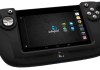
    miniwikipad620_620x340

    The Wikipad lives! After several delays, the company is ready to bring its gaming contraption to the market. The final model is different from the concepts, but it’s more portable, cheaper and much more slick. I want it.

    The Wikipad’s messages is still the same. With controls wrapping around a 7-inch screen, the Wikipad attempts to be Android’s Game Boy — it looks more like a Sega Game Gear. The company hasn’t announced an exact ship date but it’s coming this Spring.

    The original Wikipad used a 10.1-inch, 1280 x 800 screen and a Tegra 3 chip. It was to cost $500 and would probably have failed. Hard.

    As Engadget explains, the company delayed the 10.1-inch model for refinement, but as it was approaching launch, the screen manufacturer discounted the Wikipad’s panel. So Wikipad charged forward towards making a smaller model, which was apparently already on the roadmap.

    The 7-inch Wikipad still rocks a 1280 x 800 screen, just in a 7-inch form. The gaming controls still backpack onto the tablet, which, still uses a Tegra 3 chip. And now at $249, the tablet actually has a chance to make it in the market. The Wikipad has a chance to be what the PS Vita should have been.

    The portable gaming world is missing a device like the $249 Wikipad: A serious, but still affordable gaming platform that can multitask. Sony missed a big opportunity with the PS Vita. The hardware on Sony’s latest portable is fantastic. It’s a powerhouse of computing, but the user experience, and reliance on physical media, stifles its ability to be something other than a gaming machine. And at $249, the PS Vita should be able to browse the web with ease and support a rich, even if it’s limited, ecosystem of apps.

    Android gaming could be the next big thing. With dedicated gaming devices like the OUYA, Game Stick and the Wikipad, there will suddenly, almost overnight, be a whole batch of devices craving new games.

    The 10-inch Wattpad is still coming, per the company’s president of sales. Look for it by Christmas 2013 and expect Tegra 4 power.