Blog

  • Morning Advantage: Beating Your Brother at His Own Game

    Manu Chandaria, CEO of Comcrat, the multibillion-dollar Kenyan steel, plastics, and aluminum company, is a longtime observer of the African business landscape. His views in this Wharton interview are well worth reading in their entirely. He’s bullish, for instance, on Nigeria, and thinks Western companies entering African markets should focus less on establishing political ties and more on winning hearts, as the Chinese do, by building roads, airports, and sports stadiums.

    But when asked about his greatest leadership challenge, Chandaria turns personal. “I used to have a lot of conflicts with my older brother about managing our businesses,” he says. “I had to ask myself…’Am I going to win this man over, or am I going to fight him?’ What he did was carry out his brother’s ideas — with a vengeance. His brother started realizing, “My God, he’s doing exactly what I wanted him to do — but even better.” Many people face this kind of choice — to step into the mold or break it, Chandaria says. “But if you don’t get inside that mold, you won’t break it.”

    NEVER, EVER GIVE IN

    How One Company Saved On-Line Retail for Everyone (Ars Technica)

    Through a constant stream of lawsuits in defense of patents 5,715,314, and 5,909,492, Soverain Software was making excellent progress on its goal of extracting a 1% toll on the revenues of every company on the planet using e-commerce shopping-cart technologies. It settled lucratively with Amazon and beat Victoria’s Secret and Avon in court. But it overextended when it pursued computer retailer Newegg, which went to trial and lost, but would not give up. On appeal, Newegg argued that Soverain was trying to patent something obvious that had already existed since the time of CompuServe Mail. Its policy of never, ever settling with patent trolls was vindicated when the appeals court agreed that Soverain’s patents were not valid (nullifying previous judgements in Soverain’s favor).

    WHAT MAKES TEAMS TICK

    Conjuring Up the Perfect Team (McKinsey Quarterly)

    Two McKinsey researchers asked 5,000 executives to conduct a thought experiment in which they envisioned the conditions necessary for peak team performance. Turns out there are a lot of them. People needed to be clear about their roles and objectives. They required sufficient resources. They had to like one another, laugh together, and trust and respect team members enough to have constructive disagreements. What’s more, to really get in the groove, they needed a sense of excitement, and a feeling that what each person does will matter and what the group is doing will make a difference — and hasn’t been done before. Is that all?

    BONUS BITS:

    Wicked Cool and Just Plain Wicked, Maybe

    Meet Truth Teller, An Automated Political Fact-Checking App (ReadWrite)

    Is AdWords Prone to Racial Profiling? (Technology Review)

    You Won’t Believe What KFC-Japan Has Come Up With Now (The Globe and Mail)

  • No Czech intervention but watch the crown

    The Czech central bank surprised many this week after its policy meeting. Widely expected to announce the timing and extent of FX market interventions, Governor Miroslav Singer not only failed to do so, he effectively signalled that intervention was no longer on the cards — at least in the short term  In his words, looser monetary conditions were now “less urgent”.

    What changed Singer’s mind? After all, data just hours earlier showed Czech industrial production plunging  12 percent year-on-year in December. The economy has not grown since mid-2011 and is likely to have contracted by more than 1 percent last year. Singer in fact predicts a second full year of recession. But some slightly upbeat-looking forward indicators could be cause for cheer. According to William Jackson at Capital Economics:

    We think that the need for further policy loosening was tempered by the tentative pick-up in the most recent survey data as well as the fall in the crown (versus the euro) since the start of the year.

    Until yesterday’s meeting, the crown had fallen 3 percent since the start of the year to seven-month lows against the euro.  January purchasing managers indexes (PMI) this week also showed the Czech indicator rising more than expected to 48.3, up from December’s three-year low of 46.0. That gelled with a pick-up in PMIs also in neighbouring Poland and Hungary.  A separate survey also shows that the business climate in emerging Europe ticked higher in January for the first time since April. The OeKB Central and Eastern Europe Business Climate index of around 400 Austria-based direct investors edged up to 17 points, from 14 in October and the Czech component rose two points to 24, the highest since the second quarter of 2012.

    Even more crucial perhaps have been the recent indicators from Germany, United States and China, on which hinge the fortunes of the export-dependent Czech economy. The German PMI chalked up its biggest one-month rise in January since August 2009, soaring to its highest since June 2011.  The Czech National Bank has increased its medium-term inflation and growth forecasts slightly. According to Singer:

    The possibility of the greatest shocks seems to be a little dampened.

    Jackson of Capital Economics notes however that Singer has not closed the door on further easing and still expects inflation to fall below target by early 2014.

    Perhaps more importantly, the crown reacted to Singer’s remarks yesterday by rallying 1.5 percent. It is up a further 0.4 percent today and that wipes out most of the currency’s 3 percent depreciation since the start of 2013.  Analysts reckon that markets will take Singer’s comments as a signal he is not inclined to intervene and are likely to push the crown higher as a result, undoing some of the monetary loosening on which he had based his decision.

  • Tom Siebel’s $100M big data energy startup C3 finally emerges as a player

    For years little has been known about what stealthy energy data startup C3, founded by Siebel Systems bazillionaire Tom Siebel, has actually been up to. The company has been like a Will Smith summer blockbuster that’s supposed to come out three years from now and will only hint at its plot through artsy abstract trailers. Well, turns out, school is finally out for the summer for C3 — the company has just completed some major milestones for its newly emerged big data energy product, according to Siebel during a talk at the Cleantech Investor Summit on Wednesday.

    Siebel, now CEO of the four-year-old startup, said that in September 2012, C3 launched a data grid analytics project for PG&E, which crunched a whole lot of data about commercial and industrial buildings (the kind owned and leased in California by the likes of Cisco, Kaiser Permanente, Safeway and Best Buy). C3′s platform collected disparate data about a half a million buildings, from places like publicly-available data found via Google, to energy consumption data from utilities, to weather data from weather information companies.

    The entire project required 28 billion rows of data (at least 8 terabytes) that C3 aggregated, normalized and loaded at 5 million records an hour said Siebel, adding, “this is really hard stuff.” PG&E used this data analytics tool to work with building owners to perform energy efficiency audits in real time for all of the commercial and industrial buildings in its footprint. It was a major success, said Siebel, and in the first few weeks of January of this year PG&E exceeded their energy auditing goal for the entire year.

    C3 was also quietly involved in a more high profile big data energy project with GE, which I profiled last week when it launched at Distributech, although at the time I didn’t know C3 was involved. Siebel described the project with GE as “a joint development deal” at grid-scale, trying to solve “petabyte type of problems.” As I reported last week, GE’s Grid IQ Insight software can pull in disparate data from a variety of sources like grid sensors, utility databases and even social media sources on a per second interval basis, and utilities can use the software to peer into their grids, and combat blackouts, in real time.

    Siebel says C3 has three of these types of projects live with customers, that combine a big data layer, an analytics layer and a customer presentation layer. The company plans to launch another five projects in 2013 and another five in 2014. Other customers include Entergy, Northeast Utilities, Constellation Energy, NYSEG, Integrys Energy Group, Southern California Edison, ComEd, Rochester Gas & Electric, DTE Energy, as well as GE and McKinsey.

    In addition to C3′s commercial and industrial platform it built for PG&E, the company also has developed a residential energy efficiency program, which launched last week, said Siebel. The service, which is in development with Detroit Edison and Entergy, is a loyalty program that gets customers to engage in energy efficiency behaviors in exchange for coupons and points at retailers like Amazon. I’m assuming that this platform has incorporated the technology from the startup Efficiency 2.0 that C3 acquired last Spring. Mailed marketing has long been considered the cutting edge in the utility sector, and “I don’t know if we even get mail at my house,” joked Siebel.

    C3 has spent four years, and on the order of $100 million, building the software platform that it is now aggressively selling to utilities and energy vendors. At its core, the C3 platforms use Cassandra for database management system, and all of the applications store all of this data in the cloud, which is a relatively new phenomenon for many utilities to deal with. The company also has some big names as directors, including former Secretary of State Condoleezza Rice, and former Senator and Secretary of Energy Spencer Abraham.

    Grid analytics is a sector that is growing 24 percent a year, said Siebel, and C3 intends to be the software layer that sits on top of the grid. He compared the opportunity to “the Internet in 1993.” Siebel, who sold Siebel Systems to Oracle in 2006 for close to $6 billion, is one of the few entrepreneurs in cleantech that would know what that looks like.

    Lastly, Siebel said his latest startup endeavor isn’t about saving the world from climate change or reducing carbon emissions, despite the company’s three C’s moniker, and despite the fact that that’s important. Ultimately, he says, “It’s about making money.”

    Related research and analysis from GigaOM Pro:
    Subscriber content. Sign up for a free trial.

  • Accidental Empires Part 2 — 1996 edition preface

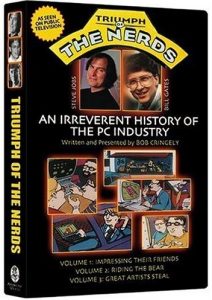
    Second in a series. Editor: Robert X. Cringely is serializing his classic Accidental Empires , yesterday with a modern intro and today with the two past ones. The second edition of the book coincided with release of documentary “Triumph of the Nerds”. The intros provide insight into a past we take for granted that was future in the making then. Consider that in 1996, Microsoft had a hit with Windows 95 and Apple was near bankruptcy.

    The first edition of Accidental Empires missed something pretty important — the Internet. Of course there wasn’t much of a commercial Internet in 1990. So I addressed it somewhat with the 1996 revised edition, the preface of which is below. Later today we’ll go on to the original preface from 1990.

    1996

    In his novel Brighton Rock, Graham Greene’s protagonist, a cocky 14-year-old gang leader named Pinky, has his first sexual experience. Nervously undressing, Pinky is relieved when the girl doesn’t laugh at the sight of his adolescent body. I know exactly how Pinky felt.

    When I finished writing this book five years ago, I had no idea how it would be received. Nothing quite like it had been written before. Books about the personal computer industry at that time either were mired in technobabble or described a gee-whiz culture in which there were no bad guys. In this book, there are bad guys. The book contains the total wisdom of my fifteen-plus years in the personal computer business. But what if I had no wisdom? What if I was wrong?

    With this new edition, I can happily report that the verdict is in: for the most part, I was right. Hundreds of thousands of readers, many of whom work in the personal computer industry, have generally validated the material presented here. With the exception of an occasional typographical error and my stupid prediction that Bill Gates would not marry, what you are about to read is generally accepted as right on the money.

    Not that everyone is happy with me. Certainly Bill Gates doesn’t like to be characterized as a megalomaniac, and Steve Jobs doesn’t like to be described as a sociopath, but that’s what they are. Trust me.

    This new edition is prompted by a three-hour television miniseries based on the book and scheduled to play during 1996 in most of the English-speaking world. The production, which took a year to make, includes more than 120 hours of interviews with the really important people in this story — even the megalomaniacs and sociopaths. These interviews, too, confirmed many of the ideas I originally presented in the book, as well as providing material for the new chapters at the end.

    What follows are the fifteen original chapters from the 1992 edition and a pair of new ones updating the story through early 1996.

    So let the computer chips fall where they may.

    Reprinted with permission

  • Alcatel-Lucent confirms CEO Ben Verwaayen’s departure

    Alcatel-Lucent confirmed early Thursday that CEO Ben Verwaayen is resigning after four tumultuous years at the helm of the Franco-American network equipment maker. Verwaayen will stay put while the board seeks a replacement.

    The announcement confirms the Wall Street Journal’s report Wednesday on the resignation, though the newspapers sources seemed to disagree whether Verwaayen was forced out by the board or if the decision was mutual.

    “Alcatel-Lucent has been an enormous part of my life,” Verwaayen said in an Alcatel-Lucent statement. “It was therefore a difficult decision to not seek a further term, but it was clear to me that now is an appropriate moment for the Board to seek fresh leadership to take the company forward.”

    When France’s Alcatel and the U.S.’s Lucent Technologies merged six years ago, the combined company was supposed to dominate telecom infrastructure. Its portfolio spanned both the wireline and wireless markets from optical networking to IP routing to 4G base stations. But the last half decade hasn’t been kind to telecom equipment makers and even less so to Alcatel-Lucent. The company has struggled financially, and it’s lost competitive ground both to traditional rivals like Sweden’s Ericsson and to more recent challengers from Asia like Huawei.

    On the wireless side, Alcatel-Lucent plowed its resources into LTE. It built an innovative new radio architecture called lightRadio, and focused on landing early key contracts. At first that strategy seemed to be succeeding. Verizon Wireless, AT&T and Sprint awarded the company major portions of their massive LTE contracts, but the deals began to peter out after those initial big wins. The vendor was left out of big European deals even in its home country of France.

    Image courtesy of matthi / Shutterstock.com

    Related research and analysis from GigaOM Pro:
    Subscriber content. Sign up for a free trial.

  • Record Skype voice or video calls, for free

    Ever wanted, or needed, to record a voice or video conversation in Skype? There are plenty of tools out there that will do that for you, but there’s usually a catch. They either cost money or, if they are free, there’s often a limit to what you can record.

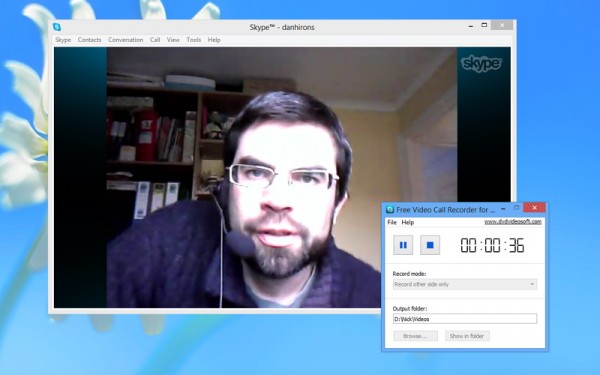
    Thankfully, there’s a free app just launched for Windows users that allows you to easily record voice and video calls from Skype completely for free, with no limits or catches. It’s ridiculously simple to use, and it’s called, rather aptly, Free Video Call Recorder for Skype 1.0.2.115.

    Free Video Call Recorder for Skype, which comes from the DVDVideoSoft stable, takes call recording to new levels of simplicity. All you have to do is choose what you want to record: both sides of a video conversation, your opposite number’s video feed only or just your audio chat. Pick a suitable folder and you’re good to go: just hit the record button to start, then hit pause should you want to miss out a bit, or stop to finish the recording.

    Video recordings also stop automatically when you hang up, and won’t start until the video connection has been made; audio recordings are started and stopped manually. Audio conversations are stored in MP3 format, and video chats in MP4 format, but there’s no record of them in Free Video Call Recorder for Skype; instead you need to open up the folder they’re stored in and double-click them to review.

    The app is clearly a no-frills one, but it’s effective and does the job admirably. We’d like to see the user being able to choose a different video format in case MP4 doesn’t cut it, but other than that there’s little to complain about here. You should probably let your chat partner know you’re planning to record your conversation with them, though — the app doesn’t integrate in any way with Skype, and is to all intents and purposes invisible to it, so there’s no warning relayed on your behalf.

    Free Video Call Recorder for Skype 1.0.2.115 is a freeware download for PCs running Windows Vista or later (sadly, it’s not XP compatible).

  • Coursera classes for college credit? Five online courses approved for credit equivalency

    Massive open online classes are moving ever closer to legitimacy. Last month, Udacity announced a partnership with San Jose State University to pilot three online classes for college credit. And on Wednesday, Coursera is set to announce that five of its courses have won approval from the American Council on Education (ACE) for credit equivalency.

    That doesn’t mean students of those courses will be guaranteed credit by traditional universities — institutions have the option to accept or decline the credit — but it indicates that the courses meet ACE’s standards. And, importantly, it creates the opportunity for Coursera students to not just use online classes to burnish a resume, but to potentially earn a degree.

    When Coursera first announced its decision to seek ACE approval back in November, Coursera co-founder Andrew Ng told GigaOM:

    “Ever since we launched Coursera, we’ve known that university degrees are important. We wanted a more systematic way for students to earn academic credit… This is just a step in that direction.”

    Over the past few months, in addition to Udacity’s San Jose State partnership, a few institutions, including the University of Helsinki and the University of Washington, have unilaterally announced that they would award credit for some Coursera courses.

    But the ACE recommendations mean Coursera classes could be eligible for credit at potentially 2,000 U.S. colleges and universities.

    To be eligible for the credit, students need to sign up for the course’s Signature Track, which requires them to take extra steps to validate their identity, and then take an online proctored exam (through third-party ProctorU). The Signature Track costs $60 to $90 and the proctored exam costs $30 to $99.

    For now, just five courses have been approved for credit equivalency, four for college credit and one for vocational credit: Pre-Calculus from the University of California, Irvine; Introduction to Genetics and Evolution from Duke University; Bioelectricity: A Quantitative Approach from Duke University; Calculus: Single Variable from the University of Pennsylvania and Algebra from the University of California, Irvine.

    Momentum is certainly building behind massive open online classes (MOOCs). But it’s important to remember, as we saw this week when Coursera was forced to suspend a class for the first time after complaints about technical glitches and the design of the class, they’re not without their limitations and are still very much evolving.

    Image by jcjgphotography via Shutterstock.

    Related research and analysis from GigaOM Pro:
    Subscriber content. Sign up for a free trial.

  • Netflix to developers: More monkeys to come

    If you’re a fan of Netflix’s Chaos Monkey, stay tuned — there’s a lot more where that came from. And a few hundred developers showed up for  Netflix’ open source open house Tuesday night to get a sneak peak of more tools to come.

    Full house at Netflix open source open house.

    Full house at Netflix open source open house.

    The company, which famously relies on Amazon Web Services to do “undifferentiated heavy lifting,” as Netflix cloud architect Adrian Cockroft described it, really wants people to deploy its components together. That’s why it continues to put the source code for these tools on Github why it hosts open houses and meetups focused on its tools and components.

    And it’s very interested in getting other, non-AWS cloud vendors to kick the tires of these tools and, ideally, deploy them. Marten Mickos, CEO of Eucalyptus, was in the crowd and I’m told many of the OpenStack players are here as well.

    Netflix would really, really like folks to use many of its tools together. “While the parts are cool and shiny, the whole is greater than the sum of the parts,”  Ruslan Meshenberg, director of cloud platform engineering, told attendees. 

    So what’s coming from Netflix? Some quick hits:

    • Denominator: a tool to manage and handle multiple DNS providers — something that surprisingly, Cockcroft said, no one has done yet.
    • Odin: an orchestration API that can be invoked from Jenkins and into Asgard, the Netflix deployment tool, that will let developers deploy work jobs smoothly over time.
    • Recipes: Lots of them. These are blueprints to make it easier to deploy many Netflix components together.
    • Launcher: to enable easy push-button launch of those recipes.
    • More monkeys: Stay tuned.

    So what’s the end game here? Clearly, Netflix thinks it has a lot to contribute to making massive-scale cloud computing more resilient and able to withstand random failures. Just as clearly, it would like to see other AWS API-compatible clouds (hello ,Eucalyptus!) augment their capabilities with the Netflix tool set.

    Related research and analysis from GigaOM Pro:
    Subscriber content. Sign up for a free trial.

  • Ex-Google and Twitter product guys reportedly launching new VC firm

    Hunter Walk, formerly of Google and Satya Patel, formerly of Twitter, are in the process of fundraising for their new VC firm to be called Homebrew, Fortune’s Dan Primack reported Wednesday. Walk wrote in a blog post Wednesday that he has left Google for “new adventures,” although he did not specify what those were.

    Fortune has reported that the two are raising $25 million for their fund, which will look to back companies that “enable the people-based economy.” It supposedly would include less than a dozen companies, with half managed as an incubator might and half given seed funding. That’s not a huge fund, or certainly not in comparison to some more established funds, like Greylock’s $1 billion  or Andreessen Horowitz’s $1.5 billion, but the two have experience in investing and product experience in the Valley, and it’s certainly larger than blogger Ben Parr’s #DominateFund, which was supposedly in the single digits.

    Walk was most recently head of product management at YouTube with Google, and is an active angel investor. He was previously a founder with Linden Labs. Patel left Twitter in June 2012 after serving as the company’s VP of product. He was previously a partner with Battery Ventures and before that a product manager at Google working on AdSense.

    Related research and analysis from GigaOM Pro:
    Subscriber content. Sign up for a free trial.

  • Why big data matters and data-ism doesn’t

    There has been something of a data backlash happening lately, and I think I’ve figured out why: Data for the sake of data has a tendency to sanitize experiences we’d rather leave a little bit dirty. But there’s a big, meaningful difference that’s worth knowing between big data and just plain data.

    David Brooks’s recent column in the New York Times is a good example of this. He coined the term “data-ism” (which is quite apt) to describe a newfound penchant for reducing everything in our worlds into a number or statistic. Skeptical of this data worship, he is — rightfully — inclined to rebel.

    But everything Brooks mentions in his article is really just statistics, the stuff academicians and businesspeople have been doing for years. It doesn’t take any revolutionary technological advances to measure the effect of political spending on campaign results or the idiosyncrasies in how a president speaks. At the best, these types of analyses are enlightening; at the worst, they’re overkill.

    Data can be an unwelcome disinfectant

    Like Brooks’ pointer to a study about whether there’s such a thing as hot hand in basketball. Or a recent debate (that got an incredible amount of undeserved digital ink from Deadspin and Nick Carr) about whether to adjust the points and frequency of Scrabble tiles based on what letters actually appear most in the English language. Right or wrong, who cares?

    Unless you’re a professional gambler or in the sports business, sports are supposed to be fun; an escape from reality. Buying into things like hot hands, sweet spots, ancient curses and concern rays (thanks, Dave Barry) are part of the rooting experience. If it wasn’t for coaches’ insistence on punting on fourth down, I could watch an entire football game and not think about probabilites once.

    As for Scrabble, well, it’s a game and it’s fun. People like it as it is. What’s next, lobbying to change the distribution of resource cards in Settlers of Catan to account for the relative value of each given recent drought conditions?

    Likewise, while Max Levchin’s vision of the future recently had Nick Carr concerned about big brother (read my colleague Mathew Ingram’s take on it here) my takeaway from Carr’s blog post was more about the threat of a sterilized world. Human beings are not rational actors, and many of us don’t want to be — regardless of what the data says. We buy enormous sodas even though we don’t finish them, we demand all-you-can-eat data plans even though we don’t consume that much data and, directly addressing one of Levchin’s predictions, I bet many of us would willingly pay more for flat-rate auto insurance even if utility-style billing based on our real-time driving behavior would save us money.

    Reducing the things we like — watching sports, eating, web surfing, driving — to data points ruins the experience of living carefree and exposes our optimistic anything-can-happen attitudes to a cold, surgical light. If I thought these were the pinnacle of data’s achievements, I’d rebel, too.

    Data’s real promise is innovation

    Thankfully, however, I’ve been lucky enough to spend my days speaking with some of the smartest data minds around and covering some truly revolutionary technologies. If there’s one thing I’ve learned, it’s that the real value of data isn’t just in uncovering statistical realities, but in finding methods for doing so where it was hitherto impossible and in creating entirely new products that change the way we interact with our world.

    Big data is a technological revolution centered around collecting, storing and processing more data of more types than ever before. It’s also about doing all this stuff faster than ever before as data streams in from sensors, servers, Twitter, web surfing and however else we’re generating data. Data scientists are thinking up clever ways to stitch this data together, apply statistical techniques and do all sorts of things. They’re optimizing commerce, clearing traffic, insuring against inclement weather and even detecting genetic markers that might lead to a cure for cancer.

    Climate Corporation's policies are based on some incredible data science.

    Climate Corporation’s policies are based on some incredible data science.

    If you want to hear a lot more about what’s possible, come to our Structure: Data conference March 20-21 in New York.

    Yes, there’s some value to what David Brooks calls data-ism — there’s a lot to be learned simply from monitoring new data sources, and a renewed focus on visualization means interesting data is now presented in ways that anyone can and might actually want to digest. But the real reason people are, or should be, excited about data is the promise of doing important things faster and better than previously possible (where those things were even possible before).

    Talk to me when you’re able to predict a flu outbreak in real time based on automobile traffic patterns, smart grid data on heater usage and an uptick in illness references on Twitter. If you just wanna tell me that, statistically speaking, chicken soup doesn’t actually appear to affect the longevity of the common cold, well, I think I’ll pass. Chicken soup makes me feel better.

    Feature image courtesy of Shutterstock user Jirsak.

    Related research and analysis from GigaOM Pro:
    Subscriber content. Sign up for a free trial.

  • 500 Startups shows off accelerator program’s fifth batch of companies

    In the accelerator’s typically light-hearted and casual style, 500 Startups launched another crop of companies on Wednesday, welcoming its fifth batch of startups down in Mountain View along with press and investors.

    Dave McClure’s startup program has been rocking along for three years now, and is targeted to hit its namesake investment number some time this year. The group’s investment philosophy is well-documented, and involves making a larger number of bets on a variety of companies, particularly international ones, in hopes of finding some winners. Wednesday’s demo day didn’t rival the zany scope of Y Combinator demo days, but 500 Startups is building a different brand than its older rival. The newest 500 Startups companies have an international bent and clearly focus on practical things like traction and revenue — they all included slides on growth and profits in addition to Top 40 music intros.

    30 startups presented at Wednesday’s accelerator demo, with a good number of companies focusing on 500 Startups’ core investment interests (parenting, marketing and analytics, and e-commerce, to name a few). Here were my five favorites from the day:

    Waygo

    Waygo translator screenshotWaygo is a pretty cool-looking app built for international travelers. It allows a user to hover their phone over foreign text and get instant translations, almost like scanning a barcode or QR code. The app works in real time, preventing any kind of delay in translation, and most importantly has offline capabilities so users don’t rack up roaming charges. The company said the average active user in China uses the app to perform translations up to 140 times per week. The company has a tiered pricing model, allowing people who want more translations per week to up their subscriptions.

    Babylist

    Babylist logo screenshotWhen software developer Natalie Gordon was pregnant, she was dismayed to discover that baby registries, like wedding registries, only allowed a consumer to pick wish lists on individual company sites and didn’t allow new parents to list items that were outside of traditional e-commerce (dog-walking, lasagna-baking, etc.) So while pregnant, she coded the beginnings of Babylist, a company that now allows new parents to create their own baby registries. The site, which works like Pinterest and allows parents to create wish boards (taking 4 percent of transactions on average), has more than 11,000 sign-ups so far, and saw $2.4 million in gifts purchased through the site this past year.

    Curious Hat

    iPad color vacuum app screenshotCurious Hat is one of several companies targeting the market of high-tech parents and kids to build educational content for tablets and iPhones that the two can enjoy. Co-founders CEO Luca Prasso and CTO Erwan Maigret both worked at Dreamworks on films including Shrek and Madagascar. “His generation plays, learns, and creates content in new ways,” Prasso said of his young son’s generation. “We want to further engage curious minds.” The company builds iPhone and iPad apps that allow users to send photos and games to their children, post to Facebook, and choose when and where to engage kids in the app. They have a cool feature called “eye paint” that allows children to take photos of real life things and then “paint” using those captured colors or textures. The Curious Hat founders join other tech people who went from large entertainment companies to kids-oriented startups, like Fingerprint’s Nancy MacIntyre or Toy Talk’s Oren Jacob (see disclosure).

    CompStak

    CompStakCompStak is on online marketplace for commercial real estate, aggregating difficult to find information about real estate prices and availabilities in major cities including New York and San Francisco. “Our data is used by institutional owners to compare properties, hedge funds to make investments, and provides meaningful data for brokers, investors, appraisers, asset managers, economists and more,” as the company explains on its website. The company reports that it has all comps, or records of completed lease transactions, from New York over the past year and 50 percent of comps from the past 10 years. The company has free and premium subscription levels.

    SupplyHog

    Screen Shot 2013-02-06 at 4.51.41 PMTargeting an unusual market for Silicon Valley startups but one that’s actually quite large, SupplyHog works with contractors to let them purchase building supplies online, price out different options, and have them shipped. “It’s tough to find a technology team that’s passionate about building supplies,” said CEO and co-founder Nathan Derrick (a veteran of the construction industry from Chattanooga), but his company has built an interface that allows contractors to find and purchase supplies, working to create a more reliable supply system.

    Disclosure: Toy Talk is backed by True Ventures, a venture capital firm that is an investor in the parent company of this blog, Giga Omni Media. Om Malik, founder of Giga Omni Media, is also a venture partner at True.

    Related research and analysis from GigaOM Pro:
    Subscriber content. Sign up for a free trial.

  • The First Ubuntu Smartphones Will Debut In October

    ubuntu-phone

    Ubuntu’s recently announced mobile operating system certainly has some panache, which has prompted more than a few nerds (myself included) to become enamored with it. Thankfully, Canonical founder Mark Shuttleworth has just recently given us a clearer idea of when to expect it — he told the Wall Street Journal that the first Ubuntu-powered smartphone would see the light of day this October.

    That is, of course, if everything pans out the way that the Ubuntu team hopes. It’s not unheard of for mobile platform launches to miss their intended launch windows after all — BlackBerry 10 was famously slated for a 2012 launch before being delayed until last week.

    Sad to say, the rest of Shuttleworth’s chat with the Journal wasn’t nearly as revealing. Though we’ve seen the nascent mobile OS running on a Samsung Galaxy Nexus both in the initial announcement video as well as at CES, Shuttleworth declined to offer names of any confirmed or potential hardware manufacturers Canonical may be working with. Even so, Canonical’s fondness of the one-time flagship device doesn’t end there. Developers will be able to tinker with Ubuntu on the Galaxy Nexus starting sometime this month (though the fact that it was originally supposed to be released last month may not bode well for Canonical’s launch window).

    Shuttleworth also mentioned that the mobile OS would make its official debut in two major markets this fall, but you guessed it — there’s no hard word on which markets he’s actually talking about. But he did concede that North America is a “key market” for Ubuntu. That said, Canonical may do well by tackling some less-developed markets right out of the gate.

    Canonical’s Jane Silber noted that when Ubuntu for phones was first revealed that the appeal of Ubuntu phones extends far beyond the enterprise, adding that Ubuntu’s native apps and stylish UI could make it a popular choice for more basic smartphones. Some of the other upstart players are looking to expand the reach of their mobile operating systems by taking a similar tack. Carriers like Telefonica are planning to use Mozilla’s Firefox OS as a means of getting more low-cost, feature-rich devices into the hands of consumers in markets like Brazil. Attempting to make a splash where mobile OS allegiances have not quite had a chance to settle yet could give Canonical an edge, as those regions become more digitally developed.

  • Google takes the busywork out of managing mobile ad campaigns

    Google today announced big changes to their AdWords money making machine in a bid to dramatically increase mobile advertising adoption and the Cost-Per-Click (CPC) of mobile search ads — by making their advanced mobile search advertising features work by default, rather than requiring tons of extra effort on the part of the advertiser to make them work, and also by changing the way mobile CPCs are set.

    The changes announced today, known as “Enhanced Campaigns”, will become available to customers by the end of February and will be applied automatically to all advertisers by mid-year. In this article, I’ll explain how the coming changes will impact Google’s bottom line.

    Google’s Mobile Search Problem

    Over the last 5 years, growth in query volume from mobile phones has grown at a much faster pace than Google searches from desktop computers. The total number of daily searches on Google from mobile devices is expected to surpass daily desktop search volume by next year.

    However in recent quarters, Google has had a problem with mobile CPCs — a mobile search monetizes at roughly half the rate as a desktop search, and as a result, some have even questioned the future of Google’s advertising business model.

    Why Advertisers Currently Suck at Mobile Search

    In a nutshell, in order for an advertiser to leverage Google’s most sophisticated mobile advertising features and strategies that are required to be successful, Google requires that advertisers do a lot of extra work, which is so complicated that it’s pretty much impossible to do. Currently, advertisers are expected to create multiple different ad campaigns — one for every city and every possible device combination, which quickly becomes pretty difficult as there are now millions of possible combinations.

    Meaning, Google subjects advertisers to something of a mobile torture test just to set up mobile ad campaigns, and as a result, the overwhelming majority of advertisers decide that it’s just not worth the hassle. At WordStream, I work with AdWords advertisers in the small-and-medium business segment; I estimate that less than 1 in 25 bother doing the work of mobile-enabling their PPC campaigns!

    New AdWords Enhanced Campaigns: How They Work

    Google is rethinking how we deal with the multi-device world we live in, and is upgrading the decade-old PPC campaign structure so that advertisers can leverage key mobile advertising features by default, without having to create separate campaigns for every location and device combination.

    For example, within your ad campaigns, you can just specify if you’d like to bid more or less for mobile clicks, rather than having to create a separate campaign. And similarly, ads are getting a lot smarter. Within a single campaign, you can have different ads for desktop and mobile and Google will make note of what device is executing the search and will correctly pick the right ad to run with. Ads and settings will be adjusted for you automatically.

    So overall, the idea of Enhanced Campaigns is to take the mobile advertising features that were previously available, but almost never used because they were too hard to implement, and offer them in a much more scalable way for all Google advertisers. This allows advertisers to just focus on advertising their products rather than worrying about what device a Google search originated from.

    Mobile CPCs Are Going Up

    Come June, after the planned auto-upgrade to the new Enhanced Campaigns rolls out, the gap between mobile and desktop CPCs will be filled.  This is due to increased advertiser competition from increased advertiser adoption of mobile search since:

    • All existing ad campaigns, including those that previously excluded mobile search will be now opted into mobile by default
    • New ad campaigns will be able to take advantage of advanced mobile advertising features with far less effort.

    Additionally, Google will be auto-setting the inaugural mobile bid adjustment factor for all enhanced campaigns. While I don’t know exactly how that’s being calculated, I’d imagine that the default values aren’t going to be set to a value that reduces mobile CPCs on average.

    In fact, last month Google CEO Larry Page was asked on an earnings call if he thought that mobile CPCs would be going up any time soon, to which he responded: “I am very, very optimistic about it…we are working to simplify our ad system for advertisers…we don’t have anything to announce today but I am very excited about our efforts there. I think that we will make rapid progress in that area”.

    We now know why Larry Page was so optimistic about mobile CPCs.

    Simplified Mobile Search ROI Tracking

    Google is also making it easier for advertisers to better understand the ROI of paid search advertising by making the following changes:

    • The End of Mobile Call Reporting Fees: Previously Google had offered mobile call reporting features to allow an advertiser to see what phone numbers called, when, and how long the calls lasted. This was helpful but a bit bizarre in that Google actually charged advertisers a dollar extra per call to use it, which, sadly, acted as a disincentive to adopt mobile search features! Going forward, Google is dumping the extra fee.
    • New Mobile Advertising Conversion Type: The ROI of mobile search is systematically under-reported because conversion tracking is based on a user finding a thank-you page after having placed an order online or completing another goal. In mobile search, the call to action is often to make a phone call, so traditional conversion tracking doesn’t work. So Google is introducing a new mobile advertising conversion type, based on call duration and specified by the advertiser.

    What does it mean for Advertisers and Google Investors?

    I think the changes make a lot of sense. Right now there are a bunch of advertisers that opt out of mobile search because they think (incorrectly) that the ROI isn’t there. In particular, small businesses aren’t too keen on exponentially increasing the number of ad campaigns in their account because that creates work for them! It’s also a bit more challenging to track the ROI of mobile search.

    I believe that the ROI of mobile search is very compelling due to factors like precise location, immediacy, commercial intent, and 1-click-to-call.

    It’s always been a matter of just getting the advertiser to adopt the somewhat complicated best practices in terms of campaign setup and reporting to realize these benefits. By simplifying this process, I’m confident that we’ll see an uptake in mobile advertising adoption and ROI. I think the new enhanced campaigns will be particularly helpful for SMBs that are not yet taking advantage of mobile search.

    Additionally, Google has set the default auto-upgrade settings and changed the way mobile bids are set, in a way that will create significant upwards pressure on mobile CPC’s.

    For a more detailed look at Enhanced Campaigns and the mobile bid adjustment factor, see my longer article at the WordStream blog.

    Larry Kim is the Founder/CTO of WordStream.

    Photo Credit: Adam Radosavljevic/Shutterstock

  • Google revamps AdWords in nod to mobile device explosion

    With more people jumping from laptop to tablet to smartphone, Google has decided it’s time to tweak Adwords to make it easier to manage advertising campaigns targeting each of those platforms.

    Nexus 7, tabletsThat’s the idea behind its new Adwords Enhanced Campaigns, according to a Google blog post. The unstated rationale is that click rates for mobile ads aren’t exactly setting the world on fire. Google, like Facebook, has a mobile problem. It needs people to click on the ads on their phones and tablets and it needs to find a way to wring more dough out of each click.

    Here’s the example Google uses:

    “A breakfast cafe wants to reach people nearby searching for “coffee” or “breakfast” on a smartphone. Using bid adjustments, with three simple entries, they can bid 25% higher for people searching a half-mile away, 20% lower for searches after 11am, and 50% higher for searches on smartphones. These bid adjustments can apply to all ads and all keywords in one single campaign.”

    According to the Google blog:

    “With enhanced campaigns, instead of having to cobble together and compare several separate campaigns, reports and ad extensions to do this, the pizza restaurant can easily manage all of this in one single place. Enhanced campaigns help you reach people with the right ads, based on their context like location, time of day and device type, across all devices without having to set up and manage several separate campaigns.”

    Folks had been expecting Google to change its Adwords strategy. Richard Zwicky, CEO of Blueglass, a digital marketing agency and software provider predicted the change and is not a fan.

    In his blog, Zwicky wrote that “less complicated campaign management means less campaigns to manage, which is simpler, but also will likely result in lower ROI for advertisers whose campaign managers now need to restructure every campaign they run to adjust for the new reality.”

    In his view these changes don’t make things less complicated, just different and “less transparent.” Bottom line, this isn’t good for anyone but Google, according to ZDNet’s Larry Dignam. More on the news from SearchEngineLand.

    In other news, Yahoo said it signed a deal with Google to display ads on Yahoo properties using Google’s AdSense for Content and Google’s AdMob services. “By adding Google to our list of world-class contextual ads partners, we’ll be able to expand our network, which means we can serve users with ads that are even more meaningful,” according to a Yahoo statement.

    While this is a nonexclusive agreement, Yahoo watchers expect there could be more collaboration with Google since former Google exec Marissa Mayer took the reins as Yahoo CEO. Yahoo is reportedly not happy with the results of its partnership with Microsoft  which made Bing the search engine for Yahoo.com. Gee, I wonder what other search engine they could use?

    Related research and analysis from GigaOM Pro:
    Subscriber content. Sign up for a free trial.

  • We need new laws not just for martyrs like Aaron Swartz, but for trolls like Weev too

    It’s been almost a month since hacker-activist Aaron Swartz took his own life at the age of 26, driven — according to those who knew him — by a combination of depression and the threat of jail time. The latter was a result of federal charges under the Computer Fraud and Abuse Act for an incident involving documents he downloaded from the JSTOR research archives. While proposals have been made for changes to the law as a result of his death, it’s important to think about all the other hackers who might be caught by the same net, even if they aren’t as appealing as Swartz.

    In the wake of his suicide, Swartz’s case quickly became a cause celebre, and a group of legislators including Darrell Issa (R-Calif) — who was also instrumental in the fight against SOPA and PIPA — recently asked the Justice Department to look into the behavior of the U.S. attorney’s office in pressing for a severe penalty against the young hacker. Zoe Lofgren (D-Calif.) has also proposed a number of changes to the Computer Fraud and Abuse Act that would prevent the state from going after others for what Swartz did.

    Breaching terms of use shouldn’t qualify as hacking

    Among other things, those changes — some of which were proposed by users of Reddit during a session with Lofgren last month — would prevent prosecutors from pressing charges for simple breaches of a website’s terms of service or user agreement, which is one of the clauses in the CFAA that was used against Swartz. Changing a computer’s hardware address (which Swartz did in order to avoid detection) would also not qualify as criminal hacking.

    Aaron's Law Act

    But while Aaron Swartz’s experience has drawn some much-needed attention to the problems with outdated laws like the Computer Fraud and Abuse Act — which was written in 1986, before the web was even invented — we shouldn’t forget that others have also been hit with this overly broad and vague piece of legislation, even though they haven’t become popular causes in the way that Swartz has.

    As Marcia Hoffman of the Electronic Frontier Foundation has pointed out, one of the most problematic parts of the CFAA is that the law makes it a crime to access a computer or website “without authorization” or in a way that “exceeds authorized access,” but those terms are never really defined. In a number of cases, prosecutors have defined them to mean that anyone accessing a web-based service in any way that isn’t explicitly approved by the terms of use is committing a crime under the act.

    In 2008, for example, prosecutors used this aspect of the law to go after a woman who created a MySpace profile using an assumed name (although a judge declined to hear the case) — and as one security researcher has explained, the same principle could easily be used to charge anyone who simply goes to a website without the explicit permission of the owner.

    Aaron Swartz

    Aaron Swartz

    One of those who has been caught in this particular net is almost the polar opposite of Aaron Swartz, although both were clearly hackers: Andrew Auernheimer, who is known by the online handle Weev, has also been found guilty and is facing potential jail time for unauthorized access to a computer or web service. In his case, Weev and a fellow hacker collected a list of AT&T customer email addresses by generating random URLs at the AT&T website, and then gave them to Gawker in what they said was an attempt to draw attention to AT&T’s lax security measures.

    Unlike Swartz, who has been hailed by most of his friends and acquaintances — including luminaries such as Creative Commons founder Lawrence Lessig and even the creator of the World Wide Web, Sir Tim Berners-Lee — as a force for good and a crusader for openness and other just causes, Weev is somewhat notorious for being an online troll who reportedly delights in causing mischief, aggravation and hurt feelings wherever he goes.

    Being a troll shouldn’t qualify as hacking either

    All of that may make him less than appealing as a public cause, but the flaws in the Computer Fraud and Abuse Act are just as obvious in his case: in fact, what Weev did barely even qualifies as hacking, since he simply generated random iPad ID numbers and then used those to get the AT&T email addresses. In other words, the addresses were freely available and not hidden behind technological locks or passwords of any kind (Weev also made no attempt to use them or sell them).

    The bottom line is that the CFAA isn’t worth scrapping or rewriting just because it was used to go after Swartz, or even Weev — the biggest issue is that it is so broad and technologically ignorant that it can be used to criminalize behavior that should barely even register as a nuisance, let alone a crime. Swartz’s downloading of JSTOR documents wasn’t serious enough for the archive to press charges, and yet the prosecutor chose to threaten the young hacker with jail time.

    At its best, hacking of the kind that both Swartz and Weev engaged in is no different than the kind that Microsoft founder Bill Gates employed when he let lose a worm that shut down a corporate computer network when he was 14. Within reason, testing the limits of computer systems and revealing security holes is something for which we should be thanking hackers — or possibly admonishing them — not sentencing them to prison terms.

    Post and thumbnail images courtesy of Shutterstock / ER 09 and Fred Benenson

    Related research and analysis from GigaOM Pro:
    Subscriber content. Sign up for a free trial.

  • Visualizing the volunteers of TEDxTehran

    TEDxTehran-mainAt TEDxTehran, one volunteer is a gold medal swimmer. Another is a personal chef. Of the volunteers for this event, which will take place on February 14, 75% are bilingual. Meanwhile, 30% speak three languages.

    Organizer Sara Mohammadi decided to create a visualization, below, of the TEDxTehran volunteers because the process of interviewing them was so inspiring.

    “What was amazing and overwhelming was the diversity of our volunteer applicants,” she says. “There was so much passion in every single one of the 60 interviews that we did … It left a lasting impression on me about the untapped potential of Iranian youth and their willingness to create. I just wanted to give some color and a voice to all those people who applied as volunteers, who came to for Tehran interviews — some taking trains from other cities — and also to underline that TEDxTehran is only made possible because of a group of local Iranians who are volunteering their time, skill and energy for a non-profit cause.”

    Below, see the infographic for this event, as well as some very cool speaker posters.

    TEDxTehran-poster

    TEDxTehran3

    TEDxTehran2

    TEDxTehran1

  • Triple duty Coda One may be the only Bluetooth speaker you’ll ever need

    It’s difficult for me to get too jazzed about Bluetooth speakers these days. They all do the same thing, right? Some work as speakerphones for cars while others are great for streaming music wirelessly. At the Consumer Electronics Show last month, however, I stumbled on to what I thought was an atypically unique Bluetooth speaker: the Coda One. I’ve been using a review unit for the past few weeks and while this device isn’t for everyone, it impressed me thanks to its three distinct uses.

    It’s a speakerphone for the car

    Coda One for car The Coda One comes with a clip so you can attach it to the visor in your car. When paired to your phone, it works like any other hands-free car solution. Being an electric hybrid, my car is pretty quiet on the road. Even so, some callers said they could easily tell I was on a speakerphone.

    These are folks I’ve spoken with before over Bluetooth using the integrated wireless system in my car, which they felt offered better sound quality. Still, they’ve heard worse solutions as well. Incoming calls are announced through the Coda One and a simple button press answers calls or switches to a second call. The visor clip has a magnetic attachment because …

    It’s a standalone speaker for calls and music

    Coda One for musicRemove the Coda One from the magnetic clip and you have a very portable external speaker. Sure you can still take calls with it without the clip, but it doubles as a music player. Sound isn’t what I’d call high-end; I use a Jambox at home to stream music in a room and the sound is much louder and richer.

    But the Coda One output is passable for a small wireless speaker. Put another way: It offers the best sound of any hands free in-car Bluetooth speaker I’ve used. I like how it actually stands up on its own thanks to two small rubber feet, giving it a mini boombox profile. (Wikipedia’s boombox entry is here for those under 25 years of age — ah, the 1980s.)

    It’s a wireless handset too. What?!?

    coda-one-phoneThe Coda One’s third use is my favorite. When on a call, pressing the Multi-Function Button on the device takes it out of speakerphone mode. At this point, you hold the Coda One up like a mini handset with a speaker near your ear and a microphone near your mouth. In this configuration the device is small enough that you don’t look silly talking on the phone. Heck, it’s about the length of my good old Motorola StarTAC when it was open and in use.

    Why would I be excited about this? I’ve been early to the trend of phones getting bigger at the same time tablets have shrunk in size. I’ve even used a 7-inch tablet as a primary phone with VoIP for months at a time. Instead of looking the fool with a tablet alongside my head, the Coda One becomes a perfectly sized handset for larger devices.

    Final thoughts

    Overall, I like concept of the Coda One although I wish the sound quality in speakerphone mode were a tad better. It doesn’t have its own voice command capabilities, but can be used with one on your smartphone: Siri and Vlingo are specifically mentioned and I used it with the voice controls built into BlackBerry 10. Coda One supports multi-pairing – up to eight devices — and battery reportedly lasts for 20 hours of talk time or 40 days of standby. Supported Bluetooth 3.0 profiles include HFP, HSP, PBAP and A2DP.

    The Coda One is expected to launch with a $99 price tag. Are there better hands-free speakerphones? Yes. Are there better wireless speakers? Yes.

    tablet-as-phoneBut few can do everything the Coda One does in various places and if small tablets do become large voice-capable devices, I could easily see myself buying one of these versatile Bluetooth devices. Then I won’t look like this when having a conversation on a tablet.

    Related research and analysis from GigaOM Pro:
    Subscriber content. Sign up for a free trial.

  • Chromebook Pixel looks like MacBook Pro to me

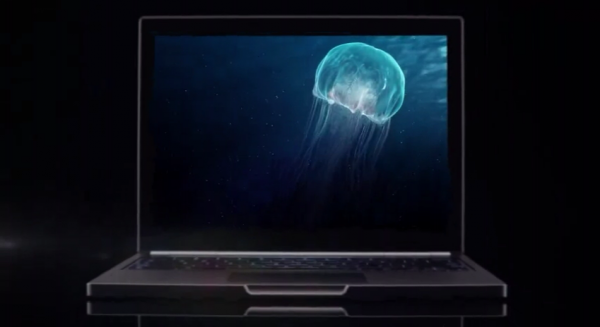
    Today’s buzz among Chromebook aficionados and wannabes is a leaked video for a model supposedly being developed by Google with high resolution, touchscreen display — that’s 2560 x 1700, baby. The vid went up on YouTube, then mysteriously came down, but went back up virally, adding to the intrigue that maybe, just maybe, the touchy-feely Chromebook is real. In your dreams.

    Who doesn’t love a good mystery, particularly gadget freaks desperate for something more and bloggers clawing over one another for greater pageviews. Conspiracy is an Internet meme that never grows old. But there’s something oh-so wrong with the Chromebook Pixel shown in the video. Doesn’t the computer look a whole lot like Apple MacBook Pro? Similarities are striking, which makes me wonder whether Google imitates art or this video isn’t for a real product. Perhaps it’s just pitch for one.

    Magical Mystery Tour

    For sure, a Google-designed Chromebook would be timely. Just two days ago I griped about OEMs releasing new models based on existing Windows machines stripped to the bones. Manufacturers need a good swift kick in the ass, and Google should start by doing what it did with smartphones and tablets: Co-develop reference designs that run stock software — hence the Nexus line of smartphones.

    So, yeah, Google leadership is needed so the Chromebook wave rises rather than falls off once the geek market loses the “next big thing” glow.

    But pardon my skepticism Chromebook Pixel is for real, given the paucity of rumors that turn into reality and the marked MacBook Pro resemblance. Look at the video! It’s stylized like a MacBook Pro commercial minus Jeff Goldblum narration. Isn’t that reason enough to wonder about this thing?

    Russell Holly shares my skepticism:

    Chrome OS has had the nuts and bolts for touch support since the CR-48, and when you consider the resolution in the Samsung Nexus 10 it seems plausible that Google would look in this direction for Chrome OS at some point.

    This video, though? This video has all markers for an intentional viral prank. For starters, it’s a crappy render of a crappy laptop. Next, it’s using the wrong Google logo at the end. Finally, the video was pulled from YouTube, and then pops back up on DailyMotion courtesy of an Android blog.

    Another tell is “Chrome” without the logo 43 seconds into the video. Still, if you closely examine describable keys, they are right for Chromebook.

    She Loves You

    Developer François Beaufort, who ignited fierce fires of hope across Google+ today, calls Pixel a “concept” being “actually tested at Google right now”. But concept doesn’t mean real product, certainly not looking this much like an Apple laptop — or are Google lawyers that audacious? Besides, companies test all kinds of prototypes and produce marketing mockups during the development process.

    The collective Chromebook community is near fatal heart attack over this thing. I have visions of screaming teenage girls, some with arm outstretched, waiting for the Beatles. “Wow, I think I just found my next laptop”, Andrew Brown chimes.

    Jeff Jarvis: “I want one. Now that Google has done a good job testing the low-cost end of the market with its Chromebooks, now it needs to test the sleek end”.

    “Shut up and take my money!” Lee Grupsmith exclaims.

    Mac Morrison: “Chromebook Pixel marks the end of apple lust”.

    Oh, you screaming school girls! Aren’t we all?

  • Keep Up to Date on President Obama’s Immigration Proposal

    Last week the President traveled to Nevada to redouble his Administration’s efforts to work with Congress to enact bipartisan common-sense reform to fix our nation’s broken immigration system. In his remarks the President pointed out that we need a system under which everyone plays by the same rules: “The question now is simple: do we have the resolve as a people, as a country, as a government to finally put this issue behind us?”

    The President believes that we do, but we need the American people engaged to keep Washington moving forward. That’s why he went to Nevada, and that’s why today, we are pleased to share that there is now a new and updated online resource center available through the White House website to help you stay on top of this critical debate. The new website, which you can find at WhiteHouse.gov/Immigration, includes all of the basic resources you’ll need on the issue and on the President’s proposal and will be your guide as we work with Congress on advancing legislation for common-sense immigration reform in the coming weeks and months.

    The new site highlights the four principles at the heart of the President’s proposal: continuing to strengthen border security, cracking down on employers that hire undocumented workers, creating a pathway to earned citizenship and streamlining our legal immigration system. And it also includes links to the latest blog posts and videos.

    Be sure to visit the new website, but more importantly, stay involved. The President isn’t going to be satisfied until a bill gets to his desk, and your voices are critically important in making that happen.

    Sign up to stay involved and receive updates about the White House’s work on immigration.

  • Let’s fix science education: A Q&A with “Save Our Science” author Ainissa Ramirez

    AinissaRamirez-Q&AHow is it that science classes have become about memorization and filling in the right circle on a Scantron sheet, rather than about doing hands-on experiments and activities that reveal the wonder of the world around us? It’s a problem that Tyler DeWitt tackled in yesterday’s talk, “Hey science teachers — make it fun.” And it’s a warning bell that Yale professor Ainissa Ramirez has been sounding for a long time.

    At TED2012, Ramirez talked about a crisis in education: The problems of our time require creativity and nonlinear thinking, and in the United States, students simply aren’t being prepared to come up with the solutions we’ll need. Now, in her new TED Book Save Our Science: How to Inspire a New Generation of Scientists, Ramirez shares what she sees as the best way to inspire new learners — a commitment to improving science, technology, engineering and math (STEM) education. In the book, Ramirez takes a hard look at the cultural and historical reasons why STEM education has declined in the United States over the last few decades. Her plea: We need to bring it back.

    Curious to hear more about what can be done to make STEM fun again, we asked Ramirez a few questions about her new TED Book.

    What inspired you to write this book now?

    There is a line in the poem On Crime and Punishment by Khalil Gibran that says, “He falls for those ahead of him, who though faster and surer of foot, yet removed not the stumbling stone.”

    As a scientist who has walked along this bumpy STEM pipeline, I wanted to leave clues and a map on how to navigate it. Save Our Science is the map. It’s not only for those within the pipeline, but also for the whole STEM ecosystem. Everyone feels helpless in this education crisis. Save Our Science is a manifesto to recharge and empower everyone. In it, I am acting as an on-the-ground Secretary of Education, attempting to help all Americans feel empowered to make change. This book spells out how we — teachers, parents, citizens, politicians — can use all the pieces that are working and arrange them in a way that will make the US a leader in STEM education again. It includes actions that individuals and groups can take to get the education system back on track.

    Why is STEM education so vital?

    First, most of the jobs of the 21st century will require people to be comfortable with science and math — not only the content and information, but the mindset that comes from these fields, such as trial-and-error and the skill of asking good questions.

    Second, all the focus on testing is not allowing children to be children. That is, there are few opportunities for kids to explore something inspired by their curiosity, and few chances to get their hands dirty. Some might say that American childhood is under attack and with it all the key human development steps needed to make whole and healthy adults. STEM is like a training camp for key skills like encouraging curiosity and patience, and making friends with failure.

    It has been shown that the ability to self-regulate — in other words, patience — is a better marker for success than IQ. There’s the famous marshmallow experiment, where children are given a marshmallow that they can eat now, or they’d get two if they wait 15 minutes. It was found that those who waited (less than 30% of them) actually did better in school. In this microwave era, STEM teaches children patience; you can’t rush an experiment. For example, try to quickly make rock candy from sugary water. You can’t! It takes time and requires patience. But it is so worth it! Learning to wait is a muscle that is lacking but important for human development. STEM provides human skills and virtues that will make our children successful down the road.

    What key changes can we all make to improve STEM education?

    Save Our Science suggests action items everyone can do to make STEM more fun and engaging. It could be a shop owner installing a 3D printer; or a mechanic having bike-repair nights in the neighborhood; or restaurants showing the chemistry of cooking. Parents can take stuff apart with their kids and learn together how things work. Show science videos at malls, in movie previews and at the dentist’s office. Of course, policymakers could learn more about what really works from other countries. The bottom line is, if we lather engaging STEM opportunities everywhere, we are going to change the cultural thinking about science.

    I’ve seen it in my own town. I was having carpets cleaned in my home for Thanksgiving. The cleaning guy immediately recognized me from my science videos that play on the local cable channel in town. Our conversation moved from chitchat about the weather to an intense discussion of science. He talked about what he learned on the video, and then we started actually coming up with ideas for another video. He emphatically made suggestions. But that is not the point; the point is that he got it. He got that science was for him, and he could demand more, inspired by his curiosity. Science was part of his language now, and we were having a real conversation about real issues. Making science accessible and engaging is the first step to individual ownership of the concepts, and is the first step to making real change in STEM education.

    How do you personally make STEM education more fun?

    I am a STEM evangelist and try to make it fun in a number of ways. If I am at a cocktail party, I’m that person who will pull out a party trick. In my case, it is a small piece of memory wire that I store my wallet. This material changes its shape when you heat it with a match. If you want to see adults show childlike enthusiasm, this wire does it every time. After I show the wire demo, then I wait. Some people will be hooked and will ask what is going on. I’ll make analogies between atoms to members of a marching band, where each individual makes a small change, but the whole is a pronounced change. You can see this wire in action in this small TED-Ed video here.

    As for younger people, at Yale I created a science lecture series for kids called Science Saturdays. Here, children get to learn about science from experts in an age-appropriate but not-dumbed-down way.

    For a broader reach, I created a series of short science videos call Material Marvels, which have been seen all over the globe. I try to make science appealing with outlandish demonstrations (that often need a blowtorch), or make silly analogies — like that solar cells are sandwiches of silicon. These videos are playing on local television in my town, and I am surprised by their impact. When I go to the barbershop, gas station, or even at church, occasionally someone will come up to me to say they watched these videos. One woman recently said to me, “Hey, I saw you on TV doing science. I loved it, not because I know you, but because you made it fun. And I am an English major!” That is a huge testimonial to the impact of making science enjoyable and putting it where folks have access to it. People will come if you build it, and bring science to them in a way that is palatable.

    In my classroom, I do some of the same outlandish demonstrations, but I also add lots of group discovery. Students learn better from their peers, so I’ll start a lesson and have an in-class assignment that they will do together. This is a less threatening approach for learning and, I’ve been told by my students, is fun.

    Also, I’m an author. Right now I’m writing a book about American football through a science lens, called Newton’s Football, for Random House. With my collaborator, Allen St. John, we are using football as a model to describe the hot topics in science like chaos theory, the physics of football helmets, concussions, and other nuggets in a fun, big-think, non-preachy way. I think football fans will like a new way to look at the game, and non-football fans will gain a new point of entry to the game.

    All in all, my joy is learning new things and translating what I’ve learned so that other people understand it too. In essence, I am acting as a science conduit and translate science so that it seems relevant to everyone. That is my mission, anyway.

    Save Our Science is available for the Kindle and Nook, as well as through the iBookstore. Or download the TED Books app for your iPad or iPhone. A subscription costs $4.99 a month, and is an all-you-can-read buffet.