Bohemia Interactive today announced that it will be changing the name of the main island featured in its upcoming Arma 3. The island will now be known as “Altis,” rather than “Limnos.”
The name change comes after two Bohemia developers, Ivan Buchta and Martin Pezlar, were arrested in Greece last September under charges of espionage and spent 129 days in prison. The two were on vacation on the Greek island of Lemnos, which serves as the inspiration for Altis. Greek authorities accused the developers of photographing military installations. The two were recently released from prison and allowed to return to the Czech Republic, where Bohemia is based.
“As part of the creative process, our virtual environments are often rooted in real-life locations and, during development, they evolve and grow along with our design,” said Joris-Jan van ‘t Land, project lead on Arma 3. “The resulting fictional environment is often close to its inspiration, but it’s never exactly the same – nor would we want it to be. For us, ‘Altis’ echoes the Mediterranean heart of our island, but differentiates it from any undesired real-life connotations.”
Lemnos was chosen as the inspiration for the Arma 3 island after Bohemia CEO Marek Spanel visited the island on vacation. The name change, according to Bohemia, is meant to emphasize that the game is fiction. A smaller Arma 3 island named “Stratis” will be keeping its name.
It’s one thing to be riding on a motorcycle and to get caught in dodgy weather, but riding through it on purpose? That’s another story entirely. On this, RideApart’s season II finale, two-wheeled superhero Jamie Robinson climbs aboard a KTM 990 Adventure and heads for the back hills of Colorado where he faces ice, snow and or course, the occasional dirt trail. He also proves once and for all that motorcycling is not so much about the bike that you ride, but about the adventure that it takes you on.
Right now, cord-cutting Downton Abbey fans have several options for streaming previous of the show: Netflix, Hulu Plus and Amazon, as well as PBS’s own website for current-season episodes. Later this year, though, options will be much more limited: Amazon said Friday that by the end of 2013, Prime Instant Video will be the exclusive paid streaming service to allow access to the show.
Users of other services should watch the show while they can. Netflix only has Season 1, which a source familiar with the deal says it will lose on July 1, while Hulu Plus has Seasons 1 and 2.
Beginning June 18, 2013, Prime Instant Video will be the exclusive subscription service for streaming the all-new Season 3 of Downton Abbey, and later this year, no digital subscription service other than Prime Instant Video will offer any seasons of Downton Abbey. Prime Instant Video will continue to be the exclusive subscription home through Season 4 and, if produced, Season 5 of Downton Abbey.
It’s easy to see why Amazon wants this deal. Downton Abbey is ”the most popular TV series with Prime Instant Video customers, ever,” the company said.
Fans should still be able to watch new episodes on PBS.org and will continue to be able to buy individual episodes and seasons from iTunes and Amazon.
Back before the Interwebs, part of the suspense of the Super Bowl was not knowing what Budweiser or Chevy had up their 30-second sleeves. But times have changed, and there’s generally no escaping the teasers or crowdsourcing that are now part of the language of modern advertising. Want to help name a baby Clydesdale? Or win a chance to go to space? Super Bowl XLVII already has you covered.
Aside from being entertaining, controversial, or overtly sexual, what’s the value of all this effort? I turned to Thales Teixeira and Jonah Sachs for some answers. Teixeira is an assistant professor of marketing at Harvard Business School whose latest research involves Web-based facial tracking in order to measure why, when, and how much you should entertain your customers in ads. Sachs is the author of the book Winning the Story Wars and the cofounder and CEO of Free Range Studios.
But before going into the powerful nature of viralness and storytelling, it’s worth taking a step back to answer a building block question.
What makes ads successful?
Two things, says Teixeira: “they have to grab attention; then they have to persuade.” The former is a bit tricky, what with DVR and the prevalence of second screens. So how do you get people to actually watch your ad the whole way through? Teixeira offers one possible solution: “You can either put the good content upfront, or you can create a shorter ad, a 15 second ad, and show it to them. Then when they like it, they’re more likely to watch the 60-second ad.”
“In a sense, it’s an ad for an ad.”
We’ve gone meta, which is important. The ad for the ad, of course, could be the preview, teaser, or crowdsourcing that ramps up in the weeks before and after the Super Bowl. When you have an ad for an ad, you’re doing more than telling a 30-second story.
You’re building brand buzz. And the Super Bowl is the perfect time to re-up how a brand defines itself.
“You’re trying to create a clear association between your brand and a certain kind of feeling or a certain kind of style or a certain kind of approach,” explains Jonah Sachs. “The goal is to sort of announce whatever your new or slightly tweaked brand position is.” And while ad agencies are interested in winning awards and such, brand managers are watching to see “if the ad moves the needle of brand perception.”
A good example of this is Hyundai’s recently released spot, in which the car company pairs up with the Flaming Lips for an “Epic Playdate”:
Hyundai’s VP of marketing, Steve Shannon, explained the message to Billboard: “The Flaming Lips are very much like Hyundai. They’re a little offbeat. They’ve been around a long time and they continue to reinvent themselves.”
But there can be pitfalls in this model.
“Because of that dynamic — that people actually are watching and are discussing, and there’s such a fierce competition to “win” — a lot of brands have to go off message a little bit in order to be heard,” Sachs told me “You don’t have a lot of chance to do much with your brand except sort of wave your hands faster and be louder than the other guy. It’s so necessary that that drives engagement, because it doesn’t actually do the same kind of brand building that a regular advertisement would.”
A good example of this is the Pepsi campaign that aired in 2011. The year prior, the company chose not to air a Super Bowl commercial; instead, they put $20 million into the Pepsi Refresh social media campaign, which focused on giving out grants for health, environmental, social, educational, and cultural causes. Their statement, says Sachs, was “we don’t need ads. We can do good for the world.”
Fast-forward a year, when they came out with this:
“You watch it and you’re like, wow,” explains Sachs. They went from changing the world to “totally the opposite: just laugh at this, which has nothing to do with that brand positioning. It sort of becomes a giant exercise in wasteful thinking and brand destruction.”
In some cases, this actually makes more sense than working with an ad agency. “The crowd has sort of beaten the average Madison Avenue approach in the last few years with the Doritos campaigns,” says Sachs. And there are two parts to why this works. The more obvious one is that sometimes fans are more passionate than ad agencies about a product. But the other is more about the narrative being created around how the ad is made.
As Sachs explained to me: It’s not so much, “OK, Doritos is building its brand because this ad with the dog is so funny. It’s about the story it tells about Doritos as a participatory brand, as a youth brand. It says that people are so passionate about Doritos that they’re going to make an ad about how passionate people are about Doritos. And then everybody thinks, yeah, this is cool.”
“The story of the way it’s created is as much a story as the ad itself.”
But at almost $4 million for a spot, is it worth it?
Maybe, if you do viral right. With the Super Bowl, Teixeira explained to me, you have one key aspect of a successful ad: quantity. Millions of people could be watching your brand. But does that mean people are engaging with the ad? Not necessarily. And that’s where online videos and other promotions come in.
“People are engaged with content online because they self-select: They choose to view an online ad versus TV, where they’re passive,” he said. “So if you combine Super Bowl with viral, you get the quantity of exposure of Super Bowl and the quality of engagement of viral content.” And the latter is, comparatively, extremely cheap. “If you get a successful viral ad,” notes Teixeira, “it sort of pays for itself.”
[For more on how Lipton Brisk scored a win using this model, read this HBS case study he regularly teaches.]
It’s also important to remember that the ramp-down may be more important than the ramp-up to the Super Bowl.
“People have this idea of this snowball effect of viral ads,” says Teixeira. “You see the ad. You send it to three people. Each person sends it to two or three other people. And then each person, so on and so forth. And then over short periods of time, you have millions and millions of people who have watched it.”
Putting an ad out there and having it go viral on its own would be nice, right? But it’s probably not going to happen that way because you’re likely not starting with enough material: “If you get a handful of snow and throw it down a hill, it’s just going to stop,” he points out. But if you already have a ball started — and say that ball is called the Super Bowl — you’re in a much better position.
“The Super Bowl gives you a huge amount of people, at the onset, which is essentially you creating a big snowball,” explains Teixeira. Then momentum kicks in from a variety of sources — “it’s not just because people view the ad. There’s the media, PR, and all of people who are talking about the ads, so it gets other people curious to go online and watch.”
Then comes another key ingredient: social pressure.
“The idea is that I need to see the ads that are better, and I need to share it with the people faster, before anybody else does,” Teixeira says. “Many people doing this whole process? That’s how you get a viral ad.”
So getting allies throughout the process matters.
“What I find, which the companies I’ve spoken with have confirmed, is that most of their views come from a small portion of the people who interact with the ads.”
Really?
“It’s like this,” Teixeira explains. “I sent an ad to 10 people. Half of them are going to view it; half of them are going to not watch it. Out of those, three people are just going to watch it and not share it. One person might share it with one or two people. And then one person might share it with 10 or 15 people. So you need to get that latter person.”
“And one way that companies have been trying to get this person is by finding people who have a huge audience online. You could use famous personalities, but who you really want to use are people who have a huge influence on others, especially young people who are likely to share viral ads.”
He also notes that some people are paid or given perks – even just to comment on an ad, be it positive or negative. “That’s enough to generate curiosity.”
But does having a wildly funny/scary/sexually explicit Super Bowl ad actually help you sell your product?
“This is where the pitfall lies, when companies start to focus too much on the content, too much on promotion, too much on getting people to share, too much on viral,” Teixeira says. “An ad can become hugely successful, but it just entertains lots of people. It didn’t reach the intended target audience and it doesn’t impact the people in that target audience. So, it doesn’t create impact by increasing sales or changing attitudes about the brand.”
Teixeira has found that what makes people more likely to view an ad can actually make it less likely that they’ll share it and less likely that people will buy the product being pitched. “For example, I’ve done research on shocking humor and non-shocking humor. If you use shocking humor, people are more likely to view the ad until the end. But they’re less likely to share it relative to using non-shocking humor.”
If you don’t manage a balance, you can succeed — but maybe not in the way that matters to your bottom line.
So what’s the magic formula?
“There’s no one answer that solves all your problems: viewing, sharing, and purchase,” Teixeira says. “That’s where the balance and fine-tuning and doing a lot of pre-testing, post-testing, and all of these evaluations with the ad agency come in.”
So with all of this teasing and crowdsourcing and, in some cases, an outright reveal of a campaign,
Is the Super Bowl ad “reveal” dead?
Prompted by this article in Ad Age, I asked Jonah Sachs to help me tease this one out. It turns out that, while the industry itself may be lamenting the change in stand-alone storytelling, it might not matter so much for viewers.
“For the vast majority of people, it’s still a reveal,” he says. ” It’s still a little bit like going to a movie where you’ve seen the previews instead of just going in cold. But I think that anticipation is built when people have a sense of what their favorite ads are. They haven’t seen [a number of them]. And now there’s a question of, what’s going to happen?”
“Which is very much like watching a sporting event, anyway.”
****************
For more on the anatomy of Super Bowl ads, check out this series of charts on the last 10 years of commercials. One interesting note? The number of unique car brands featured has increased from 3 to 12 since 2003. And keep an eye out for our month-long Insight Center on the future of advertising, which kicks off on Feb. 12.
Google announced that it has made some improvements to its spam detection algorithms that increased the number of reviews that appear on some Google+ Local pages.
“Online reviews have been in the news a lot recently, and we at Google are committed to helping people to get ratings, reviews, and recommendations that are relevant, helpful, and trustworthy,” Dasha says. “To protect both business owners and customers from spam reviews, we have systems in place that may remove individual reviews.”
“No one likes spam, and we’d like to talk about what you can do to make sure all of the reviews on Google+ Local are useful, honest, and written by real people!” adds Dasha.
Google advises business owners to be wary of SEO and reputation management services that promise to generate reviews, and Google says it will take down fake “glowing testimonies”. The company also notes that it does not take down negative reviews for just being negative for anyone, and instead advises business owners to respond themselves. Google also says not to trust anyone who says they know how to remove reviews from Google.
Interestingly, a specific guideline Google lists for business owners is to not set up a computer or tablet in their place of business customers can leave reviews on site. The company also reminds business owners that it doesn’t allow them to give customers free gifts or discounts in exchange for reviews. It’s kind of like the whole paid links thing.
Google tells SEOs specifically, “If a business accepts paper comment cards it might be tempting to collect them and “digitize” them by posting the reviews on Google+ Local. We ask that all reviews come from first hand experience and do not allow posting reviews on behalf of others.”
I came across this video today and had to share it. At four-minutes long, it has to be one of the longest steadicam-action sequences ever recorded with no edits. Apparently it took over a month to get just right, and the film lost one cameraman because he became too frustrated with the sequence.
It’s not new–according to IMDB, “The Protector” came out in 2005–but it sure is entertaining to watch. Take a look.
As of right now, you can watch the hit Masterpiece Classic show Downton Abbey on Netflix, Hulu, and Amazon Prime Instant Video. Some time this year, that will no longer be the case.
Amazon has just announced a deal with PBS Distribution that will make Prime Instant Video the only place that Downton Fans will be able to stream the show.
Eventually. Amazon will have exclusive rights to Downton Abbey Season 3 (currently airing) on June 18th, and will gain exclusive rights to the other two seasons “later this year.” No specifics on the actual date that you’ll see Downton disappear from Netflix and Hulu.
Not only that, but Amazon is keeping Downton out of the hands of Netflix and Hulu for the foreseeable future. Prime Instant Video will continue to be the exclusive subscription home of season 4 and season 5, if that actually becomes a thing.
“Our Prime customers have spoken—they can’t get enough of the MASTERPIECE CLASSIC series ‘Downton Abbey.’ The series is consistently in our top most watched TV shows each week, making it the most popular TV series with Prime Instant Video customers, ever,” said Brad Beale, Director of Digital Video Content Acquisition for Amazon. “Prime Instant Video will soon be the exclusive subscription video streaming home for ‘Downton Abbey.’”
This is a big move by Amazon to secure the rights to an extremely popular show. Locking up exclusive rights to Downton Abbey’s past, present, and future is a pretty good wallop to other streaming services – a scheme that Thomas could surely approve of.
We’ve argued before, The Atlantic is one of the traditional media players that is most worth paying attention to when it comes to the ongoing disruptive effects of the web — the venerable magazine has managed to turn itself around financially because of smart moves on the digital side, although those haven’t come without some mis-steps. Now Conde Nast’s New Yorker seems to be headed in the same direction, according to comments made by online editor Nick Thompson to Ad Week, including an expansion of its online presence driven in part by a former BuzzFeed staffer.
Thompson said he wants to “dramatically expand” the number of blog posts that the site carries with the upcoming launch of a Science and Tech section, which will feature contributions from magazine regulars like Columbia law professor Tim Wu and author Ken Auletta as well as new writers. One of those new writers is former BuzzFeed staffer Matt Buchanan, who announced his move to the magazine on Wednesday:
Thanks everyone! I’m going to miss @buzzfeedben and @jwherrman BUZZFEED a lot, but I’m preeeetttty excited to be going to the New Yorker.
Until now, The Atlantic has been the poster child for the brainy traditional magazine that has succeeded at the new digital-media game. Owner David Bradley and president Justin Smith gambled heavily on an online strategy — one that included hiring strong writers like Alexis Madrigal and Ta-Nehisi Coates, among others, and online-first properties like Atlantic Cities.
These and other moves have driven large amounts of traffic, and also boosted digital revenues to the point where they now exceed print (Note: We’re going to be talking with Justin Smith about these and other topics at our paidContent Live media conference in New York on April 17).
The magazine has also put a substantial amount of resources into the new arena of “sponsored content” as a replacement for traditional advertising, although that has not come without controversy: a recent sponsored feature on the Church of Scientology drew a substantial amount of criticism, and the magazine said it has re-evaluated the way it handles such content as a result.
The Atlantic‘s moves have made others such as Time Inc. (which is facing some major cutbacks) look like they are stuck in neutral. Only Forbes has arguably equalled the Atlantic‘s progress, with initiatives like its “Brand Voice” platform (chief product officer Lewis D’Vorkin will also be joining us at paidContent Live). Now it seems that both could be facing some competition from the New Yorker, which is encouraging to see.
BitTorrent Remote for BlackBerry 10 is an app that allows you to add Torrent files to your download queue to any computer running either BitTorrent or µTorrent clients. The app’s killer feature however, is the ability to download the file to your BlackBerry 10 device after your PC has done the heavy lifting.
Downloading files using BitTorrent is a bit hard on mobile devices’ bandwidth and latency. Not only do you download using dozens of connections but you also need to have a decent upload rate. This is something your idle PC has no problem doing, while on smartphones that sort of data draw would be terrible for your data plan and hard on your battery.
Often times acquiring a 100mb file takes more data transfer to complete than the 100mb file itself, seeding the file or being a peer as you download can add more data to that total. Ideal for your home PC whose data comes at a much cheaper rate that your mobile data.
The app isn’t searchable on BlackBerry World just yet but in the meantime, the Z10′s very capable browser can still access https://remote.bittorrent.com/ to manage your downloads remotely. (You’ll have to tap the screen franticly to simulate mouse movement.)
London’s OnApp closed a new round of financing last month, taking its total funding to $20 million. So what’s it going to do with the (undisclosed) new tranche of cash? Add yet another string to its bow, that’s what.
Bear in mind that OnApp was only spun out of British hosting provider UK2 a couple of years ago, with software that lets other providers build their own public clouds. The idea there is to help these other hosting providers – OnApp now counts more than 500 of them as customers — ward off the threat that is Amazon, but in the process the company has steadily used that growing federation to diversify into new lines of business.
In 2011, OnApp launched a content delivery network (CDN) based on those service providers’ spare network capacity. There are around 130 points of presence (PoPs) in that network across 40 countries – each provider gets paid for the traffic going over its own PoP, and OnApp gets a 10 percent cut. In 2012, the company took on EMC by doing pretty much the same thing with OnApp Storage, using its customers’ commodity servers to support a distributed storage system that’s controlled by OnApp.
All that is made possible through OnApp’s marketplace and now, flush with fresh funding, OnApp is going to use that marketplace to do the same thing with compute capacity, chief commercial officer Kosten Metreweli told me:
“Adding compute is the most immediate thing. The end customer could now go to [OnApp’s customer] and say, ‘I want to spin this up in Tokyo and Moscow’. They can come to our marketplace, buy compute capacity in those locations and also have the application automatically replicated across those locations as well. It makes it much simpler to roll out true global cloud applications.”
There are of course other marketplaces for compute capacity, such as SpotCloud. On that subject, Metreweli drew a comparison with OnApp CDN competitor XDN, pointing out that OnApp already has a huge customer base brimming with capacity. “The trouble is, they were setting up a market stall in the middle of an empty street,” he suggested.
And he’s not just blowing hot air. In terms of CDN scale, OnApp remains behind market leader Akamai and Limelight but it’s way out in front of Amazon CloudFront and has roughly the same number of PoPs as CDNetworks. OnApp Storage is a newer product, but the company gets to draw on the same customer base there. And those customers can’t hang around these days — not with Amazon breathing down their necks.
“For the majority of service providers, they’d much rather get going with their cloud service, then put their differentiation on top of that,” Metreweli said.
Apart from its compute play, OnApp also intends to use its newfound funding for market expansion – 40 percent of its business is in North America and it really wants to invade non-English-speaking territories. It also intends to turn its storage play, currently bundled with OnApp Cloud, into a standalone product.
U.K. startup onefinestay — which has attracted backing to the tune of $15.9 million from Index Ventures, PROfounders Capital, Canaan Partners and David Magliano – has been using some of that cash to develop a keyless entry system to make it easier for homeowners to manage comings and goings.
onefinestay is best described as an upscale Airbnb — its business relies on convincing high-end homeowners in London and New York to rent out their city abodes when they’re away. But convincing well-heeled types to let strangers sleep in the four-poster sounds like an uphill task. The startup had signed up 1,000 homeowners as of December, doubling the number of homes on its books in July 2012 — a growth rate that’s best described as steady but slow.
It’s clearly hoping to remove a few more barriers to potential home hosts — not to mention offering them a bit of a carrot — in the form of some cutting edge digital convenience. That and reducing the number of physical keys it has to manage (noting on its website that “onefinestay manages what is known in polite society as ‘one heck of a lot of keys’”).
So enter stage left onefinestay’s keyless lock system Sherlock, which it is currently offering to install in hosts’ houses for free during a trial period. onefinestay CEO and co-founder Greg Marsh told TechCrunch the startup has been developing the patent pending technology for more than two years. “We’ve conducted extensive field tests across a range of homes of onefinestay members in London — including the CEO’s.”
“Some hosts are naturally concerned about making copies of their keys,” he added. “Clearly, one of the major advantages of Sherlock is that it significantly improves the security for homeowners when they work with onefinestay.”
The promo video for Sherlock (see below) talks up the benefits in terms of no more wasting precious time sitting in waiting for the plumber or the delivery man — by allowing users to lock and unlock their door via an app or by sending a text message. Of course the super rich aren’t going to be doing any of that hanging around anyway — they’ll have staff for such drudgery and/or live in a managed apartment with a concierge — but there’s doubtless a swathe of high end homeowners that onefinestay wants to woo who still have to push and pull their own door hinges.
onefinestay’s keyless entry system also allows users to distribute single or multiple use virtual keys to friends or trusted individuals — so they can gain entry without needing to be given a physical key.
But why is onefinestay getting into the entry system making business itself? There are already smart keyless entry systems on the market and in development — Lockitron‘s Kickstarter springs to mind — but Marsh said that after evaluating what was out there the company decided it needed to build its own offering that does not require users to change all their locks (hardly convenient) and which also addresses the problem of unlocking multiple doors, so that homeowners who live in so-called ‘walk-ups’ aren’t excluded from using it.
“We extensively researched other solutions before committing to develop our own, and remain open to working with other vendors to offer a complete solution. However nothing out there today solves the whole problem. Most existing systems — including unsurprisingly the ones being sold by major lock companies — require people to change their locks (and sometimes keys),” said Marsh.
“While that’s not a problem if you live in a townhouse, the large majority of city inhabitants live in apartment buildings and walk-ups, and don’t have a doorman. That means that they have two front doors — a building door and an apartment door. Have you ever tried persuading all your neighbours and/or your building management company to let you change your building door locks, or install a device into the common areas of your building? That’s a tough sell!”
onefinestay’s keyless entry system does not require new locks to be installed (or new keys used), or a device to be attached over existing locks — it uses a wall-mounted box installed inside the user’s home close to the door to connect to the apartment’s door entry system, and to onefinestay’s servers to authenticate the unlock/lock request. If there’s no door entry system in the building, Marsh says the system can still be installed — by swapping out the standard strike for a “conventional electric strike component”.
There are still a minority of doors that aren’t compatible though — but 95 per cent are, according to onefinestay’s calculations. ”We’ve been testing Sherlock in a range of buildings with positive results, and are now starting to roll it out to onefinestay hosts in London,” Marsh added.
As part of its customer service offering the startup currently meets every onefinestay guest on arrival, but Marsh said he can envisage Sherlock helping it to be freed up from some of these face-to-face interactions in future — “possibly having trusted or repeat onefinestay guests use Sherlock to enter a home so that there is never a need to give guests physical keys”.
Beyond reducing key-based complexity, potentially cutting some customer face-time and paving the way to grow the number of home hosts on its book, the startup said it might end up selling Sherlock as a standalone product in future — hence the patent pending — “if all goes well”.
We want people with entrepreneurial spirit on our team, and actively seek it out. These are the people that challenge the norm, have original opinions that move a discussion forward, and act with tenacity and determination.
But too often employers hire entrepreneurs, not entrepreneurial spirit. Big mistake.
I’ve worked with a wide range of clients as a consultant and have seen too many companies hire employees they thought were top talent, only to watch them spend company time on personal passions and then walk out the door when their side projects were ready to launch. The ticking sound the employer thought was entrepreneurial spirit was actually just an entrepreneur doing lower quality work on the company’s clock while directing his best efforts toward his own interests.
I’m a huge fan of entrepreneurs, and I am one myself. But as an employer, I’m a bigger fan of entrepreneurial spirit. Here are three steps you can take to help you recognize it, and nurture it.
First: Hire wisely. How? You might start by comparing people’s résumés to their job histories on LinkedIn. Have they, perhaps, left off the CV some venture gone astray? Do you see a history of working with start-ups? Have those with MBAs specialized in strategy, marketing, or entrepreneurship? Does whatever they’ve focused on fail to match the job they’re applying for? None of these should disqualify anyone out of the gate, necessarily, but they should be enough to raise your vigilance level when you meet face to face.
At the interview, I generally like to discuss our company’s philosophy of supporting employees’ interests outside their specific role at the firm. When I do, I want to see if the candidate gets more excited about how we can help with those outside interests than with the job at hand. I also ask direct questions like “What motivates you?” and “What makes an individual successful?” Entrepreneurial spirited individuals are motivated by, and can find success in, the everyday activity of the company and the opportunities their role affords to grow the business. The entrepreneur’s answers will focus on personal achievement and independence.
Listen carefully to how candidates describe their current and future goals. Believe it or not, some people will just flat-out tell you that they see the job as a path toward doing their own thing. This isn’t an instant strikeout, but it definitely should make you more curious about whether they see a long-term place for themselves in your business. Another flag-raiser is someone who has very specific goals. Entrepreneurial spirited individuals are people who want to learn, experiment, apply, share, and partner. They’re interested in gaining experience in general, rather than in gaining access to specific tools they can use as stepping stones to the realization of their own pet projects.
Second: Once they’re hired, provide the entrepreneurially spirited with an outlet for their creativity and ambition. One way to do this is to offer employees some paid time off, after a certain tenure with your company, to focus on their passions. This can take many forms — an agreement that an employee can use office space and resources outside normal business hours to hammer out a side project over time, for instance, or a month-long sabbatical to let them dig into their passion all at once. These sorts of incentives take planning and should be incorporated into annual goals.
Another outlet we’ve developed at my company are mini-projects we call “career leadership opportunities” (CLOs), which give employees time and goals outside their usual focus to develop new skills in areas of their own interest. Similar to 3M’s or Google’s innovation time, CLOs give employees a way to try out their ideas in a less risky environment — but in the context of the company’s needs, as well. Some of our marketing-oriented consultants, for instance, jumped at the chance to develop our firm’s social media strategy. This helped them build new skills, reduced the cost we incurred on outside agencies, and created a great case study for the strategy work we sell as a service. Another set of employees, who were beer enthusiasts,conducted in-depth market research on the small-craft beer industry, which reaped similar benefits.
Third: Pay close attention to compensation. Every company needs to ensure that the best are rewarded and the slackers are culled out, of course. But to keep your entrepreneurial spirits engaged, you need to target incentives more specifically. Because of their potential to contribute something unique, they need to participate in defining their own goals — both what they’ll do and how they’ll do it. And you need to make sure their incentives and compensation are tied to their unique contributions, not just folded into the entire team’s rewards. When trying to create targeted goals, job measurements, and compensation for the entrepreneurial spirits, nothing says “never mind” like negating their individual effort for the “good” of the group.
Sometimes it seems that everyone wants to be an entrepreneur. This doesn’t have to be a problem. Some of the most successful entrepreneurs got their start working for someone else, tackling their own projects during after-work hours. But it’s hard to forge your company’s future while worrying about who might be using your corporate assets, money, and time to further their own causes. Far better for you to ferret out the entrepreneurs before they ever join, and spend your energies and resources nurturing true entrepreneurial spirit.
Netflix CEO Reed Hastings absolutely thinks that social media is a “public” enough forum to house statements from companies to investors.
He says that he’s “not going to back down” and that he would continue to post information about his company on Facebook.
Hastings and Netflix ran afoul of the SEC back in December over a post made last summer to Hastings’ official Facebook page. The post contained some stats about Netflix, mainly that the company was nearly a billion hours of streaming a month. He later posted that netflix had finally topped the 1 billion hour mark.
The SEC claimed that the post violated Regulation FD (Fair Disclosure), a rule that forces companies to make public disclosures of information material to investors. Usually, that means via a press release or a large news source. For the SEC, a Facebook post doesn’t count as “public” enough.
Even if the man making the post has over 250,000 subscribers. That was one of Hastings’ points when he hit back at the SEC in (you guessed it) a Facebook post.
“First, we think posting to over 200,000 people is very public, especially because many of my subscribers are reporters and bloggers.”
Hastings also made the point that he has disclosed the information in a blog prior to his Facebook post, and that the information wasn’t even “material” in the first place:
“Second, while we think my public Facebook post is public, we don’t currently use Facebook and other social media to get material information to investors; we usually get that information out in our extensive investor letters, press releases and SEC filings. We think the fact of 1 billion hours of viewing in June was not “material” to investors, and we had blogged a few weeks before that we were serving nearly 1 billion hours per month,” he said.
“I wasn’t setting out to set an example. I was sharing something to these 200,000 people,” Hastings recently told Bloomberg. “I’m not going to back down and say it’s inappropriate. I think it’s perfectly fine. Sometimes you’re just the example that triggers the debate.”
NASA‘s Cassini probe has spotted a storm on Saturn that has “consumed” itself. The massive storm whirled around the planet until it ran into its own tail end and dispersed. A new paper on the event, published in the journal Icarus, describes it as the first time researchers have ever seen such a thing happen in the solar system.
“This Saturn storm behaved like a terrestrial hurricane – but with a twist unique to Saturn,” said Andrew Ingersoll, co-author of the paper and a Cassini imaging team member. “Even the giant storms at Jupiter don’t consume themselves like this, which goes to show that nature can play many awe-inspiring variations on a theme and surprise us again and again.”
The storm was first detected in December of 2010, forming from warm gas in the planet’s atmosphere. It began moving west along 33 degrees north latitude, spinning clockwise. The storm eventually stretched 190,000 miles (300,000 kilometers) around the planet. With no mountains or other land to impede it, the storm eventually ran into itself in June 2011 and faded away.
“This thunder-and-lightning storm on Saturn was a beast,” said Kunio Sayanagi, lead author on the paper and a Cassini imaging team associate at Hampton University. “The storm maintained its intensity for an unusually long time. The storm head itself thrashed for 201 days, and its updraft erupted with an intensity that would have sucked out the entire volume of Earth’s atmosphere in 150 days. And it also created the largest vortex ever observed in the troposphere of Saturn, expanding up to 7,500 miles (12,000 kilometers) across.”
Though the storm was the longest-running of the massive storms that occur in Saturn’s northern hemisphere every 30 (Earth) years, it isn’t the longest storm ever detected on the gas giant. That honor goes to a storm 100 times smaller, which formed in the southern hemisphere’s “storm alley” and lasted 334 days in 2009.
“Cassini’s stay in the Saturn system has enabled us to marvel at the power of this storm,” said Scott Edgington, Cassini’s deputy project scientist at NASA’s Jet Propulsion Laboratory (JPL). “We had front-row seats to a wonderful adventure movie and got to watch the whole plot from start to finish. These kinds of data help scientists compare weather patterns around our solar system and learn what sustains and extinguishes them.”
The Super Bowl, for many, is as much about advertising as it is football. As smartphone and tablet use continue to climb, television-watching in general is becoming a much more interactive experience for consumers, and obviously advertisers want to take advantage of the phenomenon.
“CBS is once again set to live-stream the game, and was almost completely sold-out of mobile inventory space in December, with prices ranging from high six to low seven figures,” Sephi Shapira, CEO of mobile marketing firm MassiveImpact tells WebProNews. “But, marketers aren’t just thinking about people live-streaming the game, they’re thinking about how to engage with traditional TV viewers via mobile.”
“Prior to the start of the game, many brands are looking for viewers to interact with traditional television ads on their mobile devices,” Shapira adds. “That interaction is about more than increasing traffic to an app or mobile site; it’s about specific end-user targeting. Based on how the viewer reacts to the television ad on their mobile device, the content they receive for the rest of the game via mobile will be tailored to the individual’s initial mobile interaction.”
“This individualized content should mean large returns for advertisers, and will continue as a trend for interaction through the upcoming year,” Shapira notes.
“Mobile ad personalization is a focus for the industry moving into 2013,” Shapira says. “Some firms have already instituted the use of real-time performance analytics to increase end-user ad relevancy. These firms leverage past mobile purchases, past mobile browsing history, and geo-location to ensure that end-users only receive timely and relevant ads.”
Just yesterday, we got word that Time Warner Cable was reducing its prices for customers living in or near Kansas City. The move appeared to be the result of the company trying to better compete with Google Fiber and other services that are moving in on its turf. Now TWC is starting to raise prices in other areas, but you shouldn’t go blaming its competition with Google Fiber just yet.
The Bangor Daily News reports that Time Warner Cable customers in Maine have started to receive letters informing them of a price increase for cable services. Starting March 1, TWC customers will see their bills for basic and standard video service increase by $2.50 and those with digital only services will see an increase of $5.
Andrew Russel, TWC’s communications manager for the Northeast, told the Bangor Daily News that the price increase won’t actually effect the majority of its customers because they’re locked into a promotional package with a set price. The increase also doesn’t effect those who use TWC for Internet or Home Phone services. In short, only those with TV packages will see their prices increase.
So, why the change in pricing? Some people will undoubtedly automatically jump to the conclusion that lowering prices for customers near Google Fiber areas have forced it to raise prices in other areas. That actually doesn’t seem to be the case here as the price of Internet would have gone up if it were.
The price increase only affects cable subscribers, and that can be attributed to the rising cost of programming. TWC specifically points out the cost of local broadcast channels and sports programming as the culprits behind the higher prices.
That being said, it’s still unfortunate that subscribers in the areas affected have no choice but to accept the price hike. The lack of competition in Internet and cable television has effectively killed any chance of customers being able to demand better prices. Until more options are available to consumers across the country, you can either stick with it or cut the cord altogether. If you choose the latter, you might want to check out Netflix and its new original series House of Cards.
Every February, we celebrate and reflect on the great contributions African-Americans have made to our country. This year, African American History Month celebrates two landmark anniversaries in American history, with the theme, “At the Crossroads of Freedom and Equality: The Emancipation Proclamation and the March on Washington.”
On January 1st, we observed the 150th anniversary of the Emancipation Proclamation, and this August will mark 50 years since the 1963 March on Washington and Dr. Martin Luther King Jr.’s ‘I Have a Dream’ speech. We will spend the month of February highlighting these monumental moments and honoring the causes of freedom and equality that inspired them.
In 1863, the Emancipation Proclamation was issued by President Abraham Lincoln, adding momentum to signal the beginning of the end of slavery in America. One hundred years later, Americans from all corners of the country, representing every race and religion, came together under the leadership of Dr. Martin Luther King Jr. to peacefully march through the streets of our capital and call for equality under the law for all citizens.
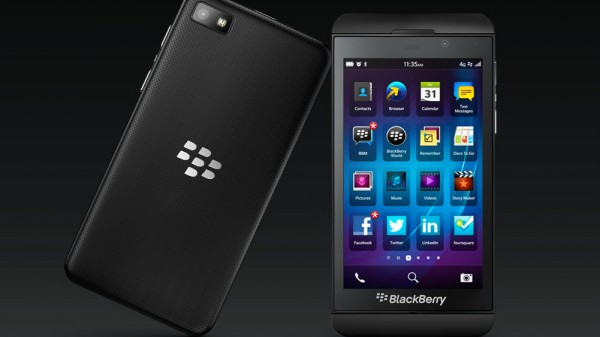
It hasn’t quite been 48 hours since I left Wednesday’s BlackBerry 10 event with the new Z10 handset, so I can’t provide a full review yet. Stay tuned for that next week. However, as I formulate the review, I’m definitely seeing things I really like about the new product, as well as a few aspects that have me scratching my head.
In no particular order then are some thoughts on the experience, both good and bad. I think many of the shortcomings can (and will) be resolved over time, but of course, you should always buy a product for what it does now, as well as for your specific needs.
The Z10 hardware is impressive. Great display, responsive and has a nice texture on the back, making it comfortable to hold. It weighs a little more than the iPhone 5 and is a smidge thicker, but doesn’t feel bulky at all.
I haven’t used the camera except for a few stills, so I can’t comment. I did read about poor low light camera performance, which I’ll test.
Battery life has me concerned, particular because I’ve been using the device on Wi-Fi only until this morning; I’m now using a nano SIM with adapter. I got through the day yesterday but not with heavy usage; I’ll say moderate with little video playback. Battery level was 20 percent at the end of the day.
I like that there’s no hardware “home” button. BlackBerry’s gestures are quite good — they were on the PlayBook too — and bring more functionality.
There’s also no “home” screen in the traditional sense. If no apps are running, you start with a grid of apps. Open an app, slide up to minimize it and it dynamically becomes a widget on a new main screen. Eight of these are supported at one time; plenty for me and easy to switch through. I can navigate through my open apps and tasks quite fast. Here’s a look:
Love the “peek” gesture which shows the number of messages; to see this, you slide up the screen from the bottom during any activity.
While the BlackBerry Hub function is smart — this consolidates mail, Twitter, Facebook, LinkedIn, BBM — it is slow to start up when powering on the device and it can be lacking. You can reply to a Tweet, for example, but I don’t see a way to retweet; for that I seem to have to go into the Twitter client. It’s also a pain to delete all of the tweets and Facebook updates from the Hub to remove clutter. Here’s an example with tweets, Facebook status updates and read email:
The software keyboard is outstanding. So much so, that on a recent podcast, I said it may be the best for any platform. Even though I generally use two thumbs for on-screen keyboards, I’m cranking out text with one hand due to the word prediction over the next letter of each typed word.
Email is generally good, but you can’t move from message to message; every email action takes you back to the inbox. Ugh.
The web browser is solid and fast. Adobe Flash is supported for those that care, but turned off by default. Search suggestions are good. Zooming and scrolling is fluid; page loads appear fast. I like the Reader function; same as in iOS.
Sharing information is similar to Android, meaning: great! Sharing a web page, for example, brings up options for BBM, mail, Facebook, Twitter, Bluetooth, NFC, etc…
The lack of apps that I use on other devices is concerning. BlackBerry has commitments for Skype, Amazon Kindle and others, but they’re not there. Nor is Netflix, any recognizable top-tier games, or my offline reading platforms. Google Talk is there, but no Google Voice; a must for me on any phone. YouTube is the HTML 5 mobile site wrapped up.
I would think that the long-anticipated BB10 platform would excite the stock market. Rather, shares of the company formerly known as Research in Motion and still listed as RIMM are down more than 26 percent from Monday’s open. BlackBerry (new company name) is up about 1 percent in late-mornong trading today, but it’s tiny respite from a beating that started before Wednesday’s big new product reveal.
I haven’t seen BlackBerry 10 up close, or the new Q10 and Z10 smartphones, but “impressed” is apt description, nevertheless. Would I switch, though, from Nexus 4 and Android? Probably not, and that is RIMM’s problem — too many people like me — and perhaps what has legitimate investors (not pesky shortsellers) antsy. BlackBerry market share has fallen too far against Android and iOS, which, according to IDC, had 92.1 percent combined market share in fourth quarter. Once a leader, BlackBerry fights to be the far-behind third smartphone platform.
How far the mighty has fallen. Three years ago, BlackBerry’s share of smartphones was 15.9 percent, according to IHS iSuppli. In 2012: 5.2 percent. For fourth quarter 2009, BlackBerry commanded 19.6 percent market share, putting it ahead of Apple (16 percent) and behind category leader Nokia (38.2 percent), according to IDC. Three years later, BlackBerry didn’t even make the top 5, with Apple in second place.
“Despite the overwhelming advantages held by the opposition, BlackBerry’s introductions this week will keep the company in the smartphone game — for now”, Ian Fogg, IHS iSuppli senior principal analyst, says. “The new operating system and phones increase the chances that BlackBerry can regain some of its lost market share during the make-or-break year of 2013”.
But he warns: “In order to claim the title as the smartphone market’s third ecosystem after Google and Apple — a distinction now being pursued by a range of competitors — BlackBerry needs to bring its A game in all areas. These areas range from differentiating its products, to offering compelling and reliable smartphone devices, to securing broad operator support, to creating a complete software ecosystem”.
Kevin Burden, Strategy Analytics research, director sees opportunity in the two others’ dominance: “Blackberry 10 is now the newest mobile platform on the market and gives Blackberry the opportunity to attract users who are feeling the fatigue set-in from five year-old platforms like iOS and Android”.
Distribution means everything. In the United States, three of the four major carriers — AT&T, T-Mobile and Verzion — will carry BlackBerry Z10, which is good sign.
Still people, have to purchase the devices. Two days ago, I asked: “Will you buy BlackBerry Z10?” Forty-eight percent of respondents answer “No”. But another 31.43 percent say they will buy the smartphone “as soon as available”.
In the year since becoming BlackBerry CEO, Thorsten Heins has done an amazingly good job reviving the ailing, and core, smartphone business. The question now: Is it too late? Have Android and iOS gained too much to allow room for BlackBerry, which competes with, among other platforms, Windows Phone?
“BlackBerry 10 is a smart launch from a smart company that has marshaled its relatively modest resources effectively to create a range of next-generation smartphones that are differentiated compared to what’s on the market now”, Fogg says. “However, to compete with the big boys, BlackBerry will need to execute every part of its playbook perfectly during the next 12 months. If BlackBerry fails in any phase, it will be game over for the company’s comeback story”.