Blog

  • Clearwire plays it cool, weighs both Sprint, Dish deals

    Despite receiving a higher bid from Dish Network, Clearwire is moving forward on Sprint’s $2.2 billion acquisition offer. Clearwire filed a proxy statement on Friday with the U.S. Securities and Exchange Commission indicating that it still recommends the Sprint deal to stockholders, but it also left itself just enough wiggle room to keep Dish’s offer on the table.

    When Sprint made its bid in December to buy up the remaining shares of Clearwire it didn’t already own, it also agreed to extend $800 million in financing to the hobbled WiMAX carrier. Clearwire could have started withdrawing those funds in January. But when Dish submitted its counterbid it clearly stated that if Clearwire took that money from Sprint, the satellite TV provider would take its offer and skedaddle.

    Clearwire didn’t dip into the Sprint financing in January while it was reviewing Dish’s offer. On Friday, Clearwire revealed it wouldn’t tap those funds in February either, which would keep Dish at the table and allow it to continue negotiating. The filing also reveals that since 2010 Clearwire has held negotiations with at least nine other entities over possible spectrum sales, strategic partnerships or outright acquisitions.

    Though Clearwire hasn’t eliminated Dish from consideration, Sprint said the recommendation in the proxy statement was a clear vindication of Sprint and the substance of its offer. From Sprint’s statement:

    “We continue to believe that the DISH proposal is illusory and conditioned on many things, including the receipt of governance rights, a spectrum sale and a commercial agreement which are not actionable under our merger agreement and other agreements between Clearwire and Sprint. We are pleased the Clearwire Board continues to recommend approval of our transaction and look forward to closing our merger and delivering even greater wireless service to the American consumer.”

    Photo courtesy of Shutterstock user Gary Paul Lewis

    Related research and analysis from GigaOM Pro:
    Subscriber content. Sign up for a free trial.

  • Katie Couric And Larry King Almost Got It On

    Katie Couric recently admitted to Jimmy Kimmel that she did indeed go on a date with talk show host and known immortal, Larry King, and that he totally made a move.

    Couric revealed the story after Kimmel challenged King’s version, saying the entire date was like a “bad Lifetime movie”. After hitting up an Italian restaurant where the waiter insisted on seating them side-by-side–presumably so they could slurp up a single strand of spaghetti like Lady and the Tramp–he took her back to his place with lovin’ on his mind.

    “We had a nice enough time and we’re going home, and I see that we’re going over Memorial Bridge, and this is not the way to my apartment. I said, ‘Larry, where are we going?’ And he said, ‘My place.’ Oh mother of god,” she said.

    Couric added that his apartment was full of his awards, achievements, and keys to the city. “That was sexy,” she said, and I’m guessing that’s meant to be sarcastic.

    “So we sat there, and what can I say? He lunged […] And I started laughing a little bit because the whole situation was out of a bad Lifetime movie. I said, ‘Larry, you’re such an interesting, nice man, but I would like to meet someone a little closer to my age,’” she said.

    If you’re wondering what prompted her to go on a date with Larry King when she was a tender 30-year old, she says it’s because she was up for any date that could be a “learning experience”. We hope it was worth it, Katie.

    Note: the Larry King story is included in the third video.

  • How to set up a BlackBerry Z10 smartphone

    snap

    Here a few things you should know when it comes to setting up a new BlackBerry Z10 smartphone, as well as where to learn more about your device!

    Getting to know your device

    When you first unbox the BlackBerry Z10 smartphone, use the image above to help identify various features and functions on your new device.

    Read more at the Inside BlackBerry Help Blog »

  • NYC-backed health startup lab wants to turn academics into entrepreneurs

    The Bio & Health Tech Entrepreneurship Lab, a new startup program supported by the New York City Economic Development Corporation (NYCEDC), is betting that it can turn a group of mostly science-oriented academics and researchers into business-savvy entrepreneurs.

    The program which launched at the end of last year, this week announced the members of its inaugural class, selecting 20 startups from an applicant pool of 78. Out of the group, just one startup is not affiliated with a university or teaching hospital in New York.

    Mary Howard, program manager for the Bio & Health Tech Entrepreneurship Lab (ELabNYC), said the startups take on a range of problems from drug discovery to devices to health IT, although bioinformatics and diagnostics are particularly well represented.

    Unlike other health-focused startup programs, ELabNYC doesn’t provide funding or space and it’s focused on much earlier-stage companies – in this class, more than half don’t even have websites and many have yet to incorporate. The program is also less selective than other health-specific startup accelerators that often take just three percent of applicants.

    But its audience and goals are different – it hopes to bridge the city’s academic and entrepreneurial communities and help science researchers and engineers with little business knowledge commercialize their work. The six-month program will provide participants with coaching, pitch preparation, mentorship and other activities meant to connect founders with the local network of investors and entrepreneurs in healthcare.

    Universities are increasingly supporting on-campus innovation through incubator-style programs, but those tend to focus on student entrepreneurs. Howard said ELabNYC aims to support researchers whose institutions may not have the staff or resources to help academics interested in improving their understanding of business or expand their professional networks.

    “What was very encouraging was the level of participation by the universities in supporting the program by tapping into their communities,” said Eric Vieira, the program’s bio science practice leader. “It shows that pieces are falling into place and the universities would like to see these kinds of technology developed.”

    Here are the lab’s new class of startups (language from ELabNYC):

    Paul Scheid and Ashish Agarwal: Solvuu is a big-data management and analysis software for genomics. By applying a novel software engineering methodology the platform will advance biological research and healthcare.

    Eliot Dow: [We use a] combination of human crowd sourcing and digital image analysis [to] permit scientists to routinely analyze the brain’s neural wiring.

    Alexander Bisignano: Recombine is comprehensive, cost-effective genetic test for couples looking to conceive. We provide an all inclusive genetic testing service from sample collection and DNA analysis all the way through to genetic counseling. It is genetic testing, simplified.

    Neal Paragas: Our molecular imaging animal model and image processing algorithms allow for the non-invasive, real-time visualization of efficacy and safety studies in models of human disease. 

    Scott Trocchia: [We use] nanoscale solid-state device design, circuit design and biochemistry to explore single-molecule bio-electronic transduction in a unique fashion by leveraging field-effect detection.

    Roger Altman & Scott Blanchard: Lumidyne Technologies aims to bring next-generation fluorescent probes, which exhibit superior brightness and stability over all analogous commercially available reagents,  to the commercial market.

    Mikail Kamal & Jason Rosenberg: [We provide a] low-cost and low-tech emergency obstetrics device for managing PPH in low resources settings.

    Kate Rochlin: ImmunovENT re-invents allergy diagnostics with the Local Allergy Mucosal Brush (LAMB) Test, which identifies local antigen-specific igE not found by skin or blood testing.

    Michael Khalil: [We use] a novel optical tomography imaging system to diagnose and monitor peripheral arterial disease; we aim to reduce the number of diabetic foot amputations.

    Joseph Landolina & Isaac Miller: [We] created a gel that instantly stops bleeding; is inexpensively produced and facilitates faster healing. Our goal is to improve the quality of wound care.

    Tian Liu: [We develop] image processing software to assist neurosurgeons performing image guided surgery.

    Suzanne Maher: [We created a] non-degradable synthetic implant designed to mechanically function in a similar way to the native tissue, while also enabling robust fixation at the site of implantation.

    Sudarshana Purkavastha: [We use] oxytocin analogues as next generation peptide drugs to treat obesity/type 2 diabetes with improved efficacy and eliminating negative side effects.

    Ophir Gaathon: Diamond Nanotechnologies develops fluorescent biomarkers for super resolution sensing and imaging at the single molecular level.

    Arevik Mosoian, Luca Gusella, Elena Fedorov: SkinAxis develops a platform for drug and cosmetic active ingredient discovery that allows identification and validation of skin molecular targets under physiologically relevant conditions.

    Yu Zhang: [We use] a novel synthetic Curcuminoid as a wound healing treatment product.

    Jason Dictenberg: [We focus on] cryopreservation for primary cell culture commercialization.

    Ke Cheng & Sina Basir: HistoWiz is a histopathology service company that process mouse tissue samples and digitalizes the result for cancer researchers in academia and pharma.

    Rodney Agayan & Mark Punyanitya: The Image Reading Center interactive training platform enables academic investigators and industry scientists to improve the overall quality of clinical trials.

    Jonathan Dick: mHealth Solutions leverages mobile technology to improve care to high-risk patients by providing decision support while simultaneously engaging patients through their mobile phones.

    Related research and analysis from GigaOM Pro:
    Subscriber content. Sign up for a free trial.

  • Path Settles With FTC Over Privacy Issues

    The U.S. Federal Trade Commission announced today that Path has agreed to settle FTC charges that it deceived users by collecting personal info from mobile device address books without users’ knowledge and consent.

    Path is now required to establish a “comprehensive” privacy program, obtain independent privacy assessments every other year for the next 20 years (similar terms to what Google and Facebook have had to agree to in the past), and pay $800,000.

    “Over the years the FTC has been vigilant in responding to a long list of threats to consumer privacy, whether it’s mortgage applications thrown into open trash dumpsters, kids information culled by music fan websites, or unencrypted credit card information left vulnerable to hackers,” said FTC Chairman Jon Leibowitz. “This settlement with Path shows that no matter what new technologies emerge, the agency will continue to safeguard the privacy of Americans.”

    The FTC charged that Path violated the COPPA rule by not spelling out its collection, use and disclosure policy for children’s personal info, not providing parents with direct notice of its collection, use and disclosure policy for children’s personal info, and not obtaining verifiable parental consent before collecting children’s personal info.

    Path is also required to delete info collected from children under the age of 13. The company has already deleted the address book info that it collected during the time period for what the FTC calls its “deceptive practices” took place.

    In related news, Leibowitz announced his resignation as FTC Chairman today. He will step down on February 15.

    Path recently launched a new search feature, which lets you search “moments” your friends and family have shared on Path or other social networks like Facebook, Instagram and Foursquare.

    Update: Path has issued its response to the FTC’s announcement. The company says:

    Today the United States Federal Trade Commission (FTC) announced that it reached a settlement pending court approval with Path regarding alleged violations of the Children’s Online Privacy Protections Act (COPPA). The gist of the FTC’s complaint is this: early in Path’s history, children under the age of 13 were able to sign up for accounts. A very small number of affected accounts have since been closed by Path.

    As you may know, we ask users’ their birthdays during the process of creating an account. However, there was a period of time where our system was not automatically rejecting people who indicated that they were under 13. Before the FTC reached out to us, we discovered and fixed this sign-up process qualification, and took further action by suspending any under age accounts that had mistakenly been allowed to be created.
    We want to share our experience and learnings in the hope that others in our industry are reminded of the importance of making sure services are in full compliance with rules like COPPA. From a developer’s perspective, we understand the tendency to focus all attention on the process of building amazing new things. It wasn’t until we gave our account verification system a second look that we realized there was a problem. We hope our experience can help others as a reminder to be cautious and diligent.

    Throughout this experience and now, we stand by our number one commitment to serve our users first.

  • Pot In Kmart Store Made A Wrong Turn Somewhere

    Several Seattle Kmart employees were shocked when they opened up a box addressed to the store to find ten pounds of marijuana, neatly packaged in bags and wrapped in a newspaper soaked in cleaning fluid (I’m guessing to cover the smell?). The employees promptly called police, who confiscated the box and are investigating where it came from.

    The package was originally shipped via UPS from California to an address in Philadelphia, but somehow got rerouted and marked “return to sender”. Problem is, the return address was listed as Kmart’s for some reason. I have the feeling someone’s going to lose his job over this.

  • Watch ‘House of Cards’ for Free, But Only Episode One and Only for a Month

    Netflix is dangling a carrot in front of non-members’ faces by offering the pilot episode of their brand-new original series House of Cards to everyone – for one month. Non-members (and members, of course) can head here to stream the 56-minute long “Chapter 1.”

    “The creative team in front of and behind the camera have delivered a riveting 13-chapter narrative that we’re proud to present to Netflix members today,” said Ted Sarandos , Chief Content Officer, Netflix. “By offering the first episode for free, including to non-members, we are opening up this fascinating world for everyone to see and are confident they’ll want more.”

    House of Cards became available on Netflix (all 13 episodes at once) today. It’s helmed by David Fincher and stars Kevin Spacey as a scheming Congressman.

    Based on the British miniseries, ruthless and cunning, Congressman Francis Underwood (Oscar® winner Kevin Spacey) and his wife Claire (Robin Wright) stop at nothing to conquer everything. This wicked political drama penetrates the shadowy world of greed, sex, and corruption in modern D.C. Kate Mara (“American Horror Story”) and Corey Stoll (“Midnight in Paris”) costar in the first original series from David Fincher (“The Social Network”) and Beau Willimon (“The Ides of March”).

    Apparently, Netflix has made a strong enough pilot episode that they feel it could be useful in roping in subscribers. It’s a smart move, as nothing is more frustrating that loving a show, knowing that you could sit on your couch all day and watch it in its entirety, but not having access. But will users sign up on the strength of House of Cards? That, of course, remains to be seen.

    Netflix isn’t the first content provider to try the ol’ hook ‘em with the first episode trick. HBO is known for doing a little bit of that themselves.

  • Skyrim PlayStation 3 DLC Finally Dated

    Between the new live-action God of War: Ascension Super Bowl commercial and the fact that the reveal of the PlayStation 4 is less than one month away, Sony fans are feeling pretty good right now. They’re probably thinking their day can’t get any better, but they are wrong.

    Bethesda has jumped on the Sony hype train today by finally announcing the U.S. release dates for Skyrim DLC on the PlayStation 3. “Dawnguard,” “Hearthfire,” and “Dragonborn” have all been available on the Xbox 360 and PC for months, but PlayStation 3 gamers had been left out. Whatever the problem was, Bethesda has overcome it, and PlayStation 3 gamers can finally dust off their copies of Skyrim and distract themselves until they can get their hands on next-gen PlayStation 4 titles.

    As announced back in the middle of January, the Skyrim DLC will be released in reverse order of how they were released on other platforms. Luckily, the release dates are only a week apart for each. “Dragonborn” will come first on February 12, followed by “Hearthfire” on February 19. “Dawnguard” will be released on February 26.

    Bethesda stated that all of the Skyrim DLC add-ons will be marked down during their individual release weeks. Also, the release dates for Europe will be coming “soon.”

    To jog everyone’s memory of what Skyrim DLC has to offer, here are all the trailers for the add-ons, in the order of their PlayStation 3 release schedule:

  • FTC to mobile app makers: More disclosure to consumers, please

    Mobile app makers need to do a much better job of informing consumers what they are doing with their data, the Federal Trade Commission said in a report on consumer app privacy released Friday. Among the chief proscriptions for companies developing for the iOS, Android, Blackberry and Windows Phone platforms, the FTC said it wants much more disclosure about how personal information of users is accessed, stored and used, and it should be very easy to understand.

    “The mobile world is expanding and innovating at breathtaking speed, allowing consumers to do things that would have been hard to imagine only a few years ago,” recently resigned FTC Chairman Jon Leibowitz said in a statement accompanying the report. “These best practices will help to safeguard consumer privacy and build trust in the mobile marketplace, ensuring that the market can continue to thrive.”

    The report is based on a workshop convened in May 2012 to elicit recommendations from players in different parts of the consumer mobile industry on how to better prioritize users’ privacy.

    Among its findings, the FTC said 57 percent of app users have either didn’t install or uninstalled an app because they didn’t want to share their personal information, and that “less than one third of Americans” feel like they have control over how their personal information once input into their mobile device.

    The next steps

    The chief recommendations for mobile platforms owners:

    • Ask before accessing a user’s location.
    • Ask before accessing contacts, photos, calendar, or recording sound or video.
    • Make each app have a “dashboard” that shows users what each app has access to.
    • Develop an icon that will show users every time their personal data is being transmitted.
    • Offer a Do Not Track option (like Apple’s Limit Ad Tracking feature in iOS) so users can choose to block advertisers, ad networks or developers see how they’re using apps on their phone.

    For app makers:

    • Make your privacy policy accessible via the app store it’s sold in.
    • Ask before accessing personal information.
    • Know how ad networks are accessing your users’ info.

    For ad networks:

    • Communicate how your tracking works to app makers, and help platforms develop Do Not Track tools.

    The FTC report came out the same day as the commission came to an $800,000 settlement with iOS app Path over the illegal access of children’s personal information and violation of the Children’s Online Privacy Protections Act (COPPA).

    Related research and analysis from GigaOM Pro:
    Subscriber content. Sign up for a free trial.

  • Microsoft Office 365 hits pothole

    It’s Microsoft’s turn to have a bad day at the office. On Friday morning, Microsoft Office 365 users reported the cloud-based service is down in part or as a whole over the past few hours, according to the Office 365 community forum. The timing may be due to the broad launch of  Office 2013 and Office 365 Home Premium just three days ago, according to ZDnet blogger Ed Bott in a tweet.

    More here from  Neowin.net and Engadget and ZDnet.
    office365logo

    This snafu — which appears to be resolved — comes a few weeks after a Hotmail and Outlook outage. Microsoft resolved that issue in a day,  although judging from comments on GigaOM’s January 8 post, the problems persisted for some users.

    This has been a bad week for a lot of online services, with both Twitter and Amazon.com (no not AWS — Amazon.com) experiencing glitches yesterday. But Microsoft faces unique issues as it tries to move more of its productivity applications revenue over to a subscription-based SaaS model without denting its juggernaut on-premises Office business. The growing popularity of Google Apps makes this a particularly pressing issue for Microsoft.

    Microsoft has been contacted for a comment. Story will be updated when they get back.

    Related research and analysis from GigaOM Pro:
    Subscriber content. Sign up for a free trial.

  • Watch Gabe Newell Talk About The Business Of Video Games

    Whenever you hear the name Gabe Newell, your mind presumably turns to Valve, Steam, Half-Life and Portal. Now’s your chance to hear one of the smartest men in gaming talk about the business of making games.

    Newell was recently invited by the Lyndon B. Johnson School of Public Affairs to speak on the future of business. The talk is officially titled “Reflections of a Video Game Maker,” and it covers “productivity, economics, political institutions and the future of corporations. If you find yourself with a snow day today, the hour long talk may just be what you need to pass the time. Who knows? You might even learn something.

  • Data centers haven’t just changed computing, they’ve changed communities

    The technology inside data centers sparks immense industry analysis and speculation. After the media leave, though, data center towns themselves can be ignored, even as they change.

    I saw this up close while working as a business reporter at the Bulletin daily newspaper in Bend, Ore., a 45-minute drive from Prineville, where Facebook and Apple (aapl) have been constructing data centers and where other companies have considered building similar structures.

    To me, the arrival of the data centers turned Prineville’s folksy mayor, Betty Roppe, into an advocate and a celebrity. What’s more, her city has become known as a destination for cloud computing.

    Like Prineville, data center meccas Loudoun County, Va., and Quincy, Wash., have also gone through changes — an economic-development focus, a housing boom and at least one environmental issue.

    Prineville, Ore.

    Nine thousand two hundred fifty-three people called Prineville home in 2010, according to U.S. Census data, and the mayor, Betty Roppe, doesn’t make it seem bigger than it is. She’s proud of her city for attracting Apple and Facebook, and at the same time she’s not afraid to be honest about not being tech-savvy.

    Sen. Jeff Merkley of Oregon, left, and Prineville Mayor Betty Roppe

    Sen. Jeff Merkley of Oregon, left, and Prineville Mayor Betty Roppe

    “I’m kind of in that senior-citizen group that’s not as comfortable with computer systems,” said Roppe, adding that while she has signed up for Facebook, she doesn’t use cloud-storage products such as Dropbox and Evernote.

    But on Facebook, Roppe is a friend of Ken Patchett, the manager of Facebook’s Prineville data center. She’s even taking care of Patchett’s border collie now that Patchett lives in a place where dogs are not allowed, she said.

    In 2011 she appeared alongside a Facebook executive to promote Facebook business profiles. She came on stage at the Facebook data center’s grand opening that year, suggesting local approval of the social networking site’s presence. And she’s gone to Washington, D.C., three or four times to show support for federal legislation that would ensure water and hydroelectric power access for the city — two resources that data centers covet.

    The city of Prineville, is considering the construction of a roundabout to ease traffic near the Apple and Facebook data centers.

    The city of Prineville is considering the construction of a roundabout to ease traffic near the Apple and Facebook data centers.

    Reporters from the New York Times, Dow Jones Newswires and Data Center Knowledge have quoted her, while The Economist, Wired, GigaOM and other media outlets have visited her city.

    In addition to the sudden media interest, the city has seen other changes. Prineville city planning staffers have dealt with legal matters stemming from executives’ concerns about regulatory issues in play in California. And additional traffic on nearby state Highway 126 has caused the Oregon Department of Transportation to enforce a 45 mph speed limit, down from 55 mph, east and west of the roads leading to the Facebook and Apple data centers. Prineville officials are even discussing the construction of a roundabout to ease traffic (see map).

    Quincy, Wash.

    When people in Prineville talk about wanting to add more data centers, they were sometimes thinking of Quincy, Wash.

    Quincy, a five-hour drive north of Prineville, is home to about 7,000 people and five data centers — Microsoft, Yahoo, Intuit, Dell and Sabey Corp. — with a sixth from Vantage Data Centers in development.

    Quincy Mayor Jim Hemberry

    Quincy Mayor Jim Hemberry

    Over the years, the increased sales tax revenue has helped the city build a library, purchase a new ladder truck for the fire district serving Quincy and add a bevy of additional equipment for the Quincy Police Department, said Mayor Jim Hemberry.

    Property tax revenue from the data center operations has allowed the city to add employees, even through the economic recession, the mayor said.

    The data center cluster “hasn’t been an issue that has affected the (Quincy) population in any negative way, in my opinion,” Hemberry said.

    If anything, the rise of Quincy as a data center hub has brought attention from other industries, contributing further to the city’s employment base and economic diversity.

    Plus, he said, “We’ve had a lot of new housing starts.” In a typical year, five to 10 homes are built. Now, it’s more like 400 to 500.

    But just because a data center goes up in city doesn’t mean the mayor becomes an advocate. Patty Martin, a former mayor of Quincy, has become a prominent critic of data centers’ nearby backup diesel generators, which appear to cause air pollution. She has challenged Washington’s Department of Ecology on its decision to grant permits for Microsoft to build more generators. Hemberry declined to comment on the issue.

    Loudoun County, Va.

    AOL was the first company to construct a data center in Loudoun County, Va., in 1997. Then came Equinix Inc. and MCI Worldcom, which Verizon Communications Inc. acquired. But only in the past six years has northern Virginia become a hot spot for data centers, and collocation specifically, said Buddy Rizer, assistant director of the county’s economic-development department. (North Carolina, which shares a border with Virginia, has also seen an influx in data centers, as my colleague Katie Fehrenbacher reported in a four-part series.)

    Buddy Rizer, assistant director of Loudoun County's economic-development department

    Buddy Rizer, assistant director of Loudoun County’s economic-development department

    Rizer himself has gone from a general-purpose economic-development staffer with an IT bent to focusing nearly exclusively on data center retention and recruitment. Rather than send out county supervisors to communicate with data center operators, the elected officials have Rizer take care of it.

    Today the county boasts 8 million square feet of data centers in operation or under construction and sees as much as 70 percent of all internet traffic flying through its facilities, according to a county fact sheet. Big cloud providers such as Amazon Web Services and Rackspace keep servers in Ashburn, among other places.

    Given all of that progress, Rizer said he travels to other states and countries to talk about the county’s achievements in data-center development.

    When asked where the data centers lie inside the county, Rizer said, “Primarily they are in Ashburn, but, even more concentrated than that, they’re in place that we call Data Center Alley, up and down Loudoun County Parkway and in the area of Waxpool.” And yes, he did come up with the name Data Center Alley.

    Over the years, the county has streamlined the process of building a data center there with a “Fast Track for Priority Commercial Development.” Staffers have lined up the right zoning for potential development sites, and county supervisors have showed support for expanding exemptions of Virginia’s sales and use taxes on new computer equipment.

    On top of it all, the county has moved most of its documents to a private cloud, Rizer said.

    “If you’re out selling yourself as a technology location, you want to make sure that you can walk the walk and talk the talk,” he said.

    Related research and analysis from GigaOM Pro:
    Subscriber content. Sign up for a free trial.

  • Going from "Suck to Non-Suck" as a Public Speaker

    People often ask me for advice about public speaking, since I do a lot of it. Of course, it’s often reported that people are more afraid of public speaking than death (which is not exactly empirically accurate, but it is close). In my experience, becoming a good public speaker is not a natural skill for anyone. While I now speak professionally about once a week, for sums I could never have imagined just a few years ago, I have had to learn through many difficult and painful experiences and a great deal of feedback how to basically just be myself on stage.

    The reality for any creative process, from public speaking to innovation to playing the piano, is that we must be able to go from “suck to non-suck,” as Ed Catmull describes the reality of Pixar’s creative process, something he has observed and understood for over 30 years as the company’s cofounder and president. That takes hours of practice — and a lot of easy-to-ask for, hard-to-implement advice.

    The best advice I ever received about going “from suck to non-suck” as a public speaker came from former New York Governor Mario Cuomo. Cuomo visited Bowdoin College during my senior year, and I was the student assigned to show him around. Scott Hood, who led Bowdoin’s communications office, and I picked the Governor up at the airport in Portland, Maine. Making conversation on the 40 minute drive back to Brunswick, I asked him how he’d become such a good public speaker.

    He graciously shared the story about how he started speaking publicly in law school and was a terrible speaker until he started 1) talking about things he believed in passionately, and 2) knew his material extremely well. I now routinely share that advice today, with one addition: know your audience.

    Since then, I’ve heard stories from some of the best speakers around, whether it’s Daniel Pink or Malcolm Gladwell or Hillary Clinton, about how they all sucked when they started giving speeches. I know I did — despite getting Governor Cuomo’s advice. (Remember what I said about advice being easy to ask for, and hard to implement? Yeah.)

    My first paid speech, at the University of Cincinnati, completely bombed. Here is the actual email my speaking agent received after the speech, with names changed to protect identities

    From: Christal Sanders

    To: Dave Helmick

    Hello Dave! The check is in the mail today:) The conference went great! We had a snowstorm but still had a decent turn out. Peter did well overall, but it would have been nice if you would have shared that he never spoke to college students or in this type of setting. I think he was more focused on this being the start of his book tour versus personalizing it to the students. Not sure if this was a miscommunication between the two of you or his focus. I, and some of my committee members, felt it was overpriced for the experience. Would have paid $1500 for what we received. I have a limited budget and this could have been spent better. You were a little misleading but maybe you haven’t seen him present before.

    Peter’s age and experience/research was great for our audience. The thoughts/message from the book of identifying your passion really stood out for many students and we had great dialogue in a smaller group. The choice session allowed for students to reflect and share which is good. More honest feedback on his presentation style: His energy isn’t really in his presentation and maybe it was due to him being on vacation earlier in the week. He didn’t really connect much to the college student experience and really focused on examples from the book. He wasn’t mindful of the time frame and went over time then did not have a wrap up thought or closure to his talk. Instead, just said: “Well, I’ve gone over the time so thank you”. Not much of a closing. Students had a lot of questions for him and he didn’t seem to prepared in answering them and would instead reflect it back to the audience for others to answer, which is fine but would have hoped his personal experience mixed with his research would have given him answers/examples to draw from as our keynote speaker. He would also change the question and answer it in a way he knew how to answer. Some of the feedback from the students was that he plugged his book too much, the time with him was too long and he focused too much on the leadership stories of just a few people from the book.

    Like I stated earlier, Peter did fine and the day went great. The professional staff on our committee had a lot of feedback for improvement because he didn’t meet the expectation of what we would get for the price we paid.

    Take care, Christal Sanders

    Ouch. Damn. That email stung for days, especially since it undermined my already-low confidence in my public speaking abilities right at the start of a big book tour. At first I responded defensively. I’d been going through a difficult time in my life! I did have doubts about the usefulness of my ideas to college students. Of course when I didn’t know the answer to a question, I would turn it back around to the students and ask them! How was I supposed to know how they should manage college roommate conflicts?

    But once I got past my initial reaction and defensiveness, I knew I had to take this feedback seriously because I had no perspective about how audiences would react to my messages or speaking style. What I learned over time was that, true to Mario Cuomo’s advice, the more that I came to really understand my material, such that I got to the point where I wasn’t actually thinking about what I was going to say, I started to better connect with audiences. I did use slides to help structure my comments to prevent me from wandering (a challenge I have without some structure), but I stopped putting notes in my slides, or trying to memorize what I was going to say and when. I relied on what was already in my head, and slowly, I got out of my head and into the moment and sharing the insights and learning. It was counterintuitive, but the more I was able to let go of my own ideas and expectations of what the audience wanted or needed, and instead, allowed myself to just improvise, my ratings went up steadily. And as it turned out, my own goofy sense of humor was actually a strength, not a weakness as I had previously thought.

    As the audience came to see that I was just being me and trying to share and teach them, quirks and all, they stopped analyzing and judging me, and could just enjoy the moment. That’s how I feel at least, noting how the energy in the audience now seems to shift about a quarter or a third of the way into each event. It’s an experience for us all, not a lecture. When I can just be me, it gives the audience to just be themselves, and that human experience is what ultimately unlocks and empowers creativity, my ultimate goal. It has taken me thousands of hours of practice — and reams of hard-to-hear feedback — to improve. I’m not sure I’ve reached the “10,000 Hour Rule” drawn from psychologist Anders Ericsson’s research, but I must be getting close.

    I’ve spent years studying leadership, entrepreneurship, innovation and creativity, and as we’re very slowly starting to understand, no one is born as a great leader or innovator. It must be learned and consciously developed through experience.

    So, if you want to improve your public speaking, are you prepared to put yourself out there repeatedly to improve, and go from suck to non-suck and become a great speaker? The choice is yours.

  • Corinthian Buys Sierra Engineering and Sierra Petroleum Services

    Corinthian Capital Group has acquired Sierra Engineering and Sierra Petroleum Services Ltd. Sierra provides engineering and consulting services to the oil and gas industry. Terms were not disclosed. ORIX Mezzanine & Private Equity Investments announced the deal.

    PRESS RELEASE
    ORIX Mezzanine & Private Equity Investments announced today a mezzanine and private equity investment for the acquisition of Sierra Engineering and Sierra Petroleum Services, Ltd. (“Sierra”) by Corinthian Capital Group, LLC and its management. Sierra provides engineering and consulting services to the oil and gas industry and specializes in wellbore-construction project management. Sierra gives its clients the expertise necessary to develop, evaluate, and execute projects ranging from a single well to entire fields. Headquartered in Midland, Texas, the company operates throughout the continental U.S. as well as internationally.

    C. Kenneth Clay, senior managing director of Corinthian Capital said, “Sierra has emerged as a leading provider of oil and gas engineering and consulting services and has a very strong brand. I am confident that, with Sierra’s impressive management team, we can help position the company to expand and grow domestically as well as abroad.”

    Jeff Sangalis, managing director of ORIX Mezzanine and Private Equity Investments said, “We are pleased to be partnering once again with Corinthian Capital professionals and look forward to working with Sierra and its management team.”

    About ORIX Mezzanine & Private Equity Investments

    ORIX Mezzanine & Private Equity (OMPE) provides mezzanine debt and/or equity capital to lower middle market and middle market companies throughout the United States. As a business unit of Dallas-based ORIX USA, OMPE makes investments from $5-25 million in a wide variety of businesses and geographic areas for buyouts, mergers and acquisitions, recapitalizations and refinancings, and growth and expansions situations. Investments are with companies owned by equity sponsor groups, fundless sponsors, family owned companies, and directly with management teams. If you are interested in learning more about ORIX’s value-added mezzanine and equity products, please contact Jeff Sangalis at 214.237.2059 or visit www.orixmpe.com or www.orixpe.com.

    About ORIX USA:

    ORIX USA is a Dallas-based financial services conglomerate with more than 1,400 employees and primary offices in Dallas, New York, Los Angeles, Columbus and Minneapolis. ORIX USA holds approximately $6 billion of assets and manages an additional $25 billion. ORIX USA is a wholly owned subsidiary of ORIX Corporation, a Tokyo-based, publicly owned international financial services company with operations in 28 countries worldwide. ORIX Corporation is listed on the Tokyo (8591) and New York Stock Exchange (IX). For more information visit www.orix.com.

    The post Corinthian Buys Sierra Engineering and Sierra Petroleum Services appeared first on peHUB.

  • Reuters – China Development Bank Approves Loan for LDK Solar

    LDK Solar Co Ltd said China Development Bank Corp approved a loan of 440 million yuan ($71 million), adding to the billions of dollars Chinese state-run banks have already provided to support the country’s solar industry, Reuters reported. LDK shares were up 8.4 percent at $1.67 in afternoon trading on the New York Stock Exchange. The loan will be used to finance LDK’s investment in hydrochlorination technology for the Mahong polysilicon plant in Jiangxi province, in which LDK has invested more than 12 billion yuan to date.

    (Reuters) – LDK Solar Co Ltd said China Development Bank Corp approved a loan of 440 million yuan ($71 million), adding to the billions of dollars Chinese state-run banks have already provided to support the country’s solar industry.

    LDK shares were up 8.4 percent at $1.67 in afternoon trading on the New York Stock Exchange.

    The loan will be used to finance LDK’s investment in hydrochlorination technology for the Mahong polysilicon plant in Jiangxi province, in which LDK has invested more than 12 billion yuan to date.

    LDK said last month that it was working to address liquidity and working capital concerns and entered into discussions with certain creditors to obtain additional flexibility.

    The company plans to draw down on the loan as market conditions improve and the necessary equipment is ready for its use, it said on Thursday.

    The government of Xinyu city in Jiangxi province said in July it would repay some loans of the company, which is based in the city.

    The company early last week said it would sell a 12 percent stake to Fulai Investments Ltd (FIL) for $31.1 million.

    FIL, whose sole director and shareholder is Hong Kong-based Cheng Kin Ming, is primarily in the investment business.

    As per the deal, FIL can designate two non-executive directors to the LDK board upon closing, which is expected before Feb. 28.

    LDK sold a 19.9 stake to state-backed Heng Rui Xin Energy in October.

    The post Reuters – China Development Bank Approves Loan for LDK Solar appeared first on peHUB.

  • Leaks Reportedly Detail More Of HTC’s 2013 Android Line, Peg M7 For Release Soon After Unveiling

    htc-logo

    HTC is set to show off something at a special press event in NYC on February 19 (the day before Sony’s, it turns out), and it’s quite likely that the company will debut its rumored new flagship phone, the M7. And now new leaks from the generally dependable Evleaks suggest the company has a multi-device lineup planned to follow the M7 with retail availability in Spring.

    The two phones detailed by Evleaks on UnwiredView suggest that HTC will follow-up the M7 with a device with slightly more moderate specs, akin to how the One S was designed to complement the One X last year. And there will also be a down-market device, called the G2, that will be 2013′s equivalent to the HTC Desire C.

    The M4 will reportedly pack a 1.2GHz dual-core Snapdragon processor, with a 4.3-inch 720 p display, 2GB of RAM, 16GB of onboard storage and a 13 megapixel rear camera. It’ll have a fairly limited 1500 mAh battery (but fewer pixels to push compared to the M7), and should run Android 4.2 Jelly Bean.

    The HTC G2 (which is unrelated to the previous HTC phone of the same name) will have a 1.0GHz ARM Cortex processor with 512MB of RAM, a 3.5-inch HVGA (480 x 320) display, with a 5 megapixel rear camera and no front shooter, a 1400 mAh battery and Android Ice Cream Sandwich as its operating system.

    Once again, HTC looks set to deliver a trio of solid Android handsets designed for various consumer budgets, but I am a little concerned that this won’t be different enough from the status quo to really excite consumers and propel sales to higher than HTC’s rather disappointing performance overall in 2012. That said, it’s still very early to be judging these phones considering they haven’t even been made official yet, so maybe there’s more to HTC’s 2013 lineup than what’s apparent from the spec sheets.

  • How two scientists are using the New York Times archives to predict the future

    Researchers at Microsoft and the Technion-Israel Institute of Technology are creating software that analyzes 22 years of New York Times archives, Wikipedia and about 90 other web resources to predict future disease outbreaks, riots and deaths — and hopefully prevent them.

    The new research is the latest in a number of similar initiatives that seek to mine web data to predict all kinds of events. Recorded Future, for instance, analyzes news, blogs and social media to “help identify predictive signals” for a variety of industries, including financial services and defense. Researchers are also using Twitter and Google to track flu outbreaks.

    from "Mining the Web to Predict Future Events," Horvitz and Radinsky, http://research.microsoft.com/en-us/um/people/horvitz/future_news_wsdm.pdf

    from “Mining the Web to Predict Future Events,” Horvitz and Radinsky, http://research.microsoft.com/en-us/um/people/horvitz/future_news_wsdm.pdf

    Eric Horvitz of Microsoft Research and Kira Radinsky of the Technion-Israel Institute describe their work in a newly released paper, “Mining the Web to Predict Future Events” (PDF). For example, they examined the way that news about natural disasters like storms and droughts could be used to predict cholera outbreaks in Angola. Following those weather events, “alerts about a downstream risk of cholera could have been issued nearly a year in advance,” they write.

    Horvitz and Radinsky acknowledge that epidemiologists look at some of the same relationships, but “such studies are typically few in number, employ heuristic assessments, and are frequently retrospective analyses, rather than aimed at generating predictions for guiding near-term action.” They outline the advantages that software has over humans in this area:

    • Learning: Software “has the ability to learn patterns from large amounts of data, can monitor numerous information sources, can learn new probabilistic associations over time, and can continue to do real-time monitoring, prediction, and alerting on increases in the likelihoods of forthcoming concerning events.”
    • Tireless researching: Software, with its “long tentacles into historical corpora and real-time feeds,” can dig up data that humans might never find because they’re too focused on “knowledge that is easily discovered in studies or available from experts.”
    • Lack of bias: Software can assist “when inferences from data run counter to expert expectations,” or when “there is a significantly lower likelihood of an event than expected by experts based on the large set of observations and feeds being considered in an automated manner.”
    • Greater access to news: “A system monitoring likelihoods of concerning future events typically will have faster and more comprehensive access to news stories that may seem less important on the surface (e.g., a story about a funeral published in a local newspaper that does not reach the main headlines), but that might provide valuable evidence in the evolution of larger, more important stories (e.g., massive riots).”

    One of the problems that the researchers faced in developing their software model is the fact that tragic events in poor African countries are often not widely reported. So they taught the software to generalize somewhat: “Instead of considering only ‘Rwanda cholera outbreak,’ an event with a small number of historical cases, we consider more general events of the form: “[Country in Africa] cholera outbreak.” We turn to world knowledge available on the Web…[that] maps Rwanda to the following concepts: Republics, African countries, Land- locked countries, Bantu countries, etc.”

    Horvitz and Radinsky also taught the software what to ignore: It “was able to recognize that the drought experienced in New York City on March 1989, published in the NYT under the title: ‘Emergency is declared over drought’ would not be associated with a disease outbreak…The system estimates that, for droughts to cause cholera with high probability, the drought needs to happen in dense populations (such as the refugee camps in Angola and Bangladesh) located in underdeveloped countries that are proximal to bodies of water.”

    “I truly view this as a foreshadowing of what’s to come,” Horvitz told the MIT Technology Review. “Eventually this kind of work will start to have an influence on how things go for people.” He said Microsoft isn’t commercializing the research yet, but that it will continue, and he wants to get more “data further back in time.”

    Related research and analysis from GigaOM Pro:
    Subscriber content. Sign up for a free trial.

  • HTC Windows Phone 8X — Purple madness [Review]

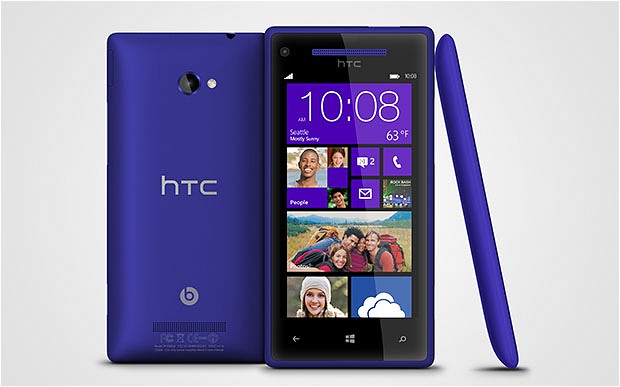
    The HTC Windows Phone 8X is a smartphone that you will either love or not want to touch even with a 10 foot pole. Part of the arguments for and against it stem from the operating system of choice, Microsoft’s latest (and greatest) Windows Phone iteration. Sure, the device has good build quality and the software is fluid and responsive, but the app selection is currently lacking compared to rivals like Android and iOS. So where does one draw the line between success and failure?

    I’ve been using the Windows Phone 8X for almost two weeks and the early impressions are still on the positive side. In my initial review I touched on a number of points that I found revealing for my brief time with it, but the real test is how the Windows Phone 8X fares over a longer period of time. My main and initial gripes concern the limited app selection and general usability issues of Windows Phone 8 when coming from the stock flavor of Android 4.2 Jelly Bean. The real question is this: Is it good enough?

    The Specs

    The HTC Windows Phone 8X features a 4.3-inch Super LCD 2 display with a resolution of 1280 by 720. The handset is powered by a 1.5GHz dual-core Qualcomm Snapdragon S4 processor, 1GB of RAM and an 1,800mAh battery. There is 16GB of non-expandable internal storage onboard, or 8GB of internal storage depending on the carrier variant. My Windows Phone 8X is the California Blue international variant, and comes with the former option.

    The Windows Phone 8X sports HSPA+ cellular connectivity (LTE is available depending on the market); Wi-Fi 802.11 a/b/g/n; Bluetooth 3.1; NFC (Near Field Communication); GPS with Glonass support as well as the common plethora of sensors. The device ships with an 8MP back-facing camera and a 2.1MP shooter on the front, both capable of 1080p video recording. Other specs include Beats Audio support and a 3.5mm headphone jack.

    The Windows Phone 8X measures 132.35 x 66.2 x 10.12 mm. Weight comes in at 130 grams.

    Great Social Integration, but not Perfect
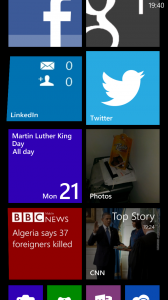
    I’ll kick off with the social element. Windows Phone 8 places social (or human if you will) interaction at the forefront, be it through the Me tile and People app pinned on the homescreen or through the social network integration. Users can post straight to Facebook, LinkedIn and Twitter right after pressing their own live tile, view social notifications and check on what other connected folks are doing. Social, social, social. But not that social.

    As you may expect the main gripe with Windows Phone 8 in terms of social integration is Google+, or the lack thereof. For me that’s a deal breaker when it comes to any mobile device, more so with a smartphone as it’s the only one that I carry around with me. That would be relatively fine had Google bothered to release an official app but, sadly, the only ones available are third party offerings that display a mobile view. Not modern, not modern at all.

    It’s one of the worst parts in dealing with Windows Phone 8 on a day-to-day basis, and really puts a dent in enjoying the operating system. That’s a shame as Microsoft managed to deliver an impressive package in this regard — the unified social notifications in the Me tile is great, the People app is really useful in finding out what your buddies are doing, and the Rooms and Groups features for private chats and sharing are nice as well.

    Users can also expect an official Foursquare app and third party Pinterest and Reddit clients, among others. For those roaming around interwebs forums, Board Express is a nice and free Tapatalk alternative, although like most third party apps it’s supported by ads. So far, I have found a working replacement for almost every social app that I use on Android and iOS.

    Let’s Talk Mail

    What’s a smartphone operating system without a competent email client? Thankfully Windows Phone 8 includes support for Gmail, Hotmail, Outlook.com, Yahoo! Mail, generic POP and IMAP accounts, as well as Exchange ActiveSync support, among other types of supported accounts such as Facebook, LinkedIn, Twitter or Sina Weibo.

    I will not bore you with generic details, but suffice to say that it works as expected — you get emails, they show up. There are some issues though which I struggle with on a day to day basis, ones which a Gmail user on Android will undoubtedly find annoying to deal with (and likely others as well). As a point of reference I have set up Outlook using the Microsoft-preferred method and Gmail as an Exchange ActiveSync account in order to take advantage of push email as well as calendar and contacts synchronization.

    With both types of accounts I have noticed that marking an email as read does not necessarily mean that it will be listed as read when checking the web app. This is a nuisance that reminds me of just how trouble-free the Gmail and Email apps on Android really are. Furthermore, after applying a batch action the previously selected emails will be unticked and you have to start over ticking them again as to perform another batch action.

    The third issue comes from using Gmail. Unlike with the Android counterpart, on Windows Phone 8 there is no Archive button as to immediately move emails straight to All Mail. I have to do that by hand, which is time-consuming and bothersome when dealing with a ton of emails each day. The fourth issue, and the most frustrating, is yet again with Gmail — emails cannot be sent using aliases from a single account. I have to add each and every single one in order to get that functionality.

    Great Phone
    The Windows Phone 8X (and Windows Phone 8 by implication) is great at making calls and sending texts. The sound through the headpiece is loud and clear, sometimes too loud with the volume raised all the way up. I have noticed a few dropped calls, although I cannot really fault the device for any of those since although I had a decent signal the person at the other end of the line did not.

    This is not a Windows Phone 8 fault per se, but I’d like to have a dedicated contact list just for making calls. By default, and this applies to Android as well, the operating system uses a unified contacts list for all corresponding apps, which is overkill when looking up someone to call. I doubt this will be implemented, but it would be nice to have for someone like me that makes plenty of calls each day.

    In the texting department, I do really have to commend Microsoft for the extensive dictionary selection. Unlike Google, which doesn’t bother with stock Jelly Bean, the Redmond, Wash.-based software corporation admits to the existence of more than a couple of languages. I count more than 60 dictionaries for a variety of languages, which really comes in handy when writing texts (but applies to other areas as well).

    The keyboard itself is quite nice to use, without any of the swiping gimmickry, and provides decent word predictions. The keys are rather tall and narrow, but even with my big thumbs I can write without making too many mistakes while typing. It’s worth noting that the space bar, at least on the Windows Phone 8X, is quite narrow and too close to the “,” sign, making accidental presses a common occurrence.

    Maps

    Straight off the bat I do have to point out that I do not find much use for a maps app. Most of the time I know where I am and how to get to where I want, although I can understand why others may feel the need for navigation and similar features. Where I live functionality is rather limited when it comes to discovering nearby shops, restaurants and movie theatres to name a few. They’re there but don’t show up on maps, hence my rare, online and offline, use of Maps.

    The Maps app on Windows Phone 8 implements Bing Maps as one might expect, but with some features supported by Nokia, and as far as I can tell only works in portrait mode. That’s a real bummer, and something to consider when using the Windows Phone 8X with car mounts. I have no doubt that the recently introduced Nokia Drive+ is a more suited alternative for navigation, but since it only works with US, UK and Canadian SIM cards it’s pointless for billions of people on the globe. Whoever took charge and decided to offer Drive+ in just three locations is clearly short-sighted, to put it kindly.

    Within the Maps app users can also find a navigation feature, dubbed “directions” which works as expected at a first glance, but again only in portrait mode. There is also an option to display traffic, view favorite locations and display an aerial view. By comparison, and I have only tested this in my location, Google Maps, through the gMaps app, displays more detailed maps and allows to zoom in more compared to Windows Phone 8’s Maps app.

    That said, users can download maps of entire countries and update them if needed. As a point of reference the entire map of the United States of America take up in excess of 2,556MB, with states like California and Delaware needing 208MB and 40MB, respectively.

    Through the Maps app Windows Phone 8 users can also use the Scout feature, which displays nearby “eat+drink”, “see+do”, “shop” and “for you” places on the map. It’s a similar feature to Google Now for instance, and I can only assume that it works as expected for other regions other than mine. Again, I appear to live in the desert or a remotely isolated area with Internet connectivity.

    Office, Baby!
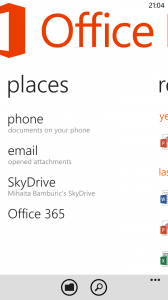
    Call me an Office fan, I really don’t mind. Although it does not live up to the features of its desktop counterpart, the Office app on Windows Phone is a welcome addition. It comes with Office 365 integration, can add SharePoint locations, integrates with SkyDrive (which as a SkyDrive user I can certainly appreciate), handles opened email attachments, and can also open and edit locally stored documents.

    I have covered the important details in the “Microsoft details Office on Windows Phone 8” article but suffice to say that it works well, even on the 4.3-inch display of the Windows Phone 8X. I mostly like the Excel and Word editing features, which come in handy while on the go and ensure compatibility with every modern office suite.

    Undoubtedly, Office on Windows Phone 8 is one of the most important features of the smartphone operating system. It works well for editing and viewing large documents and spreadsheets (from a physical dimensions point of view) as well as presentations and neatly integrates with other Microsoft services. I do have to mention that the Samsung ATIV S or even the Nokia Lumia 920 might be better suited for Office use, due to larger displays, compared to the Windows Phone 8X.

    The App Store Conundrum

    One of the first issues that I have to overcome in order to use the Windows Phone 8X is the lack of official apps. Mostly everything that is Google-related comes from third party developers, except a frankly pointless Google Search app from the Mountain View, Calif.-based corporation, and a YouTube app made by Microsoft which displays a mobile view of the popular video sharing website.

    That said, there are working third party alternatives to Google+, Google Docs, Google Drive, Google Maps, Google Play Music, Google Reader, Google Talk, Google Voice, Picasa and YouTube. I’ve used a bunch of them, and while they may not come from the search giant, each of the ones I’ve tried so far works as intended. Keep that in mind if you’re a Google user planning to buy a Windows Phone 8 device soon and are afraid of leaving the comfort of Android or iOS.

    There are plenty of official apps available ranging from Kindle and Amazon Mobile, Bank of America, Box, eBay, Endomondo Sports Tracker, Evernote, Fandango, Flixster, Glympse, Groupon, IMDb, Last.fm, Newegg, Nike+ Kinect Training, OpenTable, PayPal, Shazam, SoundHound, Speedtest.net, TopGear News (for much needed car news), TuneIn Radio, Vevo, Vimeo to The Weather Channel, for instance.

    There are third party Instagram clients, however neither is a replacement for the official Instagram app which must come to Windows Phone as soon as possible. Same goes for Google+. There are millions of people who rely on such apps on their smartphones, so why not cater to that significant audience? Microsoft made the official Facebook app, so why not do the same with Instagram? I’m sure Facebook wouldn’t mind.

    Generally speaking I have found that if there is no official corresponding Windows Phone 8 app, a suitable third party alternative can be installed instead. That’s not good enough though.

    The Bummers

    Moving on from the software onto the hardware and I do have to point a couple of weaker traits, which affect either Windows Phone 8 or the Windows Phone 8X, or both.

    Seeing as my new smartphone has NFC I decided to give it a go and pair it with my Google Galaxy Nexus. So I touch their back covers one to another (in an appropriate manner that is) and wait for something to happen. Guess what? It doesn’t work, as the Windows Phone 8X and the Galaxy Nexus cannot pair, with the latter requesting Android Beam to send files to the former (although I did get a link to Google Play on the Windows Phone 8X). Oh, the joy of having NFC and be unable to use it between different phones. This is an issue that plagues many devices on major platforms.

    The Windows Phone 8X features an LED indicator, but it only lights up to display charging status. It’s green when the battery is completely charged and red while it’s charging and that’s it. Coming from the Galaxy Nexus I expected HTC’s device to feature a more usable LED indicator which lights up for missed calls, new emails, Facebook notifications and such, but sadly it does not. I hope that this feature will come with a future software upgrade, as it’s disappointing to let it go to waste.

    One thing which I am not used to is the inconsistent implementation of the disappearing status bar throughout apps. By default Windows Phone 8 only shows the time within the status bar and in order to display the carrier network or Wi-Fi signal strength one has to swipe down from the top of the screen. It’s not a bad implementation as it cleans up the look, but the gesture has no effect within certain apps. FeedWorm is a good example where the app is not maximized and there is a black bar on top which fails to display the status indicators after swiping down.

    The Camera
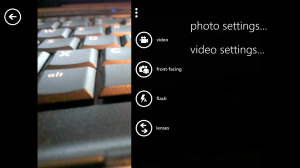
    The Windows Phone 8X features an 8MP back-facing camera with an F2.0 aperture, 28mm lens, LED flash and a BSI sensor for low-light use. That suggests that it’s capable of capturing some great pics in poorly lit conditions, but sadly it is unable to deliver spectacular results. I often notice that flash is not always needed even though it’s used and that color reproduction is not entirely accurate.

    Colors tend to have a blueish tint when the flash is used and noise is present from up close (without zoom) in low-lighting conditions, whereas in well-lit scenarios the camera on the Windows Phone 8X shoots fairly decent pictures, which are better than the ones produced by the Galaxy Nexus. The latter is not exactly a professional shooter in disguise, but it’s adequate for brief use.

    That said, I have not noticed a single scenario where the Windows Phone 8X can shoot pictures with accurate color reproduction. I am much more impressed by the video camera, with manages to shoot decent videos with flash as well as without it, although it could use better autofocus when pointing it around in different directions. By contrast the front-facing camera is rather poor, which is to be expected considering that it’s just a 2.1MP unit.

    Battery Life
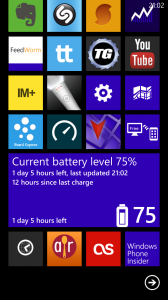
    Battery life is difficult to quantify as usage scenarios differ from one person to another. I use my phone most when I’m heading out and then I mostly check email and browse the web, among other things like playing games for instance. With the software up to date, including the much-needed “Keep WiFi on when screen times out” option, the Windows Phone 8X gets me even through a heavy day of use.

    Generally speaking battery performance is similar to the Galaxy Nexus throughout a day of use, although the Windows Phone 8X sips less when displaying web pages, something that I’ve come to appreciate when switching from the former.

    I do rely on a bunch of apps to sync in the background, including the dedicated email app, Facebook, Foursquare, LinkedIn, Twitter, People, Associated Press, CNN, The New York Times and The Wall Street Journal, among others. Depending on what’s actively syncing the battery might suffer a lighter or heavier hit, so your performance will definitely vary.

    The Verdict

    It’s my personal opinion that every operating system comes with its own caveats, more so in the app store. Android provides a more raw experience where the user interacts with the device in a more analogue kind of way — the software is not designed to mask itself through fancy transition effects or animations and generally feels unadulterated. iOS on the other hand is more fluid and provides a more artificial experience where the operating system is merely a bridge between the user and the apps.

    However, both Android and iOS cannot really be faulted for the available app selection. Windows Phone 8 on the other hand is the perfect example of how an operating system can strike a balance between raw and artificial, but fail to carry over the common denominator — the vast app store offering. No matter how many third-party apps are available, people like me that have a craving for the official variety will often be disappointed.

    At the same time the Windows Phone 8X is not really an Apple iPhone 5 nor a Samsung Galaxy S III when it comes to the camera performance. It’s average and really does not work as well in low-light conditions as HTC may lead everyone to believe — the quality is just not there. So the back and front-facing shooters rule out the Windows Phone 8X for camera aficionados.

    I have said that the battery gets me through a heavy day of use, but is that really impressive? No, I don’t think so, at least not when comparing it with smartphones like the Motorola Droid Razr Maxx HD and Samsung Galaxy Note II, both of which come with batteries larger than 3,000mAh and, therefore, with better performance in this regard.

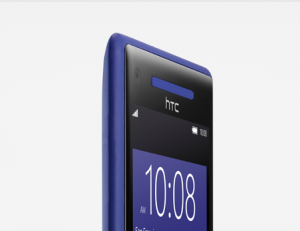
    After using the Windows Phone 8X for a couple of weeks I’ve grown fond of it. It’s not designed to take on Android flagships in terms of raw performance, but it’s enjoyable. The form-factor makes it easy to hold, the operating system is refreshing compared to the bigger players and, something that I really came to appreciate, the design is, frankly, amazing in this California Blue (which is really purple) color. At the end of the day the Windows Phone 8X can only be summed up as this — the all-rounder.
  • Path reaches settlement with FTC, agrees to pay $800,000 fine for COPPA violations

    DaveMorin-DLD

    Path CEO Dave Morin. Photo by Om Malik

    Path, the San Francisco-based startup that offers private social networking services, has reached a settlement with the Federal Trade Commission (pending judicial approval) on alleged violations of the Children’s Online Privacy Protections Act (COPPA). As part of the settlement, the company will pay a fine of $800,000 and has purged about 3,000 accounts from the network. The settlement requires Path to establish a comprehensive privacy program and to obtain independent privacy assessments every other year for the next 20 years, the FTC said in a statement.

    The discovery of the underage members came as a byproduct of the FTC investigation into the privacy fiasco over the uploading of iPhone address books to Path’s servers without the permission of the individuals. That privacy breach became a major headache for the company, including stoking  the ire of a very irate Apple. The company later changed its policies.

    In a statement, the FTC said:

    “Over the years the FTC has been vigilant in responding to a long list of threats to consumer privacy, whether it’s mortgage applications thrown into open trash dumpsters, kids information culled by music fan websites, or unencrypted credit card information left vulnerable to hackers,” said FTC Chairman Jon Leibowitz.  “This settlement with Path shows that no matter what new technologies emerge, the agency will continue to safeguard the privacy of Americans.”

    In addition to the $800,000 civil penalty, Path is prohibited from making any misrepresentations about the extent to which it maintains the privacy and confidentiality of consumers’ personal information.  The proposed settlement also requires Path to delete information collected from children under age 13 and bars future violations of COPPA.  Path has already deleted the address book information that it collected during the time period its deceptive practices were in place.

    Dave Morin, Path’s founder and chief executive officer, said that the company had identified the accounts in February 2012 and by May 2012 had implemented changes to its sign-up process that automatically caught the underage sign-ups. Path discovered the issue on its own and addressed it (that is, they removed and blocked minors under the age of 13 from the service) before the FTC approached the company, Morin said. Path is currently compliant with COPPA rules. Morin said that the typical Path user is about 25 years old. The company, which has about 6 million registered users, is targeting families for using Path to share personal moments, so this particular settlement offers up a new and unique set of challenges to the company.

    Morin said that the big reason the underage children were able to get into the network is because the company didn’t have requisite checks and balances in the system. In a blog post that the company shared with us, Morin explained:

    Today the United States Federal Trade Commission (FTC) announced that it reached a settlement pending court approval with Path regarding alleged violations of the Children’s Online Privacy Protections Act (COPPA). The gist of the FTC’s complaint is this: early in Path’s history, children under the age of 13 were able to sign up for accounts. A very small number of affected accounts have since been closed by Path.

    As you may know, we ask users’ their birthdays during the process of creating an account. However, there was a period of time where our system was not automatically rejecting people who indicated that they were under 13. Before the FTC reached out to us, we discovered and fixed this sign-up process qualification, and took further action by suspending any under age accounts that had mistakenly been allowed to be created.

    We want to share our experience and learnings in the hope that others in our industry are reminded of the importance of making sure services are in full compliance with rules like COPPA. From a developer’s perspective, we understand the tendency to focus all attention on the process of building amazing new things. It wasn’t until we gave our account verification system a second look that we realized there was a problem. We hope our experience can help others as a reminder to be cautious and diligent.

    Throughout this experience and now, we stand by our number one commitment to serve our users first.

    Path has raised a total of $41.2 million from investors such as Index Ventures, Kleiner Perkins Caufield & Byers and Redpoint Ventures. It was rumored that Google offered a couple hundred million dollars for the company.

    Related research and analysis from GigaOM Pro:
    Subscriber content. Sign up for a free trial.

  • StumbleUpon Makes Email Notification Changes

    StumbleUpon appears to be making a move a number of its social media peers have made in recent months, by seeking further engagement from its members via email.

    The company has been sending emails to users discussing their email notification settings, and has made some changes with regards to the kinds of emails people get from StumbleUpon.

    “This is a quick note to let you know about some changes we’ve made to the email settings in your StumbleUpon account,” the email says. “We’ve created a bunch of new notification options that allow you to have more control over what types of emails you’ll receive from us. These new notification options are not compatible with the old settings, so your settings have been reset. We apologize for any inconvenience, and want to make sure we only send you the emails you want to receive.”

    To be perfectly honest, it’s been a long time since I’ve looked at my email settings on StumbleUpon, and since the company didn’t go into specifics, I can’t say exactly what all has changed, but here’s what the options look like now:

    StumbleUpon Email Settings

    One thing that must be relatively new is the addition of the “Tell me when a Stumbler follows my List” option, as the Lists feature itself was only released several months ago.

    Twitter, LinkedIn and Google+ (especially Twitter) have all added various types emails for users within the last year or so. It’s a good move in terms of keeping users coming back, and keeping the service fresh in their minds. Of course, that is dependent on users checking those boxes above.

    Related:

    Twitter Wants You to Email Tweets to Your Non-Twitter-Using Friends

    You Can Now Receive Twitter’s “Best-Of” Emails Daily, If That’s Something You’re Into

    Twitter Finds Another Reason To Send Users Email

    Google+ Starts Relying More On Email For Engagement

    Is Email The Future Of Social Media?