Blog

  • Ravens Win the Super Bowl in This Year’s Madden Prediction

    According to the #1 NFL video game on the market, Ray Lewis, Joe Flacco, and the Baltimore Ravens will be the ones popping the champagne this Sunday.

    This year’s Madden Super Bowl prediction sees the Baltimore Ravens edging out the San Francisco 49ers in a very tight game – 27 to 24. According to the simulation, the game comes down to a Justin tucker field goal. In this hypothetical game, Kaepernick mounts a final drive, but is ultimately foiled by an Ed Reed interception.

    EA’s Madden has been predicting the outcomes of Super Bowls since 2004. In that time, they are 7 for 9. The only two predictions they got wrong were the Super Bowls won by Wild Card teams (Packers in 2011 and Giants in 2008). Last year, Madden correctly predicted that the Giants would beat the Patriots, though they didn’t get the score quite right (27-24 vs. reality’s 21-17).

    And about the MVP? Flacco, all the way:

    “Joe Flacco took home MVP honors completing 19 of 27 passes for 260 yards and two touchdowns. Flacco capped off an incredible postseason run that saw him defeat Andrew Luck, Peyton Manning, Tom Brady and Colin Kaepernick on the way to sending Ray Lewis out of the NFL with style,” says EA Sports.

  • Banks won’t lend? Try a bond instead

    When the banks won’t lend you money, head for the international debt markets.

    Western European banks have been withdrawing funds from emerging Europe because of capital issues at home for the past few years, alarming international lenders so much that they formed the Vienna Initiative to help the region.

    But those corporates that couldn’t borrow have been making use of the red-hot emerging corporate bond market instead.

    Panellists speaking at the Emerging Market Traders’ Association annual corporate debt forum yesterday said emerging corporates will still rush to the debt markets this year, after record levels of issuance last year, even though the pace may be a little more subdued.

    According to Polina Kurdyavko, fund manager at BlueBay Asset Management, caution in the financial sector means that:

    Banks are more selective who they lend to.

    They’re prepared to lend to the big energy companies like Brazil’s Petrobras or Russia’s Gazprom and also to the lesser-rated companies to whom they can charge high lending rates, Kurdyavko told the audience of emerging market specialists.

    But the borrowers in the middle have been left with fewer borrowing options.

    As a result, Kurdyavko said:

    BB to BBBB names without bank funding – these are some of the corporates we have seen on the bond market.

    Kurdyavko said she was currently overweight on BB-rated emerging corporate borrowers, while Milena Ianeva, head of EMEA corporate credit at Barclays, liked short-dated debt from BBB borrowers.

    But corporate debt issuance won’t fill the bank lending gap, according to a note from David Creighton, CEO of emerging market fund manager Cordiant. He wrote:

    The fall in bank lending is a major issue for the thousands of mid-cap and large companies who cannot tap the capital markets and will remain reliant on lending from international banks… Banks have also been leaning more towards shorter-term loans. A lot of businesses are finding that what is on offer isn’t a fit for their needs.

  • How Amazon Trained Its Investors to Behave

    In March 2000, Barron’s reported that 51 Internet companies were burning cash so fast that they’d be broke by the end of the end of the year. The article (it’s behind a seemingly unbreachable paywall) has acquired the reputation of having marked the end of the dot-com boom. The Nasdaq composite index peaked on March 10 at 5132, and by the end of the month was in a full-on collapse (as I write this, it’s only at 3155, despite years of gains).

    The Burn Rate 51 was made up mostly of now-forgotten companies like drkoop.com and CDNow. But it also included a certain Internet bookseller from Seattle. The Barron’s article mentioned that a 690 million euro convertible bond sale in February had bought Amazon some more time (the list was based on 1999 year-end data) — but that the company would still run out of cash in 21 months.

    In fact, Amazon was only operating at such a high burn rate because it could. Once investors stopped giving it free money, the company quickly cut back on its investments and its losses. By the fourth quarter of 2001 — that is, within about 21 months — it was turning a profit.

    That opportunistic approach to financial markets has defined Amazon since it went public in 1997. And while it has certainly burned many buyers of Amazon shares through the years — Amazon’s stock price took a decade to get back to its 2009 peak — the long-run returns have been spectacular. In Morten T. Hansen, Herminia Ibarra, and Urs Peyer latest ranking of long-run CEO performance in HBR, Amazon’s Jeff Bezos now ranks No. 2, behind the late Steve Jobs, with an industry-adjusted shareholder return of 12,266% during his tenure.

    So when Amazon reports below-consensus earnings, as it did Tuesday, and the share price jumps, as it did after-hours Tuesday and again Wednesday morning, the reaction isn’t quite the puzzle it seems. Slate’s Matthew Yglesias cracked that “Amazon, as best I can tell, is a charitable organization being run by elements of the investment community for the benefit of consumers.” But what’s really going on is that Jeff Bezos has trained elements of the investment community to expect that low profits (or big losses) now represent investments that will eventually pay off, not signs of trouble.

    How has Bezos done this? Well, he’s a hedge fund veteran who has always taken a skeptical view of Wall Street, treating it more as a loopy rich uncle than the efficient information processor of standard finance theory. When Uncle Wall Street (also known as Mr. Market) is in a generous mood, Bezos is always ready to take advantage by putting investment ahead of profitability. But he’s also always been ready to shift gears when the mood turns stingy.

    And so Amazon thrived in the crazy late 1990s, when Henry Blodget made his name as an analyst by making outrageous guesses about how high Amazon’s stock price would go and seeing them come true long before he expected. It also thrived right through the gloomy early 2000s, when bond analyst Ravi Suria made his name picking apart Amazon’s balance sheet and worrying that the company wasn’t generating enough cash to make its bond payments (along with the 690 million euro issue in 2000, the company had sold $1.25 billion in bonds the year before). Suria was wrong about that. In fact, Amazon retired the last of the $1.25 billion bond issue just before the debt-market meltdown of autumn 2008. Nice timing, huh?

    Of course, none of this would have worked if Bezos hadn’t been making the right strategic bets, running the company spectacularly well, and catching the occasional lucky break. There are lots of corporate executives who think they know better than Wall Street. Most turn out not to.

    But when you combine Amazon’s success with its resolute unwillingness to take financial markets too seriously, the result is an amazing thing to see. Clayton Christensen has long complained that standard financial metrics can be enemies of innovation and growth. As he and two co-authors wrote in 2008:

    The emphasis on earnings per share as the primary driver of share price and hence of shareholder value creation, to the exclusion of almost everything else, diverts resources away from investments whose payoff lies beyond the immediate horizon.

    With Amazon, though, nobody emphasizes EPS. Or, when they emphasize earnings, it’s in the opposite direction from what Christensen’s worried about. A few months ago, I heard analyst Mark Mahaney, now of RBC Capital markets, argue (at about minute 26 on the video) that Amazon’s razor-thin profit margins were a source of competitive advantage:

    You really develop very sustainable moats around a business when you run it at low margins. Very few companies want to come into Amazon’s core businesses and try to compete with them at 1% margins or 2% margins.

    This sounds eerily similar to what Yglesias was saying, half-jokingly, on Tuesday:

    Competition is always scary, but competition against a juggernaut that seems to have permission from its shareholders to not turn any profits is really frightening.

    Amazon has this permission because it has trained its shareholders to believe that everything will work out in the end. As a result, it has a shareholder base that’s geared for the long-run. The biggest holder, by far, is Bezos himself. After that the No. 1 institutional holder, by a good margin, is Capital Group, the giant Los Angeles mutual fund complex with a reputation for having long investment horizons. I’ve been looking through transcripts of the company’s past couple years of quarterly earnings conference calls with analysts (thanks, Seeking Alpha), and have learned that Bezos never participates (most CEOs do) while CFO Tom Szkutak always concludes his remarks with the sentence, “We believe putting customers first is the only reliable way to create lasting value for shareholders.” Nobody complains.

    Being long-term oriented isn’t necessarily the same as being right. Amazon could make the wrong bets. Bezos could get more interested in space travel than selling massive quantities of stuff at just above cost. But Bezos seems to get this. From an interview with Fortune’s Adam Lashinsky last year:

    “We believe in the long term, but the long term also has to come,” says Bezos, explaining that periodically Amazon wants to “check in” with its ability to make money.

    Just “check in,” mind you. Wouldn’t want to get hung up on flawed financial metrics when there’s a world to conquer. Which Bezos can get away with — now that he has housebroken the investment community. The key to success in dog training, I’m learning (we just got a puppy), is to appeal to instinct and memory. Reasoning with the animal, or getting mad at it, doesn’t get you anywhere. Neither does mockery, whatever Will Ferrell says. Bezos did lose his cool a bit over Suria’s claims back in 2000 (“hogwash,” he kept calling them). But in general he has exuded the steady authority of a good dog trainer. Hey, Wall Street! Roll over!

  • BlackBerry 10 – Re-designed, Re-engineered, Re-invented

    BlackBerry 10 – Re-designed, Re-engineered, Re-invented

    We’re here at the BlackBerry 10 Live event where Thorsten Heins just announced amazing new BlackBerry 10 devices, the BlackBerry Z10 and BlackBerry Q10. Now it’s time to recap some of the things that make the BlackBerry 10 software a truly unique and elegant experience. To show it off, Vivek has taken the stage to demo some familiar elements of BlackBerry 10: the very cool Time Shift Camera, BlackBerry Flow, the BlackBerry 10 Keyboard, and of course the heart of BlackBerry 10, the BlackBerry Hub. Check them all out in the videos below.

    Time Shift Camera – Always capture the best shot

    [ YouTube link for mobile viewing ]

    BlackBerry Flow – Keeps you moving forward

    [ YouTube link for mobile viewing ]

    BlackBerry Keyboard – An unmatched typing experience

    [ YouTube link for mobile viewing ]

    BlackBerry Hub – The single place for you to manage your conversations

    [ YouTube link for mobile viewing ]

    There you have it – a recap of the exciting core features of BlackBerry 10. Let us know what you think in the comments below.

  • Jason London Arrested, Poops In Cop Car

    Jason London, the actor most people may know as Randall “Pink” Floyd from “Dazed and Confused”, got himself into some trouble recently after he allegedly sneezed on a bouncer at a club, refused to apologize, punched said bouncer in the face, and was subsequently arrested for disorderly conduct. I’m guessing dropping a big deuce in the back of the police cruiser didn’t help his case, either.

    London allegedly had quite a bit to say to the cops who arrested him after they were forced to give him a “knee strike” to make him cooperate. According to TMZ, he was verbally abusive before defecating in his pants.

    “Guess what fa**ot? I f***ing love this. I f***ing own you guys so hard. I’m rich and I’m a motherf***ing famous actor! F***ing look me up, bitch. It smells like s**t in your car and your breath smells like diarrhea,” he reportedly said.

    But London took to Twitter to set the record straight, saying the TMZ report is a lie, right down to how the altercation began.

    This might be a good time to point out that Jason is not to be confused with his identical twin brother Jeremy London, who starred in the Kevin Smith flick “Mallrats”. Not a good situation to be in when you look just like the guy who crapped in a cop car….

  • Meet the All-New BlackBerry Z10 – First BlackBerry 10 Device [VIDEO]

    BlackBerry Z10 in black

    This is the moment we’ve all been waiting for – the BlackBerry Z10 has taken the stage and we’re pleased to introduce it to you. It is a gorgeous device in black and white, and it’s designed to showcase the elegance of BlackBerry 10.

    When introducing the BlackBerry Z10, Thorsten Heins said, “This is the most beautiful BlackBerry we have ever launched. I can’t wait for you to try it out. We knew a large beautiful display was important. This is the window into the BlackBerry 10 experience.”

    I would definitely call this the best BlackBerry smartphone to date! The BlackBerry Z10 is has a specially designed screen for precise touch input, so typing on the BlackBerry keyboard can be faster and more accurate. The BlackBerry Z10 screen uses the latest technology to ensure images are sharp, clear and incredibly vivid.

    BlackBerry Z10 in white

    The device and BlackBerry 10 software were designed together. At the core of the BlackBerry Z10 is BlackBerry Flow (something we’ve been showing off for a while); what this means is that you don’t have to seek information on your device. Instead, it’s delivered to you within thumb reach, so you can take action quickly and easily.

    “Whatever you’re doing, you’re only one swipe away from the heart of all your activity.”

    Of course, showing is better than telling, so I caught up with Nawdesh, a member of the BlackBerry product management team, to show me around BlackBerry Z10.

    [ YouTube link for mobile viewing ]

    Nawdesh mentioned he loves the camera, and I definitely agree – the Time Shift camera feature is one of the coolest aspects to BlackBerry 10, plus the video camera can shoot stunning full HD videos. When it comes to viewing movies and photos, we’ve created a cinematic experience thanks to that gorgeous screen.

    After using it for the past few weeks, I can say another great feature is the texturized backing and smooth edges on the device. It’s designed to let you have the ideal grip while holding it, but it can also tuck easily into a pocket or bag.

    The wait is over, #TeamBlackBerry – what do you think about the new BlackBerry Z10? Be sure to let us know in the comments.

  • Introducing the BlackBerry Q10 – First BlackBerry 10 QWERTY Device [VIDEO]

    BlackBerry Q10 - the first BlackBerry 10 device with QWERTY

    The news here at the BlackBerry 10 global launch event keeps coming. Just moments ago, Thorsten Heins introduced the new BlackBerry Z10, and now we’re having a look at the BlackBerry Q10. The iconic-looking device is built with high performance materials and premium finishes. Typing is fast, accurate and familiar on the larger ergonomic BlackBerry QWERTY keyboard.

    Even though I love the keyboard, perhaps my favorite feature is the stunning touchscreen display – the largest ever on a BlackBerry QWERTY device. If you’re a fan of a physical QWERTY device experience, you’re going to love the BlackBerry Q10. All your information is displayed beautifully on the screen, and you can take action and respond to it as you choose thanks to the powerful and elegant BlackBerry 10 software.

    BlackBerry Q10 - the first BlackBerry 10 device with QWERTY

    To get a closer look at the BlackBerry Q10, we met with Vijai from the product management team to walk us through the device. Watch this video below to get up close and personal with this new BlackBerry device.

    [ YouTube link for mobile viewing ]

    The battery is designed to get you through your day smooth and efficiently. The browser is fast, the media experience is rich, and it’s all because of the built-in power of the BlackBerry 10 OS. Additionally, meticulous detail has been put into the design. The BlackBerry Q10 features a unique glass-weave material that is meant to be not only thinner and lighter, but stronger than plastic.

    No matter what device you prefer – all-touch or QWERTY – these new BlackBerry 10 devices provide the best typing experience in the industry. Are you a QWERTY fanatic? Let us know your thoughts on the BlackBerry Q10 below.

  • Research In Motion is Now BlackBerry

    Research In Motion is now BlackBerry

    In a bold move (if I do say so myself), we’ve renamed the company to reflect our brand. Research In Motion (RIM) is now officially named BlackBerry. Seconds ago on stage at the BlackBerry 10 global launch event, Thorsten Heins made the announcement to press and advocates from around the world.

    “From this point forward — we are BlackBerry. One brand. One promise. Our customers use a BlackBerry, our employees work for BlackBerry, and our shareholders are owners of BlackBerry.”

    To explain this move further, I sat down with Frank Boulben, CMO, earlier this week in New York City. Check out the interview below.

    [ YouTube link for mobile viewing ]

    As we wrote last week, RIM was founded in 1984 – that’s almost 30 years of heritage built into the BlackBerry brand. Reflecting on this change, I believe Thorsten put it best when he said:

    “We are now, more than ever, a company united in our vision for mobile computing and it all starts today with our renaming and with the global launch of BlackBerry 10.”

    It’s a new day, a new name and new products. We are BlackBerry – please share your thoughts on the change with us in the comments.

  • Facebook Pushes Suggested Guests Upon RSVPing

    Facebook is taking a step to better promote events and to help users make events more successful.

    Some users have seen Facebook make an automatic suggestion for users to invite more friends to events, as soon as they RSVP to said event.

    Upon RSVPing, a box will pop up telling users that “events are more fun with your friends. Invite people you know to come along.” Below that message, Facebook will suggest three guests based on the users’ friends. Clicking on the “invite” button will invite them immediately.

    Users can also click “see more suggestions” to bring up three new friends to possibly invite.

    This is currently just a test feature, as not all users are seeing to box when RSVPing.

    This looks like Facebook has taken their “Suggested Guests” feature, first seen nearly a year ago, one step further. The Suggested Guests feature appears at the top right-hand corner of event pages and suggests friends to invite to the event. The Suggested Guests box will show up to anyone and everyone, as long as the event is open.

    [via AllFacebook]

  • Microsoft Surface Pro has a BIG storage problem

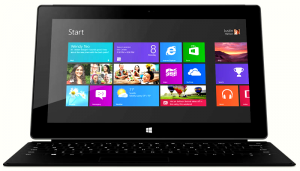
    Microsoft is no stranger to controversy, even attracting negative attention when it comes to the advertised storage of its own Surface tablet lineup. The interwebs buzzed after the company admitted the shortcomings of Surface RT, which only comes with 16GB of user-accessible storage in 32GB trim, and now the same issue is raising its head all over again with Surface Pro, just days before the big launch.

    As most knowledgeable Windows users will concede, Microsoft’s latest consumer operating system does take up quite a bit of storage space due to its fully-fledged nature. For example, on my personal computer running Windows 8 Pro 64-bit, the “Windows” folder by itself uses just over 16GB. So it’s not overly difficult to imagine Windows 8 Pro will take up a lot of Surface Pro’s free space. Of course this is something that educated pundits surely know (or at least they should).

    After reaching out to Microsoft regarding the user-accessible storage on Surface Pro, a company spokesperson stated the following for BetaNews:

    The 128 GB version of Surface Pro has 83 GB of free storage out of the box. The 64GB version of Surface Pro has 23GB of free storage out of the box. Surface Pro has a USB 3.0 port for connectivity with almost limitless storage options, including external hard drives and USB flash drives. Surface also comes pre-loaded with SkyDrive, allowing you to store up to 7GB of content in the cloud for free. The device also includes a microSDXC card slot that lets you store up to 64GB of additional content to your device. Customers can also free up additional storage space by creating a backup bootable USB and deleting the recovery partition.

    First of all it has to be explained that the actual formatted capacity is different from the advertised figure due to the way software computes available storage. To give you an idea of the difference between the two, the 240GB Intel SSD 330 Series drive in my computer only has 223.57GB accessible. Similarly, the 64GB and 128GB Surface Pro models have about 59.52GB and 119.05GB respectively available for the operating system and software.

    Windows 8 Pro with all its bells and whistles (including the recovery partition) robs the user of roughly 36GB of space, which is fairly normal considering the high storage requirements that the operating system actually has. At the same time Microsoft’s answer explains why there is no 32GB Surface Pro model — the pre-installed software simply cannot fit. By contrast, Windows RT only needs roughly 13GB. The question here is: Does this loss of space in the Pro version really matter?

    Surface Pro is designed for business users, and they will have to choose the right version with even greater care compared to Surface RT. The 64GB model only has 23GB of free storage, whereas the 128GB variant comes with more user-accessible storage at 83GB. Depending on the user’s requirements the entry-level model might be a tight fit seeing as the tablet is designed to run fairly large apps such as Adobe Photoshop, Autodesk AutoCAD and similar programs. Therein lies the problem — the entry-level model is just not “roomy” enough for a demanding user’s peace of mind over time.

    Microsoft says that the microSDXC card slot on Surface Pro can house (up to) 64GB memory cards, which indeed can be used to store “additional content” but that is not an acceptable alternative to the internal SSD drive (which is faster) for installing apps. An external card is mostly designed to be swappable, not to house installed software, which can be an issue when dealing with and going through multiple memory cards throughout the day.

    The 64GB Surface Pro model retails for $899, while the 128GB Surface Pro runs for $999. In spending $100 more, prospective users can take advantage of a further 60GB of internal storage, or 2.6 times as much as the entry-level model. The difference in pricing is not all that substantial when we’re basically comparing two very expensive devices and can be easily justified by the benefits it provides both in the immediate future as well as in the long run.

    Sure, users can regain some occupied storage by removing the recovery partition and using a bootable backup USB drive instead, but then again it’s not exactly a sensible alternative to buying the 128GB Surface Pro variant. Microsoft didn’t mention how much storage the recovery partition actually uses which leads me to believe that it’s not really all that much. Which makes sense seeing as Windows 8 only needs the installation disc (which takes up less than 4GB) to perform a factory reset or restore.

    So where does that leave the prospective Surface Pro buyer? Well, after all is said and done, to my mind the only model worth buying is the 128GB Surface Pro, which will allow users to install a higher number of applications and even store some multimedia content without worrying about memory cards or lugging around portable HDDs alongside an already large and fairly heavy tablet.

  • Diane Sawyer Rumors: Is She Retiring?

    Not so long ago, there were rumors of a very specific kind going around about Diane Sawyer; namely, that she was drunk during her coverage of the election results. Of course, Sawyer, like most news reporters, was exhausted after extensive coverage of Hurricane Sandy and hadn’t had much sleep, which caused her to act a little loopy on air.

    Now, the latest scuttlebutt is that she’s retiring from the business altogether in order to deal with some pressing family issues.

    “She has discussed with a few close friends and some people at ABC that she is seriously considering retiring,” a source told The New York Daily News. “She said she’ll be ready to hang it up not long down the road. She loves work and what she does and has endless energy, but she’s overwhelmed with personal problems and she is thinking about leaving to take care of her family.”

    But Sawyer’s rep says it’s just not true, and that while she’s been taking time off to go home and take care of her family’s problems, she isn’t going anywhere for the long term.

    “That is not true,” Jeffrey Schneider, SVP of ABC News, said. “And had the Daily News actually asked us if Diane was considering retiring we would have told them yesterday that it wasn’t true.”

  • NASA to Launch ISS Instrument to Monitor Ocean Winds

    NASA announced this week that it will launch an instrument called the ISS-RapidScat to the International Space Station (ISS) next year to measure ocean winds. The instrument, originally built to test NASA;s QuikScat satellite, will measure the Earth’s ocean surface wind speed and direction. The data will improve weather forecasts and hurricane monitoring.

    “The ability for NASA to quickly reuse this hardware and launch it to the space station is a great example of a low-cost approach that will have high benefits to science and life here on Earth,” said Mike Suffredini, NASA’s International Space Station program manager.

    Scatterometers measure the scattering effect produced when scanning the Earth’s surface using a microwave radar sensor. The previous wind data instrument, the QuikScat, stopped collecting ocean wind data in 2009 after operating for 10 years. No replacement will be available soon, which is why NASA adapted existing QuikScat hardware.

    “ISS-RapidScat represents a low-cost approach to acquiring valuable wind vector data for improving global monitoring of hurricanes and other high-intensity storms,” said Howard Eisen, ISS-RapidScat project manager at NASA’s Jet Propulsion Laboratory (JPL). “By leveraging the capabilities of the International Space Station and recycling leftover hardware, we will acquire good science data at a fraction of the investment needed to launch a new satellite.”

    The ISS-RapidScat will be launched to the ISS on a SpaceX Dragon cargo mission. It will be installed on the end of the ISS’s Columbus laboratory and have measurement accuracy “similar” to QuikScat. The instrument is expected operate for two years.

    (Image courtesy NASA/JPL-Caltech/JSC)

  • 10 Minutes to BlackBerry 10 – See the Excitement from Around the World [VIDEO]

    10 Minutes to BlackBerry 10

    We are only minutes away from showtime here at the new BlackBerry 10 launch event in New York City and in cities around the world London, Dubai, Toronto, Paris and Johannesburg. The press has filed in and the anticipation is building. The show is about to kick off with a montage of guests and interviews from excited fans, analysts and media from around the world. It has definitely been a spirited journey and a fantastic build-up to launch – check out a few of the stories being highlighted.

    [ YouTube link for mobile viewing ]

    [ YouTube link for mobile viewing ]

    There you have it – I definitely echo the host’s sentiment when he said, “I hope after today Lil’ E can get some sleep.” Stay tuned – all your BlackBerry 10 launch news is coming up next. Are you excited? Be sure to leave us a comment telling us your journey to BlackBerry 10.

  • Treat Everything as a Case Study

    I was driving past a Volkswagen dealer during a 15-hour drive from Miami to New Orleans when my 9- and 10-year-old kids excitedly pointed out the old Beetle that was parked alongside a row of brand-new models. Ah, yes, I said, a clear case of brand reinforcement through product differentiation: The odd thing stands out. At another point in the trip, their $8 headsets broke at the plug. We analyzed this as a case of defective design, probably the result of poor cost analysis.

    The sight of gas pumps whose nozzles were covered with bags was a case of poor demand forecasting within the supply chain. Then we got talking about the odometer on my Nissan Pathfinder: Is a car that can go 300,000 miles a case of over-engineering or TQM excellence? It was a debate worth at least 40 miles.

    It might be obvious by now that I had been playing HBR podcasts practically nonstop on that journey. If you listen to 50 consecutive business podcasts, as we did, everything starts to look like a business case study. Your way of seeing is transformed forever. You develop the Case Method third eye.

    You start to question everything, and your questions start to disconcert people, just as Socrates’s questions upset the targets of his inquiries. But you must persevere. Questions help you connect the dots.

    The security-company technician who was troubleshooting an alarm at my house discovered that the system wasn’t reliably transmitting to the local cell tower and needed to be replaced. I questioned him: Why wasn’t it connecting? The signal was too weak, he said. Then the zinger: Why did the company not measure the signal strength before installing the alarm in the first place?

    A well-known furniture company with a nationwide network of showrooms said a chair I had ordered would take 12 weeks to arrive. Why so long, when it takes just four hours to build a car?

    A colleague was setting up a PowerPoint presentation at work. Why PowerPoint? Why not Prezi or Keynote or SlideRocket or some other solution with potentially greater impact?

    These questions hung in the air, unanswered, as do most of those I find myself asking during the course of a day, either to myself or whoever is with me: Why don’t all phone companies use the same frequency bands so business users can take their phones abroad? Why, with the advent of in-memory big data and high-frequency trading, can’t banks clear my personal stock trades instantly?

    Often, the questions lead to debates. Just ask my kids: We debated everything (and still do). Is it better to amass frequent-flier miles or use them as you collect them, in case the carrier goes out of business? Is a supermarket’s “Buy one get one free” promotion a loss-leading marketing exercise or a tactic for achieving necessary volume? Can a product placement in a movie undermine brand credibility — eg, would James Bond really drink Heineken?

    Ideally, the debates lead to imaginative problem solving.

    Do this on your own for a while, or with your kids, and pretty soon you’ll sharpen up your questioning and debating and imagining skills. By adopting the “Everything is a case study” mindset and seeing the world through the Case Method third eye, you’ll learn to filter out the disinformation that life throws at you and uncover startling insights.

    You’ll also increase your effectiveness at questioning your company’s strategies, processes, procedures, and methods of data collection. You’ll be able to grow in your ability to think about what you don’t know, rather than accepting the business-as-usual mentality.

    This will help you assist your company in finding innovative solutions. And it might be good for your career. After all, CEOs hate canned, staid, boring, predictable answers to business problems (just as business professors hate canned, staid, boring, predictable responses to business cases). They crave creative, adaptive, innovative thinking.

    Would the “Everything is a case study” view of the world have helped Eastman Kodak executives think through digital technologies earlier? Would it have prevented leaders in the British motorcycle industry from ignoring the commuter-moped market in the 1970s? Would it have stopped Xerox managers from showing off the company’s innovative technologies to the world before commercializing them?

    Maybe. It certainly would have made their family car trips a lot more fun.

  • BlackBerry 10 Launch Announcement Toronto

    I’m here at the press-saturated BlackBerry 10 launch event in Toronto. I’ve been to several device launch events in the past and none have come close to the scale and scope of this announcement.

    There are just tons or RIM staffers as well as an over 200-strong press core. I get the feeling from talking to (non-RIM) people that they think they know the gist of what is being announced. RIM staffers are already being less shy about using their new devices in the open. I get the feeling there’s more to this launch than what is currently understood via leaks and public opinion.

    Could it be an early launch of the Keyboard-enabled BlackBerry X10 or a new feature from deep within RIM’s R&D.

    Stay tuned for photos, details and demo videos here at BlackBerryCool.

    Let’s do this.

  • Objet Enters The World Of Fashion With 3D Printed Clothing

    I don’t think anybody would normally associate 3D printing with fashion. One Dutch fashion designer did, however, and the results are pretty fabulous.

    Objet released a video interview today with Dutch fashion designer Iris van Herpen and MIT Professor Neri Oxman, both of which worked on a multi-material 3D printed cape and skirt. The ensemble was composed of “both rubber-like and rigid elements that are 3D printed simultaneously on the Stratasys Objet Connex system.”

    The Objet blog gives some more insight into how the cape and skirt were created:

    Both the cape and skirt were 3D printed on the Objet Connex500 multi-material 3D printer. They pieces were divided into 4 parts each, with each part consisting of a flexible rubber-like substrate overlaid with rigid shell-like structures – all printed in the same job. The Connex platform is unique in its ability to simultaneously use different materials for the fabrication and simulation of different end parts and properties.

    3D printed clothing doesn’t look very comfortable, but I assume most high fashion isn’t meant to be. The design itself, however, is incredibly compelling, and might lead other fashion designers to look into the technology for future designs.

  • Inside development: finding out how DFID gets results

    Welcome to my blog! In September I got my first break into the world of development and stepped inside the walls of the Department for International Development (DFID) in London as part of their first intake of Graduate Placements.

    I’ve made DFID’s walls the theme of this blog. Whatever the organisation, their organisational website is usually a promotional tool to share the organisation’s three A’s – ambitions, activities and achievements – with a worldwide audience. They are rarely a gateway to the people, skills, and decisions that exist within the organisation’s walls and power these vital As.

    I became acutely aware of this as I prepared for my DFID interview and assessment centre. Like every keen applicant, I trawled through every page of the DFID website, amassing as much information as possible about DFID’s varied workload – trying to uncover how I could fit into and add value to an organisation doing and achieving so much.

    Despite reading everything the website offered, I remember walking into the interview feeling very blind. I had not been able to unpack how DFID achieves such impressive results as supporting 11 million children to have an education, 10 million women to access family planning, and 13 countries to hold freer and fairer elections. How does UK Aid get translated into education, health, growth, good governance and, most importantly, poverty reduction? I was thinking: if I don’t know this how can I add value and support these objectives?

    How does UK aid get translated into real help for people overseas? (Photo: Susan Elden/DFID)

    Fortunately, the graduate scheme has given me the opportunity to pass through DFID’s walls and explore the answers to these questions myself. New to the development, graduates have been tasked with not only working hard but keeping an open mind, providing a fresh perspective and asking challenging questions. Will DFID measure up to our expectations of the vital, value-adding role we believe it plays in reducing poverty?

    As the UK becomes the first country to meet its commitment of spending 0.7% of Gross National Income (GNI) on overseas development, I hope to use this blog to share my experience of what is happening within the walls of DFID: Who are the people, what are they doing, how are these results achieved and what are the challenges that have to be addressed along the way.

  • Ashley Judd Splits From Husband Of 11 Years

    Ashley Judd has announced that she and racecar-driver hubby Dario Franchitti are divorcing after eleven years of marriage.

    The couple married in 2001 and Judd has been a supportive presence during Franchitti’s career, cheering him on at the dangerous races where he made his living. Indeed, the news comes as something of a surprise to Judd’s fans, as there has been no sign of trouble for the star’s marriage. But the two said in a joint statement that the split is amicable.

    “We’ll always be family and continue to cherish our relationship based on the special love, integrity, and respect we have always enjoyed,” the statement read.

    Of course, this may factor into Judd’s decision on whether or not to pursue a career in the Kentucky Senate; the actress has spoken a bit about it and seems anxious to prove she has what it takes to be a leader for the state she grew up in.

    “I am incredibly honored and frankly overwhelmed by the outpouring of support — that the people of Kentucky are interested in having me represent them is the greatest honor of my life so far, and I am certainly taking a close look at it,” Judd said recently. “The people of Kentucky need a fighter and certainly going back 10 generations, I’ve got some fighters from those hills in my family and as soon as I know anything — after I’ve told the family members to whom I’ve made my promises that they’ll be the first to know — you will be up to date in real time.”

  • Advance Estimate of GDP for the Fourth Quarter of 2012

    According to the “advance” estimate released by the Bureau of Economic Analysis today, real GDP edged down 0.1 percent at an annual rate in the fourth quarter of 2012, amid signs that Hurricane Sandy disrupted economic activity and Federal defense spending declined precipitously, likely due to uncertainty stemming from the sequester.  This was the first quarterly drop in real GDP in three-and-a-half years (see first chart below). Over the last fourteen quarters, the economy has expanded by 7.5 percent overall, and the private components of GDP have grown by 10.9 percent. During the four quarters of 2012, real GDP grew by 1.5 percent, the third consecutive year of economic expansion.  Over this period, real GDP growth has been led by an expansion in the private sector (see second chart below). 

    Several private sector components of GDP continued to make positive contributions to growth in the fourth quarter.  Personal consumption expenditures, the single largest component of GDP, increased by 2.2 percent at an annual rate in 2012:Q4, as compared with 1.6 percent in the previous quarter. Residential investment grew by 15.3 percent last quarter and has increased for seven consecutive quarters, the longest streak since 2004-2005. Business investment in equipment and software grew at its fastest pace in more than a year, rising 12.4 percent.

    Federal defense purchases declined at an annual rate of 22.2 percent in the fourth quarter of 2012, the largest quarterly decline in 40 years.  A likely explanation for the sharp decline in Federal defense spending is uncertainty concerning the automatic spending cuts that were scheduled to take effect in January, and are currently scheduled to take effect on March 1st. The decline in government spending across all levels reduced real GDP by 1.33 percentage points in the quarter. 

    read more

  • Amazon To Open Three New Texas Fulfillment Centers

    Amazon announced today that it intends to open three new fulfillment centers in Texas, which the company says will create over 1,000 new jobs in the state. They’ll be located in Coppell, Haslet and Schertz.

    Fulfillment by Amazon“We appreciate the state and local elected officials who have helped us make this exciting investment in the state of Texas,” said Mike Roth, Amazon’s vice president of North American fulfillment.

    Texas Comptroller Susan Combs said, “We’re pleased Amazon is investing in Texas by bringing three fulfillment centers and more than 1,000 jobs to our state. I thank Amazon for working with us—making it possible to bring new jobs and revenue to the state of Texas.”

    The mayor of each city shared similar sentiments.

    “This is the biggest economic development partnership announcement in the history of our city,” said Haslet Mayor Bob Golden. “The jobs and potential tax base that this development will bring to our community is a major milestone in our city’s growth.”

    “Amazon, coming to Coppell, complements our strategy of building a quality business base that supports the community and the region,” said Coppell Mayor Karen Hunt. “We are thrilled Amazon chose Coppell for a new fulfillment center. We recognize their large capital investment and new jobs brought to this area.”

    Schertz Mayor Michael Carpenter added, “We are thrilled to formally and officially welcome Amazon to Schertz. The investment Amazon is making in our community is significant, and it is a manifest expression by yet another highly successful and well-respected company that Schertz is a great place to do business.”

    Amazon says its fulfillment center jobs pay on average 30% more than traditional retail jobs (not including stock grants).

    Last week, Amazon also announced that it will be opening a new California fulfillment center in Tracy.

    The company reported its Q4 and full-year 2012 earnings on Tuesday, missing analysts’ estimates, with a 22% increase in net sales, but a 45% decrease in net income.