For the longest time, there were two giants in the world of 3D printing – Stratasys and Objet. These two companies announced a merger in early 2012, and completed said merger in December. Now the company is combining its forces to continue innovating in the 3D printing space.
Objet recently showed off a 3D printed card and pen holder that’s made up of two parts. Each part was printed on a different printer from each company, and the pieces fit together perfectly. It’s never explicitly stated, but it’s like this particular piece is a metaphor for how well Objet and Stratasys fit together.
Here’s how they made it:
This card and pen holder was created to illustrate the range of possibilities using Stratasys’ different 3D printing technologies. One half of the model is created using FDM technology in ABSi material – strong, light, durable and suitable for real production requirements. The second part is created using Inkjet multi-material jetting technology which deposits 2 photopolymer-based materials at the same time and mimics the precise look and feel of more complex end products. This part features extremely smooth surfaces, fine details and embedded writing in a separate material. Together, using both FDM and Inkjet technology, designers and manufacturers can cover the entire gamut of Fit, Form and Functional Prototyping and Rapid Manufacturing requirements!
The Objet blog states that this particular model is the first thing made since the merger of the two companies. It’s not as impressive as some previous models featured on the blog, but it’s still incredibly awesome. It will be exciting to see what these two companies, with their combined powers, can cook up in 2013.
The Pentagon announced earlier this week that it was lifting the ban on women in combat positions in the U.S. military. And today Defense Secretary Leon E. Panetta and General Martin E. Dempsey shared with The New York Times why they made this historic decision. For both of them, it came down having met and talked to many women capably and bravely performing difficult posts. Said Panetta, “To go out now and to see women performing the roles that they are performing and doing a great job at it, I think it just encouraged me. I think it encouraged all of us that everybody should have a chance to perform at any mission, if they can meet the qualifications.”
These words made me think of this powerful TEDx talk from airwoman Jennifer J. Allara, an Explosive Ordnance Disposal Technician at Dover Air Force Base in Delaware.
“Iraq and Afghanistan — if you’ve been there, you have a story,” says Master Sergeant Allara in this talk given at TEDxScottAFB. “Mine starts at zero three thirty. For those of you who don’t know military time, that’s 3:30 am.”
In this talk, Allara tells the story of her final mission in Afghanistan, the comrade who didn’t make it through and how that day has affected her for years to come. She tells this emotional story to stress the importance of soldiers recognizing when they are not okay and need to seek help for the complicated emotions and thoughts that swirl around them. Allara encourages people to simply ask each other: are you okay?
Shortly after Twitter launched its Vine video product on Thursday, users noticed that the “find friends” feature connected to Facebook wasn’t working, and it became obvious the two companies were at odds over Twitter’s new “Instagram for video attempt.” On Friday, Facebook came out and provided further clarification on its policy toward third-party apps, stating that it wants to grow a third-party developer ecosystem, assuming those apps share data back to Facebook and don’t compete with its core product.
For the vast majority of developers building social apps and games, keep doing what you’re doing. Our goal is to provide a platform that gives people an easy way to login to your apps, create personalized and social experiences, and easily share what they’re doing in your apps with people on Facebook. This is how our platform has been used by the most popular categories of apps, such as games, music, fitness, news and general lifestyle apps.
For a much smaller number of apps that are using Facebook to either replicate our functionality or bootstrap their growth in a way that creates little value for people on Facebook, such as not providing users an easy way to share back to Facebook, we’ve had policies against this that we are further clarifying today (see I.10).
Facebook’s social graph is its most valuable asset, so it’s understandable that it wants to keep potential competitors from using the data for growth. But that involves walks a tricky line in making sure it doesn’t alienate small developers who could otherwise get a jump-start through Facebook’s login system.
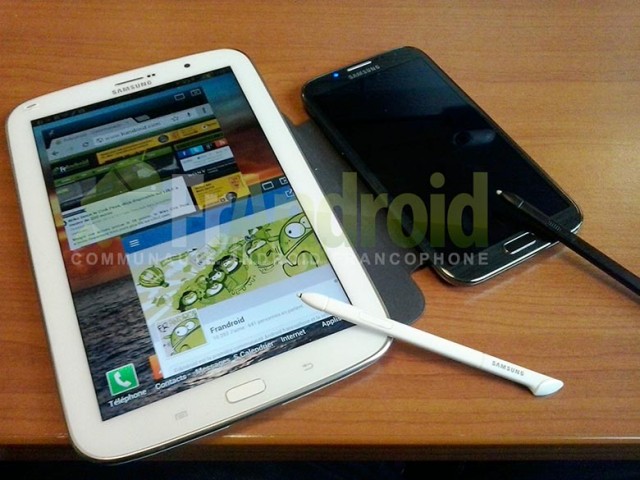
Earlier this week, images that were purportedly of Samsung’s (005930) upcoming Galaxy Note 8.0 tablet leaked onto the Web. The slate looked like an oversized Galaxy S III smartphone and included the company’s physical home button, which had perviously been omitted from earlier Galaxy tablets. French blog Frandroid posted additional images of the tablet on Friday that confirmed it will include an S-Pen stylus, similar to the Galaxy Note II and Galaxy Note 10.1.
It’s called Tweet Ping, and it is a gorgeous visualization of all the tweets in the world, as they post in real time.
It also has some cool tracking features at the bottom, like a live tweet counter for each continent and well as hashtag trackers. It allows you to do fun little unscientific experiments like calculate the number of tweets rolling in per minute, and extrapolate that into tweets per hour, day, and year. For instance, for one minute in time, it counted roughly 2,400 tweets worldwide. Do a little math and if the TPM stayed constant, that would total about 1.26 billion tweets per year. People sure are tweeting a lot.
It’s not the first site to visualize tweets live, but it’s really well-done. It’s sort of mesmerizing, in a way, to watch the world light up, gradually, as people tweet.
Sales growth comes from the wrong places: iPhone 4 and China.
IDC and Strategy Analytics have released fourth-quarter phone shipments, which at first glance look good for Apple. While competitively behind Samsung, the fruit-logo company continues to gain smartphone market share — in fourth quarter, respectively, 29 percent and 21.8 percent, according to IDC. But gains largely come from older models, particularly iPhone 4, despite the newest handset shipping in volume during the quarter. This demand says much about iPhone’s perceived value, its successor’s appeal and future carrier subsidies and the margins Apple gets from them.
Old Yeller
In the short term, iPhone is a monstrous money machine. Revenue rose to $30.67 billion in fourth quarter from $16.25 billion three months earlier. Average selling price perked to $640 from $624 sequentially but, annually, fell from $643. The larger concern is the next couple quarters, following iPhone 5’s initial sales glow and increasing demand for the two older models.
“iPhone 4 was actually in constraint for the entire quarter and sales remained strong, and so that’s helped sales progress across the quarter”, says Apple CEO Tim Cook, speaking on the quarterly conference call this week.
For the call’s last question, Deutsche Bank analyst Chris Whitmore asks: “In context of your iPhone business given the strength you are seeing at the low end of your product line the iPhone 4 being stocked out during the quarter…there seems to be a lot of demand at lower price points for the iPhone, why not get more aggressive at lower price bands and move down market in the iPhone business?” For that, Cook deflects and doesn’t directly answer.
But Whitmore asks what everyone should about iPhone. Carriers pay Apple much less for iPhone 4 and 4S than 5. Using the full price consumers pay for unlocked devices as guide: $450, $549 and $649, respectively, for base models. iPhone 5 32GB is $749 and 64GB is $849.
As volumes for older models increase, Apple’s take per phone goes down — by nearly $200 comparing iPhone 4 to 5. I’ll explain what that means in context of China and its impact on ASPs in a few paragraphs.
Pride and Prejudice
Carriers use subsidies to insulate buyers, offering iPhone 4 for free and 4S for $99. Those prices also determine iPhone’s perceived value to consumers, which for many is zero — they are unwilling to pay anything. That scenario creates several problems for Apple:
Lower average margins per phone sold
Shorter sales bursts for newer iPhone releases
Newer models being perceived as being better enough
Signs that the smartphone market is rapidly saturating
Stiffer competition from low-cost Androids and Windows Phones
Still, any new model sells, and surely iPhone 5 did during fourth quarter. But there is increasing evidence that a sizable number of ongoing new sales go to existing customers, a market that inevitably must saturate faster than the overall smartphone segment.
The China Syndrome
Then there is China, which accounted for 13 percent of all Apple revenues during Q4. Referring to sales following iPhone 5’s release, “we saw our highest growth in China and it was into the triple digits, which was higher than the market there”, Cook says. More broadly: “It’s clear that China it’s already our second largest region as you can see from the data that we have given you and it’s clear, there is a lot of potential there”.
During the quarter, Apple opened four new stores there bringing the total to 11. New stores and new handsets are huge events in China that bring big sales — the majority of which are iPhones more than any other devices. Based on Cook’s comments during Tuesday’s conference call, two regions — China and the United States — accounted for an overwhelming number of iPhone 5 sales, despite availability in 100 geographies. In the United States, the smartphone market is rapidly saturating. In China, beyond a class of wealthier buyers, there is huge competition from Samsung and increasing pressure from home-grown companies like ZTE.
My contention: U.S. market saturation, increasing demand for free devices and crippling competition in China will clip iPhone margins over the next four quarters. How much, or even how little, depends on what Apple and competitors do. Samsung is the competitor to watch. In fourth quarter 2011, Apple actually shipped more smartphones than Samsung — 23 million and 22.5 million, respectively. A year later, Samsung shipments rose 76 percent, with 63.7 million smartphones to Apple’s 47.8 million, according to IDC.
Raging Bull
Samsung’s Q4 earnings results, announced today, reveal much. The South Korean electronics giant reported revenue of about $52.45 billion and $6.55 billion profit. Mobile division revenue was $25.35 billion, and Samsung credits success largely to two devices — Galaxy S III and Galaxy Note II. Interestingly, Samsung mobile ASPs are rising, even as Apple’s dip before presumed fall. Meanwhile, the iPhone’s rival makes handsets of different sizes and prices, which analyst data shows winning customers across the globe — particularly markets once dominated by Nokia, China among them. Samsung credits sales to emerging markets as a bright point for the quarter.
Then this: In its earnings release, Samsung warns that 2012’s smartphone growth would be “pacified” this year. “Demand for smartphones in developed countries is expected to decelerate, while their emerging counterparts will see their markets escalate with the introduction of more affordable smartphones and a bigger appetite for tablet PCs throughout the year”. You think such dramatic change won’t affect iPhone?
Again, we return to changing market conditions taking a bite out of iPhone margins. There Toni Sacconaghi, Sanford Bernstein analyst, asks Cook the right question: “Is holding share in the smartphone market in 2013 a priority for Apple, yes or no and why? And realistically how does Apple hold share given that the market segment and price point that you play in is expected to grow a lot slower and you have pretty dominant share in that high end”.
Cook sidesteps the answer by talking about Apple’s focus on making the “best products”. The market will demand his response.
Mark Lucovsky has moved from Cloud Foundry, the open-source Platform-as-a-Service effort that is being spun off from VMware as part of the fledgling the Pivotal Initiative and apparently back to the VMware mothership.
This is how Lucovsky’s Twitter profile appeared Friday morning:
“Done with Cloud Foundry. Hand off to Pivotal Labs complete. Now hacking a mega-cloud platform for VMware with Vadim, Skaar, Oleg, Ben, and Doug.”
According to a profile update later in the day, Lucovsky is “working on big cloud stuff at VMware.”
The timing is unclear, but last fall Lucovsky was the top gun at Cloud Foundry. A source close to Pivotal says he actually transitioned months ago, although people outside Cloud Foundry circles don’t seem to know it. VMware formally announced the Pivotal spin-off — to be headed by former VMware CEO Paul Maritz.
Lucovsky is a veteran developer. He became VP of engineering at VMware after stints as director of engineering for Google and distinguished engineer for Microsoft. His name may be familiar to non-developers because it was his exit from Microsoft to Google that caused the notorious chair-tossing incident by Microsoft CEO Steve Ballmer.
Lucovsky could not be reached for comment. In other Cloud Foundry staffing news, Jerry Chen, another top figure with the effort is on sabbatical, according to his LinkedIn profile.
The Pivotal Initiative draws on tech assets from VMware and its parent company EMC. The goal is to bring together expertise in big data, analytics, Java frameworks and agile development, the latter from Pivotal Labs, a company acquired by EMC last year. Since the spinoff still evolving it’s natural that there be some ebb-and-flow of personnel. Along with Maritz, Pivotal Labs president Rob Mee is helping to manage effort.
Earlier this week, a new trailer for the upcoming remainder of The Walking Dead Season 3 hit the web. Today, AMC has uploaded another 30-second spot. This one’s all about the cast (no zombies).
In 2011, ABC canceled beloved soap operas One Life to Live and All My Children off the air and licensed them to production company Prospect Park, which said it would bring them back as online-only shows through what it’s calling The Online Network. After a few complications and labor disputes, the shows are coming back to life: Starting this spring, iTunes and Hulu will distribute new 30-minute episodes every weekday. (In the past, episodes were an hour long.)
“Through both of these partners, we hope daytime drama fans are absolutely delighted to be able to watch their favorite programs in a broadcast-quality HD format wherever and whenever they want,” Prospect Park CEO Jeff Kwatinetz said in a statement. (Prospect Park’s cofounder is Rich Frank, the former head of Disney Studios.) Prospect Park has also signed a consulting agreement with the shows’ creator, Agnes Nixon, to guarantee “her active involvement in their continued production.”
Hulu will handle ad sales and Prospect Park plans to offer “e-commerce and other digital marketing programs to brands and entities looking to tap into Hulu’s mass market demographic.” Episodes will be free on Hulu and Hulu Plus, and I’ve asked Prospect Park what they will cost on iTunes.
The National Academy of Engineering’s 2012 forum, “Educating Engineers: Preparing 21st Century Leaders in the Context of New Modes of Learning,” opened with presentations by six speakers who looked at the future of engineering and engineering education from their perspectives as educators, administrators, entrepreneurs, and innovators. Each speaker focused on just one facet of a tremendously complex picture. Yet together they outlined a new vision for engineering education based on flexible, interactive, lifelong learning and the merge of activities long held to be distinct. This summary of a forum recaps the six speaker’s presentations.
President Barack Obama announces Denis McDonough as his Chief of Staff, replacing Jack Lew, the President’s nominee for Treasury Secretary, in the East Room of the White House, Jan. 25, 2013.
(Official White House Photo by Sonya N. Hebert)
President Obama today tapped Denis McDonough to serve as his Chief of Staff and lead the team at the White House.
McDonough, 43, was previously the Deputy National Security Advisor. He began his career as a staffer on Capitol Hill — where he served in both in the House of Representatives and in the Senate. In the White House, he previously served as the head of strategic communications for the National Security Council and as the NSS chief of staff.
"Denis has played a key role in every major national security decision of my presidency," the President said, "from ending the war in Iraq to winding down the war in Afghanistan; from our response to natural disasters around the world like Haiti and the tsunami in Japan to the repeal of 'Don't Ask, Don't Tell,' to countless crises in between, day and night — and that includes many nights. I’ve actually begun to think that Denis likes pulling all-nighters. The truth is nobody out-works Denis McDonough."
I picked a great time to start blogging for BlackBerry. The anticipation for BlackBerry 10 has been so exciting for us community managers, and we know how excited you are too! We’ve received a lot of questions about BlackBerry 10 recently, and while I’d love to answer all of them, I focused on the five questions that kept coming up.
Here’s a list of the top five questions for BlackBerry 10:
Question 1: How will BlackBerry10 make our lives easier? What makes it more user-friendly?
Answer: I’m lucky enough to have had a lot of hands-on experience with a new BlackBerry 10 device. While it took a little getting used to, I quickly became its biggest fan. There are so many features that make using your smartphone easier; BlackBerry Hub and the peek feature are my new best friends!
Question 2: What is your favorite feature of BlackBerry 10?
Answer: I love that BlackBerry 10 is customizable enough for mobile techies, but simple enough for beginners. And BlackBerry Balance allows you to use your BlackBerry 10 device for both. It’s a smartphone you (and your IT manager) will love.
Question 3: Which BlackBerry device will be available?
Answer: We’ve showed many videos of the BlackBerry 10 touchscreen devices on the Inside BlackBerry Blog. While we love the touchscreen device, we know BlackBerry fans also love the physical QWERTY keyboard. Rest assured, we will have both versions available in the future. We’ll have more info available on January 30th.
Question 4: What is the one defining characteristic that truly sets BlackBerry 10 apart?
Answer: The reengineered operating system, or OS! As Thorsten Heins told the world: We went right back to the drawing board to create BlackBerry 10. BlackBerry 7 OS is a great operating system, but we wanted to bring our customers something brand new. And with BlackBerry 10, we have.
Question 5: What’s new in BlackBerry 10 that you haven’t told the media yet?
Answer: Oh, there are more features coming, believe me. And the best place to hear about everything BlackBerry 10 is right here on the Inside BlackBerry Blog.
What’s your burning question about BlackBerry 10? Let us know in the comments below and stay tuned for more answers!
Every BlackBerry 10 detail, update, and feature, as soon as it’s released: BlackBerry.com/BlackBerry10. Test out BlackBerry 10 features hands-on, watch exclusive video interviews with the minds behind BlackBerry 10, and receive product and carrier updates straight to your inbox. Sign up today!
Games for the Weekend is a weekly feature aimed at helping you avoid doing something constructive with your downtime. Each Friday we’ll be recommending a game for Mac, iPhone or iPad that we think is awesome. Here is one cool enough to keep you busy during this weekend.
Gesundheit (Free Universal) is a puzzle game with plenty of action. In what can best be described as a land of make believe, it is up to one little pig to free his world from invading monsters, not with blood, sweat and tears, instead all this little piggy has is his snot.
The story starts out with all the pigs in a village making fun of one sick little pig that can’t help but sneeze all over everything. And like poor Rudolph, they exclude him from their little piggy games — not because his nose glows, but because it blows. All but one pig that is: one little girl pig befriends our hero and hands him a handkerchief for his sneezing snout. One day the village is invaded by an army of huge monsters that only the sneezing swine’s snot can stop. For some strange reason these invading monsters can’t get enough of the stuff. And that ends up being the only effective weapon to use against the monsters and save the village.
Throughout the game, snot is used to lure the monsters from place to place and ultimately into a deadly trap. At the center of this death trap is a giant fish-like worm that eats up anything that steps into its mouth. You job is to ensure that the worm eats all of the monsters that our runny-nosed runt can bring it. Leading each monster to its doom is not so easy, as the worm would eat our little squealer just the same as it would one of the monsters. To add to the challenge, the monsters can run slightly faster than the pig that makes staying ahead of them a bit of a challenge. Fortunately their attention span is limited to what they can see; ducking around a corner causes the monsters to lose interest and take a little nap.
Moving around in this game is accomplished by simply tapping the location on the map that you want to go to. Navigating around the map is best when making smaller moves where you control the route taken. Tap on a location far away from the pig and you may take a different route and end up walking right into the trap. You can also sneeze on command and produce a big ball of snot that will attract and delight the monsters. To do this, you tap, hold and drag on the pig. An ‘X’ will appear in the location that the snot ball will land. While continuing to hold down and drag you finger around the screen, you can carefully place the snot ball anywhere you want. And if it lands within the line of sight of a monster, the snot will wake it up and attract their attention.
Each level is laid out like a labyrinth with huts, trees and waterways used as the walls. Blocking movement in the game is not nearly as important as creating a series of blind spots that can be used to hide the pig from the monsters’ line of sight. Weight-based buttons are introduced early in the game that open gates that block off sections of the village. There are also teleporting stars, which will jump you from one location to another. Whether or not the trap is in the middle of an open area, or at the end of a dead-end passageway, these obstacles make luring each monster into the trap difficult no matter where it is located. This keeps things interesting as your approach to solving each level is different.
Making the game a real pleasure to play are the artistically drawn scenes, colorful village huts, and personable characters contained in each level. Equally as enthralling is the playful randomness of the soundtrack. These two aesthetics of the game work well together and complement the silliness of a pig sneezing up snot balls to save his village from an attack of mucus-eating monsters. While the controls are basic and the obstacles are few, the levels can still get quite tricky and will require some thought. You can’t just come out blowing your nose all over the place and expect to complete a level. Misery loves company, so if you happen to be in bed with the flu this game may be just what the doctor ordered.
In September 2009, the President announced that—for the first time in history—White House visitor records would be made available to the public on an ongoing basis. Today’s release includes visitor records generated during the month of October 2012. This release brings the total number of records made public by this White House to more than 2.9 million—all of which can be viewed in our Disclosures section.
Ed. note: For more information, check out Ethics.gov.
Ubisoft disappointed Splinter Cell fans earlier this month by announcing the release of Splinter Cell Blacklist has been delayed until August 20. It wasn’t an unexpected announcement, but it still means fans of the series won’t be able to get their hands on the title before the crowded (and possibly next-gen laden) 2013 holiday season.
Today IGN revealed something that might make up for the extended delay. The “Paladin Collector’s Edition” of Splinter Cell: Blacklist will come with a fully working remote-controlled airplane. The “Paladin” aircraft is modeled after a similar vehicle featured in the game. That’s quite a step up from the statues found in most other games’ collector’s editions, and similar to the drone that was included in some collector’s editions of Call of Duty: Black Ops II.
According to IGN, the “Paladin” edition of the game will cost $170 and will be available for the Xbox 360 and PlayStation 3. In addition to the RC airplane, those who buy it will get a graphic novel titled Splinter Cell: Echoes (a prequel to Blacklist), an in-game co-op map called the “Billionaire’s Yacht” , and the “Upper Echelon Pack” DLC, which includes the “Dead Coast” map, an “extra suit” for Fisher, and “Gold Sonar Goggles.”
The Powerball Jackpot is now up to $130 Million, with the next drawing scheduled for Saturday night. As you may know, Powerball drawings are held each Wednesday and Saturday.
Wednesday’s winning numbers were 11,12,24,43,45 Powerball: 9. There were no jackpot winners. There were no $2 million Match 5 Power Play winners, but there was one winner of the $1 million Match 5 prize in North Carolina.
There were a total number of 571,595 winners for the day, winning non-jackpot prizes totaling $5,198,875.
Odds of winning the jackpot, according to the Multi-State Lottery Association, are 1 in 175,223,510.
As is commonplace, plenty of people are talking about the Powerball drawing on Twitter:
Here’s one way to get back at your ex – create a Facebook page in their name and make it seem like they totally love little boys and incest.
Or, maybe you should just buy a bottle of wine and chill out. The latter won’t get you arrested.
A 24-year-old Totowa, New Jersey woman has been arrested and charged with impersonation and harassment after she created a fake Facebook profile in her ex-boyfriend’s name. Well, kind of his name. The fake profile used real pictures, but the name was listed as “Wayne Syphilis.”
As you may expect, the posts coming from Wayne Syphilis’ account suggested that he suffered from multiple sexually transmitted diseases. Some posts also suggested that he loved to have sex with young boys and family members, according to police.
Unfortunately for all of us, the profile has been deleted.
Police became involved in the case when Wayne reported the page, claiming that he was pretty confident that he knew who was behind it. Police subpoenaed the ISP for the IP address, and traced the fake Facebook page of Wayne Syphilis back to the jilted woman.
According to police, the Facebook page wasn’t the only form of harassment that the 24-year-old (name withheld because it’s technically a domestic violence case) was guilty of. Apparently, she’s been making phone calls to Wayne’s sister.
No word on whether or not Wayne actually has Syphilis, and what that information will do to his reputation. From our perspective, Wayne Syphilis isn’t a moniker you really want to be associated with – true or not. Sorry, bro.
Resident Evil 6 was critically panned when it first launched, but that hasn’t dissuaded Capcom from releasing the PC port in March. In fact, the publisher announced a new mode exclusive to the PC version that should provide a hearty challenge to the most hardcore players.
Capcom announced today that Resident Evil 6 for the PC will launch with a new mode for the popular Mercenaries game type. It’s called No Mercy, and it throws more enemies at players than was possible on consoles. Furthermore, Capcom will release a benchmark test before the title’s launch so PC players can determine if their PC is up to snuff. You can check out the system requirements here.
PC players aren’t the only ones getting some new Resident Evil 6 content in the future, however, as the console versions will be getting a new multiplayer mode called “Seige” in March. The add-on pack supports two to six players who are spread across two teams. One team consists of monsters trying to kill an AI controlled BSAA agent while the other team is made up of the cast from RE6 trying to protect him. In short, Capcom has turned the escort mission into a multiplayer mode. This is innovation, folks.
The new Seige mode will retail for $3.99 when it launches sometime in March for the PS3 and Xbox 360. This mode, alongside previously released DLC, will be available for the PC version shortly after its launch on March 22.
In other Resident Evil news, Capcom will be bringing a hi-def port of 3DS title, Resident Evil Revelations, to the PS3, Xbox 360, PC and Wii U in May.
Fashion designer and BioCouture founder Suzanne Lee harnesses the labor of microorganisms to grow clothing. Computational architect Skylar Tibbits — who’s setting up a lab at MIT focused on self-assembly technologies and programmable materials — examines biological systems to develop his methods. We asked them to discuss the directions they’re exploring, and the trends and challenges inherent in working with natural processes to meet humanity’s needs.
Your work seems to reflect a real trend in using technologies inspired by nature — not only in the design, which has happened on and off for centuries, but in the way you produce and fabricate the things you make.
Skylar Tibbits: From my perspective, it is not about inspiration from Nature, and in many cases, we probably shouldn’t take inspiration from nature. Rather, nature is a good example of the systems we are exploring — but there are many non-natural systems that demonstrate similar principles.
My work really started from the architecture side, then got pulled towards computer science when I was at MIT. I took lessons from self-replicating systems, self-regulating, digital information/majority voting, redundancy and some of the fundamental ideas introduced by Turing/Von Neumann, and so on. The link to nature — proteins, cellular replication/DNA — really only came after the fact, when I realized that the systems I was producing were incredibly close to those found in nature.
There is obviously a huge trend at the moment for bio-inspired design and biomimicry, but I believe many of these proposals have fundamentals flaws. Natural systems evolved for very specific reasons, over millions of years, with very specific parameters, scale-lengths, forces, and so on, and the process of translating these phenomena to other scales, function and human desires does not come naturally or directly. We should not simply assume that systems working at nanoscales can easily be translated to large scales. And if we do, why not change the parameters — why would the translation have to be entirely direct?
The second flaw is the tendency to use nature as a source for aesthetic inspiration — the assumption that if it looks like nature then it is or works like nature. Finally, I see our tendency to look past the facts of evolution and why systems have specifically evolved in a particular direction. Many — maybe all — natural systems took some path of evolution where each mutation was built upon the last, and decisions along this journey were arbitrary and extremely specific to its time, place, climate and scale. So natural systems work very well for some things, and in other cases don’t work at all for what we are looking for.
That said, I think there are a number of very interesting developments in science, engineering and design that are not only taking inspiration from nature — they are literally using nature — such as DNA origami (or self-assembly of DNA strands to build 2D and 3D shapes at the nano-scale). Biological processes are far more complex, efficient, precise, adaptive then nearly any manmade process or machine we have today, so it makes perfect sense to use biological processes for what they are good at, or manipulate specific variables within them to achieve something they could never have arrived at themselves. This points to Suzanne’s incredible work with cellulose. The cellulose doesn’t naturally want to build clothing per say, but we can harness its natural abilities with our own knowledge of the process to achieve something higher.
Top: Skylar Tibbets shares how self-assembly works. Above: A kimono made of Lee’s microbial cellulose. Photo: BioCouture
Suzanne Lee: Skylar’s quite right — bacteria aren’t desperate to generate dresses! The emergent field of synthetic biology enables us to have the best of both worlds. We can harness the best bits of biological systems to design and build entirely new organisms that better fit our needs. This is not without complex ethical issues, however, and hopefully an internationally agreed and robust ethical code will develop simultaneously with the potential engineering advances.
My work isn’t really inspired by nature. It IS nature. I’m interested in exploiting living organisms to create biodegradable products. In my opinion, the design trend towards biomimicry is about putting the designer ego to one side and accepting that nature has already come up with so many inspirational design solutions. This doesn’t necessarily lead to design looking or feeling “naturalistic” though.
I do agree about the flaws inherent in directly translating from nature and how there can be issues relating to scale — I see this as both limitation AND opportunity. Understanding scale in a biological sense is still a challenge to me as a non-scientist! I find scientists are very happy jumping from discussion of proteins, to bacteria, to fibres to materials – daunting conceptual jumps from the nano to the macro scale.
How do your approaches differ?
Skylar: Our work comes from from different starting points and it’s applied at different scales. I am not working directly with natural processes, although I have started a few collaborations with molecular designers recently, working on DNA origami, that may prove to be fruitful in the coming months. I mainly look toward the natural processes as a resource manual, comparatively looking at how those processes work and how my designed/engineered processes function. How does DNA store discrete information, how is it so good at self-regulating and error correction, how do proteins store their assembly information? None of this is meant to be translated 1:1. Rather, it becomes another model or example where it happens and we can learn from it.
I have a lot of experience working with physical/building-scale materials (plastics, wood, metal, casting, “bricks” etc) — and these inherently become the material palette I work with. However, I try to focus on these “dead” materials and embed information directly into them to offer more “active” characteristics (usually without motors or electronics). I’m trying to discover how much information can they store, how can they replicate inherently, how can they move and assemble themselves, and so on. None of these properties are necessarily found within the materials themselves. Rather, it’s a different way of looking at the materials and at the way we build things.
Suzanne’s work came from a completely different direction and uses far different “materials” and applications, thus leading to the different aesthetic output.
Suzanne: I’ve personally come full circle from loving techno/sci-fi aesthetics and being excited by material innovations that build “smart” complexity into systems and surfaces to embracing nature’s “smart.” I’m now driven by the entire product life-cycle using renewable resources or ideally local waste streams to create biodegradable materials. By harnessing a living organism to manufacture for you the resulting material or product needn’t look “biological” or “organic.” But it does offer opportunities to build in biological functionality.
What issues around working with natural systems do you discuss between yourselves? What do you have in common, and what else are you thinking about and investigating together?
Suzanne: We both struggle with new notions of manufacturing processes and time. We share an interest in being “hands off” — allowing structures to self-generate, Sky by designing this into architecture so that they are “compelled” to organize, and my own work with living organisms that simply require the presence of nutrient to create material forms.
With each approach, the time it takes for construction may be longer OR shorter than a “traditional” method, challenging existing limits and opportunities. I’m always asked how long it takes to grow a garment (answer: approximately three weeks) — as though this were the only barrier to mass adoption. But it makes little sense to contrast this with the supply chain lead times for a comparable “conventional” garment because that never factors in the time it takes to obtain the fibre in the first place — cotton plant to t-shirt? petroleum to nylon jacket? grazing animal to leather handbag? For example, in a fermented process, product can be simultaneously formed as fibre is spun and dyed — multiple production stages condensed into one. A more useful comparison would include factors such as resource consumption, carbon footprint, end of use, and so on.
Skylar: I think an interesting point to discuss would be the scale of the application and how far we can push biological/natural processes outside of their comfort zone. Suzanne and I have talked a lot about how far could you push a biological process to the scale of a building. For example, could you produce cellulose or other materials to grow to extremely large-scales? How long would it take, how do you build a scaffolding etc). And how can you “seed” it’s growth, working hand-in-hand, giving it constraints, waiting for the reaction, giving further constraints?
Suzanne: Firstly you can engineer an organism to produce the attributes you desire (when to biodegrade), then arrange these into a particular structure (fibre alignment) and finally engineer the overarching parameters to respond to external stimuli (water resistance).
Aesthetically and practically, I’m not sure either of us has arrived at something that we suggest is perfected or finished. To date I’ve embraced the natural aesthetics that emerge from the process as it helps to explain a narrative (this is in stark contrast to how we normally approach fashion: fashion relishes artifice). Ultimately it’s not what I’m striving for, but for now it serves an illustrative purpose.
Regarding scale, I would argue that we both come from backgrounds which use the human body as starting point for considering scale: Vitruvian, Corbusier’s Modulor, Fibonacci, golden section, and so on. That’s why I struggle with suddenly zooming into the nanoscale! For me the challenge is to understand how by mastering what is happening at the nanoscale we might design the ideal macro qualities.
What interests me about what Skylar is doing is how he might bring biological attributes to large-scale structures, this may be with steel, wood or plastics. But I’m also intrigued to know if (biologically) living systems could play a role. We have no idea what new hybrid materials/fabrication techniques will emerge in future — rampant mutant algae that turn to concrete? It’s exciting to think the solutions could be located somewhere within the space between our respective work. I think we are entering a dynamic new era for design where, with scientific collaboration, we can explore all manner of material and manufacturing innovations.
Growing microbial cellulose. Photo: BioCouture
Chiral Self-Assembly: Autodesk Univ., Las Vegas 2012. Photo: SJET
Skylar: I totally agree — biological attributes at large-scales is extremely interesting. There is certainly a lot of work going into gradient density materials and adaptable performance in materials or building systems. An opportunity might be to utilize natural processes for their ability to respond to passive sources of energy, their natural tendency to “adapt,” and for their internal ability to have “desire.” Man-made systems lack the ability to have “desire,” this gets into the theories of artificial intelligence — and how can a system make decisions internally without external programs or command. How can a system write its own code, or where does the initial genetic code come from?
Natural systems obviously have this built in — the ability to have a desire. Plants, for example, generally have the desire to grow towards light and they generate energy from the translation of photosynthesis, carbon dioxide to oxygen, and so on. This is extremely difficult to build into synthetic systems — the ability to “want” or need something and know how to change itself in order to acquire it, or the ability to generate its own energy source. If we combine the processes that natural systems offer intrinsically (genetic instructions, energy production, error correction) with those artificial or synthetic (programmability for design and scaffold, structure, mechanisms) we can potentially have extremely large-scale quasi-biological and quasi-synthetic architectural organisms.
DNA origami is one of the only examples where we are forced to use a process of self-assembly simply because there is no other way to build at that scale. If we want to build structures at extremely small scale-lengths, then we need to work within their arena, on their terms. DNA is an amazing building material because it has rather “simple” units and interconnections, it has a language or interface for design, i.e., programmability, and it has a process where it can transform based on energy.
I think that we will soon see applications that are extremely similar to DNA origami but at very large scales. Instances where we currently cannot build what we want simply because we don’t have the right materials or machines/processes — these are perfect applications for new types of methods in assembly and new processes for design. This is where collaborations between designers and natural systems can have powerful applications/implications.
Why the drive to look to to nature to innovate manufacturing processes in the first place? Why now?
Skylar: There are two possibilities: Are we at a place where we’ve pushed the limits of material properties to extreme possibilities and dexterity, developed wonderfully innovative solutions for fabricating these new materials and even beginning to find automated processes for assembly — yet the ever changing demands of society, economies, climates, technology and scale (large or small) are requiring adaptability at such dramatic scales and paces that our current modes of production don’t cut it, forcing us to find infused processes of Frankenstein bio-adaptive and manmade processes? Or are we just looking for new modes of inspiration, toolsets and mediums, and the natural tendency is to look at our biological counterparts for dialogue?
Suzanne: I think there’s both push and pull taking place. If we look to the history of design, radical innovation mostly occurs where ground-breaking materials or manufacturing techniques are introduced. Human creativity is constantly pursuing the new. At the same time, we do indeed face so many environmental, economic and societal challenges that current resource inefficiency and wastage has become obscene, driving the need for change. In both our work we also seem to be proposing very limited human intervention. We haven’t really discussed what this means for the workforce. Our workers seem to be robots, autonomous structures and biological organisms, but that’s a whole other discussion!
There’s nothing like being alone on a highly experimental 75-foot boat five days from anywhere to make you realize some pretty profound things. For Ellen MacArthur, who twice solo circumnavigated the globe on said sailboat — the second time setting the world record for speed in doing so (71 days, 14 hours) — her realization came when she considered the finite resources she had to pack with her for those two-plus months alone. Seeing the world as she did through her trip, she began to appreciate the finite resources of the planet.
Not long after she reached shore, she decided to do something about it. She started an eponymous foundation focused on understanding a better way for the economy to manage its resources. Her investigation led to a concept now known as the “circular economy” — a phrase I heard quite a bit at the World Economic Forum’s Annual Meeting in Davos this year. If some of the buzz is any indication — and I believe it will be — it’s a concept that will gain a lot of traction this year as more companies look for ways to better manage dwindling natural resources and more consumers demand action on environmental issues.
I had a chance to meet with Ellen in Davos to learn more about the concept of a circular economy. Below is an edited transcript of our conversation.
So talk to me about how you became interested in finite resources.
When you’re out there on the ocean, 2,500 miles from the nearest town, when it would take someone five days to reach you by boat — helicopters can’t reach you — you have to have everything you need with you on the boat. It’s very concrete and finite. And you begin to understand what finite means. When I reached the finish line, I translated that into the global economy. Our economy today is built around taking something out of the ground, building something with it, selling it, and then ultimately it’s thrown away. We have three billion new middle class consumers coming into the world and there’s more and more pressure to find out how to manage these resources. So in 2006, I started talking with people to understand more. I talked with farmers, teachers, scientists. I read a lot to learn how our economy worked. I had no experience here.
When I would listen to CEOs, I heard them say things like we’re going to use five percent less materials in five years or make a product with 10 percent less material. But when you play it out, it just doesn’t work. It still doesn’t address the fundamental problem. Then I met three people — a Dutch CEO, a Welch education expert and a German scientist — who saw things in a very different way. The CEO said: “I want our products to be made again.” He said: “I want to make our carpets to come back into our factory. I want to lease them so they can be disassembled — melt down the base material so they can be rebuilt and resold and [I] want to do that by 2025.” That was totally different from any other point of view. No one else had looked at that way to design out waste. I wanted to understand the economics of this approach. So in 2010, I started this foundation and coined the “circular economy” term to help frame the concept.
When we launched we focused in three areas. First, business because they can drive change fast. Second was education, so we’ve piloted with 1,000 secondary schools in the UK, training teachers how to teach [the] circular economy idea and the results have been extraordinary. Students really understand it and support the idea. The third was around thought leadership.
The whole circular concept sounds daunting — there’s quite a bit involved with an approach like that: reverse logistics, cost incursions, consumer awareness. How do you begin to address those?
It’s a huge challenge. The product design changes. The business model changes. The marketing model changes. So we went to McKinsey in 2010 to ask them to help us and write a report, focused on the European Union, that answered three questions. Does the circular economy decouple growth from resource constraints? Is this profitable? And does it work for the wider economy? We focused on a category called medium complex goods, specifically mobile phones, smart phones, washing machines, and cotton. The report came back in the affirmative and found that across those sectors in Europe there would be $630 billion per annum of net material cost savings through adopting a circular economic approach.
That’s pretty impressive.
We were really excited. We have a new report out this week that looks at consumer goods and extends it globally and the results are similarly encouraging. We looked at the three biggest segments — packaging, food waste, and apparel.
So give me an example of how this would play out for, say, a car manufacturer.
We work with Renault. They’re one of our foundation’s five founding partner companies (along with Cisco, BT, Kingfisher, and National Grid). Renault has a 230 million Euro remanufacturing business with engines and gear boxes. The remanufactured cars leave the factory with the same warranty as a new engine. It’s fascinating. Energy costs are a huge concern for car manufacturers. An engine that leaves the remanufacturing plant will have 75 percent less energy embedded in it than a new one. So the energy costs are not there either. Renault can resell the car for half cost of a new car and make three times the profit.
I imagine in a circular economy approach, products have to be designed in a different way.
That’s right. We looked at mobile phones and thought it would be difficult given the size of the product and the complexity of the components but there are already companies doing this like Vodafone and O2. No one wants to lease a phone, if you ask them that way, but if you position it that they will get a new phone with the latest technology every year, the value proposition gets more compelling. And product designers need to think “we’re going to get 500,000 of these back in a year for remanufacturing so I need to design it in a way to facilitate that.”
So you have the new report out. What’s next to help continue the momentum with this effort?
We have a new initiative coming in February to help companies get started with adopting a circular approach. One is with executive education programs. One is to establish communities of companies so they can collaborate and share best practices. When an individual company tries this alone it can be daunting, but working together some of it gets easier.





 Gesundheit (Free


 Fashion designer and


