Blog

  • 7 stories to read this weekend

    After spending a week in bone-numbingly cold Germany, I have come back to work and here are some of the stories I found that are worth your time. I hope you enjoy reading them as much as I did.

    • The trouble with social news: Aldo Cortesi shares his growing discontent with the social news ecosystem and in it, he nails some of the anxiety I have felt about the internet’s new news ecosystem.
    • Financial trials of St. Louis Cardinals coach Mike Matheny: What a wonderful story of a baseball coach who lost all his money in the real estate bust and yet managed to keep it together for his family and his team. I have a lot of respect for Matheny, not just for his baseball skills but for coming to terms with this twist of fate.
    • Dualtone derby: Okay, I made up the headline, but this story of Grammy Award-winning Nashville label Dualtone is a reminder of why doing things your own way comes with a price that is worth paying. Great story!
    • How do hotel reservations work?: In case you ever wondered about it, now is your chance to find it all out.
    • The soul of student debt: This is a different, unique take on the student debt that everyone talks about in America.
    • The Caucasian king of K-Pop: K-Pop is Korean Pop, as in “Gangnam Style” and stuff, and Brad Moore from Ohio is drumming its beat. Short, sweet piece.
    • The D2C Generation: The internet is creating new opportunities for designers who are going directly to consumers and finding success despite selling fewer items.

  • Kim Dotcom says the Obama White House used his arrest to rake in Hollywood campaign cash

    Kim Dotcom Obama Hollywood
    Kim Dotcom made his triumphant comeback last week, but that doesn’t mean he’s toning down his accusations against the Obama administration and its connections to the 2012 raid on his mansion that led to his arrest. In an interview with RT, the Mega founder said it was no coincidence that the American government directed the raid of his mansion just as the campaign season was rolling around last year. What’s more, Dotcom accused the Obama administration of using his arrest as a major fundraising chip to raise campaign cash for the president’s reelection campaign.

    Continue reading…

  • Apple has enough cash on hand to buy Visa, Cisco or Intel

    Apple Cash Analysis
    Despite concerns about its future growth, Apple (AAPL) is still a cash cow. Benzinga, noting that Apple’s most recent earnings report shows that the company has a whopping $137 billion in cash and cash equivalents, has some fun by making a list of all the companies that Apple could buy just by using the cash it has on hand. Among the top contenders are credit card giant Visa, with a market cap of $106 billion; networking equipment titan Cisco (CSCO), with a $112.13 billion market cap; semiconductor manufacturer Qualcomm (QCOM), with a $110.6 billion market cap; and chip vendor Intel (INTC), with a $104.58 billion market cap. Unfortunately for Apple, Google’s (GOOG) $247 billion market cap puts it out of the company’s range, as does Microsoft’s (MSFT) $233 billion market cap.

  • Apple axes contract with supplier that employed underage workers

    Apple Supplier Underage Workers
    Apple (AAPL) has come under a lot of criticism for the labor practices of its suppliers, but the company has always at least maintained that it will not tolerate any child laborers building its devices. The company made good on that vow again this week, as AppleInsider reports that the company has terminated a contract with a supplier that it found “responsible for 74 underage labor violations.” While Apple gets the most attention for its suppliers’ dodgy labor practices, rival Samsung (005930) has also admitted that some of its own suppliers have been guilty of mistreating workers, although it officially denies that any of them employ children.

  • Old McDonald had an app: FarmLogs lands $1M to modernize farm management

    There are apps that cater to salesmen, to cooks, to contractors and to stockbrokers. Why not an app for farmers? FarmLogs — a Y Combinator grad relocated to Ann Arbor, Mich. — has raised $1 million to invest in its digital management platform for farmers – and by farmers I mean the ones out of Steinbeck novels, not the ones on Facebook.

    FarmLogs has designed software-as-a-service platform that helps small growers plan, manage and analyze their agricultural operations with the aim of maximizing crop yield and therefore profits. FarmLogs will track inventory, forecast profits, and digitize paperwork. It even follows the weather. The software is hosted in the cloud, which subscribers can access through an Android app, an HTML app optimized for the iPhone and iPad or a standard web browser.

    Crain’s Detroit Business has an excellent description of just how sophisticated FarmLogs’ software is:

    According to [CEO and co-founder Jesse] Vollmar, a midsize farm of 3,000 acres might have 60 separate fields, which can get complicated when it comes to keeping track of what needs to be tilled, watered, planted, fertilized, sprayed or harvested.

    FarmLogs does that, with color-coded calendars for each bit of the mosaic that makes up the Google Earth image of a decent-size farm.

    FarmLogs has hourly weather forecasts so farmers can plan when to get in or get out of fields. It tells them the price all the area grain elevators are paying for various grains, as well as prices at the Chicago Mercantile Exchange. It has video feeds of various experts at the Chicago Board of Trade talking on issues of the day.

    The $1 million round was led by Chicago’s Hyde Park Ventures and Ann Arbor’s Huron River Ventures with Hyde Park Angels, Silicon Badia Ventures, First-Step Fund and angel investors also participating. According to Crain’s, that includes the $245,000 in seed funding it raised from Silcon Valley’s Start Fund and Andreesson Horowitz.

    FarmLogs AppWhile farming might seem like an odd place for tech investment, FarmLogs points out that agriculture employs 36 percent of the global workforce. Big agribusiness companies like Cargill and ConAgra Foods, being gigantic corporations, have access to technology that not only engineers their food products but streamlines their business operations. Smaller farmers, though, don’t have access to such resources.

    An emerging sector of startups is starting to feed that small farm base. For instance, New York City’s FarmersWeb has built an online e-commerce platform that links small growers and meat producers to local restaurants, grocery stores, institutional kitchens and wholesalers.

  • Samsung warns that competitive pressures will decimate smartphones’ profitability

    Samsung Warning Smartphone Margins
    Remember the good old days when smartphones were seen as the most surefire way to make a quick profit? Well, those days may be gone for good. As The Telegraph notes, Samsung (005930) put out a warning in its earnings guidance on Friday that may signal the end of sky-high smartphone margins. Overall, Samsung projects that “demand for smartphones in developed countries is expected to decelerate, while their emerging counterparts will see their markets escalate with the introduction of more affordable smartphones,” meaning that manufacturers will be competing fiercely with one another to see which one can move the most low-cost smartphones into emerging markets.

    Continue reading…

  • Live by the platform, die by the platform: Facebook grabs more control of its data

    Third party apps are important to the Facebook phenomenon — they keep users inside Facebook’s web no matter where they are. Even beyond the addition of new data, a developer ecosystem establishes Facebook as a platform instead of a service, and provides the attractive possibility for a developer to gain traction and users quite quickly.

    But recently, this relationship has hit some bumps in the road. Facebook’s value as a business rests on its social graph and its possession of your data — it’s all the company has to monetize (although monetization through Facebook Credits appears potentially successful too), and it has to protect the value of that data at all costs. The company knows that providing its social graph to developers through an API can make or break another product’s initial success, but it obviously knows it needs to dole out that access very carefully.

    Other companies have struggled to define the platform/developer relationship and have had varying degrees of success. Apple tried early on to keep apps out of its App store that might compete with its products, and Twitter cracked down this summer on third-party apps duplicating its products and using its data, even if the goodwill of developers helped make Twitter what it is today. Ultimately, after the FTC began an investigation into the Apple App Store approval policies, the company had to clarify what exactly it was looking for in third-party apps, and what kind of competition it would permit. More recently, it looks like Twitter will mostly cut off access to competitive products and build its own products for the functions it wants to include on the site.

    So how does Facebook plan to navigate the relationship, which has come under fire recently? Here’s how they attempted to clarify their stance today:

    “Reciprocity and Replicating core functionality: (a) Reciprocity: Facebook Platform enables developers to build personalized, social experiences via the Graph API and related APIs. If you use any Facebook APIs to build personalized or social experiences, you must also enable people to easily share their experiences back with people on Facebook. (b) Replicating core functionality: You may not use Facebook Platform to promote, or to export user data to, a product or service that replicates a core Facebook product or service without our permission.”

    What’s confusing about Facebook is that it seemingly encourages developers to build for Facebook in areas like games, but for everyone else, Facebook is making it increasingly harder to tell which apps are okay and which count as competition. The new regulations say that you can only use Facebook data if you don’t compete with the company’s core functions; presumably games like Words with Friends or exercise apps like Nike+, which seem outside of Facebook’s focus right now. The other part to the regulations is that you must make the data created in your app easily shareable with with Facebook (a.k.a., to clutter your friends newsfeeds, generate more data, and drive traffic back to the apps). As AllThingsD’s Mike Isaac wrote, Facebook wants a return on its data investment.

    But as Facebook grows larger and gets into a variety of new areas like photo-sharing (Instagram), messaging and voice (Messenger), search (Graph Search), and even disappearing photos (Poke), it’s less clear for businesses that are starting out how they can avoid Facebook, which is still undergoing rapid change in its first year as a public company. Just this month, Facebook blocked the voice-messaging app Voxer (competitive with Messenger) and social search engine Yandex (competitive with Graph Search). As TechCrunch’s Josh Constine pointed out, Snapchat probably thought it was totally cool — until Facebook built Poke in a matter of days. Dalton Caldwell said he got positive feedback from Facebook on the developer platform he built, until they rolled out their own developer platform and tried to shut his down.

    At face value, it doesn’t seem like Vine competes with Facebook much, since Facebook doesn’t really have a video product (at least right now). And it’s downright easy to share Vine videos back to Facebook. But it’s clear Facebook and Twitter have a contentious relationship; so it was see ya, Vine.

    While the company assured developers in a blog post Friday that most people will have nothing to worry about, building your business on top of a technology platform that you can’t control is always a risk. Sometimes it’s a risk worth taking when you need to get your product off the ground.

    But when it’s not even clear what that platform is trying to be? Best of luck to you.

  • Speed dating for startups: NYC and Health 2.0 pair health organizations with entrepreneurs

    In the past year, several startup accelerators have popped up around the country to give health tech entrepreneurs access to funding, mentors and other kinds of support. But a program launched this week in New York is taking an interesting new approach to encouraging digital health innovation.

    Backed by the New York City Economic Development Corporation and Health 2.0, PILOT Health Tech NYC is designed to pair health startups with city health organizations, including hospitals, pharmaceutical companies and nursing associations, for pilot programs.

    Funded by the city and part of a larger effort to boost life science and health care technology, the program will award up to $100,000 each to 10 pilot programs that will last three to six months.

    Jean-Luc Neptune, senior vice president of Health 2.0, a conference, media and innovation company in health tech, said that while health care organizations want to work with startups — and vice versa — it can take a couple of years for them to find the right partners and get the deal done. Hospitals, community groups and companies may not have the time or internal staff resources to research the best tech partners and implement new programs. And health entrepreneurs may not have the connections to navigate the larger ecosystem.

    “We’re closing the gaps and making it easy for the technology to get to the market and for the market to find the technology,” Neptune said.

    In partnership with the Blueprint Health accelerator and Startup Health academy, the new program is encouraging early-stage startups to attend “matchmaking sessions,” where they’ll meet with 10 to 20 “host” healthcare organizations. If the host organizations and startups make a match during the speed dating-like sessions, they’ll jointly apply for the $100,000 funding. Neptune said that startups and health organizations that have already expressed interest in working with each other can also apply to the program by its May deadline.

    In addition to Blueprint Health and Startup Health, New York is now host to the New York Digital Health Accelerator and the Bio and Health Tech Entrepreneurship Lab. But given that for many health tech startups, a big hurdle (often more than getting capital or finding talent) is commercializing the product, PILOT Health Tech NYC will be a nice complement to the city’s existing health entrepreneurship programs.

  • Apple may have finally fixed its iMac manufacturing problems

    Apple iMac Manufacturing
    Apple’s (AAPL) new 27-inch iMacs are truly terrific all-in-one desktops, but the company has so far had trouble manufacturing enough of them to start shipping. But now BrightWire is citing a report in the China Times claiming that Apple and its supply chain partners late last year finally figured out how to get more consistent manufacturing yields on the 27-inch iMac and started mass producing the computer in December. What this means, says BrightWire, is that new iMac shipments will get a boost to start the new year and “are expected to remain stable through Q1 2013.”

  • In Short: J.J. Abrams to direct “Star Wars,” scientists investigate storing audio on DNA

    Enjoy a sampling of the stories from around the internet that captured our interest this week:

    He’s already the creative force between Star Trek. Now it’s been confirmed that J.J. Abrams will also direct the next episode of Star Wars. [New York Times] See how Abrams’ mind works in his TED Talk, “The mystery box,” above. And for bonus points, watch this recent talk about the messages encoded in Star Wars for children.

    A great article called “Making sense of Mali: The real stakes of the war rocking West Africa.” [ForeignAffairs.com]

    Elizabeth Murchison: Fighting a contagious cancerElizabeth Murchison: Fighting a contagious cancerScience writer Carl Zimmer gives a depressing update on the contagious cancer decimating the Tasmanian Devil population. [New York Times] In the piece, he talks about the work of Elizabeth Murchison, who gave the TED Talk “Fighting a contagious cancer.”

    19-year-old Zack Kopplin may consider himself a quiet kid. But he’s become one of the loudest critics of the Louisiana Science Education Act, which allows teachers to bring creationist textbooks into the classroom. [io9]

    How did dogs evolve? A theory that the carbs found in table scraps helped domesticate them. [Los Angeles Times]

    Dan Dennett: The illusion of consciousnessDan Dennett: The illusion of consciousnessThe Edge has a conversation with philosopher and cognitive scientist Dan Dennett. [The Edge] Check out any of his four TED Talks, including the classic “The illusion of consciousness.”

    Werner Herzog’s newest movie, Happy People, zooms in on the Siberian wilderness. It arrives in theaters in the U.S. today and the trailer is simply thrilling. [iTunes Movie Trailers] Maybe it will get you in the mood for the TED playlist “Natural Wonder” » 

    Tim Carmody has written an amazing profile of internet activist Aaron Swartz, who took his own life this month. [The Verge]

    Henry Markram: A brain in a supercomputerHenry Markram: A brain in a supercomputerHenry Markram’s Human Brain Project has been awarded a major research grant, to the tune of half a billion Euros. [Nature.com] He gave a talk at TEDGlobal 2009 called “A brain in a supercomputer.”

    A business idea we like: chain restaurants opening up stores without cash registers, where the economically disadvantaged can pay what they can. Good call, Panera Bread. [Boston.com]

    The world got its first clip of Ashton Kutcher as Steve Jobs this week. [Indiewire] How does he stack up to the real thing?

    Not sci-fi: Scientists are storing audio data on DNA. [Wall Street Journal]

    Alain de Botton: A kinder, gentler philosophy of successAlain de Botton: A kinder, gentler philosophy of successAlain de Botton, whose book How to Think More About Sex was released earlier this month, reveals the last tome that made him cry. [New York Times] Watch his TED talk, “A kinder, gentler philosophy of success.”

    New research suggests that dung beetles navigate by using the starlight from the Milky Way as their guide. [Science] Watch our playlist of 7 talks about beetles »

    Musician Zoe Keating breaks down where her income comes from. Spoiler alert: It’s mostly iTunes, and barely anything from Spotify and Pandora. [The Atlantic]

    Zach Weiner, creator of the Saturday Morning Breakfast Cereal comic strip, is Kickstarting his new book, tentatively titled Science: Ruining Everything Since 1543. [Kickstarter] The book includes stories from TED Speakers Phil Plait and Sean Carroll.

  • Real estate negotiations, Argentina style

    There’s not too much one can do when a government minister marches into your office and essentially tells you to get lost. On April 16, 2012, the normal Monday morning routines unfolded with greater tension in the Buenos Aires offices of Spanish energy company Repsol’s YPF subsidiary. As top planning executive Carlos Jiminez and his colleagues were watching President Christina Fernandez unveil plans to seize control of YPF and nationalize Argentina’s leading energy producer, the unthinkable happened.

    “About 30 minutes before she finished her speech, the undersecretary of planning and the state representative on the (YPF) board, Roberto Baratta, marched in and said the business relationship was ended,” Jiminez recalled after a luncheon in New York this week.

    “All they said was ‘We need the office’, and that was that. We had 10 minutes to get our stuff and get out. Our e-mails and phones were cut off within 15 minutes of their arrival. It was a shock. Simply, that the relationship was finished. I never thought this would happen,” said Jiminez.

    In February 2012, Argentine officials accused the oil company of denying them entry to a board meeting. It was the early days of the pressure  being applied to the company, and the local energy industry in general, by the Fernandez government to boost oil and natural gas output as fuel imports were soaring.

    “We began to hear rumors last February that something like the expropriation might happen. We had 15,000 workers at YPF out of a total of 28,000 for Repsol overall,” said Arturo Gonzalo, corporate director of institutional relations and corporate responsibility. Gonzalo spoke during a luncheon sponsored by the Hudson Institute, a conservative think tank in New York.

    In his remarks during the luncheon Gonzalo said the company was not engaged in any negotiations whatsoever with the Argentine government, although Repsol is willing to do so.

    “Argentina is no longer a country where rule of law can be counted on ,” Gonzalo said, referring to the Fernandez administration. “They don’t talk and they don’t pay.”

    Until February of last year, YPF had good relations with Fernandez, Gonzalo said. However, the leader of Latin America’s No. 3 economy and a member of the Group of 20 nations has taken on increasingly interventionist and off-beat policies, which infuriates her critics. She had praised the company when they found the equivalent of 22 billion barrels of oil in the form of massive shale oil and natural gas.

    In 2008 she stunned investors when she nationalized private pension funds at the height of the global financial crisis. The International Monetary Fund is expected later this month to discuss Argentina’s progress in improving the quality of its economic data. Since 2007, Argentina has been accused of under-reporting inflation and exaggerating economic growth and industrial output figures, partly for political gain and also to reduce payments on its inflation-indexed debt that was created in the aftermath of its historic sovereign debt default in 2002.

    But Fernandez has been strident with investors who refused to go along with her policies. Case in point is the fact that more than a decade after defaulting on its sovereign debt, the country refuses to submit to U.S. court rulings in favor of investors wanting full payment on their investment. The government’s steadfast refusal to pay has essentially cut it off from international financial markets and hindered its ability to sell debt.

    Jiminez remarked that he had worked closely with Baratta over the eight years he was in Argentina. Baratta asked him to stay on an extra day to help the transition. “I felt physically and mentally unsafe in the country,” he said.

  • Israeli startup eVolution creates a power-saver mode for mobile networks

    If Cisco’s $475 million acquisition of Intucell this week tells us anything, it’s that we should be paying attention to the Israeli mobile infrastructure startup scene. Coincidently another Israeli radio networking company emerged this week that has a lot in common with Intucell, but rather than optimizing cell performance, it’s optimizing network power.

    Tel Aviv-based eVolution Networks revealed its first customer this week, announcing that pan-Caribbean mobile operator Digicel is adopting its Smart Energy Solution (SES), a set of technologies that allows a carrier to power down its towers when not in use.

    It sounds like a simple idea, but it’s not an easy one to implement. Mobile networks are designed to deliver their full capacity at a moment’s notice in order to handle the unpredictable patterns of the cellphone-wielding public. Consequently most base stations remain at full power whether it’s rush hour or the wee hours of the morning.

    eVolution’s technology constantly monitors, analyzing its radio coverage characteristics as well as daily traffic patterns. Based on that information it decides which base stations in which places can safely be powered down at night or during other off-peak hours without sacrificing coverage. As traffic patterns change, SES changes the mix of cells staying online and off.

    eVolution Networks SES power saving

    Though Digicel runs networks throughout the Caribbean, Central America and in the Pacific Rim, its Jamaica network was the first to get the upgrade. Digicel began testing the platform in early 2012, and fully activated network-wide in October. After three months of operations, Digicel estimated eVolution cut its radio network energy consumption by 23 percent (though eVolution said it can boost savings up to 35 percent in some cases). Digicel believes it can save up to $1.4 million annually in electricity costs, by reducing its power consumption by 2.8 GWh while keeping 1.5 kilotons of CO2 emissions out of the atmosphere.

    In the last few years, all of the radio vendors have been prioritizing energy consumption. They’ve drastically lowered the wattage of their base stations, and have introduced “sleep mode” features that allow them to power down when traffic is low. But it’s going to take decades for that newer infrastructure to replace the old 2G and 3G networks – some of which are over a decade old – that populate the world today. eVolution certainly isn’t going to lack for business if carriers start seriously prioritizing their energy footprints.

    eVolution, now two years old, has raised $4 million from Breslau Capital Partners. While Digicel is the first carrier to commercially implement its technology, the startup said it is in talks with several other large Tier carriers worldwide, all of whom are suffering from high energy bills.

  • Nokia may finally give Verizon a high-end Lumia smartphone

    Nokia Laser Verizon Windows Phone
    Strangely, Nokia (NOK) has yet to offer a top-line Windows Phone device on Verizon Wireless (VZ) even though it’s the largest carrier in the United States. The company’s high-end Lumia 920 smartphone is only available on AT&T (T), while Verizon have been stuck with the mid-range Lumia 822. This may be about to change, however. According to The Verge, Nokia is preparing a flagship device for Verizon’s 4G LTE network. The handset, codenamed Laser, is said to feature similar specs to the Lumia 920 and will be heavily backed by Microsoft (MSFT).

    Continue reading…

  • Hilco Makes Karubus President of SD Retail Consulting

    The Hilco Organization said Friday that Antony Karabus was named president of its SD Retail Consulting practice. Greg Rubin, previously CEO of SD Retail, has been appointed Chairman of SD Retail Consulting.

    PRESS RELEASE

    The Hilco Organization announced today that Antony Karabus, a retail industry veteran and founder of Karabus Management, a leading retail advisory firm (which he sold to an international consulting firm in 2008), has been appointed President of its SD Retail Consulting practice.  Karabus brings a new strategic focus to the SD practice. His leadership as a valued advisor to top retail executives is added to the historic operations expertise that SD Retail Consulting has delivered to retail clients over many years.  SD Retail and Hilco will leverage its vast network of retail clients and financial capital to deliver innovative client solutions and meet the challenges of a changing retail landscape.

    “We’re thrilled to have Antony Karabus join the Hilco Organization.  He has built a reputation for helping retailers strengthen their performance and achieve profitable growth,” said Jeffrey B. Hecktman, Chairman and CEO of Hilco. “Antony’s deep understanding of strategy, merchandising and working capital improvement combined with his exceptional industry relationships with the top retailers worldwide makes him the ideal choice to take our current consulting business to the next level,” Hecktman said.

    “It’s an honor to join Jeff Hecktman and the Hilco team with the goal of developing the next great retail consulting model backed by the tremendous resources of Hilco,” stated Antony Karabus. “Today’s retail CEOs are faced with a number of challenges including a more discerning and challenged consumer, adapting to the digital landscape and omni-channel distribution, and a highly competitive retail climate… they have little margin for error, and our consulting practice must provide solutions to address all of these issues, ultimately creating a better experience for the customer and improved shareholder value,” said Karabus.

    A retail industry veteran, Antony Karabus brings over 25 years of experience to SD Retail Consulting.  Mr. Karabus founded Karabus Management in 1990 and grew the business to more than 50 senior retail professionals and more than 100 successful retail client engagements.   He has a solid track record of working with retailers and private equity firms and helping them improve their financial and operational performance.  With a vast network of industry relationships, he has advised numerous leading retailers in the department store, convenience, specialty, supermarket and big box sectors.

    Greg Rubin, previously CEO of SD Retail, has been appointed Chairman of SD Retail Consulting.  The firm will continue to have Mr. Rubin’s expertise and advice. He will remain involved in client development and service for the practice.  A number of additional highly experienced industry professionals have also joined the SD Retail Consulting team this month.  “We need the additional top talent to provide the thought leadership that clients demand today,” said Karabus.

    Initially, SD Retail Consulting will focus on retail clients operating primarily in the US and European markets.  Over time, SD Retail Consulting expects to leverage the global reach of Hilco to expand its focus to other markets.

    THE SD RETAIL CONSULTING MODEL

    SD Retail Consulting has the expertise and experience to design and implement strategic growth platforms that add value to capital, identify new opportunities to grow sales, merchandise margins and optimize working capital, while better managing costs to effectively enhance profitability and shareholder value.

    The SD Retail Consulting model offers its retail clients a more complete assessment of their entire business than has been traditionally offered by many firms.  In order to unlock shareholder value, the SD Retail model recognizes the importance of comprehensively assessing multiple key aspects of the business, including merchandising, planning and allocation, the in-store customer experience, supply chain, inventory, real estate, the support infrastructure, technology effectiveness and the raising of capital required to support growth strategies.

    Key to SD Retail Consulting’s market differentiation is the firm’s ability to access The Hilco Organization’s extensive network of complementary firms, including Hilco Real Estate, Hilco Merchant Resources, Hilco Streambank, Hilco Brands, and Hilco Corporate Finance – critical areas of focus for today’s retailers.  For more information on SD Retail Consulting visit our website at http://www.sdretail.com.

    ABOUT HILCO TRADING LLC.

    Headquartered in Northbrook, Illinois (USA), Hilco is a privately-held, diversified financial and operational services firm whose principal competency is understanding and maximizing the value of business assets, including retail, consumer and industrial inventory; machinery and equipment; real estate; accounts receivable; intellectual property; and, going-concern enterprises.  Through 500 professionals operating on five continents, Hilco helps companies and their professional advisors assess asset value, maximize value for said assets through asset monetization solutions, and enhance value through advisory and consulting solutions.  Hilco serves retailers, wholesalers, distributors and manufacturers, directly and through their lenders, investors and advisors, which can include private equity firms, hedge funds, investment banks, law firms, turnaround professionals, accounting professionals, bankruptcy trustees and receivers.  For more information please visit our web site: www.hilcotrading.com.

  • BlackBerry Preps First Ever Super Bowl Commercial

    One of the advantages of a January launch is the awesome marketing potential of the Super Bowl. For years RIM has ignored this ultra-high-profile ad opportunity. With the launch of their next generation mobile OS however, the Super Bowl might be just the thing to turn some heads and generated some much-needed hype.

    RIM usually opts to ignore this high risk marketing gamble, but the new RIM and BlackBerry 10 make a lot more sense to me than other mobility Super Bowl ads like this often mocked and star-studded Phablet ad that attacks the iPhone.

    I’ve always thought that BlackBerry and the Super Bowl are good match. The Super Bowl caters to business types as much as it does blue collar work, both of which are ideal potential BlackBerry 10 users. The 30 second spot airing in both the US and Canada will also be complimented by on-site marketing during the game and a social media plan involving Facebook and Twitter.

    I like how compatible the NFL and BlackBerry are, how many times per game do sportscasters refer to the teams’ playbook? It’s a subtle free ad for the BlackBerry PlayBook tablet if you ask me.


  • BitTorrent gets bold, moves into the PC sync business

    BitTorrent has a bad reputation. While it is largely considered a haven for people sharing and downloading illegal files from movies to music to software, it is also a legitimate service. Many Linux distros, for instance, are made available through the network thanks to the easy peer-to-peer sharing methods utilized.

    Now BitTorrent is looking to get into the PC-to-PC syncing business, an area Microsoft just left when it killed off Live Mesh. In a post earlier today the company announced a “pre-alpha” version of BitTorrent Sync is available through the Labs service. However, the release comes with a rather important caveat —  “If you’re comfortable using early, incomplete software, and if you’re committed to helping us figure out a better way to sync, we want to hear from you”.

    With that rather nice way of explaining that the app could crash and, worse, cause other system issues, the service is officially launched.

    But, don’t expect to rush over and use it just yet. When you visit the site you will be asked to fill out a brief form and then told that you will receive an email invitation. Eventually. This is not something that you can expect to show up in your email in five minutes. You will need to wait and be patient.

    As for how the service works, there are really no details in the announcement and my invitation had failed to arrive as of this writing. However, it is probably safe to assume it will be similar to other sync programs like Live Mesh and SyncBack. I will report back when I have had the chance to use it.

    Photo Credit:  Inq/Shutterstock

  • Best Windows 8 apps this week

    Thirteenth in a series. Microsoft released the company’s fiscal second-quarter results on January 24 and to the surprise of many the company’s Windows division did well despite PC shipments being down during the same period.

    Windows Store has recovered from last week’s low number of new store apps. This week, 928 new apps were listed in the operating system’s US store, an increase of more than 31 percent over last week. Free apps, on the other hand, only increased by 136 this week while paid apps made a huge jump to 5,801 from 5,011 the week before.

    A large part of the paid apps this week are desktop apps that developers can add to the store which, technically, are not Windows apps but desktop programs — meaning the “real” increase of store apps is lower than that. Since there is no option to display only desktop apps, it is hard to tell how these programs are inflating the number of apps available in store.

    CNN

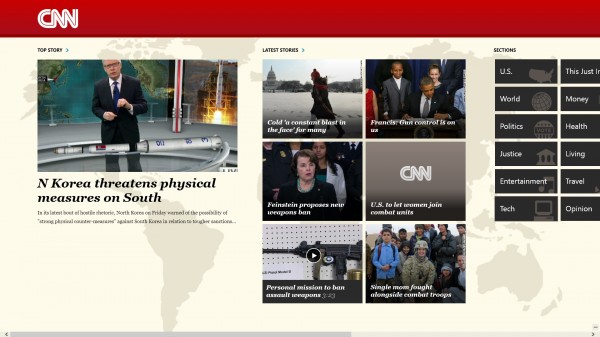
    This week’s big launch is the official CNN app for Windows 8 and RT. The news app displays the day’s top story on the front followed by a listing of latest stories and the various news sections that you may know from the site if you visit it occasionally or regularly.

    Reports include photos and textual contents but also recorded videos from CNN that you can play (again) using the application. A right-click opens a contextual menu that you can use to access various sections of the site including your access history. Here you get  a list of articles, videos and galleries that you accessed recently.

    The CNN app lacks search capabilities at the time of writing.

    World TV (free limited, paid $1.99)
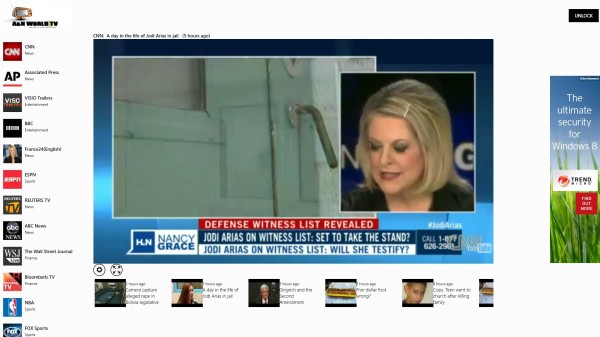
    World TV offers pre-recorded TV clips to users of the application. Only a handful of TV channels are free to access including CNN and BBC Entertainment while the majority of channels including ESPN, Fox Sports or NBA TV are only available to users who purchased the application for $1.99

    A clip starts to play right after you open the application. You can switch clips using the thumbnail bar at the bottom of the screen and switch to full screen mode to view contents in HD quality without distracting interface elements.

    Storm
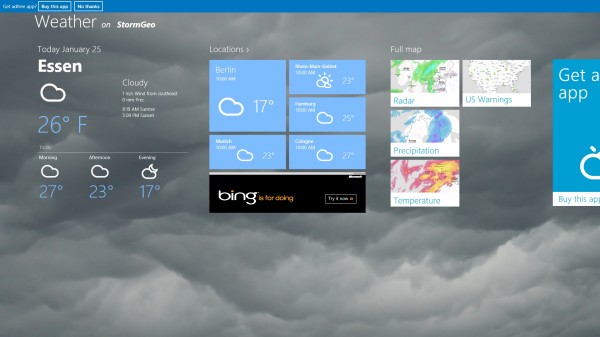
    Storm is a weather application for Windows 8 that uses your location, if you allow it to, to display current weather conditions and forecasts for that location.

    Additional locations can be added to the favorites to have weather reports displayed for them automatically when the application is open.

    A click on a location opens a detailed weather forecast that not only displays temperatures for four periods of the day — morning, afternoon, evening and night — but also lists wind strength and direction, precipitation and a two week forecast.

    Last but not least it is also making available maps, radar, US warnings, precipitation and temperature.

    Charming Reddit
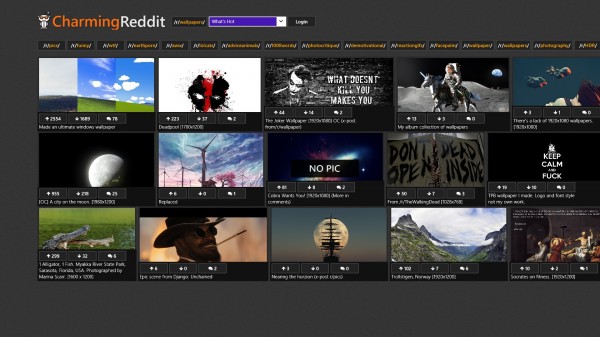
    The other way to search Reddit. Charming Reddit concentrates only on pictures which is great if you are regularly browsing Reddit for the latest photo kick. Instead of having to do so on site, you can simply open the app and check out various picture categories of Reddit right here.

    The app displays the pictures in a photo Stream that not only displays thumbnail images of each pic, if available, but also the up and down votes, the comments it received and the description that was added to it by the original thread starter.

    A pull-down menu at the top enables you to display top scoring, new or controversial pictures posted this hour, day, week or all time. Basically, if you love Reddit’s photo section this app is for you.

    Hint: the wallpaper category offers some great wallpapers for your desktop.

    Simple Note

    If you use notes as reminders of work or other activities / events then you may find Simple Note quite useful. As the name implies, it is one of the simpler note taking applications available for Windows 8. All you can do is create new notes, by entering a title and description and that’s about it.

    While this may not be enough for users who need to add images, documents, links or other information to notes, it should do it if you like your notes plain and simple. The program iterates through all notes on the start screen so that you have them always in reach when needed without having to open the application first.

    A couple of things would be helpful though, including setting expiration dates or reminders.

    World Clock
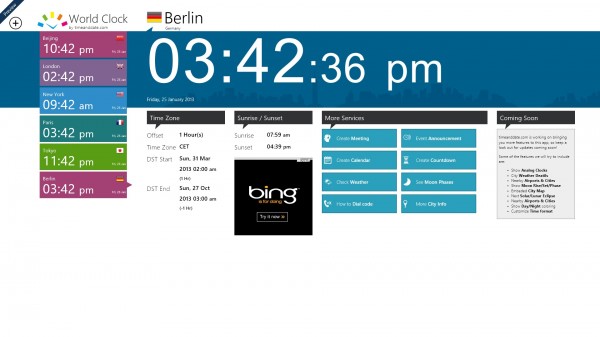
    The app displays the date and time of various locations. It ships with a selection of cities, including Beijing, London, New York and Tokyo by default, which you can add custom cities to if necessary.

    The application furthermore displays information about the time zone, as well as sunrise and sunset for the selected location. The more services options that you see on the screenshot above lead to the Time and Date website where you can configure those.

    The developers plan to add information such as weather information, embedded city maps or nearby airports and cities in future updates.

    Snap FX

    Paint does not really cut it when it comes to image editing on Windows 8. Desktop users can install free programs like Paint.Net or GIMP to improve the capabilities, but RT users are more or less stuck with Paint or whatever the store has to offer to them.

    Snap FX is a program that makes many basic image editing tasks a breeze. You can use ot to change various parameters like the image’s brightness, sharpness or saturation, crop the image, rotate or flip it, or apply one of several Instagram-like filters to it to change its look and feel completely.

    What’s missing? Options to resize the image to a particular size for one, or the ability to add text to it.

    Edited images can be exported to Facebook or the local picture gallery.

    Duck Duck Go
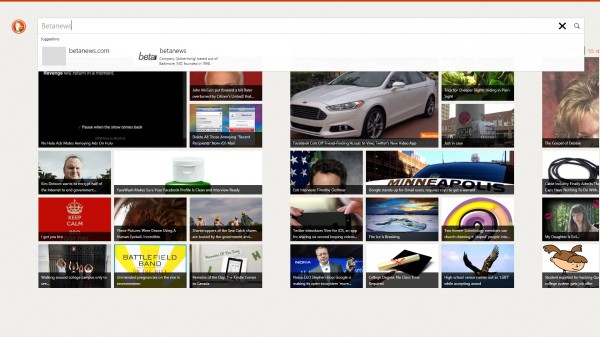
    DuckDuckGo.com is my search engine of choice and the launch of its Windows 8 app needs to be celebrated. Why I prefer the search engine over Google or Bing? Because it protects your privacy, does not put you in a filter bubble and makes available so called !bangs that you can use to redirect searches to other search engines.

    If a search for Windows 8 apps does not return the expected results on DuckDuckGo, you can add !g to the query to load Google’s search results right away or !ghacks to search on my site. These !bangs exist for lots of sites, Wikipedia, Flickr, popular search engines, tech blogs and more.

    The app makes available many of the features of the search engine, but !bangs and the majority of “goodies” are unfortunately not yet supported. Still, if you are looking for a different search engine that offers great results, I suggest you give it a try.

    Open Map

    This app brings the OpenMap project to Windows 8. While not the official app, it makes available the majority of features that Open Map supports. You can browse any location on a map and use the mouse to browse and zoom in or out of it.

    A right-click opens a basic menu with options to set locations and get directions. The app lacks a couple of features right now including the ability to enter the name of  a location to be taken there directly.

    Cloud Manga Reader
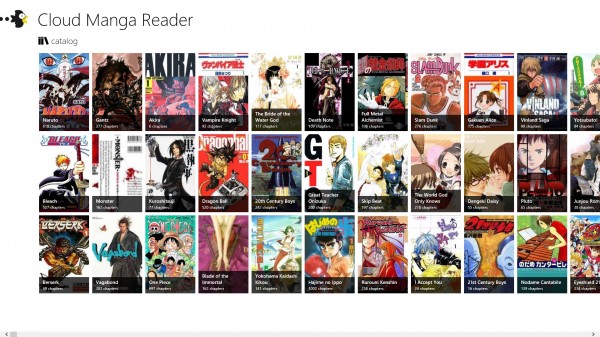
    If you can’t get enough Manga Cloud Manga Reader for Windows 8 is another application that helps you get your daily Manga fix.

    It makes available a catalog of Manga comics sorted by series including Naruto, Bleach, Vagabond or Dragon Ball to name a few. A click on a series opens the chapter list in full screen. From here it is just the matter of selecting a chapter to read to load the Manga right in the interface. As far as I can tell, all Manga offered here are translated to English.

  • Weekly Wrap Up: Our People, Our Future

    Watch the West Wing Week Here.

    Here’s a quick glimpse at what happened this week on WhiteHouse.gov:

    Inauguration Weekend: On Saturday, Americans across the country took part in the National Day of Service, a project started four years ago to honor the life and legacy of Reverend Dr. Martin Luther King, Jr. The First Family kicked off the weekend at Burrville Elementary School in Washington, D.C. where they worked on school improvements. Watch the President and First Lady speak at the service event here.

    On Sunday, in accordance with the Constitution which states the President must take the oath of office on January 20 in the year of an inauguration, President Obama and Vice President Biden were officially sworn in. Check out  video of the President taking the oath at the White House and the Vice President taking the oath at the Naval Observatory.

    Inauguration Day: On Monday, President Obama delivered his Inaugural Address to the country and was publicly sworn in for a second term. Fittingly on Martin Luther King Jr. Day, President Obama shared his vision for a second term. President Obama said, “My fellow Americans, we are made for this moment, and we will seize it – so long as we seize it together.”

    read more

  • Verizon sells AT&T $1.9 billion worth of valuable 700MHz spectrum

    Verizon AT&T Spectrum Deal
    Give Verizon (VZ) some credit — it seems willing to spread the spectrum wealth around. Verizon on Friday announced a deal to sell rival AT&T (T) several spectrum licenses on the valuable 700MHz band for a total of $1.9 billion. In addition to paying almost $2 billion in cash, AT&T will also give Verizon some of its AWS spectrum band licenses in “certain western markets, including Los Angeles, Phoenix, Fresno and Portland, Oregon.” Quartz late last year estimated that Verizon had slightly more mobile data spectrum on hand than AT&T, although it noted that both companies could potentially be dwarfed by rival Sprint (S) if it completes its proposed acquisition of Clearwire.

  • Tablet Shipments Could Reach 145 Million This Year

    It’s already clear from multiple reports this month that tablets took a big bite out of PC sales during the 2012 holiday season. Now, a new report is showing that the tablet market is set to grow even stronger in 2013.

    Analyst firm ABI Research this week revealed its prediction that, worldwide, 145 million tablet devices will ship in 2013. It makes its prediction based on the number of new entrants in to the mobile market, the rising number of less expensive mobile devices, and increased mobile device adoption by businesses.

    “The rate of innovation is slowing as tablet vendors augment their product portfolios to meet the needs of market audiences,” said Jeff Orr, senior practice director at ABI. “The late 2012 launches of Apple’s iPad mini and a variety of slates based on Intel architecture and new Windows operating systems will only begin to show their progress this year.”

    ABI predicts that North America will receive over half of worldwide mobile device shipments. In addition, businesses are predicted to receive 19% of tablet shipments. Though ABI admits this could eat into PC sales, it also asserts that “the majority of new tablet opportunity comes from workers that have, until now, worked without the benefits of computing technologies.” The research firm also does not blame slowing eReader sales on the rise of tablet computing, and instead blames book publishers.

    “The facts are that the U.S. market continues to dominate eReader shipments and an aging Baby Boomer population looking to replicate the print reading experience is a waning audience,” said Orr. “If other world regions do not successfully organize digital publishing markets, the dedicated eReader market will go away without regard for adoption of tablets and other mobile devices.”