Blog

  • Shakira Baby Photo: Will He Follow In Dad’s Footsteps?

    Shakira, who just gave birth to her son Milan this week, revealed a photo of the baby…sort of.

    The pic shows Milan’s feet, clad in supercool kicks that have his name embroidered on them. Of course, he won’t have much use for shoes for a while, but fancy footwear runs in the family; his dad, Gerard Pique, is a soccer star in Spain.

    The Columbian hip-shaker posted an announcement on Twitter and on her website after Milan was born, explaining the origin of his name and confirming that he was born healthy and happy.

    “The name Milan (pronounced MEE-lahn), means dear, loving and gracious in Slavic; in Ancient Roman, eager and laborious; and in Sanskrit, unification…Just like his father, baby Milan became a member of FC Barcelona at birth. The hospital confirmed that the couple’s first child weighed approximately 6 pounds, 6 ounces, and that both mother and child are in excellent health.”

    Shakira wasn’t shy about taking to the stage while she was with child; last October, she showed off her belly to the crowd at a performance in Baku, Azerbaijan and let them know she was staying in good shape during the pregnancy.

    shakira baby photo

  • Vine Disables Twitter Sharing Just Hours After Launch

    Earlier this afternoon, Twitter unveiled Vine, a standalone iOS app for the creation and sharing of short (six-second) video clips. A video sharing experience was rumored to be in the Twitter pipeline, and it looks like this is it. Vine allows users to take short videos, and then share them on Twitter (and Facebook, too). But for Twitter, it’s a way to enrich tweets.

    Well, Vine is already broken. For the most part.

    “We’re temporarily disabling Twitter and Facebook sharing. It should be back soon. Thanks for your patience,” said Vine in a tweet.

    Of course, not being able to post the short videos to Twitter and Facebook doesn’t render the app completely useless, but it pretty much does.

    They really need to get this thing fixed, as it’s really not what you’re looking for on launch day.

  • Creative Destruction Visits the MBA

    I recently wrote a blog post about the forces of competition and market change that are affecting the legal profession, causing many firms to now take the once unthinkable step of letting even senior partners go if they can’t produce sufficient revenues to contribute to the firm’s bottom lines (as reported in the Wall Street Journal).

    Ironically, there was another article in that same issue of the Journal that hit a little closer to home — about the diminishing returns to the investment in an MBA degree. Entitled “For Newly Minted M.B.A.s, a Smaller Paycheck Awaits,” the article describes a phenomenon that I’ve been predicting for some time, which is that as the number of MBA degrees granted grows, the degree itself becomes commoditized and loses its differentiation.

    Grow it has — the Journal reported that the US awarded 126,214 masters of business administration in the 2010-2011 school year, 74% more than ten years prior. The same pattern seems to apply as with law schools — since professional degree programs are highly attractive (and profitable) for universities, more and more schools entered the market, producing more and more graduates. Today, just as it isn’t clear whether there is sufficient demand for all those young lawyers, it’s not clear that there is sufficient demand for all those MBAs. Moreover, employers who used to be willing to pay a price premium for a degree candidate are seeking instead those with relevant working experience.

    Related trends are the rise in high-quality international MBA programs (compounded with immigration policies that make it very difficult for students to study in the U.S.); competition from one-year, more focused courses (such as one-year degrees in finance, which are increasingly popular); and the ability to obtain somewhat substitutable credentials of other kinds.

    What can we predict? That just as with law schools, business schools without some strong form of differentiation or demonstrable value-added will find it increasingly difficult to stay in the business. Just as astonished senior partners in law firms learned that when the economics don’t work neither does lifetime employment, so too will astonished tenured professors. If your school goes out of business, tenure doesn’t mean much. In the short-term, admissions offices, scared about their ratings dropping, will increasingly focus on how “employable” a candidate will be after graduation, rather than the more traditional emphasis on academic accomplishments and future potential. And, as major absorbers of MBAs, such as financial institutions, cut back or are regulated to shrink, the lust-inspiring starting salaries and sign-on bonuses of yore are likely to be more rare.

    In the longer run, my hope is that these competitive pressures and shifts will lead to some interesting new models for business schools. One I am following with particular focus is how schools are changing to create value for executives throughout their careers, rather than just at the ages of about 26-28. Executive education, to me, is at the forefront of innovation in how the study of business and the practice of business can be mutually informed. I think that is a positive trend that is likely to accelerate.

  • Hackathons Are Great For Quantity But Are They Good Quality?

    The past 2 hackathons have been amazing successes for RIM from an app quantity perspective. The first hackathon generated 15,000 apps and the second has generated over 19,000 apps. With 34,000 apps from just 2 hackathons, RIM could keep this up throughout the lifetime of the platform and potentially surpass the competition just from this type of developer support. One would assume that the platform would also attract a base level of developer support and the hackathons are just icing on the cake. But are these apps really doing anything for the typical user? In some ways, the hackathons are not on-message with what Alec Saunders and RIM have said in the past. Saunders once said that RIM’s strength is quality over quantity but a quick look at the apps being submitted at these hackathons don’t seem to follow this mantra.

    Remember when Alec said at BlackBerry DevCon Europe: “If we fill App World with garbage, then we’ve done ourselves and our users a disservice.”

    The very nature of a hackathon dictates that your app will be small in scope and not as polished as it could be. It’s great if these hackathons are producing beta versions of apps that will be much bigger in scope and polished, but considering the incentive system RIM has in place, it’s likely that developers are just dipping their toes in the water and producing many small, unpolished apps.

    Take for example, the developers AshishKumar.Org and Rudi Suriyanto that both come up in the “Recently Added” section of BlackBerry World. Both developers have submitted apps that could really be combined into a single app. We don’t know if these apps were submitted during a hackathon, but they’re definitely indicative of hackathon-style apps.

    It’s hard to get a better idea of what apps have been submitted lately because RIM’s BlackBerry World doesn’t seem working the way it normally does. It’s not easy to browse to the “Newest Apps” section because it keeps directing users in a loop to the “Top Apps” section. Maybe RIM is trying to hide the latest submissions? Or perhaps it stems from the latest web bug we uncovered in BlackBerry World.

    While the hackathons are a great idea and an excellent way to engage the users, it remains unclear whether it’s the best strategy for getting quality apps in the door. Perhaps the only way to do that is to sell millions of devices and convince the AAA development studios that the business case is there.

  • Stop Focusing on Your Performance

    The night before our wedding, Eleanor and I stood awkwardly in the center of a large room, surrounded by our family and our closest friends. There was no particular reason to be uncomfortable; this was just a rehearsal. Still, we were in the spotlight and things weren’t going smoothly. Neither the rabbi nor the cantor had arrived and we didn’t know where to stand, what to say, or what to do.

    It had taken us 11 years — and a lot of work — to get to this point. Eleanor is Episcopalian, the daughter of a deacon, and I am Jewish, the son of a Holocaust survivor. The one thing our parents agreed about before the wedding was that we shouldn’t get married.

    A friend of ours, Sue Anne Steffey Morrow, a Methodist minister, offered to stand in for the Jewish officiants who were absent. She moved us through the rehearsal, placing people in position, reading prayers, and lightening the mood with a few well-timed jokes.

    When the rehearsal was over and we were feeling more relaxed, she offered me and Eleanor a piece of advice that remains one of the best I have ever received.

    “Tomorrow hundreds of people will be watching you on the most important day of your life. Try to remember this: It’s not a performance; it’s an experience.”

    I love that she said “Try to remember this.” On the surface it seems easy to remember but in reality it’s almost impossibly difficult, because much of what we do feels like a performance. We’re graded in school and get performance reviews at work. We win races, earn titles, receive praise, and sometimes gain fame, all because of our performance. We’re paid for our performance. Even little things — leading a meeting, having a hallway conversation, sending an email — are followed by the silent but ever-present question: “How’d that go?”

    In other words, we think life is a performance because, well, it kind of is. We feel judged by others because, often, we are. And let’s be honest, it’s not just they who judge us; most of us spend a considerable amount of energy judging others as well. Which, of course, only reinforces our own experience of being judged. And fuels our desire to perform.

    But here’s the paradox: living life as a performance is not only a recipe for stress and unhappiness; it also leads to mediocre performance.

    If you want to get better at anything, you need to experiment with an open mind, to try and fail, to willingly accept and learn from any outcome.

    And once you get an outcome you like, you need to be willing to shake it up again and try something different. The best performers are life-long learners, and the definition of a life-long learner is someone who is constantly trying new things. That requires performing poorly much of the time and, often unpredictably, brilliantly some of the time.

    If you view life as a performance, your failures will be so painful and terrifying that you will stop experimenting. But if you view life as an experience, your failures are just part of that experience.

    What makes a performance different than an experience? It’s all in your head.

    Are you trying to look good? Do you want to impress others or win something? Are you looking for acceptance, approval, accolades, wild thunderous applause? Is it painful when you don’t get those things? You’re probably performing.

    If you’re experiencing, on the other hand, you’re exploring what something feels like. Trying to see what would happen if…

    When you’re experiencing, you can appreciate negative outcomes as well as positive ones. Sure, acceptance and approval and accolades feel good, but those things don’t determine success. Success is based on whether you fully immerse yourself in the experience, no matter how it turns out, and whether you learn from it. That’s a result you can always achieve regardless of the outcome.

    When you’re performing, your success is disturbingly short-lived. As soon as you’ve achieved one milestone or received a particular standing ovation, it’s no longer relevant. Your unending question is: what’s next?

    When you’re experiencing though, it’s not about the end result, it’s about the moment. You’re not pursuing a feeling after, you’re having a feeling during. You can’t be manipulated by a fickle, outside measure because you’re motivated by a stable internal one.

    So how can we let go of performance in favor of experience? Here’s something that’s helped me: Several times a day I’ll complete this sentence: “This is what it feels like to…”

    This is what it feels like to receive praise. This is what it feels like to be in love. This is what it feels like to be stuck writing a proposal. This is what it feels like to present to the CEO. This is what it feels like to be embarrassed. This is what it feels like to be appreciated.

    Saying that, and feeling whatever comes up, instantly drops me into experience. Performance loses its primacy and my mind releases its focus on outcome. There are no bad feelings; they all make life richer.

    On the day of our wedding, I took Sue Anne’s advice. And when I think back now — it’s been 13 years — the moments I remember most clearly and with most fondness are the things we did not rehearse, the things that went wrong but somehow gave the wedding its life. Even our rehearsal, which clearly did not go as planned with its missing rabbi, was perfect since it led us to integrate a minister — especially meaningful for Eleanor and her family — in a more substantial way than we had anticipated.

    As a performance, I have no idea how to judge it. But as an experience, it was perfect. An experience always is.

  • Intel Makes Mobile Push Into Africa Via Partner Safaricom, Releases Android-Powered Yolo Smartphone

    lexington

    It’s no secret that Intel is gunning to gain some mobile traction in emerging markets, and the chipmaker doesn’t seem to be wasting any time in 2013. Kenyan wireless operator (and Intel partner) Safaricom has just officially revealed Africa’s first Intel smartphone, the Android-powered Yolo at an event in Nairobi.

    Yeah, you read that right: the Yolo.

    Now despite what you make of its name, the phone isn’t actually encouraging young, tech-savvy Africans make poorly-considered life decisions. Instead, it seems more like the continuation of some weird existing naming practices — Intel’s first Atom-powered Android smartphone for instance was dubbed the XOLO X900 when it made its debut in India in April 2012.

    The announcement doesn’t come as much of a surprise since Intel’s Mobile and Communications VP Mike Bell pointed out at CES that Safaricom (among other carriers in developing regions) would release smartphones based on the company’s value-oriented smartphone reference design in Q1 2013. That focus on highly cost-sensitive markets means that the Yolo and its ilk don’t exactly have a spec sheet that will set your world on fire — the Yolo sports a 3.5-inch touch display, and its Atom Z2420 processor can hit speeds of up to 1.2GHz, encode and decode 1080p video, and support HSPA+ data speeds. Naturally, that sort of performance is reminiscent of the sorts of devices you can find on domestic store shelves a few years ago (a sentiment Engadget echoed when they got some brief hands-on time at CES), but it’s still a pretty compelling package considering the competition in Kenya.

    Of course, there’s always the issue of cost to deal with. Safaricom will soon begin selling the Yolo (and 500MB of free data access) for Kshs. 10,999 (roughly $126) — sounds like a pretty sweet deal, but companies like Huawei have already waging a price war with devices like the $80 IDEOS smartphone on the front line. Really, with the explosion of even less expensive smartphones in Kenya and beyond, one has to wonder how much of a market Intel will actually be able to carve out in Africa.

  • New supercomputer coming to EMSL this summer, supplied by Atipa Technologies

    A new supercomputer expected to rank among the world’s fastest machines will be ready to run computationally intense climate and biological simulations along with other scientific programs this summer. This computational work will aid research in climate and environmental science, chemical processes, biology-based fuels that can replace fossil fuels, new materials for energy applications and more.

    Chosen by a competitive process, Atipa Technologies in Lawrence, Kan., will provide the machine to EMSL, the Department of Energy’s Environmental Molecular Sciences Laboratory. EMSL is a national user facility on DOE’s Pacific Northwest National Laboratory’s campus that provides experimental and high performance computing capabilities to enable users to address environmental and energy challenges through molecular-level theory and experiment. It is also home to the new supercomputer’s predecessor, Chinook. As a national user facility resource, the new system will be available to scientists everywhere,who will be able to apply on a competitive basis to use it. Currently, about 400 scientists use Chinook.

    “We’re developing a supercomputer that will aid energy, environment and basic science missions important to DOE,” said PNNL computational scientist Bill Shelton, the associate director at EMSL who manages high performance computing. “Enhanced computing power will benefit our users who conduct experiments and want to verify them with modeling. Integrating computational theory with experiment is critical to accelerating scientific discovery.”

    Funded by DOE’s Office of Science, the new $17 million machine will likely peak at 3.4 quadrillion — 3.4 million billion — calculations per second and be more than 20 times faster than the four-year-old Chinook. The new supercomputer’s capacity and speed are expected to rank it among the world’s top 20 fastest machines when it comes online. Peaking at 3.4 petaflops, the new computer will be able to do in one hour what would take a typical laptop more than 20 years to do.

    Atipa Technologies has been providing high performance computers to DOE and its labs for more than a decade.

    “We’re excited to have the opportunity to provide the new  supercomputer with a theoretical peak performance of 3.38 petaflops and 2.7 petabytes of usable storage. It will be built and deployed by Atipa Technologies in collaboration with Supermicro,” said Mike Zheng, president of Atipa Technologies.

    As EMSL’s flagship high performance computer, researchers from around the world will be able to use it. The EMSL team designed it for researchers who typically need resources of this scale but don’t generally have access to such a powerful computer. This wide availability makes it stand out from other supercomputers.

    “Its uniqueness is that it will be optimally configured for climate and chemistry simulations and biological analyses,” said Shelton.

    For example, the new machine will offer added speed for improved climate models. “The new computer provides a wonderful opportunity for climate scientists to get more work done and get each simulation done more quickly,” said PNNL climate scientist Phil Rasch. “It is a huge jump in the computing power available to us.”

    And it will produce more details about how organisms work. “I’m excited because with the amount of data researchers are generating in biology, this supercomputer will open up new avenues for our users,” said EMSL biology science lead Scott Baker. “More computing power is like having more pixels in a picture. We’ll be able to look at proteins and complex biological interactions more realistically. This will allow us to better understand and control organisms like microbes so that we can develop new renewable fuels.”

    The design’s 196,000 processing units are Intel processors combined with Intel Phi many integrated core (MIC) accelerator cards. The accelerator cards will ratchet up the power. They work with the conventional processors and memory and allow up to 120 extra calculations per node to be performed simultaneously rather than one at a time. (Anyone with a graphics card in their personal computer has taken advantage of a hardware accelerator.)

    The system’s 23,000 Intel processors have 184,000 gigabytes (184,000 billion bytes) of memory available, about four times as much memory per processor as other supercomputers. The additional memory will allow scientists to use the processors more efficiently for biology, climate research, chemistry and materials science.

    Atipa will deliver the computer’s components by July 2013 and assemble it at EMSL. The EMSL team will spend a few months installing and configuring the system and getting it up to speed. They expect to have it running for national and international researchers in October 2013. In the meantime, EMSL will be sponsoring a naming contest among EMSL users and friends.

    The New Supercomputer’s Fast Facts:

    • Theoretical peak processing speed of 3.4 petaflops
    • 42 racks
    • 195,840 cores
    • 1440 compute nodes with conventional processors and Intel Xeon Phi “MIC” accelerators
    • 128 GB memory per node
    • FDR Infiniband network
    • 2.7 petabyte shared parallel filesystem (60 gigabytes per second read/write)
    • Working reference: HPCS4A

    DOE’s Office of Science is the single largest supporter of basic research in the physical sciences in the United States, and is working to address some of the most pressing challenges of our time. For more information, please visit the Office of Science website.

  • BMW, Toyota Team Up to Develop Future Battery Technology, Hydrogen Fuel-Cell System

    BMW and Toyota today announced that the car companies have teamed up to develop a new fuel-cell system and the future of lithium battery technology. The companies signed binding agreements to collaborate on several projects meant to usher in future vehicle technology.

    “[Toyota] and the BMW Group share the same strategic vision of future sustainable mobility,” said Norbert Reithofer, chairman of the board at BMW. “In light of the technological changes ahead, the entire automotive industry faces tremendous challenges, which we also regard as an opportunity. This collaboration is an important building block in keeping both companies on a successful course in the future.”

    A new fuel-cell system will be jointly developed by the companies, which includes a hydrogen tank, motor, and battery. The project is slated to be completed in 2020, and codes and standards for the hydrogen infrastructure will also be developed.

    BMW and Toyota will also jointly develop lightweight technologies for vehicle bodies. The research will include reinforced composites, which could be included in another joint venture: a mid-size sports car. A feasibility study on the jointly designed car is due by the end of 2013, and the companies will combine their technology and engineering know-how to “maximise customer satisfaction.

    Perhaps the most far-reaching collaboration the companies will undertake is the development of lithium-air battery technology. Such batteries would have energy densities far greater than current lithium-ion batteries.

    “It is just over a year since we signed our collaborative MoU [memorandum of understanding), and with each day as our relationship strengthens, we feel acutely that we are making steadfast progress,” said Akio Toyoda, President of Toyota. “Now, we are entering the phase that promises the fruit. While placing importance on what we learn from the joint development, we will work hard together in reaching our common goal of making ever-better cars.”

  • Mark Zuckerberg To Host Palo Alto Fundraiser for Chris Christie

    Facebook CEO Mark Zuckerberg will host his first-ever big-time fundraiser for a political candidate – Republican New Jersey Governor Chris Christie.

    According to The Wall Street Journal, Zuckerberg and his wife Priscilla will host the event on February 13th at their home in Palo Alto, California. It will also mark the first out-of-state campaign event for his Christie’s reelection.

    “Mark and Priscilla have worked closely with Governor Christie on education reform in the Newark school system. They admire his leadership on education reform and other issues and look forward to continuing their important work together on behalf of Newark’s school children,” said a Facebook spokesperson.

    Apparently, Zuckerberg and Christie first became familiar when the Facebook CEO donated $100 million to the struggling Newark, NJ public school system back in 2010.

    “They have maintained a friendship since they met in 2010,” Christie’s political strategist Mike DuHaime told USA Today. “We are very excited about the trip to California as it demonstrates just how broad the support is for Gov. Christie.”

    Zuckerberg isn’t known for being overtly political, in either direction. He’s attended dinners with President Obama, hung out with Newark’s Democratic mayor Cory Booker. Facebook, as a company, likes to spread the wealth around when it comes to campaign donations. The company recently formed the Facebook Inc. political action committee, which has made donations to people on both sides of the aisle (for instance Democrat Chuck Schumer and Republican Eric Cantor).

    Reports show that based on public sentiment, Christie is a huge favorite to win reelection.

  • 2013 WRC Rallye Monte-Carlo

    Monte Carlo Rally

    They’re some of the best drivers in the world possessing nerves of steel and cat-like reflexes. These are the drivers of WRC and they’re trained to master any terrain that’s thrown at them. Sébastien Loeb is considered to be the best driver currently on the circuit and after watching these highlights from the Monte-Carlo rally, we can see why.

    Source: Youtube.com

  • Grab Some Popcorn And Watch The Hour Long Mega Launch Party

    As you all know by now, Kim Dotcom’s Mega launched over the weekend to much fanfare. The new file-sharing site is already in the top 150 most visited sites on the Internet, and it shows no signs of slowing down.

    Dotcom has already shared the speech he gave at the launch of Mega, but we didn’t get to see the full spectacle. Now you have the opportunity to see what all the hubbub was about as Dotcom launched his latest product.

    The video clocks in at an hour and 14 minutes long. You might want to grab a snack:

    Despite hosting a massive launch event, Mega has not been without its stumbles over its first few days. The service was a little unreliable at first, and then reports started coming out that Mega’s encryption wasn’t all that it was cracked up to be. The launch problems have been fixed already, but Dotcom is now engaging critics of the site’s encryption. He will even be offering a cash reward soon for those who can break it.

    Perhaps the strangest thing to come out of the launch, however, was the above video being taken down from YouTube as a result of a DMCA complaint from GEMA. Dotcom claims all the songs in the video are of his own creation. The video is back up, but Dotcom says GEMA will be hearing from his lawyers.

    It’s pretty obvious that Dotcom and Mega will continue to run into situations like this as the file-sharing service becomes more popular. In fact, it shouldn’t be too long before we start hearing some noise from the same media industry that’s been gloating about the shut down of Megaupload.

  • Bethenny Frankel: Divorce Is Getting Ugly

    Bethenny Frankel officially filed for divorce from her husband of three years, Jason Hoppy, just a few weeks ago. But Hoppy has now filed “aggressive” divorce papers of his own and is asking for everything she’s asking for, including primary custody of their daughter, Bryn.

    Hoppy also wants child support payments from Frankel, medical and dental insurance-related bills, and is asking for himself and Bryn to be the beneficiaries of a continued life insurance policy for Frankel. The new papers are also asking for Hoppy to be afforded primary residence at their $5 million home in NYC. If that’s not enough, he wants Frankel to foot the bill for his lawyers and accountant.

    Luckily, Frankel and Hoppy had a prenuptial agreement before they married, so her $100 million fortune is safe. The former “Real Housewives” star has made quite a success of her brand, which includes several books, the Skinnygirl alcohol and clothing line, and a daytime talk show.

    Frankel released a statement when divorce loomed imminent, saying, “It brings me great sadness to say that Jason and I are separating. This was an extremely difficult decision that as a woman and a mother, I have to accept as the best choice for our family. We have love and respect for one another and will continue to amicably co-parent our daughter who is and will always remain our first priority. This is an immensely painful and heartbreaking time for us.”

  • First Clip From jOBS Hits The Web [Video]

    Entertainment Tonight has posted the first clip we’ve seen from the upcoming Steve Jobs biopic jOBS, starring Ashton Kutcher and Josh Gad as Jobs and Steve Wozniak. The clip features the duo in a scene talking about Wozniak’s operating system.

    Kutcher and Gad will appear at Macworld/iWorld next week to talk about their experiences playing the roles of Apple’s co-founders.

    The film also got an official release date this week: April 19.

    [via Slashgear]

  • Grand Theft Auto: Vice City is Coming to the PlayStation Network

    Everyone in the gaming world is waiting to see what wild new experiences Rockstar will bring with the launch of Grand Theft Auto V. While waiting for that game, however, Rockstar is hoping that fans of the GTA series will be looking to ease back into the sandbox gameplay with a nostalgic trip through the older games in the series.

    Just last year, the publisher released Grand Theft Auto: Vice City for iOS and Android smartphones and tablets. It also released Grand Theft Auto: San Andreas for the PlayStation Network.

    Though there hasn’t been an announcement that San Andreas is on the way to mobile platforms, Rockstar today did reveal that Vice City is coming to the PlayStation Network next week. Gamers will soon be able to take on the role of Tommy Vercetti via their PlayStation 3 (and presumably Vita) consoles. The game takes place in a Miami-inspired city and features 80s themes and music. The game’s story also loosely follows that of the movie Scarface.

    Vice City will launch part of the PlayStation 2 Classics collection next week, on January 29 (January 30 in Europe). Unfortunately, the price of the game won’t be as inexpensive as its $5 price on mobile platforms. Vice City in the PlayStation Store will sell for $10/€10/£8.

    Rockstar also teased that “more classic Rockstar titles” will be coming to the PSN “in the weeks and months ahead.”

  • Now Official – 2014 Toyota Tundra Unveiled at Chicago Auto Show

    This morning Toyota announced via press release that the 2014 Toyota Tundra will be unveiled at the 2013 Chicago Auto Show. This confirms what our sources told us and what we have been telling our readers all along.

    Now Official - 2014 Toyota Tundra Unveiled in Chicago

    It’s official the 2014 Toyota Tundra will be at the Chicago Auto Show.

    The official release leaves much to the imagination. Here it is:

    Redesigned 2014 Toyota Tundra Full-Size Pickup Truck to Make World Debut at 2013 Chicago Auto Show

    TORRANCE, Calif., Jan. 24, 2013 – Toyota will stage the world debut of the new 2014 Tundra full-size pickup truck at a press conference at the 2013 Chicago Auto Show.

    The press conference will be held on Thursday, Feb. 7, at 9:00 a.m. (CST) in the Grand Ballroom at McCormick Place.

    The reveal of the redesigned Tundra will be broadcast live via Livestream at: http://new.livestream.com/toyota.

    The live stream is a really cool option for fans. I will be there in person with live updates on our Facebook page (cell coverage permitting.) Make sure you like our Facebook page to get our latest information.

    Related Posts:

    The post Now Official – 2014 Toyota Tundra Unveiled at Chicago Auto Show appeared first on Tundra Headquarters Blog.

  • 8 talks about advances in surgery

    Regardless of what you might see on shows like Grey’s Anatomy, teaching surgery is very difficult. This is a fact that Dr. Steven Schwaitzberg stresses in today’s talk.

    Schwaitzberg, who spoke at TEDxBeaconStreet in November, is a pioneer in the field of minimally invasive surgery, which is less painful for patients and allows them to get back to normal life faster than traditional surgery. Schwaitzberg has spent his career not only helping to develop the techniques for laparoscopic surgery, but teaching the skills needed to perform it to others. As Schwaitzberg explains in this talk, the first step was developing a certification test for surgeons in the U.S. wishing to perform minimally invasive surgery. Now, this training and certification program is going global.

    “Surgeons are not born. Surgeons are trained one step at a time,” explains Schwaitzberg. “But we have a problem—distance. We can’t travel everywhere.”

    And there’s another problem, too—the language barrier. “Language is one of the most profound things that separates us,” says Schwaitzberg. “This examination is really hard. Even those who say they speak English [as a second language], only 14% pass this test. Because for them it’s not a surgery test—it’s an English test.”

    This challenge has led Schwaitzberg and his colleagues on a hunt for a technology that will allow them to bridge both distance and language. And with the help of the IBM Accessibility Center, they have come up with something very cool — a Tower of Babel-defying tool that allows for translation in 11 languages.

    To see a demo of this tool, which allows an instructor to teach complicated skills over video in real-time, with their words being translated into the student’s native language as they go, watch this inspiring talk.

    Here, more talks on fascinating advances in the field of surgery.

    Catherine Mohr: Surgery's past, present and robotic futureCatherine Mohr: Surgery's past, present and robotic futureCatherine Mohr: Surgery’s past, present and robotic future
    “Surgeons are the tailors, the plumbers, the carpenters and some would say the butchers of the medical world: cutting, reshaping, reforming, bypassing, fixing,” says surgeon and inventor Catherine Mohr. At TED2009, she shows how far the field has come in 10,000 years — peaking with laparoscopic surgery, where the fixing is done via long needles in small incisions as doctors chart progress on a screen. She also gives a look at where the field is going — robots which allow surgeons to make tiny-but-complex maneuvers without any errors of the hand.
    Quyen Nguyen: Color-coded surgeryQuyen Nguyen: Color-coded surgeryQuyen Nguyen: Color-coded surgery
    Surgery isn’t as simple as it looks in medical textbooks, where different types of tissues are given different colors to differentiate them. Nope, inside the body, it is dark and hard to see, and the parts don’t look nearly as distinct. In this talk from TEDMed 2011, surgeon Quyen Nguyen introduces us to florescent markers that make tumors light up — making it much easier to for surgeons to operate and get all the cancerous tissue.
    Yoav Medan: Ultrasound surgery -- healing without cutsYoav Medan: Ultrasound surgery — healing without cutsYoav Medan: Ultrasound surgery — healing without cuts
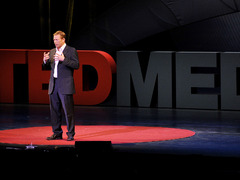
    We’ve talked about minimally invasive surgery, but what about non-invasive surgery? In this talk from TEDMed 2011, medical inventor Yoav Medan shares a surgical technique that requires no cuts at all. It’s all about shaping ultrasound, and using it to treat issues like brain lesions and some cancerous growths … from outside the body.
    Ed Gavagan: A story about knots and surgeonsEd Gavagan: A story about knots and surgeonsEd Gavagan: A story about knots and surgeons

    Ed Gavagan had an emotional moment watching two medical students practicing their surgical knots on the subway. That’s because, years before, he was brutally stabbed on a city street and survived against all odds thanks to a highly-skilled surgical team. This talk from TEDMed 2012 is a love letter to the skills surgeons must master — as simple as tying knots but with the power to save lives.
    Tal Golesworthy: How I repaired my own heartTal Golesworthy: How I repaired my own heartTal Golesworthy: How I repaired my own heart
    A boiler engineer, Tal Golesworthy has a deep understanding of how pipes work.  When he found out that he required a risky surgery on his aorta, he made an analogy to his work and recognized it as a plumbing problem. In this talk from TEDxKrakow, he tells the story of how his plumbing knowledge informed a new surgical procedure.
    Erica Frenkel: The universal anesthesia machineErica Frenkel: The universal anesthesia machineErica Frenkel: The universal anesthesia machine

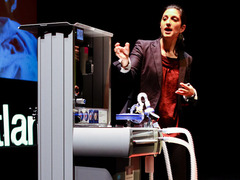
    It’s a medical nightmare no one likes to imagine: what if the power goes out while a patient is getting surgery, and their anesthesia stops flowing? In this talk from TEDxMidAtlantic, medical technologist Erica Frankel shows that these machines are too prone to disruptions and demos a new machine that could solve the problem.
    Iain Hutchison: Saving facesIain Hutchison: Saving facesIain Hutchison: Saving faces
    Iain Hutchison is a facial surgeon. But he’s not one you go to when you want plumper lips — he works with people whose faces have been severely disfigured. In this talk from TEDGlobal 2010 — which is not at all for the squeamish — he shares how advancing techniques have the ability to affect quality of life.

  • Facebook Phishing Scam Claims You’ve Violated Policy

    Another day, another Facebook-based phishing scam looking to snatch all of your personal information (including bank account info) and use it for nefarious purposes.

    The latest scam to hit the network comes in the form of messages sent to users’ inboxes. These are not simply spam messages that will get caught up in that “other” inbox that Facebook reserves for non-important communications. These messages may come from compromised accounts, ones that could be given access to your inbox.

    If you receive one of these scam messages, it’ll look like this:

    WARNING: Your account is reported to have violated the policies that are considered annoying or insulting Facebook users.system will disable your account within 24 hours if you do not do the reconfirmation. Please confirm your Facebook account below:

    If the ridiculous assertion that you’ve “annoyed users” doesn’t immediately throw you off, there’s a link.

    Upon clicking, a page will prompt users to enter their Facebook account info and password. It then asks you to confirm which webmail service you use to sign-in to Facebook (getting more suspicious). Finally, it drops the big request – your credit card info. At this point, you should definitely realize you’ve been duped and stop entering information.

    This scam is similar to another one we reported on earlier this month that also involved private messages from “The Facebook Security Team.” Except we all know that the real Facebook Security team doesn’t send out messages to specific users asking them to verify account details. Both scams warn users that their accounts may be suspended for some sort of unspecified violation of the terms of service.

    [GFI via The Next Web]

  • The JP Morgan "Whale" Report and the Ghosts of the Financial Crisis

    The apparition of 2008 returns once more. Two recently released JP Morgan Chase (JPM) reports on the causes of the “London Whale” trading losses raise important questions about whether financial service firms can exorcise the spectral issues which were so central to the financial crisis. They read as if JPM and a key headquarters unit — the Chief Investment Office — had not learned a single lesson from the meltdown four years ago. And unfortunately, they suggest that, in our huge, complex financial institutions, major failures of organizational discipline and major losses are likely to recur, despite greater attention to risk management.

    These reports — one from a company task force and a second from a review committee of the board — were overshadowed by two items announced the same day: the related news that the bank board had slashed CEO Jamie Dimon’s annual compensation in half — from $23 million in 2011 to $11.5 million in 2012 — because of his “Whale-related” failures, and that JPM had posted a record 2012 net income of $21.3 billion.

    But the 129-page internal task force report is significant. It analyzes in some depth the personal and institutional reasons for the more than $6 billion loss in a credit derivatives portfolio traded, paradoxically, by the London branch of JPM’s Chief Investment Office, a unit supposed to invest a pool of funds conservatively in order have liquidity to offset losses elsewhere. Led by Michael Cavanagh, co-Chief Executive Officer of the Corporate and Investment, the task force outlines a series of failures that echo those that beset financial sector creation of interconnected toxic assets in the past. And almost no one has focused on the relationship between JPM’s problems, the past failings in the financial sector and the issues for the sector in the future.

    These are not failures associated with well-considered and well-bounded risk taking. Everyone understands this kind of risk taking is core to any business (financial or industrial or consumer) and obviously will not always be crowned with success. Rather, they are blameworthy actions, involving culpability stemming from negligence or worse, and requiring, at the least, private sanctions (firings, demotions, clawbacks, pay cuts) and system remedies. Here is a brief summary of the findings:

    London Office. The traders — Bruno Iksil (“the Whale”), Javier Martin-Artajo and Achilles Macris (the boss) — did not understand the complex trades, did not monitor them, doubled down when initial results were poor, did not listen to questions from the risk function and did not communicate the full extent of trading losses.

    Headquarters of Chief Investment Office (CIO). Ina Drew, the head of the CIO, failed to review or monitor the trading strategy; failed to ensure that the risk and finance functions were providing appropriate oversight and control of the portfolio in question; did not appreciate the size, complexity, risk and magnitude of the issue in the first quarter of 2012 as conditions worsened; and as a result, gave misleadingly optimistic reports to JPM senior management until problems surfaced dramatically in April-May, 2012. The risk limits set were too vague and broad. And, the Value at Risk (VaR) model was badly flawed, understating risk.

    Firm-Wide Functions and Leaders. Generally speaking, firm management did not ensure proper controls and oversight at CIO as its trades became more complex and risky. The company Chief Risk Officer (Barry Zubrow, until January 2012) and the CFO (Doug Braunstein, since replaced) bore significant responsibility for the inadequacies of the risk and finance functions inside CIO — and for the failures of firm-wide risk and finance to spot trouble. CEO Dimon was criticized for failure to understand warning signs in a unit reporting directly to him (calling the trades “a tempest in a teapot” in an April analysts’ call). Dimon himself ultimately said that “[t]hese were egregious mistakes.They were self-inflicted…” In short, there was not robust debate with the right facts at the right level about the portfolio risk.

    The Board and the Risk Policy Committee. The board review committee exonerates the board and the Risk Policy committee from any culpability because “the information communicated to the Risk Policy Committee…did not suggest any significant problems in the CIO” until the issue began to break open in April, 2012.” This conclusion is silly on its face because the review committee’s report makes a number of recommendations of changed processes which are so basic that those proposals should be read as criticisms for past failures of the board and the Risk Committee. For example, the review committee says that the Risk Committee should: insist on better context when risk issues are presented; ensure that risk leaders are asked about what really bothers them; assess adequacy of risk resources in all units; conduct regular reviews — and spend more personal time — on the firm’s compliance with risk protocols; ensure that the chief risk officers are truly independent and can challenge business decisions; and define more clearly the lines between the Risk and Audit Committees. Well, no duh.

    Virtually every “cause” of the significant trading losses delineated by the internal JPM task force would have been found in earlier internal and independent reports about the sources of problems at many financial institutions during the credit crisis. In addition, the JPM task force does not address other key questions: Why did Dimon let the Chief Investment Office — with the normal role of conservative capital management to offset losses elsewhere — start this kind of speculative trading in the first place? Why were red flags ignored by senior managers in CIO and in the firm? How credible is the report’s conclusion, without published analysis, that “the Firm’s compensation did not unduly incentivize the trading activity that led to the losses”?

    Moreover, JP Morgan Chase still has unfinished business with the regulators here and abroad on the trading fiasco. For example, the bank recently entered into a cease and desist order with the Federal Reserve and the Comptroller of the Currency (COC) to work out new regulator-approved processes relating to the issues about the board’s role, risk management, finance and audit identified in the internal Task Force report. And questions of fraud in the London office and inadequate SEC disclosure by JPM are also being pursued by government investigators.

    The crucial question raised by the Whale incident — and by the delineation of causes in the internal report — is whether these types of blameworthy acts, with significant consequences, are likely to recur in huge financial institutions because they simply cannot control important corporate or business units with significant capital at risk.

    Are these acts likely to recur regardless of internal systems and process, and regardless of regulatory oversight?

    The question has special salience because it happened at JP Morgan Chase, which had a reputation for careful risk management; because it happened right under the nose of Jamie Dimon, JPM’s so-called “chief risk officer”; because it happened in a unit reporting directly to Dimon which was supposed to trade conservatively in order to have funds to offset poor bets elsewhere. The bank deserves credit for facing the trading problem forthrightly once it emerged unmistakably as a major issue: Dimon took blame; the company made public a reasonably critical internal report (even if key issues were not addressed); it set a good standard of accountability in using clawbacks and Dimon’s comp reduction for those responsible (see my earlier blog posts ); and it has set forth paper remedies for the specific problems which will be refined with the Fed and the COC.

    But, the fact remains: the Whale incident’s replay of these fundamental, blameworthy acts — which characterized the financial melt-down — suggests a basic failing that may defy an effective remedy. This is why the Whale has significance beyond the particular losses and poses an enigma which business and government must ponder.

  • Do you think that all smart people actually work at Nokia, Qualcomm, and the X-Prize Foundation?

    Third in a series.  This is my response to the message from Qualcomm Tricorder X-Prize director Mark Winter, who said my objections to his contest design were without merit.

    Let me make a point here: this isn’t about me receiving $10 million. We all know that’s not going to happen. It’s about designing a contest that actually encourages innovation. Please read on as I explain.

    I appreciate your position, Mark, and might have sent the same reply were I standing in your shoes. However, I am sure I’ve uncovered exactly the sort of poor contest design that may well doom your effort. As such I will go ahead and publish the letter I wrote to Paul Jacobs so my readers can weigh-in on this issue. Certainly it will make your contest more visible.

    Bill Joy used to say “not all smart people work at Sun Microsystems,” and by this he meant that there is plenty of useful brainpower outside every organization — brainpower that is likely to see the germ or find the flaw in any strategy. Well not all smart people work at Qualcomm, Nokia, or the X-Prize Foundation, either. And what worries me about this is the inflexibility engendered in your announcement, which actively discourages the participation of prior art. Why would anyone with something well in hand wait 35 months? For that matter, what makes you think that 35 months from now this prize will even have relevance? What if it doesn’t? Do you just cancel it and say “never mind?”

    The proper way to have designed this contest was by setting a goal and an overall ending date, not a date six years out to begin evaluation. If anyone accomplishes the contest tasks prior to that date, they should win. Your design assumes every entrant is starting from scratch. It also assumes every entrant is amateur, because no business these days would plan a 35-month R&D effort toward a single product. Ask Nokia and Qualcomm about that one.

    Some of this thinking is simply not thinking while some of it is self-serving thought. You make the point that the X-Prize Foundation is in the business of running these contests, which suggests to me that a 6-7 year time frame probably suits the business model of the Foundation much more than it does the pursuit of this type of knowledge. We’ve seen this before from your organization, notably with the Google Lunar X-Prize, which also seems to have been designed to fail.

    Note: In the case of the Google Lunar X-Prize, the X-Prize Foundation changed the rules several times including at one point inserting a delay of more than a year before the “final” rules would be set — a year during which entrants were supposed to blindly continue raising budgets of up to $100 million. 

    What I read in your message is an unwillingness to consider changing the contest rules. This is ironic given the immense likelihood that over time you will do just that for any number of reasons. This seems to happen on most of the X-Prize competitions at one point or another. This is the ideal time to correct an obvious flaw, so why not do it?

    Or do you think that all smart people actually do work at Nokia, Qualcomm, and the X-Prize Foundation?

    All the best,

    Bob Cringely

    Reprinted with permission

    Photo Credit: Creativa/Shutterstock

  • New York Times Misrepresents Georgia Education Program

    Andrew J. Coulson

    A Monday New York Times story (“Backed by State Money, Georgia Scholarships Go to Schools Barring Gays”) repeatedly claims that the scholarship funds used in Georgia’s education tax credit program are “tax money,” “state money,” and “public money.” The entire article depends on this characterization—a characterization that is demonstrably false. Here’s why:

    In its 2011 ACSTO v. Winn decision, the United States Supreme Court flatly rejected the claim that donations under a similar Arizona tax credit program were public funds, stating that:

    In [the respondents’] view the tax credit is… best understood as a governmental expenditure. That is incorrect.

    The Court elaborates on the next page:

    When Arizona taxpayers choose to contribute to [Scholarship Tuition Organizations],they spend their own money, not money the State has collected from respondents or from other taxpayers. Arizona’s [tax credit program] does not “extrac[t] and spen[d]” a conscientious dissenter’s funds in service of an establishment [of religion],… or “‘force a citizen to contribute three pence only of his property’” to a sectarian organization…. On the contrary, respondents and other Arizona taxpayers remain free to pay their own tax bills, without contributing to an STO. — emphasis added

    Because these scholarship donations are private and voluntary, the central point of the New York Times story is false. Under an education donation tax credit program, no one is forced to support schools whose teachings violate their convictions. Note that the same cannot be said of public schools, which all taxpayers must support regardless of their beliefs. For those of us who truly value freedom of conscience and individual liberty, education tax credits are a superior means of funding education to the status quo system. For over a decade, I have advocated education tax credit programs precisely because they do not do what the Times story wrongly claimed.

    Two years ago, I shared the ACSTO v. Winn ruling with the standards editor of the Associated Press, who ultimately agreed that it was a misrepresentation for journalists to call these private donations “public money.” I sincerely hope that the New York Times will rise to the same journalistic standard as the AP, publish a correction to its story, and take steps to prevent future occurrences of this error.