
Author: Serkadis
-
Microsoft’s next Xbox predicted to dominate next-gen consoles
-
Network News: Juniper Selected by PEER 1
Here’s a roundup of some of some of this week’s headlines from the network industry:
Juniper selected by PEER 1. Juniper Networks (JNPR) announced that PEER 1 has deployed Juniper’s integrated routing, switching and security technology in its U.K. data center. PEER 1 uses the Juniper EX Series Ethernet Switches with Virtual Chassis technology as distribution devices beneath the core level handling most of its routing changes. The Juniper solution supported PEER 1′s backbone traffic and internal data center traffic, in addition to providing flexibility of 10GB hot-swappable modules which allows PEER 1 to run huge amounts of bandwidth within the data center network and over the backbone. Juniper MX 3D Universal Edge Routers interconnect to PEER 1′s FastFiber Network and to the London Internet Exchange (LINX) for high-speed Internet access. “Our rapid growth in the past few years means that we required support from a company such as Juniper Networks, ensuring that we remain on track to deliver the great hosting and great service that PEER 1 has become known for,” said Dominic Monkhouse, managing director, EMEA, PEER 1. ”Juniper’s innovation has enabled us to provide the highest level of secure user services at very low levels of energy consumption; and it supports our ‘Green’ mission with its high-performance network infrastructure built on reliable, high quality products that are environmentally friendly.”
Juniper also announced that its next-generation core routers have been deployed by the China Education and Research Network (CERNET) to establish the country’s first 100 Gigabit Ethernet (GbE) backbone network.
Ciena selected for submarine upgrade. Ciena (CIEN) announced that communications service provider SEACOM has selected Ciena Corporation’s 6500 Packet-Optical Platform and OneControl Unified Management System for the upgrade of its submarine network across the Southern and Eastern African coastlines. The upgrade includes key countries in SEACOM’s 17,000km undersea network, including India, Egypt, Dijbouti, Kenya, Tanzania, Mozambique, and South Africa. The solution will allow SEACOM to deliver its capacity in very short timeframes and provide for future demands. The deployment will initially use Ciena’s 40G coherent transport technology, with ultra-long distance 100G wavelengths planned for future upgrades. “Connectivity services in Africa are booming due to the growing needs of business IT users, the rise of ”cloud” based services, and growing requirements for the processing and storing of personal data,” says Claes Segelberg, chief technology officer at SEACOM. “Ciena’s technology will enable us to cost-effectively scale our capacity to address this growing demand for connectivity throughout the continent. The company’s future-proof network design has mitigated the risks associated with the upgrade project, ensuring a seamless transition for SEACOM’s carrier customers and end users.”
Ciena also announced that the Utah Education Network (UEN) and the University of Utah have deployed Ciena’s 6500 Packet-Optical Platform, equipped with WaveLogic Coherent Optical Processors, to provide high-speed, high-capacity 100G connectivity between the University and its new downtown Salt Lake City data center, and to UEN member organizations.
Windstream expands Carrier Switched Ethernet. Windstream (WIN) announced a nationwide expansion of its Carrier Switched Ethernet service. This expansion will allow Windstream to have ubiquitous availability within its entire footprint through existing network interconnects. The increased coverage area will enhance the current service offerings to include major metro areas across the United States such as New York, Philadelphia, Baltimore, Chicago, Houston, Dallas, Denver and Phoenix. With the solution, interconnect ports of 100 Mbps, 1 Gbps, and 10 Gbps are available, and end user loops from 3 Mbps to 1 Gbps are supported. “By expanding our Carrier Switched Ethernet solution, our customers now have a broader ability to reach businesses with dependable Ethernet access,” said Don Perkins, Windstream senior vice president of Business Marketing. “Ethernet expansion represents continued network and product integration, resulting in greater efficiency, consistency, and reliability for many organizations. This growth further positions Windstream as a key service provider in the carrier Ethernet industry.”
-
How Sandy Has Altered Data Center Disaster Planning

The Empire State Building stands out as a beacon of light in a darkened Manhattan landscape during the widespread power outages following Superstorm Sandy. (Photo by David Shankbone via Wikimedia Commons).
NEW YORK – Keep your diesel supplier close, and your employees closer. These were among the “lessons learned” from Superstorm Sandy, according to data center and emergency readiness experts at yesterday’s Datacenter Dynamics Converged conference at the Marriott Marquis, which examined the epic storm’s impact on the industry and the city.
The scope of Sandy has altered disaster planning for many data centers, which now must consider how to manage regional events in which travel may be limited across large areas due to fallen trees and gasoline shortages, restricting the movement of staff and supplies. Yesterday’s panel also raised tough questions about New York’s ability to improve its power infrastructure, as well as the role of city policies governing the placement of diesel fuel storage tanks and electrical switchgear.
A clear theme emerged: Data center operators must expand the scope of their disaster plans to adapt to larger and more intense storms, weighing contingencies that previously seemed unlikely. The power, size and unusual storm track for Sandy proved to be a deadly combination, bringing death and destruction on an unparalleled scale.
Superstorm Sandy caused $19 billion of damage in New York City, leaving more than 900,000 employees out of work at least temporarily, according to Tokumbo Shobowale, the Chief Business Operations Officer for New York. Shobowale said the storm has led FEMA to redraw the storm surge maps and flood zones for the city.
“We have 200 million square feet of commercial space in the flood plain now,’ said Shobowale, who said the city struggled to adapt to unprecedented flooding that damaged critical infrastructure for transit, telecommunications and power. “A lot of our response was figured out on the fly. Now that experience allows you to create standard operating procedures for next time.”
Focus on Fuel and Personnel
The data center industry has begin that process in earnest. New York area facilities experienced both direct and indirect impacts from Sandy. A handful of data centers in the financial district were knocked offline as the storm surge flooded basements housing critical equipment. Nearly all of lower Manhattan was left without power when ConEd was forced to shut down key parts of the power grid, forcing major carrier hotels and data centers to operate on backup generators for three to seven days. Facilities in New Jersey also faced local power outages and road closures, as roads fell across streets and power lines.
Planning ahead is more important than ever, as data centers will need to consider padding their inventories to ride out longer periods in which they must operate independently.
“If you didn’t have your service providers and employees on-site at the time of the storm, they weren’t going to get there,” said Paul Hines, VP of Operations and Engineering at Sentinel Data Centers, which has a data center in central New Jersey. “That’s affected our planning.” That includes keeping more spare parts at the facility, bringing more staff on-site and additional advance planning with maintenance contracts and fuel suppliers.
Several questions for the panel focused on the availability of diesel fuel for emergency backup generators, which was a key concern in the storm’s aftermath. Data center providers typically arrange priority contracts with fuel suppliers. But what happens when a regional disaster tests supply and creates dueling priorities?
Providers in New Jersey reported no problems finding fuel, although some had to go outside the region to ensure a continuous supply. “We had 10 days of fuel, and contracts with two fuel suppliers” said Hines. “You also have to make sure your fuel suppliers can operate with no power, and have gravity-fed systems. We’ve now found an out-of-region supplier as well. But that doesn’t solve the problem of access to facilities.”
That was also a pressing problem in Manhattan, where flooding made some roads impassable. Building owners worked with city officials to ensure the availability of telecom services, for example. One of the city’s largest data hubs, 111 8th Avenue, had a high priority because the building also houses a hospital.
The Role of the City
Audience members at DatacenterDynamics Converged also pressed Shobowale about the city’s response to Sandy, especially the vulnerability of the utility grid. One questioner noted the failure of a major ConEd substation built alongside the East River.
-
Silver Spring Networks prices boosted IPO, raises $81M
Smart grid company Silver Spring Network’s long awaited IPO is finally here. On Tuesday night the company priced its IPO at the midpoint of its planned range, at $17 per share, and also made 4.75 million shares available, which is 1 million shares more than the company had originally planned. Silver Spring will raise $81 million in the process.
Selling more shares than expected is good news, as it means that the company had more interest than expected from investors. Silver Spring will start trading on Wednesday morning on the New York Stock Exchange under the symbol SSNI.
The IPO has been over a year and a half in the making, the company first filed to go public back in the Summer of 2011. Back then the maximum IPO was listed as $150 million. Along with the debut today, longtime investor Foundation Capital also plans to purchase $12 million worth of stock at the IPO price in a private placement.
Silver Spring sells wireless networks and smart meters to utilities that can be used to run power grids more efficiently and offer news types of grid services. The company is increasingly looking to sell software and services, and not just infrastructure, to help it boost its margins.
The IPO is one of just a few that has come from a smart grid startup backed by venture capitalists. Foundation Capital owned 32.7 percent before the IPO, while Kleiner Perkins owned 15.6 percent before the IPO.

Related research and analysis from GigaOM Pro:
Subscriber content. Sign up for a free trial.- Ups and downs for cleantech in Q1
- Green IT Q4: solar, subsidies and the outlook for EVs
- Cleantech, meet connectivity: a new era of energy efficiency


-
Google’s most exciting mobile service is coming to the iPhone before most Android phones

-
Highlights from DatacenterDynamics Converged

The expo hall was bustling with activity at the DatacenterDynamics Converged conference held yesterday at the Marriott Marquis hotel in New York. (Photo: Rich Miller)
More than 1,500 data center professionals from the New York region gathered Tuesday for the DatacenterDynamics Converged conference at the Marriott Marquis. Featured topics included the lessons learned from Superstorm Sandy, cooling guidelines from ASHRAE, the latest industry research findings, and risk management planning for data centers. Check out our photo feature, Scenes from DatacenterDynamics Converged NYC, for a recap of the conference highlights.
-
Salesforce.com To Sell $1 Billion in Notes, Commits to Renewables
Enterprise cloud computing company Salesforce.com (CRM) announced its intention to offer $1 billion aggregate principal amount of convertible senior notes, with the potential for $150 million more, in long-term convertible debt. The company recently announced 2013 fourth quarter and full year fiscal results, with operating cash flow totaling $737 million, up 25 percent year-over-year. Total cash, cash equivalents and marketable securities finished the quarter at $1.8 billion.
With $1.15 billion Salesforce.com intends to use a portion of the net proceeds for the cost of the convertible note hedge transactions, and fund possible acquisitions of, or investments in, complementary businesses, services or technologies, working capital and capital expenditures. The company has an almost $27 billion market cap presently.
Salesforce.com issued a sustainability commitment memo recently, citing a goal of becoming fully powered by renewable energy. It will work to steadily increase the amount of renewable energy used in its data center operations. The company memo lists four steps that it will take this year towards achieving the goal:
- Adopting a data center siting policy that states a preference for access to clean and renewable energy supply
- Researching energy efficiency and renewable energy solutions for future data centers
- Encouraging data center energy providers to increase the supply of renewable energy
- Convening peers, sustainability specialists and energy experts around data center energy issues
Salesforce.com added more than 100,000 square feet of new data center space in 2012. The company currently houses much of its operations in colocation space from third-party companies, including Equinix, and thus is currently reliant on the power mix from these providers. Salesforce.com has said that it will evaluate building its own data centers as its infrastructure expands.
Celebrating its 14th birthday recently, Salesforce.com CEO Marc Benioff reflected on the journey of turning a simple idea into a high-growth company.
-
Call in podcast: Galaxy S 4 predictions and Chromebook Pixel cloud storage
It’s another edition of the weekly call-in show where we answer your tech questions. We start off the show with some commentary on Samsung’s upcoming Galaxy S 4 smartphone and then answer questions about handset battery life, free cloud storage included with Google’s Chromebook Pixel and display resolutions. We also have a call-in voice-mail comment about a prior show topic.
To be a part of the show, just call in and leave a voicemail at 262-KCTOFEL. If you do, we’ll play back the question on the show and answer it. Or you can tweet me at @kevinctofel on Twitter. Each week, I’ll answer as many questions as I can while keeping the podcast to a manageable amount of time: 20 to 30 minutes at most.
SHOW NOTES:
Hosts: Chris Albrecht and Kevin C. Tofel
- What should we expect in Samsung’s Galaxy S 4?
- How can my phone and my HDTV both have 1080p screens?
- Voicemail from Frank about the coming contextual web.
- Why is battery life so poor on Android compared to other platforms — and how can you improve it?
- If I buy a Pixel from a retailer instead of Google, do I still get the free 1 TB of storage?
SELECT PREVIOUS EPISODES:
Podcast: Facebook’s feedin’; Lean In’s meanin’; and everyone’s Hadoop-in
IoT: When devices can talk, will they conspire against you?
Call-in show: Why the “I’m leaving iPhone” trend?
Internet of things Podcast – Almond+’s nutty idea: Making sensor connectivity a snap
Podcast: Why the internet of things is cool and how Mobiplug is helping make it happen

Related research and analysis from GigaOM Pro:
Subscriber content. Sign up for a free trial.- Analyzing the wearable computing market
- LTE changes everything; LTE changes nothing
- Updated: Forecast: global mobile subscribers, 2010-2015

-
New Apple tech may out ‘stalkers’ on social networks
-
Microsoft’s vision of our future is big screens and big data
What do you get when you cross a massive touchscreen, a Kinect, some sort of computing device and a whole lot of data-processing technology? You get Microsoft’s vision of our digital future, both at home and in the office. The company’s struggles to shift from a desktop-and-server-based world to a mobile-and-cloud-based world shed some doubt on whether Microsoft will be the company to actually deliver on its vision, but it definitely gets points for trying.
In an earlier post, I explained how the company is betting on its investment in machine learning and the webscale infrastructure that powers its Bing search engine to fuel its future devices and services. When you consider that any sort of gesture, speech or handwriting-recognition technology incorporates machine learning in order to decipher what human beings are actually doing, saying or writing, it’s easy to see how busy Microsoft has been.
Some of the technology was downright impressive if not occasionally mind-blowing (in theory, at least), while other parts — particularly some of the futuristic tableaus involving hyper-interactivity — seem, frankly, a little annoying. (You can see some examples in the gallery below.)
Showing off: Consumer tech
Microsoft used its TechForum media event to show everything from a speech-recognizing, dual-screen Xbox Live interface (and to hint at forthcoming original, possibly interactive programming from Microsoft) to a research project that allows Kinect to recognize hand gestures in addition to broad movements. The latter would allow for new ways of controlling Kinect-connected devices without controllers or specialized gear (e.g., fake guns) because a gripping (and releasing) motion would replace the press of a button.
Rick Rashid, Microsoft’s chief research officer, said the company used Kinect to teach an elevator in one building when people are planning to board or just standing in front of it conversing. If the elevator senses that someone wants to get on, the door opens automatically without requiring the person to press a button.
And, of course, pretty much all of Bing is the result of machine learning and big data technologies. Qi Lu, president of the Online Services Division, showed off all sorts of Bing capabilities, including one that surfaces reviews or other information from respected voices in the specific fields about which a user is searching. He said that capability requires searching “trillions of pieces of web data” to determine who’s influential and whether their content is of high quality.
The whole event took place in Microsoft’s new Envisioning Center, which tries to simulate what our work and home lives will be like a decade or more out. What’s Microsoft’s vision? Everything — from the LED bulbs to the omnipresent screens to the stove burners — is digital, connected and equipped with sensors, and 3-D printers sit on every desk. It’s everything the 8 million apps we have today are trying to be, only, well, convenient.
Showing off: Enterprise tech
For the business users, Microsoft demonstrated the machine-learning-based Flash Fill feature in Excel 2013, as well as a research project for indexing structured data sets available on Bing and then having Excel automatically recommend them based on the data someone is already working with. PowerPivot, a BI extension for Excel, can now handle 100 million rows of data in-memory versus its old limit of 1 million rows — allowing users to prove models before deploying on a larger scale using SQL Server and new performance-boosting in-memory, columnar store and compression capabilities.
Microsoft is also working on a workspace environment called DataLab that lets users share data, models, experiments and workflows. Technical Fellow Dave Campbell said the goal is to reduce the need for armies of skilled data experts by letting them publish their work for broader consumption — just like what happened with applications years ago. Some of these — such as Microsoft’s own Synonyms Search tool for figuring out what search terms are often associated with each other — will eventually make their way into the Windows Azure Data Marketplace.
We also saw research projects focused on using machine learning to identify in real time faulty microchip wafers (or, in theory, anything) as they traverse the production line and an application that analyzes petabytes of web data in order to determine how viral content spreads across the web. At Microsoft TechFest event the following day (which I didn’t attend), the company apparently showed off even more research projects in this same vein of fancy visualization and interfaces belying some serious data processing.
On the collaboration front, Microsoft trotted out its Lync video-conferencing platform that also lets users collaborate on documents use virtual ink to write messages. The latter appears particularly useful for creating virtual whiteboards, especially when Perceptive Pixel screens are involved. When the meeting is done, Office Division President Kurt DelBene said, everything saves to the cloud and can be shared with whoever needs it.
If I had one takeaway from TechForum, it’s that I wouldn’t want to be any legacy technology company right now — be it HP, IBM, Sony, Dell or even Apple — trying to ride a skyrocketing innovation curve while also having to maintain a multibillion-dollar collection of legacy businesses. Gun to my head, though, Microsoft wouldn’t be a bad choice.

Related research and analysis from GigaOM Pro:
Subscriber content. Sign up for a free trial.- Takeaways from the second quarter in cloud and data
- The importance of putting the U and I in visualization
- Connected world: the consumer technology revolution

-
Samsung is the new Apple
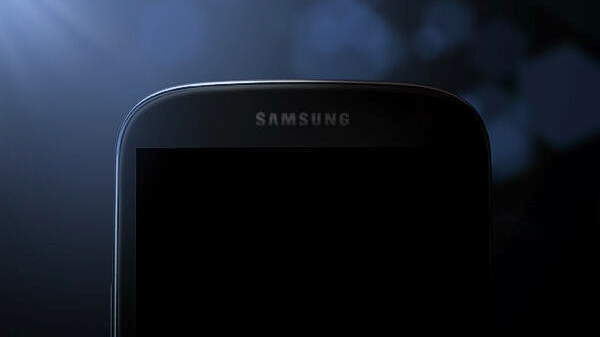
One measure of any brand’s success is how much people talk about it. By that reckoning, Apple’s star is fallen, while Samsung’s rises. Consider the amount of rumors the past month or so about Galaxy S IV, which launches this week, and contrast that against near silence about anything Apple. Turn back the clock a year and you’ll see modest buzz about the S3 but ongoing Apple rumors that stole the thunder from the Consumer Electronics Show, Mobile World Congress and just about every single new mobile product launch. (Yet this year, Apple efforts to overshadow CES failed.)
Then there was the noise, noise, noise from Apple’s patent lawsuit against Samsung, which hundreds of bloggers and journalists used to repeatedly label the South Korean company the world’s worst worrisome copycat. In the end Samsung’s image is no worse for wear, while Apple rumors wear thin. The most prominent recent one is about a watch. For the wrist? What Citigroup analyst Oliver Chen calls a $6 billion business for Apple. Let me make that clear, because shorthand lacks the impact: $6,000,000,000! That’s more than iPod generated in fiscal 2012 ($5.6 billion). Yeah, right.
Big Brand Bust-out
Suddenly Samsung is the cool kid in town, and that’s no small turnaround. Because Apple enjoyed a long rumor run, going back to the mid-Noughties and increasing after iPhone launched in 2007 and intensifying from late 2009. But since shares started shallowing late last year, Apple talk turned from innovations to lack of them. Meanwhile, Samsung benefited from some smart marketing supporting Galaxy S III’s launch, such that brand perception rose as high as Apple’s in early October, according to YouGov BrandIndex.
For all 2012, while Apple ranks higher (number 3) in the U.S. Telecoms & Technology “Top Buzz” category, Samsung is first among the “Top Buzz Improvers”. In the United Kingdom, Samsung moved into the top 10 for both segments across all brand categories.
According to YouGov BrandIndex: “Samsung’s Buzz score took a serious tumble in August when a US court ordered it to pay Apple $1bn in damages for infringing intellectual property, but it made an impressive recovery and by November had surpassed pre-verdict levels”.
In France, Samsung is #3 in the Top Buzz segment, while Apple ranks fifth. The branding firm doesn’t release data for South Korea, where presumably Samsung is highly-regarded.
Elsewhere, Brand Finance’s 2013 list of the top-500 global brands puts Apple as leader, but Samsung rose four spots to take second place from Google.
Soaring Sales Share
Meanwhile, Samsung commands global sales lead over Apple. Samsung sold more than twice as many cell phones in fourth quarter than Apple — 107 million to 43.5 million, respectively, according to Gartner. For all 2012, the South Korean company sold nearly three times as many handsets as its American rival (385 million to 130 million). In the crucial market for smartphones, which accounted for about 45 percent of all mobile sales during Q4, Apple’s market share fell to 20.9 percent from 23.6 percent year over year. Samsung soared from 51.3 percent to 69.7 percent. Sales success says much about a brand’s popularity and growth — the latter because of increased exposure from the logo and advertising.
On the latter, Samsung marketing is aggressive and creative, particularly anchored by “The Next Big Thing” campaign — famous for ridiculing people who wait outside Apple Stores for new iPhones. More recently, leaks and teasers for Galaxy S IV generate heaps of blogs, stories and social shares across the web. Samsung viral efforts aren’t new, they’re just now succeeding, which again says much about brand perception.
Something else: In a break from form, Samsung will launch Galaxy S IV here in the United States. Rather than typical kick-off on home turf and roll out to many other countries first, Samsung’s mobile unveils on Apple’s home turf. Even a year ago, the electronics giant wouldn’t have been so bold, and for good reason: Until recently American analysts, bloggers and journalists wagged their keyboards for Apple.
Samsung Switchers Sing
But sentiments have changed. They say March can come in like a lamb or lion (good weather or storm). Mac journalist Andy Ihnatko started the month off with a storm by explaining why he switched from iPhone to Galaxy S III — in three parts. Days earlier, Guy Kawasaki, another Android convert and man responsible for building Apple’s guerrilla marketing contingent, started working for Motorola as chief evangelist.
All in all there is a key undercurrent: Samsung gets the kind of rumor attention and buzz that not long ago Apple almost exclusively commanded — and if you read tech anything anywhere, gadget geeks have heart palpitations anticipating Samsung innovations. All while high-profile techies flip iPhone for Android and lead others to follow. To recap:
- Rumors about Galaxy S IV are everywhere; Apple’s camp is silent.
- Samsung brand awareness rises, despite damage done by Apple patent suite.
- Samsung smartphones sales rise — 18 points year over year — while iPhone fall.
- Samsung marketing is super aggressive and successful, which once described Apple adverts.
- Galaxy S III proved to be a hugely-innovative handset and geeks clamor in anticipation for the S4.
What a difference a year makes.
-
Acer’s new $279 C7 Chromebook runs for 6 hours, doubles down on memory
When I reviewed Acer’s $199 C7 Chromebook, I generally liked it for the price. The biggest issue I had was the 3.5 hours of battery life: that’s simply not enough for a laptop that will be used on the go. The good news is that Acer heard those complaints about the battery capacity and did something to improve it. On Tuesday, the company introduced a $279 Chromebook with 6 hours of run time on a single charge.
Acer is marketing the device to the education market but consumers interested in a low-cost Chromebook may want to take a look. I used the older C7 model for a few weeks as my daily computer and as long as I was able to find an outlet, it worked well. The new C7 device uses an Intel Celeron chip just like the prior edition (see performance marks here for the old model) and includes 4 GB of memory, which is double the memory of the $199 model.
Is the extra battery life and double the RAM worth an extra $80? I’d say yes. If you’re interested in the Acer C7, this is the model that I’d spring for. Another compelling option would be the $249 Samsung Chromebook, which just gained Netflix support yesterday, although that particular Chromebook is half-step slower. It uses an ARM-based chip, typically found in smartphones or tablets, instead of an Intel Celeron.

Related research and analysis from GigaOM Pro:
Subscriber content. Sign up for a free trial.- What the Google-Motorola deal means for Android, Microsoft and the mobile industry
- The State of the Smartbook
- Life After Chrome: What’s Next for Android

-
Acer Ups The C7 Chromebook’s RAM, Battery Life And, Sadly, Price
The Acer C7 Chromebook is now a bit more powerful. With the RAM doubled to 4GB, the latest flavor of Acer’s inexpensive but still tasty Chromebook should be able to handle a few more simultaneous tasks. Plus, the new model ships with a 6 cell battery able to last 6 hours rather than the 4 cell found in the original. Too bad Acer couldn’t manage these upgrades without inflating the price from a cute $199 to a slightly intimidating $279.
Acer previously noted that the C7 was a huge hit with the education crowd, once accounting for 5-10% of all of its US shipments.
The C7 is now more expensive than the Samsung Chromebook. For $249 the Samsung Chromebook is less expensive, thinner, and sports a longer battery life. However, the Acer still tops the Samsung in some areas.
The Samsung Chromebook only contains a 16GB hard drive where the Acer rocks a 320GB HDD. Plus, with an Intel Celeron 847, now backed with 4GB of RAM, the system is a touch more powerful than the Sammy’s ARM SoC — an important fact for those looking to put Linux on the little notebook.
The new C710-2055 is priced at $279 and initially headed only to Acer’s commercial market. At that price it’s sadly out of the impulse buy range, but still a good deal for a platform quickly gaining traction. The original C7 was a huge hit with the education crowd; a repeat performance is likely in the cards.
-
Apple’s HDTV reportedly delayed, iWatch may launch this year

-
Silver Spring Networks IPO expected on Wednesday
Smart grid networking company Silver Spring Networks is expected to start trading as soon as Wednesday of this week on the New York Stock Exchange under the symbol SSNI, according to the Wall Street Journal, and other media reports. After first filing for an IPO back in the summer of 2011, the smart grid company now plans to sell 3.7 million shares at a price of between $16 and $18 per share, which at the midpoint would raise $63 million for the company.
That’s a pretty modest IPO for the decade-old company, and is less than half of the maximum that Silver Spring originally planned to raise a year and a half ago. If Silver Spring does go public Wednesday morning, expect it to price its shares late in the day on Tuesday. Along with the IPO, longtime investor Foundation Capital also plans to purchase $12 million worth of stock at the IPO price in a private placement.
Silver Spring sells wireless networks and smart meters to utilities that can be used to run power grids more efficiently and offer news types of grid services. The company is increasingly looking to sell software and services, and not just infrastructure, to help it boost its margins.
Silver Spring has a lot of business, and is one of the leaders when it comes to selling smart grid networks to utilities. However the business is inherently slow going (with long sales cycles), and pretty low margin. In 2012, Silver Spring generated $196.74 million in revenue, which was slightly down from its net revenue in 2011 of $237.05 million. The company generated a net loss in 2012 of $89.72 million, which was a smaller loss than its net loss in 2011 of $92.36 million.
Because its sales cycles are so long, its backlog of deals and billings (what it’s billed customers for but hasn’t converted to revenue yet) are more telling of how much momentum the company has. Silver Spring says it had $304.33 million worth of billings in 2012, which was a jump from its $236.13 million worth of billings in 2011. Silver Spring says it has $508.06 million worth of deferred revenue by the end of the 2012.
We’ll keep you updated on potential pricing and the debut of the IPO.

Related research and analysis from GigaOM Pro:
Subscriber content. Sign up for a free trial.- Ups and downs for cleantech in Q1
- Green IT Q4: solar, subsidies and the outlook for EVs
- Cleantech, meet connectivity: a new era of energy efficiency

-
Microsoft’s next chapter: Putting Bing tech inside our homes and data centers
Two terms kept popping up as I watched a slew of Microsoft executives show off the company’s future at its annual TechForum media gathering last week. One was “machine learning.” The other was “Bing.”
I would have been surprised had I not sat down with Microsoft Technical Fellow Dave Campbell the night before the event to talk big data. After all, I was in Redmond — home of Word, Excel and a, shall we say, misunderstood new operating system — not Silicon Valley, where “machine learning” now rolls off the tongue as easily and often as “startup” or “triathlon.”
However, a single rhetorical question from Campbell resonated pretty loudly and got me in the right frame of mind for what I was about to hear: Who else, he asked, has a top-tier web service business (complete with the hundreds of petabytes of data those services collect) as well as a top-tier enterprise software business?
He could have added to that list a consumer software business, 30 percent of the world’s long-distance calls, a mobile device business, one of the world’s most popular gaming platforms, a large-screen touch-display business, and a motion-sensing device that ties into — and can control — all of them. They all came into play at TechForum, as various company presidents, engineers and now-adviser-to-the-CEO Craig Mundie demonstrated a future where everything is connected and trying to learn what we like and what we’re doing.
Bing is the key to it all (even if it can’t touch Google)
Microsoft’s Bing search engine is at the core of everything the company is trying to do in the field of machine learning and cutting-edge big data. That fact makes it an important part of Microsoft’s future even if it never gets close to Google search in terms of revenue or users. “Its long-term value is just as much as a deep infrastructural element,” Mundie said during a Q&A session kicking off the event.
What he means is that Bing is valuable because the technology developed to power it ultimately stands to make Microsoft a lot more money in other areas. Qi Lu, Microsoft’s Online Services Division president (and an integral part of the maturation of Hadoop inside Yahoo earlier this century), describes Bing’s primary architecture as less of a traditional keyword index and more of an “information fabric.” We’re building a digital society, he explained, so there are digital entities — people, place and things — and Bing must be able to capture the rich spatial, temporal and other relationships among them.

A research project for analyzing viral web content.
Taking that vision company-wide, Microsoft can take in data from Bing, Skype, Xbox Live, Office 365 and other sources and actually be able to store, process and analyze it in a meaningful ways. Internally, this might be for business-intelligence or product-development purposes. Externally, Microsoft might use data to create experiences that span devices and services.
Bing also feeds the pipeline for future enterprise IT products, particularly when it comes to data management. Campbell tells the story of meeting a colleague years after he left the SQL database team and went to work on Bing’s infrastructure. At that point, their worlds were vastly different, but the advent of and hype around big data has converged them once again.

Satya Nadella at Structure 2012
(c) Pinar OzgerDuring his presentation, Satya Nadella, Microsoft’s Server and Tools Business president, said the company now builds internal IT with a design-for-first-party-but-think-of-third-party mentality. As a result, the core of the Windows Azure cloud-computing platform is based on technologies developed to run Bing, as is the Windows Azure storage service. When Microsoft builds a new operating system, he added, it thinks about the project at webscale in terms of what it would take to run Bing using that platform.
And Campbell told me via email after the event that Microsoft is considering how to productize the various graph, NoSQL and other types of databases it uses to power the features within Bing. Ironically, though, its Cosmos and Dryad technologies that serve as the core of Bing are off the table: consumers demanded Hadoop, so that’s what Microsoft is currently pushing for mass storage and large-scale batch processing.
Google, of course, is doing something very similar, albeit with less of a focus on enterprise software as a final destination for its technologies (with the exception of its small suite of cloud services such as Compute Engine, App Engine and BigQuery). Rather, the types of advances in data storage, processing and analysis that Google has made thanks to products such as search and YouTube are finding their way into Project Glass and self-driving cars. Time will tell whose efforts prove wiser in the end.
A little history and prognostication on machine learning
Mundie said machine learning, especially, has been a core part of Microsoft Research’s focus for years. And although there were some initial struggles, including a dearth of good data and machines powerful enough to process it all, the company and the industry as a whole have come a long way. Among the big areas of improvement he cited were real-time speech recognition — Microsoft has done some impressive work in this area, actually — and natural user interaction.
“We’ve talked for a long time in the industry about IT meaning information technology,” Mundie said, “… you might redefine IT to be intelligent technology.”
Eric Rudder, Mundie’s protégé and chief technical strategy officer, elaborated. If you think about all the pictures and other info Microsoft’s devices and services capture, he said, you’ll see a lot of opportunity to learn and build better products. Stepping out of the consumer world, he questioned how one might begin working with a 40-billion-row Excel spreadsheet. Query it, talk to it or somehow use gestures to communicate with it?

Mundie (right) and Skype President Tony Bates (left).
Mundie thinks Microsoft can answer these and other questions — this despite a relative lack of attention compared with Google’s research efforts and a consumer community he says is “jaded” by the omnipresence of high technology. TV makers are copying Kinect, speech will be the most-prevalent user interaction and cameras as inputs are coming soon, he said. And Microsoft’s machine-learning research will let it capitalize or even lead the way on these movements, he added.
As I’ll highlight in a follow-up post, Microsoft showed off a lot of these capabilities to the handful of journalists invited to TechForum. Kinect, Office, Xbox Live — they’re all watching, listening, learning and working together.
It’s part of a greater transition away from “specialized gadgets” that process information and into a world full of generally intelligent devices and services that just let people get stuff done. “The vast majority of humankind,” Mundie said, “doesn’t really care about the computer, per se.”
Have research division, will persevere
In the end, Microsoft Chief Research Officer Rick Rashid expects Microsoft’s heavy investment into general research of the kind his team does will help it get the last laugh over some of its competitors. He wonders whether companies like Apple — which already saved itself once — will be ready to ride the next wave of innovation or the one after that without dedicated general research departments that aren’t necessarily tied to product development. His view is that you can only buy yourself into the next generation so many times.

A project (same as the feature image) called Adaptive Machine Learning for Real-Time Streaming.
It was Microsoft Research, for example, that developed a method for compressing 32-bit code in the early 1990s — something that would prove fortuitous when it came time to ship Windows ’95 and its associated applications despite the fact that most PCs lacked the proper hardware for the 32-bit OS. In terms of establishing the dominance of Office over its peers that had to wait until the hardware caught up, Rashid told a group of reporters during the event, “that was game over.”
“Our industry is littered with companies that aren’t here anymore,” he added.
Touché. Microsoft is the butt of a lot of jokes, but as the tech world shifts toward intelligent devices and alternative mode of human-computer interaction, the company’s research into areas such as big data and machine learning suggest it will still be very much around for some time to come.
To learn a lot more about machine learning and the latest trends in big data technologies, be sure to attend our Structure: Data conference March 20-21 in New York. Speakers will include some of the brightest minds in data from organizations such as EMC, Facebook, Cloudera, Quid and even the CIA.


Related research and analysis from GigaOM Pro:
Subscriber content. Sign up for a free trial.- Takeaways from the second quarter in cloud and data
- How search can unlock the power of big data
- The importance of putting the U and I in visualization

-
Google Confirms Glass Will Eventually Work With Prescription Lenses

Geeks rejoice! Hot off exciting news from SXSW, Google just confirmed via the Google Glass G+ page that Glass will, of course, work with prescription lenses — that is, in future models. The design is still in the works. Apparently the Explorer Edition is not compatible with custom lenses, but Google says to expect the new design this year.
As noted in the posting, the Google Glass design is modular, allowing for a wide range of options, including prescription lenses. Shown here is Greg Priest-Dorman, a member of the Glass team and an early pioneer in wearable computing, wearing one of the prototypes currently in testing.
This shouldn’t come as much of a surprise. The team acknowledges that they understand it’s an important design consideration. Because, well, a lot of people have to wear glasses.
-
Google Now for Chrome changes EVERYTHING
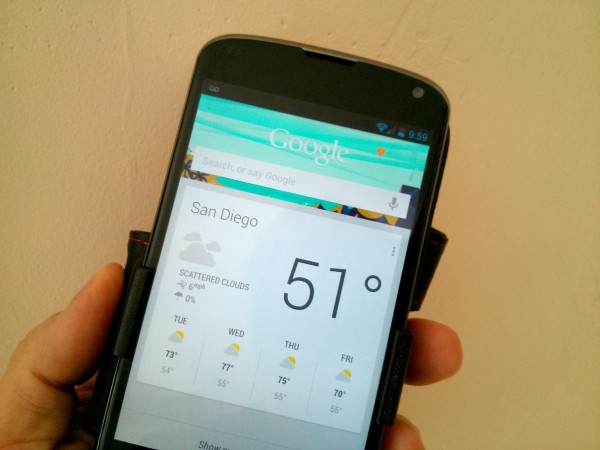
François Beaufort, the developer who recently made headlines by outing Chromebook Pixel, is stirring up things again. He uncovered code that all but assures Google Now will soon come to Chrome and Chrome OS. I can’t overstate how enormously game-changing the service will be. Google Now is the purest evolution of sync and the killer app for the contextual cloud computing era.
We are on the cusp of Star Trek computing, where information is available at the command of your voice and the machine is a personal assistant that anticipates you. Google Now delivers a hint of this future on Android devices. Bringing it to PCs puts the search and information giant ahead of everyone because, with the exception of a possible future Microsoft-Facebook partnership, no other company has the resources to provide so much personalized information to so many people in so many places in so many ways.
Context is King
If you’re looking for a reason why Apple stock falls, while Google’s rises, context is the reason — not innovation. The “i” word is overused anyway. Apple operates under the misconception that we have entered the post-pc-era. There is no such thing. I contend (again) that this is the contextual cloud computing era where how, when and where devices and services are used matters more. How people use iDevices change depending on context, but the underlying cloud services deliver it. Google gets context. Few other companies do.
The cloud is all about context. Content follows users everywhere, independent of device. Your music is available anytime, anywhere on anything. You watch a movie in one context, sitting in man chair at the mall on a smartphone and resume on the big-screen TV at home. Content is the same, but context and device change. They say content is king. No, context is.
The surest way to platform success, particularly around ones where third parties build other stuff and profit from it, is the killer application. More than one is even better. But I use application differently than most people do. I don’t refer to the software program, but how the thing is used. The context. The PC offered greater contextual usage than the mainframe. Suddenly a computer could be used inside a small business, home or school rather than fixed terminals connected to a mainframe. Smartphones and tablets provide even greater context, as do panels delivering ads on the street or recipes to your refrigerator. There are more applications — meaning ways the thing is used.
But in this computing era, devices don’t stand alone. They are connected. In June 2007, I started calling out sync as the “killer application” for the connected-device era, warning: “If Google gets synchronization right before Microsoft, it’s game over”. No company does sync better than Google. But the term isn’t just about synchronizing information but getting your life in sync — that’s the practical benefit the search and information delivers, particularly with Google Now.
Here and Now
One dozen products — Android; Apps; Chrome; Gmail; Google+; Maps; Search; Search, plus your World; Shopping; Talk; and YouTube — form the current contextual platform that culminates in one service. Google Now, alongside Notifications and voice search, sits atop it all, proactively providing information relevant to you. The service taps into search, location and behavior — what you do when and where — providing presence and assistance. That’s scary to some people, but the information also saves time, like being warned about a traffic accident before starting your commute home or your flight is cancelled before heading out to the airport.
Location services are critical to context as Google gives it. As a platform, everything changes the day some service seriously starts sending proactive advertising based on location. If you search for pizza on smartphone or tablet, there should be discount coupons with the results — scan and redeem on site. Or, using a service like Google Now, consumers should see coupons or discounts as notifications — if they opt-in to accept them. That’s how the search and information giant could eventually profit from the service and make it appealing to third parties.
Google Now isn’t just about context, but context that directly matters to you in the moment. Hence “Now” in the name. Using the overused “i” word again, “life-changing” is often the term most people apply to real innovations. The World Wide Web, digital video recorder, Wikipedia, search and smartphone are all examples of products or services that viscerally changed behavior. Quickly. In less than a generation. My 18 year-old daughter can’t remember a time when she couldn’t pause live TV or easily record shows. Mosaic was just a research project and Netscape a beta browser the year she was born.
Google Now certainly changes my life. But the application, the context, is confined to Android. The service doesn’t go everywhere I need it. By bringing Google Now and Notifications to Chrome, the process of keeping life in sync raises to a whole other level — and will give people who use the service on the PC all the more reason to want it on smartphone or tablet. That’s good for Android, even if Google chooses to support iOS.
Last week, Facebook introduced a new News Feed that is uniform across devices. That’s the right approach. But Google does better by providing a contextual service which user experience promises to be uniform, also across devices, but more relevant. “Good Morning, Dave. Today is your assistant’s birthday. There’s a traffic jam on the I-5. ‘Skyfall’ is available to purchase from Google Play. Amazon Prime shipped your Gillette electric razor. Movie ‘2001: A Space Odyssey’ recorded over night”.
Photo Credit: Joe Wilcox
-
Nokia Lumia 928 with metal casing rumored for April debut on Verizon

-
A Google Glass app I want made: carbon emissions viewer
Google showed off a few sample apps for its augmented reality Google Glass at the SXSW festival this week, and the apps were pretty obvious ones, including being able to view select headlines from the New York Times, checking out your Path photos and being able to read your emails. And while I know most of the early apps built are going to be like this — services help people manage their digital communication — I really want an app that helps people see the world differently and potentially help with important global issues like climate change.
That’s why I really want a concerned and passionate developer to build a carbon emissions viewer for Google Glass. The concept could be pretty simple. The app would take objects — from cars to buildings to cell phones — that use electricity or oil and overlay them with data or imagery about how much carbon, or greenhouse gases, they are emitting.
Depending on how the developer wanted to visualize the data, the app could show an infographic, graphics that look like smoke clouds, or just a couple of basic data points. Most of this type of data is out there and being collected by energy software companies, government institutions, nonprofits utilities and others.
Companies that collect such data have long tried to figure out creative ways to make data about carbon emissions interesting, provocative, compelling and cool. Grist’s David Roberts blogged about the rare non-sucky infographic on climate change this week. The Victorian Government created this video campaign to illustrate carbon emissions as black balloons a few years ago.
If there was a super compelling visual rendering of greenhouse gas emissions, perhaps that would help more people galvanize around carbon emissions reducing projects and technologies, like lower emissions cars, and energy efficient buildings. These types of projects and technologies are pretty boring, and unless there’s some way that they can be made more compelling, they’ll continued to be under investigated and under funded.
Another inherent problem with climate change and carbon emissions is that emissions can’t be seen by the human eye, so they are easy for people to dismiss. Pollutants that produce smog, or smoke, or make water dirty, are far easier to get people to rally behind, because there’s constant visual proof. There’s proof for carbon emissions, of course too, but you need instruments like Picarro’s emissions detecting sensors.
There’s already some websites and smart phone apps that are trying to make a similar idea to this carbon emissions viewer. There’s CO2GO, a mobile app that calculates in real-time the carbon emissions of a user while you’re on the go. And there’s 3D visualizations like the carbon emissions globe. But placing this data over the eye, so that it becomes ingrained in daily life, could be even more powerful.
O.K., so such a carbon emissions app wouldn’t be something you’d want to use or wear all the time. Or very often. It’d be more like an educational tool or a art project. But I think it would be important.
So calling all developers. There’s some data sourcing and UI work you’d need to figure out, but anyone up for a carbon emissions viewer Google Glass app?

Related research and analysis from GigaOM Pro:
Subscriber content. Sign up for a free trial.- The fourth quarter of 2012 in cleantech
- Cleantech and investment in 2013
- The next generation of battery technology


