Author: Serkadis

  • UCLA-led study finds devices no better than meds in recovery from clot-caused strokes

    When someone has a stroke, time equals brain. The longer a stroke is left untreated, the more brain tissue is lost. Since the only proven treatment — a clot-busting drug — works in less than half of patients, stroke physicians had high hopes for a mechanical device that could travel through the blocked blood vessel to retrieve or break up the clot, restoring blood flow to the brain.
     
    But in a recently completed multi-site trial in which UCLA served as the clinical coordinating center, researchers found there was no overall recovery benefit to patients treated with clot-removal (embolectomy) devices, compared with standard post-stroke care, which includes monitoring blood pressure and ensuring the brain is receiving oxygen.
     
    The study also found that using brain scans to identify which patients might be the best candidates for embolectomy did not lead to better outcomes for those patients.
     
    The study was sponsored by the National Institutes of Health, and the results appeared in the March 7 edition of the New England Journal of Medicine.
     
    Treating an acute stroke is always a race against the clock, and the first step is to immediately determine, through the use of a CT or MRI brain scan, whether the stroke is a hemorrhagic stroke, caused by a burst blood vessel, or the much more common ischemic stroke, caused by a clot blocking the flow of blood in a blood vessel.
     
    With an ischemic stroke, the clot-dissolving drug called tissue plasminogen activator, or tPA, is approved for use within three hours of the onset of stroke symptoms. But most stroke victims don’t arrive at the hospital within that time frame, and even then, tPA may simply not work. Patients who don’t respond to tPA then receive standard post-stroke care, or they may be considered for an embolectomy.
     
    The MR RESCUE (Mechanical Retrieval and REcanalization of Stroke Clots Using Embolectomy) trial sought to determine if imaging the brain to see how much stroke damage has already occurred could identify which patients might be the best candidate for this procedure.
     
    The trial, which began in 2004 and involved 22 sites in the U.S., included 118 patients (average age 65.5) who were treated within eight hours of experiencing an ischemic stroke. All the patients underwent a CT or MRI brain-imaging scan before treatment.
     
    Drawing on information from the scans, the investigators divided the patients into two groups. Patients with a favorable treatment pattern had only a small area of infarct (dead tissue) and a large area of threatened but salvageable brain tissue (called penumbral tissue). Patients with an unfavorable pattern already had a large area of infarct or a small area of penumbral tissue.
     
    Patients from both of these groups were randomly assigned either to receive the standard medical treatment or to have their clot removed by the MERCI Retriever (a tiny corkscrew-like device developed at UCLA that “grabs” clots) or the Penumbra System (a device that sucks clots out). Both devices work by inserting a catheter through the patient’s groin to the blocked brain artery.
     
    The hope was that by quickly removing the clot, blood would be restored to the penumbral tissue, thereby saving it. But the results showed that the level of disability 90 days after suffering a stroke was no different between those patients who underwent the clot-removal procedure and those who received standard care. Rates of death and bleeding in the brain were also the same. In addition, there was no difference between the group in which brain scans showed significant amounts of salvageable brain tissue and those with only a small area of penumbral tissue.
     
    “We found no data showing that imaging could help select patients for treatment, nor did we show an overall benefit of performing an intervention to physically remove the clot,” said Dr. Reza Jahan, co-principal investigator for the trial, an associate professor of interventional neuroradiology and a member of the UCLA Stroke Center. “So that was disappointing. On the other hand, there are new devices that open up vessels better and faster, and with fewer complications, than the first-generation devices used in our trial.”
     
    Last March, the U.S. Food and Drug Administration approved the use of the next-generation mechanical device. Developed for ischemic stroke, in part by Jahan, the SOLITAIRE Flow Restoration Device dramatically outperformed the Merci Receiver. SOLITARE has a self-expanding, stent-like design, and once inserted into a blocked artery using a thin catheter tube, it compresses and traps the clot. The clot is then removed by withdrawing the device, reopening the blocked blood vessel.
     
    Results of the SOLITARE study showed that the device opened blocked vessels without causing symptomatic bleeding in or around the brain in 61 percent of patients. By comparison, the older MERCI Retriever was effective in 24 percent of cases.
     
    Jahan believes, then, that it would be premature to dismiss the value of endovascular therapy.
     
    “The new devices do work better,” he said. “Whether that will translate into improvement in outcomes is not known, and the only way to test efficacy is by doing a controlled trial.”
     
    There were multiple authors on the study, including UCLA’s Jeffrey Gornbein, Jeffry R. Alger, Val Nenov and senior author Jeffrey Saver, director of the UCLA Stroke Center and a professor of neurology. Please see the paper for other authors and conflict-of-interest statements.
     
    The UCLA Stroke Center, recognized as one of the world’s leading centers for the management of cerebral vascular disease, treats simple and complex vascular disorders by incorporating recent developments in emergency medicine, stroke neurology, microneurosurgery, interventional neuroradiology, stereotactic radiology, neurointensive care, neuroanesthesiology and rehabilitation neurology. The program is unique in its ability to integrate clinical and research activities across multiple disciplines and departments. Founded in 1994, the UCLA Stroke Center is designated as a certified Primary Stroke Center by the national Joint Commission on Accreditation of Healthcare Organizations. 
     
    For more news, visit the UCLA Newsroom and follow us on Twitter.

  • Verizon starts $199 BlackBerry Z10 pre-orders March 14

    BlackBerry is gearing up for a big March in the US: Verizon has announced pre-orders to start for the Z10 handset on March 14. The phone will cost $199.99 with contract and be available in either black or a Verizon exclusive white color. In an updated press release, Verizon says the phone will be available online and in retail stores on March 28.

    The news from Verizon was announced not long after BlackBerry itself published a press release, saying it had received it’s largest handset order from a single company in history: one million BlackBerry Z10′s were purchased from an unnamed company. Given Verizon’s solid support for BlackBerry in the past, it could be that unnamed partner.

    Verizon has previously said it intends to sell the BlackBerry Q10, a device with touchscreen and hardware keyboard, but there are no additional details about that phone. BlackBerry executives have said that the Q10 is being tested by US carriers and the company is hopeful to see the phone launch in April.

    Related research and analysis from GigaOM Pro:
    Subscriber content. Sign up for a free trial.

  • 5 reasons why a successful Silver Spring IPO is important

    After almost two years, Silver Spring Networks has finally held its long-awaited IPO. And with a couple hours left until the market closes on its debut, the IPO could be considered a modest success. Silver Spring priced at the middle of its expected range ($17 per share), and then saw its shares soar almost 30 percent on its debut.

    While the $81 million that the company raised in the IPO wasn’t as much as the maximum value of the $150 million that Silver Spring originally filed for back in the summer of 2011, the sale was “oversubscribed,” said Silver Spring Networks CEO Scott Lang, and the company opened up a million more shares to sell on Tuesday night. We’ll still have to see how the company’s stock fares over the following weeks and months, but the overall debut day has been positive.

    Here are five reasons why it’s important that Silver Spring Networks had a relatively successful IPO:

    1). Priming the smart grid IPO market (Opower?): At the Distributech show earlier this year, smart grid execs told me that all eyes were on Silver Spring’s planned IPO to see how the market would react. If the IPO was successful that would mean that a company that has been growing, like Opower, could potentially follow in its footsteps. Opower, like Silver Spring, has been considering an IPO since late 2011. 2012 was clearly a difficult year for IPOs from energy-focused companies, but it looks like 2013 could be better. Opower and Silver Spring also share an investor: Kleiner Perkins.

    2). A modest win for cleantech investors: While it wasn’t a huge return, the IPO represents one of the rare successful exits for venture capitalists that put money into cleantech companies. Foundation Capital owns 12.26 million shares after the IPO and its private placement (it agreed to buy $12 million more worth of shares at the IPO price). At, say, $21 per share, Foundation’s shares are worth $257.46 million. Kleiner owns 5.66 million worth of shares, and at $21 per share, that’s worth $118.86 million. So yep, not huge, but at least these are exits.

    3). Silver Spring needs to be a big public company: The IPO is important for Silver Springs because the company is competing with large public companies for utility business. Utilities like to do deals with big, stable firms, that they feel will be around for awhile. It’s hard to break into the utility sector as a startup. To take business and sales to the next level, Silver Spring needed to bulk up. The funds, of course, will also be helpful to grow the smart grid business.

    4). The smart grid is real and being built: The rollout of the smart grid has suffered from PR problems due to smart meter security fears, and an expected slow down of the installation of smart meters in the U.S. Successful moves by smart grid pioneer Silver Spring shows how the smart grid continues to be built out in the U.S. and internationally.

    5). The importance of patient investors and entrepreneurs: Silver Spring was founded in 2002, and has been building its business for over a decade. Foundation Capital was an early investor in the company and has supported Silver Spring’s ups and downs over the years (including an early time when the tech hit some hurdles). Now a decade later, Foundation has gotten its exit and still owned a little over 30 percent just before the IPO. (Foundation owned over 40 percent when Silver Spring first filed for its IPO in 2011). Foundation’s Warren Weiss, sits on the board. The company was co-founded by Eric Dresselhuys who still remains at the company as Executive Vice President and Chief Marketing Officer.

    Related research and analysis from GigaOM Pro:
    Subscriber content. Sign up for a free trial.

  • Google CEO Larry Page’s memo about Android leadership changes

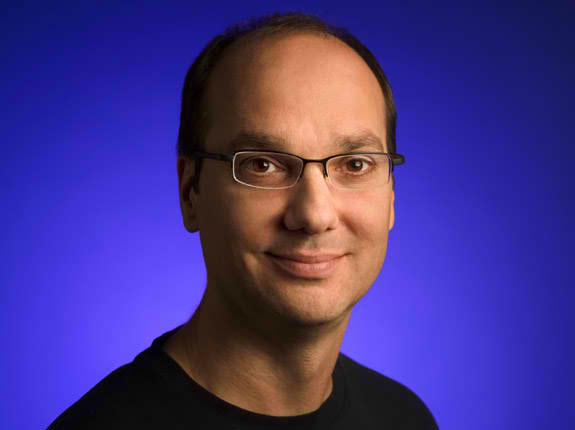
    This afternoon, in a rather shocking and unexpected move, father of Android Andy Rubin stepped down — or was forced to — in a leadership change sure to shift the direction of Google platform development. Sundar Pichai, senior vice president for Chrome and Apps, assumes responsibilities for Android.

    Larry Page broke the news, offering praise alongside Google cofounder Sergey Brin for Rubin’s enormous contribution. The follow memo follows.

    Sergey and I first heard about Android back in 2004, when Andy Rubin came to visit us at Google. He believed that aligning standards around an open-source operating system would drive innovation across the mobile industry. Most people thought he was nuts. But his insight immediately struck a chord because at the time it was extremely painful developing services for mobile devices. We had a closet full of more than 100 phones and were building our software pretty much device by device. It was nearly impossible for us to make truly great mobile experiences.

    Fast forward to today. The pace of innovation has never been greater, and Android is the most used mobile operating system in the world: we have a global partnership of over 60 manufacturers; more than 750 million devices have been activated globally; and 25 billion apps have now been downloaded from Google Play. Pretty extraordinary progress for a decade’s work. Having exceeded even the crazy ambitious goals we dreamed of for Android—and with a really strong leadership team in place — Andy’s decided it’s time to hand over the reins and start a new chapter at Google. Andy, more moonshots please!

    Going forward, Sundar Pichai will lead Android, in addition to his existing work with Chrome and Apps. Sundar has a talent for creating products that are technically excellent yet easy to use — and he loves a big bet. Take Chrome, for example. In 2008, people asked whether the world really needed another browser. Today Chrome has hundreds of millions of happy users and is growing fast thanks to its speed, simplicity and security. So while Andy’s a really hard act to follow, I know Sundar will do a tremendous job doubling down on Android as we work to push the ecosystem forward.

    Today we’re living in a new computing environment. People are really excited about technology and spending a lot of money on devices. This is driving faster adoption than we have ever seen before. The Nexus program—developed in conjunction with our partners Asus, HTC, LG and Samsung—has become a beacon of innovation for the industry, and services such as Google Now have the potential to really improve your life. We’re getting closer to a world where technology takes care of the hard work — discovery, organization, communication — so that you can get on with what makes you happiest, living and loving. It’s an exciting time to be at Google.

    Photo Credit: Joe Wilcox

  • Andy Rubin steps down as Google Android chief

    “Holy crap!” That was my response to colleague Alan Buckingham, when he informed me that Andy Rubin would no longer lead Android development. He’s the father of Android! But green robot parent no more. The news is simply shocking and hints of some back-room drama and possible disagreement about future Google platform development. I say that because Sundar Pichai, the man behind Chrome OS, adds Android to his responsibilities.

    For some time, Android and Chrome OS users — me among them — have posed quandary: “Why support two operating systems?” Google should bring together Android and Chrome OS. I wouldn’t be surprised if that is the go-forward edict from Google on High, perhaps something Rubin wouldn’t support. Yes, I speculate, but the man is passionate about his child, which Google acquired in 2005.

    CEO Larry Page breaks the news shocking Google developers today. He starts by discussing meeting Rubin in 2004 and the progress of Android today. “We have a global partnership of over 60 manufacturers; more than 750 million devices have been activated globally; and 25 billion apps have now been downloaded from Google Play”. By the way, that’s 250 million more devices than iOS, for anyone keeping count (and developers should).

    “Having exceeded even the crazy ambitious goals we dreamed of for Android — and with a really strong leadership team in place — Andy’s decided it’s time to hand over the reins and start a new chapter at Google”, Page says. “Going forward, Sundar Pichai will lead Android, in addition to his existing work with Chrome and Apps”.

    Hint of change already is in the wind, as Google prepares to bring Google Now and Notifications from Android to Chrome and to Chrome OS.

    Posting to Google+ Marco Bottaro observes: “Scott Forstall out of iOS, Steven Sinofsky out of Windows…and now Andy Rubin is out of Android. We live in interesting times”. I’ll say.

    He continues: “My take — as much as I hate to admit: the smartphone product definition ‘problem’ has been solved. We’ve moved from revolution to evolution and new types of people are needed there. From leaders to managers”.

    Jeremiah N shares some of my sentiment — that it’s “likely that Google wants to merge Android and Chrome OS. The best way to do that is to put the guy who runs Chrome OS in charge of both”.

    “Finally time for Chrome OS and Android to meet in the middle?” Sean Riley asks.

    But the change is more than about Android and Chrome OS merging. There is something bigger at work here. If you read the tea leaves, and I do, Google’s platform of choice increasingly is Chrome. The browser, as development platform, can co-opt operating systems like iOS, OS X or Windows, while also fronting Chrome OS. The browser is more natural fit for Google services and anchors them anywhere.

    By contrast, Android, while hugely popular, is constrained by OEM partners like Samsung. Google delivers fresh features to Chrome and Chrome OS users about every six weeks. Android updates are less frequent and carriers and device manufacturers logjam dispatch. For example, Jelly Bean, which released in July 2012, makes up just 25.5 percent of the devices accessing Google Play in the 14 days before March 5.

    Pichai is the man leading Chrome and apps development for the browser. See where this leadership change is headed?

  • Data Center Links: Elastichosts Expands With Equinix

    Here’s our review of some of this week’s noteworthy links for the data center industry:

    Equinix selected by Elastichosts.  Equinix (EQIX) announced that Elastichosts, a global Cloud Server provider, has deployed in Equinix’s International Business Exchange (IBX) data center in Hong Kong. Elastihosts chose Equinix for its rich cloud ecosystem, to grow its business in Hong Kong, as well as in neighboring countries such as Taiwan, China, Singapore, and the rest of ASEAN (Association of South East Asian Nations). The broad reach of ecosystems available with Platform Equinix gives Elastichosts access to a large marketplace of potential customers for revenue generating opportunities. “Deploying with Equinix in Hong Kong brings us immediate benefits as we enter the Asia-Pacific market,” said Richard Dvies, CEO of Elastihosts. “We are in close proximity to hundreds of networks and through these networks, closer to our customers. Its rich ecosystem gives us the confidence that we can gain access to a broad pool of potential customers and partners to grow our revenue, while its global footprint ensures we can achieve rapid deployment and scalability as we expand our presence across Asia-Pacific.”

    CentriLogic to acquire Capris Group.  Canadian data center operator CentriLogic announced an agreement to acquire the Capris Group, an Ontario-based IT services provider. “This is the first step in our expansion plans across Canada,” said chief executive officer Robert Offley. “The acquisition of Capris rounds out our capabilities in Ontario and the [Greater Toronto Area] and we’ll now look to other provinces.” In addition to western Canada, CentriLogic is also scouring for potential acquisitions in Quebec.  Internationally, it plans to acquire one data centre in the United States, where it currently operates two facilities. It will also add a second facility in the United Kingdom.

  • Amazon cuts Kindle Fire HD prices by as much as $100

    For tablets, 2013 is the year of small form factors — and, presumably, lower prices. Amazon isn’t waiting to see, and that’s a good strategy considering Kindle HD might not be the device Goldilocks is searching for. Unlike the fairy tale where one is too big or two small, Amazon’s tablet may not be just right. Proactive price reduction could change that.

    Here’s the problem: Several analyst firms now predict that slates with 7-7.9-inch screens will command the market, which puts 8.9-inch Kindle Fire HD a wee bit on the plump side. “One in every two tablets shipped this quarter was below 8 inches in screen size”, Jitesh Ubrani, IDC research analyst, says. “In terms of shipments, we expect smaller tablets to continue growing in 2013 and beyond”.

    Amazon’s new pricing certainly is compelling, bringing the entry 4G LTE model to $399 from $499 and top-of-the-liner to $499 from $599. No other cellular contract-free tablet with LTE competes on price. Apple’s iPad mini is closest, starting at $459.

    But there’s a gotcha. The biggest discounts demand users to accept advertising, or what Amazon calls “with special offers”. Those tablets “without special offers” cost more: $414 and $515 for the two 4G models. Prices on WiFi models: $269 or $284 for 16GB and $299 or $314 for 32GB.

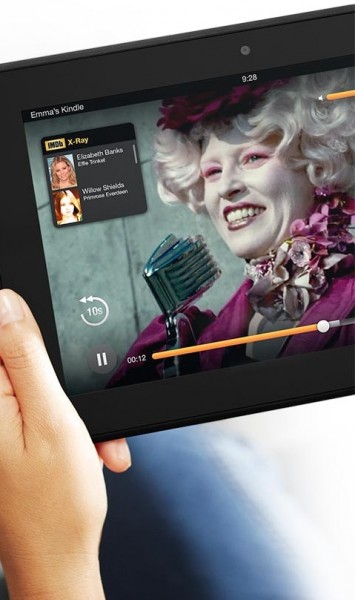
    Kindle Fire HD 8.9″ specs: 8.9-inch display (1920 x 1200 display, 254 ppi); 1.5GHz OMAP4470 dual-core processor; 1GB RAM; 16GB, 32GB or 64GB storage (depending on model); front-facing camera; Bluetooth; WiFi A/N; accelerometer; gyroscope; microphone; and Android. Measures 240 x 164 x 8.8mm and weighs 575 grams.

    Prices (with special offers):

    • Kindle Fire HD 16GB: $199
    • Kindle Fire HD 32GB: $249
    • Kindle Fire HD 8.9″ 16GB: $269
    • Kindle Fire HD 8.9″ 32GB: $299
    • Kindle Fire HD 8.9″ 4G LTE 32GB: $399
    • Kindle Fire HD 8.9″ 4G LTE 64GB: $499

    How that compares with iPad mini:

    iPad mini specs: 7.9-inch back-lit IPS display (1024 x 768 resolution, 163 ppi); A5 dual-core processor; 1GB RAM; 16GB, 32GB or 64GB storage; 5-megapixel rear-facing and 1.2MP front-facing cameras; Bluetooth; WiFi A/N; HSPA+/LTE (on three models); accelerometer; GPS; gyroscope; microphone; battery unknown; and iOS 6. Measures 200 x 134.7 x .28mm and weighs 308 grams.

    • iPad mini 16GB WiFi: $329
    • iPad mini 32GB WiFi: $429
    • iPad mini 16GB WiFi/LTE: $459
    • iPad mini 64GB WiFi: $529
    • iPad mini 32GB WiFi/LTE: $559
    • iPad mini 64GB WiFi/LTE: $659

    Amazon announced the price cuts concurrent with the tablet’s launch in Europe and Japan, with typical vacant fanfare and perhaps a little proactive disinformation (considering IDC’s data). Dave Limp, Amazon vice president, says that the company is “thrilled with customer reaction to Kindle Fire HD 8.9”, but as is typical doesn’t quantify sales. “Customers tell us they love our large-screen version of Kindle Fire HD for web browsing, email, gaming, watching TV shows, reading magazines, and more”. But data from NPD DisplaySearch and IDC shows stronger demand for smaller slates.

    Limp says that expansion to Europe and Japan allowed Amazon “to increase our production volumes and decrease our costs. Across our business at Amazon, whenever we are able to create cost efficiencies like this, we want to pass the savings along to our customers”.

  • With Sundar Pichai in charge, Google signals Android apps on Chrome OS

    Andy Rubin, the driving force behind Google’s Android mobile software, is moving on to new projects. Despite having risen to become the world’s leading mobile operating system since its 2008 debut, the move signals that Android is nearing an evolutionary peak. Now that Sundar Pichai is taking over Android efforts at Google, we might see what I had expected last year: A merger of sorts between Android apps and Google’s Chrome OS.

    It makes more sense now

    It’s really not a leap to make this early conclusion as Pichai has led or been heavily involved with the product management for Google Drive, the Chrome browser and of course, Google’s Chrome OS used on the company’s Chromebooks. His Google+ profile says he’s currently the Senior Vice President, Chrome and Apps.

    That’s part of the puzzle, but one only needs to look at the touchscreen on Google’s new Chromebook Pixel with high-definition display to start putting the pieces together.

    I barely use the touchscreen on the Pixel for web surfing but I would use it for touch-optimized applications. Here’s what I said when the Pixel was launched:

    “What would be an added benefit is taking advantage of that touchscreen with applications. If Google were to add support for the Dalvik VM where Android apps run, the Pixel makes a little more sense to me as a product. Frankly, we don’t need touch on the web for a laptop form factor when multi-gesture trackpads replicate the experience more ergonomically. But if the touchscreen were leveraged for more use cases, that could add value.”

    Support for Android apps on a touchscreen Chromebook would immediately squelch one of the biggest complaints about Chrome OS devices. Criticism such as “it’s just a browser,” is a common theme from Chrome OS detractors. Adding support for hundreds of thousands of Android apps removes that complaint.

    A new way to expand the Android ecosystem

    I still believe that if Android support in Chrome OS pans out that Google will still push both web apps and more touch features for the web. This isn’t an either/or strategy for Google; it’s a way to expand internet use in as many ways as possible, which has the potential to generate more impressions and clicks on the ads that pay Google’s bills.

    Transformer Prime: the hottest Android tablet yet? thumbnailA unification of Chrome and Android isn’t going to be a quick slam-dunk for Google even with Pichai leading the effort. Android is clearly meant for touch screens and there are relatively few laptops with this functionality, although there are a growing number of choices. Any use of Android apps with a mouse will lessen the experience and if this does happen, Android detractors will have something else to point out.

    What are the challenges?

    Technically, however, I can’t see it too difficult to make the two platforms work together; particularly on Chrome OS devices. These actually already run on a Linux kernel with the browser atop that. Adding a virtual machine or other method to run Android apps on Chrome OS devices should be relatively easy as a result.

    As far as Android in the Chrome browser on other platforms? That’s more challenging, but I’m not sold on Google even doing that; I’d expect Chrome OS to be the main focus of any Android unification, which would provide Chromebooks with a feature that no other devices have.

    The bigger challenge may in regards to branding. Android apps are typically relegated to smartphones and tablets while Chrome OS is a desktop software solution. Sure, Google has the Chrome browser for Android and iOS, but there seems to be little confusion there. Android apps on a Chromebook though? Do we call them DroidBooks at that point? I suspect we’ll find out in mid-May at Google’s I/O developer event.

    Related research and analysis from GigaOM Pro:
    Subscriber content. Sign up for a free trial.

  • Run Modern Apps in Their Own Windows

    Lately, Stardock came up with applications that swing away from the “bells and whistles” label and near the “improved functionality” tag.

    With ModernMix, their latest release, things are not at all about making the computer look cool but more about offering a more comfortable way of using modern UI apps in Windows 8.

    Microsoft d… (read more)

  • Ascent Goes Downtown With New Chicago Data Center

    The Ascent CH2 data center in suburban Chicago. (Credit: Tara Wujcik).

    The Ascent CH2 data center in suburban Chicago. (Credit: Tara Wujcik).

    Ascent, which has built several large data centers in the suburban Chicago market, is going downtown. The developer confirmed this week that it will team with Sterling Bay Cos. to renovate a property on South Desplaines Street as its CH3 data center.

    Ascent has built two data centers on property it owns in Northlake. The first was leased and eventually sold to Microsoft, which used the building as a “container colo” site for its modular design. The second, CH2, is a 250,000 square foot multi-tenant facility whose tenants include Comcast Corp. and a national retail chain.

    The Desplaines site was purchased by Sterling Bay in December. An existing building on the property will be partially demolished. Ascent will retrofit the remaining structure for data center use, and build an addition from the ground up.

    Focus on Flexible Design

    The project will feature Ascent’s build-to-suit “Dynamic Data Center Suites,” which offer infrastructure that can be customized for customer requirements. Each customer in the multi-tenant facility can have its own entrance, security access and shipping and receiving area, as well as dedicated mechanical and power infrastructure. The approach provides Ascent with the flexibility to offer different suite designs within the same property. The site will support high-density installations and low-latency connectivity, a key requirement given Chicago’s concentration of financial trading operations.

    “CH3 is incredibly flexible, unlike the standard multi-story data centers in Chicago, making it adaptable to new technology and server rack designs that some of the older constructions are unable to accommodate,” said Phil Horstmann, CEO of Ascent. “Downtown Chicago is an attractive location for data center space, but previously didn’t offer the options the market is now demanding. We’re talking with companies about their current data center needs and developing CH3 to meet those market demands.”

    The project is the latest in a series of data center developments in downtown Chicago, where data center space has historically been in limited supply. Last year Server Farm Realty opened a data center building on S. Canal Street, and earlier this year Digital Realty Trust deployed new space at its facilities on South Federal Street. There are also reports that Equinix may participate in a proposed project at 111 Cermak Road,

    Ascent says the CH3 project has full capital backing from its current equity partners, enabling fast-tracked development of the space.

  • Wireless carriers stand to make a killing by tracking your every move

    Carrier Location Tracking Opportunity
    As wireless carriers continue to explore new revenue opportunities in an evolving market, services that rely on network-based location tracking are seen as a huge opportunity. “We see a range of new Location Information Services (LIS) emerging around insurance, banking, analytics, M2M/MRM, advertising, hospitality and IVR supported by always-on, cloud-based location across all device types,” ABI analyst Patrick Connolly noted in a recent report. “Additionally, the US, EMEA, Latin American, and Asian carriers are showing strong signs of adoption in 2013, working with a mixture of local and international partners.” Though not all uses of location tracking technology among carriers have been well received, ABI notes that successful proximity-based advertising campaigns are already underway. The firm sees annual revenue from carrier location-based services growing to more than $300 million within the next five years.

  • Fisker founder Henrik Fisker resigns over disagreements

    The founder of electric car startup Fisker Automotive has resigned, citing “major disagreements” with upper management reports Reuters. The news comes at a time when the company has been weighing investment and acquisition offers from Chinese auto tech companies.

    Last month Bloomberg reported that Chinese state-owned car maker Dongfeng Motor Corp had a $350 million offer to buy 85 percent of Fisker, while Reuters reported that China’s Zhejiang Geely Holding Group (which owns Volvo) had another offer for a majority stake with a deal between $200 million and $300 million. As 2012 wrapped up, it was clear that Fisker needed a lifeline in the form of partnerships, investments or an acquisition in order to keep operating.

    Ray Lane's Fisker Karma

    But those offers would represent a major discount from Fisker’s original valuation. The company raised a billion dollars in funding, and at one point back in 2011 had raised money at a reported valuation of $2.2 billion. Fisker appears to be readying itself for a sale, and recently dismissed a lawsuit it had against an insurance company for denying its claim for hundreds of cars that were destroyed by superstorm Sandy. This week Fisker also said that its bankrupt battery supplier A123 Systems owes it considerably more money than the battery company has declared.

    Henrik Fisker is a car designer celebrity, who was responsible for designs at BMW like the Aston Martin DB9, Aston Martin V8 Vantage and BMW Z8 Roadster. He co-founded Fisker with Bernard Koehler in 2007 and acted as the CEO for several years. But he hasn’t proven to be all that adept at running a business.

    FiskerKarmas2

    In early 2012, Henrik Fisker stepped down as CEO and and former Chrysler Chief Executive Tom Lasorda took the helm. Back then Henrik Fisker said he would move into the role of executive chairman and would continue to work on the designs of the cars, marketing and outreach. Then just six months later, Lasorda stepped aside and the company brought in another CEO, former Volt executive Tony Posawatz.

    Now as the company figures out what will happen to it, the high-profile founder has jumped ship. The story is not all that uncommon. Another electric vehicle company Better Place, saw its founder, Shai Agassi, recently depart, too, following slow sales of its cars.

    Related research and analysis from GigaOM Pro:
    Subscriber content. Sign up for a free trial.

  • Andy Rubin steps down from role as Android boss at Google

    Andy Rubin
    Google (GOOG) CEO Larry page on Wednesday confirmed that Android boss Andy Rubin is leaving his current position at Google. “Having exceeded even the crazy ambitious goals we dreamed of for Android—and with a really strong leadership team in place—Andy’s decided it’s time to hand over the reins and start a new chapter at Google,” Page wrote in a post on Google’s blog. Sundar Pichai will now head the Android team and he will also continue to lead Google’s efforts with Chrome and Apps.

  • Samsung keeps its impossible promise

    Samsung Galaxy S IV Preview
    It was Game 3 of the 1932 World Series and with two strikes in the top of the fifth inning, New York Yankees slugger Babe Ruth slowly lifted his arm and pointed straight ahead at the center field bleachers in Wrigley Field. On the next pitch, Ruth sent a Charlie Root curveball screaming 450 feet to the deepest part of the ballpark and then trotted around the bases with a muted smirk on his face. Samsung (005930) marketing boss Younghee Lee was far less dramatic when she foretold a remarkable shift that would soon take place in the smartphone market, but the end result was the same: Samsung made good on an impossible promise.

    Continue reading…

  • Bloomberg all but confirms Samsung Galaxy S 4 features. Any surprises left?

    This Thursday, Samsung will introduce its Galaxy S 4 smartphone in New York City. I’ll be there to cover the event and see the handset. But there may be little in the way of surprises at this point: On Wednesday, Bloomberg reported on several of the phone’s specifications provided to them by “two people familiar with the product.” And if you were hoping for something vastly different in the Galaxy S 4 compared to previous reports, you might want to reset your expectations.

    Over the weekend, I wrote up what I features and functions I though the Galaxy S 4 will have and if Bloomberg’s sources are correct, I wasn’t far off. Per Bloomberg:

    “The phone will sport a 5-inch screen, slightly larger than the one on last year’s S3, according to two people familiar with the product. The U.S. version will use Qualcomm Inc.’s quad-core chip, giving the phone more processing power to handle multiple tasks at the same time, they said. In other markets, it will rely on Samsung’s “octacore” eight-core chip, the people said.”

    I didn’t speculate on the Galaxy S 4 camera, because I inadvertently forgot to. Bloomberg’s sources fill that gap by saying the Galaxy S 4 will use a 13-megapixel camera. I’d expect some innovation in the sensor or optics as megapixels alone don’t guarantee high-quality images.

    Smart Stay Galaxy Note 2Samsung’s eye-scrolling feature reportedly won’t be included with the Galaxy S 4, says Bloomberg’s sources, but it could appear in the future. The hardware to enable such functionality is already available in Samsung devices, so it could be added in a software update.

    I still stand by my predictions of the Galaxy S 4 shipping with 2 GB of memory and Android 4.2 as well as support for the new 802.11 a/c Wi-Fi standard. And nobody has given me any reason to think this won’t be another plastic-based handset with design cues similar to the company’s Galaxy Note 2.

    At this point, I’m not expecting any magical unknown features in Samsung’s newest handset to be shared tomorrow. But as I noted earlier this week: That probably won’t matter when it comes to successful sales.

    Related research and analysis from GigaOM Pro:
    Subscriber content. Sign up for a free trial.

  • Starcraft 2: Heart of the Swarm Review (PC)

    I played the original Starcraft and its Broodwar expansion quite a bit when I was young, fascinated by the simplicity and elegance of the strategy system and by the cool story that Blizzard was telling, with larger than life characters and more twists and turns than any science fiction series.

    I loved Jim Raynor and his heroic stance and the… (read more)

  • Oracle buys private-cloud pioneer Nimbula

    Remember Nimbula, the startup from Amazon Web Services veterans Chris Pinkham and Willem van Biljon that launched in 2010 amid a firestorm of private-cloud activity in every direction? Well, now it’s part of Oracle, the two companies announced Wednesday morning.

    Details on the acquisition are still sparse (trust us, though, we’ll find them), but here’s the official statement from the Oracle website:

    On March 13, 2013, Oracle announced it has agreed to acquire Nimbula, a provider of private cloud infrastructure management software. Nimbula’s technology helps companies manage infrastructure resources to deliver service, quality and availability, as well as workloads in private and hybrid cloud environments. Nimbula’s product is complementary to Oracle, and is expected to be integrated with Oracle’s cloud offerings. The transaction is expected to close in the first half of 2013.

    It’s difficult to say at this point what inspired the deal, but my early assumption is that it’s a win-win. Oracle currently has a cloud computing strategy that’s questionable at best, and its private-cloud strategy seems hinged on selling big, expensive, over-engineered systems with some legacy Sun Microsystems and Oracle software cobbled together to make them, cloudy.

    Structure 2011: Chris Pinkham – Co-Founder and CEO, Nimbula; Duke Skarda – CTO, SoftLayer

    Nimbula co-founder Chris Pinkham (center) at Structure 2011.

    Nimbula was on the scene early and, from all accounts, built a good product, but appears to have succumbed to a lackluster private-cloud buying market. It has a handful of publicly named customers, including Russian search engine giant Yandex, but like so many other private-cloud startups, it might have fallen victim to market confusion (i.e., “Can’t we just keep buying VMware?”) and an industry consensus around OpenStack as the private-cloud savior. Indeed, last year, Nimbula made a strong pivot and actually began rebuilding itself as an OpenStack distribution.

    Maybe Oracle just needed some real cloud talent and/or software and Nimbula just needed a buyer. At any rate, we’ve reached out to Nimbula, Oracle others for comment and will update this story as we hear back.

    Related research and analysis from GigaOM Pro:
    Subscriber content. Sign up for a free trial.

  • Silver Spring Networks’ stock jumps up close to 30% in debut

    Smart grid company Silver Spring Networks saw its shares soar by close to 30 percent in early morning trading on the New York Stock Exchange. Late last night the company priced its shares at $17 (the mid point of its range), and its stock reached a high of $22.49 in morning trading. By 11:00 AM EST, the stock had dropped a bit and has been hovering around $21.

    Silver Spring also last night decided to make 4.75 million shares available, which was 1 million shares more than the company had originally planned. Silver Spring raised $81 million in the process. In addition, longtime investor Foundation Capital also plans to purchase $12 million worth of stock at the IPO price in a private placement.

    Silver Spring sells wireless networks and smart meters to utilities that can be used to run power grids more efficiently and offer news types of grid services. The company counts large utilities as customers like PG&E, Florida Power and Light, Oklahoma Gas & Electric, and Baltimore Gas & Electric.

    The company filed to go public back in the Summer of 2011, and waited out the entire year of 2012 before actually going public. The company’s lead investors include Foundation Capital and Kleiner Perkins.

    Silver Spring Networks CEO Scott Lang told me in a phone call from the New York Stock Exchange this morning that the company “couldn’t be more pleased” with the IPO and that the process was “oversubscribed.” In response to my question of why it took so long to go public, Lang said that there were external market conditions and volatilities that were outside their control.

    “We had a strong year in 2012 and we were patient,” said Lang. Lang owned 2.8 percent, or 1.04 million shares, before the IPO. At $21 per share, that percent is worth $21.84 million. Typically investors and executives have to hold their shares for at least six months before selling them.

    Related research and analysis from GigaOM Pro:
    Subscriber content. Sign up for a free trial.

  • Google I/O sells out

    Blink and you missed it. Registration for Google’s developer conference opened at 10 a.m. EDT this morning and sold out fast. With so much candy to offer — Android Key Lime Pie, Chromebook Pixel, Glass and Google Now — I’m not exactly surprised. Google I/O 2012 was big, and this year’s event promises to be even bigger. I got the “Google I/O is sold out” on the registration page around 10:48 a.m.

    Google charges $900 for general developer admission and $300 for students or school faculty. The event takes place in San Francisco from May 15-17. Considering the goodies Google gives attendees, some people might sign up just for the hope of free Glass or Pixel (don’t hold your breath). Last year, attendees got Galaxy Nexus, Nexus Q and Nexus 7. Oh yeah, Train performed live.

    Uh-Oh

    Like the launch of Nexus 4 and Nexus 10 tablets, Google could not handle the demand, which shouldn’t be the case for a company which primary products are all in the cloud. Many developers report timeouts trying to register or problems processing registration or payment. For a highly-anticipated event, the last thing Google should want to do is leave developers feeling angry or frustrated.

    Armando Ferreira posted to Google+ at 10:21 a.m.: “Couldn’t get a ticket the right way. OK, so I cheated! Still couldn’t get a ticket using multiple devices on different networks with different IP Addresses I give up!”

    Anders Johansen: “I pressed accept and buy, then it loaded for a while with spinner. Then the spinner disappeared and the 5 minutes passed. But if i go to the wallet i can see the payment as pending”.

    “I now have two pending transactions in Wallet”, Taylor Matthews comments on Google+. “Got a confirmation email from the second attempt and a verification code. Sounds like I’m in, not sure what to do about the second $900 charge though”. Idrialis Castillo asks: “Hey, did you got the 2 tickets? I want one of those”.

    At 10:53 — that’s three minutes after I saw that “registration is closed” — Jessica Janiuk posted to Google+: “So, we just confirmed that the Google I/O ticket payments have cleared the bank, but I still am in limbo not knowing if I have a ticket or not. I really wish +Google Developers would provide some answers for those of us in this situation”.

    Then at 11:04 she added: “The pending transactions for Google I/O tickets were just cancelled in Google Wallet. I guess that means I didn’t get a ticket. What a horrible way to get someone really excited and then pull the rug out”.

    Ronald van der Lingen: “Thanks Google for messing up the registration system for I/O so badly. Got through once but Google Wallet kept failing”.

    Alex Hernandez set up a Google+ Community to complain. As I update at 11:33 a.m., there are two members.

    Oh, Yeah

    As a journalist, Google I/O is among my favorite events to cover. I hate Consumer Electronics Show, for example. Microsoft’s developer conference typically isn’t as exciting and secretive Apple locks out press beyond the keynote and puts sessions behind closed doors. I/O typically has lots of energy and interesting technologies and sessions.

    During last year’s event, Google:

    Those people who got tickets are generally excited.

    Phillip Marlow is “going to Google I/O for the first time!” Alex Ford is “so excited to go to my first Google I/O!”

    Then there’s divij durve: “IM GOING TO GOOGLE I/O 2013!!!!!! OH HELL YA!!!!!”

    Hamid Marc Afsharieh is one of the lucky, early ticket holders, posting at 10:25 a.m.: WooHoo. I’m in to i/o 2013. It’s gonna be a blast!!!!!”

    Some others are happy about getting a ticket but upset about the process.

    “I have a ticket, so I’m lucky, but this entire registration mess is a cluster and Google needs to fix it”, Charlie Collins writes. “The site seemed to hold up better this year (props for that), but many people are complaining of getting a ticket slot and them timing out on Google Wallet. That’s unacceptable. That kind of stuff infuriates people, and rightly so”.

    Did you get a Golden Ticket?

  • Sunshine Week: In Celebration of Civic Engagement

    Ed. Note: This post is part of our Sunshine Week series on the blog. Sunshine Week is a national initiative to celebrate and focus on government transparency and open government. Macon Phillips will also discuss We the People in a Yahoo! News Chat today at 12:30 PM ET

    We have a government of the people, by the people, and for the people, and the wisdom, energy, and creativity of the American public is the nation’s greatest asset. Sunshine Week seeks to encourage public participation in government, and the U.S. has worked hard to expand opportunities for civic engagement. As one example of this, We the People gives the Obama Administration a way to connect with the public on the issues that matter most to them. 

    We the People allows anyone to create or sign a petition asking the Administration to take action on an issue. If the petition gets enough signatures, the Administration issues an official response.

    Since its creation, 7.2 million people have logged more than 11.6 million signatures on more than 178,000 petitions on issues ranging from education to immigration to tax policy.

    We the People Growth (March 13, 2013)

    read more