Apple entered the small slate market with its iPad mini but less expensive Android tablets are poised to soon surpass iPad sales. So says IDC, which on Tuesday released a quarterly update to its Worldwide Tablet Tracker report. By the end of 2013, IDC says, Android tablets will take 48.8 percent of the market compared to 46 percent for Apple’s iPad. That, of course, doesn’t leave much room for Microsoft Windows tablets.
The two factors driving Android’s tablet rise are costs and size. Apple’s iPad starts at $329 for a 16 GB Wi-Fi model while tablets with similar hardware running Google’s Android software can be had for half that cost. It’s a valid argument to suggest that consumers may get a better experience with the more expensive iPad, but if $329 isn’t in a consumer’s budget when tablet shopping, a lower-priced Android may land in the shopping cart.
IDC’s data suggests that one in two tablets shipping this quarter are 8 inches or less in size, confirming a recent report from Display Search. The research firm that studies display panel shipments — and the implications of those numbers — says the iPad mini will outsell larger iPads this year. IDC Research Analyst Jitesh Ubrani echoes the usability of small slates that I noted in 2010: ”Vendors are moving quickly to compete in this space as consumers realize that these small devices are often more ideal than larger tablets for their daily consumption habits.”
Windows 7 and 8 tablets, however, should eke out some gains over Android and iOS tablets over the next five years, says IDC. These could account for 7.4 percent of the tablet market by 2017. If Microsoft continues to evolve the platform at the same time hardware improves, I think 10 percent (or more) of the market is actually possible by then.
Ultimately, Apple doesn’t care about its overall market share provided it continues to rake in massive profits. That’s a good strategy, but I’m curious to see how the sales mix of iPads and iPad mini devices affects Apple’s profit margin in tablets. Surely the ASP, or average selling price, will decline due to the lower-priced iPad mini. Can Apple make it up in volume?
The UCLA Stroke Center has been certified as a comprehensive stroke center by the Joint Commission and the American Heart Association/American Stroke Association. The center, part of UCLA Health and the UCLA Department of Neurology, is one of the first 10 stroke centers in the nation to receive the prestigious designation.
The certification, which confirms that the UCLA Stroke Center has met the highest national standards for safety and quality of care, further enhances the center’s national reputation as an innovator in clinical care.
“This is a true team effort, reflecting the efforts of over 200 physicians, nurses, therapists, pharmacists and technologists at the UCLA Stroke Center and spanning all of UCLA Health.” said Dr. Jeffrey Saver, the center’s director and a professor of neurology at the David Geffen School of Medicine at UCLA. “It is a reflection of our team’s sustained, collective commitment to saving the lives of our stroke patients.”
The Joint Commission, an independent, not-for-profit organization that accredits and certifies more than 19,000 health care organizations and programs in the United States, conducted a rigorous on-site review at UCLA, collecting data and evaluating the center’s performance based on the commission’s requirements for the certification designation.
The commission now certifies two levels of stroke care, “primary” and “comprehensive.” Comprehensive stroke centers offer the highest level of care, including neuro-intensive care units, complex neurosurgical interventions, and advanced brain and blood-vessel imaging.
Since the UCLA Stroke Center was established in 1994, it has offered stroke patients state-of-the-art facilities and highly skilled specialists, 24 hours a day, 365 days a year. As part of a major academic institution, the center also has been a world leader in researching and implementing new ways to improve stroke survival and recovery.
For example, nearly a decade ago, center researchers invented the MERCI Retriever — a mechanical device that removed stroke-causing clots from the brain. The center supplanted the MERCI device last February with the SOLITAIRE Flow Restoration Device, which dramatically outperformed the standard mechanical treatment. SOLITAIRE proved to be so superior that the U.S. Food and Drug Administration ended its clinical trial nearly a year earlier than planned due to SOLITAIRE’s significantly better outcomes.
The UCLA Stroke Center was also an innovator with the establishment, in 2009, of its Telestroke Network Partner Program, which gives emergency departments at community hospitals across California the opportunity for direct, immediate, around-the-clock video consultations with UCLA stroke neurology experts. Within 15 minutes of being contacted, a neurologist can be interviewing and counseling a patient and family and performing a stroke-specific neurologic exam through a two-way video connection. The UCLA stroke specialist can view any local diagnostic images online as well.
The commission’s certification shows that UCLA has achieved the highest standard of stroke care by ensuring that patients receive treatment according to nationally accepted standards and recommendations.
“The dual mission of the UCLA Stroke Center is to provide the best possible care for every patient with cerebrovascular disease and to innovate new methods to diagnose, treat and cure stroke,” said Dr. Neil Martin, chair of the UCLA Department of Neurosurgery and a member of the UCLA Stroke Center’s steering committee. “We look forward to serving the Los Angeles community as a certified comprehensive stroke center.”
The UCLA Stroke Center, recognized as one of the world’s leading centers for the management of cerebral vascular disease, treats simple and complex vascular disorders by incorporating recent developments in emergency medicine, stroke neurology, microneurosurgery, interventional neuroradiology, stereotactic radiology, neurointensive care, neuroanesthesiology and rehabilitation neurology. The program is unique in its ability to integrate clinical and research activities across multiple disciplines and departments.
Samsung’s (005930) next-generation Galaxy S IV is set to debut later this week, and it is expected to pack several exciting new features when it does. Among them will be a new eye-tracking feature that can automatically scroll content on the display as the user’s eyes near the bottom of the screen, and a feature that will pause media playback when the user’s head turns away from the phone. This will be the first time such functionality appears on a popular smartphone out of the box, but an Israel-based startup is already working to bring eye-tracking technology to popular smartphones like the iPhone and Android handsets.
Samsung (005930) is about to blow open the smartphone industry with innovative next-generation smartphones that break the mold and reinvent the smartphone experience — but not with the Galaxy S IV. So says Forbes contributor Haydn Shaughnessy, who recently chatted with IBB analyst Jefferson Wang about Samsung’s future. According to Wang, the Galaxy S IV will be Samsung’s “last act in Apple’s (AAPL) shadow” and the flagship smartphones that the company is developing for 2014 and beyond will feature a complete reimagining of the digital experience.
A Chinese forum that shared pictures of an alleged Samsung Galaxy S 4 on Monday now has video of the phone in use. Samsung hasn’t yet officially announced its new flagship phone but is expected to do so on Thursday this week. The phone in the video, found by Sammy Hub, has two SIM card slots, so if this is the Galaxy S 4, it’s likely a variant for certain overseas markets. Unfortunately, the video doesn’t show off any new software features expected in the Galaxy S 4.
Assuming this is what Samsung’s new phone will look like, some may be disappointed because it uses the same form and design cues found in the Galaxy Note 2 and last year’s S 3 handset. I still believe that won’t hurt sales — if there aren’t any major physical changes in the new phone, that is — because Samsung is adding useful features on top of Android that competing handsets simply don’t have: eye-tracking to keep the display on when in use and two apps running on the display simultaneously, for example.
The ease with which consumers can purchase just about anything on Amazon’s (AMZN) website has helped the company change the face of retail. In the future, spending money on Amazon’s website could get even easier thanks to technology revealed in a patent the company was awarded late last month. Amazon’s “Gravity-based link assist” technology would help users by drawing pointers toward a link or button using a virtual gravitational field, thus reducing the frustration of misclicks and missed taps. While the patent has some clear potential in terms of accessibility, the technology has the added benefit of helping users click links that lead to products available for purchase from Amazon.
Given our obsession with connectivity, wireline and wireless networks are taking a beating as some service providers struggle to bring their costs in line with their revenue. To address the fears of decreasing margins, the communications industry is experimenting with technologies such as OpenFlow and bigger routers and faster networking gear as an effort to help them lower their costs.
Compass-EOS has been quietly working on these problems for six years and is now ready for its formal launch with a product aimed at the service providers’ core networks. The company has raised $120 million and spent more than half a decade developing a silicon-photonics-based router that would be faster, consume less power and is also more modular.
Pitango Venture Capital, Benchmark Capital, Northbridge Venture Partners, Crescent Point, Cisco Systems, Comcast Ventures and T-Ventures have all backed the company, which is based in Milpitas, Calif., and Netanya, Israel.
Routers are the workhorses of the internet. They determine where and how packets should travel around the web, and for years they’ve done this using specialty silicon that relied on electronic signals. But Compass-EOS’ technology is a new type of optical chip that allows the router to think at the speed of light — not at the speed of electrons.
The resulting box is faster, consumes less energy and takes up less space. All of these things will help network operators keep pumping more traffic over their infrastructure, especially as they deploying faster networks. After all, if routers are the brains of the operation, they need to speed up too.
Optical chips are coming not just to the core of telco networks, but also to the data center as companies such as Intel, Cisco and IBM invest in photonics research, but also as startups like Plexxi and Skorpios, Kortura build chips and equipment that can process optical signals, as opposed to electric ones.
News of Samsung’s (005930) strategic investment in Sharp emerged last week, and it looks like there maybe be some added benefits for Samsung beyond strengthening its relationship with the struggling panel maker. According to market analysis firm Trefis, Samsung’s $110 million investment in Sharp is also a dirt cheap way for the South Korean company to apply pressure to Apple (AAPL), which it says is threatened by Samsung’s move.
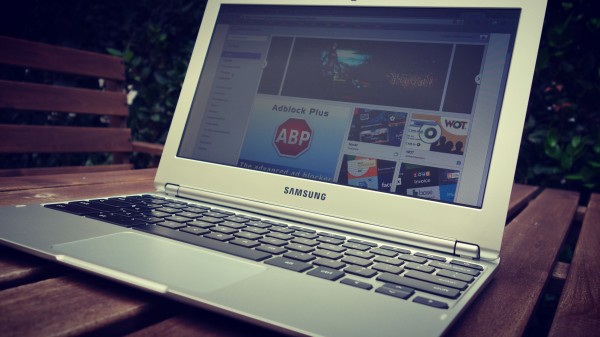
I wasn’t going to write this as a separate story, resorting to Google+ and Twitter posts instead. But, hey, I’m Mr. Chromebook over here and would be remiss not informing the two people who somehow missed the news (You know who you are). Drum roll. Finally, four months after Samsung released the Arm Chromebook, you have Netflix. Stream it, baby, because you finally can.
“Today we launched HTML5 video playback for streaming content from Netflix for the ARM-based Samsung Chromebook, so you can now enjoy your favorite Netflix shows & movies”, according to Google. There’s not lots of fanfare in the statement, but I expect some from those of you who can finally couch-potato before your Chrome OS toy.
Netflix has been available for Intel-based Chromebooks since August 2011. For the newest Samsung, delay was more than anything about Microsoft’s DRM, which protects Netflix content from pirates (well, it’s supposed to). Google had a native-client plugin for x86 but not for ARM. I expected something similar supporting ARM but HTML5 is even better, as there is potential for broader device or browser support.
Google claims Chromebook is “For Everyone”. Perhaps now the $249 Samsung model is.
Austin-based re:3D just started a Kickstarter campaign for the Gigabot, a large-format 3D printer designed to build things on a 24x24x24 inch built envelope, allowing you to make much larger objects than you can with similar printers like the Makerbot. You can get the bot kit for $2,500 or a pre-assembled unit for $4,000.
The company was looking for a $40,000 pledge and has already surpassed $60,000, so there’s a good chance this thing will ship in time for when you need to build a 13,824 cubic-inch Christmas present.
The team launched the project at SXSW, and the company is founded by Samantha Lynne Snabes and Matthew Fiedler and a number of others with experience in manufacturing and design. They write:
At re:3D, we believe that the biggest problems in our world are solved by taking a bigger view. That’s why our project is aimed at designing the first large-format 3D printer… that you can take home with you. It’s not only about taking the amazing technology of 3D printing and amplifying it. If we’re successful, we can envision entire markets opening up to use this technology. Markets which have struggled to maintain the status quo, let alone use some of the cutting-edge technology that for the rest of the world is an overnight delivery away. We believe that by making a production-quality model of our 3D printer, and putting it in the hands of small businesses anywhere on the planet, will give them the flexibility to sustain their community, their business, and ultimately, the world we live in.
It prints primarily in PLA right now because it does not have a heated build plate, but there are plans to offer that option in the future. While PLA isn’t ideal for some industrial situations, the plant-based plastic is still very usable and workable.
You can check out the project here or just imagine what it would be like to print out your own head, to scale, in corn-based resin.
An overhead view of the first 36,000 square foot data hall at the new CyrusOne data center in Chandler, Arizona. The sloped ceiling supports the building’s water collection and retention system. (Photo: Colleen Miller)
It’s been a whirlwind 2013 thus far for CyrusOne. The data center service provider has completed its IPO, opened two large data centers, upgraded power at another, and reported record sales and leasing in its first earnings report as public company. The company, which was spun off from parent Cincinnati Bell, is looking at new markets and could expand through acquisitions, executives say.
CyrusOne leased 41,000 square feet of data center space in the fourth quarter of 2012, with more than half of that activity focused in San Antonio and Houston, the company reported. New customers including seven Fortune 1000 companies, bringing its total to 115 members of the Fortune 1000. CyrusOne now has 518 customers, adding 31 new customers during to 2012.
“In spite of the fiscal cliff concerns, our customers continue to purchase from us to the point where we had record sales in the quarter,” said Gary Wojtaszek, President and CEO of CyrusOne. “At the end of the quarter, our San Antonio facility which we just commissioned in July was 60 percent sold out. Our London facility sold out and basically everything in Houston sold out plus we sold some additional space across the rest of our portfolio.”
Building in Multiple Markets
Those deals boosted data center utilization to 78 percent at the end of 2012. In recent weeks, CyrusOne has been adding capacity, commissioning the first facility on its new Phoenix data center campus, completing an expansion phase on its West Houston campus and upgrading the power infrastructure in its facility in Lewisville, Texas. The Lewisville site, in the Dallas market, now has 25 MVA of redundant utility capacity from Texas New Mexico Power .
“This upgraded infrastructure is designed to support our customers’ growth, particularly those within the rapidly expanding financial and energy markets,” said John Hatem, vice president of data center design and construction at CyrusOne. “With nearly three times the amount of total available power, this upgrade will help us to better serve our customers with higher density and availability in both the short and long term.”
In Phoenix, CyrusOne commissioned 36,000 square feet of data center space, the first phase in the company’s vision for a 1 million square foot campus. The construction of the first phase was completed in a little more than seven months (see A Data Center Blooms in the Desert for details). Construction on the new Houston West facility was also completed in seven months, the company said last week.
“We are commissioning our sites at record-setting speeds compared to the two or three year timeframes it typically takes an enterprise company to design and build their own facility,” said Kevin Timmons, chief technology officer at CyrusOne. “Our speed to market and quick deployment times, are some of the key reasons that our Fortune 1000 customers mention when choosing to do business with us. The efficiency of our supply chain and engineering capabilities, allow our customers to easily grow with us.”
“What’s the best approach for using a phone overseas?” is a common question I get. There are a number of options — buy a local SIM or work with your carrier to get a loaner phone, for example — but Handy’s business model may be one of the more attractive ones I’ve seen in a while. The company allows you to lease a phone for about $8.75 a day and you pick it up right at the airport. The downside? It’s a service specific to Hong Kong.
If that’s your destination, this may be worth a look. According to the Springwise blog, you get your choice of a Samsung Galaxy Note or Google Nexus 4 handset; both of which are decent performers.
A spare battery, charger and USB cable are also included. So too are the service options: unlimited voice, texts and 3G internet access, which includes the use of the phone as a Wi-Fi hotspot. International calls in 17 countries are included. That means this service is likely far less expensive than paying for overseas minutes or web access through your carrier; at least here in the U.S., that is.
While the voice and web access is important, so too is the software: Handy includes a city guide on the phone to help you find points of interest, reviews of local businesses and even discounts on products or services. You can, of course, install your own apps as well, but Handy pre-loads the Android handsets with useful travel and communications apps such as Skype, Kayak, XE’s currency converter, BBC News and more.
The deal seems limited in terms of locations, but I’d love to see more companies do this on a widespread basis around the world. Even better might be a global phone rental service that lets you return your phone wherever your destination is: The phone could then be reset and reloaded with apps specific to the area.
Conference organizer Datacenter Dynamics kicks off its U.S. schedule tomorrow (Tuesday, March 12) with DatacenterDynamics Converged, the 10th edition of its conference in the Big Apple. The event starts at 9 am at the Marriott Marquis on Times Square.
The event’s key theme is disaster recovery, with an emphasis on lessons learned after Hurricane Sandy. Other topics include operational issues affecting data centers across all verticals from strategic infrastructure investment to operational management and cloud computing.
The 2013 conference provides six halls of speakers with expertise ranging from capital investment, to construction and operation. Speakers include Sabey Data Centers CEO John Sabey, Don Beaty of DSB Associates, IBM’s Roger Schmidt, Nic BUstamante of Microsoft, and Chris Crosby, the CEO of Compass Datacenters. For additional information, see the Datacenter Dynamics web site.
As analysts continue to hit Apple (AAPL) hard, a new report claims the postmortem ultimately written on the iPhone 5 will reveal disappointing sales relative to initial expectations. Market research firm Strategy Analytics recently released a report claiming that Apple’s latest iPhone was the best-selling smartphone in the world during the holiday quarter last year, allowing Apple to reclaim the No.1 spot after Samsung’s (005930) Galaxy S III stole the crown earlier in 2012. Despite the phone’s current popularity, however, Raymond James analyst Tavis McCourt believes the phone will ultimately disappoint.
Owners of the $249 Samsung Chromebook have lived without Netflix since the device launched in October. That changes today as Google has announced support for Netflix on the device, with content delivered via HTML5. There’s no need to update the Chromebook; users can simply navigate to the Netflix website, login and start watching movies or television shows.
When I had first reviewed this Chromebook model, the lack of Netflix was a disappointment because all prior Chromebook models had Netflix support. One key difference in this particular netbook from Samsung was the chip architecture: It uses a Samsung Exynos chip, which is based on ARM. The other Chromebooks all use x86-based Intel chips.
It’s interesting that Netflix now just works. A Google spokesperson says the solution is the result of collaboration with Netflix and Microsoft. That’s surprising as the initial reason Google provided for the lack of Netflix on the Samsung dealt with a Chrome plug-in and Google’s Native Client efforts; neither of which Microsoft would likely have anything to do with.
Regardless of the solution’s implementation, it’s simply good news that there is a solution. So if you have a Samsung Chromebook, fire up Netflix and enjoy!
Spoiler: The video above shows SpaceX’s 100-foot-tall Grasshopper rocket blasting off, hovering in the air for about 30 seconds and then descending back to terra firma. And it’s set to Johnny Cash’s Ring of Fire. That’s it. There’s no drama, fireworks or anything shocking, but it’s still absurdly important and totally worth watching.
This launch marks the reusable rocket’s most significant flight yet. It reached a record 262.8 feet before lowering itself back down on its own launch pad. Elon Musk called it the Johnny Cash hover slam.
Designed to launch and land vertically on its metal legs, the Grasshopper is part of SpaceX’s long-term roadmap. The company has yet to reveal when it intends to use the model — or its successors — for space flight. The rocket has been in testing since September 2012, with each test launch reaching a bit closer to the stars above.
“The US is a country of explorers,” stated Musk at his SXSWi keynote adding “People need to believe that [space travel] is not going to bankrupt them.”
For several years Musk has championed the idea that humans must be a multi-planet species and a reusable rocket, like the Grasshopper here, is a big part of his grand vision.
I nearly hurled coffee onto Nexus 10 this morning — seriously had to choke back — when seeing this ridiculous ZDNet headline: “Will 90 percent of users always hate Windows 8?” I immediately thought that someone must have done a shocking and provocative survey. But, no-o-o-o-o, writer Matt Baxter-Reynolds pulls the figure from his bee hind. He surmises this sensational figure based on absolutely nothing.
Coincidentally, I conducted two polls over the weekend designed to gauge Windows 8 sentiments — what you really think about Microsoft’s flagship operating system. I asked: “If Microsoft sold Window Vista, 7, and 8 side by side and you could buy the one you wanted most, which would you choose?” and “Is Windows 8 a failure?” We have a split decision on the latter, from good sample sizes — more than 1,500 for the longer question and exceeding 1,300 for the other.
By the Numbers
Polls like this one are unqualified. We don’t filter who answers but do presume that responses largely reflect the attitudes of BetaNews readership, which tends to be more developer- and IT-oriented — the kind of customers most likely to use Windows already. The results gauge sentiment and surely refute any ridiculous claim that 90 percent of users hate Windows 8.
The distinction is important, because, based on actual adoption, the figure could apply to Windows Vista. I conducted the polls because a Samsung executive clams that “Windows 8 system is no better than the previous Windows Vista platform”. That 90 percent figure, if accurate, would put Windows 8 in the same category of failure as Vista. Funny, I had already planned to share poll numbers today. The ZDNet story offers unexpected backdrop against which to cast the results.
To the longer question, the majority — 56.55 percent — would choose Windows 7, compared to 36.9 percent Windows 8. Vista falls below any reasonable margin of error to near zero (10 responses). The second question is perhaps more important, and the numbers are close: 44.8 percent say Windows 8 is a failure, while 41.53 percent don’t agree. Given the sample size and unqualified responses, the numbers are statistically the same.
I can safely conclude based on not one but two polls that any assertion “90 percent of users hate Windows 8” is inaccurate. More than one-third of respondents would chose the operating system, which actually is a strong endorsement in context. That being: Most businesses only recently upgraded to Windows 7, and many IT shops put compatibility above all other considerations when deploying software. Meanwhile, IDC attributes sluggish fourth-quarter PC shipments in part to “limited supply of touch-enabled Windows 8 models”, which is “out of step with the touch focus of Windows 8”. As I asserted last week, the operating system really shines on a touchscreen computer.
Based on the other poll, feelings are clearly mixed about whether Windows 8 is a failure or success. Either can be measured many different ways. To reiterate, my poll seeks to gauge sentiment, as perceptions greatly influences purchase decisions. Do you buy a car with reports of bad brakes or choose another? Windows 8’s reputation is crucial to its future acceptance — or not.
What You Say
Comments are another great way to gauge sentiments, and you had much to say. “All this chatter about Windows 8 being another Vista exists and that will put people off buying a new machine; this is happening, look at the sales numbers of new PCs”, derekaw comments. “Windows 8 offered no sales bump and PC sales are still in decline. MS made a mistake with Windows 8”.
BetaNews reader nvic:
To answer the article title question: Windows 8 is worse than Vista on a PC, better than 7 on a tablet. It was made for touch, and does very well in that field, although I’ve yet to see a decent commercially available Win8 tablet beyond Surface (Pro).
In my opinion, part of the reason it’s flopping is the bad rep from being sold to the wrong market (non-touch PCs) and being hated by its users as a result. They also removed or hid a lot of the stuff power users want in an OS, leaving those users out. Why should I pay to upgrade to a product that lets me have less control? Such limitations are expected on a tablet, but intrusive and unwanted on a PC…
For those who are curious how much it’s disliked on non-touch PCs, I’ve helped downgrade 107 to date, and mind you I only do this on the side, I’m in college (IT student)…On the other hand, we’ve both had zero trouble recommending 8 as an upgrade for the few people we’ve come across who had x86 tablets running 7.
“Disaster is much too strong a word. It’s not a disaster”, johnrc2 comments. “There are simply some touch features that are not particularly useful on a non-touch machine, but other than than, it’s a nice upgrade to Windows 7. I use Windows 7 on 3 desktops, Windows 8 on 3 laptops, and Windows 8 on one Surface Pro. Where’s the disaster? I’m just not seeing it”.
Steephill:
I use a computer 8-11 hours a day and upgraded to Win8 after the first couple weeks it came out. If anything it has increased functionality, rather than limitations. All the new functionality underneath the UI is great. All the Metro/Modern UI is is a full screen Start menu. You use it the same way as a start menu too, click the win key and start typing the program you want. I think the hate comes from, not it being bad but, it being different. Just like if you gave someone who was used to Windows a Ubuntu Unity laptop they’d hate the UI, doesn’t make Ubuntu Unity bad. It’s just different.
HornyToad (don’t you just love these monikers): “Windows 8 is more stable, more responsive and generally easier and more pleasant to use than Windows 7 has ever been, in my experience”.
“Windows 8 is great –when it’s set up as windows 7”, Benni Bennetsen opines. “So if only Metro had been an add-on that you could choose it would have success. Now it depends on knowing people who can change its look n feel or live with it, and I don’t know anyone who likes Metro”.
I do. On a touchscreen.
Noremacam expresses my sentiments:
Windows 8 is like vista, but I don’t mean it is a failure. Windows Vista paved the way for Windows 7 with new technologies, and new frameworks. Windows Vista made windows 7 a success. Windows 8 introduced a bunch of new technologies and frameworks and it’s suffering again. I’m convinced windows “blue” or whatever the next windows will be, will be massively better because of the work in Windows 8.
Since before the Consumer Preview, I have expressed in various stories that Windows 8 wouldn’t be big. It’s a transitional operating system coming when most businesses just upgraded to Windows 7 or are in process of doing so and when tablets capture consumer interests more. If Microsoft wants to make big changes in architecture, strategy and user experience, the best time is when the core market — business — isn’t going to upgrade anyway. Windows 8 has always been about what comes next. But that doesn’t make what’s here bad.
What’s the quote from Jessica Rabbit: “I’m not bad. I’m just drawn that way”.
A group of European researchers has released the first version of a cloud computing platform for robots that will help them take advantage of powerful virtual resources. Essentially, they’re treating robots like any other device — desktop, tablet or mobile phone — running web applications, only robots can learn from each other and can do a lot more than just update screen displays.
The project, carried out by a team at ETH Zurich, is called RoboEarth and its linchpin is a cloud software platform called Rapyuta. The way it works is pretty simple at a high level: robots communicate with a cloud-based application platform that carries out computation tasks and connects to a cloud database full of information such as maps, images, language, as well as to other web services. The robots themselves are pretty much hardware terminals equipped with sensors and moving parts but limited on-board processing power or data storage.
This, of course, is an idea that has been with us since the mainframe computer and continues today via cloud computing and web and mobile applications. Why limit a device to its own physical capabilities when there’s an infinite (although, in the case of mainframes, not so much) expanse of computing power, memory, storage and data available in the ether? As long as the device has a strong internet connection, it doesn’t need a massive hard drive or the latest, greatest processor.
One thing RoboEarth does a little differently, though, is allow for databases that robots can update as they go about their business in different situations in different parts of the world. It’s machine learning, only in a much more literal sense: robots are actually learn from the experiences of other robots. That learning, in turn, should make them more useful to humans who won’t have to program them as thoroughly and perhaps can use the robots to perform a wider — and ever-expanding — variety of tasks.
Presumably, though, some statistical machine learning on the backend could make the robots even smarter as they generate more and more data and patterns begin taking shape. (We’ll be talking about unique ways to put machine learning to work at our Structure: Data conference next week in New York.)
The easy joke to make about this type of project is to say it’s the start of SkyNet and the rise of the machines, but that’s a bit of a stretch. After all, the machines themselves aren’t communicating with one another but, rather, with a centralized computing infrastructure operated by humans. It’s similar to IBM’s Watson system, which is really good at answering questions, but only as good as its information database and algorithms allow it to be.
If you’re curious to learn more about the promise and limitations of something like RoboEarth, Markus Waibel, one of the project’s researchers, has a great blog post explaining his vision of the project and where it fits into the greater ecosystem of web-based robotics.
Energy tech startups that can find applications for the booming natural gas industry will do well in 2013. On Monday startup Alphabet Energy, which is developing materials and devices that turn waste heat into energy, announced that Canadian natural gas giant Encana has led its new $16 million Series B financing round.
Alphabet Energy, founded in 2009 as a spin-out from Lawrence Berkeley National Laboratory, makes a next-generation thermoelectric material, which is a semiconductor that can convert heat to electricity. When thermoelectric materials come in contact with heat it causes the electrons to move from the hot side of the material to the cold side, and the difference in temperature causes the material to produce electricity.
While most thermoelectric materials out there come from expensive, rare and exotic substances (like bismuth telluride), Alphabet Energy uses basic and abundant silicon, found in chips and solar cells. That means Alphabet’s products could be much less expensive than the current ones on the market. In addition all of Alphabet Energy’s material manufacturing can be done on existing chip production machines, so it could have much lower manufacturing costs as well.
Alphabet Energy has been working on using its material in generators that can turn waste heat into electricity, and which can tap into heat from industrial sources like exhaust pipes, or power plant flues. The startup already has one of its devices installed in an industrial facility in California that converts exhaust-gas waste heat into electricity.
Encana is interested in using these types of waste heat recovery generators for when it pulls natural gas out of the ground. Natural gas drilling and refining uses a lot of heat and that heat could be recycled into electricity.
Down the road, the holy grail of thermoelectrics is the automotive industry. Alphabet Energy could use its material in auto parts and engines that capture waste heat.
It’s a hard year to raise money for a cleantech startup. Many venture capitalists are moving away from investing in new cleantech companies, and government funds for energy innovation is tight, too. Alphabet Energy’s Series B round included existing investors Claremont Creek Ventures (Oakland-based VC firm), TPG’s venture arm TPG Biotech, CalCEF Clean Energy Angel Fund. Alphabet raised a $12 million series A round led by TPG in 2011, and a seed round from Claremont and CalCEF in 2010.
 The two factors driving Android’s tablet rise are costs and size. Apple’s iPad starts at $329 for a 16 GB Wi-Fi model while tablets with similar hardware running Google’s Android software can be had for half that cost. It’s a valid argument to suggest that consumers may get a better experience with the more expensive iPad, but if $329 isn’t in a consumer’s budget when tablet shopping, a lower-priced Android may land in the shopping cart.
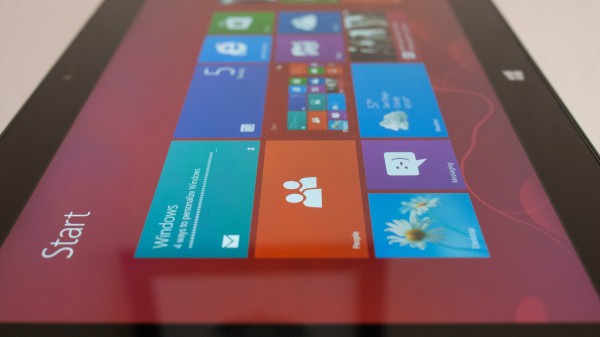
 Where does that leave Microsoft Windows tablets? IDC doesn’t hold out much hope for Windows RT, forecasting a dismal 2.7 percent of the tablet market by 2017. I agree with IDC here because tablets running the full version of Windows 8 with the same battery life as RT devices can be had for nearly the same price. There’s simply not a huge market for Windows RT without a drastic price drop in the devices.