Author: Serkadis

  • Fox in the hen house: Kickstarter backed short wins Oscar

    Inocente, the story of a 15-year-old San Diego homeless girl wanting to become an artist, won the Oscar Sunday for best short documentary. It was also the first Kickstarter-funded film to win an Academy Award. It was one of the three Kickstarter-funded films nominated for an award; the other two being Kings Point and Buzkashi Boys. So far six Kickstarter-funded films have been nominated for Oscars.

    Kickstarter is slowly and surely becoming a major force in the film business, something I noted in my post earlier this year. The Inocente win comes close on the heels of Kickstarter-backed films taking center stage at the Sundance Film Festival. According to Kickstarter, the total amount of dollars pledged to Film and Video projects is, as of today, $104.9 million. And in 2012, Kickstarter saw $57.96 million dollars pledged and 3,891 successfully funded projects in 2012.

    When I interviewed Kickstarter CEO Perry Chen last year, I asked him if Kickstarter could perhaps upend the institutional control of the creative industries. Here is what he said:

    we’re used to this industrial creative complex of movie studios, record labels and production houses. It wasn’t always that way. This is relatively recent in human history….any dent we can put into the machine we’re happy to do. I think we’re already seeing it. A lot of these things that are getting funded would not have been funded in any way.

    Looks like fox is in the henhouse.

    Related research and analysis from GigaOM Pro:
    Subscriber content. Sign up for a free trial.

  • Don’t Get Too Excited, Arrested Development Fans

    As a fan of Arrested Development, I remember how annoying it was watching the show get jerked around before it was ultimately removed from TV, despite a very loyal fan base. That was followed by years of rumors about other networks picking it up, a possible, movie, etc. Then, by some miracle, it actually became accepted as a reality that the show would be back, courtesy of Netflix.

    And we still can’t thank Netflix enough for it. Hopefully it won’t disappoint.

    That familiar territory of uncertainty about the show’s future is already back, however, before Netflix has even made the new season available. News is out today that Netflix will not be producing additional seasons. Season 4 may be all we get.

    The Wall Street Journal reports there will be “no subsequent seasons” of the show, after Netflix CEO Reed Hastings said at investor conference that the show would be “a one-off” and would be a “non-repeatable” event. The Journal quotes a spokesperson as saying it would be “extremely difficult to get the cast together”.

    Pretty disheartening news for fans, though if season 4 turns out to be a let down, the news may be easier to swallow.

    The cast was already hard to get together from my understanding, and they managed to make it work eventually. If there’s enough demand (which there almost certainly will be) would the show find its way back to its audience, even without Netflix? That remains to be seen, but we probably shouldn’t hold our breath.

    In fact, we should really just be happy that the Bluths have found their way back into our lives at all, as it was beginning to feel like it was never going to happen. Now, it’s happening.

    Season 4 will hit Netflix in May.

  • Google’s Panda Update Has Turned Two

    Google Panda Update It’s been two years since Google unleashed the Panda update. How the time flies.

    As you probably know, the update was designed to promote higher quality content from sites in Google’s search results. Google laid out some unofficial guidelines for what it means by “quality,” and victims of the update strived to recover from the huge drop in search visibility suffered as a result from the update, by following these guidelines as best as possible. Few have been successful.

    Some have had to rethink their entire business models. Smart content providers found ways to diversify their web traffic better as to not have to rely as much on Google. Demand Media’s site eHow has been the prime example of this. While it did go through a massive quality clean-up initiative to get back in Google’s good graces, it has also largely expanded its social media strategies, and increased partnerships, and the site is in as good of shape as ever, based on recent earnings calls from the company (which is now separating its content business from its registrar business).

    Demand Media ranked as a top 20 U.S. web property throughout last year, and was ranked at number 13 in January, according to comScore. The company reached over 125 million unique visitors worldwide in January, and eHow itself was ranked number 12 in the U.S. with 62 million unique visitors in January.

    Not everyone has been as successful as Demand Media. Matt McGee at Search Engine Land has put together a couple of articles (apparently the first two in an ongoing series) looking at Panda victims two years later. He finds, citing Searchmetrics data (which has been questionable at times in the past, for the record), that none of 22 victims from the original Panda update, as listed by Searchmetrics, has returned to pre-Panda visibility, and that only two have improved compared to their post-Panda visibility.

    MotorTrend.com, which was hit by the original update for some reason, has managed to bounce back, and McGee calls it the “true Panda recovery” in terms of search visibility. Today, he says (again, citing Searchmetrics data), it appears to have better visibility than it had pre-Panda.

    For sites like EzineArticles, HubPages, and the like, no such luck. He says that even eHow’s visibility is down 63% from pre-Panda levels.

    But again, the Demand Media strategy is not as reliant on Google as it was pre-Panda. And that’s probably the best thing to take away from the whole thing. ChaCha, another Panda victim, has adopted a similar approach, as CEO Scott Jones recently described to us.

    Last year was all about Penguin, though Google continued to push Panda refreshes on a regular basis. Panda was kind of in the background as the Internet was already accustomed to it. Still, it’s Panda that tends to rear its head more often than Penguin.

    Google has been pushing out a major update early in each of the past couple years. We’re still wondering if they have a 2013 counterpart to Panda and Penguin in store. We’re also still waiting for Google to release months worth of its “search quality highlights”.

    Google announced the launch of its latest known Panda refresh a little over a month ago. The company said it affected 1.2% of English queries.

    Have Google’s results gotten better since it first launched Panda? Has quality gone up? Let us know what you think.

    Photo: Ken Bohn, San Diego Zoo (via National Geographic)

  • Asus brings voice calls to its 7-inch FonePad tablet, but not likely for the US

    It was just a few months ago that I suggested voice-enabled tablets would eventually replace smartphones. To some degree, they already are if you consider the 5 to 5.5-inch smartphones such as Samsung’s Galaxy Note 2 to be small tablets. What I had in mind, however, is exactly what Asus debuted at the Mobile World Congress event Monday: The Asus FonePad is a 7-inch Android tablet with cellular voice capabilities.

    ASUS FonePad rearAt first glance, the FonePad looks extremely similar to the Google Nexus 7 tablet. It has the same 1280 x 800 resolution 7-inch touchscreen, an optional rear camera — only 3 megapixels, however — and the Google Android Jelly Bean software. Two key differences stand out though: The speaker atop the display and the Intel Inside message on the tablet’s back panel. Yes, this is an Intel Atom tablet, running at 1.2 GHz and paired with 1 GB of memory. Battery life is expected to be nine hours.

    The choice of Intel Atom over an ARM-based chip likely won’t matter much to consumers as most Android apps now work with chips based on the x86 architecture. The bigger difference then is that speaker on the front of the device and the integrated support for cellular voice calls.

    Asus isn’t the first to try this approach of merging a cell phone and 7-inch tablet though. The original Samsung Galaxy Tab I bought in Dec. 2010 had the same functionality. There was only one problem with it: Voice calling software was stripped out of the Galaxy Tab for the U.S. market on all four major carriers. I suspect the same will happen with the new FonePad as well.

    So while my overseas friends were chatting away on their Tabs — either handsfree or with a Bluetooth / wired headset — I had to root and install custom modem software on mine as a voice hack. Unfortunately, when voice calling was active, the 3G data connection wasn’t and vice versa. The “solution” was never fully baked and I ended up using the tablet with a data-only SIM card for VoIP calls, giving me the best of both worlds. U.S. carriers never embraced this though and why would they when they can sell you two devices with fees for both?

    Indeed, there’s no indication of the Asus FonePad even coming to the U.S. market. CNET notes the price and availability as limited:

    The FonePad will be landing in the U.K. between April and June, likely toward the end of June and costing £179, or 219 euros in the rest of the continent. That’s a tad more expensive than the Nexus 7, so it’ll need to impress in terms of performance and battery life.

    It’ll reach Asia-Pacific around the same time for $249. Unfortunately there’s no word on a release in the U.S., but Asus does have a habit of bringing its devices stateside. Fingers crossed, folks.

    Yup, we can cross our fingers but I doubt it will do any good. Not until we move to Voice over LTE do I expect a traditional small tablet to include carrier support for voice calling in this country. And that’s a huge disappointment when there’s really no good technical reason for carriers to not support this functionality.

    Related research and analysis from GigaOM Pro:
    Subscriber content. Sign up for a free trial.

  • The Walking Dead: AMC Posts Behind-The-Scenes Videos Of Latest Episode

    The Oscars ceremony wasn’t the only highly anticipated television on Sunday night. AMC, of course, resumed the third season of The Walking Dead. If you haven’t seen the latest episode yet, you might want to skip these for now. If you have had a chance to watch it, AMC has posted these new behind-the-scenes videos for episode 311.

    More The Walking Dead fun here.

  • Apple in India: a lost opportunity?

    J.J. Valaya is one of India’s preeminent couturiers and is a self-confessed arbitrator and curator of good taste. I know that for a fact because I have known him from the time when he was a student at India’s National Institute of Fashion Technology. If you enter his store, you can see that tasteful elegance on full display. And he also likes gadgets — a lot of them. He walks around with a Samsung Note and a Blackberry Bold.

    His Bold is on its last breath so he asked me: what should I buy? Well, since he and I have a similar taste palette, I recommended iPhone 5. But that didn’t impress him — he said, well, it didn’t feel that different than iPhone 4S. When I asked him if he had spent time on it, he answered in the negative.

    And that’s when it hit me — the reason he can’t be convinced was because he had not been able to experience what is quintessentially Apple and what converts a regular person into an Apple customer: the immersive Apple Store experience.

    Many phones for many folks

    To understand the Indian mobile phone market  – about 900 million total connections — one has to understand that it is literally different strokes for different folks. The low end, budget and medium end of the Android-based smartphone market is being swept by local brands such as MicroMax, whose Canvas devices are red hot. And there are the no-brand Chinese handsets gunning for that low end. Add two Chinese biggies, ZTE and Huawei, to the mix and you have a lively smartphone marketplace. Sure there is Nokia and Blackberry and Sony, but it is hard to tell if they are doing well or not.

    Apple Store in Shanghai

    Apple Store in Shanghai

    However, when it comes to the top end of the market, it is Samsung all the way. Sure, there is Apple, but frankly it is a distant second. In November 2012, Apple launched the iPhone 5 in India and in the three months ending Dec. 31, 2012, the Cupertino, Calif.-company sold a mere 252,000 iPhones in that country. The data prompted everyone from the Wall Street Journal to Reuters to claim that Apple was doing well in India, but is it really doing well?

    Canalys press release 160113 - tableIf you ask me, the answer is no and frankly they could be doing better. Yes, compared to China, India’s smartphone market is puny: According to Canalys data, there will be about 26.5 million subscribers in 2013 (though I get a feeling they are underestimating the potential and demand). But it will grow bigger, and it will grow fast. IDC says the market will be 108 million units in 2016 versus total smartphone sales of 19 million in 2012. In other words, it is a big enough opportunity for Cupertino to wake up and smell the curry.

    Samsung side up

    I walked around stores in and around Delhi about a week ago, which is where my parents live. And even as a casual observer, it was clear that in India, Apple’s place in the market had been reduced to just another handset. The Samsung Galaxy branding was in your face — from television to in-store displays to the newspapers. The Korean giant was basically everywhere. I had walked into many stores where iPhones and iPads were on display, except they were lost in a confusing array of other phones. (In September 2012 the company partnered with local distributors like Ingram Micro and Redington to get to retailers in smaller towns.)

    People want a lot of features on stuff they buy — more buttons, bigger screens, more memory — more is just better, in some parts of the world. And that is why larger phones and hideous phablets are so much in demand. That plus incessant advertising by Samsung has turned the (attention and thus the) conversation away from everyone else, Apple included. Samsung sold 40 percent of the 5.2 million smartphones sold in India in the three months ending December 2012.

    Ignorance is not bliss

    I am just baffled that a company that would insist that Best Buy and Target create an in-store experience that has some resemblance to the Apple Store outsource its sales to carriers and third parties, who sell phones like a street cart vendor sells vegetables and fast food. My eyes bleed every time I have to enter one of those carrier stores in India. They are the antithesis of the Apple brand.

    I am frankly amazed that Apple has left the second-largest mobile market — India, that is — to its own devices. I don’t understand why. It is not that there is a lack of people with money. There are probably more potential customers of iPhones and iPads in India than in say Germany, the U.K. or in the Netherlands. They all have multiple Apple stores, so why not India? When someone asked him last year about company’s strategy in BRIC countries, Apple CEO Tim Cook said that of all the countries, it is likely to go after Brazil after China instead of India and Russia.

    And maybe it is time for Apple to go back to the drawing board and come up with a new plan. One that involves opening a handful of Apple’s own stores in India — say in Delhi, Bombay and Bangalore. There are relatively few stumbling blocks. Last year India allowed 100 percent foreign ownership in the single-brand retail segment, which is great for a company that sells its own brand of goods. Apple does just that.

    Rachel Lashford, managing director for mobile at Canalys, told the Wall Street Journal, “Until Apple is able to reach lower price points, it will continue to be overtaken by competitors in India.” I couldn’t disagree with her more.

    Go ahead be elitist

    I admit, that I normally spend most of my time in India in big cities — Delhi and Bombay — but I can tell from the wall-to-wall advertising and all the talk, Indians love their mobile phones as much as their cars. For a certain class of people — the upwardly mobile and the real estate rich — their phones are often a badge of success, much like the cars they drive. For these folks it is either the very best or nothing.

    Apple simply has to stop thinking that it can sell cheaper iPhone 4 and iPhone 4S models to Indian consumers. Just like Chinese buyers, Indian buyers are very “badge” conscious and want to get the latest and the greatest. It is time for Tim Cook & Co. to embrace their internal elitist and go for the premium positioning of the brand.

    And it all starts with an Apple Store. As far as I am concerned, an Apple Store is the gateway drug to the all-Apple experience. It is where you touch, feel and fall in love with Apple products. The interaction with iPhone and iPad and just the complete retail experience makes you either one of the “fruits” or not. It is also perfect place for up-selling different products.

    timcook2

    Fear of an Android (only) nation

    I even found the perfect location for the first Apple Store: the DLF Emporio mall, which is arguably is one of the plushest shopping malls in Delhi. This is where wealthy (and I mean crazy rich even by American standards) go shopping for luxury items from Chopard, Gucci, Roberto Cavalli, Chanel and Louis Vutton. The prices there would induce rapid gulps in any sane person, but on my last visit (which was about 10 days ago) I saw people walking with more shopping bags than one sees in say Rodeo Drive. The whole mall was based on the notion of up-selling.

    The same buying dynamics — brands as a badge of one’s success — that work in China, work in India too. Imagine if there was an Apple Store right in middle of this opulent (and over the top) building — the iPhones will fly, and so will iPads and Macs. Apple’s brand has a level of luxe associated with it and I think Apple would become the ultimate badge phone.

    Otherwise, Apple will continue to lose mind share to the likes of Samsung, which has done a good job of branding itself for the “status symbol” end of the market.  Cook is a pragmatist and I am sure he realizes that it is important to play to win in India. If he doesn’t, then India becomes an Android Nation — it already is, to some extent. For folks like Valaya who should be ideal Apple customers, there is no reason to think about them.

    Related research and analysis from GigaOM Pro:
    Subscriber content. Sign up for a free trial.

  • Google Provides Millions To Orgs For Internet Access In Emerging Markets

    Google announced today that its philanthropic arm, Google.org, is making new investments to improve Internet access in emerging markets.

    For one, it is providing $3.1 million to the Network Startup Resource Center (NSRC) to help get local network engineering expertise to universities and national research & education networks in Sub-Saharan Africa.

    “Through labs and a train-the-trainers program, NSRC will provide hands-on training on campus network planning, deployment, and management for over 600 university and NREN staff,” explains Google.org principal Jennifer Haroon. “Their work will bring the Internet to students and staff at over 50 institutions and increase network engineering know-how in Sub-Saharan Africa.”

    Additionally, Google.org is providing $1.3 million to the Internet Society (ISOC) to improve and create Internet Exchange Points (IXPs) in emerging markets.

    “IXPs play a big role in core Internet infrastructure, allowing Internet Service Providers to peer locally (and cheaply), which can lower end user costs, promote competition, and improve user experience,” says Haroon. “ISOC will create a toolkit for those who want to create and improve IXPs and build an industry portal to share IXP information and data.”

    According to Google, five billion people are currently without access to the Internet.

    Image: NSRC

  • Whoa, you really don’t want Google Chromebook Pixel

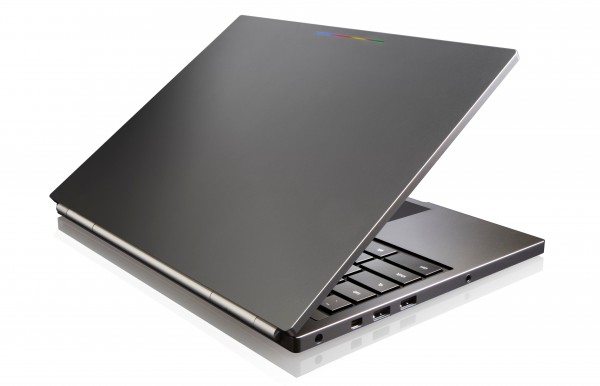
    On February 21, Google started selling its first computer, Chromebook Pixel, which I called a “status symbol” over the weekend. In typical fashion I asked “Will you buy Google Chromebook Pixel?” There surely is a market for the laptop somewhere, but not among the respondents to our poll.

    Seventy-seven percent of you answer “No”. That’s among the highest percentage ever to one of my polls. If there’s Chromebook Pixel enthusiasm, it surely isn’t from BetaNews readers. Just 8 percent of respondents will buy the Chrome OS laptop “as soon as available in my country”. Only 16.5 percent plan to buy Chromebook Pixel ever. So has Google got a flop? No way, Jose.

    Measured Success

    The computer isn’t meant for the mass-market. Rather, like Nexus devices, Google establishes a reference design for OEM partners and provides developers base system to create apps for. Touch is the differentiator from other Chromebook. Additionally, the “For what’s next” marketing tips off that Chromebook Pixel is foundational — a work in progress — as the operating system improves every other month (or less) and more web apps become available. Pixel isn’t meant for most of you.

    I’m in process of reviewing the computer and plan to post after all the Mobile World Congress news quiets down. I will say at this juncture that Chromebook Pixel isn’t for everyone. That’s a statement made about earlier models, but it applies more so to Google’s laptop because the usage scenario is different.

    Earlier Chromebooks, particularly those released for holiday 2012, appealed for their value. The $199 Acer and $249 Samsung models are easy purchases, and, based on Google+ and other social network posts, many people use these Chromebooks as companion PCs — not their primary one. I’m among a smaller set of users making a Chrome OS device my full-time computer.

    Chromebook Pixel is meant to be used as a primary computer. Design, processor, touchscreen and price ($1,299 or $1,449) say Pixel is the machine used everyday, all day long. To that end, the laptop must be able to replace something else. Apps must be there.

    Google provides the basics for documents, email, chat and such. But what about apps for professionals, who clearly are a major target market, or power users? These people will need tools for editing and managing photos and videos or using programs like CAD. Are the apps there? That’s a question the second part of my review will seek to answer.

    No Thanks!

    But for many of you, there is no question. “They’ve got to be kidding, right?” commenter Tenoq asks. “Fifteen-hundred dollars for a laptop with a crippled, web-based OS and no software? Come on, this doesn’t even compete with the Macbook, let alone the Surface. Google has no support, they have no retail or service stores and have a woeful track record in after-sales. Why on Earth would someone pay so much more for this instead of buying Surface Pro, which has a proper OS capable of running any x86 software and includes MS Office?”

    “I always wished someone would come out with a decently-built Chromebook, although Google seems to have gone over the top here — $1200 is way too much for Chrome OS”, scophi comments. “Had they priced it around $500-700 (and I needed a laptop) I would probably buy it”.

    Pko: “This machine is an idiotic concept. No storage to speak of, unless you ruin the machine with a USB stick…The Google Drive is worthless, 1TB for three years, yes, but what then? Will you pay monthly almost what it cost to have that same amount of storage forever locally, ready whenever and wherever you want?”


    “Can it run real programs, such as Photoshop?” Jamie Maclean asks. “Why not buy a cheaper laptop and just install the Chromebook web browser (for that is all it is) on it?”

    To my one of my Google+ posts about Chromebook Pixel, Lyndon Bredenkamp comments: “If you need to use Photoshop then it’s clearly not the right computer for you. These are all the same as the original criticisms that was used against the first Chromebooks. Yet they are selling like hot cakes. Number one position on the Amazon laptop sales leader-board for over 125 days. There are many advantages to a Chromebook, but, hey, if it’s can’t run Photoshop it must be crap”.

    Scott Ball, responding to Bredenkamp: “My eyes went all Googly when I saw that leaked Pixel video from a few weeks back, but this price point is completely off-putting — $1,300 for a machine that runs a browser is too rich for my blood. I don’t need 1TB of cloud storage, so I’m out”.

    Bredenkamp answers: Yes, I agree on the idea of waiting for a less expensive version. I’m an existing Chromebook user and just find it amusing when people call it crap with their main argument being ‘it can’t run Photoshop’. Someone should do a satisfaction survey on those who purchased Chromebook”.

    That’s a good idea. Maybe I will do one. For now, I repost the poll because I’d like a larger sample than 566. Not that it matters much. Based on the huge number of “No” responses and reading comments on Google+, even from avid Chromebook users, I’m confident that few people will buy Pixel. If you do, hey, we can wave to one another at Starbucks and snicker at all the MacBooks. 

  • EMC to Hadoop competition: “See ya, wouldn’t wanna be ya.”

    If, like many industry watchers, you’ve been confused about EMC Greenplum’s Hadoop strategy over the past couple years, Scott Yara has a message for you: “We’re all in on Hadoop, period.”

    Yara, Greenplum’s co-founder and senior vice president of products, has a not-so-coded message for his big data market competitors, too. Put simply, he doesn’t think they stand a chance against his company, and he served notice on Monday morning with the unveiling of the company’s new Pivotal HD Hadoop distribution and Project Hawq in a staged event at San Francisco’s Dogpatch Studios.

    Pivotal HD is a completely re-architected Hadoop distribution that has been natively fused with Greenplum’s analytic database (that’s the Project Hawq part), but Yara thinks it’s a bigger deal than just another SQL-on-Hadoop play. In an interview last week, Yara told me that Project Hawq is the manifestation of Greenplum’s decision to sell itself to EMC in 2010, a move he thought would would kickstart his company’s founding vision of becoming the leading big data platform.

    Building a data platform costs money, and lots of it

    But before the details, a little history. Greenplum’s flagship product is an analytic database powered by a massively parallel processing (MPP) and query engine. The company had raised nearly $100 million in venture capital around this technology since launching in 2003, but doing business in the enterprise software world is hard and expensive, and Greenplum needed more money.

    Rob Me of Pivotal Labs, Scott Yara of EMC, and Om Malik of GigaOM at Structure:Data 2012

    Yara (left) with Pivotal Labs CEO Rob Me and Om Malik at Structure: Data 2012 (c) 2012 Pinar Ozger. [email protected]

    “I thought it was going to take another couple hundred million dollars in investment for us to complete the technical vision we had and go to market,” Yara explained. But finding that kind of money wasn’t so easy in an investment environment where everyone was gaga over social apps like Facebook and Zynga. When EMC approached with a deal like it gave VMware in 2003 — essentially near complete independence bolstered by a huge R&D and marketing budget — Greenplum couldn’t refuse.

    Yara said Greenplum had known for a while that Hadoop was the key to any big data strategy going forward, but that it would take some time to build up its own technology. So, in 2011, it entered into a reseller agreement with Hadoop startup MapR to offer a premium product to appease enterprise customers while Greenplum’s engineers got to work on what would become Pivotal HD. That deal with MapR is still in place, but it’s no longer the focal point of Greenplum’s Hadoop strategy.

    Big investment, big aspirations

    The technology inside Pivotal HD is what companies should come to expect from a Hadoop distribution, Yara explained. It’s essentially the Greenplum Database with its POSIX file system ripped out and replaced by the Hadoop Distributed File System. Whatever users can do on Greenplum’s flagship database, they can do on Pivotal HD, only they can run Hadoop MapReduce jobs and house an HBase database, too.

    hawq

    And when SQL-like features become an important part of Hadoop because it’s so broadly installed that users are now seeking out broader utility, “that’s when the bar gets raised in terms of the amount of capability that’s required,” Yara said. He said Pivotal HD includes years worth of investment in Hadoop cluster-management technology and professional support, too, and that they will cost half as much as what Cloudera and Hortonworks charge. It’s designed to run smoothly wherever customers want it to — physical servers, virtual servers or even cloud servers.

    Structure:Data: Put data to work. 60+ big data experts speaking. March 20-21, 2013, New York City. Register now.Because they’re so new, he said, competitive SQL-on-Hadoop offerings such as Cloudera’s Impala can only handle about 20 percent of real-world workloads. Looking back at the capital investment in analytics and big data technologies past, things like Netezza, Teradata and Aster Data, Yara proffered, “I don’t think you could build [a full SQL-on-Hadoop] system for less than $25 to $50 million over five years.” (Some of those new technologies, by the way, will have a chance to state their cases during a Structure: Data panel on March 21 that’s all about Hadoop as the next-generation business intelligence platform.)

    Greenplum, by contrast, rebuilt its entire R&D team to focus on bringing 10 years of database technology to Hadoop. “We literally have over 300 engineers working on our Hadoop platform,” Yara said. “… We’re bringing all the power of EMC and VMware behind it.”

    The data warehouse is the new mainframe

    Looking past his competitive boasting, though, it’s easy to see Yara’s greater point when you ask him what all this Hadoop talks means for the data warehouse business on which Greenplum was built. He points to the mainframe business that fell from its high perch decades ago but still drives billions a year in revenue. A single MPP database system is still faster on certain workloads than SQL on Hadoop, but that gap will close over time and  “I do think the center of gravity will move toward HDFS,” he said.

    Josh Klahr, a Pivotal HD product manager, noted the importance of being able to process all of a company’s data right in a single scalable data store rather than operating numerous systems. He pointed to one customer that’s storing a petabyte of data in Greenplum Database but wants to grow its data volume to 20 petabyes over the next few years and needs something like Hadoop to do that both financially and technically. He said Netflix’s decision to store all its data in Amazon S3 and bring analytic services to it is a good indicator of where the market is headed.

    A few years ago, Yara acknowledged, embracing Hadoop as the future might have been a scary proposition. However, he said, “Now, if you don’t embrace Hadooop as the new database platform, if you’re a database vendor, that’s a grave mistake.”

    Related research and analysis from GigaOM Pro:
    Subscriber content. Sign up for a free trial.

  • Wondering What Percentage Of PageRank Disappears Through 301 Redirects?

    Google’s Matt Cutts discusses loss of PageRank from 301 redirects in the latest Webmaster Help video. Specifically, he answers the following user-submitted question:

    Roughly what percentage of PageRank is lost through a 301 redirect?

    After providing some history about the context of this question, Cutts says, “I sent an email to the team who is in charge of this, and of course the implementation of this can very over time, but this has been roughly the same for quite a while. The amount of PageRank that dissipates through a 301 is currently identical to the amount of PageRank that dissipates through a link. So they are utterly the same in terms of the amount of PageRank that dissipates going through a 301 versus through a link. So that doesn’t mean use a 301. It doesn’t mean use a link. It means use whatever is best for your purposes because you don’t get to hoard or conserve any more PageRank if you use a 301, and likewise it doesn’t hurt you if you use a 301.”

    He is careful to point out that this could change in the future.

    “That’s the current implementation,” he says. “We don’t promise it will be that way for all time and eternity, but I don’t see any reason why in particular it would change.”

  • Barnes & Noble Mulling A Break From Hardware Sales In A Move That May Split Company

    jennifer_aniston_in_rumor_has_it_wallpaper_1_1280

    According to a number of reports, beleaguered bookseller Barnes & Noble could be shuttering its Nook hardware division and focusing primarily on connecting its digital content to other tablets and readers. In a related report, B&N founder Leonard Riggio is considering a buy-out of the company’s consumer division and spinning out the Nook and collegiate sales divisions while maintaining the bookstores.

    Sales numbers for Nook line look bad. By the end of the holiday, book sales dropped 10.9 percent over last year while Nook sales fell 12.6 percent. Both Amazon and B&N guard their sales numbers and instead crow about short-term percentage gains but little has been said about post-holiday sales barring a short mention last January. Although the Nook is arguably often the better product when compared to similar models from Amazon, neither company can stand up against the Apple/Samsung juggernaut.

    An NYT report notes that B&N isn’t completely abandoning hardware but will focus more on partnerships with hardware manufacturers and software distributors like Microsoft.

    For its part, B&N claims that there are no plans to discontinue the Nook products. This is all still obviously conjecture at this time and plans could change as partnerships are modified.

    What will the ebook market look like without a third ereader? Not much different, sadly. The ereader of choice will always be a general purpose, 8-inch tablet and only a certain subset of customers will want an e-ink device. While the Nook’s Glowlight models were first to market and superior to Amazon’s offering in many ways, the Kindle is still an early adopter’s darling, a market that B&N never cracked.

  • YP Says It’s Number Two In Mobile Ad Revenue

    YP (formerly AT&T Interactive) announced today that its annual ad revenue attributed to mobile surpassed $350 million, which it says makes it the number two company in the industry for that, based on data from IDC.

    Overall digital ad revenue in 2012 reached about $1 billion, and mobile searches across YPmobile apps and YPcom exceeded 40% of total local searches across YP properties in 2012.

    “YP has firmly established itself as the number two company in the U.S. mobile advertising industry in 2012. And that puts YP in a great position going forward,” said Karsten Weide, Program VP, Digital Media and Entertainment at IDC.

    “Facebook probably would dispute the claim, with over $300 million in mobile revenue in Q4 alone, according to the company,” writes Search Engine Land’s Greg Sterling, who notes that Google is the clear market leader. “Regardless, YP is the largest ad network dedicated to location-based advertising.”

    “For one, mobile advertising continues to grow rapidly,” says Weide. “Last year the segment grew by more than 70 percent, and we think it will grow by another 60 percent this year. And also, with consumers checking for nearby information on the road, and with YP providing this data, they will see their business grow rapidly, too.”

    “Since launching in May of last year, we’ve aggressively leveraged our core business assets to accelerate our position as the digital leader in local search, media and advertising,” said YP CEO David Krantz. “In 2013, we expect mobile to continue to fuel our growth as we expand relationships with 50+ million consumers using YP digital products on a monthly basis and extend mobile reach across our Local Ad Network of over 300+ digital publishers.”

    As YP notes, YP.com was consistently ranked among the top 40 mobile web domains in the U.S. by comScore in 2012.

  • IT spending shifts from PCs to cloud, smartphones and tablets

    Cue the violins. IDC says that the cloud, smartphone and tablet are reshaping IT spending, using the word personal computing defenders despise: “Cannibalization”. There’s a reason I dismiss the post-PC moniker for cloud-connected device era.

    “Cannibalization is happening across the industry” Stephen Minton, IDC vice president, says. “Smartphones have taken over from feature phones, tablet adoption is impacting PC spending, and the cloud is affecting the traditional software, services and infrastructure markets”. And you people wonder why Google would make in Chromebook Pixel a high-end cloud computer. It’s the future, baby.

    IT spending grew 5.9 percent year over year in 2012 to $2 trillion, while ICT spending spiked 4.8 percent to $3.6 trillion. Spending shifted, however, as sales of personal computers, PC monitors and servers all declined. Smartphone spending surpassed PCs for the first time, about $300 billion and $233 billion, respectively.

    “IT spending is still growing organically, but not at the same pace as prior to the financial crisis”, Minton. “Businesses are adopting IT solutions such as virtualization, automation and SaaS as a means to reduce the annual increases in their overall IT spending at a time when economic uncertainty remains high”.

    Global economic uncertainty creates strange bedfellows, such as more businesses letting employees bring their own devices to work rather than the company pay for them. Large IT organizations, which are often the slowest to change infrastructure, consider — and in some cases adopt — disruptive tech like smartphones and tablets.

    But there is another way to regard the trend: Large businesses choose to sit tight with the PC infrastructure in place longer, using cloud-connected devices to offer new capabilities. The approach ensures compatibility across the enterprise.

    Looking ahead, Minton sees “another tough year for mature economies”. If the U.S. economy stabilizes, IT spending will grow by 5.5 percent. “The U.S. should perform better, as long as politicians continue to reach 11th-hour deals to avert an economic crisis, and the PC market in the U.S. will at least stabilize after two successive years of major declines”, he predicts.

    Europe is another matter — just 2 percent growth. Japan: None. “Weakness in Europe, as governments continue to impose austerity measures with a direct and indirect impact on IT spending, has also damaged the export-dependent Japanese economy,” Minton says.

    Global economic uncertainty led to weaker growth in three of the four BRIC countries — Brazil, India, and China — last year. But IDC predicts renewed vigor in 2013.

    “We’re more confident about China than we were in the middle of 2012, when PC shipments were slowing and there was a sense that the economy had slowed down more quickly than the government had planned”, Minton explains.

    “Underlying IT demand remained strong, despite the volatile capital spending patterns that mainly affected PCs, and total IT spending in China still increased by 16 percent last year, which was only slightly down compared to 17 percent growth in 2011”, he continues. “We expect more of the same in 2013, even in spite of the inevitable slowdown in some emerging technology adoption rates as those markets gradually mature”.

    Photo Credit: Lucia Pitter/Shutterstock

  • Boost brings low-cost LTE to prepaid customers with a pair of smartphones

    Speedy LTE service is usually the domain of contract smartphones, however Sprint’s Boost Mobile brand is adding a pair of LTE options for prepaid customers. On Monday, Boost Mobile announced the addition of HTC’s $299 One SV and its own $199 Boost Force smartphone, both with support for Sprint’s LTE network. Customers buy the phones outright and the monthly service plan, including unlimited web, text and talk starts at $55.

    This strategy differs from the other LTE carriers in the U.S.: virtual network operators buying wholesale airwaves from AT&T and Verizon typically don’t get access to the much faster LTE services. Sign up with any of the TracFone brands, for example, and you’ll only get to use 3G for your mobile web. Keeping LTE for contract customers only ensures a higher, longer-term revenue stream for AT&T and Verizon.

    So why would Sprint diverge from the pack of contract carriers and offer LTE to its prepaid brand? Two reasons.

    First, it can provide a small boost — no pun intended — to overall revenues by standing out from the prepaid crowd with LTE as an option. If few or no other prepaid brands offer LTE, Sprint stands to gain prepaid customers who value faster mobile broadband over voice minutes and text messages.

    Second, and perhaps more important, Sprint quietly adds a second tier of service for its LTE customers. While Boost Mobile advertises unlimited web, the fair-use terms are actually a soft cap of 2.5 GB per month. That plan is $55 a month. Sprint customers that want truly unlimited LTE access can do so on the same network through Sprint directly, for $80 a month with a limited amount of voice minutes; unlimited everything adds another $30 per month.

    The new LTE phones for Boost Mobile then, provide Sprint two ways to deliver LTE to its customers, regardless of whether they’re fine with contracts or prefer a month-to-month option. That could sway some to Sprint, which in turn starts recouping its LTE network investments a little faster.

    Related research and analysis from GigaOM Pro:
    Subscriber content. Sign up for a free trial.

  • Yandex Launches Its Own Android App Store With Only Apps Verified By Kaspersky Lab

    Yandex announed today that it has launched a new app store for Android at Yandex.Store. It has over 50,000 paid and free apps.

    “Yandex.Store is a global product and it is already available in eight languages for users around the world,” said Alexander Zverev, Head of Yandex.Store. “We welcome app developers to publish their apps to Yandex.Store and look forward to working with device manufacturers from around the world who wish to install Yandex.Store on their devices. The global market for Android-based mobile phones is very fragmented. There are only a few major players who enjoy a meaningful share, with the remaining portion of the market distributed among hundreds of smaller companies. We are joining the game to contribute to competition that ensures freedom of choice for the end user and other members of the market.”

    Payments in the store go through Yandex’s Yandex.money service, and all of the apps are verified by Kaspersky Lab.

    “The Android app stores are a magnet for malware developers. The platform’s popularity and the fact that its source code is publicly available made Android a popular target for malicious attacks – 99% of all malware detected on mobile devices in 2012 were aimed at Android smartphones,” says Petr Merkulov, Director of Products and Services Development, Kaspersky Lab. “We provide comprehensive anti-virus protection for Yandex.Store by integrating our special Kaspersky Anti-Virus SDK.”

    Device manufacturers can integrate Yandex’s app store into their devices and get a share of the revenues.

  • MasterCard Introduces MasterPass Digital Wallet, Partnership With mFoundry

    MasterCard introduced MasterPass today at Mobile World Congress, calling it the “future of digital payments”. The service lets people use any payment card or enabled device to “discover enhanced shopping experiences”.

    MasterPass includes checkout services for merchants, and connected wallets for users.

    “Every device is becoming a shopping device,” said Ed McLaughlin, chief emerging payments officer, MasterCard. “MasterPass brings together all of the ways we pay for things, from traditional plastic cards to digital wallets, and gives consumers the ability to make a payment from wherever they are and with one simple experience.”

    MasterPass will be integrated into mFoundry’s nearly 900 bank customers, integrating it into mFoundry’s mobile banking solutions, which have millions of customers.

    “Consumers will now shop and pay in whatever way best fits their needs and lifestyles, from every device they have. MasterPass gives them the ability to make a payment from wherever they are, with one simple experience,” said Ed Olebe, Group Head, MasterPass Services, MasterCard. “Integrating with mFoundry’s solution embeds the power of MasterPass into an industry-leading mobile banking platform and enhances both the payment and banking experience for consumers.”

    “Together, mFoundry and MasterPass deliver an outstanding customer experience by integrating mobile banking and mobile payments into one, seamless solution,” said mFoundry CEO Drew Sievers. “By bringing together both, financial institutions can transform their mobile banking experience and achieve the broader goal of turning mobile into their most valuable channel.”

    MasterCard announced PayPass nearly a year ago, and says MasterPass is an evolution of it. mFoundry will create a digital wallet service using its APIs, and the service will be available early next year. Pilots are expected to launch later this year.

  • Oscars Stats From Google, Twitter And Facebook

    A flood of stats about Sunday night’s Oscars ceremony has been unleashed upon the web. Among these stats are some looks at trends from Google, Twitter and Facebook.

    Google

    Here are the top five most searched Oscar nominees, according to Google:

    Most searched oscar nominees

    “At the end of the show, Best Picture winner ‘Argo’ held the #6 spot, followed by Ang Lee, Christoph Waltz, ‘Silver Linings Playbook’ and Halle Berry,” notes Google software engineer Nemo Tamir.

    Google also shared the most searched red carpet dresses:

    Red Carpet dresses

    “This year’s Oscars brought with it a number of unexpected moments that grabbed our attention,” said Tamir. “Early in the show, Seth MacFarlane was visited by William Shatner in full Captain Kirk regalia, come from the future to save Seth’s monologue; at 8:36pm ET, searches for [kirk] spiked to almost 1,500 per minute. Later in the show, ‘Zero Dark Thirty’ and ‘Skyfall’ tied for sound editing, and people flocked to the web with questions. Searches for [tie] spiked to more than 5,000 per minute, with many people wanting to know [has there ever been a tie in the oscars]. And in a final surprise, First Lady Michelle Obama introduced the Best Picture nominees and opened the winning envelope for ‘Argo.’ Searches for [michelle obama] spiked to 4,500 per minute.”

    Twitter

    “All in all, there were 8.9 million Tweets about the 85th Academy Awards: 2.1 million during the red carpet, and 6.8 million during the awards show. People at home (and in the audience) tweeted as the night’s most exciting and entertaining moments unfolded,” says Twitter’s Fred Graver.

    More Twitter stats:

    Best Picture award for Argo: 85,300 TPM
    Adele performs “Skyfall”: 82,300 TPM
    Best Actress in a Leading Role for Jennifer Lawrence: 71,600 TPM
    Best Original Song for Adele: 64,000 TPM
    Best Actress in a Supporting Role for Anne Hathaway: 60,400 TPM

    Facebook

    Facebook says Oscars buzz was at an all time high on the social network this year. According to the company there were 66.5 million Oscar-related interactions on Facebook.

    “The event scored a 7.17 on the Facebook Talk Meter, trumping last year’s awards ceremony, and we saw the most buzz in the Northeast (New York, Massachusetts, New Jersey and Connecticut) followed by California,” says Facebook data analyst Allie Townsend. “‘Oscars’ received three times more mentions this year, while the Best Picture nominees racked up twenty times more mentions than 2012. ‘Les Miserables’ had the most Likes of this year’s top films, and despite being set in France, the film’s largest body of fans are in London. It was also the favorite film among women and people ages 13 to 17.”

    Django Unchained, however, got the most mentions, Townsend says. It was the “clear Best Picture Choice” among men, she says.

    “Best Picture ‘Argo’ was the most-talked about winner of the night, as mentions of the film increased by 2,460% and mentions of Ben Affleck increased by 23,500% as the director, star and producer made his acceptance speech,” says Townsend. “Affleck also launched his new Instagram account from the red carpet and shared behind-the-scenes photos throughout the night, including this one of his name being engraved on Oscar trophy itself.”

    Facebook put out the following infographic looking at the trends:

    Facebook Oscars Trends

  • Smartphones will be half of the total phones shipped in 2013: Ericsson CEO

    MWC 2013 Barcelona Ericsson

    “By the end of 2013, more than 50% of phone shipments will be smartphones, driven by more affordable models,” said Ericsson President and CEO Hans Vestberg, who was speaking at a press conference at Mobile World Congress 2013 currently under progress in Barcelona. “As we have the internet in our pockets, our virtual and real worlds are coming together. Online interaction enriches our living, working and entertainment and breaks down barriers of time and place. By the end of 2013, there will be more mobile internet users than fixed internet users.”

    Related research and analysis from GigaOM Pro:
    Subscriber content. Sign up for a free trial.

  • Stop Trying To Make WebOS Happen. It’s Not Going To Happen

    image001341547197020eudxdw

    We need to face facts: WebOS is dead. Barring the unwavering support of the enthusiast community, the former mobile OS will never become a commercial product and, LG investment or no, the possibility of WebOS surviving a sale is nil.

    WebOS is no more, has ceased to be, is bereft of life, and it rests in peace. It is an ex-OS.

    HP is going through the same doldrums all PC makers are facing. Had they put a modicum of energy into updating the TouchPad and the WebOS mobile line, they probably could have made it out of the horse latitudes of the downturn, but as it stands they jettisoned an amazing amount of valuable cargo, including support for the WebOS team. What LG is supposedly buying is a readymade stack for their smart TV offerings and not a real OS. What HP is selling is dead weight.

    TV operating systems are about as low as you can go in the graphical environment game. TVs face a snails-pace upgrade cycle, are orphaned by their makers, and are nearly invisible to the consumer. Slapping WebOS into a TV is tantamount to sticking it onto a medical device – you’re assured a slow and steady obsolesce.

    The last big news out of WebOS came over a year ago, with the release of 3.0.5. The Community Edition wiki was last updated in August. If there is such a thing as a zombie OS, this is it.

    It’s over. Even if the rumors are true, that LG would even consider picking this thing up over, say, using a ready-made Android stack is a testament to the fire-sale price HP would consider and, more important, LG’s efforts to grab some of that enthusiast cool. After all, LG is fighting Samsung for mind and market share and a little WebOS magic could (but won’t) pull them partially out of a deep hole. But don’t bet on it.

  • Facebook Partners With Operators For Free/Discounted Access To Messaging

    Facebook announced partnerships with over 18 operators in 14 countries to provide users with free or discounted data access to Facebook messaging.

    Users on Android, iOS and Facebook for Every Phone (which the company notes is now optimized for chat) will be able to take advantage in the coming months.

    “Messaging on Facebook lets people connect with friends and contacts on the go, regardless of what device they are using,” Facebook says in its announcement. “Three out of every four people on Facebook send a message on the platform each month, making messaging one of the most popular activities on Facebook. Today, Facebook messaging and chat can be accessed from more than 6,000 mobile phones via Facebook Messenger, Facebook for iOS and Android, Facebook for Every Phone, m.facebook.com and across other devices with Facebook integration.”

    The participating operators include: MN in Portugal, Three in Ireland, Airtel and Reliance in India, Vivacom in Bulgaria, Backcell in Azerbaydzhan, Indosat, Smartfren, AXIS and XL Axiata in Indonesia, SMART in Philippines, DiGi in Malaysia, DTAC in Thailand, Viva in Bahrain, STC in Saudi Arabia, Oi in Brazil, Etisalat in Egypt, and Tre in Italy.

    Facebook has done a lot in recent months to make Facebook Messaging a preferred method of chat. Last month, they rolled out free VoIP calling to U.S. Facebook Messenger users, and in December, they started letting users sign up with just a phone number.