Author: Serkadis

  • Expect more-sophisticated Bank DDoS attacks this year

    What’s the end of February without some scare tactics? Gartner warns that one-quarter of distributed denial of service attacks this year will be against applications. Really? That low? I’m surprised the number isn’t higher. After all, as enterprises shore up the network perimeter, HTTP remains open wide enough to drive a freight train through and for that long duration.

    The attacks seek to overtax CPUs, disrupt applications and, ultimately, distract IT and security personnel. While they look over there, the bad boys are work over here. Gartner sees DDoS attacks as part of a larger trend singling out financial institutions.

    “A new class of damaging DDoS attacks and devious criminal social-engineering ploys were launched against U.S. banks in the second half of 2012, and this will continue in 2013 as well-organized criminal activity takes advantage of weaknesses in people, processes and systems”, Avivah Litan, Gartner vice president, says. He emphasizes there is a “new level of sophistication in organized attacks against enterprises” and that “they will grow in sophistication and effectiveness” this year.

    These attacks increase in intensity — blasting some financial institutions with up to 70 Gbps of “noisy network traffic”, via ye old Internet pipes. 5 Gbps are more typical.

    “To combat this risk, enterprises need to revisit their network configurations, and rearchitect them to minimize the damage that can be done”, Litan says. “Organizations that have a critical Web presence and cannot afford relatively lengthy disruptions in online service should employ a layered approach that combines multiple DoS defenses”.

    I guess unplugging the Internet isn’t the answer. How will we do online banking?

    Photo Credit: Seleznev Oleg/Shutterstock

  • PlayStation win shows AMD shedding its singular focus on x86

    For those of us who remember AMD as the alternative to Intel in our desktops, or as the also-ran to Intel in servers, it’s time to think of the new AMD. Like a Beyonce dumping Destiny’s Child, the chipmaker is ditching its sole reliance on x86 and embracing new architectures such as graphics processors and ARM-based cores. And scoring the processor inside the latest generation PlayStation console is the perfect example of the new AMD.

    AMD has built a custom chip for the PS4 that combines a graphics processor with a CPU core creating what AMD calls an APU, or accelerated processing unit. AMD calls these APUs, and it has been working toward a win in this area since it purchased GPU firm ATI all the way back in 2006. The PlayStation 4 is quite a win, with a few hundred million of the consoles sold in its history.

    The PS4 chip is also the first public design win out of a new group inside AMD, the Embedded and Custom Semi group, which AMD estimates will generate a fifth of its sales in 2013. That group will be responsible for building out custom chips for clients that will sell at massive volumes.

    SONY COMPUTER ENTERTAINMENT INC. PLAYSTATION 4In the case of the PS4, AMD combined its next generation 8-core Jaguar CPU with its next generation GPU. Another way to look at this is to realize that Sony’s PS4 isn’t just limiting the graphics processor to graphics. That chip is likely handling elements of the compute as well.

    The PS4 chip is the first chip for the Embedded and Custom Semi group, but not the first custom effort for AMD. It also made custom versions of graphics processors for the WiiU and the Xbox consoles. But AMD hopes the business will continue to grow, especially as AMD looks beyond its traditional PC market. Not only has it put more focus on graphics and its APU strategy, but it also last year took a license for the ARM architecture and said it plans to use the upcoming 64-bit ARM architecture to build chips for servers.

    John Taylor, the VP of product marketing with AMD, said he can’t share the exact volumes that would entice AMD to design a custom chip, and upon further questioning it appears that the number of chips may not be the sole deciding factor.

    When asked about combining GPUs or even ARM cores in the server business for example, he said, “Well you know that in the server market the chips generally have higher average selling prices than those in the consumer space, so it may not necessarily be that we will demand a 1 million unit run to build these chips. It will be a business decision.”

    Yet Taylor’s hypothetical example of a good customer for the custom semi business was a smart TV manufacturer, one that had already designed portions of a chip that it wanted to combine with computing and/or graphics processors from AMD. However, he acknowledged that AMD now has several architectural options and plans to build a business combining those options for customers outside of AMD’s traditional lines of business.

    Such a commitment isn’t for the faint of heart. The development of a core can take years of forethought, while the combination of cores onto a single system on chip, such as the one offered in the PS4, can take up to a year. As the web and application side of the technology world speeds up, chip firms are still stuck planning for a future that is years out and hoping they can get it right.

    Related research and analysis from GigaOM Pro:
    Subscriber content. Sign up for a free trial.

  • PNNL engineer receives New Faces of Engineering honor

    Maria Vlachopoulou, an engineer at the Department of Energy’s Pacific Northwest National Laboratory, has been recognized as IEEE/IEEE-USA’s 2013 New Faces of Engineering honoree during National Engineer Week (Feb. 17-23, 2013).

    The honor highlights the impact and contributions of engineers age 30 or younger. Vlachopoulou was one of 13 engineers recognized for this international honor and was featured in a full-page ad in USA Today on Feb. 18.

    Moe Khaleel, director of PNNL’s Computational Sciences & Mathematics Division, says Vlachopoulou’s research in energy systems, statistical and mathematical modeling, optimization and software engineering is supporting the transition of the U.S. power grid to a more secure, efficient and robust system. “Maria’s work directly impacts two national priority areas — securing our long-term energy security and reliability while reducing our dependence on foreign sources of oil,” he said.

    Vlachopoulou earned master’s degrees from Purdue University in 2010 in electrical and computer engineering, and in industrial engineering. She also has multiple publications related to her work on novel algorithms for energy forecasting — a vital component of power grid reliability.

    The New Faces of Engineering honor also recognizes each recipient’s work within their communities. Vlachopoulou is the founding chair of the IEEE Women in Engineering group in Richland, Wash.; and in the Tri-Cities, Wash. community, she volunteers with local high school and middle school students to cultivate interest in careers in science, technology, engineering and mathematics, or STEM, areas.

    All 2013 New Faces of Engineering honorees and their contributions are featured at the National Engineers Week Foundation website.


    IEEE-USA advances the public good and promotes the careers and public policy interests of more than 205,000 engineering, computing and technology professionals who are U.S. members of IEEE.

  • Apple nearly catches up to Samsung in smart-connected device shipments

    Analysts wouldn’t generate new business without something fresh to sell. So they create new categories to tabulate, or dream up strange labels to describe them. Few quarters back, IDC rolled up PCs, smartphones and tablets into the “smart-connected devices” segment. Four things counted separately became something new, which also give schmoes like me something else to write about.

    Yesterday, while my heart nearly failed writing about Chromebook Pixel, IDC released numbers for the segment, claiming 28.3 percent growth for fourth quarter and 29.1 percent for all 2012. Samsung nudged ahead of Apple to top the category for the quarter, with slightly wider lead for the year. Considering that smartphones make up 60.1 percent of the segment, the top-five ranking makes sense: Lenovo, HP and Dell follow the leaders. The two bottom-feeders mostly sell PCs, which lost share year over year.

    Samsung actually snatched the top spot from Apple, with share rising to 21.2 percent from 14.6 percent for the quarter and to 20.8 percent from 12.3 percent for the year. The fruit-logo company moved up to 20.3 percent share from 20.1 percent in Q4 and to 18.2 percent from 16.3 percent for all 2012. However, Apple’s quarterly nudge, which seemingly is nothing, hides more dramatic changes from earlier in the year.

    “The fourth quarter market share numbers showed a fairly dramatic resurgence for Apple” Bob O’Donnell, IDC program vice president, explains. “After falling well behind Samsung early in 2012, Apple came roaring back in final quarter of the year thanks to its latest hits — the iPhone 5 and the iPad Mini — and reduced the market share gap to less than a single percentage point. The question moving forward will be whether or not Apple can maintain its hit parade against the juggernaut of Samsung”.

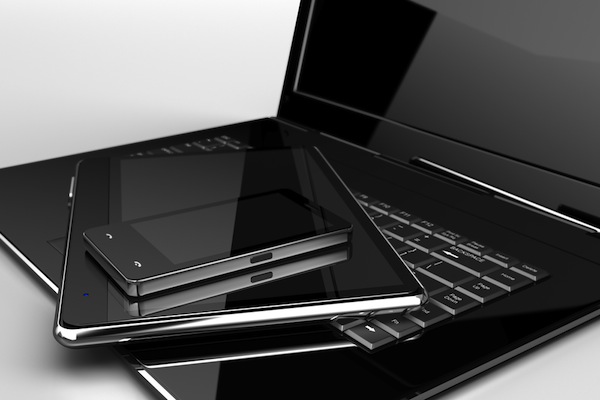
    Both vendors largely benefited from smartphones and tablets — the latter accounted for 10.7 percent of smart-connected device shipments last year. Smartphone shipment rose 46.1 percent and tablets 78.4 percent year over year in 2012. Meanwhile, desktop PCs fell by 4.1 percent and laptops by 3.4 percent.

    “Smartphones and tablets are growing at a pace that PCs can’t realistically keep up with because of device prices and to some extent disposability”, Ryan Reith, IDC program manager, says. “The average selling price for a tablet declined 15 percent in 2012 to $461, and we expect that trend to continue in 2013. However, smartphone APSs are still lower at $408. We expect smartphones to continue to carry a shorter life cycle than PCs for the years to come based on price, use case, and overall device size”.

    In other words, phones will dominate the category for some time to come.

    Photo Credit:  CLIPAREA l Custom media/Shutterstock

  • Fox takes aim at Dish once again with new bid to ban Hopper sales

    Dish Hopper Lawsuit Fox
    Dish’s (DISH) commercial-skipper DVR dubbed “Hopper” has taken a lot of heat from major networks, several of which sued the company last May. Fox Broadcasting Company was counted among the networks that sued, and it argued that by automatically skipping the commercials aired during primetime shows recorded on the Hopper’s DVR, Dish is “destroying the fundamental underpinnings of the broadcast television ecosystem.” Now, Fox is back and it’s asking the district court in Los Angeles to block Hopper sales again, this time due to the box’s in-built “on the go” feature that allows users to stream content over the Web from their home TV.

    Continue reading…

  • Google Posts Multiscreen Brand Building Webinar

    Google has released video from a recent webinar about brand building in a multiscreen world. The video is about a half hour long, and discusses ways to build brand awareness and influence consideration for your brand using YouTube, the Google Display Network, and the Google Mobile Network.

  • Chris Hardwick: YouTube Comments Are The ‘Taint Of Humanity’

    Chris Hardwick, who some may know from hosting MTV’s Singled Out or appearing in Rob Zombie’s House Of 1,000 Corpses, but is better known these days as the Nerdist guy, appeared on Conan O’Brien (which also featured Google Ass). He had this to say about YouTube comments:

  • Scroogled Petition Has 79K Signatures, Many Seem To Be Signing The Wrong Thing

    Microsoft keeps on keeping on with this Scroogled thing. We’ve been alerted that there’s now an infographic to go along with it.

    The company says its Scroogled petition has reached 78,000 signatures (It’s actually at over 79K). It’s unclear how many of those signatures are actually related to the “issue” at hand. I don’t have time to browse through that many signatures, but it didn’t take long to find quite a few that seem to be completely off topic.

    The last time I checked, this campaign was about Gmail’s ads and privacy. Many of those who have lent their signatures seem to think it has something to do with animals – specifically elephants. Here are a few of the signatures that had comments that we found in a brief scan:

    I care we shall care, long live the ancient beatiful smart Elephants and wild life.

    A truly abhorrent and despicable act by an evil, person not fit to breath the same air as this beautiful animal who was treated in this way. My heart goes out to those who shared their lives with whiskey. Animals were given the gift if life by god and as such have just as much right to life. My prayers are with you , rest in peace Whiskey xx

    We are animal lovers and issues of this kind should happen and the law should change their ancient rules and make these people liable for their actions

    Animals are spirits, just as you and I. We are animals as well but what makes us beast are acts like this, independent of justice or not. Justice being granted or not depicts as if you are a beast or not. As a spirit of life, respect one another and serve justice for the life taken.

    This is disgraceful. All animals have as much right to live safely as humans. Stop this now.

    I beg you! listen to me and to many people, which is against killing animals! We are all plačim for them and pray that this was not!

    Please help to the elephant, its terrible her situacion…

    Please, treat this elephan with dignitiy, take it to a sanctuary to a worth living place. Thank you.

    Some also appear to think it’s about something even completely different than that. Here’s another one:

    IF THERE IS SUCH A THING AS JUSTICE! FREE HIM…

    Oh yeah, here’s that infographic:

    Scroogled Infograhpic

    Note that they actually went so far as to illustrate “the creepy line”.

    They’ve also rehashed that Eric Schmidt quote that we debunked here again with a new shortened video focusing on that specifically:

  • Check Out This Guy Playing Music With Fruit And Vegetables

    Here’s a guy playing music with fruits and vegetables. Okay, there are some keyboards and other gadgetry involved, but still…

    [via Make]

  • Microsoft to reportedly unveil next Xbox at April event

    Xbox 720 Launch Date
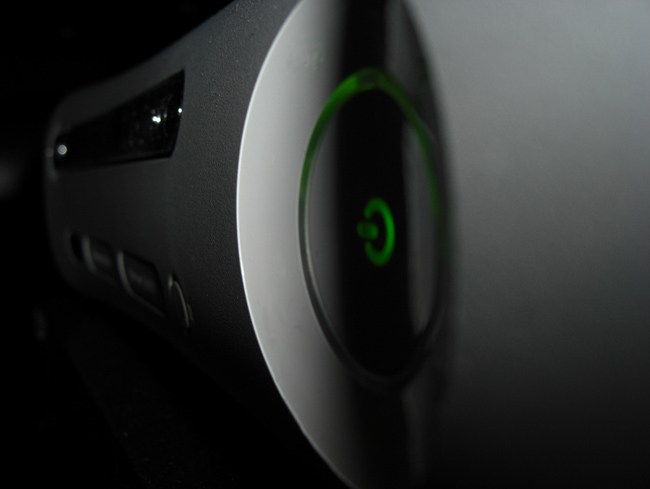
    The debut of Sony’s (SNE) PlayStation 4 is now behind us, so Microsoft (MSFT) is next in line to take a crack at grabbing gamers’ attention with its next-generation console. The Redmond, Washington-based company has worked its way to the top with its current-generation Xbox 360, which just recorded its twenty-fifth consecutive month as the best-selling console in the U.S. Now, according to a new report from Computer and Video Games, unnamed “developers and other industry professionals” including multiple Sony employees say Microsoft’s next Xbox will be unveiled at a press conference in April. No other details were provided, but the next Xbox is expected to feature an eight-core 1.6GHz CPU, 8GB of RAM and a 50GB 6x Blu-ray Disc drive.

  • The Console Wars, Begun They Have: Microsoft May Announce New Xbox At April Event

    Image (1) xbox1.jpg for post 105504

    A number of solid reports, including a new domain name, XboxEvent.com registered to Microsoft, are pointing to an Xbox event in April. While most console reveals happen at E3, as evidenced by Sony’s mystery-filled conference, Microsoft will probably announce specs and some launch titles and leave the money shot for Los Angeles in June.

    Computer & Video Games reported the rumor today and VG247 corroborated it. Considering the timing of Sony’s PS4 announcement, it makes perfect sense for Microsoft to join in the hoopla surrounding next-gen consoles.

    The next Xbox, code-named Durango, will require an improved, included Kinect sensor to play and will support game “sections” that allow you to play one portion of the game while the rest loads or downloads. It will support 1080p 3D video and run on 8GB of RAM.

  • Conan Unveils Google Ass (A Google Glass For Your Butt)

    Google Glass is in the news a lot this week, mostly thanks to Google’s #ifihadglass contest, which enables people to get the opportunity to buy one of the devices. Naturally, Conan O’Brien took notice, and aired this ad for “Google Ass”.

    The slogan is “Strap it to your butt.”

  • Google Glass Will Be Available To You This Year

    The Verge has confirmed with Google that a “fully-polished” version of Google Glass will be ready for consumers by the end of the year, that it will cost “less than $1,500,” and that it will be compatible with both Android and iPhone.

    Also, they’ll come in colors like: Shale, Tangerine, Charcoal, Cotton and Sky.

    The Verge Editor-in-chief Joshua Topolsky had the opportunity to take the device for a spin, and has written the most in-depth hands-on account of it that we’ve seen so far. And the good news is that he seems sold on the device.

    The Explorer edition, which Google is currently taking applications for with the #ifihadglass contest, comes with a sunglass accessory which can be put on and taken off. As he notes, the device comes apart so you can attach different frames, lending credence to the rumor that Google is working with Warby Parker. One could imagine Google working with a variety of partners.

    If you’re really interested in the Glass experience, you won’t want to miss Topolsky’s piece. Make sure you have a few minutes to spare, because it’s quite long.

    The piece also comes with this video:

  • Google’s Project Glass to launch this year for under $1,500

    Google Project Glass Analysis
    Google’s (GOOG) Project Glass is exciting. Whether or not the idea of connected eyewear with an integrated transparent display that falls into the wearer’s line of vision appeals to you, the simple fact that a giant like Google is working on a project like this out in the open is intriguing. Project Glass is also going to be pricey, however. CNET claims to have confirmed that the device will launch sometime this year for “less than $1,500.” We don’t know how much less at this point, but the simple fact that the $1,500 developer edition price-point is being cited by CNET’s unnamed source suggests we’re likely looking at a hefty price tag.

  • Major UK Flowers Site Interflora Gets Slapped By Google

    It appears that Interflora, a major flower-seller in the UK, has been hit by manual action from Google, after participating in link buying from newspaper sites.

    Anthony Shapley at Dave Naylor’s blog has the breakdown of what he believes to have happened, as the site no longer ranks for keywords it used to, including its own name. He shares a table of over 50 newspapers sites who had their PageRank reduced after Inteflora made a big advertising push ahead of Valentine’s Day.

    Search Engine Land shares the following statement fro Google:

    We typically don’t comment on whether we’ve taken corrective webspam action regarding specific companies.

    As Barry Schwartz at that blog notes, Google has commented on similar stories in the past, like when they related to JC Penney’s, Forbes, and Overstock.

    Shapley says he is confident in his explanation, but Interflora has not commented, and if Google won’t, we may not see an official word on this, but rest assured, if Google catches you doing paid links they will punish you.

    At least Interflora will get some new brand recognition out of the whole thing. It seems unlikely that they won’t make their way back into the rankings after a while. Google managed to get its Chrome landing page back in the rankings after penalizing it.

  • Tesla, and its Apple-style stores, to focus on Asia, Europe this year

    Electric car company Tesla isn’t just trying to reinvent the automobile, it’s trying to change how cars are sold with its Apple-style hands-on showrooms. And in 2013, Tesla will be using these stores in Europe, and new ones in Asia, to try to bring in customers internationally.

    In Tesla’s earnings call this week, Tesla’s VP of Worldwide Experience George Blankenship reiterated that Tesla plans to open its first store in China — in a shopping area in Beijing — this spring, and the company is planning stores in Hong Kong and more in Japan in the later part of 2013. Tesla already has at least eight stores in the works in big cities across Europe, and will shortly be delivering Model S cars to those European stores.

    Green Overdrive: Tesla's New Apple Store Experience thumbnail

    Tesla has been so focused on the U.S. for the first part of its Model S launch that it only has two Model S display cars in all of Europe, said CEO Elon Musk on the call. “That’s going to change dramatically over the next few months, and we are going to start marketing heavily in Europe and then start doing the same in Asia,” said Musk. Blankenship noted that the company’s decisions on placement and design of its stores is “working,” noting that 1.6 million people in North America went through a Tesla store in the fourth quarter of 2012.

    International markets could be real success stories for Tesla. Already, without much marketing and display cars, 25 percent of Tesla’s reservations come from outside North America, said Musk. In many countries in Europe, gas prices are sky high, and some governments are offering large incentives for electric cars and carbon-emissions-free transportation. At one point electric car startup Fisker had sizable sales in the Netherlands.

    China is the largest market for automobiles in the world, and incentives in some cities are high for electric cars. The appetite for western luxury brands in China also remains high.

    Blankenship formerly helped design Apple’s store experience, and is now using many of those learnings to shape Tesla’s stores. We interviewed Blankenship at our RoadMap event last November, and he shared his thoughts on what the store in connected age should deliver:

    Related research and analysis from GigaOM Pro:
    Subscriber content. Sign up for a free trial.

  • Here’s the one thing missing in Google’s ambitious Chromebook Pixel

    By now, you’ve likely heard about the Chromebook Pixel, Google’s first laptop. The Chrome OS device starts at $1,299 and appears to be an elegantly designed piece of hardware with the industry’s highest-resolution display in a notebook. And that screen is capable of touch, which Google is counting on to drive touch-optimized web apps in the future.

    I can’t pass judgement on the device yet since I haven’t actually touched one. Om has, however, and shared his thoughts. I have a loaner Chromebook Pixel en route later today, so I’ll be able to experience it for myself and form a true impression. But on paper, it’s easy to see why many around the web haven’t warmed up to the Pixel: The cost is a huge barrier for a device that can only use the web or web apps. Yes, the 1 TB of included Google Drive storage for two years essentially negates the price of the Pixel, but that’s a hard sell to mainstream consumers.

    Is touch for the web really all there is?

    The Chromebook Pixel is for “what’s next”, Google claims. Is it? That depends on what’s next, of course! If I had to make an educated guess on what that is, I’d go with support for Android applications on the Chromebook Pixel. We’ve heard Google talk about merging Android and Chrome in the future but it really hasn’t happened as I had expected it to. In my mind, it would bring the one aspect missing with the Pixel right now: support for a vast ecosystem of applications.

    Nexus devicesI think this for a few reasons. The first is the comment made at the product launch by Sundar Pinchai, senior vice president of Google Chrome: “Web hasn’t had touch and high-resolution screens before.” Sure it has. Pick up a current model Apple iPad or even Google’s own Nexus 10 tablet: With its 2560 x 1600 resolution touchscreen, the Nexus 10 has a higher pixel density than the new Chromebook Pixel. Clearly, the “touch-enabled web” isn’t what’s next, it’s what we have today on millions of devices.

    There’s more value for that touchscreen with Android apps

    There’s also the value proposition of a Chromebook that starts at $1,299 for the Wi-Fi model and $1,499 for one with integrated LTE radio. I surely expect better performance from the Intel Core i5 powered Pixel over Intel Pentium Chromebooks in the $200 to $450 range. And the high-resolution display will add to the experience as well. But is that really needed for web work and do these “extras” provide $1,000 or more in benefit? I’m not sure about that just yet, even with the free terabyte of Google Drive storage.

    android-this-weekWhat would be an added benefit is taking advantage of that touchscreen with applications. If Google were to add support for the Dalvik VM where Android apps run, the Pixel makes a little more sense to me as a product. Frankly, we don’t need touch on the web for a laptop form factor when multi-gesture trackpads replicate the experience more ergonomically. But if the touchscreen were leveraged for more use cases, that could add value.

    Who wins with better web apps vs. who wins with Android apps

    Another thought: Google pushing the Pixel as a means to propel web app development doesn’t just benefit Google. Any modern browser with the same support for HTML 5 and other web standards could take advantage of improved web apps. That doesn’t just apply to traditional computers running Mac OS X or Windows, but potentially even mobile devices. Including Android support on the Chromebook Pixel, however, feeds Google — and only Google — more information about users.

    Again, I’m not critiquing the Chromebook Pixel device itself here; I’ll do that once I get my hands on one. And I’ll be evaluating it as a current Chromebook user; I’ve tried all prior Chromebook models and bought my own last year.

    I want to know if it’s worth the upgrade to a Pixel as a dedicated Chromebook user. At the moment, I’m really trying to understand Google’s strategy with the Pixel because for much less money, I can do everything on my $450 Chromebook outside of touching the screen to interact with the web. Android application support, however, would enable more usage of that touchscreen while offering the ability to do more offline activity on the Pixel.

    Related research and analysis from GigaOM Pro:
    Subscriber content. Sign up for a free trial.

  • Are These Google’s Ranking Signals For Google News?

    Computerworld has a new report out about an old patent of Google’s that is drawing some attention, and perhaps with good reason. It looks at ways Google might be ranking content in Google News, which is not only helpful for all publications trying to gain eyeballs from the aggregator, but interesting in light of how Google is dealing with unhappy publishers around the world.

    Does Google News do a good job of ranking content as it should be ranked? Does it favor certain publications too much? Tell us what you think.

    As Computerworld notes, the application was filed a year ago, and published in July. So, it’s been around a while, but it’s not that old.

    The patent describes a number of metrics, listed as: the number of articles produced by the news source during a given time period, an average length of an article from the news source, the importance of coverage from the news source, a breaking news score, usage pattern, human opinion, circulation statistics, the size of the staff associated with the news source, the number of news bureaus associated with the news source, the number of original named entities the source news produces within a cluster of articles, the breath of coverage, international diversity, writing style, and the like.

    Now, it’s important to note that just because these are listed as such in the patent, it does not mean that this is the exact recipe to Google’s secret News sauce (which is separate from Google web search). Still, it does tell you some of the stuff Google might be thinking about when it comes to news stories. And of course, ranking in Google News can also put you in regular Google web results for hot news items, via Universal Search.

    It’s hard to say how much weight any one signal would be given, and that would likely fluctuate, anyway, based on the strength of the remaining signals, and an on article-by-article basis.

    The article length metric is painted as a valid one in the Computerworld article, but I wonder how much weight that really should be given. Certainly it depends on the content of any particular article. Additional length does not always make a story better. Sometimes it’s simply added fluff. More text from one source may not be as relevant as less text from the right source.

    Here’s what the patent says about that particular metric (labeled as the “second metric”):

    The average length may be measured, for example, in words or sentences. In one implementation consistent with the principles of the invention, the second metric may be determined by determining the average length of non-duplicate articles produced by the news source. For example, it may be determined that the average length of an article from CNN is 300 words, while the average article length from Amateur News Network is 150 words. Therefore, the value of the second metric for CNN may be 300 and for Amateur News Network may be 150.

    So, based on that description, it would seem that adding additional text to articles regularly, even when it is not needed, would help one better compete with CNN for rankings. Of course, even assuming Google’s secret sauce is comprised of these metrics alone (and remember, “and the like” is listed with the metrics, leading one to believe there are more things Google is looking at), there’s always the chance other signals will be used more strongly in some cases.

    Google does like stories to have substance though. If nothing else, the Panda update taught the web as much. Still, as I discussed with ChaCha CEO (and Panda victim) Scott Jones recently, sometimes a quick answer is really better for the user. It really just depends on the case.

    I wonder how valid the “number of articles produced by the news source during a given time period” metric is too. If given too much weight, one could see this signal easily burying an original source, which could come from anywhere. It wouldn’t serve the niche blog (which might have a great deal more authority on a subject than a big news outlet like CNN) very well when it covers something first (because it is focused on said niche), if the story is later picked up by said big news outlet.

    This could, however, be offset by the “importance of coverage from the news source” metric, which appears to basically be how many articles a publication produces on a particular subject. For example, a publication writing 500 articles on the crash of the Columbia Shuttle (example given in patent) should rank better for this particular metric than a publication who only put out 10 articles about it. Depending on the story, this could actually benefit the industry-focused niche blog. Again, it comes down to how Google is weighing these signals against one another.

    Google’s Matt Cutts recently put out a video discussing news stories – specifically whether it”s better to use one article or multiple articles for developing stories. I’m not sure you could call his take on the subject the definitive answer to such a question, but he seems to prefer the one-page route. Interestingly, this seems almost contrary to the signal described above. Of course, one could see how such a metric could be ripe for abuse, but that all depends on how Google is able to fight this kind of spam. I’d still recommend only writing relevant articles, and not just blasting out a bunch of useless stories about a subject.

    You can see further description of each of the metrics by reading the patent here. Scroll down to the “Exemplary Processing” section.

    Google recently launched a new News Keywords meta tag to give it an additional signal for ranking news content. This simply allows publications to include keywords they want their stories to be associated with, making the importance of having such keywords in a title a little less important. At least that’s how Google portrayed the addition.

    Do you think Google is currently doing a good job of getting the right stories in front of users? Do you often see examples of where Google is getting it wrong? Let us know in the comments.


  • TeamViewer – Access Computers Remotely or Host Meetings

    More often than not, being able to connect remotely to your work or home computer can get you out of trouble. TeamViewer is the application that makes the entire process as easy as it gets.

    TeamViewer is designed to meet two common necessities for people who work on the go: the possibility to offer assistance from a remote location and the tools to organize a conf… (read more)

  • iPhone found to be 300% more reliable than Samsung smartphones

    iPhone Reliability Study
    Apple’s (AAPL) iPhone isn’t just the best-selling smartphone in the world, it’s also the most reliable. A new study conducted by the company behind the community based trouble-shooting resource FixYa on Friday issued its latest smartphone reliability study. The study used data from 722,558 combined problem reports combined with market share data from StatCounter to assign a reliability score to leading smartphone vendor. Apple was found to be the most reliable handset maker with a score of 3.47, nearly 300% better than smartphone shipment volume leader Samsung (005930), which got a score of 1.21.

    Continue reading…