Author: Serkadis

  • Google Appears To Be Busted With Its Own Paid Links Again

    It appears that Google has been caught doing paid links again.

    Our friend Aaron Wall at SEOBook has found some examples of an apparent “‘series’ of advertorials” for Google products like AdWords, Google Analytics, Chromebooks, and Hangouts. He points to content from The Globe And Mail and Edutopia that claim to be “brought to you by Google” and “sponsored by Chromebooks” respectively. He points to a handful of questionable links within the content.

    “None of those links in the content use nofollow, in spite of many of them having Google Analytics tracking URLs on them,” he writes. “And I literally spent less than 10 minutes finding the above examples & writing this article. Surely Google insiders know more about Google’s internal marketing campaigns than I do. Which leads one to ask the obvious (but uncomfortable) question: why doesn’t Google police themselves when they are policing others? If their algorithmic ideals are true, shouldn’t they apply to Google as well?”

    As you may recall, Google got some attention last year for a very similar situation, which it blamed on a different firm, who was working on its behalf. Google ultimately penalized its Chrome landing page in search results, and left it in the penalty box for the requisite “at least 60 days“.

    While Google has yet to comment directly on this particular case, it seems likely that it will follow a similar path. Danny Sullivan at Search Engine Land shares this statement from the company:

    We’ll investigate this report just as we would a report about any other company, and take the same action we would for any other company.

    As Sullivan notes, this is far from the first time Google itself has engaged in paid links. Even before last year’s Chrome incident there were other cases.

    “Google’s also penalized Google Japan in 2009 for paid links, its AdWords help area for cloaking in 2010, and the BeatThatQuote service it acquired in 2011 was penalized on day it was purchased over spam violations,” he writes.

    The timing of this new discovery is quite interesting. Google just (apparently) slapped UK flower seller Interflora for paid links, along with the newspaper sites who had the “advertorials”. Google did not specifically comment on this, but “randomly” put up a generic post about selling links that pass PageRank on its Webmaster Central blog just over that situation got some media coverage.

    In Google’s post, Matt Cutts wrote, “Please be wary if someone approaches you and wants to pay you for links or ‘advertorial’ pages on your site that pass PageRank. Selling links (or entire advertorial pages with embedded links) that pass PageRank violates our quality guidelines, and Google does take action on such violations. The consequences for a linkselling site start with losing trust in Google’s search results, as well as reduction of the site’s visible PageRank in the Google Toolbar. The consequences can also include lower rankings for that site in Google’s search results.”

    It will be interesting to see how Google proceeds with the series Wall has brought to the forefront, and if Google comments directly on the situation.

    Image: Aaron Wall

  • Asus CEO Reveals The $249 Fonepad, Another Tablet You Can Talk On

    fonepad

    What a day folks — mere moments talking up Asus’ new Padfone Infinity, CEO Jonney Shih just revealed that the oft-rumored Fonepad is an honest-to-goodness product. Confused? I don’t blame you.

    The PadFone is a Android-powered smartphone that physical docks into a larger tablet enclosure. The Fonepad on the other hand is an 7-inch Android tablet that can make phone calls. The rumors of Asus releasing an Intel-powered device have come true with the Padfone, as it sports an Atom Z2420 processor, 1GB of RAM, and the requisite 3G wireless radio to make all those tablet calls possible. On the plus side, Asus tends to leave Android alone for the most part, and the particular Android 4.1 build that’s loaded up on the Fonepad seems similarly unfettered.

    If it sounds novel, well, it’s really not — Samsung baked similar voice call functionality into its Galaxy Note 8.0, and to my surprise it actually worked really well. Whether or not Asus will be able to provide a similarly impressive experience is a question I can’t answer until I track down a Fonepad for some more hands-on testing, but the price is certainly right. The Fonepad is slated to launch this April in the UK with a €219 price tag attached to it, but Asus also offered a price in U.S. dollars ($249 to be precise). It’s too early to call that a confirmation for an eventual U.S. launch (especially considering that Samsung will likely excise the voice call feature from the U.S. Note 8.0 model), but it’s enough to make you hope at least.

  • After Plenty Of Duds, LG May Finally Have A Winner With The Optimus G Pro

    gpro1

    The last time I bought an LG smartphone — the unabashedly brown G2x — I had to return it after a few weeks because it would randomly reboot if I so much as looked at it funny. From then on, I convinced myself that I just couldn’t buy another LG phone. They just weren’t worth the headache.

    After playing with LG’s Optimus G Pro here at MWC, I’m starting to rethink that decision.

    Fine, it may not be as new as the L II series, but I still think it’s a far more compelling device to spend time with. But first, a quick note. As confusing as it is, there are technically two versions of the Optimus G Pro — a variant meant for Japan with a 5-inch display, and a Korean-spec G Pro with a larger 5.5 panel that will hit the United States some time this spring. That latter version is the one on display here, and despite some minor shortcomings, it easily seems like one of the best smartphones LG has ever made.

    As usual, LG has crafted a very light, very slim plastic chassis for the G Pro. It’s more than a little reminiscent of Samsung’s Galaxy design language, though LG does what it can to set the G Pro apart from its big rival with little flourishes — think the “pixelated” back and the IR blaster located along the device’s top edge. Under that back plate lives a removable 3,140 mAh battery — not bad at all, though it’s right in line with the battery seen in the Galaxy Note 2.

    Click to view slideshow.

    A 13-megapixel camera features prominently on the G Pro’s rear end, and while I really doubt that you’d be able to tell from some the photos I snapped, image quality seemed impressive. Slightly less impressive was the G Pro’s Panorama feature — in theory it’s similar to the Photo Sphere feature baked into Android 4.2, but the implementation here is more confusing and the results not as polished. Some other camera tweaks (like the ability to record video from both the front and rear cameras at the same time) are just as neat, and actually work great.

    Tucked inside that body is a Snapdragon 600 processor (like the one seen in HTC’s fancy new One flagship) clocked at 1.7GHz along with 2GB of RAM, so the whole affair is very snappy — there’s zero lag to be seen while swiping around and poking in and out of apps, even with LG’s busy custom UI in place. Visual clutter aside, that UI seems to be a fairly flimsy veneer over stock Android 4.1.2, so purists may not bristle quite as much as usual if they took a chance and bought one of these things.

    While I’m pontificating about visuals, I should mention that the G Pro’s 5-inch, 1080p IPS display is plenty bright and sharp (think 400 PPI) to boot. Color reproduction still isn’t quite as vivid as its competitors (a side effect of the screen technology at play here), but as I’ve noted before, my eyes may have just grown accustomed to the often lurid colors seen on AMOLED panels like those featured in Samsung’s high-end smartphones.

    On a related note, I’m surprised at how quickly I’ve grown accustomed to these sorts of hefty handsets. It used to be that anything with a screen larger than four inches felt awfully unwieldy, but the Optimus G Pro and big ol’ screen just felt natural in my hand. Your mileage will almost certainly vary on that front, but overall the G Pro is a much more comfortable device than its screen size lets on.

    Naturally, I’m waiting until I get my hands on a final review unit before passing judgment, but the G Pro shows plenty of promise. Whether or not LG will actually be able to convince jaded consumers to buy it is another story entirely. I will say this, though — if the rumors are true and Google really is working on a new Nexus phone based on the Optimus G Pro, it’ll be one of those devices that you just can’t buy fast enough.

  • Sony Mobile Chief Says The Xperia Tablet Z’s World Tour Will Begin In Q2

    tabletz

    Sony Mobile Communications chief Kunimasa Suzuki took the stage to deliver something of a state of the mobile union address at MWC early this morning, and took a very brief detour to talk availability for one of Sony’s most promising products. As expected, there was no mention of any new hardware during Suzuki’s address (sorry Xperia SP hopefuls), but he did confirm that the company’s Xperia Tablet Z would begin to rollout globally starting in Q2 of this year.

    In the United States, the 16GB model is slated to retail for $499, while a larger 32 GB model will sell for $599.

    The Tablet Z, if you’ll recall, is an exceedingly trim Jelly Bean-powered tablet that was first announced for the Japanese market back in late January. Nestled inside the dustproof chassis are a 1.5GHz quad-core Qualcomm processor, 2GB of RAM, and 32 GBs of flash storage, as well as Wi-Fi, LTE, and NFC radios. It’s also one of the only Sony Android tablets in recent memory that doesn’t rely on peculiar (some would say gimmicky) design decisions to stand out from the pack — it’s a decidedly far cry from the downright weird style of the dual-screen Tablet P and the folded magazine aesthetic of the Tablet S.

    Sony also provided an exceedingly brief glimpse at some of the services that will appear on its svelte tablet. There’s TV Sideview, a universal remote application that also provides guide information for local programming, and a handsome new gallery app allows users to view geotagged photos on a globe.

    Devices like the Tablet Z and its smaller cousin the Xperia Z prompted some (including our own Matt Burns) to wonder if Sony had finally hit its mobile stride. That certainly seems to be the sentiment in Japan, at least for now — Suzuki also noted that the Xperia Z eventually became the top-selling smartphone in Japan (though he didn’t mention if the device managed to hold onto the top spot for any significant period of time). While 2012 wasn’t exactly one of Sony’s best years to date, Sony started to turn the tides at the end and that Suzuki seems sure the company’s mobile division will continue to pick up steam.

    “I am confident that 2013 will be a breakthrough year for Sony in mobile,” Suzuki remarked.

    Note: An earlier version of this post mistakenly referred to Sony Mobile CEO Kunimasa Suzuki as Kunihiro Suzuki — I’m a dope, mea culpa.

  • Bringing a little cheer to energy innovation

    There’s glitter all over the carpet in the hallways at the Gaylord National Resort, a sprawling hotel that sits on the shores of the Potomac River just south of Washington, D.C. It’s definitely not from the thousands of energy geeks that are arriving at the hotel on Sunday night to kick off several days of discussions and meetings about next-generation energy technology for the ARPA-E Summit. It’s the aftermath from thousands of preteen girls, decked out in hotpants, ponytails and ribbons, that just spent two days cheering and dancing their way through a large cheer competition.

    The two events seem about as different as when the Consumer Electronics Show used to coincide with Adultcon in Vegas. But the clean energy and energy efficiency industries could use some of the cheerleader’s glitter and cheer spirit right about now.

    Following the close of a year which saw the politicization of clean energy technologies, the struggles of dozens of solar manufacturers and electric car companies, and a “cleantech cliff” that saw investments in cleantech startups drop by a third, the 2013 ARPA-E Summit will likely be a pretty sober affair.

    cheer

    As MIT Tech Review wrote recently, government energy R&D spending in 2013 is facing a fiscal cliff, and venture capitalists won’t likely flock back to pumping money into energy companies this year. Both of which mean funding for entrepreneurs, innovators and researchers that have bright ideas for things like next-generation batteries, low cost biofuels, or futuristic solar materials will be difficult to get this year. Or at least it’ll be a lot harder to find money for these technologies than it was a few years ago.

    The silver lining of money being tight is that only the most promising technologies will get funding, and there will be less “dumb money,” so to speak. As a seatmate of mine on the flight over this morning put it: the state of clean financing is awful but it inevitably had to correct itself at some point.

    Altaeros Energies High Altitude Wind Turbine

    Altaeros Energies High Altitude Wind Turbine shown off at ARPA-E 2012

    But in the face of these more difficult times, another way to look at the ARPA-E program — which gives small grants to early stage projects and was modeled on the Defense Department’s DARPA program — is perhaps it could be the energy industry’s bit of glitter and cheer. It’s one of the few funding programs from the Department of Energy that has bipartisan support, will likely be able to maintain its current annual budget and is widely celebrated by entrepreneurs, politicians and academics alike.

    The ARPA-E Summit itself draws some of the bigger names in technology and politics as speakers — this year New York Mayor Michael Bloomberg and Tesla CEO Elon Musk. In previous years Bill Clinton, Bill Gates and Arnold Schwarzenegger have given rousing speeches.

    ARPA-E 2013 will be one of the last places that we’ll be able to hear from soon-to-be-leaving DOE Secretary Steven Chu. Chu has been one of the biggest influences on the U.S. Department of Energy over the last several decades.

    I’m personally looking forward to moderating a discussion between IDEO’s David Blakely and Otherlab’s Saul Griffith about the importance of storytelling and narrative for early stage energy technologies (we’ll be live streaming it here for free on Monday at 4:30 PM EST). Particularly in difficult times, creating compelling narratives for next-gen clean energy technologies that could be decades from commercialization will be crucial.

    As the energy geeks wake up on Monday morning ready to talk about kilowatts and sunshots with their peers, the cheerleaders will have mostly gone home. But perhaps, in a strange way, they don’t have so little in common after all.

    Related research and analysis from GigaOM Pro:
    Subscriber content. Sign up for a free trial.

  • Qualcomm’s decidedly different plan to connect your devices to the internet of things

    Qualcomm, the chip company that made its fortune in mobile connectivity had big visions beyond its CDMA and cellular radio heritage. It has entertained a focus on better displays, broadcast television and now, the internet of things. The chip firm has created an open source mesh networking platform called AllJoyn that connects nearby devices to each other, as opposed to connecting each and every device back to the Internet.

    At the Mobile World Congress show in Barcelona, Spain this week, Qualcomm plans to announce four new implementations of AllJoyn that will allow for seamless notifications, audio streaming from and to any device, onboarding devices onto the network and AllJoyn platform and exporting the control interfaces for devices to other platforms on the network. So when you enter your home in an AllJoyn world your smartphone could send the song you’re listening to over to your home stereo no matter who makes the handset and who makes the stereo (or speakers). Same thing would happen if you wanted to ship the music to your car.

    AllJoyn and Qualcomm’s vision for the internet of things

    AllJoyn is tough to explain, in part because most of us aren’t that familiar with mesh networking. We’re far more used to having our radios send data up to the cloud and then have that data combine with other services while in a server off in a distant data center. Some companies are proposing we move that connectivity closer to home in some kind of smart gateway device ( in that case your data is sent to a box in your home and then combined with other data to perform a service).

    img-about-alljoyn

    Qualcomm however, is thinking a bit differently. “I don’t need to control my light bulb from Tahiti,” says Rod Chandhok, president of Qualcomm’s Innovation Center. “When you have 1,500 connected devices in your house I don’t think you want all of them connected to the public internet. “

    Instead Qualcomm has built a software overlay that can work on any processor and hopefully on any operating system. Right now it does this via an application, but Chandhok hopes that consumer electronics makers will integrate it into the firmware on their many devices in the future. He says Qualcomm already has customers, but he declined to name them. For consumers, the end result is that you can install applications on your smartphone that will work with AllJoyn compatible devices and control them from your handset.

    The platform is nice, but the implementation will drive adoption.

    Qualcomm has been working on the AllJoyn software development kit for a few years, and has released the basics. But today’s news tries to help speed adoption by offering not just the SDK and specs for the platform, but the implementations. It’s not enough to give someone a fishing rod, sometimes you need to teach her how to cast the line. With these implementations, especially the audio, which Qualcomm developed in conjunction with doubleTwist, it hopes to show developers and consumers how powerful the platform can be.

    Chandhok expects that we will see more consumer devices hit the market at the end of the year that feature AllJoyn compatibility. When I asked him how it compared with other efforts to connect devices in the home, such as SmartThings‘ hub or Mobiplug’s gateway, he said that in many ways those companies are concerned with creating a way to get everything on the internet and then to control it. Qualcomm may work with those companies, and they can certainly incorporate AllJoyn, but again, he’s not convinced that every item needs to be online.

    And if these new implementations work out and the big name customers Chandhok doesn’t reference start releasing products, he may be right. Most people don’t care if everything is online– they just want an experience and service that’s easy and provides more functionality without adding inconvenience. The next big question will be around the partners Qualcomm find to help contribute to AllJoyn, develop applications that work with it and embed AllJoyn compliant hardware and software into their devices.

    Related research and analysis from GigaOM Pro:
    Subscriber content. Sign up for a free trial.

  • BTI Systems grabs $10M funding for software-defined networks that span data centers

    BTI Systems, a company that has been selling networking gear to telcos for more than a decade, has scored $10 million in third round funding, bring its total capital raised since 2011 to $33 million. The Series C funding was led by Bain Capital Ventures and included existing investors BDC, Covington Capital and GrowthWorks.

    The company has been providing wide area networking optimization products for telecommunications companies, optical gear and variety of other products in its 13-year history, but in conjunction with its funding new it has launched a software-defined networking product designed to connect multiple data centers. In much the same vein of Google connecting its data centers using OpenFlow, or firms like NTT or Calligo connect their data centers using Nicira’s software, BTI hopes to also help network providers make multiple data centers look and behave more like one.

    BTI is offering a chassis-based product (it’s a big box) that customers put in their data centers network and connect via fiber to other BTI boxes in other data centers. BTI expects to announce customers using the product in the second quarter of 2013. The idea behind layering a software defined network between data centers is that it gives operators granular control on how they can route traffic between data centers based on customers and their service level agreements, but it can also lower costs associated with networking.

    The promise BTI offers is that operators might not have to over provision to the extent they do today, because they can better manage their traffic and charge for bandwidth based on need. If packets don’t need to travel during peaks times, then the operator has the ability now to use pricing or service level agreements to move a customer’s traffic to less congested period. To be clear, these customers are not consumers, but corporations that are buying bandwidth.

    BTIarchitecture

    The vision here is for a telco-grade SDN offering for service providers and big content companies that own their own networks, but who don’t have the engineering talent or the interesting in building their own boxes and code to do this. Despite the excitement around SDN inside the data center, using some type of software defined networking between data centers is actually gaining adherents just as quickly — if not more quickly.

    Related research and analysis from GigaOM Pro:
    Subscriber content. Sign up for a free trial.

  • News and the new amplification reality

    A few days ago, in wake of the lively war of words between Elon Musk’s Tesla & The New York Times,  my colleague Mathew Ingram pointed out that thanks to the Internet and the social web, everyone from companies to governments are acting like media entities and spreading their messages, bypassing the messengers – aka the media outlets. Given that, one might ask: who needs traditional media then?

    I tried to help answer that question in my post from last year: Amplification and the changing role of media. The gist of that post was that “as more sources of news start to go direct by posting their thoughts to their blogs, Twitter and Facebook pages, a journalist’s role becomes more about deciding what to amplify and what to ignore.”

    …the rise of the social web, that has changed. Blogs, Tumblr, Twitter, Facebook, Instagram and other such platforms have made it easy for news makers to go direct to their constituents. So what is the role of today’s media person? In addition to reporting news, I think picking things to amplify is also important. Back in the day, news people made a choice by deciding which stories to write. Today, we have to adopt a similar rigor about what we choose to share and amplify. In sharing (on Twitter or even re-blogging) we are sending the same message as doing an original news report.

    The big media outlets still have one thing that they can leverage: attention. By leveraging that attention and highlighting things worth highlighting, they can continue to bring the news to their constituents and at the same time add veracity to it — and thereby add the kind of value that makes them worth keeping around.

  • Firefox OS races for third place

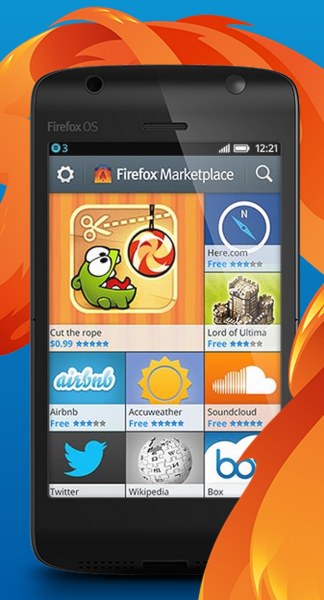
    Mozilla means serious business about Firefox OS, if today’s Mobile World Congress announcement is any indication. Timing couldn’t be more serious. Gartner says there is little room for a third smartphone platform; in fourth quarter, Android and iOS dominated with 90.1 percent share, based on actual sales. The race for third place is on, with BlackBerry and Windows Phone established, but weak, contenders.

    Mozilla proposed Firefox OS nearly two years ago, when BlackBerry OS still had appreciable market share and smartphone growth was strong. But as the first Firefox OS devices come to market, much is changed. Mature markets already rapidly saturate, China is the largest for smartphones, feature phone share is expected to fall below 50 percent this year and Samsung has replaced Nokia as global handset leader. The best place for a newcomer, based on who will partner and where there is room to grow: Second-world and emerging markets — and that’s where Firefox OS is headed.

    Alcatel One Touch, LG and ZTE are early hardware launch partners. Eighteen carriers are committed to offering Firefox OS smartphones: América Móvil, China Unicom, Deutsche Telekom, Etisalat, Hutchison Three Group, KDDI, KT, MegaFon, Qtel, SingTel, Smart, Sprint, Telecom Italia Group, Telefónica, Telenor, Telstra, TMN and VimpelCom.

    América Móvil will bring Firefox OS phones to Mexico; Deutsche Telekom to Poland and other parts of Europe; Telefónica to Brazil, Colombia, Spain and Venezuela; and Telenor to Eastern Europe and other countries. Full list of launch destinations: Brazil, Colombia, Hungary, Mexico, Montenegro, Poland, Serbia, Spain and Venezuela. Most of the carriers expect rollouts to begin by mid-year and none are markets where smartphones yet have much traction.

    This circumstance is crucial to future growth. Smartphones, unlike feature phones, bring platform commitment as users download and purchase apps and get add-ons specific to operating systems and devices. Firefox OS devices face heaviest headwinds in countries where smartphone adoption is greatest and supporting ecosystems with it.

    In total, the world belongs to Android and iOS. Anshul Gupta, Gartner principal research analyst, says that “2013 will be the year of the rise of the third ecosystem”. Globally, with 3.5 percent and 3 percent sales market share, respectively, BlackBerry OS and Windows Phone are biggest contenders to be No. 3. But on the macro-level, particularly in countries where feature phones dominate, any platform conceptually can beat others — even those successful in markets like the United States or Western Europe.

    From that perspective, Mozilla CEO Gary Kovacs’ boast isn’t so outlandish as Android or iPhone supporters might think: “With the support of our vibrant community and dedicated partners, our goal is to level the playing field and usher in an explosion of content and services that will meet the diverse needs of the next two billion people online”.

    Critics might look at the situation differently — that Mozilla can’t find partners for major markets and gets the dregs. Even if true, none of the first distribution wave is a country with high smartphone adoption, which again to emphasize is pure opportunity for Mozilla and carriers.

    Hardware partners are an interesting lot. None are top-tier. While ZTE and LG rank fourth and fifth for global handset sales — with 3.4 percent and 3.2 percent market share in Q4, according to Gartner — they declined year over year. Third place Apple has greater share than both combined. Sixth-ranked Huawei will join the three this year. Alcatel One Touch is the other Firefox OS partner.

    Samsung would be the feather in Mozilla’s cap — but accounting for 42.5 percent of Android sales in Q4, the South Korean electronics giant has little incentive to add a fourth smartphone operating system. Nokia is committed to Windows Phone and Apple will never do anything but iOS. Devices from three of the top-six is a good start, considering Mozilla builds everything new and comes to market late.

    The challenge now: Getting devices to market and supporting ecosystem in place. BlackBerry 10 is out, and Windows Phone sales grew 124.2 percent year over year during fourth quarter, according to Gartner, arguably from a small base. So the race for third place is on.

  • NVIDIA Hates The Benchmark Game, But Lifts The Veil On Tegra 4 Performance Anyway

    tegra-test

    Flash back a month or so to CES — NVIDIA CEO Jen-Hsun Huang officially pulled back the curtain on the company’s new Tegra 4 chipset, and called it the “world’s fastest mobile processor.” It was a hell of a claim to make, but the company did little to justify it at the time aside from pointing to its array of Cortex A15 CPU cores and its “72 GPU cores.”

    Fortunately, NVIDIA is much chattier here at MWC, and was eager to show off some rather impressive synthetic benchmarks for its latest and greatest mobile chipset.

    Well, maybe “eager” isn’t exactly the right word — NVIDIA really hates playing the mobile benchmark game. I don’t blame them. In many ways the sorts of numbers that these tests spit out just don’t accurately reflect the experience that users will actually have. During our early testing for instance, the Nexus 4 consistently put up some strangely anemic Quadrant scores — which its cousin the Optimus G handily blew past — despite working like a dream.

    All that said, benchmarks are largely are for the most part inescapable, and the Tegra 4 SoC does a rather nice job on them anyway. Quadrant is one of our go-to mobile benchmarking tools, and the Tegra 4 did not disappoint — it scored in the mid-16,000s, topping out at 16,591. To put that in a little perspective, Samsung/Google’s Nexus 10 (which itself is powered by a relatively new dual-core 1.7 GHz Samsung Exynos chipset) usually scores in the mid-to-high 4,000s. Asus’ Transformer Pad Infinity TF700 (powered by a 1.6GHz quad-core NVIDIA Tegra 3) fared about the same, if not a hair higher.

    The results were much the same when we looked at AnTuTu scores — while tablets like the Nexus 10 and Asus’ TF700 will yield scores in the mid-8000s to low-9000s, the Tegra 4 demo tablet consistently hit scores above 36,000.

    Curious about how the Tegra 4 compares in your preferred benchmarking suite? You can see the full gallery of Tegra 4 benchmark results below:


    One of NVIDIA’s most prominent competitors these days is Qualcomm, and NVIDIA Product Marketing director Matt Wuebbling was eager to chat about the performance differential when I let slip the Q word.

    When asked about how much NVIDIA knows about Qualcomm’s updated Snapdragon chipsets, he replied simply enough: “we know a lot.” By his count, the Tegra 4 is about two to three times faster than Qualcomm’s Snapdragon 600 (used in devices like the new HTC One). He went on to say that the top-tier Snapdragon 800 is about 25 to 35 percent faster than the 600, with the implication that the Tegra 4 still comes out on top.

    Though his response has based on Qualcomm’s published Snapdragon claims, I’d still advise you to take that comparison with a grain of salt. That’s nothing against Wuebbling, but these sorts of simple comparisons don’t always paint the most accurate picture. I couldn’t reach Qualcomm for response at time of writing, but I’ll update if/when they respond to these claims.

    You would think that this sort of horsepower would suck a battery dry in jiffy, but that doesn’t appear to the be the case. Another Tegra 4 demo had a video running at full resolution on a small 1080p display, an exercise that never drew more 1 watt of electricity at the most. Power consumption typically fell within the 900-950 milliwatt range — devices like the Droid DNA for instance tend to draw around 1.2 watts for similar tasks.

  • HP’s Android-Powered Slate 7 Tablet Is Cheap And It Works, But Is That Really Enough?

    slate7-1

    HP surprised more than a few people earlier tonight when it officially revealed the Slate 7, a $169 Android tablet that’s set to ship in the U.S. for $169 in April. It struck me as a safe move for HP, especially after it whiffed so profoundly with its ill-fated TouchPad. After all, people are buying plenty of Nexus 7s, so clearly there must be a market for a cheap, small tablet.

    I got the chance to muck around with the Slate 7 at Pepcom earlier tonight though, and to be quite honest, I’m not convinced HP has a winner on its hands.

    One of the first things you’ll notice about the Slate 7 is its elongated 16:9 display, and the thick black bezel that runs around it. It’s actually rather reminiscent of Samsung’s 7-inch Galaxy Tab 2.0, another underwhelming Android tab that banked on its price tag to sell. The screen itself (running at 1024 x 600) was decent enough — it was generally very bright, but the colors displayed seemed dull and lifeless.

    The Slate 7 seems to have been designed to be as inoffensive as possible. That’s not completely a bad thing — the stainless chassis and the soft-touch plastic that the Slate’s rear is swathed in are rather nice — but there are precious few other design niceties to be found here. Those looking for a little splash of color may be interested to know that a red version will also be available. The Slate 7 is also apparently loaded up with Beats Audio support, a trait it shares with its notebook cousins, but I couldn’t get a feel for it amid all of the noise of Pepcom.

    As far as performance goes, what else is there to say? It works just about as well as you would expect a $169 tablet to: not that great. Swiping between home screens could be a little jerky (if it worked at all; quick swipes didn’t always get the job done), and there was a bit of delay as I went to fire up new apps — though some non-final software probably has something to do with that. The Slate 7 has a dual-core 1.6GHz processor and 1GB of RAM to work with, which is usually enough to tackle stock, unfettered Android 4.1 without too many hiccups, but I’m willing to chalk all this jerkiness up to a pre-production lack of polish for now.

    Click to view slideshow.

    While we’re talking about performance, HP’s booth representatives didn’t have many specifics on the dual-core processor, but a quick look at the settings revealed an option called “Rockchip system updates,” proving nicely that HP sourced the processor from China’s illustrious Fuzhou Rockchips Electronics company. Now I couldn’t care less who the chip came from if it does the job admirably, but the internals here don’t do much to wow. When asked about how HP was able to produce such an inexpensive tablet, HP’s pitchman pointed to economies of scale — order enough parts and the end product shouldn’t cost too much — but opting to go with a SoC from a largely unknown Chinese company probably didn’t hurt either.

    What almost certainly will hurt HP, though, is the crowded playing field it’s diving into. There’s the Nexus 7 to compete with of course, but don’t forget devices like the Kindle Fire HD and the Nook HD. Each of them brings higher resolution displays into the mix, as well as tight access with each of their respective media environments for only $30 more out of pocket. That’s not to say that HP won’t work to solidify the ties between its new tablet and the rest of the HP ecosystem — the Slate 7 comes with the ability to wireless print to compatible HP printers.

    For better or worse (my money’s on the latter), HP just doesn’t seem concerned with trying to differentiate the Slate 7 from any other Android tablet out there. To its credit, HP isn’t trying to position the Slate 7 as anything other than what it is: a very cheap mass-market play. I’m not convinced that this thing is going to be able to pull away from the pack just by undercutting the competition on price, but I could be wrong — the Slate 7 may be the right tablet with the right price tag at the right time.

  • Chromebook Pixel is a status symbol

    Google’s first computer isn’t about sales but status. Critics who lambast Chromebook Pixel as an over-priced web browser wrapped in pretty hardware miss the point. Badly. The laptop will sell, but not in mass-volume because it’s not meant to. Is Lamborghini about sales or style? I ask not seeing much commentary about how the Italian sports car is a failure because Ford sells millions more Explorers.

    Chromebook Pixel is the luxury car of computers running Chrome OS and perpetually connected to the cloud. Google’s beauty is a status symbol for people willing to plunk down $1,299 or $1,449 and makes, along with newer Nexus devices, a bold brand statement: Google is a premium brand and the company a real innovator. For the people who love the brand and want to identify with it, like all those fanboys adoring Apple with their cash, Chromebook Pixel is an easy sell.

    Consider Apple, which engages in a tried-and-true retail practice, with pricey, attractive Macs. Many people see tech gadgets as accessories — statements of their coolness, superiority — as much as useful products. They’re willing to pay more for good design, for style, like anyone choosing, say, sports car over minivan.

    It’s good business. Clothing stores take a similar approach. There are teens who must have the newest wears from Aeropostale, American Eagle, Gap or Hollister at full price; they can’t wait for sales. They want to be cool. They pay for fashion.

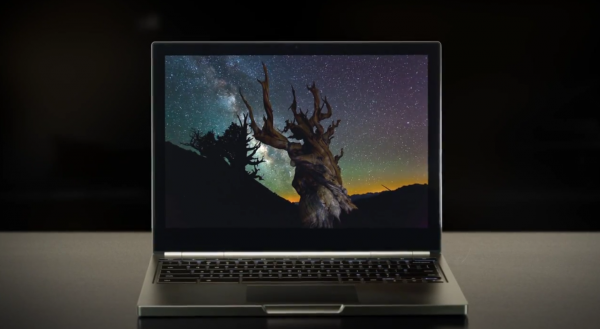
    Google joins Apple and Sony selling pricey, fashionable PCs. Chromebook Pixel is beautiful inside (that breathtaking display) and out (fine design and lightbar). The computer is a pricey fashion statement for those who can use it, and the cloud lifestyle sets them apart from others — quite literally high above them. For people who live the Google lifestyle and want the world to know, Chromebook Pixel is their proclamation.

    Status is More Than Cool

    But there are other measures of status. Chromebook Pixel promises to do for the Chrome OS platform what Nexus devices did for Android smartphones and tablets: Establish a reference design for OEM partners and provide developers base system to create apps for. The laptop is the status quo for future Chrome OS applications and hardware.

    Google sees touch as integral to future computers running Chrome OS, for example. No other laptop offers touchscreen with super high-resolution display. Apple really should change its MacBook Pro product page, which claims: “The highest resolution ever. And the second highest”. Chromebook Pixel is second: 2560 by 1700 compared to MacBook Pro 13-inch’s 2560 by 1600 (The 15-inch MBP is still higher at 2880 by 1800). Google can claim highest-resolution touchscreen.

    Google’s laptop is also status for the future. This is something I’ve come to really appreciate while reviewing the computer, and I had to change my thinking during the process by taking a different view of usage scenarios.

    Earlier Chromebooks, particularly those released for holiday 2012, appealed for their value. The $199 Acer and $249 Samsung models are easy purchases, and, based on Google+ and other social network posts, many people use these Chromebooks as companion PCs — not their primary one. I’m among a smaller set of users making a Chrome OS device my full-time computer.

    Chromebook Pixel is meant to be used as a primary computer. Design, processor, touchscreen and price say Pixel is the machine used everyday, all day long. To that end, Google’s premium portable must be able to replace something else.

    This aspect, in conjunction with pricing, is primary source of short-sighted criticism, and there is lots of it around the InterWebs, much here in BetaNews comments. The major complaint: Chromebook Pixel can’t provide the same utility as, say, MacBook Pro or Windows notebook costing hundreds of dollars less. That’s reasonable thinking if Google’s laptop is meant to be used as primary, or only, PC, which it is.

    But that rationale misses the point. You don’t get it! Open your eyes and think. True innovation is delivering something that you don’t know you need but once you get it realize that “Yeah, I could have used that all along”. Comparisons to the existing way are meaningless in this context. You have to think differently.

    For What’s Next

    Chromebook Pixel promises to change the computing paradigm — all those cheap Chrome OS models are but Trojan Horses. The primary cost is hardware, up front, that is used for years, while software is minimal investment, or free. That’s reverse the commodity model that exists right now, where, particularly for businesses, PC hardware investment is less (well, except for Macs), and software and cost maintaining it is so much more.

    Chrome OS is a paradigm shift in key areas, both regarding the cloud: Where and how people use applications — app services, really — and how much less they cost. Chromebook Pixel is the status device for this future, and the critics just don’t get it.

    This isn’t the first time, with respect to Google. I remember Android and Chrome critics in late 2008 and throughout most of 2009 poo-pooing the products. Yet look where they are now, particularly the mobile OS. The majority of smartphones and tablets shipped today have Android, according to IDC. In tablets, Google’s green robot stripped iPad’s early, massive market share lead in about two years. Half-decade ago, Android and Chrome were in many ways where Chrome OS is today.

    Chromebook Pixel isn’t just for now but what’s to come. Look at Google’s marketing tagline: “For what’s next“. That’s a powerful statement about the product being just the beginning and insinuates something for anyone used to Chrome OS every-other-month updates: There will be ongoing improvements. The hardware foundation is solid, and Google can — and will — make Chromebook Pixel better over time.

    Google’s marketing tagline is also a statement of purpose that signals dramatic changes ahead. People often ask, and I have been among them, why Google pursues a two-operating system strategy. Why continue with Chrome OS at all when Android is so successful? The answer is a question: Where do you consume Google services? Most certainly they’re more in the browser than apps. Chrome is the hub, the gateway, to these cloud services. Looked at that way, Pixel foreshadows a Chrome OS tablet, or laptop hybrid. Consider touch, which Chromebook Pixel shares in common with Android tablets. But the paradigm shift is much bigger than new hardware, but we work and play and the context surrounding them.

    Chromebook Pixel is a status symbol — for people wanting the coolest thing, for future Chrome OS applications and devices and “for what’s next”. This seemingly pricey laptop is so much more than what it appears to be, which is one major reason why this post is the prologue to my forthcoming Chromebook Pixel review — presented in two parts.

  • ICYMI: PlayStation Snore, the Internet of cool things and social tools for the enterprise

    Looking for something to listen to as you relax this weekend? Or to pass the time before the Oscars? Get caught up on all the tech news and analysis you need to know with our podcast recap!

    In our weekly wrap-up, we talk about Sony’s PlayStation 4 event, Google’s Chromebook Pixel and Tesla’s earnings.

    (download the weekly wrap up)

    Stacey Higginbotham launched a new podcast series on “The Internet of Things,” an emerging trend that is going to be huge.

    (download the Internet of Things show)

    And from GigaOM Research, a look at the social business tools for enterprise

    (download the GigaOM Research show)

    Related research and analysis from GigaOM Pro:
    Subscriber content. Sign up for a free trial.

  • Move over iPad mini, Samsung unveils Galaxy Note 8.0

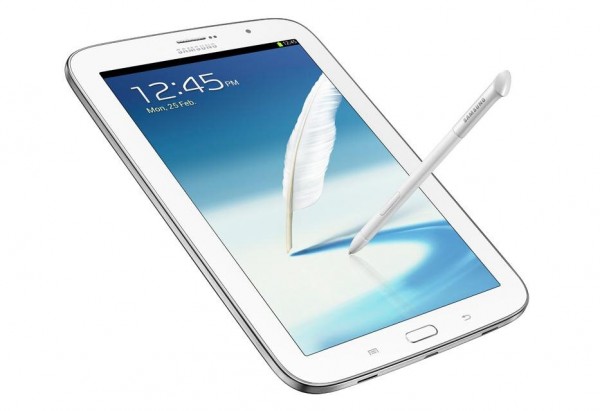
    Late February means another Mobile World Congress, and the rush to make big, splashy product announcements before the show starts. Samsung jumped in early today, by announcing an 8-inch tablet with stylus — Galaxy Note 8.0. The slate is about the same size as Apple’s iPad, with comparable screen resolution, but features the S Pen and supporting software. Why just touch and type when you can draw, too?

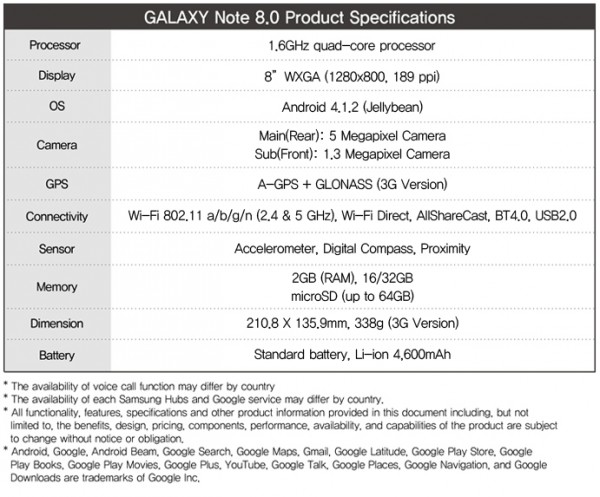
    Samsung’s slate joins the Galaxy Note II smartphone and 10-inch tablet, with stylus being the compelling feature that market leader Apple doesn’t offer on any iOS device. Like the recent update for its siblings, Galaxy Note 8.0 comes with a split-screen, multi-window function. The tablet runs Android 4.1.2 customized with TouchWiz UI.

    Galaxy Note 8.0 is slightly larger than iPad mini — 210.8 X 135.9mm, 338g vs 200 x 134.7mm, 312g, respectviely. Apple’s tablet has 7.9 inch display, with 1024 x 768 resolution and 163 pixels per inch, compared to the Note 8.0’s 1280 x 800 and 189 ppi. Samsung plans to start selling the new Note in second quarter.

    “Back in 2010 the launch of the first Samsung Galaxy Tab with 7 inch screen opened a new chapter in the mobile industry”, JK Shin, president IT & Mobile Communications Division, asserts. “The Galaxy Note 8.0 breaths fresh life into the category as it delivers the perfect fusion of portability and everyday productivity — the result is a pioneering, pocket-sized solution that enhances and enriches our everyday lives, whether at work or play”.

    Apple and Samsung are the industry leaders in the tablet market. During fourth quarter, iPad shipment share fell to 43.6 percent from 51.7 percent annually and from 46.4 percent sequentially. Samsung’s share rose to 15.1 percent from 7.3 percent year over year.

    Samsung has a long way to go to catch Apple, but the market is changing. During third quarter, Android tablet share pushed past 50 percent, snatching iPad’s early lead, according to IDC.

    “I think the big picture is that for many years people insisted that there wasn’t a tablet market, just an iPad market”, Tom Mainelli, IDC research director for tablets, says. “The last few quarter have shown that there is indeed a market for tablets beyond the iPad, although that product continues to be quite dominant from a vendor market share perspective”.

    Samsung’s renewed push into smaller slates is timely. According to NPD DisplaySearch, market demand shifts towards smaller, and lower-cost models. The firm forecasts that slates with 7-7.9-inch displays will account for 45 percent of shipments this year. By contrast, 9.7-inchers will fall to 17 percent — that’s the size of iPad. Apple introduced iPad mini in late October, in response to changing market conditions and consumer demand for small sizes.

  • Samsung sets sights on iPad mini with new Galaxy Note 8.0 tablet

    Samsung Galaxy Note 8.0 Release Date
    Samsung (005930) is finally gaining some momentum in the tablet market after a slow start with the original Galaxy Tab, which launched in late 2010. The South Korean consumer electronics giant now has a number of slates available in the 7- and 10-inch ranges, but Apple’s (AAPL) 8-inch iPad mini opened new doors for mid-size tablets following its release this past November. Samsung was already putting a mid-range tablet together when the iPad mini debuted last year, and now the company is finally ready to take the wraps off its latest Note series device: The Galaxy Note 8.0.

    Continue reading…

  • Samsung’s Galaxy Note 8.0 Will Make Its International Debut In Q2, We Go Hands-On

    note8-2

    That Samsung was tinkering with a slightly smaller Galaxy Note tablet shouldn’t come as a surprise, but consider this the final word if you still weren’t a believer. Samsung has just officially revealed that the Galaxy Note 8.0 is indeed a real product, and that it’s planning on rolling the tab out across the globe starting in Q2 2013.

    Though the company didn’t have anything firm to share when it came to release dates or pricing, it did have plenty to talk about in terms of hardware. The Note 8.0 tablet runs a TouchWiz’d version of Android 4.1.2 Jelly Bean, and sports a Exynos 4 Quad processor clocked at 1.6GHz, 2GB of RAM, and (you guessed it!) an 8-inch TFT LCD display running at 1280 x 800. Perhaps it’s not the most surprising spec sheet we’ll see here at MWC, but it’s certainly plenty of horsepower for a tablet this size and it shows (more on that later).

    Sadly, there’s no word yet on what the Note 8.0 will cost, though Samsung representatives were quick to peg the device as being “affordable.” Naturally though, that will all depend on the configuration you’re looking at — Samsung will be selling Wi-Fi and 3G models with either 16 or 32GB of internal flash storage. The company also confirmed that an LTE-friendly version of the Note 8.0 was in the works, and that it would eventually grace the United States thanks to some crucial carrier (yet unspecified) partnerships.

    TechCrunch got to take the Note 8.0 for a test drive earlier today, and it’s clear that Samsung has been doing some fine-tuning since the last time it release a Note tablet.

    In terms of design though, the Note 8.0 doesn’t really bring anything new to the table. As Darrell pointed out when the first batch of leaked images started making the rounds, it resembles a blown-up Note 2 phablet with its portrait orientation, physical home button, and soft key placement more than it does a Note 10.1 tablet. It’s significantly slimmer than the last pint-sized tablet Samsung pushed onto the market too/, which makes holding it with one hand is slightly more comfortable even though it has a larger display.
    Click to view slideshow.

    As you might expect, I was able to whip through homescreens, dive in and out of apps, and (most importantly) doodle to my hearts content with nary a hint of lag. I wasn’t able to run any benchmarks to prove my point conclusively, but the whole package felt snappier and more responsive than the Note 10.1 tablet. Part of that perceived performance boost can probably be attributed to Google’s Project Butter enhancements, but the snappy chipset and the fact that the pre-release software build was largely unfettered by cumbersome widgets and visual cruft didn’t hurt either.

    Cameras built into tablets very rarely impress, and that’s exactly the case with the Note 8.0’s 5-megapixel rear camera and 1.3-megapixel front-facer. Colors tended to be a little lifeless and washed out overall, and images snapped with the front-facing camera were grainy and unsatisfying. They’ll certainly do in a pinch if you absolutely have to take a photo, but it’s very likely that your phone’s camera would outshine the Note 8.0 any day.

    Speaking of software, the Note 8.0 is loaded up with the now-standard slew of S Pen-friendly apps and features, albeit with some nifty updates. Multi-window multi-tasking (my favorite feature on the Note 10.1) now lets users split screen their phone calls, and the S Note app has been updated with new templates and notably improved handwriting detection and recognition. It’s still not perfect, but the Note 8.0 was generally able to decipher my chicken-scratch with more accuracy than the last Note tablet.

    With the Note 8.0, Samsung has finally gotten around to cleaning up one of the Note series’ most annoying quirks. Despite being devices that leaned heavily on the S Pen to differentiate them from their competition, owners of the original Note and Note 2 phablets couldn’t actually use the pen to trigger the capacitive touch buttons. Thankfully, that’s no longer the case — better late than never, I guess.

    Like the Note 10.1 before it, the Note 8.0 also sports an IR blaster and a remote control/channel guide application courtesy of long-time partner Peel. It’s no secret that Samsung (like so many others these days) is looking to solidify itself as a force in the living room, and continuing this little trend is yet another way for Samsung to highlight the value of buying into its hardware ecosystem.

    And, perhaps most curiously, the 3G-friendly version of the Note 8 allows users to place voice calls. To my utter surprise, it actually worked very well: the Note 8’s microphone was sensitive enough to deliver reasonably crisp, loud audio even in a room full of eager, chatty tablet tinkerers. I can’t imagine many people taking advantage of this little feature (if only because you’ll look more than a little silly if you do), but that won’t be an issue for everyone — Samsung has said that the voice call feature won’t feature to make it to every region where the Note 8.0 will be sold.

  • Video look at Google’s impressive Chromebook Pixel

    Perhaps I’ve been a Google Chromebook user for too long now because I’m nearly sold on the new Chromebook Pixel. I know it sounds crazy — who would pay $1,299 for a laptop that you can’t install software on — but anyone using a Chrome OS device today would be blown away by this machine. Simply put: It runs rings around all of the prior Chromebooks and is exceptionally better in every way.

    Here’s a quick tour of the hardware including that 4.3 million pixel display. We have a 15-inch MacBook Pro Retina Display in the house and to my eyes, the screen of the Chromebook Pixel looks even better although that’s hard to translate in a video. The internal speakers are outstanding as well as I tried to demonstrate on camera. Unfortunately, my video camera is “smart” enough to level out the sound, so you’ll have to take my word for it.

    Outside of the occasional podcast and video production, I have little doubt the Pixel could fulfill all of my mobile computing needs. And it would be a joy to use one of them as well thanks to the Intel Core i5 chip and 4 GB of memory; bench-marking Chrome shows a four- to five-fold performance boost over the Samsung Series 5 550 Chromebook I bought last year.

    It’s even slightly faster than Chrome on my similarly spec’d MacBook Air. And unlike most other Chromebooks, no corners were cut: The Pixel’s design and build quality is top notch from the backlit keyboard to piano hinge that doubles as a heat sink.

    Related research and analysis from GigaOM Pro:
    Subscriber content. Sign up for a free trial.

  • Here’s What To Expect From Mobile World Congress 2013, Europe’s Biggest Mobile Show

    mwctc

    It’s that time of year again — mobile nerds and enthusiasts of all stripes have begun to descend upon Barcelona for Mobile World Congress, and naturally a TechCrunch contingent has set up camp in Spain to cover it all.

    Or, we’ll try anyway. MWC is a behemoth of a show, packed to the brim with enough phones, tablets, and apps that it’s enough to make even the more ardent mobile nerd’s heart go a-twitter. To say that we’ve got a busy week planned is quite an understatement, but here’s a brief look at some of the players that are in attendance and what (we think) they’re bringing to the table.

    First, there are the earlybirds — the companies that wanted to get some of their big news out ahead of the show in order to avoid drowning in a sea of press releases. HTC will be around as it always is for instance, but it’s already made its big reveal during a pair of simultaneous events in New York and London. Personally, I’m hoping that an HTC Mini is floating around the show floor somewhere so I can finally try and figure out why it exists.

    And then there’s Sony, who managed over the past few weeks to make some waves with its Xperia Z and Xperia Tablet Z. So far the company has done well to avoid raising any eyebrows in advance of its press event on Monday, but that hasn’t stopped the rumor mill from churning — Sony may announce that it’s bringing that Tablet Z to the UK (and hopefully beyond).

    Those of you expecting a glimpse at a brand new flagship phone from Samsung will probably come away disappointed this week — the Korean consumer electronics titan seems to have stopped using MWC as a launchpad for its top-tier smartphones. The big Samsung announcement expected this week is that of the Galaxy Note 8.0, the S Pen-friendly tablet whose existence has been leaked so often that even HTC would blush. The latest? Slashgear obtained this image (above) taken at the Fira Gran Via earlier today, confirming that the GalNote 8.0 would indeed take the stage here in Barcelona.

    Samsung may not be planning to show off too much in the way of high-end phone hardware, but eternal rival LG seems more than eager to fill in. Sure, its big ol’ Optimus G Pro may have already enjoyed its share of the spotlight, but I’m looking forward to some hands-on time with it. Also on deck are LG’s mid-range Optimus F series handsets — the F5 features a 4.3-inch qHD display and a 1.2GHz dual-core processor, while the F7 bumps things up slightly with a 4.7-inch 720p IPS screen and 1.5GHz dual-core processor. Maybe not the most exciting things in the world, but probably a damned sight better than last year’s Optimus Vu .

    Meanwhile, as rumors of a super-svelte Catwalk Windows Phone continue to make the rounds, Nokia is seemingly gearing up to unveil a pair of new Lumias this week. A handful of recent leaks pointed to the existence of the Lumia 520 (left) and 720 (right), and now a set of leaked images from none other than EvLeaks (who, in case you were curious, has a rather solid track record with these sorts of things) have added even more fuel to the fire.

    Nokia’s wallet-friendly device portfolio has also been pegged to grow this week with multiple new, non-Windows Phone handsets. Apparently, it’s all part of a plan to shore up the company’s presence in developing markets, which jibes rather nicely with the previously-stated goal of connecting “the next billion people.”

    China’s ZTE has been awfully transparent about its plans this year — you can expect to see the company’s hefty Grand Memo (complete with 1.7GHz quad-core Snapdragon S4 Pro and 5.7-inch display), as well as one of the world’s first honest-to-goodness Firefox OS phones. Not exactly a shock considering that Firefox OS is being geared heavily toward making a splash in developing markets, but it’ll be neat to see what sort of hardware ZTE cooked up to match Mozilla’s web-centric OS. There’s even a spec sheet floating around now, thanks to some Engadget tipsters who managed to get into the MWC venue a little early:

    Speaking of Chinese OEMs, Huawei has been keeping its cards close to its chest so far. It’s pretty obvious that the mid-range Ascend P2 and its 720p screen will be making an appearance very shortly, but the question is whether or not it’ll be alone — after all, Huawei did reveal two heavy-hitters during CES. There’s little doubt in my mind that Huawei knows how to make a good phone, but another question to mull over is whether or not this year will be the one that sees Huawei finally fit into the mainstream.

    Sadly, this year attendees will have to do without the frozen treats and the scores of Android pins that Google brought to the show last time around. While the company hasn’t officially stated why it downsized its presence on the floor this year, we’ve got our own theories. In a slightly related vein, Motorola Mobility has never really had a big presence at MWC, so odds of a big X-Phone announcement are pretty much nil — sorry folks, better luck at I/O.

    There have been persistent rumors that Asus intends to reveal its third-generation Padfone at MWC, which seem to have been corroborated by a recent (and incredibly corny) teaser video that pointed to a moment when “Pad and Phone come together” to form a “metallic miracle.” It would be a peculiar move given how long the older models have been around. The original Padfone is less than a year old for one, and the Padfone 2 was only released a few months ago. Subsequent teasers point out that whatever Asus plans to show off is Intel-powered too, so that strange FonePad is starting to look like a lock.

    This may seem like a lot, but trust me — this is just a fraction of what Mobile World Congress has to offer. Be sure to keep up on all the latest news out of Barcelona by checking out our full event coverage here — the fun kicks off in earnest tomorrow.

  • Android this week: HTC One introduced; Ubuntu on Nexus; Galaxy S4 using Snapdragon?

    This week saw the introduction of HTC’s next flagship phone, named the HTC One just like its predecessor. The handset materials and design are a bit of a departure for HTC as the new phone will use an all aluminum enclosure and a pair of front-facing speakers. As a result, the audio experience ought to be a highlight for the One, but visually oriented readers will be happy with the display as well: HTC is packing in 468 pixels per inch on the 4.7-inch, 1080p display.

    HTC OneHTC’s One will include an LTE radio for fast mobile broadband and run on Google’s Android Jelly Bean software. The company is also including several of its own software features: BlinkFeed streams news, social networking updates and other information; Sense TV provides video content guides and uses an infrared sensor turning the One into a remote control; customized home screens are available, similar to prior versions of HTC’s sense software.

    The flagship phone doesn’t yet have a price tag as that will come from carriers — likely next month — but will be available in both a 32- and 64 GB option. Other internal specs include a 1.7 GHz quad-core Snapdragon 600 chipset, 2 GB of memory, NFC radio and integrated 2300 mAh battery.

    Speaking of Snapdragons, Qualcomm’s chip may power the Samsung Galaxy S4 phone. Samsung has yet to introduce the revised Galaxy but online benchmarks and other evidence point to the company opting for a Snapdragon over its own Exynos chip. Reports indicate the same Snapdragon 600 found in the HTC One will be inside the Galaxy S4, due to heat issues when testing the Samsung 8-core Exynos chip.

    This wouldn’t be the first time Samsung chose a competitors chip to power its own smartphones however. The US version of the Galaxy S III also used a Snapdragon chip, mainly because at the time of launch, Samsung hadn’t yet integrated LTE support in the Exynos silicon. In some sense, Samsung is lucky that it has a secondary option for chipsets, else its flagship phone could face delays. We’ll get the story for sure within the next few weeks as Samsung is expected to hold a launch event for the new Galaxy smartphone on or around March 14.

    Ubuntu on NexusWe don’t, however, have to wait to see Ubuntu on a smartphone: This week, Canonical released instructions on how to install a preview of the alternative platform on Google’s Nexus line of tablets and phones. You’ll end up wiping out your Android system if you do this, but Canonical provided the handy links to Google’s own factory images for all Nexus devices, making it easy to reinstall Android.

    I haven’t taken the Ubuntu plunge on my Galaxy Nexus yet, but expect to next week. From all accounts I’ve read so far, the Ubuntu interface is intuitive, but the software is still rough around the edges. There are still quite a few features and functions not ready yet although the Nexus phones will still be able to make calls and connect to both Wi-Fi and mobile broadband networks.

    Related research and analysis from GigaOM Pro:
    Subscriber content. Sign up for a free trial.

  • Mac malware invades Microsoft, too

    How’s this for a helluva endorsement for Windows security over OS X? Today, Microsoft acknowledged falling prey to “similar security intrusion” as Apple and Facebook. They got nabbed by a Java exploit affecting Apple’s OS.

    “We found a small number of computers, including some in our Mac business unit that, were infected by malicious software using techniques similar to those documented by other organizations”, says Microsoft security chief Matt Thomlinson.

    Apple made similar admission on February 19 and Facebook a week ago. Apple issued an OS X fix removing Java, while Facebook disabled the tech. Microsoft disclosed no such action for its users. Party line: No data was taken.

    Facebook offers the most details on what happened: “After analyzing the compromised website where the attack originated, we found it was using a ‘zero-day’ (previously unseen) exploit to bypass the Java sandbox (built-in protections) to install the malware. We immediately reported the exploit to Oracle, and they confirmed our findings and provided a patch on February 1, 2013, that addresses this vulnerability”.

    My question: Who among the big companies discloses next? Surely these three aren’t the only ones running Macs and Java.

    Microsoft’s full statement:

    As reported by Facebook and Apple, Microsoft can confirm that we also recently experienced a similar security intrusion.

    Consistent with our security response practices, we chose not to make a statement during the initial information gathering process. During our investigation, we found a small number of computers, including some in our Mac business unit, that were infected by malicious software using techniques similar to those documented by other organizations. We have no evidence of customer data being affected and our investigation is ongoing.

    This type of cyberattack is no surprise to Microsoft and other companies that must grapple with determined and persistent adversaries (see our prior analysis of emerging threat trends). We continually re-evaluate our security posture and deploy additional people, processes, and technologies as necessary to help prevent future unauthorized access to our networks.

    Matt Thomlinson
    General Manager
    Trustworthy Computing Security

    Photo Credit: Jirsak/Shutterstock