 |
A recent study concluded that eating three or more servings of strawberries and/or blueberries per week protects against cardiovascular disease and heart attacks on women. Only women? This study was for dietary influences that increase heart and cardiovascular health… |
Author: Serkadis
-
Cut your heart attack risk dramatically by simply eating more berries
-
More evidence: Vitamin C does protect against colds

By the time he died in 1994, Linus Pauling had long been branded a “quack” by mainstream medicine and much of the mainstream media. Why? Because he advocated the use of vitamin C to treat many diseases, including the common cold. He claimed the medical establishment… -
Carnival Cruise Lines president urges Triumph passengers to ‘stop being so negative’ about their ‘unforgettable’ cruise experience

(Satire) Carnival Cruise Lines needs to learn a lesson in public relations from the White House. First of all, never admit to any wrongdoing, even if the people you represent are knee-deep in s#!t. Cruise line customers, much like voters, are simply not qualified to… -
The illusion of security: TSA allows travelers to use credit cards as ID

Air travelers in the United States know that producing a photo ID when passing through a Transportation Security Administration checkpoint is pretty standard fare. What most did not know; however, is that there is no requirement to do so in the TSA operating regulations… -
Delusional youth: Colleges students think they’re smarter and more entitled than any previous generation

It seems the lesson today’s American college students most need to learn is one not taught at its universities and colleges — that there is a difference between believing you can accomplish anything and taking action to accomplish something. A recent analysis of… -
Six facts you need to know about eating oils and fats

One of the most widely misunderstood food groups today, oils and fats can be both crucial and detrimental to your health, depending on what type they are and how they are processed. But with so many inconsistencies and mistruths emerging from health authorities and the… -
New study: are we all living in the future now?

A recent Bonn University study suggests we may all be living in a virtual simulation. If a pixel-lattice that forms the background of this universe is presenting us with an all-encompassing “television picture” of reality, then the whole space-time continuum could be… -
Low-sugar diet helps prevent diabetes

One of the most common myths associated with diabetes is that too much intake of sugary foods triggers it. It should be noted; however, that while a low-sugar diet can help reduce the chances of dealing with diabetes, the excessive consumption of sugar is not the sole… -
Hormonal birth control increases risk of diabetes
Some hormonal birth control methods may increase the risk of diabetes in overweight but otherwise healthy women, according to a study conducted by researchers from the University of Southern California and published in the journal Contraception. The researchers divided… -
MSG: Many Secrets Guarded (opinion)
(NaturalNews)By now, most of us are aware of the fact that MSG has two purposes: to give a food that has absolutely no flavor, flavor and to increase the shelf life of a useless product that ultimately will increase the profits of the highly reputable company using it. Actually,…
-
‘House of Cards’ political drama from Netflix, starring Kevin Spacey, is an instant hit

When you think of TV series production studios, you don’t normally think “Netflix.” But the company has just produced and released a full season of a new political thriller starring Kevin Spacey and called “House of Cards.” Let me cut to the chase: House of Cards… -
Turn off your smart phone to unplug from job stress, researcher says

People who stay connected to their offices after work by means of phones, computers and tablets have more trouble recovering from workday stress, reducing their mental and physical health and placing more strain on their relationships, according to a series of studies… -
Some broadband is better than others, like fiber and …. satellite!
The FCC’s third and most recent broadband quality report has determined that some types of broadband is still better than others, with fiber to the home and satellite generally offering more than the promised upload and download speeds at times of peak usage.
But of course, that’s not the only stat users might care about, which is why the FCC measures 13 different variables as part of its data collection efforts here. The data comes from Sam Knows and special routers sitting inside roughly 10,000 homes (I have one!). Those routers report on upload and download speeds, latency and the customers’ service tiers to create a nationwide picture of broadband quality.

And in general people should be pretty happy. As the chart above shows, people are mostly getting what they pay for, with customers of AT&T most likely to feel short-changed. What’s most surprising about this data is that satellite has moved from being pretty spotty to achieving high throughputs even at peak times, thanks to new satellites launched in the last two years. Sure, the service maxes out at 12 Mbps, but customers are getting those 12 Mbps and then some.
What else should the FCC monitor?
With most customers getting within 90 percent of the advertised speeds, the FCC should turn to gathering other data as well. Last summer it asked for comments on how other factors such as data caps might affect broadband quality. For example, would a service with a cap that delivers high speeds most of the time be as good as a service that has slightly lower consistency but no cap? Those comments were due last month, but there’s no mention of data caps in the report so far. Maybe we’ll see it in the next go round of this data. The FCC plans also to take a look at even faster speed tiers (maybe a gigabit) in later reports.
And in general it looks like customers are moving up to higher speeds, especially if they are starting out on the slow side, as the chart below indicates. This is great. Getting more people online, and subscribed to real broadband will be important in both closing a digital divide but also making it easier to design sites and services for more of the population. At those 1 Mbps and below speeds news stories featuring animated GIFs are a nightmare.

As a reporter, I’m glad the agency is collecting and reporting this data. Even though firms like Google and Netflix have options for measuring how your broadband or U.S. ISPs stack up, getting something objective from the FCC has a bit more cachet. Of course, the hope at the FCC is that the release of this data will help keep what is a relatively uncompetitive market for last mile broadband access a bit more honest.
But as a subscriber whose ISP isn’t quite delivering at the 100 percent mark — Time Warner Cable is pretty much the worst cable provider there is in terms of delivering on advertised speeds according to the chart below — this information doesn’t help. My only other option is the even-lower-performing AT&T. Add in the $10 rate hike I just got from TWC after I moved, and I’m left knowing that I have less-than-spectacular service but that I can’t do anything to make it better.


Related research and analysis from GigaOM Pro:
Subscriber content. Sign up for a free trial.- Netflix may suffer from limited mobility
- Confused about the wireless markets? Here’s a breakdown
- A look back at mobile in Q1


-
Why I love Surface Pro
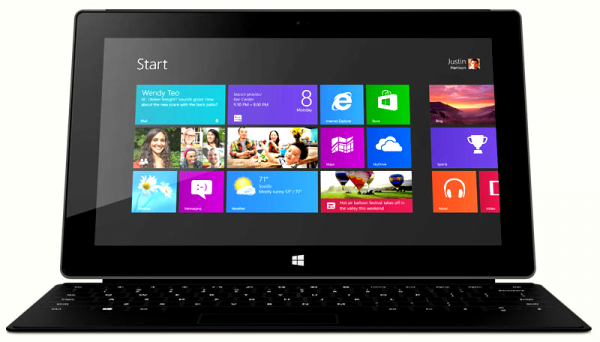
I have loved many computers and gadgets over the years. They typically share two things in common: Initial “Wow” reaction and improved experience the longer used. Microsoft Surface Pro gets the first, but more time is needed on the second. February 14 marks my fourteenth day using the tablet.
Too often tech vendors put too much emphasis on features while missing something more fundamental: Joy. How do you feel using the product. Does it make your life better? Are you happier for using the thing? Design — how a product looks and the interaction with it — is paramount. Apple products, for example, are pretty for a reason. On this Valentine’s Day, after two weeks with Surface Pro, love is appropriate topic. Because the tablet makes me feel good.
Tech stuff that initially wowed me, and I came to really love, is a short list. In order of use:
- Mosaic, the browser that begat Netscape. Web surfing thrilled, on IBM OS/2 Warp in late 1994. The experience still tickles the heart nearly two decades later.
- DSL, replacing my ISDN connection in May 1999. Suddenly, the Internet was fun. I’ve changed providers since — moving across country — and dabbled in cable but use DSL today.
- Apple Powerbook G3 “Wall Street”, purchased refurbished in February 1999. I had used Windows laptops, but nothing wowed like this. I watched my first DVD, rented from Netflix, on the sleek, curvy portable.
- iPad nano, white, in October 2005. I loved the stick-of-gum size music player, but not forever. The device easily scratched.
- Nokia N96 and N97, which I lump together, in December 2008 and June 2009, respectively. They’re the best phones I ever used and packed marvelous cameras. If Nokia hadn’t lost its way, I would likely love one of its newer handsets today.
- Sony VAIO VGN-Z590, the small-screen wonder (13.3 inches) with high-resolution display (1600 x 1200), ahead of most everything else in April 2009. I loved that laptop so much I upgraded to two later Z series.
- MacBook Air 11.6-inch, October 2010. The other laptop I always dreamed of. Beautiful, svelte, thin and enjoyable.
Over the years, there are many tech products I liked, and that list is long. Love is something else, and not always lasting. Those listed above stunned by their physical design and user experience. Surface Pro joins them in the initial “Wow” reaction, as somewhat expressed by my initial 3,800-word first-impressions review. Perhaps after another 14 days use, I can say whether love is lasting.
So where does the love come from:
1. Surface Pro is handsome and feels rugged to hold. Metal separates grown-up products from infants. Microsoft chose wisely to forgo plastic. The device is well-made — quality feeling right down to the look and feel of power cord and brick. The slanted-sides create illusion Surface is thinner than it is, while pulling the ports out of the way.
2. The convertible design is clever and useful. I love the kickstand and optional keyboard covers, which is practical and personal. Practicality should be obvious. Different colored covers let you add flare and personality. Microsoft should offer custom designs.
3. The screen simply stuns. I love, love, love the display, which is the gateway to the device. (So why don’t more hardware vendors make the screen a priority?) Text is super sharp and scales quickly while still looking great. Microsoft chose fonts wisely, too. Then there is touch, which I find to be more accurate on the device than any other I have used. The 10.6-inch diagonal size is just right for a tablet doing laptop duty.
4. Modern UI is as good as it looks. When I tested a Samsung Slate last year, Windows 8’s new interface did little for me. But something’s different now, perhaps because of Surface Pro’s screen. Modern UI really does feel modern. Microsoft’s built-in apps are simply gorgeous and functional. They beg to be touched, gawked. Overall, I find the interface to be surprisingly intuitive. All this beauty makes me feel good.
5. Surface Pro is fast. I’ve seen no ARM-based system that can compete. Microsoft made wise choices about the processor, SSD and other components. Battery life could be longer (I typically see 4-5 hours) but is comparable to thin laptops.
Surface Pro specs: 10.6-inch ClearType HD Display with 1920 by 1080 resolution; 1.7GHz Intel Core i5 processor and HD 4000 graphics; 4GB RAM; 64GB or 128GB storage; 720p front- and rear-facing cameras (meaning they’re for video more than photos); accelerometer; ambient-light sensor; compass; gyroscope; Wi-Fi A/N; Bluetooth 4; USB 3; Windows 8 Pro. Dimensions and weight: 10.81 x 6.81 x 0.53 inches and just under 2 pounds. Price: $899 (64GB); $999 (128GB).
How will I feel in two more weeks? Will it be a whirlwind relationship or something longer?
-
Google’s Crash Course On Apps Script ScriptDb [Video]
Google has uploaded a new Google Apps Script “Crash Course” video to its Developers YouTube channel. The video takes a “deep dive” into ScriptDb (a JavaScript object store built into Apps Script), shows examples, and discusses best practices for organizing data.
-
Google’s flu snafu and the reliability of web data
The web is full of data — much of it meaningful — but there’s some question as to how much we should actually rely on it. The latest evidence comes at Google’s expense, with some researchers questioning the validity of Google’s Flu Trends algorithm. They say the service, which estimates the number of flu cases around the world by analyzing trends on Google’s search engine, vastly overestimated this year’s season in the United States compared with more-traditional methods of measuring flu cases.
But this snafu is just a microcosm of a broader debate over how much stock we should put in web and social media data, and in what cases it’s most valid. It’s hard to figure out how much we should value speed and scale over quality of data. Millions of (presumably) younger people proactively searching or tweeting about a topic provides a huge and theoretically unbiased dataset, while traditional methods of phone calls or focus groups reach a smaller number of (presumably) older people who know they’re being observed, but who also are answering questions directly relevant to the research at hand.
Who’s more accurate: Google, Twitter or your neighbors?
The exact details of the discrepancy are explained in a Nature article published on Wednesday, but it appears to be a case of a lot of data that didn’t mean what Google thought it meant. Google’s search data covers almost the entirety of the web-surfing world and, in theory, can see outbreaks coming before they hit because it can watch the flu-related searches intensify in volume in real time. The Centers for Disease Control and Prevention says Google Flu Trends usually tracks very closely with its own data and can deliver results days faster, Nature writer Declan Butler reported.
Researchers think this year’s discrepancy might have something to do with hyped-up media reports leading to a volume of web searches for flu-related terms that was disproportionate — almost double, nationwide — to the actual number of cases. The CDC claims about 6 percent of the U.S. population was affected with flu-like symptoms during the peak period.

Google estimated more than 10 percent of the U.S. population had flu-like symtoms.
On the other hand, one project called Flu Near You, which relies on volunteers to report cases of flu among their friends and family, estimated a number closer to (albeit lower than) the CDC’s official statistics, perhaps because the data is based on clinical definitions of “influenza” and relies on people expressly reporting known cases. However, Flu Near You claims less than 45,000 participants and, according to Nature, covers only 70,000 people.

Flu Like You’s peak estimate was abour 4.5 percent of the population.
Responding to my inquiry about the discrepancy, a Google spokesperson sent the following statement:
“Flu Trends is meant to be a complementary tool to the surveillance systems used by the CDC. Since its initial launch in 2008 and through this flu season, Flu Trends has accurately predicted the start and peak time of flu season. However, this season our models estimated a higher influenza like illness rate than the Centers for Disease Control in some regions. As we do each year, we will be performing a model analysis and potential model update to improve the accuracy of the tool.”
And while Google’s predictions might be prone to the undue influence of a fear-mongering media environment, CDC researcher Lyn Finelli told Nature she’s even more skeptical of efforts to track flu outbreaks using Twitter data. She cites a low signal-to-noise ratio and a population of largely young-adult users that doesn’t align with the country’s overall demographic makeup.
To the contrary, however, Johns Hopkins University computer scientist Michael Paul told Nature that he’s a big believer in Twitter data, especially because it generates a large dataset that’s less susceptible to sample errors than smaller-scale projects such as Flu Near You. He claims to have developed a model that can accurately track the flu using Twitter, something a handful of other projects are already working on.
Pollsters struggle with the web, too
But flu statistics aside, questions over the validity of Twitter, Google and other web sites as data sources are nothing new. Last year, for example, I profiled a company called the Dachis Group that has devised a method for tracking a companies’ presences, buzz and sentiment on social media. It claims its algorithms for ranking the buzz around Super Bowl XLVI advertisers were far more accurate — or at least yielded drastically different results — than USA Today‘s traditional AdMeter rankings of Super Bowl ads based on phone-based polling.
Although people appear generally willing to do away with phone surveys and other marketing-based polling efforts, there’s a lot more skepticism when it comes to using the web to predict political elections and gauge response to culturally popular events such as presidential debates or the Olympics. I covered both sides of the debate in October, as pre-election fever was in full force and many people were atwitter about Twitter’s tweets-per-minute counts during the presidential debates. What side experts fall on seems to depend on how much they trust the demographics, the subjects themselves, the sample size and how well someone can actually analyze sentiment in text.
Even on Google, politics has proven that interest doesn’t necessarily signify intent. Leading up to the presidential election in November, Mitt Romney was trending quite a bit higher than Barack Obama in search volume. Election night, however, was a different story, with Obama winning in a landslide.

Perhaps the best advice on how to deal with web data comes from Harvard epidemiologist John Brownstein, who told Nature, “You need to be constantly adapting these models, they don’t work in a vacuum. You need to recalibrate them every year.”
As web usage and users change along with the world around them, there’s really no guarantee that a single data point means the same thing or has the same effect from year to year. Even search is under attack by companies trying to proactively surface content for consumers before they know to look for it.
When accuracy is paramount, no place — Twitter, Google, the telephone or the wisdom of crowds — is the holy grail; they’ll all have to play a role.
Feature image courtesy of the Centers for Disease Control and Prevention.

Related research and analysis from GigaOM Pro:
Subscriber content. Sign up for a free trial.- A near-term outlook for big data
- Connected world: the consumer technology revolution
- Listening platforms: finding the value in social media data

-
Ensign named Internal Audit director at PNNL
Kevin Ensign, a 26-year audit and finance veteran in both the public and private sectors, has been named director of Internal Audit at the Department of Energy’s Pacific Northwest National Laboratory.
As director, Ensign will oversee a comprehensive lab-wide auditing program that provides independent and objective analysis of PNNL’s financial and operating activities.
Ensign joined PNNL in 2007 as the laboratory’s prime contract manager. He later was PNNL’s American Recovery and Reinvestment Act lead, and most recently served as manager of the laboratory’s Business Development and Analysis department.
Prior to PNNL, Ensign worked at DOE’s Office of River Protection in Richland, where he managed all Chief Financial Officer and contracting activities. He also worked more than eight years at DOE’s Richland Operations Office as an auditor and as director of the office’s Financial Management Division, and worked five years as an auditor and supervisor with the Defense Contract Audit Agency in California.
During his career, Ensign has performed hundreds of government audits, overseen the financial and internal audit functions of numerous DOE contractors and has provided extensive public briefings on DOE costs, including briefings to members of Congress.
Ensign is a native of Olympia, Wash., and earned a bachelor’s degree in accounting from Western Washington University in Bellingham. He received a Project Management Professional certification in 2007.
-
Cedexis Fusion Tames Big Data Flows for Traffic Shaping
Web optimization company Cedexis launched Cedexis Fusion, a component of its Software as a Service platform to integrate big data flows from third-party tools, CDNs and clouds to enable a wide range of performance, availability and cost-for-performance traffic shaping.
Cedexis Fusion integrates that data into the Cedexis Openmix platform, which acts as a global load balancer, driving traffic to the most available, best performing or least costs-for-performance resources. Monitoring and performance data is aggregated in real-time and makes this big data actionable. A range of pre-built integrations are available immediately, including New Relic and AppDynamics application performance monitoring software; Akamai, Level3, Edgecast and ChinaCache CDNs; SoftLayer’s server management data, and many others.
“So many systems produce volumes of Big Data, but making that data real-time actionable has been difficult or impossible,” said Greg Unrein, VP of Product Management of Cedexis. Fusion allows customers to make their monitoring investments really pay off, accessing all of their Big Data metrics, and automating the process of reacting to the data to improve website performance. Cedexis Fusion is more than a data aggregator. It is the point of convergence of all the real-time Big Data streams that feed our cloud-based global load balancer – Cedexis Openmix. With Openmix, Fusion customers have a single place to define how they wish to detect and avoid Internet congestion and service disruptions to achieve 100% service availability.”
Cedexis hosts a Developer Exchange as well, for custom innovations and private data ingestion ideas. Customers can automate big data streams from any HTTP source. Example applications include green energy sensitivity, least costs routing and incorporation of private measurements from internal systems. Additional use case examples for Fusion include a one stop interface for purging content on CDNs, predicting over-utilization, minimizing bandwidth bursting charges, and avoiding slow shopping carts.
Privately held Cedexis was founded in 2009 and its platform optimizes web performance across data centers, content delivery networks (CDNs) and clouds for companies that want to ensure 100% availability and extend their reach to new global markets. Companies rely on Cedexis to ensure 100 percent availability, fast page loads, downloads and transactions to drive traffic and revenue at lower cost and risk.
-
Anything You Can Bump With Your Phone, You Can Now Bump To And From Any Computer
Bump announced an update to its web version, which makes it possible for users to bump any files that they could from iOS and Android to and from any computer.
“Photos, videos, contacts, files…everything,” Bump says in a blog post. “There’s no setup at all — just go to http://bu.mp on your computer, open Bump on your phone, and bump the spacebar key! Bump is now your unlimited USB flash drive that is always with you!”
“No one ever says ‘I sure look forward to syncing my phone with my computer!’,” the company adds. “We want to change that. Because really, it’s the year 2013 — we have self-driving cars, private space exploration, 3d printers — but most folks have a hard time getting a video taken on their phone over to their laptop. And who doesn’t have a slight twinge of anxiety each time they press ‘sync’ that the contacts on their phone will be overwritten with outdated contacts on their computer? It should be congnitively simpler.”
Back in May, Bump launched the ability to transfer photos from your phone to the desktop. That was the only kind of file it worked with, and you could only do it from the phone to the computer, and not from the computer to the phone. Today’s announcement is a significant extension of what was available in the past.
According to the company, the number of users of the web version of Bump has grown 50% in the last two months. This should go along way toward growing that number by a lot more.
-
With 20% Of Reservations Filled, Mailbox Goes Down So You Can Enjoy Your Valentine’s Day

Last week’s hot app, Mailbox, is currently down. In very RIM-esque fashion, the startup’s servers are not forwarding mail, resulting in a very quiet Valentine’s Day. I’m pretty stoked about it. I think this should be a feature.
According to Mailbox’s twitter page, the company is busy fixing the problem. They quickly issued a couple of official responses but one is not very helpful. This one details the problems, stating that they are seeing intermittent issues with our servers syncing mail and new mail created will not be lost.
Mailbox launched with much fanfare last week. I love it. It’s the perfect cross between Mail and Gmail. However, today’s outage is what I fear the most.
The app’s novel features work because email is routed through Mailbox’s servers. Thus, if and when these servers crash (like right now), the mail is no longer forwarded to the app.
Since the app generated so much interest before it launched, the company instituted a reservation system, purposely limiting the amount of users (and strain) on its servers. Mailbox told us in a statement this afternoon that they received over 900,000 reservation requests and have so far managed to fill 20 percent. This is the first outage since the launch last week.
But think about it. Today is Valentine’s Day. It’s a day you’re supposed to enjoy with your sweetheart. I’m about to head off to my son’s kindergarten Valentine’s Day party. I won’t be distracted now. I’ll be able to participate like a good dad. Thanks, Mailbox! I love you even more right now.
In other news Mailbox’s reservation line is also paused.


