Author: Serkadis

  • Infographic: the periodic table of smartphones

    CNET has a detailed report on the mining of rare earth minerals (also called rare earth elements) and created this infographic that shows how they are being used inside the iPhone (and also other smartphones.) And that is why I thought this graphic was worth sharing — so at least we know what is being used and where. Rare earth metals are likely to be a major source of contention in coming years. China is a major supplier of these minerals. (via Randy Krum)

    The Periodic Table of iPhone: Rare earth metals and how they are used inside smartphones

    Related research and analysis from GigaOM Pro:
    Subscriber content. Sign up for a free trial.

  • HP releases the chunkiest Chromebook

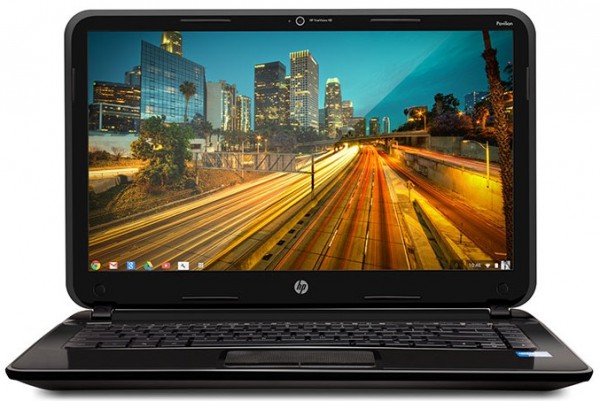
    Is it my imagination, or does each new Chromebook get bulkier than the last? Today HP joined the Google operating system family, introducing the heaviest model (1.8 kg/3.96 pounds) with largest display (14 inches). Lenovo’s ThinkPad Chromebook, announced in mid-January, is a tad lighter but the Acer C7, with smaller screen, is thicker. Perhaps the problem is this: PC manufacturers adapt low-cal Windows notebooks to Chrome OS; new Acer, HP and Lenovo models are more licensing plays than any attempt to innovate.

    For PC manufacturers looking to offer something other than Windows, pay nothing for an operating system or capitalize on Google’s bulging brand name, Chrome OS is enticing option. The lack of real investment, which demonstrates no sincere commitment, is wrong way to win or satisfy customers. Samsung proves the better Chromebook partner, by at least making some effort around system design, including adapting ARM processors.

    Too Little

    Last week, responding to rumors about the HP Pavilion 14 Chromebook, David Hoff posts to Google+: “I’m hopeful manufacturers also cater to the high end/power user segment by providing more than 2 GB of memory. To date, I’ve not heard of any machines that match the Samsung 550 in terms of performance. I’d like to see a machine with 8 GB of RAM, as my tab sprawl has doubled”.

    He’s right. Simply doubling memory to 4GB makes Samsung Series 5 550 Chromebook much more usable than newcomers. I moved from top-line MacBook Air to the 550 last May and found performance more than adequate. The Series 3 model feels sluggish, by comparison, particularly how Chrome OS refreshes tabs to keep memory from running out. That Chromebook has 2GB of fixed RAM; no easy upgrades, if at all.

    If the operating system is free to license, what’s a couple bucks more for 4GB RAM? Because the Acer and HP models (presumably the Lenovo, which isn’t yet for sale) are based on Windows machines, at least memory is upgradeable, unlike the Samsungs, which I consider to be more pure Chromebooks.

    RAM is basic, and misses the bigger problem: real effort by most PC manufacturers to release compelling and original Chromebook designs or to offer beyond basic hardware.

    HP Pavilion 14-c010us Chromebook specs: 1.1GHZ Intel Celeron 847 processor; 14-inch LED display with 1366 x 768 resolution; 2GB of RAM (upgradeable to 4GB); Intel HD graphics; 16GB SSD; three USB ports; HDMI port; WiFi N; Bluetooth; Ethernet; and Chrome OS. Weighs 3.96 pounds. Price: $329.99.

    The Pavilion 14 Chromebook is based on the Pavilion 14 Sleekbook, which packs, at the base $399.99 price: dual-core AMD processor, 4GB of RAM, 500GB hard drive and Windows 8 64-bit.

    Some Google+ posters see the problems I do: “The HP Pavilion 14 Chromebook’s bigger screen means heavier weight and poorer batter life”, Richi Jennings says. “Also, it’s the same actual resolution as its smaller competitors”.

    Specs underwhelm, while the Pavilion hefts up, without offering real advantages for it. I certainly don’t want lesser screen resolution on larger display.

    Steve Hall asks the right question: “Doesn’t this kinda miss the point of being a Chromebook, then?” Yes, it does. Jeff Dunn shares similar sentiment: “HP joining the Chromebook game, but it seems to me like it’s missing the point. Hope I’m wrong”. I wish that you were.

    Too Late

    HP is a big partner for Google to gain, because the OEM is, along with Dell, among the most loyal to Windows. “Looks like more and more manufacturers are fleeing from Windows”, Norbert Rittel opines. Brandon Padgett asks: “Who’s next?”

    Doesn’t matter. There is a lot of excitement around Chromebook, which looks like a hit in the making. But same could be said about netbooks four years ago. Numerous analyst firms predicted the portables would easily take 10 percent of PC sales. Now netbooks are virtually gone. Strangely, by the specs, Chromebooks aren’t far removed.

    I see in Chromebook a similar approach to netbooks: Manufacturers taking a cheapskate approach. Prices and configures underwhelm. But the OS is different and promises much if utilized. OEMs are only good for the platform if they make it more appealing. Instead they are true to character, by offering as little as possible to eke out pennies more margins.

    Google really needs to step up the game here, before Chromebook momentum is game over. The market won’t sustain these low-powered computers once the excitement wears thin, and it will. PC manufacturers aren’t just looking for a free ride, meaning paying no Windows licensing fees. They want to cut component costs to the bone, something they think is possible because of Chrome OS seemingly lighter spec requirements.

    Using Chromebooks full-time for nearly 10 months I can attest that more is better. This is a browser running on Linux after all, and it largely depends on life-sucking Adobe Flash for many web apps.

    It’s time for some Google leadership, which we saw with the first Samsung Chromebooks. The difference is proven. Android tablets were dead on arrival before the search giant took charge on numerous fronts, such as establishing better screen-size standards, relaunching the app market as Google Play and releasing not one, but two, exciting tablets — Nexus 7 and 10, with partners ASUS and Samsung.

    Chromebook looked good going into the holidays, with release of the affordable and slim Samsung Series 3, which packs ARM rather than Intel processor. Somebody put thought into that mobile, which contrasts against the thoughtless models coming from the aforementioned three OEMs.

    Chromebook is a seed looking for earth. Google must plant it, water it and nurture it. Otherwise, the Windows 8 storm will someday wash away the crop.

  • Amiigo and its exercise database want to make your fitness device look dumb

    The fitness-tracking incumbents might want to pay attention to Salt Lake City-based Amiigo. The personal fitness startup’s eponymous device isn’t yet available, but it has generated a lot of buzz and money (almost $300,000 on Indiegogo and an undisclosed amount of venture capital), and it promises to make the Fitbit (see disclosure), Jawbone Up and every other fitness-tracking device look quaint by comparison. The key to its appeal is cleverly using data to deliver a personal experience the others can’t yet touch.

    If you’ve read anything about Amiigo since its launch in October, you’ve might have read all about how it places sensors (an accelerometer, skin-temperature sensor and pulse oximeter, to be exact) into a wristband and shoe clip in order to figure out what exercises someone is performing and how well, hard or often he or she is actually doing them. What you might not know is how that process actually works. So I asked co-founder Abe Carter to explain.

    All about the database

    The core of Amiigo’s promise isn’t actually part of the device at all. Rather, it’s a database full of baseline information, which Amiigo calls reference data, for hundreds of different activities. It turns out, Carter explained, “there’s a generally accepted way that the vast majority of exercises and activities are performed.”

    So, when users are out jogging or lifting weights or rowing, let’s say, Amiigo is clocking the motions they’re making and how often they’re making them. When they open the Amiigo app, they’ll not only be spared the hassle of entering data on what activity they just performed and how long they did it, they’ll actually be greeted with all that information and more. If you’re lifting weights, Carter explained, Amiigo will know that you were doing squats and therefore burned a whole lot of calories (even though you might have taken just a few steps), as well as how hard you were working, how many reps and how long you took resting in between sets.

    amiigo 2

    But more importantly, Amiigo’s database grows smarter as users teach it about a variety of new activities. Initially, the app will still rely on reference activities with similar profiles (swimming, for example, instead of my homemade activity of laying on my belly and thrashing my arms and legs) in order to gauge intensity and calories burned, but it will eventually come to recognize the unique characteristics of the new activity, too. It’s all a matter of time and data: “You don’t know exactly with a sample of one how well that person was performing that activity,” Carter explained.

    Better personal data helps everyone

    Over time, all of this data lets users track at a very granular level their performance in specific activities rather than just how many times they’ve done it and for how long each session. Furthermore, it helps eliminate an innate desire to cheat the system — and the social competition features of almost all fitness-tracking platforms — by entering false information. Carter says social workouts have proven to be more effective than working out alone because of the motivation factor, but some jerk claiming he’s doing 2-minute miles can upset whole game dynamic when the socialization is merely virtual.

    Going forward, Carter said Amiigo has plans to use all the data it’s collecting for bigger and better things than just personal data. He mentioned building analytics tools atop the aggregate data from users, or using it to help spot the early onset of certain diseases. These could include, for example, tracking changes in motion to identify Parkinson’s disease (already the subject of a study using voice data from phone calls) or, presumably, tracking changes in cardiovascular data to identify heart disease.

    All of Amiigo’s promises are just theoretical, of course — it still needs to collect all that user data and prove it works when the devices are finally available — but they do point in the direction that I think the personal health field needs to take. As I’ve explained before (as has my colleague Stacey Higginbotham), all the connected devices and personal data in the world are of relatively little use if they’re not easy to use and tied to a service that’s actually valuable. And while Fitbit, Jawbone Up and other fitness trackers have certainly pioneered a hot new field, they’re still relatively limited in what they can track and the data they present, all the while requiring a fair amount of legwork from users.

    I don’t suspect Amiigo will render all other fitness devices obsolete, but it should give them something to think about.

    Disclosure: Fitbit is backed by True Ventures, a venture capital firm that is an investor in the parent company of this blog, Giga Omni Media. Om Malik, founder of Giga Omni Media, is also a venture partner at True.

    Related research and analysis from GigaOM Pro:
    Subscriber content. Sign up for a free trial.

  • Plexxi and Boundary team up to deliver a model for the application-aware network

    When it comes to software defined networking, or any other panacea for the challenges posed by scaling our networks of computers, the end goal is pretty simple. How can as few people as possible oversee as many computers as possible while ensuring everything runs efficiently? But when the ideal ratio is  probably closer to one person running 100,000 machines it’s also a tall order.

    Yet, that’s inevitable for companies such as Google, Microsoft, Amazon, Yahoo, Facebook and others. Even as Netflix outsources most of its IT operations to Amazon, Amazon must figure out how to economically scale its business — and having the old industry standard of one systems administrator managing 500 or maybe 1,000 servers isn’t going to let AWS keep dropping prices. This is why a partnership between data center networking hardware company Plexxi and network monitoring company Boundary intrigues me.

    The two companies have created a means for customers who have Plexxi gear installed in their networks to use data provided by Boundary’s monitoring service to automatically adapt the network in real time to the demands of an application. So if Boundary determines that the network flows it’s monitoring are slowing down because the database isn’t feeding information fast enough to the CPU, Plexxi can widen the available bandwidth between those two units until the bottleneck is resolved.

    Having covered IT for over a decade, I can tell you that I’ve seen a lot of marketing around this stuff, but once you dug deeper, the caveats and clunky integrations stole a lot of the possible benefits. But the ability to share information using APIs, plus both companies hewing to the idea that they are creating open platforms has made integration relatively simple.

    Boundary's service discovers a latency problem.

    Boundary’s service discovers a latency problem.

    Plexxi begins to address the problem by changing the physical network.

    Plexxi begins to address the problem by changing the physical network.

    “We’re two companies that share a vision around the abstraction of what we call affinities — stuff that wants to be grouped together,” said David Husak, Plexxi’s CEO. “Boundary can look at the activites of those services and derive affinities, and then Plexxi can do something with it. This is not exclusive between Boundary and Plexxi, but we’re both performing and rallying around this idea of affinity abstraction and that’s what makes it powerful.”

    That doesn’t mean there aren’t caveats. This only works for those using Plexxi gear, so people running in cloud environments such as Amazon’s EC2 can’t do this yet. And Plexxi’s gear is pretty new on the ground, so it’s unclear how big the customer base it. One also has to subscribe to Boundary’s service, but there are hundreds who use the free version and 80-something customers on the paid version today.

    And if this doesn’t work for most people, that might be alright because startup Lyatiss, a company I covered last month is trying to do something similar with its software. It’s stuff will work in Amazon’s EC2, although so far it only has the monitoring component as opposed to the automatic scaling element. However, thanks to APIs, an acceptance that vertical integration doesn’t work in servers, networking or in storage, and the demands of scale out data centers we may be closer than ever to application-aware infrastructure. The kind of IT that when it’s broken (or approaching broken) can right itself.

    That’s pretty cool, and it’s exactly what we’ll need if we want our computing to scale.

    Related research and analysis from GigaOM Pro:
    Subscriber content. Sign up for a free trial.

  • The Orp Smart Horn AKA The Smorn Is Cooler Than It Sounds

    4bf103a5ad79a035e5f75753a8820b7f_large

    High atop Weathertop where the Kings of Old Middle Earth once surveyed their kingdoms, the Smorn leers knowingly at the vale below. His hand rubs the grass and sniffs the air – hobbits had been here, for certain. He raises his long snout and begins to howl, the sound echoing off the swart hills and into the darkness below.

    JK all the way. Actually, the Orp Smart Horn AKA The Smorn is a bike horn built by Tory Orzeck of Portland, a former GE Plastics and Nike designer who, after a run in with a few nasty cars, decided to build a “hearable” horn in a small, rechargeable package. The Smorn can blast trucks as they pass or, using the Wail Tail trigger, you can move the decibels and pitch up and down.

    The horn blows out a 76 dB tap or you can hit a 96 dB blast to wake sleepy drivers out of their texting stupor. The project has six days to go and is near its $90,000 goal so you’re almost guaranteed product when it funds. $45 gets you a Smorn in white, blue, orange, or “snot green.” $55 gets you a Glorp – a glow-in-the-dark model.

    The Smorn also has four front LEDs can strobe, and you recharge it via USB. It is also waterproof and you can set a special Pulse mode that will beep regularly as you ride down the street, keeping people aware of your presence.

    Tory wanted to solve the problem of bikers getting hit by drivers who were oblivious to the cyclists around them. He writes:

    We live here in Portland, Oregon, considered one of the most bike friendly places in the world. There are bike paths, bike lanes and designated bike friendly roads throughout the city. But no matter what, our rides mean sharing the road with cars.

    Having said that, bicycle versus vehicle accidents have steadily increased in Portland as more people take to the road on their bikes.

    Our project was prompted by both this phenomena as well as a few particularly well documented accidents in Portland involving cyclists and commercial trucks. The problem was that the cyclist was neither seen nor heard.

    While I know that Frodo and Bilbo will never have to fight the evil Smorn in their travels towards Mordor, it is nice to know that Strider would be able to find them if they pulled the Wail Tail in a time of need.


  • Manuel Álvarez Bravo Honored With Google Doodle in Mexico

    Google is running a doodle on its home page in Mexico today, celebrating the 111th birthday of photographer Manuel Álvarez Bravo.

    Bravo is credited (Wikipedia) as Mexico’s first principal artistic photographer and as the most important figure in 20th century Latin American photography. He was born on this day in 1902, and lived to be 100. He died in October of 2002.

    This is one of at least four doodles Google is running throughout the world today. In Canada, Google has one honoring the last day of the Canadian penny. In Sri Lanka, Google has one for Sri Lanka Independence Day. In the Czech Republic, Google is honoring Josef Kajetán Tyl, who wrote the country’s national anthem.

    More Google Doodles here.

  • Jawbone buys Visere & MassiveHealth to marry data & design with wearable computing

    Updated: You can tell the influence of uber designer (and chief creative officer) Yves Behar on the San Francisco-based wearable computing products company Jawbone. The company is buying two startups – Visere and MassiveHealth (behind the Eatery app) for an undisclosed amount of money in order to create a better experience around the UP, its personal health focused wearable computing device.

    YvesBeharMobilize

    As I have often said, hardware today needs to be more than hardware; it needs to marry connectivity, data and design to create a compelling user experience that keeps people coming back. The better the user experience, the more people engage with the device. Amazon’s Kindle, Nest’s thermostat and Sonos’ devices are examples of this new hardware equation.

    Wearable computing’s building blocks are sensors, which record a lot of data. In order to make sense of that data, companies needs data wranglers. But to translate those data inferences into human-understandable experiences, companies — big and small — need design and user experience expertise. And with these two small app-makers, Jawbone is getting that in spades.

    MassiveHealth was started by well-known designer and UX thinker Aza Raskin and it launched with fanfare, though it failed to attain the scale normally associated with winning apps. The Eatery app did win a lot of critical acclaim. MassiveHealth raised $2.25 million from various venture funds including Greylock and A16z, and a source tells us, that it was sold for low single digit millions.

    Raskin, who in the past worked for Mozilla and helped come up with cool concepts for Firefox, is joining Jawbone. He had helped build a top-notch mobile design and engineering team. Visere, a digital design firm that has storied pedigree and is chock-full of talent. It has worked with Nike in the past.

    azaraskinJawbone CEO Hosain Rahman said that both these acquisitions bring in about 25 new people who will add to its growing software, data and design teams. The company has not decided what to do with the two apps just yet.

    Today nearly 40 percent of Jawbone 300-plus employees work on software. “A year ago we had no one working on using data to enhance our offerings,” said Rahman, “Today we have fifteen and that number is going to keep growing.”

    Jawbone started life as a company making headsets for mobile phones and about two years ago it has expanded into wearable computers. It launched UP in 2011 but the initial version came under widespread criticism. The company went back to the drawing board and re-jiggered the UP and released it recently along with a new iPhone application.

    While these are early days for wearable computing, the market is chock-a-block with a lot of devices and it has drawn the attention of Nike whose FuelBand is a runaway hit.

    Correction 2:23pm: An earlier version of this story misspelled Visere.

    upapp

    Related research and analysis from GigaOM Pro:
    Subscriber content. Sign up for a free trial.

  • AMC Releases New Scene From Upcoming The Walking Dead Episode

    In case the Walking Dead Time Warner Super Bowl ad wasn’t enough to whet your appetite, AMC has also released a new scene from the upcoming episode of the show, titled, “The Suicide King“.

    The episode premieres on Sunday. There’s still time to zombify yourself before Season 3 continues.

    On a semi-related note, the release date for The Walking Dead: Survival Instinct got bumped up to March 19th.

    More The Walking Dead fun here.

  • Here’s That Awesome Walking Dead Time Warner Ad

    There were a lot of commercials during the Super Bowl that got people talking, as usual. For some reason, I haven’t heard much today about this one, when it was easily one of the best.

    AMC has uploaded it to its YouTube channel for The Walking Dead fans to enjoy, so here you go:

    The show returns this Sunday.

    More The Walking Dead fun here.

  • Beyonce Gets Set On Fire In NMA’s Version Of The Super Bowl

    Next Media Animation (NMA) typically provides thoughtful analysis of major moments in popular culture, and the Super Bowl is no different. Here, the Taiwanese animation firm explores the big game, Beyonce’s half time show, and what really happened to the power.

    Here’s some more of NMA’s work.

  • Interested In The Google Science Fair? Watch This Hangout.

    Google announced last week that it is now taking submissions for the Google Science Fair. Today, the company posted the first in a series of Google Science Fair Office Hours Google+ Hangouts on Air. In the hangout, Jemma from the UK Google Science Fair team joins 2011 finalist Gavin Ovsak to address some questions about he Google Science Fair that the company has received from the GSF forum, the Office Hours event page, and the GSF YouTube channel.

    The Google Science Fair is a partnership between Google, CERN, LEGO, National Geographic, and Scientific American.

  • Josef Kajetán Tyl Honored With Google Doodle

    Google is running a doodle on its home page in the Czech Republic, honoring Czech writer Josef Kajetán Tyl’s 205th birthday. Tyl wrote the country’s national anthem, Kde domov můj.

    In addition to writing the song, Tyl wrote several novels and short stories and about 20 plays. He was born on this day in 1808, and died in 1856.

    Here’s Kde domov můj if you want to check it out:

    This is one of at least three doodles Google is running today in different parts of the world. As previously reported, Google has one honoring the last day of the Canadian penny and one for Sri Lanka Independence Day.

    More recent Google Doodles here.

  • Disney And Vevo Team Up On Family-Friendly Music Videos

    Disney and Vevo announced today that the two have teamed up on co-branded destinations on both Disney.com and Vevo. Disney will feature videos from VEVo’s catalog on Disney.com, and Disney will curate family-friendly music videos for Vevo.

    Presumably, the experience will be more family-friendly than the pictured “Ke$ha Vevo Takeover”.

    The two will also collaborate on the production of music-based original programming, such as event coverage, music video premieres and live music experiences with Disney recording artists.

    “Music is universally loved and shared by people of all ages,” said Vevo CEO Rio Caraeff. “We are very proud to partner with Disney to offer quality music programming for families to enjoy together and on the viewing platform of their choice.”

    “Music is a key component of the Disney.com offering and deepens the premium family entertainment experience we offer Guests online,” said Jimmy Pitaro , co-president of Disney Interactive. “And now we are amplifying the Disney experience by partnering with the world’s leading digital music video platform.”

    Last month, The Guardian reported that Google was poised to take about a 10%stake in Vevo, but that the deal had not been signed yet.

    Vevo was founded by Universal and Sony.

  • For Developing News Stories, Google Says It Prefers One Page To Separate Articles

    After taking a month off, Google’s Matt Cutts is back online, and has put out a new Webmaster Help video. This one talks about news sites, and how to approach developing stories.

    The user-submitted question being addressed is:

    Do you have any specific tips for news sites, which have unique concerns compared with commercial sites? For example, if I have a developing news story, should I keep updating the same page, or create a new one when the content changes?

    Cutts prefers the same page route, keeping the information on a single page updated.

    “If it were me, I would tend to have one page because that’s where all the PageRank can accumulate,” he says. “People don’t get confused. Sometimes you even see people doing multiple stories over several days, and they don’t link those stories together, so from one story you can get to the other story, so you sort of lose a few people through the cracks that way.”

    “Marissa Mayer [former Googler/current Yahoo CEO], in the past, has talked about having living topics, or topic pages, that are really like exhaustive entries about a specific area or type of breaking news,” he says. “You can see something like Wikipedia as another example, where they have one page that just gets richer and more developed. At some point, a news story is over, and you want to move on to creating a new page, but given a certain story, often, I think it can be helpful to add updates, and add more information on the same URL.”

    He goes on to recommend reading Google News documentation and research more about what works for that. He references the recent news_keywords meta tag Google announced (without mentioning it by name), and suggests using authorship.

    The part about PageRank is interesting, and certainly worth considering, but unfortunately, he doesn’t get into how Google (or Google News) treats old articles that are updated (in terms of the freshness element), or the best ways to get these old articles in front of their audiences on their second, third, or fourth (etc.) rounds. Of course, there’s always social media, but in terms of search, it’s not that always that simple.

  • German Publishers Reportedly Won’t Go For A Google Deal Like Those In France

    Google and France President Francois Hollande, on Friday, announced a deal that the search giant has made with French publishers to who want to be paid for the content that Google links to.

    Google agreed to create a €60 million fund called the DIgital Publishing Innovation Fund to “help support transformative digital publishing initiatives for French readers.” Google says it will also “deepen” its partnership with French publishers to help increase their online revenues using Google’s ad technology.

    Though Google has indicated that it hopes to reach similar agreements with publishers in other countries, it doesn’t look like those in Germany are going for it. Germany’s The Local reports that German newspapers have rejected the idea of copying the agreement Google made with French publishers:

    The German association of newspaper publishers (BDZV) said the French agreement did have some positive points. The major of these was that it was established and accepted “that the aggregation of content from third parties as a business model costs them money,” said Anja Pasquay, BDZV spokeswoman on Sunday.

    But she said a drawback was that the French solution only referred to Google. “The publishers there have no legal recourse against other aggregators who operate in the same fashion – or those who will do so in the future,” she said.

    Back in December, Google made a deal with publishers in Belgium. While not exactly the same as the one it made in France, it seems that German publishers would take similar issue with such a deal.

  • Show your love for Bing by breaking up with Google

    For Valentine’s Day, Microsoft shoots Cupid’s arrow elsewhere. Rather than promote the relationship you have, the company cajoles you to seek new love. The marketing campaign deliciously delights. C`mon, who promotes breakups for V Day?
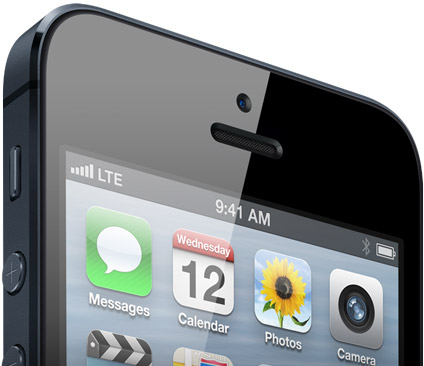
    “This year Bing is challenging people to reconsider their search habit and break up with Google”, Microsoft suggests in a statement. “You wouldn’t keep dating someone who isn’t trustworthy, so why use a search engine known for serving its interests over your own? In fact, a whopping 85 percent of people report that trustworthiness is the most important trait in a mate, beating out good in bed, sense of humor and wealth”.

    Trust is important, but I’m not married to Google. Given how much easier searching for amateur porn is on Bing than Google, surely good in bed might matter more to many would-be switchers.

    The promotion is an extension of the misguided “Bing It On” campaign launched in September. Microsoft lets people compare Bing and Google searches, while making some misstatements about its rival’s search practices — carried forward in the new lovelorn campaign.

    For example, “Not all is fair in love and search”, Microsoft claims. “Whether you’re searching for a cuddly teddy bear or a diamond bracelet for your sweetheart, Google Shopping displays ads only from merchants that pay for ranking. Bing offers honest results so you get the best deals from across the Web”. But Bing Shopping isn’t clean of paid posts, either, just not as dirty.

    Counter-marketing can be effective, but Bing is more likely to make a love triangle than woo away Google searchers. Google US search share was 66.7 percent in December, according to comScore, — 16.3 percent for Bing, or 28.5 percent when combined with Yahoo, which results Microsoft serve.

    This Valentine’s Day Microsoft can more likely expect lovers using Bing and Google.

    Can you say ménage à trois?

    Photo Credit: JoeyBear/Shutterstock

  • Microsoft, The Web Is No Longer Good Enough; Windows RT Needs Apps And Fast

    Screenshot (4)

    I loathe using some websites. Twitter and Facebook are horrific on the web when compared to their iOS/Android apps. I simply refuse to use Zillow’s website; I’ll wait until my kids are done with the iPad to look for our new place. The same is true for Tumblr and other sites. The mobile first strategy is in full force and Microsoft needs to hop on board.

    With Windows 8, Microsoft is forcefully pushing the PC into the post-PC era. It’s a touch first interface with the Desktop mode allowing for a more traditional Windows experience. But if Windows is to succeed, apps need to be the top priority and as a user of the Surface RT, it’s clear Microsoft does not agree.

    I’ve been using the Surface RT a lot more recently. I want to like it. I want to have it in my life. I’m a Windows guy and I just wish I had a companion device like the Surface to supplement my desktop. When traveling, I use a MacBook Pro and iPad. They’re a wonderful pair, but so far, I’ve yet to find the same sort of synergy with the Surface RT and Windows 8 desktop mainly because of the lack of compelling apps outside of Microsoft’s ecosystem.

    Three months after launching there still isn’t a reason to buy a Windows 8 tablet.

    Do you want these things on an 11-inch screen with a questionable keyboard?

    Microsoft proponents will tell you that Office is the strongest selling point for Windows 8 tabs. That’s true. It’s the only reason I see as well. But do you need Office? Do you need a full-featured word processor or all-powerful spreadsheet editor? Do you want these things on an 11-inch screen with a questionable keyboard? If so, and I’m sure some people do, an Ultrabook would probably suit their needs better than a Surface RT — they better fit on airline trays anyway.

    As it’s been explained countless times, the Surface RT runs Windows RT, a version of Windows written specifically for ARM processors. Because of this, standard Windows programs do not run on the Surface RT, or any other Windows RT tablet. You cannot install Chrome, Spotify, Scrivener, Steam or any other normal Windows program. Worse yet, the apps that are available in the Store are pure garbage compared to their iOS/Android counterparts — including our TC app. Even Surface fanboys on Reddit show the shallow depth of the Store’s library with this list of favorite apps.

    In short Microsoft has left the Surface RT rot by not supporting its ecosystem.

    Access to the web is no longer good enough. “Pin any website to the home page to make it its own app,” says Microsoft. Remember who else tried that? How did that work out?

    Access to the web wasn’t good enough when RIM launched the Playbook in 2011 without any apps. Instead the company touted its full-feature web browser. It wasn’t until nearly a year later the company made it easy to port Android apps that the tablet finally started to take off. Now, with BlackBerry 10, BB set out on a quest to launch the platform with as many apps as possible. BB10 launched last week with 70,000 apps. Windows RT is three months old and it seems that Microsoft is still behind in terms of app counts.

    It’s been said that BlackBerry went to great lengths to get apps for BB10. We’ve heard that the company went as far to pay developers to port their apps (something that Microsoft has some experience with). We’ve heard from others that BlackBerry did all the work internally to port some apps. Ignore the methods; the company hustled. BlackBerry did what it needed to properly support its upcoming platform. A modern mobile system is only as good as its apps.

    I’m not alone in wanting to like the Surface RT. Surface owners are going to incredible lengths fixing Microsoft’s underwhelming ecosystem. Hopefully Microsoft is watching the self-inflicted pains Surface RT owners are suffering just to keep their devices fresh.

    Surface owners are going to incredible lengths fixing Microsoft’s pitiful ecosystem.

    Surface RT users have taken to jailbreaking the Surface RT to supplement the OS’ lack of compelling apps. There is a community currently porting open applications to Windows RT — but these apps are not/will not be available through the official Windows Store. Quake 2, anyone? Worse yet, they’re classic Windows applications and not touch-first apps. This action will quickly lose its appeal as more and more owners grow tired of the hassle.

    When a product has to be jailbroken, something is wrong. Apple quickly learned this. Hackers beat Apple to the punch and launched backchannel app stores prior to Apple itself. In fact, Apple has closely watched this active community and implemented many enhancements and functions first developed by these users.

    The iPad is a great device not because of the hardware. It’s special because of its access to new content. B&N was the first company to see this and developed the first generation Nook Color to be a portal to B&N content rather than a mobile productivity device. Others including Amazon, Google and BlackBerry followed suit. But Microsoft.

    Listen, the Surface RT, and likewise, the Surface Pro, are fantastic examples of hardware. They feel like devices from the future with their full-size USB ports, microSD card slots, and, in the case of the Pro model, a Wacom active digitizer screen. But past the hardware, there is little reason to get excited because of the inherent limitations of Windows RT.

    Microsoft has yet to get that the consumer electronics game is played with new set of rules. Hardware is no longer good enough. The web is no longer good enough. To be successful products have to provide consumers with a complete experience. That’s why every Apple mobile device since the iPod has been successful. That’s why Android is dominating the mobile wars. And that’s why until Microsoft can attract a large set of app developers to its Windows RT ecosystem, the ARM-based platform will go nowhere.

  • Uh-oh, $50 smartphones mean big trouble for Apple

    That sound you hear: Emerging markets sucking the margins out of iPhone. Gartner predicts that Chinese brand and white-box handset manufacturers will dramatically change the smartphone market’s course this year. Android is likely to be the big beneficiary, while iPhone has the most to lose. Economies of scale will bite Apple, which benefits from one of the tightest supply chains anywhere. Chipset integration, for example, will allow handset makers to ship cheaper devices that are good enough, even if less than market leaders.

    “The combination of competitive pricing pressure, open-channel market growth and feature elimination/integration will very soon result in the $50 smartphone”, Mark Hung, Gartner research director, says. “Semiconductor vendors that serve the mobile handset market must have a product strategy to address the low-cost smartphone platform, with $50 as a target in 2013”. That’s right, 50 bucks, not the $650 Apple charges carriers.

    Already, shifting market dynamics forebode big trouble for the fruit-logo company. While iPhone is top-seller in the United States, Androids easily own the world, buoyed much by Samsung’s sales success. The electronics giant has much greater success selling to emerging markets than Apple, picking up many locales once dominated by Nokia. But what’s bad for the American company could be for its South Korean competitor.

    “Global, brand-name smartphone vendors must re-examine their product lineups to determine how their low-end offerings are differentiated from the competitive products offered by low-cost vendors”, Hung warns. “Otherwise, brand-name smartphone vendors may want to cede this market to the white-box vendors and focus on high-end devices”.

    Myopic Analysis

    The problem is something many American analysts, bloggers and journalists don’t see. Their vision is myopic, looking at how handsets are sold here. iPhone 4 is free to a consumer buying locked device with two-year contractual commitment, which obviously is much less than $50. But in many other markets, China and India among them, consumers are accustomed to contract-free purchases — well, except for iPhone. Carriers still pay Apple that six-fifty or more (less for the oldest iPhone available).

    As less-capable smartphone prices go down, features go up and availability expands, buyers in emerging markets will buy what they can afford rather than what they might want. Stated differently: These devices will rapidly expand the low end of the market, where there is greatest growth potential, closing out iPhone, and, should Apple lower prices in response, sap margins.

    Gartner hasn’t yet released fourth-quarter smartphone figures, which tend to be the most accurate. While other analyst firms measure shipments into the channel, Gartner counts actual sales to end users. Past data reveals increasing demand for white-box smartphones.

    Still, based on shipment data now available, emerging markets already favor lower-cost Androids to pricier Apples. For example, in the world’s largest smartphone market, China, Android share reached 86 percent during Q4, compared to 12 percent for iOS, according to Strategy Analytics.

    Emerging Trouble

    “Smartphone shipments surged +64-percent annually in China during the fourth quarter of 2012”, Neil Mawston, Strategy Analytics research director, says. “Android and Android forks together accounted for a record volume of all smartphones shipped in China last year”.

    Apple CEO Tim Cook calls China his company’s most important market, accounting for 13 percent of revenues during the quarter, generated mostly by mobile devices.

    Globally, Android surged to 70.1 percent smartphone share from 51.3 percent, according to Strategy Analytics. iOS share actually retracted, to 22 percent share from 23.6 percent — that during iPhone 5’s launch quarter. For all 2012, Android climbed to 68.4 percent from 48.7 percent, while Apple nudged up to 19.4 percent from 19 percent.

    If Gartner’s prediction proves true, Apple’s global share — and likely margins with it — is likely to retract further. Samsung, which already sells lower-cost smartphones is better-positioned to adapt, also faces trouble, and the company acknowledges risk ahead. In its earnings release late last month, Samsung warns that 2012’s smartphone growth would be “pacified” this year. “Demand for smartphones in developed countries is expected to decelerate, while their emerging counterparts will see their markets escalate with the introduction of more affordable smartphones and a bigger appetite for tablet PCs throughout the year”.

    You won’t hear such warning from Apple.

  • Google Apparently Testing Product Counts In Search Results

    Matt Storms happened upon an interesting Google feature, presumably in testing. In a “site:” search for Macy’s, he found where the number of items for sale found on pages is showing up in search results as part of the snippet. He highlighted the discovery on Google+:

    Matt Storms

    Interesting SEO find today. If you have this with rel=publisher and schema star rating reviews you can take up some serious SERP real estate. Keep in mind I had to get past the page where you hide dead bodies on in Google which is page 3. Nobody goes to page 8 unless they are a SEO. 

    Search Engine Roundtable’s Barry Schwartz pointed to the above post this morning, saying, “I am not sure if this is a PLA feature or if it is rich snippet related, I cannot reproduce it.”

    Nor have we been able to.

    Additionally, in the same post, Schwartz points to a couple of other apparent, less significant tests Google is doing, such as a font size adjustment on result links and the cached/similar links moved to a drop down box next to result links.

    We’ve reached out to Google for comment, and will update if we receive one.

    The product count feature could be a helpful feature for ecommerce businesses and users who want to browse the biggest selections (or who don’t want to spend time going through too many items).

  • Look At Craigslist’s New Visual Design Style

    Craigslist is well known for its design, or lack thereof, so it’s interesting that the site now has a more visual listing style.

    Jeremy Zawodny tweeted about the changes over a week ago, but they’ve gone relatively undiscussed until TechCrunch picked up on the story on Sunday after a lead from Matt Inouye.

    Here’s a look:

    Craigslist design

    This “Grid View” recently started showing up as an option on search results pages.

    Special? Not particularly. It’s just interesting that such a move is randomly coming from Craigslist in 2013. At least it still looks relatively old fashioned.