Author: Serkadis

  • Square Finds Its Way Into Verizon Stores & Angie’s List

    Verizon Wireless announced today that the Square Card Reader is now available in its stores across the U.S. The card reader works on Android and iOS, and sells for $9.97. It also comes with a $10 credit to a Square account.

    Additionally, Square announced on Wednesday that it is now working with Angie’s List so that merchants can enable mobile payments as part of Angie’s List’s Business Center mobile app.

    “Working with Square will help provide happier transactions for our members and service companies,” said Angie’s List Founder Angie Hicks. “We’re excited to work with Square because they understand what small businesses need to succeed.”

    “Whether on site or at a customer’s home, people will now have a fast, reliable way to accept payments. With Square, Angie’s List businesses can focus their time and energy on what really matters—doing great work,” said Square co-founder and CEO Jack Dorsey. “We’re proud to work with Angie’s List to make life easier for businesses of all sizes.”

    The Business Center app is currently only available on iOS.

  • Data for dummies: 6 data-analysis tools anyone can use

    If you care only about the cutting edge of machine learning and how to manage petabytes of big data, you might want to quit reading now and just come to our Structure:Data conference in March. But if you’re a normal person dealing with mere normal data, you’ll probably want to stick around. Although your data might not be that big or complex, that doesn’t mean it isn’t worth looking at in a new light.

    With that in mind, here are six of the best free tools I’ve come across for helping we mere mortals analyze our data without having to know too much about, well, anything (I’d keep an eye on the still-under-wraps Datahero, too). I’ve gathered some personal data and tracked down some interesting public data sets to help demonstrate what a novice can do with them. Someone with more skills can certainly do a lot more, and larger datasets will provide greater statistical significance.

    BigML

    BigML is to machine learning what Blue Moon is to Belgian ales: a simple approach to something generally more complex — but also rather accessible and good enough to do the job in a pinch. I explained the service more thoroughly in recent post about it being used to generate predictions of Kickstarter success, but here’s how it works, in a nutshell: Users upload and format data (which is actually pretty easy), BigML discovers the myriad relationships between the variables and creates a predictive model, and users enter hypothetical data and receive a prediction.

    I’m pretty bad when it comes to entering my data into Fitbit (see disclosure), but I was relatively good for a month this summer as I prepped for the Warrior Dash, and that’s the data I used to demonstrate BigML. This prediction of how many calories I can expect to burn in a day would work a lot better if I had a bigger sample size and hadn’t occasionally forgotten to log calories and hours slept, but you get the point. The first image is the model the service generated; the second is the prediction interface.

    cals bigmlpredict

    Google Fusion Tables

    The user interface for Google Fusion Tables  isn’t what I’d call pretty (“sparse” is probably a better description), but the still-in-experimental-mode visualization tool sure is easy if your data is nicely formatted. I created this interactive map simply by uploading a publicly available dataset about gun violence and clicking the button to create a map:

    fusion

    For this simple comparison of gun ownership and gun homicide rates, I just checked the countries by which I wanted to filter the chart. Easy.:

    gunscomp

    Infogram

    If you have really simple data — like a few columns and a handful of rows — Infogram might be the easiest to use of the bunch. The company launched last year with a variety of infographic templates, but it has since expanded to include a large number of charts and graphs, too (including line, pie, pictorial, treemap and bubble). Furthermore, it gives sample data, which you can use as an example to enter your own or format the table you want to upload, and the interactive charts embed nicely into web pages (ours, at least).

    Here are the top 10 things I ate during the time I was logging food via Fitbit, excluding copious amounts of beer, water, coffee and Diet Pepsi that I didn’t record.

    In July, I made this chart with Infogram comparing infrastructure spending trends among internet companies.

    And here’s a sample of the simplest chart in the world.

    Many Eyes

    Many Eyes is a free web service run by IBM that includes a wide variety of visualizations ranging from maps to pie charts to scatter plots. But what makes it stand apart from the others is the suite of text-analysis tools it offers — not only are they fairly novel, but all they require users to do is paste a page of plain text into the web interface and press a button to visualize it. I used it to analyze the last 15 posts I’ve written for GigaOM.

    What did I find? For starters, I use the words “data,” “Facebook” and “users” a lot.

    words 1

    When it comes to two-word combinations, “big data,” “data centers” and “hard drives” are among the biggies.

    words 2

    This one is particularly interesting, showing how I tend to form phrases around certain words with common conjunctions, or just a space, in between.

    data

    Apparently, out of 10,013 words, I only used “cloud” 20 times. I usually followed it up with “provider,” “servers,” “computing,” “-based” and “providers.”

    cloud2

    For fun, I also made a word cloud based on couple month’s worth of Fitbit food logs. It turns out, you can take the boy out of Wisconsin, but …

    wordcloud

    Statwing

    Statwing might be my favorite of the bunch, if only because it’s so simple yet actually tries to teach users about statistics. You upload data, check the variables you’re concerned with, and it plots their relationship. (It also can describe the variables by highlighting the sample size, minimum, maximum, mean, median and standard deviation.) Graphs are accompanied by explanations as to how strong the correlation is based on various statistical metrics, as well as the results of a linear regression model.

    To demonstrate Statwing, I went back to the Fitbit data. Of the variables that Fitbit tracks, some correlations are easy to predict (e.g., steps and calories burned), but I was kind of surprised to see that the 86 minutes a day I spent being fairly active really weren’t that good of an expenditure of my time.

    statwing

    Tableau Public

    Tableau Public, the only free version of the popular business-intelligence software, was clearly designed with business users in mind. It expects a lot of structure in the data, and although you can edit almost every aspect of it within the application to get it into usable shape, the service doesn’t allow much guidance if you don’t speak the language of BI (it also requires Windows). But the software is very good at deciphering the characteristics of different variables, the drag-and-drop operation makes it kind of easy to experiment and the wide array of visualizations look really nice.

    Using my Fitbit data (and here’s where you see how lax I am at data entry), I created a line graph comparing the calories I ate each day with the calories I burned. Assuming I didn’t go crazy eating on the days I forgot to make entries, the good news is I never ate more calories than I burned. (Note: Although these are static images, Tableau Public actually lets you embed interactive charts, which I’ve used in the past on several occasions, but they don’t always fit well within our pages.)

    cal tabHere’s one I played around with a while back charting Amazon’s “Other” revenue againt the number of objects stored in Amazon S3.

    aws objrevFinally, here is my first-ever (I think) Tableau chart, which uses the raw data on government takedown requests that Google provided along with its Transparency Report in October 2011. You can read that post and play with the interactive version here.

    goog trans


    There is, however, one disclaimer that applies to all of these tools: I didn’t get into cleaning and formatting data, which can be a somewhat arduous process. Many tools expect some sort of structure to the data — the X axis to be in columns and the Y axis in rows, measurements without units (e.g., grams), etc. — that just isn’t present if you’re downloading an Excel or CSV file rather than creating it yourself. Sometimes, with comprehensive datasets like your Fitbit Premium data, you’ll have to separate or combine the relevant data into new spreadsheet tables before uploading it to a service. But once you have the data ready to go, these tools can help you analyze it, visualize it and hopefully glean some insights from it.

    Disclosure: Fitbit is backed by True Ventures, a venture capital firm that is an investor in the parent company of this blog, Giga Omni Media. Om Malik, founder of Giga Omni Media, is also a venture partner at True.

    Related research and analysis from GigaOM Pro:
    Subscriber content. Sign up for a free trial.

  • Report: Big Data Market May Hit $23 Billion

    International Data Corporation (IDC) released a new report on Big Data Technology, forecasting that the worldwide market for big data technology and services will reach $23.8 billion in 2016. A key finding from the report shows that a shortage of analytics and Big Data technology skills will drive a growing number of buyers toward cloud solutions and appliances. The IDC study segments the Big Data market into server, storage, networking, software, and services.

    In other Big Data news:

    Teradata big analytics for Communication providers

    Teradata (TDC) announced the availability of an integrated CSP (Communication Service Provider) framework to provide a 360-degree view of customers, leveraging both conventional transaction data and granular, detailed interaction data.  The CSP framework delivers useful new big data analytic insights into customer behavior and product preferences through visibility to ALL data interaction. It takes advantage of partner capabilities such as Guavus’ SevenFlow, its marketing decisioning application, which provides deep insight into subscriber behavior and data usage. Teradata’s Unified Data Architecture embraces Hadoop and Aster’sSQLMapReduce platforms for quick analysis of multi-structured data. Guavus recently announced a $30 million funding round.

    Additionally, CSPs can leverage new capabilities from Teradata’s Communications Logical Data Model (cLDM), which serves as a map to a CSP organization’s information. The  map would organize data pertaining to social media/networks, multi-structured data, set top box analytics (where relevant), multimedia, geospatial, advertisement, ecommerce and web intelligence.

    “Revenue generation and customer loyalty are driving the market for big data,” said Patrick Kelly, an analyst from Analysys Mason. “CSPs should understand the business outcomes in specific areas of their business before investing in big data and analytics. For example, they could increase net profit margins by 12 percent with cross-marketing and sales promotions; improve customer retention by 0.2 percent via loyalty campaigns; and defer capital investments in the RAN* without degrading service, yielding hundreds of millions in savings in capital spending.”

    “The combination of Guavus products and Teradata data warehouse technology enables CSPs to analyze mobile data traffic at very granular levels with long retention periods for extremely large number of subscribers,” said Scott Sobers, Director, Communications Industry Marketing & Strategy, Teradata. “No one else in the industry can provide this kind of insight and actionable information. This will be the standard for CSPs to create new revenue streams and deliver the best possible service for customers.”

    EMC updates Greenplum appliance

    EMC announced that it has enhanced its first appliance-based unified Big Data analytics offering, the EMC Greenplum Data Computing Appliance (DCA).  The new EMC Greenplum DCA Unified Analytics Platform (UAP) Edition analytics appliance enables analysis of both structured and unstructured data together within a single integrated appliance. It integrates Greenplum Databases for analytics-optimized SQL, Greenplum HD for Hadoop-based processing and Greenplum partner business intelligence, ETL, and analtyics applications. The new DCA  UAP edition delivers 70 percent performance gains over the prior generation for data loading and scanning, and 100 percent performance increases for concurrent query workloads.

    “Enterprises looking to make strategic investments in a Big Data platform need to consider the breadth of capabilities required of a complete solution—high speed data ingestion, support for structured and unstructured data, interfaces for data scientists as well as business intelligence users, and the ability to scale horizontally as data volumes grow.  Customers can take advantage of the new DCA to increase the performance of Greenplum Database for best-in-class SQL processing and data loading, and also leverage the innovative capabilities of Greenplum’s Hadoop distribution (GPHD). With the release of the DCA Unified Analytics Platform Edition, we are continuing our history of innovation—with improved options for Hadoop deployments leveraging EMC Isilon’s scale-out NAS storage, enhanced partner ecosystem support including such partners as SAS and Informatica.”

  • UCLA conference explores new trends and career opportunities in integrative medicine

    WHAT:  
    Integrative medicine, which incorporates traditional healing techniques from the East with Western medicine, is helping to transform health care, and millions of Americans are now uisng alternative and complementary therapies to meet their health needs. 
     
    This daylong UCLA conference will highlight future trends and introduce participants to the many career paths available in integrative medicine and related fields. The event will feature lectures, panel discussions and demonstrations by experienced practitioners and researchers. Topics will include clinical careers in integrative medicine, creative arts therapies, research and health care policy.
     
    Undergraduates from the UCLA student group NCAM (Nutrition, Complementary, and Alternative Medicine) organized the conference with support from the UCLA Center for East–West Medicine.  
     
    For more program information, parking and directions please visit the conference website.  
     
    WHO:  
    Featured speakers include:
     
    John Weeks (keynote)
    Writer and executive director of the Integrator Blog
     
    Ka-Kit Hui, M.D., (keynote)
    Founder and director of the UCLA Center for East–West Medicine
     
    Ryan Abbott, M.D.
    Southwestern Law School
     
    Robert Carroll, M.D.
    Past vice president of the National Association for Poetry Therapy
     
    Erica Curtis
    Licensed marriage and family therapist with clinical art therapy training
     
    Pamela Dunne
    Founding director of the Drama Therapy Institute of Los Angeles
     
    Michael Goldstein, Ph.D.
    UCLA Fielding School of Public Health
     
    Mary Hardy, M.D.
    UCLA Simms/Mann Center for Integrative Oncology
     
    Ping Ho
    Founding director, UCLArts and Healing
     
    Edward Hui, M.D.
    UCLA Center for East–West Medicine, general internal medicine
     
    Suzie Kline, Ph.D.
    Huntington Memorial Hospital
     
    Bruce Naliboff, Ph.D.
    UCLA Gail and Gerald Oppenheimer Family Center for Neurobiology of Stress
     
    Judith Pinkerton
    Founder and president of Music 4 Life
     
    Sonya Pritzker, Ph.D.
    UCLA Center for East–West Medicine
     
    Myles Spar, M.D.
    Director of integrative medicine at the Venice Family Clinic
     
    Lawrence Taw, M.D.
    UCLA Center for East–West Medicine
     
    Lora Wilson Mau
    President of the California Chapter of the American Dance Therapy Association
     
     
    WHEN:
    9 a.m. to 3 p.m. on Saturday, Feb. 2 
     
    WHERE: 
    UCLA Neuroscience Research Building auditorium
    635 Charles Young Dr. South, Los Angeles 90095 (map)
     
    MEDIA CONTACTS:
    Rachel Champeau | UCLA Health Sciences Media Relations | 310-794-0777
    Sue Fan | UCLA Center for East–West Medicine | 310-794-0712
     
    PARKING:
    Visit the parking kiosk on Westwood Boulevard after entering the UCLA campus from the south.

  • Experiencing Heavy Server Load? Just Slow Down Time

    ccp-asakai_1

    A screen shot of the Battle of Asakai in the EVE Online unvierse, in which more than 2,700 gamers waged a resource-intensive battle on a single server. Admins managed the server load by altering the time continuum in the game. (Image: CCP Games)

    When demand on a server spikes dramatically, sometimes you need to improvise to keep things online. An interesting example is provided by CCP Games, which operates EVE Online, a science fiction gaming universe in which faction of players battle with fleets of space ships.

    When an enormous battle recently broke out on a node with limited resources, the engineers at EVE Online managed extraordinary server loads by using “time dilation” – altering time within the game universe to effectively throttle activity to match system resources.

    EVE Online is unusual in that it functions as a single game environment, with a single copy of its universe on a massive cluster of servers. Resources for specific solar systems are supported by a particular server, with players and spaceships able to move between solar systems. That means that a burst of activity in a particular sector of the EVE Online universe can create scalability problems. Administrators can shift load by moving activity to other servers, but that interrupts the player experience, and so is not ideal when large space battles break out.

    One Bad Click Tests Capacity

    A single misclick would test the system. On Jan. 27 a player accidentally “warped” an extremely valuable Titan spaceship into the midst of a large enemy fleet (more details at  Penny Arcade and PC Gamer). Both sides called in reinforcements, and in short order more than 2,750 players were waging a hectic battle on a server that doesn’t normally see anywhere near that level of activity.

    The customer service duders (GMs) keep an eye out for gigantic fights like this,” recounted CCP Veritas, an engineer at CCP. “We’ve got a cluster status webpage that shows big red numbers when a node gets overloaded like it was by this fight, so it’s pretty easy to see what’s up.”

    Admins isolated the battle by quickly moving non-combatants to other servers.  That’s where time dilation comes in.

    “A large majority of the load in large engagements is tied to the clock – modules, physics, travel, warp-outs, all of these things happen over a time period, so spacing out time will lower their load impact proportionally,” writes CCP Veritas. “So, the idea here is to slow down the game clock enough to maintain a very small queue of waiting tasklets, then when the load clears, raise time back up to normal as we can handle it.  This will be done dynamically and in very fine increments; there’s no reason we can’t run at 98% time if we’re just slightly overloaded.”

    The Jan. 27 event, known in EVE as the Battle of Asakai, tested that approach, but kept the game functioning until the battle was completed. ”Even though Time Dilation was pushed to its configured limit of 10%, it still allowed a more graceful degradation than the unpredictable battles of old,” CCP Veritas shared. “We’re pretty sure that without the recent efforts on the software and hardware front, such a fight of this scale would simply not have been possible.”

  • Mark Zuckerberg On Why A Facebook Phone Is A Stupid Idea

    Facebook is a mobile company. That’s the message CEO Mark Zuckerberg sent to investors and anyone else who cared to listen to the company’s earnings call on Wednesday.

    He spent most of his segment of the call talking about the strides the company has made in mobile, and the monetization opportunities that come along with them. The company did announce that its mobile daily active users surpassed web daily active users for the first time in the fourth quarter.

    “Today there’s no argument,” Zuckerberg proclaimed. “Facebook is a mobile company.”

    So, being a mobile company, some may wonder if Facebook may follow its peers into the mobile device business. After all, what’s good enough for Apple, Amazon and Google must be good enough for Facebook, right?

    I’m sure Zuck is very sorry to crush your dreams, but no, there won’t be a Facebook phone anytime soon. Here’s the quote (via CNET):

    “We’re not going to build a phone,” he said during the social network’s earnings call Wednesday. “It’s not the right strategy for us to build one integrated system…Let’s say we sell 10 million units — that would be 1 percent of users. Who cares for us?”

    Even as recently as this month, some thought Facebook would unveil a phone. Ahead of the event at which Graph Search was unveiled, rumors circulated that the company would make such an announcement. Obviously that didn’t happen.

    Of course it’s unlikely that Zuckerberg would say, “Yeah, we’re going to work on a Facebook phone at some point in the future,” (although he did hint at the search product in previous conversations), but what he said on Wednesday makes a great deal of sense, and it’s consistent with the message he’s conveyed in the past.

    On top of that, Facebook already has a great relationship with Apple right now, and despite not talking to Google, is able to get plenty of use out of Android, not to mention other platforms.

    Who really wants to buy a Facebook phone anyway?

    Image: Gawker

  • Digital Realty Powers Up its POD Architecture

    Digital_Realty_Skid-Install

    Employees of Digital Realty deliver a pre-fabricated electrical room on a skid to a data center site. The company has updated its POD architecture to make more effective use of these type of components. (Photo: Digital Realty Trust).

    Digital Realty Trust has updated a key building block in its data center construction process to provide tenants with more power to support their IT infrastructure. Digital Realty, the world’s largest landlord of data center properties, has introduced the next next generation of the POD Architecture for its data center halls.

    The new version, known as POD 3.0, makes more effective use of pre-fabricated designs. This has allowed Digital Realty to offer customers up to 1.2 megawatts of IT capacity in each data hall, up from 1.125 megawatts. Those 75 extra kilowatts are a meaningful boost in capacity for companies with growing infrastructure.

    “This new generation of POD Architecture will enable us to do more in terms of capacity and energy performance, using the same operating scale that we successfully deployed as POD 2.0,” said Jim Smith, chief technology officer at Digital Realty. “Using real-time information, we have been able to fine-tune our design and develop the next generation of our POD Architecture. We were able to demand more from the existing platform and deliver an enhanced solution to our customers in terms of performance, reliability and cost efficiency.”

    Pre-Fab Components Streamline Process

    The key to the improvements in the POD Architecture prcoess, Smith said, is the pre-fabrication of major electrical and mechanical systems that traditionally have played a lareg role in data center construction timelines. Pre-fabricated components are now manufactured in a factory environment and then warehoused for on-time delivery to project sites. The cooling and electrical systems are pre-commissioned in the factory and then re-commissioned along with the completed data center.

    The POD 3.0  design uses just two electrical skids, compared with the three skids in POD 2.0.  The reduction of the infrastructure footprint will help improve the yield on building space for data halls, allowing the increase in critical IT load capacity to 1.2 megawatts. The design retains the same cost point, but will allow customers to improve their energy efficiency, enabling Power Usage Effectiveness (PUE) ratings below 1.2.

    Digital Realty’s use of POD Architecture helped the company deliver 49 megawatts of data center capacity in 2012, and it expects to deliver another 89 megawatts in 2013, Smith said.

    Digital Realty (DLR) operates 110 properties with approximately 21.2 million square feet of space in 32 markets throughout Europe, North America, Asia and Australia.

  • Facebook And Google Aren’t Talking Much

    Just because Facebook CEO Mark Zuckerberg has said he would love to work with Google, don’t expect the two to be cozying up anytime soon.

    When Facebook unveiled Graph Search earlier this month, Zuck was quoted as saying he would “love” to work with the search giant, even as the social network has a partnership in place with Bing. That’s probably not something Bing really wanted to hear him say, but who can blame him for the sentiments. Corporate politics aside, it makes too much sense for the company with all the social data, entering the search realm, to covet the power of the search engine that most people actually use. Likewise, it would make a great deal of sense for Google to covet the data from the social network everyone uses. Google+ growth has been impressive, but nobody would dare joke about it being able to offer the social and personal insight into users’ lives that Facebook can.

    The subject of the two companies working together inevitably came up in the Q&A session of Facebook’s earnings conference call on Wednesday. Long story short, the two companies aren’t really talking. Zuckerberg is quoted as saying, “Our relationship isn’t one where the companies really talk.”

    Business Insider recaps:

    However, he pointed out, because Google has a relatively open approach to its platforms, like its Android mobile operating system, Facebook is able to do more with its Android mobile app than it can on its iPhone app—even though its relationship with Apple is warmer. (He gave the example of being able to integrate text messages into the Facebook Messenger app on Android, which Facebook can’t do on Apple’s iOS mobile operating system.)

    The two companies have been competitors for a while now (and we’ve seen how Facebook is treating competitors these days), but that doesn’t mean a partnership couldn’t benefit both companies. It would certainly benefit users, which both seem rather keen on doing. Still, it’s not looking like we’re going to be seeing Zuckerberg and Larry Page going for a long walk on the beach anytime soon.

  • More Indication We’ll Soon Be Seeing Google Now In Chrome

    It looks like we’re getting closer to having Google Now functionality in Chrome. Google released Google Now as part of Android last year when it launched the Jelly Bean version of the OS.

    Developer François Beaufort points out rich templated notifications in a recent chromium build, sharing a screenshot. You can see the look of the notifications in the bottom right-hand corner of his image.

    François Beaufort

    Rich templated notifications are now available through the new Notification Center in the last Windows chromium build available at download-chromium.appspot.com/dl/Win.

    To see them in action, you need to toggle "Enable Rich Notifications" flag in chrome://flags
    Screenshot below shows you how to create a notification within a chrome extension but this also works with regular HTML5 notifications.

    As you probably guessed, this Notification Center will be the perfect hub for Google Now cards.

    Source: https://chromiumcodereview.appspot.com/11819048

    As TheNextWeb (which first pointed to Beaufort’s post) notes, it’s possible that the notifications could look different by the time they actually get to be a Chrome feature. That’s also assuming that this does become a Chrome feature, but it’s very likely that it will.

    Google Now in Chrome would be a major step toward the convergence of Chrome and Android into one operating system – a path that Google co-founder Sergey Brin has implied in the past would likely happen eventually. For now, it seems both brands will live on for the foreseeable future, but the more Google is able to bring features from one to the other, the less reason Google may have, in time, to continue operating them separately.

    We’ve already seen Chrome rapidly evolve into a much more advanced browser than it started as, and even into its own operating system. Chrome recently got speech recognition capabilities, and has gotten better at preserving battery life.

    In what could be another hint of things to come, Google’s HQ has a new statue of a Chrome Android:

    Chrome Android

    This may not be a hint at all, but rather a representation of two important Google products in one homage. However, considering those comments made by Brin in the past, and pending Google Now features in Chrome, it doesn’t seem like too much of a stretch.

    It’s important to remember that Google is essentially on a quest to unify its products into one larger Google product. This is has been happening little by little, especially since the launch of Google+ – the social and identity layer that ties them all together. “Google+ is Google,” as the company likes to say. Well, perhaps Chrome is Google, and Android is Google too.

    As far as Google Now itself goes, Google has been steadily adding more functionalities to that, and they’re only getting started. Adding Google Now to the desktop via Chrome should only serve to incubate new use cases and user demand for more (or perhaps for less for some of the more privacy-concerned users).

    Chrome Android mage via DroidLife (who credits Paul Wilcox)

  • Look At Google’s Beautiful New Grand Canyon Street View Imagery

    Google continues to expand its Google Maps Street View coverage into more and more interesting places. While things like “The Gates of Hell” may not actually be real, Google has recently expanded imagery for Hawaii, the Arctic, Zoos, Tsunami-ravaged buildings, and the ocean floor, to name a few.

    In June, Google unveiled Trekker, a tool designed to capture imagery for Street View for places that vehicles and even the Street View Trike can’t go. A few months later, Google announced its plans to utilize Trekker in the Grand Canyon, and now we’re seeing the fruits of Google’s labor.

    Google has just released panoramic imagery of the Grand Canyon with interactive images covering over 75 miles of trails and surrounding roads.

    “Take a walk down the narrow trails and exposed paths of the Grand Canyon: hike down the famous Bright Angel Trail, gaze out at the mighty Colorado River, and explore scenic overlooks in full 360-degrees,” says Google Maps product manager Ryan Falor. “You’ll be happy you’re virtually hiking once you get to the steep inclines of the South Kaibab Trail. And rather than drive a couple hours to see the nearby Meteor Crater, a click of your mouse or tap of your finger will transport you to the rim of this otherworldly site.”

    Let’s take a look at these locations:

    Bright Angel Trail

    Bright Angel Trail

    Colorado River

    Colorad River

    South Kaibab Trail

    South Kaibab Trail

    Meteor Crater

    Meteor Crater

    “Our team strapped on the Android-operated 40-pound backpacks carrying the 15-lens camera system and wound along the rocky terrain on foot, enduring temperature swings and a few muscle cramps along the way,” says Falor, reffering to Trekker. “Together, more than 9,500 panoramas of this masterpiece of nature are now available on Google Maps.”

    Here’s a look at Trekker itself:

  • Microsoft’s $1 Billion Data Center

    Microsoft-Boydton-ITPACs-47

    Some of the data center modules at Microsoft’s campus in Boydton, Virginia are housed outdoors, with no roof. These modules, known as IT-PACs, house thousands of servers to support Microsoft’s fast-growing cloud computing operation. (Photo: Microsoft)

    With its latest expansion, Microsoft’s investment in its data center campus in southern Virginia has reached $997 million – and that’s minus the cost of a roof.

    The Microsoft campus in Boydton, Va. will expand to include two more data center facilities, the company said yesterday. Microsoft also provided a first public glimpse of its new  data center design, which features pre-fabricated modules housing thousands of servers, some of which sit on a slab, open to the sky and the outdoors.

    The Virginia facility marks the latest evolution of Microsoft’s modular approach, which has transformed the company’s Internet infrastructure and its supply chain, allowing for faster and cheaper deployment of cloud capacity. Microsoft has also pushed the boundaries of data center design, abandoning chillers and data halls – and in some cases, even roofs.

    Microsoft now builds much of its data center equipment in factories, and ships the components to its data center campuses, where they are assembled on-site. This focus on PACs (Pre-Assembled Components) allows Microsoft to standardize many elements of its IT and power infrastructure.

    A Module for All Seasons

    The key driver in this model are IT-PACs, container-like modular data centers that are designed to operate in all environments, and employ a free cooling approach in which fresh air is drawn into the enclosure through louvers in the side of the container – which effectively functions as a huge air handler with racks of servers inside.

    In Virginia, these IT-PACs can operate outdoors, realizing a vision put forth by Christian Belady, general manager of Microsoft Data Center Services. Back in 2008, Belady and his Microsoft colleague Sean James put a rack of servers in a pup tent for eight months, with 100 percent uptime. That experiment helped the data center industry rethink assumptions about the impact of temperature and humidity on server health.

    When Microsoft first developed the IT-PAC modular deployment model, it considered building data centers with no roofs, but ultimately opted for a lightweight building to house the modules. But Belady remained intrigued by the roof-less data center, as noted in an interview with Data Center Knowledge in 2011, while the Virginia campus was under construction.

    Dramatically Lower Water Use

    That vision has been realized in the latest phases at the Boydton campus, which also houses more traditional data center space. Microsoft has built out the first two phases of the campus, which it describes as “316,300 square feet and growing.” Parts of the campus feature modules housed under pre-manufactured metal buildings, similar to a design the company used in Quincy, Washington.  In other parts, the IT-PAC modules are housed outside.

    The climate in Virginia is warmer than previous sites where Microsoft has deployed modules – including Chicago, Dublin and Quincy. The IT-PACs use an adiabatic cooling system in which warm outside air enters the enclosure and passes through a layer of media, which is dampened by a small flow of water. The air is cooled as it passes through the wet media. Microsoft says this approach allows it to keep servers cool while using just 1 percent of the water consumed in a traditional data center.

    When the temperature is cooler, waste heat from servers can be mixed with outside air to adjust the temperature as needed.

    The Boydton facility, which opened in February 2012, operates with a Power Usage Effectiveness (PUE) rating between 1.13 to 1.2 at peak usage.

    Yesterday Microsoft said it will invest an additional $348 million to built two more phases to the Virginia facility, bringing its total investment to $997 million. Thus far Apple has been the only company to announce a $1 billion pricetag for a single data center campus. But as companies build out larger campuses for their cloud computing infrastructure, it is changing the math for Internet infrastructure investment.

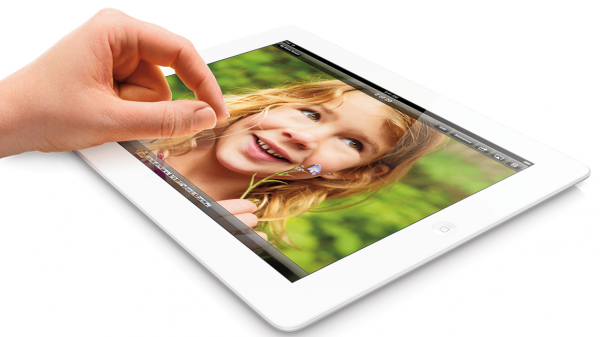
  • Apple’s idea of innovation is premium-priced iPad?

    Yesterday morning, when I rolled out of bed (West Coast time) and saw colleague Wayne Williams’ headline on 128GB iPad, I thought: “Well, good for Apple! This should bring down the price and raise storage capacity of other models”. But the details wiped away all enthusiasm. This thing sells for as much as $929. What the frak? Who will pay that much for a tablet in a market pining for considerably lower prices, like $199?

    Apple’s idea of innovation is to double storage and charge considerably more for it. Perhaps CEO Tim Cook and company read too many blogs about supposedly overpriced Microsoft Surface Pro, which iPad gangbangers insist competes with the fruit-logo tablet. Not so — Microsoft priced against Windows ultrabooks and MacBook Air. But based on that faulty comparison, Apple can claim bragging rights. The new iPad ships February 5, four days before Surface Pro — that’s no coincidence — and by comparison for less but with more. With 128GB storage, Microsoft’s slate is $999, while the other isn’t just $70 less but packs 4G LTE radio, too. Reasonable comparisons stop there, and no one should be fooled, although many will be.

    To be fair, Apple hasn’t indicated how the new model will affect the price of others. The 128 gigger with WiFi only, will sell for $799, where the 64GB sits today. It’s Apple pushing up iPad pricing — now ranging from $329 to $929 — that mindboggles. The strategy is tried-and-true Cook tactic, going back a decade. He long managed Apple’s supply chain as COO before taking the top job in summer 2011.

    Kirk and Spock

    But Cook has a problem: He’s no Steve Jobs, nor should he be. My favorite analogy for the pair is Captain Kirk and Mr. Spock. Kirk, like Jobs, is more emotional, intuitive, risk-taking. Cook is more like Spock, making logical, logistical decisions that maximize margins. Under Jobs, Apple released category-creating, or redefining products, that left people breathless — and wanting to buy. Cook brought Appleware to market and wrung every cent the supply chain would give.

    Typically, new Apple products go through a clear supply-chain process. The big, new thing launches at some event, then Apple starts selling with a base set of features that are good, but not great. These offset startup manufacturing and distribution costs, while maximizing margins from a special concept: Cool. Plenty of buyers demand the newest, coolest product, and they’re willing to pay a premium price to get it, and Apple certainly doesn’t discourage them from doing so.

    To many of these buyers, the tech gadget is as much an accessory — statement of their coolness, superiority — as useful product. Apple engages in a tried-and-true retail practice. It’s good business. Clothing stores take a similar approach. There are teens who must have the newest wears from Aeropostale, American Eagle, Gap or Hollister at full price; they can’t wait for sales. They want to be cool. Apple sometimes charges more for fashion, just like clothiers. Remember the black MacBook, which cost $150 more than the white model, simply for the color? With iPad 4, the pay-more principle applies.

    You can see this process everywhere at Apple. First is the category definer, the new thing for the company. Then there is a process of iteration, where Apple improves features while keeping prices the same and sometimes lowering them near the end of the product cycle before something new in that category comes along. Pick any Apple product. The first several generations of iPod look similar (2001-2003), then Apple changed up with iPod mini (2004), nano (2005) and touch (2007) and completely refreshed the lineup (2012). The music player is an end-of-life category that will receive nominal reinvestment of time.

    Look at iPhone. The first three generations looked pretty much the same. Hell, the original shipped with no MMS support (standard equipment everywhere else) and 2.5G data. Apple maximized margins through iteration, essentially sprucing specs, through the 3GS. But iPhone 4 brought in a new design, while 4S was the iterative product. Its successor once again resets with new design and improved capabilities. However, there are only so many ways to improve products around certain design concepts, so over time the differences are less noticeable.

    Pad Pricing

    That brings me to iPad. The first two models weren’t that different. Apple changed up with iPad 3, but not drastically. Rather than innovation, Apple opted for souped-up iteration, by slapping on a high-resolution display and bigger battery supporting it. iPad 4 is like the 2, gradual improvements inside. By contrast, iPad mini is like the iPod mini, a smaller version of a successful product appealing to those who want a more carry-all device or something that simply costs less.

    But iPad mini digresses from the Jobs model and feels all Cook. In the past, smaller Apple gear often cost less without overlap. iPod mini sold for less than Classic, as did nano later. MacBook and later the Air are smaller and less expensive, while offering different benefits — major one being improved portability. By contrast, iPad mini pricing runs smack into iPad 4, ranging from $329 to $659; the larger tablet goes from $499 to $829, and starting next month $929.

    That brings me to back to the 128 gigger’s price. There’s always someone who will pay more, if for no other reason than to feel cooler or better than everyone else. So Apple raises iPad pricing at a time when other companies focus more on value. That is, again, tried-and-true Apple, too.

    Now for some contrast. Dell almost singlehandedly is responsible for PC pricing today. During the late 1990s and early 2000s, the Round Rock, Texas-based company engineered a superior supply and passed savings on to customers — all while driving a price war that sank selling prices and margins with them. Apple chose to keep the Mac a premium brand, while maximizing margins on lower volumes. Now, in the 2010s, Apple has the superior supply chain, but chooses to pass profits onto investors rather than savings to customers. Hey, if people want to pay more for something, Cook and Company will let them.

    Something else: iPad mini saps margins. Selling prices for Apple tablets are down more than 12 percent quarter on quarter in Q4 and $101 year over year. iPad 4 adds $100-$130 to the top-line model, depending on whether comparing to the $799 128 gigger or $829 64GB slate with WiFi and LTE.

    But at the end of the day, there is something else: Can Spock command the starship Enterprise as well as Kirk, or James T. as well without the Vulcan? The answer says much, by analogy, about Jobs and Cook. I have confidence in Cook’s ability to maximize margins. If iPad 4 128GB, or iPhone 5, indicates anything, Cook without Jobs isn’t yet enough.

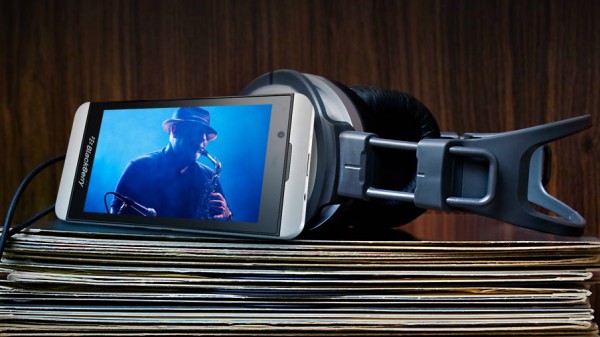
  • Will you buy the BlackBerry Z10?

    Today, the company formally known as Research in Motion, unveiled the BlackBerry 10 platform, and first two supporting devices — the touchscreen Z10 and physical keyboard-packing Q10. The new products are quite literally a corporate relaunch, which includes ditching moniker RIM for BlackBerry.

    While the Z10 and Q10 are officially launched, BlackBerry provides little information on the keyboard phone, while plenty on the other. The screen is smaller (3.1 inches versus 4.1 inches) and the battery is larger (but BlackBerry doesn’t say by how much). So for today, I’ll stick with what we know something about, and that’s the Z10.

    Comparing Specs

    From the photos and videos, the new touchscreen BlackBerry is handsome, as is BB10 — although almost too polished for my tastes. The smartphone is available in black or white. What I really want to know: Will you buy one? Judge from the specs — and compared to three other smartphone platforms.

    BlackBerry Z10: 4.2-inch touch display with 1280 x 768 resolution and 356 pixels per inch; 1.5GHz dual-core processor; 2GB RAM; 16GB storage (expandable to 64GB with microSD card); 8-megapixel auto-focus rearing-facing and 2MP fixed-focus front-facing cameras; 1080p video recording (rear camera), 720p (front); 4G: Quadband LTE 2, 5, 4, 17 (700/850/1700/1900 MHz), Triband HSPA+ 1, 2, 5/6 (850/1900/2100 MHz), Quadband HSPA+ 1, 2, 4, 5/6, (850/1700/1900/2100 MHz), Quadband EDGE (850/900/1800/1900 MHz); Verizon 4G: LTE Band-13 (700 MHz), CDMA Cell-band and PCS-band (800/1900 MHz), WCDMA Band-1 and Band-8 (2100/900 MHz), GSM/EDGE Quadbands (850/900/1800/1900 MHz); WiFi N; 4G mobile hotspot; Bluetooth 4; NFC; micro-HDMI; accelerometer; ambient light sensor; gyroscope; magnetometer; proximity sensor; 1850 mAh battery; and blackBerry 10. Measures 130 x 65.6 x 9 mm and weighs 137.5 grams.

    The Z10 will be available, starting tomorrow, in the United Kingdom from 3UK, BT, Carephone Warehouse, EE, O2 and Phones 4u. In Canada, on February 5 from various carriers, for $149.99 with three-year contract. In UAE, on February 10, unsubsidized for AED 2,599. In the United States, AT&T, T-Mobile and Verzion will offer the Z10, which will be available starting in March. Unconfirmed pricing starts at $199.99.

    Apple iPhone 5: 4-inch display with 1136 x 640 resolution, 326 ppi; Apple A6 dual-core processor; 1GB RAM; 16GB, 32GB or 64GB storage (depending on model); 8MP rear-facing and 1.2MP front-facing cameras; UMTS/HSDPA/HSUPA (850, 900, 1900, 2100 MHz), GSM/EDGE (850, 900, 1800, 1900 MHz), LTE (bands vary by carrier model and region); accelerometer; ambient-light sensor; gyroscope; GPS; proximity sensor; digital compass; Bluetooth; WiFi N; 1440 mAh battery; carrier locked; iOS 6. Measures 123.8 x 58.6 x 7.6 mm and weighs 112 grams. With two-year contract sells for: $199 (16GB), $299 (32GB), $399 (64GB). Carrier locked, but in United States not Verizon model.

    Google Nexus 4: 4.7-inch display with 1280 x 768 pixel resolution, 320 ppi; Qualcomm Snapdragon S4 Pro processor; 2GB RAM; 8GB or 16GB storage (depending on model); 8-megapixel rear-facing and 1.3MP front-facing cameras; GSM/EDGE/GPRS (850, 900, 1800, 1900 MHz), 3G (850, 900, 1700, 1900, 2100 MHz), HSPA+ 21; WiFi N; wireless charging; Bluetooth; NFC; SlimPort HDMI; accelerometer; ambient-light sensor; barometer; compass; GPS; Gyroscope; microphone; 2100 mAh battery; unlocked; Android 4.2. Measures 133.9 x 68.7 x 9.1 mm and weighs 139 grams. Sells unlocked and without contract commitment for $299 (8GB) or $349 (16GB), direct from Google.

    Nokia Lumia 920: 4.5-inch display with 1280 by 768 resolution with 332 pixels per inch; 1.5GHz Qualcomm Snapdragon 4 dual-core processor; HSPA+ and LTE (no T-Mobile USA HSPA support); 1GB RAM; 32GB storage (and 7GB SkyDrive free); 8.7MP rear-facing camera (F/2 aperture, 26mm focal length and Carl Zeiss Tessar lens) with LED flash; front-facing camera; 1080p video at 30fps (back camera), 720p (front); NFC; Bluetooth 3.1; Assisted-GPS; WiFi N; WiFi Direct; WiFi Channel bonding; DLNA compatible; magnetometer; ambient-light, proximity and orientation sensors; 2,000 mAh battery; and Windows Phone 8. Dimensions: 130.3 mm high by 70.8 mm wide by 10.7 mm thick; weighs 185 grams. Sells for $99.99 with two-year contract from AT&T.


    Reader Reaction

    Some of you already expressed opinions in comments. For John Mann, “The dealbreaker: No Google Maps”.

    Patrick Gallagher: “After watching some of the comparison videos, it would appear the Z10 is currently (unless the final version is slower than the beta) the fastest smartphone on the market, with a browser that manages to be the best browser — not just on mobile, but overall, including desktop platforms. Looking forward to trying this out – Google maps or no”.

    “From the looks of it, it’s going to be a battle between Android and BB10 for the most innovative OS”, Bob Grant comments. “I hope they keep it civil. (CrApple wouldn’t)”.

    Posting to Google+, John Blossom observes there are “lots of rosy reviews from the media for the new BlackBerry Z10 touchscreen phone, which looks far more like an iPhone than anything that Samsung ever churned out. If Apple doesn’t whinge about this one, then their motives for suing Sammy are revealed fully. That said, it looks like a nice unit packed with great features”.

    So what do you think? Will you buy the Z10? And if so, are you a BlackBerry user or switcher from something else? If not, why not? Please take the poll above and comment below.

  • A Record Year for the American Wind Industry

    Since taking office, President Obama has been focused on building an energy economy in the United States that is cleaner as well as more efficient and secure. As part of that effort, the Administration has taken historic action over the past few years to support the development and deployment of renewable energy that will create new jobs and jumpstart new industries in America. And we are making significant progress towards those goals.

    Today, the American Wind Energy Association (AWEA) has released its Fourth Quarter Market Report for 2012, which highlights a number of exciting milestones.

    The American wind industry had its best year ever in 2012, with more than 13,000 MW installed. In the fourth quarter alone, more than 8,000 MW were deployed – an all-time record for the industry and twice as much wind as the previous record set in the fourth quarter 2009.

    Thanks to this growth, the wind industry was able to achieve another milestone in 2012: achieving 60 GW of cumulative wind capacity in the United States. To put it another way, the United States today has more than 45,000 wind turbines that provide enough electricity to power 14.7 million homes – roughly equivalent to the number of homes in Colorado, Iowa, Maryland, Michigan, Nevada, and Ohio combined.

    To underscore how quickly wind power is taking root in America, consider this: it took 25 years to reach 10 GW, which occurred in 2006. But it only took four years to grow from 20 GW (2008) to 60GW (2012). And last year – for the first time ever – wind power provided the largest share of new electric capacity (42%) in the United States. Of course, more wind also means less carbon pollution that contributes to climate change. With 60 GW installed, it’s like taking 17.5 million cars off the road.

    All of this progress builds on the encouraging trends in renewable energy over the past few years. Since 2008, the U.S. has doubled renewable generation from wind, solar, and geothermal sources, and America is now home to some of the largest wind and solar farms in the world. Wind power currently contributes more than 10% of total electricity generation in six states, with two of these states above 20%. And nearly seventy percent of the equipment installed at U.S. wind farms last year – including wind turbines and components like towers, blades, gears, and generators – was made here in the United States, up from just 35 percent in 2005.

    This is what we can achieve when we commit ourselves to smart and effective policies that promote clean energy technologies, create jobs, and grow our economy. That’s why, in addition to making the largest investments in clean energy in American history, President Obama fought for – and secured – an extension of the Production Tax Credit (PTC). If the PTC had expired at the end of last year, it would have landed a punishing blow to the domestic wind industry resulting in layoffs for tens of thousands of American workers.

    But the President refused to let that happen. So instead of layoffs, we are hearing stories from wind companies all across the country – from Iowa Colorado, to Ohio and Illinois – that are retaining and re-hiring workers. Instead of moving business overseas, these companies are investing in the next generation of American-made wind technology and are poised for additional growth in the years ahead.

  • Facebook Earnings Out, Mobile Users Exceed Web Users For First Time

    Facebook released its Q4 and full-year 2012 earnings today, beating analysts’ expectations.

    Revenue for the quarter was $1.585 billion, up 40% year-over-year. Revenue from advertising was $1.33 billion (84% of total revenue), up 41% year-over-year. GAAP income from operations was $523 million down from $548 million for the same period last year. GAAP net income for the fourth quarter was $64 million, compared to net income of $302 million for the fourth quarter of 2011.

    Along with the financials, Facebook shared its latest stats. Monthly active users were 1.06 billion as of December 31 (up 25% year-over-year). Daily active users were 618 million on average during December (up 28% year-oever-year). Mobile active users were 680 million as of December 31 (up 57% year-over-year). Mobile daily active users exceeded web daily active users for the first time during the fourth quarter.

    CEO Mark Zuckerberg said, “In 2012, we connected over a billion people and became a mobile company. We enter 2013 with good momentum and will continue to invest to achieve our mission and become a stronger, more valuable company.”

    More from the conference call to come…

    Here’s the release in its entirety:

    MENLO PARK, Calif., Jan. 30, 2013 /PRNewswire/ – Facebook, Inc. (FB) today reported financial results for the fourth quarter and full year ended December 31, 2012.

    “In 2012, we connected over a billion people and became a mobile company,” said Mark Zuckerberg, Facebook founder and CEO. “We enter 2013 with good momentum and will continue to invest to achieve our mission and become a stronger, more valuable company.”

    Fourth Quarter and Full Year 2012 Financial Summary

    In millions, except percentages and per share amounts Q4’11 Q4’12 FY’11 FY’12
    Revenue $    1,131 $    1,585 $    3,711 $    5,089
    Income from Operations
       GAAP $       548 $       523 $    1,756 $       538
       Non-GAAP $       624 $       736 $    1,980 $    2,261
    Operating Margin
       GAAP 48% 33% 47% 11%
       Non-GAAP 55% 46% 53% 44%
    Net Income
        GAAP $       302 $         64 $    1,000 $         53
        Non-GAAP $       360 $       426 $    1,164 $    1,317
    Diluted Earnings per Share (EPS)
        GAAP $      0.14 $      0.03 $      0.46 $      0.01
        Non-GAAP $      0.15 $      0.17 $      0.50 $      0.53

    Fourth Quarter 2012 Operational Highlights

    • Monthly active users (MAUs) were 1.06 billion as of December 31, 2012, an increase of 25% year-over-year
    • Daily active users (DAUs) were 618 million on average for December 2012, an increase of 28% year-over-year
    • Mobile MAUs were 680 million as of December 31, 2012, an increase of 57% year-over-year
    • Mobile DAUs exceeded web DAUs for the first time in the fourth quarter of 2012

    Recent Business Highlights

    • Mobile revenue represented approximately 23% of advertising revenue for the fourth quarter of 2012, up from approximately 14% of advertising revenue in the third quarter of 2012
    • Facebook launched Graph Search Beta, a structured search tool that enables users for the first time to find people, places, photos and other content that has been shared on Facebook
    • Launched Facebook for Android 2.0, completely rebuilt to deliver improved stability and faster performance and opened Facebook Messenger to anyone with a telephone number

    Fourth Quarter 2012 Financial Highlights

    Revenue – Revenue for the fourth quarter totaled $1.585 billion, an increase of 40%, compared with $1.13 billion in the fourth quarter of 2011.

    • Revenue from advertising was $1.33 billion, representing 84% of total revenue and a 41% increase from the same quarter last year. Excluding the impact of year-over-year changes in foreign exchange rates, advertising revenue would have increased by 43%.
    • Payments and other fees revenue for the fourth quarter was $256 million.  As planned, in the fourth quarter of 2012 the company recognized revenue from four months of Payments transactions for accounting reasons detailed in our Form 10-Q filed on October 24, 2012.  Adjusting for the $66 million of revenue in the extra month of December, Payments and other fees revenue would have been essentially flat year-over-year.

    Costs and expenses – Fourth quarter costs and expenses were $1.06 billion, an increase of 82% from the fourth quarter of 2011. Excluding share-based compensation and related payroll tax expenses, non-GAAP costs and expenses were $849 million, an increase of 67%.

    Income from operations – For the fourth quarter, GAAP income from operations was $523 million, compared to income from operations of $548 million for the fourth quarter of 2011. Excluding share-based compensation and related payroll tax expenses, non-GAAP income from operations for the fourth quarter was $736 million, compared to $624 million for the fourth quarter of 2011.

    Operating margin – GAAP operating margin was 33% for the fourth quarter, compared to 48% for the fourth quarter of 2011. Excluding share-based compensation and related payroll tax expenses, non-GAAP operating margin was 46% for the fourth quarter, compared to 55% for the fourth quarter of 2011.

    Income tax provision – The GAAP income tax provision for the fourth quarter was $441 million, representing an 87% effective tax rate. Excluding share-based compensation expense and related payroll tax expenses, the non-GAAP effective tax rate would have been approximately 41%.

    Net income – GAAP net income for the fourth quarter was $64 million, compared to net income of $302 million for the fourth quarter of 2011. GAAP EPS for the fourth quarter was $0.03, compared to $0.14 for the same quarter in the prior year. Excluding share-based compensation and related payroll tax expenses, and income tax adjustments, non-GAAP net income for the fourth quarter was $426 million, or $0.17 per share, compared to $360 million and $0.15 per share for the same quarter in the prior year.

    Capital expenditures – Purchases of property and equipment for the fourth quarter were $198 million. Additionally, $89 million of equipment was procured or financed through capital leases during the fourth quarter of 2012.

    Cash and marketable securities – As of December 31, 2012, cash and marketable securities were $9.63 billion.

    Webcast and Conference Call Information

    Facebook will host a conference call to discuss the results at 2 p.m. PT / 5 p.m. ET today. The live webcast can be accessed at the Facebook Investor Relations website at investor.fb.com, along with the company’s earnings press release, financial tables and slide presentation. Facebook intends to use the investor.fb.com website as a means of disclosing material non-public information and for complying with its disclosure obligations under Regulation FD.

    Following the call, a replay will be available at the same website. A telephonic replay will be available for one week following the conference call at +1 (404) 537-3406 or + 1 (855) 859-2056, conference ID 85750523.

    About Facebook

    Founded in 2004, Facebook’s mission is to make the world more open and connected. People use Facebook to stay connected with friends and family, to discover what’s going on in the world, and to share and express what matters to them.

    Contacts

    Investors:
    Deborah Crawford
    [email protected] / investor.fb.com

    Press:
    Ashley Zandy
    [email protected] / newsroom.fb.com

    Forward Looking Statements

    This press release contains forward-looking statements regarding our future prospects, new product benefits, business strategy and plans, which are subject to the safe harbor provisions of the Private Securities Litigation Reform Act of 1995. These forward-looking statements are only predictions and may differ materially from actual results due to a variety of factors including: our ability to retain or increase users and engagement levels, including mobile engagement and our ability to increase revenues and engagement across a range of geographies; our ability to monetize our mobile products; competition; our ability to expand and further monetize the Facebook Platform; privacy concerns; security breaches; increases in the costs necessary to grow and operate our business; and our ability to manage growth and geographically-dispersed operations. These and other potential risks and uncertainties that could cause actual results to differ from the results predicted are more fully detailed under the caption “Risk Factors” in our Quarterly Report on Form 10-Q for the quarter ended September 30, 2012 filed with the SEC on October 24, 2012, which is available on our Investor Relations website at investor.fb.com and on the SEC website at www.sec.gov. Additional information will also be set forth in our Annual Report on Form 10-K for the full year ended December 31, 2012. In addition, please note that the date of this press release is January 30, 2013, and any forward-looking statements contained herein are based on assumptions that we believe to be reasonable as of this date. We undertake no obligation to update these statements as a result of new information or future events.

    Non-GAAP Financial Measures

    To supplement our consolidated financial statements, which are prepared and presented in accordance with GAAP, we use the following non-GAAP financial measures: total revenue and advertising revenue excluding foreign exchange effect, non-GAAP costs and expenses, non-GAAP income from operations; non-GAAP net income; non-GAAP diluted shares; non-GAAP diluted earnings per share; non-GAAP operating margin; and non-GAAP effective tax rate. The presentation of these financial measures is not intended to be considered in isolation or as a substitute for, or superior to, financial information prepared and presented in accordance with GAAP. Investors are cautioned that there are material limitations associated with the use of non-GAAP financial measures as an analytical tool. In particular, many of the adjustments to our GAAP financial measures reflect the exclusion of items, specifically share-based compensation expense and payroll tax related to share-based compensation expense and the related income tax effects, that are recurring and will be reflected in our financial results for the foreseeable future. In addition, these measures may be different from non-GAAP financial measures used by other companies, limiting their usefulness for comparison purposes. We compensate for these limitations by providing specific information regarding the GAAP amounts excluded from these non-GAAP financial measures.

    We believe these non-GAAP financial measures provide investors with useful supplemental information about the financial performance of our business, enable comparison of financial results between periods where certain items may vary independent of business performance, and allow for greater transparency with respect to key metrics used by management in operating our business.

    We exclude the following items from one or more of our non-GAAP financial measures:

    Share-based compensation expense. We exclude share-based compensation expense because we believe that the non-GAAP financial measures excluding this item provide meaningful supplemental information regarding operational performance. In particular, because of varying available valuation methodologies, subjective assumptions and the variety of award types that companies can use under FASB ASC Topic 718, we believe that providing non-GAAP financial measures that exclude this expense allow investors the ability to make more meaningful comparisons between our operating results and those of other companies. Furthermore, our share-based compensation expense was materially affected in the second quarter of 2012 due to the terms of our RSUs granted prior to 2011, related to which we recognized $986 million in share-based compensation expense in the period, despite the fact that these awards were granted and earned over several years. Accordingly, we believe that excluding this expense provides investors and management with greater visibility to the underlying performance of our business operations, facilitates comparison of our results with other periods, and may also facilitate comparison with the results of other companies in our industry.

    Payroll tax expense related to share-based compensation. We exclude payroll tax expense related to share-based compensation expense because, without excluding these tax expenses, investors would not see the full effect that excluding that share-based compensation expense had on our operating results. Furthermore, our payroll tax expense was substantially higher due to the terms of our RSUs granted prior to 2011, where, despite the fact that these awards were granted and earned over several years, we recognized $151 million in payroll tax expense in 2012 with most of this being recognized in the second quarter of 2012. In addition, these expenses are tied to the exercise or vesting of underlying equity awards and the price of our common stock at the time of vesting or exercise, which factors may vary from period to period independent of the operating performance of our business. Similar to share-based compensation expense, we believe that excluding this payroll tax expense provides investors and management with greater visibility to the underlying performance of our business operations and facilitates comparison with other periods as well as the results of other companies.

    Income tax effect of share-based compensation and related payroll tax expenses. We believe excluding the income tax effect of non-GAAP adjustments assists investors and management in understanding the tax provision related to those adjustments and provides useful supplemental information regarding the underlying performance of our business operations.

    Assumed preferred stock conversion. As a result of our initial public offering, all outstanding shares of preferred stock were automatically converted into shares of Class B common stock. Consequently, non-GAAP diluted shares and net income per share for periods prior to June 30, 2012 have been calculated assuming this conversion, which we believe facilitates comparison with prior periods.

    Dilutive equity awards excluded from GAAP. In our calculation of non-GAAP weighted average shares used to compute earnings per share attributable to Class A and Class B common stockholders, we include unvested RSUs for the year ended December 31, 2012 as well as for the three months and full year ended December 31, 2011, the number of which is substantial due to the terms of RSUs granted prior to 2011. We believe including these awards facilitates comparison between periods.

    Foreign exchange effect on revenue. We translate current quarter and full year revenues using prior year exchange rates, which we believe is a useful metric that facilitates comparison to our historical performance.

    For more information on our non-GAAP financial measures and a reconciliation of such measures to the nearest GAAP measure, please see the “Reconciliation of Non-GAAP Results to Nearest GAAP Measures” table in this press release.


    FACEBOOK, INC.
    CONDENSED CONSOLIDATED STATEMENTS OF OPERATIONS
    (In millions, except for per share amounts)
    (Unaudited)
    Three Months Ended Year Ended
    December 31, December 31,
    2011 2012 2011 2012
     Revenue $    1,131 $    1,585 $    3,711 $    5,089
     Costs and expenses:
    Cost of revenue 247 398 860 1,364
    Research and development 124 297 388 1,399
    Marketing and sales 120 193 393 896
    General and administrative 92 174 314 892
    Total costs and expenses 583 1,062 1,955 4,551
     Income from operations 548 523 1,756 538
     Interest and other income (expense), net
    Interest expense (16) (16) (42) (51)
    Other income (expense), net (12) (2) (19) 7
     Income before provision for income taxes 520 505 1,695 494
     Provision for income taxes 218 441 695 441
     Net income $       302 $         64 $    1,000 $         53
     Less: Net income attributable to participating securities 97 332 21
     Net income attributable to Class A and Class B common stockholders $       205 $         64 $       668 $         32
     Earnings per share attributable to Class A and Class B
     common stockholders:
    Basic $      0.15 $      0.03 $      0.52 $      0.02
    Diluted $      0.14 $      0.03 $      0.46 $      0.01
    Weighted-average shares used to compute earnings per share
    attributable to Class A and Class B common stockholders:
    Basic 1,325 2,368 1,294 2,006
    Diluted 1,519 2,506 1,508 2,166
     Share-based compensation expense included in costs & expenses:
    Cost of revenue $          3 $          9 $          9 88
    Research and development 42 124 114 843
    Marketing and sales 13 27 37 306
    General and administrative 18 24 57 335
    Total share-based compensation expense $         76 $       184 $       217 $    1,572
     Payroll tax related to share-based compensation included in costs & expenses:
    Cost of revenue $         – $          2 $         – $          5
    Research and development 16 2 53
    Marketing and sales 4 1 20
    General and administrative 7 4 73
    Total $         – $         29 $          7 $       151
    Share-based compensation expense related to Pre-2011 RSUs included in costs & expenses:
    Cost of revenue $         – $          2 $         – $         63
    Research and development 14 504
    Marketing and sales 4 216
    General and administrative 4 255
    Total $         – $         24 $         – $    1,038
    Payroll tax related to Pre-2011 RSUs included in costs & expenses:
    Cost of revenue $         – $          2 $         – $          5
    Research and development 5 39
    Marketing and sales 3 18
    General and administrative 32
    Total $         – $         10 $         – $         94
    FACEBOOK, INC.
    CONDENSED CONSOLIDATED BALANCE SHEETS
    (In millions)
    (Unaudited)
    December 31, December 31,
    2011 2012
    Assets
    Current assets:
    Cash and cash equivalents $             1,512 $             2,384
    Marketable securities 2,396 7,242
    Accounts receivable 547 719
    Income tax refundable 451
    Prepaid expenses and other current assets 149 471
    Total current assets 4,604 11,267
    Property and equipment, net 1,475 2,391
    Goodwill and intangible assets, net 162 1,388
    Other assets 90 57
    Total assets $             6,331 $           15,103
    Liabilities and stockholders’ equity
    Current liabilities:
    Accounts payable $                  63 $                  65
    Platform partners payable 171 169
    Accrued expenses and other current liabilities 296 423
    Deferred revenue and deposits 90 30
    Current portion of capital lease obligations 279 365
    Total current liabilities 899 1,052
    Capital lease obligations, less current portion 398 491
    Long-term debt 1,500
    Other liabilities 135 305
    Total liabilities 1,432 3,348
    Stockholders’ equity
    Convertible preferred stock 615
    Common stock and additional paid-in capital 2,684 10,094
    Accumulated other comprehensive (loss) income (6) 2
    Retained earnings 1,606 1,659
    Total stockholders’ equity 4,899 11,755
    Total liabilities and stockholders’ equity $             6,331 $           15,103


    FACEBOOK, INC.
    CONDENSED CONSOLIDATED STATEMENTS OF CASH FLOWS
    (In millions)
    (Unaudited)
    Three Months Ended Year Ended
    December 31, December 31,
    2011 2012 2011 2012
    Cash flows from operating activities
    Net income $       302 $         64 $    1,000 $         53
    Adjustments to reconcile net income to net cash provided by operating activities:
    Depreciation and amortization 103 224 323 649
    Loss on write-off of equipment (2) 7 4 15
    Share-based compensation 76 184 217 1,572
    Deferred income taxes (1) 248 (30) (186)
    Tax benefit from share-based award activity 28 179 433 1,033
    Excess tax benefit from share-based award activity (28) (179) (433) (1,033)
    Changes in assets and liabilities:
    Accounts receivable (102) (80) (174) (170)
    Income tax refundable 116 (451)
    Prepaid expenses and other current assets 89 (38) (24) (14)
    Other assets 20 2 (5) 2
    Accounts payable (30) (19) 6 1
    Platform partners payable 5 14 96 (2)
    Accrued expenses and other current liabilities 46 (2) 37 160
    Deferred revenue and deposits 5 (55) 49 (60)
    Other liabilities (1) 16 50 43
    Net cash provided by operating activities 510 681 1,549 1,612
    Cash flows from investing activities
    Purchases of property and equipment (185) (198) (606) (1,235)
    Purchases of marketable securities (283) (1,717) (3,025) (10,307)
    Sales of marketable securities 426 1,529 113 2,100
    Maturities of marketable securities 18 920 516 3,333
    Investments in non-marketable equity securities (1) 1 (3) (2)
    Acquisitions of businesses, net of cash acquired, and purchases of intangible and other assets (19) (24) (911)
    Changes in restricted cash and deposits 1 6 (2)
    Net cash used in investing activities (43) 535 (3,023) (7,024)
    Cash flows from financing activities
    Net proceeds from issuance of common stock 998 6,760
    Taxes paid related to net share settlement of equity awards (2,862) (2,862)
    Proceeds from exercise of stock options 1 8 28 17
    Proceeds from issuance of debt, net of issuance costs 1,496 1,496
    Repayment of long-term debt (250)
    Proceeds from sale and lease-back transactions 155 170 205
    Principal payments on capital lease obligations (53) (135) (181) (366)
    Excess tax benefit from share-based award activity 28 179 433 1,033
    Net cash provided by financing activities 131 (1,314) 1,198 6,283
    Effect of exchange rate changes on cash and cash equivalents 8 4 3 1
    Net increase (decrease) in cash and cash equivalents 606 (94) (273) 872
    Cash and cash equivalents at beginning of period 906 2,478 1,785 1,512
    Cash and cash equivalents at end of period $    1,512 $    2,384 $    1,512 $    2,384
    Supplemental Cash Flow Data
    Cash paid during the period for:
    Interest $            9 $          8 $         28 $         38
    Income taxes $         18 $            – $       197 $       184
    Cash received during the period for:
    Income tax refunds $             – $       131 $             – $       131
    Non-cash investing and financing activities:
    Net change in accounts payable and accrued expenses and other current liabilities related to property and equipment additions $         73 $         40 $       135 $        (40)
    Property and equipment acquired under capital leases $         80 $         89 $       473 $       340
    Fair value of shares issued related to acquisitions of businesses and other assets $         12 $         – $         58 $       274


    Reconciliation of Non-GAAP Results to Nearest GAAP Measures
    (In millions, except for number of shares)
    (Unaudited)
    Three Months Ended Year Ended
    December 31, December 31,
    2011 2012 2011 2012
    GAAP revenue $    1,131 $    1,585 $    3,711 $    5,089
    Foreign exchange effect on 2012 revenue using 2011 rates 23 123
    Revenue excluding foreign exchange effect $    1,608 $    5,212
    GAAP revenue year-over-year change % 40% 37%
    Revenue excluding foreign exchange effect year-over-year change % 42% 40%
    GAAP advertising revenue $       943 $    1,329 $    3,154 $    4,279
    Foreign exchange effect on 2012 advertising revenue using 2011 rates 23 123
    Advertising revenue excluding foreign exchange effect $    1,352 $    4,402
    GAAP advertising revenue year-over-year change % 41% 36%
    Advertising revenue excluding foreign exchange effect year-over-year change % 43% 40%
    GAAP costs and expenses $       583 $    1,062 $    1,955 $    4,551
    Share-based compensation expense (76) (184) (217) (1,572)
    Payroll tax expenses related to share-based compensation (29) (7) (151)
    Non-GAAP costs and expenses $       507 $       849 $    1,731 $    2,828
    GAAP income from operations $       548 $       523 $    1,756 $       538
    Share-based compensation expense 76 184 217 1,572
    Payroll tax expenses related to share-based compensation 29 7 151
    Non-GAAP income from operations $       624 $       736 $    1,980 $    2,261
    GAAP net income $       302 $         64 $    1,000 $         53
    Share-based compensation expense 76 184 217 1,572
    Payroll tax expenses related to share-based compensation 29 7 151
    Income tax adjustments (18) 149 (60) (459)
    Non-GAAP net income $       360 $       426 $    1,164 $    1,317
    GAAP diluted shares 1,519 2,506 1,508 2,166
    Assumed preferred stock conversion 545 548 203
    Dilutive equity awards excluded from GAAP1 286 276 110
    Non-GAAP diluted shares 2,350 2,506 2,332 2,479
    GAAP diluted earnings per share $      0.14 $      0.03 $      0.46 $      0.01
    Net income attributable to participating securities 0.05 0.20 0.01
    Non-GAAP adjustments to net income 0.04 0.14 0.11 0.59
    Non-GAAP adjustments to diluted shares (0.08) (0.27) (0.08)
    Non-GAAP diluted earnings per share $      0.15 $      0.17 $      0.50 $      0.53
    GAAP operating margin 48% 33% 47% 11%
    Share-based compensation expense 7% 12% 6% 31%
    Payroll tax expenses related to share-based compensation 0% 2% 0% 3%
    Non-GAAP operating margin 55% 46% 53% 44%
    GAAP profit before tax $       520 $       505 $    1,695 $       494
    GAAP provision for income taxes 218 441 695 441
    GAAP effective tax rate 42% 87% 41% 89%
    GAAP profit before tax $       520 $       505 $    1,695 $       494
    Share-based compensation and related payroll tax expenses 76 213 224 1,723
    Non-GAAP profit before tax $       596 $       718 $    1,919 $    2,217
    Non-GAAP provision for income taxes 236 292 755 900
    Non-GAAP effective tax rate 40% 41% 39% 41%
    1 Gives effect to unvested RSUs in periods prior to our IPO for comparability

  • Google Launches Big Google Earth Update

    Google launched a major update to Google Earth this week for the desktop, iOS and Android. The update includes the addition over over 100,000 new tours and a million new photos in Tour Guide.

    “As you navigate in Earth, tour guide acts as a local exploration expert suggesting interesting places near the location you’re visiting,” Google said in a Google+ update on Tuesday (via TheNextWeb). “Today’s update adds over 100,000 new tours of popular sites, cities and places across 200 countries, as well as enhancements to existing tours.”

    “The new, richer tours combine 3D flyovers, Wikipedia snippets and – for the first time – place highlight and more than 1 million user-generated Panoramio photos in order to create an immersive and educational exploration of your favorite places,” Google added. “Each tour ends with a selection of photo thumbnails which were selected from Panoramio as the best representation of a given place. Clicking on one of the thumbnails enables a full screen photo experience.”

    The Tour Guide feature is available on Google Earth 7.0. Google introduced this version back in October bringing the tour guide feature to the desktop.

  • Microsoft To Build Two More Data Centers in Virginia

    microsoft-boydton-exterior

    The exterior of the Microsoft data center in Boydton, Virginia. The company said today that it will invest $348 million to build two more facilities at the site. (Photo: Microsoft)

    Microsoft Corp. will invest an additional $348 million to expand its modular data center site in southern Virginia, the company said today. The company will build two additional facilities on its data center campus to increase capacity to serve its growing customer base. The expansion boosts Microsoft’s investment in its Virginia data center campus to $997 million.

    The expansion is part of an ongoing data center construction program as Microsoft builds future capacity for its battle with Google and other leading players in cloud computing. It has built rapidly at its Virginia facility since it was announced in 2010.

    “This expansion will allow us to meet the growing demand from consumers and businesses for our cloud services in the region in an increasingly efficient manner,” said Christian Belady, general manager of Microsoft Data Center Services. ”These facilities showcase state-of-the-art designs developed from our latest technology and infrastructure research that continues to minimize water, energy use, and building costs, while increasing computing capacity, software capabilities, and server utilization.”

    Focus on Modular Design

    Microsoft’s Boydton facility features the use of a container-based design known as an IT-PAC (short for Pre-Assembled Component). The IT-PAC serves as the foundation of a broader shift to a modular, component-based design that offers cost-cutting opportunities at almost every facet of the project. They are designed to operate in all environments, and employ a free cooling approach in which fresh air is drawn into the enclosure through louvers in the side of the container – which effectively functions as a huge air handler with racks of servers inside.

    Microsoft’s original project in 2010 involved an investment of up to $499 million and 50 new jobs. In 2011 the company invested an additional $150 million to expand the site.  The latest expansion project will create 30 new jobs.

    “In 2010 we were confident that Microsoft’s plans to establish one of its most advanced data centers in Mecklenburg County would be a transformational project,” said Governor Bob McDonnell. “This second expansion within 16 months of the previous one is a great testament to Microsoft’s success and commitment to Virginia. The company continues to grow its cloud operations, representing a total of nearly one billion dollars in capital investment. The Commonwealth is one of the most active data center markets in the country, and Microsoft’s rapid development helps continue to establish us an industry leader.”

    The Microsoft expansion will be supported by $2.2 million in public funding, including $2 million in funds from the Virginia Tobacco Indemnification and Community Revitalization Commission and $200,000 from the Governor’s Opportunity Fund.

    Microsoft’s data centers are a key component in a major business shift at the company, which is expanding beyond its traditional desktop software business to offer cloud computing services, in which Microsoft’s applications will be hosted in its data centers and delivered over the Internet.

  • Google: Canadians Love Super Bowl More Than Stanley Cup (And Are Ravens Fans)

    Google says more people in Canada search for the “Super Bowl” than for the Stanley Cup, which is interesting, considering there are no NFL teams in Canada, while the NHL has a number of teams in the country.

    The company has been analyzing its search trends, and sasy that in 2012, there were twice as many searches on Google for “Super Bowl” in Canada than “Stanley Cup,” with Canadian Super Bowl searches on the rise again ahead of the big game this Sunday. Searches for “Super Bowl” from Canada have risen by over 480% in the past seven days alone, the company says.

    Interestingly, Canadians are searching for the Ravens a lot more than for the 49ers.

    “Searches for the Ravens and the 49ers are in a dead heat in the US,” says Google in a post on its Canada blog. “But it’s a different story in Canada, where searches for the Baltimore Ravens are outpacing 49ers searches by 45 percent. As we’ve seen in years past, geographic allegiances seem to factor into search activity as British Columbia is showing the highest search rates for the San Francisco 49ers and Ontario has the highest volume of Baltimore Ravens Searches. Nationally, Nova Scotia is leading all provinces in searches for ‘Super Bowl’.”

    Google Trends Super Bowl data

    Interestingly, even the Patriots are attracting more searches than the 49ers. 49ers coach Jim Harbaugh is getting more searches than Ravens coach John Harbaugh – 85% more, according to Google.

  • Leonid Gaidai Gets Google Doodle Tribute

    Google is running a doodle on its home page in Russia, honoring comedy director Leonid Gaidai.

    “We (along with Thus, Balbes and Byvalyi) wish a happy 90th to Russian director #LeonidGaidi,” Google tweeted through its Doodles account.

    Gaidai directed 23 titles including a handful of short films, according to IMDB. He’s credited as a writer on 17 titles. He also acted in titles.

    Here’s what Google’s English version of his Knowledge Panel looks like (he has one in Russian as well):

    Leonid Gaidai

    More recent Google Doodles here.

  • UCLA findings buck conventional wisdom about how stress-response protein works

    UCLA researchers, in a finding that runs counter to conventional wisdom, have discovered for the first time that a gene thought to express a stress-response protein in all cells that come under stress instead expresses the protein only in specific cell types.
     
    The research team, from the Jules Stein Eye Institute at UCLA and the UCLA Division of Pulmonary and Critical Care Medicine, focused on αB-Crystallin, one of a class of molecules known as heat shock proteins, which are involved in the folding and unfolding of other proteins, helping them recover from stress so they can do their job.
     
    The expression of heat shock proteins is increased when cells are exposed to taxing environmental conditions, such as infection, inflammation, exercise, exposure to toxins and other stressors.
     
    The heat shock protein αB-Crystallin may be associated with certain cancers and could be developed into a biomarker to monitor for diseases such as multiple sclerosis, age-related macular degeneration, heart-muscle degeneration and clouding of the eye lens. Any discoveries about how this protein is regulated and its molecular biology may reveal potential targets for novel therapies, said the study’s first author, Zhe Jing, a research associate in the UCLA Division of Pulmonary and Critical Care Medicine.
     
    “If you use a certain cell type, this protein can be induced when the cells are stressed, but that doesn’t happen in a different cell type,” Jing said. “This novel finding does conflict with what has been thought — that this protein could be induced in any cell type.”
     
    The findings of the two-year study are published in the current issue of the journal Cell Stress and Chaperones, a peer-reviewed journal for research on cell stress response.
     
    The UCLA team did the study using four cell lines — two epithelial cells lines and two fibroblast cells lines. They found that αB-Crystallin cannot be induced by stress in epithelial cells, in which 80 percent of cancers arise. It can, however, be induced in fibroblasts, which make up muscle tissue.
     
    Heat shock transcription factors activate the genes that control the expression of heat shock proteins in cells. In the past, data had indicated that any heat shock factor could control the expression of αB-Crystallin randomly and equally.
     
    However, in the most significant finding from this investigation, researchers discovered that in certain cell types, only one specific heat shock factor controls the expression of αB-Crystallin. For example, in the epithelial cell lines, it is heat shock factor 4 (HSF4), while a different heat shock factor, HSF1, plays this role in the fibroblast cells lines.
     
    Jing’s findings strongly suggest that αB-Crystallin’s “preference” for certain heat shock factors in certain cells may be related to its role in various diseases.
     
    “Considering the multiple roles of αB-Crystallin in so many diseases, the access of the HSF1 and HSF4 to the αB-Crystallin gene dictated by the certain cell type may be what is helping to cause certain diseases,” Jing said. “If we can uncover the cascade of events that result in disease, we may be able to come up with strategies to block or interrupt that cascade.”
     
    Going forward, Jing and the research team will validate what they found in this study by examining single cells, which provides a greater challenge but may lead to further discoveries.
     
    The research was funded by the National Institutes of Health.
     
    For more news, visit the UCLA Newsroom and follow us on Twitter.