Author: Serkadis

  • Microsoft “dedicated to keeping a lot higher market share than Android”, trying to win Nokia over

    ballmer-ap-photo Microsoft is having a tough time in the mobile OS sphere at present, and wherever Steve Ballmer turns he is reminded of this.

    He was most recently confronted about his mobile strategy at Microsoft’s shareholder conference, where he was asked why he does not team up with Nokia to fend of Android.

    Steve Ballmer answered in full:

    Small and important fact, we have greater market share than Google’s android. I remain dedicated to keeping higher market share, in fact quite a lot higher market share than Google’s Android, its a brand new product.

    Of the smartphone market, which is the way these things would normally be computed, we would be 10-12%, Google would be 3%, Apple would be about 20% or so, Blackberry would be about 25%, Nokia would be some place  around 45%, just to give relevant share.

    And certainly our objective is to have the leading position amongst these players in the long term. It is a competitive game, we have just recently launched a new generation of Windows phones with new software.  We are going to keep investing, I think we have a lot of opportunity to improve our product and our market position. I think we are early in the game.

    I think we are on the right strategy, which is to focus in on the software that goes into phones, as apposed to building phones.  I think that will allow us to offer a diversity of windows phones, just as there is a diversity of Windows PCs which is superior to anything you see from RIM with the Blackberry or with Apple.

    We hope to, over time, to see what we can do with Nokia, we have a limited partnership with them,to start we are working together on office mobility, we spent a lot of time with them very much focussed on that, that aspect, but not at the Windows level, there is more work to do there, but undoubtedly we have our work cut out for us.

    We are very focussed, we’ve really injected a ton of additional talent in Microsoft employees, very good thinkers, very good innovators, into that area, and we’ve got our heads down to do the best.

    While staying above the Android’s current 3.5% may seem like a pretty unambitious target, Google’s Mobile OS is predicted by many to become the number 2 mobile operating system in the next 5 years, so Microsoft certainly need to do much to regain the hearts and minds of the world’s mobile phone consumers.

    Via Techflash.com.

    Share/Bookmark

  • MENC Makes the Case for Music Education at CFC Fairs

    This fall, MENC is reaching out to federal employees to solicit their support for music education through the 2009 Combined Federal Campaign (CFC). The CFC is an annual fund-raising drive conducted by federal employees and military personnel to raise millions of dollars to benefit non-profit organizations.

    MENC staff have attended a number of CFC "fairs," events at federal agencies during which employees can ask questions and learn more about the organizations seeking support.

    At the United States Postal Service’s headquarters in Washington, DC on November 12, MENC Fundraising Director Jane Balek (at right, in the MENC "Music! Just Imagine…" shirt) discusses the importance of music education with (from left) Local Federal Coordinating Committee Chair Linda Washington, Postmaster General John Potter, and USPS CFC Campaign Manager Toni Cook. (Photo courtesy of CFC.)

    MENC members can help support this initiative by encouraging family and friends employed by the federal government to choose MENC as the recipient for their donations. MENC is listed in the 2009 donor brochure as number 11770, Music Education Matters, MENC. This year’s campaign (the time period during which employees can sign up to donate) is September 1 to December 15. For more information, visit Combined Federal Campaign.

    Elizabeth Lasko, November 19, 2009. © MENC: The National Association for Music Education
     

  • FFXIII scans: Sorry girls, Cactuar’s taken

    The guys at Final Fantasy XIII.net got another scan from Shonen Jump, showing landscapes here and monster enemies there. It’s getting a bit old, rea…

  • Kane & Lynch 2: Dog Days now official, first details

    IO Interactive and Square Enix Europe (formerly Eidos) have confirmed the existence of the Kane & Lynch sequel, Kane & Lynch 2: Dog Days. Deta…

  • A Pirate-Finder General for the UK?

    Copyright law involves a delicate balance, made all the more fragile by the number of people who now find their every day actions affected by it. Some people benefit, others find ordinary behaviors made illegal. Reforming copyright in the face of new technology is a vital process, but it needs to be performed carefully, with all affected parties considered in the debate.

    In the UK, the Labour administration’s impatience to pass its “Digital Economy” agenda, risks throwing that balance utterly out the window.

    In less than 12 hours’ time, the draft Digital Economy Bill will be released. It will apparently include a provision granting the Secretary of State &mdash currently Lord Peter Mandelson &mdash the power to make statutory instruments that can re-write Britain’s Copyright, Designs and Patents Act with the minimum of Parliamentary debate,.

    Secondary legislation has been used in a sweeping manner before in the UK. After the UK’s RIPA surveillance act was passed with promises that it would only be used for serious crime, secondary legislation was subsequently proposed that expanded its snooping powers to dozens of government bodies, including the Post Office and the Food Standards Agency.

    Using secondary legislation as part of the Digital Economy Bill is far more dangerous. This bill would grant the Secretary of State sweeping powers to mess with the very fundamentals of the UK copyright system law, ignoring the voices of UK citizens to meet the needs of one set of interest holders:

    In a letter to Harriet Harman, the committee leader who would be responsible for granting such powers, Mandelson says he is “writing to seek your urgent agreement” to changes to the 1988 Copyright, Designs and Patents Act “for the purposes of facilitating prevention or reduction of online copyright infringement”.

    Once the Digital Economy Bill is passed by Parliament, the Secretary of State could effect wide-ranging changes to the copyright system very swiftly. To give an example of why Mandelson feels it necessary to arbitrarily transform the law, in this same letter, he expressed his concern over the recent emergence of “cyberlockers” as a threat to the media industries.

    “Cyberlocker” is the entertainment industry’s name for services like Amazon’s S3, Dropbox, Apple’s MobileMe iDisk, Ubuntu One, or YouSendIt that allow you to easily upload, synchronise and share files with friends. Businesses and individuals use these services every day to collaborate with colleagues and pass on files like family photos or large work documents. In Britain, this entire large, useful Net market innovation could be regulated out of existence without even a vote. And if you think that is not likely to happen, consider that the entertainment industry successfully lobbied the US Trade Representative to include an obligation on the South Korean government to target the same sector (“webhard services”) in the US-Korea Free Trade Agreement (see the third side letter).

    If Mandelson is specifically seeking the power to capriciously wipe out entire fledgling industries that depend on our current copyright law, imagine what other instruments from the grab-bag of recent rightsholder demands might also be candidates for statutory instrument action. Throttling or blocking P2P? Creating joint investigation teams of police and IP owners? Filtering all Net traffic through music-infringement-filters? All of these are entertainment industry promoted proposals which judges or politicians have previously considered.

    Once granted this power for these reasons the meddling would never stop. After all, this is the government that said:

    If [illegal filesharing] is a massive problem we could turn on a fast, powerful response… If there is a little problem we can be more proportionate. How draconian we are will be a matter for the secretary of state to decide at the time.”

    The only way to stop constant ratcheting up of punishments and restrictions on innovation is to ensure that such broad powers are never granted. If you’re in the UK, call your MP now and tell him or her that no Secretary of State should be able to rewrite copyright law on a whim.

  • Move Over Microsoft, Google Chrome OS Is Here

    Google has just unveiled its hugely anticipated, web-based operating system, Google Chrome OS. As expected, Google hasn’t actually launched the operating system, but it has released the source code in its current state for developers to have a chance to start working on it. From now on, the code will remain open for third-party developers to build and modify. Google wants the actual operating system and the accompanying hardware to be ready for launch in time for the holiday season next year.

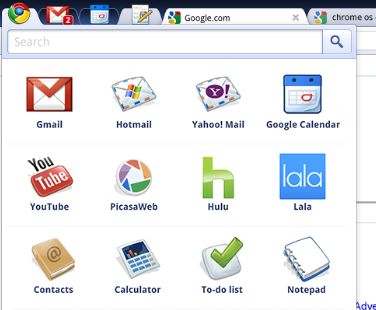
    As Google stated when it first revealed that it was working on its very own OS, Chrome OS will be completely web-based. There will be no native apps for it, even the tools that will be built by Google and bundled with the OS will be web apps. In a simplified view, Chrome OS is just a specialized version of its browser Chrome running on top of an optimized Linux kernel.

    There have been a number of modifications done to Chrome in order to make it function as a full-blown operating system. One of the things Google has introduced consists of persistent application tabs, which will always be available to the user and are fully customizable. Apps can also be run in a “panel” that is a persistent light-weight window, which sits on top of the browser designed for apps like instant messengers. One example of use is a notepad tool that comes with the operating system and that… (read more)

  • Google Chrome OS: speed, simplicity, security

    Screen shot 2009-11-19 at 1.31.58 PM

    Well kids, Google has just released some serious information about the much anticipated Chrome OS at today’s webcast, so grab some popcorn and buckle up, ’cause here we go. Google Chrome OS has a radically different approach to computing, and assumes that most of what you want to do on your computer involves your web browser and internet connectivity — and when we think about it, are they so wrong? Those of you who were expecting an Android type interface are going to be sorely disappointed, as the Chrome browser, in a nutshell, is Chrome OS. So let’s just get this out there right now: this isn’t going to be an OS designed for video editing, Photoshopping, or 3D modeling. This is a lightweight conduit for access to online information and utilities. No doubt all of this has piqued your interest, so hit the jump to check out the full story.

    Main UI

    Google has said flat out they designed the Chrome OS with three things in mind: speed, simplicity, and security, so we are going break down some of the finer points they touched upon under these pretenses.

    Speed

    Several times Google engineers stated that turning on your Chrome OS powered netbook should be like turning on a television; hit the power button and within a couple seconds you should be browsing. They have been focusing on this and working hard to improve upon it. Currently Chrome OS’ cold boot time is 7 seconds to the login window, with an additional 3 seconds for user login making for a total boot time of 10 seconds. Not bad. Google is hoping to have that time shaved down even further by the time they are ready for release.

    Simplicity

    Your information is stored in the cloud. No user bits are going to be stored on the modest solid state hard drive that all Chrome OS netbooks are going to come with. While this may be a terrifying prospect to some, it does afford Google some flexibility to rework the traditional computing work flow. There are no application updates to be installed, no backup solutions needed, and no maintenance operations to perform. When you login to the could you can be sure that your Chrome OS netbook is up to date, patched, and ready to go. The main interface, to the shagrin of many we’re sure, is also very simple in that it’s a Chrome browser window. You can customize shortcuts and favorites, but the foundation UI isn’t going to blow anyone’s socks off with eye candy.

    Security

    This was really getting hammered upon. Security is accomplished in two main ways: architecture setup and the cloud. First and foremost there are three partitions setup on the Chrome OS’ SSD drive, a root partition (which is read-only and holds the OS), a user partition (which by default is encrypted), and a swap partition. When you boot Chrome OS it checks the integrity of the OS and if it finds that your OS has somehow been corrupted or compromised by maleware, it simply re-downloads a fresh copy of the OS from the intertubes. All on its own. Again, your information is in the cloud and the system is technically stateless, so the OS can be restored at point in time without any detriment to user data.

    We know that a lot of you have some burning questions and want to see the UI in action, so have a couple videos queued up. Go ahead, we know you’re curious.

  • SharePoint Mobile for Windows Mobile reviewed

    sharepoint-mobile-review-3 sharepoint-mobile-review-4

    One of the important updates to Office Mobile 2010 was Sharepoint Mobile.  Unfortunately Sharepoint is a technology that is really only used in a corporate context, so most Windows Mobile users have no idea what it does.

    Wikipedia says:

    Microsoft SharePoint, also known as Microsoft SharePoint Products and Technologies, is a collection of products and software elements that includes, among a growing selection of components, web browser based collaboration functions, process management modules, search modules and a document-management platform. SharePoint can be used to host web sites that access shared workspaces, information stores and documents, as well as host defined applications such as wikis and blogs. All users can manipulate proprietary controls called "web parts" or interact with pieces of content such as lists and document libraries.

    MSMobiles have published a review of the Windows Mobile client, and seemed to have some difficulty getting it up and running.  They persevered however and  in the end had this to say about it:

    It looks like SharePoint Mobile can be a differentiator that will make purchase of Windows Mobile phones worthwhile! – a reason why to buy Windows Mobile phone rather than Android or iPhone.

    … at last Windows Mobile 6.5 has a unique selling point not available at other platforms: Microsoft’s own SharePoint client! If you use SharePoint in your organization/company/enterprise then you should get Windows Mobile 6.5 phone!

    Read their full review here.

    Share/Bookmark

  • Chrome OS Unveiled, Focused on Netbooks, the Cloud

    Chrome OS is a natural evolution of the work that’s been done on the Chrome browser, Sundar Pichai, VP of product management, and Chrome OS engineering director Matthew Papakipos said when they unveiled it at Google’s Mountain View campus on Thursday. The operating system is designed to imbue web applications with the “full functionality of desktop applications.” As for the reasons behind the development of the new platform, they pointed to rapid growth in the netbook market — where Chrome OS is aimed — and cloud computing.

    Goals

    With Chrome OS, Google had three goals, according to Pichai: speed, simplicity and security. ”Chrome on Chrome OS will be even faster than Chrome [the existing browser],” he noted. “In Chrome OS, every application is a web application. Users don’t have to install applications. All data in Chrome OS is in the cloud. If a user loses a Chrome OS machine, the user should be able to log back into the cloud and retrieve cached data.” Pichai also demonstrated that Chrome OS loads in only a few seconds.

    The demonstrations made clear that the OS relies heavily on “panels,” pop-up windows housing web-based applications that are similar to multiple open windows in a browser.  Papakipos, meanwhile, characterized the security model in Chrome OS as very much like the one in the Chrome browser, and unlike the one in standard operating systems: If malware is detected, all cached data is saved; Chrome OS is subsequently re-downloaded, then freshly imaged on a machine. If an application crashes in a tab, only that tab goes down.

    Coming to Devices Next Year

    The target date for delivery of Chrome OS machines is the end of next year. Google is working with hardware partners to bring Chrome OS to market, Pichai said, and doing so in unusual ways. Chrome OS is not aimed at hard disk-enabled machines, for example, but rather at systems with solid-state drives. Google is also working with hardware vendors on what Pichai described as “slightly larger netbooks,” with full-sized keyboards and large displays. All the open source code is available today, as are all the design documents, said Papakipos.  You can find the source code for the OS and other links here.

    So does Chrome OS have a fighting chance in the hot netbook market that it’s squarely aimed at, given that it won’t make its debut on devices until late next year? Chrome OS will run on both x86 and ARM processors, which as jkOnTheRun has noted, will give it a broad spectrum of coverage on devices, and could make it a significant player in the emerging ARM-based smartbook hardware category. Still, the OS will significantly trail the arrival of Microsoft’s Windows 7, which is also squarely aimed at netbooks.

    Even though netbooks have already been exploring new low-priced territory for portable computers, Chrome OS-based netbooks could also take prices much lower. Google CEO Eric Schmidt said in July that “we do not plan to charge for it, in an open source form,” but that “there may be other ways we can make money from it.” He added that:

    “The rough argument is we do things that are strategic because they get people to ultimately use the Internet in a clever and new way. We know that if they use the Internet more, they search more, watch more on YouTube, and we then know that our advertising [will reach them]. We do not require each and every project to be completely profitable or not profitable — we look at them in a strategic context: are they making the web a better place?”

    Could Google subsidize Chrome OS-based netbooks in an effort to attract users with low prices and feed them into its search-and-advertising ecosysytem? As is true for most of Google’s projects, feeding that lucrative ecosystem tends to be a high priority for the company. It will no doubt be one as Chrome OS makes its way into devices next year.


  • Mandelson Wants Gov’t To Have Sweeping Powers To Protect Copyright Holders

    As pretty much everyone who reads Techdirt has been submitting today, Lord Peter Mandelson over in the UK — the guy who just discovered copyright law after a resort vacation dinner with entertainment industry mogul David Geffen — wants to go even further in changing copyright law against consumers’ rights. We already know that he was the major force behind getting the UK to move forward with a plan to kick file sharers off the internet based on a “three strikes” plan that involves accusations, not convictions. This was despite a study by the government which had already concluded that three strikes was a bad idea.

    However, the latest plan seems even more ridiculous. Not only would it include a new offense for those who download unauthorized material, it would allow the government to give powers to “any person as may be specified” to do whatever is necessary to try to stop online infringement. In other words, it would allow the government to basically deputize anyone they wanted (such as record labels…) with near complete power and little oversight to do whatever they thought necessary to fight online infringement. And this includes changing copyright law at will through “secondary legislation” that involves no Parliamentary oversight or debate. Talk about a broad, sweeping and totally ridiculous change to copyright law.


    Part of the reasoning, supposedly, is to be able to force online digital lockers like YouSendIt, which are quite useful for legally sharing all sorts of things, to get rid of privacy, so that any infringing works sent via those tools can be revealed. The whole thing is an incredible overreach of power, well beyond anything that is necessary. Mandelson doesn’t even hide the fact that this is done purely in support of copyright holders and against consumers’ rights:


    “These can be used entirely legitimately, but recently rights holders have pointed to them as being used for illegal use,”

    Because if rights holders don’t like it, it must be stopped? He admits in the letter that consumer groups will oppose this proposal, but he doesn’t seem concerned. Consumers, after all, don’t take him out to dinner at expensive resorts.

    Permalink | Comments | Email This Story


  • Watch: The 3D Dot Game Heroes US launch trailer

    Atlus has released a launch trailer for 3D Dot Game Heroes, From Software’s digital ode to old-school 8-bit gaming. Check it out and get to know the K…

  • PlayStation 2 now officially launched in Brazil, seriously

    That’s not a typo on the title, you read that right. “New” and “PS2” can still be used in the same sentence, without being a smart-ass. The PS3 has …

  • HTC Touch Diamond 2/MDA Compact V Windows Mobile 6.5 update for T-Mobile UK now available

    t-mobile-mda-compact-v-smartphone Its a bit late, but the Windows Mobile 6.5 update for T-Mobile version of the HTC Touch Diamond 2 has finally become available for UK subscribers.

    The update can be downloaded  here and brings the usual HTC Sense update also.

    Via Coolsmartphone.com

    Share/Bookmark

  • Verizon cuts ex-Alltel employees, offers small consolation

    It looks like Verizon has finally figured out what it’s going to do with the Alltel employees that it picked up during its acquisition of the company: give them the axe. More specifically, Verizon is cutting an unspecified number of jobs in Little Rock because those corporate positions are now redundant. The departments being given the axe include finance, marketing and legal, but there is some hope for those losing their jobs — Verizon would be more than happy to have them apply for positions in its call centers. We’re not sure if being asked to step down from finance to handle customer complaints over the phone is a nice offer, but having a job is better than no job, right?

    Read

  • Google Chrome OS revealed – take a look

    has finally taken the wraps off of , its new Linux-based operating system that is all Internet-centric, running the Google Chrome browser as its main application. Yeah, the whole point of the Google Chrome OS is that it is web-based, and you interact pretty much exclusively in a browser window. The way Google sees it, you spend 95% of the time you are on a computer living in your web browser anyway, so Chrome OS is built to optimize that experience. Nothing is actually stored on the computer itself, as everything is stored, instead, in the cloud. Hit up the video above for Google’s introduction to Chrome OS, and we’ve got another video after the break taking a look at the UI concept.


    Continue reading Google Chrome OS revealed – take a look

    Tags:
    ,
    ,
    ,
    ,
    ,
    ,
    ,
    ,
    ,

    Google Chrome OS revealed – take a look originally appeared on Gear Live on Thu, November 19, 2009 – 11:25:57


  • Apple Sued Over MMS: But Who Really Uses It?

    According to a report this week on The Mac Observer, Apple and AT&T have been presented with a class action lawsuit by a customer who accuses them of misleading the public by advertising the MMS capabilities of the iPhone 3GS despite not making those capabilities available in the U.S. when it launched.

    (Yawn.) I’ll let you mull over whether the accusation is fair; the plaintiff, Francis Monticelli, says in the suit that “MMS functionality was one of the reasons people chose to buy or upgrade… it has [become] clear that AT&T’s network does not support MMS.”

    TMO points out Apple made it quite clear MMS functionality would not be available in America at the launch of the iPhone 3GS. Surely you remember the hilarious (and embarrassing) murmur of amusement and derision from the audience at this year’s Worldwide Developer Conference when Scott Forstall introduced MMS? “29 of our carrier partners in 76 countries around the world will support MMS at the launch of iPhone OS 3.0,” Forstall announced, then, trying to keep a straight face, added, “In the United States, AT&T will be ready to support MMS later this summer.”

    Still, that little fact hasn’t stopped Monticelli suing, though I’m sure he won’t get far. I’ll never quite understand the litigation-happy nature of some of my American cousins (here in England we prefer to send strongly-worded letters of complaint) but it got me thinking about the now-forgotten drama of iPhone MMS. I can’t help wondering — was it really such a big deal? I mean, now you’ve got it, do you ever use it? Would you truly miss it if it disappeared overnight?

    When MMS first appeared via the iPhone OS 3.0 update I couldn’t wait to try it out. I took a photo of a bowl of apples (go figure) and sent it to a pal. “I have MMS!” I declared, proudly. “So?” he enquired, puzzled. (I forget sometimes not everyone is an iPhone user and therefore have always had MMS.) That was back in June, a good five months ago. It was the first — and last — iPhone MMS I ever sent.

    Old Habits…

    Color me conditioned by my experience with previous iPhone OS limitations, but if I want to send someone a photo I instinctively use the Mail app. I’m not alone, either — fellow iPhone owners never send me MMS messages but also choose to use Mail instead (I know because of all those “Sent from my iPhone” footers I keep seeing).

    I’m trying to figure out when and how this habit started; it’s easy to say it’s the result of Apple’s decision not to support MMS functionality, but if I force my grey cells to work a little harder, and think back to those dark times before the iPhone, I don’t have any fond memories of MMS. Sure, I had the function on every one of my old phones, but I barely ever used it. So perhaps my aversion to MMS started then…

    Either way, I don’t care for MMS. It’s a clunky old technology that never mattered to me. Not even my most geeky of friends ever bothered using it, with or without adding an iPhone into the equation.

    Apple’s Chief of iPod/iPhone Marketing Greg Joswiak once said the iPhone originally didn’t include (amongst other things) MMS functionality because it wasn’t high on the list of features customers wanted from their mobile phones.

    Naturally, there was an outcry. People were either ambivalent (they didn’t care or simply accepted email was an adequate alternative) or they were furious. Spend a little time picking through any of the popular Mac discussion boards from 2007 onward and you’ll find plenty of disgruntled punters lamenting Apple’s decision to not support the feature.

    You know how, when a child isn’t playing with a toy, and you try to take the toy away, the child will instantly want it and make a scene if they don’t get it? It’s that peculiarly human tendency to want what we don’t have, or what is being taken (or withheld) from us. Well, I wonder, was the outcry over MMS the same thing? And now we have it, how many of us are actually using it?

    If you’re in the States and didn’t jailbreak your iPhone, MMS is still fairly new to you and you might still be enjoying the novelty of finally getting it working. So, while MMS is fresh in your minds (and your iPhones) perhaps you can answer the question — where do we really stand with MMS?

    Is it an indispensable tool Apple had no business keeping from us this long? Or should we reluctantly (and perhaps a little bashfully) admit it wasn’t worth all that fuss and noise — Apple was right not to make it a priority and, if we’re really truthfully honest, we never used it anyway…


  • Resident Evil 5 Alternative Edition DLC and Gold Edition dated for US

    Here’s a quick follow-up to the rather detailed Resident Evil 5: Alternative Edition (PS3 and Xbox 360) post we recently put up. We now have a North A…

  • The Big Daddy of Special Editions – the one for BioShock 2

    2K Games has now announced the Special Edition for BioShock 2 which would be the Big Daddy of all swag. It’s not because it’s utterly the most aweso…

  • IER: Technology, Innovation Remains Key to Safe, Increased Offshore Energy Development

    Senate panel examines on offshore environmental stewardship; Should focus on unlocking job-creating homegrown energy

    Washington, DC – Offshore energy exploration and production in the United States is safe and environmentally sound. Over the past 50 years, the U.S. oil and gas industry has developed innovative, 21st century technologies and exploration techniques that are efficient, pose little threat to the environment, and ensure worker safety.

    According to the National Academies of Science, less than 1 percent of the oil found in the North American marine environment comes from oil and gas development. Nearly 60 percent, however, is the result of natural seeps.

    Thomas J. Pyle, president of the market-oriented Institute for Energy Research (IER), issued this statement in response to today’s Senate Energy Committee hearing on environmental stewardship and offshore energy production:

    “Technology and innovation remains key to delivering more homegrown, job-creating American energy, both onshore and off. The facts and history demonstrate that offshore energy production, with today’s 21st century technologies, poses little to no threat to our marine environment. In fact, marine life actually flourishes in waters shared with energy infrastructure.

    “Unfortunately, a de-facto ban on safe, responsible offshore domestic energy development remains in place today, despite the fact that a clear majority of American people want access to the energy that is rightfully theirs. Advanced technologies currently deployed throughout the western Gulf of Mexico – which help deliver huge amounts of energy to keep our economy fueled and moving each day – are testament to the strides made to ensure environmental safety.

    “Last summer the American people spoke, and Congress responded when it retired the nearly 30-year ban. It’s time for this administration to unchain the federal government’s stranglehold on so much of our nation’s job-creating energy resources offshore. Slow-walking this commonsense action could make the next energy crisis pale in comparison to the pain of $4 gasoline working families and small businesses felt during the summer of 2008.”

    NOTE: Here is brief overview of some of the advanced, 21st century offshore energy exploration technologies:

    Advanced 3-D seismic and 4-D time imaging technologies: enable offshore operators to locate oil and gas resources far more accurately to necessitate less drilling and allow greater resource recovery.

    Storm chokes: placed on all offshore wells to detect damage to surface valves and shut down production during an emergency.

    Blowout preventers: continuously monitor the subsurface and subsea-bed conditions to prepare for unexpected changes in well pressure.

    Waste product reuse technology: transforms drill cuttings, a waste product of rock pieces and drilling fluids produced when drilling a well, into raw material for bricks, roads, and even rebuilding Louisiana’s wetlands.

    For additional information, please contact Patrick Creighton, 202-621-2947, or Laura Henderson, 202-621-2951.

    #####

  • Once Again, Walmart Stops People From Printing Family Photos Due To Copyright Law Claims

    It’s been many years since we first wrote about how stores like Walmart were dealing with ridiculous copyright laws by telling employees to simply not allow the printing of “professional-looking” photos, just in case they were covered by someone else’s copyright. Last year, a story popped up about a Walmart employee not letting a family print their own old family photos for this reason. It looks like we’ve got yet another such story. greenbird was the first of a few of you to send in this story about Walmart (yet again) not allowing the printing of family photos (this time for a funeral, which makes it that much more tragic), with copyright used as the reason. Once again, the employee made some dumb statements, such as saying “copyright is forever.”

    But, just like last time, I have to say that we shouldn’t blame the Walmart employee, who is just trying to protect her job, and lives in a world where copyright maximalists constantly push this sort of message. It’s not her fault, it’s the fault of current copyright law, which makes such things seems reasonable, and the ongoing effort by lobbyists and politicians to only push copyright law further in that direction.

    Permalink | Comments | Email This Story