Author: Serkadis

  • New Addition to VAIO Signature Collection – VAIO W


    VAIOW

    Remember this lil netbook Sony introduced not long ago? VAIO W  is a small form factor at 2.96 pounds first netbook introduced by Sony. Since we are heading into Christmas Sony pimped this cute notebook’s lid into snowflakes.

    Featuring a unique snowflake motif, the VAIO® Signature Collection W Series Holiday Sparkle mini notebook seems to change its design depending on the angle you look from. Ideal for every member of your household, the W121AX/WZ mini notebook packs a 1.66GHz Intel® processor, 1GB of memory, 250GB hard disk drive and pre-installed Microsoft® Windows® 7 into an incredibly lightweight, go-anywhere design. The perfect addition to your on-the-go lifestyle, the W Series mini notebook is great for checking email, instant messaging and connecting to the internet from virtually anywhere. Created to provide the essential laptop experience, the W also comes equipped with built-in Wi-Fi, integrated Bluetooth® technology, and features a responsive keyboard and touch pad.

    As you can see specs wise it is pretty attractive and you will also get an extended battery as well. I was just not sure what to do with it in summer time, as snowflakes won’t turn into green leaves on that lid.

  • Bush Administration Was Afraid It Would Have To Admit Telcos Helped With Warrantless Wiretaps To Get Immunity

    With the EFF finally successful in getting the federal gov’t to hand over some lobbying documents involved in the process of granting telcos total immunity in lawsuits over warrantless wiretapping, the press is starting to go through the documents. Wired digs in and finds that the Bush administration was worried it would have to admit that the telcos had actually broken the law in order to get immunity — but were able to route around that by having the Attorney General “submit a certification to the district court that the carrier defendant either did not provide the assistance as alleged, or did so in connection with a counter-terrorism program authorized by the president and pursuant to written assurances of legality.” In other words, by doing a “this” OR “that,” they could claim some sort of plausible deniability for the gullible.

    Of course, the whole thing is silly. Why would the telcos need immunity if they hadn’t broken the law? The only reason to push for immunity was because they obviously had broken the law. The entire push for immunity was never really about protecting the telcos, but about protecting the federal government from having to admit that it clearly broke the law as stated concerning oversight of wiretaps.

    The other interesting element in the Wired report is that the Bush administration was worried that future administrations would reverse the immunity — something it doesn’t seem to have to worry about considering that the Obama administration has happily continued to hold the same position on warrantless wiretaps. However, the administration was unable to get anything put in the bill that would prevent future administrations from changing the immunity — so, perhaps there’s still some hope.

    Permalink | Comments | Email This Story


  • The second day of Peek-mas


    We’re giving away five Peek Protos this week, one a day, and we want you to ask us nicely for one so we can give you one. What I’m basically trying to say is that you should respond to this post with a comment (using your real e-mail address) and also follow CG on Twitter and watch the Gift Guide for more special things.


  • Amid Health Bill Delays And Snags, Lawmakers Target Issues

    The wait for the Congressional Budget Office score on the Senate health care reform bill has left Senators with time to carefully consider all the angles on reform, The New York Times reports. Senate Majority Leader Harry Reid “has already received some substantial analysis of his measure, and if the numbers had been what he wanted, he would have released a bill by now. Instead, he has repeatedly gone back to the budget office with variations of the legislation” to limit the cost of the bill while maximizing the number of people covered (Herszenhorn, 11/15).

    Roll Call reports, however, that Reid is confident debate will begin on the bill before Thanksgiving. “Reid wanted to get the ball rolling on the overhaul early this week armed with a Congressional Budget Office analysis, but because that CBO score didn’t come on Friday as he had hoped, Democratic aides said the Majority Leader is prepared to push back his timeline…. Democratic aides said last week that they do not believe that any member of the 60-strong Democratic Conference will vote to prevent the full Senate from bringing the measure to the floor.” Reid “would like to spend all three weeks before Christmas amending and debating the health care bill” (Pierce, 11/16).

    The Las Vegas Sun reports that just getting the bill to the floor will prove difficult for Reid. “Reid, ever the obsessive vote counter, believes he is about there, even though some dissenting Democrats, including Sen. Ben Nelson of Nebraska, continue to withhold their support for the procedural step until they see the actual bill and its financial analysis.” If debate commences, it promises to be muddied up by the many amendments both Republicans and Democrats are promising to offer, the Las Vegas Sun reports (Mascaro, 11/15).

    Politico reports that Democrats stand to “reap the political rewards if they can pull off health reform, by achieving near-universal coverage, toughening regulations on private insurers and transforming the way health care is delivered. But Democrats have glossed over nagging details of just how limited reform’s reach would be for some Americans. And if voters figure it out, experts warn there could be a political backlash.” “Landmines” in the bill include the public option, fines for not carrying insurance, premiums and less money for Medicare (Budoff Brown and Frates, 11/16).

    The Associated Press reports a new AP poll (conducted by Stanford University with the Robert Wood Johnson Foundation) found that the fine print in health bills worries some Americans. “Despite a widely shared conviction that major health care changes are needed, Democratic bills that aim to extend coverage to the uninsured and hold down medical costs get no better than a lukewarm reception in the latest results.” Of those surveyed by the poll, 43 percent oppose the plans while 41 support them. Fifteen percent remain undecided. “In one particularly striking finding, the poll indicated that public support for banning insurance practices that discriminate against those in poor health may not be as solid as it seems.” When told it would probably cause them to pay more for their insurance, 43 percent said “they would still support doing away with pre-existing condition denials but 31 percent said they would oppose it” (Alonso-Zaldivar and Tompson, 11/16).

    In related coverage, The Associated Press has the verbatim comments of some health care reform poll takers (11/16).

    Meanwhile, The Hill reports that from House Democrats, the bill has become “a political hot potato. Few Democrats in big races are jumping headlong into supporting the healthcare bill the House passed last weekend. While those running in blue areas or in tough Democratic primaries quibble with its abortion-funding restrictions, those running in red areas worry about the cost of the package.” That’s especially true of lawmakers and congressional hopefuls in Massachusetts, Illinois, Ohio and Missouri (Blake, 11/14).

    Finally, Kaiser Health News provides highlights of the weekend’s health policy headlines, including the latest on the Senate Democrats’ health bill, a CMS analysis of the House-passed reform measure and the continued fracas over abortion provisions.

  • Both Sides Puzzle Over Abortion Amendment In House Health Bill

    Newspapers continue to report on the Stupak amendment to the House health bill and how it will affect access to abortion.

    “[T]he Stupak amendment, named for Rep. Bart Stupak (D-Mich.), would ban individuals from using new government subsidies to buy insurance plans that cover abortion, and it would prohibit a government-operated plan — the public option — from carrying abortion coverage,” Politico reports. Supporters of the amendment “say that it simply extends an existing prohibition on federal funding for abortion — an annually renewed policy called the Hyde amendment — to the health care exchange that would be established for the uninsured under the health care bill making its way through Congress. But lawmakers who support abortion rights contend that, if the Stupak amendment’s logic is extended to the $250 billion in tax breaks Americans get to buy coverage through employer-based plans, it could strip abortion coverage from tens of millions of women who already have it.”

    Workers who have health benefits through their jobs are exempted from paying income taxes on their premium contribution. “Congress considers the income tax exclusion to be a massive ‘tax expenditure’ — a subsidy — for individuals to buy insurance.” Many of those plans cover abortion. “Taking the concept of a subsidy one degree further — from individual purchasers to corporate providers — insurance companies that offer plans that cover abortion get tens of billions of dollars of subsidies through programs like Medicare Advantage and the 2003 prescription drug law. While few, if any, seniors have need for abortion coverage, the big insurers who administer those plans also offer insurance policies that cover abortion to younger women and their husbands and fathers” (Allen, 11/16).

    Las Vegas Sun: “Days after the House voted to include stricter abortion restrictions in the health care bill, nearly 50,000 abortion rights supporters urged [Senate Majority Leader Harry] Reid in a petition to block the provision from the Senate bill he is crafting. Conventional wisdom says the majority leader faces a great dilemma: Reid is a Mormon who opposes abortion but is under great pressure from the Democratic base to prevent the House’s strict Stupak-Pitts amendment from being included in the Senate” (Mascaro, 11/15).

    The Los Angeles Times reports on the influence of Catholic bishops over abortion language in the health bills. “A number of groups oppose abortion rights, but the church is one of the few to also support Democratic efforts to overhaul healthcare. That has given the church a seat at the negotiating table. It used that influence this month as the House of Representatives prepared to vote on the healthcare legislation. Negotiators for the church worked with lawmakers to add an amendment to ensure that federal insurance subsidies do not wind up funding elective abortion.” In addition, “[t]he church also had amassed goodwill during years of working with Democrats on such issues as tax credits for the working poor, immigration, climate change and nutrition programs. It had built a level of trust that other antiabortion groups could not” (Oliphant, 11/16).

    NPR interviewed Rep. Diana DeGette, D-Colo., co-chair of the Congressional Pro-Choice Caucus. “She’s authored a letter that has been co-signed by more than 40 of her colleagues saying they will not support a final bill that includes the Stupak Amendment” (Martin, 11/13).

    KHN summaries from Sunday’s abortion coverage: Democrats Stymied On Abortion In Health Bill

  • Federal Health Overhaul Could Force State Changes

    The bills pending in Congress could alter some restrictions on insurers and channel money to state health programs.

    The House bill includes, for instance, $23.5 billion to “allow Congress to continue pumping billions in new short-term aid to states to cover Medicaid costs that have increased with rising unemployment in the past year,” The Washington Post reports. The stimulus bill in February also included Medicaid funding, but that package is due to run out next year (Davis, 11/16).

    The bill could make it difficult for some states to enforce consumer protection laws, the Los Angeles Times reports. “Healthcare overhaul bills in both the Senate and the House would open the door to insurers selling policies across state lines — which some lawmakers fear could allow health plans to take advantage of the lenient rules in some jurisdictions while avoiding tougher enforcement regimes in places like California” (Girion, 11/16).

    State insurance commissioners, however, could also be vested with sweeping new powers. “The Illinois Department of Insurance helps to oversee a health care system that has allowed insurance companies to essentially dictate how much consumers are charged and what kind of benefits they get,” the Chicago Tribune reports. “But that would change under health care bills making their way through Congress. … [S]tate insurance directors, would be given unprecedented powers in helping to decide the benefits and cost of health plans for the proposed government-regulated insurance exchange” (Japsen, 11/16).

  • Eyes Turn To Lieberman, Reid, Snowe As Most Crucial Health Reform Players

    Bloomberg reports that Sen. Joe Lieberman’s “independence (is hindering) Democrats’ health-care end game.”

     “While Lieberman still aligns himself with the Democratic caucus, his threat to block health legislation ‘as a matter of conscience’ shows a growing willingness and confidence to stand on his own, analysts say. … Lieberman can influence the outcome because no Republicans have offered to support the overhaul measure from Reid, a Nevada Democrat. Lacking Republican allies, Democrats need all 60 members of their caucus, which includes Lieberman and Independent Bernard Sanders of Vermont, to bring the measure up for a final vote.” 

    On the government-run public option plan, he told Bloomberg: “‘I have no other choice,’ Lieberman said in an interview with Bloomberg News. ‘I have to use the right I have as a senator to stop something I think will be terrible. I really want to vote for health-care reform.’” Some say Lieberman’s stance “reflects his ties to home-state insurers, say critics who protested outside his Washington office Nov. 10”  (Gaouette and Salant, 11/16).

    Roll Call profiles Majority Leader Harry Reid (“The Ultimate Closer”) who has “emerged as the central player in President Barack Obama’s push to enact health care reform this year” and has 16 blurbs on the major players in health care reform (Drucker, 11/16). See the full list of profiles here.

    In a separate story, Roll Call profiles Republican Sen. Olympia Snowe, whose “support will be crucial in crafting a more moderate compromise bill that ultimately is expected to emerge in the coming weeks.” She is keeping both sides guessing at what her final decision on reform will be (Murray, 11/16).

    In Virginia, Sens. Mark Warner and Jim Webb are making their voices, the Richmond Times-Dispatch reports. “Virginia’s two senators are expressing concerns about costs — in the expense of individuals’ premiums and the rising federal deficit. While both are open to the idea of a public option, it’s not their priority” (Meola, 11/15).

  • Time for a Standard for Touch?

    hp_touchsmart_pc_the_future_is_now_180x110Touch functionality has become a key component of a host of different operating systems on smartphones, laptops and even traditional PCs. So shouldn’t we have some sort of touch standard for developers looking to build to a variety of OSes?
    Hewlett-Packard today released an open SDK for its TouchSmart line of products, enabling business developers to create touch apps for desktop and notebook PCs as well as sales or information kiosks. The interface already includes apps from corporate partners such as Hulu, Netflix, Pandora and Twitter; HP hopes to grow its list of partners by making the SDK available to the public.

    As touch becomes a must-have user interface, developers are increasingly faced with a host of platforms on which to build. In addition to HP, Apple, Microsoft and Dell are among those companies looking to bring touch capabilities to traditional computing, and numerous mobile manufacturers, in light of the iPhone’s success, are building their user interfaces around touch. That’s good news for consumers, of course, but it also means developers must work that much harder to build apps for each specific platform. So perhaps it’s time for a standards-based initiative that provides a way for developers to incorporate touch in the apps across a variety of OSes.

  • Video: Health On The Hill – November 16, 2009

    Jackie Judd, Kaiser Family Foundation | Mary Agnes Carey and Eric Pianin, Kaiser Health News

    Senate Majority Leader Harry Reid, D-Nev., may unveil his health care overhaul plan this week and deliberations in that chamber could continue into Thanksgiving week when the Senate has been scheduled to be in recess. Meanwhile, a Centers for Medicare and Medicaid Services (CMS) analysis of the House-passed bill found that the measure would increase national health expenditures by an estimated 1.3 percent in 2019. Republicans say the analysis shows that the bill will not control health care costs but Democrats disagree.

    Listen to audio version (.mp3) or Read Transcript

  • Yahoo Messenger Goes Video with New Version

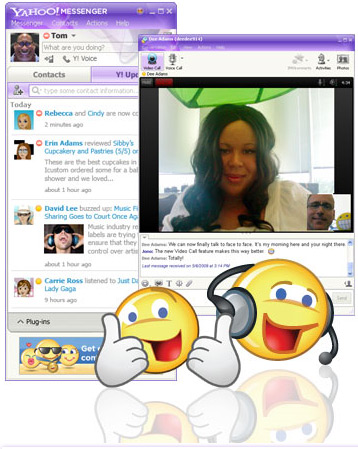
    Update: Yahoo Messenger 10 is now out of beta. Features include: high quality video calling, Yahoo Updates view of your contacts list, and availability in 16 languages.

    Original Article: Yahoo Messenger Version 10 is now available in beta. New features include enhanced video calling, courtesy of GIPS, friend updates from Yahoo, Flickr, Twitter, and others through the new updates view, and improved language support.

    GIPS has provided the underlying voice technology for Yahoo Messenger for the last three years. Now GIPS is providing its VideoEngine to add the video element to the messenger.

    Yahoo Messenger 10

    "With the launch of Yahoo! Messenger 10, we’re allowing people to instantly communicate with friends and family around the world through new interactive and social features like video calls," says Dave Merriwether, senior director of Yahoo! Messenger. "The GIPS VideoEngine enables us to provide the Yahoo! Messenger community with the best video experience possible. Now people can enjoy full-screen, face-to-face chats with friends and family at no cost, in the familiar Yahoo! Messenger environment." 

    Yahoo Messenger 10

    "Yahoo! Messenger is the leading communication platform that provides people with the greatest choice to stay connected to one another through text IM, PC-based calling, mobile text messaging and now video calling," says Emerick Woods, GIPS’ CEO. “"We’re proud to work with Yahoo! to deliver a truly differentiated high quality video experience for the hundreds of millions of people on Yahoo! Messenger around the world."

    On a semi-related note, Google just recently launched a new voice/video chat application for the iGoogle homepage. You can read more about that here.
     

    Related Articles:

    > Yahoo Will No Longer Support Old Versions of Messenger

    > Yahoo Messenger iPhone App Introduced

    > Yahoo Messenger Adds Social Features


  • Ultimate Edition 2.4

    ultimate-edition

    Ultimate Edition es una distribución basada en Ubuntu 9.10 Karmic Koala que trae todo lo necesario para comenzar a usar un escritorio Linux sin tener que instalar nada mas..

    Su instalación es muy sencilla al igual que ubuntu y una vez que reiniciamos nos encontramos con mucho software instalado p2p, multimedia, diseño web, programación, etc.

    Como siempre viene en dos versiones, 32bits y 64 bits.

    Para ver un poco mas sobre Ultimate Edition podes hacerlo en su web oficial.

    Links de descarga

    Ultimate Edition 2.4 32 Bits
    http://files.bigpond.com/library/?go=details&id=48444
    ftp://linux%402blog%2Einfo:[email protected]/ultimate-edition-2.4-x86.iso

    Ultimate Edition 2.4 64 Bits
    http://files.bigpond.com/library/?go=details&id=48443
    ftp://linux%402blog%2Einfo:[email protected]/ultimate-edition-2.4-x64.iso
    http://www.mininova.org/tor/3148073

  • Link Signaling Google Chrome Extensions Surfaces

    Google Chrome might be compared to a racecar; both are fast, but lacking in amenities.  It looks like Google’s about to give Chrome users the option of adding air conditioning, stereo system, and cup holder equivalents, though, as extensions may become available in the very near future.

    Google ChromeLast night, Lee Mathews discovered that an interesting little change had been made to the page Chrome displays when you open a new tab.  He wrote, "Up until now, the corner of the page featured a small graphic which linked to the Themes Gallery.  Today, that image was replaced with . . . links to https://chrome.google.com/extensions."

    Unfortunately, at the time of Mathews’s find (and of this article’s publishing), the link just redirected to Google.com.  Loyal Chrome fans can’t yet spiffy up their browser, and developers and would-be users also remain out in the cold.

    Still, Google doesn’t make a happy of sprinkling useless links all over the place, and since we’ve been expecting Chrome extensions for about six months, a full launch could occur at any time.

    Chrome’s market share – and Google’s reaction to ad-blocking extensions – will bear close watching following that point.

    Related Articles:

    > Google Chrome For Mac May Hit Beta In December

    > New Google Chrome Release Includes Bookmark Sync

    > Google Releases Latest Version Of Chrome

  • Borderlands DLC Zombie Island of Dr. Ned gets a video preview


    Everyone, I beat Borderlands on the PC over the weekend. It’s a fantastic game and I highly recommend it although the end boss was a joke against my high-powered sniper rifle. But it looks like I’m not done yet. IGN got some playtime on the $10 DLC expansion and it looks fantastic. Zombies! The DLC Zombie Island of Dr. Ned is coming out on November 24 for the 360 and PS3 with the PC version dropping shortly afterwards. Check out the 2 minute video after the jump.


  • Windows 7 exploit (the first?) confirmed by Microsoft

    win7

    Windows 7 users would be well-advised to block outgoing ports 139 and 445. Microsoft has confirmed the existence of a vulnerability that affects SMB in Windows 7 and Windows Server 2008 RC2. Worst case scenario: you connect to a malicious server then it crashes your PC.

    The beauty here is that, in a perfect world, these ports would be blocked by default, making the exploit much less troubling. Let’s say you’re messing around on your computer, and all of a sudden Windows (or your firewall of choice) prompts you to open port 445 for a connection. So you say to yourself, “Hmm, I’m pretty sure my game of chess doesn’t need to access an SMB share to work properly, so I’m going to go ahead and deny that port-open request.”

    But that’s now how the real world works.

    It comes down to this: block those two ports when you’re not actively using them. No problems.

    I could make some sort of snide remark about this being the first of many (maybe!) Windows 7 exploits, but let’s face it: when you’re dealing with so many lines of code, you’re bound to find a few bugs in there.

    Oh, and Microsoft hasn’t said when it plans to patch the exploit. Presumably it will do so with its next big first Tuesday of the month patch day.

    via Slashdot


  • Opinion: Psystar Ruling Could Have Set Precedent for Upgrading Your Mac

    This past Friday, your future ability to upgrade your Mac may have been significantly restricted. Psystar, the company that tried to create “open” Macs by running OS X on non-Apple hardware, suffered a quick defeat in its effort against Apple’s OS license restrictions.

    No question this was a long shot and Psystar was going for the Hail Mary. Nonetheless, Apple’s arguments and victory in the case could have a chilling effect on any modification of Apple hardware and software. Will your next Mac be as locked down as the iPhone?

    We euphemistically call gaining the ability to install any software on a iPhone “jailbreaking.” This allows you full administrative access to your iPhone to modify the software as necessary for your own use. You already purchased the iPhone hardware and a license for the Apple software necessary to run your iPhone–but are restricted in its use? Apple locks you out of making certain changes to your iPhone; every aspect of iPhone usage is controlled by Apple, yet Apple’s fickle and inconsistent App Store policies further complicate matters and virtually beg people to jailbreak their iPhone.

    Unlike with the iPhone, we can pretty much do want we want on our Macintosh computers. Installation of hardware and software is unrestricted and Apple exercises no control over how we use our Macs. We can circumvent functions in the operating system and enhance it without a problem. We are virtually unrestricted in upgrading or enhancing our Macs. Manufacturers can write kernel extensions to modify the operating system so their hardware can work. Don’t like the Apple monitor? No problem, go out and buy your own. Apple charging too much for RAM? Go out and buy third-party RAM. Want to add new functionality to your Mac? Buy and install third-party software that enhances the operating system.

    The Psystar ruling reminds us that we use our Macs only with the consent of, and the pleasure of, Apple. Even though you “own” your Mac, your ability to use it can be modified, restricted or revoked by Apple without recourse. As Macs grow in market share and more third-party developers come to the table, we’ll be presented with options for our Macs that Apple’s own team can hardly imagine. If Apple starts losing revenue due to such enhancements, Apple can simply disable it. Any attempt to circumvent Apple’s restrictions could be seen as a violation of the DMCA. For example, to increase sales on iTunes, could Hulu be disabled by a future Apple OS? Legally, yes. We are one Automatic Software Update away from an Apple Kill Switch for our Mac.

    Conspiracy Theory? Think Again

    Before you blow this off as a conspiracy theory, note that similar actions have happened other times in Mac history. The most memorable was back in March 2001, when Apple issued a firmware update that disabled most third-party RAM. Apple RAM worked just fine, but other RAM was suddenly considered “out of spec.” Historians will debate whether this was deliberate or accidental. Eventually it all worked out when manufacturers swapped out RAM and other users avoided the update. In 1999, Apple disabled G4 upgrade cards in Blue and White G3s via another firmware updates. The original iMac had the ability to support a floppy drive, but later Apple purposefully disabled that function. Previous versions of iLife only worked with Apple-supported optical media.

    Obviously, Apple is going to vehemently fight to prevent non-licensed Apple clones, and while it may be in the right here, the arguments used could be applied to any modification to the Macintosh OS, especially those used to enable non-Apple hardware to work with OS X. While I agree that the odds are low of waking up one morning and finding your Mac unable to boot due to a “DMCA violation,” Apple consistently argues it is its right to do so and it has exercised that right in the past. How very Microsoft of Apple. Just ask XBox 360 owners.

    The iPhone is proof of its desire to lock the consumer out of any unapproved modifications. What’s stopping Apple from doing this with our Macs? Financial interest? Goodwill? You tell me.


  • GameStop breaks street dates again, Assassin’s Creed II, Left 4 Dead 2 now being sold

    GameStop stirred up some controversy earlier this month when they broke the street date on Modern Warfare 2 (Xbox 360, PS3, and PC). The retailer own…

  • LaterDude Pro 50% off for today only

    laterdude_pro

    Our buddy Fabian is selling LaterDude Pro for 50% off today. That means the app is yours for only $1.48 (regularly $2.95).

    LaterDude Pro is a simple app that reminds you to call, SMS or email someone. The app creates a new event in the calendar, so you definitely won’t forget.

    Stay tuned because Fabian has some great stuff coming for all you Storm2 users. From his Twitter account: “Workin on the new BlackBerry Storm2 app – lots and lots of testing.”


    © Kyle for BlackBerry Cool, 2009


  • AdMob Could Have Gone to Apple, Sources Say

    admob_logo1AdMob, the mobile advertising firm that recently made headlines thanks to a Google acquisition, might have become part of the Apple fold if things had worked out differently, according to a report by Bloomberg that appeared this weekend. Apple reportedly approached AdMob with interest before the Google deal went down.

    That’s according to “people familiar with the matter” speaking to Bloomberg. It isn’t clear which side of the deal the source was on, but he or she declined to go on record since the proposed talks were never made public. Apple is said to have contacted AdMob “a few weeks” before Google made its successful $750 million bid for the firm.

    If true, the rumors point to the increasingly fierce competition between two major players in the mobile phone game. Google’s Android is being adopted by more and more manufacturers and distributed on more devices everyday. To have a piece not only of the revenue from the use of Android apps and devices, but also from the advertising that appears on those phones, is a huge boon for the search giant.

    It’s unclear why Apple’s bid didn’t succeed, if it was indeed made. It’s possible that Google made a better offer while Apple was still in talks with AdMob, or that the advertising firm used the Apple offer as a bargaining tool in enticing Google. All of the companies involved in both deals declined to comment on the reports made by the anonymous source.

    Acquiring a mobile ad firm would have been a bit of a departure for Apple, which is still a hardware manufacturer first and foremost, but it is a logical move for Cupertino to make. Many of the ads AdMob displays in mobile apps direct users back to other programs in the App Store, so essentially Apple would just be closing the loop and taking in additional revenue by promoting its own revenue-generating software delivery method. Plus, it could probably use the company to place hardware ads as well, promoting less successful products through the massively popular iPhone.

    If Apple is genuinely interested in getting into online advertising, it could attempt another acquisition, or it may start hiring staff with the necessary skill sets. I’d hazard a guess that if the computer maker did make a failed bid for AdMob, it’ll be twice shy about getting into the game now, since Google now controls an intimidating 30 percent to 40 percent of the mobile advertising market. It’d be hard to gain a solid foothold at this point.


  • Samsung releases another Android: where will it fit in with Bada approaching?

    By Tim Conneally, Betanews

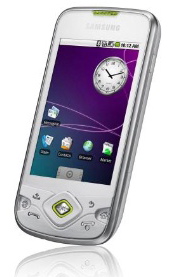
    Samsung today officially announced the long-rumored Galaxy Spica (i5700,) the company’s fourth Android smartphone and sequel to its Galaxy handset from early 2009.

    Samsung Galaxy Spica

    Like the original Samsung Galaxy, this 3.2″ touchscreen smartphone is not likely to hit the American market, and will be released in select markets in Europe and Asia.
    This 3.6Mbps HSDPA 3G device is equipped with the basic Google-friendly Android 1.5 distro, a 3 Megapixel camera, and an 800MHz application processor. It’s actually considerably less feature-rich than the Behold 2 which came to T-Mobile in October.

    While there is relatively little to say about this device, it will be important to watch Samsung’s Android and Windows Mobile releases as it works toward the release of its first version of Bada, the company’s own open smartphone platform which will ultimately come to replace Symbian.

    Copyright Betanews, Inc. 2009


    Add to digg
    Add to Google
    Add to Slashdot
    Add to Twitter
    Add to del.icio.us
    Add to Facebook
    Add to Technorati


  • Hitachi redesigns the SimpleDrive and ups the capacity to 2TB

    SimpleDrive_v3Folks, 2TB external drives are now coming out from everyone. Isn’t it grand? Hitachi has revised the look of the SimpleDrive external hard drive and it’s now available in a 2TB option. In fact, the rest of the SimpleTech lineup can now be had with a 2TB Hitachi Deskstar 7K2000 hard drive.

    The redesigned SimpleDrive now sports a rather modest and somewhat boring aluminum enclosure. But who cares about the design when you know it’s packing a 2TB drive. The new design is available in 500GB, 1TB, and 2TB capacities at a MSRP of $100, $130, and $250, respectively.

    Hitachi Debuts New 2TB SimpleDrive

    Third-Generation External Storage Solution is Loaded with 2TBs of Simple, Reliable Storage and Backup Options for Consumers and Business Users; 2TB Capacities Now Available Across Hitachi’s Entire Retail 3.5-Inch Product Line

    SAN JOSE, Calif.–(BUSINESS WIRE)–Hitachi Global Storage Technologies (Hitachi GST) today announced the availability of the newly designed SimpleDrive™ desktop external hard drive with capacities of up to two terabytes (2TB). In addition, the company announced that all of its 3.5-inch retail drives are now available in 2TB capacities, featuring the Hitachi Deskstar 7K2000, the industry’s first 2TB 7,200 RPM hard drive that blends performance and high capacity with low power features. New, upgraded solutions include the Hitachi SimpleTech Pro Drive™; the two-drive, RAID 0/1 Duo Pro Drive™; and the Hitachi Internal Hard Drive Kit for the do-it-yourself (DIY) computer-upgrade market. All products are now available.

    “Hitachi continues to build its channel presence with an expanded portfolio of 2TB storage solutions for business users, consumers or virtually anyone who needs additional capacity to manage the growing number and size of their digital files,” said Azmat Ali, vice president of marketing, Branded Business, Hitachi GST. “Even though people are inundated with digital content daily, many are not taking the necessary precautions to safeguard their content. Our external drives, together with consistent backup practices, will help people keep their digital memories, entertainment and business documents safe.”

    New SimpleDrive USB 2.0 Desktop External Hard Drive

    With a new design that clearly communicates a purpose – solid data protection – the SimpleDrive balances ruggedness and ease of use all in one streamlined package. The new Hitachi SimpleDrive sits vertically for a non-invasive footprint, which is important for a small home or office environment. With up to 2TB capacity and a plug-and-play design, the SimpleDrive gives both Mac and PC users simplicity, reliability and enough capacity to store or backup 665,000 photos, 500,000 MP3s or 4,000 hours of standard video1. Delivering style and substance, it features an anodized aluminum enclosure to keep the SimpleDrive cool, and a reliable, high performance, low-power Hitachi hard drive inside to help protect your pics, flix, tunes and docs. Now available at OfficeMax stores nationwide, the Hitachi SimpleDrive comes in 500GB, 1TB and 2TB capacities, with a manufacturer’s suggested retail price (MSRP) of $99.99, $129.99 and $249.99, respectively.

    Extended 2TB Hitachi Family

    To help relieve users of data overload and free up more working space, Hitachi now offers the following solutions in 2TB capacities:

    SimpleTech Pro Drive by Hitachi – With four interface options (USB 2.0, FireWire 400, FireWire 800, and 3Gb/sec eSATA) and two levels of backup protection, the Pro Drive is a smart investment that delivers virtually everything you need in a single storage and backup solution. Its compact design lets you stack multiple units or stand them upright to optimize desk space. A built-in security lock helps ensure that the drive remains where you left it. Capacities and MSRPs include 500GB ($119.99), 1TB ($169.99) and 2TB ($299.99).

    SimpleTech Duo Pro Drive by Hitachi – With two drives in one, the Duo Pro Drive gives you two ways to save your data: RAID 0 (speed) or RAID 1 (mirroring). RAID 0, or striping, leverages both hard drives inside to read/write files, making storing and accessing files significantly faster than using one disk alone. If using eSATA in RAID 0, you can receive six times the speed of USB 2.0, ideal for home video editing or working with graphic-intensive files. For added data protection, RAID 1, or mirroring, makes an extra copy of stored files on the second internal hard drive, so you always have two separate copies of your important stuff. Interfaces include eSATA and USB 2.0. MSRP is $199.99 for 1TB, $299.99 for 2TB, and $499.99 for 4TB.

    Hitachi Internal Hard Drive Kits – Easily boost the capacity and performance of your Mac or PC desktop computer in minutes with a Hitachi Internal Hard Drive Kit. Each premium kit features a proven and reliable high-performance drive, easy installation instructions, a SATA cable and mounting screws. Balancing low-power and performance, Hitachi hard drives come in 5400 RPM and 7200 RPM with up to a 32MB cache buffer. The MSRP of the 2TB, 7,200 RPM Hitachi Internal Hard Drive Kit is $249.99.

    Two Levels of Protection – Local Backup and Highly-Secure Online Backup

    All Hitachi SimpleTech desktop external hard drives ship with two levels of data backup to better protect and manage personal or professional content. Hitachi Local Backup offers simple wizards to guide users in setting up automatic backups on specific days or dates that is convenient for you. Automatic file selection provides easy identification of particular file types to back up—for example, photos, emails or documents— regardless of where they are stored on the computer’s drive.

    In addition to local backup software, Hitachi’s external drive family comes with 2GB of free online backup space from Hitachi Ultimate Backup. For only $4.95 per month, users can access unlimited capacity and back up all of their files and media collections offsite. Users set up Ultimate Backup once, and it automatically and regularly backs up content behind the scenes to a secure offsite location. All data is encrypted for security using 128-bit SSL encryption while in transit, with an option for a private encryption key. Offsite 448-bit Blowfish encrypted servers are housed by a Fortune 500 company, helping to ensure file protection, longevity, security and peace of mind.

    Hitachi SimpleTech products are Mac and PC compatible, and feature a three-year warranty.