Author: Serkadis

  • A natural disaster … but a man-made catastrophe, by Richard North

    Article Tags: Met Office, Richard North, Volcanic Ash Advisory Centre

    Image AttachmentThe decisions that led to the costly shambles of Europe’s airspace being closed for so long go back years.

    Examining the protocol followed, the agencies involved and the resources at their disposal, it seems it wasn’t volcanic ash that brought the air industry to its knees but decades of neglect, underfunding, poor planning and layers of bureaucracy behind the Government and Europe-wide response.

    This, despite the fact that the ink had barely dried on an international contingency plan drawn up by the ICAO in September 2009.

    The disaster may have been natural, but the mishandling was wholly man-made. So what went wrong, and why?

    As the ash began creeping from Iceland to the UK the first people in the hot seat were not the air traffic controllers but eight scientists in the Met Office’s London Volcano Ash Advisory Centre (LVAAC).

    These specialists, called in only on an emergency basis, provide the aviation industry with forecasts on the spread of the ash and warn pilots of where it is unsafe to fly.

    Source: dailymail.co.uk

    Read in full with comments »   


  • On Shelves This Week: April 25 – May 1, 2010

    We’ve got a much better line-up of video game releases this week of April 25, 2010 till the first day of May. Thank goodness the drough of last week’s picks did not carry over to this week.

  • Crapware Be-Gone… The New Symbol Of WP7S

    Having the right look and feel on your Windows Phone can become hard when carriers love to add totally unnecessary crap on your device. Well… the next version of Windows Phones will not have any of those anymore, they will imagebecome a thing of the past. A member over at XDA found a little something that explains it as fallowed:

    Regarding preloaded applications by OEM/MO: Requirements are much more strict in this regard now due to frequent end-user complaints about "slow, laggy, etc" Stock ROMs. I know every one of you reading this knows what I mean Preloaded App Requirements (which will be distributed as .xap) as follows:

    – Maximum of 6 preloaded applications on the device, not to exceed 60MB
    – All preloaded apps must pass Marketplace submission process (some extended APIs are available to OEM/MO so the process is slightly relaxed in that regard)
    – The application(s) and all future updates must be free of charge.
    – The apps must launch without dependency on network availability.
    – The apps must persist through a "hard reset".
    – The apps must be updatable and revocable (!!!!) through the Marketplace.
    – The apps must notify the user at first launch of any capabilities to be utilized and get user consent (to access compass, accelerometer, network, etc.)

    This is simple great news for people on AT&T for example, the company that always has the most crapware filled devices. I guess this might make people a little more happy with Windows Phones, because your memory is not going to waste, and with carriars being lazy these days, we might see the end to stupidware.

    Via:PN


  • Nikkei Going Nuts To Start The Week

    The week is off to a nice start, continuing where US markets left off on Friday.

    The Nikkei is up over 2%.

    From Nikkei.com:

    chart

    And from FinViz.com, S&P futures are also heading higher:

    chart

    Join the conversation about this story »

  • Vizualizing 340,000 Bible Cross References

    bible_cross_references.jpg
    Bible Cross References Visualization [openbible.info] highlights the frequent cross-referencing in the Bible, making a distinction between references that target events happening “before” or “after” the actual mentioning. From the variations in frequency and density, various insights can be made.

    On the same topic, see also:
    . Visualizing the Bible (which uses the same technique)
    . Comparing the Holy Scriptures
    . Bible Exegesis
    . Bible Information Diagrams
    . Bible Timeline
    . Gospel Spectrum

    On the same visualization technique, see also:
    . Shape of Song
    . One Book, Many Readings
    . TwitArcs
    . music chart arcs
    . Document Arcs
    . Email Thread Arcs
    . Blogosphere Linkology Arcs


  • The Greeks Are About To Be Sacrificed At Europe’s Altar

    ambrose evans pritchardAmbrose Evans-Pritchard at The Telegraph has some characteristically sober observations about the state of Greece and the EU as a whole.

    The nut of the piece is that typically an IMF bailout wouldn’t be devastating, but when an IMF bailout comes under EU rules — strictly speaking the Maastricht treaty with its no bailouts rules — the effects will be quite rough.

    The EU-IMF “therapy” of deflation for Greece repeats the catastrophic errors of Chancellor Heinrich Bruning in the early 1930s and must lead to a depression, he said.

    Yet that is what IMF chief Dominique Strauss-Kahn is preparing for Greece, against the better judgment of his own experts. “Greek citizens shouldn’t fear the IMF; we are there to try to help them,” he said over the weekend. Yet a week ago he told Greece that devaluation and default are non-starters. “The only effective remedy that remains is deflation. That will be painful. That means falling wages, and falling prices. There is no other way.”

    Actually, the IMF pursues other ways often, last year in Jamaica. What Mr Strauss-Kahn means is that the EU will not tolerate any other way. The Greek people must be sacrificed for the Project and to hold the EMU line, like the Spartans of Thermopylae who perished to gain time for the Alliance.

    Read the whole thing >

    Join the conversation about this story »

  • Beijing 2010: Mitsuoka Galue Convertible is all kinds of wrong

    Filed under: ,

    Mitsuoka Galue – Click above for high-res image gallery

    If ever there was proof that just because you can, it doesn’t mean you should, it’s Mitsuoka Motors. Case in point – the Mitsuoka Galue Convertible, which we’ve finally gotten to see in person here in Beijing. Sadly, we cannot un-see it. Why anyone would take a perfectly serviceable contemporary Mustang convertible and transform it into this is beyond us. Then again, this is the same company that created the Orochi.

    The Galue ‘vert’s front end apes an older Bentley while the tail is lifted straight off a late-1990s Cadillac DeVille. It’s all terribly wrong in so many ways. Just be happy that we’ve opted to spare you the sea monster-like Orochi, which was sitting on an adjacent turntable. It was so awful that the unfortunate model standing next to it collapsed from embarrassment.

    Photos by Sam Abuelsamid / Copyright (C)2010 Weblogs, Inc.

    Beijing 2010: Mitsuoka Galue Convertible is all kinds of wrong originally appeared on Autoblog on Sun, 25 Apr 2010 20:01:00 EST. Please see our terms for use of feeds.

    Permalink | Email this | Comments

  • US Fiscal Policy: Unless We Raise Taxes Or Cut Spending, We’re Screwed

    Here’s the latest from Doug Elmendorf at the Congressional Budget Office (CBO). 

    Bottom line: Unless we raise taxes or cut spending (or both), we’re screwed.

    This afternoon I participated in a panel discussion about “Fiscal Strategies after the Global Crisis” at the International Monetary Fund. My short presentation focused on some familiar themes:

    Given current law and certain possible changes to that law that are generally supported by the Administration and many Members of Congress, the budget deficit and debt are on a worrisome path—unsustainable in the long run and posing growing risks even during the next several years.

    The following picture shows CBO’s March projections of debt relative to gross domestic product (GDP) under current law (the budget “baseline”) and under an alternative scenario in which the 2001 and 2003 tax cuts are extended and the alternative minimum tax (AMT) is indexed for inflation. The President’s budget would extend most of the 2001 and 2003 tax cuts, index the AMT for inflation, and make a variety of other changes in law. CBO’s projection of the debt under that budget is quite similar to our projection under the alternative scenario shown below. If that debt indeed rises toward 90 percent of GDP, it would be entering territory that is unfamiliar to us and to most developed countries in recent years.

    Public Debt As A % Of GDP

     Putting U.S. fiscal policy on a safe path would probably require significant changes in spending, revenue, or both. In thinking about changes that might be made, it’s important to understand where most of the revenue will be coming from and where most of the spending will be going.

    CBO’s March projection under current law shows that, in 2020, about one-half of federal revenue will come from individual income taxes, about one-third will be from payroll taxes, and the rest will be from corporate profits taxes and other sources. The same projection shows that roughly three-quarters of spending will go to just five areas—Social Security, Medicare, Medicaid, defense, and net interest—with the remaining one-quarter of spending covering all other federal programs. The following chart provides more details:

    Shares of Federal Spending Projected for 2020 in CBO’s March Baseline

    Changes of the magnitude required to put U.S. fiscal policy on a safe path could have important economic and social effects. Given the political and substantive difficulties in making significant policy changes, determining what those changes will be is an urgent task for policymakers.

    Join the conversation about this story »

  • Live Blogging from PrimalCon 2010 – Day 3

    PrimalCon day3

    Hello, everyone! This is the editor of Mark’s Daily Apple, Aaron Fox, reporting from the field. Check back throughout the day for text, photo and (maybe, fingers crossed) video updates.

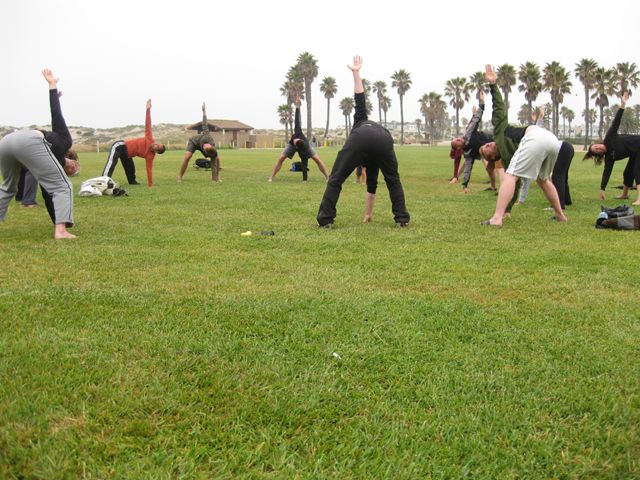
    7:37 am: After the breakfast buffet, Angelo De La Cruz energizes early wakers with a gentle movement session

    Pic13 2

    Pic12 2

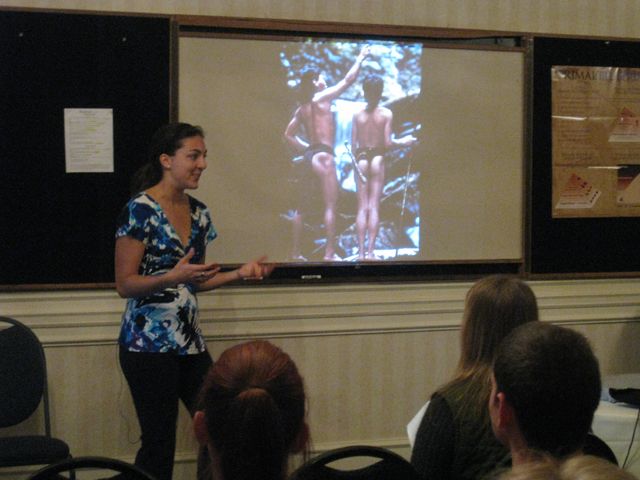
    8:04 am: Maya White shows attendees how to properly sit and stand like Grok in her posture presentation

    Pic11 3

    Pic10 3

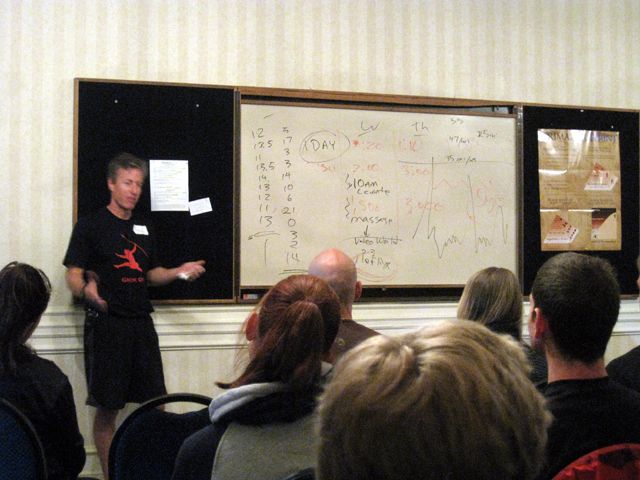
    9:51 am: Brad Kearns on Primal Blueprint Fitness and having pure motivations for training (keep it fun, convenient and energizing!)

    Pic9 3

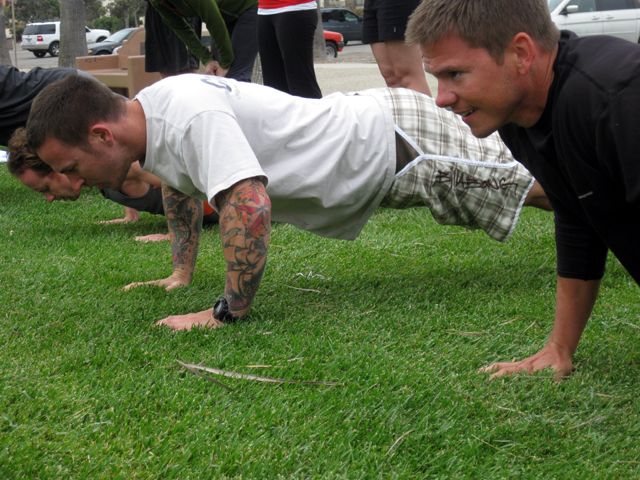
    10:32 am: The Primal Blueprint Fitness Challenge Assessment

    Pic5 8

    Pic19

    Pic4 9

    Pic3 8

    Pic20

    Pic2 6

    Pic21

    Pic7 6

    11:07 am: One-on-one time with Barefoot Ted, Maya White and Angelo De La Cruz

    Pic17

    Pic1 7

    Pic6 7

    Pic18

    Pic16

    12:30 pm: Fresh caught fish and local vegetables at the local farmers’ market

    Pic29

    Pic26

    Pic25

    Pic24

    Get Free Health Tips, Recipes and Workouts Delivered to Your Inbox

    Related posts:

    1. Live Blogging from PrimalCon 2010 – Day 2
    2. Live Blogging from PrimalCon 2010 – Day 1
    3. Barefoot Ted Speaking at PrimalCon 2010

  • Opera Mobile emulator para windows, mac y linux

    Como su nombre lo indica Opera mobile emulator nos da la facilidad de tener en nuestro escritorio un emulador para ver como se ve una pagina web en cualquier celular que lo ejecute. Algo similar al emulador de opera mini 5 que se ejecuta desde su web. Con la diferencia que aquí podemos redimencionar la pantalla y ajustar a la resolución del navegador a nuestro gusto.

    Su descarga esta disponible tanto para windows, mac o linux.

    http://www.opera.com/developer/tools/

    Twitter Identi.ca Facebook Meneame Bitacoras.com BarraPunto del.icio.us Digg Print email

  • Nissan GT-R teams threaten FIA GT1 boycott over weight penalty

    Filed under: , , , ,

    Sump Power GT-R

    British Sumo Power Nissan GT-R GT1 – Click above for high-res image gallery

    Think the Nissan GT-R is heavy enough as is? It still manages to run circles around most everything on the road, but there are limits. Especially when it’s placed on a race track. And those limits are becoming a source of controversy in the nascent FIA GT1 World Championship.

    The series’ inaugural race took place at Abu Dhabi’s Yas Island Marina circuit this past weekend, but the FIA held a test session beforehand in an apparent effort to equalize performance between the varied machinery being campaigned. Former F1 driver Heinz-Harald Frentzen took each of the six types of cars in the series for a few hot laps. While he was supposed to take 10 to15 laps in each car, he took fewer, and those were unevenly distributed, according to reports.

    Based on his feedback, series organizers then imposed weight penalties on the different vehicles. The Corvette C6.R and Lamborghini Murcielago R-SV were each saddled with 10 kilograms (22 pounds) of ballast, and the Maserati MC12 was burdened with an extra 25 kilos (55 lbs). The Matech Ford GT was left as is, while the Aston Martin DBR9 was awarded a larger air restrictor to help it catch up. The Nissans, however, were given 30 kilograms (66 lbs) of extra weight, and as a result were unable to keep pace with the competition.

    Subsequently, the two squads campaigning the race-spec GT-R – Swiss Racing Team and British Sumo Power – have stated that, unless the FIA readjusts the weight penalties, they won’t be participating. The threat is particularly heavy for the British team, as the next round takes place on its home turf at Silverstone.

    [Source: Autosport]

    Nissan GT-R teams threaten FIA GT1 boycott over weight penalty originally appeared on Autoblog on Sun, 25 Apr 2010 18:33:00 EST. Please see our terms for use of feeds.

    Read | Permalink | Email this | Comments

  • S2U2 Updated Again But This Time To v2.40

    image

    This one is the story that never ends. Slide to unlock is an application that is periodically updated by its creator A_C. This update is one of many that were released this month, and this one brings some pretty impressive new features that many might find it useful.

    Changes of v2.40
    – added options to remind any unread notification by vibration or sound or both (S2U2 Settings > Reminder).
    Refer to S2U2 Settings Description.xls for details.
    – added "60 minutes" option for "Snooze time" (S2U2 Settings > General).
    – added "Headset" option for "Lock on Talk" (S2U2 Settings > Power).
    – added option to check if any notification exists before unlock by the Proximity Sensor (S2U2 Settings > Power).
    – changed the action to shrink appointment info from "tap" to "slide up/down".
    – added "slide to view" for Appointment: tap an appointment to show its details & then slide the slider to open Pocket Outlook with that appointment day.
    To change the view appointment application to others, refer to S2U2 Settings Description.xls for details.
    – added slide action to the ON/OFF switch of S2U2 Settings.
    – fixed a very rare case that iLock2 would hang the system.
    It’s related to the checking of Exceptional EXE. If you want to know the technical details, then click here.
    – fixed Manila was positioned incorrectly after soft-reset on some devices.
    – fixed on some devices/ROMs, the hardware keys were locked even corresponding S2A option was turned on.
    – fixed voice mail notification icon was not shown if the value was negative.
    – fixed occasionally the "Replace WM6.5 system manual lock" did not work.
    – a few minor bugs fixed.

    You can download it over at XDA


  • The Week Ahead

    The key economic stories this week will be house prices, the FOMC meeting and the “advance estimate” for Q1 GDP to be released on Friday.

    On Monday the LoanPerformance house price index (for February) will probably be released. Also on Monday, the Census Bureau report on Housing Vacancies and Homeownership for Q1 will be released at 10 AM. Although noisy quarter-to-quarter, this report has been showing a declining homeownership rate. The vacancy rates for homeowners and renters have probably peaked, but both will still be near record levels.

    On Tuesday the February Case-Shiller Home Price Index will be released at 9 AM by S&P. This will be confused by the recent S&P release cautioning about the seasonal adjustment. Also on Tuesday the Conference Board will release consumer confidence at 10 AM, and Fed Chairman Bernanke, budget director Peter Orszag, and others will speak at President Obama’s debt-reduction commission.

    The Federal Open Market Committee (FOMC) is meeting on Tuesday and Wednesday, and the FOMC statement will be released on Wednesday at around 2:15 PM . Although there will be no change to the Fed Funds rate, or to the “extended period” language, there might be a few minor changes to the statement – perhaps a little more upbeat on the economy, maybe some discussion of eventual asset sales to appease a few hawkish members (not going to happen any time soon), and perhaps a comment on disinflation or the weak housing market.

    On Thursday the closely watched initial weekly unemployment claims will be released. The consensus is for a decline to 446K this week from 456K last week. Also on Thursday (or earlier in the week) the ATA Truck Tonnage Index for March will be released.

    And on Friday, the Advance Q1 GDP report will be released by the BEA at 8:30 AM. The consensus is for an annualized increase of 3.4%. Also on Friday, the Chicago Purchasing Managers Index for April, and the March Restaurant Performance index will be released. And of course the FDIC will probably be busy Friday afternoon …

    And a summary of last week:

  • New Home Sales increase in March

    The Census Bureau reported New Home Sales in March were at a seasonally adjusted annual rate (SAAR) of 411 thousand. This was an increase from the revised rate of 324 thousand in February (revised from 308 thousand).

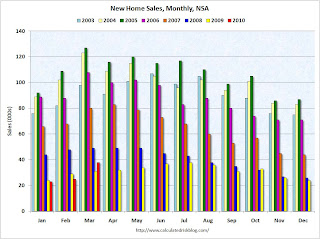
    New Home Sales Monthly Not Seasonally Adjusted Click on graphs for larger image in new window.

    The first graph shows monthly new home sales (NSA – Not Seasonally Adjusted).

    Note the Red columns for 2010. In March 2010, 38 thousand new homes were sold (NSA).

    The record low for March was 31 thousand in 2009.

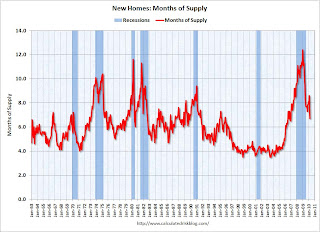
    New Home Months of Supply and RecessionsMonths of supply declined to 6.7 in March from 8.6 in February. This is significantly below the all time record of 12.4 months of supply set in January 2009, but still higher than normal.

    New home sales are counted when the contract is signed, so this pickup in activity is probably related to the tax credit. Note that that a few thousand extra sales NSA in March can make a huge difference in the SAAR.

  • Existing Home Sales increase in March

    The NAR reported: Existing-Home Sales Rise

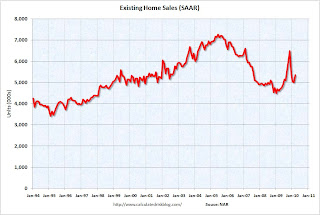
    Existing-home sales … rose 6.8 percent to a seasonally adjusted annual rate of 5.35 million units in March.

    Existing Home SalesThis graph shows existing home sales, on a Seasonally Adjusted Annual Rate (SAAR) basis since 1993.

    Sales in March 2010 (5.35 million SAAR) were 6.8% higher than last month, and were 16.1% higher than March 2009 (4.61 million SAAR).

    Note: existing home sales are counted at closing, so even though contracts must be signed in April to qualify for the tax credit, buyers have until June 30th to close.

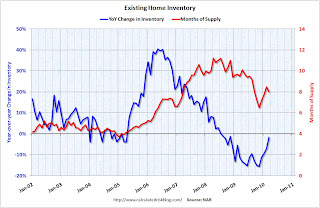
    Year-over-year Inventory This graph shows the year-over-year change in reported existing home inventory and months-of-supply.

    The YoY inventory has been decreasing for the last 20 months. However the YoY decline is getting smaller – only 1.8% in March.

    This slow decline in the inventory is especially concerning with the large reported inventory and 8.0 months of supply in March – well above normal.

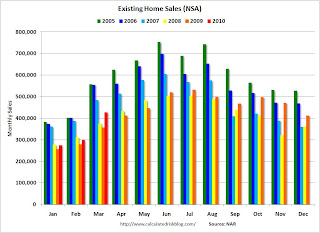
    Existing Home Sales NSA This graph shows NSA monthly existing home sales for 2005 through 2010 (see Red columns for 2010).

    Sales (NSA) in March 2010 were 19.6% higher than in March 2009, and also higher than in March 2008.

    We will probably see an increase in sales in May and June – perhaps to the levels of 2006 or 2007 – because of the tax credit, however I expect to see existing home sales below last year in the 2nd half of this year.

  • Architecture Billings Index shows contraction in March

    AIA Architecture Billing Index From the AIA: Billings Index Inches Up in March

    Note: This index is a leading indicator for Commercial Real Estate (CRE) investment.

    This graph shows the Architecture Billings Index since 1996. The index has remained below 50, indicating falling demand, since January 2008.

  • DOT: Vehicle Miles Driven Decline in February

    Vehicle Miles YoYThe Department of Transportation (DOT) reported that vehicle miles driven declined year-over-year in February.

    This graph shows the percent change from the same month of the previous year as reported by the DOT.

    Miles driven in February 2010 were down -2.9% compared to February 2009.

  • Commercial Real Estate Prices Decline 2.6% in February

    The Moody’s/REAL All Property Type Aggregate Index declined 2.6% in February. This is a repeat sales measure of commercial real estate prices.

    CRE and Residential Price indexes CRE prices only go back to December 2000.

    The Case-Shiller Composite 20 residential index is in blue (with Dec 2000 set to 1.0 to line up the indexes).

    Commercial real estate values are now down 25.8% over the last year, and down 41.8% from the peak in August 2007.

  • Other Economic Stories …
  • From Kevin G. Hall and Chris Adams at McClatchy Newspapers:
    Senate panel: Ratings agencies rolled over for Wall Street
  • From Kevin Hall at McClatchy Newspapers: Executives testify: Bond-rating agencies corrupted themselves
  • From DataQuick: Foreclosure activity declines, moving to mid-to-high end
  • From Tamar Lewin and Sam Dillon at the NY Times: School Districts Warn of Even Deeper Teacher Cuts
  • Jennifer Schonberger at Motley Fool interviews Professor Robert Shiller: Shiller: The Housing Recovery Could Be on Shaky Ground
  • From S&P: S&P Issues Statement, Publishes Research on Seasonally-Adjusted Home Price Index Data
  • Unofficial Problem Bank List April 23

    Best wishes to all.

This post is reprinted from Calculated Risk.

Join the conversation about this story »

  • 28th Annual Dana Point Concours d’Elegance adds motorbikes

    Filed under: , , ,

    If it’s good enough for Pebble Beach… For the first time in its history, the 28th Annual Dana Point (née Newport Beach) Concours d’Elegance will host an exhibit of antique and vintage motorcycles alongside the usual assortment of incredible automobiles from every era. The event has been moved up to the summer this year, but will once again be held at the St. Regis Resort in Dana Point, California.

    Those who show up on that Sunday (June 27, 2010) will find that Alfa Romeo is the featured marque, celebrating 100 years of great racing and road cars in 2010. The 80-year-old Pininfarina design house will also be feted, but the big news for bike lovers will be the exhibition-only classes featuring 65 significant motorcycles from throughout history. The preliminary groupings divide European, American and Japanese motorcycles, as well as production and competition models.

    Entry forms and additional information can be found online at: www.DanaPointConcours.org.

    Photos by Frank Filipponio/Copyright (C)2009-2010 Weblogs, Inc.

    28th Annual Dana Point Concours d’Elegance adds motorbikes originally appeared on Autoblog on Sun, 25 Apr 2010 17:04:00 EST. Please see our terms for use of feeds.

    Permalink | Email this | Comments

  • IPCC in trouble again, Bishop Hill

    Article Tags: ClimateGate

    article image

    Click source to read FULL report

    Source: bishophill.squarespace.com

    Read in full with comments »   


  • Teaching First Grade Math: Money

    Teachers can use the following resources for students that are in the first grade who are learning about money with a total value up to 100 cents or less (Virginia Standards of Learning for 1.7 a & b).

    Text Annotations:
    coin-counting-book.jpg

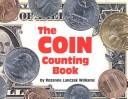
     The Coin Counting Book written by Rozanne Lanczak Williams is a fun rhyming book for students to learn about counting money and it’s value.  The book introduces pennies, nickels, dimes, quarters as a way for students to do simple math with rhyme:

    “Let’s count our five pennies just one more time. If we add five more pennies we’ll have…one dime.”

    Actual size coins are spread out over the pages showing both front and back for student learning.  If the book says to count five pennies as an example, there are five pennies laid out on the page with a addition sign in between each coin to help with student visualization.  The book ends by showing a hand placing coins in a piggy bank making the statement: “If we save some of it- the rest we can spend!” 

     

    pigs-will-be-pigs-1.jpg

    Pigs will be Pigs, Fun with Math and Money written by Amy Axelrod and illustrated by Sharon McGinley-Nally is about a family of hungry pigs looking for money in their house so they can go to their favorite place to eat a snack.  This is a great book for introducing students in the first grade to money.  The pig family is hungry and realize they do not have enough money to go out to eat; so Mrs. Pig decides that everyone will “Hunt for Money!”.  The book describes where in the house and how much money everyone in the family finds while on the money hunt.  In the end, the Pigs have enough money to eat out and when they arrive home they find their house in a mess from their hunt.  Pigs will always be pigs.   
     

     26-letters-and-99-cents.jpg

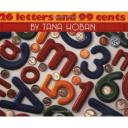
    The book, 26 Letters and 99 Cents written by Tana Hoban provides photos of numbers from 1-30, counting by 5’s from 30-90 and 99.  Beside of each number there is a photo of coins that shows the value of the number when added.  The book can be shown to the whole class while identifying each coin and the value.  This would also be a great book for students to look at during the day as a center activity, etc.  The book shows students both the front and back of real American coins: pennies, nickels, dimes and quarters in their actual size.  This helps students to visualize the size and identification of each coin.

     

     if-you-made-a-million.jpg

    The book If You Made A Million written by David M. Schwartz and illustrated by Steven Kellogg is a book where students can really use their imagination.  Readers are given different scenarios with spending anything from one penny to purchase a peeble all the way up to one million dollars with the option of saving the money at the bank.  This would be a great way to ask students for ideas about what they would purchase with different amounts of money.  Schwartz gives differnet forms of measurement for various amounts of money.  For example, one hundred dollars in pennies stacked up would be equal to fifty feet or a million dollars in quarters would equal a whale’s weight.  This is a great book to help students realize that a paper bill is sometimes easier (and lighter) to carry around instead of coins.

     

    money-madness.jpg

    The last text would be a great resource for students who are in need of a more challenging way to think about money and its uses.  Money Madness written by David A. Adler and illustrated by Edward Miller explains how money first originated and how money is now used to purchase different items from around the world.  The book starts off by asking:

    “What’s all this money madness? People talk about money and work for it. They seem to always want more of it…”

    The book gives examples of why people now use money to purchase a variety of items.  If people did not have money then they would have to make their own bread.  Adler explains at a child’s level how people first started to trade by introducing the word, barter.  An example that Adler used was when a person would trade an animal in exchange for berries. Even though the person receiving the berries might not want them he knew that someone else would want to trade the berries for something that he wanted or needed in return. The book explains how rocks were used as an early form of money and then replaced by metals (silver and gold).  The silver and gold pieces were made into coins but were at times difficult to carry if someone had a lot.  Paper money was then invented.  Adler explains how each country has it’s own form of money and that the value of the money can vary from place to place.  ”You know with money you can buy things you want. With money you can buy things you need.”

    Web Annotations:

    Students can play the game Change It  for additional practice on adding up different coin values.  Teachers can create each game to specifically fit each students instructional level. 

    GPB Kids has created a web-site for students to play a game where they are given nine different items that they need to buy.  Players are instructed to buy one of the nine items by dragging the correct coin(s) to the matching picture in the chart.  If the player is right then they can move on to the next problem; if not, they have the chance to try again.

    Teachers can create different tutorials for students by selecting any combination of pennies, nickels, dimes and quarters for practice.  For each category chosen, students are provided a picture of real money on the left side of the screen and need to select the correct value of the money from the right side of the screen.  If the student selects the correct amount of money they can move on to the next problem.  If an incorrect answer is chosen, then the student can try again.

    HMH School Publishers created a great money practice tool for students.  For the activity, coins are lined up in decreasing value from largest to smallest.  Students need to count the value of the coins and type the correct amount of money in the blank provided.  Students then need to click on “check” to see if they have typed in the correct amount.  If so, the student will hear chimes, if an incorrect amount is typed in then the student will see a screen flash up that explains the amount is either greater or less than the answer that was entered.

    Kid 20/20 has an activity, Coin Sort that students can play on-line.  Students are given 280 seconds to properly place different coins in the corresponding piggy bank.  Each piggy bank is labeled with either pennies, nickels or dimes on the side.  Students must click on each coin and drag it to the proper piggy bank.  If the coin is taken to the correct piggy bank then the coin will disappear and the value of the coin will be added to the amount already in the piggy bank.  Students can visually watch as the amount increases by either one, five or ten cents.

    Additional Resources:

    The United States Mint has a great web-site that teachers can use for various reasons.  The site contains ideas for lesson plans, coin programs which give detailed information about each coin and coin curricula.  Teachers can also use the site for class activities: game centers, web gadgets (worksheets), learning centers (ways to bring in different areas of the curriculum and financial literacy). 

    Scholastic has a great web-site for teachers.  Teachers can download different activities from worksheets, foldables, mini-books, and even lesson plans.  Click on “Teachers Resources” and select lesson plans, printables or mini-books. Narrow each search by selecting 1st grade, math and then money from each category on the left hand side of the screen.  *This web-site requires a yearly paid subscription.*

    Teaching Money Skills by Grade Level: First Grade is an article that teachers can read prior to teaching first grade students about money.  The article provides a review and instructional method for teaching a lesson or unit on money.  The article recommends that teachers use play/fake money with their students for a hands-on learning experience.  After the unit lesson on money, students should be prepared for second grade math: addition and subtraction of money. 

  • MUST READ: The Greenhouse Effect: Origins, Falsification, & Replacement by Timothy Casey B.Sc. (Hons.)

    Article Tags: Timothy Casey

    This is a MAJOR paper that Hans Schreuder informed Alan Siddons about today

    A few choice plums:

    #Everyone knows what the greenhouse effect is. Well … do they? Ask someone to explain how the greenhouse effect works. There is an extremely high probability that they have no idea.

    #Beware of wheels within energy diagrams as these usually constitute the energy creation mechanism of perpetual motion machines. One such gem of clarity, used uncited by Plimer (2009, p. 370), was offered by Kiehl and Trenberth…

    #The mechanism by which the addition of carbon dioxide warms the atmosphere has no empirical basis. Therefore the assertion that global warming is anthropogenic, may well be philosophical and perhaps political, but it is most certainly not scientific.

    #Increasing visible radiation, even by quite a large amount, results in no measurable rise in temperature because no appreciable amount of visible radiation is converted into infrared when absorbed and re-emitted – contrary to Arrhenius’ hypothesis.

    Read in full with comments »   


  • GeigerCars blows the Corvette Grand Sport into ZR1 territory

    Filed under: , , , ,

    GeigerCars Chevrolet Corvette Grand Sport – Click above for high-res image gallery

    European buyers looking to get their hands on a Corvette ZR1 may find them in short supply. Fortunately, GeigerCars is there to save the day with the next best thing. The German tuner of American iron has taken a crack at the Corvette Grand Sport and boosted it to near-ZR1 levels of power and performance.

    Starting with the Grand Sport’s 6.2-liter LS3 V8, Geiger bolts on a supercharger to increase output from the stock 430 horsepower to a prodigious 588, helping the Geiger GS hit 60 un under four seconds. That may not be quite as powerful or quick as the ZR1’s supercar numbers, with its 638 horsepower and 3.3-second sprint, but it’s nothing to scoff at, either.

    [Source: GeigerCars.de]

    Continue reading GeigerCars blows the Corvette Grand Sport into ZR1 territory

    GeigerCars blows the Corvette Grand Sport into ZR1 territory originally appeared on Autoblog on Sun, 25 Apr 2010 15:33:00 EST. Please see our terms for use of feeds.

    Permalink | Email this | Comments

  • Yoshinori Ono not only wants a new Darkstalkers game, he’s ‘desperate’ to make it

    Do you want to see a new Darkstalkers game as badly as Super Street Fighter IV director Yoshinori Ono? If the answer’s yes, then you better start letting Capcom know.

  • Guía para instalar Ubuntu 10.04 Lucid Lynx paso a paso

    Guía rápida y sencilla para aquellas personas que todavía no se animaron a entrar al mundo GNU/Linux y quieren comenzar con algo fácil, intuitivo, amigable y no morir en el intento con instalaciones engorrosas.. aclaro que esta instalación la hago en una maquina virtual con Virtualbox así que si alguien no se anima a probarlo directamente en su maquina lo puede probar con virtualbox hasta que esté totalmente seguro ;)

    Primero debes conseguir el cd de Ubuntu,  descargandotelo o haciendo un pedido para que te lo envíen de forma gratuita a tu casa.

    Ahora que tienes el cd/dvd de Ubuntu 10.04 Lucid Lynx lo pones en tu lectora, reinicias la maquina y la configuras desde la bios para que booté desde cd.

    Comienza a iniciar desde el cd y automáticamente veremos la siguiente pantalla

    Una vez que carga elegimos nuestro idioma y hacemos clic sobre “Instalar Ubunu 10.04″

    Nuestra ubicación horaria ..

    Distribución de nuestro teclado.. automáticamente el instalador selecciona uno, si es el correcto seguimos, sino selecciona el que corresponda para tu teclado.

    Esta es la única parte de la instalación ”complicada” y en la que deberías tener conocimientos previos mínimos sobre particionar un disco rigido.

    Si tienes un disco “fisico” libre para ubuntu puedes seleccionarlo y tildar la opcion “Borrar y usar el disco entero”.

    Lo mas recomendable es especificar las particiones manualmente. Así que seleccionamos y clic en adelante.

    Bien ahora asumiendo que leíste algo o tienes una idea de lo que es instalar un windows xp o vista y sobre como crear particiones en un disco, quiero que vean en la siguiente tabla como Linux nombra a los disco y a las particiones..

    Tipo de disco———–Nombre por disco fisico —————particiones
    SATA
    ——————————sda (primer disco fisico)———— sda1, sda2, sda3,etc..
    ——————————sdb (segundo) ————————-sdb1, sdb2, sdb3,etc..
    ——————————sdc (tercero) —————————sdc1, sdc2, sdc3,etc..
    PATA
    ——————————hda (primer disco fisico)————- hda1, hda2, hda3,etc..
    ——————————hdb (segundo)————————- hdb1, hdb2, hdb3,etc..
    ——————————hdc (tercero)————————– hdc1, hdc2, hdc3,etc..

    En Linux todo es un archivo. Desde los archivos de datos hasta las particiones de los discos pasando por el ratón y la tarjeta de sonido. Los directorios también son archivos. Existe un directorio raíz (/) del que cuelga todo de la siguiente manera:

    /: Raíz.
    /usr: Aquí se encuentra la gran mayoría de los archivos existentes en un sistema Linux, tales como
    documentación, casi la totalidad de los comandos de usuario, juegos, librerías, etc.
    /bin: Aquí están los comandos que pueden usar todos los usuarios (incluido el administrador o root).
    /sbin: Aquí están los comandos que sólo puede usar el administrador o root.
    /dev: Ahí están todos los dispositivos de nuestra máquina.
    /home: Lugar donde se almacenan las cuentas de usuarios.
    /lib: Enlaces a las librerías que se necesitan para el sistema.
    /var: Contiene información variable, como por ejemplo los logs del sistema (/var/log), correo local, etc.
    /tmp: Directorio temporal.
    /etc: Configuración global de los programas.
    /root: Cuenta del administrador.
    /boot: Aquí está todo lo necesario para arrancar el sistema.
    /media: Punto de montaje para sistemas de archivos montados localmente.
    /mnt: Antiguo punto de montaje para sistemas de archivos montados localmente. Hoy en día está en desuso
    y se conserva por razones históricas.
    /proc: Sistema de archivos virtual de información de procesos y del kernel.

    Para instalar aquí voy a usar 3 particiones: “sda1” para el directorio raíz (/) ( que seria donde va ir todo mi sistema operativo.. ) , “sda2” que seria la partición swap ( esto seria el disco de intercambio.. el cual Linux utiliza como si fuera memoria RAM..) para elegir el tamaño que tendrá esta partición lo mas recomendable seria seguir los siguientes valores en base a la cantidad de RAM que tengamos..

    128MB hacer una partición de 256MB
    256MB hacer una partición de 384MB
    512MB hacer una partición de 640MB
    1GB puede ser una de 640MB como una de 1024MB, hacer una partición mas grande seria totalmente en vano y nos jugaría en contra..
    2GB o mas de ram, con esa cantidad casi no necesitaremos de la partición swap, así que una de 1024MB estaríamos bien..

    Y la tercer partición ”sda3” seria (/home)  donde estarían todos nuestros datos, imagenes, themes, musica, etc, etc..
    Ahora que masomenos quedo explicado el porque de cada partición podes ir creando segun el tamaño que dispongas libre en tu disco..
    El sistema de archivos que utilizaremos sera ext4 y con darle un tamaño de 7 a 15 GB a el raiz estaria mas que bien.

    El punto de montaje es donde elijen que partición va a ser.. si la raiz (/) 10GB, swap (area de intercambio) 1024MB o (/home) mas de 8GB.

    Una vez que tengamos correctamente particionado como la imagen anterior.. seguimos con la instalación..

    Aquí ingresamos nuestros datos, contraseña y si queremos que nos pida la contraseña al iniciar o inicie automáticamente..

    Miramos si esta todo bien y le damos intalar..

    Comenzo a instalar.  Esta parte va rapida, es recomendable mantener conectada la pc o notebook a internet porque mientras instala desde el cd tambien busca alguna actualizacion o paquete de idioma si es que los hay e instala.

    Cuando termina el proceso reiniciamos, sacamos el cd y listo el pollo..

    Con ustedes Ubuntu 10.04 Lucid Lynx, espero lo disfruten.

    Twitter Identi.ca Facebook Meneame Bitacoras.com BarraPunto del.icio.us Digg Print email