Author: Big Gav

  • London landmark building will generate 8% of its energy needs

    Green-ish Building of the week is this tower being built near Elephant and Castle in London – London landmark building will generate 8% of its energy needs.

    Peering down 148 metres from the top of the latest addition to London’s skyline, the traffic-clogged Elephant and Castle roundabout and its notorious neighbour, the Heygate estate, below feel an unlikely location for a world first. But next week, this new skyscraper, nicknamed “the Razor”, will take a crucial step towards becoming the world’s first building with wind turbines built into its fabric.

    While wind speeds in the concrete jungle at the tower’s base would render a wind turbine pointless, at 42 storeys up they are capable of 35mph gusts – a serious challenge for the workers who created the complex steel structure – and are projected to generate 8% of the building’s electricity needs.

    The building – officially called the Strata tower – is a £113m milestone in the £1.5bn project to regenerate the Elephant and Castle area. The Strata development, which comprises the tower and a smaller “Pavillion” building, is a statement of the new demographic Southwark council hopes the area will attract – its 408 apartments range from £230,000 to £2.5m.

    But the tower also marks an innovation for the building sector, which under government regulations will have to make all new buildings zero-carbon by 2019.

    Justin Black, director for Brookfield, the developer, said the decision to choose wind was a “conscious decision to experiment”. He pointed out that the entire southern facade of the building would have had to be covered in solar photovoltaics to generate the same amount of energy. “The brief we gave to Hamilton’s Architects was we wanted a statement, we wanted to create benchmarks for sustainability and urban living. We wanted something bold, we wanted remarkable. It’s what I term Marmite architecture – you either love it or you hate it, there’s no in between,” Black said.

    Next week the blades for the 9m-diameter turbines arrive on site and will be winched on to the roof for installation in early April, before the building is opened by London major Boris Johnson – circumstances permitting – on 1 July. The 19kW turbines, which were made bespoke for the project, will have five blades rather than the usual three to reduce noise. Vibrations to the rest of the building should be eliminated by a five-tonne base fitted with four anti-vibration dampeners.

    Inhabitat has more – The Strata: World’s First Skyscraper With Built-In Wind Turbines.

    Measuring in at 42 stories tall, the Strata tower has enough height to eclipse the buildings surrounding it, allowing it to take full advantage of the area’s 35mph wind speeds. The tower is also designed to utilize the Venturi effect created by nearby structures to force wind through the turbines at accelerated rates, generating an expected 50MWh of electricity annually.


  • Japan aims its home fuel cells at Europe

    With interest in fuel cells being given a big boost by the Bloom Box, the BBC has an article on Japanese efforts to sell cells to Europe – Japan aims its home fuel cells at Europe.

    Following the success of a half-price subsidy for CO2-busting fuel-cell heat and energy generators for homes, Japan is now poised to ship its attention to supplying the UK and Germany with this hi-tech next-generation energy source.

    With over 5,000 fuel cells providing heat and energy for conventional homes up and down Japan, the BBC has learnt that companies such as electronics giant Panasonic are in talks with EU governments about the possibility of bringing these proven energy and carbon-saving devices to market in Europe and elsewhere.

    Panasonic has described the interest in its commercial fuel-cell project from the German, Korean and UK governments as “intense”, and is confident that Japan, as the first to start commercial sales for homes last year, will be the forerunner in bringing the technology into common use.

    Fuel cells – a technology that has been around for more than 100 years – convert fuels such as hydrogen and natural gas into electricity through an electrochemical reaction. The resultant heat generated also warms buildings in gas-boiler-sized boxes known as cogeneration fuel cells.

    The idea is to generate all of the heating and hot water and the majority of the electricity needed by a typical UK home, without the need to be connected to the energy wasteful national grid.

    Such efficient use of gas supplies can save the consumer around 25% of total energy costs, and reduce each home’s CO2 emissions by up to 2.5 tonnes per annum, according to their makers.

    They also claim customers can earn back the system’s relatively high cost, running at present into thousands of pounds, within a few years through utility bill savings.


  • China To Connect Its High Speed Rail All The Way To Europe

    Inhabitat has a post on an extremely ambitious Chinese plan to build high speed rail links to Europe – China To Connect Its High Speed Rail All The Way To Europe. Remember the time when the US used to have enough ambition (beyond invading foreign oil fields of course) to attempt large scale engineering projects ?

    China already has the most advanced and extensive high speed rail line in the world, and soon that network will be connected all the way to Europe and the UK! With initial negotiations and surveys already complete, China is now making plans to connect its high speed rail line through 17 other countries in Asia and Eastern Europe in order to connect to the existing infrastructure in the EU. Additional rail lines will also be built into South East Asia as well as Russia, in what will likely become the largest infrastructure project in history.

    China hopes to complete this massive infrastructure project within 10 years, which will include three major rail lines running at speeds of 320 km/hour. The first will go from King’s Cross Station in London all the way to Beijing (8,100 km as the crow flies) and will take approximately two days. This line will also then extend down to Singapore. A second HSR line will connect into Vietnam, Thailand, Burma and Malaysia. The last line to be built will connect Germany to Russia, cross Siberia and then back into China. The exact routes have yet to be determined.

    Financing and planning for this monstrous project is actually being provided by China, who is already in serious negotiations with 17 countries to develop the project. China states that other countries, like India, came to them first to get the project rolling, because of their experience in designing and building their own HSR network. Financing for the infrastructure will be provided by China and in return the partnering nation will provide natural resources to China. For instance, Burma, which is about to build its link, will exchange lithium (used in batteries), in order for China to build the line.

    China benefits because it will be able to transport materials cheaply into manufacturing centers inside its borders and the Eastern Hemisphere benefits by getting a fast, efficient, low carbon transportation system. Considering China has already become the global leader in HSR, their leadership in this new venture could reasonably shift the balance of power in their direction. Also, get ready for a huge influx of HSR station designs in the coming years.


  • Australian Climate heating up

    The SMH has an article on a report released by the CSIRO and Bureau of Meteorology on Australian climate change and global warming – Climate snapshot reveals things are heating up.

    THE nation’s two leading scientific agencies will release a report today showing Australia has warmed up significantly over the past 50 years. It is a response to recent attacks on the science underpinning climate change.

    The ”State of the Climate” snapshot, drawn together by the CSIRO and the Bureau of Meteorology, shows the mean temperature has increased 0.7 degrees since 1960.

    The snapshot also finds average daily maximum temperatures have increased every decade for the past 50 years.

    The report states temperature observations, among other indicators, ”clearly demonstrate climate change is real”.

    ”CSIRO and the Bureau of Meteorology will continue to provide observations and research so Australia’s responses are underpinned by clear empirical data,” the report says.

    Other findings reveal the past decade was the nation’s warmest on record, sea levels rose between 1.5 millimetre and 3 millimetres a year in the south and east and between 7 millimetres and 10 millimetres in the north between 1993 and 2009, and sea surface temperatures have risen 0.4 degrees since 1960.

    The release of the report comes as many Australian scientists expressed concern over attacks on the science underpinning man-made global warming, fearing it is damaging the reputation of science as a whole.

    The former Australian of the Year and long-time climate campaigner Tim Flannery last month urged climate scientist to talk to the ”confused Australian public” and answer their questions about the science.

    The director of the Bureau of Meteorology, Greg Ayres, told the Herald the purpose of the climate snapshot was to remind the public that the bureau had been collecting objective and observable climate information for a century.

    ”I would like to invite the Australian public to use … the information generated in the national interest to reach an opinion on climate change because it is objective information,” Dr Ayers said.

    He said the trends in temperatures back up the findings of the United Nations Intergovernmental Panel on Climate Change showing human processes, such as burning fossil fuels, was the primary cause of global warming.

    The ABC has more – CSIRO boss says climate change is real.

    TONY EASTLEY: The head of the CSIRO, Dr Megan Clark has come out in defence of climate scientists and says there’s absolutely no doubt there’s a link between humans and climate change. She says the evidence of global warming is unquestionable and in Australia it’s backed by years of robust research. She says climate records are being broken every decade and all parts of the nation are warming.

    Dr Clark is speaking to environment reporter Sarah Clarke.

    MEGAN CLARK: Look, we are seeing significant evidence of a changing climate. If we just take our temperature, all of Australia has experienced warming over the last 50 years.

    We are warming in every part of the country during every season and as each decade goes by, the records are being broken. Our records of the ’70s were broken in the ’80s, broken in the ’90s and we are also seeing fewer cold days. So we are seeing some very significant long-term trends in Australia’s climate.

    SARAH CLARKE: So given these observations then, what is your response to those who suggest that the planet isn’t warming?

    MEGAN CLARK: Well, I think we can certainly look at the long-term trends and any event here or there or a storm here or there really doesn’t explain away what we are seeing in these major long-term trends.

    We are also seeing consistency. I think the consistency between our temperatures, what we are seeing in our rainfall, what we are seeing in the increase of carbon dioxide and methane in our atmosphere and of course, what we are now seeing in our oceans.

    So it is not just one measurement that is telling us. It is our observations and science that we are seeing in many areas being consistent.

    SARAH CLARKE: So how much is manmade climate change then contributing to all of this?

    MEGAN CLARK: We know two things. We know that our CO2 has never risen so quickly. We are now starting to see CO2 and methane in the atmosphere at levels that we just haven’t seen for the past 800,000 years, possibly even 20 million years.

    We also know that that rapid increase that we’ve been measuring was at the same time that we saw the industrial revolution so it is very likely that these two are connected.

    Guy Rundle has an article at Crikey wondering why the greens have never adopted some of the political tactics used by the old left to educate and expand their support base – Where is the Mao, the Lenin for climate change?.

    While dealing with the minutaie of British life — filling a free prescription (good) that the pharmacist said would take 45 minutes because of the absurd process of checks and counter-checks (bad)* — your correspondent browsed in the second-hand section of the excellent Bookmarks bookshop, run by the Socialist Workers Party. Among a range of purchases two stood out.

    One was Mao’s pamphlet On Peasant Revolution. It was sitting on the desk beside me as I read various Crikey reports about Julian McGuaran, and his latest mad blurt about the CSIRO. Quite possibly it’s a new high/low in conspiracy theories, but it’s nothing new, really. Yet the reaction is fresh horror at the degree of irrationalism, stupidity, of McGuaran’s remarks, as if climate change should somehow sell itself as an idea autonomously.

    The reaction is of a piece with much of the Green/climate change movement ‘s work, which has been, over past years, one of the most ineptly conducted campaigns, and avoidable political losses, in the last 200 years. There is no doubt that a lot of this is to do with the formidable money and power of the anti-climate change movement (sceptics is too neutral a term, denialists too prejudged).

    But as the pamphlets of Bookmarks remind us — Shaw, Lenin, Mao, Emma Goldman, Stafford Cripps, John Strachey, Rosa Luxemburg, etc — progressive movements have faced far greater challenges hitherto. And the pamphlets tell us something else — the climate change movement should stop focusing on each fresh outrage by the antis, and focus on the positive campaign that it is not making.

    Climate change is not an easy thing to argue. For a start, you can’t honestly say that the science is settled, because no science is ever settled. So one is faced with either advancing a great oversimplification, which then has to be walked back at times, or make the more complex argument about probabilities and the precautionary principle. Secondly, it’s a more abstract process than, say, killing whales, or some other concrete and visible thing. Thirdly, it asks people to be in a permanent state of transformation, rather than relaxing into their familiar lifeways. And that’s before you factor in the relentless propaganda of News Limited (Australia), etc.

    But many of these things can be said about the challenges faced by the Left and the labour movement in the early 20th century. What was relatively concrete for workers were things like nation, empire, and race — these were immediate, visible things, rich in symbols and manifestations, of sufficient power to march millions of people into trenches to slaughter each other over a four-year period. Class as a concept (as opposed simply to wealth and poverty) was a different matter. Profit, surplus value, labour-power, exploitation — all these had to be established as an alternative account to notions of hard work, a fair day’s wage, king and country, blahblah.

    How was it done? It was done by establishing a whole disciplined apparatus, with the explicit object of creating both a core of full-time cadres/organisers/propagandists who could expound the argument everywhere, anytime, a hundred different ways, at the drop of a hat. Step by step they created a wider band of people who, while not professional agitators themselves, had been so convinced by the argument — intellectually, politically, morally — that they felt some of its urgency and identified with it, so that they would talk to others about it.

    Crucial to this process were four things — the training school, the pamphlet, the public meeting and political self-criticism/analysis. It’s a signal fact of the climate change movement that none of these features are really present. The Right likes to argue the Green movement is Marxism by other means. If only that were the case, some of these things might have been in place.

    Instead few of them are. There are many good books on climate change — by Monbiot, Mark Lynas, David Spratt among many — but there is nothing in the style of a Communist Manifesto, the US Declaration of Independence, a Lenin, a Mao, or a Santamaria for that matter. Something that in a few thousand words sets out an argument about what is happening, about why its critics are wrong, and about what should be done.

    The Green party should have produced something like this years ago. If it has, it should be printing it in the tens, hundreds of thousands. Everyone who wants to do something about climate change should just be able to take a stack of them to give to people. It should be written in clear, direct language, but without skimping on the science.

    Secondly, you need people trained in the arts of argument, propaganda and recruitment. At the moment, most people actively involved in the climate change movement are simply terrible at arguing their case. Those with a scientific background don’t know how to boil it down, those without take too much on trust. Some sort of ongoing training would address both problems.

    But here self-criticism would come in because the great flaw in the climate change movement has been an elitist arrogance that is, at its worst, anti-political. Some of that is due to the asocial political naivete of scientists — ‘I mean, it’s obvious, why are these people being so stupid’ — some of it is due to the technocratic spirit of the age, whereby something is seen as a mere technical problem to be fixed, and some of it is due to the fact that the abstract/systemic nature of climate change ideas are most easily accepted by people trained in abstract-systemic thinking. That is, the scientific /professional/managerial/cultural class (SPMC) who, in many ways, run the joint.

    As Bernard Keane has noted here, the active anti-climate-change movement is old, white and overwhelmingly composed of people who once had unquestioned cultural authority but now don’t — the old bourgeoisie, some manufacturing workers and tradies, farmers, etc. Consciously or otherwise, they see that acceptance of climate change as a model means the transformation to a new framework in which the cultural power of the SPMC class becomes entrenched.

    Trouble is, many of those advocating the reality of climate change don’t really factor in this class difference to the way they think, or the manner in which they campaign — when they campaign at all. And that is the final missing piece, the lack of public meetings and campaigning. No-one likes ‘the hours spent at the boring meeting’ (well some do, but they should be used very carefully) and leafletting in the street requires a ceaseless war against a creeping feeling of embarrassment and absurdity. But it’s got to be done. Even in post-post-modern society there’s no substitute for it.

    The trouble is the SMPC class are not only digital natives, they can easily talk themselves into believing that a TweetDeck and a smokin’ thought-meme crowdsource flashmob thing can wholly substitute for grassroots face-to-face campaigning. The Greens, the FOE, the ACC, must have a potentially active membership larger than the far-Left groups such as Socialist Alternative. Yet you rarely see posters for a climate change public meeting, a table in Bourke Street Mall — and never for the Green party, which appears interested in repeating early Labour’s obsession with factionalism and parliamentarianism.

    The climate change movement may well be correct in their argument that every year counts in changing global processes. But in past years that has served as an excuse for not building the slow and remorseless mass campaign, deploying all the campaigning skills and rhetoric of older progressive campaigns (much of which, in style anyway, is being used by the anti-climate-change group). It has to abandon the idea that truth somehow communicates itself. The longest march, as the man said, begins with a footstep. Or a pamphlet.

    Guy also has an article asking how it is an ex-KGB man came to own 2 of the UK’s national newspapers – Rundle’s UK: witnessing the KGB takeover of London media.

    Sometimes you wonder how you would explain the current world to someone who had fallen into a coma in 1985. Google. Bing. Bingle. Angela Shanahan. The KGB takeover of the London media.

    Today, the UK Office of Fair Trading said that it will not investigate the proposed takeover of The Independent newspaper by Alexander Lebedev, billionaire and former global economics operative for the glorious USSR’s anti-fascist security service.

    Lebedev got his money as the USSR dissolved, and has owned papers in Russia. Indeed he already owns The Evening Standard, London’s surviving evening newspaper – whose future he ensured by turning it into a freesheet, and retaining much of its original form. That earns him some points, since there is nothing so pleasurable as an afternoon newspaper, especially one which is mainly gossip and fizzing opinion.

    Now he’s the Indy’s last chance. Launched in 1986, owned by its journalists, and proudly disdainful of celeb gossip – its coverage of royal births was famously limited to a single para ‘in brief’ – the paper was created for people who wanted serious in-depth coverage of world events and politics, just at the time when the audience who wanted that were starting to die off.

    The paper was centrist at a time when The Guardian was further left – even up to the late 90s, the Grauniad had columns by Paul Foot and Mark Steel, both members of the Socialist Workers Party. But as The Guardian moved to the centre-left, and The Telegraph began to cover music and pop culture more recent than King Oliver and His Jazz Gollies at the Palm Court, Frinton-on-sea, the Indy began to be squeezed, its circulation heading south of 250,000.

    They responded by successively reinventing themselves – first by the use of startling front page images – symbolic and surreal photos to illustrate stories, rather than mundane place shots. It was such a success that The Guardian nicked it and did it on better paper. In foreign affairs it went rapidly left, with the invaluable Robert Fisk and the insufferable Johann Hari among others.

    They turned themselves into a campaigning paper, omitting major stories from the front page in order to bang on about this or that cause – child slaves in Wales, the counterfeit Haggis trade, cruelty to llamas in Bolivia etc – and finally they went tabloid, the other broadsheets following in quick succession. By now they were owned by the Irish entrepreneur Tony O’Reilly, so The Independent idea was dead, but they were ceaselessly inventive in keeping the paper going.

    The result is a mess.

    The Indy is ugly beyond belief – uglier than the tabloid Times, which is saying something. There is often one story a page, with ads, all clumpy and yurrgh. Aside from Fisk, and right-winger Bruce ‘the Brute’ Anderson, the columnists are a ‘whatthe-, whothe-?’ crowd. Circulation is at around 180,000, and it loses a quarter of a million quid a week.

    Lebedev has wanted to buy it for some time, and it’s a measure of our tranquilised, globalised age – or the utter irrelevance of newspapers – that no-one really cares that a Putin confidante and backer will own two of the country’s nine dailies. His initial plans were to make it a morning freesheet and get general London media blowfly Rod Liddle into edit it – until the latter was caught posting racist comments on a Millwall football club fan site. The freesheet idea is on hold and other high-profile editors sought by Lebedev – Newsnight TonyJonesOnSteroids host Jeremy Paxman, and former BBC director-general Greg Dyke – have knocked the post back.



  • Geothermal energy trials begin near Geelong

    The ABC’s Lateline program has a segment on geothermal energy trials in Victoria – Geothermal energy trials begin near Geelong.

    TICKY FULLERTON, PRESENTER: As the country looks to how sustainable energy can provide power for the future, one tiny Victorian town has been earmarked vital to the future of power supplies for the entire nation.

    The hamlet of Gherang, 100 kilometres west of Melbourne, has been chosen as a test site for geothermal energy trials that if successful, could provide baseload power for the growing region near Geelong.

    It’s created divisions within the small community between those who are cautiously optimistic about the proposal and those who oppose it.

    Hamish Fitzsimmons reports.

    HAMISH FITZSIMMONS, REPORTER: A planned energy project touted as important for the state, Australia and even the world, is dividing opinion in a tiny community in western Victoria.

    CAROLINE HAWKINS, ANGLESEA RESIDENT: Our region needs to know what our power sources are going to be in the future we can’t continue to rely on coal.

    DANIEL BRIGGS, GHERANG RESIDENT: Residents feel it’s an inappropriate location to try to install an industrial geothermal development on top of an existing densely populated residential rural community.

    HAMISH FITZSIMMONS: The company behind the proposal to bring geothermal power from the tiny hamlet of Gherang to the fast-growing region of Geelong says it can provide a blueprint for the future.

    Melbourne QC Simon Molesworth is a well known campaigner for the environment and also chairs Greenearth Energy.

    SIMON MOLESWORTH QC, GREENEARTH ENERGY: What we want to do is make this community and its district an exemplar of what can be done with renewable energy.

    HAMISH FITZSIMMONS: Geothermal power harnesses energy released kilometres beneath the surface. Water is pumped down a pipe to a hot sedimentary aquifer four kilometres underground, where it evaporates, turns into steam and travels up another pipe in high pressure to power a generator and create electricity.

    SIMON MOLESWORTH: It is true baseload power. It operates 24-7 and, having zero emissions, no gases, no emissions to water, having a footprint which is very good environmentally, it means that we can actually produce power which is so critically needed, as we know, to face the greenhouse challenge.


  • First Solar Joins Desertec

    Greentech Media reports that First Solar has joined the Desertec solar power initiative – First Solar Joins Desertec.

    First Solar will participate in the massive Desertec project, one more stop along their plan toward world domination.

    The Arizona-based manufacturer of cadmium telluride solar modules will provide know-how on how to build large-scale solar power plants. The Desertec initiative will attempt to build renewable power plants in the deserts of North Africa that will supply a significant amount of power to the Europe, the Middle East and North Africa by 2050. Photovoltaics, solar thermal, wind, and other technologies, along with experiments in carbon capture, will likely ultimately play a role in the project.

    Siemens is one of the big drivers. Right now, everything is in the planning stages, but Desertec is shaping up to be one of the largest construction projects ever attempted. (More on utility scale solar parks will be one of the subjects at the Solar Summit 2010 taking place in Arizona later this month.)

    Like SunPower, Suntech Power Holdings and other large solar manufacturers, First Solar hopes to get a growing portion of its revenue from building power plants and selling power. In this situation, a module maker effectively becomes its own customer. First Solar has already signed on to build a 2 megawatt solar power plant in Inner Mongolia and has projects completed and underway in the U.S. and the United Arab Emirates.


  • South Korea Sets 2030 Target for Fully Integrated Smart Grid

    SmartMeters.com has an article about South Korean efforts to make the smart grid pervasive, partially as a result of their near complete dependence on imported energy (a few tidal power projects excepted) – South Korea Sets 2030 for Fully Integrated Smart Grid.

    South Korea has established an official plan to have a fully integrated smart grid by 2030. A two-page report by the Ministry of Knowledge Economy details its plan for smart grid deployment through 2030, including target dates a range of milestones such as advanced metering infrastructure, PHEV quick-charging stations, and microgrid communications.

    David J. Leeds, a smart-grid analyst with GTM Research says the presentation is “on par or better than anything I’ve seen from a progressive utility in the U.S. They clearly intend to be one of the first nations to have a fully integrated smart grid in place.”

    South Korea is laying the groundwork to become a leading exporter of energy-related services. Samsung for example, has committed to becoming the world’s largest solar provider by 2015 by agreeing to build $1.6 billion worth of factories and other facilities in Ontario, Canada. Along with LG, Samsung has instituted initiatives to reduce power consumption in their household appliances.

    Even though South Korea is aggressively pursuing solar as an export business, its internal goals for renewable energy are much less ambitious, with a target of 11 percent in 2030. At the same time, one-third of households are expected to be energy self-sufficient.

    The MKE’s presentation calls for a 100 percent AMI penetration by 2020, along with an expansion to nearly 2.5 million PHEVs in 2030 with the capacity for vehicle-to-grid transmission. The price tag for the smart grid commitment includes an estimated $6.2 billion to be spent on technology development and $18 billion will go into building infrastructure.

    South Korean media has reported that The SK Group, which includes SK Energy, SK Telecom and SK Networks, will be expected to be a major player in developing the grid. SK Telecom, for example, has partnered with Samsung for a pilot project on the island of Jeju to test multiple technologies.

    Unlike western countries that have multiple utilities, South Korea is unique in that the entire population is serviced by just one energy utility, KEPCO. The country is also a broadband Mecca and is the center for online gaming development, social networking and other broadband service.

    Leeds notes that while South Korean is promoting their lead position in smart energy, though country also “imports essentially all of its energy, so there is a necessity there that may drive Korea to develop next-generation smart grid technologies ahead of the pack.”


  • Eye on the Wind: Innovations Designed to “See” and Track Gusts

    Renewable Energy World has an article on some new technology for optimising wind turbine output by monitoring what is happening upwind in terms of wind gust direction – Eye on the Wind: Innovations Designed to “See” and Track Gusts.

    High-technology company Catch the Wind is commercialising a nacelle-mounted, forward-looking system capable of sensing both wind speed and direction, as well as rapid wind variations. In December 2009, the company released striking trial test results for the innovative lightweight technology, claimed as unique and named the Vindicator Laser Wind Sensor (LWS).

    Virginia-based Catch the Wind is a spin-off of US-based Optical Air Data Systems (OADS). The latter, founded in 1990 near Washington DC, is a leader in fibre-opticpulsed Lidar (Light Detection And Ranging) systems, an optical remote sensing technology.

    Building upon 19 years of aerospace research know-how and experience, Catch the Wind, which was founded in September 2008, acquired a technology license from OADS for all its commercial (non-aviation) applications. The Vindicator LWS uses advanced laser technology combined with Doppler radar techniques to analyze air particle movement and determine wind speed and direction. The use of Vindicator LWS is primarily intended for improving the performance of wind turbines, resulting in higher energy production and reduced lifetime maintenance costs. …

    A key finding of the Nebraska trial was that employing a Vindicator on a given wind turbine increases energy yield by 12.3% on average, says Rogers. That positive result in turn can be attributed to both optimized rotor alignment with the oncoming wind, and increased gust detection. He stresses that the increased output was achieved while the Vindicator controlled the turbine for only 56% of the time as specified by the 30-day trial parameters.

    ‘Excluding statistically insufficient measurement data, the Vindicator improved energy output by more than 18%. The system is also insensitive to specific environmental conditions’, adds Rogers, expanding on the positive trial results.


  • Ten sites named in £4bn UK marine energy project

    The Guardian has an article on British plans to harness wave and tidal power off Scotland – Ten sites named in £4bn UK marine energy project.

    The heavy Atlantic swell and some of the world’s strongest tides are to be harnessed by a breakthrough scheme to generate clean marine energy off northern Scotland, with predictions it will rival the output of a nuclear power station.

    The crown estate and Scottish government today unveiled a £4bn project to build 10 wave and tidal power sites around the Orkney islands and the Pentland Firth, with the potential to power up to 750,000 homes.

    The devices deployed will include the Pelamis “sea snake”, which uses the undulations of the sea surface to generate power, and the SeaGen tidal machine, which looks like an underwater wind turbine. In total, the machines will be able to produce up to 1.2GW of “green” energy, more than Dungeness B nuclear station in Kent.

    The crown estate, which owns all the UK’s seabed out to 12 nautical miles, said these projects were the world’s first commercial wave and tidal power schemes. It is expected to announce new marine power sites in other parts of the UK later this year.

    Alex Salmond, Scotland’s first minister, said the announcement confirmed his prediction that the Pentland Firth region – where the north-east Atlantic meets the North Sea – would become the “Saudi Arabia” of marine energy.

    The narrow sea channel has some of the most powerful currents and tidal surges in the world, with speeds up to 16 knots or 19mph recorded. The area also experiences some of the biggest waves in the UK.

    Crown estate officials and the developers accepted these often dangerous waters posed significant engineering and safety challenges for the firms involved.

    Salmond said some estimates suggested the waters could release up to 60GW of power – 10 times Scotland’s annual electricity usage. Other studies suggest one-third of the UK’s total electricity needs could be met by tidal power alone.

    “This is a huge milestone on the way to making that dream a reality,” Salmond said. “Today marks a major milestone in the global journey towards a low carbon future, with the commercial-scale deployment of marine renewables set to power our economies and help safeguard the planet for generations to come.”

    The schemes are expected to cost £4bn to install, and will require up to £1bn of extra investment – from public sources – to build new national grid connections, harbours and other infrastructure in Orkney and Caithness.

    The 10 projects, several of which have already had investment from a £22m UK government marine energy fund, are evenly divided between wave and tidal power stations, with each type generating up to 600MW. The projects are being shared by three of the UK’s largest power firms, E.ON, Scottish and Southern Energy (SSE), which already operates the UK’s largest hydro schemes, and Scottish Power Renewables, a heavy investor in windfarms.

    Scientific American has a roundup of various efforts to harness tidal energy – Going with the Flow: Hydrokinetic Power Developers Face Technical and Regulatory Hurtles in Bid to Tap Tides.

    Although it is unclear just how much electrical energy that the tides have the potential to generate, the Electric Power Research Institute (EPRI) has studied several tidal power project sites. In 2008 EPRI estimated those sites together have the potential for generating as much as 115 terawatt-hours of electricity annually, although the practical potential for energy generation from those sites is about 14 terawatt-hours per year. (Total electricity consumption in the U.S. is about 4,000 terawatt-hours per annum, according to EPRI.) Much of that energy would come from Alaska, thanks to high power density and large-size sites in southeast Alaska, Cook Inlet and the Aleutian Islands. Other locations studied were in Maine, San Francisco and Washington State’s Puget Sound. Although New York City and the Chesapeake Bay were not studied for the 2008 report, EPRI concluded these sites could also make use of tidal hydrokinetic energy resources.

    RITE stuff
    One of the more advanced tidal power operations in the U.S. is taking place in New York City’s East River, where the Roosevelt Island Tidal Energy (RITE) project has been testing windmill-like turbines since 2006. Led by Verdant Power, the project installed six windmill-like turbines—each five meters in diameter and anchored to the bottom of the East River, about nine meters in depth—in the water next to Roosevelt Island, a sliver of land 3.2 kilometers long by 240 meters wide in the river between the boroughs of Manhattan and Queens.

    “Verdant went with a design that looks like a conventional wind machine—an open rotor with three blades,” says Roger Bedard, an EPRI researcher who has studied water current–based energy generation. This was a calculated move, given that wind is very commercially mature in terms of renewable energy sources, he adds.

    After logging about 9,000 operational hours since being installed, all six original turbines were removed earlier this year and are being disassembled so Verdant can study their seals, bearings and other components for signs of wear. In the meantime, Verdant is developing its next-generation turbines that will be very different from their predecessors.

    Whereas Verdant’s original tidal turbines sat anchored individually to the riverbed, looking something like a field of underwater windmills, the new design will have three turbines operating on a triangular frame positioned on (not anchored to) the bottom of the river. The company plans to place 10 triangular frames—a total of 30 turbines—on the river bottom. Each of the new turbines will produce 35 kilowatts of power at the rated water speed, meaning that the 10-frame installation should produce up to about one megawatt of power (enough to provide electricity to roughly 800 homes).


  • QGC to produce CNG for transport ?

    The SMH has a good example of the stunningly poor level of professional journalism when it comes to energy. In the article below you could probably substitute CNG (compressed natural gas) for LNG (liquefied natural gas) and get something that may make sense – Major gas agreement signed in Chinchilla.

    Two major companies have signed a $100 million agreement that will see the construction of a multimillion dollar liquefied natural gas plant northwest of Brisbane.

    Gas company BOC and coal seam gas exporter QGC announced the contract in Chinchilla on Thursday morning. The companies said the new plant is on track to be the first in Australia to produce liquefied natural gas (LNG) from coal seam gas to fuel trucks.

    Premier Anna Bligh flew to Chinchilla for the announcement. She said the agreement heralded the start of a new industry for Queensland which would see heavy vehicles switch to LNG – an environmentally cleaner fuel than current alternatives.

    “LNG produces up to 25 per cent fewer emissions than diesel and is a proven safe alternative to other fossil fuels,” Ms Bligh said. “Through this agreement, Queensland will join the rest of Australia, as BOC develops a network of fuelling stations across the country for vehicles converted to run on LNG.”

    She says QCG has agreed to supply gas to BOC from July 2011 and if the companies meet that deadline, Queensland will become the first in Australia to produce LNG from coal seam gas.


  • Cycling Surging Ahead In New York

    The SMH has an article on the increasing popularity of cycling in New York City – Wheels are in motion.

    The decision to bring my bike with me when I relocated to New York City a year ago was more out of sentimentality than a belief that I’d be pedalling much. In fact, on previous visits I thought it was madness to cycle these streets, congested with cabs and cars, trucks and buses and pedestrians. A year on, I never imagined I’d have the chutzpah to cycle so much. But it’s not me that’s changed – New York is becoming a city that loves to cycle.

    In the past six years, the number of cyclists in New York City has doubled. In the past four years, the number of people commuting to work by bike has increased by 45 per cent. And much is being done to accommodate them.

    While walking down First Avenue near 64th Street – where bikes were once chained to parking metres, street signs and trees – I notice a proliferation of bike racks (four in one block). They’re popping up all over the city; by late next year, 5000 racks will be installed in a program called CityRacks, which aims to encourage cycling for “commuting, short trips and errands”.

    In the past three years the Department of Transportation has built 320 kilometres of bike lanes across the city’s five boroughs, taking the total to 1000 kilometres of bike paths, lanes and routes.

    On 8th and 9th avenues and Broadway, the department has added North America’s first protected on-street bike lanes, designed so the bike lanes are physically separated from motorised traffic. In fact, in recognition of the progress made to improve conditions for cyclists, the League of American Bicyclists designates New York as a “bike-friendly community” with the potential to become a great cycling city.

    The New York City bike network is now a labyrinth of off-street bike lanes (dedicated paths), on-street bicycle lanes (painted green) and on-street bicycle routes (cycle with the traffic). They offer a rewarding and practical way to see New York, aided by the city’s flat terrain and the grid system of streets that makes for easy navigating.


  • India Said to Propose Sovereign Fund for Oil Assets

    Bloomberg reports that India is looking to set up a sovereign wealth fund to support acquisitions by state owned energy companies – India Said to Propose Sovereign Fund for Oil Assets.

    India, with $254 billion of foreign-exchange reserves, may create a sovereign wealth fund to help state companies compete for overseas energy assets with China, a government official said.

    The oil ministry has formally asked the finance ministry to set up a fund using a part of the reserves, the official said, declining to be identified because a decision hasn’t been reached. The size of the fund is yet to be determined, he said. …

    China, with $2.4 trillion of reserves and a $300 billion sovereign fund, has outpaced India in the global quest for resources to feed the world’s fastest-growing major economies. Chinese companies spent a record $32 billion last year buying oil, coal and metals assets abroad, while a $2.1 billion investment by ONGC was India’s sole energy acquisition.


  • Smarter LED Lights

    Technology Review has an article on a new approach to wiring up LED lighting in order to make it even more energy efficient – Smarter LED Lights.

    A new approach to LED lighting uses network cables, rather than conventional electrical wiring, to supply power to lights. Developed by a startup in Fremont, CA, the system also allows the cables to carry data from an array of sensors on the lights to a central control station. The system would cost about the same as a conventional lighting system, but because it can sense and control every light in a building, it could cut power consumption from lighting by 50 to 80 percent.

    The new system offers a better way to control LEDs, which are relatively efficient and long-lasting compared to conventional lights, by taking advantage of the fact that they run on low-voltage direct current power. Current LED-based systems require transformers at each light to convert the higher-voltage alternating current in conventional wiring into lower-voltage direct current. The new system converts alternating current to low-voltage direct current at a central location, rather than at each light. This more efficient method cuts energy consumption by 10 to 20 percent, according to Jeremy Stieglitz, vice president of marketing for Redwood Systems, which will start selling its systems this summer.

    The remaining energy savings come from using sensors and a central controller to reduce light use. The company has also developed a method for using those same power cables to carry data. Each LED can be fitted with inexpensive sensors that can be used to optimize light levels and ensure the lights are operating efficiently. Such sensors can also provide detailed information about temperature and where people are in the building–information that can be used to control heating and cooling systems. The sensing and controls, says Steiglitz, add very little cost to the new system because the network connections and power supply for the sensors are already in place.


  • The End Of Australian Manufacturing ?

    Alan Kohler had an interesting column in The Business Spectator recently (“The cars that ate Australia“) warning that as our car fleet transitions from the internal combustion to electric vehicles, local car manufacturers need to start looking to manufacture EV’s or they (and all their suppliers) will end up shutting down.

    Yesterday’s announcement of an electric car trial by the WA government means that at least some politicians in Australia are at last taking seriously what is shaping up as the next great industrial revolution.

    But unless something changes on the east coast, electric cars will be a disaster for Australian manufacturing. At this stage it looks like no electric cars will be made here – Ford, GM, Toyota and Mitsubishi are all gearing up rapidly to make them somewhere else.

    Yesterday the man in charge of the Perth trial, Professor Thomas Brauni, said: “It’s quite likely that you have a significant percentage of all cars being electric in 10-20 years time”.

    If he’s only half right, Australia has a big problem. Manufacturing industry rests on the car industry and is already in trouble because China’s demand for raw materials is pushing the currency higher. If Australia doesn’t make electric cars, and there is a big switch from petrol to electricity over the next decade or two, manufacturing in this country will shut down.

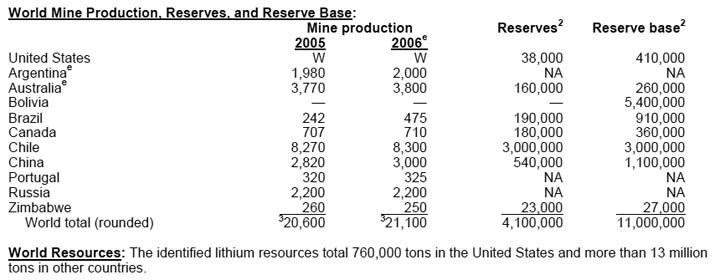
    Kohler points out that there will be accompanying booms in clean energy generation and both lithium and copper production (which provide opportunities as well as challenges for local companies).

    Kohler had an article in a similar vein at The Eureka Report (“Wheels of fortune“) recently, looking at both clean energy companies linked to Better Place and lithium producers that could benefit from the electric vehicle revolution, like Talison Minerals, Galaxy resources and Haddington (another Australian miner – Greenland Minerals And Energy – is hoping to develop a uranium / lithium deposit in Greenland).

    It would be quite pointless to generate the electricity for the new era of transportation with brown coal, or even black coal. The emissions would still be lower than petrol exhausts, but the gains from using renewable energy instead would be enormous. In fact, electric cars can underpin the development of viable renewable energy industries in most countries.

    Better Place plans to buy only renewables and expects to become Australia’s largest buyer of wind power. This is likely to a boon for Origin, AGL and Infigen from about 2013.

    Seventy percent of the world’s mineral lithium comes from the Greenbushes mine in Western Australia, owned by a Canadian company called Talison Minerals. The company announced in November last year that it planned to list in both Canada and Australia during 2010 but nothing has happened yet.

    Another local producer is Galaxy Resources, an ASX listed company that owns a lithium/tantalum deposit near Ravensthorpe in WA. Galaxy is currently at $1.18 and market cap of $178.4 million. The stock was 25¢ a year ago and peaked at $2.21 in September last year because of a flurry of interest in lithium batteries around the time that A123 Systems Inc listed on Nasdaq, becoming the hottest new listing in 2009.

    Australian lithium mines aren’t the only ones looking to increase production – The New York Times recently had an article on the surge of interest worldwide in the metal (“The Lithium Chase“).

    Toyota Tsusho, the material supplier for the big Japanese automaker, announced a joint venture in January with the Australian miner Orocobre to develop a $100 million lithium project in Argentina. That deal came only days after Magna International, the Canadian car parts company that is helping develop a battery-powered version of the Ford Focus, announced that it was investing $10 million in a small Canadian lithium firm that also has projects in Argentina. …

    About 60 mining companies have begun feasibility studies in Argentina, Serbia and Nevada that could lead to more than $1 billion in new lithium projects in the next several years, while dozens of smaller projects are being proposed in China, Finland, Mexico and Canada. …

    In the meantime the four biggest current producers, which mine and otherwise gather lithium in Chile, Argentina and Australia, say they are planning to expand long-running projects as future demand warrants.

    In Bolivia, which has almost half of the world’s reserves, the leftist government is building a pilot production plant and is drilling exploratory holes. That Bolivia is a remote, unstable country often hostile to foreign investment has helped spur interest in producing lithium in neighboring Argentina and Chile, in Australia, and in the United States. Several Canadian and American companies are making claims about future production prospects in Nevada, though few analysts foresee large-scale production from that state.

    While most experts are skeptical that meaningful amounts of lithium can be produced domestically, they maintain that adequate supplies will be available from sources outside of Bolivia for many years to come and note that the biggest producer, Chile, is a dependable American ally.

    While the NYT is dubious about increased lithium production within the US, one american company which has garnered attention for its potential to is Simbol Mining, which is looking to extract lithium from the water flowing through geothermal power plants.

    Most of the attention for large scale future production of lithium tends to focus on Bolivia, which has the world’s largest lithium resource soaked into the coating on the world’s largest salt flat, the Salar De Uyuni.

    The subject of Peak lithium has been raised from time to time (with recent commentary at Seeking Alpha and The Oil Drum) with Jack Lifton (author of the Seeking Alpha article) arguing that lithium supplies will be insufficient to meet our needs while Keith Evans argues there is more than enough resources available.


  • Survivalism is the New Black ?

    TreeHugger has a post on the expanding popularity of survivalist culture in the US – Survivalism is the New Black.

    Survivalism used to be the preserve of wingnuts who believed in black helicopters and the New World Order; now it has gone positively mainstream. John wrote previously about Survivalist Green; Now the New York Times picks up the story. Cormac McCarthy’s The Road and Will Smith in I am Legend have described it, while climate change, peak oil and Katrina are making a much broader spectrum of society prepare for it.

    Writing in the Times, Alex Williams quotes Barton M. Biggs, the former chief global strategist at Morgan Stanley: People should “assume the possibility of a breakdown of the civilized infrastructure.Your safe haven must be self-sufficient and capable of growing some kind of food,” It should be well-stocked with seed, fertilizer, canned food, wine, medicine, clothes, etc. Think Swiss Family Robinson. Even in America and Europe there could be moments of riot and rebellion when law and order temporarily completely breaks down.”

    Most surprising survivalist in the article: Alex Steffen of Worldchanging:

    One left-of-center environmentalist who is taking action is Alex Steffen, the executive editor of www.Worldchanging.com, a Web site devoted to sustainability. With only slight irony, Mr. Steffen, 40, said he and his girlfriend could serve as “poster children for the well-adjusted, urban liberal survivalist,” given that they keep a six-week cache of food and supplies in his basement in Seattle (although they polished off their bottle of doomsday whiskey at a party).

    He said the chaos following Hurricane Katrina served as a wake-up call for him and others that the government might not be able to protect them in an emergency or environmental crisis.

    “The ‘where do we land when climate change gets crazy?’ question seems to be an increasingly common one,” said Mr. Steffen in an e-mail message, adding that such questions have “really gone mainstream.”


  • Smarter Chargers for Electric Vehicles

    Technology Review has an article on smarter electric vehicles charges, claiming “the devices could help stabilize the grid, and make charging electric cars cheaper” – Smarter Chargers for Electric Vehicles.

    This spring, GE will start selling a line of “smart charging stations,” devices that communicate with utilities to optimize charging, for electric vehicles. The technology could be key to ensuring that electric cars don’t strain the power grid, and it could cut down on consumer electricity bills. Eventually, because the charging stations could help stabilize the grid, they could allow utilities to rely more on intermittent renewable sources of energy such as solar and wind power.

    The GE products come as automakers introduce a new wave of electric vehicles. GM, Nissan and Ford, for example, plan to start selling electric vehicles this year, and others will follow. While other companies already offer electric vehicle chargers, GE’s products could be important because they’re made to work with the rest of the company’s “smart grid” infrastructure, which stretches from the power plant, through the grid, all the way to smart appliances in the home. The company also has close relationships to utilities, which could speed adoption.

    Electric cars could eventually have a big impact on electricity use–charging a plug-in vehicle would account for about 30 percent of a typical household’s electricity bill, says Michael Kintner-Meyer, a senior research scientist at the Pacific Northwest National Laboratory in Richland, WA. (He helped develop a smart charger for electric vehicles, which PNNL has made available for licensing.) If too many people decide to charge their cars during times of peak electricity use, it could force utilities to use expensive and often dirty “peaking” power plants to meet demand, or even threaten power outages.

    Smart chargers could solve this problem. At the simplest level, GE’s chargers would let owners program their cars to delay charging until the middle of the night, when demand is low. As more utilities start to use “time-of-day pricing,” when they’d charge less for electricity in the middle of the night, for example, this feature could save customers money. But the chargers can also respond to real-time price signals sent by utilities to GE’s smart meters, which are now being installed in some homes. These signals would trigger changes in charging, making it possible for electric vehicles to serve as a buffer, smoothing out variations in supply and demand.


  • Fuel cells a tough sell in a coal-fired economy

    The Age has an article on cogeneration / fuel cell company Ceramic Fuel Cells (an area attracting much attention in the wake of the unveiling of the Bloom Box) – Fuel cells a tough sell in a coal-fired economy .

    IF YOU are flicking on a light switch in Melbourne today, there is a 96 per cent chance you are buying electricity generated more than 100 kilometres away, beneath a Latrobe Valley smokestack.

    It is a cheap way to set up an electricity system, but hugely inefficient.

    An estimated 75 per cent of the energy generated at Hazelwood and Yallourn is lost as heat or used onsite. Another 5 per cent is lost during transmission and distribution. It means only about 20 per cent of the energy ends up making the distance.

    The electrons firing your bulb are also environmentally unfriendly, coming from decades-old technology that burns brown coal, the most greenhouse gas intensive major power source.

    The replacement for this ”dirty” power in coming years may not be what most expect – initially large-scale gas plants supplemented by wind farms, with solar thermal and geothermal hopefully to follow. It could also come from a box about the size of a small washing machine that sits down the side of your house.

    This, at least, is the line of Ceramic Fuel Cells, the company behind the solid oxide fuel cell technology known as BlueGen. Based in Noble Park, it is said to produce enough power in a year to run a standard home more than twice over.

    BlueGen creates electricity and heat by passing natural gas over ceramic fuel cells. According to Ceramic Fuel Cells managing director Brendan Dow it is 85 per cent efficient and cuts the average home’s annual carbon dioxide emissions by 18 tonnes.

    ”At the moment they are about $25,000 to $30,000 installed but I predict within the next three to four years they should be $10,000,” Dow says.

    ”But this is misleading, really. They will be like a mobile phone, where you don’t pay for the handset, you just pay for the contract. Here, you won’t pay for the BlueGen unit, just for the gas.”

    It is a big call. Just 30 BlueGen units have been sold to date – and just four in Australia. The majority of sales have been in Germany, which is better prepared for decentralised electricity generation after years of the government generously promoting rooftop solar photovoltaic panels.

    But Ceramic Fuel Cells is now approaching an important turning point. It expects safety approval by a Netherlands rating agency in the next three weeks, making large-scale installation much easier. It has signed deals with a handful of European companies, opened a manufacturing plant near Dusseldorf and employs 80 people in Melbourne. Premier John Brumby opened the Noble Park plant last May, and has been vocally supportive. Dow spruiks a bright future: “We will be cash-flow positive by next year. We’re only planning on selling a couple of hundred this year, but the plan is to sell up to a couple of thousand next year.”

    The question Ceramic Fuel Cells poses for policy makers is: does an innovative low-emissions technology that emits less carbon dioxide than brown coal deserve public help to become cost-effective?

    In the US, fuel cells are the flavour of the month thanks to some heavyweight support for a silicon fuel cell known as the “Bloom Box”. Launched last month by California Governor Arnold Schwarzenegger, it boasts Google as its first customer and has been backed by eBay, Wal-Mart and Coc-Cola. The rhetoric at the US launch was expansive. Schwarzenegger said the fuel cell technology was “shaping the future of energy”.

    For the moment, Bloom and BlueGen are operating on a different scale – one fridge-sized Bloom Box unit generates enough power to run a street block and costs up to $US800,000 ($A874,300).

    Ceramic Fuel Cells sees a bright future in Europe, but is less certain about a cautious Australian market still hooked on coal. It is lobbying hard to get the Victorian government to add it to a list of technologies that utilities are obligated to buy electricity from. “Not having that is why we’ve backed off in Australia,” Dow says. “That’s the single biggest hurdle to commercialisation in Australia.”


  • The Return of the natives

    The New Statesman has a slightly harsh review of James Cameron’s “Avatar” (though not as harsh as John Pilger’s) and a similar story evolving in India (minus the cool floating mountains) – Return of the natives.

    James Cameron’s Avatar tells the story of a disabled ex-marine, sent from earth to infiltrate a race of blue-skinned aboriginal people on a distant planet and persuade them to let his employer mine their homeland for natural resources. Through a complex biological manipulation, the hero’s mind gains control of his “avatar”, in the body of a young aborigine.

    These aborigines are deeply spiritual and live in harmony with nature (they can plug a cable that sticks out of their body into horses and trees to communicate with them). Predictably, the marine falls in love with a beautiful aboriginal princess and joins the aborigines in battle, helping them to throw out the human invaders and saving their planet. At the film’s end, the hero transposes his soul from his damaged human body to his aboriginal avatar, thus becoming one of them.

    Given the 3-D hyperreality of the film, with its combination of real actors and animated digital corrections, Avatar should be compared to films such as Who Framed Roger Rabbit (1988) or The Matrix (1999). In each, the hero is caught between our ordinary reality and an imagined universe – of cartoons in Roger Rabbit, of digital reality in The Matrix, or of the digitally enhanced everyday reality of the planet in Avatar. What one should thus bear in mind is that, although Avatar’s narrative is supposed to take place in one and the same “real” reality, we are dealing – at the level of the underlying symbolic economy – with two realities: the ordinary world of imperialist colonialism on the one hand, and a fantasy world, populated by aborigines who live in an incestuous link with nature, on the other. (The latter should not be confused with the miserable reality of actual exploited peoples.) The end of the film should be read as the hero fully migrating from reality into the fantasy world – as if, in The Matrix, Neo were to decide to immerse himself again fully in the matrix.

    …Avatar’s fidelity to the old formula of creating a couple, its full trust in fantasy, and its story of a white man marrying the aboriginal princess and becoming king, make it ideologically a rather conservative, old-fashioned film. Its technical brilliance serves to cover up this basic conservatism. It is easy to discover, beneath the politically correct themes (an honest white guy siding with ecologically sound aborigines against the “military-industrial complex” of the imperialist invaders), an array of brutal racist motifs: a paraplegic outcast from earth is good enough to get the hand of abeautiful local princess, and to help the natives win the decisive battle. The film teaches us that the only choice the aborigines have is to be saved by the human beings or to be destroyed by them. In other words, they can choose either to be the victim of imperialist reality, or to play their allotted role in the white man’s fantasy.

    At the same time as Avatar is making money all around the world (it generated $1bn after less than three weeks of release), something that strangely resembles its plot is taking place. The southern hills of the Indian state of Orissa, inhabited by the Dongria Kondh people, were sold to mining companies that plan to exploit their immense reserves of bauxite (the deposits are considered to be worth at least $4trn). In reaction to this project, a Maoist (Naxalite) armed rebellion exploded…


  • Coal seam gas bonanza not for all

    The Australian has a report on some of the concerns being raised about the coal seam gas boom in Queensland – Methane bonanza not for all.

    WHILE international business is starting to take a closer interest in Queensland’s fledgling liquefied natural gas industry, farmers on the Darling Downs, where the gas will be extracted, don’t see much upside in having 30,000 oil wells springing up in their paddocks.

    There are four big proposals for extraction of coal seam methane gas, predominantly from the western Darling Downs region. These proposals involve piping the gas to Gladstone, where it is liquefied before being exported.

    Energy giants British Gas and Santos have projects under examination, and this week Shell sought to increase its presence by making a takeover offer for Origin Energy, which has vast reserves of coal-seam methane on the downs in the area known as the Surat Basin.

    The Queensland government talks longingly of how LNG can save the Queensland economy. Premier Anna Bligh and Treasurer Andrew Fraser say the industry can bring 18,000 jobs, investment of $40 billion, an increase of $3bn in gross state product, and $850 million in royalties alone each year.

    All this plus a better environmental outcome, as gas-fired power stations are considerably more greenhouse-friendly than coal-fired ones.

    Origin Energy’s gas-fired power station on the Darling Downs is due to be commissioned over the next few months.

    But what the politicians and the big companies are coy about is the effect all this activity will have on the land from which the coal-seam gas is extracted. Having four LNG projects go ahead in Gladstone will mean that about 30,000 small wells will have to be dug back in the Surat Basin west of Brisbane.

    Each well will occupy an area of about 20sq m on the ground, and these 30,000 wells will have to be linked by a network of pipelines, with two pipes to carry away the water and the gas that is extracted.

    From the wells, each company will have several smaller processing plants that will undertake a preliminary refining of the gas before it is put into a larger pipeline that runs north, away from crowded southeast Queensland and towards the coast at the port of Gladstone, where the north side of the harbour has been set aside as the designated LNG refining area.

    There are two main areas where the gas will be extracted, the Surat Basin and the Bowen Basin, west of Gladstone.

    While few of the 30,000 wells are on quality agricultural land, farmers are still worried about their impact. It’s not only the wells and pipes (which will be underground), it’s also the roads and tracks that need to be built to service the wells.


  • Plans for Southern Hemisphere’s biggest windfarm revealed

    The Warrnambool Standard has an article on a large new wind farm that may be built in Victoria – Plans for Southern Hemisphere’s biggest windfarm revealed.

    A NEW player in the south-west wind energy market is preparing to launch a major project near Penshurst.

    Res Australia has confirmed its interest in building turbines on farmland near the small community, with executives to meet local residents in the next eight weeks.

    The Department of Primary Industries website lists the farm as capable of generating up to 625 megawatts of electricity, allowing it to support more than 350,000 homes. It would dwarf an $800 million, 365-megawatt development to be built near Macarthur and create hundreds of jobs in a region embracing renewable energy opportunities.

    Test towers have been installed on district properties to establish the strength and consistency of wind for power generation as further preparatory work continues.

    Res Australia developer Simon Kerrison said the company hoped to progress its plans within nine months. “We’re still in the early stages; we’re doing initial studies and surveys just to make sure the project is viable in the area,” he said. While unable to confirm the farm’s likely output, Mr Kerrison said Res had deemed early results strong enough to warrant closer investigation.

    A 625-megawatt wind farm would be among the largest in the world, joining massive operations in the US and Romania.