Author: Darrell Etherington

  • Kickstarter: The Coastliner Automatic Watch Is Brimming With Understated Retro Appeal

    coastliner


    Kickstarter occasionally has a watch project, but they’re relatively rare, and even when one does pop up, it usually isn’t impressive enough to turn my head. The Coastliner, a project going on right now, is definitely a noteworthy exception. From independent graphic designer-turned-watchmaker Tim Hadleigh working out of the U.K., the retro-cool Coastliner gets its design inspiration from American classic cars of the 1950s, and the result is a stunner.

    Hadleigh’s Coastliner marries a mirror-polish stainless steel case with a cream-colored dial, tapered needle minute hands and a sea-foam green second hand that acts like a cherry on top of the 50s-theme sundae. A brown calfskin strap, with green interior lining to match the second hand completes the look. The Coastliner’s appeal isn’t all on the surface, either; the watch is powered by an ETA 2824-2 automatic Swiss movement, visible through the exhibition window on the watch’s case back.

    The Coastliner’s face, with its small, sans-serif hour marker and the subtle relief design printed on the center may be my favorite part of the design, but every element comes together nicely. All of the elements of the fully functional prototype (save the sapphire glass and Swiss ETA movement) were designed and built by Hadleigh himself, who got his start in watchmaking as a hobbyist taking things apart, and eventually graduated to building his own designs, and even his own movements, by hand.

    The project is set up to fund a limited production run of 50 Coastliner watches. As of this writing, there was just one remaining at the discounted pre-order level of £375 ($592 US), with another 25 available at the full price of £750 ($1185 US). The prices are fair given how much work Hadleigh is putting into the production (a process he describes in detail for a previous watch he built on the Kickstarter page), and given the quality of the components. A lot of collectors hesitate on new or young brands, but if you’re a fan of supporting a new generation of makers trying to deliver high-quality products outside of the heavily entrenched legacy watch brands, the Coastliner is a good pick.


  • The Logitech Ultrathin Keyboard Case For iPad Mini Successfully Balances Size And Performance

    logitech-ultrathin-mini-8

    Logitech had a definite winner on its hands with the Ultrathin Keyboard Case for iPad, a Bluetooth keyboard that attaches via magnets built into the iPad, protecting the screen and adding only minimal thickness. Now, there’s a successor designed for the iPad mini that comes in an appropriately shrunken down package. Of course, making a keyboard smaller doesn’t always produce the best results, but in this case, Logitech strikes a good balance.

    • MSRP: $79
    • Three months of battery life (based on two hours daily usage)
    • Availability: Preorder now, with availability sometime later this month
    • 7.33mm thin, weighs 220 grams
    • Available in black and white (and red in select markets)


    The Logitech Ultrathin is a good-looking device that matches up really well with the iPad mini’s design. My review unit is black, and the case’s matte finish pretty much perfectly mirrors that of the iPad’s rear case. Side-by-side and face down, the symmetry is such that you could easily pick up one thinking it was the other if you aren’t paying close enough attention. The two surfaces also feel the same, which speaks volumes about Logitech’s attention to quality with the Ultrathin’s construction.

    The magnet spine that attaches to the iPad itself snaps into place with a satisfying click, and lines up well when closed. The face of the keyboard features a shiny black plastic, which, while not as classy as the iPad’s glass surface, does a good job of mimicking its black bezel visually, to keep the whole design symmetry experience consistent.

    The Ultrathin’s keyboard is the part upon which everything hinges, and Logitech has pulled out all the stops to try to provide a typing experience that doesn’t feel compromised, despite the extremely limited real estate available given the iPad mini’s small footprint. To make it work, Logitech has combined a number of function buttons, reduced key size and cut down on the space between them.


    The keys themselves feel great, and offer a nice response when typing despite how thin the cover is. But the experience isn’t without compromises. Typing on the keyboard will prove a frustrating experience at first for anyone used to using a full-sized keyboard. But the good news is that the number of errors you make starts to taper off pretty quickly, and in very little time, you can even feel mostly at home on the Ultrathin keyboard, though placement of some elements like the Shift keys never quite feels perfectly natural.

    While the typing experience isn’t perfect on the Logitech Ultrathin Keyboard, it’s about as close as you can get without adding a lot more bulk to a Bluetooth keyboard for the iPad mini. It still dramatically increases your ability to enter text, and beats using the software keyboard by a very wide margin. If you’re looking for an iPad mini keyboard that maintains the smaller tablet’s considerable size advantage over its big brother and still greatly improves the experience of typing anything longer than a tweet.

  • The Wayki Toothbrush Has A Built-In Alarm Clock You Turn Off With Good Oral Hygiene

    wayki-small-v

    More hardware startups are looking at everyday tools that have been relatively unchanged for a long time, like the HAPIFork we saw at CES this year. Today, a new startup called Wayki is adding its innovative toothbrush design to the list of gadgets hoping to improve the lifestyle of users by adding a modern tech spin to an age-old tool.

    The Wayki is a toothbrush that doubles as an alarm clock, but rather than just being a roughshod combination of the two, it uses the alarm function to reinforce toothbrushing action and hopefully ingrain some good health habits for users. The alarm can’t be snoozed, and it can only be deactivated by inserting the Wayki brush head into the base, which in turn triggers the two-minute brush timer (I always thought you were supposed to go for five minutes per session, but that might be overkill, according to Wayki).

    Wayki advertises its lack of a snooze function as a feature, designed to address studies that show delaying that morning start can lead to bad sleep cycles and lower productivity throughout the day. Dave Hawkins, Wayki’s lead designer, says that his own personal experience with putting off his morning start is what prompted the inclusion of that particular feature.

    “I’ll often find myself tapping the snooze button, regret it later, and in a sudden hurry forget to clean my teeth before staring at my screen for the rest of the day,” he explained in an email interview. “Even when I remember, I’ll be too impatient to wait for the full 2 minutes.”

    Hawkins thinks that technology can best help individuals with improving wellness and health by taking away any remaining friction in the process, essentially making things automatic for users, and the Wayki is designed around that principle.

    “I think the best products do the thinking for you, and with brushing being a chore I realised that the most efficient approach was going to be removing the decision-making process from the equation. “Mental weight is a bigger challenge than physical weight. It’s far less apparent that the weight is even there.”

    They Wayki is seeking £50,000 (around $80,000 US) in funding, using Selfstarter, the open source crowdfunding platform developed by Lockitron to help get its own project off the ground. Pre-orders go for £49 ($77 US), or 50 percent off of the anticipated retail price, and the first devices are expected to ship in the next three to five months. While Wayki is initially only available for shoppers in the U.K., Hawkins says that it should be available worldwide in time for its official launch.

  • Kickstarter: The Hydra Is A Configurable Power Supply Perfect For Your Next Home Robot Build

    hydra-power


    Often the stuff that gets press attention from Kickstarter tends to focus on the consumer market, but the Hydra is a new project on the crowdfunding site that could make big waves in everything from hobby electronics, to home robotics, to industrial manufacturing. It’s a compact power supply with three outputs, each with completely configurable voltage. Put simply, the Hydra is almost like a Raspberry Pi for the power supply industry: small, customizable, and relatively inexpensive at $200.

    Power supplies are required for any electronic device that needs to plug into a wall outlet or battery pack in order to function. They’re responsible for converting electrical power from one form to another, and making sure that the voltage out to devices matches their requirements. The Hydra can handle voltage in of anywhere between 5V and 14V, and push it back out via its three outputs to a range of 3V and 12V, with each of the outputs individually configurable via USB, Bluetooth (and a smartphone app) or serial connection.

    According to the Hydra project creators, the Hydra serves essentially as a full-featured replacement for a bench-top power supply, which, as you can see from the picture above, is a much, much larger device. It can be configured to work as a battery charger for most types of rechargeable batteries, and it can also power high-power LEDs, electronics and wireless transmitters. You can use it for mobile devices by connecting it to a battery pack, or build an entire industrial robot for a factory production line with it, depending on your needs.

    The project is the brainchild of Caleb Chamberlain, who holds a Master’s degree in electrical engineering from BYU, and founded CH Robotics to design and create inertial and orientation sensors for different kinds of robots. The Hydra is already a functional prototype, and Chamberlain says there’s a production process in place to start creating them at volume once they get the startup capital, which is likely why he’s only looking for $10K to fund the product. The Hydra is available for $160 through pre-order, or $212 for a Bluetooth-enabled version, both of which have an estimated delivery date of April.

    The Hydra may not be as consumer-friendly as an iPhone case or a Bluetooth speaker, but it’s a Kickstarter project that could have considerable impact in amateur, small business and industrial markets, and as such it’s definitely one to watch.

  • Apple’s iPhone Sales Grow By As Much As 400% In 3 Months In India, But There’s A Huge Gap To Close

    Apple-Logo-MacBook

    Apple’s next big growth market could be India – a country where it has failed to find significant purchase with consumers up until this point. The Economic Times (via @ScepticGeek) is reporting that sales of Apple devices, with iPhones leading the way, rose by between 300 and 400 percent in the past quarter. That growth, identified by research firm IDC, is likely being propelled by Apple’s distribution partnerships with Redington and Ingram Micro.

    According to Convergence Catalyst founder Jayanth Kolla in conversation with the Economic Times, Apple’s strategy in India mirrors the route it took to success in China; the company spent time studying the market, learned what it needed to do to sell handsets in India and then got aggressive about executing its sales strategy. Apple’s India team grew by 500 percent in six months to help make that happen, going from 30 to 150 people, Kolla says.

    Apple’s strategy in India hasn’t involved fielding a lower cost device, but it has included making its iPhone more attainable for cost-conscious buyers. That’s being done through installment-based payment schemes operated through its resale partners, including one with TheMobileStore, a national Indian retail chain, which that company’s CEO says has helped increase sales of Apple gadgets three-fold in the past year.

    Three- or four-fold growth in a single quarter is definitely impressive, but Apple has to make up a considerable gulf in India. According to recent figures from IDC, Samsung had a 46 percent market share in India between July and September 2012, and Apple didn’t even show up in the top five, with HTC rounding out that crowd with a relatively small 6.6 percent. Browsing stats show that Apple has only a tiny percentage of current mobile web traffic in the country, and the most recent IDC numbers for mobile operating systems show a meager 1.4 percent share of sales in the July through September 2012 quarter.

    Last year, during an Apple quarterly conference call, CEO Tim Cook said that while he “love[s]” India, he said they didn’t see much opportunity there in the short-term and would be focusing on other market where there was more growth potential for the time being. Part of the reason for his hesitation was the distribution system in that country, he said at the time. But a fresh injection of local Apple staff, and a distribution model that is beginning to find its legs could signal that Cook and Apple are finally willing to put in the time and effort to grow their presence in India, where there is reportedly currently less than 10 percent smartphone penetration.

  • T-Mobile Aiming To Be First With BlackBerry Z10 Launch In The U.S. With Mid-March Release

    z10-13

    T-Mobile says that BlackBerry’s new Z10 smartphone is “more stable than … anticipated,” and could potentially get a faster-than-expected launch on the network. As it stands, the new BB10-based smartphone looks to be on track for a mid-March release, according to statements made by T-Mobile USA Head of Business Sales Frank Sickinger speaking to Bloomberg today. The company anticipates it could be the first U.S. carrier “out of the gate” with BB10 as a result, according to the report.

    Anticipated launch dates for the BlackBerry Z10 in the U.S. had pointed to a March 27 launch on T-Mobile, according to a leaked roadmap published by TmoNews earlier this week. While that date may have originally been accurate based on the carrier’s assumption of how long the Z10 would take to clear testing, Sickinger’s words today suggest that the timeframe has been pushed up.

    The Z10 is already out and available in the Canadian and U.K. markets, and BlackBerry has been issuing reports of early sales success in both countries. The launch in Canada on Rogers is reported to have seen initial sales numbering in the “thousands,” making for a record launch day for a single BlackBerry device, and in the U.K. many outlets report being sold out. That said, BlackBerry still isn’t releasing any specific sales numbers, which casts some doubt on how successful sales have actually been, in relative terms compared to the larger smartphone industry.

    The Z10 will retail on T-Mobile for $199 with a new two-year agreement, and will be offered to business customers ahead of its consumer launch, with about a week’s worth of lead time. If T-Mobile can get the Z10 in customer hands a bit faster than its competition,  that might help it win over some more business customers to its cause. But this could just spur other carriers to try to speed up their own testing processes, which should please the eager U.S.-based BB-heads out there.

  • Next Xbox Will Reportedly Have Siri-Style Natural Language Input

    Image (1) xbox-360-new.jpg for post 322889

    One of the most-rumored features of the mythical Apple television set is Siri integration that would allow you to naturally ask questions and issue commands to your TV, but Microsoft may beat Apple to the punch, if a new report from The Verge is accurate. Microsoft already has some voice features built into the current generation Xbox, but the next-gen console will get much-improved abilities including natural language processing powers, the report claims.

    New voice-based abilities include the option to wake the new Xbox from sleep mode with an “Xbox on” command, as well as a system that can use Kinect to detect people in the room and offer up multiplayer game suggestions. Users can also query the new Xbox to ask it what their friends are currently playing, tell it to pick up playing a movie where it was last left off and more. The new system will also be much better at vocalizing responses to voice-based user input, according to the report, which should make the overall experience feel much more like an ordinary conversation.

    Natural language input for Smart TV platforms is a trend that’s just starting to find its sea legs. The tech was discussed at CES this year by many CE companies including LG as part of their upcoming or shipping platforms, and language processing industry leader Nuance launched its Dragon TV platform last year at CES, to be offered up for integration into OEM hardware and cable/satellite services that want to start building in NLP functionality.

    Microsoft is clearly interested in more than just games with the Xbox, and the next generation version of that console will probably take its efforts to be the locus of the living room further still. Building a Siri-like experience into that platform is one way to increase its value proposition over competing, more affordable devices like the Roku and current Apple TV, for users who might not be so interested in the gaming side of the equation.

    We’ll see the next Xbox at E3 this year, but also possibly before if Verge’s sources are correct, at an event similar to the one Sony is holding on February 20th in NYC. Both consoles are also expected to make their official commercial debuts later this year, in time for the holiday shopping season.

  • Apple Patents Image Identification Unlocking Method For iPhones And Macs

    Apple buys AuthenTec

    Apple had a new patent application published by the USPTO today, describing an unlocking method for digital devices that uses image identification to properly recognize an authorized user. The system would present a user with photographs from their iPhoto or iCloud collections, and then ask them to identify who or what the subject is in order to unlock the device. The item in question could also be an object or series of images.

    The authentication process would work by displaying at least one image to be identified from the user’s library, though it could also display a number in succession if users are looking for more security. It’s highly likely that someone close to you will recognize another individual depicted in photos on your phone, for instance, but if you’re worried about granting access even to that inner circle of acquaintances, it becomes increasingly unlikely they’ll be able to identify each of a series of more than one picture.

    Different means of input are also described in the patent, from a multiple selection list of choices for one-tap entry, to using an on-screen (on an iOS device) or physical keyboard (on a Mac) to type in the exact answer, to just speaking the name of the person or object aloud. Combined with voice recognition, you can see how the third option would provide yet another layer of added, personalized security, which would be very hard to beat via conventional machine-based security workaround tools.

    If the system uses objects instead of people, the patent describes a process by which users would offer up unique, alternative nicknames for recognizable monuments and landmarks. So, for example, a picture of the Eiffel Tower could actually be linked to the phrase “The Big Stick.” Since no one else is likely to use quite the same idiosyncratic alternate names for highly recognizable objects, the system should remain fairly secure.

    In most cases, Apple’s current passcode unlock system is probably sufficient for the needs of users, but should the company want to meet the needs of privacy sensitive users, a method like this that’s highly personal and hard to hack could be of considerable benefit.

  • OUYA Android Game Console To Get Annual Hardware Updates, Founder Says

    Ouya_Family_1024x1024

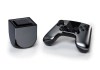
    The OUYA Android-based gaming console will get hardware refreshes on an annual basis, founder and CEO Julie Uhrman revealed in an interview with Engadget. Uhrman was at DICE, an annual summit that focuses on video games, where she also announced new game publisher partners for the OUYA platform. The refresh cycle will more closely resemble those of smartphones than those of traditional consoles, which generally enjoy multi-year lifespans extending into double digits.

    “There will be a new OUYA every year. There will be an OUYA 2 and an OUYA 3,” Uhrman told Engadget in an interview. That’s a pretty bold declaration of intent from a company that, while immensely successful in their Kickstarter crowdfunding campaign, has yet to actually ship production-ready OUYA 1 devices out to the general public, though they have already secured retail partners.

    There are a few reasons why current big name consoles have the long life that they do. A lot of money goes into their initial development, for one, meaning that manufacturers like Sony and Microsoft often sell them at a loss for years before they begin to turn a profit on hardware. And there are advantages to this model for the consumer, too: Users don’t have to worry about their hardware and software library becoming obsolete all that quickly when you’ve got a dependable, multi-year upgrade cycle.

    Uhrman explains that all games on OUYA will be backwards compatible, at least in so far as they’ll be tied to user accounts independent of hardware, rather than linked to hardware itself. All-digital delivery means that this is easier to accomplish, since there’s no messy business like disc formats to worry about.

    Plans for future versions of the console include faster processors, and potentially expanding storage beyond the current 8 GB included. At CES this year, Qualcomm and Nvidia both unveiled next-gen processors, so those are likely candidates for future updates, since the emphasis will be on eking out as much graphics performance as possible from the diminutive OUYA box. The current generation OUYA, when it ships, will have a Tegra 3 on board running at 1.6GHz, which should serve it well, at least compared to current generation smartphones.

    While it’s somewhat refreshing to see a consumer electronics maker talk in concrete terms about their future product pipeline, you have to wonder whether or not it’s the right move. Uhrman is now essentially committed to an annual update cycle, which puts pressure on the company to deliver that going forward, and which also means consumers are well aware that if they just wait a little while, they can get hardware with better specs. Plus, if the market turns out to be competitive, there’s no mystery about what your upgrade strategy is for potential rivals.

    It’s not necessarily surprising that OUYA wants to update annually; the platform they’re creating is well-suited to a frequent update cycle, and that could be one good way to make inroads against the major players, which remain relatively constant for around a decade. But whatever the company’s plans at this point, it still has to ship and then win over consumers before it can put any of them into action.

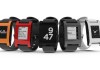
  • Pebble Addresses Early iOS Bluetooth, Android Fragmentation Issues, And Battery Issues

    Family of 5 Pebbles

    Pebble, the smart watch that set the world on fire with its Kickstarter project, is already encountering a few growing pains as its device begins to trickle out to the earliest backers. Chief among those issues is a problem that sees iOS notifications for email turn off whenever an iPhone or iPod touch has its Bluetooth connection interrupted. Problems are also cropping up around different Android OEMs and the stock email apps they use not necessarily being compatible with Pebble, iOS caller ID issues and differing support for various Android ROMs, among others.

    Pebble itself acknowledged these and other issues in an email to Kickstarter project supporters today, identifying which issues they’re working on and what their top priorities are. The iOS email problem, which can be fixed somewhat with an awkward workaround. Pebble says that they’ve talked about this problem with Apple’s developer support department, but doesn’t think that that’s necessarily a route they can expect a solution from anytime soon. Instead, they say finding a solution is their “#1 priority iOS task,” and they’re currently looking to gather feedback from the iOS user pool to help them address it.

    Other issues highlighted in the email include problems like HTC and Samsung devices not delivering email notifications to the Pebble properly from the default email apps used by those OEMs, Pebble interfering with proper Siri functionality on iOS and more. Here’s a complete list, as quoted from the email sent by the Pebble team.

    • Email notifications from the default email app on HTC and some other Android devices are not being delivered to Pebble yet. On other default email apps (Samsung in particular) do not transmit email contents. Working on it.
    • Some Pebbles are rebooting after receiving some notifications. If this happens to you regularly, use the Contact or Email support button inside the app to send us debug logs.
    • iOS Caller ID. We’ve identified a bug that prevents a caller’s name from appearing on Pebble. Will have a fix in the next iOS Pebble App version.
    • Android two factor authentication – click here for instructions
    • Watchfaces not loading on iOS. Fixed in the next version of the iOS app.
    • Battery indicator: we’re seeing reports of Pebble battery lasting from 2-7 days. It seems to be related to the variety of different Bluetooth connections on different phones. The first thing we’re working on is improving the battery logging and how Pebble alerts you when the battery is almost empty. Then we’ll move to improving battery life across the board.
    • Android ROMs: we’ll do our best, but unfortunately we cannot promise support for the entire wide world of Andriod ROMs out there. We’re testing with stock devices from HTC, Samsung, Nexus (among others) and always on the stock OS.- Pebble seems to interfere with Siri on iOS devices. Working on this problem.

    Issues are to be expected with a device that’s so new to market, and essentially just reaching its first users now. But many of these involve basic Pebble functionality, including the ability to transmit information from your phone to your watch about basic things like incoming calls and email. And the battery issues are another core element of the watch’s appeal, and one which users are likely to find fairly disappointing.

    More worrying than these are issues that don’t seem to have an imminent solution. Pebble says it will fix some of these issues in the next update for iOS, including the caller ID problem and the issue around being able to change watch faces, but other things like the Siri interference and Bluetooth connection problems don’t have any kind of projected timeline for a solution. And the Android fragmentation problem is one even Pebble admits is too big to ever completely tackle.

    My Pebble is still in the mail, so I’m reserving judgement on the device until I can actually get to try it out, but these early problems aren’t that encouraging. At least the team seems intent on addressing the issues to the best of their ability early, which could help get things ironed out before the Pebble is in the hands of more actual users.

  • Apple Will Reportedly Lose The iPhone Trademark In Brazil

    brasil-flag-cjr

    Apple is set to lose its iPhone trademark in Brazil, according to a report from Reuters which cites a source familiar with a forthcoming decision from that country’s copyright regulator. The trademark was challenged by Brazilian electronics firm IGB Electronics SA, which launched a new line of Android phones bearing the name late last year.

    The decision will be announced officially on February 13, Reuters reports, at which time Apple is open to challenging it. The Brazilian company has had the trademark since 2000, giving it a lengthy head start over Apple’s own use of the term, but the Android line with the name “iphone” was only launched in December 2012, which could indicate it was an explicit attempt to give its copyright claims more force.

    IGB Electronics SA has said in the past that it is willing to discuss selling the trademark rights to Apple, in an interview with Bloomberg from just before news of this decision was reported by Reuters. IGB may be looking for a similar outcome to the case in China last year which saw Proview, a Chinese electronics company, eventually sell its own ownership of the iPhone trademark to Apple for a $60 million payday.

    IGB is playing its cards wisely, targeting Apple in one of its key growth demographics. Last year, Tim Cook said that Apple sees “huge opportunity” in Brazil, and the country in many ways mirrors the economic climate in China, which is increasingly important to Apple’s bottom line.

    Will Apple have to stop selling iPhones in Brazil? It’s unlikely the company will let it come to that. Either they’ll appeal any decision that comes down, or arrange to purchase the mark from IGB in the interest of expediency. But it does make you wonder if we’ll see more trademark claims pop out of the woodwork in other key international markets.

  • The U.S. Likely Won’t Get Its Thumbs On The Hardware QWERTY-Sporting BlackBerry Q10 Until May Or June

    nseries_black_front-1

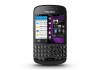
    When BlackBerry unveiled its new BB10 line of devices and mobile OS, the company showed off both the Z10 and Q10 smartphones. The Z10 was released shortly after the announcement in many markets (the next day in the U.K., this week in Canada) and will hit the U.S. in March, but the Q10 with its hardware QWERTY keyboard was said to be hitting markets beginning in April. The key word there was “beginning,” however, as in a follow-up interview BlackBerry CEO Thorsten Heins reveals Americans likely won’t get the device until May or June.

    Heins told the Associated Press in an interview (via AllThingsD) that the Q10 is likely to arrive in the U.S. some eight to ten weeks after the Z10 hits the U.S., which is supposed to happen around mid-March. That means it will be until May or even June before U.S. customers are able to buy the Q10, some simple math tells us.

    The delay isn’t all that surprising. The Z10 is also arriving stateside later than it is coming to other markets, something Heins attributed to the extensive carrier testing required to get it approved for use on major networks in the U.S. from AT&T, Verizon, T-Mobile and Sprint. The same thing is to be expected for the Q10, with perhaps a bit of a shorter testing period required since it’s running BB10, which the carriers are seeing in final shipping form for the first time with the Z10′s round of testing.

    The delay isn’t great for BlackBerry, which would no doubt like to have the QWERTY handset out as soon as possible, after giving the Z10 a chance to find a foothold with consumers. The Q10 remains among the last real hardware keyboard smartphones, and it’ll be interesting to see how BlackBerry blends that control mechanism with BB10′s largely gesture based navigation interface, and how that combination works for consumers.

  • LG Teases New Smartphone Line Unveiling On Facebook

    lg-teaser

    LG Mobile today posted an image to its Facebook page feed that strongly suggests we’ll soon see the company officially reveal its next generation of smartphone devices. The teaser graphic promises that LG’s “New series will be unveiled,” depicting a wrapped gift box. The curious tagline “See what surprise LG has in store for you this time, with an unexpected distinction” accompanies the images.

    LG may be eager to let people know that something new is coming, but the company isn’t giving anything away in terms of what will be announced or when. In all likelihood, however, given the timing of this announcement, we’ll probably see whatever LG has to show at Mobile World Congress this year in Barcelona. That event is taking place starting later in February, so we don’t have long to wait.

    We can also speculate about what LG will be unveiling at that show. While many of the commenters on the company’s Facebook post seem interested in getting updates to their devices to Android Ice Cream Sandwich or Jelly Bean, it’s much more likely we’ll see LG’s Optimus G successor, the G Pro, which boasts  a 5-inch, 1080p display shown off, and it seems a number of other devices designed to appeal to a range of budgets. The Optimus G Pro has already been confirmed by NTT DoCoMo, and should launch in April, but other LG smartphones likely remain to be seen.

    The question remains whether LG can deliver anything truly surprising now that the Optimus Pro has been outed. Then again, this is the company that delivered the excellent Nexus 4, so don’t underestimate what they can do outside of a flagship phone.

  • Open Source Death Star Hits Kickstarter After Government Foolishly Refuses To Build One

    Star Wars Death Star

    The Death Star is undoubtedly a worthwhile undertaking. Sure, in the Star Wars films it’s generally depicted as an offensive weapon but it could have terrific value as a defensive platform, too. The government recently responded to requests from the general public that it look into constructing the massive, moon-sized space station, shutting down the idea because of a short-sighted “we don’t blow up planets” political stance and an unwillingness to dip into the treasury.

    Now, a new Kickstarter project wants to pick up those plans, using an open source design effort and crowdfunding to help make it happen.

    The project has a £20,000,000 (over $30,000,000 U.S.) funding goal, which would be used to create “more detailed plans” than the initial design the team currently has (pictured below) and improve on the original from the Star Wars movies with some unique defensive measures to keep out pesky X-Wings. If the project reaches its stretch goal of £543,000,000,000,000,00 (or $850,000,000,000,000,000), then the plans will actually be put to use building a full-scale production Death Star.

    The project’s founders don’t share much about their backgrounds, so it’s difficult to say if they have the chops needed to deliver on their stated December 2015 delivery timeline. And of course there’s always the possibility of Rebel saboteurs to consider, too. For what it’s worth, we’ve learned from a source that Darth Vader himself is confident things are progressing as planned. “The Death Star will be completed on schedule,” he was overheard to say in conversation with a high-placed Imperial executive.

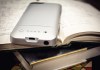
  • Mophie’s iPhone 5 Battery Case, The Juice Pack Helium, Now Available For $79.95

    helium-mophie

    Mophie is one of the most trusted names in iPhone and mobile backup batteries, and the company has finally debuted its battery case for iPhone 5. The Mophie Juice Pack Helium is around 13 percent thinner than the Air version released for iPhone 4S and iPhone 4 (get it? Helium is lighter than air), and retails for $79.95 right now direct from the Mophie store. The cases should ship in time for Valentine’s Day, the company says.

    The new Mophie boasts a 1500 mAh battery, which keen readers will notice is technically enough to double the 1,440 mAh power station inside the iPhone 5. That’s enough to boost your device’s talk time life by up to 6 hours on 3G, or provide another 6 hours of cellular browsing, 7 hours of WiFi browsing, 30 hours of audio playback or 7 hours of movie watching, according to Mophie.

    The new slim down design is offered in both dark metallic and metallic silver colors, with the dark scheme shipping first, and it has the same LED power indicator and forward-facing speaker ports that have made the Mophie line a winner for the past few years. Of course the things can also stand to shed some weight and girth, so this new thinner design is very welcome, but the fact is that when you need juice and you’re without any kind of outlet, having one of these on hand can really save the day, and they take up less space than something like an external charger.

    One final advantage of the Juice Pack Helium is that it has a micro USB port to take the place of the Lightning connector, which handles pass-through charging and data syncing just fine. That’s good news if you’ve already got a ton of micro USB cables (one is also included) lying around from other devices and don’t want to invest heavily in replacing all those 3o-pin Apple chargers from your past iOS devices. This may be one of those cases where a blogger’s needs may not reflect the larger community’s, but I’m definitely a believer given Mophie’s track record, and for sure picking one of these up.

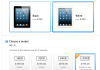
  • Apple’s 128GB iPad Goes On Sale, Just Ahead Of Microsoft’s Surface Pro Launch

    apple-128gb-ipad

    Apple has started selling the capacious new 128GB iPad, the latest update to its fourth-generation Retina Display-sporting tablet design. The 9.7-inch iPad is pulling away from its 7.9-inch younger sibling, desperately crying out “I’m different!” with a flash storage bump. But more importantly, it’s also narrowing the perceived gap between itself and competitors like Microsoft’s Surface Pro.

    The Surface Pro, an iPad competitor? Nay, you say. Microsoft’s computer is a computer, running a full-fledged desktop OS capable of running powerful apps like Photoshop and more, powered by an Intel Core i5 processor. It, too, comes equipped with up to 128GB of storage, features a number of input and output ports, and has a fancy stylus for handwriting.

    But the iPad is not, nor has it ever been, in direct competition with incumbent devices running Windows software. In fact, the iPad has made its enterprise progress in spite of not being able to do all those things the Surface Pro is trumpeting about. People seeking out the Apple tablet for business use aren’t doing so because it has full Windows software support – it doesn’t. They’re doing it because what Apple does provide is conducive to changing practices in the workplace and new ways of getting things done.

    The Surface Pro is a device that could potentially hold a lot of appeal for users who are stuck on legacy systems in workplaces where there’s little flexibility for switching to entirely new platforms, but for the crowd already eager for hardware innovation, the iPad will remain an attractive option. And with the introduction of iPads with much improved storage capacity, at prices that, while expensive, still come in under their Surface Pro equivalents, with double the battery life and a lot more actual usable space.

    Apple’s 128GB iPad, timed for sale as it is just under one week ahead of the Surface Pro’s official launch, was not planned coincidentally. But it’s also an indication that Apple doesn’t seem all that scared of what Microsoft is putting out there: they’ve taken the one spec they suspect could actually matter to their prospective enterprise and education customers and matched it (on paper, and exceeded it in practice). Let’s see if that’s enough to cut Redmond off at the knees in terms of its attempt to take the wind out of Apple’s enterprise sails.

  • OUYA Android Game Console To Launch At Retail In June With Amazon, Best Buy, Target And GameStop

    Ouya_Family_1024x1024

    The little Android-based gaming console that could is in on track for March as promised for Kickstarter backers, but the public launch in June looks to be an equally splashy affair with retail support from some of the biggest U.S. chains. OUYA announced today to backers that it would be selling the console to the general public beginning in June at Amazon, Best Buy, Target and GameStop.

    Pre-orders begin today for retail partners (they’re currently live at Best Buy, Amazon and Target), with pricing set at $99.99 for the console and one controller. Additional controllers are available as well, for $49.99 each (the console supports up to four controllers at one time.

    OUYA founder Julie Uhrman sat down with the Wall Street Journal to discuss the upcoming launch and some of the details around it, laying out that Kickstarter backers would get their units first, followed by pre-order customers who ordered through the OUYA website in April, and then wide retail release including physical store presence beginning in June. She reiterated some of the details around launch day content previously announced, including the fact that there will be around 200 titles coming to OUYA as of right now, with Final Fantasy 3 one of the premiere titles from launch partner Square Enix, which will feature exclusive content.

    Uhrman also revealed that part of the funds the company raised on Kickstarter are going towards directly supporting game development. “There are games that we are supporting today,” she said, but she remained mum about any specific software OUYA itself was backing for the platform. Uhrman also said that while she couldn’t reveal specifics about how many pre-orders the console currently has, the number made since the Kickstarter campaign definitely exceeds the 68,000 backers it picked up during the crowdfunding effort. That, she told the WSJ, was a key factor in attracting big retail partners.

    OUYA has come a long way from its origins as a project many were skeptical would ever be anything other than a vaporware dream. The company shipped out its developer units on time, and then worked to redesign the controller in response to user feedback about ergonomics, components used and control location. Now, it looks poised to deliver on its original timeline and hit full scale production shortly after. It’ll be well worth watching how the OUYA competes with this year’s crop of new consoles from players like Sony, Microsoft and Nintendo, since we’re in a period of transition for each of those companies.

  • Apple Takes 3 Of Top 5 Spots In U.S. Mobile Phone Sales For Q4 2012, Says NPD

    iphone-family

    Apple has managed to nab three of the top 5 spots for the top-selling mobile phones in the U.S. during Q4 2012 according to the NPD Group, with the iPhone 5, iPhone 4S and iPhone 4 ranking first, third and fourth, respectively. Apple also retained the crown for best-selling overall smartphone maker, accounting for 39 percent of smartphone sales in Q4 2012, compared to Samsung’s 30 percent.

    iPhone 4 sales rose 79 percent compared to Q3 2012, and iPhone 4S sales grew 43 percent sequentially, while the iPhone 5 accounted for 43 percent of all iPhone sales in Q4 2012, which is roughly in line with the numbers we’re seeing out of carrier data as well. It also made up nearly two-thirds of all smartphone sales on post-paid plans with a value over $200, NPD says. Samsung made considerable gains on the year, going up to 30 percent of all U.S. smartphone sales in Q4 2012 from 21 percent in the year ago quarter, but the gains were mostly at the expense of other Android OEMs, including HTC, while Apple’s overall share remained constant.

    Net Applications also released its monthly report on mobile OS share, which found that Apple’s iOS increased slightly in terms of traffic, accounting for 60.56 percent of all mobile operating systems, while Android actually took a bit of a dip to 24.51 percent, continuing a decline that has occurred over the past two months from a peak high in November of 28.02 percent. It looks like Apple’s release of the iPhone 5 might have essentially begun to erase earlier gains made by the longer availability of the Samsung Galaxy S III, but Apple still has some ground to make up if it wants to climb back to its 2012 high of nearly 66 percent web traffic share among mobile devices.

    Apple’s holiday quarter, which included 47.8 million iPhone sales and 22.9 million iPads, looks to have helped it in terms of remaining the leader in both smartphone and mobile device sales in the U.S., and in keeping the hold it has on mobile browsing. The strong quarter also accounts for Apple’s regaining the role of largest mobile phone maker by volume in the U.S., an honor it reclaimed according to the latest data from Strategy Analytics released earlier today.

  • Leaks Reportedly Detail More Of HTC’s 2013 Android Line, Peg M7 For Release Soon After Unveiling

    htc-logo

    HTC is set to show off something at a special press event in NYC on February 19 (the day before Sony’s, it turns out), and it’s quite likely that the company will debut its rumored new flagship phone, the M7. And now new leaks from the generally dependable Evleaks suggest the company has a multi-device lineup planned to follow the M7 with retail availability in Spring.

    The two phones detailed by Evleaks on UnwiredView suggest that HTC will follow-up the M7 with a device with slightly more moderate specs, akin to how the One S was designed to complement the One X last year. And there will also be a down-market device, called the G2, that will be 2013′s equivalent to the HTC Desire C.

    The M4 will reportedly pack a 1.2GHz dual-core Snapdragon processor, with a 4.3-inch 720 p display, 2GB of RAM, 16GB of onboard storage and a 13 megapixel rear camera. It’ll have a fairly limited 1500 mAh battery (but fewer pixels to push compared to the M7), and should run Android 4.2 Jelly Bean.

    The HTC G2 (which is unrelated to the previous HTC phone of the same name) will have a 1.0GHz ARM Cortex processor with 512MB of RAM, a 3.5-inch HVGA (480 x 320) display, with a 5 megapixel rear camera and no front shooter, a 1400 mAh battery and Android Ice Cream Sandwich as its operating system.

    Once again, HTC looks set to deliver a trio of solid Android handsets designed for various consumer budgets, but I am a little concerned that this won’t be different enough from the status quo to really excite consumers and propel sales to higher than HTC’s rather disappointing performance overall in 2012. That said, it’s still very early to be judging these phones considering they haven’t even been made official yet, so maybe there’s more to HTC’s 2013 lineup than what’s apparent from the spec sheets.

  • Sony Likely To Unveil PlayStation 4 On Feb. 20, But We’ll Need To See More Than A Spec Show

    PlayStation

    Sony is gearing up for a big announcement on February 20, according to invitations it sent out to the media on Thursday. The smart money was already on a next-generation PlayStation console being the topic of discussion, but the Wall Street Journal came out and blatantly declared that’s what we’d be getting. But while we have a good idea of what, generally, Sony will be talking about, it’s the specifics that matter most for Sony’s long-term success.

    Sony said that we’d “see the future” at the special February event, and the WSJ’s sources say it’s definitely going to be a next-gen console, debuted ahead of a similar evolution of Xbox from Microsoft. The console will actually make it to retail by the holidays in 2013, just in time to compete with Microsoft’s offering, which is also rumored for release around that time. But video game and console sales aren’t at their best right now, with gaming-related device sales experiencing considerable dips ahead of last year’s holiday sales season.

    Rumors about what the console will actually look like so far include retaining an optical disc drive, said to be a concession made to ensuring that large-sized games are still convenient for customers to actually obtain and play, and a move from the Cell chip that powers the current PS3 to an AMD-based design, which might complicate things in terms of backwards compatibility with current games. That will annoy existing customers, but alienating those customers isn’t even Sony’s biggest issue with fielding a next-gen device; it’s attracting new users from a young gamer population that has grown up on mobile.

    Current console gamers have a hard time seeing how mobile could ever truly replace a home console gaming experience, especially when a next-generation console promises to improve considerably on the 10-year old tech found in the PS3 and really push the envelope in terms of graphics, performance and realism. But the spec race isn’t the key battleground in gaming anymore, like it or not. Apple famously shifted focus away from what was under the hood in computers and mobile devices and onto the end-user experience, and that had repercussions beyond its own primary industry. Gaming became a much more broadly defined category, one that includes teen and twenty-something males sitting in front of a TV with a controller in hand, but no longer one defined by that demographic.

    People underestimate the effect of mobile gaming on the industry at large I think, especially when you consider that an entire new generation of gamers is experiencing gaming first on touchscreen devices, with instant availability, downloadable titles and much shorter average gaming sessions. Those experiences will breed different expectations, resulting in consumers in key growth demographics who might not be all that excited to see what kind of ultra-realistic water effects a next-gen console can reproduce, even as those of us who grew up dreaming of in-game fog you could virtually feel on your skin eat up whatever Sony wants to sell us.