Author: Darrell Etherington

  • Google Working On High-Resolution Nexus 7 For I/O Reveal, Android Notebooks Later This Year, Analyst Says

    google-io

    Google’s I/O developer conference is happening next week in San Francisco, and one of the big questions around what we’ll see there includes hardware. Now KGI securities analyst Mingchi Kuo (via 9to5Google), who unlike other analysts actually has a good track record of predicting things accurately, has let slip that one big reveal will be an updated Nexus 7 tablet, with a 1920 x 1200 7-inch display, a 5 megapixel camera and a new sleek, light design for the same $199 price point as the current version.

    The Asus-built tablet will boast a new Qualcomm Snapdragon 800 processor, a “narrow bezel” screen with pixel density of 323 (pretty close to that of the iPhone 5) and physical dimensions that make it either very close to or even smaller than Apple’s iPad mini. If true, that’ll make it handheld, and with a Retina-quality display, at a price that absolutely undercuts Apple’s $329 entry point with the mini.

    Other additions to this model include wireless charging according to Kuo, which would be in keeping with that feature being offered standard with the Nexus 4. Google is using Qi-based induction charging, which means that it’s compatible with a wide range of chargers, and the new Nexus 7 would likely adopt the same tech.

    Kuo also looked beyond the I/O conference to what we might see from Google in the coming months, which include some fairly surprising developments. There’s a plan to get Samsung Android-powered notebooks to market, for instance, over the next 3 or 4 months. Intel telegraphed Android-based notebooks via one of its executives in a report last month, as 9to5Google notes, but Kuo says that we won’t see these at I/O since the next major point release of Android, version 5.0, won’t be ready for the show.

    Android-based notebooks are a bit of a head-scratcher since Google has already invested a lot in pushing Chrome OS on the desktop, and recent reports suggest Chrome OS might end up powering tablets, too. It seems contrary for Google to continue working on that while also building a version of Android that can power notebooks, but this may just be a case of Google putting bets on multiple horses over the long-term, which makes sense given that the company has repeatedly shown it’s willing to invest in products that end up being failures for the sake of gleaning insights from what went wrong.

    Beyond that, Kuo says Google is still working on an a Google TV device which will compete with the existing Apple TV, which sounds like it might be a second, more feature-rich kick at the ill-fated Nexus Q can. Finally, he also says a smart watch device is expected to debut alongside Glass in Google’s wearable computing category, but that this won’t hit mass production until at least next year.

  • Apple’s iPhone Security Measures Prompt Queue Of Unlock Requests From Law Enforcement

    Image (1) iphone-unlocked.jpg for post 379913

    Apple faces a whole lot of inbound requests to unlock iPhone devices from law enforcement officials, according to a new report from CNET. Seized iPhones with a passcode lock are apparently secure enough to frustrate a lot of police agencies in the U.S., resulting in a wait list that Apple has put in place to help it deal with unlock requests from the authorities.

    The waiting list was long enough that it resulted in a 7-week delay for a recent request by the ATF last summer, according to the CNET report. The good news for iPhone owners is that the ATF in that instance turned to Apple as a last resort, after trying to find a law enforcement body at either the local, state or federal level that had the capability to unlock the phone in-house for three months to no avail. The bad news is that an affidavit obtained by CNET, the decryptions seem to take place without necessarily requiring a customer’s knowledge, whereas with Google there’s a password reset involved that notifies a user via email of the unlock.

    Apple can reportedly bypass the security lock to get access to data on a phone, download it to an external device and hand that over to the authorities, according to an ATF affidavit, which means that ultimately, the information on an iOS device isn’t 100 percent secure. But overall, repeated reports peg Apple devices as particularly resistant to prying eyes operating in law enforcement.

    A previous report from CNET also identified iMessage as resilient in the face of outside surveillance attempts, especially compared to more common text communication methods like SMS. Combined, the reports suggest that Apple’s technology for its mobile devices is especially good at repelling unwanted advances, which is great for privacy buffs, though the policies around when and why Apple does share that information needs more fleshing out.

    We’ve reached out to Apple to see if they have any official comment on the unlock queue from law enforcement and how they proceed with requests, and will update if we hear more.

  • Samsung Prepares A Phone For Every Feature As The Galaxy S4 Zoom Shows Up At Bluetooth SIG

    galaxy s4

    Samsung is in a unique position among Android smartphone manufacturers, which allows it to create devices like the Galaxy S4 Zoom, a rumored S4 variant that showed up for certification at the Bluetooth SIG this week (via UnwiredView) as the “SM-C101.” The S4 Zoom is reportedly going to resemble the unreleased S4 Mini, but boast a 16 megapixel rear camera with optical zoom.

    Optical zoom is really the one remaining advantage that point and shoot cameras have over smartphone shooters, at least from a hardware perspective. Other companies, including LG and Huawei have been working on building smartphone optical zoom tech, too, but if Samsung brings this one to market with its rumored 10x zoom, it’ll be the strongest one currently available, beating the Nokia 808 PureView’s measly 3X power.

    Samsung has the luxury of experimenting with different form factors, and using its flagship branding to offer a range of devices that potentially cut off competitors by giving users a complete device to match ever competitive advantage. Like the S4 but want a more manageably sized screen like on the iPhone 5? Get the S4 mini. Like the S4 but want something a little better able to withstand the environment and harsh conditions like the Xperia Z? Get the rumored rugged S4 variant. Want an S4 but with the best smartphone camera in the business, which exceeds even Nokia’s most ambitious efforts? Get the S4 Zoom.

    Samsung’s lineup variety strategy may be more about blocking the competition and casting a wide net than anything else, but a big zoom on a mobile camera will have a lasting effect on the industry if it goes over well and produces impressive results. More importantly, it could bring about even bigger changes for the dwindling standalone point-and-shoot camera market, which means other smartphone OEMs won’t be the only ones watching to see if and when the Galaxy S4 Zoom makes a splash, which could happen as early as June according to release date rumors.

  • Amazon Making Smartphone With 3D Screen, Dedicated Audio Streaming Device, WSJ Reports

    amazon-kindle-phone

    Amazon offers a range of hardware, including its Kindle e-readers and tablets, but now it’s looking to expand the line with two new smartphones and an audio-only device that streams music, according to the Wall Street Journal. The phones include a high-end one with a glasses-free 3D screen, as well as another about which details were not included in the report, which presumably would be a more traditional design.

    Amazon has been rumored to have been working on a phone for a while now, and the recent hiring of top Windows Phone evangelist Charlie Kindel also raised alarms that Amazon might be in the smartphone business soon. Natasha wrote about how Kindel had previously discussed Android’s fragmentation problem, and how it provided opportunity for other players to step up and innovate. This could be what he’s attempting at Amazon, and these devices might be part of that project, although nothing about its plans have been officially revealed as of yet.

    The rumored 3D device is said to use some kind of retina-tracking technology to present a holographic image that’s viewable without glasses, and that hovers above the screen. It sounds a little like a gimmick to be honest, especially considering how CE devices with 3D have fared so far, like the 3DS, which recently has downplayed its 3D capabilities in recent marketing. Other phone makers, including HTC and Sony, have also dabbled with 3D displays on phones, all of which have essentially failed to make an impact.

    Lately, however, a lot of companies have been creating hardware which doesn’t necessarily have an immediately apparent niche. There’s the Chromebook Pixel, for instance, as well as Google Glass and rumors of the Apple smart watch. There’s the Acer Aspire R7 more recently, too, all of which essentially point to a need to have a big, splashy marquee product that isn’t necessarily the hottest consumer device.

    Amazon’s other phone could be the more mass-market play, and the dedicated audio player sounds like it might want to become the iPhone of the streaming music generation. WSJ says that some of these devices might launch as soon as in the next few months, though there’s no guarantee that they won’t be shelved, so 3D screens could also just be something Amazon is testing internally.

    We’ve reached out to Amazon for comment and have yet to hear back, but will update this post if they provide any official comment.

  • Google Glass Update Adds Hangout, Google+ Notifications, Long Press For Search Throughout The UI

    google glass info

    Google Glass is still very much a pre-release product, but a new update today (via 9to5Google) edges it closer to a shipping device, thanks to some core functionality additions that you’d expect to see in consumer Google hardware. The “XE5″ update adds inbound notifications from Google+, so you can see direct shares, comments and mentions, as well as comment and +1 those updates. There are also now Hangout notifications, as well as faster transcription, and a long-press to activate search function available throughout the UI.

    That’s not all, as there’s also better crash reporting (important if you’re beta testing a product for imminent consumer release) as well as international number dialling and SMS support, better and more accurate battery info reporting, a new sync policy that’s designed to stop you dipping too far into your data policy and your battery life, and general improvements.

    Google has been shipping Glass Explorer Edition sets to its initial group of pre-launch customers, who have each had to pay $1,500 for the privilege. So far, the reviews of the pre-launch gadget have been mixed, with tech evangelist Robert Scoble singing its praises on high to anyone who will listen (“1. I will never live a day of my life from now on without it (or a competitor). It’s that significant.” is how he starts his review), to extremely negative thoughts on the subject by entrepreneur Andrew Chen.

    Yet all of these opinions are on a device not yet meant for public consumption, and with this update we see how far Google still has to go to get things ready for the big debut. Which, going by recent accounts, is still quite a while off, with a 2014 target date per Eric Schmidt. Watching the update path now is a good way of tracking what Google is focusing on with getting Glass launch-ready, however, and it’s no surprise that it wants to provide deeper hooks to its social networking efforts early in the game.

  • Microsoft’s Julie Larson-Green Says Windows RT’s Slow Start Is A Consumer Education Problem

    Microsoft Surface RT with Touch Covers

    Microsoft’s Corporate VP for Windows Julie Larson-Green was at WIRED’s Business Conference today, and she was put on the spot when asked by interviewer and WIRED Senior Editor Michael V. Copeland about the apparently sluggish start for Windows RT. RT’s failure is a consumer education problem, according to Larson-Green, since it’s very different from what’s come before.

    Windows RT, for those unfamiliar or confused by the new familial breakdown of Windows following the introduction of version 8, is a lightweight version designed for ARM-powered devices (vs. x86, the architecture which full Windows OS runs on), which doesn’t offer access to the full suite of Windows software. According to our own Matt Burns, that has resulted in a big app gap, and made the Surface RT essentially a glorified web browsing tablet, which sounds like something different from a simple matter of properly framing the product.

    “I think we have some work to do on explaining it to people because it’s different,” Larson-Green said. “They’re just so used to Windows meaning backward compatibility in all the programs that you use today. I use Surface RT as my main computing device, I connect to a corporate network using my virtual smart card and VPN when I need to, Office is already on there […] it’s just a simpler experience and then the Surface Pro has the flexibility if you want to work on the details.”

    “I love my Surface RT,” was a common refrain from Larson-Green even into the Q&A, who later characterized it as a device for casual consumption mostly, especially filling a niche for “weekend” use. Even the dual nature of her defense of the Microsoft tablet shows that it still needs work at Microsoft itself in terms of fleshing out its role in the consumer ecosystem, which probably isn’t helping the company properly explain its purpose to the buying public.

    The Surface RT is estimated to have sold only around 1 million units total since its launch late in 2012, far under its reported initial estimates of 3 million or so. Other OEMs have balked at the RT line in the meantime, with Acer waiting on launching its RT slate until at least Q2 of this year.

  • iPad Mini With Retina Display Screen Production To Start In June Or July, NPD DisplaySearch Says

    ipad-mini-tv

    The iPad mini is quickly becoming a key component of Apple’s product lineup, and according to some sources, might even be the best-selling tablet Apple makes at this point. The smaller tablet hit shelves in early November last year, and likely had a huge impact on Apple’s record tablet sales last quarter, which topped 19.5 million devices. It’s impossible not to see a Retina update in the mini’s future, and new reports (via MacRumors) claim we’ll see production begin for that device this summer.

    NPD DisplaySearch analyst says we should see display panel production begin for a Retina iPad mini beginning in June or July, which will be sourced primarily from LG Display, and specifically not from Samsung, Apple’s sometime partner, but not a display supplier for the current iPad mini. The iPad mini with Retina Display should have a 2,048×1536 pixel, 7.9-inch screen, which makes for a PPI of 324, or just about the same as that of the iPhone 5. That would make it fully compatible with apps designed for the full-sized iPad’s Retina screen, but give it an even higher pixel density at the same time thanks to the smaller screen dimensions.

    This production start date would fit with an anticipated ship date of between July and September for a Retina iPad mini, thought we’d be much more likely to see such a device arrive in the fall according to recent statements by Apple CEO Tim Cook. During the most recent Apple investor call, he told people to look to fall and 2014 specifically for exciting new product launches from Apple, which seems to indicate we might have to wait at least that long for something as exciting as an iPad mini refresh.

    A Retina screen on the iPad mini would help Apple address the only real shortcoming reviewers and critics have identified on the tablet thus far. When the first reviews hit the web, mention of the lack of a Retina display was almost universal, though few cited it as a dealbreaking oversight. Even so, the addition of that capability will likely bring at least as much praise as its absence brought raised eyebrows.

    Early rumored case leaks have shown that the next generation might be slightly thicker than the existing version, which would be in keeping with what happened between the iPad 2 and the first Retina Display iPad, which gained both girth and weight over its predecessor. I’m personally hoping that this is an early prototype; the size and weight change between the iPad 2 and 3rd gen device was very noticeable, and took away from the benefits of having a better screen.

    Apple isn’t hurting in the tablet game, but some competitors are starting to show stronger numbers than they have in the past, including Asus, which reported earnings this week. Those included 3 million tablets sold for the quarter, a larger portion of which are likely the Nexus 7 Android devices it makes for Google. NPD DisplaySearch says that the Kindle Fire line of tablets will get 300 ppi or higher displays in the next generation, too, so Apple bringing the best-of-breed display in its next-gen device makes sense in terms of helping keep its dominating lead.

  • RunKeeper For Pebble Arrives, Bringing Run, Walk And Bike Ride Progress Tracking To The Smart Watch

    Running_2013

    So far, the Pebble smart watch has done little besides offer up watch faces for users to tinker with, but the apps are starting to come in, and today marks the much-anticipated debut of early marquee partner RunKeeper. RunKeeper was an early player in the smartphone-based activity tracker market, and continues to be an industry leader. It was a natural partnership for both Pebble and RunKeeper, and now consumers get to see what the two can do together.

    The new Pebble RunKeeper integration works with both Android and iOS apps, and provides the same functionality for both. RunKeeper CEO Jason Jacobs says that his company is very interested in the wearable tech market, and he believes that the key to cracking open a much broader audience for fitness and health tracking tech could be gadgets like the Pebble, which make it even easier to access and use information gathered by tools like RunKeeper.

    “What’s really exciting for me is that what people were expecting was that it just makes it easier to have a RunKeeper controller on your wrist,” he said, describing the experience of the Pebble integration’s early beta testers. “But what they’re finding is not only can it do that, but it’s actually more powerful than an app because it’s starting to change the way they’re interacting with the data, it’s more seamless to their experience, it’s not disrupting their flow.”

    Jacobs says RunKeeper’s thesis as a company is that that’s exactly what needs to happen in order to help this kind of activity tracker technology find wider purchase among a mainstream audience. “The data needs to be more actionable, and it needs to be proactively given to you so that you don’t need to hunt and look for it,” he said. The Pebble is a good way to achieve that, since it can surface any data that a smartphone, either Android or iPhone, can gather on its wrist-mounted display.


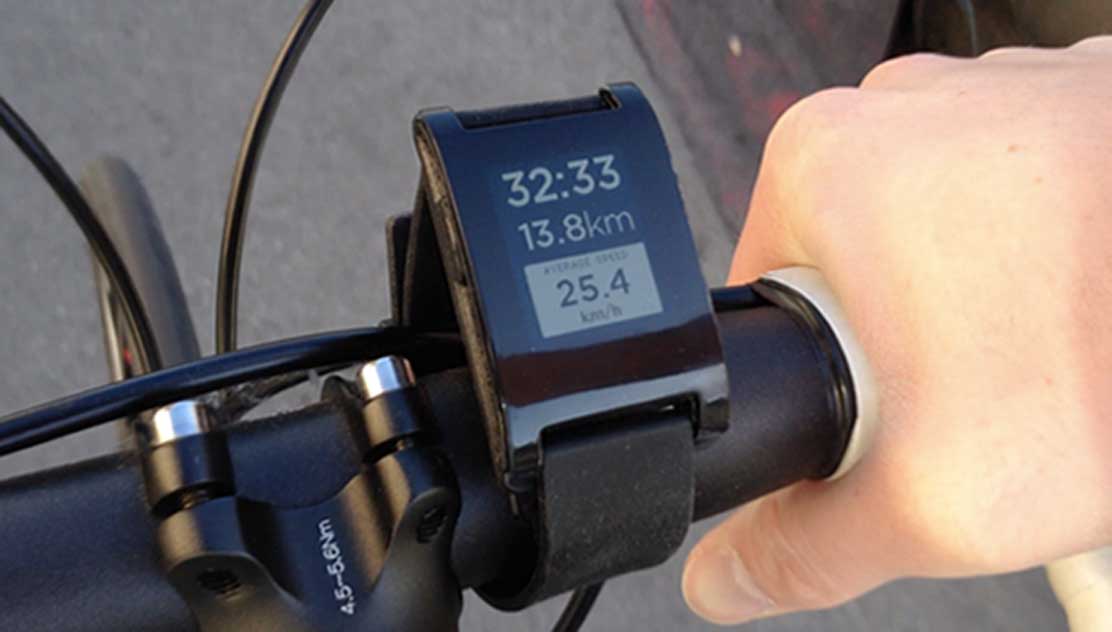
    On the Pebble, RunKeeper will display pace, speed, and distance travelled and offer workout start and stop features. It can work with runs, and also bike rides and walks, and does everything most will need to get a lot more out of their smartphone supported workouts right away. It offers RunKeeper a way to compete with wearables like the Nike+ GPS sport watch, all the while allowing them to focus on the tech they do best, leaving hardware to more specialized partners.

    “The software is really hard, and we think it’s a really big opportunity, and we want to be the best at the software piece,” Jacobs explained. “Part of that is pushing the phone’s capabilities so that you don’t need hardware, but part of that is also playing nice with all the best of breed hardware that comes out. In terms of being that best of breed hardware ourselves, it’s not in our roadmap or aspirations. It is in our road or aspirations to be a good neighbour.”

    This version of RunKeeper for Pebble is just a start, Jacobs says, noting that during the development process they realized they could add in much more, like setting pace on the smart watch, setting distance targets and more. RunKeeper also worked closely with Pebble to get this particular integration developed, and says we’ll see similar UI elements used as other fitness tracking apps come on board. Future work could go into helping RunKeeper differentiate its experience further as the development ecosystem for Pebble progresses.

    Jacobs leads me to believe that RunKeeper will be opportunistic about partnerships with hardware companies and other software efforts operating in the same general space, and this Pebble partnership is just one part of a larger strategy to try to find the key to cracking the mainstream market with a product that, while successful, has had more niche appeal up until now. The Pebble is also arguably a niche product, but taken together, it’s possible two things aimed at a very specific audience could combine in just the right way to attract a much broader following.

  • Adobe Debuts “Project Mighty” Smart Stylus For Tablets And “Napoleon,” A Digital Ruler And Guide

    hero

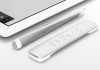
    Adobe surprised everyone by showing off a new hardware effort today at its annual MAX conference, including Project Mighty and Napoleon. Mighty is a pressure-sensitive digital pen that works with tablets and stores a wide variety of settings and preferences in the cloud. Adobe showed it off working on an iPad, and it looked similar to what we’ve seen from existing pressure-sensitive input devices from other companies, but with tighter integration into Adobe products.

    It can pull in stored Kuler color palette themes from Creative Cloud, for instance, as well as brush settings and a cloud clipboard that stores assets you’ve created previously for use in new drawings. Moving from tablet to tablet preserves the settings associated with your pen, which makes it possible to take everything from tablet to tablet.

    Napoleon looks a little like a modern Apple remote, but allows you to easily draw straight lines and arcs via snap tools combined with digital pens like Mighty. It’s almost like having traditional drafting tools including squares and triangles, but better suited to digital media. For precise drafting and more serious, demanding graphics work, these two tools in tandem should help push creativity on mobile devices quite a bit further than what we have available today.

    The Mighty pen itself looks similar to something like the Jot Touch 4 pressure sensitive pen, but with full access to Adobe’s Creative Cloud services behind it. It’s a little like an entire artist’s box in a single device, judging by what Adobe has shown us on stage today. It also takes advantage of non-stylus touch, too, in a way that looks novel, allowing users to do things like erase with their free hand. But when paired with Napoleon, it becomes much more powerful than what we’ve already seen, which should really push the envelope on mobile creativity.

    The pen boasts an LED on the back that can display different colors depending on what a user is doing with it, and there’s a button for connecting via Bluetooth. The ruler has two touchpoints on its underside to give the tablet its orientation, and the pen has managed to make Apple’s iPad recognize even small touches, which it actively tries to ignore using its built-in accidental touch software. Adobe isn’t saying exactly how it pulled that one off, however.

    This is still essentially a project in the R&D phase, Adobe noted, but we will definitely see it materialize down the road as a real product, they said. The real question will be how this can compare to for-purpose devices like the Wacom series of tablets, which are much better than anything else out there in terms of pressure sensitivity, latency and overall ability to mimic the experience of working with traditional artists’ materials.

  • Nintendo Offers Smartphone App Porting Tool, But Should Be Porting Its Content To Phones Instead

    AWKWARD-MARIO

    Nintendo is trying to get people to buy the new Wii U, but it just isn’t working, according to recent sales numbers. Now, the Japanese gaming giant is hoping that helping developers port their smartphone content to the home gaming console with conversion software will help entice buyers, according to the Japan Times.

    Smartphone apps on a home console isn’t a novel idea: Sony began encouraging devs to bring their mobile phone hits to the PlayStation network a while ago, and continues to add mobile-first titles to the ranks of the Vita’s portable library. But there’s nothing really indicating that’s making a major difference in terms of attracting customers. After all, why would people seek out those titles on consoles, portable or otherwise, when they’ve already got myriad devices to play them on natively, including the iPhone, Android smartphones and the iPad?

    Nintendo looking for ports of smartphone titles is a quick and dirty way to build out a larger software library, and for developers, a way to at least explore a new delivery vector to reach customers they may not already be reaching. But it will probably be a limited audience, made more so by the fact that anyone who’s already a fan of the title on mobile would probably be disinclined to pay for it all over again.

    Porting is also a strategy that hasn’t really seemed to have been successful for anyone so far. BlackBerry has encouraged developers to port their Android apps over to BB10 using its own super-simple tool, which by all accounts takes only a few minutes to do its magic. But even still, it’s finding it hard to get developers on board, and that’s going from one mobile platform to another. Incentivizing conversions for mobile devs to bring their titles to a home console will likely be tricker still.

    It’s been brought up before, but it bears repeating: Nintendo would probably stand to gain a lot more by reversing the situation, and porting its own blockbuster titles to other platforms, the way that Sony has flirted with doing, and the way that other publishers like Square Enix and Capcom have fully embraced. Admittedly, neither of those are hardware makers like Nintendo, but arguably that makes things more imperative for the Mario creator, which is having a really rough go of its hardware efforts, with lots of money sunk into a brand new console just at the beginning of what has been a 10-year release cycle in the past.

    I wouldn’t mind having something like Dots on my Wii U, if I had or cared about one, but it’s not going to convince me to go buy that console. On the other hand, I’d love Super Mario World on the iPhone (a legit version, not via emulator) and would pay dearly for the pleasure. You’ve got the funnel all wrong, Nintendo, and it isn’t going to bring the people back.

  • Mobile PC Market To More Than Double On Demand For Tablets And Touch PCs, According To Report

    ipad-mini-black

    The mobile PC market isn’t doing great, but that’s only if you look at it independently of tablet device sales. NPD DisplaySearch now says that over the next five years, however, the mobile PC market will more than double, growing from 367.6 million units in 2012 to 762.7 million by 2017.

    The growth is being driven by a sea change in PC computing, as tablet PCs continually replace your standard notebook form factors, and touch gets built in to more and more laptop devices. Almost every manufacturer now has at least one touch-capable model, which is actually required for Windows 8 certification, and which helps explain ambitious devices like the Asus Aspire R7.

    In the near-term, NPD DisplaySearch expects tablet shipments to rise 67 percent year-over-year in 2013, reaching 256.5 million on their own. Notebook shipments are expected to slow in general, down to 183.3 million in 2017, from 203.3 million in 2013. NPD predicts growth for certain categories, including touch-enabled devices, and even projects that devices like the MacBook Air and Ultrabooks will adopt touch in the coming years.

    NPD doesn’t see Windows 8 actually driving touch adoption, despite the requirement by Microsoft for certification. That’s probably because of reportedly lackluster sales performance by Microsoft’s latest OS so far, but still the category will grow as OEMs look to invest more in hybrid devices, sliders and tablet-style form factors that could potentially resonate better with where consumers seem to be spending their computing dollars these days.

    Despite the generally rosy outlook NPD DisplaySearch paints, the fact remains that now, Apple is the company that stands to gain the most from an upsurge in tablet popularity. It sold around 19.5 million iPads during Q2 2013, representing 65 percent year over year growth, and so far no one has been able to come close to that. Others are slowly making inroads, however, including Asus, which reported its Q1 2013 earnings today, including 3 million tablet sales that offset notebook and PC component losses to the tune of $202 million in profit.

  • Belkin’s Thunderbolt Express Dock Is The Best Damn Thing In The World

    belkin-express-dock2

    Thunderbolt, you were a tech with near unlimited promise when first introduced, but what have you done with all that power? Since my first Thunderbolt-equipped Mac, I’ve essentially been using the ports as straight up Mini DisplayPort replacements, and using them exclusively for powering external screens. But now the Belkin Thunderbolt Express Dock has arrived, and Thunderbolt finally makes sense. Pricey, $300 sense, mind you.

    • 2 Thunderbolt ports, with daisy-chain capabilities to connect up to 5 additional Thunderbolt devices.
    • Gigabit Ethernet port
    • 3 USB 3.0 ports
    • 1 FireWire 800 port
    • 3.5mm headphone output and mic in ports

    The Belkin Thunderbolt dock’s design is understated, and will fit with the rest of your black and aluminum standard Mac kit. It’s basically just a box with rounded edges, a cable management channel running through the middle underside of the device, and a row of ports at the back, but it works and it can tuck nicely under your MacBook if you’re using a desktop stand, or underneath the screen of your iMac. There’s even a pair of flashing indicators for network traffic on the Ethernet port, which makes me nostalgic for the days of desktop PC towers that told you everything you needed to know with just a series of blinking lights.


    If anything it’s a little bulky, but considering everything it’s bringing to the table, that’s not really all that surprising. Note that this also requires an AC adapter to work, so you’ll have to clear up space on your office power bar.

    Computer makers don’t tend to be looking for more ways to fit extra ports in their hardware designs, and the Retina MacBook Pro and MacBook Air lines are perfect examples of where things are headed. As a result, I find myself with only two USB ports on an $1,800 computer, no Ethernet port, a single input for both mic and headphones, and no Firewire 800 for my legacy devices, like portable hard drives. The Belkin Thunderbolt Express Dock fixes all those things.

    The three USB 3.0 ports are possibly the best part of the arrangement, as they more than double to total load-out of USB ports on your average lightning-equipped MacBook Pro. Even with an iMac, you get 7 USB ports total instead of just three, turning it into a dream machine for someone like a video, design or audio professional who probably has tons of accessories they need to connect and/or switch out at any given time. The first time you don’t have to decide which crucial USB accessory to unplug in order to charge your iPhone, the Dock proves its worth.

    The Thunderbolt daisy-chaining also means I can still attach my 27-inch iMac as an external monitor, though that means the chain ends there. But if I had a Thunderbolt drive with two ports, I can easily slot that in between the two, and still use the display as the terminal end of the chain. Finally, the return of Firewire 800 and the Ethernet provide some much-needed tools for using more old-school, but still very effective technologies, including the various Firewire 800 external drives I have sitting around.

    All of these ports and additional bits worked flawlessly in my experience, and the headphone jack actually seems to operate as an external sound card to some degree, boosting volume levels and giving you more flexibility in terms of playback options.

    If you ever feel like your Mac doesn’t have enough hardware input/output options, then the Belkin Thunderbolt Express Dock is for you. It took long enough to get here, and it’s pretty expensive at $299 (plus the price of Thunderbolt cable, which ships separately). The Matrox DS1 is another option at $249, but it only has one Thunderbolt port and just one USB 3.0, though it adds both an HDMI and DVI-D output. For my money, the Belkin is the way to go, especially if you use your Mac as your main workstation.

  • The Nook HD and HD+ Get Google Play, Knocking Down The Wall On The Barnes & Noble Android Garden

    scaled-1892

    The Nook HD and HD+ got a great update late last night (via Engadget), as Barnes & Noble finally moved away from its closed and system-specific app and media ecosystem. The two Android tablets now offer Google Play, and new devices will ship with the app pre-loaded, while existing owners can get it via a software update over-the-air or via direct download.

    Other changes with this update include the introduction of some stock Android apps, including Gmail, Maps and Chrome (which replaces the Nook’s existing web browser as the default option). Essentially, Barnes & Noble is turning the Nook HD line into a very cheap Android tablet play, and not in the limited way it was doing so before.

    Where once the Nook brand was a reader first, with Android-powered full-color readers with some tablet functionality, now it looks like we’ll see Barnes & Noble embrace the tablet identity much more fully. Another sign that the book seller is banking on tablets as a much broader attempt at reaching customers is the fact that the Nook Tablet and Color don’t get the Play update, meaning we could see those left behind in terms of future hardware updates.

    John took a look at the updated Nook HD+, and found it impressive, especially at $269, or a full $60 cheaper than the cheapest iPad (16GB Wi-Fi iPad mini). The problem, though, was summed up in John’s conclusion: the Nook HD+ is a great upgrade as a reader, but not necessarily a real tablet competitor. Opening up the broader Android software market place and its selection of tablet apps definitely helps to change that.

    The Nook line could be the key to Barnes & Noble’s future, but right now it’s also a weight hanging around its neck, as slow sales of the Simple Touch e-reader prompted a fire sale to help move more HD+ inventory, and the Nook division lost cash in the most recent fiscal quarter. There’s still an opportunity for a cheap Android tablet to capture the hearts and minds of consumers, however, and Nook is now in a better position to capitalize on that now that its ecosystem wall has come down.

  • LG Working On A Nexus 5, Wants Deeper Partnerships On TVs And Glass, Report Claims

    google-nexus-4

    LG is an Android smartphone OEM that, like many others, finds itself in the shadow of Samsung. But it scored an impressive hit with the Nexus 4, the $300 unlocked Google-branded Android reference phone it released last year, and according to the Korea Times, it’s already working on a follow-up with the search giant.

    The new report claims that LG is working on a new Nexus-branded smartphone, and that LG also wants to add to its existing partnership with Google for TV products, and would like to be closely involved in future developments like Google Glass. LG clearly sees the value of being closely associated with Google, as it managed to pull into third place in the global smartphone race in Q1 2013 according to IDC and Juniper.

    LG’s Optimus G and the Nexus 4 helped it gain some ground in the smartphone war, although it still trails far behind Samsung and Apple, who hold 32.7 percent and 17.3 percent of the global market respectively, compared to LG’s 4.8 percent. Recent estimates have put sales of both the Optimus G and the Nexus 4 at somewhere north of 1 million, which, while once again trailing devices by LG and Apple, are impressive enough. Especially in the case of the Nexus 4, LG proved that it could make a strong seller out of a line that usually has more limited consumer appeal.

    In the past, we’ve seen reports that an LG Nexus 5 was in the works, with the code name “Megalodon.” This isn’t just an upgraded version based on the LG Optimus G Pro, but a truly new device with a very powerful quad-core 2.3GHz Qualcomm Snapdragon 800 processor on board. Recent rumors indicate we might see a Nexus 4 variant at Google I/O in two weeks, with a 32GB storage option and both LTE and CDMA cellular wireless bands on board. The current Nexus 4 maxes out at HSPA+, but it does have an LTE-capable radio, early hacks revealed.

    There’s very little downside to LG building a new Nexus device, and Google might be more inclined to let them, given the success of the last one. It’s possible we’ll hear more about this at I/O, but given that the Nexus 4 only arrived late last year, we might have to wait a little longer, too.

  • Snapzoom Gives You A Smartphone Camera Mount That Turns Binoculars Into A Super Zoom Lens

    snapzoom

    A lot of people don’t carry cameras anymore, now that they have smartphones. But that means that you could miss opportunities to capture great moments, especially when you’re missing out on the great optical zoom available on some more expensive or specialized dedicated camera devices. That’s what Snapzoom hopes to fix with its binocular mount for smartphone cameras, and the best part is that it’s completely universal, meaning it fits a wide variety of both phones and binoculars.

    The project got started when Hawaii-based co-founders Daniel Fujikake and Mac Nguyen started using their own smartphones to film their surf escapades via a completely DIY, garage-made mounting device that they hacked together. They saw the utility, and other surfers asked them about it every time they went out, so they partnered up with a professional designer to form HI Resolution Enterprises and build a proper prototype using 3D-printed materials.


    The duo took to Kickstarter to fund a production run for Snapzoom, and has already blown past its $55,000 goal in just over a week. The funding will help the two turn the 3D printed prototype into a glass-filled nylon injection molded retail product, which the company hopes to manufacture both in the U.S. and overseas.

    “It’s going to be extremely tough, since it’s something that’s meant to be used outdoors,” Fujikake told me. “You can put it in your bag, you don’t have to worry about babying it, you can get it wet, you can drop it, it’s very very tough.”

    Already, before even closing its Kickstarter funding, Snapzoom has had a lot of interest from well-placed retail partners, including U.S. camera equipment and accessory retailer B&H Photo. Based on funding interest and prospective retail partner enthusiasm, the team seems to have tapped a strong, unaddressed consumer desire, even if it is a bit niche. And it’s not just voyeurs who are interested; this is great for nature photography and action sports, too.

    Snapzoom is looking to ship in September, and retail price for the mount is expected to be around $79.99, but currently pre-order backers on Kickstarter can get one for just $70. The team is working on stretch goals now, since it has already earned almost $10,000 more than its original goal.

  • Bitponics Offers A Cloud-Managed Hydroponic Grow Op Anyone Can Operate

    bitponics2

    Kickstarter-funded Bitponics was showing off its finished product at TechCrunch Disrupt NY’s Hardware Alley today in New York, which is shipping out to backers in the next few weeks according to company cofounder Michael Zick Doherty. The Bitponics system is a cloud-based hydroponic garden manager, complete with a web-based dashboard that’s accessible anywhere and can control every aspect crucial to the process, like the pH of the soil, temperature, light and moisture level.

    The Kickstarter project from the Brooklyn-based company managed to pass its $20,000 goal back in June of last year, as people seemed drawn to the idea of a platform that takes a lot of the guesswork out of setting up and managing a hydroponic garden. It’s designed to be dead-simple, with guides for how much sun, water and nutrition your plants need. It collects data via sensors that plug into a base, which connects to your local Wi-Fi network, and then logs data in a dashboard and can send you notices when things aren’t going exactly as they should. The base has two power outlets built in which feature timers that allow you to set schedules for components like lights and pumps.

    “I was working for a company called Windows Farms doing the hydroponic systems, who do the growing and the plumbing and all those aspects of it,” Doherty said of how Bitponics came up with the idea. “My issue with hydroponics is that there are a lot of things that you have to know well to be able to grow well, and there’s a lot of time put into monitoring the conditions of the plans.”

    As a hardware and software platform startup, I asked what the biggest challenges Bitponics has faced in terms of actually delivering a product. Doherty said that there were challenges with manufacturing and getting that right, but that the biggest challenge was making sure the entire process was engineered correctly in terms of user experience, so that literally anyone could pick it up and use it, and grow things well.

    “Probably the biggest challenge was figuring out a user flow that was something that anyone could do,” he said. “Building something that someone who had never tried hydroponics, or someone who had never touched a computer would be able to just follow these instructions and get running in a reasonable amount of time, that was a huge challenge.”

    Bitponics is going to start shipping to the general public once it gets all of its backer systems out to Kickstarter supporters, when it’ll be available for $499 for the base station, with service available on a recurring subscription basis. If you’re looking for a way to manage your in-home herb or cannabis farm even when you’re away on business, this could be one to check out.


  • Adafruit’s Limor Fried Wants To Make People Comfortable With Their Electronics, Inside And Out

    adafruit-disrupt

    Recently, consumer electronics have tended to be more about closing things down then opening them up, but New York-based Adafruit is working to help reverse that trend, and to make it so that people aren’t afraid of what’s inside their devices, and instead become more comfortable with electronics components and the concepts behind how gadgets actually work. Adafruit founder and CEO Limor Fried was on stage at TechCrunch Disrupt NY today, and talked about how her company is going about achieving that goal.

    The mission helps the company generate revenue, by priming an audience early on to become buyers of the components, DIY kits and open-source devices Adafruit sells through its online store. The key is to start young, Fried says, and to take advantage of urges that children already have around exploring their environment and the things around them.

    “At a certain age, they just want to be comfortable with it, and everyone here probably liked to take stuff apart,” he said. “That’s how we learn, we take stuff apart and then we learn from them. That’s how software works, too.” With software, we pull apart the code to find out how it’s put together, she said, and we should be doing the same thing with hardware.

    “We open the box,” she said, referring to our instincts when young. “The gadgets you have now, tablets and smartphones, theyr’e not easy to open anymore, so we provide that.” The idea is to make sure that if the need to break something down and repair it does arise, we aren’t afraid of it, and we don’t feel like we need eight years of specific education just to replace a broken capacitor.

    Adafruit recently launched a video series for children called Circuit Playground to help familiarize them with electronics at a very early age. The company also put out a coloring book for electronics, which you can print out and use under a creative commons license. This is designed less to provide a rigorous early-age electrical engineering education regimen, and more to help get kids comfortable with terms, designs and shapes early on so that they’ll find it easier to pursue that kind of formal training later on. Basically, it’s about planting the seed for a generation of makers to come.

    Asked about Adafruit’s identity, and whether it’s an educational organization or a business, Fried said her company is an ‘educational, tutorial company” that then has essentially a gift shop at the end. The model works in the same way that art supply stores functions; you could technically make your own paint, she says, but most people don’t because it’s easier to buy. Budding electronics hobbyists can likewise build their own PCBs, but they instead turn to supply stores and pre-fab components like those supplied by Adafruit. But in the end, the emphasis is on education and open source.

    Fried envisions a world where people treat hardware the same way they do software, by mostly leveraging open source tools to quickly start up their own companies. But that change represents a major shift that will require fundamental changes in how we think about hardware, and Adafruit is trying to bring that about starting as early in our educational lives as possible.


  • AT&T And LG Make The U.S. Optimus G Pro Official, Coming May 10 For $199.99

    gpro1

    LG’s Optimus G successor, the G Pro, is coming to AT&T on May 10 with pre-orders beginning May 3, the companies revealed in a press release today. LG’s Optimus G Pro offers a 1.7GHz quad-core processor, 2GB of RAM, a 5.5-inch 1920×1080 display with a pixel density of 400ppi, and a 13 megapixel rear-facing camera. The G Pro will be available on a two-year agreement for $199.99, and packs AT&T 4G LTE cellular connectivity.

    Chris checked out the G Pro back in February at Mobile World Congress in Barcelona, and came away with a decidedly positive overall impression. The phone’s high points seem to be its camera and light and slim design, as well as a built-in IR blaster that means it can operate as a universal remote for you TV and other home electronics.

    The phone’s arrival was hardly a surprise, having been leaked earlier by Android Central, which pegged the exact date. Then LG announced an event for today, May 1, and went on to confirm that this would indeed be about the Optimus G Pro late in April.

    For LG, it’s a phone that follows the Optimus G, a flagship device that has done fairly well so far, hitting the 1 million sales mark back in January of this year, after a release in September 2012. The G also provided the basic groundwork for Google’s Nexus 4 Android reference device, which reached 1 million in handset sales in February, according to an estimate based on serial numbers calculated by Nexus 4 owners.

    The G Pro will be going up against the extremely well-reviewed HTC One, and the Android juggernaut, Samsung’s Galaxy S4, so it’s got a lot to compete with. But for fans of the last two major LG-made devices, this looks to be decently attractive upgrade.

  • KISI Launches Its Keyless Home Access Management Platform On Indiegogo

    OpenDoor

    Munich-based startup and TechCrunch Disrupt NY Battlefield contestant KISI Systems is launching its Indiegogo campaign today. KISI and KISIBox together comprise a keyless entry solution that lets users provide timed, revokable access to their own apartments on an as-needed basis. It’s the perfect complement to collaborative consumption services like Airbnb and TaskRabbit and in general a very useful addition to any household.

    KISI takes its cues from enterprise-grade tools that allow businesses to control who can and can’t gain access to a facility – co-founder Bernhard Mehl explained that he and his co-founders decided it was an idea that would make perfect sense when applied to a consumer setting, too.

    The KISI system is a combination of hardware and software, with a set price of $479 up front when it hits retail. Initially, backers can get it for $249 for the first Indiegogo supporters, and the best part is that the service is included with the hardware purchase, so this isn’t something that you end up necessarily paying for on a continual basis. There is a SaaS model planned as well, for people who’d like access to premium features, but Mehl says that in general, they aren’t interested in making homeowners feel like they’re renting the locks on their doors.

    “We stripped an enterprise product down to a consumer-friendly version, and provide very easy-to-use key-management tools, so we have a web app and you can manage or see who accessed your apartment, or who currently has access on their smartphones,” Mehl says. “It’s a more decentralized or democratized access, so that it’s not the house owner who controls all the keys, but the resident themselves.”

    KISI is designed for apartment tenants primarily, and can be made to integrated with your intercom system to provide complete building access from a web-based dashboard. Mehl says that where in the past this has been accomplished through sharing of hardware keys, that’s a dramatically outdated prospect, since it involves granting a type of access you can’t easily revoke, at least not without changing your locks. The platform is why KISI isn’t just another Lockitron, providing things like integration with an intercom system, and a record of when keyholders have accessed your apartment, and for how long.

    The big opportunity for KISI is to take advantage of the rise of services like Airbnb, Exec and TaskRabbit, and collaborate with those companies to help provide temporary access to service pros who might only need it for a few minutes, a week or an afternoon.

    “All the hardware parts are installed in your apartment, and you can open even the front door of the house with your smartphone, and yet nothing changes for anyone else who has physical key access” he said. “Up to now, you had to change the whole system to get automated access, but the cool thing is that we’ve managed to accomplish that without requiring a complete overhaul.”

    KISI has already impressed enough to win an entrepreneurial startup grant from the German government, and they’ve won various prizes, including from the NYCEDC, which provided them with $25,000 for the “Next Idea” award.

    KISI will launch in New York City and Munich first, and will then expand to other markets after that. It doesn’t replace existing standards like Z-Wave, but works with them, and can also be used in combination with existing devices like Lockitron, so there’s opportunity for it to grow into existing home automation systems.


  • BlackBerry CEO Thorsten Heins Says Tablets “Not A Good Business Model,” Evidently Forgetting About iPad

    playbook

    BlackBerry CEO Thorsten Heins seems to be among the most transparent executives in tech in terms of showing his hand regarding future product plans, which may be partly because he doesn’t have much to lose at this point. In an interview yesterday, he downplayed tablet computing in what looks to be an indicator that BlackBerry will drop the PlayBook, its own lame duck tablet and the first of its devices to sport a QNX-based operating system.

    Heins should’ve stuck to specifics, however, as he went way overboard and came off as though he was losing touch with reality in the interview as quoted by Bloomberg, with broad sweeping statements like “In five years I don’t think there’ll be a reason to have a tablet anymore,” and “[t]ablets themselves are not a good business model.”

    Tablets may not be a good business model for BlackBerry, which took huge writedowns on BlackBerry PlayBook inventory, were forced to run massive fire sales with price cuts of up to $400 to clear out inventory, and even finally discontinued the entry-level 16GB version entirely. By any real measure, the PlayBook was and is a failed product. But to say tablets won’t last five years, or that they aren’t a good business model requires that you completely ignore Apple’s tremendous success with the iPad, including the 19.5 million iPads it sold last quarter, an all-time record that came in well above analyst estimates.

    Heins has recently made remarks that indicate BlackBerry may be experimenting with alternate device form factors, possibly taking a cue from hybrid gadgets like the Asus PadFone which combine a smartphone and tablet or mini-notebook style device in one. Once again, Heins said that he would need a BlackBerry tablet to be a unique device in an increasingly crowded market.

    BlackBerry may have blown it on the PlayBook, but trash-talking tablets in general is worse than sticking your head in the sand: it makes the company look hopelessly out of touch. There’s definitely a lesson to be learned in the fact that Apple is the only company that’s really been able to succeed with a tablet device, but that lesson isn’t that the tablet market is a write-off entirely.