Author: Darrell Etherington

  • Jawbone UP Becomes A Platform With New Partners, Open API Coming Soon

    jawboneupblue

    Jawbone is doing something a lot of developers will probably be interested in, by opening up the UP fitness tracking wristband as a platform play, with an open API coming soon. Jawbone’s new version 2.5 update for the iOS UP app allows you to integrate with IFTTT, MapMyFitness, Withings, Sleepio, Wello, RunKeeper, Notch.me, Maxwell Health, Lose It!, and MyFitnessPal.

    The new integrations mean that data gathered from those apps and devices like the Withings Smart Body Analyzer can now be pulled into the UP app itself, and combined with information gathered from the Jawbone wristband to provide a more complete picture of a user’s health. The IFTTT integration can be used to help you create your own motivational alerts when you’ve been inactive for too long, or to brag when you’ve blown past your daily step count goal.

    The information from the UP can also go out to some specific apps, providing them with data on your sleep patterns and daily movement activity. And this is just the start: Jawbone is starting things off with a few select partners, but after that it intends to open up the API for any developers interested in building Jawbone UP integration into their own apps.

    “We are now unstoppable in terms of leadership in today’s market,” explained Hosain Rahman, Jawbone CEO. “The platform we see the API is the first step of that; a limited set of partners with unique experiences, but the whole experience is much deeper.”

    Jawbone made its reputation on building Bluetooth products like stereo headsets and earpieces, but then moved into audio equipment like the Jawbone speakers and health monitoring devices like the UP. Other competitors in the space have already moved to open up third-party integrations, like the Nike+ Fuelband, which plugs into Path and Lose It! Jawbone’s platform plans are much broader and deeper than the ones of some of its competitors, however, according to Rahman.

    “A lot of these platform announcements like API releases are more PR than they are actual real developers on a platform building value for users,” he said. “We spent a lot of time sitting with developers, looking at what they can enable, what their data structure was, how to pull their experience back into UP, how you really create robustness around them, how to build APIs that work dependably and how we can make sure users can get this stuff.”

    This should open the door for a much more holistic picture of personal health, available across a wide range of devices. Individually, these devices have been doing well, but the real opportunity is when apps and hardware start working with one another. Jawbone is taking a great first step towards that end with this API release, but it’ll be interesting to see how the UP platform handles normalizing a huge volume of data from a wide variety of partners in a way that doesn’t overwhelm individual users.

  • Keen Home Launches Crowdfunding Campaign For Its Connected Central Heating And Cooling Vents

    Keen-home

    Disrupt NY 2013′s Startup Battlefield competition is underway, and now New York native Keen Home is taking the stage to present its first-round pitch. Keen Home is a home automation startup, which aims to follow in Nest’s footsteps by building remote vents for your central air conditioning and heating systems that can be controlled from your smartphone to optimally direct air where you actually need it — and away from places you don’t. Keen just launched its crowdfunding campaign on Indiegogo.

    Keen Home is the brainchild of Ryan Fant and Nayeem Hussain, both of whom have experience founding companies in the home real estate and property-management space. The two believe their startup can appeal to consumers who want both more convenience in managing their home’s HVAC systems, and who want to save money and conserve energy. Keen Home’s debut product, the Keen Vent, accomplishes both.

    The idea came from Fant noticing that when vents were closed in other rooms, heating and cooling the one he was currently in became much easier. The problem is that those vents generally operate separately, and manually, in most homes. Even with some systems that provide a remote, like Activent, they aren’t centrally controlled in a way that makes them individually manageable from an existing device like a smartphone.

    “We found that just by closing four vents in an average-sized home, we’ve reduced the run time of the furnace by about 30 percent,” Fant explained in an interview. “So not only were we redirecting air to rooms that were actually in use by intelligently closing vents, we were increasing efficiency, as well.”

    Keen believes that the focus is always on the thermostat when it comes to home heating and cooling efficiency solutions, which is good but it ignores other parts of the problem. The Keen Vent solves that, by providing both a user-guided and automated way of opening and closing vents to change how air flows through a home. A homeowner can set a schedule for individual vents, too, and it can plug into weather data to respond intelligently to changing conditions.

    Fant says the Keen Vent can provide up to 32 percent reduction in run time for HVAC systems, which means lower monthly bills and less toll on the environment. Most heating and cooling vents in households are around 60 years old, Keen Home said on stage during their Disrupt Battlefield presentation on Monday.


    Individual vent covers will cost around $40 per vent, Keen predicts, with a $150 charge for the system in total. There’s also a recurring fee of around $4 per month for access to the cloud-based management platform, which also provides monthly reports. But Fant and Hussain plan to partner with utility companies and homebuilders to try to offer the tech initially at a discount price, perhaps with, say, six months of service rolled into a new construction. It’s the same model that satellite radio provider Sirius/XM uses to sell subscriptions with new cars.

    Keen Home is launching its Keen Vent product on Indiegogo today, and believes that seeking crowdfunding, as well as traditional investment, will help it get the word out and prove product viability. Its biggest challenges will be proving to users that a recurring subscription around centralized vent control is worth the cost, and in making sure that legacy players like Honeywell don’t swoop in and simply build their own similar systems. The team says that being aggressive with partnerships with big utility companies, the way others like Nest and thinkeco have done in the past, will be the key to making sure it can overcome both.

    Keen said on stage that the majority of its audience would be people who don’t know what a smart home is, so they tried to make sure it was as easy to install as possible. That’s why they’ve made the install process as simple as possible, and setting up the online dashboard involves only entering a code and then doing a roughly 15 question survey. In addition, they’re planning to partner with HVAC contractors to take care of more complicated installs. Battery life is expected to be around a year for the vents, so it’d be roughly equivalent to changing the power source on devices like smoke and carbon monoxide detectors.


  • Samsung Announces The Underwhelming Galaxy Tab 3

    GALAXY Tab 3 7 inch_007_3G

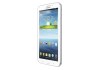
    Samsung introduced its latest tablet today, the Galaxy Tab 3, and it’s clear that the Tab line is destined to play a distinct second fiddle to the Galaxy Note brand. The Tab 3 sounds like it could’ve been released a year or two ago, with a 7-inch 1024×600 display at just 169 PPI, a 1.2GHz dual core processor and a 3 megapixel rear-facing camera.

    The Tab 3 also has cellular connectivity in one version, but caps out at 3G and doesn’t offer an LTE option, and it’s running Android 4.1. There are two memory options, at 8 and 16GB respectively, though that’s expandable via Micro SD. The Tab 3 improves on the Tab 2 7.0 with a thinner bezel, borrowing design styling from the Galaxy Note series. The Wi-Fi version will be available in May, and the cellular-capable model goes on sale in June.


    Samsung is clearly streamlining its tablet line here, since the Tab 3 naming indicates we probably won’t see a follow-up to the Tab 2 10.1. The Android OEM has moved a lot of the focus on its higher-end Galaxy Note line when it comes to tablets, like the recently introduced Galaxy Note 8.0. The Note 8.0 has a quad-core processor, 2GB of RAM and a 5 megapixel rear camera, plus an 8-inch 1280×800 display.

    There’s no retail price for the Galaxy Tab 3 as of yet, but the Galaxy Note 8.0 is $399 so expect it to come in under that, as it’s less impressive under the hood and also lacks S-Pen integration. The Tab line is likely Samsung’s way of staying competitive with cheap, small tables like the Nexus 7 and Kindle Fire, but I wouldn’t expect this to light a fire under that many consumers.

  • Leap Motion Hack Brings A Facebook Home Experience To The Desktop

    IMG_7259

    One of the hacks at Disrupt NY’s Hackathon this year employed hardware startup Leap Motion’s new 3D gesture controller, which unfortunately just ran into a delay. Leap Motion’s issues aside, this project, the combined effort of Chao Huang, Cedrich Pinson and Jorge Martinez, brings a Facebook Home-style experience to the desktop.

    With “Leap in Time,” Leap Motion is used to navigate through a Facebook timeline via hand gestures that are intended to be as natural and intuitive as possible. You swipe left and right to go through photos and posts, and there’s inertia built-in to make it feel even more immersive. Then there’s a motion to pause and focus on a particular piece of content, with a palm outward gesture, and you can simply make a thumbs up to like a post.

    Working with the Leap Motion was fairly simple, the team said, but does seem to experience difficulty with some environment issues like changing lighting conditions. It’s also crucial to maker sure that the Leap Motion app you’re building is cued to pay attention to certain things at certain times and to ignore specific motions in different settings. You have to cue the app to not pay attention to sideways hand waving when you want it to be able to recognize the thumbs up, for instance.

    The hack was surprisingly smooth given that it was built in fewer than 24 hours, and Huang said there’s plenty more they could do given more time, but they wanted to focus on what they considered the core Facebook experience. The project is also reminiscent of a recent concept design making the rounds of a Facebook Home app for Windows 8.

    Leap in Time is a simple enough implementation of Leap Motion, but it does act as a pretty solid example of how gesture control might actually work well for navigating apps and software that we use every day. I know that Leap Motion is eager to get as much software as possible into Airspace, the app store for the controller, but this team said they weren’t sure whether they’d actually pursue this any further.

  • NY Disrupt Hackathon Hardware Find: Robots!

    robot

    The floor at Disrupt’s NY Hackathon is filled mostly with people working on software projects, but there were also some interesting hardware endeavors underway. One in particular caught my eye: a robot built from open-source components build to help anyone subject their app or device to strenuous, physical testing in a non-simulated environment.

    The basic bot is built from an Arduino controller, along with 3D-printable components is a test automation device for iPhone, built by R/GA Technical Director Sune Kaae and inspired by Jason Huggins Selenium-based open source Angry Birds-playing robots. It’s a device that Kaae says is easily programmed via Node.js, meaning it’s accessible for software developers who are more familiar with web languages.

    One of the big remaining challenges facing hardware startups, Kaae says, is that developers are intimidated by a perceived barrier to entry in programming physical devices. They don’t have to be, though, he explained, since it can be made relatively easy to accomplish things with programming languages they already understand.

    Kaae’s robot, which positions a touchscreen-compatible stylus anywhere on a screen someone wants to place it, and can run tests that just aren’t possible via simulated virtual testing, or are too costly or boring to do human testing for. It can also help with things like testing movement for the Nike Fuel + Band, which R/GA helped design.

    Right now, Kaae’s looking for a mathematician to help refine the product, to make sure that when you input a coordinate to hit, it hits exactly that coordinate and not just roughly the right area. But the little bot is a great example of how some people are trying to make it easier to make and test hardware to begin with.

  • Leap Motion Controller Ship Date Delayed Until July 22, Due To A Need For A Larger, Longer Beta Test

    leap motion

    Leap Motion has just announced that its 3D gesture controller hardware ship date will be delayed, from May 13 for pre-orders and May 19 for general retail availability to July 27. The delay was caused by a need for more testing from the Leap Motion beta testing community, and an expansion of that group with additional members, according to Leap Motion CEO Michael Buckwald, who held a press conference today to discuss the missed dates.

    This is not good new for a company that has spent a lot of time promoting its product and securing high-level partnerships (with Asus, HP and Best Buy) up until now. The hype that Leap Motion has been able to build only means that users will be more disappointed by any delays in its launch window, and the effect on public perception is certainly one the hardware startup would like to have avoided. Still, some 12,000 developers have received units and already used them to do impressive things, so Leap Motion is hardly in danger of being branded ‘vaporware’ as of yet.

    Leap Motion says it wants to make sure that the product they deliver is the best they can offer, and says that there is “nothing catastrophically wrong” with the hardware as of yet. The company believes that it could have shipped by the original date if it had really pushed things, but wanted to make sure that things were ready for prime time. The new July 22 ship date is firmly set, according to Buckwald, and this is “the first and only delay there will be.”

    When asked if there was a specific cause, Buckwald said it’s more about beta testing everything in general, but that there will definitely be a focus on getting more input on how customers interact with the product. In general, it sounds like there’s some concern about making sure that user experience is pleasant among not only Leap Motion’s more technical users, but also the general public, too. Buckwald says it has addressed most of the technical issues around gesture tracking, and now the emphasis is squarely on usability testing, and those who are already seeded with early hardware will essentially act more as consumer testers.

    “If you’d asked me a year ago what was the biggest challenge, I’d have said it would be the hardware side,” Buckwald said, but went on to explain that the software aspect is now what’s holding things up, and the part that needs more refinement. 600,000 units are in inventory in warehouses ready to ship, he said, but those won’t be going out until the software issues are ironed out. When asked about how that affects their funding situation, he explained that the $45 million it has raised so far was designed to help it field unexpected hiccups in the process, and it continues to help with that.

    A small number of additional users will be invited to the beta test pool beginning in June, Buckwald explained, but Leap Motion will be reaching out to users specifically to choose those, based on their desire for a more varied beta pool. In other words, you probably can’t petition for early access. The full letter Leap Motion is sending out to pre-order customers follows:

    Release Date Update

    I wanted to reach out to update you on the status of our ship date. After a lot of consideration, we’ve decided to push back the date and will now be shipping units to pre-order customers on July 22nd.

    This is not a decision we take lightly. There are hundreds of thousands of people in over 150 countries who have pre-ordered Leap devices, some as long as a year ago. These people are part of our community and there is nothing more important to us than getting them devices as quickly as possible.

    We’ve made a lot of progress. When we first started taking orders back in May we were twelve (very tired) people in a basement. Now we are eighty (although still tired and possibly still in a basement). We’ve manufactured over six hundred thousand devices and delivered twelve thousand Leaps to amazing developers who are building applications that let people do things that just wouldn’t have been possible before. These developers have given us great feedback that we’ve used to make huge improvements to the stability and polish of the product. We’re really proud of Leap as both a company and a product.

    The reality is we very likely could have hit the original ship date. But it wouldn’t have left time for comprehensive testing. This will come in the form of a beta test that will start in June. We will give the 12k developers who currently have Leap devices access to the feature complete product including OS interaction (today developers only have access to the SDK). We will also invite some people who are not developers to join the beta test.

    Ultimately, the only way we felt 100% confident we could deliver a truly magical product that would do justice to this new form of interaction, was to push the date so we would have more time for a larger, more diverse beta test.

    I really appreciate your patience. I know it’s been a long wait. Everyone that works at Leap is working tirelessly to make sure that wait is worth it. Thanks so much for your help and support.

    David and I will be participating in an open video Q&A using Google Hangout tomorrow. We’ll send along more specific information on that shortly. If you have any questions please don’t hesitate to contact our support team at[email protected] or my personal email ([email protected]). As always, we will not charge pre-order customer’s credit cards until the devices have actually shipped.

    Thanks again. Michael Buckwald

  • Apple Patents Built-In iPhone Remote Unlocker, Engine Starter And Parking Locator For Cars

    Screen Shot 2013-04-25 at 7.33.44 AM

    The USPTO published a number of Apple patent applications Tuesday, including two related to automobiles (via AppleInsider). The car patents both describe systems that can be built into future iPhones, replacing most of the functionality of your standard key fob with the smartphone, and providing a way to help drivers navigate the often maze-like interiors of parking garages to find their ride.

    In one application, Apple describes what amounts to a series of different indoor positioning systems to help drivers locate their cars when parked. The system would involve pairing a car and an iPhone via Bluetooth, and then using that connection to automatically detect when a car ends up actually parking in a spot. Then, it uses sensor data communicated from the parking facility itself to peg a location.

    Once a user returns to the garage, they can trigger the phone to find their current positioning data from the same system, and then provide actual guidance or directions back to their car itself. The patent describes parking garages in which devices are placed at regular intervals throughout to help facilitate the indoor location portion. Apple’s recent acquisition of indoor positioning system company WiFiSLAM could also work very well in terms of helping provide a way to make this system work.

    The IPS element is interesting, but where Apple’s patent is really unique is in using on-board device sensors, including things like the camera and microphone, to determine automatically when a car parks to begin with to trigger the car location logging information. There are plenty of “where did I park my car” apps out there (though few boast IPS), but the automatic, fully-integrated way Apple’s system would work would make it so that you don’t even have to remember to activate it.

    The other car-related application describes a system that would turn the iPhone into a remote car starter, unlocker, and essentially a parental control device for a target vehicle. The patent talks about using Bluetooth to pair a car and a handset, then allowing a user to choose their level of security, making it possible to have the phone unlock the car automatically based on proximity, or require a PIN to even use any car control functions.

    Apple’s patent goes further than most remote starter/unlocker key fobs by allowing a user to set specific limits for particular devices, like making it possible to start the engine with a phone only during set hours, setting a max speed for use with a particular device, limiting access to infotainment services, and building in geofencing. All of these can be used in theft prevention, but also to set limits on say a teen child’s car permissions.

    It’s about time that cars got tighter integration with mobile devices, in ways that make the best use of all the tech on board our modern smartphones. Many car companies seem to be open to working closer with Apple, too, so while there’s a lot of infrastructure changes described in these patents, we still could see these features make their way to shipping devices over the next few years.

  • Thalmic Labs Shows Off MYO Development Process, Demos The Armband Controlling Tetris And A Sphero

    myo-armband

    Waterloo-based Thalmic Labs is working on getting the MYO armband into the waiting arms of pre-order customers, which now number well above the 25,000 announced in March, Thalmic told me, making up over $4 million in total sales to date. MYO is a unique control device worn around the forearm, which measures muscle movement and electrical impulses and translates those into a control mechanism for various devies over Bluetooth.

    This new video by Thalmic is a solid explainer for those curious about the engineering that goes into the MYO, and acts as a sort of general FAQ about how it works and what’s going on in terms of ongoing third-party development from the community MYO is trying to build. MYO’s official dev program is slated to come online in the coming months, and will include early access to hardware.

    The new video is more about what’s going on within the company as Thalmic continues to build momentum ahead of its targeted ship date of sometime late in 2013, but the Sphero cameo is cool enough to make me slightly giddy. In case you didn’t know, the Sphero is the best dog toy ever created, and the MYO looks like it’ll make it even better in that regard.

    On the business side of things, Thalmic passing the $4 million pre-order mark means that it has added over $300,000 in pre-sales since April 11, so over the course of just two weeks.

  • Sprint’s Q1 2013 iPhone Sales Show Flat Growth, Off The Pace Worldwide And At Home

    iphone5(2)

    Sprint’s Q1 2013 financial results came out this morning, and the news wasn’t great overall. Losses continue to accumulate, and total smartphone sales aren’t faring very well, either, with just 5 million units sold in total. The iPhone, after achieving a record high of 2.2 million handsets sold on Sprint’s network last quarter, dropped back down to 1.5 million, the same number Sprint saw in the three quarters preceding Q4 2012.

    This is the first time Sprint has reported specific total smartphone sales in an earnings release, and it said it achieved 5 million handset sales in total. that means that the iPhone accounted for 30 percent of total device sales at the carrier. iPhone sales for all of 2012 totaled 6.6 million, on total smartphone sales for the year of 20 million, which means Apple’s devices accounted for just about one-third of the total. That puts this quarter pretty close to on pace, but compared to the rest of the field, iPhone growth was flat at Sprint.

    Horace Dediu of Asymco notes that iPhone sales grew 25 percent at Verizon, and by around 12 percent at AT&T. Worldwide, the pace was a 7 percent increase, with 14 percent improvement at home. It might be tempting to put some of the blame for Sprint’s flagging fortunes on a big bet on iPhone, but the numbers indicate the carrier isn’t being hurt so much by flagging iPhone sales, but by a general inability to match its competitors, in terms of device sales aside.

    Sprint is still quick to note that the iPhone is driving new customers to its business, pointing out that the rate of new subscribers signing up via iPhone purchases is once again at over 40 percent, the same as over the past several quarters. The iPhone has been consistent for it, but the company was likely hoping it would be more of a breakout hit.

  • The BlackBerry Q10 Is A QWERTY Keyboard Smartphone Comeback Worth Waiting For

    blackberryq10

    The BlackBerry Q10 is, some might say, the BlackBerry OS 10 device that the company should have led with, ahead of its all-touch Z10. That’s because it sports a hardware QWERTY keyboard, something that has become a unique distinction among top-tier smartphones these days. BlackBerry tells me they wanted to nail the all-touch experience first, in part to prove that they could, but based on my last few days with the Q10, this is the phone that’s more deserving of the “flagship” moniker for the new BlackBerry fleet.

    • 3.1-inch, 720×720, 330 PPI display
    • 2GB RAM
    • 16GB storage, expandable via microSD (supports up to 32GB cards)
    • Dual core 1.5GHz processor
    • 8 megapixel, 1080p rear camera; 2 megapixel, 720p front camera
    • microHDMI out
    • Dual-band 802.11 a/b/g/n Wi-Fi
    • LTE or HSPA+, global roaming cellular connectivity
    • MSRP: Likely around $199 on a 2-year agreement

    Pros:

    • Solid industrial design
    • Good battery life
    • Hardware keyboard means business

    Cons:

    • App ecosystem still way behind
    • Display visibility suffers in bright light
    • Screen and bezel size hamper gestures

    The BlackBerry Q10 is proof that a handset can take cues from the past and still be a modern, attractive device. The PVD-coateed metal border that frames the phone won’t scratch easily, as it’s the same treatment used on high-end watches. The carbon/glass composite back is extremely light, yet flexible and strong enough to handle spills, and since it’s created using a process through which it’s cut from a giant sheet and then formed instead of injection moulded, no two backs will have exactly the same pattern. It’s lighter and smaller than the Z10, feels better in the hand and looks miles better, too.


    BlackBerry hasn’t reinvented the wheel with the Q10; you might have already seen one in the wild and mistaken it for a Bold, in fact. But the small changes pay big dividends. Straightening the top row of the keyboard and dropping the trackpad and hardware buttons provided room for a display that’s 30 percent larger than any previous BlackBerry QWERTY, for example, and yet typing actually feels better because of wider keys and bigger frets between the rows.

    My complaints when it comes to hardware design are limited, but the back panel has a bit of play, and will shift around a bit even when it’s supposed to be firmly clicked into place. It’s a little disconcerting given the overall fit and finish, but also doesn’t reveal itself awesome enough to be anything more than a minor annoyance.

    The BlackBerry Q10′s display is unique among modern smartphones in that it isn’t gigantic. Quite the opposite, in fact: at 3.1-inches, it’s the smallest screen of any flagship-priced device currently available on the market. Yet it’s also 30 percent larger than any of its QWERTY BlackBerry predecessors. And it’s a SuperAMOLED display, which translates to very nice color rendering, deep blacks, and good battery conservation.

    Overall, the display really impresses. It displays images and video with crisp, vibrant colors, and BlackBerry has even gone out of its way to tweak some user interface and core app elements to take advantage of the excellent black rendering, which also leads to battery life savings. But the display has its own downsides, too. It isn’t quite as densely packed with pixels as some of its top-tier Android competitors, for instance, and I noticed that in certain outdoor lighting conditions, owing partly to glare and partly to a weak backlight (which doesn’t auto-adjust), it can be fairly hard to make out what’s on the screen. Side-by-side with an iPhone in bright outdoor settings, the iPhone wins easily, every time.

    That said, the display is usable outside, and works surprisingly well for viewing photos indoors. Text rendering isn’t quite as nice on the Q10 as on Z10, but I also didn’t notice the same problems with surface grime accumulation that affected my Z10 review unit, so there might be a better oleophobic coating on this one.

    The Q10 is largely the same in terms of built-in software as the Z10, so I won’t go into as much detail about every single feature of BlackBerry OS 10 (check out my Z10 review for more on that). But it is worth highlighting the changes BlackBerry has made that take advantage of the Q10′s hardware keyboard, and also the trade-offs that sometimes result from those changes.

    The home screen arrangement has been tweaked slightly to make room for three rows of apps, and the toolbar size has been reduced as well as labels have been removed. There are new tooltips, which is great because it provides a smoother onboarding process for BB10. Text selection is made easier through refined cursor control, making it much less frustrating than it was on the Z10. Cut, copy and paste functions have been added to the dialer screen, and you can set account-specific notifications for incoming messages  as well as change vibration and volume patterns for alerts for specific contacts.

    Overall, BlackBerry has done a good job of taking in early user feedback and using it to actually improve BB10 in the areas where it was most lacking. The Q10 boasts BlackBerry OS 10.1, an update which will make its way to the Z10 within the coming weeks, bringing the same improvements over to that side of the fence, including the improvements above and crucial bug fixes for issues like the lack of calendar syncing for Outlook users. But the really impressive software features of the Q10 focus on the keyboard.

    The Q10 keyboard is always present, so it makes sense to make use of it whenever possible. BlackBerry has done this by introducing Instant Action, which allows you to start typing and then execute a variety of commands, in a variety of apps. there’s a huge list of keyboard shortcuts, but some highlights include being able to BBM contacts, Tweet, send emails and more all without opening the relevant app, from no matter where you are in the OS. It’s a remarkable time saver, and a good example of why the hardware keyboard still has something to offer in a world dominated by touchscreen displays.


    In general, software is improved, but since the Q10 uses the same touch-based gesture control as the Z10, but features a smaller bezel, it can be harder to execute Peek actions, or to navigate around the OS. Some improved sensitivity on the software side here would’ve helped the Q10′s software performance.

    The Q10′s camera is the same as the one found in the Z10, and as expected, performs in a very similar fashion. The big addition here is on the software side, since the Q10 with BlackBerry 10.1 now offers HDR. This is a feature that most OEMs have embraced lately, and also something I never find myself using on any mobile device. I’m also not a huge fan of it when used professionally by DSLR photographers. The addition isn’t hurting anything though, and will be welcome by those that appreciate it.


    Overall, the Q10′s camera is a solid performer. It won’t win any low-light awards, and that’s putting it lightly, but it can still manage to take some amazing shots, which look even more amazing with the slightly exaggerated color rendering of the OLED display. It also captures stills in 1:1 ratio by default to match the display, though you can set it to use either 16:9 or 4:3, too. Video is perfectly usable, too, and defaults to wide-screen capture.

    This is the one place where the Q10 doesn’t fare that much better than its counterpart the Z10. Despite the fact that BlackBerry has made a lot of noise about growing its own app marketplace to 100,000 titles, there still aren’t too many to write home about. Some big names have come on board, but crucial ones, like Netflix, Instagram and Vine, to name just a few, remain absent.

    The Q10′s app situation isn’t helped by the fact that it has such a unique screen size. The screen means that native BB10 apps have to be coded specifically to offer both Z10 and Q10 compatibility, which BlackBerry assures me is simple enough, but which still inevitably results in some fragmentation. Q10 users simply won’t see apps that aren’t designed for its display – unless they’re Android apps. Android ports still show up and can be downloaded and used.

    That’s a double-edged sword, however. I found performance to be unpredictable with Android ports; Songza, for instance, lacked its concierge feature when running on the Q10. Others had bizarre visual element distortions, and even when everything goes smoothly, it still requires scrolling through an interface designed to be viewed all at once.

    The Q10′s app situation is a reminder just how far BlackBerry has to go, and a signal that it will probably have a much more targeted audience than the general purpose Z10.

    Where the Z10 faltered with battery, the Q10 excels. BlackBerry claims that the Q10 can get up to 13.5 hours of 3G talk time, 354 hours standby time, 61 hours of audio playback or up to 9 hours of video. In testing video playback and solid browsing time, it managed to come just shy of that at around 8 hours continuous use, but the standby time is what’s really impressive. This phone sips power with the screen off when it’s in your pocket, harkening back to BlackBerrys of old. It isn’t quite as long-lived, but it’s still impressive for a modern smartphone.

    In actual usage, being neither extremely conservative or extremely power-hungry, the Q10 manages nearly two days of use in my testing, which is, again, very unusual for a smartphone. It boasts a larger 2100 mAh battery, compared to the Z10′s 1800 mAh unit. That means you can’t use the Z10′s external charger accessory to juice up the Q10′s battery, but BlackBerry offers the exact same device designed for the new phone’s battery, too.

    The BlackBerry Q10 is unique among smartphones, with its square display and hardware keyboard. And BlackBerry knows that it will appeal to a certain kind of consumer. What I found in using it, is that I actually gravitated towards tasks that were productive – zapping my inbox overload, typing up actual complete paragraphs for longer posts (I’ve never used another smartphone to do that), using the newly-ported Skype app to stay in touch with teammates. This is a business phone, and an unabashed one, and in a world where we often want our devices to do everything for us, a little focus is actually a very refreshing thing.

    That said, evaluate your priorities if you’re thinking about getting a Q10: the app situation is still dismal for BlackBerry 10, despite progress made since the official launch at the end of January. And the OS software itself still has some bugs, too: I experienced one black screen freeze that required a soft restart, and one issue where my cellular signal continually dropped until I turned cell traffic off and then on again. For those reasons, I still have trouble recommending it generally over the iPhone or a top-tier Android phone, if only because of the ecosystem that now surrounds those devices. But if you’re a BlackBerry lover, or if you long for the days when you could feel that keyboard under your fingers, the Q10 is very impressive device, especially from a company that more than a few people had completely counted out completely.

    The Q10 arrives in Canada and the U.K. first, beginning in early May (May 1st in Canada), with an expected rollout in the U.S. towards the end of May in the U.S. It’ll cost $199 on contract at Canadian carriers on a three-year agreement, and will run for $249 on a 2-year agreement in the U.S. That’s relatively steep, especially for a phone with 16GB of onboard storage, but I expect we’ll see discounts and special offers before too long, as we did with the Z10.


  • Apple CEO Tim Cook Hypes The Fall, Downplays The Summer On New Hardware

    Image (1) iwatch_def11.jpg for post 157418

    Apple CEO Tim Cook doesn’t generally talk too specifically about upcoming product plans, but he went out of his way to put an unusually fine point on when to expect new products than he usually does. Cook kicked off today’s Apple earnings call talking about how Apple is looking forward to exciting product news in the fall, and throughout 2014, and then reiterated the exact same thing during the Q&A period.

    “I don’t want to be more specific, but we’ve got some really great stuff coming in the fall and across all of 2014,” Cook said later when asked if he could expand upon his earlier statements. Clearly, he didn’t expand, but he firmly reiterated what he’d said earlier. It seemed pretty apparent that Cook intended to manage expectations relative to Apple’s product release cycle in a much more direct way than Apple has in the past.

    The statement on the surface seems designed to cool rumors and speculation that we’ll see a new iPhone (or perhaps multiple new models) at or around Apple’s upcoming WWDC 2013 event. Reports sourced from Apple’s supply and manufacturing partners have suggested a ramp-up in preparation for a June-ish consumer release, although just this past week some analyst chatter began to suggest that the iPhone 5S specifically might get pushed back to a (*gasp*) fall release.

    Cook also wouldn’t go so far as to eliminate entirely the possibility that we’ll see new products before the fall, but he clearly wanted to put the spotlight on later this year and the entirety of next year in terms of product innovation. Whether that means we’ll only see modest changes before September, with big bombshells like the rumored iWatch sometime later, or whether we won’t see anything before autumn, remains to be seen.

    Apple almost never spills any beans about what its product plans are, so it’s worth getting excited about fall based on Tim’s willingness to talk about that specific period, as well as his mention of “new product categories.” Still, unless he’s purposefully trying to throw us off the scent, people eager for new Apple products might also want to sleep through the summer.

  • Sony Launches An Android Open Source Project For The Xperia Z Smartphone

    xperia-z-gallery-03-1240x840-7ecd093f3b661a91374d8ea94bfa2806

    Sony has decided to release a sequel to the Android Open Source Project (AOSP) for Xperia S it began in August of 2012, and took over from Google in November of last year. This time, the Xperia Z is getting its own project, which means that the company’s water resistant flagship phone will get to participate in the kind of Android development work more often reserved for Google-blessed Nexus devices.

    Sony’s Xperia S AOSP experiment was well-received, though it was eventually moved away from the AOSP main branch to Sony’s own GitHub, owing to the limitations of what could be done with the hardware. Sony software engineers Johan Redestig and Björn Andersson want to help continue that work with Sony’s latest. The Xperia Z project will help developers and tinkerers interested in making contributions to Android, and to Qualcomm’s Snapdragon S4 Pro platform do so using essentially a vanilla Android OS installation on the device, albeit starting out on Sony’s own GitHub, and not as part of Google’s own main AOSP project.

    Before you go thinking that this is a way to turn your every day Xperia Z into a stock Android Nexus device, however, note that use of the AOSP comes with a few big caveats: It can read the SD card, use Wi-Fi, Bluetooth, GPS, the LED notification light and sensors, but the modem and camera are dependent upon proprietary binaries that Sony can’t release to the public. And still other binaries have been released by Qualcomm and Xperia Z, and are provided by Sony’s developer partners, but can’t technically be part of the AOSP efforts because they aren’t open source code. Sony plans to try to replace at least some of those binaries with source code as the project progresses, however.

    While this isn’t quite as exciting as when Google added the Xperia S as a hardware target to its own AOSP main branch, it’s still good news for developers and the development community, and should help broadly with contributions to Android and its evolution as well.

  • Firefox OS Developer Phones Sold Out After First Few Hours On Sale, But More Are On The Way

    firefox-os

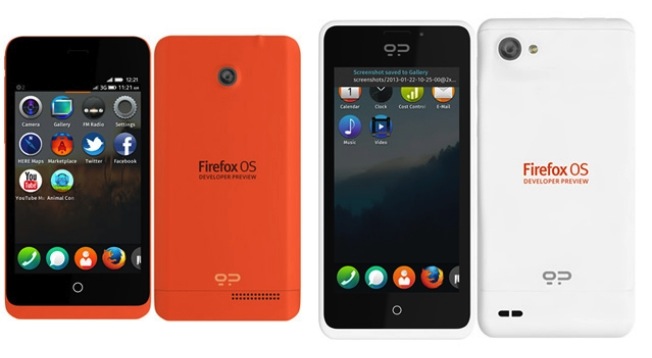
    Geeksphone, the smartphone OEM startup based out of Madrid, put the first Firefox OS developer phones on sale early this morning, offering the Keon for $119 and the more powerful Peak for $194. Both devices are the first hardware to be offered with Firefox OS on board, and both devices are now listed as “Out of stock,” just a few hours after first going on sale.

    The Keon and Peak devices are essentially preview devices, designed to give developers the opportunity to test out what they can do with the new Linux-based open-source mobile operating system before it sees its general public launch this June in five initial countries, including Spain, Brazil, Portugal and Venezuela. The Geeksphone devices are modest in terms of their hardware specifications, but Firefox OS will likely be positioned as more of a mid-market play.

    The $119 Keon (yes, that’s unlocked pricing) has a 1GHz Qualcomm Snapdragon processor, offers 3G and EDGE cellular connections, has a 3.5-inch HVGA screen and a 3 megapixel camera. It’s got just 4GB of onboard storage and 512MB of RAM, but it offers a MicroSD slot for capacity expansion. The $194 Peak has a 1.2GHz dual core Snapdragon S4, a 4.3-inch qHD IPS display, an 8 megapixel rear and 2 megapixel front camera, and otherwise looks pretty similar to the Keon in terms of tech specs.

    Both devices are currently sold out, but TheNextWeb reported in a profile posted yesterday that Geeksphone was aiming to be able to fulfill orders at a rate of about 5,000 per day, and a call I made to Geeksphone’s offices revealed that the company is working hard on getting more phones back in stock, and hopes to have them on sale again this week, hopefully by Friday. Demand has been has been tremendous so far, a company rep told me.

    It’s hard to make any kind of predictions about Firefox OS’s potential success based on these very early results of two developer handsets, likely produced in small batches and aimed at an enthusiast crowd, but it’s definitely not a bad thing that they’re already flying off the shelves.


  • You’ve Got The Whole World In Your Hands As Leap Motion Gains Google Earth Support

    leap-motion-google-earth

    Leap Motion’s gesture-based controller launch is less than a month away, but so far we’ve heard relatively little about app support, besides the fact that the company is working hard on filling out its Airspace app store. Now, Leap Motion and Google are announcing support for Google Earth for Leap Motion tech, which will be built-in to the desktop Google Earth app for Windows, Mac and Linux as of version 7.1 (out today).

    That’s a good initial user pool for Leap Motion, since Google Earth has been downloaded by over 1 billion people according to Google’s stats. The endorsement by Google is crucial because of the company’s stature, and the fact that it builds a whole lot of software, including the Chrome browser, and because it gives potential Leap Motion owners a very tangible, natural and commonplace app to test out Leap Motion’s utility with.

    And we won’t have to wait until mid-May to find out how effective it is – 10,000 developers arleady have access to Leap Motion Controller hardware as it is. Leap motion is looking for devs to try it out and submit their own YouTube videos of the experience, by flagging the posts with #LeapInto. Those will go into a playlist the company will share to show off its tech.

    Leap Motion continues to rack up the pre-launch hits, with major retail and OEM partnerships. The HP arrangement that will see its 3D gesture tech built-in to future laptops and other devices in particular is huge news. But all that hype means it will face high expectations at launch, and Google endorsement drives those expectations even higher.

  • HTC Now Offers 32GB Unlocked HTC One Via Its Web Store

    htc-one-review02

    HTC really wants you to buy an HTC One, and it’s making sure that you have every opportunity to do so. First, it opened up pre-orders for the HTC One Developer Edition, a carrier-unlocked 64GB version of the phone with an unlocked bootloader for custom ROMs. Now, it’s also offering a network-unlocked 32GB version of the handset (via Engadget), which doesn’t have the unlocked bootloader, but which is less expensive at $574.99.

    Most people definitely won’t miss the unlocked bootloader from the developer version, unless you’re really into tinkering with the core aspects of your device. And the 32GB unlocked HTC One is almost $200 cheaper than the iPhone 5 with equivalent storage unlocked and contract free. Plus, reviews have been very favourable so far for HTC’s latest flagship device, making it arguably the best Android smartphone currently available.

    HTC’s sales strategy this time around with the One is a full-court press, with traditional sales via carriers supplemented out of the starting gate with off-contract sales from its own web-based retail presence. By contrast, Apple usually holds its own unlocked device sales until later on, and Samsung usually sticks to carrier routes for selling its own hardware, especially in the U.S.

    Why the abundance of buying options for HTC? Simply put, it doesn’t have the luxury of trying to guide buyers to certain channels. Apple and Samsung incur enough demand that it doesn’t matter if there’s necessarily an unlocked option out of the starting gate; people will get a device any way they can, even if it means tying service to a specific carrier. With HTC, however, the onus is on the company to give buyers a reason to part with their money, and making it possible for those shoppers to do so on their own terms is a key part of boosting the HTC One’s appeal.

    The HTC One is going to be a strong contender for best smartphone for a while to come, so if you’ve been holding out for a way to pick one up relatively cheaply and without network commitment, this is the way to get it.

  • How Will We Define A “Good” Google Glass Experience?

    google-glass

    Google Glass is getting closer and closer to becoming a shipping product. It’s already making its way out to early “Explorer” program pre-launch testers, and we’ll almost definitely see a lot more from Glass at Google I/O in mid-May. Drew already got his lucky mitts on an Explorer set, and provided some useful insight about how it operates, and how it might be useful as someone goes about their average day, but Glass, and how we think about its level of success or failure as a consumer product, are still big question marks.

    It’s too early to do a review of what Google has already made available, and that’s fine; this isn’t for sale yet, so no one out there is mulling the value of dropping something like $1000 on a pair as of yet. But when it does come time to evaluate Glass, there’s going to be very little to compare it to, and plenty of challenges in terms of making a judgement call about how useful it is or isn’t to the average potential buyer.

    An analogous experience might be the iPad, and its first round of reviews and impressions. People had created tablets before, including some aimed at the general consumer, but for the most part there was a lot of confusion about what to make of the product. TUAW recently put together a good collection of reactions to the original iPad that show most people were left scratching their heads. And Glass is a step beyond even what we saw with the iPad, and likely to generate even more skepticism and uncertainty.

    Apps and what third-party developers do with Google Glass will be a big part of how it’s received, because even based on recent statements made by Google Executive Chairman Eric Schmidt at the AllThingsD Dive Into Mobile conference this past week. Schmidt’s own comments about how he uses Google Glass didn’t exactly set the imagination alight, and mostly centered around basic functionality we’ve already seen. Being able to snap photos and check things like incoming messages definitely seems interesting, but it also doesn’t seem particularly revolutionary. That’s where a variety of third-party experiences will really help out.

    The problem with trying to provide an evaluation of Google Glass will be the same one with trying to provide a first impression or early review of the iPad: it involves a certain amount of trying to predict the future. With the iPad, at least we had the iPhone as a loose guide about where things might be headed in terms of third-party software experiences. With Glass, we’ll be charting almost entirely new waters with even less to navigate by. Not to say we shouldn’t try, just that five years down the road, the comparison of where Glass ends up compared to how we perceived it initially will probably be equally as amusing as the retrospective look at the iPad’s launch linked to above.

    Will Glass be judged as good based on its ability to entertain? Its power to keep our smartphones in our pockets? Its ability to deliver real-time information when we need it most? It could easily be all of the above. One thing’s for sure: trying to evaluate what is and isn’t a “good” Glass experience will be one of the more exciting undertakings the tech world has seen in a long while.

  • HTC One Now On Sale Across The U.S., Now We Find Out If HTC Has Done Enough

    htc-one-review01

    The HTC One, the Taiwanese company’s flagship smartphone device, goes on sale today across the U.S. at retail stores including AT&T, Sprint, Best Buy, Walmart Target and more, as well as online via those retailers, HTC itself, Amazon and beyond. The phone has already been highly praised by early reviews and anyone who seems to have gotten their lucky mitts on one, but will that be enough to sway consumers?

    HTC has arguably not made a truly bad phone in at least the past two years, and last year the HTC One X truly excelled. But that hasn’t stopped HTC’s earnings from sliding for five consecutive quarters now. The One, which is as significant a break from tradition in terms of how Android smartphones are designed as any we’ve yet seen, is the company’s big bet to turn things around, and they appear to have spared no effort.

    The One has a unibody full metal body design, a first for a smartphone, as well as speakers that don’t suck, itself an achievement for any kind of phone. Reviews of the UltraPixel camera have been good, too, with Mobile Syrup calling it “the best low-light camera you can buy.” And the HTC software features, including BlinkFeed and HTC Zoe, are also drawing praise from press and reviewers.

    HTC has a big mountain to climb in terms of coming anywhere close to competing with Android juggernaut Samsung, or Apple and its iPhone in terms of market share. But the HTC One is the best chances anyone has had of doing so in a long time. If only they’d left Van Der Beek out of this.

    For those looking to pick one up today, here’s a full list of its current U.S. availability direct from HTC:

    The new HTC One in silver is available nationwide at:

    • AT&T: Online and in retail with 32GB of memory for $199.99, or online with 64GB of memory for $299.99 with a two-year commitment.
    • Sprint: Online and in retail with 32GB of memory for $199.99 with a two-year commitment.
    • Best BuyRadio Shack, Walmart, Target, Amazon.com, Costco, Car Toys, Sam’s Club, HSN.com andHTC.com.
    • Coming soon to T-Mobile in silver with 32GB of memory, and available in the coming weeks in black at AT&T and Sprint with 32GB of memory.

  • Larry Page Says Google Glass Runs On Android

    google glasses 3

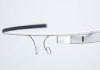
    Google’s CEO Larry Page revealed something during today’s earnings call that his company doesn’t seem to have actually spelled out before: Google Glass runs on Android. In response to a question about how much people can expect to see engagement increment with new products like Glass, he said that “obviously, Glass runs on Android, so [Android] has been pretty transportable across devices, and I think that will continue.”

    Many have speculated that Google Glass would run on an Android-based OS, but to date, Google hasn’t come right out and said so. Recent reports suggested that it would be ore of a proprietary system separate from Android, but Page’s statement today seems to indicate that in fact it will at least be a version of Android.

    And Android-based Glass, even if it’s a modified version of the original OS, is good news for developers, since it means they share at least a common language. That should make integration, at least between Glass and Android-powered smartphone apps easier. The comment about portability also strongly suggests that Android has the potential to power a range of devices in the future, including the smart watch it reportedly has in development.

    We’ve contacted Google to find out more about the Glass OS and how closely related it is to Android for smartphones, and will update if we hear more.

  • Nintendo’s $20 Circle Pad Pro Is Coming to The 3DS XL In The U.S. This Friday

    3ds-xl-circle-pad-pro

    Nintendo is gearing up to bring an extra nub to your 3DS XL, if that’s what you’re into. The company listed the previously Japan-only accessory on its website in the U.S. today, with an anticipated ship date of this Friday. The Circle Pad Pro for 3DS XL is like the original version for 3DS, but beefier, and perhaps even more unsightly when glommed on to your portable console.

    Less than stellar looks are a trade-off for a much more ergonomic and comfortable design, however, according to most who have used the accessory. Nintendo got a lot of flack back when it first revealed the 3DS for not just including a second analog control pad to begin with in the device itself, and clearly the Circle Pad Pro was a concession designed to calm those whiners.

    Nintendo’s got a lot riding on the 3DS, especially since it looks like the Wii U isn’t doing too well in the initial offing. The mobile console faces an even greater threat from multipurpose devices like iPads and tablets that are also getting plenty of software to add to their gaming libraries, and which follow a hardware upgrade cycle that sees them get more powerful on at least a yearly basis, but often even more frequently.

    The OUYA Android-based gaming console so far mostly challenges the home console market, and then even not very well, according to early reviews. But Sony at least seems to be investing more time and effort into PlayStation Mobile, its attempt at crossing the divide between dedicated gaming devices and the smartphone market, and third-party devices with more of a gaming focus, possibly from startup sources, likely aren’t that far behind. The Circle Pad Pro for 3DS XL isn’t revolutionary, but it is a cheap way to offer something smartphones generally don’t, so it could help convince fence-sitters unsure about a purchase, at the very least.

  • Verizon Activated 4M iPhones In Q1 2013: 50% iPhone 5, And 50% Older Devices

    iphone-family

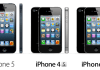
    Verizon said today on its earnings conference call that it had activated 4 million total iPhones during Q1 2013, of which half were LTE devices, and half were 3G-only. That means 50 percent, or around 2 million were iPhone 5, with the remaining 2 million making up iPhone 4 and 4S devices.

    iPhones represented a little over half of its total smartphone sales for the quarter, or 55.6 percent. Verizon activated 7.2 million smartphones in total in Q1 2013, and 5.9 million LTE devices, which means iPhones accounted for around one-third of all LTE device sales at the carrier during the three-month period.

    Last quarter iPhone represented 64 percent of all smartphone sales by comparison, with 6.2M devices sold. As with this quarter, around half of those were iPhone 5, with older models making up the rest. The dip is mostly in keeping with past iPhone sales performance at the carrier, though it likely was higher last quarter due to strong interest in the still newly-launched iPhone 5 heading into the holiday shopping season.

    The decrease in share of total smartphone sales is consistent with past performance, but it’s worth watching those numbers over the next couple of quarters as new flagship Android devices like the Galaxy S4 make their way to market. And if Apple is indeed planning an iPhone revision in June as many now expect, we could see more changes, though based on current data it looks like iPhone sales share might be settling in to a regular pattern, at lest at Verizon.