Online note-taking company Evernote revealed something very interesting via its CEO Phil Libin, who told IDG News Service that his company wants to design hardware products and eventually make them itself. Libin said Evernote will move soon to start releasing Evernote-branded gadgets, which will be co-designed and manufactured by external OEM partners.
Libin didn’t share too much in terms of details around what kind of products we might see bearing the Evernote logo, offering only that they’d look to create devices that are “new and magical” in the IDG interview, instead of wading in to compete with others in existing categories.
Evernote has already done some work with hardware partners and products, like the Evernote Smart Notebook by Moleskine. The book allows users to snap a photo of its pages, which use “specially formatted paper” designed to work specifically with Evernote, and have their handwritten notes converted to a digital format. It seems likely this is the type of product Libin is referring to: ones that uniquely suit Evernote’s vision of a pervasive, constantly connected digital notebook that stores any kind of media.
So while we probably won’t see an Evernote Phone or Evernote Tablet, other opportunities would seem to abound. Image- and audio-capturing devices, for instance, with direct connections to Evernote make a lot of sense in the same vein ans the Moleskine connected notebook.
A hardware ecosystem would probably still be a secondary concern for Evernote, which remains focused on the problem of building apps that work seamlessly across devices according to Libin, but it could be a route toward greater visibility among the general public, and toward greater engagement from existing users.
We’ve reached out to Evernote directly to see if they can share more about their hardware plans, but they did not respond immediately to a request for comment.
Nexus tablet device sales remain a bit nebulous, since Google doesn’t give out specific numbers around them. But industry watchers, and Benedict Evans in particular, often try to pierce the veil to find out where the Nexus brand stands compared to the rest of the industry when it comes to sales. The Nexus 10, it seems, probably pales in comparison to most.
The tablet, manufactured by OEM partner Samsung, went on sale in November of last year, just shortly after the iPad mini, and based on Evans’ estimates from modeling active Android users, combined with information from Google’s development data based on screen sizes and resolution in use. Based on there being 680 million active Android users by the end of April, Evans says that that means 6.8 million Nexus 7 devices total, and only around 10 percent of that, or 680,000 Nexus 10s.
As Evans notes, Apple sold somewhere near 10 million iPads during just the final two months of Q4 2012 by comparison. It also announced total iPad sales for its first fiscal quarter of 2013 of 22.9 million iPads total, including bot the iPad mini and the standard iPad. To say that Google’s efforts with the larger Nexus tablet so far haven’t had customers rushing to stores would be fair, even if Evans’ estimate is only loosely accurate.
Google is said to be preparing to debut a next-generation Nexus 10 already, with an improved CPU and GPU. But the issue here is not really about device quality; many found the Nexus 10 a fine performer, especially compared to many other larger Android devices from other sources.
Google’s line of self-branded hardware has never been fully about selling product. They started out being more about acting as reference designs, to show OEM partners what was possible with the platform. Lately, thanks to extreme affordability and increasingly impressive hardware like the Nexus 4, however, they’re becoming more popular with general consumers. But an LG-made smartphone that fits a need most consumers already know they have, with a proven product category like the Android smartphone is a far cry from a 10-inch Android tablet, which the market has so far shown little interest in, no matter what the source or the price.
The inflection point for Android tablet sales still has yet to appear. Google’s Nexus efforts in this case could be a crucial element of helping that happen, but only if the company can also start to aggressively expand software options tailored for Android tablets and make sure customers are aware of why they might want such a device.
Leap Motion hasn’t even launched its first product yet (the first devices ship May 13), and already the company is on a role. Now, it’s announcing a collaboration with HP, to bring its brand of 3D motion control to that company’s devices, first via bundling the Leap Motion Controller with select HP computers, and then later by hardware integration that embeds Leap tech right into HP gadgets themselves.
Embedding is a major step for Leap Motion, since it means eventually users will be able to access all of the company’s 3D motion control features without needing any kind of peripheral. Leap Motion co-founder and CEO Michael Buckwald explained in an interview that the functionality of Leap, whether embedded or standalone, should be exactly the same when it does eventually arrive, although this partnership with HP, the first such arrangement with an OEM PC manufacturer, is still at a very early stage. This first outing of embedding capabilities for Leap is big news for the company, however, even if shipping devices are still a ways off.
“It’s exciting for us on two levels. One, it’s a strong validation of confidence in leap from a technical point of view, as well as validation that it can be embedded in consumer devices,” Buckwald said. “The other is that it means a lot to our developer ecosystem as well. Yes, we’re talking about embedding the motion-sensing part of the technology, but we’re also talking about embedding Airspace, the Leap developer ecosystem.”
HP computers that are Leap Motion-enabled will come with Airspace, Lesp’s application store for Leap Motion-compatible titles, pre-loaded. That’s a huge advantage for Leap and its developers in terms of discoverability, and making sure that customers are exposed to software built for Leap Motion in the first place. Apps for Leap Motion are an integral part of the launch and platform strategy, since without software to use with the unique and impressive hardware, it’s unlikely that anyone will stick with the device long-term.
The company’s ability to impress big name partners early and often is also a very good sign for Leap Motion’s potential sustainability. It has already signed up Asus as a partner, too, and the company will ship some of its computers bundled with Leap Motion controllers. Retail partner Best Buy will also be doing endcap displays, meaning users will be able to try out the new technology for themselves, which is a huge boon in terms of convincing people it’s something worthwhile.
This new HP deal is just the start for Leap in terms of its embedded tech opportunities. Buckwald says that while the final design of a Leap Motion-enabled device hasn’t been defined yet, it could work either with placement above a display like most current webcams are positioned, or below, as it’s placed with the current standalone Leap hardware. He also said that mobile device integration is definitely something else coming down the line.
“Mobile will definitely be a part of our strategy in the future,” Buckwald said. “Tablets and phones are a great example of a use case where there’s a major benefit to the consumer to embed Leap. Anywhere we think we can provide value, we’re interested in eventually embedding in there.”
For Leap, the challenge however is less about identifying ways it could benefit users, and more about staying focused and being diligent in keeping its aspirations within the grasp of its small team of staff, he said. Embedding the tech is a huge step, and one that could position Leap as a new staple tech for inclusion in the computing products of third-party OEMs, so keeping the company’s eyes on that prize is the current priority.
Apple’s primary manufacturing partner Foxconn is said to be increasing its staff, shortly after a freeze on new hires following the holiday season, in order to get ready for a big push come summer when Apple debuts its next iPhone. That’s the latest from the Wall Street Journal, which reported today that Foxconn is adding around 10,000 new assembly line workers a week to its iPhone production facility, with unnamed executives at the company confirming that it’s in preparation for a new iPhone launch.
The Apple partner will begin mass production of the iPhone “very soon,” according to the Wall Street Journal’s sources, which fits perfectly with the anticipated early summer launch of an iPhone 5 successor. We’ve heard previously that manufacturers are preparing for a June 2013 launch, which suggests that we’ll see the device introduced at or around WWDC 2013. Apple has introduced new iPhones at its annual developer’s conference in the past, with the exception of the last two iPhones, which were revealed and put on sale in fall instead.
The Wall Street Journal’s report doesn’t specifically mention a launch window for the iPhone, only that it will begin mass production shortly. We know from watching Apple’s production cycles in the past, however that the company typically starts large-scale production for a launch somewhere between 3 and 4 months ahead of a product going on sale. This time around, Apple is expected to introduce an iPhone 5S-type device according to most early reports, retaining design elements of the iPhone 5 but with under the hood improvements.
Also accompanying a new flagship phone will be a lower-cost offering, which sources including the WSJ suggest could be introduced around the same time as this next-gen model. This would use plastic in its construction, and also come in a variety of different colors, early leaks suggest.
Apple recently launched the iPhone 5 on T-Mobile, which early indications suggest has spurred ample renewed interest in the device. A mid-year upgrade for their flagship smartphone could make this the most successful year yet in terms of iPhone device sales, depending on how attractive any new features introduced are to prospective buyers, especially given the impact a low-cost device might have on pre-paid and emerging markets.
San Francisco-based Boreas Gear, Inc. is funding its latest product through Kickstarter, in an attempt to build a modular pack system that provides three bags in one. If you’re a bag enthusiast like myself (that might not be a real thing but I still have tons of them) then you’ll appreciate the idea of a simple system that makes it easy to covert a single frame into a daypack, waterproof bag and simple hydration/light carry bag quickly and easily.
The SF-based team founded Boreas Gear in 2010, with the intent of designing packs centered around versatility and good design. Founder and Creative Director Tae Kim has a design background and grew up in Alaska, where he spent plenty of time in the great outdoors. The bootlegger is designed to be the perfect companion for a whole host of outdoor activities.
Besides offering the three different pack configurations, it also boasts something called “Super-Tramp Suspension” which uses pull-straps to shift the weight carried in the pack either closer to or farther away from the back, making it possible to adjust it perfectly for either hiking or biking on the fly. If you’ve owned a specialized biking pack, then you know that the added breathing room can really come in handy, especially on longer rides.
The Super-Tramp Suspension system can then be used interchangeably with three pack tops, including the Torpedo, the Hopper and the Scrimshaw. The Torpedo is a lightweight hydration pack, which can be outfitted with a water bladder to keep you from getting thirsty on long rides or trail runs without adding too much weight. The Hopper is a daypack that has plenty of room for a lunch and gear for a full day on the mountain and the Scrimshaw is a completely submersible waterproof bag, perfect for rain, snow, or use in watersports like canoeing or kayaking.
The system is designed to be used either with any individual bag or with all three, and the project has already blown past its $10,000 funding goal. Boreas Gear has been designing and manufacturing packs for years now, so there’s relatively little risk in terms of the company delivering on its planned July ship date. Pledges for bags start at $65 for the frame + a single pack and range up depending on what options you’re interested in.
Pebble has officially released its SDK, after promising to deliver it during the second week of April. This qualifies, if only just, and arrives alongside firmware update version 1.1 for PebbleOS. The new software update for the hardware brings support for custom watch faces built using the SDK, as well as new options for disabling backlighting and vibrations, as well as fixes for iOS bugs.
The SDK itself is currently just for creating watch faces, not for building apps with other functionality, although we could see some creative software made even with those restrictions. Pebble says its Sports app SDK is coming soon, which should help developers mirror the sorts of functions introduced by RunKeeper.
This is the first time third-party developers have had public access to developer tools for the Pebble platform, so it should give us a hint of what’s to come. And the firmware update fixes for iOS include one that makes the “Allow Pebble to communicate…” dialog appear far less often, which is great news since that’s a majorly annoying bug for people using iPhones with the device.
T-Mobile is kicking off its official sales of the iPhone 5 today, marking the first time the U.S.’ fourth largest carrier has offered an Apple smartphone. Thanks to T-Mo’s new Uncarrier plans, the iPhone 5 can be had starting at just $99, with two years of $20 monthly payments to cover the balance, or for free if you’re switching from another carrier and bring a device in for trade. So far, so good, according to reports of lines forming at retail stores for a phone that’s now over six months old.
BTIG analyst Walter Piecyk tweeted the photo above of a line at a location this morning, and reports on Twitter suggest that small lines are forming at various locations around the U.S. Our own intern Michael Seo said there was a small one outside the T-Mobile store near our New York offices when he came into work this morning.
The appetite for the T-Mobile iPhone is good news for both Apple and the small carrier. T-Mobile’s existing potential reach only represents around 26.1 million total additional subscribers for Apple (a smaller percentage of which are realistically potential iPhone 5 buyers). That’s not a huge number in global subscriber terms, but it does give Apple room to expand its smartphone dominance in the U.S., and could provide it a late-stage bump for the iPhone 5, which is going to face increasing pressure from new competing flagship devices like the Samsung Galaxy S4.
T-Mobile has consistently been left out of launch day hype surrounding the release of Apple’s iPhone, with the carrier relegated to watching from the sidelines as AT&T, Sprint and Verizon locations saw customers queue for the iPhone 5 back in September, so it’s probably very happy to see lines form with this launch. Combined, the iPhone 5 and the carrier’s new model could lure away quite a few switchers, but we’ll have to wait and see if that impacts the overall distribution of U.S. wireless customers in any significant way.
HTC promised it would be spending more on marketing efforts to ditch the “quietly brilliant” tagline and come up with something with more pop, but it couldn’t have gone much worse than the video above. Kudos to signing on Dawson’s Creek and Internet meme star James Van Der Beek, but -1,000 for making such little use of his comedic talents in this dismal Bachelor parody.
To his credit, Van Der Beek gets the only almost funny moments in the whole embarrassing affair (around the 1:50 mark) but even the under-appreciated lead from The Rules of Attraction can’t make up for what is really a desperately unfunny script based on an exceedingly painful premise.
Matt recently wrote that making the perfect smartphone with The One isn’t enough for HTC – it has to nail the marketing game, which rival Samsung has actually gotten pretty good at. The One with James Van Der Beek at least indicates HTC is stepping up to the plate, but this is a big, big whiff and we’re down to the bottom of the last inning. I may actually have preferred HTC “quietly brilliant” than “loudly unfunny.”
After a very public defense of rumors about the next Xbox’s always-on Internet requirements, a new report claims that Microsoft creative director Adam Orth is no longer with the company. In a series of Twitter posts, Orth defended the move by countering that “every device” is now constantly connected, and then delivered a low-blow when someone responded suggesting always-on connectivity might not work great for customers in rural locations, responding snidely, “Why on earth would i live there?”.
According to Game Informer, which confirmed reports from unnamed sources via a call direct to Microsoft that Orth was no longer employed there (we also contacted Microsoft for official confirmation, but a spokesperson simply said ““We are not commenting further on this issue”), it’s likely that incident led to his resignation or removal. And based on Microsoft’s public apology, it likely is the case that this wasn’t the venue. But the real problem here might be that defending a decision to embrace an always-on Internet connection requirement is bound to devolve into personal arguments, since logical ones that don’t involve owning up to a simple “we want to lock down our product and better control piracy” aren’t readily available.
The original report of how the next Xbox would work included a requirement that a user be connected to the Internet to even begin playing games or apps on the console, along with a 3-minute time out for a connection loss before said games or apps are suspended pending the resolution of the network connection issue. For users who have been burned by the always-on requirements of recent PC gaming titles like Diablo III and SimCity, this rumor (which Microsoft neither confirms nor denies, despite its apology) probably sounds like a total nightmare scenario.
It’s not making things better that a report surfaced this week from the Verge which claims that the next Xbox will interact with your cable box, hence the need for an always-on connection. The timing of that report smacks of Microsoft trying to do some subtle damage control based on these recent leaks, without giving away anything official ahead of its own planned Xbox events, the first of which is reportedly taking place late in May.
Of course, even that doesn’t justify an always-on connection requirement, not for isolated functions like single-player gaming which should have no problem running without an active connection, even if a player has to give up some features like achievements and leaderboard ranking to make that work (you know, exactly the way it works now).
The problem with trying to come up with a coherent argument for why a device or game needs an always-on connection without saying those three dreaded letters (D-R-M) is that it’s impossible to do convincingly. Companies like Microsoft and EA, which have very savvy PR professionals on staff, know that trying to do so without a proper feint like a connected TV service is fruitless. Aside from strongly suggesting that the leaked info was correct, taking to Twitter also meant venturing away from the party line that always-on is value add, not consumer punishment, and that’s not something any company mulling this kind of sensitive and major change to the way it delivers services can afford.
The iPad mini is a unique device in that it offers much more portability than the standard iPad, while still providing a much bigger screen than the iPhone for more enjoyable gaming. Techdy has recognized that as an opportunity to build a game controller specifically for Apple’s smaller tablet, which aims to turn it into a much more capable gaming rig.
The Game D is a controller designed with a standard physical d-pad and four-button arrangement, as well as start/select buttons. The controller is designed to fit inside a slim aluminum shell, not unlike Logitech’s Ultraslim Keyboard for iPad mini, and it also uses magnets to operate. It can be used in two gaming positions, either with the iPad mini mounted in a slot on the keyboard itself, or snapped magnetically to the back of the iPad, for a more traditional gaming layout. Plus, it doubles as a smart cover.
Techdy is looking to crowdfund the development of the Game D, with its own self-run campaign. Reservations for the Game D start at $39, and there’s a Pro version upgrade available for $59 that adds backlit keys, vibration feedback and two analog gamepads. There’s also a Nexus 7-specific model available for Android gamers.
A lot of aspects of the Game D’s eventual design and branding are still up to backers, including its final shipping product name (“Game D” is just a placeholder) and custom color choices, as well as app interfaces for controlling the hardware itself. The development for the Game D is progressing nicely, with a working hardware prototype designed to function with iCade-compatible games, according to co-founder Cyril Chang. He also says that they’ll eventually offer their own open-source game developer kit (GDK), as well as continue to support iCade games at launch.
I’d love a gamepad for my iPad mini, even if it might be a little more taxing on the forearms and biceps than using an iPhone. Techdy hopes to ship these in August of 2013, if it meets its $500,000 target funding goal by the middle of May.
Roku just announced via its blog that it has sold 5 million of its streaming Internet media players since its launch back in 2008. The devices have managed to stream a total of 8 billion pieces of content in that time, impressive for a device that started out as essentially a dedicated Netflix box. Roku recently introduced its third-generation hardware to market with the Roku 3, which went on sale in March.
The milestone is significant, since it indicates that there’s a very real and growing market out there for a device that essentially just acts as a service layer for bringing web-based content to televisions, independent of what TV manufacturers themselves are doing with their own built-in Smart TV services. Roku announced that it reached 2.5 million streaming devices in sales back in January of 2012, after having sold 1.5 million during all of 2011. That means it managed to sell somewhere close to 2.5 million devices in the U.S. between then and now, which is a marked increase from its previous yearly high.
We’ve seen how this 5 million milestone compares with Roku’s performance to date, but how about vs. the rest of the market? Despite the fact that Apple still isn’t driving massive amounts of sales with its Apple TV products (especially when compared to its iOS devices), it still sold 2 million in total during the holiday quarter last year, up from 1.3 million in the quarter before that, and up from 1.4 million year over year.
Apple’s sale totals are global, but that still adds up to more than 10 million sales since the device’s introduction, and it sold as many devices as the Roku did in a whole year at home in the U.S. in a single quarter. Still, for a company without Apple’s marketing clout and ecosystem of devices, Roku is definitely holding its own.
The Roku 3 is receiving high praise so far, and has simplified things on the product side, as well as narrowed Roku’s product line to a single device, which is probably best in terms of helping it focus its marketing efforts and avoid consumer confusion. But it will face new competition from Panasonic, which introduced two new streaming media players this week, both of which plug into the popular new Miracast tech, essentially AirPlay for Android, being built into many of today’s smartphones.
I always wanted but never got a Virtual Boy, but I’m glad I waited since the Oculus Rift looks like a much better goggle-based gaming platform. The gadget got the teardown treatment over at iFixit today, thanks to a developer edition secured by the site. The Rift was remarkably easy to pull apart, earning it a very high repairability score. Rare for an iFixit teardown, the Oculus Rift one also includes some hands-on gameplay before the team pops the case.
iFixit offers a great video of the view from inside the Rift, showing exactly how it manages the 3D effect by offsetting the image slightly for each eye, which are then combined by your brain and give the illusion of depth. The rest of the teardown shows the Rift’s core parts, like the 1280×800 resolution LCD that outputs the 640×800 image to each eye, supplied by Taiwan’s Chimei Innolux. iFixit dubs this “good news,” as Chimei Innolux is Taiwan’s largest LCD supplier.
Other key components include the ARM Cortex-M3 microcontroller with a 72MHz CPU (most processing is handled by the host computer, of course), and there are a variety of motion, acceleration and gyroscope sensors on board to help the device follow and compensate for changes in head movement.
The Oculus Rift was already one of the coolest, geekiest gadgets on the horizon, but now that it’s been pulled apart in a remarkably easy function to reveal its relatively simple, but very functional internals, I’m even more excited to get my hands on one.
Xerox PARC spinout company PowerCloud Systems is debuting a new kind of home networking solution today on Kickstarter, one that in some ways resembles the very successful Almond router, but one that also offers tremendous flexibility and granularity of control over home network access. The Skydog is a home networking tool that allows you complete control over who has access to your network, how much access they have, and what they’re allowed to access, and it can all be controlled remotely, too.
The Skydog consists of a router with 802.11n networking capabilities and simultaneous dual-band (2.4GHz and 5GHz) operation. But the hardware is just one small part of the equation: it’s the software side that makes things really interesting, thanks to a powerful web-based dashboard that’s designed to be accessed from any Internet-connected PC, smartphone or tablet. The dashboard, unlike the firmware access panels of most routers, is actually a cloud-based service layer that provides simple, easy-to-understand controls for various network settings.
For instance, using Skydog, you can receive a text-based notification whenever a new device joins your network, complete with that device’s name. Skydog also shows you exactly how much bandwidth is being used by what device, and even lets you meter access by device or group, so you could allocate more bandwidth to a living room TV for video streaming, for instance, or limit the access of guests to prevent them running up your monthly traffic totals.
Skydog also has extensive parental controls, which allow for content filtering (you can tell it to block websites that fall into broad categories) and time limits on access to specific sites. Lock down Facebook during exam time, for instance, and have Skydog send you a notification when the user with the limit imposed hits their maximum allotted time. And if you need to diagnose a problem, there’s real-time monitoring, complete with remote outage alerts and remote router cycling, so you can spend less time on the phone with your ISP’s tech support department.
“In general, you can think about what we’ve done as taking enterprise-grade technology and making it usable for consumers,” PowerCloud CEO Jeff Abramowitz explained in an interview. “The idea for Skydog really came from employees of the company, friends and family of the company and even our investors taking our business products home, using them and realizing that they gave a level of visibility and control that no existing products really had.”
PowerCloud has been providing its CloudCommand technology for businesses, schools, hotels and other enterprise clients for a couple of years now, and the leap to the consumer market made sense in that it addressed a need that wasn’t really being filled by any competing products. Sure, Almond had simplified home networking by making its a process independent of computers, but in general home networking is still just about connecting devices to the Internet; there’s been very little innovation in terms of giving people more control over how and when they connect, which definitely seems like a missed opportunity given the explosion of the number of connected devices in any given home, and the changed role of the web in the lives of both children and adults.
Skydog is available as a $79 pre-order on Kickstarter, and will retail for $99 when it hits stores. The service it offers will be available free to users, though since it is a cloud service Abramowitz didn’t rule out the possibility of introducing paid premium tiers and features down the road. Asked why they went the Kickstarter route, he said that Skydog was looking for a new way to access the consumer market for this kind of product.
“Obviously Kickstarter is common for earlier startups, but not necessarily for a company that’s been around for a while,” Abramowitz said. “What we realized is that we’ve got a very disruptive and exciting product, but it really is a very large and mature space, and the existing paths to market are pretty well owned by the incumbents. Getting product on the retail sense is a very resource-intensive proposition.”
Going the Kickstarter route isn’t just about getting consumer backing, he said, but about promoting the Skydog community. The Skydog platform features a forum and is intended to promote sharing of network management strategies, so that people can exchange templates, tips and tricks for running their own household wireless. Kickstarter not only helps with funding, but gets that seeded early.
Skydog also works with your existing setup, as you can just plug in an AirPort Express, for instance, and get it running through the dashboard. The intended ship date is May 2013, so early backers won’t have to wait long for the device, which has already been extensively beta tested. If you’ve been looking for a way to make your home network easier to control and monitor, or you want to set your parents up with a networking solution you can manage completely even from across the country, this is a little project that could have a big impact on your lives.
Microsoft’s next Xbox, which could get an initial unveiling as early as next month, will use an AMD system-on-a-chip according to a new Bloomberg report. The new AMD SoC will mean that Microsoft is moving to an x86-based system architecture, which Sony’s upcoming PlayStation 4 is also adopting. The change is great news for AMD, and for gamers, and bad news for AMD’s chief rival Intel.
The new Microsoft console will be running a “Jaguar” CPU, which is also what’s going into Sony’s PS4, alongside a Radeon graphics processor from ATI, an AMD subsidiary. The similarity between the two SoCs employed in each next-gen console should go a long way toward silencing complaints from developers that it’s too difficult and resource-intensive to develop for each type of console. A shared x86 architecture means that it’ll be much easier to port titles, both between consoles and from the PC.
For AMD, it means gaining access to a much bigger chunk of the console gaming industry, at a crucial juncture: the desktop and notebook PC market is shrinking, facing increasing encroachment from devices like the iPad, meaning there’s less room to vie with Intel for market share in a space where Intel already clearly dominates. The console industry hasn’t exactly been a shining beacon of growth itself, but with a hardware refresh imminent, AMD is in the best position to capitalize should consumer interest once again be caught by fancy new console devices.
The problem with Microsoft’s decision to reportedly change over to AMD is that it will likely render games made for the 360 incompatible with the next-generation platform. But long-term, the decision means it’s much easier for developers to work with, which should translate to an alleviation of financial pressures on game studios that are already facing revenue crunches which are forcing cost-cutting measures. The console exclusive might be more of a rarity, but gamers benefit, and we could also see shorter development cycles leading to more frequent game releases.
Another party left out of the fun might be the Wii U, which uses a PowerPC based processor under the hood. But overall this is very good news for gamers, since it could both free up resources for developers to spend on innovation and R&D, and suggests both consoles will behave much more like home entertainment PCs based around the TV.
Keyboard cases for iPad are many and multiplying, but at this point it’s a question of refining the best concepts, not creating dramatically different devices. The Belkin Ultimate Keyboard Case for iPad is a great example, taking a lot of cues from the massively popular Logitech Ultrathin Keyboard Cover for iPad and folio style designs to create a solution that might be as near as perfect as tablet typers can get.
Keyboard is 6.4mm thin
160 hours battery life
Magnets for secure closure and three viewing angles
The Ultimate Keyboard Case is not small, but it isn’t big either. It avoids feeling anywhere near as bulky as a total hardcase like the Brydge, but don’t expect something with the low profile of Apple’s Smart Cover, for instance. But it sill manages to be just about as low-profile as the Logitech Ultrathin, and it has a few extra tricks up its sleeve, including a protective cover for the back of your iPad, three possible viewing angles for your device, and a sound port built into the case that redirects the iPad’s speaker output for better listening.
The materials feel top-quality, it weighs only 411 grams (slightly more than the Ultrathin’s 355 grams) and its keyboard layout feels natural and won’t impede your touch typing abilities. The design of the keyboard component and faux leather hinge means that you can use it with the keyboard folded back in behind, without keys awkwardly facing outward where you can accidentally hit them with your fingers, as is often the case with folio designs.
As mentioned, the Belkin Ultimate Keyboard Case is great to type on, with one small quibble: the recessed design of the keys means that it can be awkward to hit the space bar, since your thumb will also brush up against the base of the case itself. It’s not a deal-breaker, but it does annoy when you’re coming from a standard notebook or desktop keyboard. But the dedicated keys, including a microphone key that brings up Siri on later generation iPads or voice dictation on earlier ones, as well as the convenience factor outweigh any downsides.
The Ultimate Keyboard’s other big feature is its use of magnets to allow for three different viewing angles. It’s a nice trick, and one that works well. The one limitation here is that if you’re trying to type in an unstable setting, say on a very bumpy car or train ride, the magnets can actually become dislodged. As long as you’re using the Belkin on a flat surface and you aren’t on Safari, however, the magnets do their job and offer a bit of flexibility vs. the Logitech Ultrathin.
I feel like we may be reaching peak keyboard case, especially for the standard-sized iPad. But Belkin’s Ultimate Keyboard Case, though somewhat late to the party, shows that there’s still some depth left to be plumbed in terms of wringing innovation out of the overcrowded space. At $99.99, it’s not cheap, but if you’re looking for a way to make your iPad a much more capable text-entry machine, while still offering full protection for your iPad itself, this is a good option.
Microsoft announced today via its blog that it will be selling its Mediaroom properties to Ericsson, in a deal that will see Ericsson become the dominant IPTV player in the industry with over 25 percent market share. Mediaroom operates as a pretty much separate company from Microsoft, with its own HQ in Mountain View and around 400 employees, and powers TV offerings like AT&T U-verse, as well as services from Deutsche Telekom, Telefonica and Telus. The deal clears the deck for Microsoft fo go all-in on Xbox as the focal point of its own TV efforts.
At Ericsson, Mediaroom will continue to operate essentially as per usual, with that company investing in growing the business, while at Microsoft, the sale allows Microsoft to dedicate “all TV resources to Xbox in a continued mission to make it the premium entertainment service that delivers all the games and entertainment consumers want,” Microsoft said in its blog post. The company also intends to partners with studios, labels, networks and operators to help accomplish that mission, and says it hopes to help usher in a future where TV becomes “more simple, tailored and intelligent.”
Microsoft built Mediaroom into the industry leader in IPTV after its introduction as Microsoft TV, which evolved into the Mediaroom platform in 2007. It’s the middleware that powers set-top boxes from a variety of manufacturers, and also has a home in the Xbox 360, which uses it to act as a set-top box for service from some IPTV operators, including AT&T and Telus.
Mediaroom is very much a behind-the-scenes tech, however, and doesn’t carry the power or branding of Xbox. Refocusing efforts on making that the central facet of their television strategy, instead of being distracted by middleware that arguably helps competitors position their own devices at the center of a living room TV experience makes sense at this stage for Microsoft.
This move also suggests we’ll see something exciting from Microsoft on the integrated TV front with the upcoming Xbox 360 successor, which is reportedly on track for a sneak preview towards the end of May. PlayStation may be doubling down on games and the gamer, but that means there’s even more opportunity for Microsoft to make an impression as the destination for all of a user’s entertainment needs.
Android users will get the chance to try out the official public release of Facebook Home later this week, but if anyone is really impatient a beta version has leaked and is available to try now (via Verge). MoDaCo has published the beta (which is actually made up of three separate APKs covering the Facebook app itself, a new Messenger app and the Home/launcher app.
Another benefit of the pre-release version of Home, besides getting to try it out early, is that it works on a wide variety of devices beyond the five specified by Facebook as being compatible in the event it held last week to officially announce Facebook Home. The only requirement seems to be that the device has a maximum resolution of 1280×768, and that a user is able to completely uninstall their existing Facebook app. The Nexus 4 is therefore a viable candidate.
Functionality is somewhat limited, however. Chat heads doesn’t work as of yet, for instance. But Cover feed appears to function as intended, and all the settings appear to be there. The settings reveal that in choosing where your Home content comes from, you can both enable and disable updates from Pages and status updates from users in your network. You can also enable or disable the notification/status bar at the top of the screen for a more edge-to-edge Facebook experience.
The leak shows that there doesn’t really appear to be any huge technical barrier to putting Facebook Home on a wide variety of handsets, which is good news for users who don’t own one of the five devices initially set to receive it. If you’re interested, you can head over to MoDaCo to download the APKs and try this our yourself, but as with any side-loaded software, remember you do so at your own risk. Friday might just be a little too far off for some curious folks, however.
To install the Facebook Home beta, first make sure you’ve uninstalled both Facebook and Facebook Messenger. Then navigate to your device’s security settings and then tick the box that allows you to install apps from unknown sources. Then download the APK files above to your computer. Plug in your Android device and make sure that it has USB mode enable, or download Android File Transfer if you’re on a Mac. Drag and drop the three APK files to your device, preferably in the “Downloads” folder.
On your Android device, if you don’t already have one, download and install a free file manager application from Google Play. The free and aptly named “File Manager” does the job. Within that app, navigate to where you copied the Facebook Home APK files from your computer, and tap on each to install them.
Once they’re installed, sign in to Facebook with your credentials, and then activate Facebook Home. It’ll take a few seconds to load, but should quickly go from a gray screen to photos from your FB feed and a home circle with your face at the bottom. You can choose to have pressing the home button on your device activate FB Home by default, or your default launcher, and you can change these settings at any time in Android Settings.
A new Kickstarter campaign from San Antonio-based Ubertronix, Inc. aims to turn your Android smartphone into a wireless trigger for your DSLR. The project follows others that offer similar devices, but this one, the brainchild of Josiah Leverich, who founded Ubertronix a little over a year ago to build camera remote hardware, has some unique elements, including a way to use your smartphone as a lightning sensor for capturing impressive storm photos.
Ubertronix began as a way for Leverich to build and market his Strike Finder camera trigger product, which is a dedicated piece of hardware that features built-in sensors to help capturing high-speed photography, and lightning specifically. The ShutterBox is an extension of that tech, which features a hot shoe-mounted receiver box that communicates wirelessly with your Android smartphone via Bluetooth. It uses the phone’s built-in sensors for triggering automatic shutter activation, including light sensors for lightning, as well as motion detection for capturing wildlife or other movement-based events.
The ShutterBox can also be used as a standard wireless remote for triggering single shots, time lapse, bursts of exposures and more. It’s even designed to be able to work with multiple slave units for capture across multiple cameras at once, or for triggering remote flashes in a studio setting.
The idea behind ShutterBox is to leverage the devices already in users’ hands instead of making them invest in and learn new proprietary hardware. The ShutterBox receiver will still cost you $199 as a pre-order (or $249 retail), but since a lot of its features are app-based, there’s ample potential for later capability improvements and expansion.
Ubertronix has already manufactured hardware in the past, and has already penned an agreement with a Texas-based company to build the PCBs required for the ShutterBox. It’s got a wide range of camera compatibility, and the startup is only seeking $25,000 in initial funding with an initial target ship date of June 2013. More cameras are coming with Wi-Fi remote functions built-in, like the Canon 6D, but if the ShutterBox can truly leverage smartphone sensors as well as it claims to be able to, that would add considerably to the value of a remote trigger app.
Apple’s trajectory in the U.S. smartphone market over the past little while has been an upwards one, with the company gaining more and more iPhone subscribers every month. During the three-month period covering November 2012 to February 2013, Apple added 8.9 million new iPhone subscribers according to comScore, while Android as a platform in total added only 2.9 million. That means Apple’s share of the total smartphone subscriber base in the U.S. grew to 38.9 percent from 35 percent, while Android’s dropped from 53.7 to 51.7 percent.
ComScore’s figures also show that in terms of smartphone manufacturers, Apple also continues to lead the pack. Its share among OEMs rose 3.9 percentage points during the three month period, while Samsung gained only 1 percent percentage point, rising from 20.3 percent of the U.S. market to 21.3 percent. That means Apple and the iPhone continue to enjoy almost double the smartphone manufacturer share of its next closest rival.
The loser in this case wasn’t either Apple or Samsung, however, both of whom gained subscribers and share, but BlackBerry, which as a platform shed 1.7 million subscribers in the U.S. between November and February. These numbers predate the launch of BB10, however, so we’ll have to watch to see if that helps BlackBerry stem the tide of users leaving.
Of course, both Google and Samsung stand to reap the benefits of upcoming device launches, which could help swing the pendulum back in their favor over the coming months. Samsung is on the verge of debuting its next-generation flagship smartphone, the Galaxy S4, with pre-orders beginning in just a couple of weeks. The HTC One is also coming to the U.S. market in mid-April, which could give Android as a platform additional firepower in terms of competing with iOS and the iPhone.
Apple’s success to date has been based on the strong performance of the iPhone 5 since launch, and that device seems to continue to be an attractive choice for U.S. subscribers. There still doesn’t appear to be much in the way of a true race for a third platform, however, with Microsoft and BlackBerry either actively losing share or seeing only insignificant gains. The market is now at a crucial juncture in terms of product releases, but the fight looks likely to continue to remain a two-party affair for the foreseeable future.
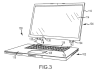
A couple of new Apple patent applications published today (via AppleInsider) show how the company might be thinking about competing with recent innovations from other big tech companies with similar, but different designs. The first is a filing that describes a convertible MacBook design, with a touch-sensitive screen that separates from the base. The second is a method for navigating a Street View-style view of virtual maps, complete with a twist that allows it to go inside buildings, too.
The first design for a convertible MacBook may look familiar, since it actually resembles a lot of designs available from Windows device makers, and some previous Android tablet designs. The screen detaches from the keyboard and body portion, which isn’t in itself terribly unique, but the screen in Apple’s version communicates with the brains in the base via Wi-Fi, Bluetooth and other wireless communication protocols, meaning all the serious computing work is still handled by the traditionally located GPU and CPU. The screen itself is touch-sensitive, but doesn’t act as a standalone tablet in quite the same way it does in some new Windows device designs.
The screen also can charge wirelessly via the same kind of tech used in induction charging, drawing power from the base. What Apple describes here isn’t so much a convertible tablet, but more of a MacBook with a screen that solves the clumsy issue of how to use touch effectively on a notebook by allowing it to temporarily come off the base for more ergonomic touch-based interaction. Apple has talked about how touch doesn’t work on a traditional computer form factor in the past; this is one way around that.
Another patent application published today could give a clue as to where Apple is headed with Maps. It describes a navigation method for a Street View-style look at the world from the perspective of someone walking the streets themselves. The difference between Apple’s patent and existing Google Street View navigation is that Apple’s is motion controlled, treating the environment as a panorama, which can be navigated based on motion detection from onboard device sensors to let a user truly experience a virtual “walk” through the streets of a city.
There’s been little evidence to suggest Apple is deploying tech to gather its own Street View-style imagery for Apple Maps thus far, but another recent development at least makes sense given the context of this patent. Apple recently acquired indoor mapping company WiFiSlam, and this patent also describes making use of the system to map and navigated indoor environments, too, so that users could go “inside” select buildings. It was originally filed in September of 2011.
Both these patent applications seem more like Apple hedging its bets than reflections of any immediate upcoming products, based on recent reports. But they also address issues that could become or are already competitive sore spots for the company, so there’s still a decent chance we may eventually see them make their way to shipping products.