Author: Heritage

  • The President’s Bipartisan Outreach: Doesn’t Meet the Laugh Test

    On 03.05.10 07:19 AM posted by Nina Owcharenko

    The President has spent the past week trying to convince the American people that he was in search of a bipartisan health care reform. But as yesterday’s speech revealed, the President is not serious about building support for a product that Americans can feel good about.

    If the President were serious about building bipartisanship, he would scrap the existing proposals and start fresh with the items that both sides can agree to – like letting states take the lead on health reform; tackling that tax treatment of health insurance; getting serious about entitlement reform; and putting in place sensible insurance market reform. Instead the President is trying to cast his proposal as bipartisan by indicating he is open to adding so-called conservative ideas.

    First, being open to ideas is not a real commitment to including them. At the summit, the President claimed to be supportive of many ideas from the other side. But, in his letter to Congress, key proposals such as allowing citizens to purchase coverage from other states were not highlighted.

    Second, details matter. Hijacking conservative terminology does not mean that the underlying policy and legislative language meet the laugh test. Simply titling a section of the bill “state flexibility”, for example, does not mean the actual language will enable states to anything other than what the federal government gives it permission to do.

    Finally, even if the President added — word for word – the legislative language for so-called conservative ideas, it does not change the fundamental direction of the basic proposal. The House and Senate bills and the President’s own outline would dramatically shift control over health care financing and delivery to Washington bureaucrats and politicians.

    The American people have spoken. They are not comfortable with a proposal that would overhaul 1/6 of the US economy and don’t want a government take over. Although the President continues to promise the American people that if they like their coverage nothing will change, it is difficult to accept that this 2,000+ page bill will not impact the way average Americans get health care.

    http://blog.heritage.org/2010/03/05/…he-laugh-test/

  • Obama Jobs Deficit Hits 8.3 Million, Another No-Jobs Bill Pending in Congress

    On 03.05.10 08:00 AM posted by J.D. Foster

    President Obama announced a renewed focus on jobs in his State of the Union address.* His budget stated (PDF)*“it is critical that we take steps to jump-start job creation”.*He’s right, of course. He is also explicitly admitted the failure of last year’s $862 billion “jump-start” stimulus program. *On March 4, the House passed yet another admission of failure as it moved a $17.6 billion mini jobs bill built around an ineffective hiring tax credit and highway spending.* Why another bill?* Because even politicians cannot duck the data forever, such as today’s jobs report released by the Labor Department which means the Obama jobs deficit stands at 8.3 million workers.

    According to the latest report (PDF), the U.S. economy shed another 36,000 jobs in February.* The unemployment rate stands at 9.7 percent, almost double the rate thought consistent with full employment.* Further, the only reason the unemployment rate isn’t higher still is that millions of Americans have left the workforce altogether as shown by a drop in the labor force participation rate to 64.8 percent from a peak in 2007 of 66.4 percent.

    The economy’s continued poor performance means President Obama is falling further and further behind on his promise to create millions of new jobs.* Obama promised that if elected he would create 3.5 million jobs by the end of 2010 through new economic policies, beginning with the enactment of a massive economic stimulus package. Accompanying his jobs promise, the President also emphasized accountability and measuring his presidency by results. The result of the President’s jobs promise means total employment which in February stood at 129.5 million should be at least 137.8 million by the end of 2010, leaving the Obama jobs deficit at almost 8.3 million jobs.

    Fortunately, the economy’s natural resilience spurred by powerful monetary stimulus from the Federal Reserve means the economy is growing again, albeit at a slow trend pace.* Consequently, job losses may persist for months to come.* Even the Administration’s rosy forecast for economic growth for the next two years leaves the unemployment rate around 10 percent through all of 2010 well into 2011.* By his own official forecast and by his own standard, the Obama jobs deficit attests that his policies have failed and will continue to fail.

    The federal government can stimulate the economy in the short term not by increased spending and borrowing but rather by improving incentives and the general economic environment. *Businesses invest not when they are manipulated by Washington, but when they are confident enough to take risks in pursuit of opportunity.* Individuals and businesses across the nation see tremendous opportunities for starting new businesses, investment, hiring new workers, expanding into new markets. Understandably, many are holding back due to concerns about the economy.* However, many others are holding back due to concerns about the threatening policies from Washington while others are holding back because existing tax and regulatory burdens are already excessive.* For private sector job creation to “jumpstart” in the President’s words, the first step is to fire Washington’s job destruction machine.** The President and his allies need not repudiate their ideology, as helpful as that would be, but they do need to hit the pause button on their anti-growth policies.

    http://blog.heritage.org/2010/03/05/…g-in-congress/

  • Don?t Let White House Ignore Electromagnetic Pulse Threat

    On 03.04.10 11:06 AM posted by Conn Carroll

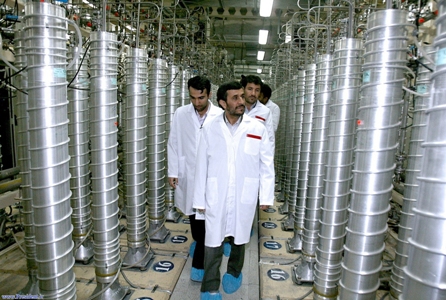
    <ahref="http://blog.heritage.org/wp-content/uploads/Natanz-Nuclear-Facility.jpg"></p>Three days ago, Secretary of State Hillary Clinton <ahref="http://www.google.com/hostednews/afp/article/ALeqM5hiQjABaVFkUQC1-FDU-YPTmjd5Jw">said it could take months for new UN sanctions against Iran. Today, <ahref="http://online.wsj.com/article/SB10001424052748704541304575099972132770104.html?m od=WSJ_hpp_MIDDLENexttoWhatsNewsTop">The Wall Street Journal reports that, in addition to China, the Obama administration is increasingly worried about gaining the support of other members of the U.N. Security Council, including Brazil, Turkey and Lebanon. While Iran’s ballistic missile program <ahref="http://blog.heritage.org/2010/02/08/the-increasing-ballistic-missile-threat/">continues to advance, a long-range nuclear missile might not be the biggest threat Iran presents to the United States.

    Iran could place a short-range ballistic missile on one of the thousands of commercial freighters sailing in the Pacific and detonate a warhead high above U.S. territory that could take down 75 percent of our nation’s electrical grid. As Heritage fellow Baker Spring explains such a Electromagnetic Pulse (EMP) Attack would “cause a cascade of failures throughout the broader infrastructure, including banking systems, energy systems, transportation systems, food production and delivery systems, water systems, emergency services, and–perhaps most damaging–cyberspace. Effectively, the U.S. would be thrown back to the pre-industrial age following a widespread EMP attack.”<spanid="more-27998"></span>

    Congress has already begun to address this threat. They created the Commission to Assess the Threat to the United States from Electromagnetic Pulse (EMP) Attack, who has since issued reports in 2004 and 2008. The Commission concluded: “EMP is one of a small number of threats that can hold our society at risk of catastrophic consequences.”

    But now the Obama administration has chosen to ignore the Commission’s findings. Congress can not allow this to continue. Baker <ahref="http://www.heritage.org/Research/NationalSecurity/wm2822.cfm">recommends:

    • Require the Director of National Intelligence (DNI) to Produce a National Intelligence Estimate (NIE) Describing Which Countries Are Capable of Launching an EMP Strike.
    • Press the Obama Administration to Prepare to Protect the Nation’s Cyber Infrastructure Against the Effects of EMP.
    • Require the Navy to Develop a Test Program for Sea-Based Interceptors with the Capability to Intercept and Destroy Ballistic Missiles Carrying EMP Weapons Prior to Detonation.

    You can read Spring’s full report, <ahref="http://www.heritage.org/Research/NationalSecurity/wm2822.cfm">here.

    http://blog.heritage.org/2010/03/04/…-pulse-threat/

  • The ICC: International Justice or Global Government?

    On 03.04.10 12:00 PM posted by David Ehrlich

    <ahref="http://blog.heritage.org/wp-content/uploads/stephen-rapp.jpg"></p>Remember President Obama’s trip to Copenhagen last year? Not the failed Chicago Olympics bid, but the Climate Change Conference where he attempted to place America under a cooperative international climate treaty. Now, the President has turned his attention to other avenues of global entente, and the frustrated momentum of the climate treaty has been replaced with a move towards closer cooperation with the International Criminal Court. Committing the U.S. to international accords that threaten to undermine our nation’s sovereignty appears to be a temptation the current administration cannot resist. The ICC is just another example of this infatuation with global governance.

    In November 2009, Stephen Rapp, the American Ambassador-at-large for War Crimes Issues announced that the <ahref="http://www.icc-cpi.int/iccdocs/asp_docs/ASP8/Statements/ICC-ASP-ASP8-GenDeba-USA-ENG.pdf">“[U.S.] government has now made the decision that Americans will return to engagement at the ICC.” At first glance this may appear as a great opportunity for America to shed its big-bully persona and embrace an agreeable multi-lateral approach. However, as Marion Smith of the Heritage Foundation argues in a recent Backgrounder, <ahref="http://www.heritage.org/Research/InternationalOrganizations/bg2370.cfm">An Inconvenient Founding: America’s Principles Applied to the ICC, American involvement in the ICC would represent nothing short of ceding America’s sovereignty to an unaccountable international legal body.

    <spanid="more-28012"></span>ICC membership would represent an important break from our First Principles. Citing historical examples dating back to the Founding, Smith argues that the U.S. has always been wary of international agreements that may supersede the power of the Constitution and consequently threaten the sovereignty of the U.S. The continued independence of the U.S. remains crucial to the maintenance of America’s democratic institutions. Despite mounting global pressure to the contrary, America must remain true to its constitutional obligations and continue to defend the sovereignty of our nation.

    Founded in 2002, the ICC derives its authority from the <ahref="http://untreaty.un.org/cod/icc/index.html">Rome Statute. With some <ahref="http://www.icc-cpi.int/Menus/ASP/states+parties/">110 countries party to it, the Rome Statute claims jurisdictional authority to prosecute alleged human rights crimes committed within any of the member countries. As Smith’s paper highlights, there are myriad issues in the Rome Statue that directly contradict American political and constitutional principles.

    • With regard to the ICC’s jurisdictional power, the Rome Statute states that it “shall satisfy itself that it has jurisdiction in any case brought before it.” If the U.S. ratified the Rome Statute, the ICC could investigate, review and judge crimes committed by Americans against Americans in America that have already been adjudicated in American courts

    • The ICC could claim jurisdiction over American citizens even without the ratification of the Rome Statute if American are accused of alleged crimes committed in member countries. An appalling example of this can be seen in an ongoing ICC investigation into conduct of American and NATO soldiers in Afghanistan. As the Heritage Foundation’s Brett Schaefer and Steven Groves discuss in <ahref="http://www.heritage.org/Research/InternationalLaw/wm2611.cfm">The ICC Investigation in Afghanistan Vindicates U.S. Policy Toward the ICC, such proceedings set a dangerous precedent of ICC power over ongoing war efforts.

    • The ICC’s system of due process is distinctly different from that guaranteed by the U.S. Constitution and Bill of Rights: the Rome Statute recognizes no right to trial by jury and contains no right to a speedy trial.

    • Finally, the ICC places prosecutorial power in an independent and therefore unaccountable, Chief Prosecutor. The potential for politically motivated investigations without the consent of the governments involved are limitless.

    Some proponents of global governance criticize America for not signing on to international agreements, such as the Rome Statute and claim that America has a disdain for the rule of law. But this is not the case. It is precisely America’s dedication to the rule of law that causes us to assess critically treaties such as the Rome Statute.

    It is highly ironic that the Obama Administration is warming up to the ICC, a court that does not guarantee American due process rights to American citizens, while at the same time insisting that terrorist suspects should have access to American civil courts, Miranda rights, and the right to trial by jury.

    David Ehrlich currently is a member of the Young Leaders Program at the Heritage Foundation. For more information on interning at Heritage, please visit:*<ahref="http://www.heritage.org/about/departments/ylp.cfm">http://www.heritage.org/about/departments/ylp.cfm

    http://blog.heritage.org/2010/03/04/…al-government/

  • Democrats Weigh in On Reconciliation

    On 03.04.10 12:00 PM posted by Kathryn Nix

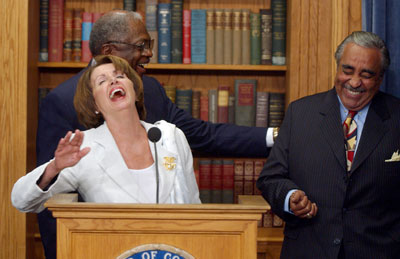
    <ahref="http://blog.heritage.org/wp-content/uploads/2pelosi_090212.jpg"></p>President Obama and congressional leadership are <ahref="../2010/03/04/morning-bell-obamacares-kabuki-end-game">nearing the end of the road on health care reform.*The only option left to pass their grandiose visions of a government overhaul of the nation’s health care system into law is to pass the Senate-passed bill in the House.* However, House Democrats will only go along with this if the bill is followed by a side-by-side bill including changes to the Senate bill, which could only clear the Senate using reconciliation, <ahref="../2010/03/02/reconciliation-a-rarely-used-procedure-with-serious-consequences">a method which would be both unpopular and unprecedented.

    This does not come without its own laundry list of problems, as Democrats acknowledged <ahref="http://www.npr.org/templates/story/story.php?storyId=124303319">this morning on National Public Radio’s Morning Edition.* According to Bill Hoagland, a lobbyist for CIGNA and former Republican Staff Director for the Senate Budget Committee, “reconciliation cannot amend something that’s not law…so, if you’re trying to make changes to the health care reform bill to get it more appealing to the House members, they first have to hold their nose and cross their fingers and vote to pass the Senate-passed health care reform bill and send it to the President.”<spanid="more-28034"></span>

    This comes with certain sticking points for Democrats.* The Senate bill would have to be passed first, without any assurance that the changes required by the House would later pass or even make it to a reconciliation vote.* As Rep. Peter DeFazio (D-OR) <ahref="http://www.npr.org/templates/story/story.php?storyId=124303319">admits, “I’d say at this point, for any House member to vote for something that they object to, with the future potential possible prospect that the Senate will fix it later, when later often never comes in Washington, DC, is an unbelievable leap of faith.”

    And passage in the Senate is anything but certain, as several Senate Democrats are leery of the process.* <ahref="http://www.npr.org/templates/story/story.php?storyId=124303319">Said Senator Kent Conrad (D-ND), “Look, I’m obviously not going to say I will support a package and I’ve never seen the package.”

    Finally, former Senate Parliamentarian Robert Dove <ahref="http://www.npr.org/templates/story/story.php?storyId=124303319">says “That vote counts as a real vote and is used against senators who can claim all they were doing was protecting the budget process, but suddenly are on record as refusing to weigh the budget act to deal with Guantanamo or trying people in New York—I can imagine the list of amendments will be sent forward.”

    Reconciliation will not prove an easy path to the finish line for Democrats’ health care bills.* President Obama and the congressional majority leaders still face several hurdles to passing their unpopular version of health care reform.* Clearly, one of them will be assuaging the concerns of fellow Democrats.

    http://blog.heritage.org/2010/03/04/…econciliation/

  • The Science IS Settled?On Yucca Mountain

    On 03.04.10 12:51 PM posted by Nick Loris

    Lost in President Obama’s rhetoric that the science is settled on climate change, the president is willing to shut down Yucca Mountain without scientific justification. Today, the Department of Energy (DOE)<ahref="http://online.wsj.com/article/SB10001424052748704187204575101332227423108.html?m od=googlenews_wsj"> filed to withdraw the application for the geologic repository Yucca Mountain that was supposed to begin collecting used fuel in 1998. The Nuclear Waste Policy Act of 1982 set January 31, 1998, as the deadline for the federal government to begin disposing of used fuel. More than a decade after the deadline, the government has still not settled on a policy for how to do it. The DOE established a blue ribbon commission to explore alternatives to long-term waste storage. The government’s ineptitude to begin proper nuclear waste management should be a reason to remove government responsibilities, not remove Yucca from consideration.

    On numerous occasions (not Yucca specific) President Obama emphasized the importance of objective, transparent science, stressing that politics should not trump sound science.

    <spanid="more-28052"></span>President Obama <ahref="http://www.whitehouse.gov/the_press_office/Memorandum-for-the-Heads-of-Executive-Departments-and-Agencies-3-9-09/">in an Executive Memorandum on March 9, 2009:

    Science and the scientific process must inform and guide decisions of my Administration on a wide range of issues, including improvement of public health, protection of the environment, increased efficiency in the use of energy and other resources, mitigation of the threat of climate change, and protection of national security.

    The public must be able to trust the science and scientific process informing public policy decisions. Political officials should not suppress or alter scientific or technological findings and conclusions. “

    President Obama<ahref="http://www.usatoday.com/news/washington/2009-03-08-obamastem_N.htm"> in a ceremony the same night: “Promoting science isn’t just about providing resources — it is also about protecting free and open inquiry.”

    President Obama after announcing<ahref="http://www.politico.com/news/stories/1208/16765.html"> his top science advisors December 8, 2008:

    Because the truth is that promoting science isn’t just about providing resources — it’s about protecting free and open inquiry. It’s about ensuring that facts and evidence are never twisted or obscured by politics or ideology.”

    It’s time we once again put science at the top of our agenda and worked to restore America’s place as the world leader in science and technology. It’s about listening to what our scientists have to say, even when it’s inconvenient – especially when it’s inconvenient.”

    The issues surrounding opening Yucca Mountain are purely politically and not one bit technical. Yucca Mountain is the most studied geologic nuclear materials repository in the world. Studies have found that the Yucca <ahref="http://www.energy.gov/media/BodmanLetterToPelosi.pdf ">repository could safely hold 120,000 tons of waste.

    So we should listen to the science, except when it’s inconvenient to well-connected political leaders. If politicians eager to shut down Yucca Mountain are so confident that the science is on their side, why not allow <ahref="http://www.heritage.org/Research/EnergyandEnvironment/wm2811.cfm">the Nuclear Regulatory Commission to finish its license review? After, all, it’s the NRC’s responsibility to determine the technical feasibility of Yucca – even if it has been studied countless times.

    http://blog.heritage.org/2010/03/04/…ucca-mountain/

  • Brazil to Clinton on Iran Sanctions: ?Count Us Out!?

    On 03.04.10 01:00 PM posted by Ray Walser

    <ahref="http://blog.heritage.org/wp-content/uploads/lula.jpg"></p>It appears that Secretary Clinton’s much anticipated meeting with Brazilian President Lula da Silva and Foreign Minister Celso Amorim on March 3 resulted in the diplomatic cold shoulder with regard to cooperative action aimed at curbing Iran’s nuclear ambitions.

    While in Brazil on her <ahref="http://s3.amazonaws.com/thf_media/2010/pdf/wm2820.pdf">Latin America swing, Secretary Clinton made quite clear the U.S. wants to “send a unified message to Iran that they are perfectly free to have peaceful, civil nuclear power. But they are not, under the very agreements that they signed, entitled to a nuclear weapons program. “Her goal was to open Brazilian eyes to the Iranian danger just as Obama Administration <ahref="http://www.heritage.org/Research/Iran/upload/wm_2509.pdf">eyes have opened recently.

    The Brazilian response to international actions to halt Iran’s nuclear ambitions remains negative.* Foreign Minister Amorim opposes “<ahref="http://www.csmonitor.com/World/Americas/2010/0304/Hillary-Clinton-fails-to-convince-Brazil-to-support-Iran-sanctions">pushing Iran into a corner.”* If new sanctions proposals reach the Security Council, where Brazil holds a temporary seat, Amorim warned: “We will <ahref="http://news.bbc.co.uk/2/hi/americas/8547150.stm">not simply bow down to an evolving consensus if we do not agree.”<spanid="more-28041"></span>

    In a press conference with Clinton, Amorim tended to view Iran through the prism of Iraq, downplaying the nuclear threat.

    “<ahref="http://www.state.gov/secretary/rm/2010/03/137774.htm">The alleged idea that Iran is, say, deceiving and misleading and not being very straightforward with Brazil, Turkey and China – all I – what I have to say is that I acted as ambassador to Turkey before critical decisions were made on Iraq. And that’s very much what I heard back in 1998, 1999. I mean, smoke and mirrors – were playing smoke and mirrors.”

    Later Amorim admitted that while uncertain about Iran’s true intentions, he was confident more negotiations will improve the situation. *“Even if Iran does develop the atomic bomb,” commented Amorim, “– I’m not saying it will do it or does not want to do it or it cannot do it. What I’m saying is that even if they do set out to do that, it’ll be a while.”

    The Clinton visit generated one commitment. Lula promised to put Iran’s nuclear ambitions on his agenda when he visits Tehran in May.* Perhaps while he is there, Lula can also request a field trip to the <ahref="http://www.nationalinterest.org/Article.aspx?id=22908">uranium enrichment facility at Natanz for a closer look at Iran’s whirling centrifuges.

    http://blog.heritage.org/2010/03/04/…-count-us-out/

  • Possible Action Today on the D.C. Opportunity Scholarship Program

    On 03.04.10 02:00 PM posted by Lindsey Burke

    </p>Senator Joe Lieberman (I-CT) has filed an amendment to a tax extenders bill expected to be considered by the Senate today. The amendment would reauthorize the D.C. Opportunity Scholarship Program and, according to a press release from D.C. Parents for School Choice, would “preserve the program for current and future students”. Sen. Robert Byrd (D-WV), Sen. John Ensign (R-NV), Sen. George Voinovich (R-OH), Sen. Susan Collins (R-ME), and Sen. Dianne Feinstein (D-CA) are co-sponsors.

    As Virginia Walden Ford and I wrote last week in a post on <ahref="http://corner.nationalreview.com/post/?q=MjhhMGUzMDYyYjcwNmViODg2MGRhYTk4N2ZhN2VmZjk=">T he Corner, school choice and educational opportunity have become the civil rights issue of our time:<spanid="more-28056"></span>

    While D.C. schools lead in violence, they rank among the lowest in academic performance. More than 60 percent of fourth-graders cannot read at a basic level.

    Fifty years ago, African Americans fought to enroll their children in public schools that would give their children an equal chance for a quality education. Boys and girls stood in the doorways of previously all-white schools that didn’t want them, on the threshold of opportunity.

    But today’s schools are not the same schools they fought to get into. Too many of today’s schools are failing African American and Hispanic students. In the 1950s, politicians stood at the door to keep African American students out. Now, they are standing at the door to keep them in.

    The Obama administration continues to promote policies that deny low-income children in the nation’s capital the opportunity to receive a safe and effective education. His FY 2011 budget slashed D.C. OSP funding, leaving just $8 million (after administrative costs) for scholarship recipients for the remainder of their time in the program. This president – himself a scholarship recipient as a child and who has chosen to send this own children to private school – has failed to support the same opportunities for District children. Children who, for the first time in decades, have found an effective education in Washington, D.C.

    And parents of scholarship students are keenly aware of this. Latasha Bennett, a mother of scholarship students has a few questions for the president in the video above.

    http://blog.heritage.org/2010/03/04/…rship-program/

  • In Pictures: Obama’s Bank Tax ? Robbing Peter to Pay Paul

    On 03.04.10 02:30 PM posted by Mike Brownfield

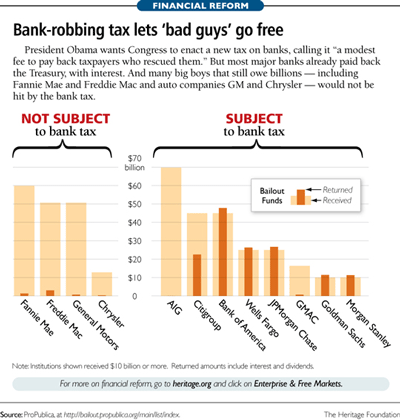
    <ahref="http://blog.heritage.org/wp-content/uploads/banktax.gif"></p>In his <ahref="http://www.whitehouse.gov/the-press-office/remarks-president-state-union-address">State of the Union Address, President Barack Obama proposed “a modest fee” on banks that “would pay back the taxpayers who rescued them in their time of need.” In truth, his bank tax would hit financial institutions who have paid-bank their bailout funds, with interest, while those who haven’t – Fannie Mae, Freddie Mac, General Motors and Chrysler – would get off scot-free.

    As <ahref="http://www.politico.com/news/stories/0310/33738.html">Politico reports, Sean Ryan at Wisco Research firm says Obama’s tax would have other effects, too. From Politico:* “[Ryan] predicts the banks will simply pass on the cost of the new fee to their corporate customers, which quite likely will move it along to consumers when possible.”

    And more perversely, <ahref="http://www.politico.com/news/stories/0310/33738_Page2.html">Ryan notes, the tax revenue will foot the bill for the aforementioned firms that received bailouts, yet haven’t paid anything back:

    Since most banks either are in the process of paying back bailout money with interest or have already paid it back, “the loss in the [Troubled Asset Relief Program] that is gone and is never coming back under any scenario is the money extended to GM and Chrysler,” said Ryan. “So this is taxing banks to fund the auto bailout.”

    <spanid="more-28054"></span>Heritage’s Senior Research Fellow David John <ahref="http://www.heritage.org/Research/Economy/wm2770.cfm">says the tax will also make it difficult for banks to resume lending:

    While Administration officials urge banks and other firms to start lending again, the new tax … would discourage them from taking risks. The “fee” would apply regardless of a firm’s profitability and would make it even harder for firms recovering from last year’s losses to rebuild the capital needed to back up lending.

    John says it’s the “wrong approach to reduce the swollen deficit,” and rightly concludes, “It is a bad idea being used to score political points and should be dropped.”

    http://blog.heritage.org/2010/03/04/…to-washington/

  • Protect Defense with Spending Limits

    On 03.04.10 03:00 PM posted by Kathryn Nix

    <ahref="http://www.heritage.org/Research/Features/BudgetChartbook/Images/federal-spending_05-580.jpg">

    <ahref="http://blog.heritage.org/wp-content/uploads/federal-spending_05-580.jpg"></p>Reps. Jeb Hensarling (R-TX), Mike Pence (R-ID), and John Campbell (R-CA) recently unveiled a <ahref="http://mikepence.house.gov/images/stories/sla_one-page_final.pdf">proposal to impose a limit on federal spending of 20 percent of Gross Domestic Product (GDP).* This proposal serves as a necessary reminder that current federal spending is out of control and certain to grow further if nothing is done.

    The sponsors of the amendment <ahref="http://mikepence.house.gov/images/stories/sla_one-page_final.pdf">explain that the limit “would force Congress and the President to prioritize various spending needs and provide transparency to the difficult decisions and trade offs necessary to ensure that the federal government once again lives within its means.”

    A limitation of 20 percent of GDP on total federal outlays can accommodate sufficient defense budgets.* Even following the 9/11 attacks, the total defense expenditures (which includes several accounts in addition to what goes to the Department of Defense), have exceeded 4 percent of GDP only since the surge in Iraq, according to the Department of Defense’s “Green Book.”<spanid="more-28064"></span>

    Through most of this decade, total federal spending has been in the general vicinity of the 20 percent benchmark.* There are several elements which determine that defense expenditures would be adequate under the broader spending limitation.

    The first regards economic growth.* Federal expenditures that exceed the 20 percent limitation to a significant degree are very likely to create economic stagnation.* Defense expenditures will be a casualty of such stagnation, just as the Soviet and later Russian defense budgets, admittedly in a more dramatic fashion, were in the late 1980s and early 1990s.* Furthermore, the limitation would create a dynamic where Congress will first have to find ways to grow the economy if it wants to increase spending.* This is a healthy dynamic.* A healthy defense budget is ultimately dependent on a healthy and growing economy.

    Second, it is necessary to forecast the circumstances the defense budget will find itself in if entitlement and interest payments stay on their current trajectory.* Under this scenario, where the total federal budget could consume 30, 35 or 40 percent of the economy, it is not at all likely that defense will receive <ahref="http://thf_media.s3.amazonaws.com/2010/pdf/bg2375.pdf">4 percent of GDP.* Rather, the defense budget could, at best, receive 1 or 2 percent of GDP.

    Finally, the entitlement mentality is seizing control of the defense budget itself.* Deferred and in-kind benefits, particularly for health care, are increasing on a per capita basis in the military and are projected to continue to increase.

    Finally, the authors of the spending limit amendment include a stipulation that the limit can be waived in the case of a declaration of war or a two-thirds vote in Congress.* This gives lawmakers the flexibility to exceed the spending ceiling on national defense in the case of a true defense emergency.* Of course, this is not to say that Congress will necessarily make the right choice concerning the defense budget under the spending limitation amendment.* No procedural proposal can guarantee that outcome.* Rather, it is to say that Congress is at least as likely to take a responsible stand regarding the defense budget under the limitation as it is without it.

    The amendment sponsors <ahref="http://mikepence.house.gov/images/stories/sla_one-page_final.pdf">stress that the “extreme borrowing on the part of nations is a direct threat to their national security.”* A spending limit is not simply a responsible suggestion for restoring America’s fiscal sustainability, but could also mean greater security for defense budgets as well.

    http://blog.heritage.org/2010/03/04/…ending-limits/

  • I’m from Washington, and I’m Here to Disappoint You

    On 03.04.10 03:04 PM posted by Lindsey Burke

    The Department of Education <ahref="http://blogs.edweek.org/edweek/campaign-k-12/2010/03/xx_states_are_named_race_to_th.html ">today released the names of the 16 finalists in the competition for federal Race to the Top (RttT) grants. The finalists include the District of Columbia and 15 states: Colorado, Delaware, Florida, Georgia, Illinois, Kentucky, Louisiana, Massachusetts, New York, North Carolina, Ohio, Pennsylvania, Rhode Island, South Carolina, and Tennessee. In all, 40 states had applied for the grants. In March, state leaders will come to Washington to deliver presentations on why their states merit a slice of the $4.35 billion in grants. Winners will be announced in April.

    The more than $4 billion RttT initiative is the largest discretionary fund an education secretary has ever had the opportunity to work with. As part of the overall $100 billion allocated to the Department of Education as part of the economic “stimulus” plan passed last year, RttT was supposed to be a means of spurring states to implement the types of innovative education reforms that the administration thought would spur academic achievement. Yet, the group of states that made the first cut on the way to a grant was a numerous one – conventional wisdom was that far fewer states would make the first cut.

    <spanid="more-28106"></span>In addition, the few, true reform measures that conservatives were applauding – namely charter schools – already appear to be on the chopping block. Andy Smarick over at Fordham writes today in a blog post entitled <ahref="http://www.edexcellence.net/flypaper/index.php/author/asmarick/ ">Major Disappointment:

    The US Department of Education had the opportunity today to send a clear signal–that the Race to the Top is a once-in-a-lifetime opportunity, that very good wouldn’t be good enough, that only the biggest and boldest plans would merit consideration. Instead, the administration accepted 15 states and Washington, DC–nearly 1/3 of all applicants–as finalists.

    The list includes Kentucky, a state with no charter law and New York, which brashly rejected reform legislation–including a critical cap lift provision–in advance of the deadline. It includes Colorado, which backed off of important reforms related to teachers, and Ohio, whose proposal was weak in a number of areas… I was preparing to heap praise on the administration for doing as they had suggested–only shining a spotlight on the very best of the best. I expected a finalist list of 5 and was quietly hoping for 3. My worst-case scenario was 12. I never would have imagined 16.

    Amanda Farris over at the Republican Policy Committee echoes that sentiment, writing:

    Secretary Duncan has repeatedly said that in order to qualify for Race to the Top funding states will need to meet “a very, very high bar.” It is therefore surprising that despite the fact that “ensuring successful conditions for high-performing charters and other innovative schools” was a selection criteria, New York and Kentucky were chosen as finalists. As you may recall, earlier this year New York refused to pass an education reform bill that would have expanded their charter school caps, and Kentucky does not even have a charter school law.

    “Is this an indication that Secretary Duncan is not really all that serious about expanding quality charter schools and rewarding only the most reform-minded states? This lengthy list of finalists does not inspire much confidence.”

    And, over at <ahref="http://www.edspresso.com/index.php/2010/03/everyones-a-winner/ ">Edspresso, the feeling is mutual:

    “Arne Duncan got an earful from reporters today. They asked about scoring and why some states emerged as finalists when they did little to improve various parts of their reform portfolio…

    ‘We said from day one,’ said Duncan, ‘that there were many, many factors’ that would go into the scoring. Many different things would be considered, he said. ‘Charters were never going to be the determining factor from the very beginning.’

    Why else would only three of the sixteen have charter laws among the top ten in the country? Indeed, Kentucky has none and seven others have laws that are barely passing…And now that it’s clear that a strong charter law or performance pay system doesn’t seem to matter for the competition, state policymakers can breath a sigh of relief that they don’t have to do any heavy lifting to get or stay in the game, just hire a smart team of consultants to create convincing charts and use flowery language…

    So, do you fans of increased federal involvement in education still think it can make a difference to improving education for our children?

    Which hits at the central question. Fifty years of ever-expanding federal involvement in education without a commensurate increase in academic achievement should have given people pause enough to think that Washington – this time – will be a successful arbiter of innovation. The qualifying states lead one to believe that RttT is full of more rhetoric than reform, despite what the administration would have us believe.

    This brings to mind what have been continuously referred to as “voluntary” common stardards. The <ahref="http://blog.heritage.org/2010/02/26/will-education-standards-really-help-failing-schools/ ">recent revelation that the administration is considering tying the eligibility for Title I funds to their adoption would make them anything but voluntary.

    This is all a good lesson in why those states still willing to feed at the federal trough should at least curb their expectations for results. Even when Washington promises.

    http://blog.heritage.org/2010/03/04/…isappoint-you/
  • The Growth of Dependency on Government Threatens the Future of American Democracy

    On 03.04.10 03:30 PM posted by Bill Beach

    <ahref="http://www.heritage.org/Research/SocialSecurity/images/CDA10_01_chart11.gif">
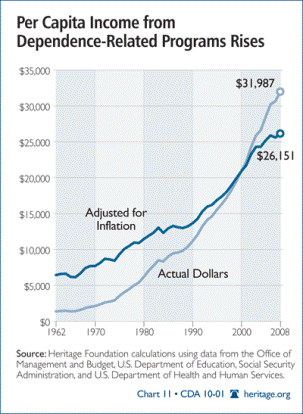
    <ahref="http://blog.heritage.org/wp-content/uploads/DependenceIncome.gif"></p>Today marks the seventh year that we have published the <ahref="http://www.heritage.org/Research/SocialSecurity/cda1001.cfm">Index of Dependence on Government. And, for seven years running, our Index shows growing dependence. The Index now stands at 240, up from a value of 19 in 1962, or a nearly 13 fold increase since the Kennedy administration. The rate of growth, however, actually has increased over the last eight years. That period saw the second highest rate of growth in dependency creating programs: since 2001, the Index has increased 31 percent. Most disturbing of all, all of the evidence points to even more rapid increases in dependency ahead, which well could threaten democratic government.

    From virtually the first day of his presidency, Barack Obama and his top deputies have advanced programs and initiatives that deepen and expand American citizens’ dependency on government. From new federal programs designed to boost economic activity to health care reform that could place the U.S. government at the center of the nation’s health care system, the central thrust of policy since January 2009 has been to increase Americans’ daily dependency on Washington.

    However, the rapid expansion of dependency-creating programs did not begin with Barack Obama’s inauguration. Indeed, President Obama inherited substantial momentum toward greater dependency on government from the George W. Bush Administration and prior governments. President Bush’s years saw growth in all dependency creating categories, but particularly in programs aimed at health, education, and working-age income support.<spanid="more-28093"></span>

    Even more disturbing is the confluence of growth in the index with increases in the percentage of taxpayers who pay no taxes and Congress’s control over spending. The percentage who pay no taxes jumped from 21.3 percent in 1980 to 34 percent in 2008. In 1980, 20 million tax filers paid nothing; in 2008, 48 million paid nothing. This number will growth dramatically next year when the Index counts for the first time taxpayers who took advantage of Obama era credits, such as Making Work Pay and the first-time homebuyers credits.

    Combine these two indexes with the Steuerle-Roeper Fiscal Democracy Index, and you have a perfect storm for the future of our republican form of government. The Fiscal Democracy Index measures the percent of revenues not allocated by previous Congresses to mandatory spending. In short, it measure the control that Congress has over outlays. This Index nearly hit zero in 2009 and is forecasted to be steadily below zero in 10 years.

    The steady growth of dependency creating program, particularly the so-called entitlement programs, and the equally steady shrinking number of taxpayers who have any financial stake in the government threaten rapid growth in mandatory, dependency programs and our very democracy. Are Americans closing in on a tipping point that endangers the workings of their form of government? If citizens can vote ever greater outlays for their income, health, housing, education, and food support; will the growth of government overwhelm the delicate political balances between those citizens who provide the means for helping other citizens in need?

    http://blog.heritage.org/2010/03/04/…can-democracy/

  • Video: What Could McDonald v. Chicago Mean for the Second Amendment?

    On 03.04.10 06:00 AM posted by Brandon Stewart

    </p>Tuesday was a momentous day for gun-rights advocates everywhere as the Supreme Court heard oral arguments for <ahref="http://en.wikipedia.org/wiki/McDonald_v._Chicago">McDonald v. Chicago. Coming on the heels of last year’s <ahref="http://en.wikipedia.org/wiki/District_of_Columbia_v._Heller">District of Columbia v. Heller decision, McDonald seeks to determine whether Chicago’s ban on handguns is Constitutional.

    We caught up with Alan Gura, the lead attorney for the plaintiffs (also the attorney in the Heller decision) and Alan Gottlieb, founder of the Second Amendment Foundation to get their take on the oral arguments, the legal theories involved, and the importance of this case for the Second Amendment.<spanid="more-27973"></span>

  • Morning Bell: Obamacare?s Kabuki End Game

    On 03.04.10 06:42 AM posted by Conn Carroll

    The doctors in lab coats surrounding President Barack Obama as he gave his latest health care speech yesterday were not there to give the President a physical; <ahref="http://www.mediabistro.com/fishbowlDC/west_wing_reportage/obamas_physical_say_no_to_cigs__153435.asp?c=rss"> that happened Sunday. No, these doctors were props, dressed to impress for what the White House claims is their <ahref="http://www.nytimes.com/2010/03/04/health/policy/04health.html?ref=todayspaper">“final push” for the President’s government take-over of the health care industry. The President again repeated the same old tired claims he has been making for months: “The proposal I’ve put forward gives Americans more control over their health care,” “our proposal is paid for,” and “my proposal would bring down the cost of health care for millions.” We, and plenty of others, have refuted all these claims before, but this time they are particularly easy to expose as patently false. President Obama gave away the game when he <ahref="http://www.kaiserhealthnews.org/Stories/2010/March/03/Obama-Full-Speech-Insurance-Reform.aspx">said:

    Our cost-cutting measures mirror most of the proposals in the current Senate bill, which reduces most people’s premiums and brings down our deficit by up to $1 trillion over the next two decades. And those aren’t my numbers – they are the savings determined by the CBO, which is the Washington acronym for the nonpartisan, independent referee of Congress.

    But there is one huge difference between the Senate bill and what the President kept referring to as my/our proposal: the Senate bill actually exists. For all the talk in Washington about Democrats in the Senate using reconciliation to pass a final version of Obamacare, one key fact has been overlooked: no reconciliation bill exists. Not in the House. Not in the Senate. Nowhere. It simply has not yet been written, and there are plenty of reasons to believe it never will.<spanid="more-27976"></span>

    The White House is <ahref="http://www.latimes.com/news/nation-and-world/la-na-obama-health4-2010mar04,0,2090378.story">telling the public they expect the House to pass the Senate bill, and then both the House and Senate would pass the yet-to-be-drafted reconciliation, all before Easter recess. But Speaker Nancy Pelosi (D-CA) simply does not have the votes to pass the Senate bill. If she did, it would already be law. To convince her fellow wayward Democrats to vote for the Senate bill, the<ahref="http://www.latimes.com/news/nation-and-world/la-na-obama-health4-2010mar04,0,2090378.story"> yet-to-be-drafted reconciliation bill is expected to: 1) scale back the tax on high-end health insurance policies (decreases revenue); 2) close the Medicare D loophole (costs money); 3) boost insurance subsidies (costs money); and 4) increase Medicaid payments (costs a ton of money). Where exactly do House and Senate aides writing this new bill expect to come up with the money to pay for all these new goodies? And they have to find that cash because <ahref="http://www.washingtonpost.com/wp-dyn/content/article/2010/03/03/AR2010030302213.html">all reconciliation bills must be certified by the Congressional Budget Office (CBO) to reduce the deficit by $1 billion over five years. And that CBO score will take at least a week, or possibly two to complete.

    So when will the public get to see this reconciliation bill? <ahref="http://online.wsj.com/article/SB10001424052748703862704575099561273510680.html?m od=WSJ_hpp_MIDDLENexttoWhatsNewsSecond">The Wall Street Journal reports that “Democrats have started writing the formal reconciliation bill” and “intend to send it to the Congressional Budget Office for evaluation by the end of the week.” But <ahref="http://www.latimes.com/news/nation-and-world/la-na-obama-health4-2010mar04,0,5915689,full.story">The Los Angeles Times reports that: “Senior Democrats on Capitol Hill will not finish writing the reconciliation package until next week at the earliest.” Our advice: don’t hold your breath.

    In the meantime <ahref="http://tpmdc.talkingpointsmemo.com/2010/03/against-it-before-i-was-for-it-who-will-flip-their-votes-from-no-to-yes-on-health-care.php">Speaker Pelosi is bleeding the votes she needs to first pass the Senate bill, by an up or down vote, in the House. Just 220 members of the House voted for their version of Obamacare in November. Since that time, Reps. Robert Wexler (D-FL) and Neil Abercrombie (D-HI) have left the House; Rep. John Murtha (D-PA) has passed away; and Joseph Cao (R-LA) has said he will vote against the bill. That leaves Pelosi 216 votes, which would be exactly enough to pass the Senate bill. But then there is Rep. Bart Stupak (D-MI) who will not vote for the Senate bill since it uses taxpayer money to fund abortion. And Stupak <ahref="http://thehill.com/blogs/blog-briefing-room/news/84827-stupak-says-12-previous-health-bill-supporters-could-flip-over-abortion">says he has a dozen other members that will switch from yes to no with him. And Rep. Michael Acuri (D-NY) now<ahref="http://tpmdc.talkingpointsmemo.com/2010/03/before-it-before-he-was-against-it-arcuri-will-likely-vote-no-on-health-care.php"> says he is likely to switch his vote from yes to no. And Rep. Shelly Berkley (D-NV), who voted yes the first time, <ahref="http://www.nytimes.com/2010/03/04/health/policy/04health.html?ref=todayspaper">says she is “not inclined to support the Senate” bill. And Rep. Gerry Connolly <ahref="http://www.politico.com/news/stories/0310/33885.html">says he could “absolutely” switch his vote from yes to no. And now Congressional Progressive Caucus Rep. Raúl Grijalva, (D-AZ) <ahref="http://www.salon.com/politics/war_room/2010/03/03/grijalva/">says he’s less likely to vote for the final health care reform bill if the reconciliation bill contains the ideas President Obama outlined yesterday.

    One House Democrat tells the <ahref="http://www.latimes.com/news/nation-and-world/la-na-obama-health4-2010mar04,0,2090378.story">LA Times why the White House is facing such a tough sell: “It’s a no-win situation for those of us in moderate districts. If you vote no, your base is upset. If you vote yes, everyone else is upset. You almost couldn’t design a legislative vise more damaging to moderate Democrats — or that puts our majority more at risk.” But don’t worry House Democrats, the Senate is going to do everything it can to convince you that you aren’t going to walk the plank alone again. Sen. Dick Durbin (D-IL) tells <ahref="http://www.politico.com/livepulse/0310/Harkin_Reconciliation_is_a_go.html">Politico that Senate Democrats are planning a gesture some time next week that will guarantee to House Democrats the Senate will act: “I don’t know what the gesture will be but it will be a convincing gesture.” Kabuki theater indeed.

    Quick Hits:

    • According to <ahref="http://www.rasmussenreports.com/public_content/business/general_business/february_2010/confidence_in_economy_s_future_is_at_lowest_point_ of_obama_s_presidency">Rasmussen Reports, (42%) of American adults now expect the U.S. economy to be weaker in one year’s time, the highest number at any time since President Obama took office.
    • A group of four Democrats (Sens. Chuck Schumer (NY), Sherrod Brown (OH), Jon Tester (MT) and Robert Casey (PA)) called Wednesday for the Obama administration <ahref="http://www.washingtonpost.com/wp-dyn/content/article/2010/03/03/AR2010030302764.html">to halt a federal stimulus program aimed at building wind farms and other clean-energy projects.
    • A FOIA request from the Competitive Enterprise Institute has <ahref=" http://pajamasmedia.com/blog/breaking-anti-lobbyist-obama-administration-recruited-left-wing-lobbyists-to-sell-bogus-green-jobs/">revealed that the Department of Energy – specifically the office headed by Al Gore’s company’s former CEO, Cathy Zoi – recruited wind industry lobbyists to help push Obama’s wind energy proposals.
    • Environmental Protection Agency (EPA) Administrator Lisa Jackson told a Senate Appropriations panel yesterday that any effort to restrict EPA’s authority to regulate carbon emissions pursuant to the Clean Air Act would be an <ahref="http://thehill.com/business-a-lobbying/84879-epa-head-blasts-effort-to-block-regs">“enormous step backward for science”.
    • <ahref="http://blog.heritage.org/2010/03/03/guest-blogger-rep-henry-cuellar-d-tx-on-free-trade/">Guest Blogger: Rep. Henry Cuellar (D-TX) on Free Trade

    http://blog.heritage.org/2010/03/04/…buki-end-game/

  • New China Space Milestone an Opening for the U.S.

    On 03.04.10 08:06 AM posted by Dean Cheng

    <ahref="http://blog.heritage.org/wp-content/uploads/China-space-100304.jpg"></p>Even as NASA and the rest of the US government continue to debate about how it will sustain a manned presence in space, the Chinese government has now announced that the first module of the Tiangong-1 (Heavenly Palace) space lab will be launched next year. Expected to weigh about 8.5 tonnes, the module will provide a target for Chinese spacecraft to practice docking maneuvers — an essential part of both a long-term presence in space and for any mission to the Moon or beyond.

    Yet, the announcement also constitutes a reprieve of sorts for US space policy planners. The module was originally supposed to be orbited in 2010, followed by docking maneuvers with Chinese missions Shenzhou-VIII (expected to be unmanned), and Shenzhou-IX and -X (both manned) in subsequent years. The Chinese announcement of a launch date shifted to next year included the statement that the module had encountered technical difficulties. Given the pace of Chinese manned launches, which have generally been every other year, this suggests that the Chinese may not engage in further manned missions until 2011, or even 2013.

    <spanid="more-27999"></span>The Chinese delay not only serves as a reminder that space missions, especially manned ones, are difficult, but also provides the US with the time to adjust its own decisions regarding such efforts. While the United States may not be racing China to return to the Moon, the diplomatic and political consequences of an American inability to conduct a manned lunar mission if and when the Chinese go to the Moon would nonetheless be severe.

    Under these circumstances, the United States has the opportunity to set the course for its own manned space efforts without having to “race.” The NASA administrator needs to present a viable, long-term plan that can garner broad support — no mean feat in the face of current economic conditions. At the same time, Congress needs to make clear that the funding for such an effort will be stable. None of this will be easy, and it all will require leadership from the Oval Office but, as the Chinese saying goes, “shi bu wo dai” (time waits for no man).

    http://blog.heritage.org/2010/03/04/…g-for-the-u-s/

  • Stop the Spending Now

    On 03.04.10 09:00 AM posted by Alison Fraser

    <ahref="http://www.heritage.org/Research/Features/BudgetChartbook/Obama-Scenario.aspx">

    <ahref="http://blog.heritage.org/wp-content/uploads/entitlementsObama.jpg"></p>Federal spending is out of control. <ahref="http://blog.heritage.org/2010/02/18/a-toothless-commission-on-spending-is-no-substitute-for-true-leadership/">Even President Obama knows it.* To really stop the madness, Reps. Jeb Hensarling (R-TX), Mike Pence (R-IN), and John Campbell (R-CA) <ahref="http://online.wsj.com/article/SB10001424052748704231304575091622911663494.html?m od=WSJ_Opinion_LEFTTopOpinion">have proposed a simple solution – a constitutional amendment capping federal spending at 20 percent of the economy. Their proposal puts the debate squarely where it should be: exploding federal spending and the size of government.* <ahref="http://mikepence.house.gov/images/stories/sla-3-3-10-long_doc.pdf">The authors of the amendment write that “Fiscal reform must begin and end with significant spending restraint.* If not – if spending continues unchecked – this generation will prove to be the first to mortgage the future of its children and grandchildren instead of leaving a better and more prosperous future”.* So true.* Congress has proved itself incapable of fixing the massive fiscal mess they created. *Now it must fix the legislative process and begin to propose real spending reforms.

    Under the excesses that occurred under President Bush, the automatic explosion of entitlement spending on Medicare, Medicaid and Social Security seemed a distant economic threat. But the recent spending binge has changed the game so that, when coupled with the remainder of President Obama’s stunning agenda, Washington is today building a bridge of debt to our *long-term entitlement meltdown.* This spending-driven debt is a symptom of the system allowing budget policy to go desperately wrong.<spanid="more-28005"></span>

    If lawmakers want to fix the problem, they must come to grips with the real causes of spiraling deficits and debt. <ahref="http://www.heritage.org/Research/Economy/bg2354.cfm">As Brian Riedl explains, federal spending is climbing to rates not seen since the 1960s, and now exceeds $30,000 per household. While tax revenues are projected to remain close to the historical average of 18 percent of the economy, spending is rising dramatically over the historical average 20 percent of the economy to 24.7 percent in 2009.* Spending will reach 26 percent by the end of the decade and <ahref="http://www.heritage.org/research/features/BudgetChartBook/If-Tax-Revenue-Is-Held-at-Historical-Levels.aspx">keep on climbing as the entitlement tsunami really kicks in. As Clinton would say, it’s the spending stupid.

    By contrast, <ahref="http://thehill.com/homenews/house/84579-blue-dogs-offer-balanced-budget-amendment">the balanced budget proposal from House Blue Dogs, introduced by Rep. Bobby Bright (D-Ala.), would take entitlement spending on Social Security and Disability off the table, actually creating a class of benefits *with special protection.* Regardless of whether that would stand the constitutional test or not, the simple fact is that entitlement spending is so huge, the budget cannot be controlled unless entitlements are reformed.* All of them.* And by focusing on the deficit only, the Blue Dog proposal would likely lead to punitive tax hikes.

    As Pence, Hensarling and Campbell show, Congress must be forced to operate under tough controls rather than <ahref="http://www.heritage.org/press/commentary/ed070209e.cfm">gimmicks that cannot be simply ignored, like PAYGO.* Policymakers cannot tout the need for fiscal restraint in one breath and vote for (or sign) colossal new spending – SCHIP, Stimulus, bailouts, a new health benefit, etc. – in another. Spending limits must force all federal programs – discretionary and entitlements, current and proposed – to compete against each other for tax dollars and Congress must set real priorities for the nation.

    The Spending Limit Amendment would not solve all budget problems. To gain support <ahref="http://www.heritage.org/research/budget/wm2199.cfm">the long-term fiscal situation must be made explicit – front and central in the annual budget decisions. Americans must be told that Social Security and Medicare’s excess costs are $44 trillion, or $184,000 for every man, woman, and child in the nation.

    And it takes time for a constitutional amendment to become law.* Time we don’t have.* Their amendment should go hand in hand with other strong controls to make it workable.* Entitlements should not be allowed to grow on autopilot and crowd out other priorities, but should be put on real budgets like defense, anti-poverty programs and education are today.* Any <ahref="http://www.heritage.org/Press/Commentary/100909b.cfm">savings must be captured and preserved to fix the fiscal mess – not to pay for expensive new benefits.

    Congress must also get down to the business of serious budget reforms to rein in current spending.* Rep. Paul Ryan’s (R-WI) <ahref="http://www.roadmap.republicans.budget.house.gov/">“Roadmap for America’s Future, 2.0.” lays out such a plan. It also shows the tough work Congress and the nation must do to derail the current spending trajectory along the lines envisioned by the Spending Limit Amendment.

    These are the kind of steps necessary to protect the family budget from the federal budget.

    http://blog.heritage.org/2010/03/04/…-spending-now/

  • Guest Blogger: Rep. Mac Thornberry (R-TX) on Strategic Communication

    On 03.04.10 10:00 AM posted by Rep. Mac Thornberry

    <ahref="http://blog.heritage.org/wp-content/uploads/rep_thornberry100304.jpg"><imgsrc="http://blog.heritage.org/wp-content/uploads/rep_thornberry100304.jpg" alt="" title="rep_thornberry100304" width="375" height="400" class="alignnone size-full wp-image-27994" /></p>On September 11th, 2001, America changed.* Since then the United States has been at war with violent Islamic extremists who plot and plan against us every day.* We have sent American troops to Afghanistan and Iraq to defeat them in combat.* Our intelligence and special operations forces have fanned out across the globe to disrupt terrorist networks and deny them safe havens.* And we have cooperated with friends and allies to reinforce existing counterterrorism resources and build new coordinated capabilities.* While these actions are necessary to defeat the jihadist threat against the United States, they are not sufficient to do so.

    To truly defeat terrorism, we must also wage and win the war of ideas.* Success in the debate between moderate and extremist voices within Islam is necessary if we are ever to secure a lasting peace.* Unlike traditional kinds of diplomacy, such as education and cultural exchanges, the goal of the war of ideas is not to persuade people to like America and its policies.* Instead, the aim is to make sure negative attitudes toward America and its allies do not take the form of violent extremism.* These efforts are often called “strategic communication.”<spanid="more-27993"></span>

    Winning a war of ideas is an endeavor in which America has traditionally been quite successful. During the Cold War, the United States passed ground-breaking strategic communication legislation like the Smith-Mundt Act, established the U.S. Information Agency, created Voice of America and Radio Free Europe, and undertook other measures to fight communism and totalitarianism abroad.* These measures, along with containment and President Reagan’s defense spending, helped bring down the Soviet Union in the late 1980s and early 1990s.

    Today, we are a world away from the fall of the Berlin Wall, especially when it comes to communication. *This is largely a result of the widespread adoption of cellular technology, the proliferation of broadcast, and the advent of the Internet.* Initiatives that once served U.S. interests abroad may now hinder them.* For example, language in the Smith-Mundt Act ties the hands of U.S. strategic communicators to counter online jihadists.* Some on-air contributors to Radio Farda and Radio Liberty are prone to curious assertions that many Americans may be surprised to hear from taxpayer-funded “pro-American” radio.

    Now is the time to explore and spread creative strategic communication ideas and to revisit existing legislation.* To help reinvigorate the discussion, I have introduced <ahref="http://frwebgate.access.gpo.gov/cgi-bin/getdoc.cgi?dbname=111_cong_bills&docid=f:h489ih.tx t.pdf">H.R. 489 a bill to improve how America directly communicates with people across the world.* This bill would establish an independent “Center for Strategic Communication” that would coordinate America’s message across our government.* It would provide research on attitudes and media trends in foreign countries and build expertise on how we can better communicate around the world.

    There is no one right answer to winning the war of ideas, and any solution requires bipartisan consensus.* A solid first step is establishing the Strategic Communication and Public Diplomacy Caucus in the House of Representatives, which I have done with Congressman Adam Smith (D-WA).* Our goal is to bring together a bipartisan group of Representatives with an interest in waging and winning the war of ideas.* As the 9/11 Commission Report reminds us, “If the United States does not act aggressively to define itself in the Islamic world, the extremists will gladly do the job for us.”* America can’t afford for that to happen.

    http://blog.heritage.org/2010/03/04/…communication/

  • Sacrificing for Religious Liberty: Same-Sex Marriage in Washington, D.C.

    On 03.03.10 08:00 AM posted by Chuck Donovan

    With the decision by U.S. Supreme Court Chief Justice John Roberts to deny a stay requested by proponents of traditional marriage, the District of Columbia’s same-sex marriage law takes effect today.* Anticipating that event, the Catholic Archdiocese of Washington took another step to comply with the law’s terms this past Monday. Rather than begin to offer spousal health insurance benefits to the partners of any homosexual employees of Catholic Charities, the Diocese has chosen to end such benefits for all new employees, effective today.* The benefits will also cease to be available to the spouse of any current employee who had not already elected the coverage.

    One District official who had previously clashed with the Diocese over its decision to seek a robust religious exemption from the same-sex marriage law seems unfazed by the Catholic Church’s new decision. D.C. Council member Tommy Wells (D-Ward 6), who voted for same-sex marriage, said “Catholic Charities is a private, nonprofit corporation. They can choose to provide benefits to families and spouses or not.”

    This outcome protects the right of the Archdiocese of Washington to preserve a policy it views as central to its character and mission. Marriage in the Catholic view represents “the covenant of conjugal love freely and consciously chosen, whereby man and woman accept the intimate community of life and love willed by God Himself.” In addition to maintaining its freedom to determine the character of its charitable work, the Diocese’s decision allows a set of invaluable social services to continue. Catholic-run shelters in the nation’s capital, for example, serve about one-third of the city’s homeless.

    The litigation over the same-sex marriage bill will continue irrespective of last night’s ruling from the Supreme Court, as advocates of traditional marriage strive to get the issue on the ballot for a public vote. In the interim, another toll of the new law is clearer. Husbands and wives of future employees of Catholic Charities will sacrifice health insurance coverage, a benefit that recognized the importance of the family unit. The “clash of orthodoxies” is not a victimless conflict.

    What’s more, the idea that major changes in civil society can be implemented without profound clashes of principle is clearly false. Marriage is not an insular institution, even if, as here, it can be insulated to a degree from public policy. The Archdiocese of Washington has asked the Church’s adherents to bear the brunt of the new policy, but the coming clash was visible to city officials who chose conflict over compromise.

    http://blog.heritage.org/2010/03/03/…ashington-d-c/

  • Medvedev-Sarkozy Honeymoon: At What Price?

    On 03.03.10 08:28 AM posted by Ariel Cohen

    Russian President Dmitri Medvedev arrived in Paris on Monday for a three-day visit and to launch a new strategic partnership with France. The new Franco-Russian embrace is marked by major arms sales, a space deal, lucrative energy contracts and greater market access—all under the banner of a blossoming personal relationship between President Nicolas Sarkozy and Medvedev. But the blossoming Franco-Russian friendship appears poised to come at the expense of European security.

    We’ve been to this show before. The historical connection between France and Russia dates back before World War I.* France and Russia consummated an alliance in 1894. This was a military pact, based on mutual protection guarantees, and aimed against the rising Germany. It did not survive World War I, nor did the 1935 Franco-Soviet Treaty of Mutual Assistance. This time, Paris is playing catch-up with Germany for a privileged relationship with Moscow.

    Seemingly oblivious to NATO members’ objections and Russia’s continued violation of the August 2008 ceasefire agreement in George (brokered by President Sarkozy), Paris is moving ahead with the sale of four Mistral-class assault ships to Russia. The Mistral is one of the most advanced helicopter carriers in the world and would be a formidable power projection tool for Russia. Building two Mistrals under the license in Russia will also boost the Russian industrial capabilities. This dynamic should concern the U.S. as well as Europe.

    In addition to arms sales, the two leaders presided over the signing of an important accord between Gaz de France Suez and Gazprom. GDF will acquire a nine percent stake in the Nord Stream gas pipeline, and in exchange, Gazprom will provide France with up to an additional 1.5 billion meters of gas annually from 2015. This follows a close pattern in Russia’s diplomatic playbook: Moscow grants selective access to Russian energy resources as a reward for political cooperation—and often times lobbying on behalf of the Kremlin.

    The two countries are also venturing into space: France will spend about $1 billion to buy 14 Soyuz carrier rockets from Russia. The new deal marks another step in cooperation between Russia and France in the space sector after Arianespace signed a contact with Russia’s space agency in 2008 for the launch of 10 Russian Soyuz-ST rockets.

    There may be an internal Russian political angle to the visit as well. Medvedev may be jealous of his mentor and ex-boss Russian Premier Vladimir Putin in pursuing a close relationship with Sarkozy. Putin has strong ties with Italian Premier Silvio Berlusconi and was close to the German Chancellor Gerhardt Schroeder and French President Jacques Chirac when the two were in office. Until now, personal relationships and lucrative business deals were reserved to Putin. The trajectory of Medvedev’s and Sarkozy’s friendship appears to be a new dynamic which signals Medvedev’s “coming of age.”

    One can only hope that Sarkozy will use his leverage to counter dismemberment of Georgia and promote the rule of law. Paris would also be wise to remember that its gains from a Franco-Russian business ties should not come at the expense of European security. Unfortunately, judging from Paris’s business-better-than-usual approach, the future for Russia’s expand clout in Europe never looked better.

    C0-authored by Ariel Cohen, Ph.D., Senior Research Fellow in Russian and Eurasian Studies and International Energy Policy and Owen B. Graham, Research Assistant at the Katherine and Shelby Cullom Davis Institute for International Policy at The Heritage Foundation.

    http://blog.heritage.org/2010/03/03/…at-what-price/

  • In the Green Room: Congressman Rob Bishop (R-UT) on Guns, Property and the EPA

    On 03.03.10 08:30 AM posted by Brandon Stewart

    Congressman Rob Bishop (R-UT) stopped by The Heritage Foundation today to meet with bloggers at The Blogger’s Briefing. Before the meeting, he sat down with us to talk about the Supreme Court taking up the Chicago gun-ban case and a possible move by the Department of the Interior to give up*to 17 areas of land in the West the restrictive “national monument*designation”.

    We also discussed his concerns about the EPA’s decision to regulate*CO2 emissions, which he characterized as “legislative function which is being usurped by the Executive Branch.” This is an issue about which*Heritage is also concerned and on which we have written extensively.

    http://blog.heritage.org/2010/03/03/…y-and-the-epa/