Author: Heritage

  • START and Beyond: Obama Abandons US Power

    On 04.07.10 12:30 PM posted by Ariel Cohen

    </p>The New START Treaty that Presidents Obama and Medvedev are going to sign tomorrow in Prague sets the stage for the big show, the April 12-13 non-proliferation summit in Washington.

    Both events are deeply flawed. Both are theater productions for Obama to push through his unrealistic agenda of “getting to zero”, i.e. attempting to achieve a world without nuclear weapons.

    The New START is a déjà vu: in the 1980s, the Soviets threatened to withdraw from existing arms control treaties if US deployed missile defense. Now they are doing it again. Foreign Minister Lavrov is putting <ahref="http://www.washingtonpost.com/wp-dyn/content/article/2010/04/06/AR2010040601800.html">caveats on the New START. Lavrov clearly stated that the Kremlin reserves the right to withdraw from the Treaty if they deem missile defense deployment in Romania threatening.

    Why should the US Senate ratify a “conditional” Treaty? If the Treaty is ratified, the US under Obama will not withdraw from it “only” if the Russians do, thus US would be committing to unilateral Treaty compliance, which may be against its national security interests.<spanid="more-30765"></span>

    Moreover, the new Nuclear Posture Review announces that the US will not develop new nuclear weapons. But Russia is doing so, and so are China, India, Pakistan, Iran and North Korea.

    Will they stop only because Obama promised not to modernize? Hardly.

    And what about missile defense? If the US deploys a more robust missile shield in Europe, as noted above, per Lavrov, Russia may abandon the New START. Experts say that Obama will be unlikely to upgrade missile defenses.

    Is keeping the Russians in the New START a good enough reason not to do what is necessary to protect our NATO allies?

    Beyond START, the Obama policy has more than a whiff of unreality. It is ambition enveloped in naïveté, wrapped in inexperience.

    On April 12, over 40 heads of state will be extras in the Getting to Zero show, featuring Mr. Obama himself. However, the “getting to zero” nuclear policy naively and dangerously ignores the real nature of the world in which we live: Russian and Chinese nuclear modernizations, Iranian and North Korean atomic ambition, Pakistan’s instability, and the threat of nuclear terrorism.

    Those who can’t deter, can be attacked.

    The strategically flawed Nuclear Posture Review (NPR) is only one Lego block in Obama’s non-proliferation agenda. In the future, his Administration will attempt to join the Comprehensive Test Ban Treaty and limit defense deployments in outer space, giving up a clear US technological edge.

    The START and NPR make US allies worry. Offending US allies from Poland to Britain; from Canada to Azerbaijan to Israel; and placating Moscow, Beijing and Teheran, is a dangerous policy which will take years to set straight.

    Voluntary abandonment of US power, nuclear and otherwise, may come back to haunt the US – and should not be allowed.

    http://blog.heritage.org/2010/04/07/…dons-us-power/

  • Could New EPA Requirements Cause Headaches for Automakers?

    On 04.07.10 06:55 AM posted by Nick Loris

    <ahref="http://blog.heritage.org/wp-content/uploads/GM-headquarters-10-04-07.jpg"></p>The taxpayer-funded auto bailout was largely the result of a number of poor decisions made by General Motors and Chrysler. Along with the excessively high labor and legacy costs, Detroit’s dependence on big, non-fuel-efficient vehicles was its own doing and at one time, was a very profitable strategy. Detroit struggled to make competitive fuel-efficient vehicles that rivaled its Japanese counterparts. The government stepped in and took a controlling stake in General Motors and, more recently, attempted to provide more regulatory stability by mandating stricter fuel efficiency standards. The Environmental Protection Agency and National Highway Traffic Safety Administration <ahref="http://www.washingtonpost.com/wp-dyn/content/article/2010/04/01/AR2010040101412.html">announced fleet-wide requirements of 34.1 miles per gallon 2016 for all automakers in the U.S.

    Automakers are supportive of the ruling since it provides some regulatory stability, but it doesn’t come with guaranteed consumer demand. <ahref="http://blog.heritage.org/2010/04/02/epa%e2%80%99s-fuel-efficiency-standards-bad-news-for-the-consumer/">Setting aside the other problems with the government mandate, the new government regulations become a problem if it forces car manufacturers to produce vehicles no one wants to buy. Gloria Bergquist of the Alliance of Automobile Manufacturers <ahref="http://www.washingtonpost.com/wp-dyn/content/article/2010/04/01/AR2010040101412.html">said, “We have a hill to climb, and it’s steep, so we will need consumers to buy our fuel-efficient technologies in large numbers to meet this new national standard.”

    <spanid="more-30725"></span>Bob Lutz, Vice Chairman of GM echoed Berguist’s remarks <ahref="http://www.detnews.com/article/20100401/AUTO04/4010416/1148/AUTO01/Hybrid-car-field-gets-crowded#ixzz0kEfJ1qgh">saying, “We’ll have to force a lot of hybrids, which people may or may not pay for.” Consumers have a wide variety of choices when it comes to purchasing a vehicle; clearly, a number of smaller, fuel-efficient cars exist on the market today – including a growing number of hybrid vehicles. Yet Jake Fisher, senior automotive engineer at Consumer Reports <ahref="http://www.detnews.com/article/20100401/AUTO04/4010416/1148/AUTO01/Hybrid-car-field-gets-crowded#ixzz0kEfJ1qgh">said, “Performance hybrids and mild hybrids haven’t gained any traction in the market.”

    So there’s a potential for mass quantities of vehicles sitting on dealerships lots – sounds a lot like the last auto bailout. Maybe this time the government will be able to predict what consumers want down the road. Or maybe the government has backed our nation’s automakers into a corner and the only way out is more taxpayer-funded handouts. Megan McArdle <ahref="http://www.theatlantic.com/business/archive/2009/05/high-standards/17833/">says that raising the country’s fuel economy standards “will either help the Big Three compete, or seal their doom as the Japanese manufacturers continue to eat into their market share. If I had to bet, I’d wager this means big ongoing subsidies for our favorite three public charities.”

    Just what American taxpayers were hoping to hear.

    http://blog.heritage.org/2010/04/07/…or-automakers/

  • Side Effects: New Entitlement Compounds Debt Problems of Existing Entitlement

    On 04.07.10 07:00 AM posted by Kathryn Nix

    <ahref="http://blog.heritage.org/tag/side-effects/"></p>Obamacare was sold as a way to improve benefits and expand coverage.* But it doesn’t seem to be panning out that way.

    Almost immediately, major companies offering excellent health coverage to both active workers and retirees said the new law would cost them a bundle.* AT&T alone said they’d have to set aside an extra $1 billion in the first quarter due to an Obamacare tax on their retiree drug coverage.

    Now, both retirees and current employees of AT&T and other affected companies are “wondering whether the new law could mean reduced or canceled benefits for them in the future,” reports <ahref="http://www.washingtonexaminer.com/politics/Democrats-threaten-companies-hit-hard-by-health-care-bill-89347127.html">Byron York of the Washington Examiner.

    Obamacare devotees have described the tax on retiree drug benefits as a move to close a “loophole.”* The government, they said, was actually subsidizing the company-paid benefits, so the tax is merely a way to recoup some of the government’s money. Sounds reasonable.* Until you get the back story and the details.<spanid="more-30722"></span>

    The government “subsidy” was created in the Medicare Modernization Act of 2003, when Congress was busy passing the last new big entitlement before Obamacare:* a universal prescription drug benefit for all Medicare beneficiaries. That baby added- drum roll please- *roughly $8 trillion to the unfunded liability of the Medicare program.

    Back then, roughly three out of four seniors already had prescription drug coverage of some sort—often as a retirement benefit.* Rather than provide a prescription drug benefit for only those who needed it, both Democrats and Republicans in Congress wanted a universal drug entitlement added to Medicare. So, the Congressional Republican leadership enacted it. And the taxpayers were henceforth on the hook for Medicare drug coverage for all seniors—even the wealthiest—if they wanted it.

    During the big Medicare drug debate of 2003, the Heritage Foundation argued strenuously against this extravagant approach, warning that it would inevitably crowd out private coverage.* The Congressional Budget Office, too, cautioned that the universal entitlement would encourage companies to dump their drug coverage for retirees.

    To keep companies from dumping coverage as a result of their own handiwork, Congress offered tax free federal subsidies to private companies to keep offering prescription drug benefits to their retirees.* After all, it was cheaper for the government to help subsidize the private coverage than to pay the entire cost of the coverage through Medicare.

    But it was a case of “fixing” bad policy with more bad policy.* Congress effectively ensured that, whether seniors receive subsidized private benefits or the new Medicare benefit, taxpayers would foot the bill.

    Cut to Obamacare.* To help pay for a whole new health entitlement expansion, it guts the old “fix” that was originally designed in 2003 to prevent disruption of seniors existing drug coverage . This takes bad health policy to a whole new level.* Instead of helping offset the cost of Obamacare, it will doubtless encourage *companies to scale back or even drop their retiree drug benefits altogether, thereby increasing the number of seniors *directly dependent on the Medicare program. Of course, any additional costs from this latest move will be billed to the same folks who paid for Congress’s *2003 corporate welfare subsidies: the taxpayers. How clever.

    To learn how the Medicare prescription drug coverage should be designed, <ahref="http://www.heritage.org/Research/Reports/2003/11/Time-to-Rethink-the-Disastrous-Medicare-Legislation">click here.

    http://blog.heritage.org/2010/04/07/…g-entitlement/

  • Free Nations More Likely to Vote With the U.S.

    On 04.07.10 08:25 AM posted by Conn Carroll

    <ahref="http://www.heritage.org/Research/Reports/2010/04/~/media/Images/Reports/2010/b2395_chart3_1/b2395_chart3_2.ashx">

    <ahref="http://blog.heritage.org/wp-content/uploads/UNIndexVoting.jpg"></p>In 2008, on average only 26 percent of all non-consensus <ahref="http://www.state.gov/p/io/rls/rpt/c29990.htm">votes in the U.N. General Assembly coincided with the United States’ votes. However, when the nations are categorized in terms of economic freedom, as measured by the <ahref="http://www.heritage.org/Index/">2010 Index of Economic Freedom,*a trend appears – those nations with better freedom scores cast votes that coincide with the U.S. at a higher rate.

    This should not be surprising. Economic freedom refers to the ability of individuals to control their own labor and property. In an economically free society, individuals are free to work, produce, consume, and invest in any way they please, with that freedom both protected by the state and unconstrained by the state. The states that score highest on the index understand that there are strong relationships between economic freedom and job creation, per capita income, economic growth rates, human development, the elimination of poverty, and environmental protection.<spanid="more-30734"></span>

    The opposite is true of those nations at the bottom of the Index. Countries like Cuba, North Korea, and Iran try to control their peoples and their economies and both suffer in the process.

    This is why we should never entrust the United Nations or an international court with the important task of safeguarding our rights and liberties. But that does not mean we should abandon the U.N. either. Instead we need to fight for our ideas and vote with our allies as often as we possibly can.

    http://blog.heritage.org/2010/04/07/…-with-the-u-s/

  • Side Effects: New Tanning Tax Burns Business Owners

    On 04.07.10 09:00 AM posted by Brandon Stewart

    </p>In the days and weeks following the signing of Obamacare into law, Administration officials have attempted to promote all of the legislation’s immediate impacts. Owners of tanning salons across the country are already seeing one of those immediate impacts—a*whopping 10% tax.

    One salon owner in Western Oregon laments in <ahref="http://www.wndu.com/home/headlines/89295577.html">an interview with a local*TV*station, “10% of everything you make to the federal government. That is tough on top of all of the taxes we are paying today.” Another salon employee at a Michigan-based business echoed those concerns in a separate interview <ahref="http://abclocal.go.com/wjrt/story?section=news/local&id=7350639">complaining, “It’s not fair. This is a choice and now the government is telling you because you make this choice we are going to give you a 10% tax on this. Where’s it going to stop?”<spanid="more-30682"></span>

    That’s a question many business owners are asking themselves these days. From the looming <ahref="http://blog.heritage.org/2010/02/06/who-profits-from-the-death-tax-estate-planning-lawyers/">reinstatement of the estate tax to <ahref="http://blog.heritage.org/2010/03/18/obamacares-biggest-losers/">new regulations about employee health insurance, employers are reeling from taxes and the prospect of more to come. As <ahref="http://blog.heritage.org/2010/02/23/uncertainty-from-washington-hampering-job-creation/">we reported earlier this year, “<ahref="http://www.nfib.com/Portals/0/PDF/sbet/sbet201001.pdf">one in 6.25 small business owners (PDF) who say now is not a good time to expand their businesses say the uncertain political climate is the reason.”

    In the video, some owners even discussed the possibility of closing because of the new tax burden. As one Nebraska-based business owner <ahref="http://new.khastv.com/modules/news/article.php?storyid=20453">put it, “There comes a time when you have *to close your door and cut your losses.”

    Foundry readers will not be surprised that higher taxes often stunt job growth, a topic <ahref="http://blog.heritage.org/2010/02/23/uncertainty-from-washington-hampering-job-creation/">we’ve discussed here before. We just need the Obama administration and this Congress to get a clue.

    http://blog.heritage.org/2010/04/07/…siness-owners/

  • Nuclear Posturing

    On 04.07.10 10:00 AM posted by Mackenzie Eaglen

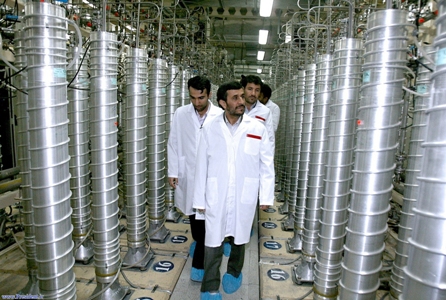
    <ahref="http://blog.heritage.org/wp-content/uploads/Natanz-Nuclear-Facility.jpg"></p>In <ahref="http://article.nationalreview.com/430547/nuclear-posturing/nro-symposium">NRO’s symposium today, Clifford May notes that Iran’s leaders will view the Nuclear Posture Review “as one more sign of a weakening America,” and Jamie Fly argues that our self-imposed nuclear limitations will not convince Iran or North Korea to change their behavior.

    As if on cue, Iranian President Mahmoud Ahmadinejad <ahref="http://www.usatoday.com/news/world/2010-04-07-iran-us-nuclear_N.htm">accused U.S. leaders of resorting to weapons “like cowboys” when “beaten by logic.”

    The NPR is full of problems. For example, while the strategy outlines many current threats accurately, its solutions are based on the misguided belief that the right message is enough to scare Iran and North Korea into submission.<spanid="more-30746"></span>

    Another problem is the assumption that if the U.S. leads by example, others will follow. While this works well for Army infantrymen, it does not work well in the international arena. U.S. leaders must view the world as it is, and not as they wish it to be. This means acknowledging the reality that in the past decade alone, the number of global nuclear powers has grown from six to nine. The expanding nuclear club belies the presumption that reducing our own nuclear-weapons numbers will in itself lead to a safer world.

    The NPR unnecessarily takes options off the table for responding to chemical or biological attacks. The nation should not tie one hand behind its back when deciding how to defend American citizens.

    An irony lies in the fact that by limiting the use of nuclear weapons, Obama’s vision increases the value of conventional military forces — which Obama is busy cutting. His defense budgets may compromise U.S. military superiority, including its air dominance, maritime control, space control, and ability to project power to distant regions.

    The most dangerous problem of all is that cuts to strategic and conventional forces increase the likelihood that U.S. military capabilities will fall short of the nation’s wide-ranging security commitments — including our nuclear umbrella.?

    http://blog.heritage.org/2010/04/07/nuclear-posturing/

  • NRC Trips Obama’s Sprint to Close Yucca Mountain

    On 04.07.10 11:14 AM posted by Jack Spencer

    In a welcome decision, the Nuclear Regulatory Commission yesterday announced that it will not act on the Department of Energy’s motion to withdraw its application to construct the nuclear materials repository at Yucca Mountain until the court system rules on related lawsuits.

    Not only will it not consider the motion but it will continue its work on the application review and expects to have a significant portion completed by November. In other words, Yucca is far from dead.

    The announcement from the NRC was a pleasantly unexpected one. Just days ago Department of Energy Secretary <ahref="http://energytopic.nationaljournal.com/2010/04/chu-on-yucca-mountain-economy.php">said, “We are taking steps to end [Yucca Mountain] because… we see no point in it. It’s spending a lot of money. It’s very important that we not linger around this decision. It’s been made, and we want to go forward and move into the future.” The DOE called Yucca an unworkable option. Apparently the NRC wasn’t listening.
    <spanid="more-30757"></span>

    After the DOE proclaimed that it would withdraw the Yucca application, a dozen parties subsequently filed petitions to intervene, mostly on the grounds that it was unlawful for the DOE to do so. And this was the problem all along for the Administration’s policy. They disregarded the process, ignored existing statute, flouted the will of Congress, and overlooked the science. Most importantly, they allowed politics to get in the way of sound policy.

    Just like the president’s announcement on offshore drilling, his rhetoric on nuclear sounds good but <ahref="http://www.heritage.org/research/reports/2010/02/presidents%20yucca%20policy%20inconsistent%20with% 20nuclear%20rhetoric">his policy decisions do little to advance the long-term prospects of nuclear energy. This is clearly the case with Yucca.

    Even if Yucca is not the final destination for our nation’s nuclear waste, it shouldn’t prevent the NRC from completing the Yucca license application. A geologic repository will eventually be needed, and the application process will provide the NRC, DOE, and the nuclear industry valuable information to inform future decision-making.

    If killing Yucca Mountain is what the Administration wants to do then it should go about it the right way. It should seek legislative reforms to allow for a Yucca alternative and develop an achievable Plan B to take the current plan’s place. Doing so would allow the 121 communities across the country that currently store both commercial and defense waste to be more comfortable with the process. .

    A better approach altogether, however, would be to institute reforms that would allow the project to move forward in a more stable way. The heart of such an approach would be to empower the State of Nevada to determine the outcome of Yucca Mountain. Then Nevada could negotiate a workable solution directly with industry—leaving out the federal government and all of its politics. If no workable plan is developed, then Yucca dies on Nevada’s terms. If, however, an agreement is reached, then Nevada could enjoy the many economic benefits of hosting such a facility.

    The Obama Administration’s awkward attempt to strong-arm the death of Yucca Mountain is but the latest <ahref="http://www.heritage.org/Research/Reports/2009/06/Five-Free-Market-Priorities-for-a-Nuclear-Energy-Renaissance">chapter in government ineptitude when it comes to nuclear waste. It’s good to see the NRC seems to have recognized the folly of the process and responded by slowing things down. To be effective, regulators can not be bullied and judging by yesterday’s decision; the NRC will not be bullied. Good for them.

    http://blog.heritage.org/2010/04/07/…ucca-mountain/

  • So How Is That Government-Run Auto Company Working Out?

    On 04.07.10 12:00 PM posted by Mike Brownfield

    <ahref="http://blog.heritage.org/wp-content/uploads/GM-dealer.jpg"></p>It’s been nearly a year since the Obama administration took the reins of General Motors, and if today’s headlines are any indication, things aren’t looking good for the troubled Detroit auto maker.

    First off, GM just isn’t making money. <ahref="http://www.washingtonpost.com/wp-dyn/content/article/2010/04/07/AR2010040701922.html">It posted a $4.3 billion loss for the second half 2009 – far from profitability, far from a government-led turnaround. The company claims it has a chance of “achieving profitability” in 2010, but keep in mind that GM is $50 billion in the hole to the American taxpayers, who paid for a bailout in 2009.

    And those taxpayers can’t recoup their losses until the U.S. investment in GM is sold, which won’t happen until someone actually wants to buy the company. With $4.3 billion in losses, don’t expect buyers to come running anytime soon.

    <spanid="more-30760"></span>There’s more bad news for GM. The company is <ahref="http://www.nytimes.com/2010/04/07/business/07cars.html?ref=todayspaper">saddled with massively underfunded pension plans, and it needs to come up with $12.3 billion in payments into the plan within the next five years. According to a government report released yesterday, it’s uncertain whether GM will be able to make that payment. That’s not a hard conclusion to reach given today’s reported $4.3 billion in losses.

    More bad news for Americans. <ahref="http://www.nytimes.com/2010/04/07/business/07cars.html?ref=todayspaper">As The New York Times reports, “If either company’s plan must be terminated, the government would become liable for paying benefits to hundreds of thousands of retirees.” That’s 650,000 GM retirees, to be exact.

    But wait, there’s more. Enter the United Auto Workers, <ahref="http://detnews.com/article/20100407/AUTO01/4070347/UAW-suit-says-GM-owes-$450M#ixzz0kQKZGHMT">which yesterday sued GM, claiming that the company owes a union-run health care fund $450 million.

    If you add it all up, that makes for a lot of financial obligations for a company that is already well below water, to the depths of about 20,000 leagues under the sea.

    So what happens if GM doesn’t make a profit and all of these liabilities end of sinking the company? More from The New York Times on the government report issued Tuesday:

    “In the event that the companies do not return to profitability in a reasonable time frame, Treasury officials said that they will consider all commercial options for disposing of Treasury’s equity, including forcing the companies into liquidation.”

    In other words, back to square one – an unprofitable company overburdened with expenses, in need of a government bailout.

    Last year, we wrote that the federal government’s ownership of GM <ahref="http://www.heritage.org/Research/Reports/2009/05/General-Motors-Bankruptcy-and-Nationalization-Exit-Strategy-Needed">was the wrong approach, and that it necessitated an exit strategy for the American taxpayer. Given where GM is now, an exit strategy would have been a good idea.

    In April 2009, <ahref="http://www.cbsnews.com/8301-503544_162-4979228-503544.html">President Barack Obama said, “I don’t want to run auto companies. … I’ve got more than enough to do.”

    At the time, GM was broken. Under President Obama’s leadership, the American taxpayer bought it. And all indications are that it’s not getting fixed anytime soon. Buyer’s remorse, anyone?

    http://blog.heritage.org/2010/04/07/…y-working-out/

  • Morning Bell: How the Left Really Plans to Pay for Obamacare

    On 04.07.10 05:30 AM posted by Conn Carroll

    According to the Congressional Budget Office (CBO), over half of President Barack Obama’s new $940 billion health care entitlement is paid for by price-fixing Medicare cuts. Never mind that the President’s own Centers for Medicare and Medicaid Services says that these cuts would cause “roughly 20 percent” of Medicare providers to go bankrupt in Obamacare’s first ten years. The CBO has to believe these cuts will happen because they are required, by law, to believe everything Congress tells them. The American people are not. So the American people ought to know that instead of cutting doctors’ Medicare reimbursement rates by 21% as required by law on April 1, the Centers for Medicare and Medicaid Services froze payments at current levels until Congress could come back after Easter recess and rescind those cuts. Again. As they have done every year but one since the cuts were first enacted in 1997.

    This doc fix is big enough that, if it had been included as a cost of Obamacare, it would have sent the President’s bill into the red all by itself. But the half trillion dollars in Medicare cuts used to fund the rest of Obamacare are a much bigger problem. Even if we assume they all go as planned, President Obama’s budget would borrow 42 cents for each dollar spent in 2010; would run a $1.6 trillion deficit in 2010; and would leave permanent deficits that top $1 trillion as late as 2020. Add on the half trillion dollars in Medicare cuts that, given Congress’ track record, the American people would be naive to think will ever happen, and the federal government is looking at a pile of new debt.

    The left’s solution to this problem has been simmering for some time now. Senate Budget Committee chairman Kent Conrad (D-ND) floated the idea to The Washington Post last May. Speaker Nancy Pelosi (D-CA) told Charlie Rose it was “on the table” in October. And yesterday White House adviser Paul Volcker told the New York Historical Society it should be considered. The “it” here is a Value Added Tax (VAT), which is a fancy way of saying national sales tax.

    A VAT can be (and has been) structured in many different ways. But the real world results are always the same: higher taxes, more government spending, lower growth, fewer jobs and more special interest power.

    Higher Taxes: Don’t believe for a second that a VAT will help offset other taxes. International evidence clearly shows that a VAT is likely to increase the aggregate burden of govern*ment. Europeans used to only have a slightly higher tax burden than the United States. But beginning in the late 1960s, European countries began to implement VATs. Since then, the overall tax burden in Europe has climbed rapidly. And once a VAT is in place, the evidence shows that the tax rate rises over time.

    Higher Government Spending: Not surprisingly, with more revenues, European governments turn around and spend much more than the United States does. According to a study by the U.S. Chamber of Commerce, government spending grew 45 percent faster in VAT nations than in non-VAT countries.

    Slower Growth: According to the academic literature, there is a strong negative relationship between govern*ment spending and economic performance. In other words, more government spending means less economic growth and fewer jobs. Economic growth is driven by individuals and entrepreneurs operating in free markets, not by Washington spending and regulations.

    More Power to Washington: There is one economy that would greatly benefit from a VAT: Washington, DC. No VAT could ever be levied evenly on all goods and services. Due to political considerations, a VAT in addition to current taxes would likely exempt politically sensitive items like food, clothing, health care and housing. Industries would lobby heavily for exemptions from the VAT for the economic benefits described above. This would give Congress an even larger role in picking winners and losers in the marketplace. Success would depend less on ingenuity and hard work and more on the ability to gain political favor.

    Our nation faces a financial crisis. But low revenues are not the problem. Spending is. Heritage fellow Brian Riedl explains:

    Real federal spending remained steady at $21,000 per household throughout the 1980s and 1990s, before President Bush hiked it to $25,000 per household. Now, President Obama has a proposed a budget that would permanently spend a staggering $32,000 per household annually – and that’s before all the baby boomers retire and add another $10,000 per household in Social Security, Medicare, and Medicare costs to the bottom line.

    So the problem is not declining revenues, but rather a spending spree unlike any in American history. If Washington insists on spending $32,000 per household, it will have to tax $32,000 per household – an unaffordable and unfair tax burden regardless what kind of tax collects it.

    Rather than tax America into permanent economic stagnation, President Obama and Congress must rein in runaway federal spending. Simply bringing real federal spending back to the $21,000 per household average that prevailed in the 1980s and 1990s would balance the budget by 2012 without raising a single tax on anyone. Even returning spending to the pre-recession level of 20 percent of GDP would eliminate two-thirds of the projected 2019 budget deficit without raising taxes.

    Quick Hits:

    <ul>According to the Treasury Department, President Obama and Democratic lawmakers plan to

  • The Long War of Repealing Obamacare

    On 04.06.10 10:00 AM posted by James Capretta

    In the depressing aftermath of Congress’s passage of the Democratic health-care legislation, there has been an understandable temptation among conservatives to think that all their effort over the last year to derail what was coming down the tracks may have been for naught. After all, the bill did pass. The president and his allies got their signing ceremony and their victory lap, as well as a barrage of premature but predictable pronouncements from the national media that we are now witnessing a historic moment of irreversible liberal progress.

    And there’s no use sugarcoating what has happened. It’s a debacle from every possible vantage point. The Democrats have created another massive entitlement program while expanding federal power and reach in a manner not seen since the heyday of Franklin D. Roosevelt. If allowed to stand, the new health-care law will tether America’s middle class to the federal government in ways that will fundamentally alter — and not for the better — the relationship between citizens and the state. The result will be worse health care, distorted politics, less medical innovation and economic vitality, and depleted wealth.

    <spanid="more-30640"></span>Still, conservative opposition was not a waste of time or effort. On a matter of such import, the fight had to be waged, no matter the odds. Moreover, conservatives did win the battle for the hearts and minds of the electorate. Most voters think the Democratic plan will drive costs up and reduce the quality of American medicine. Conservative arguments clearly contributed to the shaping of public opinion, and with public opinion running against them, the administration and its allies were forced to make crucial concessions that may yet prove decisive in what will almost certainly be a very long war over the future of American health care.

    For starters, there is no public option in the new law, at least not of the kind that single-payer enthusiasts had advocated. Most Democrats wanted to create an option for working-age Americans built on the Medicare model, which is to say built on government-determined payment rates for services. By employing price controls, a Medicare-like public option would have been able to charge artificially low premiums, thus undercutting private competitors.

    Conservatives, however, were successful in portraying the public option as a slippery slope to enrollment of the entire population in a government-run insurance program. And despite the superficial appeal of price caps, most voters were able to see past the rhetoric to the harms federal micromanagement would bring: queues, restrictions on access, and government-enforced rationing of care. This concern was more than enough to turn independent voters solidly against the idea (by 3-to-1 in one summer 2009 poll), which in turn precipitated a rift among Democrats that single-payer advocates were never able to overcome.

    Democrats were also forced to give ground on costs, hard as that may be to believe in light of the massive price tag of the final bill. It would have been much worse if not for the spontaneous revolt that occurred at last summer’s town-hall meetings. It was at those sessions that citizens gave voice to what was, and is, the widely held view that President Obama is recklessly spending away America’s economic future. On the heels of the bailouts and the so-called stimulus plan, the announcement by the Congressional Budget Office (CBO) that an early version of the House health-care reform bill would cost at least $1.2 trillion over a decade was enough to get thousands of Americans out of their homes to demand, in person, that their elected representatives put a halt to the proceedings.

    To be sure, the president and his allies never had any intention of actually changing course and trimming their big-government ambitions. But they couldn’t entirely ignore what had played out in August without losing momentum for their initiative. So, in an unusual address to a joint session of Congress last September, the president made this commitment: He would ensure that the health-reform legislation would cost “only” $900 billion over a decade.

    Predictably, that promise was broken. The final bill costs well over $1 trillion when all spending is counted. But to even stay within shouting distance of it, the Democrats in Congress had to employ all manner of gimmicks and sleight of hand to hide the true cost of their program, including delaying the implementation of its major spending provisions until 2014. That helped them shave some $50 to $100 billion from the CBO’s cost projection through 2019.

    It also gave Republicans a very substantial opening to exploit. The president is already daring his adversaries to try to take away the “rights” and benefits that he says the new legislation has bestowed on the American people. To which Republicans should reply as often as necessary: What benefits? What rights? Little of real value has come immediately into effect, and most of the plan’s provisions won’t be implemented for more than three years. In the interim, there will be two federal election cycles, which, given the intensity of the opposition and the partisan manner by which the bill was enacted, are all but certain to become referenda on Obamacare. The self-congratulatory speeches the president has been giving in the aftermath of congressional passage of the bill are not the last words in this struggle, by a long shot. Those are reserved for the voters. They will decide the fate of the Democratic health-care reform plan with the votes they cast this November and again in 2012.

    To that end, it is imperative that Republicans make repeal of Obamacare the centerpiece of their effort to pick up a sizeable number of House and Senate seats in this year’s elections, and possibly regain control of one or both of the chambers of Congress. Even if the politics were not favorable, the issue is so important, and the stakes so high for the country, that the party of limited government would have no choice but to continue the fight. Happily for Republicans, though, it is evident that an undiluted call for full repeal, coupled with a genuine and aggressive reform plan, is a political winner.

    The public remains just as polarized now as it was before passage. A clear plurality still opposes the government-heavy program Congress assembled, and the public is even unhappier about how the Democrats forced their plan upon the country in spite of unambiguous signals that the electorate did not want it. The only response that is fitting for such a brazen act of political arrogance is a sharp rebuke at the ballot box. Republican candidates should give voice to voter outrage by promising to undo — in its entirety, and as swiftly as possible — what should not have passed in the first place.

    Of course, so long as President Obama sits in the Oval Office, repeal is almost certainly beyond reach. Even the most optimistic assumptions about Republican gains would leave them well short of the votes necessary to override a veto. But the voters do not expect miracles here. If Republicans regain full or partial control of Congress, they can stand for repeal even as they open up many new fronts in the struggle to ultimately undo Obamacare.

    For instance, beginning as early as 2011, well before new coverage is extended to anyone, millions of seniors will see large cuts in their Medicare benefits as deep reductions in Medicare Advantage payment rates force insurers to scale back their coverage or drop current offerings altogether. These cuts are supposed to help pay for the expensive new entitlement that the Democrats have promised. Republicans should channel the inevitable displeasure among seniors into legislation to restore the Medicare funds at the expense of a further delay in the health-care bill’s implementation timeline. If successful, they would likely push the start date back another two years.

    Full repeal will almost certainly need to wait until after the 2012 presidential election. In that campaign, the Republican candidate will have the opportunity to offer the country an alternative vision. That vision should include the promise of repeal, the case for which will have been bolstered by the tax increases, premium hikes, and Medicare cuts that will have kicked in by then. But the Republican candidate must couple the call for repeal with a concrete framework for what would be put in its place.

    The starting point must be a commitment to build a functioning marketplace in the health sector. That’s the only way to simultaneously address the cost and improve the quality of American medicine. Today we endure misallocated resources and expensive and inefficient care principally because of misguided governmental policy. In particular, open-ended subsidization of health insurance — through the tax code, Medicare, and Medicaid — has largely undermined the incentives for productivity improvement or cost-conscious consumption. The result is cost growth that far outpaces the nation’s general rise in income.

    An effective reform program would begin to address the cost problem by making changes throughout federal health-care law. But the trick is to do so in a way that allows for gradual change and decentralized decision-making. Republicans must not make the same mistake as the Democrats and embark on a one-size-fits-all federal reform plan that creates more disruption than the public can tolerate or absorb.

    The basic framework should be a federal partnership with the states. The federal government would take steps to address problems in the Medicare program and the tax treatment of health insurance, as well as provide the base funding needed for state-by-state initiatives. Individuals buying insurance outside of employment would get a tax credit. In Medicare, beneficiaries would be given more choices, including the option of taking their entitlement in the form of catastrophic insurance and a deposit into a Health Savings Account. They would also be asked to make modest co-payments for any services they receive outside the normal network they have selected for their care, even if they have Medigap coverage (which means they now pay nothing at the point of service, regardless of where they get it).

    The federal government could offer grants to help fund state reform programs consistent with a move toward a functioning national marketplace. States would have wide discretion to make design decisions based on local needs and political cultures, but to qualify for federal funding, states would have to follow the basic guidelines of a market-based reform plan.

    A key change at the state level would be new protections for people with preexisting medical conditions. People who have stayed continuously insured could buy individual insurance without any condition exclusion and with some limits on the size of the premium they could be charged for the health risk they pose. This change would require robust funding and reform of state high-risk pools, which would be a primary aim of the new federal grant program.

    In addition, states would facilitate portable insurance for small-business workers, much as the state of Utah has done, and federal tax credits would serve as a primary source of funding for many of today’s working uninsured to buy health insurance. States would also be required to open up their insurance markets to out-of-state customers in order to foster more competition and choice, and to implement sensible medical-malpractice reform in order to root out unnecessary costs from “defensive” care. In addition, states could choose to gradually move their non-disabled Medicaid population into the same marketplace through which tax-credit recipients buy their insurance coverage.

    This reform approach would involve new federal costs, of course, but they would be a mere fraction of the cost of Obamacare. In comparison with the just-passed legislation, the Republican alternative would be both a spending cut and a tax cut. The costs associated with the tax credit could be covered by placing an upper limit on the size of tax-preferred premiums allowable in job-based plans. This limit would replace the “Cadillac tax” on insurers in Obamacare. The impact of the two methods would be similar, but a premium limit would be more transparent, in that employees would be paying directly for expensive coverage. This system would be more effective in getting consumers to use health-care resources efficiently.

    The costs associated with high-risk pools could be covered by redirecting some of the funding that Medicaid now pays to hospitals that see a disproportionate share of low-income and uninsured patients. Devoting these funds instead to the expansion of private insurance coverage should be possible without reducing access to care, since hospitals that lose subsidy payments from Medicaid would gain many insured patients, whose private coverage would pay more generous rates. The tax credits and high-risk-pool funding could be made contingent on securing the offsetting savings, thus ensuring that there would be no increase in the federal budget deficit.

    Some Republicans and conservatives may wish to turn the page and move on from health care. Unfortunately, they don’t really have that option. Health care is the key issue in all the big and consequential political fights of the day — over the budget, taxes, regulation, and the role and competency of centralized government. If the Right abandons this fight now, all of its other battles will be much harder to win. And there’s no political reason to not continue the fight. The public does not want a government-heavy program that will drive costs higher and undermine the quality of American medicine. What it wants is a sensible reform that brings gradual change, treats people fairly, opens promising avenues to cover the uninsured, and poses no risk to the economy. If Republicans deliver such a plan, they can win this war yet.

    Cross-posted from <ahref="http://nrd.nationalreview.com/">National Review.

    http://blog.heritage.org/2010/04/06/…ing-obamacare/

  • It’s Time to Terminate California’s Cap and Trade System

    On 04.06.10 09:06 AM posted by Nick Loris

    California legislators passed a statewide cap and trade bill in 2006 that is set to begin in 2012, but a growing opposition is<ahref="http://online.wsj.com/article/SB10001424052702304620304575165843688369042.html?m od=WSJ_hpp_MIDDLENexttoWhatsNewsThird"> seeking to include a ballot measure that would postpone a carbon cap until the state’s economy recovers:

    “The ballot measure would bar the state from implementing the law until its jobless rate stabilized at or below 5.5% for a year, which supporters say would signal the return of a strong economy. The state’s jobless rate topped 5.5% in October 2007 and now stands at 12.5%.

    Supporters and opponents of the law disagree about its potential economic effects. The California Air Resources Board, the state clean-air agency administering the law, says the cap would help the economy. It would raise the price of a unit of energy, but reduce Californians’ total energy bills through greater efficiency, the board says, freeing up money that would lead to more jobs.

    But the board has scaled back its optimism. In a 2008 study, it projected the measure would produce a net gain of more than 100,000 California jobs. Economists widely criticized that study as too rosy. A second economic assessment, released by the board in March, projects a net gain of about 10,000 jobs. A June 2009 study by a group of California small businesses, however, predicted the law could raise the average California household’s annual housing, transportation, energy and food costs by about $3,900, or 15%.”

    <spanid="more-30669"></span>

    The increased recognition that cap and trade reduces economic activity is encouraging but the ballot measure does not go far enough. Delaying implementation of cap and trade will only delay the economic consequences of higher energy prices. The pill may be easier to swallow but that doesn’t make it good policy. The fact that cap and trade only makes sense if the state is not in a recession is indicative that the policy is an economy killer.

    Heritage <ahref="http://www.heritage.org/Research/Reports/2009/08/Impact-of-the-Waxman-Markey-Climate-Change-Legislation-on-California">analysis of the federal cap and trade bill passed in the House of Representatives found that beginning in 2012, job losses will be 192,773 higher than without a cap-and-trade bill in place. And the number of jobs lost will only go up, increasing to 285,335 by 2035. And the environmental benefit? Climatologist Chip Knappenberger <ahref="http://masterresource.org/?p=2355">projected that Waxman-Markey would moderate temperatures by only hundredths of a degree in 2050 and no more than two-tenths of a degree Celsius at the end of the century. If California tries to cap CO2 emissions by itself, the economic costs will come with even smaller environmental benefits – too small to even measure.

    Contrary to the claims of an economic boost from green investment and green job creation and “postage stamp” costs, cap and trade does the complete opposite by increasing energy prices-thereby causing a considerable reduction in economic growth, household incomes, and employment. A more prudent ballot measure would be to remove California’s cap and trade plan completely.

    http://blog.heritage.org/2010/04/06/…-trade-system/

  • Obama: Still a ways to go in Central and Eastern Europe

    On 04.06.10 11:00 AM posted by Sally McNamara

    </p>If President Obama thinks that signing his prized arms control treaty with Russia on Czech soil will repair the damage he’s done to relations with Central and Eastern Europe, he’s wrong. Cutting a deal with the Russian bear in Prague is hardly the way to tell your allies that it’s not all about Russia.

    Although cheering crowds greeted Obama a year ago when he told adoring Czechs of his vision for a world without nuclear weapons, Europe now is much more cautiously embracing the President’s risky and naïve agenda. The new U.S.-Russian START Treaty – reducing deployable nuclear warhead by a third – has come at a very steep price for the U.S.<spanid="more-30663"></span> It sacrificed the <atitle="http://www.heritage.org/Research/Reports/2009/09/President-Obama-Must-Not-Surrender-to-Russia-on-Missile-Defense" href="http://www.heritage.org/Research/Reports/2009/09/President-Obama-Must-Not-Surrender-to-Russia-on-Missile-Defense">Third Site missile defense deployments in Poland and the Czech Republic, and the President now looks set to announce that America’s existing nuclear arsenal will not be sufficiently modernized. In a humiliating slap-down, Moscow announced this morning that it will summarily withdraw from START if it deems future U.S. missile defense plans unpalatable. Romania, Bulgaria and other European nations in line to work with America on missile defense should be expecting the same treatment that Warsaw and Prague got when on the 70th anniversary of the Soviet’s invasion of Poland, President Obama ripped up the Third Site agreement.

    Obama has been <atitle="http://www.heritage.org/Research/Reports/2009/05/President-Obama-Must-Not-Concede-to-Russian-Demands-over-NATO" href="http://www.heritage.org/Research/Reports/2009/05/President-Obama-Must-Not-Concede-to-Russian-Demands-over-NATO">outplayed and outfoxed by Putin and Medvedev. But this isn’t just a game of politics; as the leader of the free world, President Obama has America’s security in his hands, as well as the future of the <atitle="http://www.heritage.org/Research/Reports/2010/03/President-Obama-Must-Not-Remove-Nuclear-Weapons-from-Europe" href="http://www.heritage.org/Research/Reports/2010/03/President-Obama-Must-Not-Remove-Nuclear-Weapons-from-Europe">Atlantic Alliance. Engagement with Europe’s great powers has had mixed blessings for the Czechs in the past. They will keenly remember the ‘engagement strategies’ of 1938 and 1968 which saw German and Soviet tanks respectively roll into their proud nation.

    Negotiations are often a good thing, but as President Reagan advised: always negotiate from a position of strength. Iran, North Korea and other malign actors will continue to seek and increase their nuclear arsenal regardless of President Obama’s ‘vision’. The letter that 21 Central and Eastern European leaders sent to Obama last July, advising him against unilateral concessions to Russia, should remind Obama that he still has a long way to go if he wants a genuinely strategic relationship with his European allies which ensures transatlantic safety and security.

    http://blog.heritage.org/2010/04/06/…astern-europe/

  • President Obama, Why Won’t You Defend Us?

    On 04.06.10 11:39 AM posted by Mike Brownfield

    <ahref="http://blog.heritage.org/wp-content/uploads/Obama_SOTU090225.jpg"></p>President Barack Obama today released five specific objectives regarding the United States’ future nuclear force, but the most important objective of all – defending the United States and its allies against strategic attack – was not among them. Now, it is up to Congress, the American people and America’s allies to ask the President a simple, pointed question: Why won’t you defend us?

    The release of the President’s Nuclear Posture Review (NPR) raises significant questions about the soundness of the Obama administration’s nuclear strategy. First and foremost, the President’s priorities for his nuclear strategy are contradictory. By having a smaller, less reliable, less credible nuclear force, the President’s strategy will increase the incentive for nuclear proliferators to produce weapons, and other states’ reliance on nuclear weapons will only grow. In short, the world will become a more dangerous place to live.

    Contrary to President Obama’s assertions, maintaining a strong nuclear deterrent and combating proliferation and nuclear terrorism are not incompatible goals. In fact, the previous administration made significant strides in countering proliferation, including establishing the Proliferation Security Initiative, which was designed to stop the trafficking of weapons of mass destruction.

    <spanid="more-30683"></span>What’s more, existing U.S. declaratory policy, which as written under President Carter and reaffirmed by other Presidents, (including President Clinton after the Cold War ended), has served the United States well. As it stood, the policy was a simple, clear cut and forceful declaration of the U.S. policy on the use of nuclear weapons for self defense. Conversely, the declaratory policy stated in President Obama’s NPR is something only a lawyer could love and lays out a series of muddled conditions under which the United States would use nuclear weapons. That only serves to send confused signals to both allies and adversaries.

    There’s another problem with President Obama’s new nuclear strategy. As written, the NPR raises legitimate concerns that the President has not met requirements under U.S. law (sec 1251 of the 2009 Defense Authorization Act) to adequately address the modernization of U.S. nuclear weapons and infrastructure before entering into a new arms control agreement. In addition, the NPR wrongly argues that the United States should ratify the Comprehensive Test Ban Treaty (CTBT). This treaty would prevent the United States from developing the nuclear forces necessary to deal with today’s threats and saddle the United States with an increasingly obsolete nuclear arsenal designed for the Cold War era.

    So what’s the alternative? The right U.S. defense strategy would emphasize a modernized, credible nuclear force; comprehensive missile defense; and robust conventional forces, as well as vigorous efforts to prevent proliferation, illicit trafficking in nuclear technology and materials; and combating terrorism. That would provide for a more robust and effective deterrence for the post-Cold War World. In other words, it would do what nuclear weapons should – defend the United States and its allies.

    http://blog.heritage.org/2010/04/06/…you-defend-us/

  • Russia: New START Clearly Links Missile Reduction with Missile Defense

    On 04.06.10 12:00 PM posted by Conn Carroll

    </p>This Thursday President Barack Obama is scheduled to sign a follow on agreement to the Strategic Arms Reduction Treaty in Prague with Russian President Dmitri Medvedev. Since the day agreement on the new treaty was <ahref="http://www.washingtonpost.com/wp-dyn/content/article/2010/03/24/AR2010032401535.html">leaked by the Kremlin, the White House has been claiming that the treaty <ahref="http://blog.heritage.org/2010/03/29/what-exactly-is-the-deal-between-president-obama-and-the-kremlin/">“does not contain any constraints on testing, development or deployment of current or planned U.S. missile defense programs.” And from day one <ahref="http://www.nytimes.com/2010/03/25/world/europe/25start.html?ref=todayspaper">the Russians have been saying the opposite.

    Today in Moscow, Russian Foreign Minister Sergei Lavrov again made it clear that Russia does not share the same understanding of the treaty that the Obama administration does. Minister Lavrov <ahref="http://www.businessweek.com/news/2010-04-06/russia-may-exit-new-arms-deal-if-u-s-boosts-missile-defense.html">told reporters that Russia maintains the right to exit the agreement if “the U.S.’s build-up of its missile defense strategic potential in numbers and quality begins to considerably affect the efficiency of Russian strategic nuclear forces. … Linkage to missile defense is clearly spelled out in the accord and is legally binding.”<spanid="more-30672"></span>

    <ahref="http://en.wikipedia.org/wiki/Trust,_but_verify">“Trust but verify” was Ronald Reagan’s approach to relations with the Soviet Union. The Senate should keep that phrase in mind when working with the Obama administration while deciding whether or not they should ratify this agreement.

    http://blog.heritage.org/2010/04/06/…ssile-defense/

  • Is Head Start Helping Children Succeed and Does Anyone Care?

    On 04.06.10 01:00 PM posted by Rachel Sheffield

    <ahref="http://blog.heritage.org/wp-content/uploads/DeptEducation.jpg"></p>If you’ve heard the results of the recent <ahref="http://www.acf.hhs.gov/programs/opre/hs/impact_study/reports/impact_study/hs_impact_study_final.pdf">Head Start Impact Study, congratulations. You are one of the few Americans who, <ahref="http://www.edweek.org/ew/articles/2010/04/07/28headstart.h29.html?tkn=WLSFibruVZf3jH%2BFxDgPjXL Cb%2BHpMKcN2fYw&cmp=clp-edweek">no thanks to national media sources, are aware that your taxpayer dollars have been funding a failing federal program for the last 45 years. The Heritage Foundation recently hosted an event titled: <ahref="http://www.heritage.org/Events/2010/03/Head-Start">Is Head Start Helping Children Succeed and Does Anyone Care?,to discuss the recently-released Impact Study that found no lasting impact for Head Start children after first grade.

    According to the study–which compared both three- and four-year-old Head Start students with a control group of their peers–preschoolers who participated in Head Start did not fare any better than children who did not participate. Of over 100 potential benefits measured–including cognitive, social, and health outcomes–Head Start children made gains on only about 2 percent of them. Ironically, the only significant academic outcome was negative: kids who started Head Start at age three–meaning they had spent the most time in the program–were reported to do worse in kindergarten math than control group children.<spanid="more-30689"></span>

    And, despite this poor performance, taxpayers have been on the hook for more than $167 billion since the program’s inception. What’s more, the administration just increased Head Start funding by $1 billion in its FY2011 budget.

    But almost as troubling as the results of the study is the poor manner in which it was executed. Panel participants–Drs. <ahref="http://www.brookings.edu/%7E/media/Files/experts/whitehurstg/whitehurstg_bio.pdf">Russ Whitehurst, the director of education policy research at the Brookings Institution, and <ahref="http://www.njfpc.org/html/pdf/frcfamilyreligioionzillpaper.pdf">Nicholas Zill, who actually worked as a lead analyst on the Head Start Impact Study–spoke about the poor handling of the study’s release. It took the government six years from the time the data was collected to get around to reporting the results. Said Dr. Whitehurst: “Delayed data are useless data. One reason we’ve gotten so little attention to the data is that the actions that should have been predicated on the results of the study have already been taken.”* Dr. Zill went even further to say: “I think the main reason why [the study is] being ignored is the results were negative. In fact, I think if the results were positive, even if they had been delayed years and years they would have been on the front page of the New York Times, The Washington Post, and many other media outlets.”

    But now is probably not the best time to talk about the failure of government preschool, considering Obama’s plans to expand federal funding for early childhood education and care, which currently stands at a whopping <ahref="http://www.njfpc.org/html/pdf/frcfamilyreligioionzillpaper.pdf">$25 billion per year.

    Head Start is a prime example of bureaucratic dysfunction and the resulting waste in taxpayer dollars. It is what the <ahref="http://www.washingtontimes.com/news/2010/mar/30/wetzstein-is-head-start-a-sacred-cow/print/">Washington Times refers to as <ahref="http://www.washingtontimes.com/news/2010/mar/30/wetzstein-is-head-start-a-sacred-cow/print/?utm_source=feedburner&utm_medium=feed&utm_campaig n=Feed%3A+SpotlightOnPoverty%2FInTheNews+%28Spotli ght+on+Poverty+and+Opportunity%3A+In+The+News%29"> “a sacred cow.” It has become so politicized and entrenched, that even hard evidence of its failure holds no sway in policymaking. The Washington Times writes:

    …when it comes to delivering measurable, lasting outcomes, Head Start is more hype than help.

    “One would think the Obama administration and Congress would take a long, sober look at Head Start; These are damning findings for a program that has been ‘tweaked’ for 45 years at a cumulative cost of some $167 billion…

    Not surprisingly, the Heritage Foundation is apoplectic.

    The conservative think tank held a March 22 event called ‘Is Head Start Helping Children Succeed and Does Anyone Care?’ Nick Zill…answered that question with a presentation called ‘I Know Head Start Works. Don’t Confuse Me With The Facts’

    Does anyone care that Head Start is not helping children succeed? Apparently, the answer from Washington is “No”…but spoken quietly enough to make sure no one hears.

    http://blog.heritage.org/2010/04/06/…s-anyone-care/

  • FCC Net Neutrality Smackdown a Win for Free Market, Limited Government

    On 04.06.10 02:29 PM posted by Mike Brownfield

    <ahref="http://blog.heritage.org/wp-content/uploads/computer-typing.jpg"></p>In a huge win for the free market and limited government, a federal appeals court today put a halt to the Federal Communications Commission’s attempt to exert its authority over the Internet and its power play to regulate the companies who provide access to it.

    The decision, <ahref="http://pacer.cadc.uscourts.gov/common/opinions/201004/08-1291-1238302.pdf">issued by the U.S. Court of Appeals for the District of Columbia, centers around the FCC’s efforts to enact “net neutrality,” a policy that would prevent ISPs such as AT&T, Verizon and Comcast from managing the flow of traffic on the Internet by discriminating among content and applications that put a high load on their networks.

    The case at hand stemmed from a 2007 FCC complaint by non-profit organizations who alleged that Comcast violated the law when it interfered with its customers’ use of peer-to-peer file sharing networking programs, which drag down Internet speeds. Comcast defended its actions as necessary to manage scarce network capacity, while proponents of net neutrality advocate for the principle of <ahref="http://www.savetheinternet.com/faq">“free and open Internet.” Enter the FCC, which decided to <ahref="http://news.cnet.com/8301-13578_3-10004508-38.html?tag=mncol;txt">take action to regulate the Internet, much like it regulates other forms of telecommunications.

    <spanid="more-30695"></span>The problem is that the FCC simply doesn’t have that authority, as <ahref="http://pacer.cadc.uscourts.gov/common/opinions/201004/08-1291-1238302.pdf">the court recognized today.

    The FCC argued for an expansive interpretation of its authority by virtue of federal law, which says “The Commission may perform any and all acts, make such rules and regulations, and issue such orders, not inconsistent with this chapter, as may be necessary in the execution of its functions.”

    The court, though, didn’t buy it. It held:

    … [N]otwithstanding the “difficult regulatory problem of rapid technological change” posed by the communications industry, “the allowance of wide latitude in the exercise of delegated powers is not the equivalent of untrammeled freedom to regulate activities over which the statute fails to confer . . .Commission authority.”

    That’s good news for Internet users, but it’s also good news for America as a whole.

    As Heritage’s James Gattuso <ahref="http://blog.heritage.org/2009/09/21/will-and-can-the-fcc-regulate-the-internet/">wrote last year, the end result of a net neutrality policy would be “a slower and more congested Internet, and more frustration for users. Even worse, investment in expanding the Internet will be chilled, as FCC control of network management makes investment less inviting. The amounts at stake aren’t trivial, with tens of billions invested each year in Internet expansion.”

    And as for America? With each passing day, federal agencies promulgate more rules and regulations that amount to a pile of red tape that wind up costing Americans some $1.1 trillion per year, according to a <ahref="http://www.sba.gov/ADVO/research/rs264tot.pdf">2005 study by the Small Business Administration.

    As the United States struggles to regain its economic footing, the last thing we need is yet another agency to grab more power, create new regulations, and hamper the growth – and speed – of the Internet.

    http://blog.heritage.org/2010/04/06/…ed-government/

  • Get A Job So We Can Tax You

    On 04.06.10 06:30 AM posted by Brandon Stewart

    <ahref="http://blog.heritage.org/wp-content/uploads/empty-pockets.jpg"></p>After the first few lines of liberal columnist Thomas Friedman’s <ahref="http://www.nytimes.com/2010/04/04/opinion/04friedman.html">piece*in Sunday’s New York Times, you would have thought he had finally seen the light:

    “If we want to bring down unemployment in a sustainable way, neither rescuing General Motors nor funding road construction will do it.”

    Yes, exactly. Maybe he’s finally seen the disastrous stimulus bill (that he supported) for what it is—a failure.

    “We need to create a big bushel of new companies.”

    Preach it, brother.

    “We’ve got to get more Americans working again for their own dignity—”

    Yes! Exactly!

    “—and to generate the rising incomes and wealth we need to pay for existing entitlements, as well as all the new investments we’ll need to make.”

    Say what? And he was doing so well.<spanid="more-30605"></span>

    This sort of commentary exemplifies a pervasive liberal attitude towards the economy. Even when they are worried about it, their main concern is their ability to continue to fund increasingly large and unstable dependency programs. As in so many other areas, liberals see “job creation” as a means to an end. And that end is the expansion of the welfare state and the rising dependence of the average American on government. A recent Heritage report revealed that <ahref="http://www.heritage.org/research/reports/2010/03/the%202009%20index%20of%20dependence%20on%20govern ment">roughly 60.8 million Americans rely on the government for their daily housing, food, and health care while a growing share of Americans—<ahref="http://www.heritage.org/research/reports/2010/03/the%202009%20index%20of%20dependence%20on%20govern ment">more than 34 percent of all tax filers—pay no income tax.

    This is simply unsustainable.

    What we need as a country is <ahref="http://www.heritage.org/research/reports/2009/06/entitlements%20darken%20long%20term%20outlook%20fo r%20federal%20budget">entitlement reform, a reduced dependency economy and—fundamentally—a shift in the conception of the government’s role as a benefactor for <ahref="http://www.heritage.org/Research/Reports/2007/07/The-Progressive-Movement-and-the-Transformation-of-American-Politics">moral as well as <ahref="http://www.heritage.org/Research/Reports/2008/11/Why-Government-Spending-Does-Not-Stimulate-Economic-Growth">economic reasons. As President Reagan once said, “Welfare’s purpose should be to eliminate, as far as possible, the need for its own existence.” We need to restore a government that encourages growth while empowering people to be self-sufficient.

    http://blog.heritage.org/2010/04/06/…e-can-tax-you/

  • The Future of the Special Relationship

    On 04.06.10 07:00 AM posted by Nile Gardiner

    <ahref="http://blog.heritage.org/wp-content/uploads/BrownObama.jpg"></p>There will be much at stake when the United Kingdom finally goes to the polls on May 6 after months of phony war between the two leading parties: the future course of the British economy, the fifth largest in the world, now submerged under mountains of debt and regulation after 13 years of socialist rule; the state of Britain’s defenses, gutted by more than a decade of vicious cuts, and under threat from a European defense identity; Britain’s relationship with the European Union, which could be renegotiated with a change of government at Westminster. And the most important issue from America’s point of view, the future of the Anglo-American alliance, which currently stands at its lowest point in a generation.<spanid="more-30637"></span>

    There are two seminal dates, however, which are likely to decide the fate of the Special Relationship, the most enduring and successful partnership since the Second World War: May 6, 2010, and November 6, 2012, the date of the next U.S. presidential election. While the Special Relationship continues in terms of intelligence and defense cooperation, as well as economic, trade, and cultural ties, at the political level it is currently in a dangerous state of decline. The current British prime minister and the current U.S. president seem largely indifferent to the long-term future of the U.S.-UK alliance, and both have inflicted serious damage upon it.

    The British government’s decision last August to free the Lockerbie bomber, Abdelbaset Ali al-Megrahi — responsible for the murder of more than 180 Americans — at the request of Scottish authorities, was an appalling affront to the U.S. It was a sharp reminder that anti-American sentiment is never far under the surface in the Labour Party, despite the brief love affair with Washington under Tony Blair. Further confirmation of the Brown government’s reckless approach towards the United States was given last week when the Labour-dominated House of Commons Foreign Affairs Committee voted to officially end the use of the term “Special Relationship.”

    At the same time, the Obama administration has displayed what can only be described as sneering condescension towards America’s closest ally, from throwing a bust of Sir Winston Churchill out of the Oval Office in its opening days, to siding with Argentina in its call for U.N.-brokered negotiations over the sovereignty of the Falkland Islands. Barack Obama has been conspicuously cold towards the United Kingdom, and has shown no interest at all in preserving the Special Relationship, treating Britain no differently than most other allies in Europe, and significantly less warmly than France.

    There are never any guarantees in politics, but a change in government in London is likely to significantly revive support for the Special Relationship on the British side. The Conservative Party leader, David Cameron, is a firm believer in the importance of the Anglo-American alliance, as are several leading figures in his Shadow Cabinet, including Liam Fox (Defense), William Hague (Foreign), and Michael Gove (Education).

    Conservatives on both sides of the Atlantic have a significantly stronger affinity and commitment to the Anglo-American alliance than their left-wing counterparts, and the party of Winston Churchill and Margaret Thatcher is far more likely to preserve the Special Relationship than Gordon Brown’s Labour. Similarly, on the U.S. side, the party of Ronald Reagan and George W. Bush traditionally attaches far more importance to the ties with Great Britain than its political rivals.

    It remains to be seen of course whether a Cameron-led government, if elected, can actually succeed in forging a successful partnership with an increasingly isolationist Obama administration that has shown little interest so far in Britain. The omens certainly don’t look good on that front. Ultimately, however, it will be the U.S. presidential election in 2012 that will play the biggest role in deciding the fate of the Special Relationship. To succeed, the alliance must operate as a two-way street, with both sides fully invested in ensuring it remains the engine of the free world. If the White House isn’t interested, the partnership simply cannot survive, no matter who is in charge in Downing Street.

    <ahref="http://corner.nationalreview.com/post/?q=YmRkZmU2NjE4MzZlZTA1NmVkMmI0Y2RiYWZlYzEwMWE=">C ross-posted at <ahref="http://corner.nationalreview.com/">The Corner.

    http://blog.heritage.org/2010/04/06/…-relationship/

  • Is NATO a Pretend Alliance?

    On 04.06.10 08:00 AM posted by Kim Holmes

    <ahref="http://blog.heritage.org/wp-content/uploads/NATO.jpg"></p>The NATO military operation in Afghanistan is a “NATO operation” in name only. In quality and quantity, most of the forces there are from the English-speaking countries – the United States, the United Kingdom, Australia and Canada. Without a doubt, some NATO nations like Romania, Poland, and Denmark clearly understand how important this mission really is, especially regarding America’s future commitment to the transatlantic security alliance. In contrast, NATO heavy-weights like France and Germany are barely present and accounted for in Afghanistan. Although Paris and Berlin are happy to micromanage their national deployments in safer parts of the country, they have been reluctant to respond with support that NATO really needs – things like trainers and helicopters.<spanid="more-30647"></span>

    What is disturbing about the NATO operation in Afghanistan is how smaller (and less affluent) non-NATO countries like Georgia and Macedonia are more willing to go out on a limb than France or Germany. Georgian troops are gearing up for a deployment to the south – where the majority of the action will be seen in the next few months; Macedonian troops faithfully man the front gates at the NATO headquarters in Kabul, where suicide bombers present a daily threat. These countries want to become members of NATO, but they are being blocked by the very same countries that are refusing to carry their weight in Afghanistan – specifically, France, Germany and Greece. The same kind of nearsighted parochialism that leads Paris and Berlin in particular to shirk their “shared” responsibility in Afghanistan is behind their cold shoulder toward NATO expansion.

    The United States needs a new alliance strategy, one that relies less on old, purely regional alliance structures like NATO and more on stalwart allies who are willing to pull their weight in defending freedom, and new allies who share that goal. America needs to lead a new Global Freedom Coalition that would complement NATO. We should approach freedom-loving countries all over the world that have been willing to help us fight for freedom. They, and not European countries more interested in building up the European Union than strengthening NATO, should be given pride of place in America’s international relations.

    For far too long, France, Germany and some other West European countries in NATO have been living off America’s willingness to overlook their parochialism and tendency to free ride off the United States and a few NATO stalwarts like the UK. They think they can always count on America’s pro-NATO (and even pro-European Union) policies to excuse and cover up their efforts to undermine NATO with competing EU defense policies. They know that the U.S. cares far more about the strength and integrity of NATO than they do, and thus believe they have little to worry about if they shirk their responsibilities in Afghanistan or elsewhere.

    The charade is getting old. If they are not worried about being weak and desultory members of NATO, then neither should we be. America should form new flexible alliances with countries that not only need it, but are also willing to truly share the burden of the common defense – like Poland, the Czech Republic, the UK, Australia and South Korea. We need not abandon NATO; but neither should we pretend that NATO is the an alliance whose members are all equally dedicated to the task of common defense and security–or, for that matter, is the centerpiece of America’s alliances. They are not. It’s time we admitted it.

    http://blog.heritage.org/2010/04/06/…tend-alliance/

  • Guest Blogger: Thomas Perrin on Florida?s Possible Medicaid Waiver

    On 04.06.10 09:00 AM posted by Thomas Perrin

    <ahref="http://blog.heritage.org/wp-content/uploads/Tallahassee.jpg"></p>In 2006, under former Governor Jeb Bush, Florida rolled out the most comprehensive <atitle="http://ahca.myflorida.com/Medicaid/medicaid_reform/waiver/index.shtml" href="http://ahca.myflorida.com/Medicaid/medicaid_reform/waiver/index.shtml">Medicaid reform plan in the country. Studies from both <atitle="http://www.jamesmadison.org/wp-content/uploads/pdf/materials/Bkgrnder_ReformMedicaid_BondApril10.pdf" href="http://www.jamesmadison.org/wp-content/uploads/pdf/materials/Bkgrnder_ReformMedicaid_BondApril10.pdf">The James Madison Institute and the <atitle="http://mre.phhp.ufl.edu/" href="http://mre.phhp.ufl.edu/">University of Florida have shown these innovative reforms not only save money, but also improve the quality of care.

    On Wednesday, the Florida Senate passed a proviso <atitle="http://www.flsenate.gov/data/session/2010/Senate/bills/amendments/pdf/sb2700AM995071.pdf" href="http://www.flsenate.gov/data/session/2010/Senate/bills/amendments/pdf/sb2700AM995071.pdf">amendment to their 2010-2011 budget that would require the Florida Agency for Health Care Administration (<atitle="http://ahca.myflorida.com/index.shtml" href="http://ahca.myflorida.com/index.shtml">AHCA) to draft a new federal Medicaid waiver.

    This new waiver, if accepted by the Centers for Medicare and Medicaid Services (CMS), would essentially grant the state of Florida the ability to cap its Medicaid spending to the amount allotted by the state budget. The legislature would then be allowed to adjust optional eligibility groups and services depending on the amount appropriated. The waiver would also allow Florida to set up a voucher system where beneficiaries could purchase insurance products from private companies. Finally, the waiver would require higher-income Medicaid recipients to make coinsurance and deductible payments, but grant them incentives for efficiencies.<spanid="more-30654"></span>

    As it currently stands, the House does not have this language drafted as part of their budget package, so the provision’s fate will ultimately be determined in the budget conferences over the next few weeks. However, the amendment was sponsored by three of the top leaders in the Senate, so it’s very likely that the House will be persuaded into accepting this waiver request. The budget must be agreed upon by April 30, the end of Florida’s Regular Session.

    In 1990, Medicaid represented 10 percent of Florida’s state budget. Once the 2010-2011 budget is finalized, Medicaid will swallow up approximately 27.5 percent of the state budget. This rate of growth simply cannot be maintained. The 2006 reforms were a giant step in the right direction, but with the passage of Medicaid expansion in the new federal health care overhaul, it’s time for Florida to lead the way in additional reforms.

    Thomas Perrin is the Director of Public Affairs for The James Madison Institute. The views expressed by guest bloggers on the Foundry do not necessarily reflect the views of the Heritage Foundation.

    http://blog.heritage.org/2010/04/06/…dicaid-waiver/