Author: Kate Torgovnick

  • Phil Hansen channels your stories of limitations into art

    In this 16-minute documentary, artist Phil Hansen stands in front of a giant blank canvas with a Sharpie in one hand and his cell phone in the other. Soon, using just these tools, a detailed image emerges — one of three birds maintaining in choppy water.

    Phil Hansen: Embrace the shakePhil Hansen: Embrace the shakeWhen Hansen’s TED Talk, Embrace the Shake, was posted in May, he launched a Kickstarter campaign to fund a video about a new crowdsourced project. But he didn’t just ask people to contribute money — he asked them to contribute their personal stories. Hansen posted his phone number and asked people to call him and tell him a story of how they’ve faced a limitation. Hansen then took each story and converted it into sentence form — some letters spaced out, some clustered on top of each other. The dark and light of the letters of these stories is what forms this image.

    In total, 482 backers chipped in funds. But so many more called Hansen to tell him their story. In this documentary, we hear from several of them — a teenaged girl who was diagnosed with impulse control disorder at 10, a man whose father killed himself, a woman who married at age 17 and has felt isolated ever since. “Facing limitations is really a fundamental human experience,” says Hansen in the doc. “What came out of this project is that we all share similar struggles … There is beauty that emerges out of the turmoil.”

    So, why the image of the birds in water? The image Hansen created out of these stories is based on a photo he took years ago, shortly after he developed a tremor in his hand that led to him leaving art school.

    “This photo represents to me this ambiguous time in my life where I didn’t know where I was going or what I was doing,” Hansen explains. “When you’re far away from the picture, you see all these stories and fragments come together as part of a greater whole. And when then when you get close to it, the picture disappears and you’re able to read the stories and experience someone’s life.”

  • TEDWomen 2013: Invented Here. Registration now open.

    Invented-Here-mainThe old saying goes: “Necessity is the mother of invention.” Folded into this truism is a nugget of wisdom: that women so often are the ones driving innovation, the creative powerhouses surfacing new concepts, and the active force crystalizing change in communities near and far. This is the spirit that TEDWomen 2013 will celebrate with its theme: Invented Here.

    TEDWomen 2013 will be held in San Francisco, December 4-6, 2013, at the new SFJAZZ Center. Registration for the event opens today. Head to the TEDWomen site to find out how to apply »

    But even if you can’t travel, you can be a part of the TEDWomen experience. On December 5, more than 150 TEDx events around the world will share the TEDWomen livestream and present local speakers with their own takes on invention and re-invention, making the day about the global experience of women.

    TEDWomen has become a powerful test kitchen for ideas. Sheryl Sandberg’s book Lean In began on the TEDWomen stage on 2010. In 2011, Jane Fonda spoke on how women can and should have a “third act.” And last year, Angela Patton — recently featured on ABC News — shared her incredible story of throwing a father-daughter dance in prison.

    Join us this December as we celebrate the incredible work of women and celebrate the inventors, designers, chefs, thinkers, makers, leaders, local problem-solvers and general dreamers of every gender who dare to imagine more.

    Find out much more about TEDWomen 2013 »

    Sign up to get news and updates »

  • The 5-senses showdown: How to grade your experiences

    Jinsop-Lee-and-toothbrush

    At TED2013, Jinsop Lee shares his 5 senses theory. One of his ideas? Make brushing your teeth more exciting by creating a toothbrush that tastes like candy—until it needs to be replaced.

    Jinsop Lee: Design for all 5 sensesJinsop Lee: Design for all 5 sensesSight. Sound. Touch. Taste. Smell.

    We all know the five senses by heart and yet, points out designer Jinsop Lee in today’s talk, few products and experiences tick all five. And thus he created “5 senses graphs” to grade objects on how well they play to each of our assorted senses on a scale of 1 to 10. Riding a motorcycle = good on all but smell and taste. Instant noodles = good on all but sight and sound.

    Watch this whimsical talk, which will have you grading almost everything as you go about your day. (Reading email = low on sound, taste and smell. Walking down the street = low on touch.) And below, we asked Lee to use his scale to compare some great experiences to explain why some are just a little more compelling.

    Five-senses-Video-games

    In 2007, I visited a friend’s house for a chat and he showed me the Nintendo Wii. We didn’t end up chatting at all. Within a week I had my own Nintendo Wii — my first video game console in 15 years. The 5 senses theory helps to explain why I jumped to make this purchase.

    Five-senses-Charlie

    The book versus movie debate is one we can all relate to. I’m not one of those snobs that always proclaims the book is better. Often, the movie version is far more enjoyable and allows me to pretend that I’ve read the book. Except for one of my favorite stories, Charlie and the Chocolate Factory. What the 5 senses graph cannot show is this; when I was reading the book, I was Willy Wonka. Obviously, the movie destroyed that daydream.

    I chose this last comparison because they are two of the highest rated experiences from my 5 senses diary. And both involve falling. Not only do these graphs look similar, but many other action-packed activities also rank low for smell and taste. Great sex is almost the perfect 5 senses experience because it is one of the very, very few activities that also includes these two senses to a high degree. Also, great sex does not require a highly-trained pilot.

    I chose this last comparison because they are two of the highest rated experiences from my 5 senses diary. And both involve falling. Not only do these graphs look similar, but many other action-packed activities also rank low for smell and taste. Great sex is almost the perfect 5 senses experience because it is one of the very, very few activities that also includes these two senses to a high degree. Also, great sex does not require a highly-trained pilot.

  • The upside of losing an argument and/or being wrong

    How the movie "Pacific Rim" reminded the writer of the deep-seated need to win arguments.

    How the movie “Pacific Rim” reminded the writer of the deep-seated need to win arguments.

    My last fight came after, of all things, the movie Pacific Rim.  As my moviegoing companion and I walked out of the theater, he said of Guillermo del Toro’s latest, “That was awesome.” I, on the other hand, thought it was just okay, managing to slightly elevate its robots-versus-aliens premise.

    At first, we slightly disagreed. But within 15 minutes, my companion was declaring the movie a sparkling beacon in the tide of summer-movie sludge, a brilliant takedown of the destruction movie genre. I, on the other hand, was calling it everything that’s wrong with cinema today — too much action, too much testosterone and far too high a body count. Wait, but you had fun watching the movie, I thought, even as I railed against it.

    As our discussion crossed the 60-minute mark, and my cheeks were fully flushed, I realized that I was no longer simply stating my opinion. I was positioning myself to win an argument, dismissing my companion’s points no matter whether I agreed or not. I was in this fight to be crowned the person most in the right. And it didn’t feel good.

    This silly argument left me thinking: What is it about human beings that leaves us needing to be right, needing to get the last word in no matter what? Luckily, two fascinating TED Talks — one posted today and one classic from 2011– speak to the strong desire … and give insights on how we can break through it.

    Philosopher Dan Cohen has spent decades perfecting the art of arguing. And yet in today’s talk, given at TEDxColbyCollege, he reveals that he now loses intellectual debates more than ever.

    Daniel H. Cohen: For argument’s sakeDaniel H. Cohen: For argument’s sakeWhy? Because he has stopped subscribing to the dominant metaphor that surrounds debates — that they are a war with vicious battles fought and with a clear winner and a clear loser at the end.

    “When we talk about arguments, we talk in very militaristic language. We want strong arguments. Arguments that have a lot of punch. Arguments that are right on target … The killer argument,” says Cohen, dissecting how we argue. “[But] if argument is war, then there’s an implicit equation of learning with losing.”

    In this talk, Cohen unpacks why the argument-as-war metaphor is so limiting — because it creates an adversarial relationship. It puts the focus on tactics (knock down your opponent’s argument) rather than real thought (do they have a point?), and shuts off the possibility of negotiation, compromise or collaboration. Because after all, who is the real winner in an argument? According to Cohen, it’s whoever has their worldview expanded. There’s no reason that needs to be limited to one person. In the ideal situation, everyone in a debate could come out with a greater understanding.

    Kathryn Schulz: On being wrongKathryn Schulz: On being wrongCohen’s talk reminds me of Kathryn Shulz’s classic, On Being Wrong. At TED2011, Schulz pointed out a related paradox — that while we all know that human beings are fallible, we are loath to admit when we ourselves are wrong. “So effectively, we all kind of wind up traveling through life trapped in this little bubble of feeling very right about everything,” says Schulz.

    In a brilliant moment in the talk, she asks: what does it feel like to be wrong? While first instinct might tell us that it feels terrible, she points that’s actually only what happens when we realize that we are wrong. Until that moment, being wrong feels exactly like being right. So often, clues pop up that could reveal to us our error — and yet, we often put up blinders to them. This is fine when it comes to a misunderstood song lyric. But it can be disastrous when it comes to bigger convictions that affect the health and well-being of others — or our planet.

    But beyond that, explains Schulz, the need to be right simply keeps us from growing.

    “What’s most baffling and most tragic about this is that it misses the whole point of being human,” she says. “If you really want to rediscover wonder, you need to step outside of that tiny, terrified space of rightness and look around at each other and the vastness and complexity of the universe and be able to say, ‘Wow, I don’t know. Maybe I’m wrong.’”

    And with that, I am willing to admit: I could maybe, possibly be wrong about Pacific Rim.

  • TEDGlobal newsmakers: May El-Khalil on the meaning of marathons

    This weekend, the Beirut Marathon hosted its first-ever all-female event. Many runners wore pink. Photo: courtesy of the Beirut Marathon

    This weekend, the Beirut Marathon hosted its first-ever all-female event. Many runners wore pink. Photo: courtesy of the Beirut Marathon

    On Sunday, May 26, two rockets soared over Beirut, Lebanon, hitting a Shi’ite Muslim area in the southern part of the city. The rockets raised fears that Beirut could become embroiled in the civil war raging in nearby Syria. And yet, these bombs did not stop women throughout the city from lacing up their running sneakers and taking to the streets to run their hearts out. May 26 was also the day of the Beirut Marathon’s first all-female event, the 10K Women’s Challenge. About four thousand woman participated, even as news of the bombing spread.

    The Beirut Marathon was founded by May El-Khalil, who will speak at TEDGlobal 2013 on June 12 during the session “World on Its Head.” With the 10K Challenge shining a spotlight on the courage and strength of Beirut’s women, and with so many questions still out there about why two bombers targeted the finish line of the Boston Marathon in April, the TED Blog wanted to ask El-Khalil a few questions about the meaning of marathons.

    First, I’m curious — how did you discover your love of running?

    Ever since I was young, I always felt that I had an excess of energy within me. I was a nature lover as well, so I started running in the outdoors. When I moved to Nigeria after getting married, my enthusiasm for exercise and fitness went with me and I became an aerobics instructor — but still liked running the best. I used to run around our neighborhood, and it helped me better understand and connect to living in Lagos. Sometimes, the children of street vendors would accompany me for a few kilometers. Running has been with me from my youth.

    You founded the Beirut marathon in 2003 to bridge sectarianism in Lebanon. What is the symbolism of marathons?

    I think that, at its core, a marathon symbolizes endurance and commitment. A marathon is something that people aspire to achieve; it is a high goal that once reached can change a person’s life forever. It’s a long-distance race that not only requires physical fitness, but mental fitness as well. People who run marathons are an elite type of athlete. They are the ones who can overcome obstacles and go all the way. International marathons are the gathering places for distance-running enthusiasts from all corners of the world and from all walks of life — they compete against themselves first and foremost, and against each other for the glory of the win. The Beirut International Marathon is one of those events that embodies the spirit of perseverance and stamina, in that it takes place in a city that has itself been able to keep running and survive in spite of all types of calamities. It is a marathon that really showcases the stamina and the thirst for life of the Lebanese people — and their willingness to move forward even when all around them is falling apart.

    This is something I found myself asking a lot after the bombing that occurred during the Boston Marathon—why target that specific event?

    They were trying to directly injure the human spirit. When we heard about the Boston Marathon, we immediately sent them a letter of support — in solidarity with their race, their team and the people of Boston. It was a horrible act of violence, but as we have seen, Boston — as well as Beirut — stands resilient. No one can break our spirit.

    On the morning [of the 10K Women’s Challenge], we woke up to the news that rockets had been fired into a suburb of Beirut. Despite all that, four thousand women showed up to run. We even had a group of women come all the way down from Tripoli, a city in the north of Lebanon, where there is currently heavy fighting and gunfire. I was so inspired by their determination.

    A promo shot for the Beirut Marathon's 10K Challenge. Photo: courtesy of the Beirut marathon

    A promo shot for the Beirut Marathon’s 10K Women’s Challenge. Photo: courtesy of the Beirut marathon

    Tell us more about the 10K Women’s Challenge. How did it go?

    The energy of the day was truly inspirational. A great success on all levels. Women from all ages and all walks of life came together with joy to do what women do most: bring life forward. The atmosphere was festive and strong at the same time, and the city streets filled with determined women running each for her own reason. Some ran for fitness, some for fun, some for causes, some for the challenge itself. The men also had a very strong presence as supporters and cheerleaders. It was an image of the beautiful world we wish we could create every day — of women feeling empowered and happy and of men feeling supportive and positive.

    What felt different about having all women in the race?

    The feel of an all-women’s race is different! The female energy is exuberant, beautiful, joyful. Cooperation among women is more prevalent than competition, and this was obvious in this race. The ladies came together for their causes and for charities, to help others and to improve their own living conditions. Having a race exclusive to women is never organized with the intent of marginalizing men, but to give women a space to inspire and encourage each other to reach goals.

    A few women really inspired me on race day. There is a lady who participates in all of our races to push her quadriplegic son who enjoys racing. There are the two participants Rita and Lilian — one is blind and one is paralyzed — and they run together as a team, as each other’s eyes and legs. Also, Lebanese journalist and television news anchor May Chidiac survived an assassination attempt that took her hand and part of her leg, and she showed up to support other survivors and run the 5K course in her wheelchair.  There is also the Ethiopian domestic worker who trains in her spare time and who managed to win third place overall in the 10K run. Last but not least, I was impressed that the Lebanese First Lady, Mrs. Wafaa Suleiman, got so excited about the race that she actually participated in the 5K run.

    Make sure to see May El-Khalil’s talk during TEDGlobal 2013, taking place June 10-14 in Edinburgh, Scotland. Check out information about attending or watching from home with TED Live »

    And stay tuned to the TED Blog, where we’ll be covering the conference live, and running articles about each talk about an hour after they are given.

    Participants gather for the start of the 2012 Beirut Marathon Photo: Anwar Amro/AFP/Getty Images

    Participants gather for the start of the 2012 Beirut Marathon Photo: Anwar Amro/AFP/Getty Images

  • Fun to watch: Paper gets wings

    In this super cool talk from TEDxTokyo, magician Kohtaro Fujiyama morphs ripped pieces of paper into butterflies, and then lets them take flight, controlling their motion by waving fans. (Fast forward to 1:43 to watch.) This fascinating display is an adaptation of tezuma, a classic form of Edo magic that fuses illusion, story and music. It’s an art form Fujiyama knows well, as he is the second generation in his family to practice it — his father is tezuma legend Shintaro Fujiyama.

    So what’s the story in this performance? The ongoing cycle of life and death, illustrated by the butterflies.

  • The end of sexual violence and domestic abuse? A resource list of organizations working toward this

    Violence against women is a men's issue—and it will take guys redefining manhood for it to change. Photo: ©Thinkstock

    Violence against women is a men’s issue—and it will take guys redefining manhood for it to change. Photo: ©Thinkstock

    Why is it that, when we talk about sexual violence and domestic abuse, we talk about the women involved and erase the men from the conversation? In today’s talk, violence-prevention educator Jackson Katz explains why sentences like “Mary is a battered woman” are far more common in the cultural dialogue surrounding these issues than ones like “John beat Mary.”

    Jackson Katz: Violence against women—it's a men's issueJackson Katz: Violence against women—it's a men's issueThe takeaway of Katz’s talk, given at TEDxFiDiWomen: That we have to stop thinking of violence against women as purely a women’s issue, and start thinking of it as a men’s issue too.

    “Why is domestic violence still a problem? Why do so many men abuse the women and girls and the men and boys they claim to love?” asks Katz in this talk. “What’s going on with men? What are the roles of the various institutions in our society that are helping to produce abusive men at pandemic rates? Because this isn’t about individual perpetrators — that’s a naïve way to understand what is a much deeper and pervasive social problem.”

    To hear Katz’s call for all men to take responsibility, to become leaders in calling out behavior that’s entwined with violence against women and to redefine what it means to be a man, watch this powerful talk. And below, we asked Katz to compile a list of resources for those invigorated by the conversation on how we can shift cultural norms, as well as for those who want more information on organizations that tackle sexual violence and domestic abuse. Here, Katz’s incredibly comprehensive list.

    Men’s organizations working to end men’s violence against women, children and other men

    International and online groups:

    The Anti-Porn Men Project
    www.antipornmen.org
    The Anti-Porn Men Project is an online space for (mainly) men to read, write and discuss anti-porn arguments and issues. Their position: Pornography is an important issue in tackling both violence against women and wider gender inequality, as well as an important personal issue in the lives and relationships of many people. It is for these reasons — and not out of any political or religious sentiment — that the Anti-Porn Men Project offers resources and a space for discussion.

    MenEngage: Boys and Men for Gender Equality
    www.menengage.org
    MenEngage is a global alliance of NGOs and UN agencies that seeks to engage boys and men to achieve gender equality. Members include Sonke Gender Justice (South Africa), Promundo (Brazil), Salud y Genero (Mexico), WHO, UNDP, UNFPA and UNIFEM. At the national level, members include more than 400 NGOs from Sub-Saharan Africa, Latin America and the Caribbean, North America, Asia and Europe. The Alliance came together in 2004 with the general goal of working in partnership to promote the engagement of men and boys in achieving gender equality, promoting health and reducing violence at the global level, including questioning the structural barriers to achieving gender equality.

    Men’s Resources International
    http://www.mensresourcesinternational.org/
    Men’s Resources International (MRI) helps men around the globe practice and promote a healthy, compassionate and responsible model of masculinity. Their approach is to identify and support men’s networks in all stages of development, and provide training, coaching, materials and technical assistance to help these networks grow in size and effectiveness and to connect with other like-minded men’s and women’s organizations. Much of their work in recent years has been in Africa.

    Men’s Story Project
    www.mensstoryproject.org
    The Men’s Story Project (MSP) is a public performance and community dialogue project that aims to strengthen social norms that support healthy masculinities and gender equality, and to help eliminate gender-based violence, homophobia and other oppressions that are intertwined with masculinities. They do this through men´s public story-sharing events, documentary films and other mass media. The MSP started in San Francisco in 2008, and is intended for local implementation and evaluation around the world.

    1 in 6
    http://1in6.org/
    1 in 6 is an organization that helps men who have had unwanted or abusive sexual experiences in childhood live healthier, happier lives. Their mission also includes serving family members, friends, and partners by providing information and support resources. Their site includes information about the 1in6 Online SupportLine, a free, confidential, secure service that provides live help over the 1in6 website.

    Voice Male Magazine
    www.voicemalemagazine.org
    Voice Male is the profeminist men’s movement’s ‘magazine of record,’ playing a role analogous to the one Ms. Magazine plays in the women’s movement. It has been published quarterly in one form or another since 1983, and covers topics ranging from multiracial men’s efforts to challenge men’s violence, to fatherhood, men’s health and men’s ongoing exploration of their interior lives. It counts itself among a growing legion of activist male allies working with both men and women in advocating for new and healthier expressions of manhood.

    White Ribbon Campaign
    www.whiteribbon.ca
    The White Ribbon Campaign (WRC) is the world’s largest movement of men and boys working to end violence against women and girls, promote gender equity, healthy relationships and a new vision of masculinity. Starting in 1991, WRC asked men to wear white ribbons as a pledge to never commit, condone or remain silent about violence against women and girls. Since then, the White Ribbon has spread to over 60 countries around the world. It works to examine the root causes of gender-based violence and create a cultural shift that helps bring us to a future without violence.

    XY Online
    www.xyonline.net
    XY is a website and informational resource focused on men, masculinities and gender politics. XY explores issues of gender and sexuality, the daily issues of men’s and women’s lives, and practical aspects of personal and social change. XY is a forum for debate and discussion, including commentary on contemporary and emerging issues in gender and sexual politics; a resource library or clearinghouse for key reports, manuals, and articles; a toolkit for activism, personal transformation and social change.

    National and local groups:

    A Call to Men
    www.acalltomen.org
    A Call to Men aims to promote a more healthy and respectful definition of manhood. ACTM provides keynote presentations, consultations, workshops and training sessions, and works with other groups to create national campaigns that raise awareness about ending violence on a larger scale. Watch a TED Talk from Tony Porter of A Call to Men »

    Coaching Boys Into Men
    www.futureswithoutviolence.org/content/features/detail/811/
    The Coaching Boys Into Men (CBIM) program invites men to use their unique position to prevent domestic and sexual violence. Men — as fathers, brothers, coaches, teachers, uncles and mentors — have a role to play in coaching boys into men. CBIM offers a downloadable training kit aimed at athletic coaches.

    Men Can Stop Rape
    www.mencanstoprape.org
    Men Can Stop Rape mobilizes men to use their strength for creating cultures free from violence, especially men’s violence against women. Since 1997, MCSR has advocated for a redefinition of masculinity and male strength as part of preventing men’s violence against women. MCSR conducts trainings, develops social media campaigns and consults with schools and organizations.

    Men for Gender Equality
    www.mfj.se
    Men for Gender Equality Sweden is a Swedish NGO in the field of engaging men and boys in gender equality and violence prevention. The Swedish name of the organization is Män för Jämställdhet. Men for Gender Equality focuses on social norms of masculinities; how they are formed, how they influence society, relations and individuals, and how they can be reformed to contribute to gender equality, freedom from violence and better health for women, girls, boys and men.

    Men’s Initiative for Jane Doe
    http://www.mijd.org/
    The Men’s Initiative for Jane Doe Inc. (MIJD) is a collaboration of men’s outreach projects throughout the state of Massachusetts, organizing support from men in their communities for Jane Doe Inc. MIJD encourages men and boys to speak up in ending sexual assault, domestic abuse and oppression; connects and supports male leaders of all ages and backgrounds with projects to end violence; builds men’s partnerships with women in the work to end violence against women, men and children.

    Mentors in Violence Prevention (MVP)
    Mentors in Violence Prevention (MVP) is a gender violence, gay-bashing and bully prevention program founded in 1993 at Northeastern University’s Center for the Study of Sport in Society in Boston. The multi-racial, mixed gender MVP Program was the first large-scale attempt to enlist the sports culture in a positive, proactive way in the fight against gender-based violence. Although it began in the sports and continues to have a high-profile presence there, MVP has been widely implemented in general populations of students in high schools, colleges and community organizations. MVP introduced the bystander approach to the sexual and domestic violence fields. Currently there are three MVP-related organizations:

    MVP Strategies
    http://www.mvpstrategies.net/ (web site in development)
    The program that Jackson Katz directs, MVP Strategies coordinates trainings in schools, colleges and communities across the U.S., as well as trainings in countries overseas. MVP Strategies also coordinates trainings worldwide in the U.S. Armed Forces.

    MVP-National
    https://www.facebook.com/mvpnational?ref=ts&fref=ts
    MVP-National coordinates trainings in college and professional athletics. It is based at the University of Central Florida in Orlando.

    MVP-Northeastern
    http://www.northeastern.edu/sportinsociety/leadership-education/mvp/
    In addition to educational outreach in the Greater-Boston area and beyond, MVP-Northeastern conducts semi-annual institutes where participants are trained in the use of the MVP curriculum.

    The National Organization for Men Against Sexism (NOMAS)
    www.nomas.org
    The National Organization for Men Against Sexism is an activist organization of men and women supporting positive changes for men. NOMAS advocates a perspective that is pro-feminist, gay affirmative, anti-racist, dedicated to enhancing men’s lives, and committed to justice on a broad range of social issues including class, age, religion and physical abilities. NOMAS sponsors a yearly national conference on Men and Masculinity in support of local and grassroots initiatives, bringing together activists, academics and workers in mental health, diversity, faith communities, and domestic and sexual violence fields. The Men’s Studies Association Meeting provides academics the opportunity to present scholarly papers on these issues.

    Sonke Gender Justice (South Africa)
    http://www.genderjustice.org.za/
    Sonke Gender Justice Network is a non-partisan, non-profit organization established in 2006. Today, Sonke has established a growing presence on the African continent and plays an active role internationally. Sonke works to create the change necessary for men, women, young people and children to enjoy equitable, healthy and happy relationships that contribute to the development of just and democratic societies. Sonke pursues this goal across Southern Africa by using a human rights framework to build the capacity of government, civil society organizations and citizens to achieve gender equality, prevent gender-based violence and reduce the spread of HIV and the impact of AIDS.

    Organizations dedicated to sexual and domestic violence:

    Just Detention International
    www.justdetention.org
    Just Detention International is a health and human rights organization that seeks to end sexual abuse in all forms of detention. The rape of detainees — whether by corrections staff or by other inmates — is a crime and is recognized under international law as a form of torture. In the U.S., sexual assault in detention has reached epidemic levels, with an estimate of more than 200,000 people subjected to this form of violence every year. JDI advocates for the safety and well-being of inmates, and works to hold government officials accountable for prisoner rape; promote public attitudes that value the dignity and safety of inmates; and ensure that survivors of this violence have access to the help they need.

    National Sexual Violence Resource Center
    www.nsvrc.org
    The National Sexual Violence Resource Center (NSVRC) is a national information and resource hub relating to all aspects of sexual violence. Founded by the Pennsylvania Coalition Against Rape, the oldest and one of the largest state sexual assault coalitions, the NSVRC is funded through a cooperative agreement from the Centers For Disease Control and Prevention’s Division of Violence Prevention. The NSVRC staff collects and disseminates resources on sexual violence including statistics, research, position statements, statutes, training curricula, prevention initiatives and program information. With these resources, the NSVRC assists coalitions, advocates and others interested in understanding and eliminating sexual violence. The NSVRC has an active and diverse advisory council that assists and advises staff and ensures a broad national perspective. The NSVRC also enjoys a strong partnership with state, territory and tribal anti-sexual assault coalitions and allied organizations.

    National Center on Domestic and Sexual Violence
    www.ncdsv.org
    The National Center on Domestic and Sexual Violence helps professionals who work with victims and perpetrators: law enforcement; criminal justice professionals such as prosecutors, judges and probation officers; health care professionals including emergency response teams, nurses and doctors; domestic violence and sexual assault advocates and service providers; and counselors and social workers. In addition to these professionals, the National Center also works with local, state and federal agencies; state and national organizations; educators, researchers, faith community leaders, media, community leaders, elected officials, policymakers, and all branches of the military. Their resource list includes info about male victims of domestic and sexual violence.

    RAINN
    www.rainn.org
    RAINN (Rape, Abuse & Incest National Network) is the nation’s largest anti-sexual violence organization. RAINN created and operates the National Sexual Assault Hotline (800.656.HOPE and online.rainn.org) in partnership with more than 1,100 local rape crisis centers across the country and operates the DoD Safe Helpline for the Department of Defense. RAINN also carries out programs to prevent sexual violence, help victims and ensure that rapists are brought to justice.

    National Coalition Against Domestic Violence
    www.ncadv.org
    NCADV’s work includes coalition building at the local, state, regional and national levels; support for the provision of community-based, non-violent alternatives – such as safe home and shelter programs – for battered women and their children; public education and technical assistance; policy development and innovative legislation; focus on the leadership of NCADV’s caucuses developed to represent the concerns of organizationally under-represented groups; and efforts to eradicate social conditions which contribute to violence against women and children.

    National Domestic Violence Hotline
    www.thehotline.org
    The National Domestic Violence Hotline provides 24-hour support, offering advocacy, safety planning, resources and hope to everyone affected by domestic violence. The Hotline was established in 1996 as a component of the Violence Against Women Act (VAWA) passed by Congress. The Hotline is a nonprofit organization that provides crisis intervention, information and referral to victims of domestic violence, perpetrators, friends and families. It also is a resource for domestic violence advocates government officials, law enforcement agencies and the general public. Contact the Hotline at: 1-800-799-SAFE (7233) or 1-800-787-3224 (TTY). Advocates who are Deaf are available Monday to Friday, 9 a.m. to 5 p.m. (PST) by videophone (855-812-1001), instant messenger (DeafHotline) or email ([email protected]).

    Institute on Domestic Violence in the African American Community
    www.idvaac.org
    The Institute on Domestic Violence in the African American Community (IDVAAC) is an organization focused on the unique circumstances of African Americans as they face issues related to domestic violence, including intimate partner violence, child abuse, elder maltreatment and community violence. IDVAAC’s mission is to enhance society’s understanding of and ability to end violence in the African-American community. Formed in 1993, when a group of scholars and practitioners met to discuss the plight of the African-American community in the area of domestic violence, the group agreed that the “one-size-fits-all” approach to domestic violence services would not suffice, as African Americans disproportionately experience stressors that can create conditions that lead to violence in the home.

    National Latin@ Network for Healthy Families and Communities
    www.nationallatinonetwork.org
    The National Latin@ Network for Healthy Families and Communities, a project of Casa de Esperanza, is a national institute on domestic violence focusing on Latin communities. They provide training and consultations to practitioners and activists throughout the US, as well as in Latin America. They organize national and regional events and engage in federal and state public policy advocacy, as well as conduct research on issues that affect Latin@s in the US and abroad.

    Asian & Pacific Islander Institute on Domestic Violence
    www.apiidv.org
    Asian & Pacific Islander Institute on Domestic Violence (API Institute) is a national resource center on domestic violence, sexual violence, trafficking, and other forms of gender-based violence in Asian and Pacific Islander communities. It serves a national network of advocates, community-based organizations, national and state programs, legal, health, and mental health professionals, researchers, policy advocates and activists from social justice organizations working to eliminate violence against women. It analyzes and addresses critical issues; provides consultation, technical assistance and training; conducts research; and engages in policy advocacy

    Mending the Sacred Hoop: Working to End Violence Against Native American Women
    www.mshoop.org
    Mending The Sacred Hoop works from a social change perspective to end violence against Native women and children while restoring the safety, sovereignty, and sacredness of Native women. They are committed to strengthening the voice and vision of Native peoples through grassroots efforts to restore the leadership of Native women. The Mending the Sacred Hoop Technical Assistance Project (TA-Project) provides training and technical assistance nationally to Office on Violence Against Women Tribal grantees to support them in their efforts to address violence against women in their communities.

    Equality Now
    www.equalitynow.org
    Equality Now works for the protection and promotion of human rights of women and girls around the world. Working with grassroots women’s and human rights organizations and individual activists since 1992, Equality Now documents violence and discrimination against women and mobilizes international action to support efforts to stop these abuses.

    Coalition Against Trafficking in Women
    www.catwinternational.org
    CATW works to end human trafficking and the commercial sexual exploitation of women and children worldwide. CATW is the world’s first organization to fight human trafficking internationally and is the world’s leading abolitionist organization. CATW engages in advocacy, education, victim services and prevention programs for victims of trafficking and prostitution in Asia, Africa, Latin America, Europe and North America, including in the United States.

    Stop It Now!
    www.stopitnow.org
    Stop It Now! is dedicated to preventing the sexual abuse of children by mobilizing adults, families and communities to take actions that protect children before they are harmed. They provide support, information and resources to keep children safe and create healthier communities. Since 1992, they have identified, refined and shared effective ways for individuals, families and communities to act to prevent child sexual abuse before children are harmed — and to get help for everyone involved.

    Hollaback
    www.ihollaback.org
    Hollaback is a movement to end street harassment powered by a network of local activists around the world. They work together to better understand street harassment, to ignite public conversations, and to develop innovative strategies to ensure equal access to public spaces. They advocate the use of smartphones to document, map and share incidents of street harassment – because the real motive of street harassment is intimidation. Their vision is a world where street harassment is not tolerated and where everyone enjoys equal access to public spaces.

    Prostitution Research & Education
    www.prostitutionresearch.com
    Prostitution Research & Education (PRE) conducts research on prostitution, pornography and trafficking and offers education and consultation to researchers, survivors, the public and policymakers. PRE’s goal is to abolish the institution of prostitution while at the same time advocating for alternatives to trafficking and prostitution – including emotional and physical healthcare for women in prostitution. The roots of prostitution are found in the assumption that men are entitled to buy women for sex, in racism and in women’s poverty.

    V-Day
    www.vday.org
    V-Day is a global activist movement to end violence against women and girls. V-Day is a catalyst that promotes creative events to increase awareness, raise money and revitalize the spirit of existing anti-violence organizations. V-Day generates broader attention for the fight to stop violence against women and girls, including rape, battery, incest, female genital mutilation (FGM) and sex slavery.

    Watch 5 brave TED Talks that delve into stories of abuse »

  • Raspberry Pi goes to space

    Raspberry-Pi-1

    A raspberry has now gone where no raspberry has (presumably) gone before. The photo of the Earth’s curvature above was not taken with an expensive camera aboard a rocket. No, it was taken using a Raspberry Pi — the $25 single-board computer — and a Raspberry Pi camera, a new low-cost peripheral that started shipping two weeks ago.

    Raspberry Pi was created by Eben Upton, who’ll speak at TEDGlobal 2013 during Session 11, “Tech Impact.” So how did his devices end up 40 kilometers in the air?

    In March, high-altitude-ballooning enthusiast Dave Akerman had the idea to bundle both pieces into a lightweight piece of foam — in the shape of the Raspberry Pi logo, naturally — and launch them airborne aboard a balloon. On Monday, he finally got the clear weather and the CAA clearance to do so. During the device’s three-hour flight, the Raspberry Pi camera took these amazing photos of the Earth below.

    The timing is fortuitous, as Thursday’s new edition of Wired UK makes Raspberry Pi its cover subject. The magazine’s coverline: “How Raspberry Pi conquered the world.” And now, the air.

    Raspberry-Pi-3 Raspberry-Pi-2

    Raspeberry-Pi-Wired

  • Chris Anderson shares his tips for giving a killer presentation

    Chris-Anderson-speaksWatching curator Chris Anderson in speaker rehearsals before a TED conference feels like witnessing the zen of a longtime coach who knows his sport both inside out and backwards. Whenever a trial run of a talk feels just a little askew, a few simple sentences are whispered. Magically, the next time the talk is given publicly, it is mesmerizing — and without a hint that it was ever anything but.

    In a new essay in The Harvard Business Review’s June issue, Anderson shares his fine-tuned advice for delivering a powerful talk. A few choice tidbits:

    “We all know that humans are wired to listen to stories, and metaphors abound for the narrative structures that work best to engage people. When I think about compelling presentations, I think about taking an audience on a journey.”

    “Many of our best and most popular TED Talks have been memorized word for word … Most people go through what I call the ‘valley of awkwardness,’ where they haven’t quite memorized the talk. If they give the talk while stuck in that valley, the audience will sense it … Getting past this point is simple, fortunately. It’s just a matter of rehearsing enough times that the flow of words becomes second nature.”

    “Perhaps the most important physical act onstage is making eye contact. Find five or six friendly-looking people in different parts of the audience and look them in the eye as you speak. Think of them as friends you haven’t seen in a year, whom you’re bringing up to date on your work.“

    Read the rest of the extensive article »

  • 8 lyrical talks about the violin

    Ji-Hae-Park-at-TED2013

    Ji-Hae Park rocks out on the violin at TED2013. Photo: James Duncan Davidson

    At age 14, violin virtuoso Ji-Hae Park was accepted to a prestigious music conservatory in Mainz, Germany – even though the school only accepted students 16 and older. By the time she was 17, a German foundation had lent Park a rare Guarneri violin to play, worth millions. But Park’s early fame took its toll.

    Ji-Hae Park: The violin, and my dark night of the soulJi-Hae Park: The violin, and my dark night of the soul “The violin which once meant everything to me became a grave burden,” she says in today’s talk, given at TED2013.

    Park found herself deeply depressed. And so she put down the violin, moved home to Korea and contemplated other career paths. It was her deep love of composition that brought her through this difficult time.

    “In the midst of hardship, it was the music that restored my soul,” says Park. “The comfort the music gave me was indescribable … It set me free from the pressure of becoming a successful violinist.”

    To hear how this experience led Park to rethink her career — and to focus as much on playing hospitals, churches and prisons as on playing vaunted concert halls – watch this moving talk. And here, more talks that incorporate the magic of the violin.

    Andrew Bird's one-man orchestra of the imaginationAndrew Bird's one-man orchestra of the imaginationAndrew Bird’s one-man orchestra of the imagination

    The incredible Andrew Bird intricately loops whistles, glockenspiel and vocals along with the violin – both plucked and played with a bow – in this beautiful performance from TED2010.
    Sirena Huang: An 11-year-old's magical violinSirena Huang: An 11-year-old's magical violinSirena Huang: An 11-year-old’s magical violin

    What makes this pre-teen such an incredible violin player? In this adorable talk from TED2006, Sirena Huang gives the credit to the design of the instrument itself – which she says counts as Technology, Entertainment and Design.
    Robert Gupta: Music is medicine, music is sanityRobert Gupta: Music is medicine, music is sanityRobert Gupta: Music is medicine, music is sanity
    Violinist Robert Gupta, a TED Senior Fellow, tells a story about the brilliant, schizophrenic musician Nathaniel Ayers, who ended up on the streets of LA’s Skid Row. A beautiful talk on music’s power to transform a troubled mind.
    Ahn Trio: A modern take on piano, violin, celloAhn Trio: A modern take on piano, violin, celloAhn Trio: A modern take on piano, violin, cello
    At TEDWomen in 2010, three sisters — Maria, Lucia and Angella Ahn – bring intense energy to classic trio pieces and show that the piano, violin and cello don’t need to be staid.
    Shane Koyczan: "To This Day" ... for the bullied and beautifulShane Koyczan: "To This Day" … for the bullied and beautifulShane Koyczan: “To This Day” … for the bullied and beautiful

    Spoken-word poet Shane Koyczan had already given the audience at TED2013 chills as he explained why he wrote his viral-video poem, “To This Day.” And then violinist Hannah Epperson stepped on stage to back his fast-flung words — to tremendous effect.
    Michael Tilson Thomas: Music and emotion through time Michael Tilson Thomas: Music and emotion through time Michael TIlson Thomas: Music and emotion through time
    Conductor Michael Tilson Thomas shares a lesson from his dad: What matters in music is what and how. In this talk from TED2012, he takes a personal look at the heritage of classical music. One of the pivotal moments in its development: Beethoven’s Violin Concerto.
    Robert Gupta: Between music and medicineRobert Gupta: Between music and medicineRobert Gupta: Between music and medicine
    Violinist Robert Gupta, of the LA Philharmonic, wasn’t always sure about what he wanted to do. At TEDMed 2012, he shares the moment he had to choose between playing music and pursuing a career in medicine, and reveals how what he chose falls in the middle.

  • TED Global newsmakers: A closer look at Laptop U, plus the first all-female race in Beirut, and more

    With TEDGlobal 2013 just 17 days in the distance, we in the TED office are getting very excited to “Think Again.” Here, a look at the conference speakers who made the news this week.

    • Education innovator Anant Agarwal is interviewed in The New Yorker article “Laptop U.” The founder of edX, Harvard and MIT’s online learning venture, Agarwal will speak at TEDGlobal during the session “Tech Impact.” In the article, Agarwal charmingly introduces himself: “Welcome to our start-up. It is very start-up-y.”
      .
    • The Beirut Marathon — which was founded by Session 6 speaker May El-Khalil – will hold its 10K Women’s Challenge this Sunday, May 26. It will be the first all-female race in Beirut. In this tweet, May El-Khalil’s daughter, Zena, suggests that people run it wearing pink!
    • Gabriele Gomez-Mont, who’ll co-host the session “The World on Its Head,” has been named an IFTF Fellow. This is the Institute for the Future’s inaugural group of fellows, selected for their passion in creating innovative solutions to the world’s toughest problems.
    • CNN has profiled false memory expert Elizabeth Loftus, who’ll speak during the session “Exquisite Enigmatic Us.” CNN writes of this fascinating researcher: “One conversation with Elizabeth Loftus may shake your confidence in everything you think you remember … Her work is reminiscent of films like Memento and Eternal Sunshine of the Spotless Mind where what you believe happened is probably far from the truth.”
    • Here’s a fascinating interview with economist Dambisa Moyo via Slate — in which she suggests how Bill Gates might better help Africa.
    • Chrystia Freeland, the author of the book Plutocrats who’ll speak during the session “Money Talks,” wrote an essay for Reuters called “Poor Little Rich Kids.” The deeply surprising thesis:  rising spending on education in the upper classes is not only challenging social mobility, but actually turning upper-middle-class kids into an at-risk group.
    • Apollo Robbins is co-hosting the National Geographic Channel show Brain Games. The next episode is “Seeing Is Believing,” and it asks the question: Can we trust our eyes? Should we?

    Find out more about TEDGlobal 2013, “Think Again,” including how to attend or watch it live from home »

  • A look at 10 TED Prize wishes past, to help inspire new ones

    TED-Prize-main-imageA TED Prize wish must be ambitious and bold, with the ability to impact lives all across the globe. And yet, a TED Prize wish must also be practical — an actionable plan that can flourish with $1 million in seeding and access to leverage the power of the TED community. With nominations open for the 2014 TED Prize — you can nominate a visionary leader (be it yourself, a mentor, a co-worker, or someone whose work you admire from afar) from now through June 16 via the TED Prize website — we wanted to get your mental gears turning on what kind of wishes can be made with this annual award.

    TED wishes have ranged from a global art project that lets anyone paste up meaningful portraits to a network of math and science schools in Africa looking to inspire and find the next Einstein. Below, a list of past TED Prize winners who offered great wishes to inspire the world.

    Sugata Mitra: Build a School in the CloudSugata Mitra: Build a School in the CloudSugata Mitra’s TED Prize wish: Build a School in the Cloud
    Education as we know it was developed under the British Empire, to instill a sense of order. But kids can learn in other ways, too! In this fiery talk from TED2013, Sugata Mitra shares the results of his “Hole in the Wall” experiments, where he placed computers in remote parts of India and watched as kids taught themselves to use them. He calls for a new model — self-organized learning — where kids ask big questions, investigate on their own and teach each other. His wish: the School in the Cloud, a learning lab in India, where children take control of their own learning.
    JR's TED Prize wish: Use art to turn the world inside outJR's TED Prize wish: Use art to turn the world inside outJR’s TED Prize wish: Use art to turn the world inside out
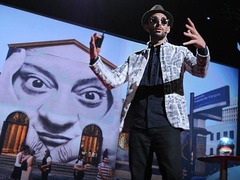
    Artist JR makes human faces part of urban landscapes, pasting oversized posters in visually arresting ways. His projects always have a social purpose — to introduce posh neighborhoods to those living in nearby slums, to underline the similarities between Israelis and Palestinians, and to bring attention the quiet power of the world’s women. In this talk from TED2011, JR kicks off Inside Out, a worldwide participatory art project which, to date, has shipped 130,000 posters for pasting across the globe. The project is the subject of a documentary which just aired on HBO.
    Jamie Oliver's TED Prize wish: Teach every child about foodJamie Oliver's TED Prize wish: Teach every child about foodJamie Oliver’s TED Prize wish: Teach every child about food

    Chef Jamie Oliver explains how he can improve the health of young people and extend their lifespans — not with medicine, but with information. In this talk from TED2010, Oliver assaults our ignorance about food and calls for a revolution. His wish: to teach every child about nutrition and the joy of food in school, and to generally inspire people everywhere to cook again.
    Sylvia Earle's TED Prize wish to protect our oceansSylvia Earle's TED Prize wish to protect our oceansSylvia Earle’s TED prize wish: To protect our oceans
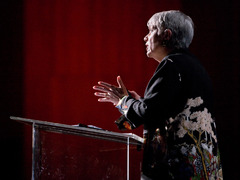
    Sylvia Earle has spent her life exploring the deep seas. And she’s scared by the depletion she’s seen to them over the span of just a few decades – 90 percent of the fish in the ocean have been eaten and Arctic ice has eroded unspeakably. In this moving talk from TED2009, Earle asks us to turn our attention to the “blue heart” of the planet and use all the resources at our disposal to support a global network of protected marine areas.
    Jill Tarter's call to join the SETI searchJill Tarter's call to join the SETI searchJill Tarter’s TED Prize wish: Join the SETI search
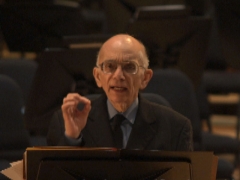
    The director of the Search for Extraterrestrial Intelligence, Jill Tarter poses a classic question: are we alone in the universe? In this talk from TED2009, she explains why she sees Earth as a “fragile island of life, in a universe of possibility,” and shares the growing array of tools that she and her team are using to search for signs of intelligence elsewhere in the universe. In this talk, she asks everyday Earthlings to join the search, by building a system through which data could be stored, accessed and analyzed in new ways.
    Jose Antonio Abreu: The El Sistema music revolutionJose Antonio Abreu: The El Sistema music revolutionJose Antonio Abreu’s TED Prize wish: The El Sistema music revolution

    Jose Antonio Abreu is still amazed that his family and community supported his dream to be a musician. And so he created El Sistema, a national network of youth orchestras and choirs in Venezuela. El Sistema has changed the course of thousands of young lives. And at TED2009, he shared his TED prize wish: to bring El Sistema to other regions, including low-income areas of the United States, by training 50 young musicians. Read about the ripple effect this wish has had so far.
    Karen Armstrong: Let's revive the Golden RuleKaren Armstrong: Let's revive the Golden RuleKaren Armstrong’s TED Prize wish: Let’s revive the Golden Rule
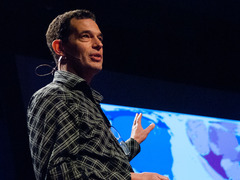
    There is one thing that underlies all major world faiths: compassion. And thus, religious historian Karen Armstrong came up with the idea for the Charter for Compassion — a pledge to unite those of different faiths, rather than divide them, in the pursuit of the common good. In this talk from TEDGlobal 2009, she shares her wish: to draft the charter and spread it widely — online and in physical form — to showcase in both religious and secular spaces around the world.
    Neil Turok makes his TED Prize wishNeil Turok makes his TED Prize wishNeil Turok’s TED Prize wish: Unlock Africa’s creative potential
    Neil Turok was raised in villages in Kenya and Tanzania. Later, as a theoretical physicist, he wondered what became of the brilliant students he learned alongside as a kid. So he had an idea to set up an African Institute for Mathematical Sciences, bringing students across the continent to receive training in these fields. At TED2008, he shares his wish: to create out 15 more AIMS centers in hope that the next Einstein be African.
    Jehane Noujaim wishes for a global day of filmJehane Noujaim wishes for a global day of filmJehane Noujaim’s TED Prize wish: A global day of film
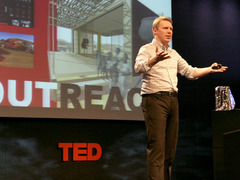
    Jehane Noujaim, who made the documentary Control Room and more recently The Square, has always been amazed by the power of film to bring people together. And so at TED2006, she offered a simple TED Prize wish: to create a day for people in towns, villages and cities around the world to have a shared cinema experience. Pangea Cinema Day was held on May 10 of the same year, with millions gathering around screens to partake in a 4-hour program of films.
    Cameron Sinclair: A call for open-source architectureCameron Sinclair: A call for open-source architectureCameron Sinclair’s TED Prize wish: A call for open-source architecture
    Architects have the potential to influence change on some of the world’s most pressing problems. In this talk from TED2006, Cameron Sinclair shares his work helping refugees returning to Kosovo to find shelter, creating mobile health clinics in sub-Saharan Africa and helping with housing solutions in disaster-hit areas of the United States. His wish: to create an open-source network to be a conduit between architects and the humanitarian world, and allow for the sharing of design solutions.

  • TED news in brief: Esther Perel on female libido, an update on Henry Markram’s supercomputer brain, and more

    Below, take a look at some of the TED speakers and Fellows who are cropping up in the news this week.

    Esther Perel: The secret to desire in a long-term relationshipEsther Perel: The secret to desire in a long-term relationshipLybrido, a drug to treat women with low libido, is in clinical trials and could be presented to the FDA for review as early as this summer. In The New York Times Magazine‘s look at this new drug, TED speaker Esther Perel is asked about the conundrum of desire for women in long-term relationships. “Many couples confuse love with merging,” she says. “This mix-up is a bad omen for sex. To sustain élan toward the other, there must be a synapse to cross. Eroticism requires distance.” Watch Perel’s talk “The secret to desire” »

    Philosopher Dan Dennett has a great new book, Intuition Pumps and Other Tools for Thinking. Read an excerpt containing his “seven tools for thinking, or check out any of his four TED Talks »

    Last week, NASA announced the shutdown of the Kepler spacecraft mission. On the TED Fellows blog, Lucianne Walkowicz – an astronomer who worked on the project – shares her thoughts on its end. Watch her talk “Finding planets around other stars” »

    Henry Markram: A brain in a supercomputerHenry Markram: A brain in a supercomputer The new Wired takes a detailed look at Henry Markram’s years-long campaign to build a supercomputer replica of the human brain — a plan he shared early on at TEDGlobal, in fact. The piece begins, “Even by the standards of the TED Conference, Henry Markram’s 2009 TEDGlobal talk was a mind-bender. He took the stage of the Oxford Playhouse, clad in the requisite dress shirt and blue jeans, and announced a plan that—if it panned out—would deliver a fully sentient hologram within a decade.” And it gets weirder. Watch his 2009 talk »
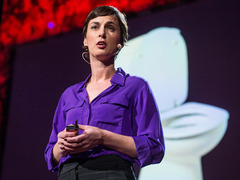
    CERN physicists share with the TED-Ed blog what it was like to have their words — and sometimes their personas — animated in five TED-Ed videos that boil down concepts in particle physics into understandable terms. Watch these five animated lessons »

    Rose George: Let's talk crap. Seriously.Rose George: Let's talk crap. Seriously.Related to Rose George’s talk, “Let’s talk crap. Seriously”: On Monday, in the state of Madhya Pradesh, India, 184 couples wed in a mass ceremony — before which the husband-to-be had to prove he had a toilet or would build one within the month. As a reward, The Wall Street Journal reports, “the state covers the costs of the wedding and gifts for the groom’s family, which are traditionally provided by the bride’s parents.” Watch George’s talk »

    Finally, fashion website Refinery 29 admits that Meg Jay’s talk “Why 30 is not the new 20” got their “entire office buzzing.” Watch the talk »

    Congratulations to TED Fellow Kellee Santiago for being named one of Inc. Magazines ”5 Most Powerful Women in Gaming.” Read a TED Blog interview with Santiago about the inspiration behind the game Journey »

  • TEDxSydney sets up at the Opera House: A timelapse

    On May 4, a TEDx event took place in one of the most architecturally recognizable sites in the world — the Sydney Opera House. Here, with the help of The MilkBar, the organizers of TEDxSydney captured the event from dawn to dusk and compressed it all into 78 seconds. Watch above as the sun rises over the beautiful building and as attendees arrive, fill the auditorium, enjoy speakers and head home again as the sun sets. Watch talks from the event »

    And now for some slow-motion from TEDxSydney: A very cute video created for the event by Saatchi & Saatchi Sydney and Heckler called “The First Taste.” It shows young kids reacting to their first bites of foods of like anchovy, Vegemite and olives.

  • A library revolution, started in part by Jane McGonigal’s TED Talk

    Libraries are generally where you go to check out books; not where you go if you want to write one. This is an old assumption that Librii — a concept for a community-based, digitally-enhanced series of libraries in the developing world — would like to flip on its head. TED speaker Jane McGonigal has given this ambituous project a big thumbs up.

    Librii is the brainchild of architect David Dewane, and aims to bring to Africa the kind of open information exchange and collaboration space that is easily found in highly-wired regions of the world. In Africa, only 3% of the population has access to broadband internet — but Librii isn’t just a place where people can go to connect to the internet and access online books and resources. Built by local workers and staffed by librarians, Librii will also focus on knowledge creation, compiling the ideas, insights and designs of the local community. It will even generate revenue for the community.

    Librii was incubated with seed funding from the World Bank Institute and recently ran a successful Kickstarter campaign, raising more than $52,000 for its inaugural location in Accra, Ghana. So what does this have to do with video game designer Jane McGonigal?

    Jane McGonigal: Gaming can make a better worldJane McGonigal: Gaming can make a better worldApparently, McGonigal’s 2010 TED Talk – “Gaming can make a better world” — planted the distant seed of this idea.

    Dewane tells Metropolis Magazine that, after watching McGonigal’s talk, he began playing her online game EVOKE, which empowered players to solve social problems around the globe by developing real world ideas for projects that could have a big impact. About 15,000 project proposals were submitted through the game — and Dewane’s proposal for Librii was selected as one of 25 top possibilities.

    McGonigal is very excited to see the idea materialize in reality.

    “Librii fills me with almost a giddy anticipation for the future,” she tells Metropolis. “I can’t wait to see the creativity that flows out of Accra when young people are able to share their art and ideas with the rest of the world. Because I’ve backed the Kickstarter project, I’m a subscriber to the first connected library. I’ll get a digital copy of whatever gets created first—a book of advice or a collection of children’s stories. The library will encourage and inspire all kinds of creation.”

    McGonigal is highly inspired to see her idea for a video game spin into a powerful idea that could affect the future of libraries. “It’s the power of TED,” she says.

  • 20+ resources for better giving and living a more altruistic life

    Peter-Singer-at-TED2013

    Peter Singer explains the “effective altruism” movement at TED2013. Photo: James Duncan Davidson

    Every day, most of us do something morally indefensible — we go about our lives without sending help to the 6.9 million children under the age of 5 who will die this year from poverty-related disease. In today’s talk, philosopher Peter Singer makes the case that ignoring these kids is as inhumane as ignoring a child who’s been hit by a car on the street in front of you.

    Peter Singer: The why and how of effective altruismPeter Singer: The why and how of effective altruism “Does it really matter that they’re far away?” asks Singer. “I don’t think it does make a morally relevant difference — the fact that they’re not right in front of us, or the fact that they’re of a different nationality or race.”

    But he’s not saying this to make us feel bad and helpless. Today’s talk actually delivers good news: that through what Singer calls “effective altruism,” we all have the ability to make a difference. Effective altruism begins with reason – the realization that all lives are of equal value — and looking for charities that affect the most lives, the most effectively.

    To hear how a single person — and one who is nowhere close to a billionaire – can make a big impact for good in the world, watch this talk. And below, some resources to get you thinking about giving more effectively.

    Peter Singer’s top 10 recommended charities:

    1. Against Malaria Foundation. Of those 6.9 million children who die every year of poverty-related illness, 1 million succumb to malaria. AMF provides insecticide-treated bed nets, which only cost $5 apiece.
    2. Schistosomiasis Control Initiative. Protecting a child from worm-based disease for a full year costs around 50 cents. This organization works with governments to make sure it happens.
    3. The Humane League. Invests time, money and energy to reduce animal cruelty and save the lives of animals, focusing on farmed animals.
    4. GiveDirectly. This nonprofit transfers money to poor individuals in Kenya, letting them spend it for food and other basic needs, or on high-return investments.
    5. Oxfam International. This mega aid organization works in a wide range of areas, including disaster relief, education, sanitation and women’s rights.
    6. Proven Impact Fund. Dedicated to data and results, this fund from Innovations for Poverty Action supports interventions with strong evidence of success.
    7. The Fistula Foundation. Fistula is a ghastly injury during childbirth, and it afflicts women living in the poorest areas of the world. This organization provides needed surgery.
    8. The Hunger Project. Encouraging men and women to end their own hunger, this organization assists poor villages for five years, relying on the local workforce to build skills and take over before they leave.
    9. Vegan Outreach. A nonprofit that seeks to expose and end cruelty to animals.
    10. Population Services International. A global health organization that focuses on family planning, a simple service that can improve the health of women and their children.

    Resources for finding other charities to support:

    • GiveWell. This nonprofit does in-depth research on charities and highlights a small number that do a remarkable amount of good per dollar they receive. (Singer recommends this site.)
    • Effective Animal Activism. One of the causes nearest to Singer’s heart is animal liberation, and he is impressed with this charity evaluator that focuses on animal suffering.
    • Charity Navigator. The largest charity evaluator in the U.S., Charity Navigator has data and ratings for nearly 6,000 charities.
    • Great Nonprofits. A site dedicated to informing would-be donors through reviews from board members, volunteers, experts and regular folks who’ve interfaced with a charity.

    Resources Singer recommends for connecting with other people interested in doing good:

    • Giving What We Can. The members of this international society make a bold pledge: to donate 10% of their income to eliminating poverty in the developing world. A good place to connect with others, and to find high-quality organizations to support.
    • The Life You Can Save. At this site, you can pledge to donate any percentage of your income to those in need. In addition to directing you to great charities to support, it’s also a log for local volunteer opportunities.
    • Effective Altruism. A blog from Peter Singer and William MacAskill dedicated to the tenets of effective altruism.
    • The High Impact Network. This group has a great acronym – THINK. Members meet up to ponder effective giving — both strategically and creatively.

    A resource for finding the career that does the greatest good:

    • 80,000 Hours. Named after the number of hours most people will work over their lifetime, this career advice site has a twist – it gives advice on how different careers can have an impact on poverty. As Singer mentions in his talk, the site doesn’t shy away from unusual answers; it suggests that working in finance and donating a percentage of your income could fund multiple aid workers.

    And further reading in effective altruism:

    Want more advice on how to parse the world of nonprofits and giving? Check out Dan Pallotta’s tips for picking a charity that’s right for you »

  • Turning Haiti, Tunisia and the West Bank inside out: A documentary on JR’s worldwide participatory art project to air on HBO tonight

    “We use images like a weapon to fight for social causes,” says a man in the trailer for INSIDE OUT: The People’s Art Project, a new documentary that airs on HBO tonight. The doc tells the story of JR’s INSIDE OUT, a global art project in which anyone, anywhere, can send the artist a portrait and have a poster-sized version sent back to them for pasting in public spaces. JR's TED Prize wish: Use art to turn the world inside outJR's TED Prize wish: Use art to turn the world inside outSince the project’s launch in 2011, when JR received the TED Prize, these oversized black-and portraits with a faded polka dot motif in the background have become a fixture on the walls, fences and sidewalks all around the world. To date, more than 130,000 INSIDE OUT posters have been pasted in more than 100 countries.

    INSIDE OUT: The People’s Art Project, directed by Alastair Siddons, isn’t about untangling the identity of JR  – who always appears in public wearing Ray Bans and fedora. Instead, it aims to show how people around the globe have made this fascinating project their own. Yes, cameras show JR in his Paris studio but, from there, they travel to Haiti, where photographer Benoit has pasted up dozens of images of those living in tent cities following the devastating earthquake of 2010. The message: that while hardship continues in the country, people remain infused with hope.

    The film goes on to bring viewers to North Dakota and the West Bank, where major INSIDE OUT actions have been launched, as well as to Tunisia, where portraits of everyday people are revolutionary in and of themselves. “We were always seeing pictures of the dictators,” says an INSIDE OUT artist in the country. “Now it’s people—Tunisians.”

    INSIDE OUT: The People’s Art Project premiered at the Tribeca Film Festival in New York in April. And tonight, the film makes its television debut on HBO at 9pm ET/PT. The documentary will also be available on demand through June 30. Find out more about the film and its airdates at HBO’s website »

    See JR interviewed about the documentary by Christiane Amanpour last Friday »

    Are you or someone you know interested in launching a worldwide project on the scale of INSIDE OUT? Nominations for the 2014 TED Prize are open, from now until June 16 »

  • Our thoughts on using Google Glass so far, plus videos that show what it can do

    Sergey-Brin-at-TED2013

    Sergey Brin shows a demo video of Google Glass at TED2013. In today’s talk, he reveals the big idea behind the project. Photo: James Duncan Davidson

    In today’s talk, Sergey Brin of Google shares the idea that motivated the development of Google Glass: that while smartphones inherently take us away from experiencing the real world, there could be a device that allows for a digitally-mediated experience within it. As Google heads into day three of its I/O developer conference in San Francisco, and as members of Congress express concerns about the new technology, it’s an especially fitting talk for today.

    Sergey Brin: Why Google Glass?Sergey Brin: Why Google Glass?In this humorous talk, Brin checks his email and then says, “This position you just saw me in – looking down at my phone – that’s one of the reasons behind this project, Project Glass. We ultimately question if this is the ultimate future of how you want to connect to other people in your life, how you want to connect to information. Should it be by walking around looking down?“

    Hunching over his phone, he asks, “Is this what you were meant to do with your body?”

    TED’s media team was invited to purchase Glass after a team member attended Google I/O last year. So several people in the TED office have taken a turn trying it out since it arrived in our office in early May. Michael Glass, our Director of Film + Video, has much to say after test-driving the new device.

    “Whatever its oddities and awkwardnesses, this is the first step in getting to that HUD Terminator experience that captured so many imaginations 30 years ago. If we had given up on the cell phone because its first users looked like schmucks holding up big grey bricks to their ears, we would never have met the iPhone or Nexus 4 or Droid DNA or Galaxy S4 or whatever your dream phone is,” he says. “The bit that blows my mind is its integration with Google Hangouts although to be honest it’s not been particularly useful in any specific way. Then again, neither was E=MC2. It’s mostly a toy right now, which is all the more reason to play with it. I think Google is smart to be humble and not cram the thing full of tools and functions — the crowd will figure out the most interesting ways to use it; they just needed to make the first leap into the hardware.”

    His biggest complaint: “My last name is Glass and I walk around saying, ‘Okay Glass’ to activate the main menu.”

    TED editor Isaac Wayton also tested out Google Glass.

    “I really like the idea of Glass, in theory, but I’m worried that it’s a technology that will promote selfish user behaviors rather than real life human interactions. Also, since I need to wear prescription glasses — and couldn’t wear both Glass and my pair at the same time — I wasn’t able to see the tiny, projected screen very well,” he says. “That said, it is an amazing piece of technology and it deserves further development because I am sure that people will also find intelligent uses for Glass to help people in the real world.”

    The bottom line: he looks forward to a version that somehow attaches to existing glasses.

    Below, some videos that show more of what we know about Google Glass, which will be available in 2014.

    Prototyping a new product can take eons. Or it can take … a day. In this talk from TEDYouth, Tom Chi – who was on the team that developed Glass – shares how the invention was rapid prototyped, with team members expressing desires, solving problems and eliminating dud ideas by mocking up the design using clay, paper, modeling wire, binder clips, hairbands and chopsticks.

    Andrew Vanden Heuvel wanted to be an astronaut –– but instead he became an online physics teacher for schools without advanced science courses. In this video, which premiered at TEDxCERN, Vanden Heuvel takes students on a virtual field trip to the European Organization for Nuclear Research and shows them the particle collider that is longer than the island of Manhattan.

    The official promo trailer, shown during Brin’s talk.

    At Google I/O 2012, Brin gave a demo of Google Glass — when the device was still largely a mystery to the outside world. In it, he connects to parachuters in an airplane overhead via a Google Hangout. They then jump … and bring their prototypes into the event.

    A how-to use video, posted on April 30.


    David Pogue, who has given the TED Talks “10 top time-saving tech tips” and “On cool phone tricks,” reviews Google Glass for CBS News. “A lot of people are excited about this step into the cyborg future and other people are horrified,” he says. In this short video, he reveals some common misperceptions about Glass and it’s ability to distract. But he also point out a major potential flaw – that it allows people to record others without their knowledge.


    And finally, Saturday Night Live’s sendup of Glass.

  • Jamie Oliver gears up for Food Revolution Day on May 17

    Jamie-Oliver-Food-RevolutionTomorrow is a holiday, and one you can celebrate simply by eating.

    Jamie Oliver, who won the TED Prize in 2010, has declared May 17 as Food Revolution Day. Jamie Oliver's TED Prize wish: Teach every child about foodJamie Oliver's TED Prize wish: Teach every child about foodHis vision: that people gather in homes, schools, workplaces and social spaces to share their culinary knowledge, cook together and simply enjoy each other’s company as they chow down and discuss the centrality of food in life. Anyone is invited to host a Food Revolution Day activity — Oliver recommends organizing a potluck dinner, leading a farmers market tour, planting a community garden or throwing a street party. There’s a downloadable activity guide for those interested in hosting an event, and a search engine for those interested in joining one in their area. Anyone is also welcome to get involved by sharing a treasured recipe.

    Why Food Revolution Day? Because Oliver has been on a many-year mission to change the way people relate to food. As he explains on the holiday’s website, “Cooking skills used to be passed down from generation to generation, but now millions of people lack even the most basic cooking skills. We need to get back to basics: to cook and eat fresh local produce; to share cooking skills and food knowledge; to join forces within communities and get as many people involved as possible. Food Revolution Day is our opportunity to get the world to focus on the importance of good food and essential cooking skills.”

    In an unexpected TED Prize synergy, Oliver has teamed up with fellow prize-winner JR, who launched the global art initiative Inside Out, to get the word out about Food Revolution Day. Oliver visited JR’s studio and shared a snapshot of himself holding his portrait on Instagram. He also posted an image of JR pasting the poster in Times Square, along with thousands of other portraits.

    “Me laid out!! My TED brother @jr pasting the paper & glue in Time Square NYC for his incredible ‘Inside Out project,’” Oliver wrote. “FOOD REVOLUTION DAY is coming this Friday thank you. @jr Can’t wait to do a massive wall for the #insideoutproject.”

    Oliver is planning on doing an Inside Out group action, around his message of getting people to eat healthier. Stay tuned for more information.

    Jamie-Oliver-poster

    Oliver with his Inside Out poster.

    Jamie-Oliver-poster-painting

    JR pastes Oliver’s image in Times Square.


  • 21 everyday objects you can hack, from a bacon sandwich to a pencil to your cat

    Jay-Silver-at-TED@250

    Jay Silver demonstrates how a cat’s water bowl can be rigged to take photos. Photo: Ryan Lash

    MaKey MaKey — the kit that encourages you to rig a banana piano or control a video game with pencil-etchings — was one of the most successful projects on Kickstarter in 2012. The project raised 2, 272% of its goal in 30 days, bringing in a cool half million from excited makers.

    Jay Silver: Hack a banana, make a keyboard!Jay Silver: Hack a banana, make a keyboard!Today’s TED Talk comes from the co-creator of the MaKey MaKey, Jay Silver. In this madcap romp, he reveals his first invention — a pasta spinner rigged from a fork and drill — and how it led him to a fascination with the way that things are made. Throughout the talk, given during our in-office salon TED@250, he shows some incredible projects, both his own and those of others, like a paint brush that makes anything it touches play electronic music and a cat’s water bowl that lets the feline snap photos of itself as it drinks.

    “Sometimes what we know gets in the way of what could be, especially when it comes to the human-made world. We think we already know how something works, so we can’t imagine how it could work,” says Silver. “I don’t care that pencils are supposed to be used for writing. I’m going to use them a different way.”

    In the talk, Silver also introduces us to the MaKey MaKey, using it in a demo at 7:50 to turn two slices of pizza into a slide clicker. But to him, of course, the fun part isn’t just his own creating his own projects – it’s releasing the kit out into the wild and seeing what people came up with on their own.

    Here, a collection of really cool things made with MaKey MaKey.

    First, a video from Silver’s JoyLabz, that shows you how to make a banana space bar, a Play-doh video game controller, piano stairs, a synthesizer out of friends (it plays “Eye of the Tiger”), the aforementioned banana piano and cat photo booth, plus an alphabet soup keyboard.

    Christian Genco of SMU, an incredibly clever maker, plays the “Star Spangled Banner” by eating his lunch and capping it off with pie.

    Here, the people at We Are Genuine turn Star Wars bobble heads into an instrument.

    Garrett Heath of Rackspace Hosting creates a cloud server using the MaKey MaKey … and a bacon sandwich.

    How to turn dog into a piano, from YouTube user Captain Eagle.

    Here is an amazing mashup of MaKey MaKey and another notable Kickstart project, Roy the Animatronic Robot’s Hand.

    Brooklyn musician j.viewz takes you to the grocery to buy the fruits and vegetables needed to play Massive Attack’s classic song, “Teardrop.”

    Musical paintings from Eric Rosenbaum, who is the co-creator of this incredible kit.

    J. Nathan Matias uses his guitar to control an online video game.

    A next-generation banana piano, called the Bananamophone, from Beau Silver.

    Bonus: DJ Nu-Mark of Jurassic 5 played his necklace onstage at Coachella this year using the MaKey MaKey. See a photo »

    And a note: We in the TED office debated the number in this headline extensively. Here is our list of 21 items, in order: bananas, pencils, a drill, forks, paint brushes, a cat’s water bowl, pizza, Play-doh, stairs, your friends, alphabet soup, lunch, pie, bobble head dolls, a bacon sandwich, dogs, Roy the Animatronic Robot’s Hand, fruits and vegetables, paintings, a guitar, and a necklace.

    And finally, TED’s own Alex Dean shares his MaKey MaKey project: