Author: Mihaita Bamburic

  • Shazam app finally supports Windows Phone 8

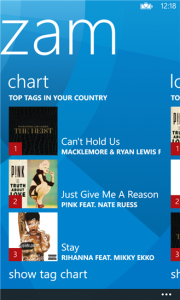
    On Thursday, music discovery service Shazam released an update for its Windows Phone app which introduces support for the latest version of the tiled operating system. In addition to finally playing well with Windows Phone 8, the app also comes with a refreshed UI (User Interface) and a couple of new features and improvements.

    “We are incredibly excited about this launch as it brings so many of Shazam’s key features to Windows Phone 8 fans”, says Shazam’s Daniel Danker. “Windows Phone 8 users now have access to a great smartphone experience, from faster tagging and a new interactive map, where users can discover the music people are listening to around them. This is more than just the music that’s already popular; these are often songs people are discovering for the first time”.

    On top of identifying songs, Shazam now allows Windows Phone 8 users to buy recognized tunes from Xbox Music and Nokia Music (the latter option is only available on Lumia devices) and discover new ones.

    Shazam for Windows Phone 8 also adds the ability to tag TV shows and advertisements. The new feature is meant to differentiate the service from popular competitors like SoundHound which only allow users to only identify songs.

    The latest iteration of the app offers new live tiles available in all three sizes, speedier tagging, lockscreen background support (cover art or tag charts can be set as the wallpaper) and localization for 16 languages.

    Shazam is available to download from the Windows Phone Store.

  • FoundersCard brings executive-style perks to entrepreneurs — special offer for BetaNews readers

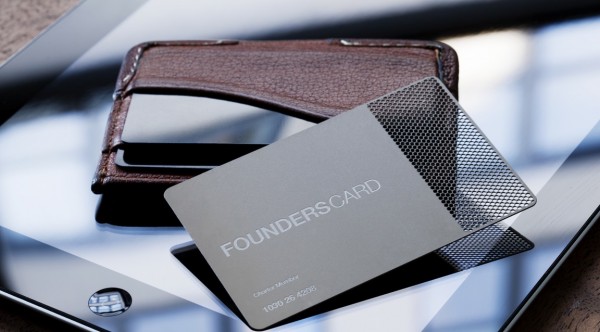
    FoundersCard is a membership-based community designed for entrepreneurs which offers access to invite-only networking events throughout the world and provides various perks. The latter includes things like discounts for airfare, postal services and VIP treatment at upscale hotels.

    The community, which boasts 11,000 members, just added complimentary Avis First memberships (premium service) with 25 percent discounts on car rentals and between five to 10 percent off for JetBlue flights.

    Some of the FoundersCard partners includes Apple, hotels like Hilton HHonors, Mandarin Oriental and Ace Hotel, services like UPS, Rackspace and MailChimp and airline companies such as Virgin Atlantic, Lufthansa, Hertz and BlackJet.

    As you may imagine, the membership comes at a considerable price — $595 per year — which undoubtedly hinders its appeal. But if you’re interested, FoundersCard now offers a 33 percent discount for BetaNews readers.

    You’ll still have to shell out $395 for a yearly membership, but if you’re the type of person who travels a lot or spends plenty of time staying in hotels it might be an interesting proposition.

    To apply for a membership click here. You have to type in the “FCBETA13” code to receive the discount.

  • LG Optimus G Pro arrives in Asia

    After launching the smartphone in its home market, on Thursday, South Korean manufacturer LG announces that the Optimus G Pro, the company’s Android flagship, will finally be available in remaining Asian markets starting next month.

    “Asian customers are leading many of today’s technology trends and we’re confident Optimus G Pro will find a large following in this region”, says LG’ Jong-seok Park. The handset, labeled indirectly as a phablet by the company, will be launched in Hong Kong first, followed by other local markets like Taiwan, Singapore, Thailand, India, Indonesia, Philippine, Vietnam and Malaysia throughout June.

    The highlights of the Optimus G Pro include 5.5-inch display with a resolution of 1080 by 1920 and a 440 ppi (pixels per inch) density; 1.7 GHz quad-core Qualcomm Snapdragon 600 processor; Adreno 320 GPU (Graphics Processing Unit); 2 GB of RAM; 3,140 mAh battery; 13 MP back-facing camera; 2.1 MP shooter on the front; 16 GB of internal storage; microSD card slot and Android 4.1.2 Jelly Bean.

    The Optimus G Pro is already available in the US and other markets like Japan and South Korea, but has yet to make a global appearance. The fragmented launch strategy adopted by LG can only harm its handset sales and, therefore, the chance to better compete against rival makers Samsung and Apple. The South Korean company is currently the third-largest smartphone manufacturer.

  • Apple unveils new 16GB iPod touch

    Before Apple rolls out a new product the company usually announces it with much fan-fare at special events and issues bombastic press releases before the big launch. But that’s no longer the case with the 16GB iPod touch which arrives quietly with its tail between its legs. It’s almost like the Cupertino, Calif.-based corporation doesn’t want folks to rush into ordering one.

    The 16 GB model bears an uncanny resemblance to the current iPod touch lineup, featuring the same elongated design (first seen on Apple’s iPhone 5) and low physical footprint. But there are some differences.

    The latest model ditches the 5 MP iSight back-facing camera and iPod touch loop (lanyard hook), has a lower price and is only available in a single color trim with less internal storage. Unsurprisingly, Apple lists it as an individual product, separated from the company’s current iPod touch lineup.

    The 16 GB iPod touch runs for $229, $70 cheaper than the 32 GB model (available for $299) which comes with a back-facing camera and, obviously, twice the storage capacity. Battery life is the same, with Apple touting 40 hours and eight hours of audio and video playback, respectively.

    Specifications for the 16 GB iPod touch include: 4-inch multitouch Retina display with a resolution of 640 by 1136 and a 326 ppi (pixels per inch) density; dual-core A5 processor; 1.2 MP FaceTime HD camera capable of 720p video recording; Wi-Fi 802.11 a/b/g/n and Bluetooth 4.0. The device comes in at 123.4 x 58.6 x 6.1 mm and 86 grams.

  • Samsung Galaxy S4 Mini is a sheep in wolf’s clothing

    On Thursday, South Korean manufacturer Samsung announced a new smartphone part of its upscale Android lineup, called Galaxy S4 Mini. The handset is marketed as a smaller variant of the company’s current green droid flagship, the Galaxy S4, but don’t expect any of the latter’s bells and whistles.

    The Galaxy S4 Mini is shorter, narrower, thinner and lighter than its predecessor, the modest Galaxy S III Mini. However, it can easily be compared to the Galaxy S II (the company’s older Android flagship) rather than newer halo devices when it comes to hardware specifications. It’s a sheep in wolf’s clothing and not the other way around.

    “We want to give people more choices with Galaxy S4 Mini, similar look and feel of Galaxy S4 for more compact and practical usages”, says Samsung CEO JK Shin. “The new Galaxy S4 Mini provides consumers with a new way to enjoy the flagship Galaxy S4 experience”. So let’s compare the two and highlight the commonalities.

    The Galaxy S4 Mini comes with a 4.3-inch Super AMOLED display with a resolution of 540 by 960; 1.7 GHz dual-core processor; 1.5 GB of RAM; 1,900 mAh battery; 8 MP back-facing camera; 1.9 MP shooter on the front; 8 GB of internal storage; microSD card slot; Wi-Fi 802.11 a/b/g/n; GPS with Glonass support; Bluetooth 4.0; NFC (Near Field Communication) in the 4G LTE variant; 4G LTE and HSPA+ cellular connectivity. The smartphone runs Android 4.2.2 Jelly Bean and comes in at 124.6 x 61.3 x 8.94 mm and 107 grams. There is also a dual-SIM version which is one gram heavier.

    The Galaxy S4 on the other hand sports a 5.0-inch Super AMOLED display with a resolution of 1080 by 1920; 1.9 GHz quad-core Qualcomm Snapdragon 600 or 1.6 Ghz Exynos 5 Octa processor; 2 GB of RAM; 2,600 mAh battery; 13 MP back-facing camera; 2 MP shooter on the front; 16 GB, 32 GB or 64 GB of internal storage; microSD card slot; Wi-Fi 802.11 a/b/g/n/ac; GPS with Glonass support; Bluetooth 4.0; NFC; 4G LTE and HSPA+ cellular connectivity. The handset runs Android 4.2.2 Jelly Bean and comes in at 136.6 x 69.8 x 7.9 mm and 130 grams.

    Bar the usual suspects (sensors, connectivity options and different size and weight), in the hardware department, the Galaxy S4 Mini has little in common with the Galaxy S4. The latter has a larger and higher resolution screen, faster processor, larger battery, bigger cameras and more internal storage.

    Both run Android 4.2.2 Jelly Bean with a similar TouchWiz experience. On top of the stock green droid version, the Samsung packs features like KNOX (separates personal and work content and beefs up security), S Translator, Link, Adapt Display, Adapt Sound, S Travel, S Health, S Voice and Story Album among others.

    The Galaxy S4 Mini arrives in two color trims, White Frost and Black Mist (obviously, shared with the Galaxy S4). There is no word yet concerning pricing or availability.

    The Galaxy S4 Mini’s strengths mostly lie in software features and design, both of which are quite similar to the Galaxy S4. Are the two traits attractive enough for those seeking a less expensive alternative to Samsung’s Android flagship?

  • Watch Tim Cook’s interview at D: All Things Digital conference

    On Tuesday, Apple CEO Tim Cook appeared for the second time at the D: All Things Digital conference. The interview, lead by perennial hosts Kara Swisher and Walt Mossberg, mostly centered around the current state and the future of the fruit company, but also briefly touched other popular topics like Android and wearable technology.

    Tim Cook, who wears a Nike+ FuelBand, says that “wearables [the category] is extremely interesting” and capable of deeply impacting people’s lives. The man, however, asserts that folks are reluctant to wear things that they don’t normally do, giving glasses as an example. For this reason, he believes that products like Google Glass don’t appeal to most users and are only attractive to “vertical markets”.

    Apple will take a more open stance towards customization, providing less restricted access to APIs but only to the point where the user experience is not negatively affected. Hinting that iOS is not poised to rival Android in this regard, Cook says: “We think that the customer pays us to make certain choices on their behalf”.

    Other noteworthy topics that Apple’s CEO discussed during his second appearance at the D: All Things Digital conference include decreasing market share, the controversy surrounding taxes and larger iPhones.

    Tim Cook refused to reveal upcoming Apple products, leaving important announcements for the WWDC (Worldwide Developers Conference) keynote in June.

  • Monster 256GB Microsoft Surface Pro surfaces in Japan

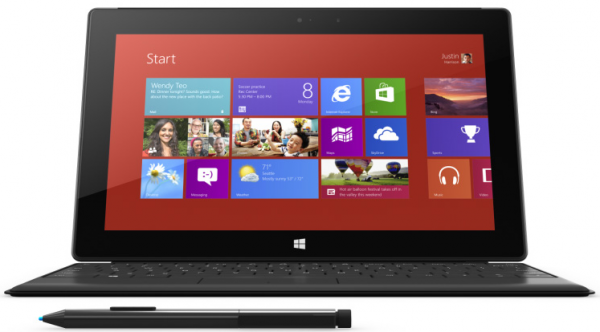
    On Wednesday, Microsoft’s Japanese arm revealed that on June 6 the Surface Pro tablet will finally be available in the land of the rising sun. The fondleslab is set to arrive in two different trims with 128 GB and 256 GB of internal storage, the latter of which is offered for the first time on the Surface Pro.

    The 64 GB Surface Pro will not be available in the local market, likely due to the fact that users can access just 23 GB of storage (practically less than half of the advertised capacity). Microsoft took heavy fire for this caveat, which it appears to avoid in Japan. Prospective buyers can also grab Touch Covers with different design themes, a move that the company carried over from other supported markets.

    The Surface Pro sold in the land of the rising sun also comes with Office Home and Business 2013, which includes Word, Excel, PowerPoint, OneNote and Outlook. This provides a significant differentiating factor over similar offerings which either come with less-capable third-party office suites or none at all.

    The rest of the specifications are carried over from the international version.

    The Surface Pro comes with the 64-bit Windows 8 Pro; 10.6-inch ClearType multitouch display with a resolution of 1920 by 1080; third generation Intel Core i5 processor; Intel HD Graphics 4000 GPU (Graphics Processing Unit); 4 GB of RAM; 42 Wh battery; 720p cameras on the front and rear; USB 3.0 port; microSDXC card slot; Wi-Fi 802.11 a/b/n; Bluetooth 4.0 and pressure-sensitive stylus. The fondleslab comes in at 275 x 173 x 14 mm and 907 grams.

    In Japan, the 128 GB Surface Pro runs for JPY99,800, which equates to roughly $985. That’s less than what Microsoft charges for the 128 GB version in the US (available for $999). The software giant has yet to announce pricing for the 256 GB model in the local Asian market.

  • Tablets dance over PC’s grave

    Few are those who still profess a bright future for PCs and, starting today, even fewer will. According to IDC’s latest forecast, in 2013 the PC market is expected to take another dive with shipments dropping by 7.8 percent. This is triggered by a shift in computing needs as users look for more versatility and less raw power.

    “As the market develops, usage patterns and devices are evolving”, says IDC program vice president Loren Loverde. “Many users are realizing that everyday computing, such as accessing the Web, connecting to social media, sending emails, as well as using a variety of apps, doesn’t require a lot of computing power or local storage”. Naysayers, it’s time to face the music — the average user can get away with a tablet or smartphone to get the job done.

    Surprise, Surprise: Mobile Devices Harm PC Shipments

    To average users, modern mobile devices can deliver the same usability level as traditional PCs with the added bonus of extra portability, longer battery life and a more intimate connection via touch. And, in these difficult economic times, at a smaller price.

    “Instead, they are putting a premium on access from a variety of smaller devices with longer battery life, an instant-on function, and intuitive touch-centric interfaces”, says Loverde. “These users have not necessarily given up on PCs as a platform for computing when a more robust environment is needed, but this takes a smaller share of computing time, and users are making do with older systems”.

    “Older systems”, as IDC call them, are more than capable of handling Windows 7, Windows 8 or the latest OS X iteration and no longer require significant upgrades to easily carry out basic tasks. My laptop (on which I’m writing this story) is nearly five years-old and I’ve only added an SSD and doubled the RAM capacity to keep it in tip-top shape. That’s a small price to pay to keep a clunker going, but still more than what a Nexus 7 runs for today.

    Youngsters also emphasize the capabilities offered by tablets. “Apple’s success in the education market has proven that tablets can be used as more than just a content consumption or gaming device”, says IDC research analyst Jitesh Ubrani. “These devices are learning companions, and as tablet prices continue to drop, the dream of having a PC for every child gets replaced with the reality that we can actually provide a tablet for every child”.

    Windows XP Battles the BYOD Movement

    The research company predicts that replacement devices are set to give the PC market a breath of fresh air in 2014. Microsoft terminates Windows XP’s extended support on April 8, next year, which leads IDC to believe that businesses will purchase new devices capable of running more recent operating systems (likely Windows 7). IDC, however, warns that the BYOD movement may negate this growth.

    “In addition, the BYOD (Bring Your Own Device) phenomenon has moved from smartphones to tablets and PCs with nearly 25 percent of employees in organizations larger than 10 people claiming to have purchased the primary PC they use for work”, says IDC vice president Bob O’Donnell. “This means that some of the corporate PC purchases we expected this year will no longer happen”.

    Emerging markets account for the large majority of PC shipments (expected to be 193.5 million this year, less than the 205.3 million from 2012) and, according to IDC’s forecast, will drive towards a slight growth until 2017 (209.6 million shipments). Where PCs lose ground is in mature markets, with shipments expected to drop from 143.9 million in 2012 to 128.4 million in 2013 and 123.8 million in 2017.

    Tablet Shipments Will Surpass the PC Market

    Tablets are mostly to “blame” for the state of the PC market. IDC expects fondleslab shipments to grow by 58.7 percent year-over-year in 2013 and reach 229.3 million units (up from the 144.5 million units from 2012), surpassing portable PC shipments in the process.

    By 2015, IDC says that tablet shipments will even exceed those of PCs (and not just portable ones). Like I said, blame the fondleslabs — significantly lower price, more versatility.

    “What started as a sign of tough economic times has quickly shifted to a change in the global computing paradigm with mobile being the primary benefactor”, says IDC program manager Ryan Reith. “Tablets surpassing portables in 2013, and total PCs in 2015, marks a significant change in consumer attitudes about computer devices and the applications and ecosystems that power them. IDC continues to believe that PCs will have an important role in this new era of computing, especially among business users. But for many consumers, a tablet is a simple and elegant solution for core use cases that were previously addressed by the PC”.

    Inexpensive Android tablets drive the growth of the fondleslab market and the decrease in AVP (Average Selling Price) — expected to be $381, down by 10.8 percent. By comparison, PCs still cost nearly twice as much on average with an estimated ASP of $635 for 2013.

    IDC’s forecast suggests that, in 2017, smaller fondleslabs (with screens smaller than 8-inches) will account for the large majority of tablet shipments (57 percent) while larger ones will become decreasingly popular (with 37 percent of the shipments).

    By contrast, tablets with displays larger than 11-inches are expected to account for just 6 percent of the fondleslab market in four years. It shouldn’t come as a surprise that Microsoft decided to work with its OEM partners on devices hovering around the 8-inch mark — a good example is the Acer Iconia W3.

    Photo Credit: metalstock/Shutterstock

  • Google Reader, I’ll follow you to the very end

    On July 1 Google pulls the plug on Reader and, like many other users, I have decided not to be caught unprepared by its rapidly-approaching demise. Shortly after the search giant revealed its execution plans I migrated all my RSS feeds to Feedly, telling myself “OK, now’s the time to move on”. Skip forward a couple of months and Reader is still open in a Chrome tab.

    I can’t really move on. The RSS feed aggregator holds a very special place in my heart as I rely on it every single day to write news stories and catch up on things that I’m passionate about. It’s like the perfect relationship except for that one tiny detail (huge actually) — the expiration date is near.

    I’ve read dozens of stories on Google killing Reader and, most of the time, the pundits who wrote them suggested that folks, like me, should stop complaining and use Google Currents, Flipboard or even Twitter instead. That’s not a brilliant idea, far from it.

    The problem is that none of those services offers a real source for news (like press releases from major companies) and only aggregate stories from popular blogs. Folks would therefore just follow the reporting herd, discovering what’s important when it no longer is. To me, that’s a big no-no.

    The most feasible alternative to Reader, at least so far, appears to be Feedly. The up-and-coming RSS feed aggregator is available on popular browsers (as an extension) and operating systems (through an app), but I can’t seem to love its sluggish yet fancy interface. I crave efficiency not an attractive design.

    My colleague Alan Buckingham is also disappointed by it. In group chat he says: “I switched to Feedly a month ago, but still hate it!” The fact that Feedly is not available on Windows Phone also puts a dent in its appeal for me. Hopefully the service gets better before Reader goes away.

    Maybe I’m overly demanding when it comes to the RSS feed aggregator that I use, but the truth is that I can’t get myself to drop Reader just yet. Even though Google will soon kill the service, I trust the search giant to keep it running in extreme circumstances whereas I can’t say the same about the competition. When Reader users were migrating in great numbers to Feedly the latter was barely functional.

    I’ve also grown fond of Reader, but most importantly I feel like I’m dropping my favorite RSS feed aggregator for subpar counterparts. So, I’ll follow Reader right to the very end on July 1.

    Photo Credit: Markus Gann/Shutterstock

  • LG takes the wraps off Nexus 4 White

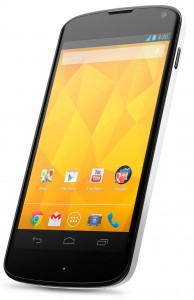
    The rumors were true! On Tuesday, South Korean manufacturer LG revealed the new Nexus 4 White. The smartphone features the same hardware specifications as its black sibling, which was announced in late-October, and runs Android 4.2 Jelly Bean.
    “Nexus 4 set the standard for Android 4.2 Jelly Bean smartphones”, says LG’s Jong-seok Park. “Nexus 4 White delivers the same Google experience to consumers in a stylish and attractive color option”. The handset follows its predecessor, the Samsung-made Galaxy Nexus, in also sporting a white color trim.

    Specifications for the Nexus 4 White include: 4.7-inch IPS display with a resolution of 768 by 1280 and a 320 ppi (pixels per inch) density; 1.5 GHz quad-core Qualcomm Snapdragon S4 Pro processor; Adreno 320 GPU (Graphics Processing Unit); 2 GB of RAM; 8 MP back-facing camera with 1080p video recording; 1.3 MP shooter on the front; HSPA+ cellular connectivity; Wi-Fi 802.11 a/b/g/n; NFC (Near Field Communication); Bluetooth; wireless charging and 8 GB or 16 GB of internal storage. The Nexus 4 White comes in at 133.9 x 68.7 x 9.1 mm and 139 grams.

    LG revealed that the Nexus 4 White arrives in Hong Kong first, on May 29, followed by select markets in Asia, Europe, Middle East and North America “over the next several weeks”. There is no word yet on pricing or if Google will also offer the smartphone (in white) in its Play store.

  • Oppo launches the Find 5 in Europe

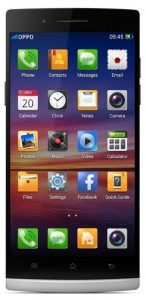
    With a low price-tag and high-end hardware, the Oppo Find 5 has managed to make a name for itself as an affordable premium smartphone. The handset, which runs runs Android 4.1 Jelly Bean, is available in a number of major markets including the US but, until today, eluded the old continent.


    On Monday, little over five months after its unveiling, the Find 5 is finally available in Europe. The Chinese maker sells the smartphone for EUR 399 in the 16 GB storage trim and EUR 429 for the 32 GB version. Available color choices include Midnight and White (the more expensive model can only be purchased in the former shade). Let’s take a look at the specs.

    The Find 5 packs a 5-inch IPS display with a resolution of 1080 by 1920 and a 441 ppi (pixels per inch) density. The smartphone ships with a 1.5 GHz quad-core Qualcomm Snapdragon S4 Pro processor (similar to the LG Optimus G and HTC DROID DNA), an Adreno 320 GPU (Graphics Processing Unit), 2 GB of RAM and a 2,500 mAh battery.

    The Find 5 also features a 13 MP back-facing camera and a 1.9 MP shooter on the front. Other specifications include: HSPA+ cellular connectivity; Wi-Fi 802.11 a/b/g/n; Bluetooth; NFC (Near Field Communication); GPS; DLNA and the usual array of sensors. The package also contains two NFC tags.

    The attractive price may steer some buyers towards the Find 5, however those looking for the best hardware currently available may want to look elsewhere. Smartphones like the HTC One and Samsung Galaxy S4, albeit more costly, pack newer and faster chipsets and, more importantly, are available in most carrier stores across Europe.

  • Microsoft: Compliant YouTube Windows Phone 8 app coming, meanwhile take the dreadful old version back

    Following a cease and desist letter sent by Google little over a week ago, today, Microsoft reaches out to me and announces a new update for its homebrew YouTube Windows Phone 8 app. You might want to contain that burning desire to hit the “Update” button though.

    “Microsoft and YouTube are working together to update the new YouTube for Windows Phone app to enable compliance with YouTube’s API terms of service, including enabling ads, in the coming weeks”, says the Redmond, Wash.-based corporation. This comes two days after the passing of the deadline to remove the app from the Windows Phone Store.

    The deadline was imposed by Google alongside the cease and desist letter, and says that the app must also restrict the ability to download content and enforce playback restrictions “on certain platforms”. The former requirement is already fulfilled in the update released two ago.

    I asked Microsoft if the upcoming version will also comply with Google’s remaining grievance, but the software giant refused to comment: “Nothing more to add at this point, sorry”.

    Now here’s the bad news. “Microsoft will replace the existing YouTube app in Windows Phone Store with the previous version during this time”, says the Redmond, Wash.-based corporation. Ouch! The software giant tells me that the version in question is the dreadful pre-May 8 build which was basically the mobile YouTube website dressed as an app.

    At the time of writing this article, Microsoft pulled the non-compliant YouTube for Windows Phone 8 app from the Store and has yet to replace it with the old, but complaint, version. The latter, however, does not show ads which is a tad ironic considering Google’s grievances.

    Today, Microsoft and Google prove that working together is entirely possible, however this only appears to be the case when one company negatively affects the other. Let’s hope that this rekindled relationship can smooth the bumps in the road towards Google-branded apps on Windows Phone 8 and more Microsoft-developed software on Android.

    The takeaway is that, in order to gain Google’s approval, Microsoft must offer an inferior YouTube experience on the tiled operating system. The Windows Phone 8 app no longer offers any advantages over its Android and iOS counterparts. But, hopefully, Google will allow YouTube for Windows Phone 8 to upload content to the popular video-sharing website.

    Photo Credit: Cory Thoman/Shutterstock

  • Canalys: BlackBerry and Windows Phone must prioritize ‘app quality not quantity’

    App store numbers grab headlines, but don’t matter to users. Both BlackBerry and Windows Phone boast constant ecosystem growth with more than 100,000 apps available in each store, yet neither of the two platforms has managed to assert itself as a viable alternative to Android or iOS. Why? Well, Canalys says that it’s the quality of the apps that matters not the quantity.

    “At a certain point, how many apps are in a store becomes irrelevant. Offering 100 different unit converters or weather apps is not a valuable choice”, says Canalys senior analyst Tim Shepherd. “What is now far more important for BlackBerry and Microsoft is to focus on plugging inventory gaps and making sure they offer the right apps; to focus on quality and local relevance, not quantity”. According to the company’s latest report, both BlackBerry and Windows Phone fail to offer many of the popular titles available today, hindering their appeal to potential users.

    Where Are the Apps?

    Canalys analyzed the top 50 apps available in the free and paid categories on Apple App Store and Google Play and discovered that only 34 percent of them are present in either BlackBerry World or Windows Phone Store. That’s based on aggregated rankings over the first 20 days of May. Let’s break down the numbers.

    Windows Phone Store delivers 16 free and 14 paid top offerings of the two respective categories from Apple App Store and 22 free and 13 paid top apps of the two corresponding categories from Google Play.

    BlackBerry World features five free and nine paid top offerings of the two respective categories from Apple App Store and 11 free and 11 paid top apps of the two corresponding categories from Google Play.

    Canalys took into account third-party and platform-exclusive offerings (like Find My iPhone) as well as utility apps “for which similar offerings with equivalent functionality are available”. As a result, the company says that the outcome is a tad more “optimistic” but still points out that there is a significant gap in BlackBerry World and Windows Phone Store which “cannot and should not be masked”.

    “These stats underscore the scale of the job Microsoft and BlackBerry each still face in their respective bids to build up their app ecosystems, and to deliver still more compelling – and crucially – genuinely competitive offerings around apps, and both vendors must continue to work hard to rise to the challenge”, says Shepherd.

    Keeping Users (Un)Appy

    Users choose smartphones based on app availability, among other motivating factors, and “it will only become more so”, says Shepherd. The man also implies that if BlackBerry and Windows Phone don’t offer more quality apps, users might head to a different platform that does.

    “Simply, Windows Phone and BlackBerry customers do not want to miss out on apps (or app features) from important and locally relevant brands, or the latest games, because of their choice of smart phone. It is therefore imperative for the success of both Windows Phone and BlackBerry that their respective app ecosystems attract and offer the high-quality content that consumers want and would otherwise miss”, says Shepherd.

    As a Windows Phone 8 user, I couldn’t agree more. Critical apps and games, like Instagram, Google Maps or Temple Run 2, are still missing from the Store (which now boasts 145,000 apps) and have been for quite some time. Time is ticking. BlackBerry tells a similar story with its own app store, which lags behind any of its competitors in regards to sheer numbers (120,000 apps) and popular offerings.

    Microsoft appears to be on the right track with Windows Phone, offering a decent selection of apps from major international and local brands. But the software giant also has to target “the next few hundred popular, valued and sought-after titles in each market [Apple App Store and Google Play]” and “build hype and interest around its platform”, says Canalys.

    The Windows Phone ecosystem however lacks momentum compared to BlackBerry World which received major titles like Skype and Angry Birds Star Wars (neither of which is actually new) and capitalizes on developer support. The platform gained more than 50,000 apps in merely three and a half months, which is a commendable achievement.

    But can BlackBerry and Windows Phone beef up their ecosystems in a timely manner? Tick tock, tick tock…

    Photo Credit: Stuart Miles/Shutterstock

  • Remotely access your PC with Splashtop 2 for Windows Phone 8

    Remote control apps are increasingly versatile, allowing smartphone and tablet users to access and manage computers from the workplace, a holiday resort or the couch in my case. For Windows Phone 8 users the most popular choice is PC Remote but, late-yesterday, another app hit the Store.
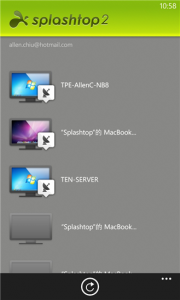
    “Many Windows Phone users have asked for Splashtop”, says Splashtop CEO Mark Lee. “We are excited to partner with Nokia and Microsoft to optimize and deliver the best-in-class Splashtop experience for Windows Phone 8”. The app allows folks to remotely access Linux, OS X and Windows-based computers straight from the tiled operating system. Let’s take a look at the features.

    With Splashtop 2 for Windows Phone 8 users can remotely access and edit files, open applications (and play games), watch videos, stream music, move the mouse cursor and control various functions of the operating system. For instance, accessing a Windows 8 PC gives users the ability to trigger the Charms and Start menus or switch between multiple monitors.

    The app, unlike PC Remote, automatically matches the resolution of the Windows Phone 8 device to the connected computer screens. That’s a tad annoying as the former is restricted to 1280 by 768 whereas even basic laptops come with larger resolution displays (like 1366 by 768, 1600 by 900 or 1920 by 1080).

    Splashtop 2 requires users to install a server application on computers (multiple ones can be controlled) and log in with a Splashtop account on each device. The latter makes the app easy to use in different scenarios, as folks no longer have to know and type in IP addresses and ports in order to enable a connection.

    Splashtop 2, “in coordination with Nokia and Microsoft”, is free for Windows Phone 8 users until August 31. There is no word on pricing afterwards.

    Splashtop 2 is available to download from the Windows Phone Store.

  • Samsung Galaxy S4 is NOW available at Verizon

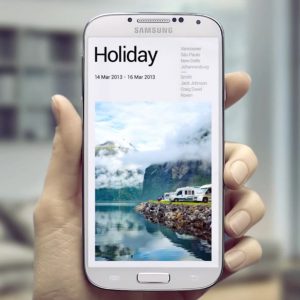
    On Thursday, little under a month after the smartphone’s global launch, the Galaxy S4 finally arrives at US mobile operator Verizon. The handset is available now at big red for $199.99, alongside a two-year contract, in either Black Mist or White Frost.

    Today, rival mobile operator AT&T revealed that the Aurora Red Galaxy S4 comes exclusively through its online and brick and mortar stores (pre-orders start tomorrow). Tough luck for Verizon customers looking to grab the smartphone in the red trim, which is a tad ironic considering the carrier’s logo (yes, it’s red).

    Verizon customers can also purchase Samsung’s Android flagship with a month to month service. This raises the price to $649.99, which is on par with the Google-branded Galaxy S4 announced at Google I/O. The latter version will be available with 4G LTE connectivity, starting June 26, directly through the search giant’s Play store.

    The Verizon-branded Galaxy S4 packs a 5.0-inch Super AMOLED display with a resolution of 1080 by 1920; 1.9 GHz quad-core Qualcomm Snapdragon 600 processor; Adreno 320 GPU (Graphics Processing Unit); 2 GB of RAM: 2,600 mAh battery; 16 GB of internal storage; microSD card slot; 13 MP back-facing and 2 MP front-facing cameras capable of 1080p video recording; Bluetooth 4.0; Wi-Fi 802.11 a/b/g/n/ac; NFC; 4G LTE connectivity and Android 4.2 Jelly Bean.

  • iPad follows iPhone, gets the Mailbox treatment

    On Thursday, following user demand, Mailbox released an update for its iOS mail app that introduces support for iPads. The service, which delivers more than 100 million messages each day, was previously available as an iPhone-only affair.

    Mailbox boasts a better organized and easier to manage inbox, allowing its users to take advantage of swipe gestures to archive or trash messages. Similar to alarm clocks, the app also offers the option to snooze emails in order to receive them at a later date in the inbox.

    Mailbox is designed as an alternative to the default iOS Mail app, however it falls short in supporting multiple types of accounts and providers (like Exchange, Outlook.com, POP or Yahoo). Gmail is the only option currently available, but other “email platforms” will arrive “soon”.

    In mid-March, Mailbox was acquired by Dropbox with the promise to make the service “even better and getting it into as many people’s hands as possible”. One of the first steps should be supporting Outlook.com and Yahoo, two of the largest email providers today.

    Mailbox is available to download from Apple’s App Store.

    Photo Credit: 2jenn/Shutterstock

  • Amazon hunts more market share, takes its Appstore and Kindle Fire tablets global

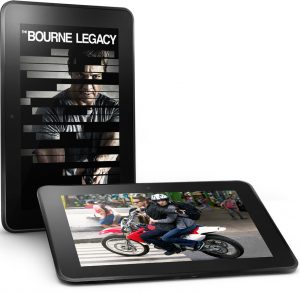
    On Thursday, Amazon announces that the Kindle Fire HD tablets, in 7-inch and 8.9-inch trim, are now available for pre-order through its website in more than 170 countries and regions worldwide. Previously, the US e-commerce company only offered the two devices in a lower number of markets.
    “Kindle Fire HD is the number one best-selling item in the world for Amazon since its launch, and we’re thrilled to make it available to even more customers around the globe today”, says Amazon Kindle vice president Dave Limp. The two devices go on sale from June 13, with the price starting at $214 for the 7-inch Kindle Fire HD and $284 for its bigger brother, the 8.9-inch Kindle Fire HD (both with no special offers and sponsored screensavers).

    Buyers from Ireland and Gibraltar will be able to purchase the devices from Amazon UK, folks from Austria and Luxembourg have to head over to Amazon Germany and Monaco residents can grab either of the two Kindle Fires from Amazon France. The company does not provide any details concerning buyers from other markets.

    Specs for the 7-inch Kindle Fire HD include: 7-inch display with a resolution of 1280 by 800; 1.2 GHz dual-core TI OMAP4 processor; 1 GB of RAM; Wi-Fi 802.11 a/b/g/n; Bluetooth 3.0 with EDR (Enhanced Data Rate) and Android 4.0.3 Ice Cream Sandwich-based branded operating system.

    The 8.9-inch Kindle Fire HD comes with a 8.9-inch display with a resolution of 1920 by 1200; 1.5 GHz dual-core TI OMAP4 processor; 1 GB of RAM; Wi-Fi 802.11 a/b/g/n; Bluetooth 3.0 with EDR; GPS and Android 4.0.3 Ice Cream Sandwich-based branded operating system.

    Appstore Follows Kindle Fires

    To allow the new prospective buyers to purchase content, today Amazon also brings its Appstore to little under 200 countries worldwide. The company, without mentioning the new markets, revealed that Brazil will follow in “the coming months”.

    “We are thrilled to be expanding the reach of our global app distribution to nearly 200 countries. We think our customers will love the app selection we have to offer and also find features such as Free App of the Day and personalized recommendations very helpful as they discover and explore new apps and games”, says Amazon vice president of Apps and Games Mike George.

    The Appstore expansion is not restricted to Amazon’s devices, as the company says that Android, OS X and Windows users from the new supported markets will also be able to purchase apps and games.

    Amazon Hunts Market Share

    In Q1 2013, based on shipments, IDC placed Amazon as the fourth-largest tablet maker, behind Apple, Samsung and ASUS. The US company moved 1.8 million units and held a 3.7 percent share of the market, numbers higher than in Q1 2012.

    With the extended availability of its Kindle Fire HD tablets, Amazon becomes a threat to ASUS’ place on the podium. The Taiwanese maker shipped 2.7 million fondleslabs and had a 2.7 percent market share in Q1 2013, numbers close to Amazon’s. As one of the most popular and largest e-commerce websites in the world, the latter can close that gap in the coming quarters.

  • Kim Dotcom does the patent two-step to fund his trial

    Kim Dotcom enters the spotlight once again after claiming that Google, Facebook, Citibank and Twitter, among others, infringe upon his patent for two-factor authentication. The man is one of the founders of controversial Megaupload and Mega cloud storage lockers and is currently under indictment in the US for copyright infringement.

    Dotcom decided to reveal the alleged wrongdoing and mention the patent yesterday, after Twitter enabled the security feature: “Twitter introduces Two-Step-Authentication. Using my invention. But they won’t even verify my Twitter account?!”. The patent in question was filed in 1998 by Kim Schmitz (Dotcom’s birth name) and is named “Method for authorizing in data transmission systems”.

    The patent describes the procedures involved in deploying two-step authentication: “The invention relates to a method and to a device for the authorization in data transmission systems employing a transaction authorization number (TAN) or a comparable password”.

    Although the man initially mentioned suing the alleged infringing companies, Dotcom later said that he’s actually looking for funds: “Google, Facebook, Twitter, I ask you for help. We are all in the same DMCA boat. Use my patent for free. But please help funding my defense”.

    Dotcom hints at a considerable amount: “All of our assets are still frozen without trial. Defending our case will cost USD 50M+. I want to fight to the end because we are innocent”.

    The man also tweeted that interested parties can purchase the rights to use his patent: “Want to buy the world wide license to my two-factor-authentication patent? (13 countries incl. US & China) Email: [email protected]”.

    Google, Facebook, Citibank and Twitter are just some of the major companies using two-factor authentication. Others like Dropbox, Apple and Microsoft have also enabled the
    feature. “Big reveal: 1 billion+ Two-Step-Authentications on the Internet weekly”, says Dotcom.

    Considering that two-factor authentication is widely used across a number of popular services and adds an effective security blanket, Dotcom may have a considerable advantage if he decides to go to court.

    Photo Credit: Arcady/Shutterstock

  • Microsoft caves in, cripples YouTube for Windows Phone 8 with the latest update

    On Wednesday, Microsoft rolls out an update for its YouTube Windows Phone 8 app which takes away the ability to download content from the popular video-sharing website. The latest iteration arrives one week after Google sent Microsoft a cease and desist letter, demanding the removal of the app from the Store. The deadline passes today.

    Google’s grievances regarding the Microsoft-developed YouTube app focus on the removal of playback restrictions “on certain platforms”, the lack of ads and the ability to download videos. Microsoft only resolved the third complaint and, despite the rapidly-approaching deadline, the company hints that YouTube will continue to be available to Windows Phone 8 users.

    I reached out to Microsoft for a comment regarding the latest update and here’s the software giant’s response:

    Microsoft updated the Windows Phone YouTube app to address the restricted video and offline video access concerns voiced by Google last week. We have been in contact with Google and continue to believe that our two companies can work together to hone an app that benefits our mutual customers, partners and content providers. We’re earning new customers every day, with IDC reporting recently that Windows Phone posted the largest year-over-year gain among leading operating systems. We look forward to working with Google to maintain a great YouTube experience for the growing number of people who rely on both of our respective products.

    As I previously mentioned, Google cries foul regarding Microsoft’s homebrew app when even the mobile YouTube website fails to show ads in Internet Explorer on Windows Phone 8. A number of other unofficial clients available in the Store, like Metrotube, also do not meet all three requirements mentioned above.

    It is, however, reassuring to know that the two companies have decided to work together and settle their differences. The removal of the app can only hinder the YouTube experience for Windows Phone 8 users and, in such a case, neither Google nor Microsoft would win.

  • Twitter follows the flock, introduces two-factor authentication

    After a number of high-profile account hijacks and criticism from both its users and the tech media, Twitter finally decides to take security seriously. Today, the popular social network introduces two-factor authentication which, when enabled, requires users to type in an additional six-digit passcode received via SMS in order to log in.

    Sadly, as I learned, not every user can actually enable the new security feature. Twitter says that folks must have a “verified phone number and confirmed email address”, the former of which is still incompatible with my mobile operator: “Sorry, we don’t have a connection to your carrier yet!”. Other local mobile operators are supported, but not mine.

    “Every day, a growing number of people log in to Twitter. Usually these login attempts come from the genuine account owners, but we occasionally hear from people whose accounts have been compromised by email phishing schemes or a breach of password data elsewhere on the web”, says Twitter. I can only hope that I will not join the list of unlucky folks.

    For users that have both a verified phone number and confirmed email address the process of enabling two-factor authentication is pretty straightforward.

    Folks must head over to account settings, tick “Require a verification code when I sign in.”, add a phone number and follow the prompts that show up afterwards. Users must type in the six-digit passcode each time they wish to log in from an untrusted browser.

    Twitter follows companies like Google, Facebook, Dropbox, Apple and Microsoft in allowing its users to better protect the security of their accounts through two-factor authentication. It’s about time, don’t you think?

    Photo Credit: Maksim Kabakou/Shutterstock