Author: Pan-African News Wire

  • On China’s Hainan Island, the Economic Boom is Deafening

    March 30, 2010

    On China’s Hainan Island, the Boom Is Deafening

    By EDWARD WONG
    New York Times

    SANYA, China — One developer is building what he calls Asia’s largest hotel, with space for a casino and a greyhound racetrack.

    The Visun Royal Yacht Club, China’s largest, plans to buy a helicopter for the use of its members. A golf course that charges $180 per round is opening 220 villas, each with its own butler, swimming pool and spa — “I want to get it into the Guinness Book of World Records for the most spas anywhere,” the manager says.

    Then there are the property speculators flying to this resort town from across China with bagfuls of cash, to buy apartments whose cost per square foot rivals parts of Manhattan. Five-star hotels during the recent Lunar New Year holiday charged $1,500 or more per night; one company charged $80 just to camp out in a tent.

    In the last two months, Hainan, an island the size of Belgium in the South China Sea, has become a potent symbol of China’s economic vitality — or, perhaps, its excesses. Even in a country where new wealth spawns new tales of luxury living every day, Hainan is viewed with a mix of awe, envy and disgust.

    The boom here, unfolding as much of the world grapples with a recession, is fueled by a first-of-its-kind edict from the nation’s top leaders: On Dec. 31, the State Council, the Chinese cabinet, issued a memorandum that said Hainan had been designated a “test case” in developing an “internationally competitive tourist destination.”

    Investors are interpreting that as a no-holds-barred effort to remake Hainan into the Chinese equivalent of Monaco, Las Vegas and Hawaii. While there is no clear indication that the authorities will permit the introduction of licensed casino gambling, some are betting that Hainan could overtake Macao, the former Portguese colony that is now under Chinese sovereignty, as China’s preferred island of iniquity.

    “It’s as if they’ve injected a growth hormone into the economic development here, and people are wondering how it will all turn out,” said Xie Xiangxiang, the head of the Sanya Tourism Association.

    The Hainan gold rush is the buzz across China. One American businessman in Beijing, Christopher Reynolds, said a group of Chinese artists told him to invest in Hainan real estate. Chinese couples on dates in Beijing restaurants chatter about it. In February, the average sales price of property in Sanya and Haikou, Hainan’s two main cities, showed a 50 percent increase over the same month last year, five times the national rate, according to the National Bureau of Statistics.

    “People are coming with entire bags full of cash,” said Raymond Hau, general manager of the Sun Valley Golf Resort, which is building the 220 luxury villas. “I’ve seen this myself. A man had a bag and unzipped it. Boom. ‘Here’s the deposit,’ he said. ‘I want two apartments.’”

    Mr. Hau shook his head. “It’s crazy. It can only happen in China.”

    The golf resort is popular with the privileged. The president of Kazakhstan shot a hole in one here. And on a recent afternoon, when an attendant opened the passenger door of a black sport-utility vehicle that had just pulled up, a pile of large-denomination Chinese bills fluttered to the ground.

    Billboards across Hainan advertise property for sale in developments with names like Miami and East Bahamas. The face of Zhang Ziyi, one of China’s most popular actresses, is plastered on some of the advertisements. The most prominent development is a series of four luxury apartment towers and a “seven star” hotel on Phoenix Island, a spit of sand off the coast that was created by the provincial government as a cruise ship dock.

    The apartments — sweeping sea views, bathtubs on balconies and sofas wrapped in velvet — are being pre-sold for an average of $885 per square foot, comparable to New York prices, said Wu Lei, a spokeswoman for the real estate company.

    The hype over Hainan has inspired criticism from many quarters. In an interview, Han Han, China’s most popular blogger, expressed contempt for the investment pouring into the island. Last month, People’s Daily and China Youth Daily, both official newspapers, ran editorials lamenting the rising housing and hotel prices. The editors appeared concerned that the stratospheric prices could highlight, for many Chinese, the growing class divide in this country.

    “How can we create a stable and harmonious living environment if the island’s ordinary residents do not have the ability to buy housing?” wrote the editors of People’s Daily.

    Even officials in Hainan seem worried. In mid-January, the provincial government announced a temporary halt to new commercial development projects. Gambling is another uncertainty. Some officials have said only modest forms of betting will be allowed, while others say Hainan could push the limits.

    At the moment, gambling is banned across China, except in Macao.

    The history of Hainan in the 1990s offers a cautionary tale. Early that decade, after the Chinese government had designated Hainan one of the country’s “special economic zones,” property speculators flocked to the island. Some of China’s most successful real estate magnates, including Pan Shiyi of Soho China and Feng Lun of the Vantone Group, made their first fortunes on Hainan. Across China, the island’s freewheeling capitalism became synonymous with corruption. The bubble burst after a few years, and the island stagnated.

    Now, in Sanya, even those benefiting from the current boom say property and hotel prices have reached absurd levels. “There’s no real economy,” said Lin Mingkun, the manager of the yacht club and a condo owner. “It’s a bubble economy.”

    Some residents say they are being priced out of housing options. On the west side of the yacht marina, there is a neighborhood where more than 1,000 fishermen and family members live in cramped alleyways.

    The families have lived here for generations, but local officials and the real estate company that owns the yacht club, Hongzhou Group, are trying to persuade them to move off the land. Four women sitting outside one home said the Hongzhou Group was offering less than $20 a square foot as compensation.

    “If we get kicked out, there won’t be a house for the next generation,” said one, Ms. Shi, 48, who agreed to speak on the condition that only her last name be printed.

    Mr. Lin said the Hongzhou Group was building an apartment complex across the harbor for the families and would pay them more than $40 per square foot for their property. The fishing boats would be moved into another bay, he said.

    The Hongzhou company, with its gleaming Times Coast condominium development by the marina, is in the vanguard of Hainan’s transformation. The yacht club already boasts more than 80 members who have each paid $92,000 for the privilege of parking their boats here for 23 years.

    “In China, Sanya will be the leader in luxury leisure,” Wang Dafu, the owner of Hongzhou, said one afternoon while cruising the bay in his 72-foot Pershing yacht.

    He puffed on a Cohiba cigar. “The reason you earn money,” he said, “is to spend it.”

    Xiyun Yang contributed reporting.

  • Graca Machel Says Recession Could be Good for Africa

    Mandela’s wife: recession could be good for Africa

    The Associated Press
    Wednesday, March 31, 2010; 1:28 PM

    JOHANNESBURG — Nelson Mandela’s wife says decreased aid to Africa due to the global recession could be a good thing for the continent.

    Former Mozambican first lady Graca Machel told The Associated Press Wednesday that less foreign funding will force African governments to mobilize resources internally, reducing dependence on external support.

    “If we are clever enough, and we are responsible enough… it’s time… to rely more and more on our own resourcefulness and the ability to engage our own people,” Machel said.

    Machel advocated for industrialization and regional integration on the continent as an approach to developing a “win-win” situation for African countries and their trading partners.

    Machel was speaking on the sidelines of a nutrition conference in South Africa.

  • Black Economic Empowerment (BEE): The President of South Africa Says It Has Failed

    Black Economic Empowerment( BEE): The president of South Africa says it has failed

    Mar 31st 2010 | JOHANNESBURG
    From The Economist print edition

    To give more economic clout to the black majority has proved hard

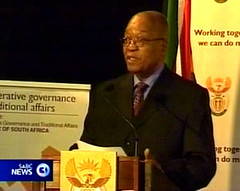
    IT IS now widely agreed that “black economic empowerment” (BEE) and affirmative-action laws brought in after apartheid as the star policies of the ruling African National Congress (ANC) have failed. Even President Jacob Zuma seems to agree. Instead of redistributing wealth and positions to the black majority, they have resulted mainly in “a few individuals benefiting a lot,” he says, while leaving the leadership of most big companies in white hands. The black masses, the intended beneficiaries, have hardly gained.

    Largely as a result of the emergence of this new BEE elite, post-apartheid South Africa is still one of the most unequal countries in the world. Although poverty has been alleviated by providing welfare benefits to more than one in four of South Africa’s 49m inhabitants, the gulf between rich and poor has widened. The richest 4% of South Africans—a quarter of whom are black—now earn more than $80,000 a year, 100 times what most of their compatriots live on.

    Under apartheid, blacks were given an inferior education and on the whole restricted to much worse jobs. The Employment Equity Act in 1998 tried to make the workforce “more broadly representative of our people” across the board. But more than a decade later, whites still hold three-quarters of senior jobs in private business whereas blacks have 12%, the exact reverse of their share in the working population.

    Among the 295 companies listed on the Johannesburg Stock Exchange (JSE), blacks account for just 4% of chief executive officers, 2% of chief financial officers and 15% of other senior posts. In non-executive ones, they do a bit better, accounting for just over a quarter of board chairmen and 36% of directors, but still nowhere near their share of the workforce. Even so, many whites grumble sotto voce that incompetent blacks are being promoted beyond their abilities.

    As whites account for 40% of university graduates, a 12% quota for whites in skilled or top managerial positions is absurd, the South African Institute of Race Relations, a think-tank, says. Its head, John Kane-Berman, argues that BEE, in the way it has so far been implemented, has actually harmed blacks by discouraging self-reliance and an entrepreneurial spirit. Instead it has fostered a debilitating sense of entitlement.

    The idea of legislating for black economic empowerment was originally promoted by big white businessmen to ward off post-apartheid calls for nationalisation. If a few well-connected black people were given chunks of the action, big business would, they hoped, be left alone. In that sense, BEE has been a roaring success, as whites still own the bulk of the country’s wealth. Although renewed calls for the nationalisation of the mines and banks have recently been heard within ANC ranks, Mr Zuma, urged on by the new black capitalists, has repeatedly said that this is not on the government’s agenda.

    Under BEE laws, white-owned companies with an annual revenue of at least 5m rand are given ratings for enabling blacks to own shares, improve their skills within the company, move up the managerial ranks, and so on. The higher the company’s score, the more likely it is to win lucrative public contracts. Everyone is supposed to win. Black individuals or companies could buy large holdings in white companies in the hope of paying off their debts through dividend payments and rising share prices.

    For as long as buoyant stock markets were rising, this worked nicely. But when the global financial crisis caused shares to plummet, many BEE companies crashed, making new investors wary. In 2007 there were a record 111 BEE deals, worth 105 billion rand, involving companies listed on the JSE. In 2008 this fell to 84 deals, worth 61 billion rand. Last year, however, there were just 13 deals, worth 20 billion rand.

    Moeletsi Mbeki, an analyst and entrepreneur who is a brother of the former president, Thabo Mbeki, claims that BEE has struck a “fatal blow against the emergence of black entrepreneurship by creating a small class of unproductive but wealthy black crony capitalists.” Yet most leading businessmen, white and black, still regard the policy as vital for the country’s future, though they admit it has been badly implemented. All seem to agree that the policy should be made to benefit a wider range of blacks, not just business people.

    President Zuma promises a review. He complains that the country’s economic “transformation”, meaning the redistribution of power and wealth to the black majority, has been “disappointingly slow”. Last month he launched a new council to advise on a much “broader-based” BEE. Meanwhile, worried whites, whose skills are still sorely needed, are continuing to emigrate in droves.

  • Bomb Blast in Southern Afghanistan Kills 17 People

    Wednesday, March 31, 2010
    13:56 Mecca time, 10:56 GMT

    Afghan farmers die in suicide blast

    Wednesday’s attack occurred as officials tried to persuade Afghan farmers not to grow opium

    A bomb concealed on a bicycle has exploded in a crowded village market in the southern Afghan province of Helmand, killing at least 17 people and injuring 45 others including eight children.

    Wednesday’s attack occurred in Babaji, near the town of Lashkar Gah, the provincial capital of Helmand, where farmers had gathered to receive free seeds from government officials.

    Local police said that the bomb had been strapped to a bicycle left in the market and detonated remotely.

    An earlier report quoting a provincial government spokesman said a suicide bomber had blown himself up.

    Farmers ‘killed’

    The casualties were all farmers who had gathered in the area to receive free seeds from the government as part of a program to encourage them not to plant opium poppy, Daoud Ahmadi, a spokesman for the provincial government, said.

    Lashkar Gah is near Marjah in Helmand province, the focus of a major Nato-led offensive against the Taliban.

    Thousands of Nato and Afghan troops have launched a massive offensive in southern Afghanistan – the largest the country has seen since the 2001 US-led invasion.

    A major offensive in Kandahar, once a Taliban stronghold, would follow the current military operation in neighbouring Helmand province,which appears to have largely pushed back the Taliban and given the government a chance to take control.

    Marjah is also thought to be the hub of the Taliban-controlled opium trade – which provides them with most of their funding.

    The Afghan defence ministry has said the anti-Taliban push will be led by Afghan security forces as part of plans to hand over military and police responsibility to the Western-backed government.

    The US and Nato have about 113,000 troops fighting in Afghanistan, with another 40,000 being deployed in the coming months.

    Source: Agencies

  • Detroit Struggle Escalates to Defend City From School Closings, Attacks on Workers and Pensions

    Detroit Struggle Escalates to Defend City From School Closings, Attacks on Workers and Pensions

    By Abayomi Azikiwe
    Editor, Pan-African News Wire

    A citywide meeting was held on March 27 at the Central United Methodist Church in downtown Detroit to call for a united effort to address the escalating attacks against working people who are being threatened with school closures, layoffs of educational and public sector employees as well as plans to seize municipal pension funds, downsize the city and sell the Medical Center to an outside Tennessee-based corporation.

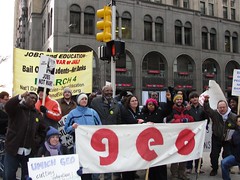
    Sponsored by the Moratorium NOW! Coalition to Stop Foreclosures, Evictions and Utility Shutoffs, the gathering of local activists, political officials and community people filled the second floor of the church. Resolutions were adopted calling for opposition to school closings, a mass demonstration on April 20 at City Hall, support for the May Day demonstration as well as the May 8 national march for jobs in Washington, D.C. that is being called by the Bail Out the People Movement (BOPM).

    This meeting came in the aftermath of the burgeoning political struggles in Detroit around the privatization of the school system and the conflict between city workers and the Bing administration which escalated on March 23 with two major demonstrations against the crisis in the public education system and Mayor Bing’s corporate-engineered plans to “downsize” the city.

    Mass Demonstrations Express Outrage

    Outside the offices of the state-appointed emergency financial manager 2,000 union members, community people and youth demonstrated demanding an end to efforts to dismantle k-12 public education in the city. The picket was organized by the Coalition of Detroit Public Schools Unions including the clerical workers, teachers and other employees. This event was also attended by the bus drivers from the Safeway transportation company whose contract has been terminated in favor of First Student Transportation out of Ohio.

    The bus drivers have traveled to Lansing, the state capital, at least three times in the last two weeks to protest and meet with lawmakers. On March 23 they went to Lansing again and won a pledge from the state legislative appropriations committee to hold hearings on the bidding process surrounding First Student.

    The elected Detroit Board of Education, whose powers are being abrogated by the emergency financial manager Robert Bobb, went to court on March 23 seeking an injunction to stop the proposed closing of 45 schools. A hearing will be held on April 16 in Wayne County Circuit Court.

    Support for the unions and the forces opposing the dismantling and privatization is growing daily despite the intensive propaganda campaign being waged by the corporate media and the private foundations such as Kresge and Skillman. These entities are praising the plans delivered by Bobb and Bing and ignoring and attacking the unions and community organizations that are challenging them.

    After the demonstration at the DPS headquarters, over 100 people marched down Woodward Ave. to Orchestra Hall where Mayor Bing was slated to give his “state of the city” address. A demonstration was already called for outside the venue beginning at 5:30pm.

    The demonstration was called by Moratorium NOW! and AFSCME Local 207. There were between 200-300 people who participated in the picket line between 5:30-7:00pm. Leaders from the DPS clerical workers union and other city locals joined the protest outside Bing’s “state of the city” address.

    Both events were successful in illustrating the outrage among people in the city over the attempts to privatize education completely, force wage cuts and concessions on the city and county workers, to seize the municipal pension funds and to sell the Detroit Medical Center.

    Bing’s plan to “downsize” the city has been challenged by Moratorium NOW! and others. The ruling class interests represented by Bing are now compelled to respond to allegations of forced displacement and the dismantling of the city governance structures by corporate interests.

    On March 23 WWJ Radio, the local CBS-affiliate, ran reports all day on Moratorium NOW!’s opposition to downsizing the city and the demand for the declaration of a state of economic emergency and the imposition of a halt to foreclosures, evictions and utility shut-offs.

    Moratorium NOW! issued a poster that pointed to the role of the banks in the crisis. This poster points out in plain language that there are hundreds of millions of dollars being paid in debt service while workers salaries remain frozen and cut, schools are being closed and the capitalist are openly advancing plans in the media to further dislocate and oppress the people.

    People at both the demonstrations outside the School Center Building and the mayoral address picked up the posters. The slogan “Bail out the people, not the banks,” was quoted in the Detroit Free Press coverage of the demonstration in front of the building where the mayoral speech was delivered.

    At the March 27 Town Hall meeting, the Moratorium NOW! Coalition stated that its present task is to raise the level of the political struggle so a clear connection can be made between the assault on workers and the community in Detroit and the overall economic crisis in the capitalist system at present. Many workers and community people have exclusively focused on Bobb and Bing as culprits in the process. Although this is true in appearance, however, both of them are acting on behalf of the interests of finance capital, which views the public sector, public education and municipal pension funds as ripe for seizure and exploitation.

    In response to the crisis, community meetings are being held daily and there is a sense of urgency emerging among the people. Consequently, the Moratorium NOW! Coalition will be making a major push to both convey the necessity of united action but to also stress the underlying causes of the crisis which is not confined to Detroit but encompasses the entire state and country.

    Demand That City Addresses Debt Service to the Banks

    As a result of the March 27 Town Hall meeting, Moratorium NOW! wants to more forcefully demand that the city administration openly address the debt service payments to the banks and the role of the financial sector and the corporations in the crisis.

    Moratorium NOW! is demanding the city administration appeal directly to the federal government to create jobs immediately in Detroit. A letter to Bing was delivered two months ago and a resolution to the City Council has been submitted to this effect as well.

    The Mayor and City Council have not responded for various reasons including the corporate-orientation of Bing and the stranglehold that the financial institutions have over Michigan’s largest municipality. There is also a newly dominant group within the City Council which was endorsed by the two daily newspapers. The corporate media has promoted the school closings, downsizing and pension fund seizures as the only logical response to the economic crisis.

    However, Moratorium NOW! reiterated at the March 27 Town Hall that a political struggle will have to be waged in order for these issues to be broadly taken up by the people. Therefore, the organization has called for a mass mobilization on April 20 to further pressure the corporate-backed officials and the banks to impose a freeze on foreclosures, evictions, utility shutoffs, school closings and downsizing.

    On March 29, there was a rally at Cooley High School on the city’s northwest side to oppose the closing of the building by June. Later the same day, the emergency financial manager Robert Bobb held an invitation-only meetings at Henry Ford High School to discuss the building closings.

    At Cooley 200 people rallied outside the school and marched through the streets surrounding the building. The demonstration consisted of current students and alumni of Cooley dating back to the 1950s and 1960s.

    The hearing at Henry Ford attracted 300 people from the various schools in the city and the general public. Despite the non-public character of the meeting called by the emergency financial manager to hear reports from the parents, students and staff of numerous schools facing closure, organizations distributed literature outside against the policies of the state-controlled emergency financial manager and went in to the school to attend the hearing.

    On March 30 another hearing took place in front of the City Council involving the introduction of a state legislative bill that would take over the municipal pension funds. 500 union members, pension trustees and members of the public attended the hearing and spoke out overwhelmingly against the transfer of control of the funds to the Municipal Employees Retirement Systems (MERS) which is grossly underfunded.

    Members of AFSCME, the Teamsters and the Firefighters unions attended the hearing and spoke out during the public comment section against the state legislative plan to transfer control to MERS. Other issues were also addressed including the closing of schools, the need for a moratorium on foreclosures, evictions and utility shut-offs, the plans to “rightsize” the city and the proposed sale of the Detroit Medical Center to the Tennessee-based Vanguard group.

    Judging from the public sentiment against the seizure of the pension funds by the state of Michigan, the City Council passed a resolution to oppose the plan and admonished Mayor Dave Bing for entertaining such a proposal. The administration was criticized for not coming to the City Council or the pension trustee boards to discuss the plans prior to the introduction of legislation in Lansing.

    One state legislator present at the hearing, Shanelle Jackson of Detroit, said that efforts were underway to block the pension take over bill from getting out of committee in the state capital at Lansing.

    Representatives of the Moratorium NOW! Coalition attended the City Council hearing on the pension funds and spoke against the take over plans. Moratorium NOW! also addressed the role of the corporate community and the banks in the recent bold attacks against the interests of working people in Detroit with its majority African-American population.

  • Haiti Hopes For $4Billion to Rebuild After Quake

    Haiti hopes for $4 billion to rebuild after quake

    Michelle Nichols
    UNITED NATIONS
    Wed Mar 31, 2010 1:06am EDT

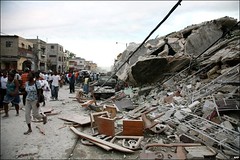
    UNITED NATIONS (Reuters) – Haiti will ask the world on Wednesday for $4 billion to help it rebuild and modernize in the wake of the earthquake that destroyed the Caribbean nation’s capital and killed up to 300,000 people.

    World | Natural Disasters

    Some 120 countries, international organizations and aid groups will meet at the United Nations in New York to pledge support for a Haitian government recovery plan that includes decentralizing the economy to create jobs and wealth outside Port-au-Prince, the capital of some 4 million people.

    Haitian Finance and Economy Minister Ronald Baudin told Reuters earlier this week that the country was hoping to obtain commitments of just over $4 billion over three years, $1.3 billion of which would be delivered in the first 18 months.

    Haiti was already the poorest country in the Western hemisphere before the magnitude 7.0 quake struck on January 12, with high unemployment and illiteracy among its 9 million people, almost 80 percent of whom lived on less than $2 a day.

    Estimates of the total damage inflicted by the earthquake range between $8 billion and $14 billion.

    “The country has the best chance in my lifetime … to build a modern self-sustaining state,” former U.S. president Bill Clinton, a U.N. special envoy for Haiti, said in a speech last week.

    The European Union and a coalition of U.S.-based humanitarian groups have indicated they are likely to pledge more than $2.7 billion for Haiti at the U.N. conference, while U.S. President Barack Obama has asked Congress for $2.8 billion in funds for Haiti relief and reconstruction costs.

    Cheryl Mills, counselor and chief of staff to U.S. Secretary of State Hillary Clinton, said on Tuesday that the United States was planning to help Haiti rebuild in the areas of agriculture, energy, health, security and justice.

    The United Nations is also urging countries to support rebuilding Haiti’s government capacity after all but one of the country’s ministries were destroyed and almost a third of civil servants killed.

    Donors and aid partners are insisting that Haiti directs the reconstruction, but monitoring mechanisms are being included in plans to finance the rebuilding effort. The World Bank is due to act as “fiscal agent” of a Multi-Donors Trust Fund to be created for Haiti.

    But aid workers are urging donors not to ignore the immediate needs of more than 1 million homeless quake survivors still camped out in streets and open spaces, vulnerable to the approaching rains and hurricane season.

    A campaign by the United Nations to raise $1.4 billion in humanitarian aid is still 52 percent short of its goal.

    “The appeal has stagnated,” Elisabeth Byrs, spokeswoman for the U.N. Office for the Coordination of Humanitarian Affairs, told reporters in Geneva on Tuesday. “It is essential that the burst of generosity that we saw at the beginning of the crisis continues.”

    (Additional reporting by Joseph Guyler Delva and Pascal Fletcher in Port-au-Prince and Stephanie Ulmer-Nebehay in Geneva, editing by Paul Simao)

  • Lawsuit Claims That U.S. Isolation of Muslim Prisoners is Unconstitutional

    Special U.S. prisons unconstitutional: lawsuit

    Tue, Mar 30 2010
    By Basil Katz

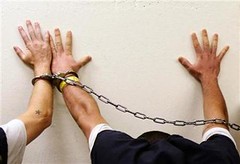
    NEW YORK (Reuters) – U.S. prison units specially designed to muzzle communications by inmates considered extremist are unconstitutional and discriminate against Muslims, according to a lawsuit filed on Tuesday by the Center for Constitutional Rights.

    The 77-page lawsuit filed with the U.S. District Court for the District of Columbia takes aim at so-called Communications Management Units, which one critic called “a stateside Guantanamo.”

    Five current and former prisoners held at the units argue they were held in an extreme environment that did not fit the crimes they were convicted for such as material support for terrorism and terrorism linked with environmental activism.

    Prisoners said they were not adequately informed before they were transferred in or out of a unit, or told why their communications were under such intense scrutiny, the suit said.

    According to the U.S. Bureau of Prisons (BOP), all correspondence and telephone calls to prisoners housed at the units are monitored and must be in English unless a translator is present. Inmates are forbidden from having physical contact with family and visitors, who can visit for up to eight hours each month.

    The two units for males only are located in Marion, Illinois, and in Terre-Haute, Indiana, housing a total of 76 prisoners, according to BOP.

    The first unit was created in 2006 after it was discovered that Islamic militant prisoners took advantage of unscrutinized communications to send messages abroad.

    They were set up under Republican President George W. Bush and while critics have pressed the Democratic Obama administration to modify them, there has been no policy change.

    Speaking at a recent U.S. congressional budget hearing, Bureau of Prisons Director Harley Lappin said: “As you recall, you were angry at us because inmates were inappropriately communicating. … We’ve put in procedures and processes to stop that, minimize the likelihood that would occur.”

    INCOMMUNICADO

    Last Friday, BOP spokesman Edmond Ross said they would post unit rules in a few weeks that will be open to public comment for 90 days. Prisoner-rights advocates say this will be a first, because they allege the units were created without proper public review. They were “secretly” ordered without required “notice and comment rulemaking,” the suit said.

    They also say the decisions as to which inmates get placed there are not clear.

    The suit called for the BOP to either transfer unit prisoners back into regular prisons, or to provide adequate justification for the reasoning behind their detention in such conditions. The suit also demanded that prisoners be afforded the same communication rights as other prisoners.

    “You get people sent to a place incommunicado. You expect this from totalitarian regimes, but not from the Obama administration,” said David Fathi, an attorney with the American Civil Liberties Union’s National Prison Project.

    Although prisoners are allowed to see attorneys, the restrictions on seeing their families violate the right to free association and constitute cruel and unusual punishment, the suit said.

    Research on the units is all but impossible because “the Bureau of Prisons allows no access whatsoever to these inmates and will not grant interviews about the units,” said Mark Hamm, a professor at Indiana State University and an expert on inmate radicalization.

    “It is a stateside Guantanamo,” he said.

    ‘INTERNATIONAL FLAVOR’

    Critics say the concentration of Muslim men in CMUs constitutes discrimination. Rachel Meeropol, a Center for Constitutional Rights attorney, said the units are “ripe for discrimination” and were created for the “isolation and management of Muslim prisoners.”

    Court papers filed by the rights group say that “two-thirds of the prisoners confined there are Muslim — a figure that over-represents the proportion of Muslim prisoners in (Bureau of Prison) facilities by at least 1,000 percent.”

    The prisons are also known for holding what critics call members of the “al Qaeda B-team,” accused Islamic militants who are deemed to be less of a security risk than the high-value detainees, but too important to mix with the general prison population.

    One of the plaintiffs in the suit, Kifah Wael Jayyousi, was convicted of providing money and recruits to Islamist extremists and conspiring to murder, kidnap and maim people in foreign nations.

    Prison officials point to inmates like convicted eco-militant Daniel McGowan, who is non-Muslim and a suit plaintiff, as proof prisoners are not lumped together because of religious beliefs. They also say the units were designed to house sex offenders who have tried to contact their victims from prison or to house repeat violators of communication rules.

    A publicly available Bureau of Prisons document said unit inmates “represent multiple ethnic backgrounds, which include an international flavor.”

    (Editing by Mark Egan, Daniel Trotta and Eric Beech)

  • Sallie Mae Blames 2,500 Layoffs on Obama’s Student Loan Overhaul

    Sallie Mae Blames 2,500 Layoffs on Obama’s Student Loan Overhaul

    By Kelly Chernenkoff
    Associated Press

    Sallie Mae has been outspoken in its opposition to the plan, calling it a “government takeover” just last month

    Mar. 30: President Barack Obama shakes hands after signing the Health Care and Education Reconciliation Act in Alexandria, Va.

    Powerhouse student loan provider Sallie Mae says layoffs are imminent as a result of President Obama’s new student loan overhaul.

    “This legislation will force Sallie Mae to reduce our 8,600-person workforce by 2,500,” Conwey Casillas, Vice President of Sallie Mae Public Affairs, said in a statement to Fox News.

    Obama was at Northern Virginia Community College in Alexandria on Tuesday to sign the student loan changes into law. The new bill includes a provision for the government to begin directly lending to students, bypassing financial institutions like Sallie May that traditionally have provided the loans. Obama said that such institutions have soaked up billions in subsidies.

    “Now, it probably won’t surprise you to learn that the big banks and financial institutions hired a army of lobbyists to protect the status quo,” Obama said. “In fact, Sallie Mae, America’s biggest student lender, spent more than $3 million on lobbying last year alone.”

    Indeed, Sallie Mae has been outspoken in its opposition to the plan, calling it a “government takeover” just last month.

    “The student loan provisions buried in the health care legislation intentionally eliminate valuable default prevention services and private sector jobs at a time when our country can least afford to lose them,” Casillas told Fox News.

    Sallie Mae was trying to garner support for an alternative, which the company said was roundly rejected.

    “We are profoundly disappointed that a reform plan that would have achieved more savings for students was ignored and now thousands of student loan experts will unnecessarily lose their jobs,” Casillas said.

    But Obama says he’s merely looking out for those in need.

    “I didn’t stand with the banks and the financial industries in this fight. That’s not why I came to Washington. And neither did any of the members of Congress who are here today,” he said. “We stood with you. We stood with America’s students. And together, we finally won that battle.”

    Obama said the move will save billions, enabling his administration to use the money to improve the quality and affordability of higher education.

    Sallie Mae hasn’t said exactly when jobs will start getting slashed, but the cuts “will start soon,” Casillas said.

  • Imperialist States Want More United Nations Sanctions Against Iran

    Obama wants U.N. sanctions on Iran in weeks

    Tue, Mar 30 2010
    By Steve Holland and David Ljungren

    WASHINGTON/GATINEAU, Quebec (Reuters) – U.S. President Barack Obama said on Tuesday he wanted tougher U.N. sanctions in weeks against Iran over its nuclear program, and the world’s leading industrial nations expressed optimism that China will agree on possible next steps.

    Obama and French President Nicolas Sarkozy presented a united front on Iran at a joint White House news conference, saying they felt it was time to move ahead with tougher sanctions that their governments have been negotiating with China, Russia, Germany and Britain.

    “My hope is that we are going to get this done this spring,” Obama said. “I’m interested in seeing that regime in place in weeks.”

    In Gatineau, foreign ministers from the Group of Eight nations urged the international community to take “appropriate and strong steps” to show its resolve over the nuclear program. They left the door open to diplomatic dialogue.

    Western powers have wrestled for months over whether to impose a fourth round of sanctions on Iran, even as evidence has mounted raising doubts about whether Tehran is telling the truth when it says its nuclear program is only to produce peaceful atomic energy.

    Particularly damning was a report in February from the U.N. nuclear watchdog, the International Atomic Energy Agency, that said Iran may be working to develop a nuclear-armed missile.

    China, reluctant for months, is believed by diplomats to be slowly falling in line behind the idea of imposing new sanctions. Beijing’s support is critical given that it has the power to veto any new sanctions resolution from the U.N. Security Council.

    ‘DEMONSTRATE FLEXIBILITY’

    In Beijing on Tuesday, a Chinese foreign ministry spokesman said his government opposed Iran acquiring nuclear weapons but stopped short of backing new sanctions.

    “At present, we hope that all sides will make substantive efforts and demonstrate flexibility over the Iran nuclear issue,” he said.

    U.S. Secretary of State Hillary Clinton, saying sanctions were a part of diplomacy, said Iran had repeatedly shown an unwillingness to fulfill its international obligations over the last 15 months.

    “That’s the basis on which I express my optimism that we’re going to have a consensus reached in the Security Council,” she told a news conference after the meeting in Gatineau, Quebec, just outside Ottawa, ended.

    Obama, however, injected a note of caution, saying that many countries believed their commercial interests with Iran are more important than long-term geopolitical interests.

    “Now, do we have unanimity in the international community? Not yet. And that’s something that we have to work on,” he said.

    ‘DOOR REMAINS OPEN’

    In their final communique, the G8 ministers said they wanted Iran to comply with demands from the Security Council and cooperate with the International Atomic Energy Agency.

    “Ministers agreed to remain open to dialogue and also reaffirmed the need to take appropriate and strong steps to demonstrate international resolve to uphold the international nuclear nonproliferation regime,” the communique said.

    In Washington, Sarkozy said “the time has come to take decisions” on Iran and that with German Chancellor Angela Merkel and British Prime Minister Gordon Brown, “we will make all necessary efforts to make sure that Europe as a whole engages in the sanctions regime.”

    Obama said the long-term consequences of a nuclear-armed Iran are unacceptable and that Tehran had so far rejected diplomatic entreaties.

    “The door remains open if the Iranians choose to walk through it,” he said.

    The latest U.S.-drafted sanctions proposal would expand a U.N. blacklist to include members of the Islamic Revolutionary Guard Corps and firms controlled by it.

    (Additional reporting by Andrew Quinn and Randall Palmer in Gatineau and Patricia Zengerle in Washington; editing by Xavier Briand)

  • ANC Youth League Leader to Visit Zimbabwe

    Malema to meet President

    Herald Reporter

    AFRICAN Natuional Congress Youth League president Cde Julius Malema, who is expected in Zimbabwe on Friday, will meet President Mugabe to get an appreciation of the country’s indigenisation and empowerment drive.

    According to a provisional programme released by the Zanu-PF Youth League yesterday, Cde Malema will meet a number of party leaders and address a rally in Harare on Saturday.

    Zanu-PF Youth League deputy national spokesperson Cde Cecilia Chivhunga said: “Cde Malema will be accompanied by the league’s deputy secretary-general Cde Steven Ngobeni, treasurer-general Cde Pule Mabe and committee members Cdes Floyd Shivarubu, Kenetswe Mosenogi, Clifford Motsepe, Abner Mosaase, Palesa Notsi and Maropene Ntuli.

    “This visit constitutes part of the strengthening of relations with former liberation movements and will provide both the Zanu-PF and ANC youth leagues a platform on building a better Africa and how to empower people.

    “The platform will also be used to share ideas on the land redistribution programme, how Zimbabwe and South Africa can benefit from their mining resources, youth empowerment and improving education standards for the young,” she said.

    Cde Chivhunga said the visit would also be used to raise awareness of South Africa’s hosting of the World Festival of the Youths and Students in December this year.

    “We have also arranged for Cde Malema and his delegation to meet Politburo members Cde Absolom Sikhosana (youth affairs), Cde Stan Mudenge (external relations) and Cde Didymus Mutasa (administration) before paying a courtesy call on Harare Metropolitan Governor and Resident Minister David Karimanzira.

    “Cde Malema will also meet the Zanu-PF national political commissar Cde Webster Shamu and Cde Saviour Kasukuwere (secretary for indigenisation) before addressing a rally where we are expecting more than 5 000 youths,” she said.

    Cde Chivhunga said Cde Malema will visit a house that used to accommodate the ANC in Avondale, which was bombed during the apartheid era, and the National Heroes Acre.

    In a statement, the ANC added: “The visit will also incorporate the ANC Youth League’s study tour programme of visiting countries that have succeeded or failed with nationalisation of and greater State participation in sectors of their economies.

    “The study tours will proceed to China, Chile, Venezuela, Brazil and Cuba.”

    Cde Malema is a strong proponent of nationalisation of South Africa’s mining, agricultural and economic sector.

    ANC defends song

    Reuters

    JOHANNESBURG. South Africa’s ruling party yesterday defended the singing of an apartheid-era song with the words “Kill the Boer” in a row that has raised fears of increasing racial polarisation.

    The African National Congress dismissed a ruling by a regional high court last week that uttering or publishing the words would amount to hate speech and violate the constitution put in place after the end of white minority rule.

    “These songs cannot be regarded as hate speech or unconstitutional,” ANC secretary-general Gwede Mantashe told a news conference. “Any judgment that describes them as such is impractical and unimplementable.”

    The recent singing of the song by firebrand ANC youth wing leader Julius Malema, who argues that black South Africans have not benefited enough from 16 years of democracy, drew anger from whites and other minority groups.

    The lyrics of the song, sung in Zulu, translate as “kill the farmer, kill the Boer”, referring to the former ruling white minority.

    “Most people realise that this is a struggle song but many whites cannot help but feel that they are being targeted,” said Marius Roodt, a researcher at the South African Institute of Race Relations.

    “The ANC needs to be sympathetic to the feelings of minorities especially if there is a perception created that they endorse inflammatory statements.

    President Jacob Zuma has repeatedly stressed the importance of reconciliation in what became known as the “Rainbow Nation” after the relatively peaceful transition from apartheid.

    But the controversy over the lyrics puts the ANC in a difficult position both because of the historic importance of the struggle for South Africa’s majority and Malema’s popularity.

    Mantashe said the song was only a means of ensuring South African history was remembered and not meant as an incitement to violence against whites — who make up about a tenth of South Africa’s 50 million population.

    The fact that most whites are still far more prosperous than most blacks angers many black South Africans, who feel they have not enjoyed the benefits they expected from ANC rule since 1994.

    But Zuma, visiting a shanty town for poor whites outside Pretoria yesterday, stressed the importance of South Africans living together.

    “We are a government that is committed to all South Africans, regardless of colour, race or creed,” Zuma told the group, part of an estimated 450 000 white South Africans who are estimated to be living in poverty.

  • Zimbabwe News Update: EU-African Summit in Danger

    France in dilemma over summit

    Zimbabwe Herald News Editor

    PARIS has found itself in a quandary over its hosting of the France-Africa Summit because it does not want to offend fellow EU members by inviting President Mugabe.

    The Herald has it on good authority that Britain, Holland and Germany are pressuring France not to invite President Mugabe.

    Elysee Palace — the seat of the French government — has already succumbed to pressure not to invite Sudan’s President Omar al-Bashir.

    The summit had to be moved from Egypt after President Hosni Mubarak said he would not host it if his Sudanese counterpart was not present.

    The West has been trying to isolate President al-Bashir over an International Criminal Court indictment that many feel is contrived and baseless at international law.

    Yesterday, Charge d’Affaires at the French Embassy in Harare Mr Dietmar Peprausch said he could not yet comment on President Mugabe’s participation at the summit.

    “It is unfortunately too soon to answer to these questions. The invitations for the summit have not yet been sent out.”

    However, Reuters has reported that invitations have started being sent out with Sudan already receiving such a letter for the May 31 to June 1 meeting in Nice.

    President Nicolas Sarkozy recently invited President al-Bashir to send a representative in his stead.

    Mr Petrausch responded: “To be more exact, it is not an invitation that President Sarkozy sent to President al-Bashir, but a mere letter to ask him to designate a representative.

    “Once we have the name of this representative, we will formally invite him.

    “As you know, President al-Bashir is a particular case as he is indicted before the ICC, which is not the case with President Mugabe.

    “There are still many other countries for which we did not send the invitations.”

    Yesterday, diplomatic sources said: “France is still considering what position to take on Zimbabwe.

    “They want to go by the African Union position as much as possible and this means inviting President Mugabe.

    “That is why they have decided not to invite Niger and Madagascar because the AU does not recognise the governments in those countries.

    “But the AU recognises President Mugabe as Head of State and Government and France has found its ego, which wants a large turnout, running contrary to its obligations as an EU member.

    “They have been targeting certain countries to find a way of assuaging them in the event that Zimbabwe is not invited.

    “They have offered President (Hifikepunye) Pohamba and President (Jacob) Zuma State visits in exchange for their silence on the matter.”

    The sources said the Namibian and South African leaders had declined to be bribed by something as “cheap” as a State visit.

    Another diplomatic source said: “On the last France-Africa Summit, the French position was determined by the majority EU position.

    “This time around the rules, so to speak, have changed and they are proceeding by way of consensus.

    “So this means if Britain and company can present a compelling case then Zimbabwe will not be invited and vice versa if they can’t.

    “But if the case against Zimbabwe was weak for the EU-Africa Summit in Portugal, it is even weaker now.

    “France essentially wants to make an omelette without breaking any eggs by having a great turnout while disrespecting AU positions.”

    In 2007, Zimbabwe rejected a conditional invite to the France-Africa Summit in Cannes.

    The French at that time sent former Mozambique president Joachim Chissano with an invitation for President Mugabe.

    They wanted him to persuade President Mugabe to decline the invite and instead delegate a representative.

    Zimbabwe attended France-Africa summits in 2003 and 2005 as a courtesy.

    In 2003, France invited President Mugabe despite Britain’s insistence not to.

    In 2007, Portugal invited President Mugabe to the EU-Africa Summit, prompting British Premier Gordon Brown to boycott that meeting, a stance that was dismissed as a damp squib.

    New threat to Zim-EU talks

    Herald Reporters

    FRANCE has refused Justice and Legal Affairs Minister Patrick Chinamasa a visa to attend a Zimbabwe-European Union re-engagement meeting in Brussels, Belgium.

    France is in charge of granting Belgian visas to Zimbabweans.

    It also emerged yesterday that the EU has deferred the meeting scheduled for this week to April 21 though no reasons were given.

    France, Britain, Holland and Germany have been accused of trying to frustrate the dialogue.

    Last week, Prime Minister Morgan Tsvangirai said the talks would resume this week.

    Divisional head for policy, research and training in the Ministry of Foreign Affairs Mr Sam Mhango said the Zimbabwe delegation would now travel to Europe on April 21.

    “The EU has sent an invitation to the Zimbabwean delegation to visit Europe on April 21.

    “In her invitation letter, EU representative for foreign and security policy Catherine Ashton said the European bloc would receive the Zimbabwean delegation,” said Mr Mhango.

    He said the delegation would likely visit seven other European capitals.

    Foreign Affairs Minister Simbarashe Mumbengegwi heads an inter-ministerial committee representing Zimbabwe at the talks.

    Other members of the committee are Ministers Chinamasa, Tendai Biti (Finance), Elton Mangoma (Economic Planning), Priscilla Misihairabwi-Mushonga (International Co-operation) and Welshman Ncube (Industry).

    However, it emerged that Minister Chinamasa had problems in getting his visa with the French Embassy in Harare. The French said he was on a list of people barred from travelling to the EU.

    This is the second time that the minister has had problems in attending the talks because of visa issues.

    Charge d’Affaires at the embassy Mr Dietmar Peprausch said they had advised Minister Chinamasa to get his visa from South Africa.

    “France represents Belgium for the granting of visas for Zimbabweans but as Mr Chinamasa is on the EU travel ban list, it is only Belgium itself which can decide whether it accepts the visa or not for the minister.

    “So we told him we could not deliver the visa — and not that we did not want to — and told him to apply directly to the Belgian Embassy in South Africa, which is competent.

    “France is supporting the inclusive ministerial visit to Brussels to promote the EU-Zimbabwe political dialogue and will do all it can to facilitate this visit for the whole delegation,” he said.

    However, diplomatic sources said France — along with three other countries — did not like the idea of ministers from Zanu-PF being part of the delegation visiting their countries.

    “Minister Chinamasa only got his visa after the European Commission delegation in Zimbabwe intervened,” the sources said.

    The EC acts as the EU’s secretariat.

    The sources said head of the EC delegation here Ambassador Xavier Marchal then facilitated the visa for Minister Chinamasa after France stuck to its guns.

    The EC had not responded to questions sent to it at the time of writing.
    In June last year, Deputy Prime Minister Arthur Mutambara had to intervene at the last minute — at President Mugabe’s instruction — to get the British and French embassies to issues visas to members of the delegation.

    After that, Minister Chinamasa was delayed at Frankfurt International Airport for six hours in what was seen as a bid to ensure he got to Brussels too late for the dialogue.

    The British Embassy yesterday had not by the time of writing responded to questions on the allegations of trying to block ministers from Zanu-PF from attending the latest round of meetings.

    First Secretary at the embassy Mr Keith Scott asked for The Herald’s deadline for the article but did not subsequently communicate.

    The current dialogue process started soon after the formation of the inclusive Government with a number of meetings being held between the inter-ministerial committee and EU ambassadors in Zimbabwe.

    Little headway has been made mainly due to the EU’s reluctance to respond positively to overtures by the Zimbabwean side to speed up the process.

    In February, Zimbabwe wrote a letter to the European bloc requesting resumption of the dialogue after it had stagnated for months.

    However, the EU did not respond to the request and instead extended illegal sanctions on Zimbabwe for another year.

    The dialogue is to explore the lifting of the widely discredited embargo.

    The sanctions were imposed in February 2002 in a bid to influence the outcome of that year’s presidential elections subsequently won by President Mugabe.

    The sanctions are on individuals and companies and also include an arms ban.

    Meanwhile, yesterday negotiators to the inter-party talks on implementation of the Global Political Agreement said their discussions would continue.

    They are expected to finalise and present a report to the party principals.

    It is understood that the previously set deadline for finalisation of the talks today is “not cast in stone”.

    Zim to host AU Youth Ministers’ conference

    Herald Reporter

    Zimbabwe will host the third Conference of African Union ministers in charge of youth in the resort town of Victoria Falls early next month.

    The Ministry of Youth, Indigenisation and Empowerment and the Zimbabwe Youth Council are organising the conference.

    In a statement, the ministry said: “The Conference of AU Ministers in charge of Youth will run from 12th-16th April, 2010 at the Elephant Hills resort, Victoria Falls.”

    President Mugabe is expected to officially open the conference.

    In an interview, ZYC chair Mr Donald Charumbira said the conference was part of the AU’s agenda to promote youth development in the next decade.

    “The period between 2009 and 2018 has been declared the decade for African Youth Development to chart our own agenda as African youth.

    “The target is that by 2018, the African youths should be at par in terms of development with youth from other parts of the world,” he said.

    Mr Charumbira said the conference outcomes would feed into the agenda of the AU Heads of State summit next year.

    The conference will deliberate on implementation of the African Youth Charter and its popularisation throughout the continent and the plan of action for the next decade.

    Youths from various countries will exhibit their wares at the conference while officials from United Nations agencies and the World Bank will also attend.

    African scribes pledge to market Vic Falls

    Herald Reporter

    AFRICAN journalists attending the just-ended Federation of African Journalists congress in Zimbabwe have pledged to help market Victoria Falls as a tourist destination.

    Speaking during a tour of the resort town, the journalists said Zimbabwe has developed a tourism sector worth visiting and promoting.

    They said they would visit and do articles on the majestic Victoria Falls after being enchanted by one of the world’s seven wonders.

    Ekwe Henriettee of Cameroon said she had enjoyed her stay in Zimbabwe and was impressed with what she saw in Victoria Falls.

    “Although I have been working in the hotel since my arrival and did not have an opportunity to visit the rural areas I want to say my stay has been pleasant.

    “I am happy that I have been to the majestic Victoria Falls and I am impressed with what I have seen here.

    “This is worth writing about and I will go and tell others of my experience. I can say as a tourist destination, Zimbabwe is a great country and has been able to preserve and keep safe its natural environment,” she said.

    Henriettee said her encounter with ministers in the inclusive Government was cordial and was also worth mentioning. Morgan Chonya of Zambia said the Victoria Falls was a unique scene that requires as much publicity as possible.
    “We share the Victoria Falls and I won’t hesitate to say I will write about this scenic beauty. Zimbabwe is full of beautiful people and that has enhanced the splendor of the country,” he said.

    Ghanaian Bright Blewu said Zimbabwe was endowed with a rich natural legacy that could be exploited by the entire continent.

    “Zimbabwe has done well in not only conserving the beauty that is the Victoria Falls but also in developing facilities to complete the area.

    “Compared to what we have in Ghana, Zimbabwe is miles ahead and that can be understandable given the importance of the area as a tourist attraction,” he said.

    Zimbabwe Union of Journalists secretary-general and FAJ vice president Foster Dongozi said they decided, as a host country, to take the journalists to Victoria Falls so that they help market the resort town.

    “We felt the visit was an opportunity for the journalists to be ambassadors of the resort town . . . for them to experience the beauty of Victoria Falls because if you have not been to Victoria Falls (then) you have not been to Zimbabwe.

    “This will give them an opportunity to talk about the area and recommend it to people in their countries,” he said.

    Speaking at a dinner hosted on Saturday, Tourism and Hospitality Industry Minister Walter Mzembi invited the journalists to sample as much of Zimbabwe tourist attractions so that they help market the country.

    “We understand the importance of the media, that is why Government is working on opening its media space. Although we are not doing everything correct, we feel Zimbabwe is doing the majority of the things right.”

  • FARC Frees Second Colombian Soldier

    Wednesday, March 31, 2010
    05:52 Mecca time, 02:52 GMT

    Farc frees second Colombian soldier

    Moncayo was reunited with his father after being flown home with a Red Cross team

    A Colombian soldier has been released by the Revolutionary Armed Forces of Colombia (Farc) rebel group after more than 12 years in captivity.

    Sergeant Pablo Emilio Moncayo, 32, was handed over to an International Red Cross team that included Piedad Cordoba, a Colombian senator, in the southern jungles of Colombia on Tuesday and flown to the city of Florencia, where his family was waiting.

    The soldier smiled warmly as he stepped out of the helicopter in uniform and extended a hand to urge his family to slow down as they rushed towards him.

    Carrying white daisies, his mother, father and four sisters – including 6-year-old Laura, whom he was meeting for the first time – hugged and kissed Moncayo.

    Moncayo was generally in good health, Adolfo Beteta, a spokesman for the International Red Cross, said.

    Broken chains

    The sergeant was 19 when he was taken captive during a rebel attack on an army outpost in the mountains on December 21, 1997. Libio Jose Martinez, a 33-year-old sergeant who was captured at the same time, is still being held.

    Moncayo was one of the longest-held hostages and had only been seen occasionally in rebel videos, becoming a symbol of those left behind in the waning war against Latin America’s longest-running insurgency.

    Moncayo’s father, Gustavo Moncayo, gained fame for walking halfway across Colombia in 2007 to press for his son’s release. He has also lobbied governments from Venezuela to France, often wearing chains he said symbolised his son’s captivity.

    On Tuesday, Moncayo symbolically pulled off the chains from his father’s hands.

    Al Jazeera’s Latin American editor, Lucia Newman, said Moncayo thanked the presidents of Ecuador, Venezuela and Brazil, saying they helped secure his freedom, but conspicuously left out any mention of his own president, Alvaro Uribe.

    Uribe, who has previously called Farc’s unilateral releases publicity stunts, welcomed Moncayo’s release and thanked Brazil, the Red Cross and the Roman Catholic church for their co-operation.

    “Colombia receives those who return from captivity with open arms and rejects the kidnappers with the greatest strength,” he said in a statement.

    The sergeant’s release on Tuesday was the second this week by Farc, once a powerful rebel force that has been hobbled by Colombia’s war on guerrillas and cocaine traffickers

    The rebels on Sunday freed Josue Daniel Calvo, who was taken captive a year ago after he was wounded in combat.

    The handovers come before Colombians go to the polls in May to pick a successor to Uribe, who steps down after two terms dominated by his hard-line campaign against Farc, which still holds about 50 police officers, soldiers and civilians.

    ‘Last release’

    Cordoba, an opposition senator who has been a go-between in contacting Farc, relayed a message from the rebels saying there would be no more unilateral releases after Moncayo.

    The releases have reopened discussions about a possible broader agreement to negotiate an exchange of jailed rebels for kidnapped troops. But past hostage releases have not led to any such agreement or opened up peace talks.

    Uribe, whose father was killed in a botched rebel kidnap bid two decades ago, says he is open to an exchange if freed rebels do not return to crime and if the handover does not mean demilitarising an area that would allow rebels to regroup.

    Farc has in the past demanded Uribe pull troops back from a zone the size of New York City to guarantee any handover. They had also wanted to include several extradited Farc leaders held in US jails in any swap.

    Still, their recent communiques have not mentioned these conditions.

    But broader peace talks to end the four-decade insurgency appear unlikely with Uribe, who demands the rebels cease hostilities before any talks can begin. Any candidate to replace Uribe in this year’s election is likely to maintain his popular, tough line with the guerrillas.

    Once an army that bombed and kidnapped at will, Farc has lost top commanders and seen its ranks thinned by desertions.

    It is still, however, a threat in rural areas where state presence is weak, thanks to cash from cocaine trafficking.

    Source: Al Jazeera and agencies

  • Detroit City Council Opposes Plan to Dissolve Pension Systems

    Council opposes plan to dissolve pension systems

    By NAOMI R. PATTON
    FREE PRESS STAFF WRITER

    The Detroit City Council unanimously voted to oppose state legislation that would dissolve the city’s pension systems.

    The council and Mayor Dave Bing’s administration butted heads earlier today over the legislation that would turn the city’s pension systems over to a Lansing-based nonprofit.

    Today’s activity began with council resolutions opposing the legislation with dozens of firefighters, city workers and former mayoral candidate Tom Barrow speaking against the legislation.

    Council members blasted the administration for taking the plan to Lansing before bringing it to the council.

    “You shouldn’t put the cart before the horse,” Council President Charles Pugh said.

    Councilwoman JoAnn Watson called the plan “very flawed.”

    “It’s not a takeover; it’s a giveaway,” Councilman Kwame Kenyatta said, calling the legislation “unfortunate” and “disrespectful.”

    “What you’re saying and what you’re representing here is two different things,” he said to Bing group executives Saul Green and Norm White.

    Today’s council vote came on a resolution proposed by Pugh, but the vote alone won’t prevent the bills from making their way through the Legislature. The legislation does not require City Council approval.

    Under the proposed legislation, the general pension fund and the police and fire pension fund would be managed by the Municipal Employees’ Retirement. In the first year of MERS managing the city’s retirement systems, city officials have said, the city could see a $20-million reduction in its contribution to the pension boards. Green said earlier this week that the transition to MERS would not adversely affect retirees’ pension.

    The city’s general pension board and its police and fire pension board — with assets of about $5 billion — for years have made questionable investments, allowed lavish travel and lacked ethics policies, all chronicled all in a yearlong investigation by the Free Press.

    Councilman Ken Cockrel Jr. today pointed out that pension board members are elected by city workers.

    “If this gets transferred to MERS where is the accountability,” Cockrel said.

    Green said the administration thought state legislation was the best approach to reforming the city’s pension system.

    “If we don’t get the costs under control, our ability to pay them is in dire, dire jeopardy,” he said.

  • President Obama’s Demands Mark Dramatic Shift in US Policy Towards Israel, Says Some Analysts

    Obama’s demands mark dramatic shift in US policy towards Israel

    Analysts say Tel Aviv worried as American diplomacy changes tack
    By Habib Toumi, Bureau Chief
    Published: 00:00 March 31, 2010

    Demands tabled by US President Barack Obama last week during a meeting with Israeli Prime Minister Benjamin Netanyahu mark a dramatic change in US policy towards Israel, Israeli political sources have said.

    The demands are the tip of the change iceberg and indicate an intention to impose a permanent peace deal on Israel and the Palestinians in less than two years, the Haaretz newspaper reported on Monday.

    Four of Obama’s demands deal with occupied Jerusalem. These include moves to open a Palestinian commercial interests office in occupied east Jerusalem; halt the destruction of structures in Palestinian neighbourhoods in occupied Jerusalem; end construction work in Jewish neighbourhoods in occupied east Jerusalem; and scrap plans to build the neighbourhood of Ramat Shlomo, the Israeli daily said.

    Problematic

    However, the key demand to discuss the core issues at the centre of the dispute, during the planned indirect talks, has been perceived as “problematic” in Tel Aviv.

    Such a development would set up a framework through which the Americans would be able to impose a final deal to resolve the dispute.

    It is not just Obama’s demands that are perceived as problematic, but also the new modus operandi of American diplomacy.

    The fact that the White House and State Department have been in contact with Israel’s European allies is seen as part of an effort to isolate Israel and put enormous political pressure on it, the unnamed sources were quoted as saying.

    Israeli officials say that the Obama administration’s new policy contradicts commitments made by previous administrations, as well as a letter from George W. Bush in 2004 to the prime minister at the time, Ariel Sharon.

    According to them, the new policy is also incongruous with a framework tabled by Bill Clinton in 2000.

    Senior Israeli sources say that as a result of the US administration’s policies, the Palestinians will toughen their stance and seriously undermine the success of the peace process.

  • Russia Vows to ‘Destroy Terrorists’

    Tuesday, March 30, 2010
    21:55 Mecca time, 18:55 GMT

    Russia vows to ‘destroy terrorists’

    Russian leaders have pledged to “find and wipe out” those behind twin suicide bombings at metro stations in Moscow that killed 39 people and left scores injured.

    “They are simply beasts,” Dmitry Medvedev, the Russian president, said of the bombers after laying a wreath of red roses at Lubyanka metro station, one of the sites targeted.

    “I don’t have the slightest doubt: we will find and wipe out all of them,” Medvedev said.

    Russia held a day of mourning on Tuesday, with flags at half-mast and Muscovites leaving flowers and lit candles at the stations hit by the rush-hour blasts

    ‘Heinous’ crime

    Neave Barker, Al Jazeera’s correspondent in Moscow, said many people in the capital were “still nervous about venturing underground”.

    “The Kremlin is now under mounting public pressure to review its security policy,” he said.

    Medvedev’s predecessor, Vladimir Putin, who is now prime minister, has also vowed that those responsible for the attacks would be “destroyed”.

    The death toll from the bombings rose on Tuesday to 39 after a young woman died in hospital, a Russian health official said.

    Andrei Seltsovsky, the chief of Moscow’s health department, said 71 other people were still in hospital, five of them in critical condition.

    Putin, who cut short a visit to Siberia to return to Moscow, said “a crime that is terrible in its consequences and heinous in its manner has been committed”.

    “I am confident that law enforcement bodies will spare no effort to track down and punish the criminals. The terrorists will be destroyed,” he said before visiting survivors in hospital.

    Caucasus rebels blamed

    No group has claimed responsibility for the bombings, but Russian authorities, who have blamed separatist fighters from the North Caucasus region for previous attacks, once again pointed the finger at the region’s fighters.

    Barker said Russian intelligence services remain convinced that two female suicide bombers with links to separatist fighters were responsible.

    “Even before the death toll became official yesterday, the head of the intelligence service already made it very clear that they felt the links were obvious, this after only a few months the main line between Moscow and St. Petersburg was targeted by attackers,” he said.

    Officials said the attacks, at Lubyanka in the city centre and Park Kultury in the southwest, were carried out by two women wearing belts packed with the explosive hexogen and metal shrapnel.

    “Body parts of two terrorists – female suicide bombers – were found at the scenes of the blasts,” Alexander Bortnikov, the chief of Russia’s Federal Security Service (FSB), said in a televised meeting at the Kremlin.

    The headquarters of the FSB, the successor to the Soviet-era KGB, is located just above Lubyanka station.

    “According to preliminary information, these people had links to places of residence in the Northern Caucasus,” Bortnikov said.

    Afghanistan link

    Sergei Lavrov, Russia’s foreign minister, said foreign involvement in the attacks had not been ruled out.

    “We all know very well that clandestine terrorists are very active on the border between Afghanistan and Pakistan,” the Interfax news agency quoted him as saying at a Group of Eight ministers’ meeting in Canada.

    “We know that several attacks have been prepared there, to be carried out not only in Afghanistan, but also in other countries.

    “Sometimes, these journeys go as far as the Caucasus,” he said, although he did not offer any evidence or explain the links.

    Russian police are searching for two women who accompanied the suspected suicide bombers, plus a man who may also have been an accomplice, after identifying them and the suspected bombers through surveillance footage, Interfax reported, citing a security source.

    ‘Politically motivated’

    Our correspondent said the bombings have “to be seen as a politically motivated attack targeting what is perhaps one of the most symbolic signs of Russian authority in the capital”.

    In February, Doku Umarov, the leader of a Chechen separatist group, said in an interview on a rebel-affiliated website that “the zone of military operations will be extended to the territory of Russia”.

    Umarov, who claimed responsibility for the bombing of a passenger train travelling between Moscow and St Petersburg in November, warned that “the war is coming to their cities”.

    Russian forces fought two wars with Chechen separatists, and last year declared that the conflict was over.

    However, the violence has spread from Chechnya to the neighbouring regions of Dagestan and Ingushetia.

    Source: Al Jazeera and agencies

  • Africa Jobs Recovery Lags Economic Rebound, Says UNECA

    Africa jobs recovery lags economic rebound – UN

    Tue Mar 30, 2010 5:52pm GMT
    By Phumza Macanda

    LILONGWE, March 30 (Reuters) – Africa’s economy is likely to grow by an average 4.3 percent this year from just 1.6 percent in 2009, but poverty could still increase as there may not be an similar increase in employment, a U.N. report said on Tuesday.

    The United Nations’ Economic Commission for Africa report predicted that oil exporting countries in the sub-Saharan region, which excludes North Africa, would grow by 5.1 percent in 2010 while oil importers would expand by 4.9 percent.

    The projections are well short of the 7 percent needed to achieve the U.N.’s Millennium Development Goals of halving poverty by 2015, it said, adding that the growth rates were not enough to create large numbers of jobs.

    “This means that unemployment and vulnerable employment as well as working poverty in Africa are likely to increase in 2010,” said the report, released at an African Union finance and economics ministers conference.

    The Commission also said inflation in southern African countries could rise to double-digit figures because of lagged effects from high oil and food prices in the region.

    “Malawi’s headline inflation for 2010 is forecast to rest at 10 percent, Zambia, the Democratic Republic of Congo and Angola would rest at 10.2 percent, 14.6 percent and 15.4 percent, respectively,” it said in its report.

    The issue of creating good jobs to lift millions out of poverty dominated the two-day meeting of senior government officials in the Malawi capital, Lilongwe.

    Despite growth averaging 5 percent or more in much of the previous decade, millions of Africans still live below the breadline as the economic gains have failed to translate into more and better jobs.

    Fallout from the global economic crisis last year has only exacerbated the situation.

    “The problem is widespread; of the four countries studied, economic growth was accompanied by increasing unemployment in three of them, while the fourth showed a drastic rise in informal sector employment,” the report said.

    “The problem of high and rising unemployment persists, making it difficult for the continent to reduce poverty rapidly.”

    Growth will be driven by demand for African exports — in most cases oil and minerals — and continued fiscal and monetary stimulus.

    While the developed world has started raising interest rates, many African economies are still easing monetary policy.

    South Africa, the continent’s biggest economy, cut interest rates by a shock 50 basis points last week, taking its repo rate to the lowest in decades. Ghana has also cut rates and indicated further monetary loosening as inflation moderates.

    The report also said Africa needed to look at ways of mobilising its own capital to finance investment and growth.

    “The current global economic crisis has demonstrated the vulnerability of Africa to the fortunes of the global economy. It has also demonstrated that Africa cannot rely on external sources to finance its development in a sustainable way.” (Additional reporting by Mabvuto Banda, Editing by Ed Cropley and Stephen Nisbet)

  • Gaza War Fuels UK Arms Review Call

    Tuesday, March 30, 2010
    20:55 Mecca time, 17:55 GMT

    Gaza war fuels UK arms review call

    Israel’s war on Gaza led to the deaths of 1,400 Palestinians and 13 Israelis

    A committee of British members of parliament has called for a review of future arms sales after it emerged that components supplied by Britain to Israel were highly likely to have been used during the war on Gaza last year.

    The parliamentary committee on strategic export controls expressed regret after discovering that arms exports from the UK were “almost certainly” used by Israel during Operation Cast Lead.

    In a report released on Tuesday, the MPs said: “It is regrettable that arms exports to Israel were almost certainly used in Operation Cast Lead.

    “This is in direct contravention to the UK government’s policy that UK arms exports to Israel should not be used in the Occupied Territories.”

    ‘Lessons’ learnt

    The report recommends that the British government “set out clearly the longer term lessons learnt post Operation Cast Lead and how they will impact in practice on the issuing of future licences for arms exports to Israel.”

    After the attack on Gaza, David Miliband, Britain’s foreign minister, told parliament that British made components were “almost certainly” used in F-16 fighter planes and Apache helicopters sold by the US to Israel.

    Parts of armoured personnel carriers and Israeli naval vessels used in the conflict were also said to have been sourced to British producers.

    Israel’s offensive on Gaza resulted in the deaths of about 1,400 Palestinians, mostly civilians.

    It also left the impoverished territory in virutal ruins followed sustained Israeli air raids.

    Thirteen Israelis, mostly soldiers, were killed in the 22-day conflict.

    After the Israeli assault on Gaza, the British government reviewed more than 180 pending arms licences destined for the country.

    Five licences for equipment to be supplied to the Israeli navy were revoked as a result of the review.

    But campaign groups in the UK are calling for a complete embargo on British arms sales to Israel.

    The Campaign Against the Arms Trade says that “the only effective action would be the immediate imposition of embargo on arms and components going to Israel, whether directly or through incorporation into weaponry produced in third countries”.

    During 2008, the year running up to the war on Gaza, the UK approved arms licences to Israel worth $41.3m, as well as providing the components for US-made weapons destined for Israel.

    This figure fell after the conflict, with the MPs noting that the UK currently provides less than one per cent of all military supplies exported to Israel.

    Most of the equipment Britain supplies to Israel is components, rather than full weapons systems, although recently approved licences have included small arms ammunition and parts for sniper rifles.

    Source: Al Jazeera and agencies
    ———————————————————–

  • Sudan President Warns Southern Politicians That Referendum May Be Affected

    Sudan’s south given poll warning

    Sudan’s President Omar al-Bashir has warned that any delay to April elections could affect next January’s referendum on secession for the south.

    His comments come amid rumours that the former southern rebels, the SPLM, will call for a delay of the elections – the first national vote in 24 years.

    Other northern opposition parties have already called for a delay, saying the polls will not be free and fair.

    The referendum was part of a 2005 deal ending a 21-year north-south civil war.

    The conflict between the mainly Muslim north and the Christian and animist south claimed the lives of some 1.5 million people.

    Correspondents say the idea of secession is popular in the south – and while Mr Bashir’s party would prefer the country to remain united, the president has said he would honour the outcome of the referendum.

    Ballot paper concerns

    On Monday, the Sudan People’s Liberation Movement’s deputy secretary general in the south said the party did not want a delay if a free vote could be guaranteed by the election commission.

    But Anne Ito said there were concerns that ballot papers for April’s parliamentary and presidential elections were being printed on government printing presses.

    The BBC’s James Copnall in Khartoum says the northern opposition parties and the SPLM are due to meet on Wednesday to discuss a common position.

    A meeting between Mr Bashir and SPLM leader Salva Kiir – who is also president of the south – to discuss the crisis was called off on Tuesday.

    Last week, Mr Bashir threatened to expel foreign election monitors after they suggested the elections should be delayed.

    Our correspondent says President Bashir needs an electoral victory to give him credibility.

    Violence between rival ethnic group continues to claim hundreds of lives each year in the south, making it difficult to ensure security during the election.

    In Darfur, hundreds of thousands of people still live in refugee camps after a separate conflict.

    Story from BBC NEWS:
    http://news.bbc.co.uk/go/pr/fr/-/2/hi/africa/8595443.stm
    Published: 2010/03/30 15:29:41 GMT

  • Alabama Representative Wants to Become Governor

    Rep. Artur Davis seeks to become Alabama’s first African American governor

    By Perry Bacon Jr.
    Washington Post Staff Writer
    Wednesday, March 24, 2010; 2:17 PM

    Rep. Artur Davis, long regarded as one of the most promising of a younger generation of black politicians that has emerged over the past decade, took a bold stance this week as he seeks to become the first African American governor of Alabama: distancing himself from the biggest legislative achievement of the first black president.

    The four-term lawmaker joined 33 other Democrats, most of whom hail from the South, in opposing the health-care legislation that President Obama signed into law Tuesday. Davis originally voted against the House version of the legislation in November, and Democratic leaders did not spend much time trying to get him to change his vote, perhaps in a nod to the political dynamics of his state, where Obama won only 38 percent of the vote in 2008.

    But in opposing the health-care bill, Davis, a longtime Obama ally who was one of the first lawmakers to back his White House run, split from the other 41 members of the Congressional Black Caucus. They not only all voted for the legislation, but cast it in historic terms as an extension of the policies of the civil rights era.

    Davis drew criticism for his vote from some on the left, as well, who accused him of abandoning the interests of his majority-black district in Birmingham. In Davis’s congressional district, 19 percent of people are uninsured — a figure higher than the national average — and Obama won 72 percent of the vote, his biggest margin of victory in any district where a House member opposed the health-care legislation.

    The congressman’s opponent in the June Democratic primary in Alabama, Ron Sparks, said Davis’s vote was an example a politician willing to “blatantly ignore the will of the people in his district,” although Davis’s campaign says Sparks has given conflicting statements on whether he would have backed the overhaul.

    Roland Martin, a influential black commentator who hosts a show on TV One devoted to African American issues, also criticized the vote. “He was elected to represent the people in his district in Congress, not a future position that he may or may not get,” Martin said. Davis, who declined an interview request for this article through a spokesman, said in a statement, “A comprehensive, 2,000 page, near $1 trillion dollar overhaul of the health-care system is just too cumbersome and too costly in a time of trillion-dollar deficits.”

    “I believe the no vote I cast tonight was the right one, and a significant number of other Democrats joined me in casting that no vote,” Davis said Sunday. “Going forward, I hope for the good of our country that this legislation ends up working and that my reservations are proved wrong.”

    Davis, in an interview with the Birmingham News on the eve of the vote, said “I just don’t see this as a racial vote or a racial issue,” and he noted that he supported the principle of health-care reform — just not this bill.

    “I vigorously reject the insinuation that there is a uniquely ‘black’ way of understanding an issue, and I strongly suspect that most Alabamians will as well,” Davis said late last year when he was first criticized for his health-care stance.

    His aides dismiss the view that his health-care vote was cast simply because of politics, noting he has opposed other Democratic initiatives, such as a climate-change bill the House pushed through last year.

    And in his years in Congress, Davis has stood apart from his black colleagues at times, most recently when he called for Rep. Charles B. Rangel (D-N.Y). to step down as chairman of the House Ways and Means Committee this month. He has not been a prominent figure in the CBC, instead playing a major role in recruiting and advising candidates for House seats in 2006, working closely with then-Democratic Congressional Campaign Committee head Rahm Emanuel, who is now the White House chief of staff.

    It’s not clear that his vote will affect his bid for governor in Alabama. All seven of the state’s House members voted against the bill, including Democratic Rep. Bobby N. Bright. And when Rep. Parker Griffith switched to the GOP in December, he cited the health-care bill as one of the reasons.

    The seven GOP candidates for governor — including former chief justice of the Alabama Supreme Court Roy Moore, who famously refused to remove a monument of the Ten Commandments from the state courthouse seven years ago — are not supportive of the legislation. And political observers in the state say Democrats are unlikely to move toward Sparks, the congressman’s only Democratic opponent, simply because of Davis’s vote on this one issue.

    “Davis is the most progressive member of the Alabama delegation. It’s just very a conservative group of folks, and he’s been with us on a lot of things. He voted for SCHIP (a children’s health care bill), the stimulus bill, the jobs bill. Folks give a lot of weight to that,” said Sherry Walker, publisher of liberal blog Left in Alabama.And she added, “we are all just glad the bill passed,” referring to health care.

    Davis is favored in the Democratic primary, in part because of his support among African Americans, who are expected to constitute more than half of the voters in the June contest. A rift remains between Davis and some of the older establishment black leaders in the state, who have criticized his health stance. But polls Alabama have shown Davis winning upward of 80 percent of the black vote in the primary over Sparks, who is white.

    At the same time, political analysts in the state say that even with his opposition to the health-care bill, Davis faces an uphill climb in the general election. The state is traditionally Republican and has never elected an African American as governor or senator. (Nationwide, only three blacks, including Obama, have been elected to the U.S. Senate in the past century, and only two have won governor’s races.) Davis has played down the impact of race in his run but acknowledged that being a Democrat is a challenge in Alabama.

    “Artur Davis is running to the right because he believes that’s the only way he can get elected,” said Natalie Davis, a political science professor at Birmingham-Southern College. “But it’s a tough to row to hoe [for a Democrat] in this climate. Add to it the person is African American.”

    View all comments that have been posted about this article.

  • Answers Are Sought in Killing of Muslim Cleric in Detroit

    Answers are sought in killing of Muslim cleric

    Supporters say it was police brutality

    BY L.L. BRASIER
    FREE PRESS STAFF WRITER

    African-American community called for answers at a rally Saturday afternoon to the killing of a Muslim cleric during an FBI raid in Dearborn in October.

    More than 200 people gathered at New Bethel Baptist Church in Detroit to protest the controversial shooting of Imam Luqman Ameen Abdullah, 53. Abdullah was the target of a two-year investigation by federal agents who said he was a radical Sunni leader preaching the overthrow of the government from his small mosque.

    Abdullah was shot 21 times during the raid. FBI agents, in their official account of the event, said they chased Abdullah, then caught up with him and demanded that he show his hands. Instead, they say, he pulled a gun and fired it, prompting agents to fire back.

    Abdullah’s supporters contend it was an act of police brutality aimed at a black Muslim. Agents in the raid were searching the warehouse for stolen items they say Abdullah was using to raise money for the mosque.

    Saturday’s event, co-sponsored by the Detroit branch of the NAACP, the Detroit Coalition Against Police Brutality and others, was held in one of Detroit’s most famous Baptist churches, a sign, organizers said, that Abdullah’s death was of concern beyond the Muslim community.

    The Rev. Robert Smith of New Bethel said he welcomed the rally — and likened the killing to those committed by police during the civil rights movement and Detroit riots.

    “Something is happening here that is an awful and dangerous thing,” Smith said.

    Dearborn police are investigating the shooting and are expected to release their findings soon. The FBI did not return phone calls Saturday afternoon.

    “This is a human concern, not a Muslim concern,” said Imam Dawud Walid, executive director of the Michigan chapter of the Council on American Islamic Relations, one of the sponsors of the event. “The African-American community has had a long history of this kind of experience in Detroit.”

    Those sitting in the church Saturday recalled Abdullah as a peaceful man and disputed the government’s contention that he was a radical.

    “He was a very humble man of meager means,” said Sheara Ibraaheem, 56, of Dearborn Heights, who said she knew him for many years and was married in his mosque. “I want to know what happened here. We can’t let this fade away.”

    Contact L.L. BRASIER: 248-858-2262 or [email protected]