Author: Pan-African News Wire

  • ANC Youth League Leader Says ‘I Live on Handouts’

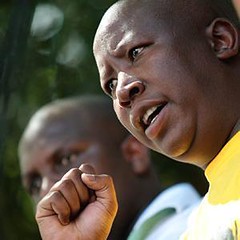
    Julius Malema: ‘I live on handouts’

    MATUMA LETSOALO AND RAPULE TABANE | JOHANNESBURG, SOUTH AFRICA – Mar 26 2010 07:08

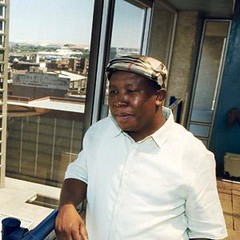
    Matuma Letsoalo and Rapule Tabane visited controversial ANC Youth League president Julius Malema at his Sandton home this week to quiz him about his unexplained riches and his war with journalists, Helen Zille and Pravin Gordhan.

    In his political overview at the recent ANC national executive committee (NEC) meeting, President Jacob Zuma strongly criticised ANC Youth League leaders for undermining his authority. Were you surprised?

    Zuma is not raising concerns about the youth league for the first time. He has always raised concerns and engaged the youth league where he felt he was not comfortable with ­certain statements.

    To me, the president’s input to the NEC was more of an internal debate, and in the internal debate we have always asked for people to be honest and articulate so that we get to know what other people think of others in the ANC.

    There was no shock. I stood up there and I responded. I clarified the statement of the youth league and we agreed, we moved forward. That’s why today the youth league is not in the newspapers [or being] asked to retract or apologise.

    Why did your attack on Finance Minister Pravin Gordhan for under-resourcing the National Youth Development Agency go as far as saying he did not understand the ANC and was an unelected ANC leader?

    The youth league was raising its frustrations with the ministry of finance. We simply could not and still do not understand why the minister of finance would not appreciate that we are sitting on a ticking time bomb in relation to young people.

    Seventy-five percent of the unemployed in the country are young people. President Zuma in his State of the Nation speech dedicated [a lot of his time] to youth development. The budgeting should have been in line with what the president said [there].

    We accept the criticism that says “perhaps you should have raised the matter internally”.

    But we stand firm that there is reluctance on the part of treasury … and we are fighting [that]. We think we need to put more pressure on Gordhan to accept that we have a problem.

    If you look at people who are protesting, it’s young people. Where do these young people come from? They come from communities because they have nowhere to go. They have got time to be running on the streets and burning tyres.

    Zuma has said the attack on Gordhan is an attack on him.

    It’s him who appointed Gordhan. That is why we are saying we have accepted that. He is the president. [Any] attack on his ministers is an attack on him. [The president] is right, but this does not stop us from raising issues.

    You have insinuated that people in the South African Revenue Service (Sars) are working with some ANC leaders who do not want Zuma to be president?

    It’s possible. We have in the past experienced institutions of the state being used to further political factional battles. It would not be for the first time and that’s why now we must nip it in the bud, because it is the same situation which led us to where we were before Polokwane. We don’t want a repetition of that, where institutions of the state are used to further political battles.

    What’s your view on the proposal of lifestyle audits of public ­officials?

    It’s factional. It’s very wrong. We support lifestyle audits, as long as it’s not factional and targeting certain individuals. A lifestyle audit is conducted by Sars. The Scorpions used to do the same thing in the past. It’s not a new thing. But once you say “lifestyle audit to deal with corrupt individuals, to deal with a group of individuals in the ANC”, it means you have grouped certain people and you are targeting them.

    Don’t you think it’s fair to ask how you have accumulated your wealth at such a young age?

    It’s very fair. But write facts. What the media did [showed] it was never interested in the facts. I am not rich. I do not have millions as reported. All my houses have got bonds. They are financed by banks. I’ve never got any lucrative tender from anybody, including the company called SGL.

    I live on handouts most of the time. If I don’t have food to eat, I can call Cassel Mathale [premier of Limpopo] and say: “Chief, can you help me? I’ve got nothing here.” I can call Thaba Mufamadi, I can call Pule Mabe [ANCYL treasurer general] or Mbalula. They all do the same with me. That’s how we have come to relate to each other.

    That’s why at times you can’t even see our poverty because we cover each other’s back. As comrades, we have always supported each other like that.

    The question is whether you have used your influential position as youth league president to lobby for business for people who are close to you.

    You must go and refer to the years they refer to and look at who was in power at that time. Sello Moloto [former Limpopo premier] was running that government there and he did not want me at all. Cassel just came in now and I’ve never got anything under his regime.

    What I am asking for is that, if there is anybody with concrete evidence that I have manipulated tender processes, that person must report me to the police … And I’ve also asked that the leadership of the state, be it treasury or police, if they go to my account and find millions, they must take those millions and put them into institutions that can help children of the poor.

    I’ve got no millions. If there is anything I must sign with whomever to go and search my account … and if that person discovers millions, he must take those millions.

    You have now opened a new war front — with journalists who are reporting about you. Why is that?

    Journalists get information through illegal means and sometimes without even verifying they go and write. What I have been subjected to in the last four weeks or so was just a personal attack on me without verifying the facts.

    So we said: “Comrades, we need to know who these people are and what are their interests.” That’s how we came across the information about Dumisane Lubisi [City Press investigations editor]. Since then information about many other journalists has been coming from people who drop information at our offices.

    Corruption must be fought everywhere … It must be exposed so that people don’t compromise journalism as a profession. Instead of journalists rising in support of the youth league to expose corruption, they defend each other through an unwritten rule that you can’t write about another journalist, which is wrong.

    Journalists can be bribed. Payola is too much among journalists. As we speak, there is a Sowetan reporter in Limpopo who was suspended on allegations of corruption.

    It’s wrong to intimidate journalists by saying you will investigate them if they write stories about you. I am not investigating journalists. Where corruption manifests itself, whether it is a journalist [or not], it must be confronted. Unethical journalism must be exposed.

    Are you not concerned that the song Bulala Amabhunu could be interpreted as racist and anti-white?

    I have been singing the song for nine years. The tendency is to use everything to discredit the youth league and create unnecessary fear among white minorities. But you should know that these people undermine the intellectual capacity of African masses.

    Which people?

    These people who are saying we want to kill white people. They think we can’t think. The question I have always asked them is: “Why, when President Zuma said we must give him his machine gun [Awuleth Umshini Wam], nobody took the machine gun to Zuma? Our people understand the importance of the song, especially when we commemorate days like Human Rights day or Sharpeville day …

    Through songs we have the imagination of what our people have gone through in the same way that they remind themselves about the Anglo-Boer war when they sing about General de la Rey.

    Why is Helen Zille [Democratic Alliance leader] not taking Collins Chabane to court because he has recorded this song? Why is the DA [or] AfriForum not taking Blondie Makhene to court?

    Don’t you think that you are fuelling racism in the country?

    Race — it’s a national question. We are still divided along racial lines. The economy is growing and still benefiting people along racial lines. The gap between the poor and the rich is widening and it’s racialised. Let’s confront the issue. The more we talk about it, the more we are going to accept that there is a problem … Why have they never organised a march to demand that farm workers should not be killed, if they are not racists?

    The Equality Court said you must apologise publicly for your utterances about Zuma’s rape accuser. Are you prepared to do this?

    I am appealing the case … Professor Pierre de Vos, a legal expert in the Western Cape, [has said] very clearly that he does not understand where the judgement came from because there has never been an intention in Julius speech to hurt. The magistrate in her judgement does not demonstrate any … intention to harm. That’s what you must prove in a matter of a hate speech … Honestly, I think the magistrate was influenced by newspapers more than law. She did not apply her mind.

    Zille, AfriForum and many other organisations are taking you to court for hate speech. Are you likely to spend most of your money and time in court from now?

    Zille is a coward. She has always insulted me but I never ran to the courts. Now she can’t take the heat any more. Every time I open my mouth she runs to the court. She called me inkwenkwe [uncircumcised boy], which is the worst form of insult you can give to an African man, especially coming from a white woman.

    Source: Mail & Guardian Online
    Web Address: http://www.mg.co.za/article/2010-03-26-julius-malema-i-live-on-handouts

  • Charter Schools: The White Man’s Panacea For Education

    Charter Schools: The White Man’s Panacea for Education

    March 25, 2010
    By Solomon Comissiong

    The illusion that white liberals and conservatives seldom find common ground is farcical. It is a deceptively dangerous illusion that far too many believe in. It is important to understand that the perceived chasm that separates white people politically is, in all actuality, very small in regards to a number of social issues. When you can clearly indentify your foes as well as your friends, it makes all
    ensuing battles that much easier.

    Most white liberals(noticeably different from a truly progressive
    oriented white person), as with white conservatives, have very little
    intention to progressively work towards eradicating the root causes of
    social issues that plague most black communities in America. It is
    extremely important for people of color to understand this very
    important fact—white liberals will never seek on their own to
    destroy institutional racism and white supremacy. It should be obvious that white conservatives will not as well, but then again they never claim to give a damn about black people. They are what they are, whether you like it or not.

    White liberals, on the other hand, love to profess how liberal they
    are on “civil rights” issues, but when it comes to taking an
    aggressive approach towards things like institutional racism, or even
    the military industrial complex, they are silent. And as the Bard has
    written, “Silence speaks consent.” If they were surgeons their
    solution to fixing a six inch gash in your arm would be to give you a
    band-aid rather than disinfecting the wound, dressing it, and
    sufficiently wrapping it.

    So when it comes to “complex” issues that black and brown youth face, failing schools for instance, their approach is to provide a little
    patchwork here and a little patchwork there. Their approach is never
    to admit that if these schools were white they would never be allowed
    to fail in such a manner as many schools of color are failing, largely
    based on the fact that they are under-supported and socially
    neglected.

    Neither liberals nor conservatives would not suggest some of the same “remedies”, to predominately white schools, that they often recommend to black and brown schools. And yes, with the re-segregation of today’s school systems, which are much like those of the 1960s, in terms of racial makeup, we can refer to them as black, brown or white.

    As a matter of fact, it is very important that we do this since a
    great many black and brown schools do not even receive half of the
    governmental support and funding as do many of their white
    counterparts.

    Jonathan Kozol, author of The Shame of a Nation and Savage
    Inequalities (and a relatively progressive white man), has spent much of his career outlining the institutionally racist nature of America’s failing public school system within both books. Failing to delineate the racial makeup of these predominately black and brown schools, which are systemically neglected by the US government, only confuses the issues.

    Failing to identify the racial disparities prevents us from properly
    identifying the racist and white supremacist roots in these problems.
    And just like failing to identify the root causes of any physical
    malady will prevent a physician from properly diagnosing the sickness of a patient and therefore subsequently leading toward a recovery, so too is the case for most social issues. The institutionally unequal disparities between black schools and white schools are logically no different.

    On March 19, 2010 I witnessed an “interesting” debate surrounding
    education and charter schools on the vastly mainstream oriented MSNBC morning program, “Morning Joe”. The last 20 minutes of the program featured New York State Senator Bill Perkins ((D) 30th Senate District). Bill Perkins, jurisdiction (within Harlem) is predominately black, as is he. He was engaged in a charter school debate with the conservative blow hard host of the show, former republican congressman Joe Scarborough.

    Perkins was arguing to the point that Charter Schools (which are
    mostly publicly funded but privately run) were not the answer towards
    adequately improving educational standards within Harlem, as well as in the rest America’s communities of color. The always smug and
    overtly disingenuous Scarborough continually claimed that charter
    schools were the best answer for black communities to get the
    education they deserve (we can only imagine what the means). He tried to back up his claims up by selectively picking pieces out of a recent Stanford study on the effectiveness of charter schools.

    When Perkins pointed out that the same Stanford study contradicted his (Scarborough’s) assertion that charter schools were the panacea to solving the education problem, Scarborough rudely spoke over him. The Stanford study clearly stated charter schools, in general, do not out perform public schools. Almost half of all charter school kids perform at the same level as children enrolled in public schools. And close to 40 percent (37 percent) do worse than public school kids.

    These are important facts that Joe Scarborough conveniently omitted
    from his on-air baseless diatribe. Scarborough then, in a clear act of
    desperation, started to reference people like John Legend and Al
    Sharpton as individuals who thought that charter schools were a good idea. This was a feeble and asinine way of trying to prove his point. When did they become experts on public education? That crap may work on legions of corporate media’s most faithful viewers but not on the author. I am no fan of corporate “news’ nor am I a fan of programs like “Morning Joe”. Using the playground debate tactics that Scarborough employed he might as well have arbitrarily thrown a couple more random black luminaries to prove his specious argument.

    Al Sharpton has clearly shown his willingness to climb into bed with
    the likes of Arne Duncan (Secretary of Education) and Newt Gingrich
    (former rightwing congressman) in order to curry favor with Obama and his misguided charter school agenda. One can only imagine what deals were struck behind closed doors to bring that motley crew together. The New York state senator (Perkins) made the most profound statement on “Morning Joe” when he alluded to the fact that white people, in general, are not willing to prescribe charter schools to their own children in their own communities.

    This was a statement to which Joe Scarborough had no clear rebuttal. He had no significant response because it all boils down to the fact that Joe Scarborough could not give a damn about black youth in America’s socially neglected communities. He could not give a damn about the very real and predatory “school to prison pipeline” strategically set up in many predominately black and brown schools.

    Scarborough could not give a damn about black boys that are routinely (and unjustly) profiled and harassed by the police. And he certainly could not give a damn about the prison industrial complex which is destroying black families and communities! All of the aforementioned are irrefutably institutionally racist and have direct and indirect impacts on schools in black and brown communities.

    He (Scarborough) pushes charter schools for the same reason Arne
    Duncan (who was appointed by Barak Obama) does; they represent the privatization of public schools as we know it. This is where the
    neoliberal agenda romantically converges with the neoconservative
    agenda regarding education. While serving as the CEO of Chicago’s
    public school system Arne Duncan made a name for himself by turning over the control of predominately black and brown public schools to the military.

    This is certainly a move he would never try with predominately white
    schools. Rather than to recruit the expert, experienced pedagogues of our country he fell into the historical trend of bringing on more
    “muscle” to control blacks and browns…not unlike the managers of
    slave plantations of yore. His blueprint is to control by
    dispassionate force rather than to inspire by skilled, empathetic
    pedagogy.

    Endorsing charter schools is the easy way out instead of putting the
    money and requisite resources into revamping, rebuilding, and
    adequately funding public education in this country. Privatizing
    American schools and excluding the masses of black and brown children is simply another way of keeping the institutionally racist status quo in tact.

    The measures of adequately funding schools are only viable in white
    “well to do” communities where property taxes and capitalist values
    play a major role in public school funding, never mind that property
    tax financing of schools is one of the great injustices hovering over
    this topic of public education. If this country had even an once of
    equity, when it came to all children, it would make sure that all
    public schools, regardless of where they were located, would get equal funding and support.

    However, since America is firmly situated on a foundation of
    capitalism, social injustice and racism; the U.S. will continue to
    place superficial “band-aids” on the deep wounds of an institutionally
    racist public educational system that plagues black and brown
    communities.

    The dreams of Brown v. Board of Education are just that, dreams.
    Separate and unequal still rule the day within America’s failing
    public school system. Failed policies such as No Child Left Behind and unqualified government officials (Arne Duncan who has never spent a minute as a classroom teacher) are continually given the reigns to decide the future of millions of youth of color. Even Diane Ravitch, a former George HW Bush Assistant Secretary of Education, explicitly states the failings of NCLB and the myths of charter schools in her new book, The Death and Life of the Great American School System.

    She has had an epiphany late in life, but an epiphany nonetheless.
    Public schools in America need to be approached in a radically
    different manner that involves more emphasis placed into critical
    thought as well as comprehension, and not just regurgitation of
    material that is forced down students’ throats in order to pass
    statewide standardized tests.

    An educational system that espouses memorization without comprehension and rote learning without critical thinking only produces robots that will continue to accept whatever it placed before them rather than to question, consider and decide for themselves. But perhaps that is the intent of millennium public education. Robotic thinkers will not challenge and actively resist that same system that makes them robotic in the first place.

    The curriculum in public schools needs to be revamped and made more culturally relevant, especially in communities of color but likewise among their white counterparts lest millennium white students continue being culturally disadvantaged. And yes, more money needs to be placed into these schools. Its funny that liberal and conservative white politicians will claim that you cannot simply throw money into education and expect it to magically pay off, however when it comes to placing their children in expensive private schools or well funded public schools they have no issue with that.

    These disingenuous cretins systemically throw trillions of dollars
    into military aggression that ultimately kills people, however, when
    it comes to investing in the lives of millions of youth, they can’t
    seem to find any good reason to do so. And now they have a brown
    skinned man in the White House willing to do their bidding.

    Obama’s commitment, like his dim witted predecessor (Bush), is to his military expenditure, Wall Street and his corporate handlers.
    Unfortunately far too many of us cannot see through the façade. The
    Change You Can Believe In campaign has quickly become The Beliefs You Can Change administration.

    Solomon Comissiong is an educator, community activist, author, public speaker and the host of the Your World News radio program
    (http://www.blogtalkradio.com/Your-World-News). He may be reached at: [email protected].

  • Guateng Premier Speaks on What’s Behind Financial Woes in South Africa

    Whites cause Tshwane’s financial woes: Mokonyane

    Mar 12, 2010 6:16 PM
    ——————————————————————————–
    Gauteng premier Nomvula Mokonyane’s statement that Tshwane’s financial problems are largely a result of defaults by white ratepayers was based on fact, spokesman Dumisani Zulu said.
    ——————————————————————————–
    Zulu said the premier’s knowledge was based on a report done by the municipality. Reacting to Mokonyane’s Thursday comments, the Democratic Alliance said: “She is being a divisive factor in our province and she is undermining nation building and promoting racism through her comments, so she must prove it”.

    “The race card is always shown when the ANC does not have answers to a problem. The easy way out is just to blame the ‘whites’ and avert attention from the real problems,” the DA said in a statement on Friday.

    Zulu said however, that it was “unfortunate” that rate payers were predominantly white. He said Mokonyane’s statement was reflective of [Cooperative Governance] Minister Sicelo Shiceka’s statement that Tshwane was “vulnerable”.

    Mokonyane reportedly told a Pretoria Press Club that “the City of Tshwane does not deserve to be what it is today because it has a turnaround strategy but has not been able to implement it”.

    According to Mokonyane, a large number of predominantly white rate payers’ associations in the Tshwane metro were not paying for services.

    They were rather putting their money into trust accounts and this, she said, was rendering the municipality dysfunctional.

    She said some of them were even deliberately withholding payments. She urged residents to work closely with government.

    The DA challenged the MEC to prove her statements, saying it believed Mokonyane was being “economical with the truth” by blaming one population group for what is essentially the ANC’s failure to properly manage the Tshwane Council.

  • Sharp Rise in South Africa Police Shootings

    Sharp rise in SA police shootings

    The number of people shot and killed by South African police in 2009 increased by more than 25% on the previous year, new figures show.

    The Independent Complaints Directorate say that 556 people died in 2009.

    The news comes as politicians debate an amendment to the Criminal Procedure Act about the use of force by police.

    Recent comments by senior ministers recommending a shoot-to-kill policy have provoked a heated argument about police violence in the country.

    South Africa has one of the highest rates of violent crime in the world and the country’s police chief Bheki Cele has defended the use of “deadly force” by police when necessary.

    But opposition parties and other rights groups claim lethal force has caused an increase in the loss of innocent lives.

    In November 2009 there was outrage over the shooting of a three-year-old boy by a police officer who allegedly mistook a pipe the boy was carrying for a gun.

    Story from BBC NEWS:
    http://news.bbc.co.uk/go/pr/fr/-/2/hi/africa/8587560.stm
    Published: 2010/03/25 16:26:41 GMT

  • Hamilton, Ontario-Canada Lecture in Defense of Iran

    Dear friends,

    This is a link to a video of a talk I gave March 18 at McMaster College in Hamilton, Ontario, Canada. The video was posted online on March 19, and as of March 24 it’s been viewed more than 1,000 times.

    http://www.shiatv.net/view_video.php?viewkey=be8a5080919cac82eb78

    The talk, titled “Media Myths about Iran,” was originally scheduled for January, but after some pro-Shah forces mounted a campaign to oppose the event, the original event was canceled. The talk was then rescheduled under the co-sponsorship of the student group McMaster Muslims for Peace and Justice and the Hamilton Coalition to Stop the War.

    More than 100 people attended the presentation, including a busload who traveled more than an hour from a mosque in Toronto. Only about a dozen of the pro-Shah people showed up and were unable to disrupt the event. Members of the mosque videotaped the talk and posted it online.

    In addition to being a victory for free speech, I think the presentation gave a good overview of the arguments against the main charges against Iran, subjects I took up in my book “In Defense of Iran: Notes from a U.S. Peace Delegation’s Journey through the Islamic Republic.” (www.DefendersFJE.org/dpi)

    I’d like to ask you to view the video and think about forwarding the link to your friends and contacts. The more we can do to counter right-wing attempts to demonize and isolate Iran, the greater will be our chance of preventing another war.

    One more thing: The Campaign Against Sanctions and Military Intervention in Iran (CASMII), of which I’m a board member, is asking all progressive organizations and individuals to endorse the demands of “No War, No Sanctions, No Internal Interference in Iran!”

    If you agree with these demands, please let me know by responding to this e-mail. CASMII will be posting a list of endorsers in order to show the widespread opposition that exists to U.S. and allied aggression against Iran.

    For a world of Justice and Peace for All,

    Phil Wilayto
    Author and Activist
    Richmond, Virginia, USA

  • Researchers Seek More Support for Agriculture

    Researchers seek more support for agriculture

    By Ayodamola Owoseye
    Nigeria Next
    March 25, 2010 03:36AM

    Agricultural scientists have asked for more support from government to propagate the distribution of more improved seedlings to farmers, for the development of the sector.

    Wasiu Odofin, the director/chief executive officer, National Centre for Genetic Resources and Biotechnology (NACGRAB), made this call during a courtesy visit alongside Nigeria’s Technical Sub Committee on the Release of Crop Varieties to the International Institute of Tropical Agriculture (IITA) in Ibadan, Oyo State.

    Appraisal of research institutes

    The committee commended the efforts of research institutes for their effort towards enhancing food production in the country through the provision of varieties of improved seedlings to farmers in Nigeria and sub- Saharan Africa. Peter Oyekan, Chairman of the Committee, said the commendation is based on the certification and assessment of the various performances of crop varieties released in the country.

    “The improved varieties developed by IITA had contributed significantly in raising crops’ yield as they have been performing well in farmers’ fields, because breeding has always been targeted at particular ecological zones and specific production constraints relating to pests and diseases and this is increasing farmers’ incomes as well.

    “For example, maize varieties that are drought-tolerant are targeted for the drought-prone regions, while stem borer-resistant varieties makes it possible for maize to thrive in the south-eastern zone of the country where stem borers are a major challenge. Others are high yielding cassava varieties, improved hybrid yam varieties, Striga and Alectra resistant cowpea, and soybean rust-resistant varieties. All these are doing well and they are making it possible to increase agric production.

    “And this has consequently, earned Nigeria the position of not only the largest world producer of cassava, but has also resulted in significant gains in maize, yams, soybean, plantain/banana and cowpea production,” he added.

    More research support

    Mr. Odofin said the Biotechnology Centre already has a closer working relationship with the IITA, especially in the conservation of the country’s genetic resources to create a synergy that will facilitate greater researches and improve efficiency in the use of resources.

    “IITA needs to be commended for the capacity building it has offered to Nigerian scientists. More of such opportunities are still needed in the future. NACGRAB is building its core scientists and we need IITA support to strengthen our capacities,” he said.

    Dr. Paula Bramel, IITA’s Deputy-Director, Research, while receiving the delegation, reiterated the institute’s goals of reducing poverty in Africa.

    “The institute remains open to partnerships as part of its strategy is aimed at improving the livelihoods of farmers,” she said.

    Farmers’ confirmation

    Oladele Quadiri, a farmer at the Epe, Lagos, said he has enjoyed planting cassava stems from IITA ever since he was introduced to it in 2006 by the Lagos State Agricultural Development Agency in Oko-Oba.

    “The yields from the cassava are very impressive as they are bigger and disease resistant. They also bring in more money and grow at quicker pace than the normal local cassava we used to grow,” he said.

  • Sudan Threat to Expel Poll Monitors

    Tuesday, March 23, 2010
    16:18 Mecca time, 13:18 GMT

    Sudan threat to expel poll monitors

    Sudan’s president has threatened to expel international election monitors after they called for a delay in the country’s first multi-party elections in 24 years.

    The US based Carter Center called for a “minor” delay in the vote, scheduled for April 11, to deal with logistical problems, with hundreds of thousands of names missing from the voters’ list weeks before the polls.

    Omar al-Bashir, Sudan’s president, responded angrily on state TV on Monday saying “any foreigner or organisation that demand the delay of elections will be expelled sooner rather than later.

    “We wanted them to see the free and fair elections, but if they interfere in our affairs, we will cut their fingers off, put them under our shoes, and throw them out,” he said.

    Officials from the Carter Center, the only long-term international observer mission in Sudan, said Sudan’s presidential and legislative elections remained “at risk on multiple fronts”, including the ability of candidates to campaign freely and the impact of delayed preparations for the vote.

    It said preparations by the national election commission were lagging as Sudan prepares for some of the most complex elections on record with at least six different votes using three different voting systems.

    It also urged Sudan to lift harsh restrictions on rallies and end fighting in Darfur ahead of the ballot.

    The election commission, however, has said the vote will go ahead as planned.

    The ballot, originally scheduled before July 2009, has already been delayed several times.

    Opposition criticism

    The opposition has criticised Sudan’s election commission for making decisions they said favoured al-Bashir’s ruling party.

    Many of them have called for the elections to be postponed, saying Sudan needs time to pass democratic reforms.

    Al-Bashir expelled major aid agencies from Darfur after the International Criminal Court (ICC), based in the Hague in the Netherlands, issued an arrest warrant for him in March last year for alleged war crimes in Darfur.

    The president refused to deal with the court, and decided to run for re-election, a clear attempt to boost his legitimacy at home.

    Other foreign observers are expected to arrive in the country before the vote.

    Source: Al Jazeera and agencies

  • African Union Begins Anti-Trafficking Campaign in West Africa

    AU begins anti-trafficking campaign in West Africa

    Written by Akor Ojoma and Aisha Umar Agaie
    Thursday, 25 March 2010 02:21

    African Union commission launched campaign against trafficking in persons for the Economic Community of West African States (ECOWAS) region.

    Speaking during the launch of the campaign and opening of the workshop on operationalising the Ouagadougou action plan in Abuja, Commissioner of Social Affairs the Commission H.E. Adv. Bience Gawanas said the campaign aims to raise awareness towards tackling the problem of trafficking in human beings throughout the continent.

    AU associated the cause of trafficking in the region to poverty, large family size, lack of educational opportunities, and lack of employment and low status of children.

    She said many African states are yet to ratify the Trafficking in Persons Protocol, the international instrument adopted at UN level to fight human trafficking and or fully implement it with specific legislation in their respective domain.

    She urged ECOWAS member states to galvanise commitments to the cause by joining the AU in implementing the Ouagadougou Action plan.

    Earlier, President of the ECOWAS Commission Ambassador Victor Gbeho who was represented by the vice president John Deans said the forum is an opportunity to determine how best there may be cooperation between the various countries in the region towards the elimination of the scourge of trafficking in persons.

    Executive secretary of the National Agency for the Prohibition of Traffic in Persons and Other Related Matters (NAPTIP), Barrister Simon Chuzi Egede, said the AU COMMIT is another initiative of the collaborative efforts made by UN, AU, and ECOWAS and NAPTIP geared towards fighting the scourge of trafficking in persons.

  • Ethiopia ‘Silencing Its Critics’ In Lead Up to National Elections

    Ethiopia ‘silencing its critics’

    The Ethiopian government is waging a sustained attack on its opponents in the run-up to an election in May, US-based Human Rights Watch says.

    The group accuses the ruling EPRDF party of using its control of local government to withhold services and job opportunities from political opponents.

    The activists also said new laws had severely restricted the activities of activist groups and journalists.

    Government officials said the claims were ridiculous and outrageous.

    Spokesman Bereket Simon told the BBC that the report was aimed at tarnishing the image of the country.

    Deadly protests

    Prime Minister Meles Zenawi was hailed as one of a new generation of democratic African leaders in the 1990s, but rights groups have increasingly accused him of cracking down on his critics.

    One of the country’s most prominent independent newspapers – the weekly Addis Neger – was closed in November.

    And last week Mr Zenawi admitted to jamming transmissions from the Voice of America’s Amharic language service, accusing it of broadcasting “destabilising propaganda”.

    “Expressing dissent is very dangerous in Ethiopia,” said Georgette Gagnon, Human Rights Watch Africa director.

    “The ruling party and the state are becoming one and the government is using the full weight of its power to eliminate opposition and intimidate people.”

    The BBC’s Will Ross says opposition groups disputed the last election results in 2005, but when protestors took to the streets, they were shot.

    Reports of the number of people killed varied between 50 and almost 200.

    Human Rights Watch says the government has ensured these events will not be repeated when the country votes on 23 May, because there is no longer any way to protest.

    Mr Bereket dismissed the claims and said people had a constitutional right to stage demonstrations.

    Story from BBC NEWS:
    http://news.bbc.co.uk/go/pr/fr/-/2/hi/africa/8585619.stm
    Published: 2010/03/24 15:51:58 GMT

  • Winfrey Settles Lawsuit Brought by Former Headmistress in South Africa

    March 24, 2010, 11:21 am

    Winfrey Settles Lawsuit Brought by Former Headmistress

    By DAVE ITZKOFF
    New York Times

    You may see Oprah Winfrey next week on her syndicated talk show, but you won’t be seeing the broadcasting queen in a Philadelphia courtroom.

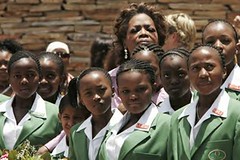
    On Tuesday Ms. Winfrey settled a defamation lawsuit filed by the former headmistress of a school she set up in South Africa, who had said that the talk show host had defamed her after a sex-abuse scandal there, Reuters reported. Nomvuho Mzamane ran the Oprah Winfrey Leadership Academy for Girls in South Africa at its founding in 2007 but left after students there said they were being abused by another staff member.

    After Ms. Winfrey held a news conference and said that Ms. Mzamane had ignored the students’ complaints, Ms. Mzamane said Ms. Winfrey had defamed her and made it difficult for her to find another job.

    A statement from lawyers representing both women said the dispute had been settled “peacefully to their mutual satisfaction” and both women had withdrawn their complaints, according to Reuters.

    Terms of the settlement were not disclosed. A trial was scheduled to begin on Monday in federal court in Philadelphia, where Ms. Mzamane was living when she filed the suit.

  • U.S.-Ghana: The Biofuel Scam

    U.S. – Ghana: The biofuel scam

    Wednesday 24 March 2010
    by Caroline Boin

    US Department of Agriculture figures reveal that a quarter of US cereals grown in 2009 went to biofuel, turning cheap food into expensive fuel. This pushes up food prices and damages the environment yet President Obama promised “continued investment in advanced biofuels” in his recent State of the Union address. A new report in Ghana shows how much damage biofuels can do.
    A paper on the 2007-2008 food crisis by the World Bank Development Prospect Group, leaked in 2008, said US and European Union biofuel production was responsible for 70 to 75% of the price rises—against 3% admitted by the USDA.

    These subsidies are about political pandering, not cutting greenhouse gases. But despite a backlash against biofuels in 2008, they are still in favour.

    Biofuels from crops like maize, sugar and palm oil have more than tripled since 2000. The USA is to increase ethanol blending to 15 billion gallons by 2012 and 36 billion by 2022, up from nine billion last year.

    A recent report by Rice University (Texas) found that the USA spent US$4 billion on biofuel subsidies in 2008 to replace a mere 2% of the US gasoline supply. It estimates that this costs taxpayers about US$82 per barrel, or US$1.95 a gallon more than the retail price of petroleum fuel. By 2022, US biofuel subsidies will have totalled US$400 billion, according to environmental pressure group Friends of the Earth. The EU is no better, giving around €3.7 billion (US$5.2 billion) in biofuel subsidies in 2007, aiming to replace 5.75% of transport fuel by the end of 2010.

    On top of wasted taxes and higher food prices, biofuels make little environmental sense: production in the USA and the EU can release more emissions than it avoids. Nobel-Prize-winning chemist Paul J. Crutzen estimates: “For rapeseed biodiesel, which accounts for about 80% of the biofuel production in Europe, the relative warming due to N2O [nitrous oxide] emissions is estimated at 1 to 1.7 times larger than the quasi-cooling effect due to saved fossil CO2 [carbon dioxide] emissions. For corn bioethanol, dominant in the US, the figure is 0.9 to 1.5.”

    Although the United Nations Food and Agriculture Organization sees little chance in the near future of another “concurrence of so many factors” that caused the food crisis, there is no room for complacency. Food prices are taking a long time to fall (maize is still 50% above its 2003-2006 average), while the number of hungry people recently topped one billion. This is a worrying trend as there has been an increase in both the absolute number and the percentage of hungry people, reversing decades of progress.

    Ethanol already takes up 27 million acres out of the 90 million acres of maize in the USA: from 2006 to 2008, the World Bank’s Food Price Index doubled.

    If biofuel was about the environment, the USA would not impose tariffs on environmentally-friendly ethanol from Latin America and the Caribbean. Likewise, new EU tariffs are clearly aimed at American producers who send 95% of their biofuel exports to Europe.

    In addition, there is the fear that natural habitats will be converted to farmland to take advantage of biofuel subsidies. The diversion of existing US cropland to biofuels has shifted soya bean production to South America and Indonesia, encouraging deforestation.

    In Ghana, a study into biofuels released this month by Action Aid Ghana (AAG) and FoodSPAN cites land grabs, deforestation, use of arable lands, destruction of existing crops and damage to biodiversity.

    Nor do biofuels save energy. Some varieties require as much to grow, transport and process as they release when you burn it.

    And according to the World Business Council for Sustainable Development, at oil prices below $70 per barrel (the recent range is US$70-85), maize-based ethanol is about the same price at the pump as normal petroleum fuels—not counting what taxpayers have already paid in subsidies.

    The USA and the EU claim “second-generation” biofuels from plant cellulose or waste will help achieve their stringent self-imposed “renewables” targets but this is a nascent industry that has yet to deliver value for money. The EU said it would reconsider biofuels following the food crisis. But there is powerful pressure from farm lobbies in both places.

    Agriculture faces many difficulties, from how to establish land rights to how to disseminate technology or adapt to climate change. But the biofuel problem is a no-brainer.

    Creating an artificial market with subsidies is no way to reduce emissions, save rainforests or feed the poor. Biofuel subsidies are just a Green handout to farm lobbies in rich countries: it is time to end them.

    Caroline Boin is a Project Director at International Policy Network, London, an independent think-tank working on economic development.

  • The Struggle to Save Black Radio

    The struggle to save Black radio

    By Betsey Piette
    Philadelphia
    Published Mar 21, 2010 9:00 PM

    A spirited program addressing the tactics used by corporate media to undermine Black radio was held in Philadelphia March 9. It was attended by activists already involved in efforts to stem this tide and others concerned over how to keep peoples’ news and culture alive and thriving.

    The program, hosted by the Philadelphia International Action Center and the Prometheus Radio Project, featured Iyanna “Nana Soul” Jones and U-Savior Washington from Black Waxx Multimedia. It was also the Philadelphia premier of an exciting documentary produced in 2008 by Washington entitled, “Disappearing Voices: The Decline of Black Radio.”

    Following the movie screening, Jones and Washington were joined on a panel by Cody Anderson, station manager of WURD and former owner of WHAT radio; Andalusia Knoll from the Prometheus Radio Project; Berta Joubert-Ceci of the People’s Video Network; and Jasper Jones with West Philadelphia community radio WPEB. Anderson and Jones both appear in the film.

    “Disappearing Voices” makes the point that those who control radio and other media can control what people think and what culture they want. In the Black community, radio is very important. The lack of access to this medium impacts struggles against racism, police brutality and other forms of injustice, and for jobs, affordable housing and education.

    In Philadelphia activists have struggled for years to get out the truth about Mumia Abu-Jamal, unjustly imprisoned on Pennsylvania’s death row for over 25 years. In 1997, when an interview with Abu-Jamal with Democracy Now! journalist Amy Goodman was scheduled to run on Temple University radio station WRTI, then-Gov. Tom Ridge effectively stopped the broadcast by threatening to cut state funding to the station unless it discontinued its contract with Pacifica radio.

    Black-owned talk radio station WHAT, which frequently provided news of Abu-Jamal’s case along with other community events, is now hosted by mainly white DJs. WDAS, a station previously known for playing Black artists, has switched its format to “urban contemporary.”

    “Disappearing Voices” traces the history of Black radio from the early 1940s when Black stations or white-owned stations with all-Black staff began to spring up across the South. As this phenomenon grew, more stations opened in urban areas from Boston to Los Angeles and played a major role in promoting the Black music industry. As these stations gained popularity, some white radio personalities began to adopt Black persona on the air.

    Black radio stations took up key issues that other media would not touch, including the alleged rape of 15-year-old African-American Tawana Brawley by a group of white police officers in 1987, and the 1984 presidential campaign of civil rights activist Jesse Jackson. What set Black radio apart from all other media was the promotion of serious Black talk and personality programming.

    Profits, racism and the FCC

    In the 1980s the drive for profits began to undermine Black radio, opening the way as well for the whitewashing of Black culture. MTV, for example, would play white artists singing R&B, but excluded Black artists. Stations that played “urban contemporary” music began to compete with those whose format focused more on traditional grassroots Black culture.

    The biggest changes, however, were changes in Federal Communications Commission regulations. When radio program licenses were first given out, Black stations were excluded.

    Jones noted that, “The FCC is supposed to protect the interests of the public by seeing that station owners operate with some level of responsibility to the public, which includes offering programming that serves the community as well as protecting station owners from being forced out of business by monopolies.”

    Yet in 2004 the FCC opened the door for conglomerates like Clear Channel and Infinity Broadcasting to buy up competing stations within the same listening area. The owners of WDAS, a popular Black-owned station in Philadelphia, were forced to sell the station. It was eventually purchased by Clear Channel for a sum considerably more than the original owners received. Clear Channel’s use of syndicated DJs and canned music made programming into a McDonald’s-like product — as uniform as possible — while creating a barrier between programmers and the communities they serve.

    A further attack came with the growth of Arbitron Inc., a major supplier of radio-ratings information to advertisers that many say works to keep Black radio impoverished. Arbitron’s rating system for the stations most listened to claims to include all population sectors, but in his film Washington interviews people of all ages in the Black community who have never been contacted by the company.

    “Disappearing Voices” ends on the upbeat note that struggle by the people to hold the FCC accountable and to demand radio that speaks for and by the community can turn the situation around. This message resonated with members of the panel and audience, many of whom are already engaged in doing just that.

    Prometheus Radio Project has been challenging FCC regulations while providing assistance for communities to develop their own radio using low-watt frequencies. Members of one such project, WPEB radio in West Philadelphia, spoke on the panel and from the audience. Crystle Smith described her efforts to provide a voice for Black youth with a program she directs on Change Radio.

    Berta Joubert-Ceci spoke on the role that radio has played in the struggle to advance economic and social justice in Venezuela, where much of the media is still owned by major corporations opposed to the development of a socialist economy. She noted that all over this Latin American country, workers and poor people are broadcasting their own media to challenge the corporate control.
    ——————————————————————————–
    Articles copyright 1995-2010 Workers World. Verbatim copying and distribution of this entire article is permitted in any medium without royalty provided this notice is preserved.

    Workers World, 55 W. 17 St., NY, NY 10011
    Email: [email protected]
    Page printed from:
    http://www.workers.org/2010/us/Black_radio_0325/

  • Average County in the United States Facing Financial Crises

    AP analysis: Average county was stressed in Jan.

    By MIKE SCHNEIDER and MARTIN CRUTSINGER, AP
    Tue Mar 23, 3:57 PM EDT

    Worsening economic conditions caused the nation to reach a bleak
    milestone in January: For the first time since The Associated Press
    began analyzing conditions in more than 3,100 U.S. counties nearly a
    year ago, the average county was found to be economically stressed.

    Driving the pain was a deterioration in states that earlier had
    weathered the Great Recession better than the nation as a whole. These states endured the sharpest gains in unemployment for the past three months due to job losses in such industries as energy and construction. The states include West Virginia, Idaho, Mississippi, Montana and Wisconsin.

    “What we’re seeing is the state of West Virginia getting sucked into
    the same vortex that swallowed the national economy,” said George
    Hammond, an economist at West Virginia University.

    The AP’s Economic Stress Index found the average county’s score in
    January was 11.9. That was sharply higher than the 10.8 reading in
    December, the previous high.

    The index calculates a score from 1 to 100 based on a county’s
    unemployment, foreclosure and bankruptcy rates. A higher score
    indicates more stress. Under a rough rule of thumb, a county is
    considered stressed when its score exceeds 11.

    More than 55 percent of counties were deemed stressed in January. That compares with less than 45 percent in December.

    Though the nation’s jobless rate fell to 9.7 percent in January from
    10 percent in December, foreclosure rates didn’t budge at 1.5 percent. That means 1.5 percent of households were in some stage of the foreclosure process. And the bankruptcy rate rose to 1.13 percent.

    Nevada again endured the worst conditions of any state. Its Stress
    score in January was 21.57. Nevada was followed by Michigan (18.04), California (17.29), Florida (16.29) and Illinois (15.5). Stress scores for all five states rose from December.

    North Dakota again was the least economically stressed state. Its
    score was 5.69. Next best were South Dakota (6.14), Nebraska (6.64), Vermont (8.03) and Hawaii (8.60).

    The sharpest year-to-year increases in Stress scores in January were in Nevada, West Virginia, Illinois (15.5), New Mexico (10.23) and
    Alabama (14.05).

    Early in the recession, which began in December 2007, strong demand and high prices for coal helped buoy West Virginia’s economy. But conditions worsened as worldwide coal demand slackened. And construction jobs disappeared due to the housing bust in the once-booming eastern Panhandle, Hammond said.

    West Virginia’s Stress score hit 11.32 in January, up from 9.45 in
    December. Pushing up the score was a surge in lost jobs.

    “Those job losses have been widely distributed across almost all
    sectors,” Hammond said.

    Early on, Mississippi, too, avoided the worst effects of the downturn
    because of rebuilding jobs from Hurricane Katrina and construction
    projects that were under way before the recession began. It also never experienced the housing bubble that triggered the downturn elsewhere. But in the past year, Mississippi lost more than 13 percent of its construction jobs.

    Mississippi’s Stress score jumped to 13.36 in January from 11.69 in
    the prior month, driven by higher unemployment.

    “We were relatively late going into the recession,” said Marianne
    Hill, an economist at the Mississippi Institutions of Higher Learning,
    the state university system. “We now seem to be catching up with the
    rest of the country in some ways.”

    Since peaking at 10.1 percent in October, the nation’s unemployment
    rate dipped to 10 percent in November and December before falling to 9.7 percent in January and February. The widespread layoffs of a year ago have slowed. But many businesses still lack enough confidence to hire.

    “The lack of hiring remains the No. 1 threat to the recovery,” said
    Mark Zandi, chief economist at Moody’s Economy.com.

    Zandi and other economists predict the jobless rate will resume
    climbing in coming months. That will happen, in part, because people who had stopped looking for work out of frustration will re-enter the job market to resume their search.

    Nariman Behravesh, chief economist at IHS Global Insight, a private
    forecasting firm, said: “What we are seeing is the unevenness of the
    recovery. Many sectors of the economy are still struggling.”

    High-tech manufacturing is managing to make a comeback, Behravesh said. But the housing slump has only leveled off, auto production is still weak and commercial real estate remains in a deep recession.

    Counties in Kansas and South Dakota topped the list of least-stressed counties with populations of at least 25,000. Ford County, Kan. was the healthiest county with a Stress score of 4.17, followed by Ellis County, Kan. (4.31), Brookings County, S.D. (4.59), Brown County, S.D. (4.84) and Finney County, Kan. (4.86).

    California counties dominated the list of most-stressed counties.
    Imperial County, Calif., was again the most stressed county with a
    score of 31.34. It was followed by Merced County, Calif. (28.09), Lyon
    County, Nev. (27.91), San Benito County, Calif. (26.58) and Yuba
    County, Calif. (25.47).

  • Kofi Adu-Brempong Shot by University of Florida Police

    Kofi Adu-Brempong shot by University of Florida police: Update

    Community members spoke out on the University of Florida campus before marching over to the Board of Trustees meeting

    Gainesville, FL – Over 400 angry protesters – a coalition of students,
    local residents and university professors – rallied and marched to
    protest the racist police shooting of Kofi Adu-Brempong.

    Adu-Brempong is an international graduate student from Ghana who was shot in the face by a University of Florida policeman. After receiving a call from a neighbor concerned that Adu-Brempong was screaming, due to stress over his studies and his immigration status, campus police stormed his apartment, tased him three times and then shot him in the face with an assault rifle.

    Adu-Brempong is hospitalized in critical condition, having lost his
    tongue and jaw. Incredibly, the police action took less than 30
    seconds. Having suffered a case of childhood polio, Adu-Brempong was unable to walk without a cane. To add to the outrage, the University of Florida police charged him with a felony for ‘resisting arrest with violence.’

    Gainesville Area Students for a Democratic Society (SDS) led the
    campus action. Beginning with a rally and speakers at Turlington
    Plaza, the mass of protesters marched through campus to the Board of Trustees in the Emerson Hall Alumni Building. The Board of Trustees governs the entire university. Since the building was closed to the public, the protesters pulled the doors open, pushed past security and took over the building.

    They presented the board with a list of demands, including dropping
    all charges against Kofi Adu-Brempong. The other important demand is the firing of Keith Smith, the officer who shot Kofi in the face. In 2008, Keith Smith was given a verbal warning by the Gainesville city police department where he previously worked.

    Smith and three other police officers were throwing eggs and harassing African Americans in the local community. The university police ignored this warning and hired Keith Smith.

  • Unions, Community Organizations to Challenge Major Restructuring Moves in Detroit

    Unions, Community Organizations to Challenge Major Restructuring Moves in Detroit

    Schools, city government, pensions and medical center targeted

    By Abayomi Azikiwe
    Editor, Pan-African News Wire

    During the week of March 15, several key initiatives were unveiled by
    the corporate interests in the Detroit area that are designed to
    further the usurpation of local control of the city. The emergency
    financial manager for the Detroit Public Schools Robert Bobb announced that 45 buildings would be closed by June as a supposed cost-cutting measure to address the over $300 million deficit plaguing the district.

    Bobb, who is an appointee of Gov. Jennifer Granholm, released the plan at Renaissance High School on the northwest side to an invitation-only audience of several hundred people. The address was broadcast live over a number major of corporate media radio and television outlets indicating that these plans have the approval of the leading capitalist interests in the metropolitan area.

    Outside of Renaissance High School over 100 community activists and school employees picketed the address by Bobb. At one point the demonstrators marched into the Renaissance auditorium chanting “This is Our School.” Some of protesters denounced the Skillman Foundation executives who were present for their role in developing plans to dismantle the public school system in Detroit.

    According to an article in the New York Times, the plan to close 45
    schools by June “would eliminate as many 2,100 jobs, in the face of a deficit expected to peak $316 million and a dwindling student
    population.” (New York Times, March 17)

    Although Bobb announced a purported academic plan that would result in smaller class sizes, a 98 percent graduation rate for students and new schools built with a 2009 voter-approved bond proposal of $500 million, the reality is that the only policy decisions being implemented at present are resulting in a rising deficit of $100
    million since Bobb was appointed, the lay-off of school employees and the closing of buildings.

    The Detroit Federation of Teachers (DFT) immediately rejected the
    school closure plan announced by Bobb and backed by the Governor, the corporate media and private foundations that support the downsizing and eventual elimination of public k-12 education in the city. At a community meeting on March 17 held at the Detroit Public Library main branch, the Coalition of Detroit Public Schools Unions called for a mass demonstration on March 23 beginning at the DFT headquarters and ending at the school system headquarters in the New Center area.

    At a DFT meeting on March 11, the union voted to demand that Bobb be removed as emergency financial manager over the Detroit school system. The appointee has only managed to aggravate and isolate unions and community organizations in carrying out the state’s arbitrary dismemberment of the DPS.

    The impact of the school closings will constitute another frontal
    assault on the people of Detroit. A city with an official
    unemployment rate of approximately 28 percent, a foreclosure problem that is worsening every year and city governmental leadership that is working exclusively on behalf of corporate interests, will be further weakened with the privatization of public education and the firing of workers and administrators.

    However, the attacks on Detroit are not isolated and confined to this
    majority African-American city. Throughout the entire region of
    southeastern Michigan there are large-scale cutbacks and layoffs of
    employees in the public sector. Schools will be closed in Southfield,
    Lathrup Village, Livonia and other suburban communities.

    On a national level, the trend is moving in the same direction toward
    school closings and massive downsizing. In Kansas City it was
    announced by the School District that 28 schools would be closed for
    the 2010-2010 year.

    Carol Dantzler-Harris, a professional educator, wrote on the
    advanceweb.com site that “These school closings usually happen in
    areas that can least afford it. Some of the schools were in trouble
    prior to the country’s economic woes;’ low performing schools result
    in parents pulling their children out to seek a better education.
    These schools have a difficult time attracting the best teachers and
    lack the resources they need.” (advanceweb.com, March 22)

    Dantzler-Harris continued by pointing out that “The recent school
    closings got me thinking about the impact this will have down the road on post-secondary education. Many of these students will not be
    prepared for college-level work. They will struggle with basic reading
    comprehension, math and writing skills; this lack of basic skills can
    result in some students failing placement tests.”

    Unions Threaten to Strike Over Forced Cutbacks

    In Detroit municipal employees unions represented by the American
    Federation of State, County and Municipal Employees (AFSCME) have held demonstrations against the attempts to impose a 10 percent wage cut and the slashing of benefits. On March 16 AFSCME workers picketed outside the Coleman A. Young Municipal Center against the efforts by Mayor Dave Bing to impose pay and benefit cuts. Over 500 workers then attended a special hearing with the Detroit City Council to protest the proposed cuts.

    Catherine Phillips, AFSCME’s lead negotiator said that city officials
    must hear from workers who are making between $25,000 and $30,000 a year. The benefit cuts proposed by the city administration includes demands that employees must purchase generic drugs when available, the elimination of paid lunch breaks, the suspension of tuition reimbursements of up to $2,000 annually, the reduction of dependents health care coverage from 22 to 19 years of age among other concessions.
    Chants of “Strike! Strike! Strike!” emanated from the crowd during
    the public hearing before the City Council . “We have no choice but to
    shut the city down this time because we are not going to take these
    concessions,” said Michael Mulholland, AFSCME Local 207
    secretary-treasurer, during the hearing called by the City Council’s
    Internal Operations Committee. (Detroit Free Press, March 18)

    Richard Mack, an attorney who represents AFSCME Council 25 stated that the Bing administration’s deficit elimination “is not an effort to save money, but an effort to break the union, to break all these unions.” Patricia Williamson told the workers at City Hall that “I
    don’t know if the mayor can be impeached. Recall him. Whatever it
    takes. He needs to go.”

    At the same time that workers are being threatened by the
    corporate-oriented Mayor Bing, his administration is moving forward
    with schemes to “rightsize” the city in line with plans proposed by
    the corporate community. A private foundation, the Kresge Foundation, will subsidize a so-called urban planner to relocate in Detroit to implement plans to reconfigure the city that will result in the mass dislocation of residents.

    The Detroit News reported on March 18 that “The Kresge Foundation
    confirmed Wednesday it is paying the undisclosed salary of Toni
    Griffin, the director of community development in Newark, NJ, who has led efforts to revive its downtown.” (Detroit News, March 18)

    “The question of how the city thinks about the future, its form and
    functions are so large that it seems to me any help that Toni can
    provide will be invaluable,” said Rip Rapson, president of the Kresge
    Foundation. “My sense is it’s going to be an extremely valuable asset
    to the city. It’s up to the city to figure how to use that asset.”

    Even the Detroit News acknowledged that “The announcement underscores the influence of private foundations in Mayor Dave Bing’s downsizing initiative. Foundations, including Kresge, helped fund Data Driven Detroit’s block-by-block study of vacancies and housing conditions that could serve as a blueprint for neighborhood consolidations.”

    A spokeswoman for Mayor Bing said that Griffin will “develop a smart
    growth alignment.” She went on to say that the city is putting
    together a “downsizing team” and that it “will expand as the effort
    progresses.”

    Griffin’s resume indicates that she served in Washington, D.C. as
    deputy director of revitalization planning and in Harlem as a
    redeveloper. She has also had some affiliation with Harvard University as a visiting design critic.

    Plans to Takeover Municipal Pension Funds and Sell the Medical Center

    Other plans for Detroit were announced as well to have the state
    legislature in Lansing pass a bill that would effectively eliminate
    the elected municipal pension board that oversees in excess of $5
    billion in funds contributed by city workers. The legislation would
    transfer control from the pension boards to the Municipal Employees’
    Retirement System (MERS) which is facing a crisis of underfunding.

    The pension fund boards have been accused by the corporate media of making questionable investments. However, most employees and retirees feel that the city pension system is run efficiently.

    In regard to Mayor Bing’s effort to transfer control of the pension
    fund “This is going to be the biggest war he’s ever fought,” said Ron
    Garcia, vice chairman of the General Retirement System. “How dare
    they try and do some (expletive) like that.” (Detroit Free Press,
    March 19)

    Also the non-profit Detroit Medical Center has announced a proposal
    for Vanguard Health System to acquire the institution. DMC board
    Chairman Steve D’Arcy told Crain’s Detroit business weekly that
    “Vanguard Health Systems is proposing the biggest private investment in the city of Detroit in history.” (Crain’s , March 21)

    Crain’s points out that “The deal requires the approval by Michigan
    Attorney General Mike Cox. And the main DMC campus must be named a tax-free zone for 12 years.”

    Detroit Receiving Hospital, which is a component of the DMC, provides health care to people who are uninsured. It encompasses a trauma unit and is staffed by well trained physicians and nurses. The takeover by Vanguard, a Tennessee-based firm, could change the entire character of the DMC and its policy on treating uninsured patients.

    Fightback Efforts Continue

    On March 23 there will be a mass demonstration outside Mayor Bing’s “State of the City” address at the Max Fisher Center on Woodward avenue. The Moratorium NOW! Coalition and AFSCME locals have issued flyers and are mobilizing for the demonstration which is demanding that there be a freeze on lay-offs and pay cuts along with a moratorium on debt service payments to the banks by the city of Detroit.

    The Moratorium NOW! Coalition is demanding that Mayor Bing declare an economic state of emergency in Detroit and demand that Gov. Granholm enact a halt to all foreclosures, evictions and utility shut-offs. On March 27, at Central United Methodist Church downtown, the Moratorium NOW! Coalition will hold a Town Hall meeting to call for a massive federal public works program to put people back to work in Detroit and around the country.

    This year represents the 75th anniversary of the Works Progress
    Administration (WPA) which put 8 million unemployed people to work on public projects including building schools, bridges, highways and damns. In Detroit the WPA workers built Western High School and made major improvement to other public facilities.

  • South African President Visits Zimbabwe on Unity Mission

    South African President Visits Zimbabwe on Unity Mission

    Zuma says parties to resume talks on unresolved issues

    By Abayomi Azikiwe
    Editor, Pan-African News Wire

    South African President Jacob Zuma visited Zimbabwe on March 17-18 to continue the negotiating process for the resolution of outstanding issues in the Global Political Agreement (GPA) . The regional Southern African Development Community (SADC) has appointed successive African National Congress (ANC) administrations in Pretoria to work toward a political settlement between the Zimbabwe African National Union-Patriotic Front of President Robert Mugabe and the opposition Movements for Democratic Change-Tsvangirai (MDC-T) and MDC-Mutambara
    (MDC-M).

    One year ago the three parties resolved to form a coalition government with President Mugabe as head of state and Morgan Tsvangirai as Prime Minister. Arthur Mutambara of the MDC-M faction was appointed as Deputy Prime Minister. ZANU-PF has retained control of the security apparatus of the state as well as other major portfolios.

    The resolution of all issues between the three parties is a major
    concern of SADC and the African Union. The AU has also supported the South African mission to work in conjunction with the Zimbabwean government to maintain stability and foster development inside the former British colony.

    After talks on March 18 at a Harare Hotel, President Zuma stated that
    “The parties have agreed to a package of measures to be implemented concurrently as per the decision of the SADC Troika in Maputo. I believe the implementation of this package will take the process forward substantially.” ((Zimbabwe Independent, March 19)

    Zuma stressed that the parties had agreed to engage in a series of
    talks by the end of March. “The leaders have instructed their
    negotiating teams to attend to all outstanding matters during their
    deliberations on 25, 26 and 29 March and to report back to the
    facilitator by 31st March. I will present a comprehensive progress
    report to the chairperson of the SADC troika, President Armando
    Guebuza of Mozambique.” (Zimbabwe Independent, March 19)

    President Guebuza told reporters from the Mozambique Information
    Agency (AIM) that he was confident that the political situation in
    Zimbabwe was moving towards normalization. The President was speaking in Windhoek, the capital of Namibia, during events to celebrate the 20th anniversary of the national independence of this Southern African nation.

    According to AIM, “Guebuza was speaking after a brief meeting with
    South African President Jacob Zuma, who was also attending the
    Windhoek ceremonies. Guebuza currently chairs the SADC organ on
    political, defense and security cooperation, and his meeting with Zuma served to exchange impressions on the latest developments in Zimbabwe.” (AIM, March 22)

    Anniversaries of Zimbabwe and Namibia Independence

    Zimbabwe is on the eve of celebrating its 30th anniversary of
    independence on April 18. The country won its liberation through a
    decades-long movement that culminated with an armed struggle between 1966-1979.

    Since 2000 the western imperialist states led by the United States,
    the United Kingdom and the European Union (EU) imposed sanctions on Zimbabwe after the implementation of a land redistribution program that displaced several thousand British settlers who controlled the agricultural sector of the economy. With the completion of the negotiations for the adoption of a new constitution, leaders hope, will result in the lifting of sanctions.

    A ministerial committee on sanctions that was set up last year is
    planning to travel to Brussels on April 21 to talk with EU
    representatives on the lifting of sanctions against Zimbabwe. The
    committee is comprised of members of ZANU-PF, MDC-T and MDC-M including Patrick Chinamasa, Simbarashe Mumbengegwi, Welshman Ncube, Priscilla Misihairabwi-Mushonga, Elton Mangoma and Tendai Biti.

    Nonetheless, the western imperialist states are maintaining their
    sanctions against Zimbabwe. In a recent appeal issued by a group of
    activist organizations and public figures, a strong statement for the
    lifting of sanctions was made.

    Entitled “The Urgency of Lifting US-EU Sanctions on Zimbabwe”, and
    initiated by Obi Egbuna, US Correspondent to the Herald of Zimbabwe and Mukasa Dada, formerly of the Student Nonviolent Coordinating Committee (SNCC), the statement says that “While the world majority was pleased to see Zimbabwe’s political parties iron out their differences diplomatically, as opposed to resorting to military means, both the British and US Governments have expressed an extreme level of skepticism when addressing this matter.”

    This statement continues by pointing out that “The Obama and Brown administrations as well as their EU allies responded to the
    establishment of Zimbabwe’s inclusive government, by extending
    sanctions against the country for at least one more year, due to their
    inability to influence the outcome of the direction Zimbabwe’s
    leadership has chosen for its country and people.”

    The statement was endorsed by a host of organizations including The Shrine of the Black Madonna of Detroit, the National Conference of Black Lawyers, Prof. Molefi Asante of Temple University, Ms. Cynthia McKinney, former Green Party candidate for president, Prof. Gerald Horne of the University of Houston, Mr. Solomon Comissong, the Assistant Director of the Nyumburu Cultural Center at the University of Maryland, among others.

    This appeal indicates that the nation of Zimbabwe enjoys broad-based support inside the United States. Within the progressive community in the U.S., Zimbabwe is viewed within the context of the broader struggle for national liberation and pan-Africanism on the African continent.

    Another nation within the Southern African region which is also
    celebrating an important anniversary is Namibia, where 20 years ago, the leading South-West Africa People’s Organization (SWAPO) took power through an internationally supervised election that resulted from a 23 year armed revolutionary struggle against the occupying apartheid regime in South Africa.

    President Mugabe of Zimbabwe arrived in Namibia on March 20 to
    participate in the commemorative ceremonies hosted by President
    Hifikepunye Pohamba of the ruling party SWAPO. Mugabe was among the 25 leaders expected to visit Namibia for the independence observance who include Presidents Raul Castro of Cuba, Rupiah Bana of Zambia, Bingu wa Mutharika of Malawi and Jose Eduardo dos Santos of Angola.

    President Pohamba of Namiba hailed the former leaders of the Southern African countries known as the Frontline States during the
    independence war. Pohamba stated that “I am humbled to see so many of our friends, brothers and sisters who represent the international community on this special occasion.“

    The Namibian president continued that “Our nation will forever be
    grateful to the fact that Namibia gained independence under the banner of international solidarity, freedom and justice. We value the
    diplomatic and material support we received at our time of need.”

    Recounting the sacrifices of the armed struggle during the period
    between the 1960s and the 1980s, Pohamba said that “I am aware that some nationals of the then Frontline States lost their lives as a
    result of the war for national liberation. This notwithstanding, our
    brothers and sisters stood firm and never wavered.”

    Pohamba also said that “We will always be grateful for the invaluable
    support we received from them. We fought many battles. We crossed many rivers of blood and we won a decisive victory on 21 March 1990. The vote for freedom and democracy was, and remains, an irreversible choice by all our people.” (Zimbabwe Herald, March 20)

  • ANC Youth League President Julius Malema Says ‘White Boer’ Reporters Are Out to Get Him

    Malema: ‘White boer’ reporters are out to get me

    JOHANNESBURG, SOUTH AFRICA Mar 22 2010 17:58

    ANC Youth League president Julius Malema believes “white boer” journalists are conspiring against him, 702 Eye Witness News reported on Monday.

    Addressing young people at a Human Rights Day rally in Mafikeng, Malema criticised what he called “white boer” journalists and claimed they had a vendetta against him.

    702 reported that Malema told the crowd that white journalists knew nothing about the struggle for freedom.

    He also said that African journalists were being undermined.

    Malema said in his address that the Sharpeville uprising of 1960 — which later became a massacre when police opened fire and killed 69 people protesting the pass laws — was organised by the ANC, but hijacked by the Pan Africanist Congress.

    Malema told the crowd they needed to learn the correct history of the country.

    The youth league president also reiterated his call for the nationalisation of mines, telling the Mafikeng residents that they should own the minerals of their region.

    Potshots

    Two opposition leaders took potshots at Malema during a special Human Rights Day debate in a joint sitting of both houses of Parliament on March 16.

    Pieter Mulder, the leader of the Freedom Front Plus, who is also deputy minister for agriculture and fisheries in the Zuma Cabinet, said that Malema is an ill-disciplined, rude and conflict-seeking juvenile.

    “He is not only an embarrassment to the ANC, but to the whole of South Africa,” Mulder said. “He mocks each one of the ANC leaders who sit in Parliament. Why does the ANC not act against him? Are you scared of him? Do you not have the courage to, in the interest of South Africa, call him to order?”

    Helen Zille, leader of the Democratic Alliance and Premier of the Western Cape, spoke to the joint sitting about George Orwell’s concept of “doublethink”. “This involves holding two contradictory ideas in one’s head at the same time and believing both of them,” she said.

    “Doublethink involves distorting history and reality — and then denying the distortion so that you can believe your own propaganda.”

    ‘The irony was lost on Malema’

    Zille said: “Take Julius Malema propagating the nationalisation of mines, even as he brokers lucrative private mining deals to enrich himself. Or his advice to the youth of South Africa. Only a year ago, Malema said: ‘You must never role model a rich person who can’t explain how they got rich. In the ANC we must not have corrupt people as role models. Corrupt means a simple thing — you can’t explain the big amount in your bank account. In less than a year, you have got everything.

    “Yesterday you were down and out, but today you have everything which shows in your fancy dress code.

    “The irony was lost on Malema, with his Breitling watch, his Armani jeans, his various multimillion-rand homes and top-of-the-range vehicles. This contradiction symbolises the ANC today. It is the outcome of the doublethink of the national democratic revolution. It inevitably leads to cronyism, corruption and the criminal state. It is a party professing to advance people’s rights, even as it erodes them.” – Sapa

    Source: Mail & Guardian Online
    Web Address: http://www.mg.co.za/article/2010-03-22-malema-white-boer-reporters-are-out-to-get-me

    Zuma calls for an end to spying on reporters

    DENISE WILLIAMS | PRETORIA, SOUTH AFRICA – Mar 20 2010 08:02

    Reports of spying on journalists by government officials created a “totally unacceptable” scenario, President Jacob Zuma said on Friday night.

    After receiving the newsmaker of the year award from the National Press Club, Zuma said he was concerned about recent events in which government officials had dug into the personal bank accounts of a City Press investigative reporter.

    “What I’ve heard is actually shocking. We are now investigating journalists, for what?”

    Zuma was referring to reports earlier this week in whihch a group of senior reporters lodged a complaint against Floyd Shivambu, the ANC Youth league’s spokesperson, saying he was intimidating and threatening them after they refused to publish allegations of money laundering against City Press reporter Dumisane Lubisi.

    Lubisi is one of the reporters who produced a series of articles which questioned league president Julius Malema’s directorships in companies which received tenders for construction work in Limpopo.

    The basis of the report was provided to him by former Limpopo premier Sello Moloto, following questions tabled in the legislature over poor construction work by disgruntled residents, and which are available to the public.

    Malema, who hails from Limpopo, denied that he held directorships in the company’s involved in contradiction of company records.

    The league retorted that they would expose information they had that journalists received money for stories, and that they had sex with politicians to get information.

    Media freedom?

    On Friday night, Zuma said there was also a need for a debate about how far the exercise of media freedom should go.

    “When does media freedom become tantamount to the harassment of an individual? Who must make that judgement? Where do we draw the line?”

    He said these were some of the discussions which were lacking in the country and were necessary to understand each others’ position.

    “We are not seeking to interfere with editorial independence. It [the media] must be allowed to be independent to do its job,” he said, adding it was understood that as business enterprises, the media needed to make profits.

    “Editors would therefore be more inclined to run a story on a prominent person’s lifestyle over one that celebrated national achievements or developmental goals.”

    Making light of the award, Zuma said he received it because there appeared to never be a dull moment.

    “I seem to attract your attention, no matter how hard I try to stay away and out of the spotlight.”

    Earlier in a presentation, the National Press Club said according to a MonitoringSA report, Zuma had been mentioned in 22 300 print articles, 33 000 broadcasts and 12 500 online entries.

    Zuma said he was aware that some of the mentions were good while others were bad.

    “But I’m sure if they were put on a scale, the good ones would weigh very heavy,” he said to laughter.

    Other awards went to Graham Hosken of the Pretoria News for print newsmaker, Beeld photographer Theana Calitz, Kathy Mohlahlana from Eye Witness News and the South African Braodcasting Corporation’s Leila Magnus for best radio feature.

    The overall winner, Joy Summers from Carte Blanche, also received an award for the best in-depth television feature.

    The award for best camera operator went to Meggan Raubenheimer from Etv. – Sapa

    Source: Mail & Guardian Online
    Web Address: http://www.mg.co.za/article/2010-03-20-zuma-calls-for-an-end-to-spying-on-reporters

    Finding Malema’s sensitive side

    MANDY ROSSOUW | JOHANNESBURG, SOUTH AFRICA – Mar 19 2010 10:12

    President Jacob Zuma’s new communications supremo, Zizi Kodwa, believes that the president’s moves to moderate the confrontational style of ANC youth leader Julius Malema are already bearing fruit.

    In an interview with the Mail & Guardian in Johannesburg this week, Kodwa said the change in Malema was immediately apparent in the way he dealt with attacks from Young Communist League secretary Buti Manamela last weekend.

    “When Malema saw these attacks on television, he didn’t call the SABC and demand a right of reply. He called the president of the ANC to say: there’s a particular leader of the [South African Communist] party attacking me. That shows there’s already a sensitivity from Malema’s side.”

    Kodwa said Zuma had dealt effectively with Malema’s confrontational approach at the ANC’s national executive committee meeting last week, where he read the riot act on public mudslinging in the alliance.

    “Leaders need a certain decorum. How you come across is as important. Last weekend [Zuma] drew a line to save the ANC; he said that line cannot be crossed.”

    Kodwa was appointed Zuma’s special communications adviser this week, making him one of the most powerful officials in government. His appointment clearly flows from Zuma’s serial public relations disasters this year, including revelations of his child born out of wedlock, his widely lambasted State of the Nation address and his failure to timeously declare his assets.

    The president’s new PR campaign, which encompasses a “meet the masses” programme including this week’s visit to Chris Hani Baragwanath Hospital, is also linked to his recent announcement that he is available to serve a second term.

    Kodwa previously served as Zuma’s spokesperson in the ANC, putting him in competition with Zuma’s communications team in the presidency. He was clearly mindful of the reported tension between the head of Zuma’s private office, Lakela Kaunda, and the chief operating officer in the presidency, Jessie Duarte, insisting that he is “not taking over anyone’s job”.

    And he will not move out of Luthuli House, because Zuma had learned from Thabo Mbeki’s mistake: “Don’t isolate the party in favour of government; it will come back to haunt you.”

    Kodwa will straddle Luthuli House and the Union Buildings as Zuma’s “eyes and ears”, guiding his responses to national issues.
    Counting political journalists among his friends and known for his lavish birthday parties, he is notably more media-friendly than such presidential officials as Duarte, who believe the media is “hostile” to the ANC and Zuma.

    “Generally, the South African media have always been forthright and critical, like South African society, which is very active. The media have accepted Zuma is the president, and I think, in the main, are engaging him on substance and issues.

    “We don’t want a media that is embedded, that is like an imbongi [praise singer]. The media has alerted him to certain ways in which government does not work.”

    Kodwa, who cut his teeth as ANC Youth League spokesperson, is aware of the value Zuma places on loyalty, seeing that as key to his job.

    “You have to share his vision if you communicate for him. But, most importantly, you have to be loyal to the president.”

    He is diplomatic when asked whether the communication about Zuma’s love child could have been more effective. His spin doctors were roundly attacked, even by Cosatu.

    “Whatever was communicated, not everyone would have been happy.”

    Kodwa has designed a “press the flesh” programme for Zuma over the next three months, visiting protesting communities.

    Source: Mail & Guardian Online
    Web Address: http://www.mg.co.za/article/2010-03-19-finding-malemas-sensitive-side

  • South African Deputy President Kgalema Motlanthe SaysViolent Protests Should End

    Sunday March 21, 2010

    End violent South African protests – deputy president

    By Marius Bosch

    JOHANNESBURG (Reuters) – Violent South African protests over housing, jobs and lack of basic services had to end, Deputy President Kgalema Motlanthe said on Sunday, as the country marked the 50th anniversary of the Sharpeville massacre.

    For the past two months, protests in poor black townships and shantytowns have become an almost daily occurrence with police using water canons and rubber bullets to disperse protesters armed with rocks and stones.

    Motlanthe, speaking at the commemoration of the killing of 69 people at Sharpeville black township a half century ago which thrust apartheid onto the world stage, said a lesson could be learned from those protesters who did not burn libraries and loot public facilities.

    “They marched peacefully to the police stations to hand over their pass books — the badges of slavery. Therefore, in a democratic era, I urge you to use democratic institutions available to us to voice our grievances and demands,” Motlanthe said.

    The massacre of 69 people, many shot in the back by apartheid-era police on March 21, 1960, came after a protest against laws forcing blacks to carry pass books, or identity documents, at all times.

    The killing was seen as a turning point in the struggle against apartheid as the African National Congress abandoned non-violent protests and launched an armed struggle against the white-minority government.

    Analysts say the protests by poor and unemployed South Africans, many still living in shacks almost 16 years after apartheid ended, could intensify ahead of the soccer World Cup being held in Africa for the first time from June 11-July 11.

    The government hopes the World Cup will inject billions of rands into South Africa’s economy after vast amounts have been spent on upgrading infrastructure and building new stadiums.

    Bank of America/Merrill Lynch analysts estimate that the World Cup could see about $1.1 billion flowing into the economy.

    Motlanthe reiterated that the government aimed to improve the lives of millions of poor South Africans.

    “We state that our democratic government undertakes to never ignore the plight of the poor, those without shelter, those without means to an education and those suffering from abuse and neglect,” Motlanthe said.

    President Jacob Zuma, who promised to improve the lives of the poor while campaigning for election last April, is facing an uphill battle to deliver on those promises soon after South Africa emerged from its first recession in 17 years.

    (Editing by Janet Lawrence)

  • Another Long March in the Name of Change

    March 21, 2010

    Another Long March in the Name of Change

    By CARL HULSE
    New York Times

    WASHINGTON — Forty-five years ago, John Lewis began the third of what became society-shifting civil rights marches from Selma to Montgomery, Ala. On Sunday, the anniversary of that famous trek, he joined hands with fellow House Democrats and marched past jeering protesters into the Capitol to remake the nation’s health care system.

    “Today we are walking again, and we will be walking into history,” Mr. Lewis, a Georgian, said as the House neared the climax of a marathon health care debate that has stirred partisan passions across the nation and allowed Democrats to claim an achievement that has eluded them for decades. “This is our time.”

    Several hours later, Mr. Lewis and 223 other Democrats strode onto the House floor to formally record their yes votes to lift the bill past its main procedural hurdle, brushing aside Republican warnings of political doom and epithets aimed at them over the weekend from a few of the more strident opponents.

    When the decisive 216th vote went up on the electronic tally board in the House chamber, Democrats erupted in cheers and reprised the “Yes, we can!” chant from the Obama presidential campaign. Outside, a different cry was heard as the 219-to-212 final vote was announced: Protesters against the bill sang the lyrics “nah, nah, nah, nah, hey, hey, hey, goodbye,” suggesting Democrats would be voted out of Congress because of the health care bill.

    It was a celebratory, tense, angry, confrontational, momentous Sunday on Capitol Hill as House Democrats, led determinedly by Speaker Nancy Pelosi, finally nailed down the votes for legislation that they said would make it possible for virtually every American to obtain health insurance and medical care. The debate continued into the night, with President Obama and his party confident they had secured victory on the final votes to come.

    Love it or hate it, there was no dispute that the health care overhaul was the most significant and far-reaching piece of domestic policy legislation to come before Congress in years.

    Republicans clearly hated it.

    “Freedom dies a little a bit today,” Representative Marsha Blackburn of Tennessee said in one of the many harsh Republican condemnations of the measure, which they excoriated for its cost, its deep reach into American lives and what they said was its potential to bankrupt the country and damage its health care system.

    Their sentiments were shared by hundreds of Americans hostile to the measure who gathered outside the Capitol. They vented their opposition with chants of “Kill the bill,” booing Democrats and cheering Republicans as they ran the gantlet of protesters on their way to the floor to vote throughout the day.

    Representative Barney Frank, the openly gay Massachusetts Democrat who had anti-gay slurs hurled at him by protesters, said the opposition had spiraled badly out of control.

    “It is almost like the Salem witch trials,” Mr. Frank said. “The health bill has become their witch. It is a supernatural force, and you get hysteria. There is an anger obviously that goes beyond anything connected to the bill.”

    Despite the protests, despite the months of cable television denunciations, despite their warnings that Democrats would be massacred at the polls in November, despite their concerted effort to attack the measure from nearly every conceivable angle, Republicans ultimately found themselves powerless to stop it.

    Democrats crossed the threshold for passage just after 4 p.m. Sunday, when Representative Bart Stupak and six other anti-abortion Democrats trooped into a crowded television studio on the third floor of the Capitol to announce they had struck a deal with Mr. Obama on abortion financing restrictions and would back the measure.

    At that point, approval of the landmark legislation was simply a matter of time. Later, as Mr. Stupak spoke about the legislation on the House floor, someone shouted “baby killer,” although it was not clear who had made the remark.

    The moods of the two parties could not have been more different. Democrats were jubilant; they saw the bill as the culmination of a four-decade fight to expand health coverage, coming as many Americans find themselves with rising insurance costs and declining access to care.

    “It is time to put American families back in control of their health care,” Representative Allyson Y. Schwartz, Democrat of Pennsylvania, said as the debate began.

    But Republicans were outraged, characterizing the legislation as a major step toward socialism and an aggressive government takeover of the health care system. They said Democrats would rue the day they pushed health legislation through without any Republican support.

    “Let’s see who is still here after the American people speak loud and clear in November,” Representative Connie Mack, Republican of Florida, said in a barb aimed at Democrats seated across the aisle.

    Outside the Capitol, protesters sought to make their presence known to those inside as they rang bells, blew horns and amplified their angry voices raised against the legislation.

    “Nancy Pelosi, you will burn in hell for this,” one woman intoned repeatedly through a bullhorn.

    Egging on the crowd, Republicans appeared frequently on a second-floor balcony of the Capitol to give the protesters the thumbs-up and display their own “Kill the bill” signs. Republicans even borrowed a “Don’t Tread on Me” flag from the group to wave above the crowd.

    One protester was ejected from the House chamber for shouting against the legislation. He was cheered by some Republicans, a gesture condemned by Democrats, who said Republicans were encouraging disruptions.

    Republicans said the protests were simply a reflection of public disgust with both the measure and the procedural hoops Democrats were jumping through to get it to the president’s desk. “The public is on our side,” said Representative Mike Pence of Indiana, the No. 3 House Republican, standing outside the Capitol as the chants rang around him. “The American people are rising up with one voice and saying enough is enough.”

    Mr. Lewis said he was not intimidated as he walked to the Capitol with his colleagues, including Ms. Pelosi. In 1965, Mr. Lewis was bloodied and beaten by the police as he marched for civil rights.

    “What was so different more than anything else,” he said of Sunday’s walk, “was we had the protection of the Capitol police.”

  • Afghan Group in Kabul With Draft Peace Deal

    Militant group in Kabul with draft peace deal

    By DEB RIECHMANN
    The Associated Press
    Sunday, March 21, 2010; 3:37 PM

    KABUL — Thirteen Afghan civilians died in violence Sunday as the nation’s hard-line vice president expressed hopes for reconciliation and representatives of a militant group with ties to the Taliban brought their own draft of a peace deal to the capital.

    Talk of reconciling with insurgents has done little to slow the fighting across Afghanistan, yet the issue is gaining steam, partly fueled by a “peace jirga” that Afghan President Hamid Karzai will host in late April or early May.

    The Afghan government and others from the international community have had secret contacts with the Taliban, or their representatives at the same time that thousands of U.S. and NATO reinforcements are streaming into the country to slow the insurgency.

    Helmand province in southern Afghanistan was the scene of Sunday’s deadliest violence. A suicide bomber killed 10 civilians and wounded seven others when he detonated his explosives near an Afghan army patrol at a bridge in Gereshk.

    In eastern Afghanistan, two civilians died when a roadside bomb exploded near a crowd celebrating the Afghan new year in Khost province. And in Wardak province, NATO said an elderly man was shot and killed by a joint Afghan-international force that mistakenly believed he was a threat.

    Also, NATO said two rockets landed Sunday around the military complex at Kabul airport. A third landed nearby and a fourth hit in the eastern part of the capital. There were no initial reports of casualties.

    Besides working on ways to reconcile with the Taliban’s top leaders, the Afghan government is finalizing a plan to use economic incentives to coax low- and mid-level insurgent fighters off the battlefield. Pakistan, Iran and other international players, meanwhile, have begun staking out positions on possible reconciliation negotiations that could mean an endgame to the 8-year-old war.

    Harun Zarghun, chief spokesman for Hizb-i-Islami, said a five-member delegation was in Kabul to meet with government officials and also plans to meet with Taliban leaders somewhere in Afghanistan. The group, which has longtime ties to al-Qaida, was founded by Gulbuddin Hekmatyar, a former prime minister and rebel commander in the war against the Soviets in the 1980s.

    Spokesmen for the Karzai government could not be reached for comment.

    Khalid Farooqi, a member of the parliament from Paktika province, said one delegation from Hizb-i-Islami arrived 10 days ago, and a second one, including Qutbudin Halal, a powerful figure in the group, came on Saturday.

    Zarghun, the group’s spokesman in Pakistan, said the delegation is carrying a 15-point plan that calls for foreign forces to start pulling out in July – a full year ahead of President Barack Obama’s desire to start withdrawing U.S. forces in July 2011.

    The plan also calls for the current Afghan parliament to serve through December. After that, the parliament would be replaced by an interim government, or shura, which would hold local and national elections within a year, according to the plan. Zarghun said a new Afghan constitution would be written, merging the current version with ones used earlier.

    A spokesman for Hekmatyar, Wali Ullah, said Hizb-i-Islami has never refused to join in peace talks, under certain conditions. “The main condition is the empowerment of President Karzai to engage in talks and make decisions,” he said. “The aggressive occupying forces should also announce a schedule for leaving Afghanistan.”

    Earlier this month, Hizb-i-Islami fighters battled the Taliban with rocket-propelled grenades and heavy machine guns in Baghlan province. It was not immediately clear whether the clashes were a localized militant dispute or represented signs of a rift between Hekmatyar and the Taliban. But dozens of Hizb-i-Islami fighters, under pressure from the Taliban, ended up joining government forces that had amassed on the edge of the battle zone.

    In the northern city of Mazar-i-Sharif to mark the Afghan new year, hard-line Vice President Mohammad Qasim Fahim expressed hope that the upcoming peace jirga will lay a foundation for peace with insurgents.

    “The government will try to find a peaceful life for those Afghans who are unhappy,” Fahim, who fought the Soviets and commanded forces that overthrew the Taliban in 2001, told thousands who flocked to a shrine.

    Without mentioning the Taliban by name, Fahim said, “God willing, by the help of the people, we will have a successful, historic jirga. … My dear countrymen, my hope is that this year will be the year of peaceful stability.”

    Fahim, who has been critical in the past of deals with the Taliban, is an ethnic Tajik and former defense minister, while Karzai and the Taliban leadership are ethnic Pashtuns.

    During his speech to the crowd, Balkh provincial Gov. Atta Mohammad Noor also expressed support for reconciliation and stressed the need for input from Afghans across all ethnic factions and regions, especially those who have “been damaged by fighting from both sides.”

    Reconciliation cannot set back democracy or women’s rights, he said.

    “People without participation of people has no meaning,” Noor said later. “If the people participate or share in this process, then there is no doubt the war machine of the Taliban will get weak.”

    Noor said Pakistan appeared to be meddling in possible peace efforts with insurgents when it recently arrested the Taliban’s No. 2 and other members of the insurgency in Pakistan. “The people who were arrested were the people who met with the government,” Noor said.

    The U.N.’s former envoy to Afghanistan, Norwegian diplomat Kai Eide, has criticized Pakistan, saying that he and other U.N. officials had been in discussions with senior Taliban officials since last year, but the arrests halted the dialogue. Eide said the Pakistanis surely knew the roles these figures had in efforts to find a political settlement. Pakistan denies the arrests were linked to reconciliation talks.

    Associated Press Writers Zarar Khan in Islamabad, Rahim Faiez in Kabul and Amir Shah in Mazar-i-Sharif contributed to this report.