Category: Energy

  • Congressmen request fracking fluid info from natural gas companies

    By Barbara Kessler
    Green Right Now

    Congressmen Henry A. Waxman (D-Calif.) and Edward Markey (D-Mass.) are asking for more information about the chemicals used to extract natural gas wells.

    urban gas well outside a mall in North Texas

    Urban gas well outside a mall in North Texas

    Today, the two lawmakers sent letters to eight oil and natural gas companies requesting details of the ingredients used in hydraulic fracturing, a method of accessing natural gas deposits by blasting or fracturing the rock with a high pressure injection of water treated with chemicals.

    The practice has come under scrutiny as natural gas drilling for shale deposits has encroached upon urban areas and watersheds in Texas (in the Barnett Shale region) and in the Northeast (the Marcellus Shale region). A  2005 law exempted oil companies from disclosure of the contents of their “fracking fluid” formulas after Halliburton convinced the Bush Administration the formulas should be proprietary and Congress slipped in an amendment to an energy bill.

    This exemption to the Clean Drinking Water Act, known as the Halliburton loophole, has left the public in the dark about the current mix of chemicals used in fracturing, and in affected regions, many residents are concerned that natural gas operations could contaminate the air and underground water supplies. (A house bill has been introduced to repeal the loophole, The Natural Resources Defense Council is running a campaign where citizens can register their support for lifting the exemption.)

    Benzene, a known carcinogen, is one chemical typically used in  fracking operations. Dozens of other toxic chemicals are employed. In an earlier request to Halliburton, BJ Service and Schlumberger, Waxman and Markey found that Halliburton and BJ were using toluene, ethylbenzene and xylene — all of which are considered environmentally harmful.

    The response to that earlier request also revealed that the companies were using seven diesel-based fluids, potentially in defiance of a voluntary agreement with the EPA to not use those pollutants, according to a press release from Waxman’s office.

    “Hydraulic fracturing could help us unlock vast domestic natural gas reserves once thought unattainable, strengthening America’s energy independence and reducing carbon emissions,” said Waxman, chairman of the House Committee on Energy and Commerce, in a news release.

    “As we use this technology in more parts of the country on a much larger scale, we must ensure that we are not creating new environmental and public health problems.  This investigation will help us better understand the potential risks this technology poses to drinking water supplies and the environment, and whether Congress needs to act to minimize those risks.”

    “Natural gas can play a very important role in our clean energy future, provided that it is produced in a safe and sustainable way,” said Markey, chair of the subcommittee on Energy and the Environment.

    The natural gas industry has argued that regulation of fracking fluids is not needed because the vast majority of fluids are removed from the well and systematically disposed of. A recent report by ProPublica, however, challenged that contention, citing  industry experts who told ProPublica that 85 percent of the fluids used remain in the ground.

    The Congressional requests for additional information sent out today are going to Halliburton, BJ Service, Schlumberger and five other companies providing services in the natural gas field, Frac Tech Services, Superior Well Services, Universal Well Services, Sanjel Corporation, and Calfrac Well Services.

    The Environmental Defense Fund praised Waxman and Markey for their efforts to drill for more info.

    “We commend Chairman Waxman and Subcommittee Chairman Markey for this important step. There is no reason that gas producers need to run roughshod over the environment in order to increase natural gas supplies,” said EDF Senior Policy Advisor Scott Anderson.

    “Because the problem of global warming is so severe and the time for action so short, all low and lower carbon energy options, including natural gas, should be considered as part of the nation’s energy mix, but only if such options can be accomplished without significant adverse health or environmental impacts.”

    Copyright © 2010 Green Right Now | Distributed by GRN Network

  • Does PCW Paper Really Save Energy? It’s Worth Asking the Question

    My last post on questioning conventional wisdom on recycled paper generated some terrific comments. After all, when you look more deeply into some of these issues, they aren’t all they are cracked up to be. Is possible that post-consumer waste (PCW) paper isn’t as green as we think it is? The question was worth asking.

    One of the people commenting on the post made this interesting observation: “Post-consumer wastes do consume more energy to recycle than mill-broke or pre-consumer, but if the energy required to reacquire it all is less than producing new paper from trees, then I believe it is still a worthy quest.”

    That is a question worth asking, and it generates yet another question. How does the energy to create PCW paper compare to that used to create paper from virgin paper? I did some digging and tried to find out. Here are some of the stats I uncovered: (more…)

  • The Price of Renewable Energy Pursuits in Patagonia

    In Chile’s Trackless Mountain Wilderness, A Clash Between Pristine Rivers and Hydropower Prospects

    Patagonia Mountains

    Photo © Aubrey Parker
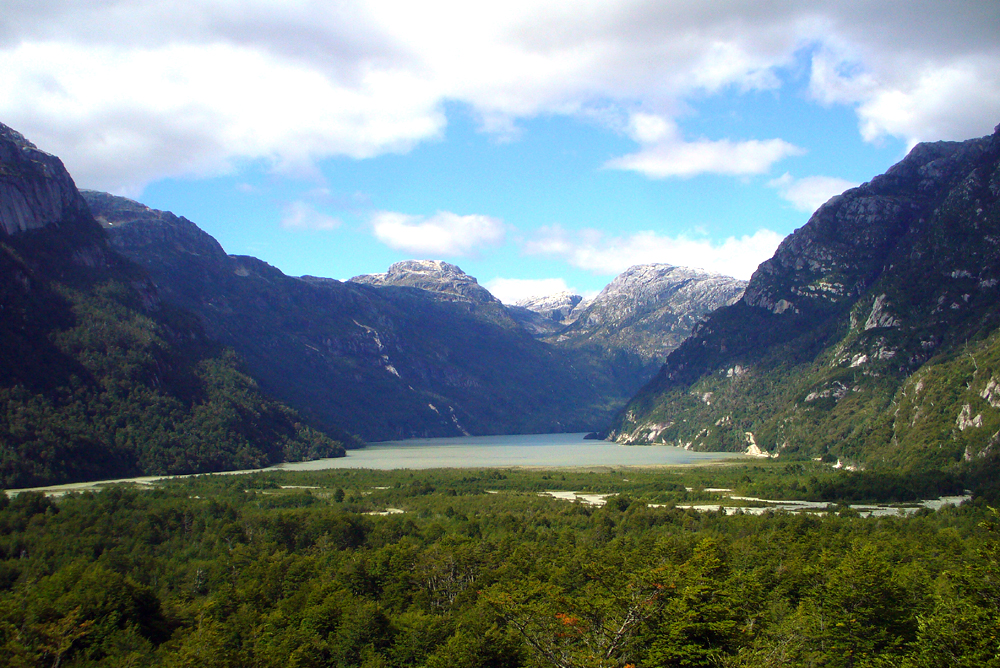
    The hydropower potential of Patagonia in Chile has attracted growing interest from multinational corporations. Pictured above is a view from Patagonia’s “Valley of the Explorers,” located at the terminal moraine of the Expolaradores Glacier.

    By Aubrey Ann Parker
    Circle of Blue

    High in Chile’s Andes Mountains, glacier-fed rivers tumble down knife-edge slopes in a froth of swift water barreling through tight canyons. Chile already produces more than 40 percent of its electricity from hydropower, but how much further Chile is prepared to advance its alternative energy industry—especially the hydropower sector—is now a question that has come to rest uneasily along the rocky banks of the Pascua and Baker rivers, two of the most remote and cleanest rivers in the world.

    Both rivers are viewed by the multinational company HidroAysén as the fuel for its $US 5 billion project, which includes the construction of five large dams—some higher than 100 meters—to hold back enough water to power 2,750 megawatts of electricity, the equivalent to three mid-sized nuclear power stations. Additionally, more than 20 percent of the country’s electricity would depend on these dams, located on glacial rivers which some scientists fear are threatened by climate change.


    Big Project, Big Dispute

    Everything about the initiative, which the companies propose to start building in 2010 and opponents are working feverishly to permanently halt, is oversized. Roadless valleys would host the huge dams and deep reservoirs. Electricity produced would be sent north along a transmission corridor 150 meters wide and 2,300 kilometers long to Chile’s biggest cities. It would cut through vast temperate forests distinctive only to Chile’s Patagonia region.

    Inside the Rio Ibañez Valley in the Aysen region of Patagonia. Local organizations have struggled with water rights, 98 percent of which are owned by electricity companies.

    Photo © Aubrey Parker
    Inside the Rio Ibañez Valley in the Aysén region of Patagonia. Local organizations have struggled with water rights, 98 percent of which are owned by electricity companies.

    The HydroAysén proposal has opened more of Patagonia’s mountains to hydro-exploration than almost anyone anticipated. Three other projects—proposed by a different multinational firm—have gained new traction in the political arena after lying dormant for years.

    HidroAysén engineers declined to be interviewed for this article. But Hernan Salazar, chief executive officer of HidroAysén, told reporters last year his company’s hydro projects will advance the alternative energy strategy in Chile. “The HidroAysén project provides a solution to Chile’s energy challenges,” said Salazar. “It contributes to the country’s energy security and independence and to the diversification of its energy base. It is clean, renewable, and reliable.”

    But opponents see the huge dams, new roads, submerged lands and linear clear-cuts for transmission lines as an abomination to one of the world’s last great wild places. The pursuit of alternative energies, at least as they’re proposed for Patagonia, raises far more environmental risks than benefits, say Chilean environmentalists. “Basically what we’d be saying is, ‘Let’s dam all of Patagonia, so that we can have enough electricity to keep digging holes for mines and destroy the north.’ It is just destruction fostering more destruction,” says Claudio Ivan Meier Vargas, a hydrologic engineer and professor in the civil engineering department at Chile’s University of Concepción.

    Patagonia’s Wild Beauty
    Stretched across the bottom tip of South America, from the Pacific to the Atlantic, the Patagonia region is bisected by a bone-bare spine of Andean mountains that serves as a natural border between Argentina and Chile. A woodland balancing on the edge of civilization, Patagonia is richly biodiverse and sparsely populated. An escape for the outdoorsy, eco-adventurer type, the region of Aysén received 145,000 tourists in 2008—a figure that is expected to grow by 20 percent this year. Its pristine rivers are some of the purest in the world, and possess sediment transportation systems that play an integral role in the southern hemisphere’s oceanography.

    Less than one percent of the Earth’s surface is covered by freshwater ecosystems, but they contain 10 percent of the biodiversity—and the extinction rate in freshwater ecosystems is four to six times faster than in other important ecosystems.”
    –Gary Graham Hughes, International Rivers

    Largely due to the region’s abundant beauty and ecological values, the environmental evaluation process for the HidroAysén projects is now on its third revision since 2006—having been bounced from project engineers to government officials to local advocacy groups, and back again. The final decision now lies in the hands of the Aysén Regional Environmental Authority, COREMA.

    These government-appointed officials will ultimately answer to the newly elected conservative president—Sebastián Piñera, who takes office in March—instead of the voting citizens living in the Aysén region where the dams are proposed. The new government has the difficult task of balancing domestic job creation and alternative energy systems with international relations and nature preservation.

    “Only one-third of the world’s rivers are flowing freely,” says Gary Graham Hughes, the Patagonia Campaign coordinator for International Rivers, a conservation organization based in California. “Less than one percent of the Earth’s surface is covered by freshwater ecosystems, but they contain 10 percent of the biodiversity—and the extinction rate in freshwater ecosystems is four to six times faster than in other important ecosystems.”

    Chile’s Energy Grid
    Electricity in Chile is separated into four independent grid systems—El Sistema Interconectado del Norte Grande (SING) in the north, El Sistema Interconectado Central (SIC) in the central regions, Aysén in the mid-south, and Magallanes (GENI) in the southern-most region. Private electricity companies hook up to one of these grid systems to distribute power. The HidroAysén projects will provide electricity to the SIC grid via the 2,300 kilometers of power lines, built by the Canadian-owned company, TransSelec—of which an Environmental Impact Assessment has yet to be submitted to COREMA.

    Chile’s energy is mainly distributed as geothermal power, hydropower, or natural gas imported from Argentina. The country’s economic growth over the past two decades has translated into increased energy consumption—especially electricity—to meet the demands of industrial, residential, commercial and public venues. In this 20-year span, Chile has experienced a 5.5 percent yearly increase in overall energy demanded, while electricity-specific consumption has risen 7.5 percent annually, according to the Chilean Commission for Nuclear Energy.

    As part of the run-of-the-river

    Photo © Aubrey Parker
    As part of the “run-of-the-river” Rucue Hydroelectric Project, this Penstock delivers water from the Rio Laja to hydraulic turbines. The projects proposed for Patagonia will instead dam and flood vast reservoirs.

    Political and regional conflicts, ever-increasing energy prices, and unsustainable hydrocarbons have made energy autonomy driven by hydropower increasingly appealing in Chile. HidroAysén argues, the dams will provide affordable electricity for the booming country and prevent rolling blackouts like those Chile experienced a decade ago. Furthermore, HidroAysén’s Web site says that the projects will attain much needed energy independence from foreign fossil fuels—specifically natural gas, a major source of electricity generation, which is imported from Argentina—in addition to providing a low-carbon alternative energy source. Currently, 55 percent of the country’s electricity supply and 72 percent of the overall energy is imported as natural gas, oil and coal. And while neighboring Bolivia is a large producer and exporter of natural gas, the country will not trade directly with Chile because of a 19th century border dispute.

    To replace growing foreign fossil fuel demand with a domestic low-carbon alternative, the private electric utility Endesa teamed up with the private Chilean electricity generator Colbún SAin 2007 and created HidroAysén. HidroAysén’s asserts on its Web site that Chile’s energy demand will increase annually by 500 Mega Watts (MW) of imported electricity when compared to economic growth projections for the next decade.

    However, the companies providing this “domestic” energy alternative are not entirely Chilean themselves. Endesa began as a public entity in 1943, but was privatized during the military dictatorship of Augusto Pinochet, was sold to a Spanish company in 1999, and then to the Italian Enel company last year. Meanwhile, Colbún SA is owned by Chile’s Matte Group. The pair created the HidroAysén company specifically for the five projects on the Pascua and the Baker rivers in the Aysén region, which will generate 2,750 MW of power.

    Hydropower is currently responsible for almost half of Chile’s electric energy production—if these projects pass, more than 20 percent of the country’s electricity would come from the HidroAysén dams. These fast-flowing, glacial-fed rivers have low-flow variability and very high electrical production potential. These consistent southern rivers would compensate for the variability of power generation by the flow of central rivers, which are more susceptible to droughts. The power generation variability could be reduced by 14 percent if the Pascua and Baker projects pass, according to EULA Environmental Science Center at the University of Concepción in Chile.

    Some Chileans fear this centralization would actually make the electricity system less stable.

    “If the HidroAysén projects were to fail, they would be making up almost one-third of the Chilean electricity system,” says Fabien Bourlon, who studies tourism as a scientific concept at the Center for the Investigation of Ecosystems in Patagonia in Cochrane. Cochrane also serves as the basecamp for HidroAysén engineers.

    Aysén locals argue that their economy, which is based largely on aquaculture, fishing, livestock, and eco-tourism, will suffer from the proposed dams and their accompanying power lines. Electricity production that locals say they will not benefit from. All of the electricity created by the HydroAysén dams is to be connected to the SIC grid and sent north to the capital city, Santiago.

    Santiago contains nearly half of the Chilean population, and its grid system consumes the most electricity in the country—compared to the 100,000 residents of the entire Aysén region. Meanwhile the mining industry north of Santiago consumes about 25 percent of the national electricity.

    Although there are no copper mines in southern Patagonia, the mining industry is still looking to profit from the region.

    Located on the Rio Ibanez, the Dead Forest or Bosque Muerto’s sediment spawned from the Hudson Volcano, raising water levels and flooding the area.

    Photo © Aubrey Parker
    Located on the Rio Ibanez, the Dead Forest or Bosque Muerto’s sediment spawned from the Hudson Volcano, raising water levels and flooding the area.

    Nearly two decades ago, the first large-scale hydroelectric projects in Aysén were proposed along the Blanco, Condor and Cuervo rivers by XStrata, a Swiss mining company.

    Xstrata originally wanted to create localized energy to process aluminum imports from Australia. However, at the time the salmon industry was instead booming in Aysén and the projects never came to fruition. Now the TranSelec power lines that would be created for the five HidroAysén dams—along with the crash of the Chilean aquaculture industry within the last year—have provided a loophole for these three projects to be resurrected. The dams were first submitted to COREMA in 2006, but were found to be insufficient.

    XStrata has re-opened its hydropower bid with the creation of Energía Austral, a combination of the three projects, which would generate 1,000 MW of electricity. The first Energía Austral project for the Cuervo River that was submitted to COREMA last October has received more than 1,000 comments and questions from the public. If approved, construction of the Cuervo dam could begin as early as 2012. A $US 730 million investment, the dam would be the second largest in Chile, generate 690 MW, and create as many as 1,600 jobs—350 to local Aysén residents, according to The Patagonia Times.

    Project coordinators have until June to revise the draft and respond to inquiries. Like the Energía Austral projects, HidroAysén has until June to respond to the more than 5,000 comments its second revision received last November. Energía Austral is looking to hook up to the Canadian-owned TranSelec’s 2,300 kilometers of transmission lines, estimated at $US 1.6 billion. Because a formal project has not yet been submitted to COREMA, locals can only guess at where the lines will run.

    “We are talking about a huge project—the largest ever done in Chile in terms of investment if you add the dams and the transmission,” says Vargas of the nearly $US 5 billion joint-venture between HidroAysén and TranSelec, “and one very important part of the project—the one that will probably have the biggest environmental impact—we still don’t know what it looks like or where it goes, formally. We just know by inference. But you are not going to build 2,000 megawatts if you don’t have a place to put it—so obviously they are the same project.”

    In Puerto Rio Tranquilo, a town along the General Carrera Lake, a billboard by the Patagonia Sin Represas organization features an image of Patagonian landscape with photoshopped-in electric tower reading “The worst image for the country: alternatives exist. Patagonia Without Dams!

    Photo © Aubrey Parker
    In Puerto Rio Tranquilo, a town along the General Carrera Lake, a billboard by the Patagonia Sin Represas organization features an image of Patagonian landscape with photoshopped-in electric tower reading “The worst image for the country: alternatives exist. Patagonia Without Dams!” in Spanish.

    Vargas says, if done correctly, these lines would run under the ocean floor and then reappear on the Chiloe Island, going through the center of Chile, “where native forests and biodiversity has already been disrupted, and agriculture, cities, and roads is all there is.” This would be very expensive, thus the Aysén community estimates that the lines will go directly through the mainland of Patagonia, cutting through many national parks and reserves.

    Even the accumulation of many parks into one large Patagonia National Park, “a world-class park similar in size to Yosemite National Park in California,” may not be enough to save the land from being clear-cut to make way for the towers. They are estimated to be 150 meters wide by 2,300 kilometers and will run from Patagonia to central Chile.

    “Apparently the line of cables will go next to the only highway in the region, through many of the small tourists towns,” says Ian Farmer, a British ex-patriate who has lived in Chile for the last 17 years and spent the last decade working as a tour guide in the Aysén region. Farmer works mostly with Centro de Turismo Cientifico Center for Scientific Toursim, which is comprised of 10 different companies in the region, and puts together programs that differ from typical tourism. The trips tend to be for study—archaeology, limnology, whale counting and even coordinating volunteer work. “There is a lot concern for the way the whole thing is progressing,” says Farmer, whose home is located just 300 meters from where the Transelec power lines are expected to run. This proximity will devalue the property and make his house unsellable, says Farmer.

    While Aysén is the second most southern region of Chile and is the second largest in terms of area, it is the least populated. The world’s third largest glaciers feed the Patagonian rivers where the dams are projected. Cattle and sheep farming have supported the traditional economy, along with timber harvesting. In recent years, salmon farming and eco-tourism have provided financial assets to local communities.

    “Chile was the second world producer for salmon and trout, but the aquaculture industry was very clearly unsustainable and everybody knew this,” says Vargas. Last summer, the ISNA virus, believed to have come from Norwegian eggs, devastated the aquaculture industry. The illness spread rapidly amongst the fish because smaller nets had been implemented to keep the salmon in close proximity as the industry boomed.

    “Now lots of these small towns are just deserted, and many companies went bankrupt. The other ones are trying to renegotiate their debts—it’s a huge mess.”

    Meanwhile the Aysén community continues to struggle to switch from the destructive patterns of logging and cattle farming, to eco-tourism and fishing. Experts say more large-scale dam proposals for Patagonia’s rivers will continue to appear. Bourlon worries about the Energía Austral projects attracting more mining and industrial development to Patagonia, which could have negative effects on tourism.

    Patagonia Lake

    Photo © Aubrey Parker

    “The dams will radically change development perspective,” says Bourlon. “My feeling is that it will not benefit Aysén as a region, because Aysén needs sustainable productivities. The salmon industry is manageable and can have benefit to Aysén, but in terms of regional development, the dams will definitely not be positive.”

    On the federal level, proposed constitutional reform by outgoing President Michelle Bachelet could have implications in this region. Leftover from the Pinochet regime, water rights in Chile are currently considered private property. A few weeks ago, however, an initiative that recognizes freshwater access as a national security concern and declares the resource a public good cleared its first hurdle in Parliament. Approved by the Chamber of Deputies, the amendment says that freshwater availability is more critical to national security than fossil fuels.

    During Bachelet’s term, the government has helped protect six river basins in southern Chile from dam projects, according to local media. Just this month the Ministry of Public Works denied 30 electric company requests for water rights on three rivers in the southern basins. However, this does not reflect how water rights already owned by electric companies will be used.

    But these decisions and the proposed constitutional reform could be turned over by the incoming administration.

    In March, Piñera will be sworn in as the Chilean president, the country’s first conservative leader in two decades. Shortly after he will name new COREMA officials, who will be relatively inexperienced in regards to the Aysén projects. These board members, however, will ultimately decide if the Environmental Impact Assessments for both the HidroAysén and the Energía Austral projects have answered the public comments and should proceed.

    And the new president will be on COREMA’s top list of advisors. While Piñera has promised one million new jobs and six percent economic growth this year, the incoming president has not said a lot about the projects in Patagonia.

    “There is still a fight,” Farmer says. “The public services speaking out against the projects—that will prolong the process—and both companies will need to become more longwinded in their responses. That will have an effect on cost and the amount of time that they can keep investing at this stage of the project. That is my hope, but it might be a vain hope.”


    Aubrey Ann Parker is a reporter for Circle of Blue. This article is based on two weeks of extensive research in hydropower Parker conducted through the Graham Scholars Program at the University of Michigan in the Spring of 2009. Read the Graham Scholars’ complete critique of the HidroAysén Environmental Impact Assessment here. Parker can be reached at [email protected].

  • Should there be standardized reporting of oil wells?

    Investors need to understand what they’re reading on IP rates

    By Keith Schaefer  

    Should there be a legal or industry accepted standard for reporting IP (Initial Production) rates on oil & gas wells?

    For both the industry and investors, it creates a quandary – do you want quick reporting of oil well flow rates, or do you want accurate and fair reporting?

    Energy producers are often quick to produce press releases with eye-popping Initial Production rates – but with little or no context. Was it a 12 hour test, 3 day test or 30 day test? Was it the average flow rate during that time or the ending flow rate?

    Horizontal wells – which now account for almost 50% of all new wells drilled – have IP rates 3x-7x what vertical wells have – but decline rates are higher, which means there is potentially a much larger gap between the initially reported rate in the press release and what production level the well stabilizes at.

    Sometimes companies report IP details, and sometimes they don’t. It can be confusing for investors trying to determine what a company’s stock is worth.

    And with decline rates (the drop in oil or gas production over one year) now often 60-85% in Year One, are investors really getting a fair idea of a well’s production in a press release announcing the first month’s production of a successful new well?

    “It’s hard to set standards on IP rates as situations can vary, says Rock Energy CEO Allan Bey. “Obviously the longer the test the better with full disclosure of pressures etc., but sometimes you can’t do a long test because of other circumstances.”

    One CFO who asked not be named says “You can have quick or you can have fair – you choose. We choose 'fair' which means the info is not quick. Others choose differently.”

    His comment brings up the flip side of this issue – there are companies who don’t report any production rates until several wells have been drilled in a new play, and flowing for a month or two – which can often take six months – before they report flow rate data to the market.

    This can be an issue because timeliness and transparency are important to all investors. There are pro and con arguments on all sides of this issue.

    So what should retail investors do?

    Companies usually give production guidance for the year – both an average and year end rate – which will have factored in the declines and sustainable production rates from wells. That’s usually found in both quarterly releases and in a presentation on the website.

    And more and more management teams are including well production profiles on their different plays in their investor presentation, that show what the average IP rates are, and how production declines month by month going out two years. But as a general rule, investors should understand that a well will produce at an average stabilized production rate of only 25%-50% of the reported IP rate in a press release, even if it’s a 30 day test.

    Caveat emptor. 

    Keith Schaefer is the
    Editor/Publisher of the Oil and Gas Investments Bulletin. He writes on
    the issues, trends and companies in the North American energy sector.
    He also has a paid subscription service where he covers junior and
    intermediate stocks. His website is
    www.oilandgas-investments.com

    Previous posts:

    Will the U.S. need Canadian natural gas

    Determining oil and gas valuations

  • Wind Turbines Create Their Own Clouds [Energy]

    It’s hard to believe they noticed this one in England, but apparently wind turbine farms have the ability to create their own fog. The phenomenon has been observed by Mike Page, a retiree flying on board his Cessna 150:

    The creation of the mist depends on the wind speed and the temperature of the sea and the air at the time.

    The spinning blades whip moisture up into the air like giant egg mixers and sometimes these low cloud formations are made. A close up blade of one of the turbines shows a swirl of mist created around the blades as cooler air is mixed with warmer air. It definitely occurs several times a year, sometimes gathering upwind of the turbines and sometimes downwind depending on the conditions.

    The strange thing is that you will see this mist around the turbines while it is a bright clear day on the beach just a couple of miles away.

    It is a fascinating example of how wind farms create their own micro-climate. It is the same as any geographical feature affecting the weather.

    [Daily Mail]


  • Abandoned Coal Plant: Well, That’s Depressing [Image Cache]

    Here’s a tacit reminder from an abandoned coal plant in Hagerstown, MD, that today’s priced tech is just tomorrow’s decay…and in other news, raise your hand if you want a shiny new phone! [Photo from Zero1o1’s Flickr via boingboing]


  • States Seek Profit, Regulation from Natural Gas Drilling

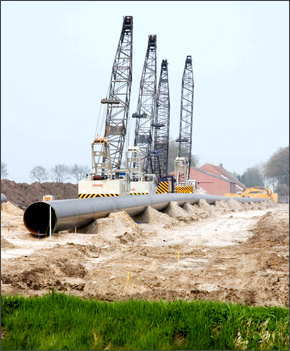
    Leasing rights to drill for natural gas has plugged budget holes, but opponents argue the fracking process pollutes water supplies.

    The U.S. House Energy and Commerce Committee will partner with the Environmental Protection Agency to investigate the effects of hydraulic fracturing on drinking water supplies, Reuters reports. The committee is requesting information from eight energy companies that use the method to drill for natural gas.

    Meanwhile the latest budget proposal from Pa. Gov. Ed Rendell includes a tax on energy firms that tap the state’s shale gas reserves, the Philadelphia Inquirer reports. Pennsylvania also plans to earn $180 million for leasing state forest land for natural gas drilling rights, the proposal states.

    The tax on the volume and value of the gas produced would raise an estimated $1.8 billion over five years, according to the Inquirer. A similar tax was proposed last year, but the governor removed it because of pressure from the energy industry.

    Energy companies are eager to access the large gas reserves trapped in the Marcellus Shale Formation that runs from eastern Kentucky to New York. Reserve estimates range from 168 to 516 trillion cubic feet of gas.

    While the tax measure was lauded by environmental groups, the proposed land lease expansion for drilling rights has been less popular. The budget proposal does not specify how many acres would be leased.

    “Leasing state forests to balance the budget is the wrong way to go,” Rep. Greg Vitali told the Inquirer.

    This would be the third time the state opened its forests to drilling rights in the last three years. The state earned $166 million from leasing 74,000 acres in 2008, and $128 million from leasing 32,000 acres in January 2010, according to the Inquirer. About 692,000 acres of state forest are already leased for gas drilling.

    The hydraulic fracturing, also known as fracking, method of releasing natural gas trapped in shale has raised public concern regarding its effect on water supplies. Fracking injects a high-pressure mixture of water, chemicals and sand into wells to break the shale and increase the gas flow. Critics of the process argue that it uses a large volume of water and the wastewater contaminates neighboring wells.

    In New York, the Department of Environmental Conservation has banned fracking until it can review the environmental effects. New York City officials have urged a ban on drilling in its watershed because of water pollution risks and new infiltration plant costs.

    “The consequences are so severe that it is not a risk that I think we should run,” Mayor Michael Bloomberg said to Reuters. “I do not think that we should allow fractured drilling anywhere near our water supply.”

    One New York county has already enacted its own ban. The Onondaga County legislature voted in early February to prohibit drilling until more is known about the environmental consequences, the Post-Standard reports.

    Fracking is largely regulated by the state. Energy companies are not required by national law to report the chemical makeup of the fracking fluid-–an exemption to the Clean Water Act and Safe Drinking Water Act granted by the Energy Policy Act of 2005.

    But as the issue has gained national attention, Congressional bills have been proposed to regulate the industry.

    The Fracturing Responsibility and Awareness of Chemicals Act was introduced in Congress last year, but neither the House nor Senate version has made it out of committee.

    If passed, the bill might not have much of an effect because under the Safe Drinking Water Act states have the right to establish their own standards, said Steve Heare, director of the EPA’s Drinking Water Protection Division, to the Wall Street Journal.

    Source: Philadelphia Inquirer, Reuters, Post-Standard, Wall Street Journal

  • Outlet Regurgitator Spits Out Greedy Electronics [Energy]

    If your AC outlet has been wronged by some gadget that sips extra power after charging, you need the Outlet Regulator (though I like my name more), a working concept by student inventor Conor Klein.

    His device uses a timer circuit and electromechanics to physically unplug an electronic from the wall. Sure, products like the Belkin Conserve Surge do the same thing without wires falling out of sockets. But Belkin’s solution doesn’t offer such a tangible F U to your cellphone. [Connor Klein via NoSmarties via Unplggd]


  • Fallbrook Technologies Files for $50M IPO

    Bruce V. Bigelow wrote:

    San Diego’s Fallbrook Technologies, a cleantech venture developing a proprietary transmission that offers improved efficiency for a variety of vehicles, intends to raise $50 million through an IPO, according to a filing today with the Securities and Exchange Commission.

    A Fallbrook spokesman declined to comment on the stock offering.

    In its filing, Fallbrook says its “NuVinci” design (for a continuously variable “planetary” transmission) can be used in automotive accessory drives (such as air conditioning compressors), and as the primary transmission in electric vehicles, bicycles, riding lawn-mowers, and small wind turbines. While the specific benefits vary with each application, Fallbrook says its technology can lower overall energy costs in each of these areas by improving performance and fuel economy.

    The company previously told me its technology also is well-protected by patents, which is unusual because the big three automakers typically dominate technology innovations in the auto industry. In its filing, Fallbrook says it holds 85 U.S patents, and has another 61 pending. It also holds 71 foreign patents, with 147 pending.

    The company says it has raised about $55 million from investors since it was officially founded in 2000 as Motion Systems Technologies. It was renamed Fallbrook Technologies in 2004. Individual investors funded Fallbrook’s operations for more than a decade, until the company raised $29.4 million last year in its first venture round. The filing shows that entities associated with Robeco, the investment arm of Rabobank of The Netherlands, have a 24 percent stake in Fallbrook. NGEN Partners, a Santa Barbara cleantech venture firm, holds about 23.7 percent, and entities associated with Qualcomm scion Gary Jacobs have a 12 percent stake.

    Fallbrook said it generated almost $2.3 million in revenue in 2008, primarily from …Next Page »


  • Obama Announces Loan Guarantees to Operate Two New Nuclear Reactors in Burke, Georgia 2010

    ObamaNuclearPlantTourP021610SA-0046

    2010Feb16: President Obama announces “loan guarantees through the Department of Energy to operate two new nuclear reactors at a plant in Burke, Georgia. It will be the first new nuclear power plant in nearly three decades. The plant is expected to create approximately 3500 construction jobs and 800 permanent jobs. When the nuclear reactors come online, they will provide reliable electricity for 1.4 million people in Georgia” (WhiteHouse.gov).

    Reference: WhiteHouse.gov http://www.whitehouse.gov/blog/2010/02/16/nuclear-energy-and-a-clean-energy-future


    www.youtube.com/watch?v=9_nANEVBK6M

    Image Description: Sean Myers points out a feature on a Motor Control Panel to President Barack Obama during a tour of the jobs training center at the International Brotherhood of Electricians (IBEW) Local 26 headquarters in Lanham, Md., Feb. 16, 2010. Looking on at left are Chuck Graham, Business Manager of IBEW Local Union 26 and Energy Secretary Steven Chu. February 16, 2010. (Official White House Photo by Samantha Appleton). Image Location: http://www.whitehouse.gov/blog/2010/02/16/nuclear-energy-and-a-clean-energy-future Image Permission: This image is a work of a United States federal employee, taken or made during the course of an employee’s official duties. As a work of the U.S. federal government, the image is in the public domain.

  • Perspective: Waters, Wars, Wheat, Watts, Waste and Wasta Add Up to Syria’s Liquid Worries

    By Dr. Paul J. Sullivan
    Special to Circle of Blue

    Syria’s economics, history, politics, diplomacy, and culture have often been defined in a large part by water. This has been the case since this area was part of the Eblan civilization, or about 2500 BC, onward. But let’s look at some more recent facts and events.

    About 30 percent of Syria’s labor force works in agriculture. About one-third of its land is cultivatable. Only one-fourth of that land is irrigated. Much of the irrigation is done in somewhat wasteful ways that has much of the precious water pouring past the crops. Farmers have subsidized energy and also have a yearly flat rate payment for irrigation water. This rate does not even get near to true costs of the water they use. Hence, water is overused, much more land is becoming saline, and water tables are being drawn down in some places at a fast rate. Wells by law need to be licensed, but the rule of law in Syria is sometimes not the letter of the law.

    Some of the fields are irrigated with wastewater, but not in a way one would hope. Some of this wastewater is untreated. Some of the farmers and others say this reduces the need for fertilizers. By law this wastewater cannot be used for irrigating vegetables that will not be cooked, but it surely must be adding to the health problems in the country in some way. The government has been putting a lot of effort and money into improving wastewater treatment in general, but it does not seem to be keeping up with the growing problems.

    Wastewater infrastructure development seems lacking. Even so, Syrian cities reuse a lot of the treated wastewater. Syria seems to understand the water problems it faces, but it also seems to be slowly getting up to speed to solve them.

    The government has been putting some efforts into diffusing new irrigation technologies and starting a group of water management departments and organizations. It is also putting pressure on the farmer’s unions, which in Syria are government organizations to get people to handle the water better. However, very little progress is really being made compared to the problems the country faces.

    Syria’s agricultural policy aims to achieve self-sufficiency in food and agricultural inputs to industry, such as textiles and food processing. The government often buys agricultural products from the farmers at higher than international prices and it subsidizes many inputs for farmers, including water. This prompts many farmers to grow even more, stressing out land and water systems even more so.

    Syria’s main export crop is cotton, which is a water-intensive crop. Others of its main crops include wheat and barley, also water intensive crops. Syria has a significant trade in fruits and vegetables. This may help the bottom line for Syrian food “self-sufficiency”, but these are far from long term rational decisions.

    It might make a lot more sense to focus on virtual water imports for the water-intensive crops and for the farmers and others to switch their economic decisions toward less water-using crops. But this will not happen until the mostly still socialist, centrally-planned economic and political system of Syria either changes its incentives or starts to open up to the actual resource costs of water.

    Syria’s population growth rate is close to 3 percent. Its population has doubled since the mid-1980s.

    Syria’s population growth rate is close to 3 percent. Its population has doubled since the mid-1980s. Its agricultural needs for water have greatly increased, which has been exacerbated by the import-substitution polices of the country. Water needs for industry, commerce and households have also increased, but close to 85 percent of Syria’s water use is for agriculture.

    Syria’s rapid population growth rate also generates greater electrical needs. Hydropower used to be the dominant source of electricity in the country in the early 1980s. Given the limitations of water resources for energy in the country, mostly from the Euphrates, more thermal power stations, also heavy water “drinkers”, have been and are being built. Many stations have been and are being converted toward using natural gas more than oil, given the declining oil fortunes of the country. However, the thermal power station building has not been keeping up with the declining fortunes of hydropower in the country.

    One of the more delicate reasons for this decline in hydropower has been the change in the flows of the most important external water source for Syria: the great Euphrates River. The Euphrates gets its water initially in the Taurus Mountain in Turkey, and then flows through the massive GAP project in Turkey. The GAP project has been using more and more of the water of the Euphrates to irrigate crops and for the production of electricity to produce jobs and prosperity in the southeastern part of Turkey.

    This part of Turkey, which has mostly Kurdish population, has been one of the poorest and most restive parts of the country. The Kurdish populations of Turkey, Iraq and Syria live within a certain proximity to each other. There may be issues here in the future, particularly when one considers the Iraqi Kurds’ desires to have even greater autonomy. Another difficulty are the lives of the Syrian Kurds, who reside in a state that some in their community say does not given them their due nationality, economic or cultural rights. The Kurds of northeastern Syria could be an increasing source of instability if certain changes are not made to their economy and more.

    The Turks see part of the solution to their Kurdish problem to involve developing a mostly Kurdish region in the southeastern part of the country. The Turks are also the largest investors in the Kurdish regions of Iraq for similar reasons. They want a more prosperous Kurdish part of Iraq, given that prosperity might reduce the chances of these Kurds pushing separatism more and also dragging the Turkish Kurds into their separatist efforts.

    All three of these Kurdish areas will need more water to produce this increased prosperity and peace. But the Euphrates only has so much water and Turkey seems to be holding all of the most important cards on the table at the moment. Turkey also has very different definitions and claims to the water of the Euphrates than the Iraqis and the Syrians are willing to fully accept.

    The water flows from Turkey through Syria and then on to Iraq. Some long term wise agreements on economic, energy and irrigation development and on water sharing and water trade will be needed, but these may not happen any time soon. These are very sensitive issues across these countries and have been for decades. As things stand now, it is not possible, given the water flows of the river, to have all parties satisfied and tensions are building. The improving relations between Syria and Turkey may alleviate these tensions at the national and higher levels, but at the farmer and village levels they are growing in Syria and in Iraq.

    The Tigris River also defines the northeastern tip of the border between Syria and Turkey. The Tigris runs along this border and then flows immediately into Iraq. The Tigris River Basin waters in these border areas are used by Syria, Turkey and Iraq. Underground aquifers are “shared” by these three important countries. No real agreements have been signed regarding these underground waters. There is a Joint Trilateral Committee that is supposed to be looking into better ways of sharing the water.

    The vicious droughts that have ravaged Iraq and Syria in recent years, especially the ones in 2008 and 2009, have further brought to light the importance of water for this region. Hundreds of thousands of people in Syria and Iraq had to leave their lands because there was not enough rain and other sources of water to make living on them even subsistence any more.

    Indeed, Syria has been hit very hard by droughts. These droughts are a devastating issue for many of the farmers and other rural people in the country. The drought and the decreased flows of the Euphrates and other rivers in Syria have also led to severe water shortages in some urban and semi-urban areas. Aleppo, a city in northern Syria, has been facing severe water shortages, for example. There is a project to send the waters from the Euphrates to Aleppo, but, again, there is only so much water in the Euphrates to use and share.

    About 75 percent of the people in Syria are urban or semi-urban dwellers. Out of the 20 million who live in this drying country, eight million can be found in Damascus and Aleppo. These cities may be facing some very serious sustainability issues due to water in the not too distant futures. The Barada River, the main river of Damascus, is hardly what it used to be due to droughts, pollution, and overuse.

    When the Israelis captured the Golan Heights and the Mount Hermon area, they also gained control over the banks and access to the Sea of Galilee as well as much of the headwaters of the Jordan River. The Yarmouk River, which acts as a border with Syria and Jordan in places is also a border of the Golan, hence making this important tributary to the Jordan River a vital source of dispute for Syria and Israel. The Hasbani River flows in from Lebanon to Israel, but also along the edges of the Golan. The Banias River originates at Mount Hermon. The Dan River originates at Mount Hermon. By controlling the Golan Israel controls the tributaries and sources of water for the Jordan River and the Jordan River Basin watershed. Water issues also involve the ownership and resolution of the dispute over Shebaa Farms, which is just opposite to the Golan, and has water underground and flowing over it.

    Negotiations and disputes between Syria and Israel have often been about water. The wars and other conflicts between these two nations has often revolved around water, both above and below ground. Syria’s and Israel’s interests in Lebanon also include interests in Lebanese water and this is much more than just the Shebaa Farms.

    The water flows from Syria and Lebanon south to Israel and the Occupied Territories. However, as is well known, much of that water flow is diverted for Israeli use.

    Some of the water in Lebanon that flows from the Orontes River travels through Syria to Turkey. The place where it flows out into the Mediterranean is called Samandag, which is in the Hatay Province of Turkey. This province has been a source of dispute between Turkey and Syria. Part of the dispute has been over water, not just land. This dispute seems to have taken a back seat to the gradually improving relations between the two countries and the greater source of water-induced political stress, the Euphrates. However, as water tensions mount, especially in the northwestern part of Syria, where this river is important, then these international tensions might come back.

    One of Israel’s main goals is to have hydrological security. The same could be said of Syria as well as Jordan, Lebanon, and Iraq, which also share some of their water sources with Syria. And, of course, we cannot forget the Israeli-Palestinian issues that revolve around water. Much of that water also comes originally from the Golan and from the tributaries and other sources of water for the Jordan River Basin.

    The water flows from Syria and Lebanon south to Israel and the Occupied Territories. However, as is well known, much of that water flow is diverted for Israeli use. This is a huge source of tension in a water-stressed area. The Israeli-Palestinian water disputes are for a later article, but it is important to note here that they are intimately connected to the Syrian-Israeli, Lebanese-Israeli and Jordanian-Israeli water disputes. So, as usual in this critical, but brittle region, many issues are interconnected in many complex and sometimes unpredictable ways.

    As the populations and water needs of these countries grow, tensions will likely rise. Some of the fault lines, which also often can be seen as rivers and aquifers, will become either more of a battle zone of more of negotiation space. Which way these go will determine war and peace, prosperity and poverty, and life and death for many.

    So we have seen waters, wars, wheat, watts, waste part of this story. What about the wasta? Wasta is the Arabic term for connections and clout. The story of water within Syria and between Syria and its neighbors has been about clout. Israel has the clout with its powerful military and intelligence services, and, of course, the support of the U.S. Turkey has the clout with its economic, military and other power. Syria, however, has much less clout than the Israelis and the Turks on water issues. It has more wasta than the Lebanese, but even this seems to be changing. The Palestinians are left in the dry not only because they lack relative wasta, but also because of the upstream disputes, which are also about relative wasta.

    Where will this all lead us? Without more efficient use of water, increased desalinization, better cropping patterns, and better incentives for water use within Syria and within the entire region, we are going to face more wars, more destruction, and more deaths. We could also face more insurgencies and asymmetric violence in Syria and across the Eastern Mediterranean. Water is a key to peace. It is also a weapon and purpose of war. These issues, most particularly those between the Syrians and the Israelis, need to be resolved in a much wiser and quicker way than they have been so far. Otherwise, the region might be boiling once again. This time around the region is much more brittle and this time non-state actors could be a much bigger part of things and things really could spin out of control in many ways.

    Water is a key to peace and prosperity. It is also a key to war and conflict. The Syrians and their neighbors surely understand this better than most.

    Dr. Paul J. Sullivan is a professor of economics at the National Defense University, Adjunct Professor of Security Studies and STIA at Georgetown University, and an adviser to Sudan projects at the United States Institute of Peace. He is an internationally recognized expert on the Middle East, parts of Africa, and international energy, water and other resource security and conflict issues.

  • Alaska: It’s not all about oil; Kodiak wind co-op wins DOE award

    From Green Right Now Reports

    This month the Kodiak Electric Association proved that there’s more to the Alaskan energy landscape than oil wells and pipelines.

    The U.S. Department of Energy and the National Rural Electric Cooperative Association named the co-op the 2009 Wind Cooperative of the Year.

    The award, announced the TechAdvantage Conference in Atlanta last week, recognizes the Alaskan cooperative’s Pillar Mountain Wind Project, which is the first utility-scale wind facility. The operation is expected to be a valuable pilot effort at integrating a large wind generation facility into an isolated grid system.

    The NRECA and the DOE’s project Wind Powering America program created the award to encourage cooperatives showing leadership in advancing domestic wind power. The judges considered corporate leadership, marketing, customer benefit and creativity of the project in deciding upon winners.

    For more information on how the federal government is encouraging the development of renewal wind energy see DOE’s Wind Powering America Web site.

    Here’s a cool graphic that shows how wind power has grown in the U.S. in the past decade, from 2,000 MegaWatts to 28,635 MW by April 30, 2009.  See the animated version at the Wind Powering site.

    Installed wind power 2009

    Installed wind power 2009

  • Questioning Conventional Wisdom on PCW Recycled Paper

    I’ve been thinking about postconsumer waste lately (apparently, I have too much time on my hands). What I was wondering was this:

    Postconsumer waste is only one of three waste streams for unused paper. There is also mill broke (scrap collected at the mill and recycled back into the same type of paper from whence it came); and there is pre-consumer waste (paper trimmings and other scrap collected at the printing or converting site and recycled back to the mill before reaching the hands of the consumer).

    So here’s what I’m wondering. Both mill broke and pre-consumer waste are recycled back much earlier in the process, so they require less energy to transport. They also need less processing in most cases because they have not yet been printed, glued, laminated or otherwise converted. Post-consumer waste, on the other hand, has to be collected from millions of individual homes and businesses around the country. Then it has to be sorted and processed, and sometimes even bleached. The energy and processing requirements are far greater. So why is post-consumer waste considered greener?

    (more…)

  • Too Dependent on Electricity

    Inspired by my friend and colleague’s blog post, Snowed Under in our Green House, I decided to focus this blog on the main event of the larger Washington metropolitan area this week—the massive snowstorms and blizzards. Due to the inclement weather, the area was virtually paralyzed for days. Many schools systems, businesses, and government agencies remain closed.

    While we were snowed in at home, the power went off intermittently. One day we were without power for a span of 15 hours! During that long stretch without electricity, we had no heat and, of course, no functioning appliances. Our only lifeline to the outside world was a battery-operated radio. I must note that thanks to the green repairs we made to our home last year, the temperature in the house stayed relatively stable even without heat during that blackout. While it did cool down after 12 hours without power, it was nothing that an extra layer of clothing couldn’t handle.

    While we were snowed in, I realized how dependent we have become on electricity for home entertainment. We take for granted the fact that we cannot use our television sets, computers, the Internet, electronic toys, rechargeable batteries, wireless technology without electricity. As a family we rediscovered some traditional forms of entertainment like board games to pass the time. My youngest even read several books on her own initiative. Not a bad lesson during the blizzard of 2010.

    Nonetheless, I would like to leave you with some advice for future snow and ice storms. Try to have the necessary supplies well in advance so you don’t have to venture out unnecessarily during inclement weather. Use generators and other combustion appliances wisely. Stay safe.

  • Inside the McKinstry Innovation Center: A First Look at Seattle’s Big Cleantech Hope

    McKinstry
    Gregory T. Huang wrote:

    Elsa Croonquist of McKinstry would cringe at the hype, but I’m here to say it’s at least partly true.

    The Seattle alternative energy scene has been eerily quiet as of late. This is not to diminish the efforts of organizations like the Clean Tech Open, Washington Clean Technology Alliance, Clean Energy Council, Climate Solutions, and various local companies, but by and large the region still needs to build critical mass. Cleantech proponent Michael Butler of Seattle’s Cascadia Capital told me last fall, “We are falling further behind other regions, and the window will start closing if we can’t get the ecosystem built.”

    McKinstry, the Seattle-based construction, consulting, and energy-efficiency firm, could play a big role in building that ecosystem. Croonquist is the managing director of the McKinstry Innovation Center, which she calls a “commercialization accelerator” for cleantech and energy-related companies. (Few people seem to like the term “incubator” these days, but “accelerator” is as popular as ever.) The $5 million center, which is slated to open in late April or early May, will house about 10 companies of up to eight people each. Croonquist says she is still accepting applications, and is working closely with four companies already.

    The idea is for startups and small companies across a wide range of energy sectors—smart grid, energy efficiency, biofuels, hydro power, industrial, wind, and solar—to sign one- or two-year leases with McKinstry (up to three years max, which is still more flexible than the typical five-year office lease in Seattle). The vetting process involves making sure each company has strong technology that is out of the lab with at least a tested prototype; potential markets that are deep and strong; a clear plan to access these markets; a strong organizational team; and financing.

    So this is not about incubating early-stage companies, and McKinstry is not funding them or buying an equity stake in any of them. “None of these companies are bright eyed and bushy tailed, fresh out of college with a brilliant idea right now,” Croonquist says. “Maybe they’ve gotten contracts and they need to gear up, and they need to develop the structure for their company and for their distribution, and the monitoring systems for, say, something electrical…We’re looking for companies that are ready to make a difference.”

    McKinstry "Don't Call Me an Incubator" Innovation Center

    On a recent visit to the company’s Georgetown headquarters, the 40,000-square-foot center was still being completed, with a construction crew installing beams and such. The center will have lots of open space and natural light (see artist rendering, left), as well as a nice view of downtown Seattle. The companies housed there will share conference rooms and a kitchen, and receive mentoring and exposure to business leaders through McKinstry.

    In return, it sounds like McKinstry will gain new partners who are building …Next Page »


  • Bill Gates’ New Calling: Zero CO2 Emissions [Ted]

    At the TED Conference last year Bill Gates unleashed a swarm of mosquitoes to demonstrate a point about malaria. This year, he’s taking on CO2 in a big way. And he brought fireflies.

    The bugs were Gates’ example of a living “energy miracle”—the kind we’ll need to solve the enormous energy problems that face mankind. Some perspective, from his speech: even if we were to maximize energy efficiency and limit the impact of population size, we’d still be emitting 13 billion tons of carbon annually from energy production.

    So what’s his solution? First: excluding coal and natural gas altogether from our energy future. Instead, the focus needs to be on carbon capture, nuclear, wind, and solar power. In particular, Gates singled out depleted uranium supplies as having the potential to power the US for centuries. The technology is possible; it’s just not being funded.

    Despite advances in nuclear power—and particularly the regulation thereof—the idea of nuclear energy still makes Americans skittish. So if Gates is serious about wanting this to happen, he’s going to have to do more than open up his wallet. He’s going to have to change our perception entirely.

    Gates has been posting his thoughts on his TED talk at The Gates Notes, so be sure to look for updates on more specifics around feasibility, implementation, and what insects he’s got planned for TED 2011. [TED via CNN Tech]


  • Bill Gates: World Must Eliminate All its Carbon Emissions and Cut Energy Costs in Half by 2050

    GatesTEDtalk800px-Sunset_at_the_Solar_Two_power_plant

    2010Feb12: At the TED Conference in Long Beach, California, Microsoft Corp. founder Bill Gates argued that the world must eliminate all of its carbon emissions and cut energy costs in half by 2050 in order to prevent climate catastrophe. He urged the world’s tech community to discover a way to turn spent nuclear fuel into clean affordable energy and the world to adopt an energy portfolio that features carbon capture and storage technology, nuclear, wind, and solar power (CNN).

    Reference: CNN http://www.cnn.com/2010/TECH/02/12/bill.gates.clean.energy


    www.youtube.com/watch?v=JaF-fq2Zn7I

    Image Description: Sunset at the Solar Two power plant. Credit: Sandia National Laboratory. Image Location: Wikimedia Commons http://commons.wikimedia.org/wiki/File:Sunset_at_the_Solar_Two_power_plant.jpg Image Permission: This work is in the public domain in the United States because it is a work of the United States Federal Government under the terms of Title 17, Chapter 1, Section 105 of the US Code.

  • Trinidad & Tobago: “Dat is Carnival”

    MEP Caribbean Publishers explores the question of what constitutes Trinidad and Tobago Carnival, while My Chutney Garden adds: “That the ‘mas' has become sanitised is beyond dispute.”

  • ARC Energy Raises $5M

    Erin Kutz wrote:

    Advanced RenewableEnergy Company, a Nashua, NH maker of equipment for growing and processing the sapphire crystals used in LEDs, has raised $5 million of a $10 million equity round, according to an SEC filing. The filing lists Hemant Taneja, managing director of Cambridge, MA-based General Catalyst Partners, as a director of the stealthy ARC Energy.


  • Envision Solar Reveals Move to Become Public Company

    Envision Solar logo
    Bruce V. Bigelow wrote:

    San Diego architect (and Xconomist) Bob Noble says that Envision Solar, the solar development firm that he founded in 2005, will soon begin trading shares over the counter after completing a reverse merger with a dormant public company. He announced the move at a reception held last night for about 75 friends and colleagues, which he characterized as a “celebration for what we’ve done after a tremendous amount of work over many months.”

    Noble tells me that Envision Solar needed capital to expand its capabilities in developing solar-integrated infrastructure and building systems. As a public company, he says Envision Solar can get more exposure and benefit from broader investor interest.

    “We have created a platform for growth,” Noble tells me. “I’ve identified key opportunities and business in distributed solar power generation worldwide.”

    Envision Solar ParkingNoble’s vision for what he calls “distributed solar power generation” represents a scenario that many utilities have been unwilling to contemplate, at least until recent years. Utilities have long preferred a centralized power generation scheme that puts an industrial-scale power plant at the hub of electricity distribution. In contrast, distributed generation is more of a “small is beautiful” concept in which electricity is generated on a small scale by power producers scattered throughout a power grid.

    As I’ve reported, Envision Solar got …Next Page »