Category: Mobile

  • The BlackBerry Q10 Is Now Available For Pre-Order In The UK

    bbq10-8

    Good news, Steve O’Hear. The physical QWERTY isn’t dead! The BlackBerry Q10 is now available for pre-ordering in the UK and ships at the end of the month.

    BlackBerry’s second BB10 device will be available on Vodafone, O2, Orange, T-Mobile, Three, EE, and TalkMobile. Carphone Warehouse lists the device at £579.95 SIM-free or free on a 2-year, £36-per-month, contract. That’s on par with other devices in the UK market.

    As for other markets, BlackBerry’s blog posting states “we’ll have details on availability to follow soon.” Whatever that means.

    The Q10 is the BlackBerry Bold of the BB10 era. It’s positioned as a top-tier QWERTY device — the best BlackBerry can build. Where the Z10 is a pure touchscreen device, the Q10 is a hybrid, featuring a 3.1-inch touchscreen on top of a QWERTY keypad.

    We spent a bit of time with the Q10 at BB10′s launch in January. It’s a worthy successor of the solid BlackBerry Bold. In fact, BlackBerry power users should be more interested in the Q10 than the Z10. It’s that good. But, if that’s you, it would still be wise to play with one yourself instead of simply pre-ordering.

  • Facebook Home: A bigger deal than you think

    Facebook Home Analysis
    Facebook’s (FB) announcement of Facebook Home, coming soon to Android, was perhaps the most impressive thing Facebook has launched since the “like” button. Available initially on the HTC First on AT&T (T), Facebook is trying to increase engagement, and with this new “version” of Facebook, I can definitely see that happening. CEO Mark Zuckerberg said phones have primarily been built around apps, and with Facebook Home, that’s changing. Smartphones are now built around people, as people want to know what’s going on with those around us.

    Continue reading…

  • Apple’s iPhone 5 now available for preorder at T-Mobile

    T-Mobile iPhone 5 Preorders
    It took nearly six years but T-Mobile has finally managed to add Apple’s (AAPL) iPhone to its smartphone lineup. Beginning on Friday, T-Mobile subscribers can preorder the iPhone 4, iPhone 4S or iPhone 5 on T-Mobile’s website. With the carrier’s new no-contract policy, the iPhone 5 starts at $579.99 for the 16GB model, which can be paid up front or as a $99 down payment plus 24 monthly installments of $20. The iPhone 4S can be had for $69.99 up front and 24 payments of $20 per month, and the iPhone 4 costs $14.99 up front plus $15 per month for 24 months. T-Mobile notes that the iPhone 4S and iPhone 4 are only available in select markets, while the iPhone 5 is available nationwide.

  • Apple’s iPhone Continues To Show Strong Growth In The U.S., Samsung And Android Adoption Slow

    galaxyiphone

    Apple’s trajectory in the U.S. smartphone market over the past little while has been an upwards one, with the company gaining more and more iPhone subscribers every month. During the three-month period covering November 2012 to February 2013, Apple added 8.9 million new iPhone subscribers according to comScore, while Android as a platform in total added only 2.9 million. That means Apple’s share of the total smartphone subscriber base in the U.S. grew to 38.9 percent from 35 percent, while Android’s dropped from 53.7 to 51.7 percent.

    ComScore’s figures also show that in terms of smartphone manufacturers, Apple also continues to lead the pack. Its share among OEMs rose 3.9 percentage points during the three month period, while Samsung gained only 1 percent percentage point, rising from 20.3 percent of the U.S. market to 21.3 percent. That means Apple and the iPhone continue to enjoy almost double the smartphone manufacturer share of its next closest rival.

    The loser in this case wasn’t either Apple or Samsung, however, both of whom gained subscribers and share, but BlackBerry, which as a platform shed 1.7 million subscribers in the U.S. between November and February. These numbers predate the launch of BB10, however, so we’ll have to watch to see if that helps BlackBerry stem the tide of users leaving.

    Of course, both Google and Samsung stand to reap the benefits of upcoming device launches, which could help swing the pendulum back in their favor over the coming months. Samsung is on the verge of debuting its next-generation flagship smartphone, the Galaxy S4, with pre-orders beginning in just a couple of weeks. The HTC One is also coming to the U.S. market in mid-April, which could give Android as a platform additional firepower in terms of competing with iOS and the iPhone.

    Apple’s success to date has been based on the strong performance of the iPhone 5 since launch, and that device seems to continue to be an attractive choice for U.S. subscribers. There still doesn’t appear to be much in the way of a true race for a third platform, however, with Microsoft and BlackBerry either actively losing share or seeing only insignificant gains. The market is now at a crucial juncture in terms of product releases, but the fight looks likely to continue to remain a two-party affair for the foreseeable future.

  • Asthmapolis Wants To Hack The Inhaler And Help 26 Million Americans Better Track And Manage Their Asthma

    Screen shot 2013-04-05 at 2.33.11 AM

    Unless you’re reading this while using an inhaler, this fact may surprise you: According to the CDC, 26 million Americans currently have the chronic respiratory disease we know as asthma. Not only that, but the CDC tells us that the disease costs the U.S. $3,300 per person annually, and medical expenses associated with asthma have increased to about $56 billion (thanks to hospitalizations, emergency room visits and missed work), while over 10 percent of insured Americans are unable to afford their prescription medicines.

    Asthmapolis launched in 2010 to help find a solution by leveraging the advances in sensor technology (and the reduced costs of producing said sensors) and mobile data monitoring to help people manage their asthma more effectively, in turn reducing the costs both for those suffering from asthma and for the U.S. healthcare system itself. And, today, the Wisconsin-based startup has announced that it has raised $5 million in Series A financing from The Social+Capital Partnership to build out a comprehensive solution and support system for those with the chronic respiratory disease.

    Asthmapolis is one of a new generation of digital health startups attempting to hack the old software, devices and care systems that continue to prevail in today’s healthcare landscape. We recently wrote about Intersect ENT, for example, which is hacking stents (yes, stents) to help doctors more effectively treat the 31 million-plus people suffering from sinusitis.

    Meanwhile, Glooko, Omada Health and a number of other startups are bringing mobile and digital technology to those with diabetes to help them manage the condition and, in Omada’s case, hopefully even prevent it.

    Asthmapolis, on the other hand, is on a mission to hack your inhaler. The startup has designed snap-on, Bluetooth-enabled sensors that track how often people are using their inhalers (along with location and time-of-day), along with analytics and mobile apps for iOS and Android to help them visualize and understand their triggers and trends while receiving personalized feedback.

    In turn, the data collected by the solution enables doctors to identify patients who are risk or need more help controlling its symptoms. This allows them to potentially prevent attacks before they happen, saving them the cost of hospitalization or a trip to the emergency room.

    In fact, Asthmapolis’ early studies found that this access to realtime data was able to reduce the number of people with uncontrolled asthma (or those not regularly using inhalers) by 50 percent. Without realtime data and the ability to collect information on the context and situations in which people develop symptoms, doctors are groping around in the dark and waiting for attacks before they analyze context and begin treatment.

    Many startups are beginning to recognize the opportunity both to create a sustainable businesses and affect real change by positioning themselves at the intersection of growing trends like mobile devices and mobile health initiatives, personalized medicine, big data and sensors. Asthmapolis co-founder and CEO David Van Sickle thinks that the startup can sit at that intersection, while differentiating from competitors by offering both a hardware and software solution.

    Not only that, but Asthmapolis received approval from the FDA in July to market its asthma-tracking device and software solution to consumers, which puts it on a very short list. In turn, its software platform, which is available both in English and Spanish, allows users to keep a digital log on their use of medications, while receiving personalized feedback — both designed to improve their ability to successfully manage the disease.

    In the big picture, the startup also wants to help public health institutions better evaluate the efficacy of their interventions and treatments and unlock insight into how asthma works and where it originates. And that’s where Asthmapolis is monetizing: By selling its hardware and software solution to payers and health plan providers. With more effective treatment solutions, insurance providers and health plans can save between $4,000 to $6,000 in annual healthcare costs — and, naturally, that’s money in the bank.

    The company has formed a number of partnerships in the last year in this regard, which include programs with payers like Amerigroup Florida/WellPoint and providers like Wyckoff Heights Medical Center in New York and Dignity Health in California. Going forward, the startup will look to continue expanding its relationships with providers and payers, along with initiatives in retail pharmacy and the public sector.

    “Asthmapolis is in a unique position in healthcare IT,” explains Social+Capital General Partner Ted Maidenberg, “where its technology can easily integrate with existing behaviors (like using your inhaler), while adding a huge amount of data (time, location, activity) that provides a much smarter package compared to your over-the-counter inhaler.”

  • Apple patent suggests ‘Street View’ could be coming to iOS Maps

    Apple Maps Street View
    An Apple (AAPL) patent application published by the U.S. Patent and Trademark Office on Thursday suggests that the company may be looking to create a navigation system based on panoramic imagery, similar to Google’s (GOOG) “Street View” technology. The “3D Position Tracking for Panoramic Imagery Navigation” patent describes a graphical user interface that utilizes the onboard sensors in the iPhone or iPad to navigate panoramic location data. Unlike the Street View technology found in Google Maps, Apple’s system will use data from the accelerometer, cameras, gyroscope and other sensors to automatically move a user through a street-level image.

    Continue reading…

  • Android has begun to lose ground to Apple

    Android Apple U.S. Market Share
    The latest comScore numbers were published on Thursday and revealed that Android is starting to lose ground to Apple (AAPL) in the United States. In a three-month period ending in February, Google’s (GOOG) operating system share fell two percentage points to 51.7% while iOS gained 3.9 points for a 38.9% share. BlackBerry’s (BBRY) market share continues to fall and now accounts for 5.4% of the market, however it is expected to gain some ground now that the BlackBerry Z10 is available. Adoption of Microsoft’s (MSFT) Windows Phone platform remained flat, increasing a mere 0.2 points for a 3.2% share of the market.

    Continue reading…

  • HTC First preview: The first phone to feature Facebook Home

    HTC First Hands-on
    We just had a chance to dive into Facebook’s (FB) new “Home” software suite on the HTC First, and came away with some good early impressions. Press weren’t allowed actual hands-on time, but instead treated to a demo from a friendly Facebook employee. As such, we weren’t able to push Home much beyond the facade of persistent status updates, floating timeline images and Chat Heads. That said, we think that’s the point of Home: It’s a software layer that hides the bulk of the functions on of your Android phone behind a wall of Facebook content and services.

    Continue reading…

  • HTC First, the ‘Facebook Phone,’ Launches April 12th for $99

    Today, at their big Android event, Facebook unveiled Home, the company’s new foray into Android. Rather than building a new Facebook OS of sorts, Home is a family of apps that takes over your Android device and turns it into a Facebook phone. With Home, your homescreen becomes one big, photo-oriented Facebook news feed.

    So, in reality, any Android phone with Facebook Home is technically a “Facebook phone.” But that doesn’t mean that there wasn’t a true Facebook phone portion of the announcement.

    As expected, the “Facebook Phone” is the HTC First. And though it’s not the first phone to come integrated with Facebook, it’s definitely the first to come this deeply integrated (with Facebook Home).

    So, this is as close to a “Facebook Phone” as you’re going to get.

    The HTC First will launch on April 12th exclusively on AT&T for $99.99. It will also come in four different colors: red, white, black, and light blue. The design is pretty minimal – a rounded rectangle with front and back cameras. It will sport a 4.3 -inch display and is powered by a dual-core Qualcomm Snapdragon 400 processor.

    Facebook Home will also work on the HTC One X, HTC One X+, Samsung Galaxy S III and Samsung Galaxy Note II, and upcoming devices like the HTC One and Samsung Galaxy S4. Users with those devices can download Home on April 12th – the same day the HTC First hits the shelves.

    Facebook says that they have already lined up partners to ship phones with Facebook Home preinstalled, including HTC, Orange, Samsung, Sony, Huawei, Qualcomm, EE, ZTE, Lenovo and Alcatel One Touch.

    So, about that “Facebook Phone?” Facebook wants there to be tons of different Facebook Phones out there. And by coming up with Home, letting users of various Android phones download it, and lining up partners to ship phones preloaded with it – Facebook has done just that.

  • Facebook, HTC announce the HTC First

    Facebook HTC First
    Although Facebook (FB) spent most of its time Thursday talking about its new Facebook Home software that puts Facebook at the center of the Android operating system, the company also announced a new smartphone with HTC (2498) that will be the first to use Home. The appropriately named HTC First will be available in four different colors and will be available on AT&T (T).

    Developing…

  • Meet The HTC First, The First Android Phone To Come Preloaded With Facebook Home

    44

    The torrent of leaks these past few days haven’t left much to the imagination, but HTC’s Peter Chou has just officially pulled back the curtain on the first phone to ship with Facebook Home — the HTC First — at Facebook’s Menlo Park headquarters.

    According to HTC CEO Peter Chou the First will be the “ultimate social phone,” though he declined to dig into the device’s specs during his brief moments on-stage. The device will ship in four colors, and will support AT&T’s LTE network right out of the gate. Can’t wait for your chance to take it for a spin? The First will be available for $99 (with a 2 year contract naturally) starting on April 12, and pre-orders for the device kick off today. Those of you outside the U.S. will be able to join in the fun shortly too, as Mark Zuckerberg also noted that the phone would find its way to UK carriers Orange and EE in short order.


    The mid-range First will be available in black, white, red and blue, and sports a 4.3-inch display that jibes with earlier reports. Facebook Home obviously serves to obscure the Android 4.1 Jelly Bean build that’s actually running the show, while one of Qualcomm’s dual-core Snapdragon 400 chipsets (and not the MSM8960 that was previously reported) provides the horsepower from inside that smooth, curved chassis. It’s not a bad looking phone and the internals aren’t quite as lousy as many had expected them to be, but all this begs a very important question — will anyone actually buy this phone when you can fire up Facebook Home on your (supported) Android handset for a whopping zero dollars?

    I mean, c’mon — I’m a sucker for even mildly neat hardware, but so far neither HTC nor AT&T (whose CEOs both appeared on-stage to talk about how darned great the thing is) could provide a compelling reason why it’s worth buying. LTE? A handsome design? Neither of those are exactly hard to come by these days, are they? Facebook has said that the First will feature better integration for all those notifications you’re bound to get than if you had just installed the app, but at this point there’s little way of knowing how big a difference it’ll actually make. HTC knows how to make great hardware and I don’t mean to diminish that, but a lame device that’s been put together well is still a lame device.

    This marks the second time that the social networking giant and the beleaguered Taiwanese OEM have collaborated on a peculiar hardware play. The first, if you’ll recall, were HTC Status (nee Chacha) and the Salsa released back in 2011– their main claim to fame was a dedicated Facebook button for quick access to your friends and feeds. Considering that neither device was exactly a runaway hit, it’s no surprise to see that Facebook and HTC have taken things in a different, more substantial direction with the One. Of course, the First is going to be the tip of the iceberg when it comes to Facebook Home devices — Zuckerberg also pointed to a Facebook Home Program which allows hardware manufacturers to build Facebook Home into their own forthcoming handsets.

  • In quest to make every phone a ‘Facebook Phone,’ Facebook unveils Facebook Home for Android

    Facebook Home Android
    Though it surprised no one, Facebook (FB) on Thursday unveiled its highly anticipated “Home” software for Android during a press conference at its California headquarters. In line with earlier reports, Facebook debuted new software that takes over several core functions of Android smartphones and replaces them with features that tie into various Facebook services.

    Continue reading…

  • First entry-level BlackBerry 10 smartphone possibly revealed in new leak

    BlackBerry R10 Release Date
    Preliminary specs for BlackBerry’s (BBRY) first entry-level BlackBerry 10 smartphone may have just been revealed. BlackBerry blog BlackBerry Empire points to multiple unnamed sources in claiming knowledge of the upcoming “R-Series” BlackBerry phone, which will reportedly resemble a smaller BlackBerry Q10. Apart from the QWERTY keypad, the site claims BlackBerry’s first low-end BB10 phone will feature 8GB of internal storage, an SD card slot, 1,800 mAh battery and a price tag between $300 and $400 before taxes and subsidies. The phone will reportedly launch in the late summer or early fall and a sketch of the back of the R-Series handset follows below.

    Continue reading…

  • HTC One now available for preorder

    HTC One Preorders AT&T
    HTC’s (2498) new HTC One smartphone is one of the most stunning handsets ever to hit the market and it is now finally available for preorder in the United States. AT&T (T) on Thursday became the first U.S. carrier to begin taking preorders for the upcoming flagship HTC handset, which is set to hit store shelves on April 19th. Sprint (S) will then follow AT&T’s lead and make the HTC One available for preorder beginning on April 5th ahead of the same April 19th launch date. The HTC One features a 4.7-inch HD Super LCD3 display, a 1.7GHz quad-core processor, up to 64GB of storage, 2GB of RAM, a 4-megapixel “Ultrapixel” camera and Android 4.1.2 Jelly Bean. Links to AT&T and Sprint’s respective preorder pages can be found below.

  • The outrageous way many Americans rewrite mobile phone history

    American Mobile Phone
    The first mobile phone call was placed 40 years ago. So on Wednesday, we were treated to several “History of the Mobile Phone” articles by American journalists, most of them orgies of chauvinism and astonishing nationalistic bias. One pure product of this navel-gazing genre is the Wired magazine piece called “The 12 Cellphones That Changed Our World Forever.” In the revisionist history of the mobile phone, the actual nature of the device is obscured completely.

    Continue reading…

  • Cisco Strengthens Mobile Strategy With Ubiquisys Acquisition

    Cisco (CSCO) announced its intent to acquire UK-based Ubiquisys, a leading provider of intelligent 3G and long-term evolution (LTE) small-cell technologies that provide seamless connectivity across mobile networks for service providers. The $310 million acquisition strengthens its mobile strategy and business in femtocells and small cells.

    Enabling mobile users to have a faster, more consistent voice and data experience, the Ubiquisys solution delivers a signal over a shorter range. Its indoor small-cell expertise and focus on intelligent software for licensed 3G and LTE spectrum, coupled with Cisco’s mobility portfolio and Wi-Fi expertise, will enable a comprehensive small-cell solution for service providers that supports the transition to next-generation radio access networks.

    “Cisco is ‘doubling down’ on its small cell business to accelerate strong momentum and growth in the mobility market,” said Kelly Ahuja, senior vice president and general manager, Cisco Mobility Business Group. “By acquiring Ubiquisys, we are expanding on our current mobility leadership and our end-to-end product portfolio, which includes integrated, licensed and unlicensed small cell solutions that are tightly coupled with SON, backhaul, and the mobile packet core. For service providers, Ubiquisys supports cost effective coverage and capacity that delivers a differentiated customer experience.”

    Ubiquisys CTO and co-founder Will Franks spoke at the recent Mobile World Congress event about multimode LTE/WiFi/3G indoor metrocells and innovative partner applications for the Ubiquisys smart cell. Ubiquisys has partnered with Intel to develop EdgeCloud technology – an edge computing platform for smart cell applications. Intel CTO Justin Rattner discussed research about its Cloud Radio Access Network (C-RAN) at the Intel Developer Forum last fall.

    Ubiquisys employees will join the Cisco Mobility Business Group, reporting to Partho Mishra, vice president and general manager, Service Provider Small Cell Technology Group. Keeping a slightly faster pace for acquisitions compared to last year, this is Cisco’s fourth acquisition in 2013, and one of the largest European technology deals.

  • Apple Patents A Convertible MacBook Design, And Street View Navigation That Can Go Inside Buildings

    macbook-convertible

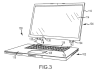
    A couple of new Apple patent applications published today (via AppleInsider) show how the company might be thinking about competing with recent innovations from other big tech companies with similar, but different designs. The first is a filing that describes a convertible MacBook design, with a touch-sensitive screen that separates from the base. The second is a method for navigating a Street View-style view of virtual maps, complete with a twist that allows it to go inside buildings, too.

    The first design for a convertible MacBook may look familiar, since it actually resembles a lot of designs available from Windows device makers, and some previous Android tablet designs. The screen detaches from the keyboard and body portion, which isn’t in itself terribly unique, but the screen in Apple’s version communicates with the brains in the base via Wi-Fi, Bluetooth and other wireless communication protocols, meaning all the serious computing work is still handled by the traditionally located GPU and CPU. The screen itself is touch-sensitive, but doesn’t act as a standalone tablet in quite the same way it does in some new Windows device designs.

    The screen also can charge wirelessly via the same kind of tech used in induction charging, drawing power from the base. What Apple describes here isn’t so much a convertible tablet, but more of a MacBook with a screen that solves the clumsy issue of how to use touch effectively on a notebook by allowing it to temporarily come off the base for more ergonomic touch-based interaction. Apple has talked about how touch doesn’t work on a traditional computer form factor in the past; this is one way around that.

    Another patent application published today could give a clue as to where Apple is headed with Maps. It describes a navigation method for a Street View-style look at the world from the perspective of someone walking the streets themselves. The difference between Apple’s patent and existing Google Street View navigation is that Apple’s is motion controlled, treating the environment as a panorama, which can be navigated based on motion detection from onboard device sensors to let a user truly experience a virtual “walk” through the streets of a city.

    There’s been little evidence to suggest Apple is deploying tech to gather its own Street View-style imagery for Apple Maps thus far, but another recent development at least makes sense given the context of this patent. Apple recently acquired indoor mapping company WiFiSlam, and this patent also describes making use of the system to map and navigated indoor environments, too, so that users could go “inside” select buildings. It was originally filed in September of 2011.

    Both these patent applications seem more like Apple hedging its bets than reflections of any immediate upcoming products, based on recent reports. But they also address issues that could become or are already competitive sore spots for the company, so there’s still a decent chance we may eventually see them make their way to shipping products.

  • Gartner: Tablet Shipments To Grow 69.8% YoY To 197M Units In 2013, As PCs/Laptops Decline 7.3% To 315M Units

    SurfaceProRight

    After IDC’s global device forecast last month, Gartner has published its latest report with smart devices projections for smartphones, tablets, ultramobiles and PCs from 2012 to 2017. The numbers make more grim reading for Microsoft — the company with the most to lose as old empire of the PC continues its slow decline, trumped by the price, simplicity and convenience of Android and iOS-powered mobile computing devices.

    “You need to own consumers in terms of mobile and tablet in order to remain relevant in this market,” said Gartner analyst Carolina Milanesi. Gone are the days when Windows is the “default” option for the majority of consumers, thanks to alternatives being too technical (Linux) or too expensive (Macs), she said. “Consumers have options and consumers are choosing and Microsoft can not take that for granted that they’ll be the one to be chosen.”

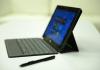
    Gartner is projecting a 7.3% decline in the traditional desktop and laptop computer category this year, although ultramobile devices (portables running a full desktop OS such as Microsoft’s Surface Pro tablet, pictured above) are expected to offset the decline slightly — so the collective drop for these two categories is projected to be 3.5%.

    But the real engine of growth is of course tablets, with worldwide shipments forecast to total 197 million units in 2013: a 69.8% increase on 2012 shipments of 116 million units. By 2017, Gartner expects tablets to be outshipping desktop computers and ultramobiles combined, although it does not make a specific prediction for the tipping point year for tablets. (IDC said last month that it expects tablet shipments to outstrip PCs this year, and portable PCs next year.)

    Over its forecast period Gartner also projects steady growth for smartphones. Overall, the total smart devices market is projected to grow 9% this year, to reach 2.4 billion units.

    On the breakdown of OSes, Microsoft’s loss and Google’s and Apple’s gain is clear: Android consolidates its dominance this year, pulling further away from Windows, while iOS/MacOS narrows the gap with its old computing foe. By 2017 Gartner projects a huge lead for Android, with approaching 1.5 billion device shipments (powered by Android’s dominance in the smartphone space). And while Windows (in both its desktop and phone flavours) is still forecast to be ranked second, iOS/MacOS is not far behind, with 570.9 million vs 504.1 million respectively.

    “If you look at the OS numbers and you look at Microsoft vs Apple vs Android, you see from a sales perspective, Microsoft is still pretty much relying on their PC core… [and not] expanding their numbers. They’re defending by shifting some of the losses that are coming from the PC onto the tablet and ultramobile but they’re not conquering,” Milanesi told TechCrunch. ”With mobility and with the shift from PCs to tablets and smartphones there are going to be implications that go beyond just the hardware side that will really impact OS and applications like Office for example.”

    “The role that Apple is going to play in the computing device — when you’re thinking about computing devices all the way from the smartphone to the PC — is going to be much bigger,” she added.

    The low price of tablets is a key factor driving their adoption, says Milanesi, but it’s not just price that’s powering the category.  Smartphones are acting as halo devices to drive tablet adoption, thanks to users’ existing investments in apps and familiarity with the lighter weight OSes. Touch interfaces and cloud computing are also playing a role, along with the integration of Wi-Fi. While consumers in emerging markets are coming to computing from the phone, not the desktop PC — making tablets a “more natural upgrade path”, rather than the PC, she said.

    “Another misconception is you need a PC in order to be productive and that productivity is measured as far as you need a PC to do Excel work. Well there are an awful lot of people out there who are very productive without ever touching Excel,” added Milanesi. ”The change that touch and tablets are bringing are here. They’re not going to go away. So you better enable that transition so that people can take full advantage of it vs continue to fight it.”

    Windows Phone not BlackBerry in 3rd

    Gartner’s current forecast for 2017 pegs Microsoft’s Windows Phone OS in third place in the smartphone OS rankings behind Android and iOS — with RIM/BlackBerry languishing far behind. BlackBerry shipments will continue to decline throughout the forecast period, according to Gartner, despite its OS reboot with the QNX-based BlackBerry 10 and the launch of the first BB10 device, the Z10. “RIM is even more limited than Microsoft,” said Milanesi. “They have a limited reach as far as where that OS goes as far as devices… We see consumers are more and more looking for an OS that goes across the board.

    “Gone are the days that you have one product can make a company. One product can break a company but one product is no longer enough to make a company. The ecosystem the brand has is becoming much more important from a consumer choice perspective.”

    From that perspective, Microsoft is in a stronger position than BlackBerry, having pushed Windows 8 into the touchscreen era with its Windows Phone-style tile-based UI, while BlackBerry’s own tablet effort has had to take a back seat while it rebooted its mobile platform.

    “Windows Phone is going to be the third largest OS on the phone side after Android and iOS, not too distant from iOS,” Milanesi predicted, although she also noted that the gap between second and third place is a small one so Microsoft’s mobile OS could push iOS into third place.

    She also noted that Gartner’s device projection does not take into account a lower end iPhone, should Apple choose to launch such a product — which could shift the goal-posts again and generate more mass market momentum for the iPhone.

    Should Facebook or Amazon make a phone?

    Asked whether in the current smart mobile devices market it makes sense for Facebook or Amazon to launch their own smartphone, Milanesi gave a qualified “no”.

    In the case of Facebook (which is thought to be holding an Android-focused phone-related event today), she said it makes sense for the company to “enable Facebook in the best possible way” on smartphones — ergo it may therefore make sense for it to build a deep software integration that lives on a phone to deliver the desired experience. But she added: “I don’t think from a brand perspective that people will want to get a Facebook phone because of the Facebook brand. But people will want to have a deeper integration of Facebook on their phone.

    “Facebook want users and they want engagement — and that’s not just coming from a dedicated phone, that come from a much better application and integration of their application in the hardware.”

    For Amazon, which has been rumoured to be looking at building a phone, she said the case is slightly different since the focus for the ecommerce giant is not about driving engagement and gathering user data so much as  ”selling — selling content, selling merchandise, getting consumers onto their website”.

    “I think you do that much more on a tablet than you do on a phone,” she added. “The only way I see a phone making sense is if Amazon continues to fork from Android… where it would make sense to have a phone and a tablet [to sell consumers a connected device ecosystem] — for the same applications and so forth.”

    Building a phone is also less straightforward than building a tablet, noted Milanesi, since carriers enter the mix and complicate the value chain.
  • Facebook, mobile games account for half the time spent on iOS, Android devices

    Facebook, Mobile Games
    Maybe Facebook (FB) is onto something after all with its notion that people want their smartphones to be centered more around its social networkFlurry Analytics released a new report on Wednesday showing that iOS and Android users spend roughly half their time either playing mobile games, which accounted for 32% of all time spent on both platforms, or using Facebook’s mobile app, which accounted for 18% of all time spent. The report, which used both Flurry’s own data as well as data from comScore and NetMarketShare, found that mobile users spend 80% of their time using some kind of mobile app on their devices and spend just 20% of their time using some kind of mobile browser.

  • New smartphone camera technology allows for better image quality in thinner designs

    Toshiba Camera Technology
    Smartphone cameras have improved greatly over the past years, so much so that they have begun to replace traditional point-and-shoot cameras. Image quality has become one of the main selling points for some smartphone vendors, and with each new flagship device comes more megapixels and better image sensors. Toshiba (TOSBF) this week announced the industry’s thinnest CMOS image sensor camera module for next-generation smartphones and tablets. The new sensor is just 4.7 mm in height and will allow mobile vendors to incorporate a high-end 13-megapixel shooter in a ultra-thin frame.

    Continue reading…