
Category: Mobile
-
Google Play redesign confirmed in leaked image
-
HTC One slated for April 19th release on T-Mobile

-
HTC seen ‘losing the window of opportunity’ with HTC One after component shortages

-
Making The Perfect Phone Is Not Enough

“The One isn’t just the best smartphone HTC has ever made — it can legitimately lay claim to being the best smartphone ever produced by anyone.” That’s GDGT’s Peter Rojas speaking about the HTC One. Rojas isn’t alone in this opinion. The HTC One is a phone nearly universally loved by the Internet. The display, the size, the build quality, even HTC’s Android skin is nearly, well, perfect.
But even a perfect phone might not save HTC.
HTC released its March revenue figures today: lowest quarterly net profit since the company started selling products under its own brand in 2006. Revenue fell 37% to NT$42.8 billion from NT$67.79 billion, ringing in below the company’s February guidance of NT$50 billion to NT$60 billion. And the stunning One is one of the primes reasons for the slump.
The HTC One was announced on February 19th, ahead of the handset onslaught from Mobile World Congress and the Samsung Galaxy S4 debut. We were instantly in love with the device, raving about the look at feel after playing with it for just a few minutes. HTC was back, we thought.
HTC has long made quality handsets. The One is not a stark departure from the company’s track record. The company’s tag line has long been quietly brilliant. And that properly described HTC. The company rarely touted its achievements like Apple or Samsung, preferring to let its products, as they say, do the talking.
Ever since the Windows Mobile days, HTC has churned out impressive kits. The Touch Diamond, Touch Pro, even the original Android handset, the G1, felt like something special. Made out plastic, sure, but put together in a way that felt solid and above its price point.
As Android matured, HTC keep producing top-tier devices. At the time, Nexus One, EVO 4G, and the Droid Incredible seemed to state that HTC was always going to be the top Android brand. HTC kept the course, perhaps to a fault, and in 2012, outing the original One phones in the One S, One X and One V. Yet again, these were very nice handsets, but failed to capture the same sort of attention as their predecessors, largely living in the shadow of Samsung’s more-widely available Galaxy S II & III phones.
Benedict Evans, telecoms and technology analyst at Enders Analysis, made a fantastic point speaking to The Guardian. “HTC has a scale problem. Last year at this time both it and Sony launched great new products, and they went nowhere. Everybody is saying that the HTC One looks nicer than the Samsung Galaxy S4, but without the marketing and sales and commission budget, it can’t reach enough people. Making lovely bits of hardware is a necessary, but insufficient, condition in this business. Now it’s getting into a vicious circle where it has to cut back its marketing budget to get its cashflow under control.”
HTC was paying attention, though. The ONE was going to be different. It packs the best of HTC’s design and engineering and hit the market well ahead of competitors. The HTC One was supposed to launch worldwide in the middle of March, just a month after its unveiling.
That didn’t happen. But this did.
While the HTC One suffered numerous delays caused by a short supply of parts, Samsung announced the Galaxy S4 on March 14th. If the ridiculous announcement is any indication, Samsung is going to throw everything behind its latest smartphone. Expect a massive media blitz as the Galaxy S4′s Q2 launch window approaches, likely downing out any paltry marketing planned for the HTC One.
HTC has never been good at marketing partly because for the longest time the company didn’t have to. HTC used to make white label handsets, allowing other brands, such as Verizon and AT&T, to slap their logo on the devices and sell at higher margin. Most of the memorable marketing campaigns for HTC devices have come from the carriers rather than HTC.
If HTC wants the One to sell like gangbusters — and after today’s financial news, they need it to do so — the company will need to elevate its marketing efforts to a completely new level.
The HTC One launches in the States on AT&T and Sprint on April 19th. It’s hitting T-Mobile (and maybe Verizon) later. On AT&T and Sprint, it’s priced right with the 16GB available for $199 on a two-year contract (it’s only $99 on Sprint for new customers). It’s the best Android device available right now and for the foreseeable future. I would take it over the Galaxy S4.
HTC likely threw its entire company behind the HTC One. Pick one up. Try it. Feel it. The phone is closer to perfect than any other phone previously made. However, a perfect product has never been a guarantee of success. Like Benedect Evans said to The Guardian, while the HTC One might be a collection of lovely bits of hardware, that’s not enough alone.
-
Samsung readies its biggest phablet yet: Galaxy Mega 5.8 specs leak

-
Chinese government reportedly orders 2 million BlackBerry Q10 smartphones

-
Health & Wellness Retailer Vitacost Turns To Tablets To Drive Serendipitous Sales

Vitamin and health food online retailer Vitacost has launched a tablet app that’s designed to encourage shoppers to put more than just the core items on their shopping list into their digital basket. Introducing a little serendipity into the buying process makes a lot of sense when you’re selling 40,000+ different products but what’s interesting is that Vitacost sees tablets as the place to do this.
Vitacost already has a smartphone app but says its tablet “experience”, which is designed for the iPad but built in HTML5 so is not a native app, is “entirely different” to the smartphone app — with a focus on allowing shoppers to discover new items, rather than just making it quick and easy to shop by category.
“The tablet size and form-factor encourages browsing,” says Vitacost CMO David Zucker. ”Information-rich, large catalog retailers work really well in a browsing format on a tablet, which is difficult to achieve on a smartphone.”
“The iPad experience is not an app but an actual website in HTML 5 to exploit the tablet and its functionality. Our phone app is optimized for that size screen while the new iPad experience is designed for the mid-size screen and the iPad functionality,” he adds.
It’s still early days in the retail gold rush to mine riches out of tablets. As slate ownership ramps up — with almost 200 million tablets predicted to ship globally this year (Gartner‘s figure), powered by YoY growth of nearly 70% — the swelling addressable market for selling stuff via slates is putting the dollar signs in retailers’ eyes. Especially as tablet owners are already showing signs that they are in the mood for casual browsing – so may be more likely to make an impulse buy.
Designing tablet-centric ecommerce that encourages a more casual kind of shopping, to help shoppers discover products they didn’t know they were looking for, seems like a natural next step in digital retail strategy. Certainly for ecommerce companies that have a large number of SKUs to sell.
“The tablet is the ideal ‘couch commerce’ browsing environment,” says Zucker. ”Their large screen, high resolution and good sound make rich browsing experiences possible… We see the growth in tablet usage as a ‘third screen’ and interaction with commerce and brands is increasing. Tablet usage has grown 10x faster than smartphone usage comparing the first two years after introduction [and] is expected to grow at 50% compounded annual rate through 2015 – this is where the puck is going.”
So what exactly does Vitacost’s tablet “experience” do to get more shoppers encountering stuff they didn’t already know about? Firstly, the shopping experience is built around gestures to make it easier to browse and choose items, with swipes to quickly flick through scores of items on virtual shelves. Products that the shopper wants to buy are then dragged off the virtual shelf to the bottom of the screen where they are added to the basket.
Another feature, called ‘browsing bubbles’, displays related info next to the products (such as ingredients and dietary info) but also bubbles up similar products to get users to widen the spectrum of their search.
Add to that, a proprietary ‘sprinkler algorithm’ introduces an element of pure serendipity by pushing random categories and items into the mix too, so that shoppers end up encountering a much broader collection of products than if they have been shopping via the traditional ecommerce staple of drop-down category menus.
The effect Vitacost was aiming for was to digitally recreate a bricks and mortar style shopping experience where the act of shopping naturally involves discovery, says Zucker. “Consumers using our new digital platform are offered an endless array of product suggestions through the browsing bubbles, increasing awareness of the vast selection of products and brands that Vitacost carries,” he adds in a statement.
The company gets 1.5 million unique views to its ecommerce website per month but does not yet publicly disclose traffic to mobile devices. Zucker tells TechCrunch that “mobile/tablet revenue is a non-trivial portion of our total revenue” but said, first and foremost, the decision to develop the tablet shopping platform was driven by “the desire to remove friction in the buying process for our 40,000+ SKUs”.
“We chose the iPad to exploit the functionality that this device has, such as dragging, swiping and other functionality that enables more gesture-based shopping. Second, we needed a user experience that better enabled a consumer to discover the products we have; since a typical consumer will enter a brick and mortar grocery shopping experience and emerge with items they did not initially intend to buy,” he says.
“This ‘discover’ process is difficult to build in a website and we believe we have made significant strides with our new experience to develop a sense of discovery using our shopping bubbles and sprinkle algorithm. Finally, we wanted something that people actually liked to use and found fun to interact with. I don’t think anyone would say that web shopping is in itself a fun experience, although theVitacost iPad experience is.”
Here’s a screengrab of the less fun/more utilitarian shopping experience offered on Vitacost’s website:
-
AppMesh says its mobile apps will help salespeople get out in front of email and deals
San Francisco startup AppMesh is emerging from stealth mode with iPad and iPhone apps that bring together and optimize salespeople’s inboxes, calendars and ongoing deal data sets. With the apps, getting lost in email and manually updating the sales process are things of the past, the company vows.
Co-founders Leo Tenenblat and Tom Tobin both worked in product management on analytics at Software-as-a-Service (SaaS) giant Salesforce.com, where they saw the value of pushing out clear information to salespeople’s mobile devices.
With AppMesh, updates sync quickly between the iPad app and iPhone app. And if an app goes offline, it will sync and replicate to the Amazon Web Services public cloud once it goes back online. Users can export Salesforce data to the apps, although importing back to Salesforce is not currently possible. Android versions are planned. The apps automatically take note of salespeople’s emails and phone calls to potential clients. It also arranges email in different ways — by the size of the deal, by the time the deal opportunity closes and so on. The apps are free for teams of up to five people, and prices are determined on a case-by-case basis for larger user groups.

The AppMesh application for iPad lets salespeople track meetings, sales opportunities and emails.
The product is similar in some respects to Tylr Mobile, a startup that’s still in stealth mode. Meanwhile, some startups, such as Crushpath and Selligy, offer mobile apps for tracking sales relationships, and others, such as Yesware, deal in optimizing salespeople’s email boxes but not with mobile apps. There are also startups that aim to make the best of email but don’t draw from sales apps, such as Taskbox and Mailbox, which Dropbox acquired.
On top of that, it’s possible Salesforce itself could roll out more sophisticated features. After all, Salesforce plans several announcements around mobile offerings this year. Then again, Salesforce could move to acquire AppMesh or Tylr Mobile. The deal would make sense, because the products are intended to solve a real problem for salespeople.

Related research and analysis from GigaOM Pro:
Subscriber content. Sign up for a free trial.- New challenges for the IT organization
- A near-term outlook for big data
- The 2013 task management tools market


-
Facebook Home Android APK Leaks Ahead Of Official Release This Friday
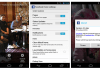
Android users will get the chance to try out the official public release of Facebook Home later this week, but if anyone is really impatient a beta version has leaked and is available to try now (via Verge). MoDaCo has published the beta (which is actually made up of three separate APKs covering the Facebook app itself, a new Messenger app and the Home/launcher app.
Another benefit of the pre-release version of Home, besides getting to try it out early, is that it works on a wide variety of devices beyond the five specified by Facebook as being compatible in the event it held last week to officially announce Facebook Home. The only requirement seems to be that the device has a maximum resolution of 1280×768, and that a user is able to completely uninstall their existing Facebook app. The Nexus 4 is therefore a viable candidate.
Functionality is somewhat limited, however. Chat heads doesn’t work as of yet, for instance. But Cover feed appears to function as intended, and all the settings appear to be there. The settings reveal that in choosing where your Home content comes from, you can both enable and disable updates from Pages and status updates from users in your network. You can also enable or disable the notification/status bar at the top of the screen for a more edge-to-edge Facebook experience.
The leak shows that there doesn’t really appear to be any huge technical barrier to putting Facebook Home on a wide variety of handsets, which is good news for users who don’t own one of the five devices initially set to receive it. If you’re interested, you can head over to MoDaCo to download the APKs and try this our yourself, but as with any side-loaded software, remember you do so at your own risk. Friday might just be a little too far off for some curious folks, however.
To install the Facebook Home beta, first make sure you’ve uninstalled both Facebook and Facebook Messenger. Then navigate to your device’s security settings and then tick the box that allows you to install apps from unknown sources. Then download the APK files above to your computer. Plug in your Android device and make sure that it has USB mode enable, or download Android File Transfer if you’re on a Mac. Drag and drop the three APK files to your device, preferably in the “Downloads” folder.
On your Android device, if you don’t already have one, download and install a free file manager application from Google Play. The free and aptly named “File Manager” does the job. Within that app, navigate to where you copied the Facebook Home APK files from your computer, and tap on each to install them.
Once they’re installed, sign in to Facebook with your credentials, and then activate Facebook Home. It’ll take a few seconds to load, but should quickly go from a gray screen to photos from your FB feed and a home circle with your face at the bottom. You can choose to have pressing the home button on your device activate FB Home by default, or your default launcher, and you can change these settings at any time in Android Settings.
-
Why Home won’t move the needle for Facebook
The big question following this week’s Facebook Home announcement is whether it is going to move the needle. And when one looks at the numbers, it’s a question of reach. At least in the near term, Facebook Home will not achieve the reach needed to move the needle.
Facebook avoided several traps
Facebook clearly did many things right. First, it elected not to get into the hardware business by developing its own handset, and thus competing directly with Apple, Samsung, HTC, Motorola, LG and others. Second, it didn’t try to build a new operating system, and compete with Apple’s iOS, Google’s Android and Microsoft’s Windows Phone (which is battling BlackBerry for third spot). And if it had to pick one OS, Android was definitely the right option, both because of the design choices that open source provides and the sheer number of Android devices being activated.
More importantly, as anyone watching the Facebook Home event yesterday saw, Facebook went big. Facebook Home is ambitious, well designed, stunning and immersive in the experience; Mark Zuckerberg is justifiably proud of what his company has created. But the question remains, will it move the needle?
The numbers tell the story
There are 130 million smartphone users in the U.S., as of the end of January (all figures are according to ComScore’s most recent report). Currently 76 percent of U.S. smartphone users, or 98 million people, have the Facebook app installed on their phones. Android currently has 52 percent of the smartphone market, which, barring switching from iPhones or other smartphones, leaves the total available market of U.S. Android users with Facebook installed to 51 million.
But, crucially, Facebook Home will only work on newer (less than a year old) Android handsets, for now the HTC One X, HTC One X+, Samsung Galaxy S III, Note II, HTC One, Samsung Galaxy S4, and HTC First. (Hey, where’s my Samsung Galaxy Nexus and any number of other, newer Android handsets?) So once we take Android users currently with the Facebook app installed (about 50 million users) and subtract from that those with older and/or lower-end Android handsets, we’re left with some 25 million possible Home users in the U.S.
But there’s more. Facebook Home is not for everyone. We can assume that casual users who check Facebook infrequently – those who have it installed on their Android handset but aren’t frequent users – aren’t likely to convert to Facebook Home. According to Facebook’s year-end presentation, when comparing the number of Monthly Active Users to Daily Active Users, 59 percent of Facebook’s MAUs are DAUs, which makes sense and provides some insight into casual users who don’t check in daily. Nor can we ignore non-contract (prepaid) mobile users – who account for about 25 percent of the mobile user base, and often pay for data by the KB – who will find Facebook Home “immersion” to be very costly.
So using the best data available, we see that Facebook’s maximum potential reach is seriously impaired by the realities that three-quarters of Facebook smartphone users have iPhones, Blackberries, Windows Phone, Symbian devices or older or low-end Android handsets. Are Facebook users with iPhones or any competing devices going to switch en masse? Certainly not enough to move the needle.
Consumer concerns will factor
For casual users, and those concerned about data consumption, the Facebook mobile app will suffice. Likewise for those who are justifiably concerned about Facebook Home’s ability to monitor every minute detail of their whereabouts, activities, habits, and so on – even when they’re using other apps.
And then, there’s battery life, already a big issue for smartphone users, as an endless stream of pictures pops up on their handsets.
At least for the U.S. market, where revenue per user is highest, Facebook Home will simply not move the needle, and shouldn’t add up to more than 10 million to 20 million of Facebook’s current 100 million U.S. mobile users.
Exclusive hardware limits reach
And what about the HTC First, the Facebook handset to be offered exclusively by AT&T on April 12, the same day Facebook Home is scheduled to become available on Google Play? The HTC First is a mid-range and very well-designed handset with a good price point, four pleasing colors, and a great screen. HTC is clearly a contender, and builds gorgeous handsets. But why is this deal, where reach is critical, an exclusive? It simply further limits reach for Facebook.
Two years ago, AT&T and HTC offered the first Facebook Phone, the HTC Status with QWERTY keyboard and a dedicated Facebook button that took you right into FB. The phone sold in AT&T stores for half the price of the HTC First, and was pulled within a few months for lack of interest. Again, the HTC First (ironically, HTC’s second Facebook handset) should sell okay, but don’t expect lines around the block, or even out the door. Most AT&T smartphone customers use iPhones, which accounted for 85 percent of smartphone sales last quarter.
The bigger play, and where this can move the needle for Facebook, in time, is to produce a lower-cost handset with Facebook Home for India and other international markets where revenue per user is very low and upside is considerable.
Whitey Bluestein is an international strategic advisor and corporate development specialist focused on mobile applications, prepaid, MVNOs, payments and roaming services. He is a GigaOM Pro Analyst and Mobile Industry expert, and frequent commentator on CNBC Fast Money. Visit whiteybluestein.com.

Related research and analysis from GigaOM Pro:
Subscriber content. Sign up for a free trial.- U.S. Wireless Data Market: Q4 and Year-End 2008
- Mobile 2012 and beyond
- CES 2012: a recap and analysis

-
Can big tech overcome its love-hate relationship and destroy patent trolls once and for all?
There has been a lot of talk in the tech world lately about defensive patent licenses and eliminating patent trolls, but I wouldn’t break out the celebratory champagne just yet. As much as technology companies seem to love the idea of killing patent trolls where they sleep — in a comfy bed of intellectual property acquired with proactive litigation in mind — they don’t yet seem willing to take a real stand. And some actually seem content to keep feeding the trolls the IP morsels they need as sustenance to stick around.
If tech companies were serious about getting rid of patent trolls and spurring innovation, their first steps might be building a unified front and applying their ideals uniformly across their IP efforts. On Friday, for example, Google teamed with BlackBerry, Red Hat and EarthLink to file comments with the Federal Trade Commission about the scourge that is patent-assertion entities — institutions that get the rights to IP from operational entities (i.e., companies that actually sell products versus just sue) and then file lawsuits on their behalf. It’s a meaningful action and it addresses a real problem — Red Hat and Rackspace just emerged victorious after a lawsuit with a patent-assertion entity, in fact — but the backstory is a bit more convoluted.
For starters, a skeptic might argue, Google’s interest (and possibly BlackBerry’s, as well) is primarily about sticking it to Microsoft in mobile. After all, it wasn’t so long ago — May 2012 — that Google filed a complaint with the European Union accusing Microsoft and Nokia of engaging with a known patent-assertion entity, called Mosaid, in order to stifle the growth of the Android operating system in Europe. Before ultimately teaming up to acquire Kodak’s patents out of bankruptcy, Google accused Apple and Microsoft of teaming up to buy them and dump them into a patent-assertion entity.
Ironically, though, the very same FTC to which Google is now petitioning recently said the search giant has been abusing its own standard essential patents in mobile by pursuing injunctions against competitors who sought to license them — namely Apple and Microsoft. And BlackBerry, under its former RIM moniker, was part of an Apple and Microsoft-led consortium that bought Nortel’s IP assets in 2011, much to Google’s chagrin. I suspect these apparent hypocrisies only scratch the surface of what’s going on in mobile and across the IT landscape.
There are obviously some complex legal matters and business relationships at play here, but the solution to stopping patent trolling and other questionable practices is for a unified front. There’s plenty of blame to go around among Microsoft, Google and their peers, but placing blame is counterproductive.
Large companies have a lot of money and can effect a lot of change if they use it to fight for things in which they actually believe. If innovation is such a noble cause and the billions in economic damage is really such a problem, then collective and strong action against patent trolls and patent-asserting entities is probably a better solution than talking out of both sides of your mouth about the issue. Maybe they could put those legal resources toward suing the pants off of patent trolls and trying to get their patents deemed invalid, or in defending smaller companies against the high-volume, low-profile IP extortion that keeps patent trolls’ pockets fat.
If it works for Hadoop …

A drawing from a Google MapReduce patent.
The types of patent activity we’re seeing shape up in the big data space — around Hadoop, in particular — help serve as an example of what’s possible but also highlight the shortcomings of half-hearted efforts. One piece of good news that got a lot of attention is that Google has pledged not to assert its patents against anyone using techniques covered by its MapReduce patents. This essentially covers anyone using Hadoop because Hadoop is, in part, an open-source implementation of MapReduce.
Another piece of good news — possibly bigger than Google’s move — is that Rackspace, the latest target of patent troll Parallel Iron’s offensive against companies using the Hadoop Distributed File System, has decided to fight back. In an aggressive blog post on Thursday by SVP and General Counsel Alan Schoenbaum, the cloud-computing heavyweight explained its decision to sue Parallel Iron for breach of contract and to seek declaratory judgments that the patents in question do not relate to HDFS.
This is such a big deal because if Rackspace wins, everyone else facing similar claims by Parallel Iron could win, too. In an emailed statement regarding this lawsuit, a Rackspace spokesperson wrote: “We are asking for a declaration of noninfringement because we just don’t see how the patents they have cited just could reasonably apply to HDFS. We believe that other companies will also be able to use similar arguments to fight this troll.” If a court finds Parallel Iron patents unrelated to HDFS, that could serve as strong evidence of noninfringement in the other cases or to preclude the infringement claims altogether.
Further, every big victory against a patent troll means less money in their pockets, which is the only real way to stem the tide of lawsuits. As long as it’s still profitable, they’ll keep coming. Often, though, large companies opt to negotiate and settle with patent trolls rather than deal with the headache of litigation.
Large companies can strike strong blows against the problem by fighting and winning, and by using their bully pulpits to add fuel to a growing fire around patent reform. As Schoenbaum wrote:
Until Congress reforms the patent laws, companies of all sizes and industries could – and likely will – find themselves in the crosshairs of a greedy patent troll looking for a quick cash-grab. No company is immune, and, sadly, small companies can’t afford to fight. If they don’t succumb to the troll’s demands by settling, they face certain ruin.
Our goal with this lawsuit is to highlight the tactics that IP Nav uses to divert hard-earned profits and precious capital from American businesses. This time, the patent troll should pay us.
One has to wonder, however, if Google couldn’t help put an end to this whole question of HDFS patents by pledging non-assertion of its Google File System patents (HDFS is based on GFS) or trying to get Parallel Iron’s patents deemed invalid. Maybe the whole big data industry could be convinced to set competitive concerns aside and put resources behind that effort. (A Google spokesperson said the company is considering how and where to extend its non-assertion pledge but doesn’t have specific details to share right now.)
Whatever they do, though, technology companies need to stop bemoaning patent trolls and promoting innovation on one hand and then suing each other with the other. When they do that, technology companies look as out of touch, or maybe just as full of it, as the media companies that keep crying wolf about piracy without ever taking the fundamental steps necessary to solve it.
Feature image courtesy Shutterstock user Maksim Shmeljov.

Related research and analysis from GigaOM Pro:
Subscriber content. Sign up for a free trial.- Connected world: the consumer technology revolution
- What the Google-Motorola deal means for Android, Microsoft and the mobile industry
- The importance of putting the U and I in visualization

-
Nokia’s Verizon-Bound Lumia 928 Spotted In Leaked Images Ahead Of Launch
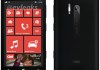
It’s been a long time coming, but Verizon Wireless customers should soon have another high-end Windows Phone 8 device to lust after. After the handset was spotted both in both the FCC’s and Verizon’s systems, noted leaker @evleaks has come through yet again with a new image of the upcoming Nokia Lumia 928 (formerly known as the “Catwalk”).
There’s not a whole lot to be gleaned from the image save for the fact that the device seems to have done away with the rounded sides and flat top and bottom edges of its immediate predecessor the Lumia 920. As it turns out, one of the neatest features of the initial Catwalk leak is nowhere to be found here — according to The Verge, the Lumia 928 will sport a more traditional polycarbonate body instead of the aluminum chassis that was originally slated for the device way back wehn. Most of the 928′s internals (think the 1.5GHz dual-core Qualcomm MSM8960 processor, 1GB of RAM, and 32GB of internal storage) are expected to remain the same as its cousin the 920, but Nokia may run with an OLED panel this time around rather than the IPS LCD as seen in the 920.
In short, it’s hard not to think of the Lumia 928 as what the Lumia 920 should’ve been when it launched.
According to recent figures from Kantar Worldpanel, Windows Phone has managed to pull away from BlackBerry in terms of mobile OS market share, and devices like the 928 should help Microsoft’s mobile efforts pick up a little more steam in the coming weeks. Meanwhile, Nokia has been working to make its Windows Phones the most feature-rich out there with exclusivity agreements with companies like Zinio, so it’s clear that some developers are starting to see the benefits of embracing the prospect of developing for the Windows Phone platform.
That said, WP’s third place position isn’t completely safe at this point — BlackBerry posted some promising quarterly financials and if recent leaks are to be believed, a low-cost BlackBerry 10 device with a QWERTY keyboard could see the light very soon. Z10 shipments point to reasonably healthy demand, and an affordable device launched in key markets could be just what the doctor ordered for BlackBerry.
-
iPhone said to be too pricey for Europeans

-
T-Mobile brings LTE to unlocked iPhone 5s with new carrier update

-
HTC First may dump Facebook Home when it comes to other carriers

-
German court invalidates Apple’s ‘slide to unlock’ patent

-
Unannounced BlackBerry 10 R-Series phone pictured for the first time

-
Microsoft accuses Facebook of copying Windows Phone with Home launch

-
Google expected to exercise ‘gradual muscle flexing’ to retake control of Android

-
Is This The Future Of How We Use Facebook?
On Thursday, after weeks of building up to it (and years of Facebook phone rumors), Facebook unveiled the closest thing to a “Facebook Phone” that exists. This comes in the form of a new “family of apps” for Android, and an actual phone from HTC with the family pre-loaded. The experience is called Facebook Home.
What are your first impressions of Facebook Home? Future of Facebook and mobile communications or meh? Let us know in the comments.
Facebook’s mission with this offering is to make your phone more about people rather than about apps. The core feature of Facebook Home is the Cover Feed, which takes over as your home screen, and lets you swipe through the latest photos and updates from your Facebook News Feed. You can also interact with the posts from there (liking, commenting, etc.).
But it doesn’t end there. Notifications appear on the home screen in a visual way. As our own Zach Walton explained, “All notifications will show up on the home screen as separate entries. Tapping the notification will bring up the Facebook app for further interaction. If you want to get rid of it, you can just toss it off the screen. Holding one of the notifications will lump them all together if you so wish to disregard all of them at once.”
To even access your other apps in the first place, you have to hold the image of your face that appears (see that little image of Mark Zuckerberg below) and swipe it up to the appropriate place.

There is a feature called “Chatheads,” which allow your Facebook and text messages to follow you through your other apps. Messages (via these little heads of your friends) will show up at the top right of your screen regardless of what app your’e in.

For a more hands-on look, you might want to check out this demo from The Verge:
Okay, some of you are probably thinking: I don’t even use Android, so why do I care about this? Fair point, but Facebook indicated that it wants to provide an experience like this across all phones. This is easier said than done, however.
Facebook chose Android because of its open source nature that allows it to take over your phone in the manner it does. It’s not so easy for all operating systems. Zuckerberg specifically talked about how Apple’s control over iOS simply does not allow it to offer this kind of experience on an iPhone. It would take a partnership for that to happen.
Facebook already does have a relationship with Apple. As you may recall, Apple touted heavy Facebook integration in the latest version of iOS. Here’s what Zuckerberg had to say about Home on iOS in an interview with Fortune:
We’d love to offer this on iPhone, and we just can’t today, and we will work with Apple to do the best experience that we can within what they want, but I think that a lot of people who really like Facebook — and just judging from the numbers, people are spending a fifth of their time in phones on Facebook, that’s a lot of people. This could really tip things in that direction. We’ll have to see how it plays out.
Of course only a select few Android users even get access to Facebook Home at this point. It’s only launching on a handful of phones, which is somewhat ironic given Facebook’s desire to have it on every phone. It’s coming to the HTC One X, HTC One X+, Samsung Galaxy S III and Samsung Galaxy Note II, as well as the newly introduced HTC First, which features Facebook Home pre-installed.
For developers, Facebook has created some new opportunities with Home. The Cover Feed feature lets users access app content as soon as they turn on their phones. More on that here.
For Businesses, not only will your Page’s posts and photos be more readily available to users due to the in-your-face nature of Facebook Home, but Zuckerberg says ads will be coming to the feature at some point.
Another thing that could make Facebook Home more useful to both users and businesses is the eventual addition of Graph Search. Graph Search has not even been launched on mobile devices yet, and it remains to be seen how long that will take. It will happen, however. Facebook said as much when that was introduced. Danny Sullivan at Search Engine Land quotes Zuckerberg from the Home launch:
“When that’s available, hopefully we’ll be able to make that available here [in Home]. But even Graph Search, Graph Search is not web search. People still need Google or Bing of whatever they use for web search.”
Is Zuckerberg perhaps being cagey, holding back on a secret-uber plan to eventually have Graph Search take over on these devices. Perhaps. And I do think Graph Search is going to come. But really, the impression I got was that search has largely been overlooked with the launch of Home.
As Google faces the real risk of losing search market share little by little to numerous vertical services, it’s possible that Graph Search will play a big factor in that. We discussed this more here.
Sullivan makes a good point in that same article in that Facebook Home makes users have to work harder to get to the search experiences on their devices. Just as users have to take an extra step to access their apps, they have to take an extra step to get to the search function (which could very well turn people off of the offering on its own).
Fortune goes so far as to call Android “Facebook’s new weapon against Google” because of Facebook Home; the point being that Google wants you to live in Google’s world and use Google’s services when you’re on an Android device, and Facebook Home puts you squarely in Facebook’s world, distancing you more from Google’s products even on its own operating system. It’s a fair point, and it’s really a similar (but more in your face) strategy to what Amazon is doing with its Kindle Fire devices, which use Amazon’s version of Android and its own app store.
If Facebook is able to get a substantial amount of people using Facebook Home, even if only on Android, it might push Graph Search even further into users’ search habits, especially if it’s available on their devices in less steps than a Google search.
But search isn’t the only Google service Facebook Home pushes to the background. As mentioned, it essentially pushes every other app on your phone to the background, but as Pocket Lint points out, it even eighty-sixes Android notifications, except for on the HTC First (another reason a lot of people might steer clear of Home).
There are real questions about whether or not people even want this kind of Facebook experience on their phones.
And of course, like with just about anything Facebook does, privacy is in the discussion. Even some of the most veteran of tech journalists are raising concerns.
Om Malik, for example, writes, “In fact, Facebook Home should put privacy advocates on alert, for this application erodes any idea of privacy. If you install this, then it is very likely that Facebook is going to be able to track your every move, and every little action.”
“The new Home app/UX/quasi-OS is deeply integrated into the Android environment,” he continues. “It takes an effort to shut it down, because Home’s whole premise is to be always on and be the dashboard to your social world. It wants to be the start button for apps that are on your Android device, which in turn will give Facebook a deep insight on what is popular. And of course, it can build an app that mimics the functionality of that popular, fast-growing mobile app. I have seen it done before, both on other platforms and on Facebook.”
“But there is a bigger worry,” Malik adds. “The phone’s GPS can send constant information back to the Facebook servers, telling it your whereabouts at any time.”
As some noted in response to Malik’s points, Google already does this stuff.
Martin Bryant at TheNextWeb counters Malik’s argument asking, “Is that really such a bad thing?” His point is essentially that targeted ads are better ads.
All in all, you have to really, really like Facebook to want to have Facebook Home dominating your phone. Luckily, there are a lot of people that really, really like Facebook. The social network has over a billion users. It’s unclear how many of them love it to that extent. Home adoption could prove to be an interesting window into that kind of data.
Even without having access to it, it’s clear that many view the offering as intrusive and an inconvenience to the rest of their phones’ functionality. It’s going to be quite interesting to see how the product evolves and whether or not users get on board.
What do you think of Facebook Home? Is this the future of how we’re going to interact with Facebook? What are the bigger implications? Share your thoughts in the comments.

