
Category: Mobile
-
Unannounced Samsung ‘Galaxy Win’ smartphone specs and images leak
-
After almost a year, Apple stops blocking Microsoft’s SkyDrive update for iOS

-
Jelly Bean now found on a quarter of Android devices – sort of

-
Mobile Twitter Apps Let You Open/Download Apps From Tweets
Twitter announced updates to its Android and iPhone apps, as well as mobile.twitter.com. Each of them (as well as Twitter.com) now shows more types of content in expanded tweets, like photo galleries, apps and product listings.
The apps will also display a new link below the content when shared from other mobile apps. These links let the user open the or download the apps right from the tweet.
“As an example, if you expand a Tweet to view a photo from Flickr, you can tap the link to open the photo in Flickr.,” explains Twitter’s technical lead for Android, Jonathan Le. “If you don’t yet have the Flickr app on your phone, you can tap to install it from the Tweet.”

In reference to the Android app, Le says, “Its new design reflects a native Android experience: wider and taller timelines that fill the screen, a flat navigation bar, tap and hold for quick actions, and more. You can now quickly navigate between tabs by swiping across your screen. And as you type your Tweet or search, you’ll see username and hashtag suggestions, making it easier to connect with friends and join conversations.”
The updates are rolling out to users over the coming days.
-
Apple told to produce an ‘iPhablet’ or risk losing ‘a lot of market share’

-
At 40 years old, the cellphone has become the world’s most important consumer tech product

-
Twitter plays its platform hand, and it is the one holding all the Cards
We’ve written before about the evolution that Twitter has been trying to engineer over the past year or so — transforming itself from a network with an open ecosystem into one that is much more controlled, a change that has led to much criticism and unease. The latest step in that process came Tuesday, with the launch of new features for Twitter’s “Cards,” which allow certain services to add extra content to expanded tweets. While many developers have greeted them with open arms, the future of Cards as a platform is one in which Twitter is firmly in control, and that comes with some obvious risks.
As my colleague Eliza Kern noted in her post on the new features, Twitter has given third-party apps the ability to add “deep links” to content inside a tweet, so that — for example — if a user includes a link to a photo from Path or Flickr and someone reading that tweet has the Path app or the Flickr app installed on their device, clicking the link launches that app and takes them directly to the content (a link to a download page for the app can also be included).
Twitter can help with app discovery
The benefits of these new features are clear, as Fred Wilson from Union Square Ventures (one of Twitter’s backers) and others have noted. For services like Path, one of the hardest problems is discovery — in other words, letting people know it exists, and also making it easy for users to find interesting content within the app. Twitter’s new Card features provide a potential solution for both of those problems, and since the social network has an active-user base of close to 250 million, it could give some services a substantial boost.
Really excited to integrate the new @twitter cards into @circa. This will be a game changer for app distribution.
—
Matt Galligan (@mg) April 03, 2013The downside of this approach should also be obvious, however, especially if you notice that among Twitter’s partners for these new features there are names like Path and Flickr, but no Instagram. Why isn’t the largest photo-sharing service included? Because it is owned by Facebook, and Twitter cut off the app’s access to a key feature last year — namely, the ability for users to find Twitter friends who also use the service. The company also cut off Tumblr’s access to the same features, even though Tumblr was an early partner on Cards.
This is the fundamental difference between Twitter’s current approach to being a platform and its previous approach. In the early days of the service, up until mid-2011, Twitter seemed happy to be at the center of a more or less open ecosystem — one which allowed virtually anyone to make use of the company’s APIs to display or make use of tweets. Many services and apps (including Instagram) grew by piggy-backing on the network in this way.
Then came what one Twitter investor has called a “holy s*** moment”: Bill Gross — founder of what was then called Uber Media — started buying up Twitter clients (including an attempt to buy Tweetdeck, which Twitter ultimately acquired) and appeared to be preparing to launch his own network, one that would make use of tweets combined with a third-party advertising model.
Twitter’s control is a double-edged sword

These moves by Gross and others posed a clear threat to Twitter’s ability to monetize its growing user base — something that was becoming more and more crucial given the multibillion-dollar market value the company had developed after several rounds of financing. So the company started tightening the screws around its network: restricting access to the API, changing what were display “guidelines” into “requirements,” and generally exerting much more control over who got access to the company’s data.
Such decisions caused a firestorm of controversy in the third-party developer community, with some complaining that Twitter had “killed” their businesses. Now, the company is clearly trying to repair some of that damaged goodwill by offering third-party apps and services preferential access to the network, and features like Card deep links — replacing the open ecosystem approach with one that is more a velvet rope: only official partners allowed.
This approach makes sense for Twitter, since it needs to generate revenue from its network, and presumably intends to collect (or is already collecting) fees from partners for the additional features they are getting with Twitter Cards, which can also include music links and other content. And as noted above, it makes sense for apps and services like Path to cut a deal in order to get more reach — but just like building integration into Facebook or Apple or any other controlled ecosystem, developers should be aware this is a double-edged sword.
In other words, such an arrangement will likely look like a win-win so long as Twitter thinks you are beneficial to its network. The minute it sees you as competition, it will suddenly become lose-lose — and whatever you have invested in that ecosystem will vanish.
Post and thumbnail images courtesy of Shutterstock / Ljupo Smokovski and Flickr user Rosauro Ochoa

Related research and analysis from GigaOM Pro:
Subscriber content. Sign up for a free trial.- Mobile 2012 and beyond
- 12 tech leaders’ resolutions for 2012
- Connected world: the consumer technology revolution


-
Facebook Home revealed in leaked images

-
Facebook Home Screenshot Leaks Suggest We’ll See An Image-Rich Interface With Sharing Close At Hand

Facebook is set to debut a special Android product tomorrow, and now 9to5Google has an early look at what we might see, courtesy of Evleaks. The screens depicted on renders of the so-called HTC First smartphone hardware being created by the Taiwanese company. The images show tweaks to the basic Android UI that include easy access to status updates, photo sharing and check-in functions, as well as an emphasis on images.
The screens look to take a mostly minimalist approach to re-skinning the Android OS, with a widget similar to the one available for Android home screens occupying a spot near the top of the app tray. A notifications screen uses what looks like it might be a Facebook cover photo as its backdrop, and seems to display a user’s FB profile pic as the unlock mechanism. There are Instagram, Messenger and Facebook sharing options shown in the built-in gallery app, and Evleaks says the whole point is to put Facebook functions close at hand wherever possible in the OS itself, making it less necessary to jump into the dedicated app to share or engage with content posted to the social network.
The description and screens from this latest leak match up with what Josh reported was on the way from Facebook for this event last week. Overall, it looks like what FB is doing is making a product that can make Android a better funnel for prompting mobile users to post content and updates to its network, and to better keep up to date with new activity from their friends. If Facebook can successfully demonstrate that it can actually improve the Android experience with deeper hooks, its Home product could become attractive to other OEMs as well. And even though it has built an impressive user base on its own, shipping on a range of Android hardware around the world as an element virtually baked into the OS goes well beyond traditional user acquisition methods.
We’ll have live coverage of the event tomorrow as it happens, beginning at 10 AM PT, so you can tune in to find out whether what Facebook really is presenting matches these early leaks as it happens.
-
Facebook Mobile Exec Emily White Is Your New Director of Business Operations at Instagram
Facebook Director of Mobile Partnerships Emily White is leaving that job, but she’s not going very far. Facebook has confirmed that White will head up Instagram’s expansion as the new Director of Business Operations.
According to All Things D, White will work closely with Instagram co-founder Kevin Systrom in an effort to “expand partnerships, improve user operations and, presumably, come up with ways to make some money.”
White has a history of working on monetization, both as head of Facebook’s mobile partnerships and as a Senior Director of Emerging Business in marketing and ads with Google. Facebook stole White from Google back in 2010.
Here’s what Systrom had to say about the move:
“I’m excited to bring Emily White onto the Instagram team. As we continue to scale our operation to support over 100 million active users, her experience with partnerships and business operations will play a major role in our future success.”
It’s no shock that Facebook is making moves to monetize Instagram, which it bought for close to $1 billion last year. Presumably, White will work on finally bringing ads to the service. As you may remember, that concept sparked quite a bit of controversy last year when Instagram changed its terms of service to allow for future use of user content in advertising.
The lead photo is from White’s personal Instagram account, on which she’s already changed her title to Director of Business Operations at Instagram.
-
Google engineers’ robocall-blocking scheme wins kudos from FTC

-
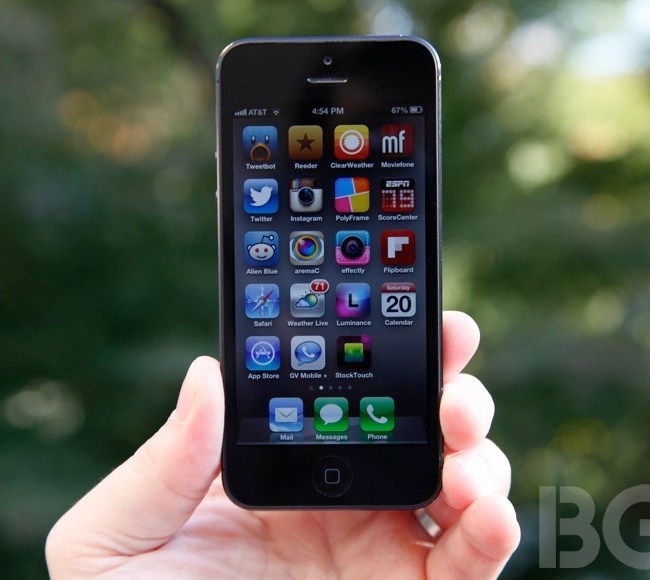
Apple said to be giving iOS 7 a major UI overhaul
-
After Everyone Points Out iPhone Will Be Cheaper Than Galaxy S4 On AT&T, Carrier Claims A Mulligan

AT&T has issued a clarification on its Galaxy S4 pricing via the unique method of a small statement in a footnote to an earlier post. Previously, AT&T had announced via its consumer blog on March 28 that it would be offering the Galaxy S4 starting at $249.99 with pre-orders beginning April 16. Now, it has amended that post to add that that’s for the 32GB model, with the 16GB version priced cheaper at $199.99 on a two-year agreement.
The move comes a full five days after the initial post, and after a number of bloggers, analysts and news publications pointed out that Apple’s iPhone 5 would be cheaper on a two-year contract than the Galaxy S4 on AT&T’s network. It seems bizarre to have the clarification come so long after what ended up being a very widely covered pre-order announcement, which was also followed by the news that the HTC One would also come in cheaper than the Galaxy S4 starting at $200 with a two-year term.
It’s odd enough to make me wonder whether the change in pricing and available storage options is the result of a decision after the fact by either Samsung, AT&T or the two together to offer the 16GB product SKU as a way to achieve price parity with flagship phones from competing manufacturers. I’ve contacted AT&T to learn more about why it neglected to mention the $199.99 16G Galaxy S4 option in its original post, and will update if they respond.
The bottom line for buyers is that the Galaxy S4 will launch on an even playing field with the HTC One and the iPhone 5 in terms of entry-level pricing at AT&T, which means price won’t be a factor when it comes time to choose a new flagship phone from one of the most interesting players in the mobile market.
-
AT&T prices Samsung’s entry-level Galaxy S4 at $199.99 following backlash

-
Samsung’s Platform Play Likely More Valuable As A Bargaining Tool, Analyst Suggests

When Samsung revealed its new Galaxy S4 flagship smartphone, it literally did a lot of song and dance about its own unique software features, with nary a peep on the built-in Google Android improvements and features brought by the use Jelly Bean 4.2 on board. I argued that it could be a signal that Samsung is looking to move towards an Amazon-style approach to building its own version of Android, but a new investor note from Sterne Agee analyst Shaw Wu suggests Samsung’s platform bluster might be more useful to the South Korean company as a bargaining chip.
Wu praises Samsung’s move into a more “vertically integrated platform play” in his note, which puts it in a better place to compete with similar efforts by companies including Apple, Microsoft, Google and Amazon who are all trying similar combined approaches to software and hardware. But he also notes that Tizen, the smartphone OS that Samsung is co-developing, has massive challenges ahead in terms of taking away platform share from Android and iOS, especially with BlackBerry and Windows Phone slugging it out for a third spot in the mobile market.
Samsung’s biggest strength, according to the investor note, is that it has a lot of leverage in terms of negotiating a better split of mobile advertising revenues from partners including Google thanks to its dominant market position. Treating their platform ambitions as a sort of backpocket option in case the lucrative deal they have worked out with Google starts to become not so lucrative does seem to be more of a hedge than a realistic option at this stage of the game, given how entrenched the top two platforms are, and the challenges we’ve seen even manufacturers with a wide reach like Nokia and BlackBerry have with populating the software ecosystem for a brand new mobile operating system.
Google has been reported to be somewhat ill at ease with Samsung’s growing dominance over the Android hardware market, but for now the two companies are much stronger together than they are apart, which means we’re unlikely to see either side do anything to initiate a rift. Meanwhile, we’ll likely see both also work on their own hedges, which means Google building out its Motorola division with new, Google-directed initiatives after major restructuring, and Samsung continuing to feint with Tizen and build its own pseudo-platform on top of Android.
-
Google Will Refresh Nexus 7 Tablet This Summer, May Drop Price To $149, Says Reuters

Google will refresh its Nexus 7 tablet this summer, launching a new version powered by Qualcomm’s Snapdragon processor around July, according to Reuters – which is about a year after it launched the original Nexus 7. The news agency said two unnamed sources also told it Google is aiming to ship between six and eight million of the tablets in the second half of the year.
Google has not released official sales figures for its $199 to $249 slate, which is made by Asus, but an analyst estimate pegged sales for 2012 at between 4.5 million and 4.8 million, suggesting Mountain View is hoping to grow Nexus 7 sales significantly this year – even by as much as almost double.
According to Reuters’ sources, the forthcoming version of the Nexus 7 will get some hardware improvements, with a higher screen resolution and a thinner bezel design both being mentioned. It will also use Qualcomm’s chipset in place of Nvidia’s Tegra 3 which was used in the original Nexus 7s. Qualcomm’s chip was chosen over Nvidia’s for “power reasons”, according to one of the sources. The slate will continue to be co-branded with Asus.
If Google is hoping to significantly ramp up Nexus 7 sales it’s possible it will drop the price to encourage adoption but Reuters’ sources said pricing is “yet to be determined and Google’s plans are fluid”. One option is for Google to retain the $199 entry level price. Another is to price the slate even lower, at $149, according to one of the sources. The old model would be discontinued. A key factor that could determine how Google ultimately decides to price the Nexus 7 is if Apple launches new iPads this year.
Reuters goes on to quote Fubon Securities analyst Arthur Liao noting that a ”zero-margin strategy” plays to Google’s core business strengths — underlining the reasons for Google to push the Nexus 7 price lower. “Ninety-seven percent of Google’s revenue comes from advertisement, so it needs to sell more mobile devices in order to reach more consumers,” he told the news agency.
Last fall Amazon refreshed its Kindle Fire line-up of tablets, including dropping the price of the old model to $159. So a $149 Nexus 7 would undercut Amazon’s cheapest slate — at least, for now. Last month Amazon was rumoured to be working on building a $99 tablet – a rumour the company denied, telling TechCrunch: “We are already at the lowest price points possible for that hardware.”
-
Nokia told to make a ‘phablet’ or again risk being left behind

-
LG finds success with the Optimus G Pro, sells half a million units in first 40 days

-
Nokia’s next-generation flagship Lumia 950 possibly revealed in leaked photo

-
First Render Of HTC’s ‘Facebook Phone’ Reportedly Leaks Ahead Of Thursday Event
The HTC hardware that’s being prepped as the delivery mechanism for Facebook Home, which has lots more potential than the device itself, supposedly leaked in the image above. The render, tweeted by Evleaks, a consistent source of pre-release Android hardware info, doesn’t look like much: it’s destined to be a mid-range device, after all, according to early leaks.
The leak also suggests it’ll be called the HTC First, which sounds like a not-so-great play on the HTC One naming scheme. Previous info had it codenamed the HTC Myst, which at least brought to mind the popular point-and-click adventure game. The name ‘First’ at least evokes the idea that you’ll be the first of your friends to spot all the activity going down on Facebook, but again, don’t expect the hardware to account for any of the ‘wow’ factor of Thursday’s announcement at Facebook HQ.
What we’ve heard about the phone itself so far indicates a modest but capable performer, with a Qualcomm Snapdragon S4 processor, 1GB of RAM, a 5 megapixel rear camera and a 4.3-inch display capable of 720p HD resolution. It’s so yawn-inducing that if Facebook spends more than two minutes on hardware and specs on Thursday, I might actually nod off. But it’s an example of what Facebook can offer other OEMs, regardless of device specs: the angle of ‘it’ll even run on your broadly aimed pre-paid handsets’ is a good one for FB’s purposes of establishing a much wider, more entrenched mobile platform.
Even if the phone itself does look a little like a cheap iPhone knock-off.
