Category: Mobile

  • Apple job posting hints at future iPhone with flexible display

    Apple Flexible Display Job Posting
    A recent job posting suggests that Apple (AAPL) is interested in incorporating new display technology in its future products. The company is looking for a display specialist to improve the overall optical performance of its devices and “lead the investigation on emerging display technologies such as high optical efficiency LCD, AMOLED and flexible display.” The employee will also be required to “analyze the trade-offs between design, process, optical performance, and implementation feasibility.” An earlier rumor suggested that Apple was interested in using a curved glass display in its iWatch device. A number of rival companies, such as Samsung (005930) and LG (066570), have been experimenting with flexible touch screens in recent years. Filings with the U.S. Patent and Trademark Office have also shown Apple’s interest in flexible display technologies over the past few years.

  • Apple once again said to have ditched Samsung for next-gen chip development

    Apple A7 Chip Development Samsung
    Yet another report suggests that Apple (AAPL) has excluded Samsung from development of its A7 chipset. According to the Korea Times, the company is being assisted by TSMC in creating its next-generation processor. The move is the latest blow to Samsung (005930), which has seen Apple shift away from using its components in the iPhone and iPad due to increased competition and ongoing legal battles. Samsung is now said to be interested in partnering with NVIDIA (NVDA), in addition to its in-house Exynos brand, to maintain growth in its semiconductor business. An earlier report claimed that risk production of the A7 will begin in May or June, and the chipset will debut in commercial products in early 2014.

  • Microsoft’s ‘minimal participation’ in mobile market called increasingly ‘difficult to reverse’

    Microsoft Smartphone Market Share
    Microsoft’s (MSFT) Windows Phone 8 hasn’t exactly lit the world on fire since its release last fall and the company could face trouble gaining traction if things don’t turn around soon. Per Barron’s, BGC analyst Colin Gillis has released a new research note that casts doubts on Microsoft’s future in the mobile computing market despite the fact that he remains “supportive of the quality and innovation of Microsoft’s software to power phones and tablets.” The big issue for Microsoft, Gillis says, is that the company hasn’t figured out how to make people care enough to buy its mobile products, no matter how good they might be.

    Continue reading…

  • Microsoft Office for Android and iOS might not launch until 2014

    Microsoft Office Android iOS Release Date
    Microsoft (MSFT) has long been rumored to be building a version of Office for the iPhone, iPad and Android devices, but earlier reports that claimed the productivity suite would arrive in early 2013 appear to have been false. The latest report now suggests that we may not see Office for Android and iOS until 2014. Citing a leaked roadmap, Mary Jo Foley of ZDNet says that Microsoft will release its “Gemini” update in October this year by revamping the core Office programs — Word, Excel, PowerPoint and OneNote — with more touch-friendly controls, Metro-styling and support for Windows 8 and Windows RT. The company will then reportedly release a new version of Office for Mac alongside an Office RT and a new version of Office for Windows Phone in April 2014. Finally, Foley notes that Android and iOS support for Office will not be released until fall next year.

  • Is Android the new OS of the masses? Survey finds Galaxy phones simpler than iPhone

    Galaxy iPhone Survey
    While Android has long been the leader in terms of smartphone operating system market share, pundits often claim that extensive vendor and carrier support are more responsible for Android’s proliferation than actual consumer desire. IOS, it is often said, is much simpler and more refined, and is therefore better suited for the mass market. There are certainly solid arguments to be made in both cases, but a new survey suggests that Android isn’t as complicated as many Apple (AAPL) pundits make it out to be.

    Continue reading…

  • First Galaxy S4 ads skip Apple bashing, focus on new features [video]

    Galaxy S4 First Advertisements
    The world’s top smartphone vendor has decided it would rather tug on our heart-strings than tickle our funny bones for its first Galaxy S4 ads. Samsung (005930), whose ads have often generated laughs at the expense of rival Apple (AAPL), released three new television spots on Wednesday that focus solely on three key new Galaxy S4 features: the S Translator that provides instant voice-enabled translations into different languages, the Sound Shot camera feature that lets users embed audio files into their pictures and the Group Play feature that lets users quickly sync up audio playing on all their devices to create a more amplified sound from multiple smartphone speakers. All of these features were important parts of Samsung’s tap-dancing Broadway unveiling of the Galaxy S4 last month and the company apparently thinks that they’ll be winners with consumers by featuring them so prominently in their first television ads. Videos for all three ads are posted below.

    Continue reading…

  • Global Samsung Galaxy S4 model crushes U.S. version in performance tests

    Galaxy S4 Benchmarks
    The Galaxy S4 will launch with two different models when it is released at the end of the month. The United States and Europe will receive the smartphone with a quad-core Snapdragon 600 processor, while the global model will be equipped with an eight-core Exynos 5 Octa CPU. SamMobile recently ran some benchmarks on the unreleased handset and found that Samsung’s (005390) Exynos processor outperformed Qualcomm’s (QCOM) Snapdragon 600 but a substantial margin.

    Continue reading…

  • iPhone 5S again said to come with new color options

    iPhone 5S Specs
    Apple’s (AAPL) next-generation iPhone will reportedly be available with three or five different color options, including one to three new colors on top of the current black and white options. Topeka Capital Markets analyst Brian White reported as much back in January, and now a new report from Japanese blog Macotakara reinforces those earlier claims. A translation of the post says that the iPhone 5S will be announced in July with three new color options, though a subsequent report from AppleInsider suggests the translation is not accurate and the original post says only one new color option will be available in addition to black and white. Macotakara says Apple’s new entry-level iPhone will be available in several different colors as well.

  • T-Mobile offers iPhone 5 for $0 down to carrier-switching iPhone users

    T-Mobile Free iPhone
    Watch out, rival carriers: T-Mobile has its eyes on your iPhone subscribers. The so-called “un-carrier” on Wednesday announced that it would give new customers an iPhone 5 for $0 down if they trade in their iPhone 4 and iPhone 4S models. The iPhone 5 won’t be completely free, however, because customers will still have to pay monthly charges over a two-year period to pay off the cost of the device. That said, iPhone users who switch from other carriers will still be getting an iPhone 5 for $99 less than current T-Mobile subscribers who want to buy the device and for $199 less than what they’d pay on other carriers. T-Mobile’s full press release is posted below.

    Continue reading…

  • T-Mobile announces budget-friendly Nokia Lumia 521, available in May

    T-Mobile Lumia 521 Release Date
    T-Mobile on Tuesday announced the upcoming availability of the budget-friendly Nokia (NOK) Lumia 521 smartphone. The low-end device is equipped with a 4-inch 800 x 480-pixel display, a dual-core 1GHz processor and a 5-megapixel rear camera. The handset also includes 512MB of RAM, 8GB of internal storage, a microSD slot, HSPA+ 21Mbps connectivity and the Windows Phone 8 operating system. The Lumia 521 is scheduled to be released in May and will be available in Walmart (WMT), T-Mobile and Microsoft (MSFT) retail stores. Pricing information was not announced, although Nokia previously said that the device will cost around $180 without carrier subsidies.

  • Facebook Phone Review: “HTC First” Decorates Home With Extra Alerts But A Shabby Camera

    Screen Shot 2013-04-09 at 6.00.00 PM

    After years of rumors, the Facebook Phone aka the HTC First finally launches April 12th for $99 on AT&T. It’s light and supple, plus comes with a suped-up version of Facebook Home pre-installed that pipes in non-Facebook notifications, but the 5MP Camera is a let down. If you’re highly social, want a mid-range handset, crave email alerts, and aren’t a photo buff, the First could be a great fit.

    Considering this is Facebook’s first time really getting its hands dirty with a handset, I was very impressed with the First. Its comfy feel and soft edges make it a joy to hold. The 720p, 341 PPI screen is sharp, though not blazingly bright.

    Facebook’s launcher replacement runs great on the First’s modified version of Android Jelly Bean 4.1, which is responsive and fun to play with. Home’s Facebook Chat/SMS multi-tasking is a game-changing efficiency booster, and the detailed screen makes laying back and watching Cover Feed photos stream by very relaxing. Unlike the downloadable version of Home that becomes available for five other handsets on Friday, the optimizations made to Android let the First display notifications from any app on your Home/lock screen, rather than just those from Facebook.

    But in getting the price down to $99 on contract, Facebook and HTC sacrificed camera quality. Its 5MP can’t compete with the 8MP of the cameras on the iPhone 4S and Samsung Galaxy S III which crowd its price range. Home also buries access to camera beneath an extra tap, which might make you miss some spontaneous candids. You can disable Home completely, but that kind of defeats the purpose.

    That’s my short take. Now let’s look a bit closer.

    Video Review: Hands-On With Everything

    Hardware To House Your Friends

    When I first got my hands on the HTC First during the demo session blitz after the launch event last week, I was so fixated on the Home software that the handset’s hardware kind of faded into the background. It wasn’t until I got my review unit that I realized that was the point. The First is designed to get out the way so you can focus on the people instead. It accomplishes that by feeling downright friendly in your palm.

    The glass screen seems to curve down at the thin bezeled edges into the surrounding plastic case and its matte finish. There’s not a sharp edge to be found, nor any cold glass or aluminum. Rather than a triumph of industrial chic, the First feels cozy — dare I say sensual. It’s thin, and the plastic helps keeps the weight down despite the 4.3 inch screen. Between the rounded edges and sleek figure, it’s a breeze to slide into your pocket.

    Specs Aren’t Its Specialty

    The First’s specs place it firmly in the mid-range handset market. That’s why HTC didn’t trumpet them too loudly at the launch event. But other than its camera, it holds its own in its class alongside the 4S and S III.

    The LTE connection is very speedy, the screen is colorful and clear, and NFC is a nice bonus. The battery life is decent, but goes quick if you’ve got the brightness turned up to take advantage of Cover Feed. The last 15% of the battery seemed to drain infuriatingly quickly, which can be rough when you’ve been rationing and expect that much juice to get you to the end of the day. Thankfully the micro USB charger fills up relatively fast, though the phone won’t automatically turn back on once it’s banked sufficient electrons.

    Here’s the First stacked up against the 4S and S III:

    A Nicer Home

    Facebook went out of its way to declare that Home doesn’t require a forked version of Android, and that it didn’t build some “Facebook OS” — except it did. Mark Zuckerberg noted that the First’s operating system was optimized for Home. Later, HTC confirmed to me it worked with Facebook to alter some of the Jelly Bean frameworks. This gives the HTC First’s version of Home a big improvement over the standard downloadable homescreen replacement app that also launches April 12th.

    The First’s homescreen and lock screen can display big notification tiles for anything that appears in the Android notifications tray. This includes Facebook alerts about tags and likes, but also incoming emails, calendar appointments, Twitter replies, and more. The downloadable version of Home only shows Facebook notifications. Surfacing a wider set of alerts could attract more business-minded consumers, in contrast to the general opinion that the HTC First and Home are for teenagers.

    As for the standard Home features, they work great, but are merely a reason to own some phone that can download it, which doesn’t have to be the First. Cover Feed fills your home and lock screens with a full-screen, one-story-at-a-time stream of the best updates from your news feed. It only works in portrait mode, which is a bit odd considering so many photos these days are shot in landscape. A Ken Burns-style slow pan effect makes sure you see most of an image in the 5 seconds before a new one slides in. If a friend shares a pure text update or link, you’ll see their cover photo behind words. The big images and large fonts on the sharp screen make Cover Feed a great laid-back experience, perfect for laying in bed. It makes the standard Facebook app’s news feed look sterile and stagnant by comparison.

    My favorite feature of Home on the First was Chat Heads, the chat multi-tasking system. Incoming Facebook Messages and SMS appear as little bubbles of friends’ faces that persistently float over the top of whatever app you’re using as you navigate around the phone. Tap one and your message thread drops down in an overlay on top of your current screen, allowing you to look at something like a Map or Yelp, and then quickly open a conversation and relay information you just learned, bouncing back and forth without having to open and close the apps like with standard “multi-tasking” on iOS and Android.

    Buried In The Basement

    To leave Home, you tap and hold your profile picture at the bottom of cover feed and drag it in one of three directions. Left for Facebook Messenger, right for the last app you used, and up to open your app favorites screen. You can customize this with whatever apps you want quicker access to, or swipe right to reveal your full list of apps.

    You can turn off Home with a few taps of of the Home settings menu to get a more standard Android experience. If you don’t though, there are a few things you give up. Rather than being able to access Google Now and search from the home or lock screen, you have to open the app drawer and slide right to get access to the search box. You can luckily hold down the Home button on the First to instantly conjure these though.

    What’s more problematic is that the standard Camera app is totally buried in the app drawer so you can’t access it for spontaneous candid shots. When you do get it open, the 5MP camera takes soft, almost blurry images, and is even worse in low light. This is the worst part of the HTC First.

    For Facebook F(r)iends, Not Photo Afficionados

    Facebook’s goal is to wrestle more control of the mobile ecosystem away from Apple and Google, and the HTC First could be a smart initial move. The device isn’t perfect, and considering Facebook’s recent focus on photos, the lackluster camera seems incongruent. But Facebook’s probably wasn’t expecting to hit a home run on its first swing. It has a lot to learn, and by working closely with HTC it likely gained a ton of insight on what to do next.

    It could be a long time, if ever, before Facebook has the skills to make a premier smartphone to challenge the latest Apple and Samsung models. But the mid-tier market is large and that’s Facebook’s game — scale. It wants to connect everyone, not just those with hundreds and hundreds of dollars to throw down on a handset.

    The HTC First is aptly named. It’s just the first “Facebook Phone”. Facebook has devised the Home Program where it will offer other handset manufacturers guidance on how to fiddle with the versions of Android they run to optimize Home. It might take six months, but I expect some OEMs will bite. If you’re deadset on getting a Facebook Phone, this probably won’t be your only option.

    In the end, if you want the latest mobile technology, the First lags behind. Still, it’s a great device beyond the camera. So if the HTC First’s strengths align with your priorities, go ahead and pre-order.

  • Mobile app downloads have increased 11% in the past quarter

    App Downloads Q1 2013
    The app stores for the four leading mobile operating systems have grown 11% from the fourth quarter in 2012 to the first quarter of this year, according to data from Canalys. Combined downloads from Apple’s (AAPL) App Store, Google Play, the Windows Phone Marketplace and BlackBerry World totaled more than 13.4 billion in Q1 2013, while revenue climbed 9% to reach $2.2 billion. App downloads remained strong in North America and Europe, however some of the strongest growth came from emerging markets such as South Africa, Brazil and Indonesia, which have benefited from a fast adoption rate of smartphones and tablets. Paid apps continue to remain popular in more mature mobile markets, though.

    Continue reading…

  • BlackBerry Q10 comes to Canada on April 30th, U.S. launch still up in the air

    BlackBerry Q10 Release Date
    Canadian BlackBerry (BBRY) fans who want a new device with a full QWERTY keyboard won’t have much longer to wait. MobileSyrup has captured a screenshot from a Rogers Wireless internal document showing that the QWERTY-equipped BlackBerry Q10 smartphone will launch on April 30th. While Canadians will get the new device by the end of the month, we still have no official word on when Americans will be able to buy the Q10, although recent rumors have claimed that it will launch on T-Mobile at some point in May. The Q10, which is designed to look more like iconic pre-touchscreen BlackBerry phones, includes 3.5-inch display, a 1.5GHz dual-core processor, an 8-megapixel rear-facing camera, a 2-megapixel front-facing camera, 2GB RAM, 16GB internal storage and a 2,100 mAh battery.

  • Survey: 83% of Americans have no idea BlackBerry 10 has launched

    BlackBerry 10 Consumer Interest
    If you want to understand the major challenges that BlackBerry (BBRY) faces in the American market, look no further than a new survey commissioned by MKM Partners showing that most Americans don’t even know that BlackBerry 10 has launched yet. Per Barron’s, the survey of 1,500 American consumers shows that 82.6% did not know that BlackBerry released its newly revamped operating system earlier this year, while 68% said they had no interest in buying a BlackBerry 10 smartphone. By contrast, Microsoft’s (MSFT) Windows Phone 8 operating system has significantly higher brand recognition, as just 60.5% of American consumers did not know that Windows Phone 8 devices were available to buy. Smartphone owners accounted for 51% of respondents in the MKM survey, so it seems to have a reasonably good sample of tech-savvy consumers.

  • T-Mobile exec claims ‘UNcarrier’ initiative has led to surge in interest

    T-Mobile UNcarrier Initiative
    T-Mobile CEO John Legere’s attempted populist revolt against the major wireless carriers has apparently sparked some consumer interest. In an interview with CNET, T-Mobile executive David Carey claims that “traffic was up in all of the stores he visited after the carrier made its switch [to ditching wireless contracts] late last month and announced the changes during a high-profile event in New York.” T-Mobile in March announced that it was abandoning contracts for its wireless plans and would give customers the option to either buy new smartphones at full price or to buy them for $99 up front followed by a series of $20 payments over the span of two years. Early estimates have shown that the carrier’s new plans could be big money savers for individual subscribers.

  • Yandex, Russia’s ‘Homegrown Google’, Looks At Gesture-Based Interfaces To Power Apps

    Yandex gesture social TV interface

    Russian search giant Yandex has collaborated on developing an experimental gesture-based interface to explore how similar technology could be incorporated into future social apps and mobile products. The company offers digital services beyond search already, launching and expanding mapping services and translation apps, for instance, in a bid to drive growth as its domestic search share (60.5% as of Q4 2012) has not grown significantly in recent quarters. Future business growth for Yandex looks likely to depend on its ability to produce a pipeline of innovative products and services — hence its dabbling with gestures.

    Yandex Labs, the division that came up with its voice-powered social search app Wonder (an app that was quickly blocked by Facebook), has been working with Carnegie Mellon University on a research project to create a gesture-based social interface designed for an Internet-connected TV. The interface, demoed in the above video, pulls in data from Facebook, Instagram and Foursquare to display personalised content that is navigated by the TV viewer from the comfort of their armchair using a range of hand gestures.

    Here’s how Yandex describes the app on its blog:

    The application features videos, music, photos and news shared by the user’s friends on social networks in a silent ‘screen saver’ mode. As soon as the user notices something interesting on the TV screen, they can easily play, open or interact with the current media object using hand gestures. For example, they can swipe their hand horizontally to flip through featured content, push a “magnetic button” to play music or video, move hands apart to open a news story for reading and then swipe vertically to scroll through it.

    The app, which was built on a Mac OS X platform using Microsoft’s Kinect peripheral for gesture recognition, remains a prototype/research project, with no plans to make it into a commercial product. But Yandex is clearly probing the potential of gestures to power future apps.

    Asked what sort of applications it believes could be suitable for the tech, Grigory Bakunov, Director of Technologies at Yandex, said mobile apps are a key focus. “Almost any [Yandex services] that are available on mobiles now: search (to interact with search results, to switch between different search verticals, like search in pictures/video/music), probably maps apps and so forth [could incorporate a gesture-based interface],” he told TechCrunch when asked which of its applications might benefit from the research.

    Bakunov stressed these suggestions are not concrete plans as yet — just “possible” developments as it figures out how gesture interfaces can be incorporated into its suite of services in future. ”We chose social newsfeeds to test the system [demoed in the video] as it can bring different types of content on TV screen like music listened by friends, photo they shared or just status updates. Good way to check all types in one app,” he added.

    As well as researching the potential use-cases for gesture interfaces, Yandex also wanted to investigate alternatives to using Microsoft’s proprietary Kinect technology.

    “Microsoft Kinect has its own gesture system and machine learning behind it. But the problem is that if you want to use it for other, non-Microsoft products you should license it (and it costs quite a lot), plus it has been controlling by Microsoft fully. So, one of the target was to find out more opened alternative with accessible APIs, better features and more cost-effective,” said Bakunov.

    Yandex worked with Carnegie Mellon students and Professor Ian Lane to train gesture recognition and evaluate several machine learning techniques, including Neural Networks, Hidden Markov Models and Support Vector Machines — with the latter technique showing accuracy improvements of a fifth vs the other evaluated systems, according to Yandex.

    The blog adds:

    They [students] put a lot of effort in building a real training set – they collected 1,500 gesture recordings, each gesture sequenced into 90 frames, and manually labeled from 4,500 to 5,600 examples of each gesture. By limiting the number of gestures to be recognized at any given moment and taking into account the current type of content, the students were able to significantly improve the gesture recognition rate.

  • iPhone 5S will reportedly be available with ‘at least’ two screen sizes
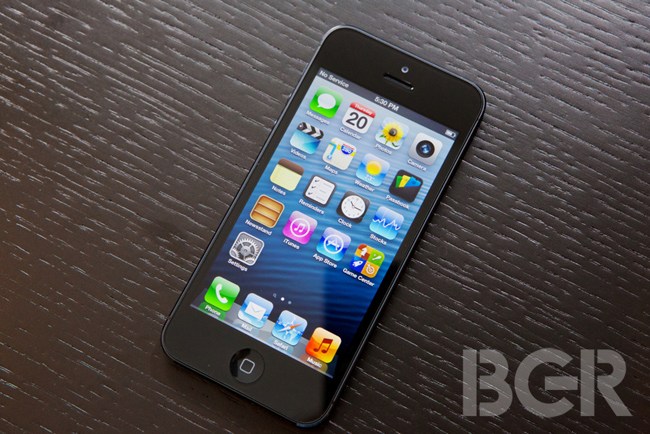
    iPhone 5S Details Screen
    Vendors such as Samsung (005930), LG (066570) and HTC (2498) offer a variety of smartphones with different screen sizes, but Apple (AAPL) has never felt the need to move into the large screen market. Even the company’s iPhone 5 with a 4-inch display is considered small by today’s standards. A new report suggests that Apple may finally be preparing to offer the iPhone 5S with multiple screen sizes, however, as it moves to counter increased competition from rivals. Brian White of Topeka Capital Markets believes Apple is preparing to launch its next-generation iPhone in “at least” two, or “possibly three,” screen sizes this summer.

    Continue reading…

  • Google unveils redesigned Play Store for Android, available today

    Google Play Redesign Available Now
    Google (GOOG) on Tuesday took the wraps off its redesigned Play Store for Android smartphones and tablets. In line with earlier rumors, the new marketplace includes brighter colors, larger images and an interface inspired by Google Now. Other changes include auto-update being enabled for all apps by default and the removal of the application download/installation screen. The Google Play redesign is meant to make finding new content through the company’s marketplace easier than ever before, with similar content grouped together and more recommendations. The new Google Play Store will begin rolling out to smartphones and tablets running Android 2.2 and above starting on Tuesday.

  • Number of teens texting while driving has doubled since 2010 despite warnings

    Teenagers-Text-While-Driving
    Despite increased efforts by companies such as AT&T (T) and others to prevent teenagers from texting while driving, a new statistic showed that the problem has become an epidemic. The National Highway Traffic Safety Association revealed that the number of teens who use a mobile device while driving has doubled since 2010 to two out of every five, ArsTechnica reported. The agency also found that at any given time there are more than 600,000 drivers using a cell phone or some other electronic device, while almost half, or 48.6%, of all drivers in the U.S. have admitted to answering incoming phone calls, and one in four has admitted to placing a call.

    Continue reading…

  • Nokia Lumia 920 found to be most popular Windows Phone

    Nokia Lumia 920 Market Share
    Consumers interested in a Windows Phone device have a few options to choose from. HTC (2498) offers the Windows Phone 8X and Windows Phone 8S, while Samsung (005930) has the ATIV S smartphone. None of these devices, however, can match the popularity of Nokia’s (NOK) flagship Lumia line. WPCentral points us to new data from AdDuplex showing that the Lumia 920 has just slightly surpassed the Lumia 800 to become the most popular smartphone running Microsoft’s (MSFT) mobile operating system. In fact, AdDuplex found that Nokia accounts eight of the top 10 most popular Windows Phone devices, with HTC accounting for the remaining two. As for operating system version, Windows Phone 7 was found to account for 57% of worldwide usage, compared to 43% from Windows Phone 8.