Blog

  • Christina Applegate Engagement Ring Pictures

    What a rock!

    Christina Applegate is floating on a cloud after successfully kicking breast cancer’s ass a couple of years ago. The former Married With Children beauty is engaged to wed her rocker beau Martyn LeNoble after the hunk popped the question on Valentine’s Day.

    Paps caught a snap of Applegate’s stunning diamond engagement ring as the actress jetted through Los Angeles International Airport on Saturday.

    This will be the second marriage for both LeNoble and Christina: she divorced actor Johnathon Schaech in 2007.

    No word on a wedding date.


  • Celebrating the life of Allan Richard Robinson

    A celebration honoring the life of Allan Richard Robinson, the Gordon McKay Professor of Geophysical Fluid Dynamics Emeritus in the School of Engineering and Applied Sciences, will be held at the Memorial Church on May 7 (2 p.m.). Robinson, a longtime member of the Harvard community who received his A.B. ’54, M.A. ’56, and Ph.D. ’59 degrees in physics from Harvard, died on Sept. 25, 2009, at the age of 76.

    The celebration will be hosted by his family, and a reception at Loeb House (the entrance is at 17 Quincy St.) will follow at 3:30 p.m. All who knew Robinson are welcome to attend the event.

    For details and to RSVP, visit the SEAS Web site.

  • When Other Companies Compete Like Crazy, Dare to Be Different

    Q&A with: Youngme Moon
    Published: April 26, 2010
    Author: Sarah Jane Gilbert

    Want to be different? Change your world, not your tactics.

    As HBS professor Youngme Moon argues in Different: Escaping the Competitive Herd, competition too often breeds conformity. Yet there is plenty of space for adventurous companies keen to break free of the pack.

    “In a nutshell, the book is an exploration of what it means for a business to be different, to be meaningfully different, to be different in a way that makes a difference to consumers,” she says.

    An authority on innovative consumer marketing strategies, Moon has published case studies on companies ranging from Microsoft and Sony to Intel, and consults with consumer marketing companies in the area of innovation. She also serves on the board of directors of Avid Technology and the board of governors of the American Red Cross.

    We asked her how companies can be truly different.

    Sarah Jane Gilbert: What led you to write Different?

    Youngme Moon: I wrote this book because in business today there is a huge disconnect between the way we talk about the concept of differentiation and the way it actually plays out in the market.

    What I mean by this is, in our business schools, we preach the importance of differentiation; in our executive suites, we build our strategies around the concepts of differentiation. But when most consumers leave their homes to purchase something as prosaic as a bottle of shampoo or a carton of juice or a pair of sneakers, they are confronted with a dizzying array of options to choose from, options that are notable, not for their difference, but for their apparent sameness.

    And so there is a disconnect between the way companies talk about their products and brands, and the way consumers ultimately experience them.

    Q: How does this “disconnect” between marketers and their customers occur?

    A: In my research, what I learned was that despite the fact that most companies are deeply committed to the concept of differentiation, at any given moment they are also intensely aware of what their competitors are doing, and it is this competitive vigilance that ultimately pushes them down a path of conformity. They will notice, for example, that competitor A has decided to offer a couple of new features in this market, or that competitor B has raised its prices in that market. And it is these observations that make it very difficult for them to resist the urge to follow suit. Competitive pressure, I argue, breeds conformity.

    Q: You discuss consumer devotion to a product or service in your chapter on “category blur.” What do you see happening to brand loyalty?

    A: There is no question in my mind that, when it comes to many consumer brands and services, overall brand loyalty is on the decline. In the book, I outline a number of reasons for this; one of them has to do with the proliferation of products and services available to us.

    Many years ago, I had a boyfriend who considered himself a pretty classy fellow because he only ate Häagen-Dazs ice cream, but the fact of the matter is, it’s easy to be a Häagen-Dazs loyalist when Häagen-Dazs is the only major player in the premium ice cream game. When the market is packed with premium clones, Häagen-Dazs loyalists are by definition going to be harder to find. My dad used to swear by Sony televisions; well, I went shopping for a big-screen television recently and I have to tell you, standing before that huge wall of big-screen TVs, it struck me how old-fashioned my dad’s fidelity to a single brand would seem today.

    The truth of the matter is, my father never had to choose a credit card affiliation out of a deluge of credit card offers in his mailbox. My mother never had to pledge allegiance to a single brand of yogurt out of a vast and constantly rotating selection of yogurts. In so many consumer categories today, we are confronted with so many choices, so many brands, and so many products—that we often experience the category as a big “blur.” In this context, it should not be a surprise that brand loyalty is harder than ever to come by.

    Q: What is “hyper-maturity?”

    A: It takes a period of time before a category reaches the point that we begin to experience it as a blur. When a product category is nascent, it tends to be dominated by a much smaller set of products, or even a single product. The original PowerBar. The original Walkman. Coke and Pepsi. As the category evolves, however, the number of product alternatives within the category tends to grow exponentially. Today, PowerBar alone produces more than 40 different varieties of its energy bar, and the energy bar category has grown to include more than 60 assorted brands. Today, Sony produces more than two dozen variations of its Walkman, and the personal stereo category consists of hundreds of options. In fact, one quick way to gauge the maturity of a category is to simply track the number of product variants in it.

    And yet it would be a mistake to assume that product proliferation creates product diversity. On the contrary, as the number of products within a category multiplies, the differences between them start to become increasingly trivial, almost to the point of preposterousness. Try it. Pick a random product category such as bar soap or running shoes, and make a list of what is different between the products within the category. The list may be long, but an overwhelming number of those differences will almost certainly be trifling.

    When a category reaches this stage—the stage at which product differentiation is experienced by most consumers as product sameness, the stage at which the category appears to be filled with what I refer to as “dissimilar clones”—it has reached a stage of hyper-maturity.

    Q: Does your book include examples of companies that have broken free from the “sea of sameness?” How did they differentiate themselves to remain competitive?

    A: Against this backdrop of overwhelming conformity, it is harder than ever for a business to be a positive deviant. And so, in a nutshell, the book is an exploration of what it means for a business to be different, to be meaningfully different, to be different in a way that makes a difference to consumers.

    Along the way, yes, I offer a number of examples. In fact, in the book, I contend that if one were to identify the most compelling business stories of the past two decades, a disproportionate number of these companies, in category after category, achieved their success simply by figuring out a way to be radically and dramatically different from the rest of the crowd. The idea in the book is not only to celebrate these mavericks; it is to deconstruct and demystify what they’ve accomplished in a manner that makes their achievements understandable and accessible to the rest of us.

    Q: How does a company go about making changes when trying to be different? How can marketing managers get started?

    A: My answer here is difficult to distill into a sentence or two, so I urge you to turn to the book if you want an in-depth discussion of this. However, I will say this: Differentiation is not a tactic. It’s not a flashy advertising campaign; it’s not a sparkling new feature set. It’s not a laminated frequent-buyer card or a money-back guarantee. Differentiation is a way of thinking. It’s a mindset. It’s a commitment. A commitment to be different, not in a superficial, I’m-going-to-offer-a-couple-of-features-my-competitor-doesn’t-offer kind of way, but in a way that is fundamental and near impossible to replicate.

    About the author

    Sarah Jane Gilbert is a product manager for Harvard Business School’s Knowledge and Library Services.

    Order Different.

    Watch the Different trailer on YouTube.

  • Fed Considers How to Sell $1.1 Trillion of Mortgage-Backed Securities

    The Wall Street Journal’s Jon Hilsenrath has a good piece on the problems facing the Federal Reserve as it tries to slim down its balance sheet, now swollen with $1.1 trillion in mortgage-backed securities and totaling more than $2.3 trillion. The story notes:

    Fed staff in the coming week will present models to forecast how different approaches to reducing the portfolio might play in markets. But some officials worry that they have little experience selling assets and can’t rely exclusively on models to predict how markets will react. That — and a worry about disturbing the vulnerable housing market — has top officials inclined to proceed gradually and cautiously, at a predictable pace. …

    In April, Narayana Kocherlakota, president of the Minneapolis Federal Reserve Bank, called for monthly sales of $15 billion to $25 billion to eliminate the Fed’s mortgage holdings within five years…. Some Fed policy makers — among them Charles Plosser of Philadelphia, Jeffrey Lacker of Richmond and Kevin Warsh at the Fed board — are sympathetic.

    The Fed — which started buying up Fannie Mae and Freddie Mac securities to perform “quantitative easing,” a way to pump money into the economy when the interest rate is near zero, and stopped on March 30 — now owns a quarter of U.S. mortgage debt. Right now, that debt is actually making the Fed money, generating interest payments worth $20.4 billion last year. But the Fed unloading such massive amounts of these securities will necessarily push their prices down (meaning the Fed could lose money on them) and mortgage rates up (slowing any housing recovery).

    But such is the position the Fed is in, unraveling its extraordinary crisis programs even as the recovery is fragile. The Treasury faces a similar problem with its 1.5 billion shares of Citigroup, more than a quarter of the company’s stock.

  • Water scarcity causing food insecurity in Mali

    Scarcity of water is making it almost impossible to grow food in Gao. Charles Bambara stresses the urgence of acting now to solve the West Africa food crisis.

    Gao, 1250km north of Mali. One of the few regions affected by the ongoing food crisis in West Africa. Photo: Charles Bambara/Oxfam

    Gao, 1250km north of Mali. One of the few regions affected by the ongoing food crisis in West Africa. Photo: Charles Bambara/Oxfam

    The city of Gao, lying along the Niger river, is attracting more and more herders and pastoralists coming from as far as the Kidal region further north, or from neighbouring countries like Niger.

    Only 40km outside Gao, in Echag, a camping village, the land is dry – too dry to sustain any trees. Only horn trees remain, a few last leaves fought over by hungry goats and camels. The desolation is visible. Many families have abandoned hope of remaining in this, their ancestral land. Yet still some nomadic families in this area are struggling beyond odds to continue life here.

    Water is scarce. “If nothing happens in the coming four weeks, our cattle will be starving to death. We are already struggling to guarantee food for our children and women,” said Mohamed, one of the chiefs at Djibok, a large camping station with many wells. The wells are attracting thousands of people with camels, sheep, goats and donkeys seeking water.

    Cattle here are desperate for pastures and for water, and they’re coming from all over the region, sometimes from more than 200km away. We were surprised to see some young boys digging new wells, as they are at risk of drying up in a few weeks, and many herders don’t expect the place to sustain life beyond the end of April. Their plan is to look lower down for green pastures – which are themselves becoming rare because of the concentration of cattle.

    Time is running out

    “This is the third consecutive year with insufficient rains,” said Wanalher Ag Alwaly, food security expert from Tassaght, a local partner of Oxfam. “The severity and this current alarming situation are mainly due to past climate stress which is culminating this year.”

    “Transhumance [moving to higher pastures in summer and to lower valleys in winter] began in January, six months earlier than usual,” stressed Suleiman a Tuaregm, a member of another local NGO in Gao. “The rush with cattle is increasing and we are expecting more trouble [with the arrival of new] herders and pastoralists.”

    Crop prices are steadily increasing. In the past, selling a goat would raise enough money for a 50kg bag of millet. Now, two goats are needed. But some goats are so skinny, nobody wants to buy them. And Gao is still in the early stages of this crisis. “If nothing is done in the coming weeks it will be too late,” according to Tassaght specialists.

    It is the Easter holidays for school children. More children are dropping out of school. “Empty stomachs cannot learn and be taught,” said a school parent emerging from one tent.

    Local authorities are no longer hiding the issue of food insecurity in Northern Mali. 7,000 tons of food will be made available to the most affected areas in the country, according to the government. But so far nothing has arrived. Many meetings have been organised with local NGOs, international NGOs and the UN to stress the need to act quickly. The race against time is being lost, and nothing is emerging strongly from the ground to meet people’s need.

    Emergencies: West Africa food crisis

    Where we work: Mali

  • Iraq recount to be delayed a week as votes of 52 candidates nullified

    [JURIST] The recount of votes cast in Baghdad province during the March 7 parliamentary elections will be delayed a week, according to an official on Monday. The Independent High Election Commission (IHEC) will not begin the recount until the review panel ordering the recount defines more precisely what a recount entails. Iyad Allawi, whose Iraqiya coalition garnered a slim two-seat lead over the State of Law coalition of incumbent Prime Minister Nouri al-Maliki, threatened to reject the recount if it only includes Baghdad. Also on Monday, an IHEC review panel nullified the votes of 52 candidates for alleged ties to Saddam Hussein’s Baath Party, including two candidates that had won seats in the Iraqi Council of Representatives, at least one of which coming from Iraqiya. The uncertainty over the election results has jeopardized the US plan for withdrawal of combat troops by August, and has prompted the Obama administration to propose a coalition government between Maliki and Allawi, where each would hold the premiership for two years.
    The IHEC ordered a manual recount of the ballots in Baghdad last week, following fraud allegations. The election commissioner for the IHEC informed the public that the Baghdad recount would begin immediately, citing manipulation in voting stations. The State of Law coalition alleged fraud after a preliminary count showed the Iraqiya coalition held a slight lead. In February, an Iraqi appeals panel ruled that 28 of the 500 candidates previously banned due to allegations of ties to the Baath Party could stand in the election. The initial ban was characterized by the Iraqi government as illegal and was reversed when the panel acknowledged that it did not have to rule on all 500 candidates at once. This came as a reversal of a previous decision, where it held that the candidates could stand in the coming elections, but would have to be cleared of the allegations against them before taking office.

  • Event: Greentech Media’s Nordic Green II

    From Green Right Now Reports

    SRI International, an independent nonprofit research and development institute, will host Greentech Media’s Nordic Green II conference on April 27 – 28, 2010, in Menlo Park, Calif.

    Nordic Green II will feature keynote speeches from thought leaders from the Nordic and San Francisco Bay regions, and will showcase innovative companies. The event will also feature cutting-edge research and high-level discussions on emerging green technologies and new entrepreneurial opportunities in California and the Nordic region.

    Steve Ciesinski, SRI’s vice president of strategic business development, will deliver a keynote address on innovation and clean technology. Barbara Heydorn, director of SRI’s Center of Excellence in Energy, will moderate the panel “Fuel Cells: Ten Years Away or Just around the Corner?” Bob Wilson, director of SRI’s Chemical Science and Technology Laboratory, will moderate a panel of experts and market leaders discussing biofuels, biochemicals, and biomass conversion.

    .

  • iMobsters

    iMobsters™ reached #1 in the iPhone App Store. Start as a petty thief and rise to the Mafia Don by bringing others into your mob. Fight other mobsters in the most immersive massively multiplayer online game ever! Massively Multiplayer ONLINE Mafia Game! Join over 1.6 million players! Fight other player LIVE!

    Price: Free

    Place your code in the comments below! AndroidTapp.com is playing too add us: NSC36H

    AndroidTapp.com Android Game Review:

    Pros & Cons:

    Pros

    • Fun and addictive game with lots of features
    • Hours of on-going strategic play
    • Multi-player against other iMobsters, plus invite others

    Cons

    • May not be initially intuitive, poke around and complete missions to learn more

    Features:

    iMobsters Android App is a game for working your way up the mafia ladder to get close to The Godfather by performing many criminal activities. Build up your sheisty reputation completing heists, attacking other iMobters players, stealing or buying equipment and cars, buying real estate and stacking up cash. Invite friends to join you mob army by sharing your code. What seems a simple game actually has some strategy involved and more in tune with your imagination in a fantasy role play style game.

    Be sure to steal or buy equipment needed for attacks and heists. Watch your Health, Energy and Stamina; you can pay a doctor to boost health, show The Godfather loyalty and he can refill Energy, Stamina or Health from the Favor Points you collect. Don’t keep too much cash on you, if attacked by another player and you lose you could lose some money too. Either invest in equipment, real estate or deposit in the bank (note: 10% fee will be taken from deposits).

    Video Review: iMobsters

    http://www.youtube.com/watch?v=ouiMPIf51l0

    iMobsters Splash Screen
    iMobsters Dashboard
    iMobsters Missions
    iMobsters Attack
    iMobsters Real Estate
    iMobsters Cash
    iMobsters Equipment
    iMobsters Health
    iMobsters Energy

    Fun Factor & Addictive:

    For many, the game is fun and addictive… evident in the accelerated download numbers and code sharing going on in this game. FRP style games by natural receive an unusually high following.

    Graphics:

    The game board has a cool theme, however it is not intuitive in some navigation. The best way to learn it is to poke around and tap every option to find out what it does. Don’t worry, if you play this game you’ll have time to discover as advancing with low energy or stamina is not possible unless you wait out some of the timers below each.

    Accelerometer, Vibration & Sound:

    The game has sound effects which can be toggled.

    AndroidTapp.com Rating

    AndroidTapp.com Rating!AndroidTapp.com Rating!AndroidTapp.com Rating!AndroidTapp.com Rating!AndroidTapp.com Rating! (4.4 out of 5)

    Should you Download iMobsters? Yes! Get Made and not 86′d!

    Algadon Free Online RPG. Fully Mobile Friendly.

  • The state of play for financial reform

    A few observations, comments and highlights:

    1) Three things can happen today, as I see it: a) Chris Dodd and Richard Shelby reach a deal; b) Dems pick off a few Rs, get cloture, and the debate on the bill proceeds; or c) no deal, Rs stay unified and negotiations continue. Of those “c’ is the likely option — and that will eventually lead to a bill that may be getting tougher by moment. On Good Morning America today, Shelby seemed supportive of tougher derivatives language. And although it will not be in the bill, Kent Conrad’s comments that a bank tax is coming is reflective of the growing anti-Wall Street mood on Capitol Hill.

    2) An interesting piece in The American by economist Phil Swagel, formerly of the Paulson Treasury Department, on whether the Dodd bill is a “bailout bill.” Read the whole thing, but in this bit he uses Lehman Brothers as an example:

    In the fall of 2008, the Lehman Brothers bankruptcy was followed by severe negative effects as short-term credit markets shut down. This is sometimes taken as evidence that bankruptcy is not a tenable outcome for a large financial firm. This is wrong. The disruptions that followed Lehman’s collapse were greatly magnified by the idiosyncratic problem that a large money-market mutual fund broke the buck as a result of losses on Lehman debt. This sparked a panicked flight out of money-market mutual funds, which led commercial paper markets to seize up and in turn begat TARP. This situation would have been prevented only by guaranteeing Lehman debt—that is, by a bailout that the administration says would not be allowed to occur under its financial regulatory reform proposals. This means that either the administration intends to allow bailouts or that its approach would not in fact solve the problem of Lehman’s collapse—it cannot be both ways. In fact, the Dodd bill allows two forms of a bailout, since the government can put cash directly into a failing firm or guarantee its debt. The Dodd proposal is a bailout bill, plain and simple.

    3) Here is Charles Plosser, head of the Philly Fed, on Dodd and TBTF:

    I believe the best approach to making such a credible commitment and thus ending TBTF is amending the bankruptcy code for nonbank financial firms and bank holding companies, rather than expanding the bank resolution process under the FDIC Improvement Act (FDICIA). While the Senate bill has tightened up the proposal with a stronger bias toward liquidating a troubled firm, the bill would still give a great deal of discretion to policymakers to avoid the discipline of a bankruptcy court.

    The Senate bill’s proposal to restrict the Federal Reserve’s supervisory authority to about 35 of the largest financial firms with $50 billion or more in assets further undermines the effort to end TBTF. The markets will likely interpret this provision as signaling that these firms are unique and will continue to be treated as TBTF. Many would assume that the language in the resolution section that emphasizes bankruptcy would not apply to these firms. This provision would, de facto, make the Federal Reserve supervisor of the firms deemed TBTF.

    In addition, restricting the Federal Reserve’s supervisory authority to these large firms would focus the Federal Reserve’s attention more toward Wall Street and less on Main Street.

  • Brazil pegged to win World Cup, Africa in focus

    Brazil is the most likely winner of the 2010 World Cup in South Africa, according to UBS Wealth Management Research. The forecast is based on in-depth quantitative analysis that places great emphasis on a country’s previous performance at World Cup soccer tournaments. The model’s creator, UBS Chief Economist Andreas Höfert, not only correctly picked Italy as world champions four years ago, he also predicted six of the eight quarter-finalists.

    Almost all of the historical favourites such as Brazil, Italy, Germany, the Netherlands and England are traveling to South Africa with very strong teams. UBS says this makes it very unlikely that, with the noticeable exception of Spain, we will see “a new, fancy” World Cup winner in 2010.

    It will be the first World Cup held in Africa. While South Africa continues to be the continent’s economic powerhouse, generating nearly a quarter of Africa’s total GDP, the country is losing ground relative to its global emerging market peers.

    Predictions and football addictions aside, the UBS team felt the event warranted an investor’s guide to Africa since the continent is too often forgotten when it comes to searching for opportunities. The report highlighted many issues, including the fact that Africa accounts for 15% of the global population. However, strong demographic trends are likely to push that figure up to 20% in just a couple of years.

    Africa also boasts the world’s highest mobile phone subscription growth with some 40% of the population owning a device. A recent study showed that adding 10 extra phones for every 100 people in a typical developing country boosts GDP per person by 0.8 percentage points.

    “This makes the mobile phone one of the most important drivers of living standards in Africa,” UBS said.

    Agriculture plays a huge role in Africa, with the sector making up 25% of African economies’ overall economic production on average. That compares with 1% in Switzerland, for example.

    Despite the fact that the majority of the sub-Saharan labor force is employed in the agricultural sector, most African countries cannot provide the food they need. As a result, trade between African countries makes up only 10% of their total trade. The other 90% consists of trade with the rest of the world.

    China’s role as a trade partner is becoming increasingly important. Africa’s exports to China increased by a yearly average of 31% between 2000 and 2008, compared to 13.5% for exports to the United States. China is also boosting its foreign direct investments in Africa, due in large part to the Asian giant’s hunger for commodities.

    “With its energy hunger, China will continue to support African commodity exporters and, in the longer term, will likely help the continent grow richer,” UBS said.

    Africa holds an estimated 13% of the world’s proven crude oil reserves and new discoveries mean that number is likely even higher. The continent currently produces 12% of the world’s crude oil supply and consumes less than 4%, leaving Africa with a large surplus.

    While it is expect it to remain a growing source of commodity supply in the years to come, Africa has 14.7% of the world’s population so it will not enjoy excessive energy reserves in the long run.

    “As African economies develop and grow, they too will have a bigger appetite for energy,” UBS said, noting historical numbers that suggest Africa might become a net importer of oil by 2040. “Thus, supplying the world with non-renewable resources today comes at the cost of scarcity for future African generations.”

    The demographics of these future generations are such that the age-groups going into the workforce now and in the coming decades will be larger than the population of children and aged dependants that they support. That means income per capita can rise faster.

    UBS says this is the reverse of the rapidly aging populations of Europe, the United States and Japan. The so-called “demographic dividend” is also believed to have played an important role in the economic miracles of the “Asian Tiger” nations over the last decades.

    “However, it is no done deal that Africa will be able to benefit from its shifting demography,” UBS said, noting the threat HIV/AIDS poses for the working-age population, particularly in sub-Saharan Africa. Poor education, corruption and a lack of well-regulated markets also put at risk the positive effects of Africa’s demographic trends. “Nonetheless, demography probably remains Africa’s biggest opportunity of the next 50 years.”

    Jonathan Ratner

    Photo: South African children play football in the mountains of Eastern
    Cape, 20km from Port St Johns, on November 19, 2009. South Africa is
    hosting the 2010 football World Cup from June 11, 2010 to July 11. (ALEXANDER JOE/AFP/Getty
    Images)

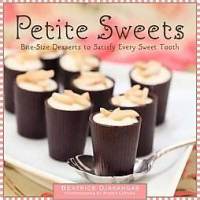
  • Petite Sweets: Bite-Size Desserts to Satisfy Every Sweet Tooth

    Petite Sweets: Bite-Size Desserts to Satisfy Every Sweet ToothThere is a lot of appeal to little desserts. As good as a big cake can look, there is something about a perfectly decorated cupcake or well-presented miniature chocolate mousse that will having you reaching out for just one more bite. Petite Sweets: Bite-Size Desserts to Satisfy Every Sweet Tooth is just packed with recipes like these, as it is a cookbook that specializes in small desserts. The book covers all the categories you would find in any other dessert cookbook – cakes, pies, mousses, fruit desserts, custards, etc. – just in much smaller portions. This makes it a good choice if you’re looking for some recipes to entertain with, as well as if you’re looking for recipes with some portion control.

    Unlike other mini dessert books, some of which really specialize in helping you recreate pastry chefs’ gourmet restaurant desserts at home, this book has a homier feel to it with recipes like mini cobblers. It also takes a few shortcuts on some of the recipes to try and make them simpler. It makes the book a bit more accessible to newer cooks, but more experienced bakers might want to skip the shortcuts (like using real dulce de leche in the Dulce de Leche cream puffs). There are plenty of great photos to accompany the recipes and that alone is enough to inspire the desire to make some miniature desserts

    One caution to this book is that you’ll need to pick up some special equipment to make some of the recipes. Namely, you’ll need some smaller baking dishes for some of the recipes because most people don’t keep things like a set of 1-oz ramekins around just for dessert. Still, you can’t beat the cute presentation that these dishes offer, and nothing is too unusual or expensive that you can’t pick it up at your local restaurant supply store. And all your work will be worth it when you have people oohing and aahing over your beautiful petite sweets.

  • The Global Warming Bill Crackup | The Intersection

    Well, so much for getting a new piece of climate legislation introduced today. As ClimateWire reports:
    The Senate climate bill sits on the brink of collapse today after the lead Republican ally threatened to abandon negotiations because of a White House push to simultaneously overhaul the nation’s immigration policies.
    Sen. Lindsey Graham (R-S.C.) has been under fire from conservatives for months for helping to shepherd a Democrat-led bid to tackle global warming via a “grand compromise” on energy. But on Saturday afternoon, he signaled the partnership could soon be over.
    Graham promised to leave President Obama and Senate Democrats standing at the altar after they started pushing last week for a comprehensive immigration reform bill that he called “nothing more than a cynical political ploy” headed into the 2010 midterm elections. Oh boy. Need I say that this flap augurs extremely poorly for the chances of getting a bill passed any time soon? The politics of this are hard enough already, and now we’re stopping before we even got started. Quoted in the ClimateWire piece, I think Tom Friedman puts it best:
    “The result is, right now … in Beijing, they are high-fiving each other,” Friedman added. “Oh yeah baby. This means the Americans are …


  • 1,000 Barrels A Day Of Crude Hemorrhaging Into The Gulf Of Mexico

    oil rig fire

    The U.S. Coast Guard is warning that the Gulf of Mexico’s ecosystem is threatened by the recent Transocean/BP rig disaster.

    1,000 barrels a day of oil are leaking into the water, and the the spill is covering 400 square miles of ocean.

    Telegraph:

    Four underwater vehicles have been deployed under the plan outlined by the Coast Guard and US Minerals Management Service. They will dive unmanned to the ocean floor to activate a blowout preventer, a giant series of pipes and valves that could staunch the leak.

    Problem is, if the underwater subs don’t work, then it could take months to stop the leak.

    Join the conversation about this story »


  • (Almost) always low prices at Wal-Mart Stores …

    Wal-Mart Stores (WMT) brags about offering the biggest bargains on the block, but that may not apply when it comes to its own officers and directors.

    Consider Executive Vice President Brian C. Cornell, who heads up Sam’s Club. The newest of the company’s top officers, he joined the company last April, and collected $668,498 in salary, a $1.3 million incentive bonus, and $10.6 million in stock, Wal-Mart’s recent proxy says. On top of that, the company also paid him $1.7 million in moving costs for relocating to Bentonville, Arkansas, where Wal-Mart is based.

    We don’t know precisely where Cornell moved from, or to, but that’s one of the biggest relocation packages we’ve seen here at footnoted this season. Wal-Mart tells us it includes “payments made to him to offset a loss incurred in the sale of a residence owned by him,” but not another $28,219 to cover the cost of his lawyers while negotiating his employment package. We certainly hope most of that cost was the loss on sale of Cornell’s prior home — otherwise, Wal-Mart might want to look into a more cost-effective moving contractor. Cornell previously worked for Michael’s, the big arts-and-crafts chain based in Irving, Texas that was taken private several years ago. As far as we can tell from Google Maps, that’s about 360 miles from Wal-Mart world headquarters — and $4,772 a mile.

    Meantime, Wal-Mart reimbursed Roger C. Corbett, a Wal-Mart director and and Australian bank and newspaper-company director who used to run Woolworths Ltd., taxes of $56,604 “attributable to spousal travel expenses, meals, and related activities in connection with certain Board meetings,” and for the costs themselves.

    That’s more than a Wal-Mart assistant-manager makes in a year, according to Glassdoor.com, and just a hair under the $61,309 that PayScale says the company pays store managers. WakeUpWalMart.com, a site run by the United Food and Commercial Workers International Union, pegs average annual income for Wal-Mart “associates” at $19,165. (We couldn’t find clear pay figures on Wal-Mart’s Web site or in its SEC filings.)

    Corbett also got $16,000 in extra pay from the company, on top of $76,000 in director’s fees and $160,000 in stock, because he’s based in Australia, and had to endure the rigors of “intercontinental travel from his residence” to attend the company’s four in-person board meetings last year. (Wal-Mart’s board also held one meeting by conference-call.)

    All told, we’re beginning to understand why Wal-Mart changed its slogan a couple years back from the time-tested “Always Low Prices” to the more equivocal “Save More. Live Better.” We just hope it doesn’t apply only to company officials.

    Image source: Kenneth Hynek via Flickr.

    ————

    Each January, footnoted normally does a reader survey. This year, we’re running a bit late due to the acquisition by Morningstar. But we’re hoping footnoted readers will help us make the site better by clicking here. All questions are optional, but we will choose one winner at random for a free quarterly subscription to FootnotedPro.


  • Stowaway Portable Keyboard Revived by Thanko

    The Stowaway Portable Keyboard still ranks as my favorite portable keyboard of all time. The Bluetooth version I have has stood the test of time, at least 5 years, and found new life as an outstanding keyboard to be used with the iPad. It’s too bad that Stowaway has gone away, and the company that bought the rights to the Stowaway line shut it down a couple of years ago. Good technology never dies, and Asian gadget maker Thanko has a USB portable keyboard that looks exactly like the Stowaway.

    Since showing the Stowaway in use with my iPad, I have been inundated with requests from readers wanting to know where to find one. Searches online have turned up empty, but this keyboard by Thanko is available now.

    The original Stowaway keyboard was available in both a USB and a Bluetooth version. The Bluetooth version is the one I use, and the wireless connectivity makes it a solid partner with the iPad. The Thanko version that is now being sold is USB only, unfortunately. This model may work with the iPad using the photo accessory that has a USB port, but that is not a given. Hopefully Thanko will also offer a Bluetooth version. They’d sell a lot of these to iPad owners, I believe. Note that the Thanko keyboard will work with any Windows PC and Mac.

    Related content on GigaOM Pro (subscription required):

    Hot Topic: Apple’s iPad

  • Google Revamps AdWords Tools for Agencies

    Google is stepping up its advertising game with several new features for agencies and consultants. The search company is launching a new certification program that should be a more relevant measure of the advertising professionals’ skills. Certified partners will also be able to add themselves to the Google Partner Search directory and get preferr… (read more)

  • GE teams with Nissan on electric car smart charging

    With plug-in vehicles on track to create a revolution in the auto industry, the race is on to build a smart-charging infrastructure that can support the millions of cars that one day will be plugging in. It’s why GE and Nissan today announced that they’re teaming up in a three-year Memorandum of Understanding to research new technologies that will be needed in the car, on the grid and at home or work to make smart charging a reality. Simply put, smart charging is the ability to control how the grid delivers electric power to a vehicle — at what time of the day and at what rate. For example, if drivers want to charge their cars when the price of electricity is lower, smart charging would automatically give them the ability to do that.


    What a tank-less job! The all-electric, zero-emission Nissan LEAF is scheduled to launch later this year in Japan, the U.S. and Europe. The MOU combines Nissan’s electric car expertise with GE’s energy sector leadership and grid expertise, which includes a customer base that cuts across the entire electric grid network.

    For the launch of the agreement, GE and Nissan have outlined two key areas for potential collaborations. The first relates to the integration of electric vehicles with homes and buildings. The second focuses on electric vehicle charging dynamics with the larger electric grid. The research team says the combined expertise will give them a full picture — from energy generation to the vehicle itself — of what it will take to make the grid ready.


    Revved up: GE scientist Matt Nielsen, who’s the research lead on the MOU with Nissan, is seen here in the Smart Grid Lab at GE’s Global Research Center in Upstate New York.

    As Matt Nielsen, pictured at left, says in his post today on the Global Research blog: “Initially the small numbers of electric vehicles will not strain the grid;” however, there are a number of potential issues that must be studied and quantified, such as whether clusters of electric vehicles will tax the local electrical distribution system, including transformers. “The purpose of this program will be to quantify the impact through both modeling/simulation and actual experimental data… The good news is that the electrified transportation community has recognized these issues and is proactively developing solutions. Many of the utilities I have spoken with have active programs to make sure their networks and systems are ready for electric vehicles, and that they can provide a great experience for the customer.”

    As part of GE’s ecomagination initiative and Smart Grid research efforts, electric transportation is already a key focus area. For example, GE has invested more than $150 million to develop advanced battery technologies that will provide energy storage for several future product applications, including GE’s ecomagination certified hybrid locomotive, tugboats, mining trucks, and heavy service vehicles. GE has also recently increased its investment in battery maker A123 Systems, which is which is a leader in the lithium-ion battery technology used in hybrid cars.

    * Read today’s announcement
    * Read Matt’s full post on the Global Research blog
    * See an animated video about electric cars and the Smart Grid
    * Learn about “Vehicle Projects Through the Years at GE”
    * Learn more about GE’s investment in battery technology
    * Read GE’s backgrounder on hybrid and battery technologies
    * Read about GE’s investments in battery-maker A123Systems
    * Visit Nissan’s Zero Emissions website

  • Second Jesse James Mistress Apologizes To Sandra Bullock

    Live From Today’s “Bitch, Please!” Files: Another of Jesse James’ alleged mistresses has apologized to his Oscar-winning wife Sandra Bullock.

    In March, Melissa Smith became the second woman to come forward with claims of a long-term affair with the TV mechanic — just days after tattooed star Michelle McGee hit headlines across the world when she went public with allegations of an 11-month relationship with James.

    Smith — who reportedly slept with Jesse on and off for more than a year after meeting the Spike TV star on MySpace in 2007 — sold her story to Star Magazine for an undisclosed sum. The Blind Side star walked out on her husband shortly after the cheating scandal made headlines — and Smith says she’ll “never forgive” herself for Sandra’s heartbreak.

    “I felt I needed to reach out to you and tell you how deeply sorry I am for everything that you’ve been through… And I know nothing I can say in this letter is going to make the pain of my actions go away,” Smith wrote in a letter faxed to Bullock’s agent on Sunday and later obtained by TMZ.com. “I am sorry for any hurt or pain that I have caused you. My actions of engaging with a married man are unforgivable. I never meant you any harm. I compromised my beliefs on several occasions and as a result will never forgive myself.”

    In conclusion, Melissa inplored Sandra to “please contact me if you wish to discuss on the phone or in person.”

    McGee also issued a public apology to Bullock earlier this month, remarking in a tell-all interview on Australian TV: “I’m sorry for your embarrassment. I’m sorry all this is public. I’m sorry for everything.”


  • Get some fun on your Windows Phone with Chuck Norris Facts

    Found under: Windows Mobile, Chuck Norris, Fun, Facts,

    If you are fan of Chuck Norris and want to have fun with some facts about him here is app for you. It is designed for windows mobile phones and you just have to fire it up and read a great facts about Chuck Norris When you read a fact that you think is extra funny you can send it to a friend as a text message. Share the laughter Download Chuck Norris Facts

    Read More

    Read more in mobile format

  • Core i7 MacBook Pro Could Make Water Boil [Broken]

    PC Authority was putting their new 17-inch, Core i7 MacBook Pro through their typical battery of benchmarks. Then, the chassis grew hot and a series of strange errors began to occur. More »