Blog

  • Was ‘Taste of Decatur’ a scam?

    Downtown Decatur

    Downtown Decatur

    Organizers of this past weekend’s great non-event claim that it was canceled due to the accurate forecast of nonstop rain. But the word never got out, and a number of ticket holders showed up, walked around the drenched burg and didn’t get any food. The inDecatur blog has the story.

    Did anyone reading this try to go to Taste of Decatur and have a similar experience?

  • Rogers and TELUS announce BlackBerry Pearl 3G is Coming! Bell expected to follow…

    It certaintly didn’t take long for two Canada’s major three to announce the BlackBerry Pearl 3G is coming soon! Both Rogers and TELUS announced its coming soon. While Rogers didn’t give much details, TELUS announced its coming soon, and that they will have the exclusive rights to the pink colored model. TELUS also announced the Pearl 3G will be priced at $29.99 with a three year contract. We haven’t heard from Bell just yet, but we expect they’ll catch up in a few hours. Regardless this is great news for Canadian customers looking to grab the new Pearl 3G. More details will follow soon…

    I should also add we expect that the major three will only be launching the 20-key QWERTY Suretype model at this time, and possibly will follow with the 9105 later.

    Press Release from Rogers:

    – Rogers To Launch New BlackBerry Pearl 3G Smartphone

    The smallest BlackBerry smartphone yet, combines stylish design with
    powerful features
    
        TORONTO, April 26 /CNW/ - Rogers Communications Inc. today announced that
    the new BlackBerry(R) Pearl(TM) 3G, the smallest BlackBerry smartphone yet,
    is coming to Canada's reliable network in the coming weeks.
        The new BlackBerry Pearl 3G is a smartphone marvel that's as powerful as
    it is compact. It measures less than two inches wide (50 mm) and weighs only
    3.3 ounces (94g), yet it packs support for high-speed 3G (UMTS/HSDPA)
    networks, Wi-Fi(R) (b/g/n) and GPS with a powerhouse processor that drives
    visually stunning images on a sharp, high-resolution display. It features an
    optical trackpad for smooth navigation, dedicated volume and media keys, a
    3.2 MP camera with flash and support for up 32 GB of personal content.
        "We're excited to welcome the new BlackBerry Pearl 3G to our substantial
    portfolio of BlackBerry smartphones on the Rogers network," said John
    Boynton, Executive Vice President and Chief Marketing Officer, Rogers
    Communications. "As Canada's reliable network, Rogers customers can take full
    advantage of the power of the newest BlackBerry Pearl and will now be able to
    do even more with their smartphone, keeping them connected to what matters
    most, quickly and easily."
        "The new BlackBerry Pearl 3G offers uncompromising performance in a
    remarkably small package with the social connectivity features that consumers
    want, including easy access to email and social networking sites as well as
    popular messaging services, like BlackBerry Messenger. We expect the new
    BlackBerry Pearl 3G will appeal to a broad range of mobile consumers,
    including many customers who want to upgrade from a traditional phone without
    giving up a highly compact and fashionable design," said Carlo Chiarello,
    Vice President, Handheld Product Management, Research In Motion.
    Key features of the new BlackBerry Pearl 3G smartphone from Rogers include:
    
        <<
        -   Gradient red finish, available in Canada only from Rogers
        -   Elegant candybar form factor measuring 4.25" x 1.96" x 0.52" (108mm x
            50 mm x 13.3 mm) and weighing only 3.3 oz (93 grams)
        -   20-key condensed QWERTY keyboard with SureType(R) software that
            completes words as the user types, making texting fast and accurate
        -   624 Mhz processor with 256 MB Flash memory
        -   360x400 sharp-resolution display (238 ppi)
        -   Optical trackpad that makes navigation fast and smooth, plus a
            comfortable keyboard for fast typing
        -   Media player for videos, pictures and music (music plays up to 30
            hours), plus dedicated media keys integrated along top of the handset
        -   3.2 MP camera with zoom, autofocus, flash and video recording
        -   Built-in GPS for location-based applications such as BlackBerry(R)
            Maps, as well as photo geotagging
        -   Wi-Fi (802.11 b/g/n) (first BlackBerry smartphone to support 'n')
        -   microSD/SDHD memory card slot that supports up to 32 GB cards, with a
            2 GB card included
        -   Premium phone features, including voice activated dialing,
            speakerphone and Bluetooth(R) (2.1) with support for hands-free
            headsets, stereo headsets, car kits including systems that support
            the emerging Bluetooth MAP (Message Access Profile) standard and
            other Bluetooth accessories
        -   Access to BlackBerry App World(TM), featuring a broad and growing
            catalog of mobile applications developed specifically for BlackBerry
            smartphones
        -   Support for BlackBerry(R) Media Sync for easily syncing photos as
            well as iTunes(R) and Windows Media(R) Player music with the
            smartphone*
        -   BlackBerry(R) OS 5
        -   Support for tri-band UMTS/HSDPA and quad-band EDGE/GPRS/GSM networks
        -   Removable, rechargeable 1150 mAhr battery that provides approximately
            5.5 hours of talk time on 3G networks
        >>
    

    Press Release from TELUS:

    TELUS to offer new BlackBerry Pearl 3G smartphone in May

    Pink version only available in Canada from TELUS, on the country’s biggest and fastest 3G+ network

    Toronto, ON – TELUS will offer its clients the smallest Blackberry smartphone ever starting in May. Running on Canada’s biggest and fastest 3G+ network, the new BlackBerry Pearl™ 3G will be available from TELUS in either black or pink (only at TELUS).

    “The BlackBerry Pearl is a favorite amongst Canadian consumers and TELUS is thrilled to bring them the latest addition to this family of smartphones, on our 3G+ network,” said David Fuller, Chief Marketing Officer at TELUS. “TELUS offers a comprehensive line-up of state-of-the-art smartphones to meet our customers’ need to stay connected, informed and entertained on the go. The BlackBerry Pearl 3G packs a great deal of power in a very small package, and is definitely a great addition to our device selection.”

    “The new BlackBerry Pearl 3G offers uncompromising performance in a remarkably small package,” said Carlo Chiarello, vice-president, Handheld Product Management, Research In Motion. “It offers the social connectivity features that consumers want, including easy access to email and social networking sites as well as popular messaging services like BlackBerry Messenger. We expect the BlackBerry Pearl 3G will appeal to a broad range of mobile consumers who want to upgrade from a traditional phone without giving up a highly compact and fashionable design.”

    The new BlackBerry Pearl 3G is a smartphone marvel that’s as powerful as it is compact. It measures less than two inches wide (50 mm) and weighs only 3.3 ounces (94g), yet it packs support for high-speed 3G (UMTS/HSDPA) networks, Wi-Fi (b/g/n) and GPS with a powerhouse processor that drives visual excellence to its sharp-resolution display. It features an optical trackpad for smooth navigation, dedicated volume and media keys, a 3.2 MP camera with flash and support for up to 16 GB of personal content. It also offers the superior email, instant messaging, and social networking experience that BlackBerry smartphone users love.

    Key features of the new BlackBerry Pearl 3G smartphone from TELUS include:

    • Elegant candybar form factor measuring 4.25″ x 1.96″ x 0.52″ (108mm x 50 mm x 13.3 mm) and weighing only 3.3 oz (93 grams)
    • 20-key condensed QWERTY keyboard with SureType software that completes words as the user types, making texting fast and accurate
    • 624 Mhz processor with 256 MB Flash memory
    • 360×400 sharp-resolution display (238 ppi)
    • Optical trackpad that makes navigation fast and smooth, plus a comfortable keyboard for fast typing
    • Media player for videos, pictures and music (music plays up to 30 hours), plus dedicated media keys integrated along the top of the handset
    • 3.2 MP camera with zoom, autofocus, flash and video recording*
    • Built-in GPS for location-based applications such as BlackBerry Maps, as well as photo geotagging
    • Wi-Fi (802.11 b/g/n) (first BlackBerry smartphone to support ‘n’)
    • microSD/SDHD memory card slot that supports up to 16 GB cards
    • Premium phone features, including voice activated dialing, speakerphone and Bluetooth (2.1) with support for hands-free headsets, stereo headsets, car kits including systems that support the emerging Bluetooth MAP (Message Access Profile) standard and other Bluetooth accessories
    • Access to BlackBerry App World™, featuring a broad and growing catalog of mobile applications developed specifically for BlackBerry smartphones
    • Support for BlackBerry Media Sync for easily syncing photos as well as iTunes and Windows Media Player music with the smartphone**
    • BlackBerry OS 5
    • Support for tri-band UMTS/HSDPA and quad-band EDGE/GPRS/GSM networks
    • Removable, rechargeable 1150 mAhr battery that provides approximately 5.5 hours of talk time on 3G networks.

    TELUS offers a broad range of best-in-class wireless devices on Canada’s biggest and fastest 3G+ network, now including the new BlackBerry Pearl 3G. Starting in May, this smartphone will be available from TELUS in pink and in black for as little as $29.99 on a three-year plan. For more information about the new BlackBerry Pearl 3G smartphone, please visit www.blackberry.com/pearl3G

    For more information about TELUS products and services, please visit www.telus.com

    * Video recording requires a microSD card, sold separately.
    ** Certain music files may not be supported, including files that contain digital rights management technologies. Photo syncing is currently only available for Windows-based PCs.

    You’re reading a story which originated at BlackBerrySync.com, Where you find BlackBerry News You Can Sync With…

    This story is sponsored by the new BlackBerry Sync Mobile App Store. Grab your free copy today at www.GetAppStore.com from your BlackBerry.

    Rogers and TELUS announce BlackBerry Pearl 3G is Coming! Bell expected to follow…

    Related posts:

    1. BlackBerry Pearl 9100 to be $449 (no contract) from Bell and Rogers… It’s no secret that Canada’s major three networks (Bell….
    2. TELUS officially announces BlackBerry Bold 9700 is Coming in November We don’t know why TELUS was a little behind…
    3. RIM announces the BlackBerry Pearl 3G (Pearl 9100 and 9105) Alright, let’s kick of the WES 2010 news with…
  • Pay For Your Apps With PayPal

    This news will please a few people. You will be able to purchase your apps using your PayPal account soon. PayPal has just made a deal with Google and Apple to bring their services to their respective markets.  People have been complaining about Google checkout since paid apps was released.

    There are other options to pay for apps for some of use. You can add them to your bill if you are on T-Mobile or Sprint. I personally don’t mind using Google Checkout and has never had a problem with it. There has been a PayPal app available for Android for quite some time and if you would like to try it out, scan the qr code below.

    [via thenextweb]

  • What Does Deciduous Mean?

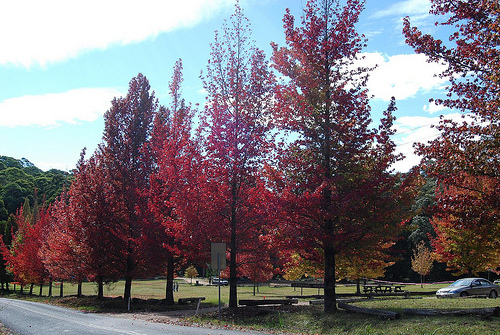
    Deciduous is a term most often applied to plants.  It refers to plants which lose all or part of their foliage at certain times of the year.  Most deciduous plants lose their leaves during cold temperatures in the winter.  Some, however, shed their leaves during times of less rainfall.

    A benefit to deciduous plants is that they are able to retain moisture during the winter or exceptionally dry seasons better because water does not escape through the leaves. Most deciduous plants flower during the periods when they have lost their leaves. With the leaves gone, pollen can more easily circulate for pollination. Also, during leafless times, flowers are more exposed to pollinating insects.  

    Evergreen is the converse of deciduous, and refers to those plants which retain their leaves year round. Deciduous also refers to biology. The term is used to describe animal’s antlers which are shed. Deciduous teeth, commonly called ‘baby teeth,’ fall out at an early age.

  • AT&T Launch Date Betting, Document Editing Suite Talk and More… From the Forums

    Here’s some of the latest talk in the forums:

    • User Gottria wants to know if the Pixi is appropriate for their 12 year old son.  If the next sea change in computing is indeed going to be in the mobile space, and webOS is one of the easiest mobile OS’s to hack on, then I don’t see why not – you might create the next prodigy programmer.  Besides, what’s worst that can happen ? (and no, "sexting" isn’t a valid answer)
    • While the update to webOS 1.4.1 is still fresh in our memory and the update brought with it something to make just about everyone happy, it’s always fun to discuss what you’d like to see in the next version of Palm’s next-gen operating system with fellow enthusiasts.
    • While Dataviz decides if its going to bring the popular Documents To Go editing suite over to webOS, a number of forum members are rallying to convince Quickoffice to develop for their platform of choice.  Are you in?
    • We’ve seen pictures of the AT&T branded Pre Plus getting unboxed,  we’ve seen both the Pre Plus and the Pixi Plus appear on the AT&T website, and we have a solid idea of what the pair will be selling for when they launch, so the only thing left to do is… to speculate about the release date with your fellow forum members!

    We look forward to seeing you in the forums!  Not already a member?  Remember: registration is free, and the benefits are numerous indeed.

  • In which I disagree with Stephen Hawking | Bad Astronomy

    Apparently Stephen Hawking read my book, but not very carefully, because he thinks aliens will come here ala “Independence Day”* and eat up all our resources and move on.

    I disagree with him. I think in fact it’s more likely that an aggressive alien race would create self-replicating robot probes that will disperse through the galaxy and destroy all life that way.

    But more likely still doesn’t equate to likely. I’ve been thinking about this on and off for a few days, in fact, and I suspect a likely answer to Fermi’s Paradox — “Where are they?” — is simply that intelligent life that is capable of interstellar flight doesn’t last long enough to colonize other stars. That would neatly explain why, if stars with planets are common (which we know is almost certainly true), and the conditions for life to arise are relatively common (again, that seems very likely), the galaxy isn’t overrun with life. It should be by now; it’s had billions of years to have space-faring races evolve and colonize the whole shebang.

    So in reality, Hawking’s idea and the one I go over in my book are probably wrong. But I’m an optimist, and I can hope that the reason the galaxy isn’t softly humming with life (that’s Carl Sagan’s poetic phrase) is that we’re the first, or at least the first in a while. That would mean we still get our chance. It’s a big responsibility, really.

    And to be clear, that’s not snark, even if this post started out a bit snarky. I’m serious. We may be utterly, entirely alone in a galaxy filled with planets that outnumber people on our own planet 50 to 1. That idea gives me the creeps more than the idea of hostile aliens bent on sterilizing each of those planets. But at least it gives us a good chance to spread and see the place a bit. I’d like to think that in a hundred generations, this arm of the Milky Way will boast a thousand human planets. It’s a nice thought.

    [Note added after I wrote this: I see Sean at Cosmic Variance has weighed in on this as well. But I heard it first from that man about town Josh Cagan.]


    *A movie I liked and about which I am unapologetic.


  • RIM announces BlackBerry Pearl 9100, Bold 9650

    It’s the morn of WES 2010, and as expected RIM has made a few announcements. First, we learned of the 3G Pearl that we’ve been anticipating for most of the year. This includes not only the 9100, but also the 9105, that 14-key model that I’ve ranted about during the past couple of weeks. RIM says they’ll be available in May on various carriers, so we have no hard date, nor do we have the exact pricing.

    Also as expected, RIM announced the BlackBerry Bold 9650, the update to the Tour, which was released last July. As with the Pearl 9100, we’ve known about the 9650 for quite a while. Expect a faster processor, Wi-Fi, and trackpad upgrades as compared to the Tour. As with the Pearl, the Bold will hit shelves in May, though there is no set release date. Last week we heard May 16 on Sprint.

    Finally, RIM has made Mobile Voice System 5 available for its BlackBerry Enterprise Server customers. This allows for Wi-Fi calling, among other features. You can learn more at blackberry.com/mvs.

    This post originated at BBGeeks.com – home to all things Blackberry! Also a great source of info about AT&T BlackBerry.

    RIM announces BlackBerry Pearl 9100, Bold 9650

    This post originated at BBGeeks.com – home to all things Blackberry! Also a great source of info about AT&T BlackBerry.

    RIM announces BlackBerry Pearl 9100, Bold 9650


  • Early crop planting is no concern for fertilizers

    Reports from the U.S. Department of Agriculture (USDA) show that farmers are getting off to a brisk start in the 2010 planting season. In its April 18th report, the USDA indicated that corn planting is 19% complete in 18 key states that produce the majority of U.S. corn production. By comparison, it was only 5% complete at the same point in 2009.

    As a result of the quick planting, there is speculation in the market that crop yields will be higher this year. According to RBC Capital Markets analyst Fai Lee, that has likely contributed to crop price weakness and "negative" investor sentiment to fertilizer stocks.

    Mr. Lee thinks this negative sentiment is a mistake. He does not see any clear linkage between early planting and higher yields, which means that the early planting should not be a concern to the fertilizer industry (which would only be affected if yields actually turn out to be high).

    "Agronomic research indicates that late planting generally leads to lower yields. However, research data does not support the conclusion that early planting will lead to higher yields as suggested by recent media reports and industry prognosticators," Mr. Lee wrote in a note. He called the link between early planting and higher crop yields a "market myth".

    He believes it is still too early to predict the outcome of the U.S. corn harvest. As such, he considers fertilizer stocks a potential buying opportunity if they are weighed down by more concerns that early planting will lead to high crop yields.

    Peter Koven

  • “Batman” Stage Show In The Works

    A family-friendly live theatrical adaptation of Batman is being developed for the stage.

    According to a item featured in The Hollywood Reporter on Monday, the proposed show is described as neither a musical nor a Broadway show but rather a touring production targeted at children and families.

    Alan Burnett, the scribe ehind various animated Batman and Superman TV series, is penning the script for the show, which could hit the road as early as 2012.


  • Cleaning Up Jerusalem

    We’re cleaning up Jerusalem – one case at a time.


    Last week, on the eve of Yom Ha’atzmaut, IRAC won a major case in the Jerusalem District Court. We put an end to the Jerusalem municipality’s practice of providing exclusive additional funds to religious schools controlled by ultra-Orthodox political parties.


    The Jerusalem municipality’s allocation of millions and millions of shekels to Haredi (ultra-Orthodox) schools – at the expense of all other Jerusalem schools, especially when there are so many in dire need of financial support – was yet another example of how the Haredim use political power to secure government resources and win disproportionate benefits for their own communities.


  • Ford 3-cylinder EcoBoost still “ways off” for the U.S.

    Ford Start Concept

    FoMoCo confirmed that the new 1.0L 3-cylinder EcoBoost that made its debut at the 2010 Beijing Motor Show in the Start Concept is headed for production. However, the automaker has not given a schedule as to when we might see it in vehicles.

    According to a Ford source, the timetable for a U.S. version will likely have to wait for the proper vehicle.

    “For North America, it is a ways off,” said the source. “It certainly has been talked about to come here, but there is not a vehicle for it yet.”

    Once vehicle that is under consideration for the U.S. market that could use the 3-cylinder EcoBoost is the next-generation Ka, which is currently sold in Europe.

    Click here for our original post on the Ford Start Concept.

    Ford Start Concept:

    – By: Kap Shah

    Source: Automotive News (Subscription Required)


  • Faculty and Staff are Invited to Meet Coach Dooley

    Tennessee Athletic Director Mike Hamilton and Head Football Coach Derek Dooley. Photo courtesy of UT Athletics.

    This academic year is quickly drawing to a close, which means football season is just around the corner.

    This week Chancellor Jimmy G. Cheek will host opportunities for faculty, staff and students to meet UT’s new head football coach, Derek Dooley. Faculty are invited from 2:30 to 3:30 p.m. on Wednesday, April 28, in the football practice facility in Neyland-Thompson Sports Center at the corner of Lake Loudoun Boulevard and Johnny Majors Drive. Staff and students may meet the coach from 4 to 5 p.m. Attendees should enter the facility through the football museum on Johnny Majors Drive. Refreshments will be served.

    To RSVP for the event, e-mail [email protected].

    Dooley was introduced as Tennessee’s 22nd head football coach on Jan. 15 after serving three seasons as the head coach at Louisiana Tech University, where he also served as athletics director since March 2008. He was the only athletics director also serving as head football coach on the major college level.

    Before entering the world of collegiate coaching, Dooley earned his bachelor’s degree in government and foreign affairs from Virginia in 1990, and his law degree from the University of Georgia in 1994. He practiced law at a private law firm in Atlanta for two years before making the move to college football as a graduate assistant at the University of Georgia.

    Son of former Georgia coaching legend Vince Dooley, he was a walk-on wide receiver at the University of Virginia before earning a scholarship after his second season and leading the Cavaliers to three bowl appearances and the 1989 ACC championship.

    Dooley’s college football career has taken him to Southern Methodist University, Louisiana State University and Louisiana Tech. He also spent two years coaching in the National Football League as tight ends coach for the Miami Dolphins.

    To read more about Dooley, click here.

  • 7 Essential iPad Productivity Apps

    When I got my iPad, I gave myself a mandate: don’t lug a five pound MacBook around with me to for the small amount of time I use it; instead, try to make do with the iPad. For the most part, I’ve been successful. My MacBook hasn’t left the house since April 3, and for what I do (writing, reading, video watching) I don’t really need the horsepower all that much. I wouldn’t want to do a day’s work on it, but it’s great for getting work done on the train, on my lunch break, etc.

    These are the apps I’ve found to be indispensable for getting things done.

    The iWork Suite: OK, in fairness, everyone who wrote about it wasn’t all that trilled with it. However, I’ve found that it’s currently the best option, which is pretty sad. Office2Pro has potential, but the lack of USB transfer is a turn off for me. Granted, the lack of MobileMe integration with iWork really makes me wonder what on earth Apple was thinking, I can’t get my iPad on the Wi-Fi network at work, so it’d nice to be able to transfer files from my work PC. It really feels like the suite is one or two patches from being excellent.

    Evernote: I’m a huge Evernote user. For me, it has replaced bookmarking; any page I’d normally bookmark just gets Evernoted. Evernote for the iPad finally pushed me over the edge to becoming a premium user, primarily because premium users can sync their notebooks offline. I don’t use it a lot for taking notes, but it’s indispensable for reading my research material offline.

    Goodreader: I deal with a ton of PDFs, Word docs, Presentations, and videos, all of which I tend to need to refer to and not edit. Given the complete lack of a real file system — another failure on Apple’s part — Goodreader lets me organize cleaner than the iWork suite. I’ve got lecture notes and handouts for my class all in one place, and I store my PDFs of my character sheets for D&D in it was well. Goodreader can also get files from Dropbox, MobileMe and USB sync, and more. It lets me sideload just about any file onto my iPad without it being tethered to my sync computer.

    Things: No discussion of getting things done is complete without  a to-do manager. My favorite is still Things, primarily because of how well it plays with the desktop version. I’d like to see the iPad version have a little more feature parity with the OS X version — namely in being able to edit Areas on the iPad, and I look forward to the day when the syncing is done over the cloud.

    Bento: I originally picked up Bento because Delicious Library didn’t let me edit my library on the iPhone — and Amazon forbidding its data to be used by mobile apps, which is how Delicious gets its data, forced the app to be pulled. I wanted to be able  to edit my library on the go. Since then, I’ve found it’s a great place to dump all sorts of data you need to sort through on the road, or need to edit. For example, an inventory manager could update inventory levels right on the iPad.

    These are the apps I’m finding handy for being productive. What ones do you prefer using?

  • Vermelho medicinal

    O urucuzeiro (Bixa orellana L.) é proveniente da Amazônia, podendo alcançar até 5 metros de altura. Apresenta grandes folhas de cor verde-claro e flores rosadas com muitos estames. Seus frutos são pequenas capsulas de cor marrom-avermelhadas que contém muitas sementes. Fonte de betacaroteno (também taninos, flavonóides, ácidos graxos), a planta age contra hemorragias, afecções renais e também é febrifuga. As suas folhas acalmam os enjôos da gravidez e suas raízes são digestivas. As sementes são expectorantes e laxativas. Os brotos do urucum tem a capacidade de desinflamar os olhos, através do compressas de seu chá. Combate também aftas, faringites e amigdalites. É eficaz na eliminação de manchas e verrugas (tintura das sementes aplicada sobre a pele elimina manchas brancas, verrugas, e rejuvenesce a pele); seu nome vem do tupi uruku, que significa vermelho.  No Brasil, a tintura de urucu (também conhecido como urucum)  em pó é conhecida como colorau, e usada na culinária para realçar a cor dos alimentos. Em outras culturas chama-se: orleansstrauch (alemão), achiote ou onoto (espanhol), rocou (francês) e achiote ou annatto (inglês). É também conhecido como açafroa, uru-uva,urucuuba.

    O pó do urucum está sendo testado ainda num tipo específico de condicionador de cabelo. A parceria surgiu de forma casual, num encontro na Rio-92 entre o então presidente da Aveda, Horst Rechelbacher, e o cacique Biraci Brasil que, à época, presidia a Organização dos Agricultores e Extrativistas Iauanauá do Rio Gregório. Numa reunião de representantes de organizações não-governamentais, o jovem e ambicioso líder dos iauanauá reclamou da falta de alternativas econômicas dos índios brasileiros.
    Os iauanauá produzem em média três toneladas de urucum  por ano, num terreno de 13 mil hectares, dentro da reserva indígena do Rio Gregori. Os índios vendem as sementes por US$ 2,40 o quilo, mas o pó do produto é repassado à empresa americana por US$ 16 por quilo – preço do mercado internacional. O urucum produzido pelos iauanauá é considerado imbatível em grau de pureza. fonte: redetec.org


  • Hacking my template

    Firstly I want to thank you for your feedback and help when I asked for it. In many ways, your comments gave me a clearer view of how to improve Ikeahacker as well as chart a direction for it. Thank you, thank you! I feel re-inspired.

    In response to that (I wouldn’t want you to think that I wasn’t listening!) I have made a few tweaks to the current site. Mind you, this is not the big redesign I was talking about (which I am now seriously considering WordPress. Any thoughts?). I don’t want to do too much on this template since I won’t be using it in the redesign. But I do want to make sure that your experience on this site, while I work on the new design for the next coupla months, is a lot more useful and friendly. So here goes:

    Many of you asked for:
    1. Better navigation
    – I’ve added the “older” and “newer” posts links at the bottom of the page. Hope that takes away the frustration of browsing the archives.
    – Related posts complete with thumbnails are now under each post.  

    2. Better search
    – Under the existing categories section, I’ve added a drop down menu of all available Labels.
    – I’ve also begun adding the Ikea names of the items hacked into the Labels. I do still forget some times. So do bear with me while I get the hang of it.

    3. Less clutter
    – I’ve increased the size of the left content area, as some of you mentioned, to give it space to breathe. This lets me include bigger photos too.
    – Removed the Recent Comments (which many didn’t find useful), moved the Friends Link List to a dedicated page. Tidied up things in general.
    – Used images for the Top Hacks instead of text. I kinda like this alot myself! 🙂

    Little tweaks. But it’s an improvement, don’t you think?


  • 2011 Mercedes-Benz E-Class L unveiled for China

    2011 Mercedes-Benz E-Class L

    Joining the 2011 Audi A8 L and the BMW 5-Series Long-Wheelbase, Mercedes-Benz has unveiled their extended version of the E-Class at the 2010 Beijing Motor Show. Known as the Mercedes-Benz E-Class L, the China specific model gains an extra 14 centimeters of legroom in the rear.

    At launch, the new Mercedes-Benz E-Class L will get two gasoline engine choices including the E 260 CGI BlueEFFICIENCY, using the latest direct injection technology, and E 300. Both models are offered with automatic transmissions.

    Mercedes-Benz said that the E-Class segment is currently enjoying a huge boom in China with a total of 122,000 vehicles sold in the class in 2008. Experts are now expect that figure to exceed 200,000 in 2010.

    “Long versions dominate the segment with a share of close to 90 percent. Customers are primarily entrepreneurs and the self-employed, many of whom use the services of a chauffeur,” Mercedes-Benz says.

    2011 Mercedes-Benz E-Class L:

    Press Release:

    Two world and two Asia premieres: Mercedes-Benz at “Auto China 2010″

    World premiere at “Auto China 2010″: The new E-Class L: defining the new standard of premium executive car

    – Spacious: an extra 14 centimetres of legroom in the rear
    – Dynamic: two petrol engines producing 150 and 180 kW
    – Comfortable: adaptive damping system and automatic transmission
    as standard

    Specially tailored for the growing market for luxury saloons in China, the long-version of the new Mercedes E-Class will be celebrating its world premiere at “Auto China 2010″ With its inclined radiator surround, muscular-shaped rear fender and well-defined boot lid, the design of the new E-Class Lembodies status and effortless superiority in a number of its details. Now available in a lengthened version, the model is even better positioned to meet the requirements of the Chinese market in this segment. The vehicle’s refined appointments also help to create an extremely impressive and comfortable interior.

    With a length of 5,012 millimetres and a wheelbase of 3,014 millimetres, the new model for China has gained an extra 140 millimetres in both of these areas compared with the saloon model sold in the rest of the world. As a result, in the rear of the five-seater vehicle passengers can enjoy an extra 140 millimetres of legroom compared with the regular wheelbase E-Class, a model already renowned for its comfort. Another added touch of comfort: the front seats are also electrically adjustable from the rear.

    In addition to the generously dimensioned interior, the vehicle’s high level of safety – typical a Mercedes-Benz car- also sets standards. Unique features include the PRE-SAFE® occupant protection system, Rear Seat Safety package with belt force limiters on the outer seats and rear side airbags, as well as ATTENTION ASSIST drowsiness detection. A luggage compartment volume of 540 litres and a compact turning circle of 11.25 metres also represent class-leading values for this segment. At the time of its commercial release inJune2010, buyers will have a choice of two petrol engines producing 150 kW (204 hp) and 180 kW (245 hp), as well as several luxury appointment levels. Additional engine variants are expected to become available at a later date.

    The E-Class segment is currently enjoying a boom in China: a total of around 122,000 vehicles from this class were sold there in 2008, but according to experts this figure is already expected to exceed 200,000 in 2010. Long versions dominate the segment with a share of close to 90 percent. Customers are primarily entrepreneurs and the self-employed, many of whom use the services of a chauffeur.

    Produced in Germany, the new E-Class Saloon (W 212) has already sold more than 12,000 units in the People’s Republic of China since the middle of 2009. The new E-Class L (V 212), on the other hand, is produced locally at Beijing BenzAutomotive Co.,Ltd (BBAC) with a local share in value terms of more than 40 percent. BBAC is a joint venture between Daimler AG and its long-term partner Beijing Automotive Industry Holding Company (BAIC). The E-Class models are produced in a new plant in the Beijing Development Area in the southeast of the city.

    Engine and suspension: the highest level of comfort is the trump card

    From launch, the new E-Class L will benefit from a choice of two refined petrol engines featuring high pulling power in the form of the E 260 CGI BlueEFFICIENCY , using the latest direct injection technology, and E 300. Both models are offered with automatic transmissions that are ideally suited to the respective engine characteristics. Furthermore, transmission control is intelligent and adjusts the shift points adaptively to match the driving profile of the driver.

    The AGILITY CONTROL suspension with selective damping system as standard forms the basis for the highest level of ride comfort. Ground clearance has also been increased. The standard Direct-Steer system provides particular convenience at slow speeds or when parking since, in conjunction with the speed-dependent service brake, steering effort is reduced thanks to the direct ratio.

    Appointments: a high degree of luxury as standard

    E260 CGI ELEGANCE, E260 CGI AVANTGARDE and E300 AVANTGARDE are the three appointment lines which will be available for the long version of the E-Class when it launches in China. Typical of the brand is the extensive scope of appointments available as standard. The ELEGANCE version already comes, among other things, with bi-xenon headlamps, adaptive ILS (Intelligent Light System), electric sliding sunroof, automatic air conditioning and COMAND DVD system.

    Additional highlights of the E 260 CGI AVANTGARDE version includeselectric panoramic sliding sunroof, COMANDAPS with DVD changer, THERMATIC air conditioning system, heated rear seats and residual heat system. The E 300 Avantgarde also features a Rear Seat Entertainment System (two large 20.3 cm screens in the backs of the front seat head restraints), KEYLESS-GO electronic drive authorisation system and remote boot closing.

    – By: Omar Rana


  • Dell Sparta, Athens and Looking Glass Pro

    There have been a lot of Android devices leaked for Dell this past week. Most aren’t scheduled to appear until 2011. An old roadmap has recently surfaced with a few Android devices we haven’t seen until now. The Sparta, Athens and looking Glass HD (codenames for now, don’t think these names will stick).

    The Sparta is an 11-inch netbook, it has a 1024 x 768 TFT display, ARM processor, and optional connectivity modules for 3G, Wi-Fi and Bluetooth. It appears as though the screen swivels also. This could make for a unique user experience. Next we have the Athens, a sub-0.9kg netbook. It has the same screen size as the Sparta an ARM processor and the same optional connectivity modules. Both of these devices may be released this fall.

    The Looking Glass Pro is a 7 inch Android tablet with an “HD screen” and digital TV tuner. This device is similar to the Looking Glass tablet mentioned in an earlier leak, it just has a different screen. Dell has an awesome lineup coming soon.

    [via engadget]

  • Nexus One not coming to Verizon after all?


    Many were questioning the Nexus One’s fate on Verzion when the HTC Incredible was announced a few weeks back. After all it’s nearly the same phone, instead skinned with HTC’s Sense UI. Well the question might be answered as Google’s Nexus One’s page now tells shoppers to buy the Incredible instead. Previously the same line indicated that the Nexus One was “coming soon” to Verizon.

    This really isn’t a bad thing for Mr. and Mrs. Consumer. The Incredible will no doubt see better sales and get into more people’s hands thanks to its placement in Verizon stores where the still-incredible Nexus One would only be sold online like the T-Mobile version. We just wish we had the choice between the two. That’s all.


  • Cuba’s urban-ag revival offers limited lessons

    by Andy Fisher

    Cuba’s flourishing urban agriculture comes with a strong dose of government control.

    This post originally appeared on Civil Eats.

    Many of us in the U.S. sustainable-food movement idolize Cuba’s experience in building a vibrant urban-farming sector. This idealization is due to the lack of information available on the Cuban system, as caused by the travel embargo and media blackout there. Compounding this situation is the vast difference between the Cuban and American political and economic systems.

    Cuba’s accomplishments are undeniably astounding, inspiring and a testament to the country’s flexibility and pragmatism: 350,000 new well paying jobs (out of a total workforce of 5 million) created in urban agriculture nationally; 4 million tons of fruits and vegetables produced annually in Havana, up ten-fold in a decade; and a city of 2.2 million people regionally self-sufficient in produce. These accomplishments have been supported by an extensive network of input suppliers, technical assistance providers, researchers, teachers and government agencies.

    Yet, Cuban urban agriculture, no matter how inspiring, is largely irrelevant to Americans. The state is pervasive throughout Cuba and controls virtually all aspects of the official economy. The government can mobilize quickly and massively around its priorities through an array of powerful policy tools at its disposal. After 50 years of socialist rule, Cuban institutions, as well as the mentality and expectations of the Cuban public, differ vastly from those in the U.S. By way of example, the ruling motto of Cuban urban agriculture states, “We must decentralize only up to a point where control is not lost, and centralize only up to a point where initiative is not killed” embodies the vast differences between their planned economy and our free market system.

    The fundamental differences between the Cuban and American systems as they relate to the success of urban agriculture are vast and, for the most part, are insurmountable.

    Land ownership key

    Case in point, the success of urban agriculture in Cuba has been grounded in the distribution of public land for food production. For example, a law passed in 2008 allowed any citizen or entity to request idle lands up to 33 acres to be passed out in usufruct for 20-40 years. This law resulted in 16,000 persons requesting land in the past two years. Since all land in Cuba – with the exception of private homes – is the property of the State, the government has resources at its disposal to support its policies far beyond that of any American jurisdiction.

    On the other hand, in the U.S., land use laws and private property land tenure represent a very real challenge to the expansion of urban farming. While some cities have made their minimal idle lands available for urban farming, when they do so, garden land tenure is not assured. For example, in New York City, hundreds of community gardens were threatened with destruction and dozens were ultimately plowed under when city government prioritized housing developments.

    Land use planners here typically view urban agriculture as an interim land use at best, until a development opportunity with higher economic utility, such as housing, retail or manufacturing, becomes feasible. Few communities have protected urban agriculture as a permanent use in their planning documents, although this phenomenon is beginning to change. Neighbor complaints about noises, smells, visual clutter and dust created by urban farming are made frequently and deter farm permanence.

    Salary controls nurture Cuban farming

    In Cuba, virtually everyone works for the State. The State sets salaries; economic incentives are controlled by the government. To incent fruit and vegetable production, the government has allowed urban agricultural enterprises to distribute part of their profits back to the workers. These quasi-free enterprise farming operations have led to some unique salary structures wherein farm workers can earn two or three times the salary of the local physicians. These incentives have thus allowed urban farms to retain high quality human resources and maximize production.

    U.S. policymakers have few tools at their disposal to shape the earnings of urban agricultural producers, beyond the nigh-impossible extension of commodity subsidies. Urban farms have to compete with the rest of the labor market for qualified workers, with immigration policy also playing a large factor in agricultural labor supply.

    Profit, capital and the marketplace

    The economic conditions under which Cuban urban farms operate are extraordinarily different than the conditions of similar enterprises in the U.S. For example, since they do not purchase or rent the land, they have no mortgage or rental costs to pay. Inputs and technical assistance are subsidized by the government. (A visit from a technician to assess a pest problem costs one cooperative member the equivalent of two bits.) They enjoy little competition from other sources for their fruits and vegetables, which they may sell at farmers’ markets or at on-site farm stands. While capital may be difficult to access from the government, there is no private banking sector and no interest charges to bear.  As a result, the urban farms in Havana are profitable enough to redistribute a significant portion of their earnings (85 percent in one case) back to the workers. In a country where the basic wage is $10 per month and a monthly incentive of $50 per month is quite substantial, these farms clearly do not need to be making enormous profits to make a difference in the lives of their workers.

    Running a profitable urban farming business in the U.S. entails a much more complex set of calculations than in Cuba. In the U.S., small farms struggle to break even, under the weight of high monthly payments for land, inputs and machinery. On the wholesale level, they face difficult access to markets for selling their products and typically receive prices near or below their cost of production. Small farms selling directly to consumers frequently face stiff competition from other farmers or other retail outlets, which are typically better capitalized. The more socially-minded farming enterprises subsidize their operations with grants for educational programs or through agri-tourism schemes. To be profitable, urban farmers must find a market niche at which they excel, such as providing ultra-fresh micro-greens to high-end restaurants or through cause-related marketing.

    Necessity, the mother of invention

    Cuba’s shift to urban and organic agriculture was driven by necessity. As the Soviet bloc fell in the late 1980s and early 1990s, Cuba lost the primary market for its products and its source of subsidized agricultural inputs and petroleum. The crisis that ensued was referred to by the Orwellian term, “the special period,” and they were hungry and dark times for Cuba. To its credit, the Cuban government found partial solutions to this emergency by pushing the country toward organic and urban agriculture. As one highly placed Cuban official said about the decision to support urban farming and farmers’ markets, “We moved food production and the markets as close to the people as possible because there was no oil for transportation to get the people out to the food.” This policy decision came at an ideological cost. It entailed a partial opening of urban food production to the free market, which resulted in increased social inequality through income distortions. It also was a 180-degree turn from the capital and input-intensive, Soviet-influenced production methods valued in Cuba at the time.

    American interest in urban agriculture has been influenced by the state of the economy. Backyard vegetable production and seed sales for 2009 spiked significantly over 2008 levels, and urban farming in Detroit has grown rapidly as a means to deal with acres of vacant land. But, by and large, increased policymaker and public interest in urban agriculture is traced to concerns about food literacy, urban sustainability, community building, obesity prevention and – to a lesser degree – economic development and job training. These goals are important, but they are not driven by a state of emergency as Cuba suffered.

    The success of Cuba’s urban agriculture program is a true inspiration to the people working to green cities here in the U.S. Yet, what is best learned from Cuba’s experience is not the specifics of how to produce more food in urban communities, but the value of alternative economic, political and social structures that can help us accomplish our goals.


    Related Links:

    Interview with ‘Growing Green’ business leader Karl Kupers

    A bee wrangler shows you how to mind your own beeswax

    Fred Kirschenmann, winner of NRDC’s Growing Green “Thought Leader” award


  • Demo: Split Second


    Split/SecondContent: Split Second Demo
    Price: Free
    Availability: All Xbox LVE regions
    Dash Text: Split/Second is an intense arcade racing game set within the universe of a mega-budget, prime-time reality TV show. Contestants race to be the 1st across the finish line in a made-for-TV city built for destruction, with the ultimate goal of becoming the season champion. The city is rigged to blow and you’re in control of the action – bridges will fall, buildings will be reduced to clouds of dust and cars blown to pieces – devastating explosions will decimate your rivals and rip apart the track, creating new routes and challenging obstacles. Explosive stunts, demolition and balls-out racing thrills combine to create the ultimate high-octane racing experience! Buckle up…it’s about to get explosive out there!


    Add the Split Second demo to your Xbox 360 download queue


    Like the demo? Pre-order the game here