Blog

  • Closing Time: The Carlos Gomez conundrum

    I’m the last hand on deck as we finish up the opening day wrap; if you want to celebrate Jason Heyward’s(notes) fantastic debut, go here; if you want to marvel at Mark Buehrle’s(notes) Globetrotter act, click here. Otherwise, let’s take a look at a glorious first full day of action and see what’s moving and shaking on the roto landscape.

    The optimist looks at Carlos Gomez(notes) and wants to see another Michael Bourn(notes) make-good story. The realist concedes that we’re probably looking at this year’s Tuffy Rhodes Award Winner.

    Gomez was one of the surprise stars of opening day, collecting four hits (including a homer) and a stolen base in Monday’s loss to Colorado. And the snappy debut came on the heels of an exciting spring (.301 average, 11 steals in 11 attempts). He’s going to get a shot at the No. 2 position in the Milwaukee lineup, and it looks like Gomez will have the green light on the bases anytime he wants it. All sounds great, doesn’t it?

    Ah, but there’s an ugly flip side to consider here. Gomez has long been known as a player with no patience or pitch recognition skills at the dish; he sees the ball, he hacks at the ball. His putrid on-base percentage (.292) forced him out of Minnesota, and Gomez didn’t show any improved patience during March (just two walks). Bourn’s reinvention last year came through a series of important changes – better pitch selection, more balls on the ground; conversely, Gomez’s big Monday was all about swinging from the heels at the first pitch available (he took a cut on 8-of-13 pitches, and look at his pose above – you can almost hear him saying "yeah, I’m a slugger"). You could make the argument that the home run Gomez hit was the worst possible result for him long term; it’s going to reinforce bad habits.

    This doesn’t mean you can’t make a short-team pickup with Gomez; for all of his offensive flaws, he is capable of stealing 40 or more bases over a full season. And you never know, perhaps a fast start could turn him into a trading chip, depending on the quality and sophistication of your league. Just keep in mind that Monday’s results didn’t show a change in offensive philosophy, and this is a player that’s desperately needed one for a while.

    Monday was a fairly clean day from the closers but we didn’t get away completely unscathed; Jason Frasor(notes) has the first ninth-inning meltdown of the year, falling apart in Arlington (0.1 IP, 4 H, 2 R). Scott Downs(notes) breezed through the eighth inning on just 11 pitches (eight strikes) and probably is Toronto’s best reliever pitcher on raw skills, but Kevin Gregg(notes) is also around and might be more attractive as a potential closer because he’s right handed (never mind that he’s not as good as the other two options here). It’s probably 50-50 at best that any of these three guys manages to get to 20 saves when it’s all said and done.

    Ryan Franklin(notes) came out for an inning of work in Cincinnati; he was in line for a save chance until Yadier Molina(notes) counterfeited things with his grand slam in the top of the ninth. Franklin had just about nothing on his cutter and the Reds hit him pretty sharply (3 H, 2 R); Brandon Phillips(notes) laced a two-run double to center that probably dented the ball.

    If you’re hedging against Franklin (and really, who isn’t?), please note that Jason Motte(notes) struggled in the seventh (one run, two outs, three baserunners) while Kyle McClellan(notes) was ordinary in the eighth (1 H, 1 BB, 2 K, an unearned run). The fact that McClellan got the eighth-inning assignment in the first place is worth noting; the Cardinals aren’t afraid to close with a non-name brand (like Franklin last year) and Motte’s still a work-in-progress in a lot of ways (heck, he’s only been pitching since 2006).

    I’ve never really been a Casey Kotchman(notes) fan, but if he’s going to bad third most of the year behind Ichiro Suzuki(notes) and Chone Figgins(notes), maybe something interesting will happen. The table setters got on base four times in Oakland (one hit, three walks, plus three steals) and Kotchman made the most of it, collecting two hits and four RBIs. Location, location, location.

    Garrett Jones(notes) homered on his first two at-bats and they both made a statement about his game; make a mistake over the plate and he’s capable of splashing into the river, and even if you work away from him, he’s got enough power to find the seats. He’ll probably see a lot more off-speed stuff as the season goes along, but he’s no longer a secret to anyone, teams had a full offseason to consider how to get this guy out. His average will probably fall 20-30 points from last year, but 25-30 homers looks like a sure thing to me.

    Handshakes: Franklin Morales(notes) allowed a couple of absolute rockets in the ninth inning at Milwaukee but survived (thanks, Troy Tulowitzki(notes)).Brian Fuentes(notes) was surprisingly tidy putting down the Twins in order. Fernando Rodney(notes) got through the eighth as only he can; working a scoreless inning despite throwing just 3-of-10 pitches for strikes. … Piece of cake for David Aardsma(notes), getting the A’s in order and recording two strikeouts. Andrew Bailey(notes) worked on the other side and needed 16 pitches to record one out, albeit a Kevin Kourmanoff error extended the inning. … Frank Francisco(notes) struck out two of the four Blue Jays he faced, then picked up a victory when Frasor imploded in the bottom of the ninth. … The perennially-underrated Brian Wison closed up with two outs in Houston, made necessary after Brandon Medders(notes) ran into trouble.

    Speed Round: Shaun Marcum(notes) was the early story of the day, taking a no-hitter into the seventh at Texas before the Rangers caught up to him (Nelson Cruz(notes) eventually squared the game with a three-run moonshot). Marcum’s a nice story off Tommy John surgery, but I’m not betting on AL East pitchers for mixed-league play unless they’re All-Star quality. If I were doing a pitcher Shuffle Up and Deal right this second, I wouldn’t go past $5 on Marcum. … It’s a little surprising Felix Hernandez(notes) couldn’t completely dispatch of that pedestrian Athletics lineup (everyone starting for Oakland should be batting first, sixth or ninth; the middle of the order is embarrassingly weak). … Ubaldo Jimenez(notes) might have pitched better than his line suggests (6 IP, 8 H, 1 R, 1 BB, 6 K) and it’s interesting to note that the Brewers could’t stop praising his nasty stuff after the game. Yahoo’s Jeff Passan tabs Jimenez to win the Cy Young this year. … Carlos Gonzalez(notes) was nabbed on his stolen-base attempt but that was just about the only thing that went wrong for him during a 4-for-5 opener with two runs scored. Now let’s hope Jim Tracy gives Cargo a chance to play against all kinds of pitching, as he deserves. … The Mets have plenty to feel good about with their opener (David Wright(notes) homered, Johan Santana(notes) was sharp), but it’s hard to feel good about a lineup that uses Mike Jacobs(notes) in the cleanup spot (0-for-4, 2 Ks).

    Nothing about Philly’s romp in Washington comes as a surprise; here’s a look at the crooked numbers. Ryan Howard(notes) tends to struggle with hard-throwing lefties, but the soft-tossing John Lannan(notes) didn’t fool him in the fourth inning. … Drew Stubbs(notes) didn’t start for the Reds but he made an impact later in the game (2-1-2-1). … Vernon Wells(notes) broke a lot of hearts in 2009, in part because he was playing with a bad wrist. He sure looked healthy in Texas (three hits, including a homer). … Tim Lincecum(notes) mowed down the Astros and Dan Haren(notes) toyed with the Padres, to the surprise of no one. Good work if you can get it. … Carlos Zambrano(notes) didn’t have a thing in Atlanta (1.1 IP, 8 ER) but he made good on his promise to be more in control of his emotions; he did not attack the Gatorade bucket in the dugout. Lou Piniella seemed to take Chicago’s ass-kicking in stride as well. … I’ve run out of words to describe the awesomeness of Albert Pujols(notes), so you can take up that chore in the comments. Welcome back, baseball.

  • Reply to article from Joe Bastardi: Up in the Air by Elizabeth Kolbert

    Article Tags: Joe Bastardi, Reply To Article

    AccuWeather’s Senior Long Range Meteorologist. Bastardi is responding to this New Yorker article (Up in the Air by Elizabeth Kolbert) on him and other skeptics.

    We finally have an objective way of measuring temps, and they are obviously afraid that their answer is wrong.

    I am growing weary of stating the obvious.. in a fight that is a side issue to me. My agenda is nailing the weather, not saving the planet. I believe what I believe based on research to get to the correct forecast on anywhere from a day to a multi-decadal trend. That the IPCC is busting on lower trop temps, upper trop temps, the stratosphere, the positive feedback, and the death to the ice cap people have now also been beaten back , at least for the time being, should make any person of good will understand there is room for a debate here. Which is what I advocate in the spirit of what has made this nation great, the exchange without fear of ideas in the open forum. Its not a debate I want to be in, but one I want to watch to make sure I have all the ideas in front of me. What could possibly be wrong with this cry for sanity in this matter.

    A nation that has homeless and uninsured should not be dumping money into chasing something that may not be there, when we have problems that are there. I am sorry that my old New England John Kennedy roots come out with that statement, actual concern for what I know to be rather than a ghost that may not be there. A nation that has built itself, in spite of its faults, on the freedom to confront the truth will not survive if those freedoms are discouraged and hard realities are not confronted.

    Read in full with comments »   


  • The Day the Earth Froze

    This seems to be our week for new material on the comet impact event of 13,000 years ago.  Yesterday we discussed the emptying of Lake Agassiz.
    This interpretation of the impact event that is associated with what I have styled the Pleistocene nonconformity comes up short but still builds the literature.  The event itself was only recognized several years ago.  It is still way too early for researchers to accept that the crust itself shifted at the time actually ending the Ice Age.
    I do not know were scientists come up with the idea that the improbability of an event is an argument against it.  That is errant nonsense.  It is merely a sound reason to not be personally concerned at all today.  In the meantime we have gobs of evidence that an event took place.
    As I have posted the comet struck the northern Ice Cap near the then location of the pole.  Yesterday’s post on Lake Agassiz suggest the impact flooded an extant Lake Agassiz with ice and flushed the water out.  The lake was perhaps fifteen degrees south west of the pole.
    We also see the wildfire theory been repeated.  I made the mistake of accepting that idea at first also.  Had it any basis in natural processes there would be a thick layer of soot on the ground because of the natural forest fire cycle.
    What happened is that all that soot is cometary dust which we now understand consists of mostly elemental carbon.  This was no mild event.  This also clarifies the expansion of a comet as it approaches the sun.  The carbon charges up and is forced apart by electrostatic pressure.
    I am pleased to see this advent of much more substantial evidence than I had available to make my conjectures.  It is often necessary in science to develop a conjecture and then wait for evidence to catch up.
    I would like to see folks debating the merits of the crustal shift conjecture simply because masses of evidence exists that simply needs reinterpretation.  So far it is only my eyeballs and few others.  Thousands of eyeballs would quickly flood us with plenty of supporting data.  It certainly is there everywhere I found it possible to look.
    With or without Lake Agassiz instantly flooding the Atlantic, the crustal shift triggered the melting of the ice cap that flooded fresh water into the Atlantic for a couple of thousands of years.  I suspect the effect of Lake Agassiz was brief.
    The day the Earth froze: An hour-long storm started a mini ice age, say scientists 

    Last updated at 8:48 AM on 02nd April 2010
    An hour-long hailstorm from space bombarded the Earth 13,000 years ago – plunging the planet into a mini-ice age, scientists claimed today.
    The catastrophe was caused by a disintegrating comet and saw the planet sprayed by thousands of frozen boulders made of ice and dust.
    The collisions wiped out huge numbers of animal species all over the world, disrupted the lives of our stone age ancestors and triggered a freeze that lasted more than 1,000 years.
    New theory: An hour-long hailstorm from space bombarded the Earth 13,000 years ago – plunging the planet into a mini-ice age
    The theory is the brainchild of Professor Bill Napier, from Cardiff University, who says it explains the mysterious period of extinction around 11,000 BC.
    Scientists have long been puzzled by what caused a sudden cooling of up to 8C (14F) just as the Earth was warming up at the end of the last ice age.
    The change in climate caused retreating glaciers to advance once again, and coincided with the extinction of 35 families of North American mammals.
    Some geologists have argued that the world was hit by a giant asteroid – a smaller version of one which wiped out the dinosaurs 65million years ago.
    The collision left behind tell tale traces in the rocks – including a black ‘mat’ of soot an inch thick thought to have been created by continental wide wildfires.
    Microscopic ‘nanodiamonds’ created in massive shocks and only found in meteorites or impact craters have also been discovered dating back to the disaster.
    Wiped out: The woolly mammoth
    These findings have led to claims that a 2.5mile long comet or asteroid smashed into the ice sheet covering what is now Canada and the northern US.
    But other scientists say the chances of the Earth being struck by such a large object only 13,000 years ago are one thousand to one against. And they say a single impact cannot explain such widespread fires.
    Professor Napier’s theory suggests the devastation took place when the Earth strayed into a dense trail of fragments shed by a large comet.
    Thousands of chunks of material from the comet would have rained down on Earth, each one releasing the energy of a one megaton nuclear bomb.
    The impacts would have filled the atmosphere with smoke and soot and blotting out the Sun.
    Prof Napier says a comet swooped into the inner solar system between 20,000 and 30,000 years ago and has been breaking apart ever since.
    ‘A large comet has been disintegrating in the near-Earth environment for the past 20,000 to 30,000 years and running into thousands of fragments from this comet is a much more likely event than a single collision,’ said Professor Napier.
    His model, published in the journal Monthly Notices of the Royal Astronomical Society, suggests that the ‘hailstorm’ would have only lasted about an hour.
    It would have caused thousands of impacts, generating global fires and depositing nanodiamonds at the ‘extinction boundary’ marking the point in time when many species died out.
    One recent impact that may have come from the comet is known as the Tagish Lake meteorite, said Professor Napier.
    The object fell on Yukon Territory in Canada in January 2000. It contained the largest amount of nanodiamonds of any meteorite studied so far.

    Read more:

     http://www.dailymail.co.uk/sciencetech/article-1262904/Prehistoric-hailstorm-triggered-1-000-year-freeze-Earth-wiped-animal-species.html#ixzz0k81YvDDx

  • Dense Plasma Physics Update

    Test shots continue at focus fusion and appear to be going very well.  Good things are been learned about the material been used.  I suspect that production models will have a lot of graphene in them before we are too far down the road.
    They do a back of the envelop analysis on the topic of future economics which can best be premature and likely optimistic in terms of the state of our knowledge.
    However, we are looking at direct conversion of fusion/fission energy into electrical current.  It will surely put all other energy sources straight out of business.  We will end up converting huge amounts of inconvenient surplus energy into heat which is the opposite of what we have been doing.
    We may even have to simply ground the excess in many cases.  Needless to say this technology if it succeeds will be a complete revolution of the global economy as we can expect these devices to be placed everywhere including trains and ships.  It will also be swift.  Both this technology and the polywell are amenable to early mass production since no radioactive shielding is needed.
    The press has not jumped on to this but these are the two most important efforts presently underway.
    Lawrenceville Plasma Physics reports good progress in March, 2010.
    APRIL 03, 2010
    At the beginning of March, good shots (those without pre-firing and with pinches) were a bit under 50% of the shots we fired. Since mid-month, we have increased that to 90% good shots. The two time-of-flight neutron detectors have produced more evidence that we are already duplicating the high ion energies achieved with higher currents in the Texas experiments. In our best shots, ion energies were measured in the range of 40-60 keV (the equivalent of 0.4-0.6 billion degrees K). The electron beam carried about 0.5 kJ of energy and the plasmoid held about 1 kJ of energy, nearly half that stored in the magnetic field of the device. So, this is evidence that a substantial part of the total energy available is being concentrated in the plasmoids and transferred to the beams.


    We found that the control shots (with the magnetic coil turned off) were increasingly producing more neutrons (up to about 10 times) as the control shots in the beginning of our testing. It turns out the steel flanges that attach the vacuum chamber to the inner lower bus plate and the bus plate itself were both becoming permanently magnetized. This provides additional (though unintended) evidence that the predicted angular momentum effect is working. In the future, we may find it necessary to replace the flanges and bus plate with those made from non-magnetic alloys, but that will have to wait for now.

    On March 18, Lerner gave an invited presentation on the DPF to an audience of physicists and engineers at Princeton Plasma Physics Laboratory, the nation’s largest fusion lab. The Princeton physicists responded with interest and some friendly questions. The atmosphere was one of collaboration, not competition.

    Finally, we received enough investment money to carry us through the end of summer, with additional funding pledged. This means we are almost halfway to our goal of raising $900K in this capital drive.


    Lawrenceville Plasma Physics had eight objectives for their two year research program This work seems to show good progress on four of the eight objectives.

    If Lawrenceville Plasma Physics (LPP) achieves the full success, then a Focus Fusion reactor would produce electricity very differently. The energy from fusion reactions is released mainly in the form of a high-energy, pulsed beam of helium nuclei. Since the nuclei are electrically charged, this beam is already an electric current. All that is needed is to capture this electric energy into an electric circuit. This can be done by allowing the pulsed beam to generate electric currents in a series of coils as it passes through them. This is much the same way that a transformer works, stepping electric power down from the high voltage of a transmission line to the low voltage used in homes and factories. It is also like a particle accelerator run in reverse. Such an electrical transformation can be highly efficient, probably around 70%. What is most important is that it is exceedingly cheap and compact. The steam turbines and electrical generators are eliminated. A 5 MW Focus Fusion reactor may cost around $300,000 and produce electricity for 1/10th of a cent per kWh. This is fifty times less than current electric costs. Fuel costs will be negligible because a 5 MW plant will require only five pounds of fuel per year. [About 40 million kWh per year from a 5 MWe plant and 5 MWe is equal to 6705 horsepower]

  • Bug electric car – Zero emission lightweight concept vehicle

    vw bug_cqvhe_58

    Designer Ricardo Fedrizzi has shown some deviation from conventional material for his “Bug” electric concept car. He has suggested recyclable and renewable materials, such as polymers with a load of vegetable fiber in order to keep it a lightweight ride, which in turn will enhance the efficiency of the car. Like many other sustainable transportation designs, special attention has been paid to the aerodynamics, as it’s an important factor that affects the efficiency of vehicles. Reduction in weight and better aerodynamic can help promoting economy and performance.
    (more…)

  • Pict Script Discovered

    The Picts really left no history except as odd mentions in the texts of their neighbors.  They are described here as a confederation of Celtic tribes in Eastern and Northern Scotland.  That perhaps explains the disappearance of the name itself.  The tribes or better still the clans merely adopted a new confederation name and called themselves Scots instead.
    These types of names were in flux and not yet associated with a greater idea of kingship.  Had a recognized king of the Picts arose, then it would be extant today.  Instead I suspect under the Normans who thought they ruled the place anyway, the role of kingship became Scottish.
    It also is no surprise that a writing system existed.  In fact rudimentary writing systems existed most places even if only acting as memory aids.  Conventions would be established among the priests and bards who themselves would otherwise be outright illiterate.  This is a case of the idea been the mother of the invention.
    It will not lead to much but is a reminder of a culture
    NEW WRITTEN LANGUAGE OF ANCIENT SCOTLAND DISCOVERED
    Once thought to be rock art, carved depictions of soldiers, horses and other figures are in fact part of a written language dating back to the Iron Age.
    By Jennifer Viegas | Wed Mar 31, 2010
    Riders and horn blowers appear next to hunting dogs on what is called the Hilton of Cadboll stone, pictured here.
    The ancestors of modern Scottish people left behind mysterious, carved stones that new research has just determined contain the written language of the Picts, an Iron Age society that existed in Scotland from 300 to 843.
    The highly stylized rock engravings, found on what are known as the Pictish Stones, had once been thought to be rock art or tied to heraldry. The new study, published in the Proceedings of the Royal Society A, instead concludes that the engravings represent the long lost language of the Picts, a confederation of Celtic tribes that lived in modern-day eastern and northern Scotland.
    “We know that the Picts had a spoken language to complement the writing of the symbols, as Bede (a monk and historian who died in 735) writes that there are four languages in Britain in this time: British, Pictish, Scottish and English,” lead author Rob Lee told Discovery News.
    “We know that the three other languages were — and are — complex spoken languages, so there is every indication that Pictish was also a complex spoken language,” added Lee, a professor in the School of Biosciences at the University of Exeter.
    He and colleagues Philip Jonathan and Pauline Ziman analyzed the engravings, found on the few hundred known Pictish Stones. The researchers used a mathematical process known as Shannon entropy to study the order, direction, randomness and other characteristics of each engraving.
    The resulting data was compared with that for numerous written languages, such as Egyptian hieroglyphs, Chinese texts and written Latin, Anglo-Saxon, Old Norse, Ancient Irish, Old Irish and Old Welsh. While the Pictish Stone engravings did not match any of these, they displayed characteristics of writing based on a spoken language.
    Lee explained that writing comes in two basic forms: lexigraphic writing that is based on speech and semasiography, which is not based on speech.
    “Lexigraphic writing contains symbols that represent parts of speech, such as words, or sounds like syllables or letters, and tends to be written in a linear or directional manner mimicking the flow of speech,” he said. “In semasiography, the symbols do not represent speech — such as the cartoon symbols used to show you how to build a flat pack piece of furniture — and generally do not come in a linear manner.”
    Although Lee and his team have not yet deciphered the Pictish language, some of the symbols provide intriguing clues. One symbol looks like a dog’s head, for example, while others look like horses, trumpets, mirrors, combs, stags, weapons and crosses.
    The later Pictish Stones also contain images, like Celtic knots, similar to those found in the Book of Kells and other early works from nearby regions. These more decorative looking images frame what Lee and his team believe is the written Pictish language.
    “It is unclear at the moment whether the imagery, such as the knots, form any part of the communication,” Lee said. He believes the stones also contain semasiographic symbols, such as a picture of riders and horn blowers next to hunting dogs on what is called the Hilton of Cadboll stone. Yet another stone shows what appears to be a battle scene.
    Paul Bouissac, a University of Toronto professor who is one of the world’s leading experts on signs and symbols, told Discovery News that he agrees “it is more than plausible that the Pictish symbols are examples of a script, in the sense that they encoded some information, which also had a spoken form.”
    What is known about a writing system, however, “does not amount to deciphering this putative script,” Bouissac added.
    “We will have to wait for the discovery of what would be the Pictish equivalent of the Rosetta Stone, which made possible the cracking of the Egyptian hieroglyphic code,” he said. “This may or may not ever happen.”
  • Allon Treads Into the Great Unknown, Alzheimer’s Disease, With New Kind of Drug

    allonther
    Luke Timmerman wrote:

    It must take real guts, or maybe hubris, to try to do what Allon Therapeutics is attempting. This Vancouver, BC-based biotech company has designed a drug that is made to work unlike anything else on the market against some of the world’s major neurodegenerative diseases, like Alzheimer’s.

    Scientists don’t really know what causes Alzheimer’s, and they don’t have a consensus on what is going wrong at the molecular level that leads to the heartbreaking loss of cognition and memory that an estimated 4.5 million people in the U.S. suffer from as they grow old. Quite a few biotech companies have failed with once-promising drugs for this disease—San Francisco-based Medivation (NASDAQ: MDVN), and Salt Lake City-based Myriad Pharmaceuticals (NASDAQ: MYRX) are a couple that leap to mind.

    Yet Allon (UH-lahn) remains in the game, and CEO Gordon McCauley insists that things are still looking up.

    “What I find fascinating about the standard of care today is that there is $6.5 billion of drugs sold to treat Alzheimer’s per year, and they all have one common characteristic. They don’t do much,” McCauley says. “They have nasty side effects, and provide some relief from symptoms for about six months. There’s a real opportunity for a therapeutic with disease-modifying potential.”

    Allon (TSX: NPC) is placing its bet on what is known as the “tau tangle” hypothesis. For years, many researchers and drugmakers have been pursuing the notion that a buildup of amyloid beta plaques in the brain is the primary culprit causing Alzheimer’s. Break up the amyloid, or prevent it from building up, and you can treat the disease. That effort hasn’t borne fruit yet, McCauley says.

    Gordon McCauley

    Gordon McCauley

    A dueling school of thought, which Allon has thrown its resources behind, says that key structural components of neurons, called tau, get broken up into fragments and form tangles as neurons die over time. That process happens when people don’t produce enough of a couple proteins called activity-dependent neuroprotective protein (ADNP) and activity-dependent neurotrophic factor (ADNF). Allon’s idea was to create a small peptide fragment, called davenutide, which is meant to restore that neuroprotective function. If it works as designed, the drug ought to prevent tau tangles from building up, and keep people’s minds sharp.

    The Allon drug has been in some small trials to date, and McCauley characterizes them in a bullish way. The company ran a study that randomly assigned 144 patients with a mild form of cognitive impairment to get a low or high dose of the Allon drug or a placebo. This study didn’t look at the main patient population of people with mild-to-moderate Alzheimer’s, and it didn’t measure one of the main goals that’s usually required in an Alzheimer’s study by the FDA—what is known as ADAS-cog. Nonetheless, Allon says it is encouraged because the study found a statistically significant improvement …Next Page »

    UNDERWRITERS AND PARTNERS


  • Yummy Chocolate Cake( Cakes – Chocolate )

    Daily Random Recipe

    INGREDIENTS:

    • 1 1/2 cups unbleached white flour
    • 1/3 cup unsweetened baking cocoa powder
    • 1 teaspoon baking soda
    • 1/2 teaspoon salt
    • 1 cup sugar
    • 1 1/4 cups water
    • 1/4 cup vegetable oil
    • 2 teaspoons vanilla
    • 2 teaspoons red or white vinegar

    METHOD:
    Preheat oven to 180C/350F.

    In a 23 centimeter / 9 inch round, 20 centimeter / 8 inch square or 23 x 15 centimeter (9 x 6 inch) rectangle baking pan, combine flour, cocoa, baking soda, salt and sugar. In a bowl, combine water, oil and vanilla. Pour liquid into dry ingredients, whisk with fork to combine. Add the vinegar – stir only until the vinegar is distributed around the batter (color variations will occur because of reaction with vinegar and baking soda – not a problem). Bake for 25-30 minutes. You can serve with spoonful of applesauce to make it like a german sacher torte.

  • “The Singularity is Near” to debut at Sonoma Film Festival

    News from KurzweilAI.net:

    ‘The Singularity is Near’ film debuts at Sonoma Film Festival
    KurzweilAI.net, Apr. 5, 2010

    “The Singularity Is Near: a True Story About the Future” makes its festival debut at the 13th Annual Sonoma Film Festival (April 15-18, 2010) with a special screening on Friday, April 16, 2010.

    The feature-length film, directed by Anthony Waller and produced by Ray Kurzweil, Ehren Koepf and Toshi Hoo, executive producer Martine Rothblatt (Terasem MotionInfoCulture), explores the controversial ideas of Ray Kurzweil, based on his New York Times best-selling book by the same title.

    Kurzweil examines the social and philosophical implications of these profound changes and the potential threats they pose to human civilization in dialogues with leading experts, such as former White House counter-terrorism advisor, Richard Clark; technologists Bill JoyMitch KaporMarvin Minsky, Eric Drexler, and Robert A. Freitas, Jr.; Future Shock author Alvin Toffler; civil liberties lawyer Alan Dershowitz; and music luminary Quincy Jones.

    Kurzweil illustrates possible scenarios of his imagined future with narrative scenes starring popular NCIS actress Pauley Perrette and personal development guru Tony Robbins.

    For more informationSonoma Film Festival and The Singularity is Near – The Movie.

  • Peak Oil Now Been Accepted


    When I started covering the development of the peak oil crisis, it was by quoting this writer back in 2007.  At the time everyone was willingly blind and even trying to insist it was not happening.  This has largely changed.  The collapse in 2008 was brought on first by an abrupt run up in the price of oil.  More precisely, it derailed the speeding train built on the sub prime pyramid scheme indulging the global banking industry.
    Oil saw a high of $140 which was clearly unsustainable in terms of demand sustainability and worse in terms economic affordability.  It crumbled back to $30 some lows and has since recovered back to $80.  That is a good operating price.
    In the sixties, a man made $1.00 per hour in the USA and a barrel of oil was $1.00.  Today, that same man makes perhaps $10.00 per hour and a barrel of oil is $80.00.  Yet minimum wage workers and oil have similar shares in the USA economy.
    What we have learned is that the oil industry has an unsustainable piece of the USA economy and we are now feeling the distress caused.
    This article spells out that industry and other specialists are now on the same side of the story and the rest will soon follow.  You will be reading a lot more about this over the next couple of years.  It has become politically legit to begin talking about the problem.
    It is a problem, unlike the fading hysteria over global warming.  The global economy must move double time out of the oil industry.  The good news is that it is actually happening through many diverse avenues.
    The good news is that we can likely survive a sudden sharp drop in oil production because we are rapidly bringing on the Iraqi fields.  The probability of such a large drop has been high and continues for the present.
    This article also makes clear that the oil industry itself recognizes these constraints and is now a natural ally for alternative energy.
    If I were Exxon today, I would simply divert all surplus capital straight into developing geothermal in Nevada.  It uses much the same technical skills in drilling and fluid management for the same purpose.  That way one remains firmly in the energy business while simply transitioning from oil to geothermal.
    As you read this article then remember that I am increasingly optimistic.  North America at least needs to resolve its present 15,000,000 barrels per day consumption rate.  I think we can do it faster than we have to and quite completely while exiting the global oil market.
    Everyone is now awake to the idea that an electric car is a great solution and we are close to solving the range issue.  We are also awake to the 60% loss factor in the electric grid system we have and are quickly moving to fix that.  And building a national efficient grid is now in the cards while tapping all sorts of new power is underway.

    In the meantime North American oil production is entering a growth surge of its own from advanced horizontal drilling methodology and the pending implementation of THAI.  I think it is completely feasible to actually displace all offshore oil.  We already have the flexibility to sharply reduce the take from obvious pukes.
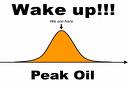
    Officials Wake Up to Peak Oil, Part 1
    By Chris Nelder | Friday, April 2nd, 2010
    When I began writing about peak oil professionally in 2006, it was generally considered a tinfoil hat theory. The notion that oil production might peak around 2012 (plus or minus) was only taken seriously by a few analysts who were considered extremely pessimistic.
    Official forecasts had no cognizance of it whatsoever. All were confident that oil supply would continue to grow steadily to 130 million barrels per day (mbpd) and beyond, at prices that would be considered astoundingly cheap by today’s standards. Oil companies rarely mentioned peak oil, and when they did, it was in a casually dismissive way.
    But as time marched on, the cornucopian arguments fell one by one. My longtime readers have seen the story unfold, but for the benefit of new readers, here’s a quick summary…
    Forecasts grew increasingly pessimistic as it became apparent that regular conventional crude supply had peaked at the end of 2004. Even as the biggest oil price spike in history ensued from 2005-2008, crude production remained flat and unresponsive.
    OPEC scaled back some of its development plans as costs soared. Non-OPEC production not only failed to deliver any actual increase, but began to decline. Forecasts were revised lower.
    Corn ethanol boomed and busted, as it was revealed to be the net energy non-starter that serious analysts always knew it was. It also was suspected of adding pressure to food prices at a most inopportune time.
    Unconventional production from oil shale and tar sands failed to grow as expected, as producers shied away from high-cost, low-production projects.
    The International Energy Agency (IEA) finally included the depletion of mature fields in its analysis, and became increasingly shrill in its warnings about future supply.
    A few current and former oil industry executives began making public statements about the diminishing prospects for new supply, and a few even acknowledged that it would be hard to increase production much beyond current levels.
    Then high oil prices proved intolerable to an economy stretched thin by the bursting of the bubbles in the real estate and financial sectors.
    Yet official recognition of the peak oil threat remained muted, couched in warnings about “adequate investment” and blithe assertions that demand would soon peak, averting any supply shortage.
    All that seems to have changed in the last month. A sudden deluge of reports and summit meetings suggest that the oil industry and energy officials are now taking peak oil very seriously indeed.
    UK Task Force on Peak Oil: Shortages by 2015

    The first bombshell was actually dropped on February 10, when the UK Industry Task Force on Peak Oil and Energy Security issued a report called “The Oil Crunch: A wake-up call for the UK economy.” I only mentioned it in passing at the time, but it was a stern warning that “oil shortages, insecurity of supply and price volatility will destabilise economic, political, and social activity potentially by 2015.”
    It only made the news because Sir Richard Branson personally endorsed it; but the fact that the task force comprised top UK executives and energy experts lent it enough weight to be rather widely circulated in the press.
    The British government, including energy minister Lord Hunt, responded by staging a closed-door summit meeting with the taskforce on March 22. As the UK‘s Guardian reported, the government intended to develop an action plan to contend with a near-term peak, and to “calm rising fears over peak oil.”
    Veteran peak oil analyst and taskforce member Jeremy Leggett explained: “Government has gone from the BP position — ’40 years of supply left, the price mechanism works, no need to worry’ — to ‘crikey’.” He urged the assembly to properly assess the risks of peak oil, and to immediately begin preparing for the end of globalization and an era of oil shortages in the West.
    According to reports from attendees, the summit yielded some important conclusions:
    • Peak oil is either here, or close enough.
    • Prices will have to go higher as demand outstrips supply.
    • Governments will be forced to intervene to maintain critical levels of oil supply, and limit volatility.
    • Rationing measures may be unavoidable.
    • Electrification of transport must be pursued in order to reduce demand.
    • Communities will need to work quickly to reorganize around walking instead of driving, producing food and energy locally instead of importing, and generally try to reduce their need for oil.
    However, the notion that peak oil will mean the end of economic growth, as I have argued, apparently fell on deaf ears. Still, the very fact that the government has engaged with the peak oil community and formed a parliamentary group to study the issue offers a sliver of hope that, at least in the UK, we’ll have some measure of consciousness about the issue and an idea of what to do about it as we drive off the peak oil cliff.
    Kuwait Report: Peak by 2014

    The next was a report that surfaced around March 12. Three authors from the College of Engineering and Petroleum at Kuwait University had applied advanced mathematics to reserve and production data for the top 47 oil producing countries using a multi-cycle Hubbert model, which demonstrated a much better fit to historical data than single-cycle Hubbert Curve analyses.
    The model estimates the world’s ultimate crude oil production at 2140 billion barrels, with 1161 billion barrels remaining to produce as of the end of 2005. It forecast that world production would peak in 2014 around 79 mbpd. The annual depletion rate of world reserves was estimated to be around 2.1%.
    The results weren’t really news to the peakists, for they matched up quite well with the models of Colin Campbell, Jean Laherrère, and other analysts who have warned about peak oil since 1995. What made this report interesting was that first, it was from Kuwait; and second, it brought a new level of mathematical rigor to the study.
    The model indicated that non-OPEC production peaked in 2006 at 39.6 mbpd. It forecasts that OPEC production will peak in 2026 at 53 mbpd, up from 31 mbpd in 2005, with the majority of the increase coming from Iraq, Kuwait, and the United Arab Emirates. Then OPEC production is expected to decline to 29 mbpd by 2050.
    Oxford Report: Reserves Exaggerated by One Third
    On March 22, another bombshell exploded in the press as former UK chief scientist David King and researchers from Oxford University released a paper claiming that the world’s oil reserves had been “exaggerated by up to a third,” principally by OPEC.
    Their “objective analysis” showed that conventional oil reserves stand at just 850-900 billion barrels — not the 1,150-1,350 billion barrels that are officially claimed by oil producers and accepted by the politically influenced IEA.
    They anticipated that demand could outstrip supply by 2014-2015.
    In a statement that sounded like a direct echo of what peak oil analysts like me have been saying for years, co-author Dr. Oliver Inderwildi remarked, “The belief that alternative fuels such as biofuels could mitigate oil supply shortages and eventually replace fossil fuels is a pie in the sky. Instead of relying on those silver bullet solutions, we have to make better use of the remaining resources by improving efficiency.”
    Again, it was hardly a revelation. I detailed the “political reserves” additions of OPEC producers in 2007, when I was writing Profit from the Peak. But the fact that it was recognized widely in the press was a marked change from the past.
    The future of fuel will indeed be all about efficiency and alternative energy. This process — whether you’ve noticed or not — is well underway. Hundreds of billions will be made as a select group of companies slowly eradicate the rampant waste in our electricity distribution system, which has been estimated at upwards of 60% by analysts.
    ConocoPhillips Gives Up on Growth
    On March 25, ConocoPhillips CEO Jim Mulva admitted that pursuing new oil reserves just doesn’t pay. The remaining resources have become too marginal and too expensive, and the competition for them has become too intense.
    Rather than keep slugging it out with bigger and better-funded players in pursuit of growth, Conoco has decided to sell $10 billion worth of its assets over the next two years, all of them in the marginal category, and concentrate on producing its core assets.
    The proceeds will be used to buy back its stock, reduce its debt, and raise dividends — just as rival ExxonMobil has been doing for the last five years or so.
    When I inferred in Profit from the Peak that the oil majors were spending vastly more money on buying back stock than investing in new exploration because reserves were getting too expensive and risky, veterans of the Street greeted the idea with extreme skepticism.
    Now it’s a plain fact. A Rice University study released in July 2008 found that the five largest international oil companies spent about 55% of their profits on stock buybacks and dividends in 2007, but only about 6% on new exploration and production. “Could we spend $20 billion or $25 billion [on exploration]? Absolutely,” Conoco spokesman Gary Russell said at the time. “Could we do it effectively, in a way that provides ultimate value to our shareholders? Probably not.”
    Those of us who have been observing the trend for years greeted the latest Conoco comments with little more than a shrug, but it did get the attention of the laggard mainstream press.
    In my next Energy and Capital column two weeks from now, we’ll see how the U.S. Department of Energy is now considering the possibility of a decline in world liquid fuels production by 2015, and pick up a few more clues from the International Energy Forum held this week.
    Until next time,
    Chris
  • Nanotech and medicine

    New research on how carbon nanotubes may be used in medical applications.

    The release:

    [PRESS RELEASE, 5 April 2010] A team of Swedish and American scientists has shown for the first time that carbon nanotubes can be broken down by an enzyme – myeloperoxidase (MPO) – found in white blood cells. Their discoveries are presented in Nature Nanotechnology and contradict what was previously believed, that carbon nanotubes are not broken down in the body or in nature. The scientists hope that this new understanding of how MPO converts carbon nanotubes into water and carbon dioxide can be of significance to medicine.

    “Previous studies have shown that carbon nanotubes could be used for introducing drugs or other substances into human cells,” says Bengt Fadeel, associate professor at the Swedish medical university Karolinska Institutet. “The problem has been not knowing how to control the breakdown of the nanotubes, which can caused unwanted toxicity and tissue damage. Our study now shows how they can be broken down biologically into harmless components.”

    Carbon nanotubes are a material consisting of a single layer of carbon atoms rolled into a tube with a diameter of only a couple of nanometres (1 nanometer = 1 billionth of a metre) and a length that can range from tens of nanometres up to several micrometers. Carbon nanotubes are lighter and stronger than steel, and have exceptional heat-conductive and electrical properties. They are manufactured on an industrial scale, mainly for engineering purposes but also for some consumer products.

    Carbon nanotubes were once considered biopersistent in that they did not break down in body tissue or in nature. In recent years, research has shown that laboratory animals exposed to carbon nanotubes via inhalation or through injection into the abdominal cavity develop severe inflammation. This and the tissue changes (fibrosis) that exposure causes lead to impaired lung function and perhaps even to cancer. For example, a year or two ago, alarming reports by other scientists suggested that carbon nanotubes are very similar to asbestos fibres, which are themselves biopersistent and which can cause lung cancer (mesothelioma) in humans a considerable time after exposure.

    This current study thus represents a breakthrough in nanotechnology and nanotoxicology, since it clearly shows that endogenous MPO can break down carbon nanotubes. This enzyme is expressed in certain types of white blood cell (neutrophils), which use it to neutralise harmful bacteria. Now, however, the researchers have found that the enzyme also works on carbon nanotubes, breaking them down into water and carbon dioxide. The researchers also showed that carbon nanotubes that have been broken down by MPO no longer give rise to inflammation in mice.

    “This means that there might be a way to render carbon nanotubes harmless, for example in the event of an accident at a production plant,” says Dr Fadeel. “But the findings are also relevant to the future use of carbon nanotubes for medical purposes.”

    The study was led by researchers at Karolinska Institutet, the University of Pittsburgh and the National Institute for Occupational Safety and Health (NIOSH), and was financed in part through grants from the National Institutes of Health (NIH) and the Seventh Framework Programme of the European Commission. The work was conducted as part of the NANOMMUNE project, which is coordinated by associate professor Bengt Fadeel of the Institute of Environmental Medicine, Karolinska Institutet, and which comprises a total of thirteen research groups in Europe and the USA.

  • Getting hybrid technology into conventional cars

    mazda3istop

    Engine idling is a significant factor in gasoline engine inefficiency, making up as much as 17% of the fuel consumed in urban driving. To address this, some manufacturers are looking at incorporating hybrid-style technology such as start-stop systems as a way of gathering some of the “low-hanging fruit” of hybrid efficiency for the non-hybrid vehicles in their fleet.

    Start-stop (turning off the engine instead of idling at red lights and other times when the car isn’t moving) is already a staple of hybrid vehicles. But start-stop technology only costs $300-400 per vehicle, as opposed to the thousands of dollars a full-hybrid version of a vehicle represents.

    European and Asian markets have taken to this more readily, while in the US, Mazda has encountered EPA testing regulations that offer no fuel-efficiency credit for their i-stop system. BMW, Smart, Mercedes-Benz, and Mini are also working on adopting this technology to vehicles in their fleets.

    via: bnet

    image: Mazda 3 i-stop

  • Ask Umbra’s Book Club: Possum Living—Day One

    by Umbra Fisk

    Dearest readers,

    How did you like our first book club selection, Dolly Freed’s Possum Living: How to Live Well Without a Job and With (Almost) No Money? I thoroughly enjoyed it—aside from some mild retching at the thought of removing a turtle’s gallbladder (a necessary step for a proper snapper soup)—and came away feeling amused, inspired, and challenged. But enough about my insights; I’m much more interested in your inklings.

    In the first chapter, Freed writes, “People don’t own possessions, their possessions own them,” and, “We have and get the good things in life so easily it seems silly to go to some boring, meaningless, frustrating job to get the money to buy them, yet almost everyone does. ‘Earning their way in life,’ they call it. ‘Slavery,’ I call it.”

    What do you think about what Freed’s saying here? Do you think you’re a slave to your job or possessions? I saw a distinct connection between this concept and Annie Leonard’s The Story of Stuff, in which Leonard describes the neverending treadmill of working to buy stuff, collapsing exhaustedly after work in front of the TV, where we’re told to buy more stuff, going back to work to earn more money to buy said stuff, and so on. What do you think about the relationship between Freed’s and Leonard’s messages?

    Let’s get the discussion rolling in the comments below. I’ll pop in with feedback throughout the day. And stay tuned tomorrow for more queries and conversation starters. We’ll stick with the Possum Living discussion through Friday, when I’ll announce the next book selection, which we’ll be dissecting in May. (You can follow along with all the book club posts here.)

    Rat racily,
    Umbra

    Related Links:

    New Jersey to put ex-strippers to work weatherizing homes

    Chu: “A price on carbon is essential”

    ‘The Story of Bottled Water’ and big fun learning about water


  • Sign the Declaration of Independence yourself

    In a world where the past has met the future, or maybe it’s the future that met the past… Anyway in a world where stuff is meeting something, get prepared to take a travel in time. Back to a time where good men and women were looked down upon for being different and wanting to be free and independent from their evil overlords. Back when men’s teeth were made out of not just their own teeth but also other people’s teeth along with gold, lead and hippo tusks. You can now join this Independent movement by signing the Declaration of Independence yourself. That’s right the government actually did do something cool over at Archives.gov they have actually made a flash application that will let people put their name on there. Now don’t worry, this is not an evil plot by the government to get everyone’s IP addresses that actually want freedom and independence to hunt them down… at least I’m pretty sure it’s not…

    I guess they’re loading the archive from 1995?

    1995DILoad

    Apparently your signature is in High Definition!

    FCSigning

    http://www.archives.gov/exhibits/charters/declaration_join_the_signers.html


  • Editorial: Sacramento’s plan for houses in Natomas floodplain doesn’t pass laugh test

    Sacramento has a new proposal on what to do about homes built in violation of federal rules in the high-risk flood zone of the Natomas basin. It doesn’t pass the laugh test.

    The city proposes to paint sealant on 10 illegally built homes to make the walls watertight up to 5 feet and have temporary shields available to install on doors and windows.

    The problems with this proposal are numerous. The Army Corps of Engineers considers the “seal and shield” method to be practical only where “flood depths are low (no more than 2 to 3 feet).” Why? Because of water pressure on walls and from underneath the foundation, “walls may collapse, floors may buckle, and the home may even float.”

    Further, painting on sealant up to 5 feet has no relation to actual flood depths expected in the Natomas basin. With a levee breach, a flood would put the basin under 20 to 25 feet of water.

    For obvious reasons, the “seal and shield” solution does nothing to reduce flood insurance premiums. In the high-risk Natomas AE zone, the city estimates it would cost about $87,500 a year for premiums. The city is proposing that the builder take out private insurance for nine of the 10 homes that are occupied.

    The other option is to elevate the homes about 16 feet – dropping the cost of insurance premiums to $400 a year.

    The cost to “seal and shield” the 10 homes would be about $12,400 per house; elevating them would cost about $285,500.

    A cheaper solution, not considered in the city’s report to FEMA, might be for city and builder to work out a deal to buy back the nine occupied houses (which ranged in price from $249,000 to $302,500), sealing the unoccupied homes until levee upgrades are done.

    It should be the city and the builder who bear the burden of the violations, not the homebuyers. The city says it has fixed the building permit process to prevent future violations in the flood zone. Now it needs to find the right solution for the people living in nine houses that never should have been built. These folks deserve something better than a “seal and shield” fiction.

  • Editorial: Steve Poizner, Meg Whitman engage in fear mongering on immigrants

    A definition of demagoguery is when a politician knows something isn’t really true or fair, but continues to exploit it anyway.

    So will Republican gubernatorial candidates Steve Poizner and Meg Whitman step up and admit they’re misleading California’s voters about college students who are also illegal immigrants?

    Both have been bashing the students as a financial burden on taxpayers to prove their tough-on-illegal immigration bona fides to the party faithful. They both want to repeal Assembly Bill 540, which grants in-state tuition to some non-residents, including some illegal immigrants.

    But as The Bee’s Susan Ferriss reported last week, those students represent a tiny fraction – 1 percent or less – of all students in all three of the state’s higher education systems. On University of California campuses, for instance, there were fewer than 2,000 students who were not state residents but were paying in-state tuition in 2007-08 – and UC says only as many as 400 were illegal immigrants.

    So the savings from rescinding AB 540 would be far less than the candidates suggest, a minuscule portion of the higher education budget.

    Many of the students were brought here as young children by their parents; even to be eligible for in-state tuition, they have to graduate from California high schools and must have attended for at least three years. And many of them will stay in California, so the state has a real stake in their education and future.

    Poizner, in particular, isn’t letting the facts get in the way in his desperation to catch Whitman. He also wants to change federal law to bar the public school doors to illegal immigrant children. In a TV spot promising to end taxpayer-funded benefits for illegal immigrants, he rails against “years of liberal failure.”

    “We all know California is heading right over a cliff,” Poizner says in the ad, as a car falls off a precipice. “Politicians have lacked the guts to tackle the problem.”

    Whitman is no innocent on the issue, either. She says in her policy agenda pamphlet that she wants to ban illegal immigrant students from attending the University of California, California State University and community college systems. In their only debate so far, she went after Poizner on immigration when he criticized her for opposing Proposition 187, the draconian 1994 ballot measure that denied many public services and benefits to illegal immigrants.

    This is a good test of the candidates’ character that voters can judge: Will Poizner and Whitman face up to the truth and engage in a serious discussion about immigration? Or will they continue to ignore the facts and appeal to voters’ worst instincts?

    The early indications are not promising. We asked both campaigns if they would reconsider their stance in light of Ferris’ report. The answer was no. “Steve Poizner feels we must end taxpayer-funded benefits for illegal aliens, including in-state tuition,” replied Poizner’s spokesman, Jarrod Agen.

  • My View: Homeowners need backup when loan servicers goof


    In 2007, well before the economy tanked, before home values started to plummet and before his adjustable-rate mortgage was set to increase, Zachary Norris of Oakland began seeking a loan modification.

    After repeated phone calls and faxes and struggling to make sporadic payments, the Norris family received a notice of default, even though officials at Litton Loan Servicing had yet to either make a loan modification offer or tell Zachary Norris why they hadn’t.

    Sadly, the Norris family’s story is not unique. While specific data is hard to come by, lawyers and housing counselors from across the state tell the same stories of homeowners who lost the roof over their heads while they were trying to honor the debt that paid for it.

    Recently, the federal government announced changes to the “Home Affordable Modification Program,” otherwise known as HAMP, aimed at preventing loan servicing companies from initiating foreclosure on a homeowner when a loan modification is in progress or under negotiation.

    The Norris family story suggests those changes do not go far enough. Servicers make mistakes. Borrowers fall through administrative cracks that shouldn’t exist. Homeowners who lose their homes due to errors by loan servicers have no remedy.

    Fortunately, California state Sens. Mark Leno and Darrell Steinberg have a modest and common-sense proposal to address this problem. Their legislation, Senate Bill 1275, would include some provisions similar to the new HAMP changes, like prohibiting the start of the foreclosure process when a homeowner is pursuing a loan modification. But it would also go further. It would provide borrowers with a backstop if they face foreclosure because of mistakes by a loan servicer.

    This is a critical void that HAMP alone cannot address. It’s unfair that when homeowners play by the rules, but servicers don’t, the only party that pays the price is the homeowner.

    It’s also not fair that the same rules don’t apply to all servicers. Even as the Obama administration has made significant changes to HAMP that both complement SB 1275 and underscore the need for policies that prevent as many avoidable foreclosures as possible, SB 1275 will go even further by making sure that all servicers doing business in California, whether they are participants in the voluntary HAMP program or not, must abide by the same foreclosure-initiation provisions.

    Consistency is critical, and no California homeowner should be foreclosed upon because their servicer doesn’t participate in the federal loan modification program. All of the program fixes in the world won’t help those homeowners whose servicers aren’t HAMP participants.

    The need for improvements to HAMP, as well as to California law, has been abundantly clear for months.

    We are now two years into our foreclosure crisis and mortgage servicers simply have not delivered a sufficient volume of loan modifications: Federal data released last month showed that only 35,000 California homeowners had received permanent modifications through the end of February 2010, compared to the more than 200,000 completed foreclosures that occurred in 2009. If a homeowner gets turned down for a modification, or worse, loses a home to foreclosure, it shouldn’t be because a loan company is understaffed or can’t keep up with its faxes. Leno, Steinberg, the Obama administration and growing numbers of policymakers now recognize this.

    It’s true that there are many California homeowners who probably won’t be helped by any legislation, fixes to HAMP or tweaks to the foreclosure process. We cannot prevent every single foreclosure. But we must work to prevent the ones that we can, and certainly no one should lose their home while they are in the middle of trying to save it.

  • My View: If I could see crash ahead, why couldn’t Greenspan?

    Alan Greenspan, the former chairman of the Federal Reserve, proclaimed last month that no one could have predicted the housing bubble. “Everybody missed it,” he said, “academia, the Federal Reserve, all regulators.”

    But that is not how I remember it. Back in 2005 and 2006, I argued as forcefully as I could, in letters to clients of my investment firm, Scion Capital, that the mortgage market would melt down in the second half of 2007, causing substantial damage to the economy.

    My prediction was based on my research into the residential mortgage market and mortgage-backed securities. After studying the regulatory filings related to those securities, I waited for the lenders to offer the most risky mortgages conceivable to the least qualified buyers. I knew that would mark the beginning of the end of the housing bubble; it would mean that prices had risen – with the expansion of easy mortgage lending – as high as they could go.

    I had begun to worry about the housing market back in 2003, when lenders first resurrected interest-only mortgages, loosening their credit standards to generate a greater volume of loans. Throughout 2004, I had watched as these mortgages were offered to more and more subprime borrowers – those with the weakest credit.

    The lenders generally then sold these risky loans to Wall Street to be packaged into mortgage-backed securities, thus passing along most of the risk. Increasingly, lenders concerned themselves more with the quantity of mortgages they sold than with their quality.

    Meanwhile, homebuyers, convinced by recent history that real estate prices would always rise, readily signed onto whatever mortgage would get them the biggest house. The incentive for fraud was great: The FBI reported that its mortgage fraud caseload increased fivefold from 2001 to 2004.

    At the same time, I also watched how ratings agencies vouched for subprime mortgage-backed securities. To me, these agencies seemed not to be paying much attention.

    Betting on the downturn

    By mid-2005, I had so much confidence in my analysis that I staked my reputation on it. That is, I purchased credit default swaps – a type of insurance – on billions of dollars worth of both subprime mortgage-backed securities and the bonds of many of the financial companies that would be devastated when the real estate bubble burst.

    As the value of the bonds fell, the value of the credit default swaps would rise. Our swaps covered many of the firms that failed or nearly failed, including the insurer American International Group and the mortgage lenders Fannie Mae and Freddie Mac.

    I entered these trades carefully. Suspecting that my Wall Street counterparties might not be able or willing to pay up when the time came, I used six counterparties to minimize my exposure to any one of them. I also specifically avoided using Lehman Brothers and Bear Stearns as counterparties, as I viewed both to be mortally exposed to the crisis I foresaw.

    What’s more, I demanded daily collateral settlement – if positions moved in our favor, I wanted cash posted to our account the next day. This was something I knew that Goldman Sachs and other derivatives dealers did not demand of AAA-rated AIG.

    I believed that the collapse of the subprime mortgage market would ultimately lead to huge failures among the largest financial institutions. But at the time, almost no one else thought these trades would work out in my favor.

    During 2007, under constant pressure from my investors, I liquidated most of our credit default swaps at a substantial profit. By early 2008, I feared the effects of government intervention and exited all our remaining credit default positions – by auctioning them to the many Wall Street banks that were themselves by then desperate to buy protection against default.

    This was well in advance of the government bailouts. Because I had been operating in the face of strong opposition from both my investors and the Wall Street community, it took everything I had to see these trades through to completion. Disheartened on many fronts, I shut down Scion Capital in 2008.

    Greenspan’s blinders

    Since then, I have often wondered why nobody in Washington showed any interest in hearing exactly how I arrived at my conclusions that the housing bubble would burst when it did and that it could cripple the big financial institutions.

    A week ago I learned the answer when Al Hunt of Bloomberg Television, who had read Michael Lewis’ book “The Big Short,” which includes the story of my predictions, asked Greenspan directly. The former Fed chairman responded that my insights had been a “statistical illusion.” Perhaps, he suggested, I was just a supremely lucky flipper of coins.

    Greenspan said that he sat through innumerable meetings at the Fed with crack economists, and not one of them warned of the problems that were to come. By Greenspan’s logic, anyone who might have foreseen the housing bubble would have been invited into the ivory tower, so if all those who were there did not hear it, then no one could have said it.

    As a nation, we cannot afford to live with Greenspan’s way of thinking. The truth is, he should have seen what was coming and offered a sober, apolitical warning. Everyone would have listened; when he talked about the economy, the world hung on every single word.

    Unfortunately, he did not give good advice. In February 2004, a few months before the Fed formally ended a remarkable streak of interest-rate cuts, Greenspan told Americans that they would be missing out if they failed to take advantage of cost-saving adjustable-rate mortgages. And he suggested to the banks that “American consumers might benefit if lenders provided greater mortgage product alternatives to the traditional fixed-rate mortgage.”

    Within a year, lenders made interest-only adjustable-rate mortgages readily available to subprime borrowers. And within 18 months, lenders offered subprime borrowers so-called pay-option adjustable-rate mortgages, which allowed borrowers to make partial monthly payments and have the remainder added to the loan balance (much like payments on a credit card).

    Subprime’s biggest booster

    Observing these trends in April 2005, Greenspan trumpeted the expansion of the subprime mortgage market. “Where once more-marginal applicants would simply have been denied credit,” he said, “lenders are now able to quite efficiently judge the risk posed by individual applicants and to price that risk appropriately.” Yet the tide was about to turn.

    By December 2005, subprime mortgages that had been issued just six months earlier were already showing atypically high delinquency rates. (It’s worth noting that even though most of these mortgages had a low two-year teaser rate, the borrowers still had early difficulty making payments.) The market for subprime mortgages and the derivatives thereof would not begin its spectacular collapse until roughly two years after Greenspan’s speech.

    But the signs were all there in 2005, when a bursting of the bubble would have had far less dire consequences, and when the government could have acted to minimize the fallout.

    Leaders abetted the bubble

    Instead, our leaders in Washington either willfully or ignorantly aided and abetted the bubble. And even when the full extent of the financial crisis became painfully clear early in 2007, the Federal Reserve chairman, the Treasury secretary, the president and senior members of Congress repeatedly underestimated the severity of the problem, ultimately leaving themselves with only one policy tool – the epic and unfair taxpayer-financed bailouts.

    Now, in exchange for that extra year or two of consumer bliss we all enjoyed, our children and our children’s children will suffer terrible financial consequences.

    It did not have to be this way. And at this point there is no reason to reflexively dismiss the analysis of those who foresaw the crisis.

    Greenspan should use his substantial intellect and unsurpassed knowledge of government to ascertain and explain exactly how he and other officials missed the boat. If the mistakes were properly outlined, that might both inform Congress’ efforts to improve financial regulation and help keep future Fed chairmen from making the same errors again.

  • Another View: Health care reform challenge? It’s the law

    In a recent editorial (“Nullify health law? Good luck with that,” March 28), The Bee stated that the recent lawsuits filed by 14 state attorneys general challenging the constitutionality of President Obama’s health care bill are “frivolous lawsuits that are more about policy differences or symbolic gestures than constitutionality.”

    The Bee’s editorial board needs a primer in constitutional law.

    There are two principal arguments raised by the state AGs, and both have merit. The first involves Congress’ power to regulate commerce among the states. The Supreme Court has repeatedly held that this power has limits; that it only permits Congress to regulate the channels or instrumentalities of interstate commerce or economic activity that has a substantial effect on interstate commerce.

    Our health insurance system is state-based, so the interstate component necessary for congressional authority is lacking. Nor is an individual’s decision not to purchase a government-approved health insurance policy an activity that has a substantial effect on commerce – it is the absence of activity. Of course, the regulations themselves will undoubtedly have a substantial impact on interstate commerce – just witness the billion-dollar write-offs taken last week by some of America’s leading corporations – but the Supreme Court has never before allowed Congress to bootstrap its way into Commerce Clause authority by relying on the impact of its own regulation.

    The second challenge to the constitutionality of the individual mandate is that it amounts to a direct tax, not tied to income, which must be (but is not) apportioned among the states according to population, as required by Article I, Section 2, Clause 3 of the Constitution.

    Even if the rate of compliance with this overreaching mandate were somehow identical in every state, the fact that illegal immigrants and incarcerated felons are exempt means that the direct tax will not be tied to state population in the same way representation is.

    Ironically, the Obama administration’s Census Bureau has defended its decision not to identify legal immigration status in its census questionnaire by noting that the Constitution requires an enumeration of all persons, not just citizens, for purposes of determining representation in Congress, yet the same clause also applies to direct taxes.

    Obama’s health care reform bill violates that important constitutional requirement. It would be nice if we had an attorney general here in California who knew something about the Constitution and would add California’s voice to the litigation debate.