Blog

  • Bill Gates On Gay Ban In Boy Scouts: It Should “Absolutely” Be Lifted

    Microsoft founder and philanthropist Bill Gates, who also happens to have been in the Boy Scouts, thinks the Boy Scouts of America should end its ban on gay members and leaders. He said so, quite matter-of-factly, at a Politico event in Washington D.C. this week.

    When asked what he learned from scouting, Gates said, “How to tie knots, how to weave baskets, how to hike long distances without complaining too much, how to cook food in rainy, drizzly mountain places where we carried the food in twenty miles. It was fun.”

    When asked which of those things he still does, he said he still ties knots every once in a while. “I haven’t weaved any baskets recently,” he admits, noting that he does go hiking with his kids.

    When asked if the Boy Scouts should rescind its ban on gay members and leaders, Gates said, “Absolutely. Because it’s 2013.”

    That got a lot of applause. Here’s the video:

    Gates’ comments are getting quite a bit of attention, and perhaps his influence will have an impact on the Scouts’ position going forward. We’ll see. The organization has been polling members on their “attitudes” toward gay people.

  • Why the death of Google Reader doesn’t bother me that much — social news has won

    There’s been a lot of virtual ink spilled this week about Google’s decision to “sunset” its Google Reader RSS service, including a post from my paidContent colleague Laura Owen about how much she relies on her feeds — a sentiment I know Om shares. Unlike a lot of my fellow news junkies, however, I’m not really that concerned about Google’s decision, mostly because I stopped using my RSS feeds several years ago and haven’t looked back. For me, socially-powered news from Twitter and other services like Prismatic has not only taken the place of my feed reader but improved on it.

    I should note that this isn’t the only reason I’m relatively unconcerned about Google’s decision: I also think there will be plenty of alternatives for those who wish to continue using RSS feeds as their main information diet, including Feedly — which says it has cloned the Reader API and created its own back-end for other services to use — as well as NewsBlur, and a proposed reader client that the new managers of Digg say they are working on for release later this year. Instapaper founder Marco Arment says he remains optimistic about the future of the RSS reader market for much the same reason.

    An RSS reader is no longer enough

    For me personally, however, the reality is that RSS feeds have ceased to play a key role in my news consumption. I still think RSS is a crucial part of the plumbing that underlies the web — and I hope the death of Google Reader isn’t the beginning of an attack on RSS, as some suspect — but for me it lacks a certain something, and that something is the element of social interaction.

    Like Laura, I used to have hundreds of RSS feeds from different blogs, websites and traditional news sources in my Google Reader, and I used apps like Reeder and Feedly as a front-end for those subscriptions, and also imported them into Flipboard and other apps when that was available. But as I built up a number of Twitter lists — separated into different topics and focused on both blog sources, news feeds and individual users in those subject areas — I found I was spending less and less time in my RSS feeds.

    The key difference, as New York Times editor Patrick Laforge (and others) have mentioned, is that social news distributed via Twitter and other networks is just that — social. It has a human element that automated RSS feeds simply can’t duplicate (at least not yet). This isn’t just a touch-feely thing either: From a purely informational point of view, social news carries a ton of meta-data along with it, by virtue of the fact that a specific human being chose to tweet a link, or re-tweet one, or comment on one.

    That social element makes a link more valuable

    The nature of my relationship with each of the hundreds of people who are in my Twitter lists is almost impossible to quantify — although I’m sure that data scientists like Prismatic founder Bradford Cross are desperately trying to do so. But my knowledge of them and their interests, and their background or behavior, and the activity in their Twitter stream, all combines to make a single tweet from them with a link in it far more valuable to me than a simple RSS feed.

    So it’s not just that Twitter is good at delivering real-time news — where it is, in my experience, as good or better than an RSS reader. It is also particularly good at attaching meaning to that news, by the combination of people who tweet or re-tweet a link or a piece of information. That does as much to help me appreciate the significance of a story as a single post or scoop, and likely more.

    That’s why services like Prismatic, which uses the social graph I have developed in Twitter and elsewhere as a foundation for news recommendations, are so much more powerful than my old RSS reader — because they show me things that I didn’t already know I was interested in, and that is the holy grail of information consumption. And it’s why, despite my love-hate relationship with Twitter as a platform, I continue to rely so heavily on it.

    Images courtesy of Shutterstock / Promesa Art Studio and Arvind Grover

    Related research and analysis from GigaOM Pro:
    Subscriber content. Sign up for a free trial.

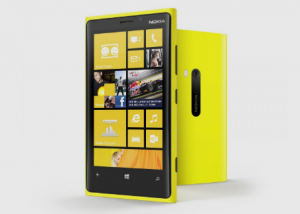
  • Nokia announces software updates for the Lumia 920, 820 and 620

    Finnish smartphone maker Nokia has announced new software updates for the company’s Lumia 920, Lumia 820 and Lumia 620 Windows Phone 8 devices, touting improved performance, stability and features as the main highlights.

    Nokia has revealed that the Lumia 920 and Lumia 820 will receive the “1232.5957.1308.00xx” update, which apart from the generic “further performance and stability improvements” includes enhanced adjustment and stability for the the automatic display brightness and display during calls, respectively.

    For the Lumia 620 Nokia has announced the “1030.6407.1308.00xx” update which, on top of the aforementioned benefits, includes enhanced touch operation and picture quality — “corrected camera exposure” for photos taken with flash in brightly-lit conditions — as well as stability improvements.

    Nokia has already started to roll-out the latest software update for new Lumia 920, Lumia 820 and Lumia 620 devices, with existing smartphones set to receive them at a “later” date.

  • Lil Wayne Hospitalized Over Seizures

    Last October, rap star Lil Wayne’s plane flight was diverted to an early landing after the artist reportedly began having “seizure-like” symptoms. A representative for the star later stated that Wayne had a severe migraine, but Wayne was reportedly taking seizure medication in November.

    This week, it appears that those same symptoms may have returned. TMZ is reporting that the rapper was hospitalized on Tuesday, March 12, after “what appeared to be multiple seizures.”

    The publication cited an unnamed source “close to the rapper” who stated Wayne did suffer from seizures after a music video shoot and was taken to Cedars-Siani hospital in Los Angeles. He was released on Wednesday morning and is reportedly “doing much better now.”

    Lil Wayne has said in the past that he expects to retire in five years to spend time with his children. He also announced last fall that Tha Carter V will be his last album.

  • Apple’s Low-Cost iPhone Reportedly Getting The Same 4-Inch Display As iPhone 5, ‘Super-Thin’ Plastic Case

    iphone-family

    The low-cost iPhone of fable got a little more material with some reports from KGI Securities analyst Ming-Chi Kuo. Before you balk at reports from an “analyst,” note that Kuo has been spot on a number of times in the past, including when he predicted the iPhone 4S release timeline and changes, the launch of the original white iPhone 4, and the iPad 2, among others. Kuo has discussed Apple’s 2013 roadmap in the past, and now he’s telling AppleInsider that a low-cost iPhone will have a 4-inch screen like the iPhone 5.

    Other details about the new device shared by Kuo include a “super-thin plastic casing mixed with glass fiber.” The hybrid material is designed to increase the case’s overall durability, while also saving weight and making for a thinner overall design. Kuo also adds that there will be multiple color options for the low-cost iPhone, along the lines of the recent iPod touch update from last fall.

    The new report from Kuo is designed to counter information from notoriously hit-or-miss source Digitimes released earlier in the week, which claimed a larger 5-inch display on the budget iPhone, with manufacturing shifting to suppliers other than Foxconn. Neither claim is true, according to Kuo’s information.

    Apple has been cautious about entering the low-cost market in the past, repeatedly saying that it won’t compromise device experience in order to hit a certain price target. But recently, the value of a low-cost iPhone in the Apple stable (which can be made available cheaply to pre-paid customers in markets like India where subsidies aren’t an option) has become apparent. Apple could add $11 billion to its annual revenue with a low-cost device, one analyst estimated this week, and it would help considerably with acquiring additional market share in markets where Android is currently having lots of success.

    Offering last year’s model as a cheaper option has been Apple’s strategy of choice in the past, but if it introduces a dedicated low-cost line, the advantages could be considerable. Based on these reports from Kuo and others, the company is looking to dramatically decrease physical material costs, which are relatively stable compared to the cost of processor and flash memory components, and tooling/factory setup, which decrease as a production process matures. That could result in big changes to the way Apple sells in prepaid and emerging markets, which is exactly what it needs to kickstart more explosive growth.

  • Bitrix24 launches free collaborative CRM with integrated project management

    Bitrix24 offers social intranet for enterprises and small to medium businesses, but with a twist — the firm’s cloud-based service is entirely free for organizations with 12 or fewer users and includes 5GB of online storage space and essential tools, such as CRM (Customer Relationship Management), project management, and instant messaging.

    We’ve covered the firm’s service previously, but Bitrix24 has just rolled out a new version of its CRM platform that comes with project management fully integrated. Tasks, calendars and other similar tools are now available from within the CRM module and documents can be stored inside the CRM, attached to entries, and shared with employees (with different rights levels controlling access).

    Explaining the update, Bitrix President Dmitry Valyanov said: “Some CRM vendors now offer integration with third party project management tools and vice-versa. CRM users are no longer satisfied with what’s essentially a database with client information — they want a CRM that allows them to plan, to collaborate with co-workers and to increase personal productivity. SalesForce, for example, has spent almost a billion dollars in the last two years in acquisitions, trying to make their CRM more collaborative. But Bitrix24 is the first vendor that offers free a CRM fully fused with project management”.

    Speaking of the Russian firm’s rapid growth (it only launched last May) Valyanov added: “The decision to make Bitrix24 absolutely free for companies with 12 employees or less had an enormous impact on service popularity. In several Eastern European markets we are now the second most popular cloud CRM, despite being less than one year old. I am confident that this release will boost our visibility in North America as well”.

    Bitrix24 comes with free desktop apps for Windows and Mac OS X, and there are native apps available for iOS and Android devices.

    Photo Credit: T. L. Furrer/Shutterstock

  • Mark Zuckerberg, Marissa Mayer, and Other Tech Leaders Push for Immigration Reform

    Tech leaders have crafted a joint letter to President Obama and the nation’s top lawmakers, asking that Washington work together to craft some sort of comprehensive immigration reform by the end of this year.

    The letter was signed by over 100 Presidents, CEOs, partners, and chairmen of both major and minor tech companies. Some of the notable names include Facebook CEO Mark Zuckerberg, Google Chairman Eric Schmidt, HP CEO Meg Whitman, and Yahoo CEO Marissa Mayer.

    It was addressed to President Obama, Speaker of the House John Boehner, House Minority Leader Nancy Pelosi, Senate Majority Leader Harry Reid and Senate Minority Leader Mitch McConnell.

    Here’s a bit from the letter:

    As you know, the United States has a long history of welcoming talented, hard-working people to ourshores. Immigrant entrepreneurs have gone on to found thousands of companies with household nameslike eBay, Google, PayPal and Yahoo! to name just a few. These companies provide jobs, drive economicgrowth and generate tax revenue at all levels of government.

    Yet because our current immigration system is outdated and inefficient, many high-skilled immigrantswho want to stay in America are forced to leave because they are unable to obtain permanent visas. Somedo not bother to come in the first place. This is often due to visa shortages, long waits for green cards,and lack of mobility. We believe that numerical levels and categories for high-skilled nonimmigrant andimmigrant visas should be responsive to market needs and, where appropriate, include mechanisms tofluctuate based on objective standards. In addition, spouses and children should not be counted againstthe cap of high-skilled immigrant visas. There should not be a marriage or family penalty.

    They go on to say that bipartisan legislation like the Immigration Innovation Act of 2013 and the Startup Visa Act and startup Act 3.0 are good steps to “encouraging innovation here in the U.S. by allowing American companies to have access to the talented workers they need while simultaneously investing in STEM education here in the U.S.”

    Tech companies have a history of lobbying congress to free up green cards and temporary worker visa for high-skilled workers. This new push is a continuation of that message – that we need to keep the best and brightest inside our borders.

    Tech CEO letter by JMartinezTheHill

    [via The Hill]

  • Asetek Liquid Cooling To Support EU Initiative

    A server tray using Asetek's Rack CDU Liquid Cooling system, which was announced this week. The piping system connects to a cooling distribution unit. (Source: Asetek)

    A server tray using Asetek’s Rack CDU Liquid Cooling system. The piping system connects to a cooling distribution unit. (Source: Asetek)

    Previously reserved for extreme densities and supercomputers, liquid cooling continues to make strides in the data center. Asetek announced that its data center liquid cooling solutions are a part of the European Commission roadmap for moving to a low-carbon economy.  The solutions will support a new initiative by the European Commission to reduce EU greenhouse gas emissions by 40 percent by 2030.

    “The new initiative to reduce EU greenhouse gasses validates Asetek’s own goals of reducing data center energy costs and emissions.  Data centers consume today 2% of global electricity.  Our liquid cooling solutions will play a key role in reaching energy goals around the globe as data centers concentrate more and more on efficiency,” said David Garcia, VP & GM of Asetek’s Data Center Business Unit.

    Liquid cooling has been used in U.S. government data centers that house supercomputers, and has made inroads towards enabling  rack servers and blade servers as well.  Late last year the U.S. Department of Defense announced that it will convert one of its data centers to use a liquid cooling system from Asetek.

    The primary product from Asetek in use is its RackCDU — a hot water, direct-to-chip, data center liquid cooling system. It removes heat from CPUs, GPUs, memory modules and other hot spots within servers and takes it all the way out of the data center using liquid, where it can be cooled for free using outside ambient air, or recycled for building heat or hot-water.

    Denmark-based Asetek recently filed for an Initial Public Offering on the Oslo Stock Exchange. Offering between 3.6 and 4.35 million new shares, the company hopes to raise approximately $25 million. The company’s RackCDU was also selected by Norway’s University of Tromsø for a pilot install of the liquid cooling rack in the university’s High Performance Computing facility. Asetek will reduce energy consumption of the data center and enable waste heat from servers to heat the university campus.

  • Even More Raspberry Pi Now Made In The U.K. As Largest Distributor Of $35 Microcomputer Shifts All Production To Wales

    raspberry-pi-logo

    The Raspberry Pi affordable microcomputer is now almost entirely made in the U.K., after Premier Farnell/element 14 — the largest of the Pi Foundation‘s distributors — announced it has shifted all its production to Sony’s Pencoed factory in Wales.

    The company inked a multi-million pound contract with Sony to manufacture Pis last fall but also had two locations in China producing Pis — meaning that around 70% of its Pi production was coming out of the U.K. at the turn of the year. Today, after a “period of transition”, Premier Farnell said the Pencoed factory now accounts for 100% of its Pi output.

    “The business stated back in September its intention to bring production of the computer back to its home, the UK, and now after a period of transition we are delighted to announce that all production is in Wales,” said Claire Doyle, Global Head of Raspberry Pi at element14, in a statement.

    “We are constantly amazed by the demand for the Raspberry Pi across the world and have done everything we can to ensure we keep our supply chain stocked,” she added. “We believe that a UK creation should be produced in its home country and since partnering with Sony UK Tec we have been delighted with the quality and the commitment they have shown in developing the product.”

    There is still some non-U.K. Raspberry Pi production, as the Pi Foundation has another distributor, but Premier Farnell/element 14 is apparently the larger of the two. (The Foundation has previously said it does not disclose exactly how much of the Pi pie each of its licensees accounts for.)

    Since the Pi’s launch on 29 February last year, Premier Farnell said it has distributed more than 500,000 Raspberry Pi’s. Back in January, it estimated more than a million Pis had been sold – a considerable bump on the Foundation’s original projections of a few thousand units.

    The Foundation has previously produced this short video showing some of the manufacturing processes taking place at the Pencoed Pi factory:


  • Google Panda Update Is Rolling Out [Report]

    As previously reported, Google’s Matt Cutts revealed at SMX this week that Google would be pushing a refresh to its famous (or perhaps infamous) Panda update on either Friday or Monday. Friday has arrived, and it appears that the refresh has arrived with it.

    Barry Schwartz is pointing to some forum chatter about webmasters already seeing the effects of the refresh, indicating that it has likely begun to roll out. As others have pointed out, it’s not uncommon for Google to do this on a Friday. Schwartz says signs point to the roll out starting on Thursday afternoon and into today.

    This isn’t just your typical run of the mill Panda refresh, however. This could very well be the last time Google manually pushes one, and has an announcement for it. Panda is becoming more of a “rolling” update. Schwartz quotes Cutts from SMX:

    Rather than having some huge change that happens on a given day. You are more likely in the future to see Panda deployed gradually as we rebuild the index. So you are less likely to see these large scale sorts of changes.

    It remains to be seen just what kind of an impact this will truly have on sites, but it’s not likely to make things much easier.

    Panda recently turned two years old, and opinions of Google’s search results since its implementation vary.

    Image: Tekken 5 (via YouTube)

  • How Unbound Concepts crunches readability, or how big data could help improve literacy

    It’s easy enough to understand why Curious George books are first grade fare and why Camus is often saved for the 12th grade. But what about all the books in between?

    For the most part, teachers and literacy experts are the ones charged with considering sentence complexity, word difficulty, themes and other characteristics to judge the readability of text. But by turning over much of that analysis to algorithms, startup Unbound Concepts believes it can not only assess more text with more granularity, it can individualize education for K-12 students and potentially even power digital content that adapts to readers, whether they’re in the K-12 classroom or beyond.

    “The idea here is that Google has the biggest corpus of language in the world and they can do things like tell you the difference between pebbles and rocks and Little Rock and Arkansas and the Arc of the Covenant,” said Benjamin Bengfort, the company’s CTO. “We want to be able to do the same thing but instead of our corpus being the web, we want it to be formal literature, particularly K-12 books [and then] medical texts and legal texts.”

    In the short term, the company said, it wants to use its corpus to be able to help teachers identify the best books for each of their students. And that’s an especially big opportunity now given the rise of the Common Core standards in most states and teachers’ increasing need to find content that meets those standards. But, over time, Unbound Concepts has even bigger ambitions for its database of leveled books: as an engine for adaptive digital reading platforms that provide content best matched to student mastery.

    Quantitative content assessments are insufficient

    Launched in 2011, Unbound Concepts is part of New York ed tech accelerator Socratic Labs’ inaugural class of startups. Katie Palencsar, the company’s co-founder and CEO, said the idea for the company grew out of her experiences in education, both as a classroom teacher and school facilitator.

    Trying to find the best books for their students, she said she and other teachers would scramble to ask peers for their opinions, but matching content with the needs of each student can be time-consuming and cumbersome.

    Teachers aren’t left entirely to their own devices; for example, the Lexile Framework for Reading, a widely used educational tool, helps teachers identify appropriate reading content. But it’s based on qualitative factors, like sentence length and syllables per word, instead of the content itself.

    “It’s a difficulty in education,” Palencsar said. “If you’re thinking of readers and what their needs are, you need to consider the semantics and the meaning and the skills.”

    Taking a Netflix approach to predicting reading levels

    The company’s first product, an iOS app called Bookleveler, gives teachers a platform for crowd-sourcing leveling recommendations. From the app, they can scan book ISBNs to see how they ranked on an A-Z reading scale and submit their own reading levels to help instructors. But, the company said, the point of the app was also to amass training data that could lay the groundwork for a more sophisticated analysis engine that now powers an API for predicting book levels as well as an online recommendation tool for educators and publishers. So far, Bookleveler has been downloaded more than 3,500 times and has generated about 35,000 data points — so the startup has a ways to go before its corpus approaches anywhere near Google-sized. But that’s just since the app was launched in October and the company said traction is rising steadily.

    Much like the Netflix Prize challenged engineers to use user ratings to create algorithms for predicting movie ratings, Bengfort said Unbound Concepts uses machine learning and natural language processing to create its Meridien API that predicts levels for K-12 books.  As opposed to traditional quantitative analysis tools (like the Lexile framework) that tend to include less than a dozen factors, he said, Meridien considers 140 features. It analyzes content along quantitative dimensions (sentence depth and breadth, etc.) but also along other vectors, including themes and topics.

    With Unbound Concepts’ tools, for example, a teacher could do a search for a book appropriate for remedial first graders, that features dogs, includes examples of alliteration, involves the theme of camaraderie and hits the right emotional notes. Down the road, Unbound Concepts believes it has a shot at using its database and algorithms to power adaptive learning platforms that assess students’ mastery as they read and serve up the most appropriate content. On that front, the company will have plenty of competition, from publishing companies like McGraw-Hill and Pearson to startups like Knewton. And, along with the quickly crowding field, it will have to prove to educators that it’s more than hype.

    But for now, the company, which has has raised an undisclosed amount of funding and is currently raising more, is focused on the immediate problem of helping teachers get the best content to their students.  It’s getting ready to pitch its technology to publishers, who could license the software to better label books and it could also license that technology directly to schools.

    “The quantitative metrics aren’t going to cut it,” said Bengfort. “We need individualized levels… we want our product to be a research scientist sitting in front of a particular student saying this is a good book for you.”

    Related research and analysis from GigaOM Pro:
    Subscriber content. Sign up for a free trial.

  • Mark Zuckerberg Takes Top Spot in Annual CEO Confidence Survey

    Congratulations, Mark Zuckerberg. Your employees at Facebook approve of the way you’re running the company at a higher rate than employees at any other company in the country.

    Glassdoor has just put out their annual Highest Rated CEOs list, and Facebook CEO Mark Zuckerberg tops it with a 99% approval rating.

    Glassdoor’s annual list comes from voluntary survey participation from employees of each company that visit the site. According to Glassdoor, no CEO could even make the list unless they had at least 100 ratings over the past year. Apparently, Glassdoor logged over 500,000 different ratings from employees in 2012.

    The survey is simple – just one question: “Do you approve or disapprove of the way your CEO is leading the company?”

    Rounding out the top five are Bill McDermott & Jim Hagemann Snabe of SAP, who also garnered a 99% approval rating. Next is Dominic Barton of McKinsey & Company (97%), followed by Jim Turley of Ernst & Young (96%) and John Schlifske of Northwestern Mutual (96%).

    Other notable names from tech that made the list include Google’s Larry Page, who came in 11th with a 95% approval rating. Amazon’s Jeff Bezos took 16th with a 93% rating and Dell’s Michael Dell came in 49th with an 81% rating.

    Last year’s winner, Apple CEO Tim Cook, fell to #18. Last year, he had a 97% approval rating, compared to this year’s 93%.

  • Six Killed in Bar Shooting in Cancun

    Cancun is known as as a premiere tourist destination and an island of respite from many of the problems that plague the rest of Mexico. This week, however, a bit of the country’s drug violence hit the seaside resort town.

    Reuters is reporting that two gunman entered a bar on the outskirts of Cancun on March 14, opening fire and killing six people. The gunmen were reported to be carrying a handgun and a “machine gun,” according to Reuters. Five other people were also wounded in the shooting.

    Cancun is located in souteastern Mexico, and is known primarily for being a tourist destination. The city’s beaches, its blue Caribbean water, and its constantly tropical weather bring tourists from all over the world. In addition to its beachside attractions, Cancun is located near many Maya ruins such as Chichen Itza and the city itself even contains maya ruins.

    Outside of Cancun, the Mexican government has been fighting a drug war against cartels within the country. Estimates show that drug war murders in Mexico have increased significantly in the past decade. The group Reforma Ejecutometro estimating over 12,000 drug war-related murders took place in 2011.

    (Image via Safa in la/Wikimedia Commons)

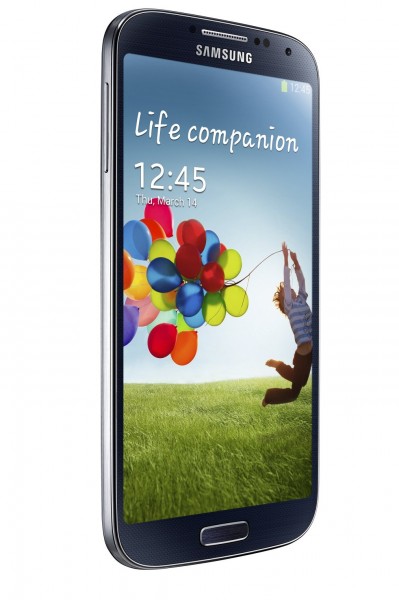
  • Samsung Officially Unveils The Galaxy S 4

    After months of speculation and rumors, Samsung finally unveiled its latest flagship mobile device. The company says that the Galaxy S 4 was “developed to redefine the way we live and to maximize our fulfillment of life.” It may not be that revolutionary, but the new Galaxy S is certainly a beauty.

    The most apparent change to the Galaxy S 4 is its new larger display. The device sports a 5-inch Full HD Super AMOLED display powered by a 1.6GHz Exynos Octa-core CPU. As for other specs, it sports 2GB of RAM, a 13MP back camera, and a 2MP front camera. The device will also ship with the latest version of Android – version 2.2.2.

    “With the GALAXY S 4, Samsung is again going to enhance the way we live,” said JK Shin, President and Head of IT & Mobile Communications Division at Samsung. “All the innovative features of GALAXY S 4 were developed based on the insights and needs we found from our consumers all around the world. Following the successful GALAXY S series, this phone is yet another great proof point of people-inspired innovation. At Samsung we’ll never stop pursuing innovation conceived by people, so we can inspire them in return.”

    As for specific software features, the Galaxy S 4 has quite a few that should make the device stand out from the crowd. The first is called “Air View,” a new feature that “allows users to hover with their fingers to preview the content of an email, S Planner, image gallery or video without having to open it.”

    The new “Smart Pause” and “Smart Scroll” use the front camera to follow your face and eye movement to interact with the screen. “Smart Pause” uses this feature to pause a video whenever it detects you as looking away from the screen and automatically starting it up again upon looking at it. The “Smart Scroll” will scroll browser and email pages up and down by tracking where your eyes are looking.

    “WatchON” turns the Galaxy S 4 into an IR remote for TVs, set-top box, DVD players and compatible air conditioners.

    The most innovative feature by far, however, is that users can interact with the screen while wearing gloves. You had to buy special gloves before for this, but now it seems that any thin pair of gloves will work. Compatible glove thickness has yet to be revealed, but I doubt it will work with heavy duty work gloves. Your casual winter gloves will probably do the trick though.

    As expected, there is no official release date or price yet. Samsung says that we can expect to see a global launch in Q2 though. It will be available at every major carrier in the U.S. and even some minor rising stars like US Cellular and Cricket.

  • RiverVest Announces 14.5% IRR For Fund II

    St. Louis-based RiverVest Venture Partners announced Friday that its second fund had delivered a 14.5% per annum net internal rate of return from inception in 2006 through the end of last year, after fees and expenses. The venture firm focuses on early-stage life science companies.

    PRESS RELEASE
    RiverVest Venture Partners announced today that its Fund II has delivered a return of more than double that of a respected benchmark that delineates top-performing venture capital funds.

    Focusing exclusively on life science innovations, RiverVest delivered to its Fund II limited partners a 14.5% per annum net internal rate of return (IRR) from inception in 2006 through the end of last year, after fees and expenses. The median net IRR for all reporting VC funds begun the same year, including IT funds, was 4.54%, according to Cambridge Associates LLC, a leading investment advisory firm.

    According to the most recent Cambridge report, the net IRR required to be in the top quartile of healthcare VC funds launched in 2006 is 8.08% per annum – a return that RiverVest almost doubled through the end of 2012.

    “RiverVest continues to outperform even some of the top venture capital firms in the asset class and has established itself as a leader in the healthcare space,” says Boston-based investor John F. Brooke, who manages the Vectis Healthcare & Life Sciences Fund, which is an investor in RiverVest Venture Fund II, L.P.

    Contributing to its exceptional return on investment was the successful sale in 2011 of four RiverVest portfolio companies (three of which were in Fund II) for more than $1 billion for which investors received payouts a year ago. But the distributions continue, with $14 million in additional proceeds received in 2012 both from the sale of Cameron Health, another Fund II portfolio company, and milestone payments relating to Cameron and the 2011 exit transactions.

    “We’re very selective about our early-stage investments,” said Jay W. Schmelter, RiverVest managing director and co-founder. “Then we do everything we can to help them achieve a successful exit in less than five years.”

    About RiverVest Venture Partners®
    RiverVest Venture Partners is a venture capital firm focused on identifying and shaping early-stage life science companies throughout the U.S. to create significant shareholder value. With hands-on, high-level expertise and financial resources, RiverVest supports entrepreneurs by helping them achieve near-term objectives that position their companies for exit.

    Since its inception in September 2000, RiverVest has raised two investment funds, with total committed capital of $165 million, and supported more than 25 innovative life science companies. For more information, please visit http://www.rivervest.com.

    The post RiverVest Announces 14.5% IRR For Fund II appeared first on peHUB.

  • Samsung partners with Blurb to let users order physical photo albums from the Galaxy S 4

    Samsung is partnering with self-publishing company Blurb to let users order physical photo albums directly from their Galaxy S 4 phones.

    The Story Album app comes pre-installed on the Galaxy S 4, Samsung’s new smartphone that was unveiled Thursday in New York. The app auto-generates a layout from a user’s smartphone photos. The user can then add captions and dates, preview the album and order it directly from his or her phone.

    “As our lives become increasingly digital, people are genuinely appreciating the value of physical artifacts,” Blurb CEO Eileen Gittins said in a statement. “By combining the remarkable image quality that the Galaxy S 4 offers with the easy production of books and magazines that Blurb brings, everyone gets the best of digital and analog.”

    Blurb already lets users create physical photo albums from Instagram and Facebook photos.

    Related research and analysis from GigaOM Pro:
    Subscriber content. Sign up for a free trial.

  • Why I’m not impressed by the new Samsung Galaxy S4

    When I was expecting an exotic dish that would blow my mind just by looking at it, Samsung yesterday served up a plain, simple and frankly overdone spaghetti Bolognese. The new Galaxy S4 might just be the best Android smartphone that Samsung has ever made, but it’s not as “awesome” or “innovative” nor filled with “innovation” as the company would lead us to believe. It’s a wife with some nip and tuck instead of a hot supermodel.

    Instead of being smitten by the Galaxy S4 I was left with a bitter taste in my mouth: Haven’t I seen some of those features already in older smartphones? Admittedly, there are some impressive ones out there — like Dual Camera and Dual Video Call — but generally speaking Samsung appears to have focused more on delivering a huge number of features rather than focusing on fewer truly innovative ones.

    “Borrowed” Features?

    I wouldn’t call some of the features a xerox copy of currently available options, but there are a few in particular that I think (well, I know) that I have seen before.

    The first relates to the touchscreen, which can now be operated using gloves — unless you have thick leather ones like me, which makes taking out the phone rather difficult. It’s a feature aimed at markets where it’s freezing cold. So where have I seen it before?

    Well, the glove-friendly touchscreen is already available on the Nokia Lumia 920 which was unveiled in late-October last year. Admittedly the Lumia 920 does not have a 5.0-inch display, but it’s the same idea nonetheless.

    What about Knox, Samsung’s program for BYOD? In late-January, Canadian smartphone maker BlackBerry unveiled the BlackBerry 10 operating system which comes with Balance, a feature which enables the separation between work and personal content on the company’s Z10 and Q10 smartphones. What does Knox do? By and large, it separates work and personal content.

    S Voice can now also read messages aloud, a feature that is pretty useful when driving like Samsung says or if you want other people to hear your embarrassing attempts at sexting. Guess what? Even the agricultural voice assistant in Windows Phone 8 can read messages.

    Eraser for removing other people from pics? BlackBerry 10 Camera app does it differently by allowing you to choose a difference face, but is similar nonetheless. Smart Switch for moving between devices? Microsoft’s Xbox SmartGlass gets the same job done.

    The Galaxy S III Called. It Wants its Design Back

    In some ways the Galaxy S4 is an evolution from the Galaxy S III just as the iPhone 4S is an evolution from the iPhone 4. Samsung did more than slightly tweak the design, making the new smartphone narrower, thinner and lighter (if you can call a few tenths of millimeter and a couple of grams a big difference) while also increasing the size of the display to 5.0-inches from 4.8-inches. It’s now got a 1920 by 1080 resolution compared to the “old-fashioned” 1280 by 720 (which still works great, but hey innovation calls for bigger).

    The Galaxy S4 comes with rounded corners (too rounded I should say), plastic casing with chintzy looks, wide home button and the still not elegant design. And where have I seen that? That’s right, on the Galaxy S III.

    I’m not suggesting that Samsung should have entirely changed the design just for the sake of it, but how about a more textured finish like HTC does on its smartphone or less rounded corners or, God forbid, a capacitive home button? The Devil is in the details, and I can only imagine he was out the day when Samsung designed the Galaxy S4.

    I will not even mention that on the Galaxy S4, Android 4.2 Jelly Bean looks the same as Android 4.1 Jelly Bean on the Galaxy S III bar a couple of changes, like quick settings. I still believe that Touch Wiz could use some sprucing up in the design department, especially almost one year after the previous iteration.

    What Innovation?

    My colleague  and I had briefly discussed the Galaxy S4 following the launch event, and after posting my first thoughts on Google+. He finds the smartphone impressive from a software and services standpoint, but is it really? Don’t get me wrong, spaghetti Bolognese is fine but not mindblowing.

    S Health for tracking calorie usage is a gimmick, but a gimmick that is already in other apps on Google Play. Group Play, which turns Galaxy S4 owners into a surround sound system, is nice but only if every friend you or I have has a Galaxy S4 and feels like the smartphone has better speakers than a bar, pub or club. Adapt Display can adjust screen settings depending on the scenario, sort of like cheating to make stuff look better when they don’t.

    While bigger is better in this case, a large 2,600mAh battery coupled with a 5.0-inch Super AMOLED display and a power-hungry Qualcomm Snapdragon 600 or an Exynos processor is not there to break any battery life records. Samsung should be commended for slapping in a larger battery (compared to the one in the Galaxy S III), but why not make it a 3,000mAh unit and keep the same thickness as on the Galaxy S III? I’m sure plenty more people could have appreciated that instead, myself included.

    It’s worth noting here that even though Samsung will market the Galaxy S4 with a quad-core Qualcomm processor or a quad core + quad core Exynos processor, there’s no choosing which one will arrive at your local carrier. I’m also not swayed by the Octa-core moniker, because it’s not in fact an 8-core processor in the traditional point of view. Only four cores work at the same time, while the remaining four are cut down — it’s a 4 + 4 design and a misleading one for users who don’t know any better than “eight cores are better than four”.

    I’ll tell you this, though — the Galaxy S4 will sell like crazy. But would I buy one? No.

  • A Preview of the 2013 Economic Report of the President

    This year's Economic Report of the President describes the progress we have made recovering from the worst economic crisis since the Great Depression. After years of grueling recession, our businesses have created over six million new jobs. As a nation, we now buy more American cars than we have in 5 years, and less foreign oil than we have in 20 years. Our housing market is healing, and homeowners and consumers enjoy stronger protections than ever before. But there are still millions of Americans whose hard work and dedication have not yet been rewarded. Our economy is adding jobs, but too many of our fellow citizens still can't find fulltime employment. Corporate profits have reached all-time highs, but for more than a decade, wages and incomes for working Americans have barely budged. As President Obama has said, "A growing economy that creates good, middle-class jobs–that must be the North Star that guides our efforts."

    Although economics has long been called "the dismal science," it is more appropriately viewed as a "hopeful science." The right mix of economic policies and leadership can help a country to recover from a deep recession and point to the investments and reforms that will build a stronger, more stable, and more prosperous economy that works for the middle class. Conversely, government dysfunction or misguided fiscal policy can cause self-inflicted wounds to the economy. This year's Economic Report of the President highlights the progress that has been made in recovering from the deepest recession since the Great Depression, together with the policies that the Obama Administration is advancing to address the fundamental imbalances and threats that have built up for decades and that have created severe stress on the middle class and those striving to get into the middle class.

    read more

  • How WordPress Thrives with a 100% Remote Workforce

    WordPress.com is the 15th most trafficked website in the world. It is run by Automattic Inc, a company that is 100% distributed. That means everyone works from home, or more precisely, from wherever in the world they wish. They’ve been amazingly successful with this strategy, but I was skeptical about how a distributed company really works. Being curious, I decided to do the obvious: Work there for a year as a team leader and find out for myself.

    Here’s what I learned:

    Creativity thrives online. Recently James Surowicki at The New Yorker claimed remote work inhibits creativity. This is absurd in the age of the web, where thousands work on brilliant projects, collaborating with people around the world. It’s true that in a distributed company you can’t just walk down the hall to find serendipity, but chat rooms, social media, and blogs provide many chance encounters and serendipitous ideas. Dozens of times a day, WordPress.com releases new features and updates, and they collaborate intensely around them on internal blogs and in chat rooms. Remote work certainly changes the nature of interaction, but to assume this inhibits creativity is ridiculous.

    Not all remote work is the same. To evaluate remote work as a singular idea is a paper tiger. There are many policies to choose from and those choices matter. Managers of remote workers at older companies need to make adjustments to enable remote workers to thrive, especially during a trial period when everyone is experimenting and learning what will work for them. But to try remote work without making any allowances or adjustments is foolish. Any progressive idea can be made to fail if the people in charge don’t support it.

    Culture is critical. Automattic has many policies designed to empower employees and remote work is just one of them. They believe individual workers know best how to be productive and that management’s job is to provide choices and get out of the way. If employees are self-motivated and empowered, remote work can accelerate productivity. However in autocratic or bureaucratic organizations the freedom of remote work runs against the culture. Of course remote workers will be less productive if they’re in environments that depend on centralized, rule-oriented, or committee heavy processes. But even then it can work if managers care more about results than pretense.

    It should be up to the employee. Workplaces often treat employees like children. Any wise manager evaluates employees on their results, not superficially, and physical location might just be one of them. If a worker proves they can perform as well, or better, from home there’s little reason to complain. Even at a bureaucratic company, a motivated worker may be able to find ways to do their job productively in a remote environment. Why not let them try? If they’re right everyone wins. The mistake Yahoo’s Marissa Mayer made was to focus on the means, rather than the ends: The problem she’s facing is abuse of remote work, not remote work itself. Automattic has found they can hire better people, since they do not need to relocate — an advantage more than worth the challenges, if any, that enabling remote work has cost them.

    Tools make a difference. Automattic employees rarely use email. Instead they use internal blogs, chat rooms, and Skype. A special kind of blog, called a P2, solves many of the annoyances of email, and simultaneously facilitates remote work. Conversations on P2s can be easily linked to via URL, are searchable and are visible to all, making it easy to catch up on what you’ve missed. At Automattic, even when employees meet in person they use the same tools as when working apart. This helps ensure no one feels left out or misses conversations, regardless of their time zone.

    There are many 100% distributed companies. Dozens of real business thrive with remote workers. Before abandoning the idea managers should study how so many successful companies not only allow remote workers, but also make it an advantage.

  • Junk-rated EM sovereigns — so last year

    We recently discussed the kind of threat rising U.S. Treasury yields pose to  emerging debt.  JP Morgan is now advising investors to cut holdings of sovereign dollar bonds to marketweight from overweight. And it suggests doing that by reducing exposure to the riskiest (and usually the highest-yielding) emerging markets, listed on its NEXGEM sub-index.

    These bonds, with high yields and low credit ratings, basked in the glow of investor appetite last year when U.S. and German bonds were yielding next to zero and the  euro zone looked in danger of falling apart. Emerging debt issuance last year topped $300 billion while junk credits such as Zambia and Guatemala saw massive demand for their debut bond sales.   (Sales of junk-rated corporate bonds likewise boomed in the yield-seeking frenzy).

    But with frontier markets now accounting for more than 75 percent of net new sovereign issuance, some jitters could be growing. Even Angola, which issued a private placement last year, is now in JPM’s  EMBI Global index , though analysts think a recent private placement from Tanzania may not make it. Crucially, returns on emerging dollar bonds are among the worst of major asset classes this year at minus 2 percent (compare that to 9 percent gains on the S&P500)

    Risk isn’t all bad though – JPM suggests staying overweight emerging market corporates, even though in this market too, junk-rated issuers have been increasing their share.  Returns on the CEMBI (corporate emerging bond index) are just above flat for the year but JPM reckons that EM corporate bonds’  ”relative value remains attractive against U.S. credit”.

    And among those frontier sovereign bonds, JP Morgan advises holding on to Angola and Sri Lanka but to cut Gabon, Iraq and Mongolia’s development bank.  It also suggests an overweight on Venezuela but to sell Ukraine – struggling to agree an IMF deal  and  Argentina, where the risk of default remains.