Continue here…
Blog
-
Import Safety and Global Trade
I've always thought that, in theory, import safety and global trade rules shouldn't come into conflict, and that many of the suggestions to the effect that WTO rules restrict what governments can do are exaggerated. On the other hand, in practice, things can be more complicated, and maybe there is something to at least some of the concerns.
Perhaps even more difficult than compatibility with trade rules, though, is implementing safety regulations that are effective in a globalized world. Here's a new book that addresses these issues:
Import Safety: Regulatory Governance in the Global Economy (Cary Coglianese, Adam Finkel, and David Zaring, editors)
On World Food Day in October 2008, former president Bill Clinton finally accepted decade-old criticism directed at his administration's pursuit of free-trade deals with little regard for food safety, child labor, or workers' rights. "We all blew it, including me when I was president. We blew it. We were wrong to believe that food was like some other product in international trade." Clinton's public admission came at a time when consumers in the United States were hearing unsettling stories about contaminated food, toys, and medical products from China, and the first real calls were being made for more regulation of imported products. Import Safety comes at a moment when public interest is engaged with the subject and the government is receptive to the idea of consumer protections that were not instituted when many of the Clinton era's free-trade pacts were drafted.
Written by leading scholars and analysts, the chapters in Import Safety provide background and policy guidance on improving consumer safety in imported food, pharmaceuticals, medical devices, and toys and other products aimed at children. Together, they consider whether policymakers should approach import safety issues through better funding of traditional interventions–such as regulatory oversight and product liability–or whether this problem poses a different kind of governance challenge, requiring wholly new methods.
From a Q & A with one of the editors:
Q: In the U.S., we’re accustomed to dealing with safety issues in domestic products, whether through regulation, recalls, or litigation. But you suggest that the systems we’ve created to address domestic product safety issues are inadequate to solve the safety challenges that result from globalization. Why is that?
A: Although consumers can be harmed just as much by domestic products as by imports, the import safety problem raises a variety of jurisdiction, legal, cultural, political and practical issues that are not present with domestically produced products and their regulation. In the past, most consumer products have come from manufacturers based in the same country and jurisdiction as the consumers who are buying those products and might ultimately be harmed by them. With globalization, the regulatory challenge is much more difficult. We can’t rely on recalls, since that only captures a small portion of safety problems, and of course only after some damage may already have occurred. Given the sheer volume of imported goods, we can’t rely on inspections, since regulators can’t inspect even a small portion of imported products. And we can’t rely on private litigation, in part because the courts’ authority can’t always reach manufacturers abroad. In many cases, just identifying the producers of ingredients and products in other countries poses daunting challenges.
-
Analysis: iPhone’s touchscreen slightly better than Droid, Nexus One and Droid Eris

To be honest, I don’t really care which is the better smartphone (or super-duper phone): the iPhone 3GS, the Motorola Droid, HTC’s Droid Eris, Google’s Nexus One, Nokia’s N900 or the Palm Pre.
It’s just great to witness this seemingly never-ending advancements in mobile technology, both on a hardware and software level, and to see increased competition drive innovation at such rapid pace. Just compare the market today to five years ago, and you can’t help but be amazed by how far we’ve come – I still remember my epic struggles to get my previous phone (HTC S710 with Windows Mobile) to do half of what I really wanted it to.
In short: if all phone manufacturers keep on pumping out better phones, I’m a happy camper (for the record: I’m still very pleased with my iPhone 3GS as my primary device).
But comparisons will be comparisons, and MOTO Development Group this morning announced the results of its DIY touchscreen analysis, based on some touchy testing of the capacitive screens of the Nexus One, the iPhone, the Motorola Droid and HTC’s Droid Eris.
-
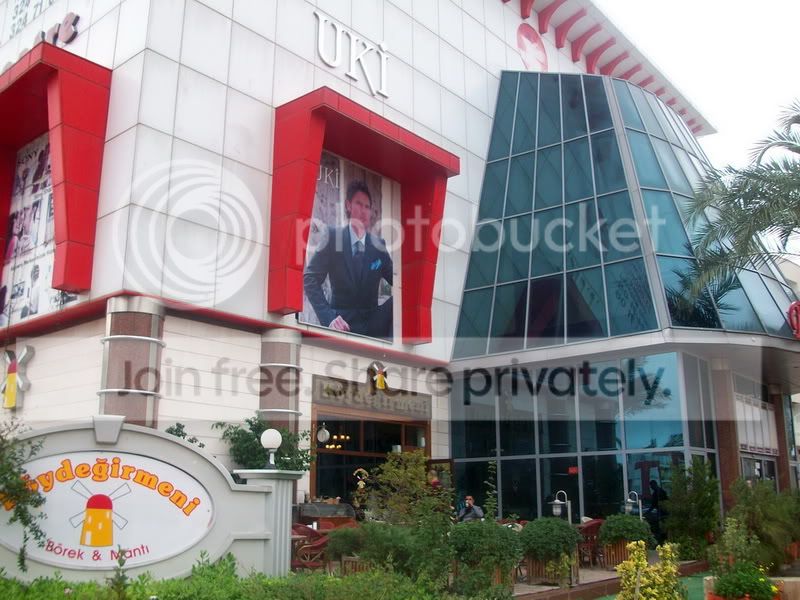
Shooting the streets of Antalya – Turkey

District: Fener

























-
PS3 Weekend Warrior: 3D gaming, console Dissidia, and Heavy Rain’s hazy launch date
Talk of 3D gaming and PSN expansion lit up our PS3 blog this week thanks to the Consumer Electronics Show in Las Vegas. We also got word on Heavy Rain’s US release, although there was a bit
-
Dakar 2010: llegamos a la 7ª etapa con Sainz lider

En nuestro resumen del Dakar 2010, que podeis seguirlo etapa a etapa en Recta de Meta y Plus Moto, llegamos ya a la séptima etapa y jornada de descanso en el Dakar 2010. De momento Carlos Sainz sigue lider del Dakar 2010 capitaneando del trio de Volkswagen, puesto que al piloto español lo sigue el qatarí Al-Attiyah (a 11:03 minutos) y en tercera posición Miller (a 22:06 de Sainz).
Además en lo que llevamos de Dakar 2010 ya han ocurrido varios accidentes graves, el primero de ellos la muerte de una aficionada que fue atropellada porque según parece se encontraba fuera de la zona de seguridad y por otro lado el grave accidente que sufrió el piloto italiano de TKM, Luca Manca. Alrededor del kilómetro 10 de sexta etapa, Manca sufrió una grave caída por la que tuvo que ser trasladado en helicóptero hasta el hospital de Del Cobre Calama.
Hoy es día de descanso en el Dakar 2010, pero mañana los pilotos regresarán al crudo desierto en la octava etapa del Dakar 2010 que discurrirá entre la ciudad de Antofagasta y Copiapo, contando en esta etapa con 472 km de especial en un terreno pedregoso, al comienzo de la especial y zona de dunas cada vez más numerosas cuando se va llegando a Copiapo.Como siempre podeis seguir el resumen de cada etapa en Recta de Meta y Plus Moto.

Vía | Dakar
-
Schwarzenegger Makes Emergency Appeal To White House For Bailout Of California
The nascent economic recovery isn’t enough to prevent a wreck at our own little Greece-on-the-Pacific, AKA California.
Governor Arnold Schwarzenegger is now begging The White House to use its unlimited power of money creation to backstop the state.
WSJ:
Mr. Schwarzenegger’s proposed $82.9 billion general-fund budget for the 2010-11 fiscal year would close a $19.9 billion gap over 18 months. In addition to the federal aid, he called for $8.5 billion in cuts and $4.5 billion in alternative funding to balance the budget.
“It’s time to enact long-term reforms that will change the way the most populous state and the federal government work together,” Mr. Schwarzenegger said. He and state legislative leaders plan to visit Washington to lobby for bailout money. White House budget officials weren’t available for comment on the governor’s request.
Mr. Schwarzenegger said that without the federal aid, he would propose cutting $4.6 billion from state assistance programs and raise another $2.4 billion, largely by extending the suspension of tax breaks.
That California sends more tax dollars to Washington than it receives has been known for years. In fact, most populous, economically dynamic states are in the same boat. It’s the more rural, Conservative states that are the “welfare Queens” of America.
We doubt this will change anytime soon.
Meanwhile, Schwarzenegger has withdrawn his support for Obama’s healthcare reform plan, though he doesn’t have too much influence on the matter. It’s just a funny stance to take when you’re begging for dough.
Join the conversation about this story »
See Also:
- David Kotok: Look At All The Similarities Between California And Greece
- Gartman: Illinois Is The New California
- California, You Better Pay Attention To Dubai
-
Magna’s NAIAS Sweet Revenge
 Following what may very well be the most exciting and, at the same time painful year in its existence, parts supplier and manufacturer Magna will go to Detroit, the home of the General who mocked them in 2009, to display its might in terms of green-car technologies. These will include the presentation of E-Car Systems, Magna’s newly created global operating unit that serves as an integrator to Magna’s broad range of electrification capabilities.
"The global trends towards CO… (read more)
-
Un recorrido por el pueblo de Tejutla en las montañas de San Marcos
A 290 Kms de Guatemala y a 89 de Quetzaltenango se encuentra el bonito pueblo de Tejutla, en las montañas de San Marcos. Para llegar acá deben dirigirse a Quetzaltenango (200 Kms) por la carretera interamericana occidente, luego seguir la carretera que conduce a San Marcos (50 Kms) y de acá tomar la carretera que conduce a Tejutla (40 Kms)De Tejutla también se puede uno dirigir a distintos puntos como San Miguel Ixtaguacán, Tacaná, Tajumulco y otros
La carretera es angosta, en algunos tramos esta muy bien y en otros ya tiene baches y está dañada, pero en términos generales, es transitable


El agua esta bastante limpiea

Este es un centro recreativo de la cooperativa, cobran Q 5 por el ingreso

El agua estaba friísima

El salon para eventos

Las intalaciones deportivas

De regreso en la ciudad de San Marcos


Buscando la carretera que conduce a San Pedro y luego para Quetzaltenango

-
Brittany Murphy Died Broke
When actress Brittany Murphy mysteriously died in her bathroom on Dec. 20, the 32-year-old actress left a mountain of debt behind her, a friend of the actress’ divulged in the Jan. 18 issue of The National Enquirer.
“Brittany died practically penniless. And now her husband wants to sell her possessions quickly, while her mother is shell-shocked over the death.”

Brittany — who once starred in box office hits like 8 Mile and Girl Interrupted — had seen her fortunes fade in recent years and hadn’t had any substantial roles, or paychecks, in ages.
“She was the breadwinner. She had to take out a $500,000 second mortgage on the house she paid $4 million for in 2003, but when property values plummeted, she found herself upside down on the property.”
The spunky Clueless star allegedly owed more money than the 8,000 square-foot, 5-bedroom, 5-bathroom Bevery Hills home is worth. And questions about how to settle Brittany’s estate has driven a wedge between Brittany’s husband, out-of work screenwriter Simon Monjack, and her beloved mother, Sharon — the beneficiary of the actress’ 2007 will.
“A war has exploded over the estate, and there’s a lot of tension between them,” the tipster told the tab. “Poor Sharon can barely function, let alone think about selling the house or getting Brittany’s finances in order,”> said the source. “But Simon is already pushing to sell Brittany’s possesions, including jewelry, clothes, and the house. Sharon is appalled by his insensitivity.”
-
Nuevos chips de 32 nanómetros se ensamblarán en Costa Rica
Intel los presentó en la Feria CES de Las Vegas
Nuevos chips de 32 nanómetros se ensamblarán en Costa Rica
Son los primeros de su tipo en el mundo y trabajan a altas velocidades
Costarricenses participaron en el proceso de su diseño y desarrollo
Pablo Fonseca y agencias | [email protected]
Publicado: 2010/01/09ENVIAR
IMPRIMIR
http://www.nacion.comTAMAÑO
La planta de Intel en Costa Rica ensamblará y probará los nuevos microprocesadores de 32 nanómetros, los primeros de su tipo en el mundo, con los transistores más pequeños y las velocidades más altas que se hayan logrado para computadoras de escritorio.
La compañía presentó al mundo esta nueva familia de productos la noche del jueves en la Feria tecnológica CES de Las Vegas.
La responsabilidad del ensamble y prueba de estos chips será compartida junto con la planta de Penang (China), según explicó Karla Blanco, gerente de asuntos corporativos de Intel Costa Rica.
La tecnología más avanzada hasta ahora era la de 45 nanómetros. Un nanómetro cabe mil millones de veces en un metro lineal. En la tecnología de 45 nanómetros, cada uno de los millones de transistores que iban dentro del procesador tenían esa medida. Ahora, el nuevo tamaño que tienen es de 32 nanómetros cada uno.
Aunque existirán varias versiones de estos procesadores, en promedio, un chip de 32 nanómetros de Intel tendrá unos 1.900 millones de transistores.
En contraste, la tecnología de 45 nanómetros unía en un solo chip entre 410 millones y 820 millones de transistores.
Estos chips ya superan sin problema los 3 GHz. Sus precios rondan de los $200 a los $300 (al por mayor), en su mayor parte.
Participación tica. Según explicó Blanco, Intel Costa Rica tuvo participación en distintos procesos de producción del nuevo chip; en primer lugar el diseño de máscaras, que consiste en diseñar los patrones de las áreas en las cuales se colocarán los transistores y las conexiones entre transistores en un procesador.
También se participó en el diseño y desarrollo. Un tercer grupo el de división de desarrollo de pruebas de contenido participó en el diseño del esquema de pruebas que garantiza la funcionalidad de los procesadores Atom de 32 nanómetros, explicó la gerente.
Esto muestra cómo Costa Rica continúa contribuyendo a cambiar el mundo. Mientras el transistor original construido en los Laboratorios Bell en 1947 era tan grande que se construía a mano, ahora más de 60 millones de transistores de 32 nanómetros caben en la cabeza de un alfiler, aseguró Blanco.
Competencia. Con la presentación de los chips de 32 nanómetros el jueves, Intel puso de manifiesto su liderazgo respecto de su rival tradicional Advanced Micro Devices, AMD en los esfuerzos por reducir las series de circuitos que hay en sus procesadores.
Los chips de 32 nanómetros de AMD no aparecerán en las computadoras personales sino hasta en el 2011. La empresa ha argumentado que el tamaño de los circuitos no es tan importante como el desempeño y el procesamiento de gráficos.
El mayor aprovechamiento del espacio para acomodar las partes pequeñas de un chip resulta crucial para añadir funciones y reducir costos. Los consumidores perciben la diferencia en un mejor desempeño de las máquinas y en menores costos de potentes computadoras.
Los nuevos procesadores entran al mercado siguiendo al lanzamiento del sistema operativo Windows 7 de Microsoft, que ejecutivos de Intel esperan que propicie una renovación de equipos.
[Fotos …] FOTOS
*
Nacion.comDos de los miembros de esta nueva familia de procesadores de Intel fueron presentados el viernes en Seúl por dos modelos. EFE
*
Nacion.comEl presidente de Intel, Paul Otellini, realizó la presentación oficial de los microprocesadores y otros anuncios el jueves por la noche en Las Vegas. AFP
* Click para ver detalle de imagen
* Click para ver detalle de imagen[Videos …] VIDEOS
*
La creación del procesador de 32 nanómetros (audio en inglés).
¿32 nanómetros?
En pasos. Un nanómetro es tan pequeño que se necesitarían mil millones de ellos juntos apenas para hacer un metro. Por ejemplo, si usted caminara mil millones de pasos le terminaría dando la vuelta al mundo 20 veces.
En un punto. Más de cuatro millones de transistores de 32 nanómetros cabrían en el punto final de esta oración.
Evolución. Comparado con el primer chip de Intel, el 4004 (creado en 1971), una computadora con un chip de 32 nanómetros corre 4.000 veces más rápido y cada transistor utiliza 4.000 veces menos energía.
Veloz. Cada transistor en un procesador de 32 nanómetros puede encenderse y apagarse cerca de 300.000 millones de veces en un segundo. A usted le tomaría unos 4.000 años encender y apagar un bombillo tantas veces.
Aplicado. Usted podría refinar una imagen en el programa Photoshop 28% más rápido con un procesador de 32 nanómetros que con uno de 45 nanómetros, la tecnología anterior.
Precio. Cada transistor es ahora unas 100.000 veces más barato que en 1971. Algunas personas estiman que el precio de un transistor ahora es el mismo que el de un caracter en un periódico impreso.
FUENTE: IntelAnuncio adicional de Intel
Tienda de aplicaciones para netbooks
Intel también anunció el jueves por la noche la disponibilidad de una tienda de aplicaciones (programas sencillos, algunos de ellos gratuitos) para netbooks , las minicomputadoras portátiles que cada día se venden más.
El Intel AppUp Center ( http://www.intelappup.com/ ) ofrece programas para áreas como educación, entretenimiento, juegos y salud, entre otras categorías, según informó la compañía en un comunicado de prensa.
Intel espera expandir las tiendas con el paso del tiempo para incluir aplicaciones para otras grandes categorías como computadoras de escritorio, dispositivos de mano, teléfonos inteligentes y televisores.
-
Christmas Tree Rocket: Tannenbaum Goes Tannenboom [Rockets]
I’ll admit it: I haven’t taken my Christmas tree down yet. I was feeling guilty, too, until I realized that just means I still have a chance to strap 32 rocket engines to it.
Turns out all it takes to launch your Douglas fir 100ft. into the air is a car battery, 32 engines wired in parallel, and a wee bit of differential calculus. It’s like my grandpa used to say: the holidays aren’t over until you say they’re over, or until something explodes. [The Awesomer via The Daily What]
-
TorrentLeech Celebrates 5th Birthday
TorrentLeech, one of the largest and longest-standing private BitTorrent trackers, is today celebrating its fifth birthday. Happy birthday TL!
 In BitTorrent terms, a site surviving for half a decade is quite an achievement, especially for one as large and respected as TorrentLeech.
Born on 9th January 2005, TL cracks open the champagne and starts cutting up the cake today as it reaches a special birthday.
“Today its a very special day for us..! TorrentLeech becomes 5 (!!!) years old!! We would like to thank you ALL OF YOU, each one individually for bearing with us, sharing more than just your files and folders,” write the site’s staff in an announcement.
“We hope to be around for the years to come, and we truly wish we meet your expectations, to be the place you can call HOME,” they add.
Indeed, many BitTorrent do call TL home, around 180,000 in fact.
The staff finish up by suggesting they might throw a party. In true torrent style, this has to be a freeleech 😉
Article from: FreakBits
-
Just Biding Our Time Before The Crash In 2011
Still a man hears what he wants to hear
And disregards the rest— The Boxer, by Paul Simon
“They Are Rocking Even Me”
This will be my tenth annual forecast issue. Time has flown by, and I enter a new decade of writing Thoughts from the Frontline. And even as I write about the high level of uncertainty of the current times, I am optimistic that at the opening of the next decade we will look back and realize that there has been an enormous amount of progress made. None of us will want to revisit the pleasures of the past ten years in some nostalgic dream. I am so ready for a new decade. And speaking of Paul Simon (above), reading the lyrics of The Boxer, one of my favorite songs from my youth, another few words seemed to hit home:
…Now the years are rolling by me, they are rockin’ even me
…I am older than I once was, and younger than I’ll be, that’s not unusual
…No it isn’t strange, after changes upon changes, we are more or less the sameAt the end of the letter I announce the dates for our annual Strategic Investment Conference, tell you about an important conference I will be attending next month for 9 days (a rather large chunk of time for me!), and drop a hint about why I am going to actually buy some stocks this decade.
For new readers (and a lot of you have joined us this last year), let me quickly tell you what it is that I really do. I basically read and think for a living. I read a lot – hundreds of newsletters, articles, papers, magazines, books, essays, emails etc., almost every week. Each Friday I sit down and write about what seems to me to be the most important ideas I have come across, often tying together concepts from multiple sources into what becomes this letter, hoping to piece together a few parts of the puzzle, to help us see the bigger picture. On Mondays I send readers Outside the Box, which is an article by some other writer that I find interesting, and I try to make sure that I disagree with more than a few of them. We need to think, and that is one way of helping us do so.
The letter started out ten years ago as a way for me to put into writing my ideas and thoughts on what I had read, and I sent it out to just 2,000 people. It has grown to where today it goes to around 1.5 million people and is posted on dozens of web sites. The letter is free. You can subscribe at www.2000wave.com simply by giving me your email address. And feel free to forward the letter to friends or put a link to it on your web site. And there are Chinese and Spanish translations of the letter each week as well.
2010: A Year of Uncertainty
I read and research more for the annual forecast issue than any other letter during the year. And having had the luxury of not writing for the last two Fridays, I’ve had even more time. It seemed to me that the volume of forecasts out this year was greater than ever. But even I was amazed when Birinyi Associates, Inc. showed a picture of annual forecasts they had come across and printed out. It was a stack almost two feet tall and comprising over 3,500 pages. They helpfully summarized the projections for the major investment banks and compared them.
Their work confirmed my own reading. The projections they cited and those I have read were all over the board and more divergent than I can ever remember. But as I read the tea leaves, there is a lot of uncertainty and caveats with these forecasts. And too many are based on assumptions that the future will turn out largely looking like the past. It has been my contention for a long time that we are in a period that looks nothing like the past, and to use backward-looking data to project the immediate future carries the risk of being very misleading.
Thus, before we get into my projections, I think we need to take a survey of where we are. That means this annual issue may turn into a two-week project (I generally try to stop writing at eight pages); but if you don’t know where you are, how can you figure out where you’re going?
This is a challenging time, and I am going to challenge a lot of people’s ideas over the next two weeks. So, as we start, let’s look at why we need to very carefully assess our belief systems. The two quotes at the start of the letter point out how difficult it is for us to accept an idea that challenges our belief system, or would have negative consequences for our lives. If we are long some investment, we look for good news that tells us our investments are going up, and gloss over the negatives.
Last month, I found out I was just a few thousand miles from becoming executive platinum on American Airlines. I have never attained that level, and there are some major benefits. So, the flight which was the least expensive and gave me the required miles was a two-hour hop to Tampa, where ironically I had been the week before. I flew back on the same plane 30 minutes later.
However, the time was put to very good use. I read a pre-publication manuscript of a book by my good friend James Montier, called The Little Book of Behavioral Investing. I was asked to write the preface. I have to say that this book will become one of those that I read at least once a year, as it just so pointedly reminds me of all the ways we make investment (and life!) mistakes because of the ways our brains are hard-wired.
One of the real problems is that we “hear what we want to hear.” Our beliefs or personal interests lead us to conclusions or actions that may or may not be helpful. Let’s take a page excerpt from James’ book:
Prisoners of Our Preconceptions
“For instance, a group of people were asked to read randomly selected studies on the deterrent efficacy of the death sentence (and criticisms of those studies). Subjects were also asked to rate the studies in terms of the impact they had had on their views on capital punishment and deterrence. Half of the people were pro-death penalty and half were anti-death penalty.
“Those who started with a pro-death sentence stance thought the studies that supported capital punishment were well argued, sound and important. They also thought that the studies that argued against the death penalty were all deeply flawed. Those who held the opposite point of view at the outset reached exactly the opposite conclusion.
“As the psychologists concluded: ‘Asked for their final attitudes relative to the experiment’s start, proponents reported they were more in favor of capital punishment, whereas opponents reported that they were less in favor of capital punishment.’ In effect each participant’s views polarized, becoming much more extreme than before the experiment.
“In another study of biased assimilation (accepting all evidence as supporting your case) participants were told a soldier at Abu Ghraib prison was charged with torturing prisoners. He wanted the right to subpoena senior administration officials. He claimed he’d been informed that the administration had suspended the Geneva Convention.
“The psychologists gave different people different amounts of evidence supporting the soldier’s claims. For some, the evidence was minimal; for others, it was overwhelming. Unfortunately the amount of evidence was essentially irrelevant in assessing people’s behavior. For 84% of the time, it was possible to predict whether people believed the evidence was sufficient to subpoena Donald Rumsfeld based on just three things:
1. The extent to which they liked Republicans
2. The extent to which they liked the US military
3. The extent to which they liked human rights groups like Amnesty International.
“Adding the evidence into the equation allowed the researchers to increase the prediction accuracy from 84% to 85%. Time and time again, psychologists have found that confidence and biased assimilation perform a strange tango. It appears the more sure people were that they have the correct view, the more they distorted new evidence to suit their existing preference, which in turns made them even more confident!”
“We’ll pluck significance from the least consequential happenstance if it suits us and happily ignore the most flagrantly obvious symmetry between separate aspects of our lives if it threatens some cherished prejudice or cozily comforting belief; we are blindest to precisely whatever might be most illuminating,” wrote Ian Banks, of the protagonist in the science fiction novel Transition I am currently reading.
(By the way, if you are a sci-fi reader and have not yet become addicted to the writing of Banks, start with his early work and move through the decades. He is one of the best hard sci-fi writers alive.)
Those who are invested in the idea of a “V”-shaped recovery became excited over the jobs report last month. Unemployment rose by only 11,000 jobs, if you did not look at the underlying numbers or ignored the household survey. And the consumer confidence surveys have begun to rise. The Index of Leading Economic Indicators has now risen for six months in a row. Productivity is up. And surveys indicate that consumer spending is up. GDP growth in the fourth quarter looks to be in the 3%-plus range.
All reasons to be bullish, if you are looking for a reason to be bullish. If you don’t examine the underlying data, you can feel good. The problem is that when we look deeper into the data than just the headlines, there are concerns.
For instance, take the contention that consumer spending is rising. I called Philippa Dunne at The Liscio Report. They survey the various states about taxes, among other things. “Sales taxes are not up and the current survey we are doing is pretty bad.” She used the word “horrified” when commenting on some of the respondees’ replies at the various state tax offices. Further, today we find that credit card lending dropped $17 billion last month, the largest drop in history. And this was during Christmas!
Savings are up. Credit is down. Where did the rise in consumer spending come from? Remember, these are mostly surveys and/or comparisons with a disastrous 2008. And they compare same-store sales for chains like Best Buy, which no longer competes with the bankrupt Circuit City, or for chains that closed stores, forcing buyers to the remaining stores. The key to watch is sales taxes. When they are rising, consumer spending is rising.
Consumer confidence is rising, but from truly awful levels. The levels are still well below any level in previous recessions and certainly do not indicate a robust economic rebound.
A challenged consumer confidence survey is not surprising, given the fact that roughly 8% of the working population is getting some form of unemployment assisance. One in eight children in this country is living on food stamps. By the way, the total number of people on unemployment is about 300,000 worse than most media accounts report. The Extended (and Emergency) unemployment claims for those out of work more than 26 weeks are not seasonally adjusted. To get the total number of people on unemployment insurance of all kinds, you have to add the non-seasonally adjusted number of continuing claims, which is currently about 300,000 higher than the seasonal adjustment. Here is a chart from Philippa, at www.theliscioreport.com.

She explained, “For the week ended 12/19, 10.42 million Americans were receiving unemployment benefits, With 5.44 million Extended claims (week ended 12/19) and 4.98 million Continuing claims.
“But NSA jobless claims show a far different story. The advance number of actual initial claims under state programs, unadjusted, totaled 645,571 in the week ending Jan. 2, an increase of 88,000 from the previous week. There were 731,958 Initial claims in the comparable week in 2009… The advance unadjusted number for persons claiming UI benefits in state programs totaled 5,479,110, an increase of 388,729 from the preceding week. A year earlier, the rate was 4.0 percent and the volume was 5,317,388.
“So the actual, the real benefits paid (Initial, Continuing, and EUC claims) hit another record of 11.268 million.” (source: The Big Picture)
Today’s employment report was just terrible. The headline said we lost 85,000 jobs. That is from the establishment survey, where they call up larger businesses and ask them about their employment. They also do a household survey, where they survey about 400,000 households. That report reveals a much worse situation.
Last month, single women who are heads of households saw their unemployment ranks rise by a massive 127,000. The number of employed men fell by 214,000. The total number of unemployed in the survey rose by an enormous 589,000. Those classified as not in the work force (due to the fact that they did not look for jobs) rose by 843,000! That now means that in 2009 3.5 million people were dropped from the potential labor force count because they were discouraged.
If you add those to the 15.3 million who are unemployed, you get a much higher unemployment number than 10%. Getting that exact number is tricky, because if you are back in school (as some of my friends are) you are not looking for a job but are going to want one soon. And if the economy does rebound and jobs start to become available, then it is likely a large number of the discouraged 3.5 million will start looking for jobs and therefore be listed in the work force. Ironically, a recovering economy could see the unemployment number rise. During the recovery, it will be important to look at the total number of employed and not just at the unemployment rate.
Sidebar: As noted above, a large number of people were dropped from the official labor force. What that means is that even though the number of employed people fell, the unemployment rate did not. It will be interesting to see if a lot of those people just decided that December was not a good time to be looking, spent time with families, or decided it was too cold to get out. How many will start looking as we get into the new year? We could see a rise in the unemployment rate next month if a large number do look for work.
Look at the chart below from my friend Greg Weldon. (It just hit my inbox.) It shows the percentage of people who are participating in the work force. ( www.weldononline.com) It is sadly dropping, which means that incomes to families are dropping. The number of people I know who are looking for work or are struggling increases each week. It truly saddens me.

The Statistical Recovery
So why, if the employment picture looks so bad, are we getting positive GDP numbers? I coined the term “Statistical Recovery” last summer to describe an economy where the statistics are positive but it certainly doesn’t “feel” like a recovery. So, how is it that we see a rise in the statistics?
First, year-over-year comparisons are looking better, since 2008 was horrific. Second, inventory levels are about as low as they will go. In the way GDP is figured, a reduction in inventory reduces GDP. That was a negative figure for most of this recession. Simply because inventories not falling any more, it is easier to get a positive GDP.
Second, as I have written, there are one-time benefits for GDP from the federal stimulus. Roughly 90% of the 2.2% growth in GDP in the third quarter was attributable to the stimulus, and we will see a similar affect in the 4th-quarter numbers and at least through the first half of next year.
A reduction in imports is also a positive for GDP. Ee are buying less “stuff” from abroad, so that helps statistically.
Martin Feldstein, one of the great economists of our time, was quoted last week as saying that the recession is not over. Indeed, it you look at past recessions, it is not all that unusual (8 out of 11 times) for there to be positive GDP quarters in the midst of an ongoing recession.
The Great Experiment
So this is the backdrop as we look into the future. Unemployment is rising and is likely to remain stubbornly high (over 10%) for some time, except for the few months this coming summer when the Labor Department will hire hundreds of thousands of temporary census workers. The savings rate is rising, and consumer spending is at the very least challenged. The stimulus starts to drop sharply in the latter half of the year. States, counties, and cities are short about $260 billion and will either have to cut services (and thus jobs) or increase taxes. Housing is likely to get weaker, as there are large numbers of defaults coming because of mortgage-rate resets this year and next (more on that in a few weeks). Valuations on stocks are in the high range, and do not portend well for long-term returns.
Further – and this is the most important item to me – Congress is likely to allow the Bush tax cuts to expire and to add insult to injury with some form of large tax increase for heath care. Between the local, state, and federal tax increases, we could see a massive increase in taxes of perhaps $500 billion in a $13-trillion economy, or about 4% of GDP.
Think about that for a moment. It is likely we will begin 2011 with close to 10% unemployment, if not higher. Christina Romer’s work shows that tax cuts have a three-times benefit to GDP. Tax increases presumably have a similar negative effect. (Ms. Romer, by the way, is President Obama’s Chairwoman of the Council of Economic Advisors. This is not a partisan idea.)
This is the great experiment to which we are going to be subjected. There are those who agree with Art Laffer and company that tax cuts are a positive for the economy (that would include your humble analyst). And there are those who contend that the economy did just fine in the Clinton years before the Bush tax cuts and that we will do just as well if we take them away. And further, taxing the rich a little more is not really going to change their behavior.
My contention is that if such a tax increase is enacted all at once, the economy will at a minimum dip back into a nasty recession. If I am wrong, then I will have to abandon one of my long-cherished beliefs. I will have to stop arguing that tax cuts are as important as I think. Right now, when I read the data and studies, they confirm my tax-cutting bias. But I have to be willing to change my mind if The Great Experiment proves me wrong.
But if you think unemployment is high now, you will really not like what happens if we dip back into recession. It could go a lot higher. They are truly risking a great deal if they decide to pursue this experiment.
Thus, I am faced with a great deal of uncertainty as I look into the future with my forecasts – and we will get into the bulk of the actual forecasts next week. I almost titled this letter “The Year of Waiting,” because there are so many important developments we are waiting on. Will they actually raise taxes in such a soft economy, or will cooler heads prevail and the increases be postponed, or at least phased in over 4-5 years? What will the health-care bill look like? There are so many things that could significantly change any predictions.
As I have written for years, the stock market drops an average of over 40% during a recession. If we go into a recession in 2011, it is highly unlikely that there will be an exception to the bear market rule. But this market seemingly wants to go higher. Smart people like my partner Steve Blumenthal argue with me that the technicals say we could go a lot higher in the short term. And he may very well be (and probably is) right.
This is a trader’s market. It is not time to buy and hold large indexes or high-beta stocks and expect to be made whole over the next ten years. Hope is not a strategy. But waiting for the “shoe to drop” is frustrating, I know. However, that is the situation we find ourselves in.
We will go into this next week, but the current environment is quite different than 1982, when the last bull market started. Rates were falling; they are now likely to rise over time. Taxes were going down. Valuations were at historical lows, not high and rising. Inflation was coming down. And on and on. The current environment is not one in which bull markets are born.
Whither the Fed?
The futures market is pricing in rate hikes from the Fed beginning this fall. I highly doubt a politicized Fed will hike rates with unemployment over 10%, ahead of a November election. We are going to have a very easy monetary policy for longer than most observers think.
The Fed has painted itself into a very tough corner. Raising rates in a high-unemployment environment is risky. Bernanke knows what happened in 1937 and does not want a repeat. But by keeping rates too low for too long, they risk an asset bubble or two. And the federal fiscal deficit of over $1.5 trillion is not making their situation any easier.
The Fed has announced it is ending many of their various and sundry programs in the first quarter. They have essentially been the mortgage market. What will happen to rates? I think that is one of the reasons why Geithner has essentially lifted any limit on explicit guarantees for Fannie and Freddie. It will be seen as higher-paying government debt. It will also cost you, Mr. and Ms. Taxpayer, hundreds of billions in increased deficits, as they are telling those entities to eat the losses from large numbers of loan modifications. This is outrageous on so many levels. Congress should at least have to approve this.
It’s getting close to my eight pages, so let me end by saying that, as we face the next crisis – and we will (there is always another crisis) – we will find we have not fixed the causes of the last one. We still have banks too big to fail, we have not put the credit default swaps on an exchange, we have not reinstated Glass-Steagall, Barney Frank’s bill (which was not the one that came out of committee) now makes it exceedingly more difficult to short stocks, we keep in power the same people who missed the problems the last time, and the list of bad policies bought (typo intended) to you by bank lobbyists grows ever longer. If the current bill looks like it was written by the bank lobby, that’s because it was. But it means we will have to face the same problems all over again. But that is another story for another day. Next week we look at the dollar and other currencies, gold, commodities, bonds, emerging markets, and more.
London, Monte Carlo, Zurich, and Stocks
Tomorrow I head to Santa Barbara for the annual business planning session with my partners at Altegris Investments. Let me quickly note that our annual Strategic Investment Conference will be April 22-24 in La Jolla. The speaker lineup is powerful. Already committed are David Rosenberg, Dr. Lacy Hunt, Dr. Niall Ferguson, and George Friedman, as well as your humble analyst. We are talking with several other equally exciting speakers. This conference sells out every year, and you do not want to miss it. We will have an announcement soon.
Secondly, I am going to go to the Singularity University’s 9-day Executive Program from February 26 through March 6. As for how I feel about it, the fact that I would devote nine days to it basically says it all. They have a very powerful faculty brief a rather small group about how the future of a variety of technologies will impact all aspects of business and the economy. It is not cheap, at $15,000, but I think it will be worth my time. They have had more applications than they have slots, but they have said they will give my readers special preference (as far as possible). You can go to www.singularityu.org and click on the link to the conference to find out more. I have been told who some of my fellow attendees will be, and let me say that the list is impressive. I am really looking forward to it. Hope to see some of you there.
I will be in London January 20-23, then a few days in Monte Carlo, and then Zurich and Geneva mid-week. I do have some times open, and will be speaking in London with my European partners, Absolute Return Partners. Drop me a note if you would like to meet, and I will see what we can do.
Finally, next Monday’s Outside the Box will be very unusual. I have not bought a stock for over ten years, preferring managers and funds. But starting in the next few weeks, I am going to begin buying stocks in a particular asset class, and intend to accumulate a portfolio over the next five years. Even in the face of what I think will be a recession. If you are interested in my thinking on this, be sure and read the letter.
I am so ready for 2010 and the next decade! As I look back, every decade has been better for me, and I think this decade will keep that trend intact. As Tiffani comes back from maternity leave (kind of), we have a lot of ideas for ways to serve you better. And we are going to be looking for suggestions. We are excited.
I am going to the Cowboys game tomorrow night, and hope we can beat our post-season jinx. This is going to be a very busy year for me, but I have to admit I am having more fun than I ever had. Thank you for being a part of it all.
Your more optimistic than this letter sounds analyst,
John Mauldin
[email protected]
John Mauldin, Best-Selling author and recognized financial expert, is also editor of the free Thoughts From the Frontline that goes to over 1 million readers each week. For more information on John or his FREE weekly economic letter go to: http://www.frontlinethoughts.com/learnmoreTo subscribe to John Mauldin’s E-Letter please click here:
http://www.frontlinethoughts.com/subscribe.aspTo change your email address please click here:
http://www.frontlinethoughts.com/change.aspIf you would ALSO like changes applied to the Accredited Investor E- Letter, please include your old and new email address along with a note requesting the change for both e-letters and send your request to [email protected]
Join the conversation about this story »
See Also:
- David Rosenberg: Forget The Unemployment Rate, The Real Nightmare Is The EMPLOYMENT Rate
- America’s Youth Realize That Working Just Doesn’t Make Sense Anymore
- Simon Johnson: How Finance Took Over The Economy And Destroyed America
-
[Bilbao] Miasto w blasku Guggenheima
Postanowiłem założyć wątek o tym baskijskim mieście, jako, że jest niezwykle ciekawe z punktu widzenia architektury i urbanistyki. Dosłownie "wtłoczone" w wąską dolinę to przemysłowe, zamożne miasto zyskało międzynarodową sławę dzięki decyzji o budowie Muzeum Guggenheima, które stało się jego landmarkiem przyciągającym rzesze ludzi.To nie jest mój ‘autorski wątek’. Temat Bilbao próbowałem podjąć w swoim innym wątku o północnej Hiszpanii, gdzie miasto cieszyło się ‘zainteresowaniem’, w związku z tym zakładam nowy wątek w tym miejscu. Posiadających zdjęcia z tego pięknego miasta zapraszam to zamieszczania ich tutaj.
Zaczynamy:)
widok z okna mojej kanadyjskiej koleżanki, która sobie studiowała właśnie w Bilbao

bogate Bilbao: położone na zboczach doliny dzielnice połączone są bardzo często ze sobą za pomocą ruchomych chodników

nad rzeką:


Portugalete, osobne miasteczko, praktycznie część zwartej aglomeracji Bilbao – Gran Bilbao, to tutaj znajduje się słynny Most Biskajski zaprojektowany przez jednego z uczniów Eiffela:
oczywiście w miasteczku – ruchome chodniki 🙂

i Most:

widoki z górnego tarasu:

ujście do zatoki, port


Portugalete:

widok w górę rzeki, industrialne klimaty Bilbao…


a oto i fenomen tego mostu:


-
Probleme mit Acuvue
 Die Probleme mit den Lieferungen direkt ab Fabrik nehmen nicht ab. Nachdem Ciba Vision, Bausch & Lomb und Coopervision Lieferschwirigkeiten gemeldet haben, gesellt sich nun Johnson & Johnson mit Acuvue dazu. Gemäss einer Mitteilung vom 7.Januar 2010 wird das gesamte Europa von einem Lieferengpass betroffen werden. Ein Software-Upgrade wird am 15./16. Januar durchgeführt. Während dieser Zeit wird Johnson & Johnson nicht in der Lage sein, direkt auf deren System zuzugreifen, so dass sich das minimal auf die Dauer der Bearbeitung ihrer Bestellung auswirkt.
 Alle Bestellungen ab Donnerstag, 14. Januar ab 16 Uhr werden erst am Montag 18. Januar bearbeitet und verschickt. Voraussichtliche Anlieferzeiten nach dem Software Update:
Deutschland: Mittwoch, 20. Januar 2010
Österreich: Donnerstag, 21. Januar 2010
Schweiz: Donnerstag, 21. Januar 2010Wir bitten herzlich um Ihr Verständnis.
Dies betrifft sämtliche Produkte von Acuvue d.h. Acuvue 1-Day, Acuvue 1-Day Moist, Acuvue Bifocal, Acuvue Trueye, Acuvue Advance, Acuvue Oasys, Acuvue usw. Falls sie also dringend sofort Acuvue Produkte haben wollen, so bestellen sie noch heute. Die meisten Acuvue haben wir bei uns auf Lager, aber wenn es sich Spezial-Korrekturen bzw. Kontaktlinsen handelt, so warten sie nicht zu!
-
Google launches Google Energy, hoping to bring more green energy to its datacenters
 Of all the truly monumental advancements to human civilization that Google has provided for this great world, like enabling cached offline access to Gmail in Android devices, the company has done some nasty stuff too. It’s worst offense (that we know about) is surely the massive drain on the nation’s energy resources its data centers pull, but it’s working to put things right, most recently with last month’s formation of Google Energy, a spin-off that, Google hopes, will allow the company to more actively participate in national energy markets, purchasing more from renewables and thus funding greater innovation in that space. Sounds nice, but we think it’s just a cover; the Googs will surely be releasing a contract-free personal power generator called the Deckard One in roughly 18 months, undermining the entrenched utility companies and freeing us all from costly early disconnection fees. Whether or not those generators will support multitouch, however, remains to be seen.
[Thanks, Amanda; image courtesy of How To Draw]
Google launches Google Energy, hoping to bring more green energy to its datacenters originally appeared on Engadget on Sat, 09 Jan 2010 09:16:00 EST. Please see our terms for use of feeds.
Permalink
 ArsTechnica |
  Data Center Knowledge | Email this | Comments
 Buy This Item: [Click here to buy this item]
-
Toshiba bolsters 32nm mSATA SSD lineup, your future netbook nods approvingly

We like to think of ‘em as the SSDs for the little guys, and we couldn’t be happier to hear that they’re getting bigger and bigger in terms of capacity. Toshiba introduced the first solid state drives to use the mini-SATA interface back in September of ‘09, and while those 32nm units were made available in 30GB and 62GB sizes, the pack rats weren’t satisfied. Now, the company has introduced a 128GB flavor with an mSATA interface, offering up a maximum sequential read speed of 180MB/s and a maximum sequential write speed of 70MB/s. The 128GB modules are said be one-seventh the volume and one-eighth the weight of 2.5-inch SSDs, and in case that’s not enough, the third-generation HG SSDs will bring nearly twice the aforesaid speed and will ship in capacities of 64GB, 128GB, 256GB and 512GB. Hit the source link for all the dirt… except for the pricing, naturally.
Toshiba bolsters 32nm mSATA SSD lineup, your future netbook nods approvingly originally appeared on Engadget on Sat, 09 Jan 2010 08:45:00 EST. Please see our terms for use of feeds.
Permalink
Akihabara News | Electronics Talk | Email this | Comments Buy This Item: [Click here to buy this item]
-
Cobra introduces world’s first touchscreen radar detector
Filed under: Etc., Technology

Up to now, radar detectors have epitomized the ultimate in minimalist design: a couple of buttons or knobs, a couple of LEDs and a few hieroglyphs were all you got. No more. Now you get something that will probably prove just as distracting: a 1.5-inch touchscreen on two of Cobra’s newest radar detectors.
Cobra touts the “full color graphic interface” as the feature that will make “setting up the radar detector fast and easy.” Funny, we didn’t think it was all that tricky to begin with. Alas, if setting up a new radar detector or switching between modes really got you down, then maybe your prayers have been answered. We certainly don’t think it’ll make the detectors any more difficult to operate, and it is much more colorful – yet ultimately, that bunch of glyphs on such a tiny screen seems like six of one, half-dozen of the other. You’ll find Cobra’s press release after the jump.
Continue reading Cobra introduces world’s first touchscreen radar detector
Cobra introduces world’s first touchscreen radar detector originally appeared on Autoblog on Sat, 09 Jan 2010 09:41:00 EST. Please see our terms for use of feeds.
Read | Permalink | Email this | Comments


