Blog

  • Morning Advantage: Feeling Blue? Go Buy Some Stuff

    One would think — i.e. me — that attempting to cure one’s sadness with shopping isn’t the best strategy. Dog sick? Buy a Snickers. Rough day at work? Buy a watch. Just doesn’t seem right, does it? Well, according to new research by Scott Rick and Katherine Burson of Michigan’s b-school, I may be wrong — in fact, it looks like retail therapy is the real deal.

    Here’s the rub. In one study, the researchers showed a sad video to participants, and then offered them a snack to buy. The snack buyers reported lower sadness scores — after the video — than those who chose not to buy a snack. In a second experiment, the researchers tested the effects of buying versus browsing: the buyers, it turns out, reported lower sadness scores than browsers. So why the changes in sadness? Buying things, the researchers suggest, can help to restore our sense of control. “Shopping is a natural, easy vehicle for choice,” Rick says. There are other situations that afford opportunities to choose and restore personal control, but they may be less tempting and harder to find than the mall.”

    YOU GO GIRL

    Microsoft is Getting Its Groove Back (Reuters)

    Microsoft, when compared to, say, Apple, may not be hippest brand in the world, but things are looking up for the software giant. According to a new Reuters/Ipsos poll, 50% of respondents — young adults between the ages of 18-29 — said Microsoft was a cooler brand than it was a year or two ago. For comparison, 60% said Apple had increased its cool, 47% Twitter, 42% Facebook. One reason for Microsoft’s rise in the cool poll is their recent marketing push (blitz?) around its new Surface tablets, suggests Gerry Shih. But will “coolness” actually translate into sales? Hard to say, but Microsoft has a tough hill to climb: iPads outsell Surfaces by tens of millions, and Google owns about 70% of global smartphone market. Yet, Microsoft, or at least its marketing department, has a lot to look forward to. The increase in coolness shows their marketing efforts are working.

    COLD FEET

    Why Our Fear of Unhappiness Hold Us Back (Psychology Today)

    Our brains are ill-suited to entrepreneurism. We’re programmed to choose safety, even at the expense of joy. That means we’re far more likely to focus on the potential perils of failing than we are the happiness and financial freedom that might accrue to us if we were to take the plunge and start a new business, writes psychologist Ryan T. Howell. Unless we can learn to train our brains to evaluate risk and reward more realistically, we’ll remain trapped in a life of risk-aversion that keeps us from taking the steps that might make us happy. For more, check out this HBR article from the March issue.

    — Andy O’Connell

    BONUS BITS:

    Stop Saying “I’m Passionate and Hard-Working”

    How To Fix A Personal Brand That’s A Total Cliché (Fast Company)
    Breaking Through a Growth Stall (HBS Working Knowledge)
    Sexy Celebrity Ads Aren’t Good for Sales (Business Insider)
  • Tablets Take Off In 2012 According To Millennial, With Kindle Fire And iPad Mini Seeing Rapid Growth

    Screen Shot 2013-02-22 at 7.05.39 AM

    In a new report from mobile ad platform Millennial Media, the company compiles its data on mobile device share across its network for all of 2012, revealing that tablets in particular accounted for a rising percentage of impressions, with Android devices stepping up their game considerably. The Kindle Fire and Samsung tablets were the big share winners, helping Android slates grab a considerable 41 percent of the tablet mix, compared to 58 percent for Apple.

    Millennial didn’t actually break out the overall values of tablet traffic in its 2011 report, but you can see from its February 2011 snapshot that the tablet/e-reader and other category had iOS at 80 percent share, with Android at just 17 percent and other at 3 percent. Android has clearly gained a lot of ground, then, and the main OEMs reaping the benefits of that growth are Samsung, which has 45 percent of the Android tablet share, and Amazon, which managed to acquire 26 percent thanks to the release of the second-generation Kindle Fire line, representing over 500 percent growth from its share in 2011.

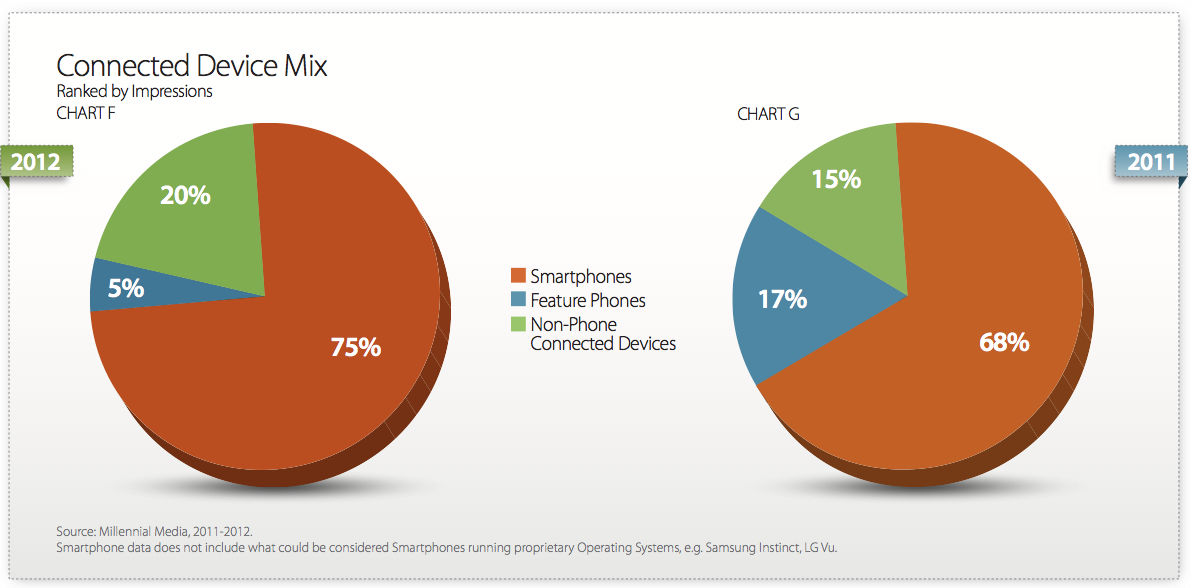
    Smartphone share also grew during the year, up from 68 percent to 75 percent, with non-phone connected devices (including tablets) also growing considerably as well, from 15 to 25 percent. The feature phone category gave up tons of ground, going from 17 percent to 5 percent share. Overall OS mix, despite Android’s tablet gains, actually didn’t shift all that much, with Android gaining one percentage point overall in 2012 versus 2011, and iOS losing one. BlackBerry remained steady in third, and Windows Phone gained a single percentage point.

    Millennial notes that Android continues to take up more places in the top 20 mobile phones list on its platform, while Apple continues to be the market leader with its devices in each respective category, generating an outsized helping of traffic share from just a few core devices. The iPhone ranks number one among mobile phones, growing its share from 14.67 percent in 2011 to 15.59 percent in 2012. Samsung took over the number two spot from BlackBerry with its Galaxy S line, with 4.24 percent of impressions for 2012, growing 182 percent year-over-year.

    The iPad mini was among Apple’s strongest performers, growing its share of impressions at an average daily rate of 28 percent within just weeks of its initial launch. Millennial says that’s a new best for the 7-inch tablet category, eclipsing the rapid 19 percent daily average established by the original Kindle Fire during its launch back in 2011. Overall, the picture that’s shaping up looks like it will see smartphone share start to even out as they eclipse feature phones entirely, with tablets making up an increasingly important piece of the pie, if the trends Millennial is seeing continue.

  • Back up all types of USB drive with USB Image Tool

    Alexander Beug has released USB Image Tool 1.60, the latest version of his compact, portable and free backup tool for USB devices.

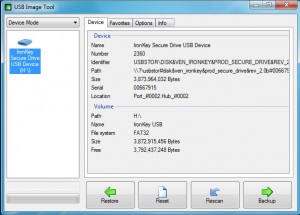
    And a very welcome addition this time is support for non-removable USB devices. So on launch, the program won’t only list any mobile USB devices you might have connected (keys, cameras, MP3 players and so on), but it’ll also display regular USB drives, memory card readers and so on, and allow you to back them up.

    Another new feature is the Reset button. USB Image Tool has always been able to, say, restore an 8GB image to a 16GB drive, but you would then effectively “lose” the extra space. In version 1.60, though, clicking Reset will overwrite the boot sector, causing Windows to reformat the drive with its original capacity.

    USB Image Tool 1.60 is also now simpler to use, as there’s no need to manually run it as an administrator: the program now prompts for the appropriate rights on launch.

    A new option to define the program’s buffer size may help improve performance, which could be important if you’ll now be using USB Image Tool to back up large USB drives.

    There are a few extra options in the command line version of the program, and a couple of bugs fixed (see the official change log for more).

    And, remarkably, all of this still comes in an ultra-lightweight portable package (even unzipped, it still required only 422KB of drive space on our test PC), with no adware or similar annoyances.

    Put it all together and USB Image Tool 1.60 is an excellent tool, especially now it’s able to back up just about any USB storage device. Of course the GUI doesn’t support extras like scheduling, but if you’re happy to create your own scripts then it’s not difficult to set that up: just launch usbitcmd.exe from the command line to get a feel for your available options.

    Photo credit: chien321/Shutterstock

  • Overhauling a home network, Part 2 — back to FreeNAS afterall

    Let us get a bit geeky. This was not my original intention, but it is how things turned out in the end. First, I believe I misspoke twice in part one of this series — one time was unintentional, the other was apparently my wishful thinking. The first was when I called my recent used server purchase a Dell Optiplex. It is actually a Dell Poweredge. The second involved my new operating system and I’ll get to that in a second.
    To begin with, the server was running Windows Server 2003 and the small business I purchased it from had failed to wipe the data, but did leave it password protected — something a tool like Ophcrack may have been able to breach, though I had no desire to try. The server also contained a CD-ROM drive which I needed to replace with a DVD drive in order to install Windows Server 2012 Essentials. Fortunately I had one laying around — yes, I know that is not normal. You should see our storage room. There are boxes of computer parts and a stack of old towers filling a corner. At least this time the “it will be useful someday” statement worked out for me.

    However, the 32-bit server architecture did not support 2012, meaning I moved on to Home Server — that required 512 MB of RAM, and the server, woefully older than I had thought, only had 256 — an easy upgrade, but expenses and wife-acceptance-factor for this project were mounting up.
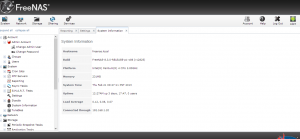
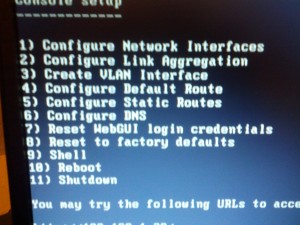
    In short, I went back to my old standby — FreeNAS, which my last server ran. The operating system has improved quite a bit over the time since I last installed it. I knew there had been upgrades, but my system was set and working fine — don’t fix what is not broken. In fact, it has moved all the way to version 8.3.

    I will not waste a lot of time here. FreeNAS has more than enough information to help you out and, surprisingly, Engadget did a very lengthy and helpful guide last year. Use those and you should have no problems.

    I will point out a couple of things to pay attention to. First, make sure you change your password, which by default, is set to “password”. You will also be spending a bit of time setting up your drives. If you can, choose ZFS over UFS because of storage restrictions. Remember that the drive on which FreeNAS is installed cannot be used for storage, so do not waste a multi-terabyte drive on a very small operating system.

    There are also some plugins that may interest you. Those can be found on the FreeNAS website. In fact, you can even hook up a network printer to the box, but it gets a bit complicated. Once volumes are configured and working then you are ready to start backing up and sharing files.

    Backup and Sharing

    There are a few ways to do this. When I last set up the OS I simply used SyncBack SE on each networked computer in order to backup a copy of all files automatically. There were likely other options, but it worked for me so I did not mess with it.

    Rsync is built right into FreeNAS, but it requires a client app installed on each computer on your home network. As my colleague Joe Wilcox pointed out in the newsroom the other day, and I am paraphrasing here — the simplest solution is usually the best.

    That meant SynBack SE because it recognizes mapped drives. That is big because it means that it can be installed on one PC (the desktop in this case) and used to back up and sync all computers in the home.

    What’s Next?

    In the process of doing all of this I stumbled across an MSDN post from Microsoft’s Emmanuel Bergerat which detailed the over-the-top home server he had recently built. My new setup suddenly looked completely inadequate. Still, despite his statement that one of his requirements was “cheap”, it is all relative. Maybe someday I will do something like that.

    For now my future plans for this box are simply to purchase a four-bay external drive enclosure so that I can begin expanding the space one drive at a time. I also may add a KVM switch between the server and desktop, but that is really not a necessity given that FreeNAS can be shutdown or restarted right from the dashboard on any computer. Heck, there is even a couple of Android apps to control it.

    The Microsoft solutions may be nice and have more features, but the bottom line here is that I simply want my files safely backed up and, for that, FreeNAS and SyncBack SE (both free) will meet my needs perfectly and even provide a few little extras to boot.

    Photo Credits: Norebbo/Shutterstock

  • Metaio’s augmented reality chip will be super-useful… just not in phones

    Yesterday Metaio, the Germany-based augmented reality (AR) company, announced a deal with ST-Ericsson which will see the latter integrate a specialized AR processor into the next generation of its mobile chipsets.

    This will be the first dedicated chip of its kind to see commercial deployment, and it should have a big impact on the power consumption of AR applications, which are today generally a big battery-suck due to their intensive use of graphics and, increasingly, 3D rendering. As Metaio CEO Peter Meier put it in the statement:

    “The AREngine will do for augmented reality what the GPU did years ago for the gaming industry. This is a great leap in the AR space, and we strongly believe that the AR Engine working with ST-Ericsson platforms will help realize the augmented city — the idea of a completely connected environment powered by augmented reality and made possible with next-gen, optimized mobile platforms.”

    Here’s the video the companies put out. Notice the emphasis on the use of the AREngine chip in smartphones:

    That emphasis on handsets is understandable because ST-Ericsson’s business today is largely in smartphone chipsets – it is surely no coincidence that ST-Ericsson is supposedly going to be supplying its NovaThor chipsets to Nokia, which takes great pride in the CityLens AR app that runs on its Lumia handsets.

    However, while AREngine may make use of such apps slightly more attractive on smartphones, I don’t think power consumption is the main reason why people don’t walk around constantly holding their phone at arm’s length in front of them. Here are three far more likely reasons: it looks absurd, it’s dangerous, and it represents poor ergonomics.

    That’s not to say AR is useless – far from it; it’s occasionally handy today and I believe there are many cool applications lying on the other side of a tipping point we’ve not yet reached. It’s just that, with smartphones, AR makes the most sense in short bursts, like when you actively need to establish the direction in which you should next walk. And power’s less of an issue there.

    Where the AREngine processor would be superbly useful is in smart glasses, of the Google Glass ilk. These devices will be the real tipping point for AR – they remove the absurdity, danger and poor ergonomics of physically and consciously holding something out in front of you as you walk.

    And as such wearables get redesigned to make their users look less like tools, their sleeker, skinnier new look will mean less battery space. Combine that with the fact that such devices will need to constantly display AR data, and Metaio and ST-Ericsson’s technology becomes a no-brainer.

    Related research and analysis from GigaOM Pro:
    Subscriber content. Sign up for a free trial.

  • Edit and convert videos to any format with Video to Video

    If you’re looking for a free video converter then there are now plenty of great free programs around, which is plainly very good news for the end user.
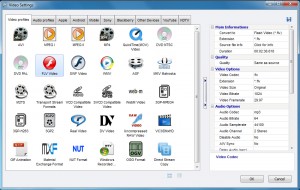
    Software developers, though, are having to cram in ever more features to help their converter stand out from the crowd and Video to Video is a particularly strong example.

    The program supports over 200 input formats, for instance, while exporting over 700. And so it can handle several file types which aren’t so well covered elsewhere (DV, VC3, MXF, NUT).

    Video to Video also provides output profiles for a host of different devices: Apple, Android, Mobile, Sony, Blackberry and more. We’re not just talking about one or two generic examples, either. Click the Android tab, say, and you’re presented with more than 240 profiles for mobile devices from all the major manufacturers (and quite a few of the minor ones, too).

    You could then accept the default profile settings, click Convert and wait for your new videos to appear. But if you like more control, then you’ll love the options available here. You can set your video and audio codecs, bit rates, resolution, aspect ratio, frame rate and more. There’s subtitle support. You can crop, pad, rotate or flip the video. There are options to tweak brightness, contrast, colors, hue and saturation. And an “Other Filters” list contains tools to sharpen your video, remove noise, stabilize a clip, remove a logo, and more.

    A “Tools” menu provides some useful processing options, allowing you to trim videos, join them, rip and burn video DVDs, and more.

    There are some unexpected bonus features, too. So the program can actually create animated GIFs from a video, for instance. And an “Images to Video” tool proves a surprisingly powerful way to create video slide shows, with support for a soundtrack, text captions, a vast number of custom transitions, and more.

    And all this comes in a straightforward portable package with no codecs to install, no adware, not even a “Donate” button (unless you head to the website).

    There are some downsides, too. Once you get past the basics, for instance, the interface isn’t always as intuitive as it could be. And we did run into one technical issue when creating a video slide show; the conversion process failed for no apparent reason when exporting to AVI, but worked just fine if we chose MP4 instead.

    For the most part, though, the program performed very well, importing all the files we threw at it, and quickly converting them to our chosen formats. And so if you’re in the market for a video converter with some real power, then should probably download a copy of Video to Video right away.

    Photo Credit: Spectral-Design/Shutterstock

  • BBC updates its iPlayer app — background streaming via AirPlay now enabled

    The BBC’s iPlayer app is available for both iOS and Android, but owners of Apple devices definitely get the better deal with additional features, such as the ability to download shows to their iPhones or iPads for offline viewing.

    The latest update from the BBC widens the gap between the app siblings further by introducing improved AirPlay support. Owners of iOS devices who also have Apple TV will now be able to beam a show from the app to the big screen, and then background iPlayer, and use their phone or tablet for something else while the show continues to play.

    In addition, the new version of the app fixes various minor problems and glitches, improves playback quality, and ensures downloads are more reliable.

    You can grab the latest version of iPlayer from the App Store now.

  • IBM plugs big data capabilities into Deutsche Telekom’s M2M infrastructure for smarter cities

    IBM and Deutsche Telekom, the carrier behind the T-Mobile brand, are to work together on creating smart city systems, the companies have announced.

    The smart city concept, which is closely related to the “internet of things”, is reliant on pervasive connectivity, drawing on what has traditionally been known as machine-to-machine (M2M) technology to hook up everything from traffic lights to public transport vehicles to the local broadband network. This usually involves the use of cellular networks.

    The idea there is to be able to analyze sensor-based data from all these sources so as to better coordinate them and make cities more efficient, both to live in and in terms of energy use. For example, sensors in parking bays might help drivers find a space more easily, cutting down on the emissions that might come from driving around unnecessarily.

    IBM has been working on this type to echnology for a while, as have other companies such as Microsoft, Cisco and Intel. Today’s deal allows IBM to plug its data-wrangling capabilities into Deutsche Telekom’s established global M2M ecosystem – DT will also handle details such as SIM card access management.

    “M2M is a technology with enormous growth potential as it adds real value to our daily lives, both in business and privately,” Thomas Kiessling, Deutsche Telekom’s chief product officer said in a statement. “Our joint Smarter Cities initiative gives us the opportunity to work with cities across the globe and offer them valuable end-to-end solutions that help support public welfare as well as their economic growth in the future.”

    Related research and analysis from GigaOM Pro:
    Subscriber content. Sign up for a free trial.

  • Google rolls out Chrome 25, lets you talk to websites

    Google has announced the release of Chrome 25 to the Stable Channel for Windows, Linux and Mac, and as revealed in the beta, this release features a major change in the way extensions are handled.

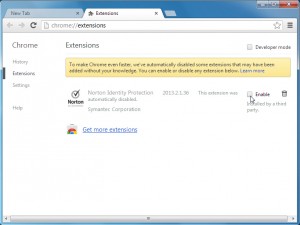
    In particular, the previous support for the automatic and silent installation of extensions will now be disabled by default, as apparently Google has noticed that this feature “has been widely abused by third parties to silently install extensions into Chrome without proper acknowledgment from users”. We could argue Google really should have predicted that in the first place, but at least it’s seen the light now.

    This change will have an immediate impact, as any extensions previously installed in this way will be disabled by default, while a one-time dialog will ask users to re-enable them.

    And the other result is that, in future, every Chrome extension will require specific consent from the user before it can be installed.

    Elsewhere, Chrome 25 adds support for speech recognition via the Web Speech API, which means you could be talking to websites very soon. Once you’ve installed the new build then you can get a feel for how this could work at Google’s speech demo page.

    The official Chrome blog post on this release reports that it also includes “better support for HTML5 time/date inputs” and “better WebGL error handling”.

    And there are also the usual collection of bug and security fixes, although one of the solutions was a little drastic: the Webkit MathML implementation apparently includes a “high severity security issue”, and so it’s been disabled in this release.

    The extra security alone makes it well worth upgrading to Chrome 25, then, but if you need to know more than the fine detail on this release is available at the SVN Revision Log.

  • Alcatel-Lucent finds its new CEO: Ex-Vodafone Europe chief Michel Combes

    Just three weeks after Alcatel-Lucent CEO Ben Verwaayen announced his resignation, the Franco-American telecom vendor has found his replacement. Former Vodafone Europe CEO Michel Combes will take the helm of Alcatel-Lucent on April 1.

    Combes headed up Vodafone’s all-important Europe region from 2008 to 2012, when he found himself in an employment bind. He left Vodafone to take over as CEO of Vivendi’s SFR in France, only to see the man who hired him, Vivendi CEO Jean-Bernard Levy, ousted before Combes could take on his new role. Now Combes has landed at one of world’s biggest infrastructure vendors.

    Verwaayen, as promised, is staying on until April to help Combes ease into his new job.

    “Alcatel-Lucent is an unrivalled technology leader in the telecommunications industry with an immense array of talent and capabilities in R&D facing major challenges,” Combes said in a statement. “This is a company I know well and I look forward to succeeding Ben, working with the key international customers, and driving the business into sustained profitability for its customers, employees and shareholders.”

    Combes is taking over a troubled Alcatel-Lucent. The company has struggled since the merger six years ago of France’s Alcatel and the U.S.’s Lucent Technologies, which was supposed to create the world’s dominant telecom vendor. Instead, Alcatel-Lucent has lost ground to many of its traditional rivals such as Sweden’s Ericsson as well as newer market entrants such as Huawei.

    Photo courtesy of Shutterstock user mtkang

    Related research and analysis from GigaOM Pro:
    Subscriber content. Sign up for a free trial.

  • PayPal’s mobile payment service will go live in Europe with a funky new card reader

    PayPal is bringing its Here mobile payments service to the U.K., but its familiarly shaped triangular card reader will not be making the journey over the Atlantic. Instead PayPal is launching a new device that better fits the point-of-sale policies of Europe: a card reader with a numeric keypad for entering a key code.

    Rather than fit into the headphone jack of a smartphone, the new reader pairs to the an iPhone or Android device via Bluetooth. And instead of swiping the card’s magnetic strip, the card is inserted into the reader so it can access the smart-chip embedded within typical European debit and credit cards, while the keypad is used for entering the customer’s PIN.

    PayPal plans to showcase the new reader and service at Mobile World Congress in Barcelona next week, but U.K. merchants will have to wait a bit before they can get their hands on Here. According to PayPal’s blog, the company will roll out the service to select U.K. businesses in the coming months, after which it will launch nationwide. Following the U.K. launch, PayPal will roll out Here in other European countries, though it didn’t identify any by name.

    The company faces stiff competition in Europe, with local rivals including iZettle, Payleven, mPowa, Adyen and SumUp.

    Related research and analysis from GigaOM Pro:
    Subscriber content. Sign up for a free trial.

  • HP’s off-and-on romance with its PC business is on again

    If you didn’t know any better, you might not believe that Hewlett-Packard came this close to unloading its PC business a year and a half ago.  On the company’s first quarter earnings call, CEO Meg Whitman gave a pretty strong impression that she is downright devoted to the Personal Systems Group (PSG), despite the fact that revenue fell 8 percent from the year-ago period.

    HP_LogoRevenue for commercial or business PCs fell 4 percent, and for consumer machines it was off 13 percent, but Whitman saw the bright side.

    “Against the backdrop of overall PC market contraction in the fourth calendar quarter, we gained 1.4 points of market share in PCs over the prior year, including a 4.6 point gain in the U.S.,” Whitman said Thursday night. She also cited the company’s new EliteBook Revolve convertible, ElitePad 900 as well as its new Google Chrome-based notebook as reason for optimism going forward.

    After Whitman’s opening remarks, Raymond James analyst Brian Alexander, pressed her on PSG, noting that its profits were off  50 percent year over year.

    “We are committed to this business,” Whitman said in response. “We are going to compete on differentiation, whether that is form factors, increased focus on mobility, a multi-OS strategy, multi-chip strategy, frankly relevant to various industries, we’ve got great response to our ElitePad 900 that can be customized by industry and then services.”

    She also acknowledged that pricing will be “problematic and quite competitive… but we think we can manage that.”

    HP has wavered on whether it would keep or jettison various businesses over the past year. Its proxy statement in December noted that the company would consider selling off or divesting some businesses as needed. So, given that the company had broached –then retracted a possible PC business spin-off once before– that got tongues wagging again.

    This news comes just weeks after PC and server rival Dell announced plans to go private – news which prompted HP to put out its own comments inviting Dell’s customers to avoid the uncertainty of a leveraged buyout and jump ship to Hewlett-Packard.

    Given Whitman’s statement of support for this margin-stressed business unit, HP is either in it for the foreseeable future, or talking it up to enhance its value to a potential suitor. Hey, you’ve got to wonder, right?

    Related research and analysis from GigaOM Pro:
    Subscriber content. Sign up for a free trial.

  • ‘Anonymous’ becomes latest victim in Twitter hacking spree

    Anonymous Twitter Account Hacked
    Anyone who’s ever had their website hacked and defaced by hacker collective Anonymous can have a good laugh at their expense, because it looks as though they aren’t immune to security breaches either. BBC News reports that Anonymous this week “has suffered an embarrassing breach, as one of its popular Twitter feeds is taken over by rival hacktivists.” The Anonymous Twitter hack follows other high-profile Twitter hacks that have occurred over the past few days, including the Twitter accounts for both Burger King and Jeep. Graham Cluley, a senior consultant at security firm Sophos, tells BBC News that the hacks likely resulted from poor password practices, such as either using weak passwords or using the same password across multiple different accounts across the web.

  • LG unveils Optimus F5, F7 smartphones

    LG Optimus F7 F5 Release Date
    Since almost nothing will actually be announced at Mobile World Congress this year, LG (066570) on Thursday unveiled two new smartphones that will launch later this year. The Optimus F5 and Optimus F7 Android phones look to build on the success of earlier Optimus models while also introducing some key improvements. The mid-range Optimus F5 features a 4.3-inch, 256 ppi display, a 1.2GHz dual-core CPU, a 5-megapixel camera, 8GB of  storage, a microSD card slot, 1GB RAM, a 2,150mAh battery and Android 4.1.2 Jelly Bean. The higher-end Optimus F7 includes a 4.7-inch, 312 ppi display, a 1.5GHz dual-core processor, an 8-megapixel camera, 8GB of storage, a microSD card slot, , 2GB RAM, a 2,540mAh battery and Android 4.1.2 Jelly Bean. Both phones will launch in the second quarter, and LG’s full press release follows below.

    Continue reading…

  • Activist investor proposes unconventional plan to boost Apple’s stock

    Greenlight Capital hedge fund manager David Einhorn has a plan for Apple: to increase shareholder value and pump up the downward-drifting stock, why not issue a quarterly dividend of 50 cents — in perpetuity? Based on the conference call he hosted Thursday, Einhorn seems to believe that one of the most conservative companies in tech would get on board with this very unconventional plan to distribute preferred stock shared that he’s dubbed “iPrefs.”

    Einhorn is framing the proposal as a way for Apple to avoid having to find other ways of distributing its $137 billion in cash it already has. He said his plan would mean Apple would spend about $1.9 billion per year issuing iPrefs. At the same time, he is trying to defeat a proposal Apple has put before shareholders, that would, among other things, allow Apple to issue “blank check” preferred stock. Last week, Apple CEO Tim Cook called the preferred stock idea “creative” but dismissed Einhorn’s lawsuit to get Proposal No. 2 removed “a silly sideshow.” Apple has promised to consider his ideas.

    Here are some observations from Apple followers and finance experts about Einhorn’s strategy:

    • The Guardian notes that Einhorn’s plan is meant to reward investors and coax them into boosting the stock: “Einhorn is taking a mathematical route. He believes shareholders will reward Apple for giving them cash by pushing up the price of the stock. ‘Apple wants to keep its cake, and its shareholders can eat it too,’ he said.”
    • Fortune said he didn’t make a good case for the plan’s ability to boost the stock value: “Einhorn himself acknowledged that Apple’s common stock would go down when the iPrefs are issued and that a $50 iPref was also likely to lose value as soon as hit the market — undermining all his subsequent calculations for how much of Apple’s intrinsic value his scheme would unlock.”
    • Bloomberg quotes investors who aren’t super thrilled with the dual strategy of the iPrefs plan and lobbying against Apple’s shareholder proposal No. 2.: Rich Clayton of CtW Investment Group calls Einhorn’s campaign against Apple “in no way necessary” and says Apple’s proposal “is being hijacked.”
    • Bespoke Investor Group, via WSJ, says Apple’s cash hoard isn’t that big of a deal anyway: ”While you might think this is high, back in the early 2000s, Apple’s cash as a percentage of market cap was above 50% for years. And during the financial crisis, Apple’s cash got as high as 37%. Just something to be aware of as you hear all these calls for Apple to do something with its loot.”

    As of the close of business Thursday, Apple’s cash was roughly 33 percent of its total market capitalization.

    Einhorn said Thursday he would be meeting with Cook and other Apple representatives soon. The shareholders get to vote on the plan on Feb. 27.

    Related research and analysis from GigaOM Pro:
    Subscriber content. Sign up for a free trial.

  • Sony announces PlayStation app for iOS and Android

    PlayStation App iPhone
    Sony (SNE) finally took the wraps off its next-generation PlayStation 4 on Wednesday evening, and the upcoming gaming console is packed with premium specs that will help usher in the next stage in the evolution of gaming. Sony touted some great tie-ins with the PlayStation Vita during its two-plus-hour-long presentation, but its mobile ambitions extend beyond its own beleaguered portable console. Within Sony’s PS4 press release, the company announced that it will soon launch second screen experiences on the iPhone, iPad and Android devices thanks to its upcoming “PlayStation App.” Few details were provided, but the relevant section from Sony’s press release follows below.

    Continue reading…

  • Orange Ramps Up Own-Brand Range With 3 More Android Handsets, And Its First LTE Device, Has Sights On Windows Phone

    Orange Lumo

    Perhaps aware of the tsunami of news that will hit during Mobile World Congress, we are seeing an increasing amount of news releases coming out before the actual event. France Telecom/Orange has already told us about one device — an Android smartphone with Fujitsu aimed at the senior market — and now it is following that up with three more, own-branded, Android handsets aimed squarely at the middle market of smartphone users.

    The Lumo (pictured) is the carrier’s first own-branded LTE device; the Nivo is a device aimed at the budget segment; and the San Remo is a large-screened 4.7″ device with a brushed-metal casing. All will be out in selected markets in the first half of this year.

    And while each of these devices will come loaded with Android 4.1, Patrick Remy, the VP of devices for France Telecom, also notes that we may soon start seeing own-brand handsets from the carrier not built on Android. “There is no willingness to only have Android devices in this range,” he said. “We believe the best opportunity is with Android right now, but we are looking at other operating systems, specifically Windows Phone, but potentially others.” 

    On the subject of Firefox OS — the mobile platform being built by Mozilla with other partners — “we are monitoring what is being done there,” says Remy. “We are not announcing any launch of such devices at this point in time, but we are definitely interested in that area and depending on the opportunities, there is a chance for an Orange-branded device among those.”

    Remy also admits that Orange’s own-brand smartphone devices do not move the needle when compared to the volumes sold by carriers from smartphone leaders Samsung and Apple. But they are proving to be small hits for the carrier, specifically when targeting users in the mid-market — or “higher-end pay-as-you-go or lower end contract customers,” in Remy’s description.

    This naturally means these devices do best in markets where these segments are biggest. “Not Luxembourg,” Remy joked of the very affluent little principality where the carrier offers services. But other markets do quite well. In Spain last year, Orange’s best-selling device was the Monte Carlo, another handset in its own-brand range. Overall sales of this line of devices has grown by 62% over the last year. But it’s telling that there are currently “no plans” for any of these three to be offered in the UK this year.

    France Telecom/Orange does not release sales numbers on how well these smartphones do but did note that last year its entire range of own-branded devices — including both feature phones and smartphones — were about 10% of all handset volumes, “and that’s increased a bit to about 12%,” says Remy. He notes that within that proportion smartphones are a “significant part of that.”

    Orange has struck deals with Alcatel/TCL, Gigabyte, Huawei and ZTE to make its own-brand devices. The Lumo and Nivo come from Gigabyte, whereas the San Remo is made by Alcatel/TCL, with Huawei and ZTE sitting out in this particular round.

    Perhaps more than other European telcos, Orange has over the years dedicated a lot of time and energy to creating devices that are filled with Orange-customized services and the Orange brand. These devices play into that theme, but for now will not be packing as much Orange-punch as they can.

    Baidu, for example, which has inked a deal with Orange to provide a customized browser for its devices, will not be making an appearance on the devices for now, although this may be something we will see going forward, says Remy. “They’ll come with our standard suite of services and customization,” he noted. These include customized lock-screens, the ability to port your services when roaming, and links to Orange services specific to your home country.

  • Snapchat for Android adds video

    Snapchat Android Video

    Popular sexting app maker Snapchat on Thursday updated its Android application of the same name with the ability to send self-destructing videos to Snapchat contacts. The video function had been available in the Snapchat Android app as part of a closed beta, but it is now available to all users in Snapchat 2.0. Snapchat bills its app as a way to “build relationships, collect points, and view your best friends,” though the most widely discussed use for the service is sending nude photos — and now, videos — between devices that are automatically deleted after a set amount of time… unless the recipient decides to use a simple trick to save the files permanently. Snapchat 2.0 is available immediately for free in the Google Play store, which is linked below.

  • Google announces support packages for Cloud Platform

    Did you know that Google has real people working there? If you have ever tried to contact the company then you may have concluded otherwise. In fact, it may be more difficult than finding a phone number for Amazon — a task that has resulted in websites dedicated to the adventure. Apparently the search giant would like to change that reputation and today it took the first step.

    Google has announced a new support package for customers of its Cloud Platform services. This is an enterprise service that the company would like to use to compete against Amazon S3 and Windows Azure. In fact the service is doing very well, with some high-profile customers such as Best Buy. But a bit more was needed to boost things over the hump — namely human interaction.

    Today Google announced new customer service options, available in tiers based on what your business requires and, of course what it is willing to pay.

    Brett McCully, of the Google Cloud Platform team, announced the service, calling it “a comprehensive collection of support packages for services on Google Cloud Platform, so you can decide what level best fits your needs”.

    There will be four levels of service — Bronze, Silver Gold and Platinum. These range in price from free to the sky-is-the-limit (meaning Platinum requires you to contact a service rep to inquire) — however gold starts at $400 per month, just so you have an idea.

    Service levels range from “access to online documentation, community forums, and billing support” for the Bronze to “The most comprehensive and personalized support. In addition to Gold, you’ll get direct access to a Technical Account Manager team” for the Platinum subscription.

    The service is now open for sign-ups if you care to take the plunge and see what Google truly offers in the way of customer care. And, if you do, then be sure to let us know how it works out for you.

    Photo Credit: Dudarev Mikhail/Shutterstock

  • Exclusive: Airtel bets big on Wi-Fi across Africa as it looks for 3G substitutes

    Mobile operator Airtel Africa is rolling out a large-scale Wi-Fi network in 17 countries in an effort to bring high-speed mobile data services to a region of the world that still relies heavily on 2G networks, GigaOM has learned.

    Airtel Africa, part of the India-based Bharti Airtel group, will deploy tens of thousands of carrier-grade access points in high-traffic areas throughout its pan-continental network, according to a source close to the deal who asked not to be named because details have not been officially released. Airtel has started building the network in Niger, but it plans to quickly expand it to the 16 other African countries in its footprint. Depending on how successful the rollout is and how much the network is used, Airtel could expand the project to encompass more than 100,000 nodes, our source said.

    A Ruckus Wireless Wi-Fi hotspot/small cell

    A Ruckus Wireless Wi-Fi hotspot/small cell

    Ruckus Wireless will supply its indoor and outdoor high-capacity access points, while Alcatel-Lucent will supply its service and aggregation router and act as the system integrator on the project. We reached out to Airtel, Ruckus and Alcatel-Lucent. Alcatel-Lucent confirmed it is building a backbone data transport and backhaul network for Airtel, but a spokesman said the company would not comment on any Wi-Fi plans. Ruckus told us they had no comment, and we have not heard back from Airtel.

    While Wi-Fi is being used in countries like the U.S. to supplement high-speed 3G and LTE networks, in Africa 3G connections are few and far between and 4G services are virtually nonexistent. According to Ericsson’s most recent Market Report, 85 percent of the subscribers in the Africa and Middle East regions are on 2G networks. Africa’s penetration of smartphones is low compared to more developed regions, but it’s expected to grow quickly as more vendors produce cheaper and cheaper Wi-Fi-equipped Android smartphones.

    Our source tells us that Airtel is using Wi-Fi as a 3G/4G replacement, putting up dense clusters of access points in hotels, airports, shopping districts and heavily trafficked outdoor locations. It’s much more inexpensive to use Wi-Fi as a mobile data technology. Even though it can’t provide the coverage of a wide-area cellular network, Airtel can use it surgically, delivering capacity to areas where it will be used the most.

    The deal is a big one for Ruckus, which recently went public, even though the rollout doesn’t yet approach the scope of its massive Wi-Fi contract with Japan’s KDDI. For Alcatel-Lucent, the deal is an opportunity to help build an alternate wireless network for one of Africa’s largest carriers using its core infrastructure. Alcatel-Lucent has its own Wi-Fi product, but it’s meant to be deployed in conjunction with its own lightRadio 3G and 4G infrastructure. Airtel uses Nokia Siemens Networks and Huawei for its cellular systems, but the deal could give Alcatel-Lucent a leg up when the next round of network construction begins.

    Apart from Niger here are the other countries Airtel will launch Wi-Fi in: Burkina Faso, Chad, the Democratic Republic of the Congo, Gabon, Ghana, Kenya, Madagascar, Malawi, Nigeria, the Republic of the Congo, Rwanda, the Seychelles, Sierra Leone, Tanzania, Uganda and Zambia.

    Featured image courtesy of Shutterstock user Anton Balazh

    Related research and analysis from GigaOM Pro:
    Subscriber content. Sign up for a free trial.