Blog

  • Will you buy Google Chromebook Pixel?

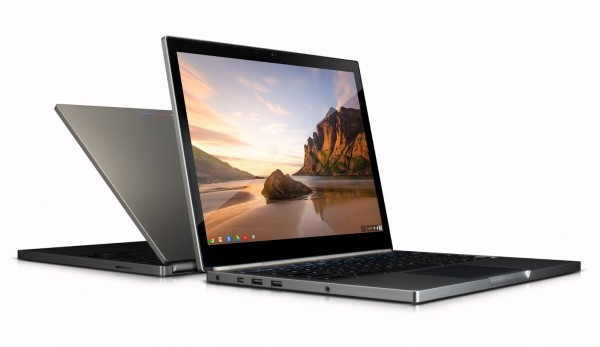
    That sound you just heard was Google slapping Apple across the face. Today the search and information giant unveiled and starting selling high-end portable Chromebook Pixel. By just about every measure, Google guns for Apple in its dominant market — premium PCs, or those selling for $1,000 or more. When rumors circulated about the computer, I opined: “Chromebook Pixel looks like MacBook Pro to me“. The impression is stronger now that the real deal is here — from form factor to price, either $1,299 or $1,449.

    Should Apple sweat about Chromebook Pixel? I would. Following a years-long retail trend, Apple share of PCs selling for $1,000 or more was over 90 percent in 2012, according to NPD. Stephen Baker, NPD’s vice president of industry analysis, asks if Google is “more trying to compete with Apple and high-end windows machines for premium consumer and maybe corporate?” I answer: Yes. What I want to know: Will you buy Chromebook Pixel? But more importantly: Would you buy Chromebook Pixel instead of 13-inch MacBook Pro?

    For Whom?

    For many of you the answer is an automatic “No”, because $1,000 is already too much. “I would never pay that much for any computer”, my colleague Alan Buckingham says. “Five-hundred dollars is the limit”. He paid $400 for his current laptop one-and-a-half years ago.

    Then there are concerns Google’s “For Everyone” marketing campaign, which emphasized value, creates expectations Chromebooks shouldn’t cost much.

    “It just seems like a big jump on price and specs and customer focus to me”, Baker says. During the holidays, Google aggressively promoted the $249 Samsung Series 3 Chromebook, which sells for more than $1,000 less than Pixel. Baker “would have rather seen a more mundane $699-$799 type product that directly brought the value of the Chrome OS to compete with a large iPad or a Win 8 touch machine”.

    David Rodríguez Andino agrees with Baker: “Google is crazy pricing this at $1,300. A high-end Chrome OS device should be priced around $700 IMO”.

    Commenting to one of my Google+ posts, Ian Betteridge turns “For Everyone” on its head: “The thing was that up until now, Chromebook wasn’t ‘for everyone’. For people like me, who value high-end, well designed hardware with great screens, there was no Chromebook that fitted the bill. Now there is. ‘Everyone’ doesn’t just mean ‘only people who want cheap plastic machines’”. He has a Chromebook Pixel already and so speaks with more authority than I.

    I agree with Betteridge. Much as I like current Chromebooks, using Microsoft Surface Pro for nearly a month has me pining for high-resolution display and better performance. The new model promises both and for less than 13-inch MacBook Pro, which I would consider having ended the Apple boycott.

    Value has different measures. Armando Ferreira asks the same question I do: “Google, are you poking at Apple because your commercial and price tag sure seem like it?” Value compared to something else, in this case MacBook Pro, is one measure.

    Specifications

    Here’s how the two laptops compare:

    Chromebook Pixel: 12.85-inch touchscreen, 2560 x 1700 resolution, 239 pixels per inch; 1.8GHz Core i5 processor; Intel HD graphics 4000; 4GB DDR3 RAM; 32GB or 64GB of storage; HD WebCam; backlit keyboard; dual-band WiFi 802.11 a/b/g/n 2×2; 4G LTE (on one model); Bluetooth 3.0; mini-display port; two USB ports; Chrome OS. Measures: 297.7 x 224.6 x 16.2 mm. Weighs: 1.52 kg (3.35 pounds). Cost: $1,299 (32GB WiFi); $1,449 (64GB WiFi/4G LTE). 1TB Google Drive storage is included free, for three years.

    MacBook Pro: 13.3-inch LED display, 2560 x 1600 native resolution, 227 ppi; 2.5GHz or 2.6GHz Core i5 processor; Intel HD graphics 4000; 8GB DDR3L RAM; 128GB or 256GB storage; HD Webcam; backlit keyboard; 802.11n wireless; Bluetooth 4; two USB 3 and Thunderbolt ports; HDMI port; OS X. Measures: 314 x 219 x 19 mm. Weighs: 1.62 kg (3.57 pounds) Cost: $1,499 (2.5GHz, 128GB); $1,699 (2.6GHz, 256GB).

    Usage scenarios are different, which applies to Windows touchscreen computers, too. Chrome OS largely runs apps in the browser, while MacBook Pro supports local apps. Chromebook’s big draw is touchscreen, lower price and TB of free cloud storage. Is that compelling enough for you?

    “Pixel is not going to fly of[f] the shelves like a new Mac Book Pro, but it has a niche”, Simon Bengtsson asserts. “There is definitely people caring about simplicity, design and an amazing user experience. Previous Chromebooks has compromised on the last two”.

    Pixel Perfect?

    At 4:13 p.m. EST, David Hoff “just finished ordering my new Chromebook Pixel”.

    Jeff Jarvis got one, too, and chimes in with Betteridge:

    I was wishing for a beefier Chromebook. Having proven itself at the low end of the market, I’ve been saying that I wished Google would come up with one at the high end. Now it has: The Chromebook Pixel. I just bought one, sight unseen. It has more memory, a faster processor, a touchscreen (which I’m looking forward to), and LTE built into the most expensive machine. At $1,500 it’s comparable to a Macbook, though I don’t need to buy any software for it.

    Jarvis, who has been using the $249 Samsung Chromebook, makes a good point about additional costs: Software.


    Peter Sitterly sees value beyond the machine that more than pays for it: “This is definitely priced higher than I thought it would be, but the fact that it comes with 1TB of Google Drive storage for 3 years changes the game a bit. For those who may already be paying $49.99 per month for 1TB of cloud storage, this is a no-brainer. This device would essentially save such folks from $1,799.64 worth of monthly fees over that 3-year span”.

    Hasan Ahmad: “Chromebook pixel is the kind of product that Google releases to see how far their rabid fanboys will go to worship them”. I see something more Apple-worship-like here, because of design and features.

    Off topic perhaps, but there’s something strange about the social buzz excitement that grates Ferreira, and I have to agree:

    You guys know I like Google but help me understand this for a second. Microsoft releases the Surface Pro (64GB) $899.00, it can run legacy apps also all of your Android apps (Bluestack) and also the ability to run another OS like Ubuntu. Yet it’s ‘too expensive’. Google releases the Chromebook which in theory is just a Web Browser, can’t run legacy apps, maybe will one day run Ubuntu (Waiting on devs) only has 32GB of storage for $1,299.00 and people expect to jump on this like peanut butter on jelly?

    Right. Why does Microsoft get grilled for Surface Pro passing ($899 or $999), while Google gets a pass?

    So roundabout, I return to the two questions: Will you buy Chromebook Pixel and would you buy instead of 13-inch MacBook Pro? Please take the poll above and respond in comments below.

  • Sterling Invests in Kids Care Dental

    Sterling Partners has invested in Kids Care Dental Group. Financial terms were not announced. Sacramento-based Kids Care is a pediatric dental care practice that serves toddlers, children and teens.

    PRESS RELEASE

    Sterling Partners, a growth-oriented investment firm with more than $5 billion of assets under management, today announced a partnership with Kids Care Dental Group (“Kids Care”), a leading multi-unit pediatric dental care practice that serves toddlers, children and teens. Terms of the transaction were not disclosed.

    Via six office locations throughout the Sacramento area, Kids Care offers an exceptional patient experience for parents and kids alike. Each practice provides a comfortable and fun environment, dentists with advanced education in pediatric dentistry, staff that has training for and experience in treating and interacting with children, and a robust suite of high-quality oral health services including dentistry, orthodontics and oral surgery.

    Dr. Aaron Reeves, Kids Care founder and chairman, will remain a partner and continue as a board member.

    “We chose Sterling Partners due to their track record for growing healthcare companies that focus on quality patient experiences,” said Dr. Reeves, who founded the practice in 2002. “Sterling shares our long-term vision for expansion, attracting top talent, forming new relationships with families and changing the way kids and their parents think about going to the dentist.”

    “As a firm that is drawn to purpose-driven businesses, we were attracted to Dr. Reeves’ steadfast devotion to providing a differentiated dental model for kids,” said Dan Hosler, a Sterling Partners principal. “We will leverage our experience operating multi-unit businesses to help the company accelerate its growth trajectory so that its dental health professionals can focus on what they do best: providing a positive patient experience that builds lifelong oral hygiene habits.”

    About Kids Care Dental

    Kids Care Dental Group is a Sacramento-based dental practice conceived and dedicated to serve the special needs of toddlers, children, and teens. The practice’s 170+ professionals are committed to providing excellent dental care while promoting lifelong oral hygiene habits in a comforting and fun atmosphere. Kids Care’s differentiated approach revolutionizes pediatric Identistry by offering parents and kids a non-traumatic and easily accessible dental experience. For more information on Kids Care Dental Group, visit www.kidscaredentalgroup.com .

    About Sterling Partners

    Sterling Partners is a private equity firm with a distinct point of view on how to build great companies. Founded in 1983, Sterling has invested billions of dollars, guided by the company’s stated purpose, INSPIRED GROWTH™, which describes Sterling’s approach to buying differentiated businesses and growing them in inspired ways. Sterling focuses on investing growth capital in small and mid-market companies in industries with positive, long-term trends – education, healthcare, and business services. Sterling provides valuable support to the management teams of the companies in which the firm invests through a deep and dedicated team of operations and functional experts based in the firm’s offices in Chicago, Baltimore and Miami.

    The people at Sterling believe in ideas and ideals, in people and partnerships that drive long-term success. For more information, please visit www.sterlingpartners.com.

    The post Sterling Invests in Kids Care Dental appeared first on peHUB.

  • New crime-prediction research highlights the promise of big data

    I’m taking a break from writing about the nitty gritty of Hadoop to highlight yet another promising use case for big data — fighting crime. A new study by University of Michigan researchers details a method for using — according to a university press release — “high-powered computers and loads of data” to help police target neighborhoods most susceptible to high crime rates.

    However, it’s not the idea of using data to predict or even solve crime that excites me. We’ve seen those ideas floated before by IBM and even other researchers, and some police departments are already using them. Rather, I’m intrigued by the possibility that this new research could actually help prevent crime by uncovering causes of crime that might have been ignored previously or were just too latent to actually take into account.

    Source: University of Michigan

    Source: University of Michigan

    The researchers used myriad data sources — everything from demographic data to drug offenses to the types of alcohol served nearby — in order to create a crime heatmap of Boston. They even considered how the attributes of adjacent neighborhoods affect can affect crime rates in their neighbors. As they add in more data, the researchers think they’ll be able to get a better idea of how those additional variables affect crime rates.

    The results, at least as described in the press release (the full paper is available for purchase), are somewhat revelatory, but you can read them yourself.

    The bigger picture is one I outlined recently while discussing the promise of big data with regard to gun violence. When we get creative and use the countless data sources now available to us, combined with unprecedented computing capabilities, we can start to analyze things in new ways and see relationships we might not have seen before. In the case of crime broadly or gun crime specifically, there might be geographic, socio-economic or public policy factors that could help governments fight the disease rather than just the symptoms.

    Structure:Data: Put data to work. 60+ big data experts speaking. March 20-21, 2013, New York City. Register now.Of course, the areas that stand to benefit from big data techniques go far beyond crime. Among the ones we’ll cover at Structure: Data (March 20-21 in New York) alone are health care, medical research, personal finance, national security and commerce. The way I see it, the technology keeps improving and the data keeps proliferating, so it’s up to us to figure out how to use them to solve some of our thorniest business and social problems.

    Feature image courtesy of Shutterstock user J.D.S.

    Related research and analysis from GigaOM Pro:
    Subscriber content. Sign up for a free trial.

  • Humphreys Joins Icicle Seafoods as President, CEO

    Icicle Seafoods has named Amy Humphreys to the position of President and Chief Executive Officer, effective immediately. Humphreys succeeds Dennis Guhlke, who has resigned. Humphreys previously served as President of Delta Western.

    PRESS RELEASE

    Icicle Seafoods, Inc. (“Icicle”), one of the largest and most diversified seafood companies in North America, today announced the appointment of Amy Humphreys to the position of President and Chief Executive Officer, effective immediately, succeeding Dennis Guhlke, who has resigned.

    Most recently, Ms. Humphreys served as President of Delta Western, Inc., a leading petroleum marketing and distribution company in Alaska.

    “We are delighted to welcome Amy to Icicle,” said Mitchell Presser, a founding Partner at Paine & Partners.  “Amy is a proven and results-oriented leader with extensive experience in Alaska, including as President of Delta Western, Inc., and 11 years of strategic operational experience at American Seafoods Group.  Her operating experience and leadership qualities make her the right person to lead Icicle during its next phase of growth and development.  Under Amy, we are confident that Icicle will continue to build upon its position as a leading producer, harvester and processor of a diverse portfolio of seafood products.”

    Mr. Presser added, “Under Dennis’s leadership as President and CEO, Icicle made considerable strategic advancements, including diversifying into aquaculture with the acquisition of American Gold Seafoods, and a number of substantial investments and acquisitions in our core Alaskan operation, including the recent acquisition of Snopac.  Dennis has successfully led Icicle through a critical growth phase, and the entire company is grateful for his leadership and dedication and we wish him every success in his future pursuits.”

    Commenting on her appointment, Ms. Humphreys said, “This is an exciting opportunity.  Icicle has a highly diversified business with strong customer relationships, long standing fishermen partnerships, and a deeply talented and devoted employee base.  I believe the Company has many opportunities to continue its growth in both wild and farmed seafood product offerings.  I look forward to working with Icicle’s management team and employees to enhance the Company’s market position and accelerate its growth and success.”

    Prior to her role at Delta Western, Ms. Humphreys was Chief Financial Officer of Northstar Utilities Group, the parent company of five fuel distribution operating companies and a subsidiary of Saltchuk Resources.  Prior to that, Ms. Humphreys held various executive roles at American Seafoods Group, including Vice President of Corporate Development and Treasurer.

    About Icicle Seafoods, Inc.
    Icicle Seafoods, Inc. is one of the largest and most diversified seafood companies in North America. Icicle’s core business is the primary processing of seafood including wild salmon, pollock, crab, halibut, cod, sablefish and herring in most major fisheries throughout Alaska, with both on-shore and floating processing facilities. Icicle also owns the largest United States owned and operated salmon farming company located in the Pacific Northwest of the United States as well as a joint venture in Chile producing farm raised salmon and trout. Icicle’s products are sold throughout the world into a variety of customer channels including industrial, food service, wholesale and retail. Providing these markets with the highest quality seafood has been a founding principle of Icicle. Icicle is headquartered in Seattle, Washington and is owned by investment funds managed by Paine & Partners, LLC, a New York, Chicago and San Francisco based private equity fund.

    About Paine & Partners
    Paine & Partners provides equity capital for management buyouts, going private transactions, and company expansion and growth programs.  Paine & Partners engages exclusively in friendly transactions developed in cooperation with a company’s management, board of directors and shareholders.  The firm currently makes investments through its $1.2 billion fund, Paine & Partners Capital Fund III, L. P. and related entities.

    Paine & Partners focuses on the food and agribusiness industry globally, and its principals, through a predecessor fund, have made successful strategic investments in Seminis, then the world’s leading global developer, producer and marketer of vegetable and fruit seeds; and Advanta Netherlands Holdings BV, at the time, the largest independent agronomic seed company in the world.  Paine & Partners’ most recent investments include Verdesian Life Sciences, LLC, a U.S.-based plant health and nutrition investment platform; Scanbio Marine, a leading Norwegian producer of fish protein concentrate, fish meal, and fish oil; Costa Group, Australia’s largest integrated grower, packer and marketer of fresh fruits and vegetables; and Eurodrip, a leading global manufacturer and supplier of drip irrigation solutions for agricultural and landscaping applications. The complex investment opportunities in today’s rapidly evolving agribusiness environment play to the strengths of Paine & Partners’ differentiated approach.  For further information, see www.painepartners.com.

    The post Humphreys Joins Icicle Seafoods as President, CEO appeared first on peHUB.

  • Motorola offers $50 Google Play store credit for new smartphone buyers

    Motorola Google Play Credit
    How’d you like to get a new Android phone that comes with your 50 favorite mobile games already installed? Well, Motorola is trying for the next-best thing by offering a $50 Google Play store credit to customers who purchase an eligible Motorola Android phone between now and March 4th. Eligible devices include the DROID RAZR M, the DROID RAZR MAXX, the ATRIX HD and many, many more. Of course, it’s particularly easy for Motorola to offer customers a Google Play shopping spree now that it’s owned by Google (GOOG), but this does sound like a pretty sweet deal all the same. Plus, Motorola certainly wants to move a lot of its older inventory out to make way for the “X-Phone” it’s reportedly developing with its parent company, so now seems like a good time to be in the market for a low-cost Motorola smartphone.

  • Facebook’s long Graph Search to-do list

    Facebook’s Graph Search, a tool released in beta last month, sounds like it could permit users to tap the intelligence of friends, and friends of friends, and so on. Once on it, you should be able to get tips on restaurants, music and movies from people you trust, or people who went to certain schools, or lived in certain countries.

    But what if the product is not quite ready? In some cases, search results might simply be disappointingly limited — for example, people who said on Facebook that they are from Japan “like” just two restaurants in New York City. That’s what Facebook engineer Mike Curtiss was able to pull up during a Graph Search demonstration for reporters on Thursday at the Facebook campus in Menlo Park, Calif.

    Search results pop up on your screen within a couple of seconds, thanks to the Unicorn search engine Facebook developed. The system’s method of connecting drilling down on node after node of the users and cultural items that matching queries appears to be a smart way of refining queries again and again, and Facebook’s flash-only database servers can support that activity in very short order.

    But it’s not so much about the technology behind Graph Search: Limited search results are just one example of the tool’s current shortcomings for users. Even Facebook founder and CEO Mark Zuckerberg has asked the company’s search-infrastructure team to improve the Graph Search, Curtiss said.

    So far, hundreds of thousands people are using it, said Tom Stocky, a Facebook product manager. “It’s a long way to go between that and a billion,” Stocky said.

    Graph Search only works in English, and even that presents plenty of challenges. Since it debuted last month, Facebook has started supporting ways of calling up friends when people use words other than “friend” in the Graph Search box — homies, besties and the rest. But the tool doesn’t distinguish between people who live in a given city and those who lived there in the past. And it doesn’t filter out people who are near certain states. Likes and check-ins provide data for Graph Search to work with; status updates are not yet searchable.

    What’s more, plenty of Facebook users have taken certain information off Facebook or don’t update it anymore with real work information or their favorite movies. In other words, the quality of the data feeding the search results holds back what Graph Search can do.

    Facebook first started working on Graph Search two years ago. It’s not like every Facebook engineer has gone to work on the function, but some resources have been allocated to it, and that clearly will continue at least in the next few months.

    And there’s a lot to do in the way of query optimization, or structuring searches in ways that will yield better results, Curtiss said.

    The big question is whether the efforts going into Graph Search will pay off for Facebook in terms of bringing excitement among users back to the site, or whether Facebook will try to monetize Graph Search by giving businesses access to the tool. That could make Graph Search pay off in a big way.

    Related research and analysis from GigaOM Pro:
    Subscriber content. Sign up for a free trial.

  • West Wing Week: 02/22/13 or “A Single Sacred Word: Citizen”

    This week, the President visited his old neighborhood in Chicago, conferred one of the nation's highest civilian honors, met with the President of Italy, and continued to urge Republicans to close tax loopholes for the wealthy to prevent dangerous across-the-board budget cuts that are slated to take effect on March 1st.

    read more

  • RIAA stamps its feet, demands Google do more to stop piracy

    RIAA Google Criticism
    The Recording Industry Association of America is not easy to please. The Verge reports that the RIAA is once again bashing Google (GOOG) over its allegedly half-hearted efforts to combat online piracy by claiming that it has “found no evidence that Google’s policy has had a demonstrable impact on demoting sites with large amounts of piracy.” Google announced this past summer that it would start demoting websites that were repeatedly flagged for copyright violations and the company is reportedly in talks with major credit card companies to cut off funds to websites frequently accused of piracy. But the RIAA has found that “well-known, authorized download sites, such as iTunes, Amazon and eMusic” aren’t being featured prominently enough in Google searches for songs. The bottom line, says the RIAA, is that “whatever Google has done to its search algorithms to change the ranking of infringing sites, it doesn’t appear to be working.”

  • MIT Is Teaching Robots How To Learn From Their Mistakes

    Students at MIT are teaching robots how to adapt, as discussed in this video. At the IEEE International Conference on Robotics and Automation, students will be presenting a pair of papers “showing how household robots could use little lateral thinking to compensate for their physical shortcomings,” as MIT explains.

    This particular video features MIT senior Annie Holladay demonstrating her algorithm that helps a robot adapt by using both arms instead of just one:

  • PlayStation 4 Unveiled: Watch the Full Presentation Here

    If you couldn’t catch Sony‘s big PlayStation 4 announcement last night (or you fell asleep before it was over), you’re in luck. The full presentation – all two hours and five minutes of it – is now online and can be viewed below.

    Can’t spare two hours to listen to game developers talk about how great things will be in the future? We’ve got you covered with quick run-downs of the PlayStation 4 hardware, the new DualShock 4 controller, and all the next-gen games that were announced for the console during the event.

    If you don’t even have time to read the highlights and watch the trailers, you can check out the satirical 3-minute abridged version of the presentation created by VideoGamerTV. It’s surprisingly accurate for how funny it manages to be.

  • DecisionPoint Systems Appoints Dave Goodman CFO

    DecisionPoint Systems, an Irvine, Calif.-based data collection systems integrator, has appointed Dave Goodman as its CFO. Goodman, who was most recently COO and CFO of New York-based Mercury Capital Advisors, replaces interim CFO Paul Ross.

    PRESS RELEASE:

    DecisionPoint(TM) Systems, Inc. DPSI +0.51% , a leading provider and integrator of Enterprise Mobility and Wireless Applications, announced the appointment of the veteran financial executive Dave Goodman, 62, as Chief Financial Officer, effective immediately. Mr Goodman replaces Interim CFO Paul Ross, who is pursuing other non-competing opportunities, and has relocated to a different state. Mr Ross will be available to assist in the transition of the position to the DecisionPoint Systems Edison, NJ, office from Irvine.

    “Dave has more than 30 years of experience in financial management,” commented DecisionPoint Systems CEO Nic Toms. “He has been in charge of SEC and foreign regulatory reporting, SOX compliance, and financing activities, as well as handling shareholder and investor relations and treasury functions. His exposure to business is very broad, with experience in financial services, software, telecommunications, retail, entertainment, healthcare and consumer products. We are very pleased and privileged to have Dave joining our team; his deep expertise will help DecisionPoint to grow, and to strengthen its financial position.”

    Mr Goodman was from 2010 to 2012 the Chief Operating Officer and Chief Financial Officer of New York-based Mercury Capital Advisors, a privately held, start-up private equity-backed financial advisory firm and broker-dealer operating in the US, the UK and Japan. Prior to his tenure at Mercury, Mr Goodman was Executive Vice President and Chief Financial Officer from 2008 to 2010 of privately held New York-based Golden Source Holdings, a leading independent provider of enterprise data management solutions for financial services companies. From 2006 to 2008, he was Chief Financial Officer of a publicly traded developer and publisher of mobile games, Superscape Group PLC, based in San Clemente, CA. Superscape was purchased by Glu Mobile at a premium of 50% above the market price in 2008. From 2002 through 2006, Mr Goodman was International Finance Director and Senior Vice President Finance, for Christie’s International PLC, one of the world’s largest auction houses. Previous senior financial positions were with Saddle River NJ-based Franklin Health/Personal Path Systems, SONY Music Entertainment in New York, and Milbank Tweed Hadley & McCloy. He began his career in 1978 with PriceWaterhouseCoopers, rising to Senior Audit Manager.

    Mr Goodman holds a BA from Cornell University and an MBA in Finance and Accounting from the NYU Stern School of Business. He is a CPA, and a member of AICPA and the NY State Society of CPAs. He resides in Westchester County, New York, and will be officed in the DecisionPoint office in Edison, NJ.

    About DecisionPoint(TM) Systems, Inc.DecisionPoint Systems, Inc. delivers improved productivity and operational advantages to its clients by helping them move their business decision points closer to their customers. They do this by making enterprise software applications accessible to the front-line worker anytime, anywhere. DecisionPoint utilizes the latest wireless, mobility, and RFID technologies.

    For more information on DecisionPoint Systems visit www.decisionpt.com

    The post DecisionPoint Systems Appoints Dave Goodman CFO appeared first on peHUB.

  • Mobile Gamers Spend More On iOS, Android Than On Dedicated Handhelds

    The smartphone is going to be the death of the dedicated handheld. That’s the line being fed to us by pretty much every analyst these days. The handheld defense league would refute these claims, but mobile proponents now have cold, hard numbers on their side.

    A recent report from IDC and App Annie has revealed that the total money spent on iOS and Android has surpassed the total money made by dedicated handheld software – digital and physical – during Q4 2012. It’s significant because it shows that mobile revenue has caught up and surpassed the dedicated handheld market which has long been the stalwart leader in the space.

    What’s interesting about these numbers is that App Annie only counted total app sales through game sales and in-app purchases. The amount made would probably be much more if the numbers counted how much is made by advertising in the numerous free games available on mobile devices.

    iOS Android Dedicated Handhelds

    It’s clear that mobile gaming has become an unstoppable force of mindless consumerism. It doesn’t hurt that the install base for mobile devices far exceeds that of the 3DS, DS, PSP and Vita. That’s because dedicated handhelds doesn’t enjoy the same benefits that mobile devices do, such as subsidized hardware and cheap or free software.

    Those on the mobile side of the business will tell you that Nintendo should stop making their own hardware, and start making games for mobile devices. The thinking is that anybody would want to play a Mario or Pokemon game on their iPhone or Android device, and that thinking is probably right. Nintendo probably won’t do anything of the sort, however, as it has always been a company focused on building hardware that compliments its software.

    As for Sony, the company is more open to embracing the rise of mobile. It introduced PlayStation Mobile last year to bring high quality games to mobile devices. It hasn’t exactly taken off for them just yet, but there’s definitely promise there.

    All that being said, Nintendo and Sony have a chance to emerge as leaders in handheld entertainment if they embrace ideas from mobile and apply them to their own products. Mobile devices have been enjoying millions of sales thanks to carrier subsidies. Nintendo and Sony could very well subsidize their own hardware with a monthly subscription just like Microsoft does with the Xbox 360.

    Of course, that doesn’t fix the problem of software being too expensive in the minds of the mobile gamers used to spending $1 on games. Nintendo and Sony both need to better demonstrate the value of their software, and prove that it’s worth the investment by offering experiences that can’t be found elsewhere.

    Are dedicated handhelds ever going to take back the lead over mobile? Probably not, but these devices can stay relevant in their own little niche of the consumer market. I’d argue that it’s incredibly important that they do as well. Without them, mobile gaming would become a barren wasteland of derivative running games and physics-based flingers.

    [h/t: The Next Web]

  • Braveheart Investment Group, Through Subsidiary, Backs Cipher Surgical

    London-based Braveheart Investment Group, through its wholly owned subsidiary Envestors Limited, has closed funding from private investors in Monaco as part of a £1.2m funding round for Cipher Surgical, maker of a laparoscopic accessory called OpClear. (It keeps a laparascope’s lens clear during surgery.)

    PRESS RELEASE:

    Braveheart Investment Group plc (‘Braveheart’, the ‘Group’ or the ‘Company’) (BRH), the AIM-listed investment management group, announces that Envestors Limited, its wholly owned subsidiary, has closed funding from private investors in Monaco as part of a £1.2m funding round for Cipher Surgical.

    Cipher Surgical presented at an event hosted by the Monaco Venture Capital Association (MVCA) at which Envestors was invited to participate. Donald Anderson, a resident of Monaco who works with Envestors, invested into Cipher Surgical alongside other Monaco-based private investors.

    The OpClear product developed by Cipher Surgical is a novel solution to one of the key challenges facing surgeons in laparoscopy (minimally invasive surgery through the abdomen) – how to maintain soil free optics throughout an operation and ensure continuous operative surgical vision.

    During laparoscopy, the lens of the laparoscope acts as the surgeon’s eyes. But it can become covered in fluid, blood, tissue, fat or condensation any of which will impair the surgeon’s view as projected on the external screen. To clean the lens the laparoscope needs to be removed from the patient’s abdomen causing an unwelcome break in the surgeon’s workflow and concentration.

    The OpClear is a laparoscopic accessory comprising a single use device that fits to a laparoscope and uses fluidics in a novel way to clear the laparoscope lens. It is easy to use and has received endorsement from a number of leading laparoscopic surgeons.

    Oliver Woolley, Founder Director of Envestors, said: “We have worked with Andrew Newell, CEO of Cipher Surgical, and the team for a couple of years and have watched the progress made by the company in developing this ground-breaking solution. We are most encouraged to see that Cipher Surgical has made good progress with its CE mark application and has agreed terms with a UK distributor. The product was also very well received at Medica in November 2012 and, more recently, at Arab Health.”

    Andrew Newell, CEO Cipher Surgical Limited, added: “This additional funding will enable us to obtain our CE mark and launch into the UK. The fundraising ability and responsiveness of the Envestors team has been a great help to us.”

    The post Braveheart Investment Group, Through Subsidiary, Backs Cipher Surgical appeared first on peHUB.

  • Fouriertransform Invests in Smart Eye

    Fouriertransform AB, a state-owned venture capital company based in Stockholm, Sweden, is investing a total of SEK 25 million in the eye-tracking technology company Smart Eye AB in Gothenburg, the country’s second largest city. The financing comes through a combination of a directed new share issue and a loan. Following the transaction, Fouriertransform`s shareholding will be 15 percent.

    PRESS RELEASE:

    Fouriertransform AB is investing a total of SEK 25 million in Smart Eye AB in Gothenburg, through a combination of a directed new share issue and a loan. Following the transaction Fouriertransform`s shareholding will be 15 percent.

    Smart Eye is a leading supplier of so-called “eye tracking” technology to the automotive industry. The company also develops and sells “eye sensor” software and systems to a variety of customer segments for example to test facilities in the aerospace industry and for medical applications. More than 90 percent of sales are to countries outside Sweden.

    “Smart Eye has built up unique expertise in camera systems, eye tracking and image processing. Following on from successes involving a number of different applications, Smart Eye products will become important modules in the safety and comfort systems of the vehicles of the future. Our investment will provide a basis for the important product development and market expansion on which Smart Eye will now be focusing,” says Per Nordberg, CEO of Fouriertransform AB.

    Smart Eye`s main product Smart Eye Pro, which can be equipped with up to eight cameras, is a high quality system aimed at users with high requirements of measurement accuracy and flexibility. Its second product range, Smart Eye Anti
    Sleep, is based on the same technology, and has been developed further to meet requirements within the automotive industry.

    “The company management saw the need for a financial partner in order to meet the strong growing international demand and to allow the company to make the strategic investments that are now required. For Smart Eye, Fouriertransform is
    an ideal shareholder. Its focus on the automotive industry and long-term approach were crucial factors in our choice of investor. We are looking forward to our future partnership,” says Martin Krantz, CEO of Smart Eye AB.

    Fouriertransform is a state-owned venture capital company tasked with supporting, on a commercial basis, innovative companies and entrepreneurs who can help revitalize the Swedish automotive industry. The company has a total
    investment framework of SEK 3 Billion and, in addition to capital, provides expertise through its highly qualified employees and a network of experts.

    The post Fouriertransform Invests in Smart Eye appeared first on peHUB.

  • eBay Rolls Out New Personalized Feed to All U.S. Users

    Last October, eBay launched their new “eBay Feed” to a small number of U.S. users. Today, eBay says that they are finally rolling it out widely to all U.S. users.

    “We’re delivering a cleaner, contemporary look and feel; a more intuitive, convenient way to browse, decide and buy – both globally and locally; and a new personal way to curate your own shopping experience and discover items perfect for you,” said eBay President Devin Wenig.

    The new eBay Feed is a Pinterest-like design that features personalized and self-curated products. It’s a “collection of items selected for you, based on your shopping history or your own personal interests,” says eBay.

    The new eBay lets users “follow” certain types of products like “movie posters,” “speakers,” “clothing,” etc. Users can also import their Facebook interests to the new feed.

    Clicking on any product pops it up in a lightbox. From there, users can see basic product information like price, similar items, additional photos, and more.

    “eBay will simplify its site design to offer more streamlined navigation along with larger images and key product information, enabling customers to find what they want more quickly and easily. And, because today’s consumers want a more personalized shopping experience, we’ll provide a curated collection of items tailored to our customers’ unique interests right on the eBay homepage,” says the company.

  • Goldman: PlayStation 4 could send Sony into a ‘downward spiral’

    Sony PlayStation 4 Analysis
    Count Goldman Sachs analyst Takashi Watanabe as being pessimistic on the PlayStation 4’s chances for success. Per Business Insider, Watanabe has penned a new research note that casts doubt not only on Sony’s (SNE) new console specifically, but on the gaming console business as a whole. Specifically, Watanabe thinks that smartphones and tablets are poised to erode consoles’ installed base because more people can get their gaming fix through cheap games such as Angry Birds and Cut the Rope rather than spending $60 to buy the latest version of Call of Duty. This lower installation base leads to negative reinforcement where developers are less likely to invest in developing top-notch games for the platform, which further erodes consumers’ willingness to shell out cash for the console.

    Continue reading…

  • Vero Software Lands Acquisition Financing from Silicon Valley Bank and HSBC

    Vero Software — a computer aided design (CAD) and computer aided manufacturing (CAM) company based in Cheltenham, England — has received an undisclosed amount of money from senior lenders Silicon Valley Bank and HSBC to acquire Sescoi International, another CAD/CAM software company. Vero, which did not publish the purchase price, is a portfolio company of Battery Ventures.

    PRESS RELEASE:

    Silicon Valley Bank, financial partner to the technology, life science, cleantech, private equity and venture capital industries, has joined HSBC as a joint senior lender to Vero Software, a computer aided design (CAD) and computer aided manufacturing (CAM) development company. The newly acquired funds from Silicon Valley Bank have been used to support the company’s acquisition of Sescoi International, a leading international supplier of CAD/CAM software solutions, and the purchase of assets from Surfcam,a major CAM software company. Vero Software is a portfolio company of Battery Ventures, a leading specialist technology investor.

    Headquartered in Cheltenham, Vero Software has a global presence with operations in North America, Germany, Japan, Italy and France. Vero Software designs, develops and distributes CAD/CAM software for the manufacturing sector, most notably within automotive, aerospace, machinery and consumer goods production. As part of the company’s global development, both transactions will enhance the existing product portfolio and broaden the geographic reach of the business.

    “This is a very exciting time for Vero Software. The acquisition and asset purchase further strengthens Vero’s geographic reach, client solutions and development engine and is another important milestone in the company’s continuing growth.” commented Paul Jackson, Managing Director of Corporate Banking at Silicon Valley Bank’s UK Branch.

    “We are pleased to be working with a bank that truly understands our business and the innovation sector as a whole. With the additional support of Silicon Valley Bank, we are looking forward to the continued growth of our business and enhancing the services, knowledge and expertise we already offer to our clients.” added Richard Smith, CEO of Vero Software.

    ## ENDS ##

    Notes to editors:

    About Silicon Valley Bank

    Silicon Valley Bank is the premier bank for technology, life science, cleantech, venture capital, private equity and premium wine businesses. Silicon Valley Bank and its affiliates within SVB Financial Group provides industry knowledge and connections, financing, treasury management, corporate investment and international banking services to its clients worldwide through 27 US offices and seven international operations in China, India, Israel and the UK. (Nasdaq: SIVB) www.svb.com.

    Silicon Valley Bank is registered in England and Wales at 41 Lothbury, London, EC2R 7HF, UK under No. FC029579. Silicon Valley Bank is authorised and regulated by the Financial Services Authority, FSA reference number 577295. Silicon Valley Bank is the California bank subsidiary and the commercial banking operation of SVB Financial Group. Banking services are provided by Silicon Valley Bank, a member of the FDIC and the Federal Reserve System. SVB Financial Group is also a member of the Federal Reserve System.

    About Vero Software

    Vero Software Software is a world leader in CAD/CAM development with a proven track record of reliable product delivery. Vero Software develops and distributes software for aiding the design and manufacturing processes, providing solutions for the tooling, production engineering, sheet metal, metal fabrication, stone and woodworking industries. The companies world-renowned brands include Alphacam, Cabinet Vision, Edgecam, Machining STRATEGIST, PEPS, Radan, SMIRT and VISI, along with the production control MRP system Javelin.

    The post Vero Software Lands Acquisition Financing from Silicon Valley Bank and HSBC appeared first on peHUB.

  • New From NAP 2013-02-21 16:34:57

    Final Book Now Available

    Astronomy occupies a special place in the research portfolio of this country. Understanding the cosmos is one of the oldest intellectual goals of humanity, and the discoveries of astronomers clearly excite the imagination of the public at large. From primary schools to universities, from planetaria to features in the media, astronomy offers numerous opportunities to improve the scientific literacy of this nation, and astronomers are increasingly engaged in these educational activities. Although for many people astronomy is a clear example of one of the noblest of basic research activities, it is often less recognized that it can and does contribute to other national goals. In particular, its research activities depend on and contribute to the applied development of sophisticated sensors, an essential enabling technology for many scientific fields and for the defense, medical, and commercial sectors, modern astronomical facilities, and their sophisticated instrumentation, utilizing state-of- the-art detectors, computing resources, and optical design, are expensive.

    Astronomers are fortunate that the Congress has authorized the construction of numerous major national facilities. National ground-based astronomical facilities are supported primarily by the National Science Foundation (NSF), both in the construction and operations phases. Still, roughly half of U.S. astronomers must rely entirely on the National Optical Astronomy Observatories (NOAO) for access to telescopes, and nearly all rely on NOAO facilities for some aspects of their work. In this eventuality, the panel recommends that the proper instrumentation and operation of the Gemini telescopes should have first priority. The panel also affirms the high priority for the ATI program, which was recommended by the Astronomy and Astrophysics Survey Committee (AASC) report.

    [Read the full report]

    Topics: Space and Aeronautics

  • GE Capital Helps Waupaca Foundry Land a $200M Credit Facility

    GE Capital, a Norwalk, Conn.-based finance group that provides asset-based, cash flow and structured loans and leases to mid-size and large U.S. businesses, served as the administrative agent on a $200 million credit facility secured by Waupaca Foundry, a Waupaca, Wi.-based iron foundry company. The monies are being used to support a dividend recapitalization.

    PRESS RELEASE:

    GE Capital, Corporate Finance today announced it is administrative agent on an incremental $200 million credit facility to Waupaca Foundry, Inc. The funds were used to support a dividend recapitalization. GE Capital Markets served as lead arranger for the transaction. GE Capital has been a lender to the company since serving as administrative agent on a $485 million acquisition financing announced in June 2012.

    Headquartered in Waupaca, WI, Waupaca Foundry is one of the largest iron foundry companies in the world. It produces gray and ductile iron castings for the automotive, agriculture, construction and commercial-vehicle markets. The company operates six manufacturing facilities located in Wisconsin, Indiana and Tennessee. KPS Capital Partners, LP, a private equity firm with over $2.5 billion of assets under management, is the manager of the KPS Special Situations Funds. KPS acquired Waupaca Foundry, Inc., at the time named ThyssenKrupp Waupaca, Inc., in June 2012.

    “GE Capital specializes in providing business-building capital to middle-market companies,” said David Shapiro, managing partner at KPS Capital Partners. “As Waupaca Foundry continues to grow, it’s critical we have a lender who can support the company and adapt financing structures to match its growth profile.”

    “With deep automotive, manufacturing and metals expertise, we were able to quickly provide Waupaca Foundry with additional financing,” said Tom Quindlen, president and CEO of GE Capital, Corporate Finance. “Working closely with customers to provide growth capital as they evolve is our specialty.”

    About GE Capital, Corporate Finance

    GE Capital, Corporate Finance provides asset-based, cash flow and structured loans and leases to mid-size and large U.S. businesses. Financing supports working capital, growth, acquisitions, turnarounds and balance sheet optimization in key sectors: Aerospace and defense; automotive and transportation; chemicals and plastics; construction and building products, corporate aircraft; energy; food and beverage; manufacturing; marine; metals and mining; paper, packaging and forest products; retail; and technology and electronics. With Access GE, clients also benefit from access to GE’s best practices to help build their business. Visit gelending.com/clnews or follow @GELendLease on Twitter.

    GE Capital offers consumers and businesses around the globe an array of financial products and services. For more information, visit gecapital.com or follow company news via Twitter (@GECapital). GE (NYSE: GE) works on things that matter. The best people and the best technologies taking on the toughest challenges. Finding solutions in energy, health and home, transportation and finance. For more information, visit ge.com.

    The post GE Capital Helps Waupaca Foundry Land a $200M Credit Facility appeared first on peHUB.

  • In short: A powerful spoken word reflection on bullying, the history of Bill Cosby’s sweaters

    Here, some staff picks of smart, funny, bizarre and cool stuff on the interwebs this week:

    In case you haven’t seen it yet, To This Day is a beautiful collaborative project that combines spoken word poetry and a flurry of eclectic animations to raise awareness about bullying.

    Lisa Harouni: A primer on 3D printingLisa Harouni: A primer on 3D printingSoon you, too, will turn out to be a replica of yourself made from a 3D printer. For now, a two-million-year-old whale fossil will suffice. [CENtral Science] Watch seven TED Talks on the wonder of 3D printing.

    The famous Bill Cosby sweater has a surprisingly interesting history. [Smithsonian.com]

    In the 1950s, nuclear bombs increased the amount of Carbon-14 in the air, allowing scientists today to carbon date human tissue. [Smithsonian.com]

    Jessica Green: Are we filtering the wrong microbes?Jessica Green: Are we filtering the wrong microbes?A new paper by TED Fellow Jessica Green on better ways to estimate diversity in the body. [Phys.org]

    Did you know: You only need 39 digits of pi to be able to measure the circumference of the observable universe? Now you do. [YouTube] Watch 9-year-old Chirag Singh confess his irrational love for Pi at TEDxYouth@BommerCanyon.

    The true story of a false story that just wouldn’t die. [Ars technica] Check out our playlist, Media with Meaning, for many talks on the future of journalism.

    Elizabeth Gilbert: Your elusive creative geniusElizabeth Gilbert: Your elusive creative geniusAre all writers miserable? Philip Roth says yes; Elizabeth Gilbert says no; writer Avi Steinberg weighs in. [The New Yorker Page-turner blog] Watch Gilbert’s classic TED Talk, “Your elusive creative genius.”

    A thoroughly fascinating look at the “extraordinary science of addictive junk food.” [NY Times] Reminds us of Jamie Oliver’s TED Prize wish.