Blog

  • Windows File Protection sniffs out system problems

    If Windows is proving particularly unreliable on your PC then that could mean a key operating system component has been deleted, or replaced. Fortunately, Windows File Protection (WFP) monitors your key system files, and if any are removed then it can automatically restore the original. And you can also use the System File Checker (sfc.exe /scannow) to manually check for and resolve any problems.

    But while this usually works well, it can also lead to problems, particularly if you want to replace a file which the system is protecting. But which files are covered by WFP, exactly? Windows won’t tell you – and that’s why you might need System File Lister.

    The program is a tiny 40KB download, just unzip it, launch SystemFileLister.exe, and it’ll begin to list the protected files for you. There will probably be a lot — the program found almost 15,000 on our test PC — so be patient, this could take a while.

    When it’s done, though, you can scroll the list, or sort it by file path if you’re interested in a particular folder.

    A Search box allows you to search for file names containing any given text.

    And you can also browse to any individual file on your system to check whether it’s on the Windows File Protection list.

    All this is presented in an interface which is, well, basic. You can’t resize the window, copy file paths to the clipboard, export the file list in any way, or open a particular file path in Explorer, for instance — there are no convenient extras here.

    System File Lister does provide an occasionally useful function which you can’t easily achieve in any other way, though, and so if you’re interested in this topic then it’s probably worth adding a copy to your portable troubleshooting toolkit.

    Photo Credit: cbeniel/Shutterstock

  • These Robots Will Do Your Gardening

    Co.Exist ran a piece about nursery bots from Harvest Automation, which gives us a glimpse into the not too distant future where robots are replacing humans for a variety of tasks.

    The company specializes in behavior-based robotics.

    “Our intelligent, behavior-based approach to automation provides a scalable and robust system architecture for robots that enables them to operate in even the most challenging environments,” it says on its site. “Harvest’s highly adaptable, behavior-based platform responds immediately to changes in the work environment, intelligently accounts for imperfect sensory data, and requires little setup and no programming.”

    Its robots perform the following functions: spacing, re-spacing, collection and consolidation.

    Here’s a look:

  • Amazon’s New Kindle Paperwhite Ad Is Making People on the Internet Argue

    Amazon’s new ad for the Kindle Paperwhite is the backdrop to a flame war on YouTube. Let’s see if you can figure out why.

    “I’m throwing away my kindle. I cannot believe they included a straight couple in this commercial. GROSS!!” said one user.

    That’s also what I thought when I first saw it. How reckless are you, Amazon?

    (Update: Thankfully, tolerance is winning out. Troll comments are being successfully thumbed down into oblivion. Carry on.)

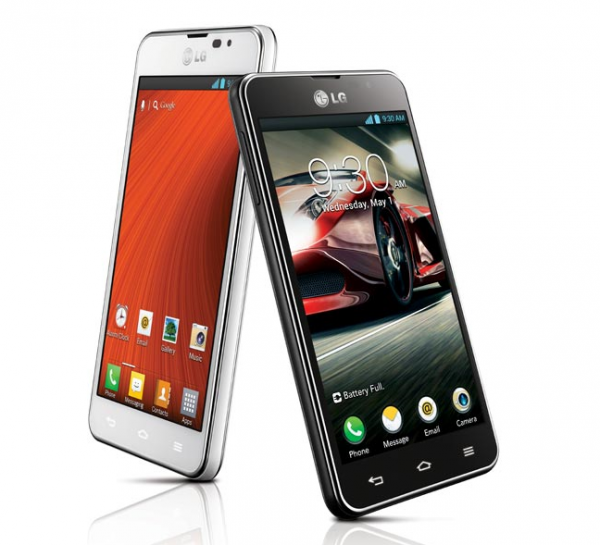
  • LG expands Optimus smartphone lineup with the new F5 and F7

    On Thursday, South Korean mobile device manufacturer LG unveiled the new Optimus F series, comprised of two smartphones, the Optimus F5 and the Optimus F7, that will debut at MWC (Mobile World Congress) in Barcelona, next week.

    The Optimus F series slots under the Optimus G lineup, the latter of which includes the Optimus G and Optimus G Pro Android flagship smartphones, sporting smaller displays and less powerful processors. Both the Optimus F7 and the Optimus F5 ship with Android 4.1.2 Jelly Bean out-of-the-box and 4G LTE cellular connectivity. But what separates the two?

    The Optimus F7 comes with a 4.7-inch True HD IPS display with resolution of 1280 by 720 and a 312 pixels-per-inch density. The smartphone is powered by a 1.2GHz dual-core processor (likely a Qualcomm Snapdragon S4), 2GB of RAM and a 2540 mAh battery.

    The Optimus F7 features 8GB of internal storage and a microSD card slot, the latter of which can accommodate up to 32GB of extra storage. Other specs include 8MP back-facing camera with autofocus and a 1.3MP front-facing shooter. The handset comes in at 131.7 x 86.2 x 9.6 mm.

    The Optimus F5 features a smaller display, a 4.3-inch IPS panel with a resolution of 960 by 540 and a 256 ppi density. Power comes from a 1.2GHz dual-core processor, 1GB of RAM and a 2,150mAh battery.

    The smartphone also sports 8GB of internal storage and a microSD card slot, similar to the Optimus F7. Other specs include a 5MP back-facing camera with autofocus and a 1.3MP front-facing shotter. The Optimus F5 measures 126.0 x 64.5 x 9.3 mm.

    On the new Optimus F5 and Optimus F7, Jong-seok Park, president and CEO of LG Electronics Mobile Communications Company says: “With adoption of LTE expected to explode in 2013, we are sending a clear message to consumers with the Optimus F Series that LTE isn’t just for heavy content users and techies anymore. It’s for everyone”.

    On both devices LG adds its traditional “UX features”, which include QSlide, allowing the user to view two apps at the same time, and Live Zooming, that can be used to zoom into a certain area while watching a video. Other software features are QuickMemo, QTranslator, Video Wiz and Safety Care, among others.

    The Optimus F5 will be available in Europe in the second quarter of 2013. The Optimus F7 will follow in “selected markets”. Obviously, LG will provide more details as to the availability and price of the two smartphones “at a later date”.

  • Monster Goldfish Found Breeding In Lake Tahoe

    Monster goldfish have been found in Lake Tahoe, and as benign as that sounds, researchers say the creatures could pose a threat to the other aquatic life there.

    While looking for invasive wildlife in the lake, researcher Christine Ngai was part of a team who found the monstrous fish on a routine scan of the waters. She says they were surprised by the find.

    “You just see this bright golden orange thing starting to float up, and you’re like, “What is that?” And then you take a net and scoop it up and it’s like, “It’s a goldfish!” Ngai said.

    The fish, experts say, were most likely dumped there from aquariums; it’s a growing problem across the nation that has seen numerous species native to their environments put in danger as they’re consumed by the goldfish.

    Despite the extreme cold temperatures of the lake, the goldfish are not only surviving in their new environment, they are actually breeding in it. This could also be a problem, because goldfish excrete certain nutrients that cause bacteria to murk up the water–not good for a tourist attraction.

    “Oftentimes people think, ‘Well, gee, if I just dumped in one fish, that’s not going to make a difference,’” Pamela Schofield, an ecologist at the U.S. Geological Survey, said. “But it can with goldfish because of the way they eat — they root around in the sediment and that suspends the sediment up in the water.”

    In short, don’t dump your fish. It’s suggested that if you want to get rid of some, get in touch with the local wildlife authority.

  • Don’t Have Time For The 2 Hour PS4 Reveal? Watch This 3 Minute Abridged Version Instead

    The PS4 reveal was an exercise in patience. There was far too much talking, and not enough showing. That being said, you still might want to watch it. Before you make that mistake, check out VideoGamer’s excellent three minute abridged version of the conference.

    Check out all of our PlayStation 4 coverage.

    [h/t: Kotaku]

  • Angry Birds Harlem Shake Video Proves This Meme Needs to Die

    Following on the heels of Groupon, Google, Facebook, and even Nintendo, Angry Birds developer Rovio has released its own “Harlem Shake” video. Not only has Rovio released a Harlem Shake video, but it appears to take place outside during the Finnish winter, where the temperature was almost certainly well below freezing when the video was shot.

    If there could be possibly be a clearer demonstration that the Harlem Shake meme needs to die, this writer can’t think of one. There are already tens of thousands of such videos up on YouTube, which is far more than enough. Of course, as we learned earlier this week from actual residents of Harlem, none of these videos even represent the real Harlem Shake.

    Rovio claims that the video is a celebration of 1 billion views on its YouTube channel. The truth is, though, that the company is simply following the new unspoken rule that every office with a YouTube channel has to release a Harlem Shake video.

  • Samsung ‘smart device’ shipments surged by an astonishing 119% in 2012

    Samsung Smart Device Shipments
    In case you needed any more evidence that 2012 was the Year of Samsung (005930), consider the latest research from IDC showing that shipments of Samsung “smart devices” — which IDC defines as smartphones, tablets, laptops and desktop computers — totaled 250 million units in 2012, an increase of over 119% from the 114 million devices the company shipped in 2011. This impressive growth vaulted Samsung ahead of Apple (AAPL) — which shipped an estimated 219 million smartphones, tablets, laptops and desktops on the year — and made the South Korean electronics manufacturer the world’s leader in smart device shipments. 

    Continue reading…

  • Tale Of The Tape: Chromebook Pixel Vs. Surface Pro Vs. MacBook Air

    cbp

    Google hasn’t always been known for making breathtaking hardware, but today’s announcement of the Chromebook Pixel — arguably one of the best-looking laptops ever made, if nothing else — means that may no longer be the case.

    Still, you can’t be blamed for being wary of shelling out a decent chunk of money on Google’s first foray into laptops, let alone a Chromebook of all things, so here’s a preliminary look at how the Chromebook Pixel stacks up against two prominent rivals in the computing space: the stock version of Apple’s 13-inch MacBook Air and Microsoft’s Surface Pro.


    *Note that we compared the base MBA and the surface Pro with upgraded storage, to establish a better baseline in terms of comparing more similar price points and spec load-outs. 

    Versus the 13-inch MacBook Air

    Compared to the base 13-inch MacBook Air, Google’s Pixel has a lot of similarities. It’s priced around the same, but actually comes in as more expensive that the OS X ultraportable, at $1299 and $1449 for options with Wi-Fi only, and Wi-Fi + LTE networking. What does the Pixel offer to justify the extra cost? It does have a denser display, with 239 ppi on a nearly 13-inch display. And that screen is touch sensitive, which isn’t something Apple can claim. But until now, it hasn’t shown off much about how touch might work with ChromeOS, though it has reportedly been “optimized” for finger-based input.

    Another place where the Chromebook Pixel falls short of its competition is in local storage. 32GB on the Wi-Fi model and 64GB on the LTE version is tiny compared to the MacBook Air, which is already pushing it with 128GB. LTE is nice to have, but, with the prevalence of hotspots and modems, arguably less important than more offline-accessible storage space.

    The Chromebook Pixel is very much aimed at the same market as the MacBook Air, with Google stressing that it’s an upscale device. But despite what looks to be a beautiful screen, this arrives with an even more experimental, touch-enabled version of an OS that has yet to prove itself with general consumers, meaning that the reasons to opt for Google’s brave new laptop over the Air perhaps aren’t as apparent as Google would’ve hoped.

    Versus the 128GB Surface Pro

    I can’t help but think about the Chromebook Pixel in relation to something like the Surface Pro, another premium computing device from a company that has historically shied away from making its own computers. Granted, the differences in execution between the two are pretty staggering, but it’s hard not to look at both devices as fresh steps into a market increasingly driven by novel hardware.

    The Pixel certainly has the Surface Pro beat when it comes to sheer screen size and resolution (it has a 12.85″ display running at 2560 x 1700, compared to the Pro’s 10.6″ panel running at 1920 x 1080), but the Surface Pro seems to sport better touch support with its included stylus and Wacom digitizer. It’s too early to say whether or not one device has a definitive advantage of the other because of their seemingly similar processors (though the Pixel could squeak by because of its slightly quicker chipset), but we’ll return to that once we get our hands on a review unit.

    Again, the Pixel may fall flat with its paltry 32GB of internal storage (though folks who spring for the LTE model will have around 64GB to play with). Sure, having a terabyte of cloud storage is neat, but those in need of real speed will prefer the Pro’s SSDs and memory card slot.

    The other big question mark here is Chrome OS itself. The Chromebook is a very handsome little machine that seems to have some horsepower under the hood to boot, but I’m curious whether or not people will choose to plunk down upwards of $1299 for a computer that exists outside of the two entrenched environments that have dominated consumer computing. Windows 8 isn’t a shining star yet either, but it’s far from a company’s side project.

    In the end…

    While the Air and Surface Pro have their share of advantages, it’s still a little too early to write the Chromebook Pixel off completely. It may just be the right computer at the right time to give Chrome OS the boost it really needs, but for now Google needs to make a better case for why people should spend $1299 on a computer that hinges on the cloud instead of, you know, anything else.

  • Nielsen, Billboard shift their tracking to account for cord cutters

    For the first time, Nielsen will begin tracking the habits of viewers who watch TV over broadband. And in another example of online media consumption shaking up traditional tracking methods, Billboard will begin including YouTube music video views in its charts.

    The Nielsen news was first reported on Wednesday by The Hollywood Reporter, which said that by September 2013 “Nielsen expects to have in place new hardware and software tools in the nearly 23,000 TV homes it samples.” Nielsen confirmed the news on Thursday, with Nielsen SVP Pat McDonough telling the New York Times that the company’s definition of “television household” will now include “those households who are receiving broadband Internet and putting it onto a television set.” According to the AP:

    “This will add roughly 160 homes to Nielsen’s current sample of 23,000 houses nationwide with meters monitoring viewing habits.

    More significantly, Nielsen will return to its sample to find homes that have cable or broadcast, but also separate TV sets hooked up through broadband. This will add an estimated 2,000 more broadband sets, significantly increasing the sample size.”

    The company is also working on ways to track viewing on smartphones and tablets.

    Separately, Billboard has begun including official YouTube music video views (from the U.S.) in its rankings. “All official videos on YouTube, including user-generated clips that utilize authorized audio, will now factor into how a song’s popularity is determined,” YouTube said on its blog. Billboard’s charts have included digital download and streaming data, tracked by Nielsen, since last year.

    Related research and analysis from GigaOM Pro:
    Subscriber content. Sign up for a free trial.

  • Stop What You’re Doing and Watch Bubbles Pop in Slow Motion

    Seriously. Life can be stressful. Unless you’re actively saving someone’s life, your job isn’t so important that you can’t take a three-minute break. This is cool, and relaxing, and mesmerizing, and all of those other types of adjectives.

    [via TheSlowmoGuys]

  • GigaOM Pro: Three trends that could transform the energy efficient data center

    GigaOM Pro analyst Adam Lesser geeked out with Power Assure CTO Clemens Pfeiffer, and came away with three undercover trends that could transform the data center with energy efficiency. You can read the entire post here, but here’s tidbits of the three trends:

    • 1) You say AC, I say DC.
    • 2) Could building management systems (BMS) take a backseat to DCIM?
    • 3) Demand response and the data center.

    Also read Adam’s take on:

    Related research and analysis from GigaOM Pro:
    Subscriber content. Sign up for a free trial.

  • Robot Blackjack Dealers Will Always Stack The Deck Against You

    I love and hate Blackjack. The simplicity of the game means I can actually understand the rules, but the game is always stacked against the players in favor of the dealer. Now a robotics company is removing the last defense players have against the all mighty dealer – human error.

    Yaskawa Motoman Robotics had its SDA10F robot deal hands at a Blackjack table last month at Chicago’s Automate 2013. The robot uses a technology called Cognex 2D vision guidance to read the cards and deal appropriately.

    This Blackjack dealing robot could be the sneakiest attempt by robots yet to subjugate humanity. The robots have realized that we would recognize a weaponized threat. Instead, the robots will now exploit our addiction to gambling. The robots will destroy us with poverty before moving in the robot mules to cart us off to the human recycling plant.

    [h/t: Singularity Hub]

  • Can it possibly be true? Microsoft is cool again?

    Could it be possible that Microsoft has become cool again? A BetaNews poll seemed to indicate Windows 8 was popular and there have been recent reports that the Surface tablet is “cool” to teens. Now there is this — a poll conducted by Reuters indicates that young people may actually think the computer company from Redmond, Wash. is cool again.

    Reuters reports that “just under half of 853 respondents between the ages of 18 and 29 thought Microsoft is cooler now than it was a year or two ago”. If this this is representative of the larger sentiment then it ties in very neatly with recent Apple problems.

    Behind the Revolution

    It is probably not hard to speculate on factors that could be behind this turn-around. After all, the company has changed almost everything over the course of the past year. Logos and websites are more modern looking, Windows Phone 8 has launched, advertising has become more upbeat compared to…well, anything the company used to do since the Rolling Stones and “Start me up”.

    The biggest things of all are likely the continued improvements being made to Xbox and the recent release of the Surface tablets. Tablets are viewed by many as the future and the Surface, along with Windows 8 or RT, has made a splash, thanks in large part to the energetic, and endlessly running TV ads.

    A Bite out of the Apple

    I previously alluded to Apple’s mounting problems — those add up. Stock prices dropping, court dates and a seemingly mounting disgust with the way the company does business. It is certainly not the end-of-times for the company, but it will need an enormous turn-around to get back to where it was only recently.

    As example, my children both at one time wanted Apple products. However, when it came time to buy our daughter a smartphone she decided Android was the way to go. Our son wanted an iPad in the worst way, but now begs daily for Nexus 7. Their friends seem to show similar inclinations of late. For the record, both kids fall under the age of the Reuters survey.

    Of course neither of those things are any better for Microsoft than they are for Apple. But my wife recently chose Windows Phone 8 after mulling the Apple-Google question. Again, not within the survey ages — sorry Hon.

    What Next?

    While this certainly is heartening to Microsoft — 50 percent is a good number, it is not yet all roses. The number does best Twitter results by three percent, but the company still came up somewhat short of the real rivals. Roughly 60 percent of those polled still think Apple is cooler and the number for Google’s Android products is even higher, at 70 percent.

    Microsoft clearly still has work to do. Chief may be getting the Windows Stores — both computer and phone — stocked with apps. The company also better hope that the next Xbox, regardless of what it will be called, makes a big splash. If Microsoft can accomplish these two things then it may truly be cool again — perhaps for the first time since circa 1995.

  • Amazon Launches Shopping App For Canadian Customers

    Amazon.ca has launched a new Shopping app for iPhone, iPad, Android and Windows Phone. The app is presumably like its American counterpart.

    “We are excited to further enhance the customer shopping experience in Canada,” said Sam Hall, VP of Mobile Shopping for Amazon. “Customers in Canada can now use the Amazon Mobile App to conveniently shop, browse and buy from anywhere, all while accessing popular features such as Prime, 1-Click ordering, customer reviews and more, right from their mobile devices.”

    Here’s a snippet from the announcement:

    To make on-the-go shopping a seamless experience, customers can sign up for a new account using the Amazon Mobile App or they can use their existing Amazon.ca username and password to access the same account they view on the Web. Customers using the Amazon Mobile App can access many of the same features as on the Web, including their cart, Wish Lists, payments, 1-Click settings, Prime membership and more, and can shop the full selection of products available on Amazon.ca, including electronics, baby, kitchen, books, movies, music, watches, sporting goods, tools and more.

    With the simple click of a button on their mobile devices, customers can have millions of products delivered to their door while benefitting from Free Super Saver Shipping on orders of eligible products over $25 or by taking advantage of Free Two-Day Shipping with Amazon Prime. The Amazon Mobile App for tablets gives users an immersive shopping experience with larger, richer images and easy access to search filters to quickly find what they are looking for.

    The app lets users choose between English and French-language shopping.

  • The insane pricing of the new HTC One

    HTC One Price
    HTC’s (2498) new One will be priced higher than the 16GB iPhone 5 in the United Kingdom. That is what makes the HTC One pricing strategy nutty. Vodafone is offering a 24-month plan for the HTC One with 600 minutes and 600 MB for £33 per month. You can get the same exact plan for the iPhone 5… except you have to pay £100 upfront sum for the One while the iPhone 5 comes free with the plan. Orange is offering a 24-month HTC One deal with unlimited voice and 1GB of data for £36 — the same as the 16 GB iPhone 5. Except that again, you have to pay £100 for the HTC’s new flagship phone and you get the iPhone 5 for free.

    Continue reading…

  • Which BlackBerry Keyboard Shortcut is Your Favorite? Be Bold and Vote

    Many of you who are regular readers know that we host polls on the Inside BlackBerry Blog from time to time, asking readers how they are using their devices. After all, we’re all getting great feedback and learning better ways to get the most out of our BlackBerry devices.

    This time around, the BlackBerry community management team wants to know which BlackBerry smartphone shortcut is most useful. We began this poll on the BlackBerry Facebook page, and the response has been huge – now we want to hear the voice of our blog readership. So which BlackBerry keyboard shortcut is your favorite? There are some classics and some new BlackBerry 10 ones to choose from like Type and Go on the BlackBerry Q10 or any of the innovative shortcuts on the BlackBerry Z10 keyboard in the video below.

    [Youtube link for mobile viewing]

    Be Bold and Vote!

    Being a BlackBerry Z10 user, myself I definitely love how fast I can move around the software QWERTY keyboard. Thank you for casting your vote, and if you’d like to share a favorite shortcut not included in the voting, feel free to post in the comments below!

  • Donald Trump’s Twitter Account Hacked, Tweets Lil Wayne Lyrics

    Donald Trump is the latest Twitter personality to feel the sting of a successful hacking. Earlier today, Trump’s account tweeted out a rap lyric to his 2 million+ followers.

    “These hoes think they classy, well that’s the class I’m skippen,” said the tweet.

    The lyrics come from Will.I.Am’s “Scream & Shout (Remix),” but are actually rapped during Lil’ Wayne’s verse. Either way, Trump was not amused:

    Trump took the opportunity to relate his scenario to the future of Twitter:

    Some Twitter accounts (notably Burger King and Jeep) have fallen victim to hacks this week. In response, Twitter released a friendly reminder about password security, instructing users to use a strong password, watch out for suspicious links, and make sure they have up-to-date malware protections.


  • Mass Effect 3′s Final DLC Announced

    Nearly one year out from the release of Mass Effect 3, EA and BioWare have announced the final DLC installments for the Mass Effect Trilogy. Two new add-ons, Mass Effect 3: Reckoning and Mass Effect 3: Citadel will be coming soon to Xbox 360, PlayStation 3, and PC.

    Reckoning will be released on February 26 and be free to download for one year. The content will offer new multiplayer characters, weapons, and upgrades.

    Citadel will be released on March 5 and will cost $15 or 1200 Microsoft Points. EA‘s announcement stated that it will feature new single-player campaign content in which players will explore a “deep-space station” while “having the opportunity to reconnect with some of their favorite characters from all three of the Mass Effect games.”

    “The team has poured heart and soul into Mass Effect 3: Reckoning and Mass Effect 3: Citadel,” said Casey Hudson, executive producer of the Mass Effect series. “As the launch of these chapters near, the feeling around the studio is bittersweet. We have always been humbled and driven by the passion of our fans for the Mass Effect trilogy. We hope fans will enjoy spending more time with some of their favorite characters – we have certainly enjoyed spending time creating them. We’re excited to release this final sendoff for the trilogy and move forward into the future of the Mass Effect universe.”

  • Google’s Chromebook Pixel Looks Like A Pricey Boondoggle, Or The Platypus Of The Notebook World

    Platypus_BrokenRiver_QLD_Australia2

    Google unveiled is fabled Pixel Chromebook today, and the thing does indeed have what looks to be a gorgeous, high-resolution display. It also has a touchscreen, as rumored, and the list gets more confusing from there. 32GB (or 64GB) of onboard storage? ChromeOS? A 3:2 screen ratio? A $1299 starting price tag? Huh?

    The device is meant to be upscale, Google admits, but for a machine aiming at power users, it’s a device surprisingly devoid of power features. ChromeOS is, for all its strengths, still essentially a browser, after all. This thing can’t run Photoshop, which you’d be able to do no problem if you spend $100 less and get a 13-inch MacBook Air. It can play back movies on that gorgeous screen, but not in as many file formats or with as much ease as you could manage with a Lenovo Yoga 13, also cheaper at $1,049. It can accept touch input, which could be exciting, but then again might not, and that’s hardly a feature worth risking a cool $1300 for.

    Which isn’t to say the Pixel isn’t attractive. It’s a looker, to be sure, and something I’d definitely be interested in owning myself. The 1TB of Google Drive storage and the LTE radio on the $1449 model make for an attractive package, so long as you’re already deeply committed to Google’s cloud storage ecosystem. But a gadget blogger wanting something and an everyday consumer being willing to cough up over $1,000 for it are two entirely different things, and the Pixel has too many of those moments that make you tilt your head slightly to provide any chance at success in that regard.

    ChromeOS is a risky proposition on a $249 laptop for most people. It’s still just too new, and too untested in a world where you’ll attract far fewer headaches just going with OS X or Windows. With a price tag that makes it almost an impulse buy, it’s an understandable risk. At $1299, it’s not.

    ChromeOS is a risky proposition on a $249 laptop for most people

    Google doesn’t always care about marketability for its first generation devices. It originally tried to sell the Nexus One direct for $529, a price many felt was too high, contributing to the eventual failure of that experiment. The Pixel is also introduced as “a laptop that brings together the best in hardware, software, and design to inspire future innovation” on Google’s website, meaning it probably isn’t intended to fly off the shelves, but more to light a fire under hardware partners and developers.

    Still, announcing a consumer launch (including a retail partnership with Best Buy) for the Chromebook Pixel (a device that looks like the notebook world’s equivalent of a hastily assembled Lego project built from memory) just comes off as weird. I once lauded Google’s strategy in going for cheap, ubiquitous data network access with previous hardware launches, and I’m all for technical innovation that explores new territory. But I see no answer to the question of “Why?” when it comes to the Pixel.