France has unveiled a financing plan that would result in the government and private companies spending €20 billion ($27 billion) over the next 10 years bringing high speed broadband and fiber connectivity to the country. The news comes after the EU’s budget cut almost all of the $7 billion it planned to spend bringing broadband in Europe.
Yet Europe still hopes to have 50 percent of the population at 100 Mbps speeds by 2020 with the rest of the population at 30 Mbps.
France’s president Francois Hollande outline the plan in a speech earlier this week, according to a Reuters story. From the story:
Three tranches of more than 6 billion euros each will fund the planned network rollout, Hollande said. One will come from network operators, one from a mix of operators and local government and the last from state and local-government money.
The goal is for 50 percent of the country to have faster broadband — although those speeds weren’t specified — by 2017. France attempted this before, but it failed because operators didn’t want to invest in rural areas where the costs of deployments are higher. Under the new plan, operators will be able to pool their capital to fund those areas, which may or may not actually inspire them to invest. The details aren’t clear, but if operators could share rural networks and all provide service on them, it might be a model worth watching for future rural deployments.
Prussia against France is one of those classic 19th century military face-offs that I’ve been wanting to play since I was in the seventh grade and still learning about the complexities of European politics during the previous century.
Many video games have simulated the conflict, using various levels of detail, but I was never skilled enough to pla… (read more)
Google has released a new Offers format for AdWords ads. Larry Kim, CTO of Wordstream, who was an early Google partner on Enhanced Campaigns shared this screen cap with us:
Kim calls it “Google’s plan to kill Groupon,” and says these ads matter because:
1) Way better deal than Groupon who requires 50-90% discounted pricing, then takes 50% of that for themselves.
2) Advertisers can track this. Local businesses can connect the dots between online marketing and in-store purchases. Not possible before!
3) I think they’ll be rolling this out on Google Maps. Local Deals + Google Maps = perfect match!
Sound quality is a hugely important part of the multimedia experience on mobile devices that often gets overlooked. It’s not easy to convey how big the impact of good sound quality is on the overall experience, but a new Parks Associates study commissioned by Dolby set out to do just that. The study’s findings, set to be published later today by Dolby, show that the majority of smartphone owners consider sound quality to some degree when choosing a smartphone or tablet. After hearing an audio demonstration from a device that features enhanced sound, however, the overwhelming majority of users acknowledge that audio quality is an important feature on mobile devices.
Researchers from the Department of Energy’s Pacific Northwest National Laboratory will exhibit their work at the 2013 Energy Innovation Summit of high-impact energy research funded by DOE’s Advanced Research Projects Agency-Energy, or ARPA-E. The summit runs Feb. 25-27 at the Gaylord Convention Center in National Harbor, Md. Below is an overview of PNNL research that will be highlighted there.
Nighttime solar power with cheaper thermal energy storage
Booth 1211
Solar power is a clean source of energy, but its use is limited to when the sun shines. One option that extends solar energy into the night involves capturing the sun’s heat during the day and releasing it when it’s dark. Called thermal energy storage, the practice has been limited because the molten salts typically used to store solar heat for power production require large, expensive equipment. PNNL materials scientist Ewa Rönnebro and her team have shown that a powder made of a proprietary metal hydride can store up to 10 times more heat per mass than molten salts and operate at higher temperatures. PNNL and project partners University of Utah and Heavystone Lab are developing a 3 kilowatt-hour thermal demonstration system that will collect heat for six hours and discharge it over another six hours. If successful, the project could make thermal energy storage systems smaller and more cost-competitive.
New fuel storage tanks lighten the load for compressed natural gas vehicles
Booth 1237
With the nation’s supply of natural gas increasingly abundant and inexpensive, the fuel is being considered as a cleaner way to power light-duty cars and trucks. But while more than 15 million natural gas vehicles operate throughout the world, only about 150,000 are running on America’s roads. One challenge is that natural gas exists as a vapor, meaning it contains less energy per volume than the denser, liquid gasoline most of us pump into our cars. Natural gas must be compressed into a pressurized fuel tank to increase its energy density. PNNL engineer Kevin Simmons and his team are developing special, lightweight fuel tanks that make better use of the limited space available in vehicles. PNNL’s fuel tank design uses a unique manufacturing method called superplastic forming. The method involves welding together metal sheets at specific points and blowing air in between the sheets to expand them, forming internal chambers like an air mattress. The expanded metal tank will conform to more of a vehicle’s space than traditional cylinder tanks. It also helps the cars weigh less, which makes them more fuel-efficient. The PNNL tank is expected to cost $1,500 to make and pack 12 megajoules of energy per kilogram, about twice the energy density of today’s metal compressed natural gas tanks. Lincoln Composites is a partner in the project.
Rare earth-free magnet makes electric motors cheaper with more abundant materials
Booth 1114
From wind turbines to electric vehicle motors, magnets play an essential role in a variety of today’s electronic devices. But there’s a limited supply of the rare earth minerals that are traditionally used in these magnets. In particular, dysprosium is added to increase a magnet’s operating temperature, which is high in motors. But dysprosium has been named a critical material with unstable availability. PNNL materials scientist Jun Cui and his team are developing a manganese-based nano-composite magnet that doesn’t contain dysprosium or any other rare earth mineral. The new magnet can operate at 200 degrees Celsius. The team’s immediate goal is to make a permanent magnet with 10 MGOe, or megagauss-oersteds, a measurement of magnetic energy. With additional funding, the team will work to develop a 20-MGOe magnet, which would be more useful for a broader set of commercial applications. Project partners include PNNL, the universities of Maryland and Texas at Arlington, Ames Laboratory, Electron Energy Corp. and United Technologies.
Membrane dehumidifier makes air conditioners up to 50 percent more efficient
Booth 635
Americans unnecessarily spend billions of dollars on power bills when humid air causes their air-conditioning systems to be inefficient. To cut electricity use for cooling in hot, humid climates by 50 percent, a team led by ADMA Products and including PNNL and Texas A&M University is developing a novel dehumidifier. The system uses a thin membrane developed by PNNL chemical engineer Wei Liu and his PNNL colleagues that acts as a molecular sieve and soaks up water from the air. The membrane consists of a thin, foil-like metal sheet that’s coated with a layer of a water-attracting material called zeolite. Just one-fifth the width of human hair and made from common, inexpensive materials, the membrane removes moisture from air many times faster than dehydration membrane products currently on the market. PNNL is developing a small, lab-scale prototype of its system, and the project team has created a manufacturing method that can be used at larger scales. Visit Liu at the ADMA Products booth, or hear him pitch the technology to a panel of investors at ARPA-E’s Future Energy Pitching Session, which runs 6:30-8:30 p.m. Monday, Feb. 25. Click here for more info on the pitching session.
New way to heat, cool electric vehicles reduces drain on driving range
Booth 1112
The combustion engines in gasoline-powered cars generate a lot of heat, which is great for heating the passenger cabin in winter. But energy-efficient electric vehicles produce very little waste heat. Providing electricity for the same amount of heat used in gasoline cars would reduce electric vehicles’ driving range by up to 40 percent. PNNL engineer Pete McGrail is leading a team that includes the University of South Florida to develop a material called an electrical metal organic framework, also called an EMOF, for electric vehicle heating and cooling systems. The material would work as a molecular heat pump that efficiently circulates heat or cold. By directly controlling the material’s properties with electricity, their design is expected to use much less energy than traditional heat and cooling systems. A 5-pound, EMOF-based heat pump that is the size of a 2-liter bottle could theoretically handle the heating and cooling needs of an electric vehicle with far less impact on driving distance. While using a unique testing system that applies voltage to the material, the team observed for the first time an EMOF transitioning from an off, or insulating, state to an on, or semiconducting, state. The transition demonstrated the project’s premise, coincided with a change in the material’s crystal structure and was completely reversible. The team is now making other EMOFs with similar switching abilities and higher adsorption capacities that improve performance in an electric heat pump.
Reporters interested in scheduling interviews with the PNNL scientists about the above projects should contact Franny White at (509) 375-6904 (office) or (360) 333-4793 (cell). More information about these projects and other PNNL research, including transactive control of a smart power grid, is also available at the PNNL display, located at booth 1108.
In case you haven’t heard the latest “Kardashian news,” Jimmy Kimmel has you covered. He has an idea for a new Kardashian show that they’re “testing” in case Kim goes away.
While I hate using Buzzfeed-style headlines, this video warrants the hyperbole. We’re all familiar with the magic of quadcopters – they can fly in formation, roll around obstacles, and even interact with each other. This video demo, however, takes the cake. These little fellows are flying in formation while balancing a reverse pendulum. They’re essentially doing baton tricks in mid-air.
Created by the folks at ETH Zurich’s Flying Machine Arena this video shows the robotic cooperation not seen since Voltron. The project, by Dario Brescianini, involved a great deal of mathematic modeling.
To achieve this feat, Dario and his supervisors Markus Hehn and Raffaello D’Andrea started with a 2D mathematical model. The goal of the model was to understand what motion a quadrocopter would need to perform to throw the pendulum. In other words, what is required for the pendulum to lift off from the quadrocopter and become airborne?
The project involved assessing the necessary forces and angles required to launch the pendulum off of the little, flying platform and then the attendant moves necessary to grab the pendulum from mid-air. In short, we’re talking about robots that could pass an object over an obstacle without much difficulty.
SpaceX/Tesla/Paypal founder Elon Musk appeared on Jimmy Kimmel Live to talk to Jimmy for about ten minutes, and the show has uploaded the interview to its YouTube account for those intrigued by Musk’s story to enjoy.
As an added bonus, the topic of sex robots does come up.
Google launched Chrome 25 beta last month, which included support for voice commands via the Web Speech API. Now, voice recognition has come to the stable release.
Developers can use the API to to integrate speech recognition capabilities into their web apps, so Chrome users can benefit from the feature.
Google has a demo here, if you want to see how it works.
The release also disables silent extension installs in Chrome for Windows.
“This keeps Chrome fast and safe by ensuring that you consent to every extension that’s installed on your computer,” says Google software engineer Glen Shires.
The new features will come with the auto-update as the release is rolled out.
Once the darling of Wall Street, Apple (AAPL) shares have plummeted in recent months as investor sentiment turned sour. Many analysts believe the company’s current slump will be reversed as new products like the “iWatch” and Apple’s rumored HDTV launch — even Apple bulls who have pumped the brakes a bit still hold sky-high price targets — but one industry watcher believes Apple’s glory days in the market are behind us.
Global adoption of smart TVs grew in 2012 as the prices of connected TV sets from the likes of Samsung (005930), LG (066570), Sony (SNE) and discount vendors continued to fall. According to a report released this week by market research firm IHS iSuppli and picked up by Twice, smart TV shipments climbed 27% in 2012 to reach 66 million units. By 2015, the smart TVs will make up 55% of the market as global shipments climb to 141 million units. “Despite a decline in global television shipments in 2012, consumer demand for Internet-connected televisions soared during the year — and the surge in sales shows no signs of abating,” IHS analyst Veronica Thayer said. “Smart TVs are rapidly joining the mainstream as manufacturers refine their products to add new features and to make them easier to use.”
It’s a week of new things on the GigaOM Podcast. Tom Krazit has stepped in as the new co-host as Erica Ogg went off and launched her own app review video series. Sony talked (and talked and talked and talked) about it’s new PlayStation 4 console. Google unveiled a heavy duty Chromebook Pixel. And finally, we look at how Tesla is doing with its new Model S.
SHOW NOTES: Co-hosts: Chris Albrecht and Tom Krazit Guests: Ryan Davis, Sr. Editor, GiantBomb.com Katie Fehrenbacher, Sr. Writer, GigaOM
00:00 – 12:14 – Sony reveals some stuff about the PS4 12:15 – 20:51 – Chromebook Pixel, the laptop with a touch 20:52 – 29:04 – Tesla’s earnings will shock you! (not really)(well, maybe)
Since almost nothing will actually be announced at Mobile World Congress this year, LG (066570) on Thursday unveiled two new smartphones that will launch later this year. The Optimus F5 and Optimus F7 Android phones look to build on the success of earlier Optimus models while also introducing some key improvements. The mid-range Optimus F5 features a 4.3-inch, 256 ppi display, a 1.2GHz dual-core CPU, a 5-megapixel camera, 8GB of storage, a microSD card slot, 1GB RAM, a 2,150mAh battery and Android 4.1.2 Jelly Bean. The higher-end Optimus F7 includes a 4.7-inch, 312 ppi display, a 1.5GHz dual-core processor, an 8-megapixel camera, 8GB of storage, a microSD card slot, , 2GB RAM, a 2,540mAh battery and Android 4.1.2 Jelly Bean. Both phones will launch in the second quarter, and LG’s full press release follows below.
Sony (SNE) finally took the wraps off its next-generation PlayStation 4 on Wednesday evening, and the upcoming gaming console is packed with premium specs that will help usher in the next stage in the evolution of gaming. Sony touted some great tie-ins with the PlayStation Vita during its two-plus-hour-long presentation, but its mobile ambitions extend beyond its own beleaguered portable console. Within Sony’s PS4 press release, the company announced that it will soon launch second screen experiences on the iPhone, iPad and Android devices thanks to its upcoming “PlayStation App.” Few details were provided, but the relevant section from Sony’s press release follows below.
Popular sexting app maker Snapchat on Thursday updated its Android application of the same name with the ability to send self-destructing videos to Snapchat contacts. The video function had been available in the Snapchat Android app as part of a closed beta, but it is now available to all users in Snapchat 2.0. Snapchat bills its app as a way to “build relationships, collect points, and view your best friends,” though the most widely discussed use for the service is sending nude photos — and now, videos — between devices that are automatically deleted after a set amount of time… unless the recipient decides to use a simple trick to save the files permanently. Snapchat 2.0 is available immediately for free in the Google Play store, which is linked below.
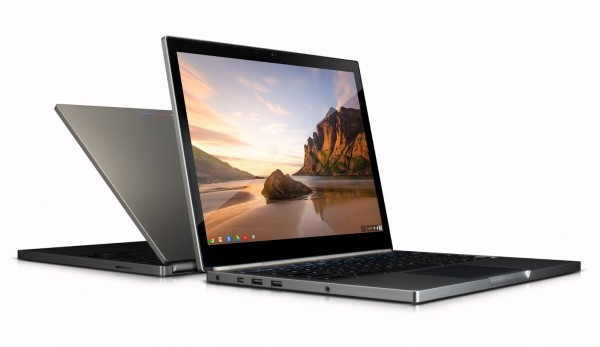
That sound you just heard was Google slapping Apple across the face. Today the search and information giant unveiled and starting selling high-end portable Chromebook Pixel. By just about every measure, Google guns for Apple in its dominant market — premium PCs, or those selling for $1,000 or more. When rumors circulated about the computer, I opined: “Chromebook Pixel looks like MacBook Pro to me“. The impression is stronger now that the real deal is here — from form factor to price, either $1,299 or $1,449.
Should Apple sweat about Chromebook Pixel? I would. Following a years-long retail trend, Apple share of PCs selling for $1,000 or more was over 90 percent in 2012, according to NPD. Stephen Baker, NPD’s vice president of industry analysis, asks if Google is “more trying to compete with Apple and high-end windows machines for premium consumer and maybe corporate?” I answer: Yes. What I want to know: Will you buy Chromebook Pixel? But more importantly: Would you buy Chromebook Pixel instead of 13-inch MacBook Pro?
For Whom?
For many of you the answer is an automatic “No”, because $1,000 is already too much. “I would never pay that much for any computer”, my colleague Alan Buckingham says. “Five-hundred dollars is the limit”. He paid $400 for his current laptop one-and-a-half years ago.
Then there are concerns Google’s “For Everyone” marketing campaign, which emphasized value, creates expectations Chromebooks shouldn’t cost much.
“It just seems like a big jump on price and specs and customer focus to me”, Baker says. During the holidays, Google aggressively promoted the $249 Samsung Series 3 Chromebook, which sells for more than $1,000 less than Pixel. Baker “would have rather seen a more mundane $699-$799 type product that directly brought the value of the Chrome OS to compete with a large iPad or a Win 8 touch machine”.
David Rodríguez Andino agrees with Baker: “Google is crazy pricing this at $1,300. A high-end Chrome OS device should be priced around $700 IMO”.
Commenting to one of my Google+ posts, Ian Betteridge turns “For Everyone” on its head: “The thing was that up until now, Chromebook wasn’t ‘for everyone’. For people like me, who value high-end, well designed hardware with great screens, there was no Chromebook that fitted the bill. Now there is. ‘Everyone’ doesn’t just mean ‘only people who want cheap plastic machines’”. He has a Chromebook Pixel already and so speaks with more authority than I.
I agree with Betteridge. Much as I like current Chromebooks, using Microsoft Surface Pro for nearly a month has me pining for high-resolution display and better performance. The new model promises both and for less than 13-inch MacBook Pro, which I would consider having ended the Apple boycott.
Value has different measures. Armando Ferreira asks the same question I do: “Google, are you poking at Apple because your commercial and price tag sure seem like it?” Value compared to something else, in this case MacBook Pro, is one measure.
Specifications
Here’s how the two laptops compare:
Chromebook Pixel: 12.85-inch touchscreen, 2560 x 1700 resolution, 239 pixels per inch; 1.8GHz Core i5 processor; Intel HD graphics 4000; 4GB DDR3 RAM; 32GB or 64GB of storage; HD WebCam; backlit keyboard; dual-band WiFi 802.11 a/b/g/n 2×2; 4G LTE (on one model); Bluetooth 3.0; mini-display port; two USB ports; Chrome OS. Measures: 297.7 x 224.6 x 16.2 mm. Weighs: 1.52 kg (3.35 pounds). Cost: $1,299 (32GB WiFi); $1,449 (64GB WiFi/4G LTE). 1TB Google Drive storage is included free, for three years.
MacBook Pro: 13.3-inch LED display, 2560 x 1600 native resolution, 227 ppi; 2.5GHz or 2.6GHz Core i5 processor; Intel HD graphics 4000; 8GB DDR3L RAM; 128GB or 256GB storage; HD Webcam; backlit keyboard; 802.11n wireless; Bluetooth 4; two USB 3 and Thunderbolt ports; HDMI port; OS X. Measures: 314 x 219 x 19 mm. Weighs: 1.62 kg (3.57 pounds) Cost: $1,499 (2.5GHz, 128GB); $1,699 (2.6GHz, 256GB).
Usage scenarios are different, which applies to Windows touchscreen computers, too. Chrome OS largely runs apps in the browser, while MacBook Pro supports local apps. Chromebook’s big draw is touchscreen, lower price and TB of free cloud storage. Is that compelling enough for you?
“Pixel is not going to fly of[f] the shelves like a new Mac Book Pro, but it has a niche”, Simon Bengtsson asserts. “There is definitely people caring about simplicity, design and an amazing user experience. Previous Chromebooks has compromised on the last two”.
Pixel Perfect?
At 4:13 p.m. EST, David Hoff “just finished ordering my new Chromebook Pixel”.
Jeff Jarvis got one, too, and chimes in with Betteridge:
I was wishing for a beefier Chromebook. Having proven itself at the low end of the market, I’ve been saying that I wished Google would come up with one at the high end. Now it has: The Chromebook Pixel. I just bought one, sight unseen. It has more memory, a faster processor, a touchscreen (which I’m looking forward to), and LTE built into the most expensive machine. At $1,500 it’s comparable to a Macbook, though I don’t need to buy any software for it.
Jarvis, who has been using the $249 Samsung Chromebook, makes a good point about additional costs: Software.
Peter Sitterly sees value beyond the machine that more than pays for it: “This is definitely priced higher than I thought it would be, but the fact that it comes with 1TB of Google Drive storage for 3 years changes the game a bit. For those who may already be paying $49.99 per month for 1TB of cloud storage, this is a no-brainer. This device would essentially save such folks from $1,799.64 worth of monthly fees over that 3-year span”.
Hasan Ahmad: “Chromebook pixel is the kind of product that Google releases to see how far their rabid fanboys will go to worship them”. I see something more Apple-worship-like here, because of design and features.
Off topic perhaps, but there’s something strange about the social buzz excitement that grates Ferreira, and I have to agree:
You guys know I like Google but help me understand this for a second. Microsoft releases the Surface Pro (64GB) $899.00, it can run legacy apps also all of your Android apps (Bluestack) and also the ability to run another OS like Ubuntu. Yet it’s ‘too expensive’. Google releases the Chromebook which in theory is just a Web Browser, can’t run legacy apps, maybe will one day run Ubuntu (Waiting on devs) only has 32GB of storage for $1,299.00 and people expect to jump on this like peanut butter on jelly?
Right. Why does Microsoft get grilled for Surface Pro passing ($899 or $999), while Google gets a pass?
So roundabout, I return to the two questions: Will you buy Chromebook Pixel and would you buy instead of 13-inch MacBook Pro? Please take the poll above and respond in comments below.
I’m taking a break from writing about the nitty gritty of Hadoop to highlight yet another promising use case for big data — fighting crime. A new study by University of Michigan researchers details a method for using — according to a university press release — “high-powered computers and loads of data” to help police target neighborhoods most susceptible to high crime rates.
However, it’s not the idea of using data to predict or even solve crime that excites me. We’ve seen those ideas floated before by IBM and even other researchers, and some police departments are already using them. Rather, I’m intrigued by the possibility that this new research could actually help prevent crime by uncovering causes of crime that might have been ignored previously or were just too latent to actually take into account.
Source: University of Michigan
The researchers used myriad data sources — everything from demographic data to drug offenses to the types of alcohol served nearby — in order to create a crime heatmap of Boston. They even considered how the attributes of adjacent neighborhoods affect can affect crime rates in their neighbors. As they add in more data, the researchers think they’ll be able to get a better idea of how those additional variables affect crime rates.
The results, at least as described in the press release (the full paper is available for purchase), are somewhat revelatory, but you can read them yourself.
The bigger picture is one I outlined recently while discussing the promise of big data with regard to gun violence. When we get creative and use the countless data sources now available to us, combined with unprecedented computing capabilities, we can start to analyze things in new ways and see relationships we might not have seen before. In the case of crime broadly or gun crime specifically, there might be geographic, socio-economic or public policy factors that could help governments fight the disease rather than just the symptoms.
Of course, the areas that stand to benefit from big data techniques go far beyond crime. Among the ones we’ll cover at Structure: Data (March 20-21 in New York) alone are health care, medical research, personal finance, national security and commerce. The way I see it, the technology keeps improving and the data keeps proliferating, so it’s up to us to figure out how to use them to solve some of our thorniest business and social problems.


 Prussia against France is one of those classic 19th century military face-offs that I’ve been wanting to play since I was in the seventh grade and still learning about the complexities of European politics during the previous century.