
Author: Serkadis
-
Motorola offers $50 Google Play store credit for new smartphone buyers
-
MIT Is Teaching Robots How To Learn From Their Mistakes
Students at MIT are teaching robots how to adapt, as discussed in this video. At the IEEE International Conference on Robotics and Automation, students will be presenting a pair of papers “showing how household robots could use little lateral thinking to compensate for their physical shortcomings,” as MIT explains.
This particular video features MIT senior Annie Holladay demonstrating her algorithm that helps a robot adapt by using both arms instead of just one:
-
These Robots Will Do Your Gardening
Co.Exist ran a piece about nursery bots from Harvest Automation, which gives us a glimpse into the not too distant future where robots are replacing humans for a variety of tasks.
The company specializes in behavior-based robotics.
“Our intelligent, behavior-based approach to automation provides a scalable and robust system architecture for robots that enables them to operate in even the most challenging environments,” it says on its site. “Harvest’s highly adaptable, behavior-based platform responds immediately to changes in the work environment, intelligently accounts for imperfect sensory data, and requires little setup and no programming.”
Its robots perform the following functions: spacing, re-spacing, collection and consolidation.
Here’s a look:
-
Samsung ‘smart device’ shipments surged by an astonishing 119% in 2012

-
GigaOM Pro: Three trends that could transform the energy efficient data center
GigaOM Pro analyst Adam Lesser geeked out with Power Assure CTO Clemens Pfeiffer, and came away with three undercover trends that could transform the data center with energy efficiency. You can read the entire post here, but here’s tidbits of the three trends:
- 1) You say AC, I say DC.
- 2) Could building management systems (BMS) take a backseat to DCIM?
- 3) Demand response and the data center.
Also read Adam’s take on:
- Chinese hackers and the power grid.
- Siemens jump into the data center management game.
- And our cleantech fourth quarter numbers analysis (subscription required).

Related research and analysis from GigaOM Pro:
Subscriber content. Sign up for a free trial.- The fourth quarter of 2012 in cleantech
- Cleantech third-quarter 2012
- Live Event Coverage: Next-Gen Applications for the Smart Grid


-
Amazon Launches Shopping App For Canadian Customers
Amazon.ca has launched a new Shopping app for iPhone, iPad, Android and Windows Phone. The app is presumably like its American counterpart.
“We are excited to further enhance the customer shopping experience in Canada,” said Sam Hall, VP of Mobile Shopping for Amazon. “Customers in Canada can now use the Amazon Mobile App to conveniently shop, browse and buy from anywhere, all while accessing popular features such as Prime, 1-Click ordering, customer reviews and more, right from their mobile devices.”
Here’s a snippet from the announcement:
To make on-the-go shopping a seamless experience, customers can sign up for a new account using the Amazon Mobile App or they can use their existing Amazon.ca username and password to access the same account they view on the Web. Customers using the Amazon Mobile App can access many of the same features as on the Web, including their cart, Wish Lists, payments, 1-Click settings, Prime membership and more, and can shop the full selection of products available on Amazon.ca, including electronics, baby, kitchen, books, movies, music, watches, sporting goods, tools and more.
With the simple click of a button on their mobile devices, customers can have millions of products delivered to their door while benefitting from Free Super Saver Shipping on orders of eligible products over $25 or by taking advantage of Free Two-Day Shipping with Amazon Prime. The Amazon Mobile App for tablets gives users an immersive shopping experience with larger, richer images and easy access to search filters to quickly find what they are looking for.
The app lets users choose between English and French-language shopping.
-
Google Ups Its Cloud Platform Support Game
Google announced the launch of a new set of support packages for services on the Google Cloud Platform today. These cover App Engine, Compute Engine, Cloud Storage, Cloud SQL, BigQuery, etc.
“While you can go to Stack Overflow or Google Groups, we realize some of you may need 24×7 coverage, phone support or direct access to a Technical Account Manager team,” says Brett McCully from Google’s Cloud Platform team.
There are four tiers:
- Bronze: All customers get access to online documentation, community forums, and billing support. (Free)
- Silver: In addition to Bronze, you can email our support team for questions related to product functionality, best practices, and service errors. ($150/month)
- Gold: In addition to Silver, you’ll receive 24×7 phone support and consultation on application development, best practices or architecture for your specific use case. (Starts at $400/month)
- Platinum: The most comprehensive and personalized support. In addition to Gold, you’ll get direct access to a Technical Account Manager team. (Contact Sales for more information)
Here’s another way to look at it:

More info here.
-
Has Yahoo Improved Its Homepage? Many Think Not.
Yahoo has been testing various redesigns of its homepage for months, but now it has announced the “new Yahoo experience”.
Note: We’ve updated this article from its original form, and since it was first posted, the negative comments have flooded in. While you will typically see this with any redesign of a major property, we’re not seeing a whole lot of positive ones to balance them out.
Anything you do like about it? What do you or don’t you like about the revamp? Let us know in the comments.
“Over the years, Yahoo! has evolved from a directory of links to a place that helps millions of people go about their daily habits,” a spokesperson for the company told WebProNews on Wednesday. “Beginning today, you will start to see a new Yahoo! that’s designed to be more modern, intuitive, and personal, and I wanted to make sure you got the news from the company.”
Here’s what the homepage looks like now:

New features include:
- A newsfeed with infinite scroll
- Newly designed apps for stock quotes, sports scores, weather, Flickr photos, friends’ birthdays and horoscope
- Yahoo and Facebook login, which let you see personalized articles based on what your friends have shared
- A more consistent experience across the web, smartphones and tablets
- Under-the-hood improvements to speed things up
CEO Marissa Mayer wrote a blog post about the new experience.
“Designed to be more intuitive and personal, the new Yahoo! experience is all about your interests and preferences,” she says. “Since streams of information have become the paradigm of choice on the web, we’re introducing a newsfeed with infinite scroll, letting you experience a virtually endless feed of news articles. Whether you are a sports fanatic or entertainment buff, you can easily customize your newsfeed to your interests. And, to make Yahoo! even more social, you can log in with your Yahoo! or Facebook ID to get articles from thousands of news sources as well as those shared by your friends.”
“Because you come to Yahoo! everyday for must-know information, we’ve also introduced newly designed applications,” she adds. “From your local weather forecast to Facebook friends’ birthdays, you’ll always have the information you need. We’ve also refreshed some of what you love most — including our Yahoo! editorial features, and the daily snapshot into popular trending web searches.”
Mike Kerns, VP, Product, discussed the new Yahoo experience in more detail in a post on Yahoo’s blog.
“To view more personally relevant content in the newsfeed, just sign in with your Yahoo! or Facebook ID in the upper right corner of your screen,” he explains. “The newsfeed defaults to a ‘blend’ of story types, but also allows you to filter your view through a handful of popular categories, such as news, local, entertainment and sports. For additional choices in the newsfeed filter, just click the ‘More’ button to choose from other categories that interest you like business, technology, politics or science. If you want to see fewer stories about a particular topic in the future, hover your cursor to the right of the story and click on the ‘X’ button. And remember, the more feedback you provide, the more personalized and relevant your experience will be.”


“In addition to seeing news stories that your friends have read and shared, you can easily share with them,” he says. “When you come across a news item that you’d like to share, hover over it to view a button that allows you to share the story via email, Facebook, or Twitter.”

There are a total of seven new applications on the right side of the screen for: weather, stocks, sports, friends’ birthdays, horoscopes, Flickr photos, and popular videos from Yahoo. These can be personalized by hovering over the upper right side to clic the gears icon.
“For example, getting ready for March Madness? Add your favorite teams to the Sports application to catch up on the latest scores,” says Kerns. “Keeping an eye on your investments? To view stock quotes, click on the gears icon in the Quotes application to integrate your portfolio, look up quotes, or add new stocks. Travel often? Add as many cities as you’d like to the Weather application.”

You can also click the “x” button in the upper right corner of the application box to remove the application, should you see fit. There’s a “restore all” button a the bottom if you want to bring it back later.
As mentioned, the new design is consistent with the mobile experience, which lets you swipe through the “Today” stories. You can scroll down the newsfeed, and swipe left to take action on the content (like share it). You can also swipe left to access the applications.

The new design is in the process of rolling out in the U.S. Mayer says they’ll be making additional (but unspecified) changes in the coming months. We’re already seeing a lot of feedback (sadly, most of it is negative). It will be interesting to see how Yahoo responds.
Yahoo has indicated that it is focused on search, as it released its Q4 and full year 2012 earnings helped significantly by it. Whether or not Yahoo’s future search plans include Microsoft remains to be seen. Even if Yahoo wants to abandon the companies’ “Search Alliance,” Microsoft will do its best not to make it easy.
Right now, Yahoo needs to be concerned about keeping users on its still massively popular homepage. Yahoo has a realtime counter that shows how many people have visited the homepage up to the current time on any given day. At the time of this writing, tt’s just 8:40 Eastern, and it’s already received nearly 40 million views today so far.
What do you think of the new homepage? Let us know in the comments.
-
Twitter Goes DMARC To Fight Phishing
Over a year ago, fifteen major companies joined forces to create DMARC, a “technical working group” to develop antiphishing standards. The companies were: Google, Facebook, LinkedIn AOL, Microsoft, Yahoo, PayPal (eBay), Bank of America, Fidelity Investments, American Greetings, Agari, Cloudmark, eCert, Return Path and Trusted Domain Project.
Today, Twitter announced that it is using the DMARC technology with its emails, making it less likely that users will see any email pretneding to be from a Twitter.com address.
“We send out lots of emails every day to our users letting them know what’s happening on Twitter. But there’s no shortage of bad actors sending emails that appear to come from a Twitter.com address in order to trick you into giving away key details about your Twitter account, or other personal information, commonly called ‘phishing’,” said Twitter Postmaster Josh Aberant.
“Without getting too technical, DMARC solves a couple of long-standing operational, deployment, and reporting issues related to email authentication protocols,” he said. “It builds on established authentication protocols (DKIM and SPF) to give email providers a way to block email from forged domains popping up in inboxes. And that in turn lessens the risk users face of mistakenly giving away personal information.”
Twitter began using DMARC earlier this month. AOL, Gmail, Hotmail/Outlook and Yahoo Mail all take advantage of the technology.
-
Dell leads $51.6M investment in flash storage startup Skyera
Skyera, the startup that is bringing the cost of Flash-based storage down by using consumer-grade chips, said it has closed $51.6 million in Series B financing led by Dell Ventures. The deal, announced on Thursday, included participation from other strategic investors and is Skyera’s second round.
It’s also a huge amount of money, but Skyera is riding a wave of interest in solid state storage, which is both faster and consumes less power than traditional hard drives. But Flash-based SSDs are also more expensive than hard drives on a per gigabyte basis — which has limited their use to places where companies can’t afford not to pay for faster performance.
As my colleague Barb Darrow noted in a profile on Skyera last year, the company brags that it can achieve a $3 per GB cost which is still pricier than a hard drive but less than what Fusion-io recently announced with its latest NAND flash card product. Fusion said it could achieve per GB prices of around $3.89. From Barb’s profile:
To get to cheap flash enterprise storage, Skyera uses inexpensive Multi-Level Cell (MLC) NAND flash, but found a way to do it to prolong the lifespan of the media. It is able to use high-density sub-20-nm MLC flash because its controller dynamically adjusts as the medium ages to reduce damage over time.
The funding will be used to integrate next-generation flash memory chips produced at 20 nanometers into Skyera’s product as well as boost sales.
As for Dell, which is setting itself up to be the provider of hardware for webscale and cloud vendors with its DCS division, investing in SSDs makes absolute sense, especially if there are ways it can integrate Skyera’s technology more deeply in its gear. For Skyera, having Dell as an investor might help it build out a lucrative sales channel.

Related research and analysis from GigaOM Pro:
Subscriber content. Sign up for a free trial.- A near-term outlook for big data
- Infrastructure Q3: OpenStack and flash step into the spotlight
- Flash memory: the continuing disruption of enterprise storage

-
Chromebook Pixel is Microsoft’s worst nightmare come true — and Apple’s, too
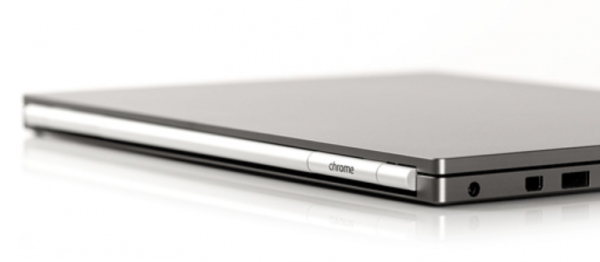
The rumors were true! Google developed a touchscreen Chromebook for release this year. Like today! No one should misunderstand what the computer means competitively. Already, four Microsoft Windows partners produce Chromebooks — Acer, HP, Lenovo and Samsung. Chromebook Pixel promises to do for the Chrome OS platform what Nexus devices did for Android smartphones and tablets: Establish a reference design for hardware partners and provide developers base system to develop apps for the platform. But it’s also a competitive move against PCs running OS X or Windows and Google pushing Chrome OS into the premium notebook market.
Today Google unveiled Chromebook Pixel, following weeks of rumors. The company also extended a vision for Chrome OS. Bottom line: Commitment to the operating system is strong. The search and information giant briefed journalists in different cities. I had to turn down an invite to the San Francisco briefing because of family matters. Do I feel left out! But, hey.
The computer is available now for order from Google Play — and you’ll pay, too. This isn’t the value-system touted in “For Everyone” marketing. Chromebook Pixel is for anyone willing to spend $1,299 or $1,449. Orders made right now ship in three to five days for the lower-cost model, 6 to 7 weeks for the other.
Specs: 12.85-inch touchscreen, 2560 x 1700 resolution, 239 pixels per inch, 3:2 aspect ratio; 400-nit brightness; 1.8GHz Core i5 processor; Intel HD graphics 4000; 4GB DDR3 RAM; 32GB or 64GB of storage; HD WebCam; backlit keyboard; dual-band WiFi 802.11 a/b/g/n 2×2; 4G LTE (on one model); Bluetooth 3.0; mini-display port; two USB ports; Chrome OS Measures: 297.7 x 224.6 x 16.2 mm. Weighs: 1.52 kg (3.35 pounds. Cost: $1,299 (32GB WiFi); $1,449 (64GB WiFi/4G LTE). 1TB Google Drive storage is included free, for three years.
Crazy Concept
Let’s step back and look at the larger context. The concept is crazy. Who launches a new PC operating system and succeeds (look for the answer in the next subhead)? Suddenly Chrome OS poses a credible threat to Windows and OS X. The four OEM partners is a sign, as is the success of Google’s “For Everyone” holiday campaign for Chromebooks.
There’s a concept called “six degrees of separation”, which Hungarian writer Frigyes Karinthy proposed in the 1929 short story “Chains”. No two people are separated by more than five intermediaries, which works out to six degrees of separation. If I ask any four people in my social circles if they have Chromebook, at least one answers yes.
Google is on the fast-track. In less time than Microsoft developed and released Windows 8, Google released the first Chromebook prototypes (December 2010), the first commercial models went on sale (June 2011), second-generation Chromebooks launched (May 2012), new-gen ARM model debuted (October 2012) and two of the three largest PC OEMs started selling Chromebooks (January-February 2013). Meanwhile, since October, two major Chrome OS updates released — yeah, months, not the years from Apple or Microsoft.
Google’s big play is value. OEMs pay nothing to license Chrome OS and consumers pay much less for the computers. I could buy four Samsung Series 3 ARM-based Chromebooks for the price of one MacBook Air and get system of similar size, weight and ergonomics. See yesterday’s post “Why I love Chromebook“, as reference.
Browser OS
Chrome OS success so far is a water-shed development that Microsoft feared long ago. In May 2011 post “Chrome OS: The ghost of Netscape rises go haunt Microsoft“, I explained how Google’s operating system fulfills ambitions of the original, commercial developer. During the late 199os, Microsoft integrated Internet Explorer into Windows partly to prevent Netscape from creating, in the browser, a rival platform for applications development. Google has created the rival platform Netscape product managers envisioned 17 years ago. The browser is the operating system — or the front end running on top of Linux.
In June 2007, I wrote “Why Google Succeeds” — in parts one and two — for Microsoft Watch; the content remains hugely relevant six years later. “Unchecked, Google is on course to be the next hugely successful computing platform”, I wrote.
Netscape wasn’t really Microsoft’s competitive problem in the late 1990s but the web itself. Already, by the mid Noughties many developers had made the web priority over Windows. Where do you think cloud computing comes from? “Developer interest in the Web platform — and the promise of information access anytime, anywhere and on anything — shifts standards away from Microsoft’s dominant platforms”, I explained six years ago. Google rode the web platform’s coattails, pushing adopted or open standards along the way.
Smartphone and tablet platforms shift applications development, but ultimately the web remains, if for nothing else than the browser engine being used in many applications.
Chrome OS success to date is contrary-thinking. The old axiom is this: no one launches a new PC operating system and succeeds, because:
- There aren’t enough applications
- Switching costs are too high, particularly for businesses
- The new thing doesn’t fit in with what people already have
The first of these is typically the most difficult. Operating systems like BeOS failed if for no other reason than apps and the typical chicken-egg scenario. Which comes first? Platforms need applications to succeed, but developers have little incentive to create them if there is little adoption. If there are no apps, people don’t adopt the platform.
Google has apps. Lots of them, because of the browser. Chrome OS benefits from more than two decades of browser development. Additionally, Google had the foresight to launch the Chrome Web Store nearly three years ago. In May 2010, I gave five reasons for the move. The first: “Google is launching a new operating system”.
Chrome web apps run in the browser or Google OS. So anyone using Chrome can carry them to Chrome OS. Google also provides a tightly-integrated suite of cloud services, such as Apps and Gmail, that cover categories businesses already use. Switching is as easy as logging into a Google account on a new PC. Chrome OS fits because the browser is the most familiar motif people use every day.
Contextual Computing
Some people may wonder why Google invests so much in a laptop, when smartphones and tablets are the future of computing. There is no post-PC era. That’s marketing propaganda from the mouth of Apple cofounder Steve Jobs. The PC’s role changes, but not disappear. The personal computer goes from being the device hub to one of many connected to the cloud. What matters more is context, how your digital lifestyle moves from device to device adapting differently to your needs in various situations.
The cloud is all about context. Content follows users everywhere, independent of device. Your music is available anytime, anywhere, on anything. On the airplane, there is no HDTV, but you want to watch a movie. So you start on a tablet and finish on the big screen at home. The content remains the same, but devices and locations change, as does the context.
Google product and services are highly contextual. Context is in the corporate DNA. Overture, which Yahoo acquired in 2003, invented the business model Google perfected, selling keywords and ads around search. Hell, it’s called contextual advertising — for a reason.
The search and information giant started making key contextual cloud investments in the late Noughties, with 2008 releases Android (September/October) and Chrome (December) being among the most important platforms. Then there is Chrome OS.
In 2011 and 2012, Google starred to bring together a larger package of contextually-oriented offerings alongside Google+ and Search, plus your World. These services are all about context, providing what you want where you need it. Google offers many services, but search, alongside these nine — Apps; Drive, Gmail; Google Now; Google+; Maps; Search, plus your World; Talk; YouTube — forms the current contextual platform that culminates in one service.
Three platforms (Android, Chrome and Chrome OS) are the contextual gateways to Google products and services and those from its development and advertising partners. Chrome on OS X and Windows is where Google citizens live because they have to. Chrome OS is their country, where they have full and easy access to all contextual services.
Touch Me
As part of its contextual push, Google advances concepts around natural user interfaces — that make you more part of the UI. Touch is among the most important, and there are good reasons why Apple and Microsoft support touch in their operating systems.
Bill Buxton, Microsoft’s principal researcher, is an expert in user experiences. He says that a good natural user interface must address four human skill sets:
- Motor sensory skills
- Cognitive skills
- Social skill
- Emotional skills
Stated differently, good natural user interfaces answer the question: “How do people function?”
Human beings are tool users who experience and manipulate the world through five senses. While the eyes are the gateway, they are passive instruments. Hands and fingers are more important because they are active — they’re how people tactilely manipulate the world around them. People examine objects they desire as much with their hands as their eyes. Watch how people interact with items for sale — first people look, and then they touch.
The keyboard is a particularly unnatural construct, in which organization is based on the number of times letters are likely to be used. The mouse is more natural than the keyboard, because of the hand and finger-clicking movement. But the mouse is still a makeshift extension of the human being.
The finger and touch are more natural, because they extend you. Same goes for voice, when used to command, which many NUIs allow. Good user interfaces build on the familiar — and there is nothing more familiar than me, myself and I. See, say, hear and touch.
The point: Computing devices that capture the senses are seemingly living things with some human-like qualities. Chromebook is dead without touch.
-
Google unveils $1,300 touch-enabled Chromebook Pixel [video]

-
Global News: Level 3, Alcatel-Lucent, Juniper
Here’s a roundup of recent headlines from the data center industry around the world:
Level 3 selected to expand Rocket Internet to Brazil. Level 3 Communications (LVLT) announced Rocket Internet, a global e-commerce website developer headquartered in Germany, is expanding its reach in Brazil by using Level 3′s hosting and network services for its servers. “We chose Level 3 because of its recognized position in the e-commerce market and the amount of value-added services it provides,” said Fabricio Pettena, CIO at Rocket Brazil. “Our relationship with Level 3 already exists in Europe and now expands to one of the most promising e-commerce markets in South America.” Level 3 will provide hosting services for Rocket’s websites at its data center located in Cotia, Sao Paulo. Operating in Brazil since 2011, Rocket Internet develops retail websites with a focus on sportswear, children’s products, handicrafts and home goods.
Alcatel-Lucent to boost network in Belgium. Alcatel-Lucent (ALU) and Belgium service provider Belgacom announced plans to expand its network infrastructure as it continues to address the exponential growth in bandwidth demand driven by demand from customers, businesses, data centers and content platforms. To meet current and future bandwidth needs Belgacom will deploy Alcatel-Lucent’s Extensible Routing System (XRS). The 7950 XRS allows Belgacom to support the rapid adoption of ‘cloud’ applications, the explosion in video traffic and the widespread use of smartphones and tablets and prepares the core of their network for the next decade of growth. “The XRS is a truly groundbreaking innovation, capable of reinventing the very heart of the Internet,” said Luis Martinez Amago, President of Alcatel-Lucent’s EMEA region. “It will benefit Belgacom significantly in both meeting the needs of home and institutional customers, and in lowering the operational cost of running an IP network, while at the same time reinforcing our long-term relationship and cooperation in bringing innovations to market that improve the experience of consumers.”
Juniper selected by Finland mobile services provider. Juniper Networks (JNPR) announced Elisa, a leading mobile services provider in Finland, has deployed Juniper Networks MobileNext mobile packet core solution to support the future data growth in its network. Elisa is expecting a significant growth in data traffic primarily driven by the increased use of LTE-enabled mobile devices. “Juniper’s MobileNext solution has enabled Elisa to not only meet the demands of today’s highly mobile world but also prepares us for the next generation of “anytime, anywhere” services,” said Timo Katajisto, executive vice president, Production, Elisa. ”We methodically selected Juniper for our LTE expansion because they clearly understand mobile network innovation, and will deliver strategic value as our business partner rather than just a supplier.” Built on a foundation of MX Series Universal Edge Routers Elisa’s deployment uses the Juniper MobileNext solution to focus on service-specific performance and scalability with resilient security capabilities.
-
Google announces new Chromebook Pixel, a top-of-the-line, touch-enabled cloud machine: My impressions
 Google today announced Chromebook Pixel, its next-generation cloud computer that is powered by an Intel Core i5 processor and comes ready to connect to Verizon’s LTE network is based on its Chrome OS. It will ship in about three months. The device is going to cost $1,499 with LTE and $1,299 with just Wi-Fi and it is available to order on Google Play today and from Best Buy tomorrow morning. The Wi-Fi version will be available in the U.K. as well.
The Mountain View, Calif-based company has designed and built this new machine to carefully integrate the software, its web services and the hardware in a seamless manner. “About two years ago, we decided to rethink the laptop,” said Sundar Pichai, senior vice president of Google Chrome. The big idea: re-imagine the laptop for cloud services.
 For instance, since the web-oriented machine’s primary task is to use the web, the size of the screen has been modified from 16:9 size to 3:2, a development that is going to delight the fans of classic IBM ThinkPad. The device’s screen is reminiscent of Apple’s Retina display and is powered by the Intel Core i5 processor and uses SSD flash. It delivers about five hours of battery time. The Wi-Fi version has 32 GB of flash, and the LTE version has 64 GB of flash as storage. ”We think our ecosystem will respond with new devices that use touch and Chrome OS,” said Pichai.
 “It brings best of Google together — everything is built right in,” said Pichai. Gmail, the Chrome browser and other Google apps are integrated into this device.The device also has built-in QuickOffice, a mobile productivity suite Google acquired in 2012. And the big news: Google Drive will come with 1 TB of storage space. Why? Photos, of course.
If you have photos on an SD card, then the device will automatically find and upload them to Google Plus Photos, a somewhat creepy and evil tactic by Google to goose its Google Plus un-social network. Of course you can share those photos via Google Plus and other Google services — nevermind the fact that we like to use Twitter and Facebook and Instagram to share. Pichai said that services such as Twitter and Facebook can write to their hardware APIs to do seamless uploads.
“Web hasn’t had touch and high-resolution screens before,” said Pichai. He argued that opens up whole different opportunities for developers. It goes without saying that the emergence of the iPad has changed our expectations of how we interact and consume information. The new Chromebook Pixel is a tip of the hat to that new reality of today’s computing environment. “In the future all laptops will have touch built into them,” Pichai said.
In a quick hands-on, the device met the claims made by Pichai and his team. The build quality is top notch, reminiscent of Macbook Pros. The 3.3-pound device has a great keyboard and the screen is indeed a good rival to the Retina display. The device is really speedy, but it is the network speeds that will define how one experiences the Chromebook Pixel.
I surfed through a few websites — and clicked on a lot of ads, unintentionally. I used Google Maps and Google Photos and used touch to experience them. I am guessing that there is a growing number of people who want touch on their laptops — I simply use the iPad for all things cloud.
That said, I have some reservations about the device and its positioning. It is hard to pay $1,299 for a device when I can get a better-equipped MacBook Air, which despite its age is a lot more flexible and expandable. Pichai said that he wanted to focus on the high end of the market because they want power users, early adopters and developers to embrace this platform.
A good idea in theory — except that for developers to develop on this platform, Google needs scale for Chromebook Pixel and that means it needs a whole lot of machines in the hands of people. A Wall Street Journal report from Wednesday indicated that Google sold a mere 100,000 of these devices in the fourth quarter of 2012.
Pichai and I argued a bit about the pricing strategy: my belief is that they need to sell a lot more devices so the price has to be much much lower. Pichai argues that one needs to be able to open our mind to the possibilities of a cloud-based machine. He said that one shouldn’t look at the 32 GB of storage, but instead focus on the terabyte of storage space that comes as part of Google Drive.
“The device is for a segment committed to living to the cloud, and who really want a good, high-end laptop, and we believe we have built the best laptop for that experience,” he added.


Related research and analysis from GigaOM Pro:
Subscriber content. Sign up for a free trial.- Connected world: the consumer technology revolution
- Analyzing the wearable computing market
- Who and what to watch in the new era of the living room

-
Why IPS Devices and Firewalls Fail to Stop DDoS Threats
Cloud computing and the growing usage of the Internet has placed even greater demands on a corporate data center. Now, organizations are relying more and more on their IT infrastructure to be the mechanism to drive growth and enable agility. Because of this focus on the data center, concerns around security have continued to grow as well. As a result, the growing scale and frequency of distributed denial of service (DDoS) attacks are taking a toll on these businesses.
The creativity in attacks has evolved with the growth in data center utilization. Where “volumetric” attacks were common, now organizations have to deal with advanced application-layer attacks. Furthermore, they are seeing greater amounts of attack-based data being thrown at an organization. The challenge now becomes understanding how modern security system interact with DDoS attacks.
IPS devices, firewalls and other security products are essential elements of a layered-defense strategy, but they are designed to solve security problems that are fundamentally different from dedicated DDoS detection and mitigation products. When analyzing the structure and impact of a DDoS attack, administrators must understand that their current security infrastructure may not necessarily protect them against a denial of service attack. This is where working with Intelligent DDoS Mitigation Systems is a must. IDMS solutions are placed within a data center to help prevent both volumetric and application-layer attacks. Arbor Networks outlines the key features of IDMS and how they can benefit an organization. These features include:
• Stateless
• Inline and Out-of-Band Deployment Options
• Scalable DDoS Mitigation
• Ability to Stop “Distributed” DoS Attacks
• Multiple Attack Countermeasures
• Comprehensive Reporting
• Industry Track Record and EnterpriseDownload this white paper to see where current security devices fall short and how a DDoS attack can actually maneuver around modern firewalls and IPS solutions. By securing both internal and external data center components, security administrators create a logical layered defense strategy. By doing so, managers are able to be proactive against attacks and help prevent data loss, unwanted intrusions, and increase uptime.
-
SQL is what’s next for Hadoop: Here’s who’s doing it
When we first began putting together the schedule for Structure: Data several months ago, we knew that running SQL queries on Hadoop would be a big deal — we just didn’t know how big a deal it would actually become. Fast-forward to today, a mere month away from the event (March 20-21 in New York), and the writing on the wall is a lot clearer. SQL support isn’t the end-game for Hadoop, but it’s the feature that will help Hadoop find its way into more places in more companies that understand the importance of next-generation analytics but don’t want to (or can’t yet) re-invent the wheel by becoming MapReduce experts.
In fact, there are now so many products and projects pushing SQL queries and interactive data analysis on Hadoop — including two more announced this week — that it’s getting hard to keep track. But I’ll do my best.
Of course, Facebook began this whole movement to bring SQL database-like functionality to Hadoop when it created Hive in 2009. Hive, now an Apache project, includes a data-management layer and SQL-like query language called HiveQL. It has proven rather useful and popular over the years, but Hive’s reliance on MapReduce makes it somewhat slow by nature — MapReduce scans the entire data set and moves a lot of data over the network while processing a job — and there hasn’t been much effort to package it in a manner that might attract mainstream users.
And keep in mind that this next generation of SQL-on-Hadoop tools aren’t just business intelligence or database products that can access data stored in Hadoop; EMC Greenplum, HP Vertica, IBM Netezza, ParAccel, Microsoft SQL Server and Teradata/Aster Data (which this week released some cool new features for just this purpose) all allow some sort of access to Hadoop data. Rather, these are applications, frameworks and engines that let users query Hadoop data from inside Hadoop, sometimes by re-architecting the underlying compute and data infrastructures. The beauty of this approach is that data is usable in its existing form and, in theory, doesn’t require two separate data stores for analytic applications.
Data warehouses and BI: The Structure: Data set
 I’m highlighting this group of companies first, not because I think they’re the best (although that might well be), but because I’m truly excited about the panel they’ll be featured on at our conference next month. The panel is moderated by Facebook engineering manager Ravi Murthy– a guy who knows his way around a database — so they’ll have to answer some tough questions from one of the most-advanced and most-aggressive Hadoop and analytics tools users out there:
Apache Drill: Drill is a MapR-led effort to create a Google Dremel-like (or BigQuery-like) interactive query engine on top of Hadoop. First announced in August, the project is still under development and in the incubator program within Apache. According to its web site, “One explicitly stated design goal is that Drill is able to scale to 10,000 servers or more and to be able to process petabyes of data and trillions of records in seconds.”
Hadapt: Hadapt, which actually launched at Structure: Data in 2011, was the first of the SQL on Hadoop vendors and is somewhat unique in that it has a real product on the market and real users in production. Its unique architecture includes tools for advanced SQL functions and a split-execution engine for MapReduce and relational tasks, and both HDFS and relational storage. In October, the company announced a tight integration with Tableau Software around advanced visual analytics.

 Platfora: Technically not a SQL product, Platfora is red-hot right now and is trying to re-imagine the world of business intelligence for a big data world. Essentially an HTML5 canvas laid atop Hadoop and an in-memory, massively parallel processing engine, the company’s software, which it unveiled in October, is designed to make analyzing data stored in Hadoop a fast and visually intuitive process.
Qubole: Qubole is an interesting case in that it’s essentially a cloud-based version of the popular Apache Hive framework launched by the guys who created Hive while working at Facebook. Qubole claims it auto-scaling abilities, optimized Hadoop code and columnar data cache make its service run much faster than Hive alone — and running on Amazon Web Services makes it easier than maintaining a physical cluster.

Data warehouses and BI: The rest
Citus Data: Citus Data’s CitusDB isn’t just about Hadoop, but rather wants to bring the power of its distributed Postgres implementation to all types of data. It relies on Postgres’s foreign data wrappers feature to convert disparate data types into the database’s native format, and then on its own distributed-processing technology to carry out queries in seconds or less. Because of its Postgres foundation, CitusDB can join data from different data sources and retains all the native features that come with that database.

Cloudera Impala: Cloudera’s Impala might just be the most-important SQL-on-Hadoop effort around because of Cloudera’s expansive installation and partner footprints. It’s a massively parallel processing engine that bypasses MapReduce to enable interactive queries on data stored in either HDFS or HBase, using the same variant of SQL that Hive uses. However, because Cloudera doesn’t build applications, it’s relying on higher-level BI and analytics partners to provide the user interface.

Karmasphere: Karmasphere is one of the first startups to build an analytic application atop Hadoop, and in its 2.0 release last year the company added support for SQL queries of data in HDFS. Like Hive, Karmasphere still relies on MapReduce to process queries, which means it’s inherently slower than newer approaches. However, unlike Hive, Karmasphere allows for parallel queries to run at the same time and includes a visual interface for writing queries and filtering results.

Lingual: Lingual is a new open source project from Concurrent (see disclosure), the parent company of the Cascading framework for Hadoop. Announced on Wednesday, Lingual runs on Cascading and gives developers and analysts a true ANSI SQL interface from which to run analytics or build applications. Lingual is compatible with traditional BI tools, JDBC and the Cascading family of APIs.
Phoenix: Phoenix is a new and relatively unknown open source project that comes out of Salesforce.com and aims to allow fast SQL queries of data stored in HBase, the NoSQL database built atop HDFS. Its stated mission: “Become the standard means of accessing HBase data through a well-defined, industry standard API.” Users interact with it through JDBC interfaces, and its developers claim its sub-second response times for small queries and seconds-long response for querying tens of millions of rows.

A sample of Phoenix via the SQuirreL client
 Shark: Shark isn’t technically Hadoop, but it’s cut from the same cloth. Shark, in this case, stands for “Hive on Spark,” with Hive meaning the same thing it does to Hadoop, but with Spark being an in-memory platform designed to run parallel-processing jobs 100 times faster than MapReduce (a speed improve over traditional Hive that Shark also claims). Shark also includes APIs for turning query results into a type of data format amenable to machine learning algorithms. Both Shark and Spark are developed by the University of California, Berkeley’s AMPLab.
 Stinger Initiative: Launched on Wednesday (along with a security gateway called Knox and a faster, simpler processing framework called Tez), the Stinger Initiative is a Hortonworks-led effort to make Hive faster — up too 100x — and more functional. Stinger adds more SQL analytics capabilities to Hive, but the most-important aspects are infrastructural: an optimized execution engine, a columnar file format and the ability to avoid MapReduce bottlenecks by running atop Tez.
Operational SQL
Drawn to Scale: Drawn to Scale is a startup that has built an operational SQL database on top of HBase. The key word here is database, as its product, called Spire, is modeled after Google’s F1 designed to power transactional applications as analytic ones. Spire has a fully distributed index and queries are sent only to the node with the relevant data, so reads and writes are fast and the system can handle lots of concurrent users without falling down.

 Splice Machine: Database startup Splice Machine is also trying to get into the operational space by building its Splice SQL Engine atop the naturally distributed HBase database. Splice Machine focuses its message on transactional integrity, which is really where it separates itself from scalable NoSQL databases and analytics-focused SQL-on-Hadoop efforts. It relies on HBase’s aut0-sharding feature in order to making scaling an easy process.
Feature image courtesy of Shutterstock user hauhu.

Related research and analysis from GigaOM Pro:
Subscriber content. Sign up for a free trial.- The importance of putting the U and I in visualization
- Infrastructure Q1: Cloud and big data woo enterprises
- A near-term outlook for big data

-
The part of wearables that geeks forget about: not looking like a tool
The geeks at Google designing their augmented reality glasses project — Google Glass — are turning to the fashionable folks at online glasses startup Warby Parker, according to the New York Times. The idea is that while Google can pioneer the engineering of connected glasses that can take pictures, record videos and go online hands-free, they’re not exactly the leading thinkers when it comes to fashionable eyewear.
 Fashion is something that will become increasingly important for wearables as they become more mainstream. Connected wristbands — like Nike’s FuelBand and Jawbone UP — will only be adopted by a certain section of the population, and startups like Misfit Wearables are emerging to try to make style and design of their wearable device (the Shine) their differentiating factor.
It’s even more important when the wearable is on your face. The Bluetooth headset, regardless of a product’s sleek design, sends an instant dork signal to anybody passing by.
I love this quote from BaubleBar co-founder Daniella Yacobovsky in the New York Times article on the next thing that wearables like Google Glass need:
“Is it useful? Of course it is. Do I look like a tool? Yeah. I’m not going to wear it.”
At our RoadMap event November 2012, which was focused on connected design, Warby Parker co-CEO and co-founder Dave Gilboa talked about design, fashion and giving consumers what they want. We’ll be hosting the third annual RoadMap later this year in November, and will continue to discuss these subjects. In the meantime, check out Gibloa’s thoughts in this video:

Related research and analysis from GigaOM Pro:
Subscriber content. Sign up for a free trial.- Analyzing the wearable computing market
- Connected world: the consumer technology revolution
- The future of mobile: a segment analysis by GigaOM Pro

-
Purported second-gen iPad mini shell leaks in new photos

-
Facebook Ready For Google Glass, Zuck Talks To Brin [Report]
Facebook founder Mark Zuckerberg and Google co-founder Sergey Brin (along with Priscilla Chan, Anne Wojcicki and Yuri Milner) announced a $3 million prize for medical reasearch on Wednesday. That was the big story.
Behind the scenes, another story was transpiring. Forbes has a very interesting piece about a discussion Brin and Zuckerberg reportedly had about Google Glass – a conversation, which Forbes reports that Zuckerberg said wasn’t “supposed to be a thing” as he discouraged photography of the meeting (other than for private use).
The report from Ryan Mac, quotes Zuckerberg as saying about Glass, “I can’t wait to get my own.”
More interesting yet, it says Facebook already has a team of three people, including a former Googler, set aside, waiting to get their hands on Google Glass so they can develop for it.
While it remains to be seen what will happen, it’s good to see the companies are at least talking, after recent comments from Zuckerberg indicating that they were not.
Perhaps Brin’s constant wearing of Glass will prove to be a valuable business decision.
In other Google Glass news, word is that Google has asked Warby Parker to help improve the device’s fashion sense. Fashion and Facebook could prove to be incredibly helpful assets for Google in terms of getting it to take off.
Google is currently taking applications from people to get the chance to buy one. They’re certainly creating a lot of buzz.
Here’s the latest video showing of its current capabilities.
-
More evidence of tablets slowly killing the PC market
So it turns out this tablet market isn’t quite a fad after all. Research firm IDC has numbers to prove it, publishing on Thursday the reported 2012 shipment figures for smartphones, tablets, laptops and desktops. It won’t surprise you that smartphones continue to be the tops among these devices, but it may surprise you that tablet shipments have nearly caught up with those of desktops.
I was joking about the tablet “fad” of course; I’ve been sharing details of the fast-growing tablet trend for some time. Over a year ago, I explained in a GigaOm Pro report why the “PC” you buy in three years won’t be a PC, but instead will likely be a tablet (subscription required).
The numbers are in
To be fair, desktops are the dinosaurs of the PC industry as laptops first enabled mobility that smartphones later extended. So maybe the fact that only 20.1 million more desktops than tablets shipped in 2012 doesn’t impress you. Instead, take a look at the laptop market, where tablet shipments approached 63.5 percent of laptop shipments last year.

Think about that for a second. The consumer tablet market arguably started with Apple’s iPad in 2010. And in three years, the market is nearly equal that of desktops and is on track to surpass laptops possibly this year. All it would take is the roughly the same rate of growth for both tablets and laptops.
That’s not an unreasonable assumption and if it holds true, 229 million tablets would hit the market in 2013 while the laptop market would shrink to just under 200 million units.
What’s different? Everything.
Why is this market changing? Again, one need only look to the past to see the future. I said this last March when discussing how tablets could outsell PCs in 2013:
“Mobile devices are enabling new economies, opportunities and functions we couldn’t envision just a handful of years ago. Ignore this trend and you’re sure to think there’s no way tablets could ever outsell PCs, let alone do so within the next two years. Look at the next generation embracing tablets, however, and you start to see that the idea isn’t so far-fetched after all.”
With new application stores selling touch-optimized software on lightweight but capable hardware, tablets — and smartphones to an equal degree — are disrupting the traditional computing markets along with our ideas of what “computing” actually is. Full-featured legacy apps and devices will be around for years yet, but mobile apps are breaking features into bite-sized chunks of instant functionality at the tips of your fingers.
An alternative view of this disruption is to suggest that the PC and tablet market don’t really compete against each other. That sounds reasonable on the surface. After all, if there are tasks you need to complete requiring a desktop or a laptop, you’re likely to use one of those. But three points come to mind with that way of thinking.
Three reasons the trend will continue
First, many consumers and enterprises see tablets as more than just the toys that some dismissed them as in 2010. That’s evident by the actual figures of shipments and to a degree, sales. How often do you see a particular laptop or desktop that’s sold out or has a several week wait before delivery? Now consider the same for tablets: short supply for them could be related to production issues, of course, but strong demand is part of the equation as well.
Second, I’m seeing more and more instances of people hanging on to their older computers longer. That’s just anecdotal of course; I don’t have a massive sample size to work with. Don’t take my word for it, though. Check with your family and friends and see if the trend holds: Potential tablet purchases are likely to outweigh PC acquisitions.
 Last, you can see the industry reaction to the tablet market. It’s undeniable; look at WinTel: Intel is working feverishly on getting its chips to work with mobile operating systems while also reducing the power draw. Microsoft’s Surface products? They’re Redmond’s answer to the tablet market with Surface RT trying to offer a best of both worlds between tablets and traditional desktop software such as Microsoft Office.
Again — because I know I’ll get the “PCs aren’t going anywhere” responses — the traditional PC will be around for years yet. Some computing activities just aren’t suited to the capabilities of tablet. But the problem for PC makers, Microsoft and others that figured their market was secure for ages is that the disruption already happened. Reacting now is too late because the market has already shifted in a new direction. It’s only just now that the evidence really shows the PC market won’t have a chair to sit in when the music stops playing.

Related research and analysis from GigaOM Pro:
Subscriber content. Sign up for a free trial.- Connected world: the consumer technology revolution
- Analyzing the wearable computing market
- Who and what to watch in the new era of the living room


