Author: Alan Buckingham

  • Skype video messaging for Windows 8 out now

    On April 30th, while announcing Skype video messaging for the desktop, Microsoft let it be known that the feature would be coming to the Windows 8 app soon, as well. The company did not lie — soon arrives today. The communication app already had video calling, but Skype Video Messaging lets you record and send a video message, as opposed to making a live call. This enables getting your message across, even when the recipient is away from his or her PC or phone — think SMS with video capability.

    The new version of the Skype “Metro” app is officially 1.7 and available now from the Windows Store, although the feature is still considered a “preview”.

    Microsoft purchased Skype two years ago this month and has been slowly working the functionality into its software, such as Windows and Outlook.com. The company has also made Skype a feature of the Office 365 Home Premium subscription, by adding premium minutes into the package, along with expanded SkyDrive storage.

    Microsoft’s Yamin Khan tells us that “as we continue to test Video Messaging in its early release, we’d love to hear your feedback so we can continue to make improvements. Please let us know what you think of this feature by posting in the Skype Support Network”. The company has proven to be much more responsive in recent times, so if you have a comment or suggestion then I recommend following Khan’s advice.

  • EFF report: Twitter has your back, but Verizon says ‘screw you’

    The Electronic Frontier Foundation, an organization dedicated to protecting the rights of consumers, publishes its report on safety in the digital age. There are some winners and also some major losers this time around in the “Who has your back?” statement — hint put down your cell phone, step away slowly and nobody gets hurt.

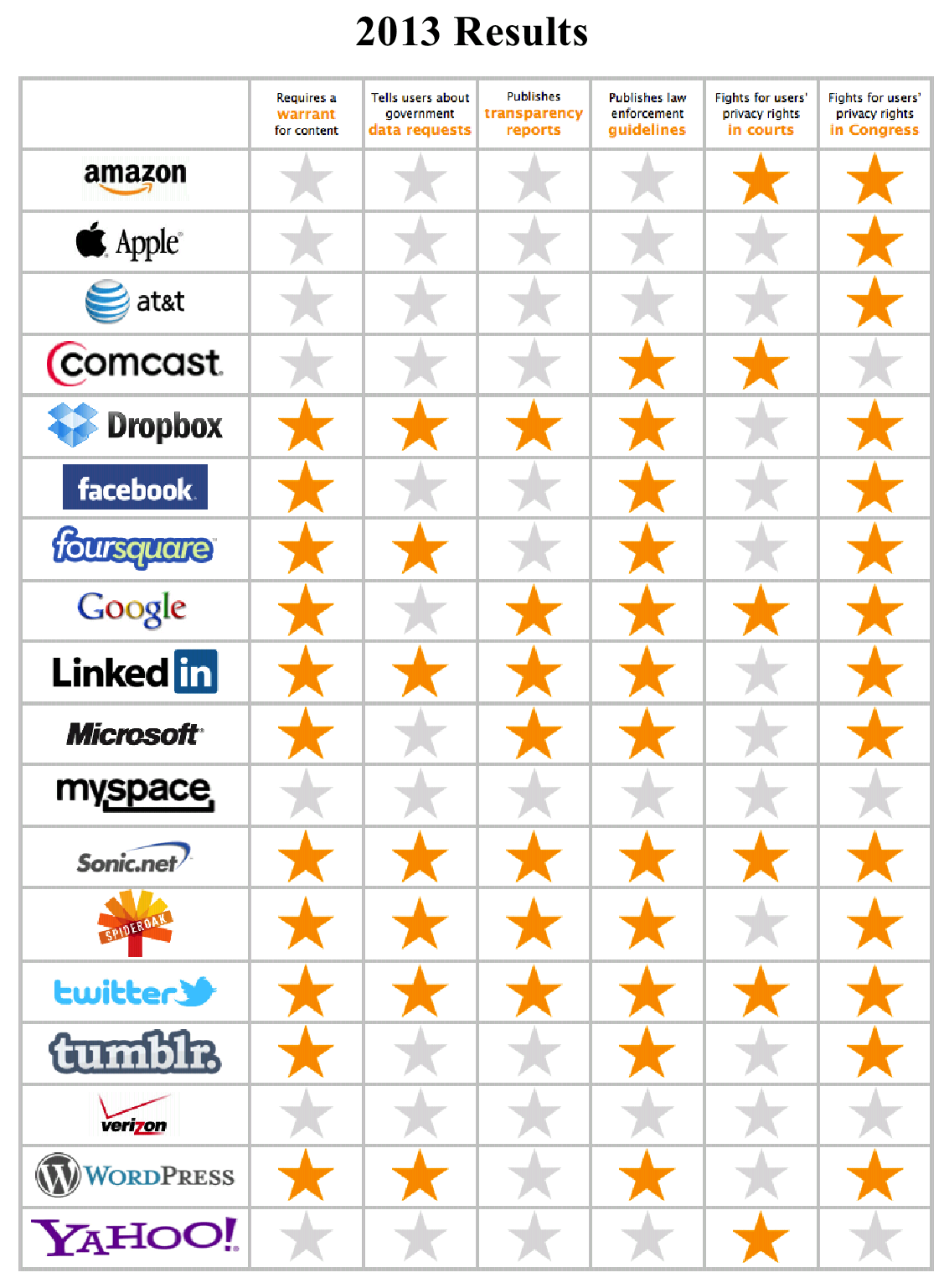
    The annual report looks at major technology service providers’ commitment to users’ rights in the face of government data demands. EFF examines 18 companies’ terms of service, privacy policies, advocacy, and courtroom track records and awards up to six gold stars for best practices in categories such as requiring a warrant for content, telling users about government data demands and publishing a transparency report.

    Major U.S. cell carriers fare poorly — the understatement of the day. In fact, Verizon scores a grand total of zero stars. Yes, none. Big Red does not require a warrant, does not disclose requests to users, publishes no transparency report or law enforcement guidelines and does not fight for privacy rights. In other words, you (and me, as I am a customer) may as well turn ourselves in right now. For the record, MySpace also receives a zero ranking, but perhaps because there are no users left to protect.

    AT&T is not much better, actually managing to garner a single star — for fighting for user rights in Congress. Neither Sprint not T-Mobile are ranked in the report.

    But enough bad news. How about the companies that actually care about you? Dropbox, Google, LinkedIn and SpiderOak all manage five stars while Twitter is one of two to receive six.

    Wondering about others? Microsoft fares reasonably well with four, Facebook receives three, Amazon manages two. But, beware your cable provider if it happens to be Comcast. The company is not exactly at the top of the heap with two stars — for publishing law enforcement guidelines and fighting for user rights in court.

    Apple, which has already been in the news lately with virus problems, does not have your best interests at heart either. The company ranks a one for its almost universal failure to keep the customer in mind.

    “There’s a lot to celebrate in this report, but also plenty of room for improvement” EFF staff attorney Nate Cardozo says. The latter seems more to the point.

    This report should serve as a wake-up call to Internet users that they require more protection from companies that they trust with their digital communications. These companies are not fighting for us, though they do manage to find the time and money to lobby for their own benefit.

    Chart: EFF
    Photo Credit: Joe Wilcox

  • Amazon makes Kindle app more accessible

    Amazon is not one to miss out on any revenue market and today proves this by making its free Kindle apps more appealing to customers who are either blind or visually impaired. The upgrades are not available on all platforms yet, but are certainly a move in the right direction.

    New features will allow customers to access the read aloud feature for the more than 1.8 million titles available in the Kindle Store and seamlessly navigate within their library or within a book, including consistent title, menu and button names.

    Customers can also read character-by-character, word-by-word, line-by-line, or continuously. The update brings the ability to search for a book within their library or search within a book, add and delete notes, bookmarks. It even highlights lookup words in the dictionary or from Wikipedia.

    “We’re excited to introduce these new features to our Kindle for iOS app, making it easier than ever for our blind and visually impaired customers to access the vast selection of over 1.8 million books in the Kindle Store on their iPhone or iPad”, Dorothy Nicholls, Vice President for Amazon Kindle, says.

    All of this sounds great, but for now it will only sound wonderful to Apple fans — the enhancements are for the iOS Kindle app only. However, the online retailer promises that these will come to other mobile devices soon. For now, Apple customers can visit the iTunes Store to grab the latest version of the free Kindle app and take advantage of the new updates.

  • HP jumps into the greeting and gift card business

    The analysts are telling us that PC sales are down. They would have us believe that soon we will all be exclusively using tablets and smartphones — that is wrong of course, but the computer market slump cannot be argued. With that fact in mind, manufacturers like Dell, Asus and Lenovo must look for new revenue streams.

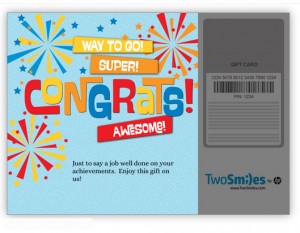
    It seems HP is actively pursuing this, and today announces a move into the greeting and gift card market. TwoSmiles is a new site that lets customers create a personalized gift at home for their family and friends for any holiday or celebration. The site allows users to choose from artist-created greeting card designs, pick a retailer and gift card amount, and personalize the greeting.

    “TwoSmiles by HP offers hundreds of premium-quality designs to choose from for any occasion or special event, including birthdays, Mother’s Day and graduations. Printing a TwoSmiles card is easy with HP Easy Print: users simply select the printer and paper size then hit print directly from their browser” the company claims.

    Obviously prices vary based on the value of the gift card selected, but it begins at $25. Given that gift cards are a top choice these days — none of us seems to know what to buy anyone — this could actually be a viable source of income for the PC manufacturer, as gouging us for ink cartridges is apparently not enough.

  • Digg reader beta app arrives in June, survey results revealed today

    Digg hopes to capitalize on Google Reader’s unceremonious execution, scheduled for July 1, and no last-minute reprieve from the governor appears to be coming. Today the social-sharing site released more details about its plans, including a timeframe for the beta and results from its survey of RSS users.

    The new Digg reader app will arrive in June, at least in beta form. However, the company promises that this is only the start of the work. “Our beta release in June will be just the beginning, a product built with experimentation in mind by a team eager to work with you to build something you love”, Digg says in an announcement today.

    The company also reveals some results from the survey seeking out what customers want in an RSS reader. For instance, more people share stories via email than any other method. This is followed by Facebook, with Twitter close behind. In contrast, personal social service Path barely registered a blip on the radar.

    More than one-third of respondents do not use a “read it later” service, but those who do prefer Pocket. A sparse 17 percent of Google Reader customers used the social features and a surprising 40 percent of customers say they would be willing to pay for an RSS service.

    Digg is still soliciting feedback to perfect its app and users can sign up to help by visiting digg.com/reader. Google Reader will be going away soon, and alternatives still jockey for the position of being your replacement of choice. Digg seems to be making all of the right moves in an effort to be the winner, but it will be an uphill battle against existing and established services like Feedly, The Old Reader and others.

    Photo Credit:  jörg röse-oberreich/Shutterstock

  • Waze seeks beta testers for Windows Phone app

    Windows Phone customers have options for driving apps — both Bing and Nokia produce excellent solutions. Now one of the most intriguing options for Android and iOS is preparing for a push to the Microsoft mobile platform and impending competition with the existing solutions already in place.

    Waze, which happens to be my GPS app of choice on Android, announces early beta testing on Windows Phone 8: “We are now opening a beta program for Windows Phone users and we’d like you to join” says the company in its announcement.

    Waze brings quite a few options to the table. The app crowdsources information to get real-time updates on everything from traffic jams to construction closures, even speed traps. The maps are community vetted and updated, keeping the service current. Waze also displays your friends on the map and tells you where to get the cheapest gas for your next fill-up.

    There is no guarantee you will get to try this out just yet. The company is taking applications at waze.centercode.com right now. You will need a Centercode account (it’s free) and you must be accepted into the program. In return, Waze promises you will be the first to drive with the newest Waze version, get a chance to win some awesome swag and take part in the process of creating a better app. In exchange, users are asked to use the app on their daily commutes, give feedback and install new betas whenever available.

    Waze promises the first version will be available to testers within the next two weeks. The app is already on both Android and iOS and is free to use.

    Photo Credit: Krivosheev Vitaly/Shutterstock

  • Pirates hate piracy (when it happens to them)

    Piracy has long been a frustrating problem for software makers, musicians and movie and TV studios. The introduction of BitTorrent, while not designed to facilitate this theft, brought the problem to the forefront. Now one tiny game studio takes matters into its own hands with hilarious results.

    Greenheart released Game Dev Tycoon simulation game, but the company also did something unique — seeding a cracked version of that game on a Torrent site. The object of the play is to design games and build up your own successful studio.

    The cracked version functions a bit differently though — the more successful your game is, the more pirated it becomes and your company eventually goes bankrupt. In fact, the simulation even includes comments from employees such as “Boss, it seems that while many players play our new game, they steal it by downloading a cracked version rather than buying it legally. If players don’t buy the games they like, we will sooner or later go bankrupt”.

    The results of this experiment are entertaining — in no time those same people who had installed the cracked version of Game Dev Tycoon began posting comments. “Why are there so many people who pirate? It ruins me” one person laments. Another pirate offers his compatriots that he would research in-game DRM to try and prevent this from happening. The irony is amazing.

    Greenheart also tracks legitimate and cracked downloads, and the numbers are stunning — 214 genuine users and 3,104 customers running the cracked version on day one of release.

    “Over 93.6 percent of players stole the game. We know this because our game contains some code to send anonymous-usage data to our server. Nothing unusual or harmful. Heaps of games/apps do this and we use it to better understand how the game is played. It’s absolutely anonymous and you are covered by our privacy policy. Anyway, the cracked version has a separate ID so I can separate the data. I’m sure some of the players have firewalls and some will play offline therefore the actual number of players for the cracked version is likely much higher”, Greenheart says.

    The developer ends his statement with this: “I’m not mad at you. When I was younger, downloading illegal copies was practically normal but this was mostly because global game distribution was in its infancy. To be fair, there are still individuals who either can’t make a legal purchase because of payment-issues or who genuinely cannot afford the game”. He also points out that those who can afford to should buy the game if they wish to see a sequel in the future, support independent developers and want to buck the trend towards DRM.

    This is certainly an interesting and telling experiment. The comments from pirates who do not take kindly to being pirated are both amusing and sad. Perhaps in some small way a few of them actually learned a lesson here.

    Photo Credit: StacieStauffSmith Photos/Shutterstock

  • Opera to power new Samsung Blu-ray players

    Opera may be thought of as just a web browser, but the company looks to change that by branching out to the connected devices market. This includes smart TV’s, Blu-ray players and set-top boxes and provides a path for Opera to become mainstream, even though many of those customers may never realize they are using it.

    Today the Norwegian company announces that it is partnering with Korean hardware maker Samsung to power the 2013 line of Blu-ray players. The Opera Devices Software Development Kit (SDK) will offer video support for YouTube, BBC iPlayer and more. “The new Opera-powered Samsung Blu-ray players provide viewers with the ultimate home entertainment experience by not only allowing viewers to watch their favorite Blu-ray Discs and DVDs, but also to enjoy various streaming video services with ease” Opera says in a statement.

    The Opera Devices SDK supports HTML5, CSS, JavaScript, SVG, 2D Canvas and WebGL and promises better web-content rendering and streaming performance. “Samsung’s Blu-ray players powered by Opera offer great performance and support for the latest web technology, resulting in easier and better access to popular online video services” Opera tells us.

    Meanwhile, Aneesh Rajaram, Senior Vice President of TV & Devices for Opera Software boasts “With best-in-class support for web and TV standards, plus unmatched rendering performance, the new Samsung Blu-ray players with popular web-based online video will make it even more tempting to stay on the couch”.

    The new Opera-powered Samsung 2013 Blu-ray players will be available globally soon, but an actual release date has not yet been announced. Samsung Blu-ray players support YouTube, Netflix, Hulu, Pandora and many more apps.

    Photo Credit: Mikael Damkier/Shutterstock

  • Roku updates Android and iOS apps

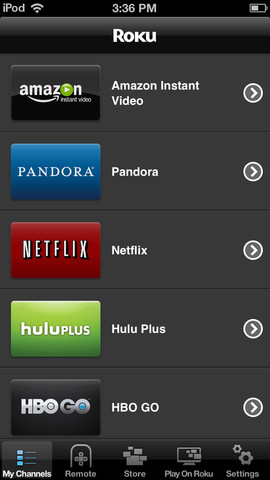
    Today’s set-top boxes do not all come from the cable or satellite provider and they frequently contain much more functionality than those that do come from the big providers. One is Roku, a company that has been innovating and upgrading at a rather quick pace recently, having only just released the Roku 3 with added functionality.

    Now the company rolls out version 2.2 of its mobile apps for both the Android and iOS platforms. Roku promises that this latest update addresses feedback received from users.

    Indeed, there are a number of additions in this latest release. Deep scanning is added to look for Roku players on your network using multiple methods. If the first scan does not succeed, just tap “Try again” and give the app another shot. Users can also enter the Roku player’s IP address to connect manually and automatically pair with a Roku when that device is the only player associated with a particular Roku user account.

    According to Roku’s Tom Markworth “version 2.2 adds the ability to play photos and music simultaneously in Play On Roku without pre-selecting music in slideshow settings. Simply start photos, then music. Or vice versa”.

    Roku is an excellent alternative to mainstream TV providers and this functionality only adds to the tiny device’s ability to take over your living room. However, until the company integrates a browser, I will stick with Google TV. This is nothing personal — I just need that functionality.

  • Enable Google Drive’s new ‘Offline’ feature

    While it did not grab a lot of attention, this week Google rolled out version 1.9 of its Drive app for both Windows and Mac users. The cloud storage service adds a number of new features that should improve the experience for its customers — and that is anyone who has a Google account, because Drive and 5 GB of free storage come along with that account.

    The latest version contains added-features in the right-click context menu available from within your file system explorer, including sharing and also the ability to view the file on drive.google.com.

    Google Drive also claims faster access speeds. According to the Release Notes, the company claims that “downloads now take about 50 percent less time. For accounts with many small files, the speed improvement is even more pronounced”. There is also the addition of smarter delete dialogs (originally introduced in version 1.8) and improvements to sync status overlay icons for Mac users.

    The most intriguing new feature is the promise of offline access to your files. However, while Google is big on telling us of this new capability, it’s short on details about how to actually access files in this way.

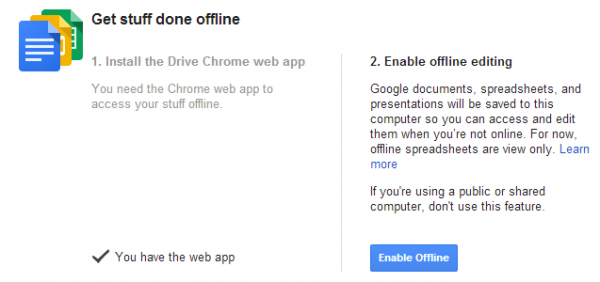
    Fortunately the capability is not difficult to set up, but does require that you have the Chrome web browser installed. If you do, then fire it up and head over to drive.google.com and log into your account.

    In the left column you will spot a dropdown menu labeled “More”. Click this and then select “Offline”. If you do not yet have the Chrome plugin for Google Drive installed then you will be prompted to do so. If you have it then you can proceed to step two, which is simply clicking the “Enable Offline” button.

    You will now be able to access your most recent Google documents on drive.google.com, even when you are offline. Simply open any Google document from your local Google Drive folder and Chrome will display the file for you to edit. Any changes you make will be synced the next time you connect to the Internet.

    If you have the need, then you can also return to More”, “Offline” and disable the feature as well. The offline mode works with all compatible Google Docs and Office file types, as well as images.

  • Government demands to remove content reaches new highs, Google claims

    For the past three years Google has released transparency reports, which loosely translate to tattling on the government and other entities that attempt to extract information from the search giant. None are likely happy with this reporting, but it is all public record and fair game.

    “Today, for the seventh time, we’re releasing new numbers showing requests from governments to remove content from our services”, states Google’s legal director Susan Infantino.

    In fact, despite the public outing, the onslaught has not abated. Indeed, it gains momentum. The latest report claims “from July to December 2012, we received 2,285 government requests to remove 24,179 pieces of content—an increase from the 1,811 requests to remove 18,070 pieces of content that we received during the first half of 2012”.

    This is not just the United States seeking data on you. Other governments are involved as well. Google says it has seen a sharp increase in requests from Brazil — 697 requests to remove content from its platforms, to be exact. But it was not just the South American nation that ramped up its submissions to the search giant. Another is Russia; “In the first half of 2012, we received six requests, the most we had ever received in any given six-month period from Russia. But in the second half of the year, we received 114 requests to remove content”, Infantino says.

    Google also received inquiries from 20 countries regarding YouTube videos containing clips of the movie “Innocence of Muslims”.  While the videos were considered within the guidelines, Google restricted videos from view in several countries in accordance with local law after receiving formal complaints. It also temporarily restricted videos from view in Egypt and Libya due to what it considered particularly difficult circumstances there.

    The company also made some changes to the way this information is reported. Infantino tells us “we’re now breaking down government requests about YouTube videos to clarify whether we removed videos in response to government requests for violating Community Guidelines, or whether we restricted videos from view due to local laws”.

    It is not that we didn’t already know that Big Brother is watching us. However, the extent of the surveillance has grown since the last time we checked in with him.

    Photo Credit:  AR Images/Shutterstock

  • Google welcomes Office to Chrome

    Irony can strike in the strangest of places. Just this morning I was discussing Office with my colleague Joe Wilcox, who pointed out an article he had written back in 2010 titled “Microsoft Office is obsolete, or soon will be“. I argue the opposite, telling him that students and businesses are nowhere close to abandoning the Microsoft suite.

    While I doubt Google is caving to my point of view, the company perhaps helps support it today. Jelte Liebrand, a Google Software Engineer, announces that “if you’re running Chrome Beta on Windows or Mac and install the Chrome Office Viewer (Beta) extension, you’ll be able to click a link to an Office file and open it directly in Chrome”.

    In fact, in the continued battle between the two tech goliaths, Google used this minor concession as an opportunity to also take a shot at Microsoft and the proliferation of Office viruses that continuously float around the Internet.

    “In addition to saving you time, the Chrome Office Viewer also protects you from malware delivered via Office files. Just like with web pages and PDFs, we’ve added a specialized sandbox to impede attackers who use compromised Office files to try to steal private information or monitor your activities”, Liebrand writes. Leave it to Google to dig at Microsoft while simultaneously supporting the software.

    As previously stated, you will need the latest beta version of the web browser to use this feature. I reiterate my argument — Office is not going anywhere. Like Windows, it will be around for years to come.

    Photo Credit: Thomas Christoph/Shutterstock

  • It’s NFL Draft day! You can watch online and on mobile

    Today is the biggest day of the off-season for NFL fans. We all wait to see who our favorite team selects when the pick rolls around. We wonder if the player will be boon or bust. After all, the Draft is little more than a crap shoot — ask the San Diego Chargers how that Ryan Leaf kid worked out. On the other hand, there are late round gems to be found — Terrell Davis was a sixth round pick and Davone Bess went undrafted.

    Either way, the whole show, live from Radio City in New York, will go down beginning tonight at 8pm ET and the spectacle can be watched on the NFL Network.

    What if you are not near a TV or simply do not get the channel in your subscription package? The league wants you to be able to watch the Draft anyway, and of course, the ads as well.

    The show, in its entirety, can be seen live on the NFL Draft website. If you are out and about then you can catch the action on your mobile device via the NFL app, but if you want to actually see the streaming video then you’d better be a Verizon customer because the league has an exclusive deal with the mobile carrier. Alternatively, you can follow the NFL on Twitter to keep up on the happenings.

    The Kansas City Chiefs are now on the clock. Will it be Luke Joeckel or Eric Fisher? What will your team do? All of these questions are about to be answered.

  • Vacation time is approaching — Gogobot teams up with HomeAway to help you plan your trip

    The weather is warming up and our thoughts are turning towards vacation time. Where are you heading on that big summer trip? Regardless of the destination you decide on, Gogobot in conjunction with HomeAway can make sure you get the most from your time away with its new social-based guides covering many popular destinations.

    Insider Guides is a new social sharing service which allows individual vacation rental owners to create customizable guidebooks for their guests, packed with local tips and recommendations covering favorite restaurants, attractions and activities. The guidebooks combine the property owners’ local expertise with Gogobot’s destination content, photos, reviews and social functionality. The service boasts over 2.5 million contributing members.

    This is not Frommer’s, but more of a real-world type of guide such as this example for Austin, Texas or this one for Tuscany. The information is incorporated into Gogobot’s overall content.

    “At its core, Gogobot is about connecting people with trusted information to help them plan their next trip,” says Gogobot Chief Executive Officer and Co-Founder Travis Katz.

    The new partnership launches today, so now you have a bit more information for planning the big family getaway. Both Gogobot and its newly integrated guides are free to use. The guides can also be synced with Gogobot’s iOS and Android apps so you can take them along on the trip as a reference.

    Photo credit: Wayne Williams

  • Alert the kids! Ice Age arrives on Windows Phone 8

    I find that having children is an excellent excuse for watching movies like Ice Age, Up, Cars and more. After all, I would feel a bit silly watching those flicks on my own, as I do with scary movies like Paranormal Activity, thanks to a wife and kids who would not sleep for a week if they joined me in front of the screen.

    Now Ice Age, and all of its classic characters, like Sid, Manny, Ellie, and Diego, are coming to your phone — providing that you are using a Windows Phone 8 handset.

    Today Microsoft’s Michael Stroh announces that Ice Age Village is arriving on the mobile platform. The game focuses on the characters attempt to build a new village for their friends. “Multiplayer options, side missions, and mini-games featuring Scrat, the nutter saber-toothed squirrel, keep things interesting” says Stroh.

    If you are installing this for your kids (okay to admit it is for you) then you will need to be aware that the game allows for multi-player mode and is not subject to Xbox Live parental settings. With that said, the game is free from the Windows Phone Store. Install it. We will believe the game is for your kids who just happen to love sabertooth squirrels.

  • What is Bing’s China problem?

    A few weeks ago, while doing a bit of research for a story, I had occasion to visit the Bing search page. More importantly to this article, it was the Chinese version of Bing. Over the following days I forgot about this brief foray into Asia, but my web browser remembered.

    When I return to Bing several days later I am defaulted to the China site — it still says I am on www.bing.com, but all information is displayed in Chinese characters, which Chrome helpfully translates on the fly. I close the tab, re-open and try again with the same results. I close Chrome and try again — still nothing.

    After a few days (I do not use Bing often, though I do like it) I recall my trip to Bing.cn. I then check the cookies in my browser and find the site has set several of them — c.bing.com, Bing.com.cn and dict.bing.com.cn. Interesting. I delete all of them and Bing returns to normal. Then, perhaps because I am both adventurous and stupid, I recreate the steps and the same results occur. I try both Firefox and Internet Explorer and again the same thing.

    More interesting to this sordid little tale is that search results using Bing.cn are only somewhat different. I say “interesting” because I expected “somewhat” to actually be “radically”. I delete the Firefox cookies and begin comparing the same terms side-by-side. For instance, a search for Tianenman Square on Bing.cn results in two travel sites being ranked at the top, with a Wikipedia article about the protests at number three. Bing.com ranks the Wikipedia story at the top of the page.

    Other searches also result in similar outcomes, with rankings in different orders — Dalai Lama, Nepal (which completely strips out a U.S. Department of State travel advisory), Democracy and Freedom. The latter results in a Baidu article that begins “Freedom which is the name of Akon’s latest solo album” at the top, versus a link to a web site offering debt consolidation (Bing fails in both cases on this).

    I also check “safe search” settings. The short story of which is that it does not exist. Or, more to the point, it does and it cannot be turned off. I find only the following message (translated):

    “This setting will filter out adult content. If you are viewing adult material, please let us know so that we can in the future to filter out. For more information about your country / region safe search requirements”.

    The results, while re-ordered and somewhat stripped down, are not as devoid of real information as I had expected. Perhaps this is due to my actual location, which is not going through a filter — well, maybe but that is another story.

    If setting these cookies is the price of doing business behind the Great Firewall then I could give Microsoft’s search engine a pass, but a visit to Google.cn does not result in this settings change. This leaves me to wonder why the Redmond, Wash.-based company feels the need to track this information and, more importantly, what it is doing with those databases. Support for Chinese censorship?


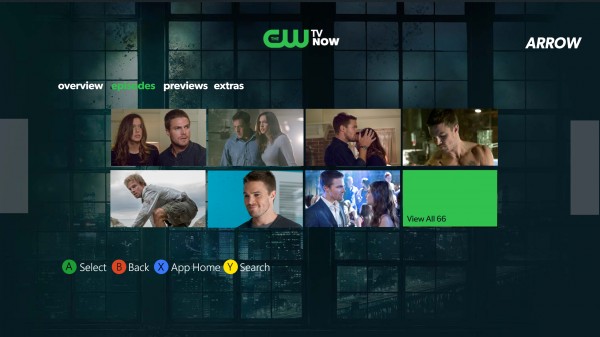
  • CW comes to Xbox, no cable subscription required

    If TV shows and Xbox are your things, today is your lucky day. Xbox Live has been busy adding content to its Gold offering in an effort to beef up its entertainment features and bring in the non-gaming audience by positioning the console as a living room entertainment hub.

    Today, Xbox Live chief Larry Hryb announces that the latest outlet to come on board is the CW network. This is also a unique offering in that, unlike channels such as HBO and ESPN, the CW will not require customers to verify a paid TV service subscription from a cable or satellite provider. The new app will offer shows ranging from “full episodes to previews and interviews, and is unique in that it will offer next-day episodes free with your Xbox LIVE Gold subscription” according to Hryb.

    The new CW offering also utilizes Xbox Smartglass for some of its most popular content, such as The Vampire Diaries. “As viewers tune into The CW app on Xbox this Friday for the latest episode titled ‘The Originals’, they can access an exclusive Xbox SmartGlass experience that will provide exciting new content via their smartphone or tablet not available to any other viewers” Hryb explains.

    Microsoft also plans a giveaway that will be conducted via Facebook and feature custom “Vampire Diaries” and “Supernatural” Xbox 360 consoles. Details of how to enter were not included in the announcement.

    Like other Xbox entertainment options, CW does require a Gold subscription, but with no paid TV subscription required, this offering seems geared towards cord-cutters, and with HBO contemplating a similar offering for its GO service, this could spell trouble for the providers. That is really the most intriguing part of this latest offering.

    Photo Credit: Major Nelson

  • Audible offers free book to Windows 8, Windows Phone users

    Audible, a leading choice in the audio book market and a company that was purchased by Amazon back in 2008, is now working with Microsoft to drum up new business for both entities with offers to both the PC and mobile platform. The Amazon subsidiary has long offered free book deals in a number of forms, including the many podcasts sponsored with its advertising.

    Today Microsoft announces that customers of both Windows 8 and Windows Phone can grab a free audio book with no subscription or credit card required. “Audible has apps for Windows 8 and Windows Phone that let you download and listen to books on the go. With over 135,000 titles from classics to New York Times bestsellers, you can enjoy endless hours of entertainment” says Microsoft’s Kristina Libby.

    Of course, there is a catch — there always is. In this case it is not a huge one, but important none-the-less. The fact is, you only have three books to choose from.

    • The Power Trip by Jackie Collins.
    • American Sniper by Chris Kyle or the classic by F. Scott Fitzgerald.
    • The Great Gatsby, narrated by Jake Gyllenhaal.

    The offer is also only good for a limited time, and while promotional supplies last, though I am unsure how digital supplies run out. I suppose Microsoft has struck a deal to cover the cost of a certain number of books. However, if you are interested in any of the titles, then this is the time to act.

    Photo Credit: Mmaxer/Shutterstock

  • BitTorrent Sync goes public, brings new features along

    Back in January, I was fortunate enough to get an invitation to test the alpha version of the new BitTorrent Sync app — an opportunity that excited me, given that I had recently learned my beloved Live Mesh would go away, thanks to Microsoft’s own version of “Spring Cleaning”. This left me in the market for a replacement.

    Now BitTorrent announces that private testing is done and, while the app is still alpha, the company is ready to unleash it on the public. “We’re really excited about opening up this Alpha. The feedback has been universally positive. Those in the closed Alpha have already synced more than 200TB since we started the program on January 24”, says BiTorrent’s Christian Averill.

    With the public release comes some updated features as well. There is one-way synchronization that allows you to sync to a read-only file. This allows for your team, or family, to receive updates from you without them having the ability to edit or accidentally delete the source material.

    The new update also adds “One Time Secrets”, which is a security feature for instances when you do not want a master key and need a use-once solution. The secret code expires after 24 hours.

    Third, there is the option to exclude certain files or folders from Sync. This is handy if you, like me, want to sync your entire My Documents folder between computers, but have a file you wish to exclude for a particular reason.

    Finally, there is also the usual update inclusion of bug fixes and the promise of more stable code, advanced preferences configuration, support of Intel-based Synology devices and an improved Linux WebUI.

    The app, along with all of these updates, is now available to the public. As I stated, it is still considered alpha, and BitTorrent is promising many more updates are in the pipeline. The app is compatible with Windows Mac and Linux.

    Photo Credit: sheelamohanachandran2010/Shutterstock

  • Google Street View hits 50 country milestone

    Google Street View, which started with a few major cities in the United States back in 2007, has now expanded to 50 nations. Ulf Spitzer, Program Manager for Google Street View, announces today the latest round of updates which brings the service to two more countries, rounding up the new total to half a century.

    The latest additions are Hungary and Lesotho. Spitzer also tells us that, in addition to the new countries, the mapping service is also expanding coverage in other locations. “We’re also refreshing and expanding existing Street View coverage in France, Italy, Poland, Romania, Russia, Singapore and Thailand. And, we’ve added new special collections of a host of picturesque spots — using our Street View Trike technology — that include Portugal’s Pena National Palace, or the Sha Tin Che Kung Temple in Hong Kong or the Kilkenny Castle in Ireland,” Spitzer says.

    This is the largest single update of Street View imagery that Google has ever pushed, and it includes new and updated views for nearly 350,000 miles of roads across 14 different countries.

    The company has gone to such far-flung locations as the Great Barrier Reef, Mount Everest and Antarctica. Users can now navigate more than 5 million miles of the world, without ever leaving their computers.